

Author: 1111 EduPub
EduPub (Edupedia Publications Pvt Ltd) is a company dedicated to the development of the education, learning, research and innovation in the field of the research and books publication. We are pioneer in providing wide range of services to educational institutions, government agencies, individuals and corporates in the field of training and education, research and development, research and innovation. research and publication.
Womesh Chunder Bonnerjee
Jay Prakash Narayan
Import of thermal coal in the country to be completely stopped by 2024-2025
: Nagpur/Mumbai, October 14, 2022
0TAX.jpeg)
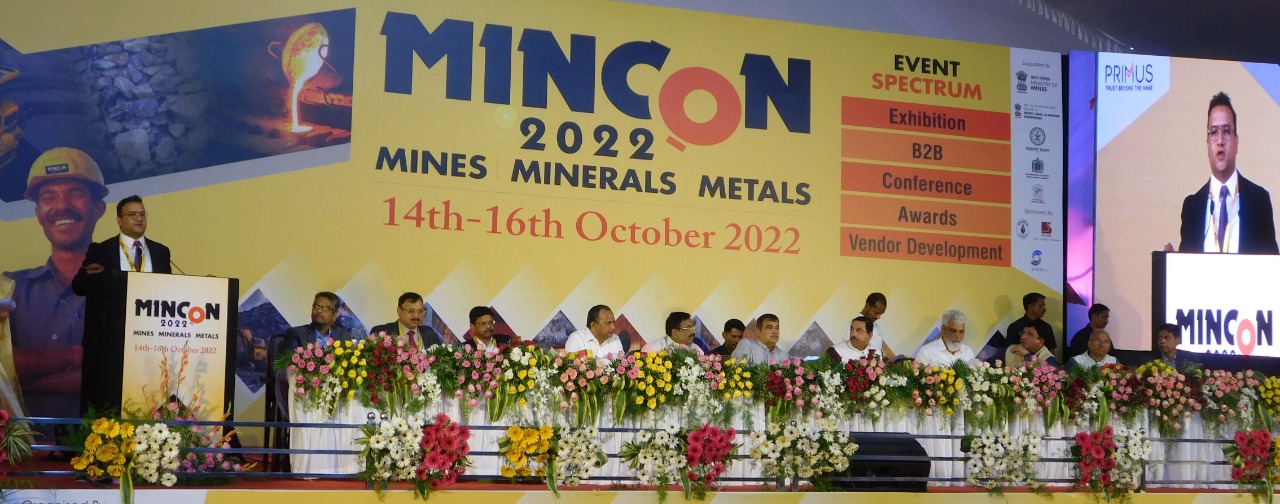
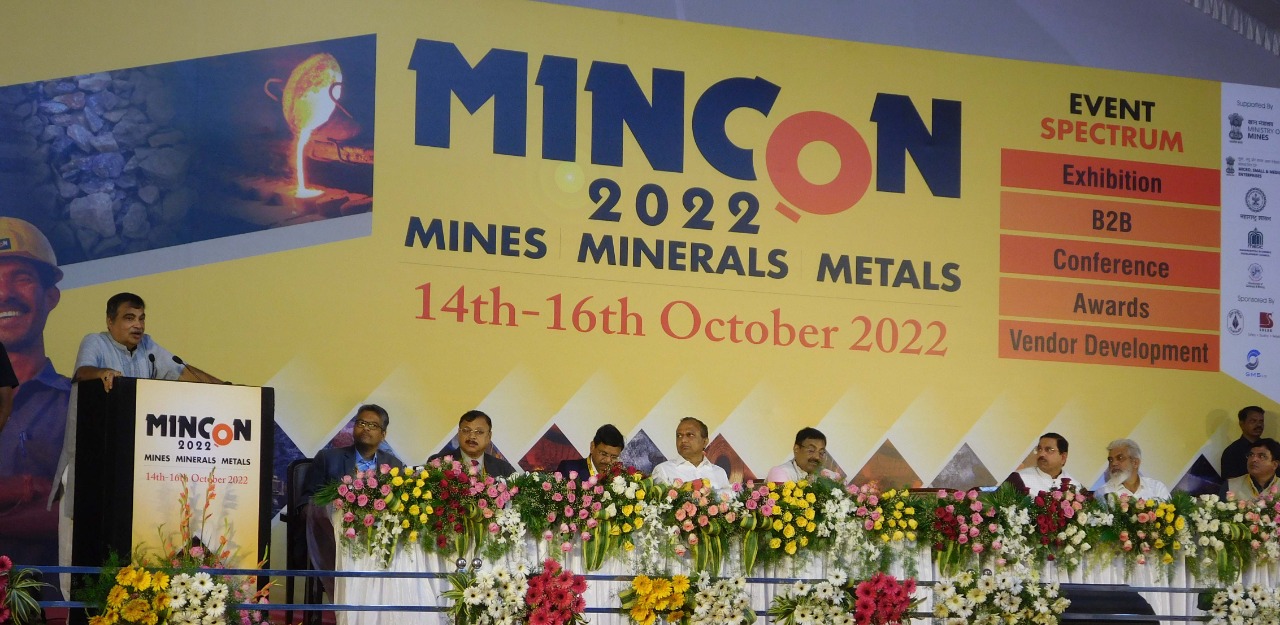
Union Minister of Parliamentary Affairs, Coal and Mines Shri Pralhad Joshi said that, the mineral and mining sectors, following agriculture and industrial sectors, provide maximum employment opportunities, and thus, for India to be recognized as a developed country by 2047, the role of these two sectors is important. While addressing MINCON 2022 – a Conference on Mines, Minerals and Metals in Nagpur today, he said that Government’s target is to produce 900 million tonnes of coal in the current year and 163 mines will be auctioned. He added that the Union Government has faith in the federal system and Prime Minister Narendra Modi is insisting that most of the powers should be conferred upon the states.
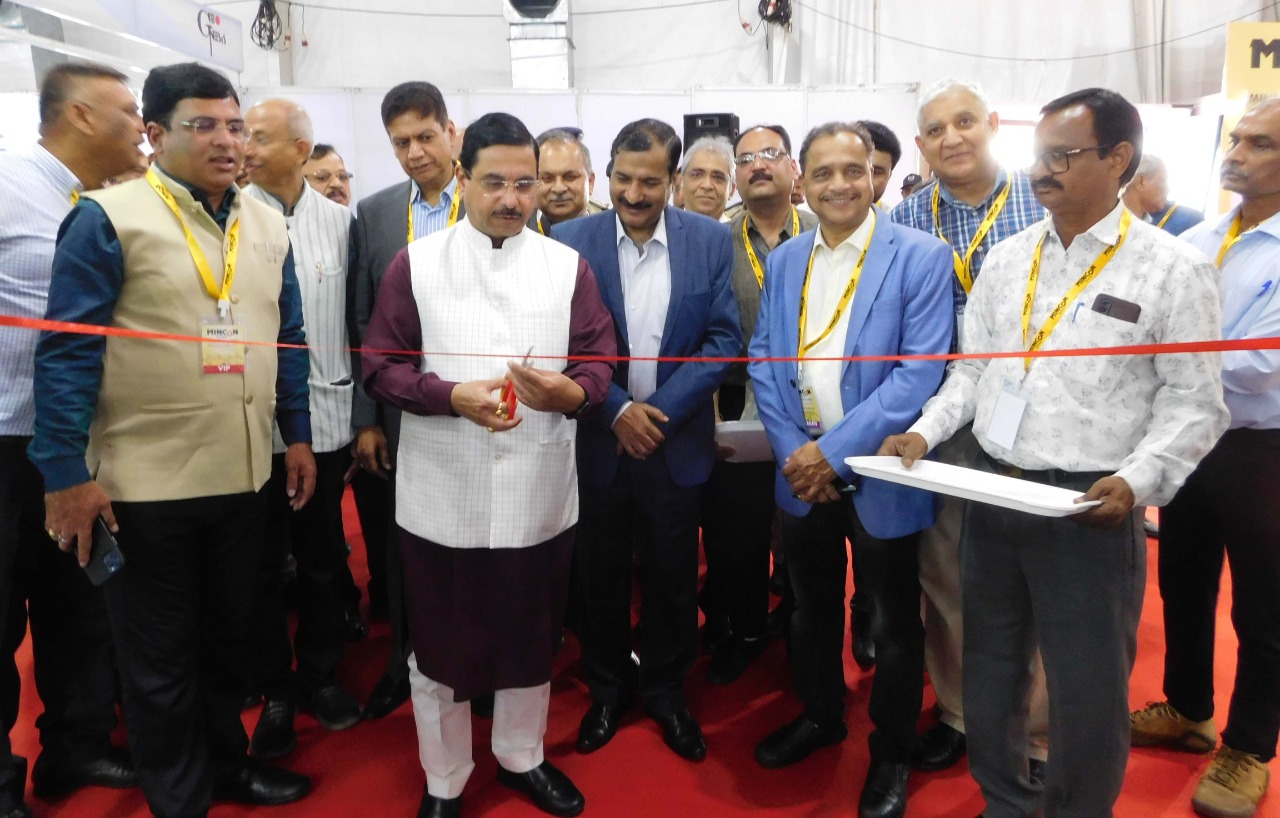
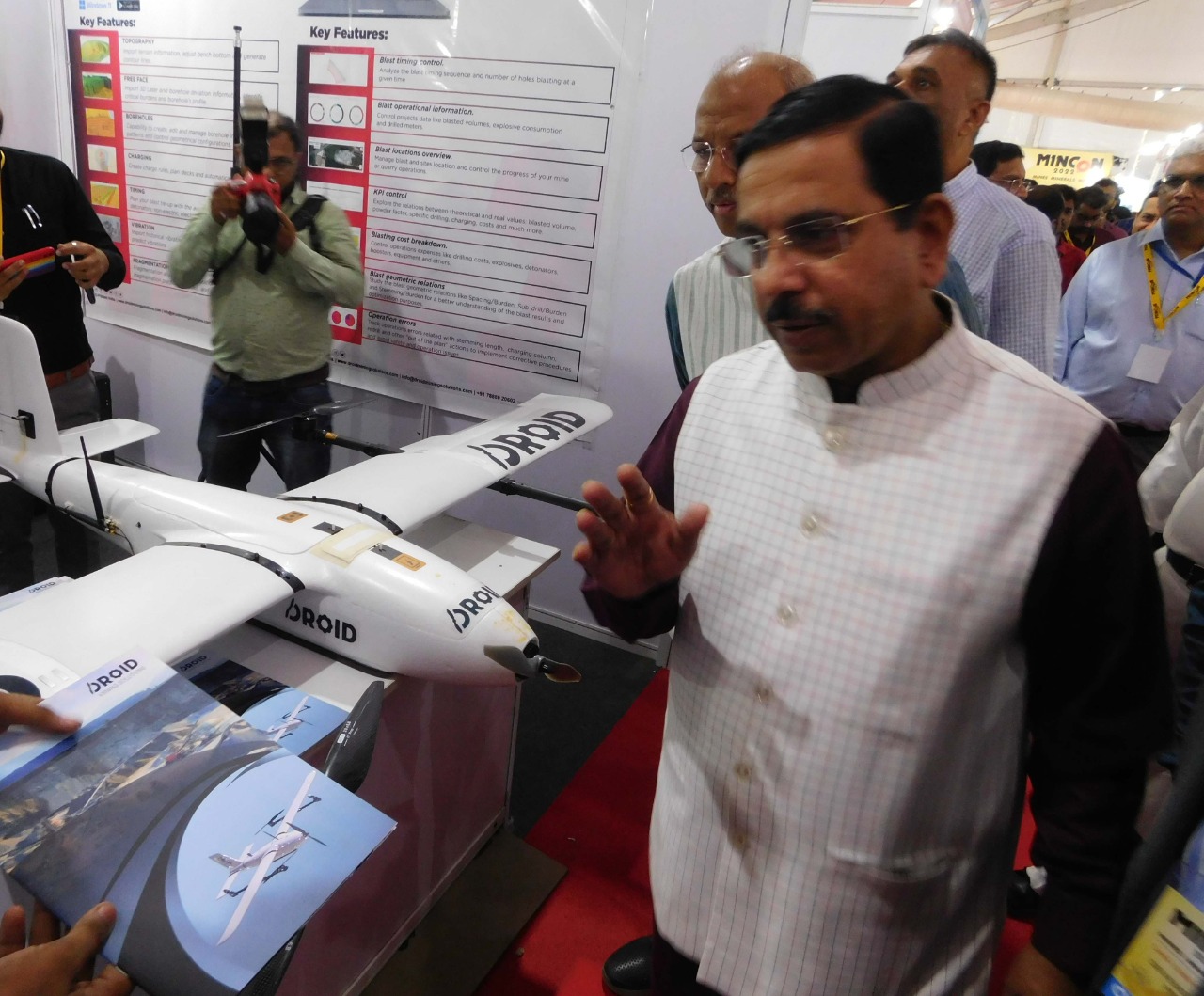
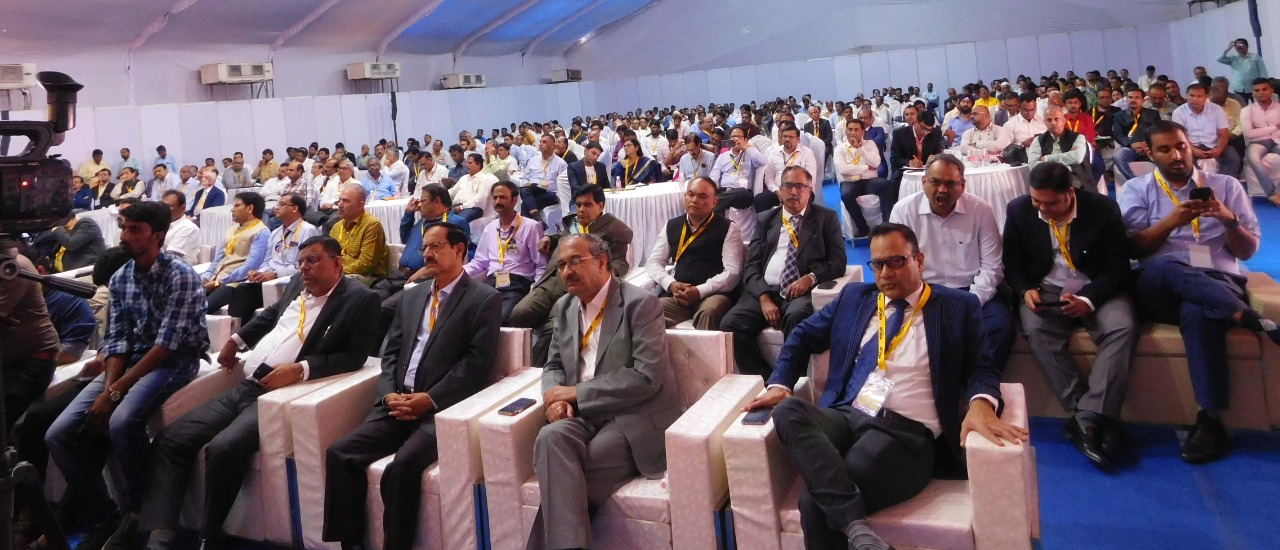
Maharashtra State Mining Corporation (MSMC) and Vidarbha Economic Development Council have jointly organized this conference at Nagpur. Union Minister for Road Transport and Highways Nitin Gadkari presided over this conference. Maharashtra State Forest and Environment Minister Sudhir Mungantiwar, Maharashtra Government Minerals Minister Dadaji Bhuse, Principal Secretary of Commerce Department Harshdeep Kamble, President of the Maharashtra Mining Corporation Ashish Jaiswal, President of the Vidarbha Economic Development Council Devendra Parikh also attended this conference.
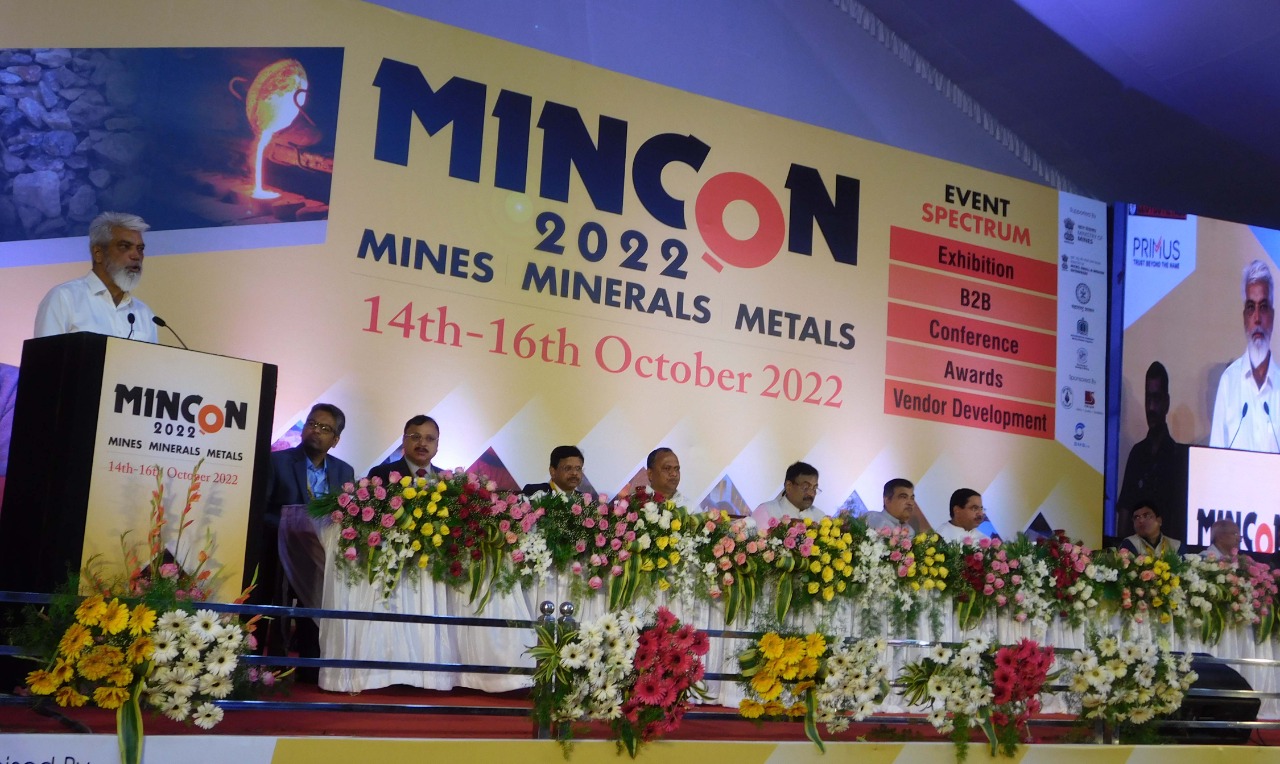
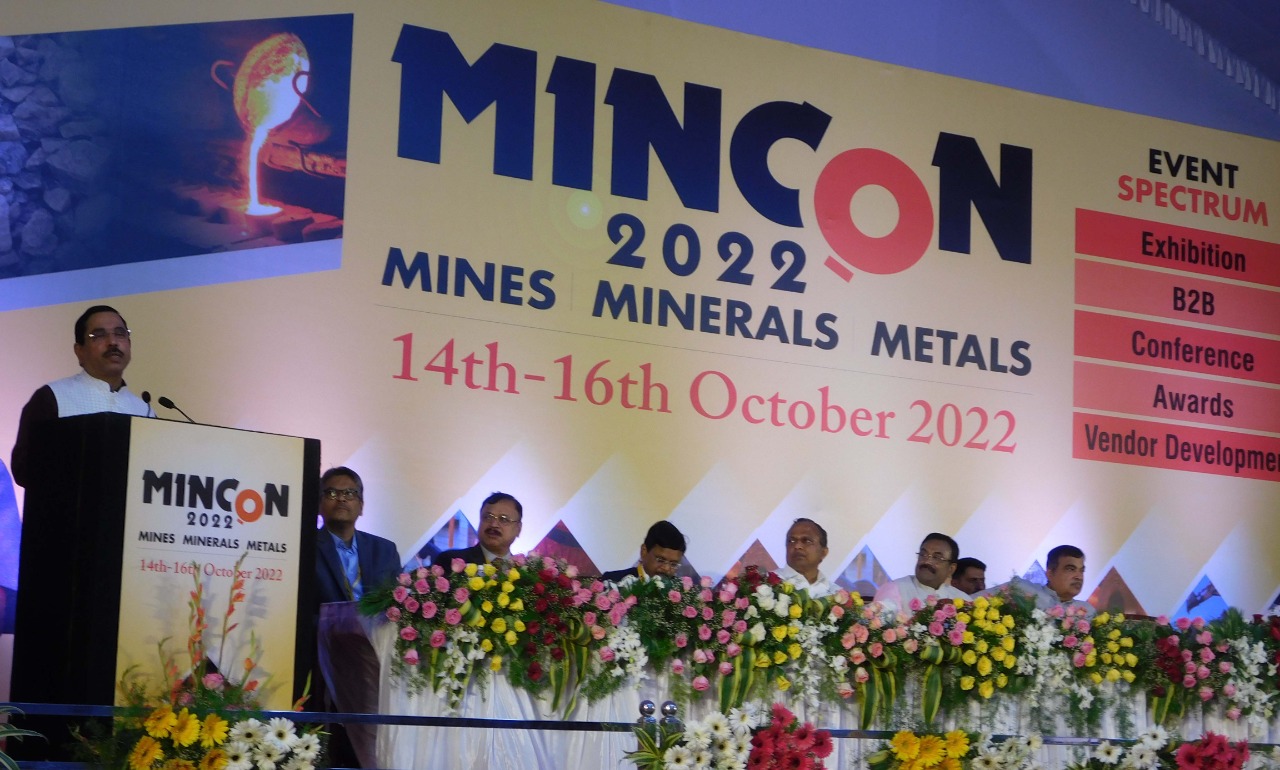
Shri Joshi further informed that the value of mineral wealth in India was Rs 1.9 lakh crore in 2021-22. The Government is committed to its appropriate utilization and distribution, he added. He said that the Vidarbha region’s role will remain important in developing India as a 5 trillion dollar economy. He further said that the Union government will always extend complete support for new ideas and new research, and also provide necessary incentives.
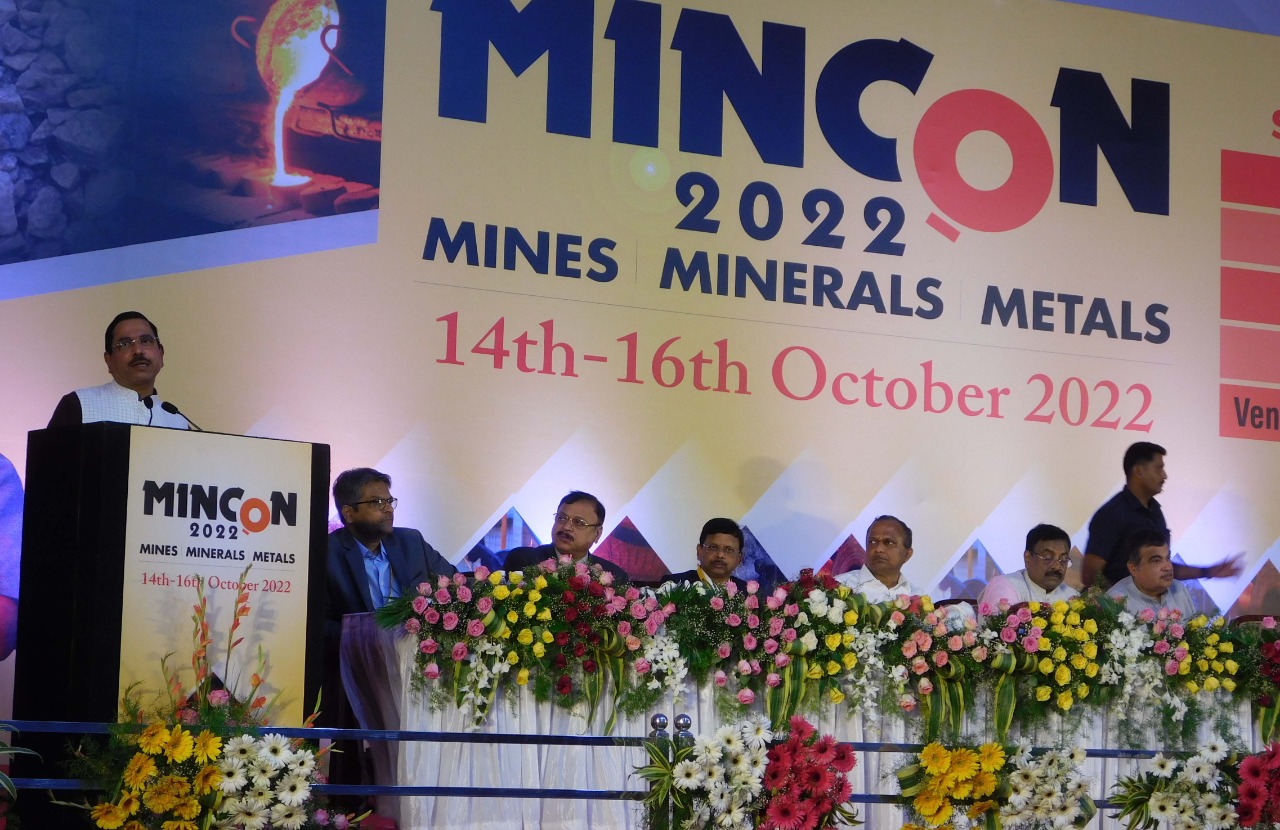
Union Minister Nitin Gadkari said that the foundation of the Vidarbha region’s development is based on mining and forest, and only mining-based industries can accelerate the progress of the Vidarbha region. He said that the Vidarbha region has 75% of mineral and 80% of the forest resources of Maharashtra and proper utilization of these will increase the Vidarbha region’s share in the energy sector. He further said that more investment in water, energy and communication is necessary to make India self-sufficient along with a 5 trillion dollar economy. Stating that coal production has increased due to the radical changes made by the Central Government in the mining sector, Shri Gadkari said that India’s energy needs are increasing and more coal will be needed in the future. Only Vidarbha region can fulfill this need, he added.
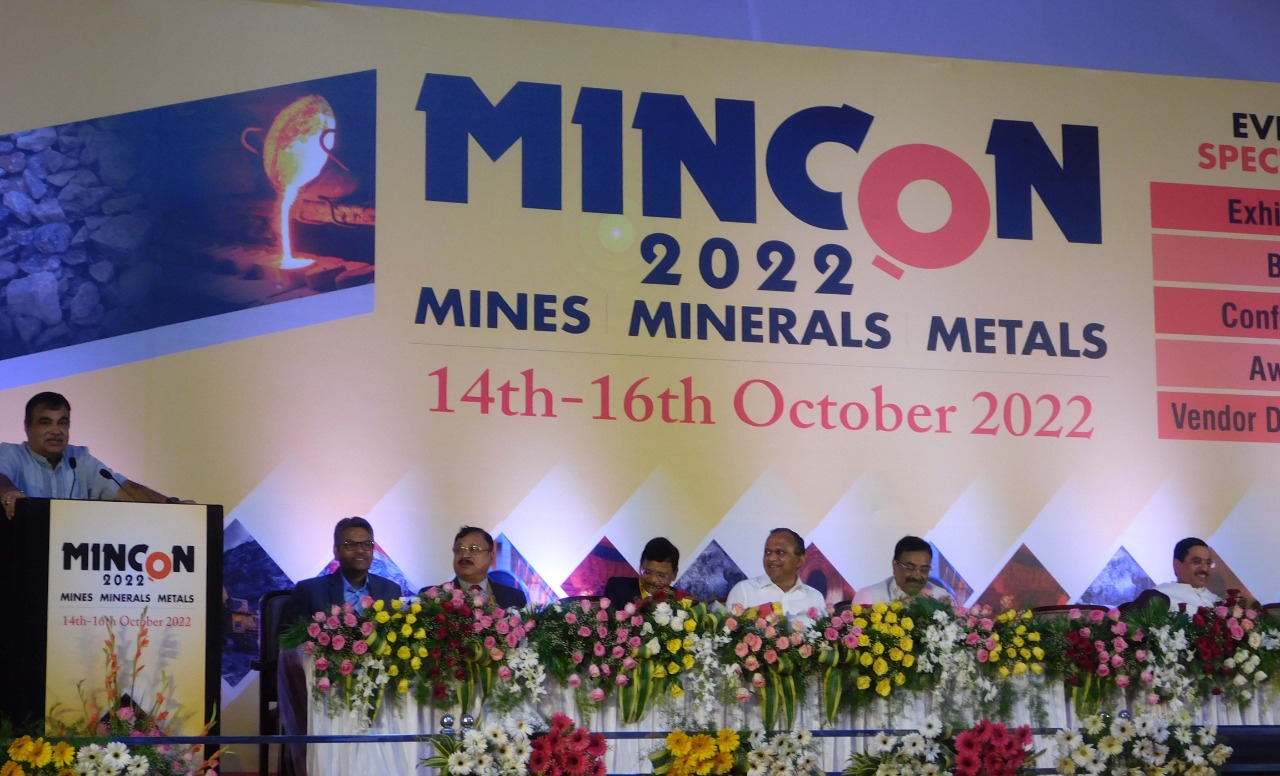
Following the Centre, the State Governments should also save time by using modern working systems, Nitin Gadkari said. He urged the state governments to provide the required licenses for these sectors at the earliest with emphasis on time planning and transparency. These sectors should reduce the country’s urea import of Rs. 60 thousand crores by producing ammonium nitrate and urea from coal. He further suggested that these sectors should now formulate new policies to reduce fuel imports of Rs 17 lakh crore. He said that the steps have to be taken now for the closed mines and if the mine is not economically viable, the policies will have to be relaxed.
Shri Gadkari also said that the country needs 6 million tonnes of manganese and Vidarbha region should take the initiative to fulfill it. He also suggested that the mining industry and investors should come together to find a solution for a royalty based on the market price of coal. The Union Road Transport and Highways Minister said that transparency, timely functioning and corruption-free processes are very much necessary for the mining sector, and assured that he will strive for proper coordination and communication between the concerned ministers and officials of all departments for the new coal mining in the Vidarbha region.
Officials of various government organizations and investors in the mining and mineral sector are participating in this conference organized between October 14-16, 2022.
***
Inner Voice Episode 1
I never wanted that to be happening. Never wanted me to want someone more than myself. It just happened that I started believing in someone more than myself. And every time, no one turned out to be worthy of me. Repeatedly getting cheated, caught dumbed & ditched, people changed one after the other. I thought that this person would not betray me, so I went ahead.
Whereas the one who cheated earlier realized his flaws and wanted to come back I didn’t allow it only because of my belief that the one who had betrayed me once then it not tough to do that again. But Even when I got attached to another person in this world I was also getting that hurt, tears, and even afraid of getting betrayed….Why???
People of this world made me ask “Why” Then why God would answer? I’m pretty sure people would be answerable and have to pay for their Karma.
It’s not possible for a human being to leave and forget someone but every time another human forced me to act like and accept this tough lesson. To be honest I’m not learning too much from these all but yes it’s broken me into tiny pieces inside.
There & then it’s God’s will for my goodwill, right??? I forgot God then what are you and who to enlighten??
It’s my bad as everyone is the same instead of me.
Story of Track2Training
Once upon a time, there was a small town nestled in the mountains called Greenview. The town was known for its beautiful landscapes and friendly community, but it lacked resources for youth development. The town only had one school, and the students’ options for extracurricular activities were limited.
One day, a group of young adults from the town decided to start a program to help the youth in their community. They called it “Track2Training,” a program that focused on providing various vocational and skill-based training to students outside of school hours.
The group of young adults worked tirelessly to develop a curriculum and reach out to businesses and organizations that could provide hands-on training opportunities. They were able to secure partnerships with local carpenters, electricians, chefs, and artists who were willing to volunteer their time to teach the students.
The program became an instant hit, and soon, students from neighboring towns began to participate as well. The program’s success attracted attention from the state government, which recognized the initiative’s potential and decided to support it financially.
With the additional funding, Track2Training was able to expand its offerings and hire full-time staff to manage the program. They added courses on coding, graphic design, and marketing, providing students with valuable skills that could help them secure future employment.
The program’s success continued to grow, and many of the students who participated went on to start their own businesses or secure well-paying jobs. The program even attracted the attention of national media, and Track2Training became a model for other communities looking to provide similar opportunities for their youth.
The program’s founders were proud of what they had accomplished, but they knew that their work was not done. They continued to expand the program, offering more courses and resources to ensure that every student in their community had access to the tools and training they needed to succeed.
Years later, the town of Greenview had transformed into a hub of innovation and entrepreneurship, and Track2Training played a significant role in that transformation. The program had not only provided students with valuable skills but had also given them the confidence and support they needed to pursue their dreams.
What is the main cause of insomnia?
U.S.-India Strategic Clean Energy Partnership Ministerial Joint Statement
Today, during a Ministerial meeting of the U.S.-India Strategic Clean Energy Partnership (SCEP), U.S. Energy Secretary Jennifer Granholm and Indian Minister of Petroleum and Natural Gas Hardeep S. Puri underscored the critical importance of bilateral clean energy engagement to strengthen energy security and to accelerate clean, secure, and just energy transition.
U.S.-India Strategic Clean Energy Partnership Ministerial Joint Statement:
Amidst volatility in global energy markets, continuing recovery from the COVID-19 pandemic, and increasingly frequent climate-related challenges, the United States and India reiterated their commitment to accelerating a just and sustainable energy transition. As climate and clean energy leaders, the United States and India share a common vision to deploy clean energy at scale during this critical decade to reduce emissions and achieve climate change mitigation goals, taking into account different national circumstances. Through regular consultations on global energy markets, efforts to strengthen collective energy security, and deepening technical engagement to support economy-wide decarbonization, the two countries are proactively addressing the multiple crises that the world faces through the U.S.-India Strategic Clean Energy Partnership.
During the engagements, the two Ministers reviewed progress across the entire spectrum of the energy sector partnership. They noted with appreciation the tremendous increase in bilateral energy trade achieved over the last few years. They also welcomed the increased clean energy collaboration between stakeholders of both countries which is facilitating expanded clean energy investment, including in emerging technologies.
The Ministers also underscored the importance of ensuring reliable energy supplies to ensure balanced energy markets, including India’s support for the U.S. initiative to release crude oil from the strategic petroleum reserves, and the importance of diversifying to clean energy sources.
The Ministers stressed that climate and clean energy collaboration should promote energy access, affordability, energy justice, while supporting sustainable economic growth and just energy transitions. The Ministers also recognized that ambitious national climate and clean energy goals require concerted action and implementation at all levels of government to ensure their viability and sustainability. Capacity building and exchanging best practices including with all stakeholders were also highlighted as critical components to achieving the countries’ climate and clean energy ambitions.
India and the United States discussed progress on continued efforts to advance emerging fuels and technologies and electrification and decarbonization of end use sectors. The discussions covered hard-to-abate sectors, and the Ministers were informed about various initiatives, including joint research and development on smart grids and energy storage and new collaboration on carbon capture, utilization and storage (CCUS) technologies, and the potential to explore collaboration on other novel technologies under the U.S.-India Partnership to Advance Clean Energy-Research (PACE-R).
The Ministers noted the Importance of facilitating increased energy investments to ensure sustainable, affordable, reliable, resilient and cleaner energy systems.
Enhanced bilateral efforts include:
- Strengthening the power grid to ensure reliable, affordable, and resilient clean energy supply including through smart grids and energy storage;
- Assessing grid-integrated buildings, electric vehicles, and other distributed energy resources to support load management;
- Advancing renewable energy development and deployment, including to support India’s goal of achieving approximately 50 percent cumulative electric power installed capacity from non-fossil fuel-based energy resources by 2030;
- Advancing energy efficiency and conservation in appliances, buildings and the industrial sector;
- Electrifying and decarbonizing the transportation sector including creating an enabling ecosystem through setting up an Electric Vehicle (EV) financing services facility in India;
- Reducing emissions across the oil and gas value chain including efforts at deploying methane detection and abatement technologies;
- Decarbonizing the industrial sector through efforts at electrification, carbon capture and storage, and deployment of other clean emerging energy technologies;
- Deepening cooperation between Indian and U.S. Department of Energy labs and agencies, like the EIA, and on energy data management, modeling, low carbon technologies.
The Ministers also reiterated the importance of private sector engagement to facilitate investment, inform policy, and accelerate technology deployment. To that end, the United States and India continue to convene public-private tasks forces on hydrogen and biofuels, and announced the launch of a new Energy Storage Task Force to support large-scale integration of renewable energy needed to support the clean energy transition. The Ministers welcomed collaboration between Indian and U.S. companies through a Memorandum of Understanding to deploy methane abatement technologies in India’s city gas distribution sector under the Low Emissions Gas Task Force to help reduce emissions in the oil and gas sector.
Agencies from across the U.S. and Indian governments demonstrated a number of accomplishments across the five technical pillars of cooperation on: 1) Power & Energy Efficiency, 2) Renewable Energy, 3) Responsible Oil & Gas, 4) Sustainable Growth, and 5) Emerging Fuels and Technologies.
The Ministers welcomed expanded efforts under the U.S.-India Strategic Clean Energy Partnership to support a just energy transition to meet today’s unprecedented energy security and climate and energy challenges.
Web Series

Introduction
The rise of Web series,episodic video entertainment produced for the internet and mobile devices and look into the motivations of their creators which first emerged in the late 1990s and became more prominent in the early 2000s.
Definition:Web SeriesAlso called Web Shows,A series of scripted or non scripted online videos that are available in the form of episodes and seasons uploaded on Websites.Web Shows,A series of scripted or non scripted online videos that are available in the form of episodes and seasons uploaded on Websites.
In early days Individuals had to watch their favourite shows on Television with time barriers and even with a trauma of missing shows because there were no any features that can recap or replay the missed episodes.But Nowadays it’s became easy to resume or play any show anywhere that are broadcasting on websites.An individual can access for their entertainment ,interest and for their spending time.Individuals make up over 70% of the population of India,and the majority of them use the Internet.The new generation’s tendency is now using the internet.Due to the tendency of young people to become addicted to social Media,web series are easily produced and are becoming more and more popular in India.
Types of Web Series
It is based on genre are given below:
- Action/Thriller/crime
- Fantasy/Romantic
- Comedy/Drama
- Documentary
- Anime
- Horror
- Sci-fi
- For Children
- Anthology
- Sports
- Award-Winning
- Bollywood/Hollywood
- Hindi/English/Bengali/ Malayalam/Telugu/Tamil/Marathi
- Stand-up Comedy
Providers of Web Series
Websites called Providers on which all series are available to watch anytime anywhere.Out of them, there are many series available free to watch but for more to watch one have to subscribe or can say have to take subscription (Amount are different for different websites).
Here are those website:
- Netflix
- Amazon Prime Video
- Hotstar
- Jio Cinema
- MX Player
- Voot
- Zee5 and more.
On these platforms individuals can watch their favourite and interest based series, movies and episodes that inspires one whether they want to watch episode to episode or binge-watching.
Binge-watch– The practice of watching content like streaming services for a long time span, usually a single series or show.
In India it’s going fastest in this field of watching Web Series/Shows. In this context Hum log, India’s first series, debuted in 1984-1985 and ran for 154 episodes,making it the longest series in India history at the time of its finale. A 60 million strong audience watched it. The last episode lasted approximately for 55 minutes,while each episode lasted around 25 minutes.
And now web series have become more popular as it provides all types of entertainment and the majority of the series at the end leave some moral for the viewers. It has the chance to “go viral” by being viewed online and by people all over the world. It also has the potential to be “picked up,” or given a distribution deal, by well-known TV and film studios. There have been numerous web series awarded their own television shows.
Durga Puja & Ravan Dahan

Durga puja is the largest festival for Bengalis as It originated in Kolkata many years ago.
Durga puja, Durgotsava, Vijaydashmi, or Sharodotsava is a yearly Hindu festival that is celebrated in the Indian subcontinent that honors and reveres the Hindu Goddess Durga and celebrates Goddess Durga’s victory over Mahishasura.
While, Ravan Dahan _ On the same day, somewhere in a different era, Ravana was killed by Lord Rama. In today’s India, Ramlila is organized for the last 9 nights and Ravana Dahan marks the day where good triumphs over evil.
In the significance of Durga Puja,
According to Hindu mythology, Lord Brahma granted the demon Mahishasura the boon of invincibility, which meant that no man or god could kill him. After receiving the blessing, Mahishasura attacked the gods and chased them out of heaven. To defeat the demon king, all the gods gathered to worship Adi Shakti. Maa Durga was created by the divine light that emanated from all the gods during the puja.
The first day of Durga Puja marks the arrival of the goddess and is called Mahalaya.
On the sixth day, Sasthi celebrations and worship begin. The goddess is worshipped in her various forms as Durga, Lakshmi, and Saraswati over the next three days. Maa Durga’s battle with Mahishasura lasted ten days. On the tenth day, Goddess Durga slew the demon king, and thus the day is celebrated as Vijaya Dashami, symbolizing the triumph of good over evil.
While, From the 1st to the 9th day, Ram-Leela events happen all over the country to celebrate the festival.
On the last day, devotees immerse Goddess Durga’s idol in the holy Ganges water. It is referred to as Durga Visarjan. Worshippers march in procession before the immersion, accompanied by drumming, singing, and dancing.
While on the same last day, people do Ravan Dahan as Lord Ram killed Ravan.
# Both the events Durga Puja and Ravan Dahan take place on the day of Vijayadashami. The myth and motive behind these two events is the end of Evil by God.
#Victory of God upon Evil.
Premium subscribers only get to watch 4k content on YouTube
Google has been able to acquire the best of the best in almost all sections of the technology world. YouTube has been one of its prized possessions. But at the end of the day. There are some demerits of every app.
In the latest development, some YouTube users are getting a new option in their apps. Some users are getting a premium sign alongside the 4k video resolution option in their video settings. It means that 4k resolution will only be available for premium subscribers.
This particular change will help Google in getting more subscribers and will also increase its revenue. But it is not confirmed, as the trial is still going on and the decision will be taken after some time. Until now, there is still no update from Google regarding this change.
In the recent past, Google has been trying to increase its revenue through different methods. One of them has been evident with the trial that is going on with the several ads for the free account users.
Google also shut down its Stadia gaming platform to redirect the revenue flow. It will also increase their focus on the selective few options, that are the real money maker for them.

Now, there have also been speculations that Google is trying various things to increase its user base for subscriptions. It is due to lesser revenue this year than last year. But on the bright side, the number of subscriptions is increasing on various platforms for Google. One of them is YouTube music.
Now, on the evidence part, users are posting screenshots of the new premium option on Reddit. In return, Google has confirmed that some of the users are getting such options as a part of the trial program. It will let them analyze whether users are willing to pay for such options or not.
Now, it remains to be seen whether users will accept such a change or not. On the contrary, users can also look at a future where there will be two different options. Users can experience so on various platforms like YouTube, YouTube Music, and many others.
A bigger subscriber base here does not mean that it is the end for the free account users because there are quite a few free account users. Google will support the free users also as it is the first reason that users are using YouTube in the first place. The other reason is the rapidly increasing traffic on the internet. It is for the content that allows the users to learn various things, that are related to various fields.
With 5G, taking on the world in different parts of the world, at a fast pace. As the network coverage will improve, the users will be willing to experience better and more advanced features. They will like to experience a video in 4k resolution. So, in return, it might help Google in getting more subscribers. On the other hand, it might not help Google as people may get comfortable with 2k or even Full HD. All of these, are just speculations, and the future is uncertain but exciting.
Shadow Puppetry in India;Gender role & Divisions

In India Puppetry has been one of the most ancient folk skill forms of traditional entertainment and has the richest variety of types and styles of shadow puppets.
Shadow puppets are made up of leather that has been carved into flat figures.
The audience is seated in front of the screen, and shadow puppets are pressed up against the screen with a powerful source of light behind it. The interaction between the light and the screen creates vibrant shadows for the audience. Popular regions for these puppets include Orissa, Kerala, Andhra Pradesh, Karnataka, Maharashtra, and Tamil Nadu.
Indian shadow puppetry examples include:
Togalu Gombeyatta (Karnataka),
Tholu Bommalata (Andhra Pradesh),
and
Ravanachhaya (Odisha)
Togalu Gombeyatta:
Togalu Gombeyatta is the name of Karnataka’s shadow theatre.
Most of these puppets are small in size.
However, the puppets’ sizes vary according to their social standing; for example, kings and religious figures are larger than ordinary people or servants, who are smaller.
Tholu Bommalata:
The majority of it comes from the state of AP. The puppets have jointed shoulders, elbows, and knees and are quite huge. On both sides, they are colored. As a result, these puppets cast colorful shadows on the screen. The Ramayana, the Mahabharata, and the Puranas are used as the inspiration for the puppet plays’ themes, and the music is mostly influenced by local classical music.
Ravanachhaya, Orissa:
This is a type of puppet from that state. There are no joints and the puppets are in one piece. Since they lack color, they cast opaque shadows on the screen. Along with the usage of human and animal characters, several props are also employed, including trees, mountains, chariots, etc. Despite being smaller in size—the tallest Ravanachhaya puppets are less than two feet tall and lack jointed limbs—they cast incredibly tender and lyrical shadows.
Gender role and division on Shadow puppetry in India:
For a long time, this art has hampered the involvement of women in taking part in the playing role of puppets. Women are mostly hidden or invisible in play and men’s roles are exclusively visible. A study conducted on the role of women in the traditional puppeteer family in India on
two major forms of puppetry-‘String puppetry and Leather- Shadow puppetry which shows women are not involved in making puppets even in South India that are made of wood called string marionettes.
Women are mostly involved in the fabrication of natural dyes and colors, such as those made from dirt, mud, leaves, tree bark, seeds, and charcoal, on cloth, the preparation of appam (Wall putty) utilizing soft lay, tamarind seeds, and traditional glue, and the designing and dressing of costumes are all more commonly done by women. puppets that are stitched using a needle and thread.
What studies say?
Traditional puppeteers did not allow women to take part actively as in Kerala, Shadow puppetry and the place and performance going on are like a temple and puppets are made of Gods and goddesses to be played on stage where they are not allowing women for the reason by the Custom or their menstruation. Only Male members are allowed to connect the profession and play roles.
What’s now?
Nevertheless, Today Women from Traditional families and women who are interested in puppetry come under an umbrella called Contemporary puppeteers. As a result, women in puppetry are using puppetry to revive the art form, to address some of India’s most pressing social problems, to impart education, awareness campaign, in theatre, and also as therapeutic value.
Women artists today not only contribute to this rich art form, but they also hold their own as equal puppeteers and performers. The evident cultural rebirth can be seen in the appropriation of traditional art, modifications, exploration of interconnection, artistic and creative modules connecting the international models, for teaching, education, social cause, campaign, and lastly to entertain with a message.
Reference:
Many Voices, One World (1982). New Delhi: Oxford, IBH.
Melkote, S.R. (1991). Communication for Development in the Third World: Theory and Practice. New Delhi: Sage.
Mukhopadhyay, D. (1994). Folk Arts and Social Communication, New Delhi: Publications Division.
World tourism day
At the beginning of 2022, there were twice as many
foreign visitors as there were in 2021. In some places, arrivals have even
surpassed pre-pandemic levels. Many millions of individuals around the world
will experience hope and opportunity when the last remaining travel
restrictions are lifted along with increasing consumer confidence.
The celebration of World Tourism Day comes at a time
when tourism is being acknowledged as a vital pillar of development and when
advancement is already well advanced. The United Nations General Assembly had a
special debate on tourism for the first time in May 2022, demonstrating the
industry’s historical importance. Governments and international organizations in every worldwide region are now focusing on tourism.

The UNWTO-led Glasgow Declaration on Climate Action in
Tourism has seen a surge of signatories, which demonstrates how destinations and
businesses are proactive in adjusting to meet challenges and responsibilities.
The International Observance Day for Tourism will place
people at the forefront of important topics. Where is travel headed? Where are
we headed? How do we get there, too?
This will be reflected in the topic, “Rethinking
Tourism.” It intends to stimulate discussion on how to rethink tourism for
development, particularly through employment and education, as well as the
industry’s impact on the environment and potential for more sustainable growth.
WHY
WE LOVE WORLD TOURISM DAY
1)
It creates jobs
Tourism has
become a solid source of employment, even in the most distant parts of the
world. 7.6 million employment were supported by the travel, tourism, and
hospitality industries in just the United States in 2015. Therefore, one in
every eighteen Americans works in the tourism sector. When properly handled,
tourism has the potential to increase employment in areas where it has
increased due to inevitable factors like automation.
2)
Its a money maker
International
tourists brought approximately $1.5 trillion in export revenue in 2015. For
smaller, less developed towns, this can be incredibly advantageous. The key to
ensuring that these revenues are shared among the community is the creation of
a sustainable tourism ecosystem. These regions are benefiting from the
implementation of clever tourist initiatives as a result of the WTO’s work.
3)It
creates a better world
Sure, you might
sigh a little when you see yet another lost traveler in your neighborhood,
but the truth is that seeing new areas and traveling is healthy for our minds
and for society as a whole. So, get to work on your next vacation!
Global
tourism industry
Today, one of the
economic sectors with the highest growth is the tourist sector. The tourism
sector has grown and expanded significantly in recent years. The arrival of
foreign tourists has dramatically increased over the last few decades. From 25
million in 1950 to 1.3 billion in 2019, it has increased significantly.
Additionally, the earnings have grown from $2 billion in 1950 to $1,260
trillion in 2015. One in ten jobs worldwide is provided by the tourism sector,
which is estimated to be worth 10% of the global GDP. Up until 2030, the UNWTO
anticipates a 3% yearly growth in the tourism sector.
Tourism
in India
The industry’s
projected value in India in 2018 was $240 billion, or 9.2% of the country’s
GDP. In India, the sector employs an estimated 42.6 million people.
According to
figures from the tourism ministry, 10.04 million foreign tourists visited India
in 2017.
International Day of Peace
Every year on September 21, the world celebrates the International Day of
Peace. The United Nations General Assembly designated this day as a day to
promote the values of peace by observing 24 hours of non-violence and
ceasefire.
But true peace requires much more than laying down arms. It requires
creating societies in which all members believe they can thrive. It means
building a world where everyone is treated equally, regardless of race.

As Secretary-General António Guterres has said:
“Racism continues to poison
institutions, social structures, and everyday life in every society. It
continues to be a driver of persistent inequality. And it continues to deny
people their fundamental human rights. It destabilizes societies, undermines
democracies, erodes the legitimacy of governments, and… the linkages between
racism and gender inequality are unmistakable.”
As wars
break out around the world, forcing people to flee, we have seen racial
prejudice at the borders. We’ve seen certain racial groups hit much harder than
others as COVID-19 continues to attack our neighborhoods. As economies weaken,
expressions of hatred and violence against racial minorities increase.
We are all responsible for promoting peace. And fighting racism is a vital
way to help.
We can try to destroy the structures that perpetuate racism among us. We
can help equality and human rights movements around the world. We have the
ability to speak out against hate speech both offline and online. Anti-racism
can be promoted through education and corrective justice.
The theme of the International Day of Peace for 2022 is “End Racism. Build
Peace”. We should all join the efforts of the United Nations to create a world
without racism and racial discrimination. A world where compassion and empathy
triumph over mistrust and hatred. A world we can be truly proud of.
History of the International Day of Peace
The United Nations General Assembly established the International Day of
Peace in 1981. In 2001, the General Assembly unanimously decided to declare the
day a period of non-violence and truce.
Events of 2022
On September 16, 2022, the United Nations headquarters observed the
International Day of Peace. The event began at 9:00 a.m. EDT with the
traditional Peace Bell ceremony in the Peace Garden. The Secretary General and
the President of the General Assembly rang the Peace Bell during the event.
Then, at 9:30 a.m. EDT, a youth meeting was held in the Economic and Social
Council (ECOSOC) Chamber, where more than 500 students met with the
Secretary-General and prominent artists and activists. Young people presented
initiatives that demonstrated their efforts to prevent racism and thereby
promote peace.
World Ozone Day 2022
World Ozone Day 2022 falls on
September 16 to commemorate the signing of the Montreal Protocol, an
international treaty to protect the ozone layer by phasing out the production
of many substances.
World Ozone Day 2022 is
celebrated around the world on September 16 every year to start a conversation
and raise awareness about the depletion of the ozone layer. Each year, the
United Nations announces a theme for World Ozone Day, focusing on immediate
action that must be taken by people and governments. Ozone is a protective
layer in the Earth’s atmosphere that absorbs most of the ultraviolet radiation
that reaches Earth from the Sun. World Ozone Day 2022 is celebrated to spread
awareness about ways that are effective in protecting the ozone layer.

Date of World Ozone Day 2022
World Ozone Day is celebrated
every year on September 16 to highlight and spread awareness about the
importance of the ozone layer in protecting the Earth.
Theme of World Ozone Day 2022
The theme of World Ozone Day 2022
is “Global Cooperation to Protect Life on Earth”. The theme of World
Ozone Day, proclaimed by the United Nations, emphasizes the collective efforts
that must be made to protect life on Earth.
History of World Ozone Day 2022
World Ozone Day was first
observed in 1995 and was celebrated to raise awareness of the importance of the
ozone layer to the environment. When scientists discovered in the 1970s that
humanity was making a hole in the ozone layer, they expressed their concerns.
Based on it, the governments of
the whole world adopted the Vienna Convention on the Protection of the Ozone
Layer in 1985 and decided to save it.
World Ozone Day on 16 September
commemorates this achievement and shows that collective decisions and action
are the only way to solve major global crises led by science.
World Ozone Day 2022: Montreal
Protocol?
The main objective of the
Montreal Protocol is to protect the ozone layer by taking measures to control
the total worldwide production and consumption of substances that damage it,
with the ultimate goal of eliminating them based on the development of
scientific knowledge and technological information. Groups of chemicals are
classified by chemical group and are listed in annexes to the text of the
Montreal Protocol. The protocol calls for the control of nearly 100 chemicals
in several categories. For each group or annex of chemical substances, the
Agreement establishes a schedule for the gradual cessation of production and
consumption of these substances, with the aim of eventually eliminating them
completely.
The schedule established by the
Protocol applies to the consumption of ozone-depleting substances. Consumption
is defined as the amount produced plus imported minus the amount exported in a
given year. There is also a deduction for certified destruction. Percentage
reductions refer to the specified baseline year for the substance. The Protocol
does not prohibit the use of existing or recycled controlled substances after
the phase-out date.
There are a few exceptions for
essential uses where no acceptable substitutes have been found, such as in
metered dose inhalers (MDIs) commonly used to treat asthma and other
respiratory problems, or in halon fire extinguishing systems used in submarines
and aircraft.
In 1994, the United Nations
General Assembly declared 16 September the International Day for the
Preservation of the Ozone Layer, commemorating the signing of the Montreal
Protocol on Substances that Deplete the Ozone Layer in 1987 (resolution
49/114).
 Eduindex
You must be logged in to post a comment.