

Author: 1111 EduPub
EduPub (Edupedia Publications Pvt Ltd) is a company dedicated to the development of the education, learning, research and innovation in the field of the research and books publication. We are pioneer in providing wide range of services to educational institutions, government agencies, individuals and corporates in the field of training and education, research and development, research and innovation. research and publication.
Satat Scheme
A trip to cherish!

When my Nani and I were drinking chai and chatting about random topics a few days ago at her home in Surat, she began talking about her early years spent in Ahmedabad. She told me about her family, the people there, the delectable food, the holidays she celebrated with them, and the spots where she used to hang out with her friends. Her descriptions piqued my enthusiasm for travelling to Ahmedabad and exploring the city.
So, the following morning, I was prepared with my bag and a train ticket in hand and departed for the station after bidding my family farewell. I travelled with one of my cousins because she had visited Ahmedabad previously and was familiar with the area’s landmarks. We left Surat station at eight in the morning and arrived at Ahmedabad station around noon after a four-hour journey. Later on arriving at my cousin’s home, we relaxed there for a while before starting our city tour. I still can remember how I couldn’t contain my excitement to explore the places.
We started our trip at Jama Masjid.
We learned that the mosque was constructed by Ahmad Shah in 1424. The mosque’s architecture was such that it gleamed beautifully in the sunlight.
The tombs of the male and female members of Ahmad Shah’s royal family, Badshah no Hajiro and Rani no Hajiro, respectively, were the next stop on our tour. Since women couldn’t enter Badshah no Hajiro, we snapped some photos of the monument from the outside.
On arriving at the female tomb, we discovered that the street leading there had changed to serve as a neighbourhood women’s market. I was surprised to find an antique jewellery piece at the market that I could afford to buy for my Nani as a souvenir, given that antiques are typically pricey.
After a few hours of exploring these monuments, we went to Manek chowk’s hustling and bustling market. It was late in the evening so it was pretty crowded with people. The aroma of the delicious street food hit us and we decided to dive in. We tried some of the popular food items of the chowk which includes Ghugra sandwich, Gotala Dosa, Fafda Jalebi, Dhokla and Methi Gota. I can still remember how delicious they tasted. We wound up exploring for the day.
On the second day of the tour, we started with having breakfast at a well-known neighbourhood eatery and later travelled to the Sabarmati Ashram. We learnt about its history and spoke with the women who worked there, who gave us information about the Ashram and the city’s rich culture. The ashram was exquisitely constructed.
The Sabarmati Riverfront was our next stop, followed by the lakeside flower garden. From the riverfront, there was a breathtaking vista.
The third and final day of my journey to Ahmedabad, I made the decision to wrap it up by going to the Utkantheshwar Temple in Sarkhej. It made me feel divine and grateful for my decision to travel to Ahmedabad. This city is truly, incredibly extraordinary.
Drive in the Rain
“When it rains, it pours.”
A statement that holds a lot of emotion during rainy season in India. You never know how much will it rain. Sometimes it pours, sometime it just gives a short peek and passes by for us to enjoy the rainbow. In India, power cuts, roads filled with water, unseen manholes are opened, people driving in hurry to reach their destination, couples in love sharing hot food to the sides of the road, people removing helmets to feel the strong connection to earth, some standing by for it to pass and many more.
As a bike rider, I enjoy driving during the time it rains. I don’t care if it pours or drizzles, there is something about that moment that holds me close to it. The smell of petrichor, the slow drive, the sound of rain hitting the skin, and music just makes this meal heavenly. The destination may not be fulfilling but it’s the journey that fills me with a sense of joy.
As a person, I connect with mother earth on a deeper level during rain. It gives me a feeling of belonging to a deeper purpose. Mother Earth causes rain to hydrate herself and add water to it’s lovely citizens. As a student, it’s my best bet if the college would be cancelled. The sound of rain on a Monday morning always lifts my spirits because I knew school/college would be cancelled. Now, the same rain helps me find peace from the worldly pains.
HOW TO WIN AN ARGUMENT
Arguments, whether they are interpersonal or professional, are essential. Be it a constructive or non-beneficial disagreement, we engage in it more frequently than we plan to in our regular lifestyle.
Nobody can win an argument against you unless you give the opportunity to.
Even if this isn’t your strongest suit, there are a few straightforward strategies you may use to quickly and easily win. To assist you, here are a few of them:

1. Do your research – In a professional setting when you know you’re likely to have to get into an argument, prepare yourself beforehand with all the information and facts so that you have an upper hand in the discussion
2. When it’s unlikely – Sometimes you could encounter yourself in a heated argument in an unusual situation, caught off guard and unsure of what to say. It’s typically best to try to reason with the other person so that you can depart the argument quickly.
3. Calm down – The most important thing to remember when in an argument is to keep your composure and maintain decorum, especially if your parents are on the other side. However, this is true for practically all contentious discussions.
4. Don’t raise your voice – Being ear-splittingly loud won’t help you win, instead strengthen your case. Maintaining your mental fortitude will help you make your point to the opposing side as effectively as you can.
5. Decapitate them delicately – Be gentle and kind! Talk calm and pleasant until your generosity and encouraging words cause the opposition’s rage to subside. In between disputes, you must remind the other person of the good in you in case they have forgotten. This works!
6. Be reasonable – Avoid making assumptions just to justify your assertions. Provide evidence to back up your claims so the opposite side won’t have a chance to refute the information.
7. Choose your next word carefully- Remember in an argument the point is not just winning but also successfully winning at it. So communicating the issue that you’re debating about is also vital because that is the reason it happened in the first place. In doing so, be careful how you choose your words.
8. Don’t rush— Time may not always be to your advantage, so consider whether it is the appropriate time to protest before you start the conversation. Better to steer clear of it for a while if not. Additionally, it will offer both parties a chance to think things through.
9. Listen!- If you aren’t willing to listen and consider the opposing viewpoint, how can you expect others to? It’s crucial to hear what the opposing side has to say because a one-sided discussion is not an argument.
10. Make believe – when you really want to win and your case isn’t solid enough, make the opposition believe that your perspective is stronger and their claim needs to be reevaluated. Even if you’re wrong, trick them into thinking otherwise.
You’ll master the art of argumentation in no time, just follow these simple methods and the win is yours.
A warrior who can not be forgotten Hav. Gajender Singh Bisht.
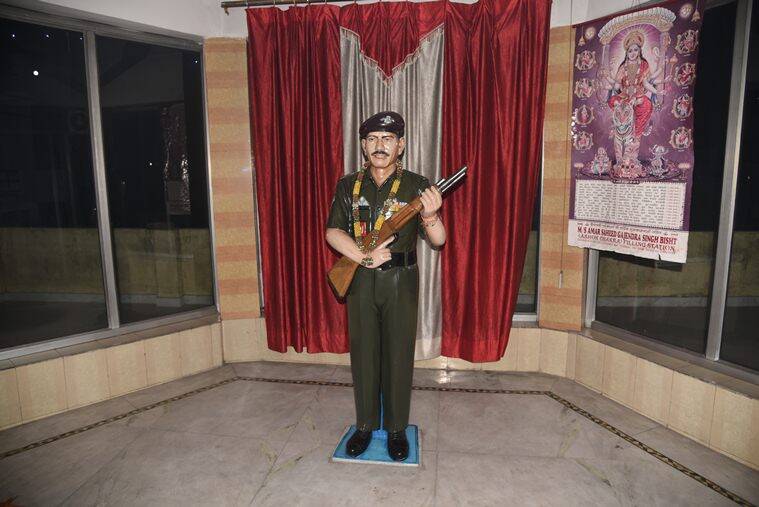
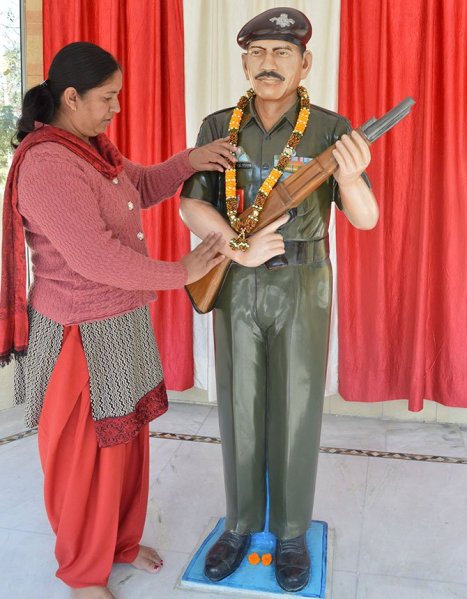
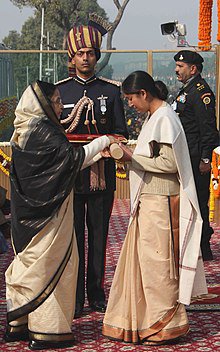
Havaldar Gajender Singh Bisht was an NSG commando who was martyred in the 2008 Mumbai attack. His bravery received the Ashoka Chakra Award from the President of India on January 26, 2009, on the Anniversary of the Republic of India.
He was born on 1 July,1972 in Dehradun, Uttarakhand.
He persued his education from the Janata Inter College in Naya Gaon.As a student he used to participate in every event organised in the school, sports or cultural activities. But he had a particular interest in boxing. Havaldar Gajendra Singh joined Garhwal Rifles in 1991 and later decided to become part of the 10 Para (Special Forces). Havaldar Gajendra also actively participated in Operation Kargil in 1999. Havaldar Gajendra was a trained commander of the Indian Army Special Forces, but he was commissioned to serve the National Security Guard’s Elite Special Action Group.
Gajendra Singh Bisht was a member of the 51st Special Action Group of the National Guard. He was part of a team of NSG Command rushed to the roof of Nariman’s house to neutralize an terrorist inside the building who had at least six hostages.
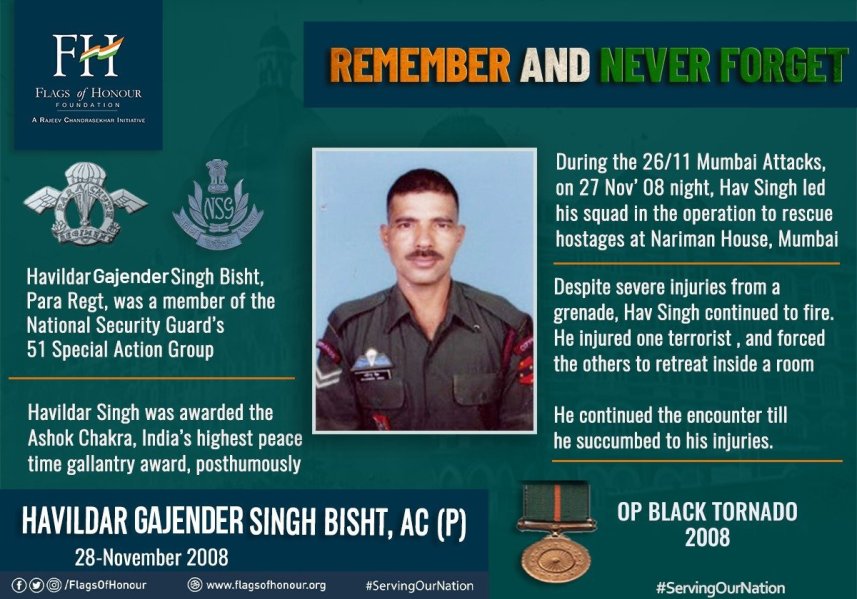
According to NSG Secretary Jyoti Krishna Dutt, Bisht led one of the teams entering the building. The team was hit by a violent terrorist attack and returned to fire while trying to contain the situation. Terrorists also threw some grenades at Commando. At this point,Bisht had the opportunity to retire with his team. But he realized they needed to seize this opportunity and went forward with thier mission.Instead of turning his back on the militants, he made the way to other troops instead, despite the grenades being thrown. He suffered multiple gunshot wounds in the process, but moved forward and was eventually injured. This allowed his team to secure a dominant position in the encounter. On the night of November 27, 2008, Havildar Gajender Singh Bisht led his army in an operation to rescue hostages from terrorists at the Nariman House in Mumbai. While securing the Nariman House during Operation Black Tornado, Bisht got fatally injured at Jewish center attack and died.
Panchayati Raj

The term “Panchayati Raj” in India signifies the system of rural local self-government. It has been established in all the systems of India by the Acts of the state legislative to build democracy at the grass root level. It is ensured with rural development. It was constitutional through 73rd Constitutional Amendment Act, 1992.
Ø A three-tier structure of Indian administration for rural development is called panchayati Raj. The aim of the panchayati Raj is to develop local self government in districts, zones and villages.
Ø Rural development is one of the main objectives of panchayati Raj and this has been established in all states of India except Nagaland, Meghalaya and Mizoram. In all union territories except Delhi and certain other areas. These areas include:-
a) The scheduled areas and the tribal areas in the states.
b) The hill area of Manipur for which a district council exists and
c) Darjeeling district of West Bengal for which Darjeeling Gorkha Hill council exists.
Evolution of Panchayati Raj
Ø The panchayati system in India is not purely a post-independence phenomenon. In fact, the dominant political institution in rural India has been the village panchayat for centuries. In ancient India, panchayat were usually elected councils with executive and judicial powers.
Ø The evolution of the Panchayati Raj system, however, got a trip after the attainment of independence after the drafting of the constitution. The constitution of India in Article 40 enjoined, The state shall take steps to organise village panchayats and endow them with such powers and authority as may be necessary to enable them to function as units of self-government.
Ø There were member of committees appointed by the government of India to study the implementation of self-government at the rural level and also recommend steps in achieving this goal.
Ø The committee appointed are as follows:-
a) Balwant Rai Mehta Committee
b) Ashok Mehta Committee
c) G V K Rao Committee
d) LM Singvi committee
A. Balwant Rai Mehta Committee and Panchayati Raj
The committee was appointed in 1957, to examine and suggest measures for better working of the community development programme and the national extensions services. The committee suggested the establishment of a democratic decentralised local government which came to be known as panchayati Raj.
Recommendations by the Committee
Ø Three tier panchayati raj system: Gram Panchayat, Panchayat Samiti and Zila Parishad.
Ø Directly elected representatives to constitute the gram panchayat and indirectly elected representative to constitute the panchyat samiti and zila parishad.
Ø Planning and development are the primary objectives of the panchayati raj system.
Ø Panchayat Samiti should be the executive body and zila parishad will act as the advisory and supervisory body.
Ø District collector to be made the chairman of the Zila Parishad
Ø It also requested for provisioning resources so as to help them discharge their duties and responsibilities.
v The Balwant Rai Mehta committee further revitalised the development of panchayati in the country, the report recommended that the panchayati raj institutions can play a substantial role in community development programmes throughout the country.
v The objectives of the panchyat, thus was the democratic decentralisation through the effective participation of locals with the help of well-planned programme. Even then prime minister of India, Pandit Jawaharlal Nehru, defended the panchyat system by saying, “authority and power to the panchayats”.
B. Ashok Mehta committee and Panchayati Raj
Ø The committee was appointed in 1977 to suggest measures to revive and strengthen the declining panchayati raj system in India.
The key recommendations are:-
Ø The three-tier system should be replaced with two-tier system: Zila parishad (District-level) and the mandal panchayat (a group of villages).
Ø District level as the first level of supervision after the state level.
Ø Zila Parishad should be the executive body and responsible for planning at district level.
Ø The institutions (zila parishad and the mandal panchayat) to have compulsory taxation powers to mobilise their own financial resources.
C. G V K Rao committee and Panchayati Raj
Ø The committee was appointed by the planning commission in 1985. It recognised that development was not seen at the grass root level due to bureaucratisation resulting in panchayat raj institutions being addressed as “grass without roots”. Hence, it made some key recommendations which were as follows:-
Ø Zila Parishad to be the most important body in the scheme of democratic decentralisation. Zila Parishad to be the principal body to manage the development programmes at the district level.
Ø The district and the lower levels of the panchayati raj system to be assigned with specific planning, implementation and monitoring of the rural development programmes.
Ø Post of district development commissioner to be created. He will be chief executive officer of the zila parishad.
Ø Elections to the levels of panchayati raj system should be held regularly.
D. L M Singhvi committee and panchayat raj
The committee was appointed by the government of India in 1986 with the main objective to recommend steps to revitalise the panchayati raj system for democracy and development. The following recommendations were made by the committee:-
1. The committee recommended that the panchayat raj system should be constitutionally recognised. It also recommends constitutional provisions to recognise free and fair election for the panchayati Raj system.
2. The committee recommended reorganization of villages to make the gram panchayat more viable.
3. It recommended that village panchayats should have more finances for their activities
4. Judicial tribunals to be set up in each state to adjudicate matters relating to the elections to the Panchayat Raj institutions and other matters relating to their functioning.
Ø All these things further the argument that panchayat can be very effective in identifying and solving local problems, involve the people in the villages in the development activities, improve the communication between different levels at which politics operate, develop leadership skills and in short help the basic development in the states without making too many structural changes. Rajasthan and Andhra Pradesh were the first to adopt panchayati raj in 1959, other states followed them later.
Ø The act is a very significant step in creating democratic institutions at the grassroots level in the country. Art has transformed representative democracy into participating democracy.
Salient features of 73rd Constitutional Amendment Act , 1992
1. Gram sabha
2. Three-tier system
3. Election of members and chairperson
4. Reservation of seats :-
a) For SC and ST
b) For Women
c) The state legislatures are also given the provision to decide on the reservation of seats in any level of panchayat or office of chairperson in favour of backward classes.
5. Duration of panchayat
6. Disqualification
7. State election commission
8. Powers and functions
9. Finances
10. Finance commission
11. Audit of accounts
12. Application to union territories
13. Exempted state and areas
14. Continuance of existing law
15. Bar to interference by courts.
In India, the panchayati raj system is not a post-independence development. For decades, the village panchayat has been the most powerful political entity in rural India. Panchayats were elected councils in ancient India that had administrative and judicial authority. Panchayat Raj is a three-tiered administrative framework in India that focuses on rural development. The panchayati Raj is a system of local self-government that is used to build districts, zones and villages.
The World Runs on Finance
Wherever you go, you hear the terms of budget, loans, bonds, stocks, crypto, and many more. Finance has become one of the highest searched topics that people want to learn. People want to get control, build different streams of income, build passive income, buy real estate, buy bonds and increase their wealth. Compared to 1980s to the present day, finance has developed and spread its branches across the world. With technology, finance has become easier to access.
Small NBFCs( Non-Banking Financial Corporations) have created apps that people can get for small amounts of loan. From 100₹ to 1,00,000₹, these corporations have found an untouched market in loan requirements, small loans. The term may be quite little, but it has huge potential. A lot of people take loans or borrow money from loan sharks at high interest rates, but do they always have money to give?

This question itself has created this part of market. With technology, payments have become quicker and able to move in a matter of minutes. NBFCs found this to be their best advantage of all time. People sign up on these apps with all their details and take the loan at exorbitant rates. They charge interest for each passing day ( 3% or more) and disburse the amount with the click of a button.
As many people are, no one wants to go through the terms & conditions because it is long and boring. Here lies the secret to the destruction of your reputation between you and the world. Many think that these apps are to be taken simply and not to be minded when the payment date comes. These NBFCs aren’t banks so they don’t give repeated notices for the payment, instead, they send your contacts all your details, with the amount of money you have taken and ask them to pay. They use godawful ways to get the payment.

Few messages are so disgusting and low that it breaks your reputation into pieces. You cannot rebuild your reputation and it keeps going on till the payment has been done. It’s a small yet such powerful blow that you cannot recover from. After the payment has been made, they don’t send a message stating that you have made the payment which doesn’t help you in any way but makes you droop down more. These interest rates on meager amounts is how they make the most money on.
Every time you borrow money, you are robbing time from your future self.
Nathan W. Morris
Loans are not a joke. You learn from the mistakes you make. Scars are lessons for what we have gone through. Learn from your experiences, teach them to your kith and kin, no matter what they are aged. If an 18 year old with a bank account, comes across the app and doesn’t know the effect of not paying on time, it’s not a wound that they can recover from easily.
Teach your younger ones about finance, how to maintain, when and where to use them but not teaching them leads to a higher damage. Be careful and do not go down this path unless you know how to come back from it.
Agnipath Scheme a new vision for future India?
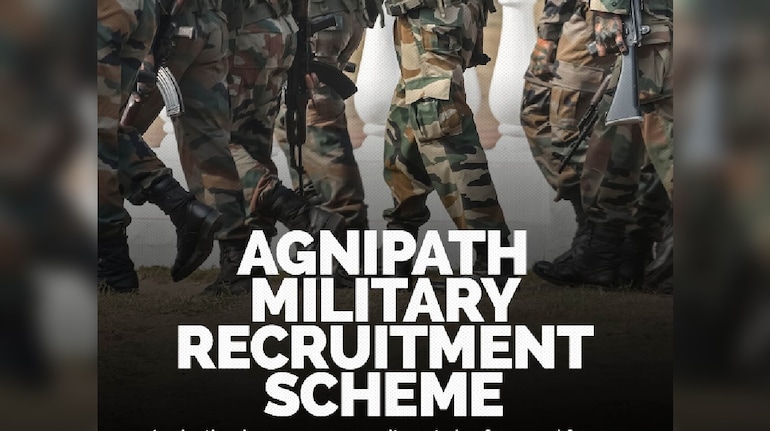
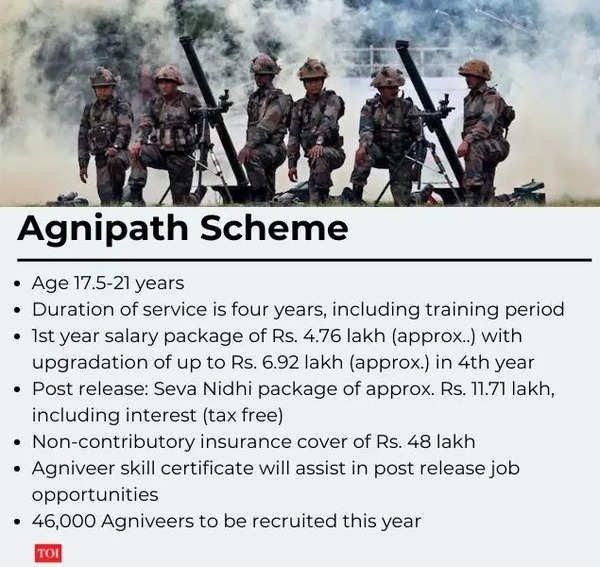
The Agnipath Program is a new program launched by the Government of India on June 14, 2022 to recruit soldiers under Corporal into three armies. The Agnipath program will be the only means of recruiting the military. All new employees will only be hired for 4 years. The personnel hired under this system are called Agniveers, a new military rank. The introduction of this system has been criticized for lack of consultation and open debate. The program is scheduled to start in September 2022. The Agnipath program was approved by the Government of India in June 2022 and will be implemented from September 2022. The announcement was made on June 14, 2022. This program is intended for both male and female applicants between the ages of 17.5 and 21. In widespread protests against the Agnipath program, the central government raised the cap from 21 to 23, but only in 2022. Recruitment under this program is held twice a year by the Indian Army, Indian Navy, and Indian Air Force. The available posts are below the executive list. The Agnipath program is the only way to serve in the army.
New employees, under the Agnipath scheme will be called “Agniveers,”who will have a four-year tenure, including six months of training followed by a 3.5-year deployment. After leaving the service, they have the opportunity to apply to continue in the army. Less than 25 percent of the retired group’s total strength is selected for the permanent roster. Employees who retire after four years of work are not eligible for a pension, but will receive a lump sum of approximately Rs 11,71,000 at the end of their tenure. The Government of India plans to hire 45,000-50,000 new employees each year through this program. In September 2022, 46,000 young people will be hired through this program. Prior to the start of the Agnipath program, soldiers were in the army for more than 15 years of service on a lifetime pension. As of 2019, there was no military recruitment for three years. The Government of India quoted the COVID-19 pandemic in India tye reason for no recruitment. Meanwhile, 50,000 to 60,000 soldiers continued to retire each year, leading to labor shortages and beginning to affect the military’s operational capabilities.
On June 16, 2022, fierce protests took place in several Indian states, where military candidates who were preparing for the armed forces were angry at the new system, demanding its rollback, and damaging public property. By June 17, 12 trains had been fired, affecting the movement of 300 trains. 214 trains were canceled, 11 trains were detoured, and 90 trains ended short of their destination. This scheme does not include long-term holdings, pensions and other benefits that existed in the old scheme. Individuals who wanted to join the army were disappointed with the rules of the new system. Of particular concern were short tenure, no early retirement pension, and an age limit of 17.5-21 years, making many of the current candidates unsuitable for serving in the Indian Army.
On June 20, a national strike called Bharat Bandh was summoned by a protesting organization calling for the withdrawal of the program. The call was made via social media without naming the organization. More than 600 trains were canceled due to a strike. Section 144 was imposed in parts of Rajasthan, Punjab, Uttar Pradesh and Haryana.
China’s Presence in the Horn of Africa
In January 2022 , first “China-Horn of Africa Peace, Governance and Development Conference.” was held. During his 17th trip to Africa, China’s foreign minister and state councillor Wang Yi asserted China’s 3 main objectives in Africa : controlling the pandemic, implementing a Forum on China Africa Cooperation (FOCAC) outcomes, and upholding common interests while fighting hegemonic politics. He focused on increasing infrastructural investment in Africa. This is the first time China aims ‘to play a role in the area of security ‘.
What is Horn of Africa?
•The Horn of Africa is a peninsula in Northeast Africa.
•It is located on the easternmost part of the African mainland, it is the fourth largest peninsula in the world.
•It lies along the southern boundary of the Red Sea and extends hundreds of kilometres into the Guardafui Channel, Gulf of Aden, and Indian Ocean. The Horn of Africa is equidistant from the equator and the Tropic of Cancer.
•The Horn contains such diverse areas as the highlands of the Ethiopian Plateau, the Ogaden desert, and the Eritrean and Somalian coasts. The Horn of Africa denotes the region containing the countries of Djibouti, Eritrea, Ethiopia, and Somalia.
•The area has experienced imperialism, neo-colonialism, Cold War, ethnic strife, intra-African conflict, poverty, disease, famine and much else.
China’s recent project :
In the 2021 forum, the entire region of the Horn participated, and four resolutions were adopted :
• The Dakar Action Plan : The two sides commend the development of relations between China and Africa, and believe that over the past 21 years since its inception, the Forum has strongly promoted the development of relations between China and Africa, and become an important benchmark for international cooperation with Africa.
• China-Africa Cooperation Vision 2035 : It was formulated to determine the directions and objectives of mid- and long-term cooperation and promote a closer community with a shared future for China and Africa.
• Sino-African Declaration on Climate Change : It is aimed at enhancing coordination and cooperation in the multilateral process on climate, and jointly safeguard the legitimate rights and interests of China, Africa and other developing countries.
• Declaration of the Eighth Ministerial Conference of FOCAC : Under the theme ”Deepen China-Africa Partnership and Promote Sustainable Development to Build a China-Africa Community with a Shared Future in the New Era” and committed to the development of FOCAC and to the deepening of the China-Africa comprehensive strategic and cooperative partnership, both adopted by consensus the Dakar Declaration of the Eighth Ministerial Conference of FOCAC. The FOCAC promotes China’s role in the infrastructural and societal development of the Horn.
What are China’s Primary Interests in the Region?
1. Infrastructure :
• One of its landmark projects was fully funding the USD 200 million African Union headquarters in Addis Ababa.
• China has also invested in the Mombasa-Nairobi rail link in Kenya, and has already delivered on railway projects in Sudan.
• It also has a viable military hardware market in Ethiopia and has built over 80 infrastructural projects in Somalia, including hospitals, roads, schools and stadiums.
• In Djibouti, 14 infrastructural projects are funded by China.
2. Financial Assistance :
• Ethiopia, is one of the top five African recipients of Chinese investments, and also has a debt of almost USD 14 billion.
• China accounts for 67% of Kenya’s bilateral debt.
• In 2022, China promised to provide USD 15.7 million assistance to Eritrea.
3. Natural Resources (Oil and Coal) :
• China is also interested in minerals such as gold, iron-ore, precious stones, chemicals, oil and natural gas in Ethiopia.
• South Sudan, a source for petroleum products, has had continued Beijing investment in the industry since the latter’s initial entry in 1995.
4. Maritime Interests :
• China’s first and only military base outside its mainland is in Djibouti.
• In 2022, China hinted its willingness to develop Eritrea’s coast which would connect to China’s investments in land-locked Ethiopia.
• The U.S. has speculated that China wishes to build another military base in Kenya and Tanzania, thereby increasing its military presence in the region.
China shifts from its Principle of Non-Intervention :–
• For Africa, Chinese investments could lead to stable environments which could help the countries achieve their peace and development objectives. For China, conflict in the region comes at a heavy cost.
• In Ethiopia. when the conflict broke out, over600 Chinese nationals, working on different projects, were evacuated, putting several investments at risk.
• From a trading perspective, the region plays a significant role in achieving the objectives of the China-Africa Cooperation Vision 2035.
• China’s move towards peace in Africa indicates a shift in its principle of non-intervention.
• It is China’s message that its presence in the continent has a larger objective and is not likely to be limited to the Horn of Africa.
• This includes an aim to project itself as a global leader and boost its international status.
• Further, the recent developments imply that China is focusing on a multifaceted growth in the continent for the long run.
• For Africa, China’s presence is an alternative to the European powers, many of whom are facing criticism from African governments.
• Further, African governments, which do not conform to Western standards of democracy, interact better with powers like China and Russia.
Significance of Horn of Africa for India :-
1. Africa has been a Growing Interest : Africa has been of growing interest to India for political, economic and security reasons, especially the sub-region – the Horn of Africa.
2. Proximity to Oil Producing Region : The Horn of Africa is strategically important since it is close to the oil-producing region of the Middle East. Approximately 40% of the oil produced in the Middle East crosses through the shipping lanes of Red Sea.
3. Shipping Routes : Djibouti is the choke point on this shipping route. It is due to this reason that countries like the United States, France, and China have a military base in Djibouti. With the new reliance on the sea lines of communication for India’s economic growth, Delhi declared that its national interests were no longer limited to the Subcontinent but stretched from the “Aden to Malacca”.
India’s Concern over China’s presence :-
• Dominance in the Indian Ocean : Situated on the north-western edge of the Indian Ocean, Djibouti could become another of China’s “string of pearls” of military alliances and assets ringing India, including Bangladesh, Myanmar and Sri Lanka.China has stepped up activity in the Indian Ocean, which India considers within its sphere of influence, in recent days, citing anti-piracy patrols and freedom of navigation. It has forced the Indian Navy to tighten surveillance of the strategic waters.
• China seeks to control over Vital Shipping Routes : The Indian Ocean shipping lanes carry 80% of the world’s oil and a third of the global bulk cargo. China is looking to secure its energy and trade transportation links along the vital shipping route.
• Influencing Indian Ocean Countries : The Indian Ocean is also emerging as the playground for countries eyeing a bigger role in world affairs. China is looking to generate goodwill and influence in the Indian Ocean countries by investing in projects such ports, roads and railways. China is looking to expand its presence in the Indian Ocean, and is building ports and other infrastructure in Sri Lanka, Bangladesh and Pakistan.
Way Forward :-
• What happens in the region has a direct bearing on India’s security and well-being and hence India should pay more attention to the prevailing conditions and power dynamics in the Horn of Africa.
• India would be well advised to become more active in examining and discussing the complex problem in-depth with the governments in Eastern Africa, the African Union and others concerned so as to be able to make a meaningful contribution to its resolution.
Sources : The Hindu and Dristi IAS.

Noble Queen of the Maratha Empire Rani Ahilyabai.
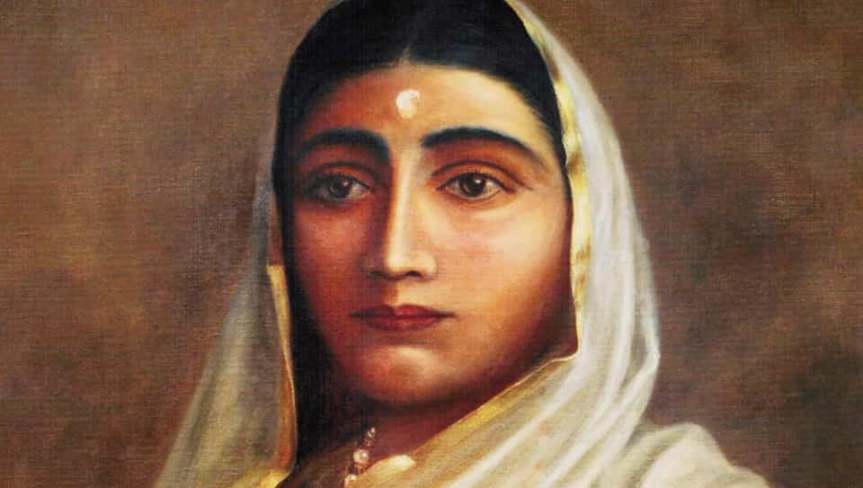
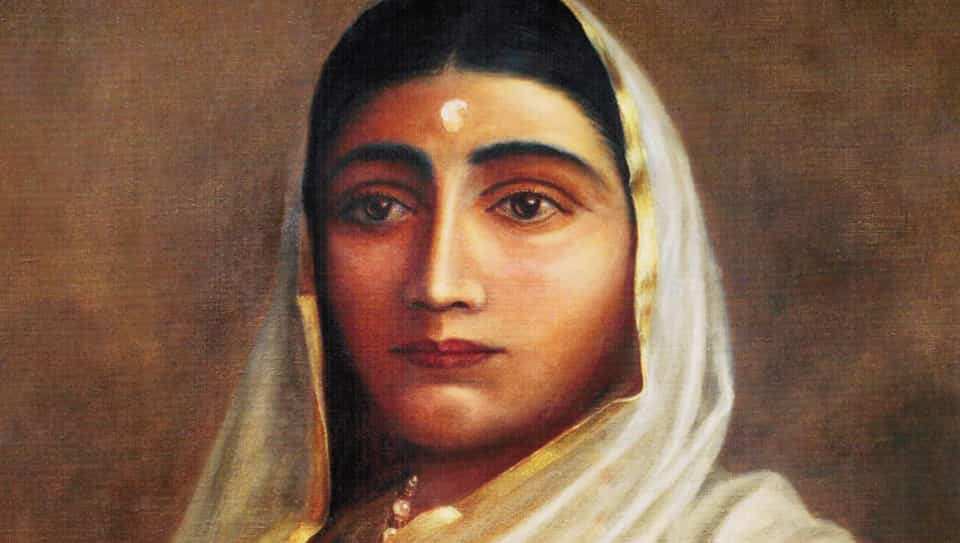
Ahilya Bai was born write to Mankoji Shinde and Sushila Shinde in the village of Chaundi (now Ahmednagar district) in Maharashtra, and was born in the Marathi Hindu family. His father, Mankoji Shinde, a descendant of the magnificent Dhangar family, served as a patil. At that time, the woman were not allowed to attend school , but her father taught her how to read and write.
According to one legend, Ahiliya once stopped by Chaundi on her way to Pune, where Bajirao I, commander of the Maratha army, and Marhar Rao Holker, the ruler of Malwa, saw eight-year-old Ahilya in a temple worship service. Impressed by her devotion and her personality, Marhar, on the advice of Peshwa, married Ahilya and his son Khande Rao. She married Khande Rao in 1733. Ahilya accompanied Khande Rao on many campaigns. Throughout her marriage, she was raised by her mother-in-law, Gautama Bai. Gautama Bai is believed to have played an important role in bringing out the values that she had planted in Ahiliya. She trained them in administration, accounting, politics, etc. and finally delivered their Khasgi Jagir in 1759.
In 1754, Candelao, along with his father Marharla O’Holker, besieged Fort Kumar in Jatrajas Rajimar in Bharatpur at the request of Imadulmark and General Mirbakshi of Mugar Emperor Ahmadsha Bahadur. Suraj Mal supported Emperor Mugar’s rebellious Wajir Safdar Jang. Khande Rao was inspecting his army with an open litter when a shell fired by the Jat army during the battle hit him and died.
After the death of her husband, Ahilya Bye was prevented from playing sati by her father-in-law. After the death of her husband, she received military training by Malhar Rao Holker. After the death of Khande Rao.Ahilya Bai gave up all the desires of life and decided to perform a sati to accompany her husband’s funeral cremation. Her people urged her not to commit sati, but she said her husband promised to accompany her for the rest of her life, and now he walked in the middle of her. Finally, when she decided to play Sati and did not forgive her, it was her father-in-law, Malhar Rao, who made a fervent emotional plea to stop her from doing suicide. .
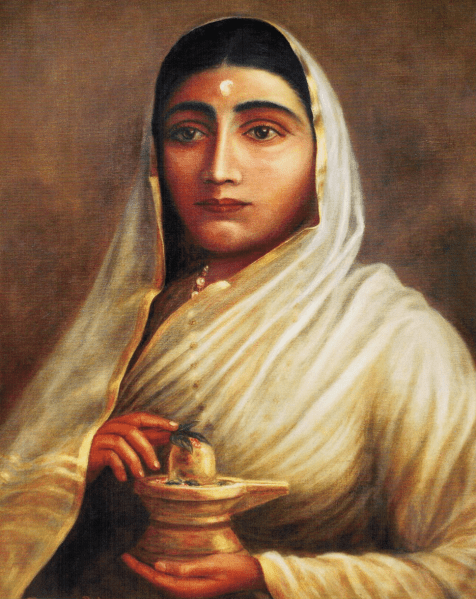
Marhar Rao Holker died in 1766, twelve years after his son Khande Rao died. Male Rao,the grandson of Marhar Rao and the only son of Khande Rao became the ruler of Indole under the rule of Ahilya Bai in 1766, but he also died within a few months in April 1767.
Ahiliya Bai died on August 13, 1795, at the age of 70. The reign of the modern woman Ahiliya Bai is remembered as a golden age in the history of the Maratha Empire. Ahiliya Bai was taken over by her nephew Tucozy Rao Holker, her commander-in-chief. He immediately abandoned the throne in 1797 in support of his son Kashi Rao Holker.
Ahiliya Bai was a great pioneer and builder of Hindu temples and built hundreds of temples and Dharmashala throughout India. Especially well known for the refurbishment and re-dedication of some of the most sacred sites of Hindu pilgrimages that were desecrated and destroyed by Emperor Aurangzeb in the last century.
MSME : Bulwark for Indian economy
Micro, Small, Medium Enterprises (MSME’s) are privately owned entities involved in production, manufacturing and processing of goods and commodities. It forms the core of Indian economy and has always acted as the bulwark for the Indian economy, providing it strength and resilience to tolerate global economic shocks and adversities. It requires less than ₹50 crore in investment in plant and machinery and has turnover below ₹250 crore. Thus, serving as a backbone of the Indian economy. The government of India has identified MSME’s as a top priority for achieving Atma Nirbhar Bharat.
Importance of MSMEs for Indian Economy :
• Employment: It is the second largest employment generating sector after agriculture. It provides employment to around 11.1 crore people or 45% of all the workers in India. It accounts for 99% of all the businesses.
• Contribution to GDP: With around 36.1 million units throughout the geographical expanse of the country, MSMEs contribute around 6.11% of the manufacturing GDP and 24.63% of the GDP from service activities. MSME ministry has set a target to up its contribution to GDP to 50% by 2025 as India becomes a $5 trillion economy.
• Exports: It contributes around 45% of the overall exports from India.
• Inclusive growth: MSMEs promote inclusive growth by providing employment opportunities in rural areas especially to people belonging to weaker sections of the society. For example: Khadi and Village industries require low per capita investment and employs a large number of women in rural areas.
• Financial inclusion: Small industries and retail businesses in tier-II and tier-III cities create opportunities for people to use banking services and products.
• Promote innovation: It provides opportunity for budding entrepreneurs to build creative products boosting business competition and fuels growth.
Issues and Challenges :
1. Access to credit :
• 90% of the MSMEs are dependent on informal sources for funding
• Lack of sufficient collateral and high working capital needs
2. Access to Markets :
• Low outreach and non availability of new markets.
• Lack of skilled manpower and ineffective marketing strategy.
• Difficult for MSMEs to sell products to government agencies.
• Competition from MNCs and other big industries
3. Technology Access :
• Limited human resources and weak financial standing.
• MSMEs, particularly in the unorganised sector, show lower adaptability of new technology and innovation.
4. Quality and Export Issues :
• Low quality products impact export competitiveness.
• Inadequate access to quality raw materials.
• Use of traditional machines causes low productivity
5. Ease of Doing Business :
• Cumbersome government procedures and rules for establishing new units.
• Bureaucratic delays in getting clearances.
• Poor litigation system in the country.
Steps to be taken to improve the condition of MSMEs :
• Launch of the 59 minute loan portal to enable easy access to credit for MSMEs.
• 2 percent interest subvention for all GST registered MSMEs, on fresh or incremental loans.
• Trade Receivables e-Discounting System (TReDS) to enable access to credit from banks, based on their upcoming trade receivables from corporate and other buyers.
• Union government announced to launch an e-commerce platform on the lines of “Amazon and Alibaba” to sell products from MSMEs and the Khadi and Village Industries Commission.
• Public sector companies now compulsorily procure 25%, instead of 20% of their total purchases, from MSMEs.
• More than 40,000 MSMEs registered on Government e-Marketplace (GeM) portal. It provides transparency in procurement and facilitates MSMEs to directly reach out to the buyers.
• 20 hubs and 100 spokes in the form of tool rooms will be established across the country. This will facilitate product design and easy access to latest technology to MSMEs.
• Financial assistance is provided for implementation of lean manufacturing techniques to enhance the manufacturing competitiveness of MSMEs.
• Financial support to MSMEs in ZED(Zero Defect Zero Effect) certification to improve quality of products.
• Government provides subsidy towards the expenditure incurred by enterprises to obtain the product certification licenses from national and international bodies.The return under 8 labour laws and 10 Union regulations must now be filed only once a year.
• Computerised random allotment for inspector visits to the establishment.
• Environmental Clearance under air pollution and water pollution laws, have been merged into one. Also, the return will be accepted through self-certification.
• For minor violations under the Companies Act, the entrepreneur will no longer have to approach the courts, but can correct them through simple procedures. This signifies simplification of government procedures and instilling confidence among entrepreneurs.
Government schemes to promote MSMEs :
• Udyami Mitra Portal : launched by SIDBI to improve accessibility of credit and handholding services to MSMEs.
• MSME Sambandh : To monitor the implementation of the public procurement from MSMEs by Central Public Sector Enterprises.
• MSME Samadhaan -MSME Delayed Payment Portal –– will empower Micro and Small entrepreneurs across the country to directly register their cases relating to delayed payments by Central Ministries/Departments/CPSEs/State Governments.
• Digital MSME Scheme : It involves usage of Cloud Computing where MSMEs use the internet to access common as well as tailor-made IT infrastructure
• Prime Minister Employment Generation Programme : It is a credit linked subsidy program under Ministry of MSME.
• Revamped Scheme of Fund for Regeneration Of Traditional Industries (SFURTI) : organizes traditional industries and artisans into clusters and make them competitive by enhancing their marketability & equipping them with improved skills.
• A Scheme for Promoting Innovation, Rural Industry & Entrepreneurship (ASPIRE) : creates new jobs & reduce unemployment, promotes entrepreneurship culture, facilitates innovative business solution etc.
• National Manufacturing Competitiveness Programme (NMCP) : to develop global competitiveness among Indian MSMEs by improving their processes, designs, technology and market access.
• Micro & Small Enterprises Cluster Development Programme (MSE-CDP) – adopts cluster development approach for enhancing the productivity and competitiveness as well as capacity building of MSEs.
• Credit Linked Capital Subsidy Scheme (CLCSS) is operational for upgradation of technology for MSMEs.
Way Forward :
Today enterprises need to adopt best practises and follow international standards to go forward for offering innovative solutions. Focus should be on transfer of information and skill development to effectively use the transferred technology. There is an urgent need to upgrade infrastructure utilities (like water, power supply, road/rail) for any enterprise to run its operations successfully. Entrepreneurs need to develop quality conscious mindsets embedded in the organisational culture. Sensitisation and handholding of MSMEs at different and upgraded level of certification is the need of the hour. Policy makers and society at large need to recognize and support the central socio-economic role that MSMEs play in India.
Sources : The Hindu and Dristi IAS.

Anti-Defection Law
The anti-defection law punishes individual Members of Parliament (MPs)/MLAs for leaving one party for another. The anti-defection law was enacted to ensure that a party member does not violate the mandate of the party and in case he does so, he will lose his membership of the House. The law applies to both Parliament and state assemblies.It aims to prevent political defection brought about by the lure of the rewards or perks offered by the other parties. The Tenth Schedule or Anti-Defection law was added to the Constitution via the 52nd Amendment Act, 1985.
How did Anti-Defection Law comes into effect ?
• In Haryana, in 1967, an MLA named Gaya Lal changed his party thrice in a day, after which the phrase “Aaya Ram Gaya Ram” became popular in Indian politics.
• Due to frequent defections of elected and nominated party members, good governance became elusive and an insecure environment was created for the functioning of the state and central governments.
• It was realized that there was a need for an anti-defection law that would seek to prevent such political defections.
• Rajiv Gandhi, the then Prime Minister of India(1984-1989), proposed a bill to remove the evils of defection.
• The 10th Schedule of the Indian Constitution popularly referred to as the ‘Anti-Defection Law’ was inserted by the 52nd Amendment of the Indian Constitution in 1985.
Grounds for disqualification:
A member can be disqualified if :
1. A member of a house belonging to a political party:
• Voluntarily gives up the membership of his political party, or
• Votes, or does not vote in the legislature, contrary to the directions of his political party (Whip). However, if the member has taken prior permission, or is condoned by the party within 15 days from such voting or abstention, the member shall not be disqualified.
2. An independent candidate joins a political party after the election.
3.A nominated member joins a party six months after he becomes a member of the legislature.
Power To Disqualify :
• The decision on disqualification questions on the ground of defection is referred to the Speaker or the Chairman of the House, whose decision is final, which can be subjected to Judicial review.
• If a complaint is received regarding the defection of the Chairman or the Speaker, a member of the House who must be elected within the House, shall take the decision.
• All proceedings in relation to disqualification under this Schedule are considered to be proceedings in Parliament or the Legislature of a state as is the case.
• The law does not provide a timeframe within which the presiding officer has to decide a defection case.
Advantages :
• It prevents the menace of political party members from shifting their allegiances.
• It ensures party loyalty among the elected members.
• It provides for a stable and secure Government at both national and state levels.
• It make members of parliaments more responsible and loyal to the parties with whom they were aligned at the time of their election.
• It strengthen democracy by bringing stability to politics.
• It strengthen democracy by bringing stability to politics, ensuring legislative programs of the Government are not jeopardized by a defecting parliamentarian.
Disadvantages :
• Undermining Representative & Parliamentary Democracy: After enactment of the Anti-defection law, the MP or MLA has to follow the party’s direction blindly and has no freedom to vote their judgment.
• Controversial Role of Speaker: In many instances, the Speaker (usually from the ruling party) has delayed deciding on the disqualification.
• No Recognition of Split: Due to the 91st amendment, the anti-defection law created an exception for anti-defection rulings.However, the amendment does not recognise a ‘split’ in a legislature party and instead recognises a ‘merger’.
• Subversion of Electoral Mandates: Defection is the subversion of electoral mandates by legislators who get elected on the ticket of one party but then find it convenient to shift to another, due to the lure of ministerial berths or financial gains.
• Affects the Normal Functioning of Government: The infamous “Aaya Ram, Gaya Ram” slogan was coined against the background of continuous defections by the legislators in the 1960s. The defection leads to instability in the government and affects the administration.
• Promote Horse-Trading: Defection also promotes horse-trading of legislators which clearly go against the mandate of a democratic setup.
Sources : The Hindu , Drishti IAS and Prepp

Population Ecology


Population: A group of individuals of a given species that live in a specific geographic area at a given time is known as population. Population include individuals of same species but may have different genetic makeup such as hair, eyes or skin color and size between themselves and other population.
The term “population ecology” is often interchangeably used with the term such as population biology or population dynamics. Population ecology is important in conservation biology especially in the development of population viability analysis. The human population is growing at a logistic rate and has been affecting the population of other species in return. Population ecology is the study of how the population sizes of a species change over time and space.
Control Methods of Population:
- Population control may involve culling, translocation and manipulation of the reproductive capability.
- Culling: It is the process of segregating organism from a group according to desired or undesired characteristics.
- Translocation: It is a type of chromosomal abnormality.
- Manipulation: skillful handling, controlling or using something or someone.
- The growth of a population maybe limited by environmental factors such as food supply or predation.
- The main biotic factors that affect population growth include-
- Food: Both the quantity and quality of food are important. For example; snails can’t reproduce successfully in an environment low in calcium, no matter how much food there is because they need calcium for their growth.
- Predator: As the prey population becomes larger it becomes easier for the predators to find prey. If the number of predators suddenly, falls, the prey species might rise.
- Competitor: The organisms may require the same resources from the environment and reduce the growth of population. Competition for territory and for mates can drastically reduce the growth of individual organisms.
- Parasites: These may cause disease and slow down the growth and reproduction rate of organisms within a population.
- Important a biotic factors affecting growth are:
- Temperature: Higher temperature speed up enzyme catalyzed reactions and increase growth.
- Oxygen availability: It affects the rate of energy production by respiration.
- Light availability: For photosynthesis light may also control breeding cycles in animals and plants.
- Toxins and pollutants: Tissues growth can be reduced by the presence of pollutant like sulphur dioxide (SO2) and toxins like oestrogen.
Methods of Population Planning:
- Higher taxation of parents who have too many children.
- Abstinence: The practice of restraining oneself from indulging in something.
- Reducing infant mortality so that parents do not need to have many children to ensure at least some would survive to adulthood.
- Sterilization
- Abortion
- One child or two child policies
- Family planning
- Create small family role models
- Migration from rural areas to urban areas
- Emigration
- Family planning: It is used to ensure that a women gets a child when she actually wants it. It reduces accidental pregnancies and ensures an controlled family size.
- Raising level of education: Education, particularly that of woman, is very important in population control. It changes cultural beliefs and attitudes. It makes people liberal in approach.
Urbanization: Causes and effects


Urbanization is an increase in the number of people living in towns and cities. It occurs mainly because people from rural areas move to urban areas. It can also be explained as the expansion of a city or metropolitan area.
Causes of urbanization
- Rural to urban migration of happening on a massive scale due to population pressure and lack of resources in the rural areas.
- People living in rural areas are pulled to the city because they believe that standard of living in urban areas are much better than rural areas.
- Natural increase of population is caused by a decrease in death rate while birth rate remains high.
Effects of urbanization
A range of economic, political, social, cultural, environmental factors affect urbanization.It is encouraged socially and culturally through social media.
- Socio- cultural impacts:
- Cities have a strong socio- cultural impact on their surrounding rural areas.
- The mass media depicts city life as superior to rural life.
- The fertility rates in cities is often lower than rural areas due to absence of agriculture, cost of children, food and living space of cities and family planning.
- Socio- economic impacts:
- As the city grows, the cost of housing and infrastructure also grows and there will be less water, land and building materials available and causes congestion problems.
- Unemployment grows and drug abuse, crime rates and homelessness also grows.
- Environmental issues:
- Wastes are a major problem in large cities.
- Air pollution results from over dependence on motorized transport systems and from burning of coal to supply energy.
- Water pollution results from poor sewage facilities and disposal of industrial heavy metals into water bodies.
- Vast quantities is solid wastes are produced in the industries and pollute the environment.
- Traffic congestion and noise pollution are major environmental impacts of large cities.
Benefits of urbanization
- Moderate urbanization helps in improvement of economy.
- It helps in the growth of commercial activities.
- There is a socio- cultural integration as a result of urbanization.
- There is an efficient use of resources.
- There is an increase in the supply of labour.
The problem of this rapid urbanization is faced by the whole world. The greatest challenge is to minimize the negative aspects of urbanization and build the benefits of urbanization. For this, more opportunities should be created in the rural areas for people to take up. The rural infrastructure also needs to be taken into consideration in order to keep urbanization in check.
 Eduindex
You must be logged in to post a comment.