This CEO’s Trick for Building Stronger Relationships Is So Easy That You Can Pull it Off Too

This CEO’s Trick for Building Stronger Relationships Is So Easy That You Can Pull it Off Too was originally published on The Muse, a great place to research companies and careers. Click here to search for great jobs and companies near you.
If you love learning from successful people, you already know common habits they point to, like:
But there’s another one to add to the list—that I doubt you’ve heard 100 times already: Send birthday cards to everyone you work with.
\'\'
Paper Source Watercolor Balloons A2 Happy Birthday Cards, Set of 10
According to Chris Weller of Business Insider, Sheldon Yellen, the CEO of BELFOR Holdings, Inc., credits writing birthday cards (7,400 annually) for building a strong rapport with his employees and contributing to “a more compassionate, gracious workplace.”
When it you think about it, this strategy makes total sense, because in the words of Claude Silver Chief Heart Officer at VaynerMedia, people want to “bring their whole selves to work,” and that means sharing more than progress on a to-do list with the people around them.
But, while this may be what we want, it can be hard to connect with colleagues on a level other than “Here’s that part of the report you needed…” No one’s trying to be rude, but it’s easy to get wrapped up, especially if you’re busy. And as one deadline rolls into the next, you realize that your work relationships all feel pretty transactional.
That’s where writing birthday cards come in. First, every single one of your colleagues has one, so you don’t run this risk of leaving people out. The dates may already be noted in your database or a shared worksheet, and if not, you can send an email around to your teammates asking them to share their birthday if they’re comfortable doing that.
Second, take the next step and buy a box of cards to leave in your desk. That way, when someone’s big day rolls around, you can quickly write a handwritten note (learn more about why this makes a difference to the other person).
For you, it won’t be that much more effort, but to the other person, it’ll feel like you went out of your way to do something thoughtful.
If you’re a loss for words, just fill in this template:
Dear [Name],
Happy Birthday!
I enjoyed getting to know you better over the course of [project]./ I’m excited to work together on [initiative]./ I always look forward to [your thoughtful contributions to meetings/our discussions of [favorite team]].
Hope you have a great day!
[Your Name]
Like Yellen, you should notice a chain reaction. Your co-workers will know you care enough to remember them for something that isn’t work-related. In turn, they’ll thank you for the card, and it’ll open the door to discussing more than progress updates.
Above all, keep in mind that this strategy can help anyone build stronger relationships. You don’t have to be the CEO. In fact, as Muse columnist Erica Breuer shares, sending birthday cards is a great way for remote workers to stay connected to their colleagues, too.
So, if you’re looking for looking for an easy to build stronger relationships, buy some birthday cards. Let me know if you try this strategy out and if it works for you on Twitter.

Summer Internship Award Recipients

It is always a difficult choice to make, but Summer Internship Awards have been announced. Eight DU students will be hard at work in wide range of fields in communities across the globe this summer.  The University, as well as Career Services, would like to congratulate the following students as recipients of DU’s summer internship awards:
  • Sonia Schaefbauer, WireDelta in Copenhagen, Denmark
  • Kayla Steffens, Boettcher Foundation’s Scholarship Program in Denver, CO
  • Samantha Hyman, Comedy Works, Business Affairs Human Resources Intern in Denver, CO
  • Kathryn Ziegner, Alaska Sealife Center, Marine Mammal Stranding and Rehabilitation in Seward, AL
  • Noel Leifer, Children’s Hospital Colorado, Sie Center for Down Syndrome in Aurora, CO
  • Aarika Matney, Project C.U.R.E. in Centennial, CO
  • Aaron Hinds, CRCC Asia in Beijing, China
  • Shaileigh St. Clair, A Vintage Affair Events & Rentals in Denver, CO
This award helps students offset the expense that comes with unpaid internships. If you have an unpaid internship and are an undergraduate please apply for next year’s award. Congratulations again to these students. We know you will make the DU community proud!
For more information regarding the Summer Internship Award check out the website.

3 Questions to Ask Yourself Before Trying to “Stand Out” in Your Job Search

3 Questions to Ask Yourself Before Trying to “Stand Out” in Your Job Search was originally published on The Muse, a great place to research companies and careers. Click here to search for great jobs and companies near you.
All job hunters hear the advice to “stand out,” “be different,” and “separate yourself from the crowd!”
But what exactly does that mean with regard to your job search? Do you send a fruit basket to your interviewer? Record a video of a company cheer you composed? Or, maybe you just try to be your “best self”—whatever that means!
Here’s the scoop: You will face competition when applying to most jobs, so the greater the gap you create between you and your fellow applicants, the better. But, it’s important to remember that there’s a right way to stand out and a wrong way.
To help you determine how to stand out successfully (and this can vary by industry and position), we’ve developed three rules. Before we jump into them, let’s take a look at two sales manager job applicants I encountered while working in HR for a major retail chain.
Both prospects wanted to “stand out” in the interview process. Applicant A submitted a prospective sales plan, laid out in 30, 60, and 90 days. While some of the specifics of her proposal were a bit off, overall, it was a solid plan that showed creative, analytical thinking.
Applicant B affixed her resume with an 8×10 photo of herself. After all, what better way to stay top of mind? Well, Applicant B was memorable, all right, but not in the positive way she’d hoped for. Her move cost her the chance to even interview.
Standing out requires risk-taking by nature, but you can mitigate that risk by asking yourself the following three questions to make sure you’re making the impression that’ll lead to an interview and job offer:

1. Is it Relevant?

Being unique purely for the sake of individuality is useless. Find a way to stand out that’s relevant to the company and to the opportunity you’re interviewing for.

Do This

One of our clients, Laurel, a huge Seattle Mariners fan, was looking for a new position in social media. She took her interest and capitalized on it to create a social media and publicity campaign to get the Mariners’ attention and convince them she was the best person for a social media marketing position. She snagged an interview even though she had less experience than many of the other candidates.
See how this outside-the-box thinking works? You have to consider your industry and what you can do to demonstrate in a way that goes beyond the bullet points on your resume how you’d be an asset.

2. Is it Valuable?

Whatever your plan for standing out, it must further your cause in some way. This rule is why just emailing 100 times or calling 10 times a day after your interview isn’t going to pay off.

Do This

Matt Hirsch, another client, hoped to make a statement following an interview for a graphic design position he really wanted.
His idea? He created a “Hirschy” chocolate bar wrapper that was perfectly tailored to the role. The list of “ingredients” included the graphic programs he’s well-versed in and the end result was simply a perfectly creative way to illustrate his skill set and show that he knows how to go above and beyond.
Sending a thank you note after your interview is essential, but when competition’s fierce, you’d be wise to think about the other ways your follow up can help you stand out.

READY TO MAKE A GREAT IMPRESSION?

We thought so—now go out there and land some interviews.
80,000+ openings right this way
\'jobs\'

3. Is it Authentic?

The problem with gimmicks is that they’re, well, gimmicky! They don’t ring true or feel authentic.
So before you rent a sky writer or send your interviewer a CD of your “greatest hits,” make sure your scheme rings true for you and your personality. Whatever plan you pursue, it should share a new dimension of your personality or shed light on a part of your resume you want the hiring manager to understand in greater detail.

Do This

Yet another client, Eric, thought he might be really interested in the solar industry. He created a blog with the intent to write articles that allowed him to investigate whether or not he really wanted to be a part of that field. As it turned out, the website also gave him complete freedom to contact CEOs of solar companies to get their perspective on recent changes affecting their business.
He then went a step further and published the resulting article on his website. This authentic and completely legit tactic allowed him to investigate the industry, but more than that, it put him in contact with a dozen potential employers.
Consider how you can both be true to yourself and leave a lasting impression that’ll result in getting you hired.
As you can see, standing out doesn’t have to be expensive or super complicated—after all, in some cases, time is of the essence—it just needs to be real and different in the right way. A typo-free, polished resume is great, and a stellar cover letter is awesome too, but when you need to rise to the top of promising candidates, you’re going to want to take things a step further.
Brainstorm some ideas, and then put them through the three guidelines above to ensure you’re hitting the right notes. It can be helpful to enlist the help of an exceedingly honest friend at this stage.

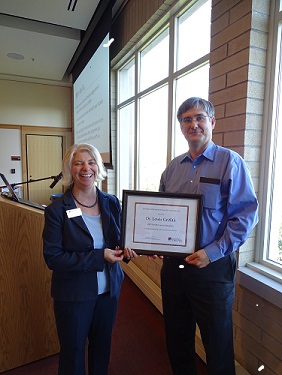
DU Career Services Announces Faculty Career Champion Award Winners – Dr. Lewis Griffith and Dr. Nancy Lorenzon

On September 13, 2017, DU Career Services hosted an appreciation breakfast for over 100 faculty who were nominated by students for making a difference in their career development journey.  At the end of the 2016-2017 academic year, DU Career Services offices across campus sent an email to all undergraduate and graduate students asking them which faculty members have been their faculty career champions – faculty members that have supported student internship, career, and continuing education goals. We received 366 responses reflecting the work of 185 unique faculty members.  At the award ceremony, faculty received a letter containing the student quotes from the nomination process.  They also were also given the chance to share career development ideas and opportunities, learned of upcoming DU Career Service events to share with students, and celebrate the two award winners.  The two selected Faculty Career Champions received several student nominations. The faculty award winners are Dr. Lewis Griffith and Dr. Nancy Lorenzon.
Dr. Lewis Griffith is an alumnus of the Korbel Ph.D. program where specialized in the area of security studies. Dr. Griffith has done significant independent research, to include published work, in the areas of weapons proliferation, humanitarian intervention, classroom simulation and exercise, and the implications of globalization on the state security policies of non-Western states.   Before joining the faculty of Korbel in 2010, he was faculty at Air Command and Staff College (ACSC) and had taught at DU, the University of Colorado-Denver, and Metropolitan State College of Denver as an adjunct professor.  Lewis has helped students tremendously with finding out about great internship opportunities and successfully securing very competitive internships.  With his help, students have interned throughout the intelligence community, the State Department, Department of Defense, many different think tanks and all this throughout the U.S. and abroad.  The several students who nominated him commented about this willingness to give advice and support regarding internships and careers, how his classes helped them prepare for employment, how student-focused he is and how much they appreciated his mentoring.  Here is a direct quote from one of his student nominators “He is a model professor, intimate and devoted mentor, and overall remarkable man. His insight into the international security careers was instrumental in helping me write resumes, prepare for interviews, and be a value team member at work. He is the top-tier at JKSIS.”
Dr. Nancy Lorenzon is a Teaching Professor with the Department of Biological Sciences at the University of Denver.  She has been with the University since 2007. She currently serves as Director of Pre-Professional/Allied Health Advising, Director of the Undergraduate Research Center, and oversees the Professional Science Master’s program in Biomedical Sciences.She recently received the Master Educator Award and the Faculty Advisor of the Year honor. Nancy received her Ph.D. in Anatomy and Neurobiology from the University of Tennessee Health Sciences Center and her B.S. in Animal Behavior from Bucknell University.   Nancy is a tireless career champion and advocate as stated by several of her students.  One of her student nominees stated it best.  “Dr. Lorenzon has always been there to support her students, including me. I feel comfortable coming to her for advice and she has helped me to look at alternative career paths when I didn’t feel confident in the career path I originally had in mind. She is a voice of reason and is the epitome of empathy. Nancy is the most selfless professor at DU. She understands what it takes to want to get into medical school and she ALWAYS has time for everyone.”
DU Career Services would like to congratulate all of the faculty nominees for their tireless work and effort to guide students in their career development journeys.  Nominations by students for the 2017-18 Faculty Career Champion award will begin in the Spring Quarter.  Contact Career & Professional Development for more information, career@du.edu.

B.Ed. I year – General English – Centrality of language in learning.

Role and importance of language in the curriculum
The language is always believed to play a central role in learning. No matter what the subject area, students assimilate new concepts when they listen, talk, read and write about what they are learning. Speaking and writing reflects the thinking process that is taking place. Students learn in language, therefore if their language is weak, so is their learning. Most importantly, we need to have an Learning Across Curriculum (LAC) approach because by focusing on the teaching and learning of language within a subject, the teacher will improve the students’ results in that subject, for example, by explicitly teaching students how to write History essays, or how best to write ‘for and against’ arguments in Liberal Studies. Experienced teachers know that it is essential to teach their students how to ‘answer’ the types of questions they are likely to find in their exams. After understanding and working with the LAC concept, teachers across disciplines will thus be improving students learning within their own subject while also supporting the efforts of the whole school to improve English proficiency. In the context of teaching foreign and second languages we are used to consider language as a medium for everyday and often fairly trivial communicative activities. We are also well aware of its function for retrieving information from all sorts of verbal sources. However, in the context of teaching and learning content in subject areas such as Mathematics, History, Social Sciences, Physics and even Art and Music there are more reasons why language matters:
· Language as a constituent component of higher-order thinking skills and a necessary precondition for successful content learning: 
There is little doubt that successful learning in most school subjects strongly depends on the availability of higher-order thinking skills.
· Language as a tool for making meaning: 
 Many of the approaches to the language dimension of content teaching are based on social-constructivist concepts of learning and the original ideas of the developmental psychologists Vygotsky and Bruner. Vygotsky claimed that young children develop higher order thinking skills through cultural mediation and interpersonal communication with more knowledgeable adults or peers, which means that the development of mental concepts and the appropriation of procedural knowledge depend on social interaction and verbal exchange. Thus, without adequate language means and strategies which are geared to formal education learners cannot be expected to take advantage of opportunities schools normally offer.
· Language as a filter for assessing learning outcomes:
Formal assessment procedures in school subjects heavily rely on open- or half-open-formatted tasks and on oral or written presentations by the student how s/he has solved the task. What makes matters even more complicated is the fact that in high stake assessment the academic register determines the characteristics of the verbal filter. In plain words: If students do not have an age-adequate command of subject literacy they have no chance to meet the (very often) implicit expectations by the teacher as a subject specialist who claims to be primarily concerned with content. If one would choose to reduce the language load of assessment tasks by resorting to closed-formatted items such as multiple-choice, matching or fill-in formats, one would seriously delay the development of subject literacy.
So, language really does matter – not only in the language classroom, but across the whole curriculum. In order to understand the importance of language in school education, for all subjects and across the whole curriculum, we have to identify and summarise the basic tenets on which LAC rests. These are (cf. Corson 1990, 74):
i.                    Language develops mainly through its purposeful use (domains to be broadened)
ii.                 Learning (often) involves talking, writing, shaping and moving (normally in reaction to perceptions).
iii.               Learning often occurs through speaking or writing as much as through shaping and moving
iv.               Language use contributes to /is a prerequisite for cognitive development v. Language is the medium for reflecting on learning, for improving it, for becoming (more or less) autonomous as learners Therefore the goals of LAC are – in simple terms  to support language development in each and every child, in all domains of language use, in each learning activity in school, and to give children feedback about their progress (through appropriate assessment and evaluation). LAC is no longer narrowly seen as the exclusive domain of L1/LS education nor is it confined solely to the conventional four modes of language: Reading, Writing, Listening and Speaking; all non verbal means of representation and expression are rightly seen as part of the overall semiotic systems that we have at hand and that we use when communicating. The whole scope of semiotics comes into focus including images or graphs, movements and, generally speaking, all visual forms of representation and expression (cf. Corson 1990: 72).
Thus, we can distinguish eight modes of human activities involving language, namely:
• Listening: comprehending oral input/intake
• Speaking: constructing meaningful utterances
• Reading: understanding written texts
• Writing: producing written texts/coherent discourse
• Viewing: attending to visual signs/information
• Shaping: using visual means of expression
• Watching: attending to physical movements
• Moving: using the whole body, the whole person for selfexpression.
Consequently, all teachers are encouraged to participate in developing language skills and competences within their fields of responsibility and thus contribute to a school learning policy as a whole.
In summary one can state the following beliefs:
• Language is more than communication skills
• Language is also linked to the thinking process
• Language is a tool for conceptualising, for thinking, for networking
• Language supports mental activity and cognitive precision
• Language for academic purposes helps to express thoughts more clearly (this is especially true for writing)
• Language helps to structure discourse and practise discourse functions

6 Reasons Why Internships Can Help You with Career

From among a number of tasks that becomes important for students as they grow up is the internship that they should undertake. There is immense competition in the market and recruiters are looking for the best possible candidate so that their firm can benefit in one way or another. The literal definition of internship states that it is a program for students currently in their undergraduate or postgraduate studies in which they work for an organization, which may or may not pay them, in order to obtain professional work experience with a company.
A lot of students debate on whether or not internships affect an individual’s career in any way. The recruitment specialists of top-notch multinational corporations claimed that students who graduate with an exceptional CGPA but no or negligible internship experience is never preferred over someone with an average CGPA but a lot of corporate internship experience. Some educational institutes also encourages students to undertake social internship programs for community welfare but that is not our concern here. Our focus is on the best reasons of why internships can help shape careers and why most of the organizations give preference to candidates who have more internship experience.
Following are six reasons out of many that can clarify why internships are important for a good career:
  • Practical applications of what you study: Whatever you study from the books and inside of classrooms involve so many hypothetical situations and assumptions that when you step into the real world, everything seems to be different and challenging. For this reason, practically applying what you study is necessary before you decide to take the first step towards your career. The reason why students are willing to spend time in corporate internships even when they are not being compensated is that the main aim of doing an internship should be learning and practical application of concepts you learnt and not money.In a corporate environment, you will realize that things operate quite differently than how books simplify everything. As an intern, you will have an opportunity to prepare yourself from the sudden surprise before it is too late.
  • Productivity in studying: After you gain some corporate experience and continue with your undergraduate studies, you will notice that classes become more interesting. This is because you are eventually able to relate everything you study to what you had experienced or observed in corporations during internship program. The case studies that most of the professors use as a strategy to teach seems easier to solve due to the fact that you can visualize everything. This does not only enhance learning but also helps you score well in courses and improve the GPA.
  • Increased chances of employability: As mentioned earlier, organizations are now focusing more on the internship experience of applicants because they want their employees to be familiar with a corporate environment even if they are fresh graduates. Apart from what the recruiters think, you will also be able to ace the interview as you have already been through the internship interview experience. You get some idea of what questions would be asked, what the interviewer expects and what things you should avoid saying or doing during an interview.
  • Recognizing your own interests: Another benefit you get from corporate internships is that it becomes easier to decide what your capabilities and interest are. Internships are meant to be taken in various departments and not remaining bounded in your relevant field. As you work in various departments of an organization, you learn what the actual work is and whether you are good at it or not. It is always better to know your interests prior to initiating your career because once you graduate, it becomes difficult to shift the field.
  • Develop links with people: Your degree and experience are not the only factors in deciding how quickly you get an excellent job. A survey revealed that people who have links with professionals working in various firms can get a job quicker than those who do not have the links. This is because firstly, you can get more information on vacancies if you know a lot of people in the corporate world and secondly, references are often preferred over applicants who apply randomly.
  • First step of getting the job: At times, an internship becomes the path to your first job. This is because organizations never lose employees who are bringing them business, be it a full-time employee or an intern. Therefore, interns who perform exceptionally well are offered full-time jobs even before they graduate. This ensures a promising career and you will not be at a risk of unemployment regardless of the economic conditions in a country.
Author bio: Joseph Luke is an entrepreneur and stock broker who obtained his undergraduate degree in Finance. He started speculating the stock market since high school and started investing during college.

The Benefits of Working with a Non-Profit

If you’re about to enter the workforce or are considering a career change due to a lack of fulfilling work in your current position, you may want to join the non-profit work sector. There are plenty of benefits to working with a charity, especially if the cause is close to your heart. 
Diverse Job Options
If you’re worried that you won’t find a job to meet your particular skills at a non-profit organization, you’re wrong! There are so many different needs for each organization that there is something that will fit anyone. Whether administration is your forte or you’re more of boots on the ground type of person, you’ll find a non-profit that can facilitate your interests and skills.
In fact, many non-profits allow you to shift skills pretty quickly. Many organizations love generalists, as they are often understaffed due to budget constraints. You can learn new job skills if you want and gain experience in new areas.
Fulfilling Work
Finding a fulfilling job that pays well is something that everyone is searching for. Do something you love and you’ll never work a day in your life is one of the most well-known sayings in the world. 
Choose a non-profit that is close to your heart — something that really speaks to the change you want to see in the world — and explore the job opportunities they offer. This way, you’ll get to work at something you’re passionate about every single day.
Growth Opportunities
Because of the need to multi-task and work on several projects at once, career development is something that happens very fast at non-profit organizations. While in the corporate sector, you may find yourself on the same project as several other people, at a non-profit, you could be the only one on three different projects! The varied responsibilities help you gain new skills and the workload increases your experience at an exponential rate. It’s a lot of hard work, but the payoff is worth it.
Becoming Part of a Community
At a non-profit organization, lifelong bonds based on common interests are frequent and you interact with people from all levels of the organization all the time. Non-profits are about building a community and nurturing a family — with no distractions from chasing profits.
Change the World
Many people feel a yearning to change the world for the better, but they’re not sure what to do about it. Working with a team of people that can help guide you in the right direction helps you feel like you’re doing something to make a difference. Instead of feeling helpless while a natural disaster is causing unthinkable damage halfway across the globe, you’re already working with your team on relief and prevention. From organ donation to infrastructure building, you can work for a cause that means something to you!
Making the Choice
Weighing a career change is serious business, especially if you’ve been in the same industry for many years. Switching over is a scary moment, but non-profit organizations are the perfect place to try it. With so many benefits of working for one, it might just be worth the risk.

LinkedIn, Tinder and the Field of Dreams

As a career coach, I frequently get asked the question “Does LinkedIn actually help with finding a job?”
The answer is a resounding YES; however, I have noticed that many job seekers misunderstand the site and, as a result, have limited success.
There is a general assumption that, because recruiters are heavily using LinkedIn, that today’s job seeker can simply post a profile to get employed.  I call this phenomenon the “Field of Dreams Mentality,” as it’s built on the premise “If you build it, they will come.”
Sadly, in today’s market, there is no guaranteed easy way to find a job and tools like LinkedIn are only effective if you are willing to put in the time and effort, not only to make a strong profile, but to tap into LinkedIn’s true power: the ability to use technology to facilitate human connections.
In many ways, LinkedIn is more like an online dating site than the field of dreams.  Don’t worry, it’s nothing like Tinder, but viewing your job search as a relationship building exercise, rather than a transactional application, will generally render much stronger results.
Take OK Cupid for example-This free dating site allows members to search for potential partners based on factors like personal interests, life goals and religion.  It’s essentially a database of eligible (or mostly eligible) singles seeking partners with similar life and relationship goals both small and big.
Once you find someone you are interested in, it’s up to you to build the relationship by moving forward at a pace which is comfortable for both parties.  This process could start with a series of over-analytical messages and awkward blind dates at coffee shops, but if you are strategic in who you seek out, it could transition to a serious relationship with marriage potential.  By that stage, Ok Cupid is no longer involved.  The technology served its purpose: it found you someone to date.  It was up to you to transition the conversation offline and build a real relationship.
LinkedIn is very similar: create a profile that attracts your ideal job or employer and you may generate some passive interest, but if you want to increase your chances of finding your dream job, use LinkedIn as your entry point and focus on networking and building professional relationships.
Not sure where to start?  Fortunately DU’s Career Services team offers great LinkedIn support and resources.  To learn more:

1)      Join our Alumni LinkedIn group (students are welcome too!)

2)      Sign up for our “Create a Professional and Compelling LinkedIn Profile” event coming up on April 9th

3.)     Check out this informational video “Leveraging Alumni with LinkedIn”

B.Ed. I year – Home language Vs. School language

Home language Vs School language
Home Language V/s School Language
The Language used at home is different from that of school or such official institutions with its most colloquial smell The language used at school is highly standard or teacher centred one where students home language gets no regard
And the school is a place where students from diversified culture and social backgrounds get together who use different dialects and idiolects at home.
And the Teachers often use the highly standard or lofty language inside the classroom which always make the students struggle.
How Does Affect FL or SL Learning Important: Though an FL or SL is to be taught by using the target language itself, explaining the usage of some grammatical items by exemplifying the situations in the mother tongue of the student is inevitable. Eg. Usage of ‘has’ , ‘have’ and ‘had’. 
So What Should be Done by a Teacher to Tackle Such a Situation ?
1.Using Culturally Responsive Pedagogy
The teacher should accept a pedagogy which gives due regard to the culture and dialects of different students from different social and cultural back grounds.
2.Getting basic words of different dialects used by the different students
The teacher should work hard for learning the most commonly used words and usages of different dialects used by different students of his classroom.
3. Visiting the homes of students
The teacher should find time for visiting the homes of different students so that to get the cultural backgrounds and rituals of different students
4. Reading books on Local Idioms
The teacher should not show any hesitation to get such books and to read them so that he can make his class more live and dynamic.
5. Giving Opportunity for Speaking
The teacher should give opportunity to different students from different cultural backgrounds without showing partiality.
5. No Insulting on Dialects
The teacher should never ridicule any student on the basis of his usage of colloquial words or pronunciation.

23 Completely Rational Fears Everyone Has When Going Through the Interview Process—Right?

23 Completely Rational Fears Everyone Has When Going Through the Interview Process—Right? was originally published on The Muse, a great place to research companies and careers. Click here to search for great jobs and companies near you.
  1. I’ll get so nervous worrying about my boss finding out that I’m applying to new jobs that I’ll subconsciously email everything to her. She won’t ever bring it up, though—forcing me to always wonder if she saw it.
  2. My resume will be full of typos. And swear words. Including ones that I didn’t even know existed. It will turn out I just sent a screenshot from Urban Dictionary, instead of my resume.
  3. In a rush to get everything in, I’ll attach an old photo instead of my cover letter. It will be from freshman year of college when I dressed up as a sexy ladybug for Halloween. The person reviewing resumes won’t find it sexy. Also, she’ll have a ladybug phobia.
  4. I’ll address the cover letter to Mr. Jordan Smith, and then find out, it’s actually Mrs. Jordan Smith.
  5. I’ll address the cover letter to Mrs. Jordan Smith, then find out that Ms. Jordan Smith just got divorced, and she’s still bitter about it.
  6. The company will call me in for an interview the very next day and I’ll have to pretend I have a medical emergency. In a nervous panic, I’ll tell my boss I’m pregnant. She’ll say, “I didn’t even know you were seeing someone.” Then I’ll say, “His name is Ian and he’s just so wonderful!” And then I’ll have to continue making up stories about Ian, sonograms, and our wonderful future together until nine months are up and I have to quit—without Ian, a baby, or a job.
  7. The subway will break down on the way to the interview. And I’ll be in the one car with no AC. There will be no way to tell the hiring manager where I am and why I’m MIA. I’ll arrive two hours late, covered in sweat, and smelling of someone who just spent too long listening to aspiring musicians in an enclosed space.
  8. I’ll get food poisoning on the day of my interview. But it won’t hit me until halfway through. I’ll pretend like everything’s totally OK, while slowly dying inside. The hiring manager will write, “grimaces excessively” in his notes.
  9. I’ll wear the same outfit as the woman interviewing me, except she’ll pull it off much better.
  10. I’ll wear the same outfit as the woman interviewing me, except I’ll pull it off much better. I won’t say anything, but we’ll both know.
  11. My hands will be sweaty when I go in for the shake. I’ll awkwardly acknowledge this and he’ll say, “Oh, they are” and then try to discreetly wipe them on his pants.
  12. I’ll write down the wrong time for the interview. Also the wrong day. Also the wrong company. I’ll realize the entire phone screen was a fever dream I had. The company’s not even hiring (nor does the limit exist).
  13. The person interviewing me will ask if I’d like any coffee. I’ll say yes. Then she’ll say, “Anything in it?” I’ll say, “No, thank you,” in an effort to be seen as easy-breezy. Then I’ll be forced to choke down black coffee throughout the interview, pretending it’s perfect.
  14. I’ll develop a nervous laugh. It won’t be flattering. A girl in the next conference room over will later describe it as a cackle. Or a cat slowly dying.
  15. When asked to tell the hiring committee a little bit more about myself, I’ll start with my parent’s divorce.
  16. My phone will ring. And the hiring manger will then know I have a phone.
  17. When I’m asked if I have any further questions, I suddenly won’t be able to think of any, so I’ll say something wildly inappropriate like, “Have you ever hooked up with anyone in the office?
  18. On the way out, I’ll ask the receptionist where the restrooms are. She’ll then send out an email to the entire company, telling people that the candidate “uses restrooms.”
  19. I’ll write a beautiful, personalized thank you note to the hiring manager. I won’t realize that it never sent and it’s still sitting in drafts until several months go by.
  20. The company will offer me the job, but it’ll want to pay me in free snacks and LinkedIn endorsements. Oh and the option to work from home on Labor Day.
  21. The company will offer me the job. It will come with amazing benefits, great pay, and unlimited vacation. Right as I’m accepting, my Gmail will get hacked and every horrible Gchat I’ve ever typed will be exposed to the world. The offer will be rescinded. I will be blacklisted from all jobs and forced to star on a reality show with the dentist who killed Cecile.
  22. I’ll start the job, and I’ll like it, and when all my friends are complaining about their jobs, I won’t be able to chime in at all without being seen as a total braggart.
  23. Everything will go perfectly and I’ll have nothing to discuss in therapy.

Google + DU Connect

Share Options
google
Interested in applying to a top tech corporation?  Curious about what makes you stand out from the crowd?
Don’t miss Google + DU Connect on Thursday, May 12, Noon-1 p.m. in the Loft at Anderson Academic Commons. 
Join us for lunch and learn about life at Google from DU Alum and Google People Service Operator, Sam Estenson. Sam attended DU from 2010 to 2014 and graduated Summa Cum Laude. While he was at DU he was the Student Coordinator for the U.S. Presidential Debate in 2012 and Student Body President during the 2013-2014 school year.
Gain an inside perspective on the Google hiring process and insight from his Operations Coordinator role on the seven person team supporting the tech giant’s Global Hiring Systems (aka “how Google hires”).  Take a break from finals prep & bring any burning application questions you might have to this lunch time session hosted by the DU Career Services, Alumni Engagement & Pioneer Leadership Program (PLP) teams.  Sam will share tips on how to make the most of your time as a Pioneer and cover lessons learned along his path to Google after graduation.
Not able to attend in person? The Google Hangouts link also available for those wishing to follow along from their laptop instead: Click here to join)
Come eat with fellow Pioneers and learn about great opportunities at Google.

Universal Skills Students Should Develop to Boost Employability Chances

You have freedom. You have tons of great skills to experience while being a student. You have plenty of time on your hands. Or do you? Remember: time is a limited resource. Within that limit you have, you need to fit in classes, studying, tests, extracurriculars, projects, and few parties along the way. Are we forgetting something?
Yes, you’ll graduate on time if you fit all those things within your schedule. But what happens after graduation? The employers won’t be interested in the test scores and projects you completed. They will want you to prove you’re skillful enough to make great contributions to their organizations.
There are universal skills that every job applicant needs. If you work on these aspects of your personality while you’re still studying, you’re setting yourself on the way to success. We’ll share 12 of those universal skills you should develop. Check them out:
  1. Speaking Skills
Throughout your career, you’ll be presenting ideas and different projects. You’ll be in charge to motivate the newcomers and persuade the clients.
  • Speak clearly! Remember what Winnie-the-Pooh said? “It is more fun to talk with someone who doesn’t use long, difficult words but rather short, easy words like ‘What about lunch?’”
  • Use your tone and rhythm to emphasize important parts of your speech.
  • At college, you have a chance to give presentations, so use it well.
  1. Writing Skills
Tom Dawson from writing service tells us this is a huge problem for today’s students: “Students lack good writing skills today. The constant use of gadgets minimizes the writing experience. That’s why they struggle when they have to write a resume, CV, cover letter, or any work-related content.”
Believe it or not, all those projects you complete during college mean something. They help you develop creative and argumentative writing skills.
Here’s the only tip we can give you: Practice!
  1. Sophisticated Computer Skills
Employers are after sophisticated computer skills, which can enhance your appeal for any position. If, for example, you tend to work in marketing, graphic design skills will be much appreciated.
  • Explore the professions you’re interested in. What sophisticated computer skills would make you better at them?
  • Take courses! Learn the basics of programming, graphic design, and various computer programs.
  1. Interview Skills
Your first contact will probably be on Skype or another video conferencing app. The hiring manager saw your resume and now they want to invite you for an interview or conduct a video conference interview. They might even invite you for an office interview. Now what?
How do you develop interview skills?
  • Practice speaking!
  • Learn as much as possible about the organization that interviews you. Hiring managers want to see how you fit in.
  • Respect the good old rule: dress for the job you want. That’s important even for video conference interviews.
  1. Complex Thinking Skills
The modern workplace puts your creative and innovative thinking skills to the test. Real-world situations are just as complex as the case studies you explore at college.
  • Take math, politics, international affairs, and other courses that challenge complex thinking skills.
  1. Decision Making Skills
You’ll need to make decisions regardless of the profession you choose. Your achievements at the workplace will depend on the decisions you make.
  • Learn how to listen and analyze problems. When you break down the problem, it’s easier to make the right decision.
  1. Analytical Skills
Your ability to understand complex issues and suggest reasonable actions is crucial for career progress.
  • Argue your cases. Use strong facts to support your arguments and pay attention to every single detail of the problem you’re exploring.
  • Whenever you’re working on an academic project, collect information in a special Pinterest board. Then, analyze and evaluate that data to form the thesis statement. This practice will help you analyze issues at the workplace.
  1. Numeracy
You’re focused on law so you think math doesn’t matter? You’re wrong. You’ll face statistics, prices, and budgeting in any profession.
  • Learn how to construct and interpret statistics. Take that course and pay attention to it. It’s important to know how to analyze numerical data and present it in graphical format.
  1. Empathy
Empathy is the skill of recognizing and respecting other people’s feelings. Everyone has unique thinking and emotional patterns.
  • Understand where people’s opinions are coming from and take them into consideration when forming your own arguments.
  1. Creativity
You’ll be constantly challenged to express unique ideas that will drive the organization forward.
  • You have what it takes. Discover your inner creativity and nurture it.
  • Pick a niche and start blogging. That practice will trigger your creative thinking and writing skills.
  1. Social Media
Do you know a company that doesn’t have a social media account? Every business is out there, and the employees play an important role in its presentation.
Your social media skills will be important even before you get a job. Recruiters will certainly check out your profiles before inviting you for an interview.
  1. Teamwork
Remote teams are a real thing. Even if you’re not part of an actual office, you’ll still be required to collaborate with a team. These collaboration skills are important for every single project you’re part of.
  • Take team projects at college seriously! They give you a chance to boost your collaboration skills.
  • Explore platforms like TeamworkYammer, and Trello. You’ll get better chances for employment if you understand how they work.
You need a plan that will keep you on track not only with the curriculums of your courses but with your career goals as well. The students who explore and work on the skills and knowledge they need for their future careers have much better chances for employment right after graduation. You want to be one of those special graduates!

Women and the Power of Networks-Leveraging Professional and Community Organizations

At our core, we are social beings who rely on each other to survive and thrive, yet our society is driven by, and values, independence and self-sufficiency. As a fiercely independent woman, I’ve resisted any circumstance where my ability to be self-sufficient and self-directed might be challenged, and yet, I understand how important it is to have a strong network of women to support the person you are, and the person you are becoming; both personally and professionally.
It wasn’t until I moved to a small southwestern Michigan town, knowing not a single soul, that I stumbled upon a woman’s organization that would change my view. Late one night, driven by loneliness and disconnect in this new town, I began researching the internet for anything that might be at the intersection of supporting women and girls, growth and development, and also integrated nature and the outdoors. I was unemployed at the time and likely looking for job opportunities, and rather than unearthing prospective employment, I discovered an organization called the Junior League. I had no idea who, or what, they were. Compelled by their mission to “promote voluntarism, develop the potential of women and improve the community through the effective action and leadership of trained volunteers,” I reached out to learn more.
What began as a simple inquiry into this league of women, evolved into three years of personal and professional development honed through targeted training, and learning how to use our collective talents and personalities to identify and address local issues. In the process, I formed friendships, built connections to community partners, and expanded my skills and knowledge on community organizing and leadership development, all of which prepared me for the job I eventually landed in the local school district.
There is power in community, in connecting with other women, and finding our tribe. Nearly every industry has a professional association designed to support your growth in the midst of the collective; consider searching LinkedIn (Professional) Groups, or the resources below to identify networks that might fit your interests and goals.
Resources

Competition Commission of India engages with States to boost competition advocacy

The Competition Commission of India (CCI) organised a training and orientation programme for Resource Persons for competition advocacy to sensitize them on competition law and CCI’s enforcement and advocacy efforts here today. Resource persons from Assam, Himachal Pradesh, Odisha and UT Puducherry particiapted.

Shri Ashok Kumar Gupta, Chairperson, CCI, in his welcome address underlined the pivotal role of States in taking competition law deeper in the country and in boosting CCI’s efforts to make markets across India competition compliant. He elaborated upon how the CCI’s Resource Person scheme at the State level aims at sensitizing the State machinery on competition matters, especially public procurement. He encouraged the Resource Persons to undertake more and more Advocacy work by organizing seminar, workshop, and use competition toolkit developed by it.


****

Index Numbers of Wholesale Price in India (Base: 2011-12=100)

The official Wholesale Price Index for ‘All Commodities’ (Base: 2011-12=100) for the month of January,2020 rose by 0.1 percent to 122.9 (provisional) from 122.8 (provisional) for the previous month.

INFLATION

The annual rate of inflation, based on monthly WPI, stood at 3.1% (provisional) for the month of January, 2020 (over January, 2019) as compared to 2.59% (provisional) for the previous month and 2.76% during the corresponding month of the previous year. Build up inflation rate in the financial year so far is 2.50% compared to a buildup rate of 2.49% in the corresponding period of the previous year.

Inflation for important commodities / commodity groups is indicated in Annex-1 and Annex-II. The movement of the index for the various commodity group is summarized below:-

PRIMARY ARTICLES (Weight 22.62%)

The index for this major group declined by 1.1 percent to 147.2 (provisional) from 148.8 (provisional) for the previous month. The groups and items which showed variations during the month are as follows:-

The index for ‘Food Articles’ group declined by 1 percent to 160.8 (provisional) from 162.5 (provisional) for the previous month due to lower price of fruits & vegetables and tea (7% each), arhar (2%), beef and buffalo meat, pork and gram (1% each). However, the price of betel leaves (9%), fish-marine (7%), bajra (4%), masur and peas/chawali (3% each), urad, maize, barley, egg, wheat, poultry chicken and condiments & spices (2% each), fish-inland, moong, mutton and milk (1% each) moved up.

The index for ‘ Non-Food Articles’ group declined by 1.4 percent to 132.1 (provisional) from 134.0 (provisional) for the previous month due to lower price of floriculture (19%), castor seed and skins (raw)  (1% each). However, the price of soyabean (5%), linseed (3%), safflower (kardi seed), raw rubber, rape & mustard seed, raw jute, gaur seed, raw silk, mesta and gingelly seed (sesamum) (2% each), coir fibre, groundnut seed, niger seed and hides (raw) (1% each) moved up.

The index for ‘Minerals’ group declined by 7.2 percent to 142.6 (provisional) from 153.6 (provisional) for the previous month due to lower price of manganese ore (20%), copper concentrate (12%), iron ore (5%). However, the price of lead concentrate and limestone (1% each) moved up.

The index for ‘Crude Petroleum & Natural Gas’ group rose by 2.7 percent to 88.3 (provisional) from 86.0 (provisional) for the previous month due to higher price of crude petroleum (4%).

FUEL & POWER (Weight 13.15%)

The index for this major group rose by 1.4 percent to 102.7 (provisional) from 101.3 (provisional) for the previous month. The groups and items which showed variations during the month are as follows:-

The index for ‘Mineral Oils’ group rose by 2.5 percent to 93.5 (provisional) from 91.2 (provisional) for the previous month due to higher price of furnace oil (23%), naphtha, ATF and LPG (3% each), HSD (2%), kerosene (1%). However, the price of bitumen (4%) declined.


MANUFACTURED PRODUCTS (Weight 64.23%)

The index for this major group rose by 0.4 percent to 118.5 (provisional) from 118.0 (provisional) for the previous month. The groups and items which showed variations during the month are as follows:-

The index for ‘Manufacture Of Food Products’ group rose by 1.2 percent to 138.2 (provisional) from 136.6 (provisional) for the previous month due to higher price of palm oil (10%), rapeseed oil and manufacture of macaroni, noodles, couscous and similar farinaceous products (7% each), other meats, preserved/processed , soyabean oil, wheat bran and gur (4% each), cotton seed oil , ghee and vanaspati (3% each), bagasse, powder milk and rice bran oil (2% each), manufacture of processed ready to eat food, chicken/duck, dressed – fresh/frozen, manufacture of bakery products, spices (including mixed spices), sooji (rawa ), maida , sugar, wheat flour (atta) and ice cream (1% each). However, the price of processed tea (7%), basmati rice (3%), castor oil, coffee powder with chicory, processing and preserving of fish, crustaceans and molluscs and products thereof, molasses , honey, manufacture of cocoa, chocolate and sugar confectionery and manufacture of starches and starch products (2% each), rice, non-basmati and rice products (1% each) declined.

The index for ‘Manufacture Of Beverages’ group rose by 0.5 percent to 124.0 (provisional) from 123.4 (provisional) for the previous month due to higher price of rectified spirit (3%), aerated drinks/soft drinks (incl. soft drink concentrates) and country liquor (1% each). However, the price of wine (1%) declined.

The index for ‘Manufacture Of Tobacco Products’ group declined by 1.2 percent to 151.0 (provisional) from 152.9 (provisional) for the previous month due to lower price of other tobacco products (4%). However, the price of biri (1%) moved up.

The index for ‘Manufacture Of Textiles’ group declined by 0.4 percent to 116.4 (provisional) from 116.9 (provisional) for the previous month due to lower price of cotton yarn and manufacture of other textiles (1% each). However, the price of woollen yarn (1%) moved up.

The index for ‘Manufacture Of Wearing Apparel’ group declined by 0.8 percent to 138.0 (provisional) from 139.1 (provisional) for the previous month due to lower price of manufacture of wearing apparel (woven), except fur apparel (1%).

The index for ‘Manufacture Of Leather And Related Products’ group declined by 0.5 percent to 118.3 (provisional) from 118.9 (provisional) for the previous month due to lower price of chrome tanned leather, leather shoe and belt & other articles of leather (1% each). However, the price of vegetable tanned leather (2%), harness, saddles & other related items, travel goods, handbags, office bags, etc., plastic/PVC chappals, canvas shoes (1% each) moved up.

The index for ‘Manufacture Of Paper And Paper Products’ group declined by 0.3 percent to 119.1 (provisional) from 119.5 (provisional) for the previous month due to lower price of pulp board, map litho paper, newsprint and poster paper (2% each), corrugated sheet box, paper for printing & writing, card board, bristle paper board and laminated plastic sheet (1% each). However, the price of base paper (4%), kraft paper and paper carton/box (2% each) moved up.

The index for ‘Printing And Reproduction Of Recorded Media ‘ group rose by 0.8 percent to 151.5 (provisional) from 150.3 (provisional) for the previous month due to higher price of journal/periodical (3%). However, the price of sticker plastic (2%), printed labels/posters/calendars, printed form & schedule and newspaper (1% each) declined.

The index for ‘Manufacture Of Chemicals And Chemical Products’ group rose by 0.1 percent to 116.3 (provisional) from 116.2 (provisional) for the previous month due to higher price of poly propylene (PP) (6%), hydrogen peroxide (5%), sulphuric acid (4% ), organic solvent, phthalic anhydride, catalysts and mono ethyl glycol (3% each), aniline (including PNA, ONA, OCPNA), alcohols, fatty acid, oleoresin, amine and plasticizer (2% each), alkyl benzene, sodium silicate, ammonia gas, organic chemicals, ethylene oxide, agro chemical formulation, ammonia liquid, polyethylene, detergent cake, washing soap cake/bar/powder, agarbatti, foundry chemical and toilet soap (1% each). However, the price of camphor (8%), ammonium sulphate (5%), additive (3%), acetic acid and its derivatives, ammonium phosphate, epoxy, liquid and liquid air & other gaseous products (2% each), aromatic chemicals, carbon black, varnish (all types), other inorganic chemicals, soda ash/washing soda, polyester film(metalized), polyester chips or polyethylene terepthalate (PET) chips, superphospate/phosphatic fertilizer, others, caustic soda (sodium hydroxide), adhesive excluding gum, adhesive tape (non-medicinal), Di ammonium phosphate, mixed fertilizer, ammonium nitrate, fungicide, liquid, acrylic fibre and dye stuff/dyes incl. dye intermediates and pigments/colours (1% each) declined.

The index for ‘Manufacture Of Pharmaceuticals, Medicinal Chemical And Botanical Products’ group declined by 0.1 percent to 127.8 (provisional) from 127.9 (provisional) for the previous month due to lower price of anti-retroviral drugs for hiv treatment, simvastatin, antioxidants and vials/ampoule, glass, empty or filled (1% each). However, the price of anti cancer drugs, antipyretic, analgesic, anti-inflammatory formulations, ayurvedic medicaments and plastic capsules (1% each) moved up.

The index for ‘Manufacture Of Rubber And Plastics Products’ group declined by 0.4 percent to 107.9 (provisional) from 108.3 (provisional) for the previous month due to lower price of rubberized dipped fabric, plastic bag, plastic components and polypropylene film (3% each), conveyer belt (fibre based) and plastic button (2% each), processed rubber, rubber components & parts, plastic box/container, plastic bottle, polyester film (non-metalized), rubber crumb and cycle/cycle rickshaw tyre (1% each). However, the price of condoms (3%), rubber tread, tractor tyre, tooth brush, plastic tape and solid rubber tyres/wheels (2% each), thermocol, elastic webbing, plastic tube (flexible/non-flexible), medium & heavy commercial vehicle tyre, PVC fittings & other accessories and rubber moulded goods (1% each) moved up.

The index for ‘Manufacture Of Other Non-Metallic Mineral Products’ group declined by 0.3 percent to 115.5 (provisional) from 115.8 (provisional) for the previous month due to lower price of porcelain sanitary ware and graphite rod (3% each), stone, chip, white cement, ordinary portland cement, ordinary sheet glass, plain bricks, poles & posts of concrete and toughened glass (1% each). However, the price of non-ceramic tiles (3%), railway sleeper, cement blocks (concrete), electric insulating material (2%), glass bottle, ceramic tiles (vitrified tiles), clinker and cement superfine (1% each) moved up.

The index for ‘Manufacture Of Basic Metals’ group rose by 2.2 percent to 105.8 (provisional) from 103.5 (provisional) for the previous month due to higher price of sponge iron/direct reduced iron (DRI) (8%), pig iron, mild steel (MS) blooms  (5% each), angles, channels, sections, steel (coated/not) and MS pencil ingots (4% each), hot rolled (HR) coils & sheets, including narrow strip, GP/GC sheet, MS wire rods, other ferro alloys and stainless steel tubes (3% each), copper metal/copper rings, cold rolled (CR) coils & sheets, including narrow strip, ferrosilicon, ferromanganese, alloy steel wire rods, alloy steel castings, brass metal/sheet/coils, MS castings and aluminium castings (2% each), silicomanganese, rails, aluminium alloys, aluminium shapes – bars/rods/flats, aluminium metal, copper shapes – bars/rods/plates/strips, steel cables and aluminium ingot (1% each). However, the price of steel forgings – rough and stainless steel coils, strips & sheets (2% each), lead ingots, bars, blocks, plates and ferrochrome (1% each) declined.

The index for ‘Manufacture Of Fabricated Metal Products, Except Machinery And Equipment’ group declined by 0.2 percent to 115.4 (provisional) from 115.6 (provisional) for the previous month due to lower price of steel container, steel drums and barrels, electrical stamping- laminated or otherwise and bracket (2% each), hand tools (1% ). However, the price of sanitary fittings of iron & steel (9%), bolts, screws, nuts & nails of iron & steel, steel pipes, tubes & poles, steel door, stainless steel utensils and lock/padlock (1% each) moved up.

The index for ‘Manufacture Of Computer, Electronic And Optical Products’ group declined by 0.3 percent to 109.7 (provisional) from 110.0 (provisional) for the previous month due to lower price of telephone sets including mobile hand sets (2%), meter (non-electrical) (1%). However, the price of sunglasses and scientific time keeping device (2% each),  and watch (1%) moved up.

The index for ‘Manufacture Of Electrical Equipment’ group rose by 0.2 percent to 110.8 (provisional) from 110.6 (provisional) for the previous month due to higher price of rotor/magneto rotor assembly (3%), jelly filled cables and insulator (2% each), copper wire, generators & alternators, batteries, electric switch, electric filament type lamps, electric switch gear control/starter, safety fuse, aluminium wire, rubber insulated cables, electric mixers/grinders/food processors and domestic gas stove (1% each). However, the price of electric heaters (12%), aluminium/alloy conductor (2%), electric wires & cables and ACSR conductors (1% each) declined.

The index for ‘Manufacture Of Motor Vehicles, Trailers And Semi-Trailers’ group rose by 0.2 percent to 115.1 (provisional) from 114.9 (provisional) for the previous month due to higher price of crankshaft (4%), radiators & coolers (2%), gear box and parts, chassis of different vehicle types and piston ring/piston and compressor and engine (1% each). However, the price of seat for motor vehicles (3%), axles of motor vehicles, wheels/wheels & parts and shafts of all kinds (1% each) declined.

The index for ‘Manufacture Of Other Transport Equipment’ group rose by 0.3 percent to 118.7 (provisional) from 118.4 (provisional) for the previous month due to higher price of scooters (1%). However, the price of bicycles of all types (2%) declined.

The index for ‘Manufacture Of Furniture’ group declined by 0.2 percent to 129.7 (provisional) from 129.9 (provisional) for the previous month due to lower price of foam and rubber mattress (3%), plastic fixtures and wooden furniture (1%). However, the price of steel shutter gate (2%), iron/steel furniture (1%) moved up.

The index for ‘Other Manufacturing’ group declined by 0.9 percent to 113.1 (provisional) from 114.1 (provisional) for the previous month due to lower price of playing cards (8%), gold & gold ornaments, cricket bat and non-mechanical toys (1% each). However, the price of stringed musical instruments (incl. santoor, guitars, etc.) (3%), silver (2%), plastic moulded-others toys, cricket ball, football and carrom board (1% each) moved up.


WPI FOOD INDEX (Weight 24.38%)


The rate of inflation based on WPI Food Index consisting of ‘Food Articles’ from Primary Articles group and ‘Food

Product’ from Manufactured Products group decreased from 11.05% in December, 2019 to 10.12% in January, 2020.

FINAL INDEX FOR THE MONTH OF NOVEMBER, 2019 (BASE YEAR:2011-12=100)

For the month of November, 2019 the final Wholesale Price Index and annual rate of inflation for ‘All Commodities’ (Base: 2011-12=100) remained unchanged at its provisional level of 122.3 and 0.58 percent respectively as reported on 16 December, 2019.

Next date of press release: 16-03-2020 for the month of FEBRUARY, 2020


Annexure-I

                            Wholesale Price Index and Rates of Inflation (Base Year: 2011-12=100)

Month of January, 2020


Annexure-II

Trend of Rate of Inflation for some important items during last six months


***

MM/SB