Short Essay on \’Salim Ali\’ (122 Words)

Full name of \’Salim Ali\’ was Salim Moizuddin Abdul Ali. He was born on 12 November 1896 in Mumbai, India. His father\’s name was Moizuddin and his mother\’s name was Zeenat-un-nissa. His parents died in the very early age of Salim Ali.

Salim Ali was a famous ornithologist and naturalist of India. He is known as the \’Bird Man of India\’ because he was an expert on Indian Birds. He studied the habits and lifestyles of Indian birds all his life. Salim Ali has written books on the birds of India. For his great work he was awarded the Padm Bhushan and Padma Vibhushan by the Government of India.

Salim Ali was passed away on 20 June 1987 at the age of 90. 

Visualizing The Science Of Summer Sports – STEM Animations And Motion Graphics

Source: Tim McGarvey


Both STEM and sports get a bad rap. In the corridors of learning, science is sometimes seen as esoteric or irrelevant, while sports are seen as base or quotidian. Kids are often repelled by the former and drawn by the latter, mostly due to a misunderstanding about the intersection between math and athletics, between technology and physicality.

Fortunately, the possibilities of animations and motion graphics have helped visualize sports in riveting, educational ways. On both the professional and personal levels, data-driven graphics can bring to life the genuine learning benefits of athletics in STEM (Science, Technology, Engineering, and Math) courses.

Source: Spov Design + Moving Image


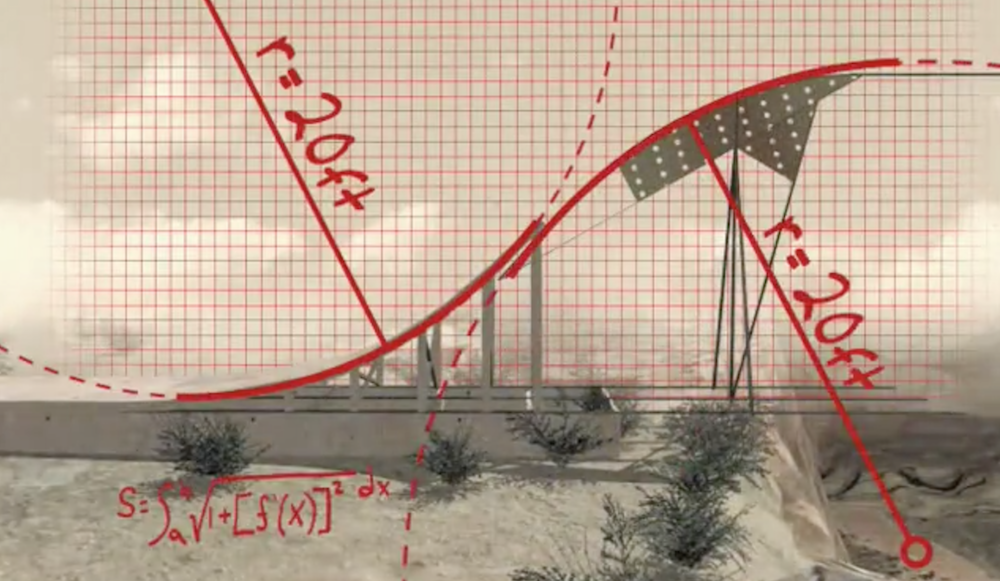
In digitally nuanced videos, physics meets the real-world. Body kinesthesia moves from the static textbook page to vibrant video overlay. The visualizations can layer equations and statistics atop everyday pastimes. Sports heroes become humanized in analyzing the biology and chemistry that make them great. Familiar backyard games become elevated by realizing the arcs and velocities necessary to score a goal.

Furthermore, these stunning artistic creations validate the requisite addition of the \”A\” to STEM. A complete \”STEAM\” approach, including the Arts, proves the value of imagination, design, and narration in producing such compelling animations.

Source: Tim McGarvey


We\’ve explored before the benefits of sports science in the classroom:


The following motion graphics and animations take the discussion even further, looking for fresh avenues to incorporate the personal interests of students into their science and math educations. These videos are great kick-offs to a morning\’s discussion, and they are valuable context-builders for putting formulas, trajectories, and graphs in their rightful, real-world contexts.

‘Who Can Buy a Life Insurance Policy?’ (72 Words)

Any person who has attained majority and is eligible to enter into a valid contract can insure himself/ herself and those in whom he/ she has insurable interest.

Policies can also be taken, subject to certain conditions, on the life of one’s spouse or children. While underwriting proposals, certain factors such as the policyholder’s state of health, the proponent’s income and other relevant factors are considered by the Corporation/ Life Insurance Company. 


Music is at the core of India’s cultural heritage–it unites and connects people

The Vice President of India, Shri M. Venkaiah Naidu said today that music was at the core of India’s cultural heritage and it not only provides solace but also unites and connects people.

Inaugurating 173rd Aradhana Festival of Sri Thyagaraja at Thiruvaiyaru in Thanjavur district today, he observed thatart unites hearts and added that music, painting and art were important facets of our civilization.

Calling for preservation and protection of our unique cultural heritage, he said “Our culture and values are our identity. It is what makes us unique. It is what has earned us the respect of the whole world”.

Paying rich tributes to Saint Composer, Thyagaraja, he described himas one of the greatest music maestros of India. “Sadguru Thaygaraja is one among the most revered 18th Century Trinity of composers–the others being Shyama Sastry and Sri Muthuswami Dikshithar”, he added.

The Vice President said that Saint Thyagaraja’s contributions to the enrichment of our cultural heritage cannot be quantified or estimated. He not only embodied ethical and philosophical truths in his songs but also put them into practice in his daily life. His style was simple, beautiful, and charming, which appealed to the learned and laymen alike, Shri Naidu stressed.

Praising Saint Thyagaraja as the composer of countless immortal kritis in various ragas, Shri Naidu said that Sri Thyagaraja’s compositions were treasures for the world of Music and would live in our hearts forever. “His heart poured out his Bhakti for Lord Rama and his songs are full of bhava/emotion that melts your heart”, he observed.

Lauding the tradition of conducting the festival of Thyagaraja Aradhana every year, he said that there was a growing interest and participation in the annual event to pay tributes to Saint Thyagaraja .

He also called upon the schools and educational institutions to sensitize children to the diverse elements of our rich culture. From reading the Jataka tales to experiencing the architectural marvels of ancient India, they must be encouraged to explore the various fascinating facets of our culture and learn life lessons from them, VP said.

Stressing the need to take the treasures of our culture to future generations, the Vice President said that they must know of the stalwarts like Saint Tyagaraja and must be proud of their glorious cultural inheritance. They must not forget their roots and must draw inspiration from its brilliance, he added.

The Vice President complimented the Thyagabrahma Mahotsava Sabha Shri Moopanar’s family for maintaining the tradition of conducting Annual Aradhana Festivals every successive year.

Thiru Vellamandi N.Natarajan, The Minister for Tourism, Govt of Tamil Nadu, Shri G.K. Vasan, President of the Thyagabrahma Mahotsava Sabha, Shri A.K. Palanivel, Secretary of the Sabha and Shri V. Raja Rao, Secretary of the Sabha, were among those who graced the occasion.

The following is the full text of the speech:

I am very happy to be here at the 173rd Aradhana Festival of Sri Thyagaraja at Thiruvaiyaru, a holy place on the banks of river Cauvery. It is heartening to note that this tradition has been maintained for 173 years and that year after year, there is growing interest and participation in this Aradhana festival that pays tributes to Saint Thyagaraja.

As we pay tributes to one of the greatest music maestros of India, we celebrate his life, his compositions and, his unparalleled legacy.

Saint Thyagaraja was, beyond any doubt, a stalwart, one of the tallest figures in the world of music.

The contributions of Saint Thyagaraja to the enrichment of our cultural heritage cannot be quantified or estimated.

It is infinite in its resonance.

His compositions which have been cherished over centuries will continue to be treasured by the young and the old for all time to come.

I compliment the Thyagabrahma Mahotsava Sabha for maintaining the tradition of conducting Annual Aradhana Festivals.

I am confident this Aradhana Festival will inform and remind all who participate, of a golden which marked a high point in the history of classical music in India.

My dear sisters and brothers,

In the turbulent times that we live in, it is comforting and invigorating to pause and reflect on our unique cultural heritage.

India is one of the most ancient civilizations of the world and is home to astounding cultural diversity. Indian culture, often described as an amalgamation of several cultures, spans across the Indian subcontinent and has been influenced by a history that is several millennia old.

Many elements of India’s diverse culture, such as relegions, philosophy, cuisine, languages, dance, music, yoga and movies, have a profound impact world over.

There is no doubt that ‘art unites hearts’. Music is among those elements of our culture that have great potential to unite people, to help us connect and understand each other.

From the first lullaby that is lovingly sung by mother to her child, music penetrates almost every part of our life, our work, our relationships and even the way we worship the almighty.

Music, in its pure form, is spiritual nourishment for our souls.

It is at the core of our cultural and age old heritage.

Our classical music, which has its origin in the Vedas, is said to be a gift of God himself; it is ‘Nadabrahma’, the sound of God, the music that pervades the universe.

Saint Thyagaraja is the composer of countless immortal kritis in various ragas. Most of his compositions are in Telugu, a sweet language which has been described as a suitable language for music by Mahakavi Subrahmanya Bharati.

Born in Thiruvarur in 1767 to Sri Ramabrahmam and Sitammal, Sri Thyagaraja settled down in the holy town of Thiruvaiyaru, where he learned music under the tutelage of Shri Sonti Vennkataramana Sastri.

A composer of kritis in rare ragas, Saint Thyagaraja, a Rama Bhakta, made his devotion to Lord Rama the theme for almost all of his kritis. As his heart poured out his Bhakthi for Lord Rama the songs are full of bhava/emotion that melts your heart. The conversation between a bhaktha and the God are profound messages to mankind .

Many of his compositions in Telugu are rendered as centre pieces in the concert by artistes young and old and  convey  the beauty of the raga as well as the emotional content so well making the listeners go into raptures . In singing his compositions such as మోక్షము గలదా (Mokshamu Galada) or వందనము రఘునందనా (Vandanamu Raghunandana) the bhava rules supreme!

Ramabhakthi and nadopasana were the two cardinal features of his compositions. He realized that music, in all its aspects, formed part of nadayoga.

In his songs, he reveals the supremacy of nadayoga as a means of realisation of God.

Another important contribution of Saint Thyagaraja to music lies in his improvisation of sangathis in kirthanas. His style was simple, beautiful, and charming, which appealed to the learned and laymen alike.

It is the richness of the raga bhava of his compositions that gives him a place amongst the greatest composers of music.

Saint Thyagarajanot only embodied ethical and philosophical truths in his songs but also put them in practice in his daily life.

He rejected riches and opted for austerity. The pious soul felt that a poor and honest life spent in ‘nadopasana’ was preferable to chasing earthly pleasures and riches.

This philosophy of life has been revealed in his famous song, (నిధి చాలా సుఖమా?)“Nidhi chalaa sukhama?”

His followers believed that he was a re-incarnation of Sage Valmiki.

When he attained the lotus feet of Sri Rama on Pushya Bahula Panchami Day in 1847, his mortal remains were interred on the left bank of River Cauvery with the honour and religious rites due to a Sanyasi.

Sadguru Thaygaraja is one among the most revered  18 th Century Trinity of composers –the others being Shyama Sastry and Sri Muthuswami Dikshithar.The majestic Pancharathna Krithis – the five gems in five ragas are sung with utmost devotion by all musicians coming together from various parts of India and the World  in the Annual Aradhana .A Brindavan was erected over that spot and his disciples started performing the Aradhana every year on Bahula Panchami day at the Samadhi.

All the disciples of Saint Thyagaraja were deeply devoted to him, but the contributions of Bangalore Nagaratnam Ammal are worth mentioning.

She was an ardent devotee of Saint Thyagaraja. I am happy to know that befitting the memory of Nagaratnam Ammal, it is in front of her mandapam that musicians now perform during the Aradhana.

Thyagaraja’s compositions are truly treasures for the world of Music  and will live in our hearts forever.After all these years, if we congregate at this holy place even today to pay our humble respects to Saint Thyagaraja every successive year, it is because of the yeomen services rendered by Shri Moopanar’s family and the past and present Office-bearers of the Sabha to the memory of Sri Thyagaraja and to the Thyagabrahma Mahotsava Sabha.

I am happy to know that Shri G.K. Moopanar was associated with the Sabha as its President from 1966 for 36 years and that it was during his days of Presidentship that the Sabha rose to great heights and the Aradhana became an international festival.

After his demise, the legacy was carried on by his brother Shri G.Rangasamy Moopanar who has been spearheading the development of the Sabha and its activities for 18 long years successfully.

Now, the mantle of Presidentship of the Sabha has passed on to Shri G.K. Vasan. Having observed the performance of Shri Vasan, in public life, in Parliament, and in Government, and also going by his meticulous planning to make this Aradhana festival a grand success, I am sure the Sabha is in very safe hands.

I am confident that he will take the Aradhana festival to greater heights in the time to come.

My dear sisters and brothers,

Our culture and values are our identity. It is what makes us unique. It is what has earned us the respect of the whole world.

The philosophy of our civilization has always been that of ‘vasudhaiva kutumbakam’. We have always embraced the whole world as our own. ‘Sarve Jana Sukhino Bhavanthu’ has always been our prayer.

We must protect this ancient culture and the immortal, humanitarian values that are our legacy.

The most effective way to ensure this is to take the treasures of our culture to future generations. They must know of the stalwarts like Saint Tyagaraja and must be proud of their glorious cultural inheritance. They must draw inspiration from its brilliance and unite to chart a path forward for the nation.

Our schools and educational institutions must strive to sensitize children to the diverse elements of our culture. From reading the Jataka tales to experiencing the architectural marvels of ancient India, they must be encouraged to explore the various fascinating facets of our culture and learn life lessons from them.

Our future generations must never forget their roots. But they also must not be confined by it.

Mahatma Gandhi once said that “Nothing can be farther from my thought than that we should become exclusive or erect barriers. But I do respectfully contend that an appreciation of other cultures can fitly follow, never precede, an appreciation and assimilation of our own”.

I hereby declare the 173rd Thyagaraja Aradhana Festival open.

I am hopeful that it will succeed in taking the treasures of India classical music to future generations.

Vanakkam.

Thank You!Jai Hind!

***

Short Article on \’Cinema: As a means of Education\’ (125 Words

Apart from the great pleasure the cinema gives us a means of entertainment, it is in many ways an education in itself.

The film companies from time to time produce historical pictures and these pictures are of great assistance to the teacher of history. A couple of hours spent in the company of historical personage, dressed in the proper dress of the period, can teach us far more than we can learn from a whole week\’s reading of a history book.

Some of the educational film companies devote their time to the filming of the habits and customs of animals, insects, fish, germs and many other branches of scientific life. Such pictures are quite interesting and are a great help in the cause of education. 

Short Article on \’Cinema: As a means of Education\’ (125 Words

Apart from the great pleasure the cinema gives us a means of entertainment, it is in many ways an education in itself.

The film companies from time to time produce historical pictures and these pictures are of great assistance to the teacher of history. A couple of hours spent in the company of historical personage, dressed in the proper dress of the period, can teach us far more than we can learn from a whole week\’s reading of a history book.

Some of the educational film companies devote their time to the filming of the habits and customs of animals, insects, fish, germs and many other branches of scientific life. Such pictures are quite interesting and are a great help in the cause of education. 

Short Article on \’Cinema: As a means of Education\’ (125 Words

Apart from the great pleasure the cinema gives us a means of entertainment, it is in many ways an education in itself.

The film companies from time to time produce historical pictures and these pictures are of great assistance to the teacher of history. A couple of hours spent in the company of historical personage, dressed in the proper dress of the period, can teach us far more than we can learn from a whole week\’s reading of a history book.

Some of the educational film companies devote their time to the filming of the habits and customs of animals, insects, fish, germs and many other branches of scientific life. Such pictures are quite interesting and are a great help in the cause of education. 

Learning design – a definition

So far in the oldsmooc the definitions of learning design are all teacher centric because the teacher is always in charge of designing the learning. I think we probably need to throw away the established theories and the models – even though Ida has done a fabulous job of collating them on the wiki – and begin afresh using a truly learner-centric model – even the Arcs model by John Keller that Ida states is more learner-centred is teacher-led. This would mean moving to a constructivist/connectivist framework, and leaving cognitive/behaviourist approaches behind.

I think the role of teachers is to mentor and to teach critical thinking, scaffold metacognition and to guide students in how to be self-directed and self-regulated learners – our role is to guide students to develop their own strategies for learning, and to obtain and manage the information they need – access, filter, evaluate and create – and in doing so they will develop the knowledge they need to reach their learning goals. Teachers are thereby freed up from hours of designing and developing content and activities, and can support student learning more effectively through mentoring. 

Unfortunately, the spiel about learner-centred learning still occurs around curricula where the learning outcomes for courses and qualifications are set by the organisation, and teachers still set the learning objectives for each module.  Even if students already have skills and knowledge, they are often required to sit through the same stuff again, so they become bored and switch off and they disengage. Sure learning outcomes do guide the students and helps them know what they need to understand about a topic, but surely they should be the ones to decide the meaning that they need to extract from a learning experience, and what learning experiences they need to achieve their dreams?

So I am a fan of learning design whereby students take \’the reins\’ and the teacher mentors and facilitates the process. Is there a name for this type of learning design yet? Individualized learning design is a term used by Suny Empire State College.

I really like the idea of enabling students to \’pick and mix\’ the courses they want to take and decide the shape of their qualifications, so assessment of prior learning is going to be key to this, as is constructivism and connectivism as approaches to learning. I really like the individualized learning design and mentor model (with learning contracts and student-designed degrees) practised by Suny Empire State College – read more.

Learner-designed activities 
Back to the idea of learning activities designed by students for students ….Lets say for argument\’s sake that the topic they need to explore is around creating an identity on the Internet. If using individualized learning design, the students may have decided that they need to do this to up their profile for the future and to connect to others while they learn. For some many it will be more beneficial professionally to have an Internet presence. So creating an online presence and identity becomes one of their learning goals. A student might say:

  • Who do I want to be? 
  • Where will I show myself on the Internet?
  • What do I want others to see? 
  • What tools can I use to achieve this? 
  • What do I know already and what do I need to know? 
  • Who can help me with this? 

Some students will go it alone. Others will join with peers, and some may ask the teacher. From my perspective, the role of learning design is handed to the students – the teacher may support the students with questions to get them started, but the only thing the teacher might provide is guidance with the task that the students has decided to undertake, in discussion with his or her mentor (teacher): 

  • Create an identify for yourself on the Internet.
  • Share what you learn with others.

I wonder what others think? Is this a cost-effective model of learning?

Short Essay on \’Newspaper\’ (200 Words)

\’Newspaper\’, as we know, is an essential part of our life. For a newspaper reader, it is the first and foremost thing that he would like to have early in the morning. It connects us with every field and every part of the world. Be it politics, entertainment, sports, films etc.

Newspaper provides information about the burning topics from all over world and keeps us well informed. Though news is also displayed on television and radio, there we don\’t have an option to choose. It results in wastage of time, as the news is repeated over and over again and is followed by a number of advertisements.

Apart from the information newspaper provides, it can be useful in a number of ways. The puzzles given in it develop the thinking ability. The job vacancies column help the people. A regular reader can improve his knowledge of language in which language he reads the newspaper. Newspaper also tells us about the different policies introduced by the Government and makes us aware about everything happening around us.

We can conclude by saying that the newspaper broadens our outlook and is an enormous source of information. Therefore one must develop the habit of reading newspaper everyday. 

Short Essay on \’Newspaper\’ (200 Words)

\’Newspaper\’, as we know, is an essential part of our life. For a newspaper reader, it is the first and foremost thing that he would like to have early in the morning. It connects us with every field and every part of the world. Be it politics, entertainment, sports, films etc.

Newspaper provides information about the burning topics from all over world and keeps us well informed. Though news is also displayed on television and radio, there we don\’t have an option to choose. It results in wastage of time, as the news is repeated over and over again and is followed by a number of advertisements.

Apart from the information newspaper provides, it can be useful in a number of ways. The puzzles given in it develop the thinking ability. The job vacancies column help the people. A regular reader can improve his knowledge of language in which language he reads the newspaper. Newspaper also tells us about the different policies introduced by the Government and makes us aware about everything happening around us.

We can conclude by saying that the newspaper broadens our outlook and is an enormous source of information. Therefore one must develop the habit of reading newspaper everyday. 

Visualizing The National Parks – Celebrating 100 Years Of America\’s Wonder

Source: National Geographic


On August 25, 2016, the National Park Service (NPS) turns 100. After a century of shepherding America\’s splendor, the Park Service and its personnel will rightfully be feted as dedicated, humble stewards of our country\’s most precious landscapes.

Personally, we have been lucky enough to visit many of the nation\’s 59 parks on all points of the compass. Each site has never failed to live up to its consecration as a place of American rarity, pride, and beauty. From the unspoiled trails to the popular overlooks, every curated destination within the wilderness is a testament to the work and vision of the Parks Service.

Source: National Park Service


This august anniversary introduces many opportunities to weave the Parks into authentic classroom lessons. For example, the \”Every Kid In A Park\” initiative seeks to connect our nation\’s youth to its most treasured spaces. Additionally, a wide range of visualizations now provide easy ways to incorporate the centennial into state standards and skill-based curricula. At their least, these videos and graphics offer terrific kick-offs to a morning\’s discussion. At their best, these charts and illustrations support critical student proficiencies. They also bring to life the gorgeous panoply of natural wonder that would make any Disney confection blush.

To start, the \”Find Your Park\” website gathers videos and social media interactions of everyday first-person testimonials about the grandeur of America\’s vistas. As a companion, the NPS has opened its Geographic Information Systems (GIS) data to the public, for educators and graphic artists to tap in building models of terrains and visitations.

Some of the best renderings of the National Parks come from the Works Project Administration during the 1930s New Deal. These art deco posters from the Federal Arts Project capture the majesty of the otherworldly settings in colorful and appealing travel enticements. National Geographic has assembled a nice collection of these posters from the Library Of Congress.

Source: National Park Service


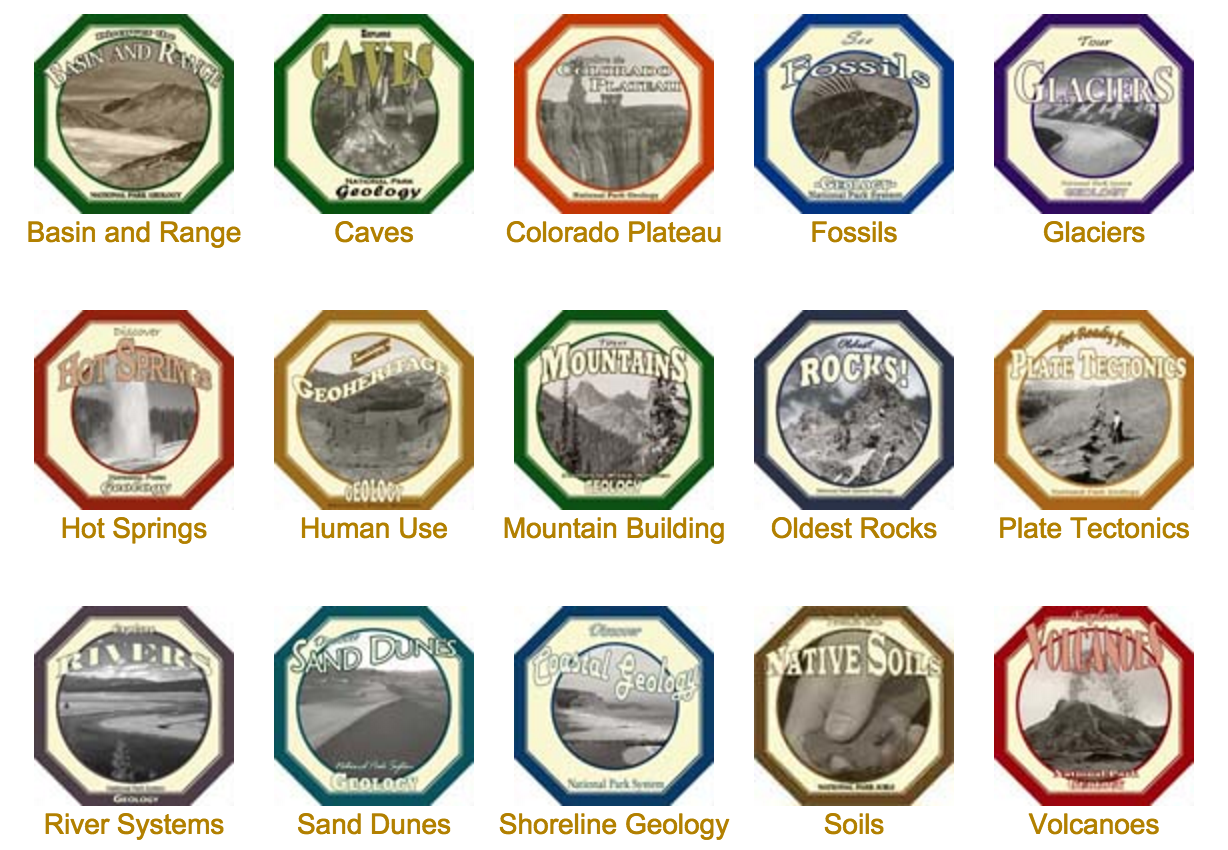
In a video homage, the outdoor outfitter O.A.R.S. has put together a stunning tribute to the Parks, told through the stirring words of Theodore Roosevelt. As befitting its founder, the NPS takes seriously its safeguarding of America\’s geology. It invites students of energy, minerals, and paleontology to explore the singular contours and cliffs through open online access and badging of restoration and geoscience. These resources are terrific for earth science and environmentally minded teachers to investigate with their students.

Source: FiveThirtyEight


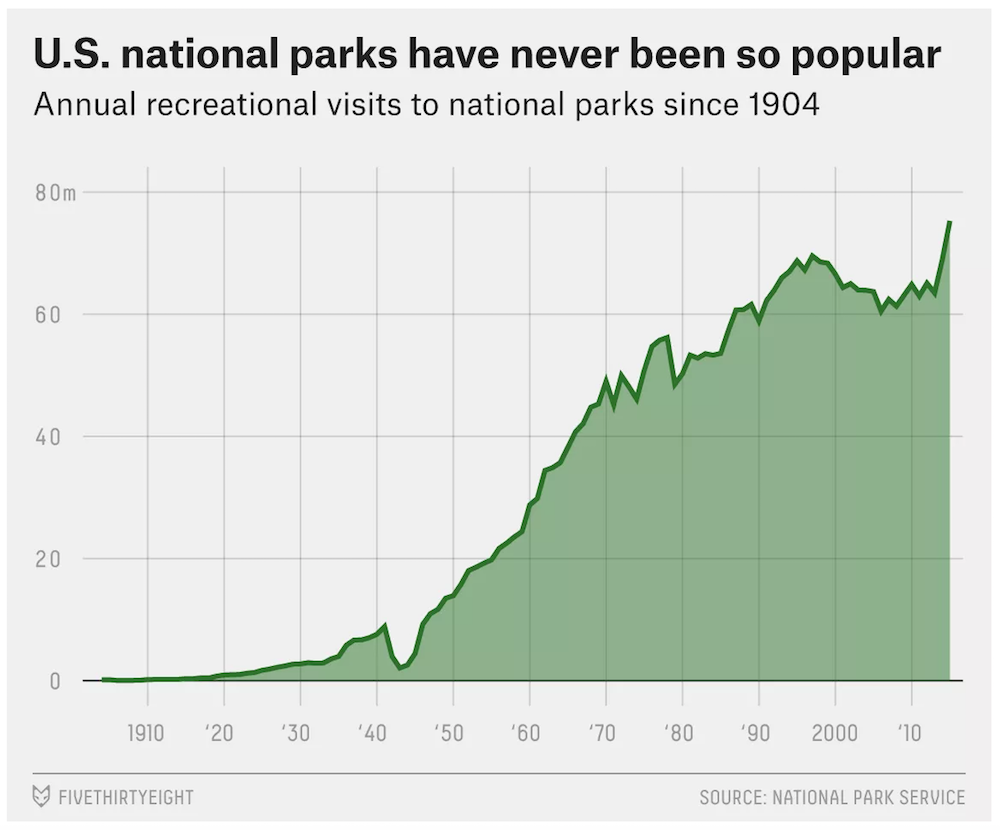
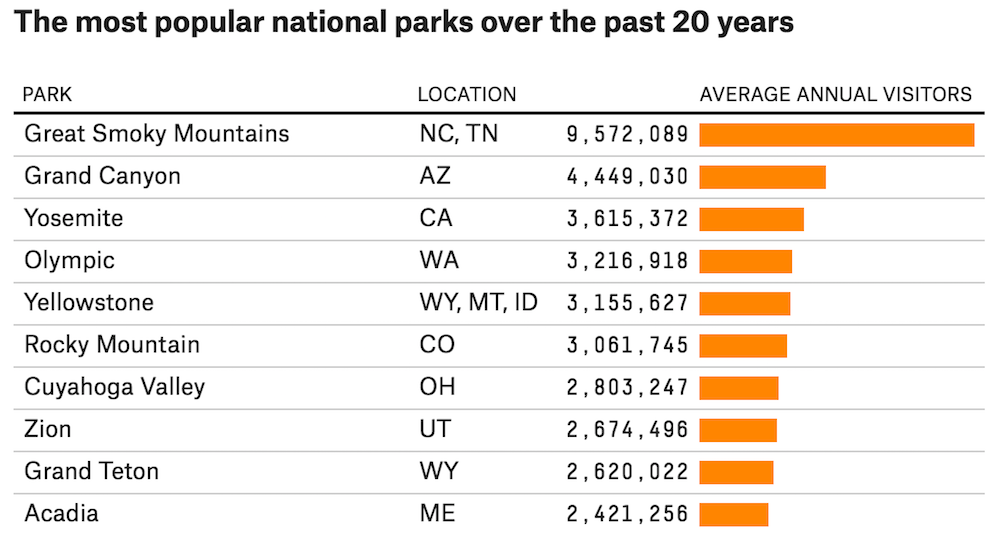
In math and statistics, the minds at FiveThirtyEight (who usually spend their time worrying about political polls and baseball ERAs) have analyzed the popularity of each park. They crafted crisp graphs and charts for STEM educators to draw from in ranking the visitors to each venerated location. As they note, \”the U.S. national parks have never been so popular,\” and the Great Smoky Mountains continues its reign as the most-visited National Park, due to its location and exquisiteness.

Source: FiveThirtyEight


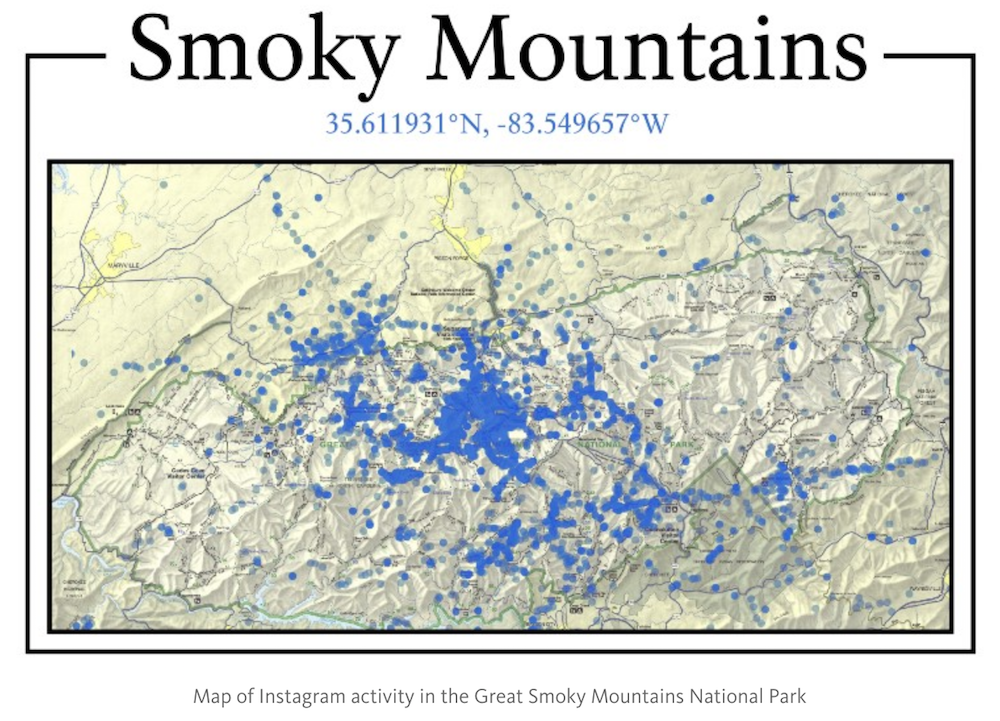
In probing the specifics beneath the Great Smoky Mountains\’ charm, researcher John Farrell raked the Instagram API to determine where in the Park photographs were most frequently snapped. His visualization layers social media atop traditional coordinate geography to present a new picture of the Park\’s usage. He includes similar map mash-ups for other coast-to-coast sites.

Source: John Farrell


For its part, the NPS has put together its own retro advertisement, in the classic style of antique movie reels or 1950s television ads. This wry film is a perfect nod to the 100-year heritage of the organization. It also displays a warm embrace of every citizen who passes through the Parks\’ gates.


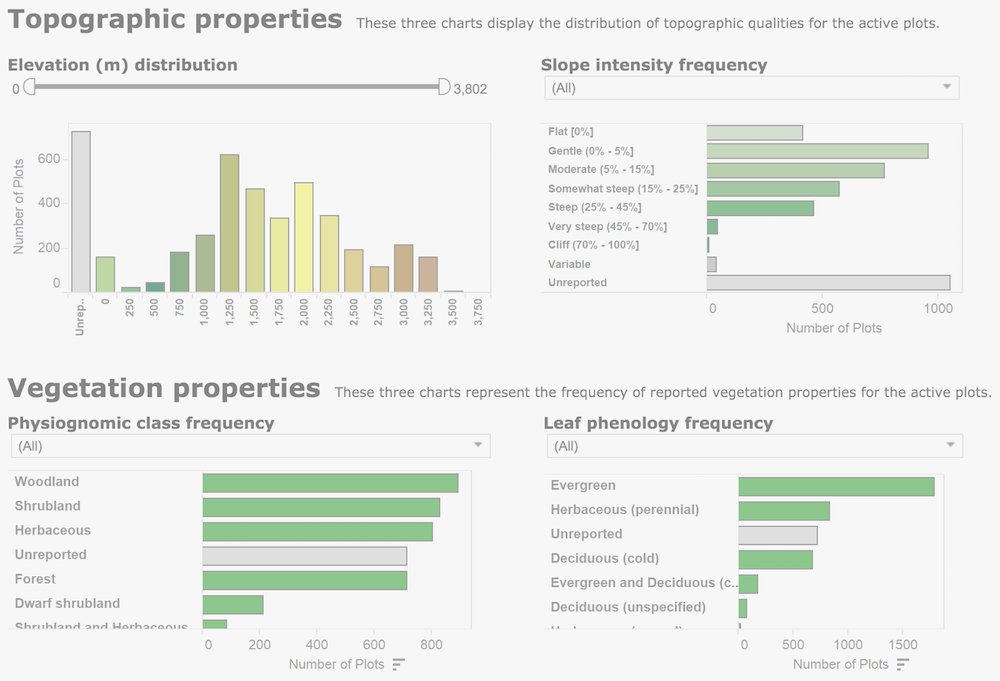
Digging deeper into the soil and flora, Luke Easterwood, Michael Gelon, Hadar Scharff, and Matt Soave have analyzed the Parks\’ Vegetation Inventory. They built a visualization series to \”encourage insightful discoveries\” through the Tableau interface. These charts and graphs drill down to specific physiognomic classes and leaf phenology details.

Source: mattsoave.com


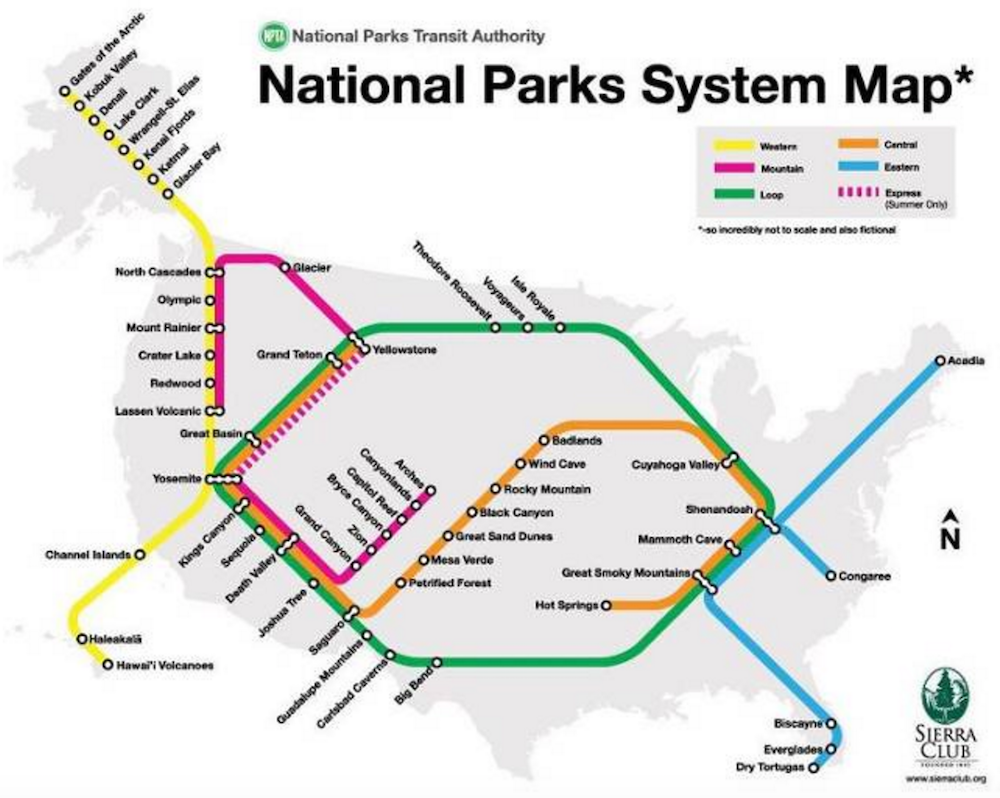
In order to help navigate the Parks, the Sierra Club has designed a System Map based on the urban subway template. This seemingly humorous rendering actually gives travelers a valuable guide in planning their vacations and in connecting the dots between regional marvels.

Source: Fast Company


Source: David Hockney

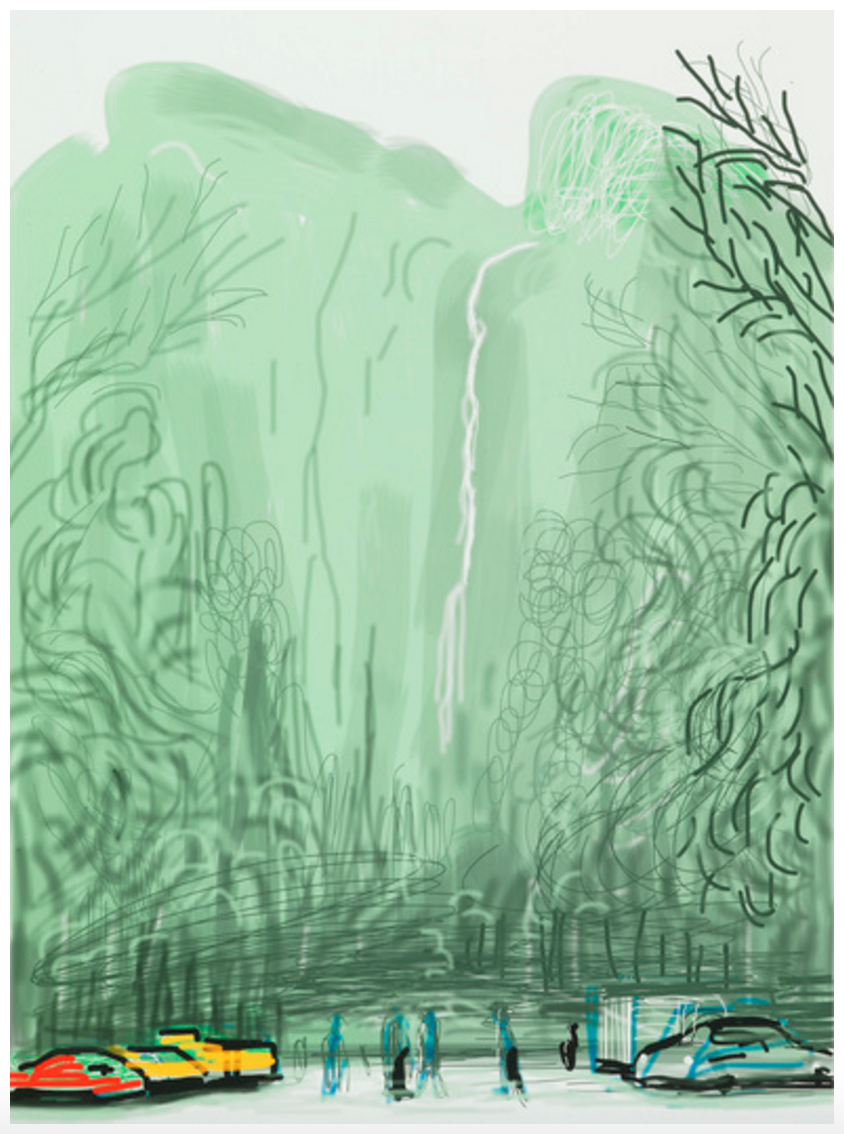
Finally, the purest representations of America\’s National Parks have always come from the minds of the country\’s painters. Beginning with the light portraits of Thomas Moran, many artists have sought to capture the glory of glaciers and geysers. Most recently, David Hockney scratched a series of brilliant sweeps on his iPad in his \”Yosemite Suite.\” These personal, stylized views prove to any viewer that the nation\’s Parks are love letters to its wilderness. They are the last vestige against urbanity and a hallmark of global distinction.

Visualizing The National Parks – Celebrating 100 Years Of America\’s Wonder

Source: National Geographic


On August 25, 2016, the National Park Service (NPS) turns 100. After a century of shepherding America\’s splendor, the Park Service and its personnel will rightfully be feted as dedicated, humble stewards of our country\’s most precious landscapes.

Personally, we have been lucky enough to visit many of the nation\’s 59 parks on all points of the compass. Each site has never failed to live up to its consecration as a place of American rarity, pride, and beauty. From the unspoiled trails to the popular overlooks, every curated destination within the wilderness is a testament to the work and vision of the Parks Service.

Source: National Park Service


This august anniversary introduces many opportunities to weave the Parks into authentic classroom lessons. For example, the \”Every Kid In A Park\” initiative seeks to connect our nation\’s youth to its most treasured spaces. Additionally, a wide range of visualizations now provide easy ways to incorporate the centennial into state standards and skill-based curricula. At their least, these videos and graphics offer terrific kick-offs to a morning\’s discussion. At their best, these charts and illustrations support critical student proficiencies. They also bring to life the gorgeous panoply of natural wonder that would make any Disney confection blush.

To start, the \”Find Your Park\” website gathers videos and social media interactions of everyday first-person testimonials about the grandeur of America\’s vistas. As a companion, the NPS has opened its Geographic Information Systems (GIS) data to the public, for educators and graphic artists to tap in building models of terrains and visitations.

Some of the best renderings of the National Parks come from the Works Project Administration during the 1930s New Deal. These art deco posters from the Federal Arts Project capture the majesty of the otherworldly settings in colorful and appealing travel enticements. National Geographic has assembled a nice collection of these posters from the Library Of Congress.

Source: National Park Service


In a video homage, the outdoor outfitter O.A.R.S. has put together a stunning tribute to the Parks, told through the stirring words of Theodore Roosevelt. As befitting its founder, the NPS takes seriously its safeguarding of America\’s geology. It invites students of energy, minerals, and paleontology to explore the singular contours and cliffs through open online access and badging of restoration and geoscience. These resources are terrific for earth science and environmentally minded teachers to investigate with their students.

Source: FiveThirtyEight


In math and statistics, the minds at FiveThirtyEight (who usually spend their time worrying about political polls and baseball ERAs) have analyzed the popularity of each park. They crafted crisp graphs and charts for STEM educators to draw from in ranking the visitors to each venerated location. As they note, \”the U.S. national parks have never been so popular,\” and the Great Smoky Mountains continues its reign as the most-visited National Park, due to its location and exquisiteness.

Source: FiveThirtyEight


In probing the specifics beneath the Great Smoky Mountains\’ charm, researcher John Farrell raked the Instagram API to determine where in the Park photographs were most frequently snapped. His visualization layers social media atop traditional coordinate geography to present a new picture of the Park\’s usage. He includes similar map mash-ups for other coast-to-coast sites.

Source: John Farrell


For its part, the NPS has put together its own retro advertisement, in the classic style of antique movie reels or 1950s television ads. This wry film is a perfect nod to the 100-year heritage of the organization. It also displays a warm embrace of every citizen who passes through the Parks\’ gates.


Digging deeper into the soil and flora, Luke Easterwood, Michael Gelon, Hadar Scharff, and Matt Soave have analyzed the Parks\’ Vegetation Inventory. They built a visualization series to \”encourage insightful discoveries\” through the Tableau interface. These charts and graphs drill down to specific physiognomic classes and leaf phenology details.

Source: mattsoave.com


In order to help navigate the Parks, the Sierra Club has designed a System Map based on the urban subway template. This seemingly humorous rendering actually gives travelers a valuable guide in planning their vacations and in connecting the dots between regional marvels.

Source: Fast Company


Source: David Hockney

Finally, the purest representations of America\’s National Parks have always come from the minds of the country\’s painters. Beginning with the light portraits of Thomas Moran, many artists have sought to capture the glory of glaciers and geysers. Most recently, David Hockney scratched a series of brilliant sweeps on his iPad in his \”Yosemite Suite.\” These personal, stylized views prove to any viewer that the nation\’s Parks are love letters to its wilderness. They are the last vestige against urbanity and a hallmark of global distinction.

Visualizing The National Parks – Celebrating 100 Years Of America\’s Wonder

Source: National Geographic


On August 25, 2016, the National Park Service (NPS) turns 100. After a century of shepherding America\’s splendor, the Park Service and its personnel will rightfully be feted as dedicated, humble stewards of our country\’s most precious landscapes.

Personally, we have been lucky enough to visit many of the nation\’s 59 parks on all points of the compass. Each site has never failed to live up to its consecration as a place of American rarity, pride, and beauty. From the unspoiled trails to the popular overlooks, every curated destination within the wilderness is a testament to the work and vision of the Parks Service.

Source: National Park Service


This august anniversary introduces many opportunities to weave the Parks into authentic classroom lessons. For example, the \”Every Kid In A Park\” initiative seeks to connect our nation\’s youth to its most treasured spaces. Additionally, a wide range of visualizations now provide easy ways to incorporate the centennial into state standards and skill-based curricula. At their least, these videos and graphics offer terrific kick-offs to a morning\’s discussion. At their best, these charts and illustrations support critical student proficiencies. They also bring to life the gorgeous panoply of natural wonder that would make any Disney confection blush.

To start, the \”Find Your Park\” website gathers videos and social media interactions of everyday first-person testimonials about the grandeur of America\’s vistas. As a companion, the NPS has opened its Geographic Information Systems (GIS) data to the public, for educators and graphic artists to tap in building models of terrains and visitations.

Some of the best renderings of the National Parks come from the Works Project Administration during the 1930s New Deal. These art deco posters from the Federal Arts Project capture the majesty of the otherworldly settings in colorful and appealing travel enticements. National Geographic has assembled a nice collection of these posters from the Library Of Congress.

Source: National Park Service


In a video homage, the outdoor outfitter O.A.R.S. has put together a stunning tribute to the Parks, told through the stirring words of Theodore Roosevelt. As befitting its founder, the NPS takes seriously its safeguarding of America\’s geology. It invites students of energy, minerals, and paleontology to explore the singular contours and cliffs through open online access and badging of restoration and geoscience. These resources are terrific for earth science and environmentally minded teachers to investigate with their students.

Source: FiveThirtyEight


In math and statistics, the minds at FiveThirtyEight (who usually spend their time worrying about political polls and baseball ERAs) have analyzed the popularity of each park. They crafted crisp graphs and charts for STEM educators to draw from in ranking the visitors to each venerated location. As they note, \”the U.S. national parks have never been so popular,\” and the Great Smoky Mountains continues its reign as the most-visited National Park, due to its location and exquisiteness.

Source: FiveThirtyEight


In probing the specifics beneath the Great Smoky Mountains\’ charm, researcher John Farrell raked the Instagram API to determine where in the Park photographs were most frequently snapped. His visualization layers social media atop traditional coordinate geography to present a new picture of the Park\’s usage. He includes similar map mash-ups for other coast-to-coast sites.

Source: John Farrell


For its part, the NPS has put together its own retro advertisement, in the classic style of antique movie reels or 1950s television ads. This wry film is a perfect nod to the 100-year heritage of the organization. It also displays a warm embrace of every citizen who passes through the Parks\’ gates.


Digging deeper into the soil and flora, Luke Easterwood, Michael Gelon, Hadar Scharff, and Matt Soave have analyzed the Parks\’ Vegetation Inventory. They built a visualization series to \”encourage insightful discoveries\” through the Tableau interface. These charts and graphs drill down to specific physiognomic classes and leaf phenology details.

Source: mattsoave.com


In order to help navigate the Parks, the Sierra Club has designed a System Map based on the urban subway template. This seemingly humorous rendering actually gives travelers a valuable guide in planning their vacations and in connecting the dots between regional marvels.

Source: Fast Company


Source: David Hockney

Finally, the purest representations of America\’s National Parks have always come from the minds of the country\’s painters. Beginning with the light portraits of Thomas Moran, many artists have sought to capture the glory of glaciers and geysers. Most recently, David Hockney scratched a series of brilliant sweeps on his iPad in his \”Yosemite Suite.\” These personal, stylized views prove to any viewer that the nation\’s Parks are love letters to its wilderness. They are the last vestige against urbanity and a hallmark of global distinction.

Short Biography of ‘Dr. Martin Luther King, Jr.’ (107 Words)

‘Dr. Martin Luther King, Jr.’ was born on 15th January, 1929 in Atlanta, Georgia. He was born Michael King, but his father changed his name in honor of German reformer Martin Luther.

Dr. Martin Luther King, Jr. was a legendary activist and leader in the African-American civil rights movement (1955-1968). He received the Nobel Peace Prize in 1964 for combating racial inequality through nonviolence. He was assassinated on April 4, 1968. Dr. Martin Luther King, Jr. is best known for being an iconic figure in the advancement of civil rights in the United States and around the world, using non-violent methods following the teachings of Mahatma Gandhi.

Short Biography of ‘Paul Laurence Dunbar’ (116 Words)

‘Paul Laurence Dunbar’ was born on June 27, 1872 in Dayton, Ohio. He was the son of ex-slaves. His father’s name was Joshua and his mother’s name was Matilda.

Paul Laurence Dunbar wrote his first poem at age 6 and gave his first public recital at age 9. At an early age he edited and published many newspapers.

Paul Laurence Dunbar wrote many short stories, novels, plays, songs, essays and poetry. Due to racial discrimination, he could only find work as an elevator operator. He wrote most of his works while taking people up and down the elevator. Paul Laurence Dunbar was among the first African-American poets to gain national prominence. He passed away on February 9, 1906.