YouTube Marketing and its benefits.

YouTube marketing is a strategy that involves creating videos and uploading them on YouTube to promote a brand or a product and gain more exposure. It helps companies boost traffic, increase their customer base, and reach new audiences.

Since YouTube’s 22.8 billion visits a month make it the second most visited site in the world after Google, it’s able to bring many benefits to businesses nowadays. The platform isn’t just a famous entertaining channel but a powerful marketing tool, and companies can develop YouTube channels for advertising. YouTube channels help get more views from new geographic, promote a product or a company, build a large customer base, and increase a brand’s sales volume. YouTube is also a famous educational platform. Companies can achieve greater exposure, which expands their customer base. By making detailed tutorials, live streams, guides, and lessons, brands can rank higher on Google. 

The platform can serve as one of the most effective marketing channels. Optimizing keywords in titles and creating tutorials, commentary, product reviews, Q&A, and video listicles allow businesses to achieve higher exposure and reach new audiences. Brands can’t predict who and when will access their videos. If the content contains the necessary keywords in the title and description, all people who look for information might stumble upon a certain video, stay on the channel, and buy the product it advertises. Besides, adding watermarks and company logos to videos enables businesses to improve brand awareness.

Benefits of YouTube marketing :

Heavy Traffic

YouTube is growing exponentially, with more than 5 billion videos consumed every single day. This is much more traffic than any other platform out there. Even if one don’t create many videos for own business, one can still easily reach an audience by advertising one’s content on other people’s videos. There is so much traffic on YouTube that it is  guaranteed to find potential customers as long as you cater to their needs. 

Higher Visibility on Google

By utilizing YouTube marketing, businesses are also increasing the online authority of their business. The more authoritative they are on Google, the higher their page will rank on the Google search engine result page. 

Higher Conversion Rates

If a picture speaks a thousand words, a video makes up for a million words. Moreover, videos can evoke emotion more than any other form of content. They take your messages from static text to dynamic and engaging, and bring your business to life. They also help to build trust and authority among people in a unique way. This entertaining and engaging form of content has the power to increase your conversion rate by 80 percent.

Multiple Video Types Another crucial advantage of YouTube marketing is the different types of videos you can create to showcase your brand online. The most common types of videos on YouTube are explainer videos, sales videos, social media videos, presentation videos

Understanding Artificial Intelligence(AI) and its Application.

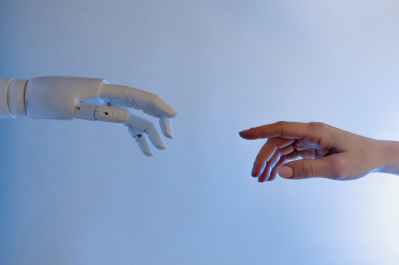
Artificial intelligence (AI) refers to the simulation of human intelligence in machines that are programmed to think like humans and mimic their actions. The term may also be applied to any machine that exhibits traits associated with a human mind such as learning and problem-solving.

The ideal characteristic of artificial intelligence is its ability to rationalize and take actions that have the best chance of achieving a specific goal. When most people hear the term artificial intelligence, the first thing they usually think of is robots. That’s because big-budget films and novels weave stories about human-like machines that wreak havoc on Earth. But nothing could be further from the truth. Artificial intelligence is based on the principle that human intelligence can be defined in a way that a machine can easily mimic it and execute tasks, from the simplest to those that are even more complex. The goals of artificial intelligence include learning, reasoning, and perception.

Application of AI in different fields.

Personalized Online Shopping.

Personalizing users’ experience has become the latest pantheon for all the leading tech giants. Ecommerce stores aren’t behind either, and have been the biggest platforms to implement the personalization domain of AI. 

Marketing.

One of the greatest artificial intelligence examples applications, Marketing, has been a key area for improvement and the latest trends in AI. With the growing advancement in AI, in the near future, it may be possible for consumers on the web to buy products by snapping a photo of it.

Social Media.

The most common use of AI in social media is for face verification and to detect facial features. AI in social media can be associated with big data and machine learning where deep learning is used to extract every minute detail from an image by using a bunch of deep neural networks. On the other hand, machine learning algorithms are used to design your feed based on your interests.

Agriculture.

The latest artificial intelligence applications in the form of image recognition identify possible defects in the crops through images captured by the user’s smartphone camera. Users are then provided with soil restoration techniques, tips, and other possible solutions to deal with the identified defects.

Video Games.

The gaming world is the best example of intelligent applications of artificial intelligence as it is at this platform where there are a lot of alterations in the purpose. AI is used for designing the game, developing the characters, and also frame the story to a certain extent.

Healthcare.

The Healthcare sector has been amongst the top adopters of AI technology. It boils down to the power of AI to crunch numbers fast and learn from historical data, which is critical in the healthcare industry. AI has taken a critical step in helping people with looking after patients as well. The automated bots and healthcare applications ensure proper medication and treatment of patients in the facilities.

Smart Homes.

The most advanced form of applications of artificial intelligence in the real-world are being implemented in homes, and are becoming smarter every day. Various devices like smart locks, smart switches, ect., are increasingly becoming compatible with various devices, and the application of smart homes is becoming more accessible to the general population every day.

Banks.

A lot of banks have already adopted AI-based systems or software to provide customer support and detect anomalies and credit card fraud. By tracing card usage and endpoint access, security specialists are more effectively preventing fraud. Organizations rely on AI to trace those steps by analyzing the behaviors of transactions.

Branding and its Components.

The Branding is a marketing process wherein the firm tries to create a unique image of the product in the minds of the customer and establish a differentiated presence in the market with the intent to retain the customer loyalty.

A brand is the name, symbol, icon, image or the combination of these which is intended to identify the goods and services of a particular seller or group of sellers and to differentiate them from those of the competitors. 

The branding is a comprehensive term and includes the following:

Brand Name: The brand name consists of a word, letter or the combination of words that are vocalized or can be pronounced easily. The brand name gives a unique identity to the goods and services of a particular seller and can be easily differentiated from the other brands available in the market. Such as Tata Salt, Usha Fans, Nike shoes, etc.

Brand Mark: A brand mark is the part of the brand that appears in the form of a symbol, logo, design, shape or distinctive coloring which can be recognized only through the site and cannot be pronounced. The brand mark increases the recognition of the brand. Such as, a symbol of Swoosh of Nike, Amul Girl of Amul Butter, Maharaja of Air India, etc.

Trade Mark: When the brand name and the brand mark are given the legalized protection such that no other firm can use it for its product then it becomes a trademark. Thus, the trademark is the protection given to the seller to use the brand name and the brand mark and prohibiting others from using it.

Trade Name: The trade name is frequently used as a synonym for either the brand name or a brand mark, but actually it is the name of the business, preferably the name of the organization itself. Most often, the trade name is used as a brand name, but it serves two purposes, give the identity of both the manufacturer as well as the product. Such as Godrej and Tata are both the trade names and are also the brand names for most of their products.

Patents: The Patents are the legal protection given to the new inventions pioneered by any business. Any firm can get its inventions such as new process, new product or the new machine patented so that an exclusive right to use it is obtained solely by the inventor. The patent confers the right to the inventor to use the new technology while prohibits the unauthorized persons for a fixed number of years from making the commercial use of the technological invention.

Copyright: The copyright is applicable in the case of books, dramatic, musical and artistic work and carries the similar meaning as that of the patents. The copyright provides protection to the work of an author so that no other person can copy it.

India to be among the Developed Nations in the next 25 years.

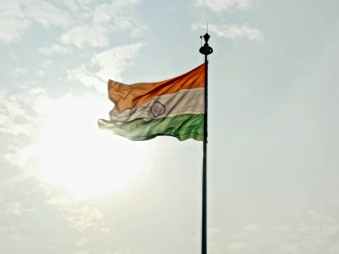
In his Independence Day speech on Monday, Prime Minister Narendra Modi said that India should take a pledge to become a developed country by 2047 – the 100th year of independence.

The prime minister urged citizens of the country to work towards achieving the “panch pran”, or five pledges, in the next 25 years. Apart from making India a developed country, the citizens should remove traces of colonial mindset, take pride in their roots, forge unity and inculcate a sense of duty, Modi said.

“We need to now move with a renewed focus and resolve for the next 25 years, and this can be made possible through the strength and determination of 130 crore Indians,” the prime minister said in his ninth Independence Day speech from the Red Fort in Delhi.

The World Bank currently classifies India as a lower-middle-income country, the second from the bottom of the four income groups it puts countries into—low, lower-middle, upper-middle, and high income. While the multilateral institution junked the ‘developed’ and ‘developing’ nomenclature some years back, a developed nation would still correspond with a high-income country. According to the latest World Bank statistics, India’s average gross income per capita, at $2,170 in 2021, was ahead of Nigeria at $2,100 and Pakistan at $1,500 but trailed Bangladesh at $2,620 and Bhutan at $2,840.

The Prime Minister said India must be a developed nation in next 25 years, terming it as an aspirational society. He appealed and asked for the support of the people to walk forward with him on these 5 pledges assuring that India will definitely be a developed nation in every front if everyone walks on the path of these 5 pledges.   

  • India will have to walk forward with very big resolutions. If we have to achieve the target of a developed nation then nothing less than this will matter.
  • We have to leave our servitude mindset from every inch, corner, thinking, and mentality. We don’t have to carry forward any reflection of our servitude in any form in the country and have to overcome this.
  • We have to be proud of our heritage which gave India its golden glory in the past.
  • We have to keep in mind our ‘…ekta and ekjutta (Unity and solidarity)… na koi apna aur na koi paraya (we belong to everyone and everyone belongs to us)… ek barat shresth bharat (one country, pride country).
  • Responsibilities of citizens in which even a Prime Minister is not excluded, because he is also a citizen first.

Jaipur : A beautiful tourist destination.

Jaipur is the capital of India’s Rajasthan state. It evokes the royal family that once ruled the region and that, in 1727, founded what is now called the Old City, or “Pink City” for its trademark building color.. The Pink City of India, is an exotic destination, to say the least. From royal palaces to peppy pubs and from regal forts to plush restaurants, the city offers a fascinating mix of attractions for an avid traveler. And let’s not forget the welcoming vibe of the city, a quality that’s inherent to Rajasthan’s imperial culture and heritage. 

The city is known for its beauty, and it is unique in its straight-line planning. Its buildings are predominantly rose-coloured, and it is sometimes called the “pink city.” The chief buildings are the City Palace, part of which is home to the royal family of Jaipur; Jantar Mantar, an 18th-century open-air observatory that was designated a UNESCO World Heritage site in 2010; Hawa Mahal (Hall of Winds); Ram Bagh palace; and Nahargarh, the Tiger Fort. Other public buildings include a museum and a library.

Some of the tourist spots and monuments to visit in the city are :

Amber/Amer Fort.

At a distance of 13 km from Jaipur Junction Railway Station, Amer Fort or Amber Fort is located in Amer near Jaipur. It is one of the best-preserved forts in Rajasthan, The architecture of Amer Fort is influenced by both Hindu and Muslim styles. Among the famous tourist places in Jaipur, Amer Fort was built using red sandstone and overlooks Maota Lake which is the main water source to the Palace.

City Palace.

City Palace, Jaipur was constructed between 1729-1732, in Jaipur as it paints the picture of heritage and rich culture. Sawai Jai Singh II has started the work of this palace, exclusively the exterior architecture of the building. Moving from Amber, he has moved to the Jaipur city because of the increase in water shortage problem which resulted in an inadequate supply of water to people.

Nahargarh Fort.

Nahargarh is one of three forts in the vicinity of the “Pink City” of Jaipur. Despite its prominence, the fort remained sadly neglected until recent years, resulting in visitors frequently overlooking it in favor of iconic and well-preserved Amber Fort on the opposite end of the ridge. Extensive restoration works and some exciting new attractions have revitalized the fort though, making it one of the top tourist places in Jaipur.

Jai Garh Fort.

Situated on one of the mountains of the Aravalli Range, Jaigarh Fort is a landmark structure in Jaipur. The strategically designed Jaigarh Fort was fundamentally built to protect the Amer Fort from any attack. Jaigarh Fort is popular for numerous reasons and the two most prominent are its mesmerizing architecture, which is a fusion of Rajputana and Mughal style, and for being the hub of artillery during the Mughal era.

Jantar Mantar.

Jantar Mantar is one of the finest monuments and striking creations by astronomers and architectures. It is a compilation of architectural astronomical devices which provided accurate astronomical results. It has even struck the modern approach of science. Jantar Mantar is the most well-known observatories amongst all the buildings formed during the sovereignty of Maharaja Sawai Jai Singh II.

Hawa Mahal.

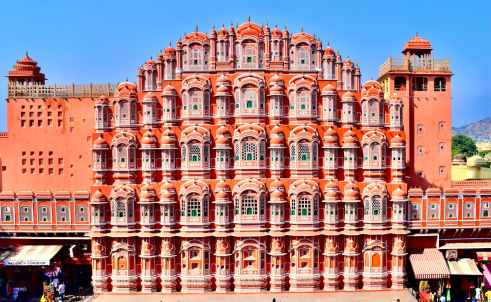
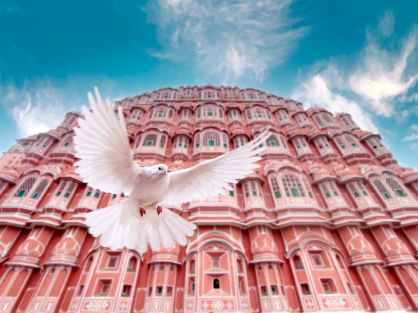
Hawa Mahal was built by Maharaja Sawai Pratap Singh in 1799 and was designed by architect Lal Chand Usta as a ‘Rajmukut’. The Hawa Mahal was built specifically for Rajput members, and especially for women, so that the royal ladies could watch the daily drama dance in the street below, as well as have a beautiful view of the city from the window.

Central Museum

Central museum is also known as ‘Albert museum’ or ‘Government Central Museum’. This is the oldest museum of the city and was constructed in 1876 beneath the command of Lt. Swinton Jacob. Initially the building was a town hall. But on the order of Maharaja Madho Singh it was transformed into an art museum.

Journalism and its aspects.

Journalism is the profession and activity of investigating and reporting issues, events, current scenario, fashion and trends to the world audience in the form of writing for newspaper and magazines or broadcasting on television, radio and online media such as blogs and networking sites. This field or activity includes writing, designing, editing and photography. Journalists are the people who collect primary and secondary information and news and the product generated by such professionals are known as journalism. Journalism has played important and crucial role during elective democracies all over world and from there it has emerge as a professional identity which is called as journalists. Even today also journalists have unique status and role in the society. Journalism covers all information about individual, society, politics, organizations, government and business. News media are the source of information about public affairs.

Some of the aspects of journalism are:

Print Journalism

Print Journalism is the practice of investigating and reporting of events in newspaper, magazines or in printed form to a broad audience. Print journalism also covers cultural aspects of society such as arts and entertainment. Photojournalist often paired with a print journalist who takes photographs to tell the story using a medium of photographs.

Broadcast Journalism

Instead of printing the news, broadcast journalists report via television, digital videos, and radio. Broadcast journalism can be prerecorded or presented live.Broadcast journalists include news anchors, producers, correspondents, audio technicians, and more.

Investigative Journalism:

Investigative journalism aims to find out about the facts and presenting them in an unbiased form to the public. Many a time the investigators may find themselves in situations where the person is recalcitrant and not willing to share the information. These are the situations where investigators have to show their talents and gather the original information for the presentation of facts to the public.

Watchdog Journalism

Watchdog journalism refers to journalists gathering facts and using the information to expose the wrongdoings of people in power. Watchdog journalism is a key component of a democratic society. The journalists promote change and hold leaders accountable for their actions. Articles, documentaries, and radio shows shine a light on poor behavior to invoke positive change.

Reviews Journalism

Review writing is rather exciting, here the writer gets to state the facts about any event, object, happening or any person and then present his viewpoint on the same as a summary of his entire research or findings. It is based on research and experience of the writer.

Sports Journalism

Sports journalism is a specific segment that only covers sport-related news. It includes live sporting events, recaps, and stories about professional athletes. As the popularity of athletic competitions increased, journalists starting covering the events in newspaper columns. A sports journalist knows more than the average person about one or multiple sports. They can provide detailed insights and analyze sports-related data.

Political Journalism

Political journalists cover news related to politics, politicians, and political science. Political journalism is a key part of a democratic society. It aims to publish unbiased reports on government officials, policy changes, and supreme court cases. The goal of political journalism is to keep voters informed. Political journalists are experts in political science and strive to provide factual and honest information.

Trade Journalism

Trade journalism covers developments in the business world. These articles can be technical, analytical, or industry-specific. Publications by trade journalists often focus on commodities, like oil and gas. Or, they may report on specific sectors, like the finance industry.

Columns Journalism

Columns are like a personal blog where the writer gets to express his views on any subject of his choice. He can write humorous blogs or any type of area where he expertise. Columns are generally published on a weekly basis.

Feature Writing

Feature writing involves long blogs about the scope, depth or interpretation of any event, object or any subject of concern. It brings the topics and viewpoints to which were previously unseen to the limelight. The data is collected and the information is inferred by conducting interviews and consulting experts in the field. Feature writings are generally very useful and are award-winning blogs when the goals are achieved.

SDG 2 : Zero Hunger.

In 2012, at the United Nations (UN) Conferences on Sustainable Development in Rio de Janeiro, Brazil, world representatives created the Sustainable Development Goals (SDGs). The purpose of creating SDGs was to produce a set of universal goals that meet the urgent environmental, political and economic challenges facing our world, according to the UN Development Programme. There are 17 SDGs that the UN hopes to meet by 2030, the second of which is Zero Hunger. More than 800 million people around the world are hungry. The United Nations’s second Sustainable Development Goal, Zero Hunger, aims to end world hunger by 2030.

Hunger is not caused by food shortage alone, but by a combination of natural, social, and political forces. Currently, natural resources that are necessary for human survival—like freshwater, the ocean, forests, soils, and more—are dwindling. Climate change is contributing to the degradation of precious resources, as severe weather events, like droughts, become more common and affect harvests, leading to less food for human consumption. Poverty and inequality are also two drivers of hunger, affecting who can buy food, as well as what kind of food, and how much, is available. Hunger is also a product of war and conflict. During periods of unrest, a country’s economy and infrastructure can become severely damaged. This negatively affects civilian access to food by either driving up food prices, interfering with food production, or forcing people from their homes. Some governments and military groups have even used starvation as a war tactic, cutting off civilians from their food supply. In 2018, the UN declared this tactic a war crime.

The total number of persons suffering from severe food insecurity has been on the rise since 2015, and there are still millions of malnourished children. The economic slowdown and the disruption of food value chains caused by the pandemic are exacerbating hunger and food insecurity. In addition, the upsurge in desert locusts remains alarming in East Africa and Yemen, where 35 million persons already experience acute food insecurity. Owing to the pandemic, some 370 million schoolchildren are missing the free school meals that they rely on. Measures to strengthen food production and distribution systems must be taken immediately to mitigate and minimize the impacts of the pandemic.

The world is not on track to achieve Zero Hunger by 2030. If recent trends continue, the number of people affected by hunger would surpass 840 million by 2030. According to the World Food Programme, 135 million suffer from acute hunger largely due to man-made conflicts, climate change and economic downturns. The COVID-19 pandemic could now double that number, putting an additional 130 million people at risk of suffering acute hunger by the end of 2020.

Rural Development.

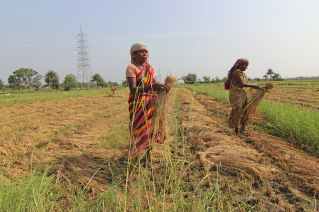
The majority of population in India (about 73 per cent) is living in rural areas. Living conditions of the rural people are very poor. Under such a situation, development of rural areas must receive adequate attention in various schemes designed for the development of Indian economy.

The rural part of the country is still underdeveloped, and the government is doing what all they can to make sure that the rural part also has all the resources like the urban of the country has. But if survey gets conducted at various parts of the country, one will find out that still there are a lot of city and villages in the country whose development is still under process. Various kinds of roads and bridges are being made in various rural parts of the country so that they get connected to an urban part of the country, and thus people from rural part can travel to urban part easily to do various kinds of jobs.

Many industrialists have stepped out to develop rural part of the country, and that is why a lot of malls, call centers, and other industries are getting set up in various rural parts of the country. These industries will not only make job opportunities for the rural people, but it will also enhance their knowledge about certain things.

The following measures can he taken to attain rural development in the country.

  • Improvement of sanitation and for the improvement of sanitation, arrangements for supply of pure drinking water should be made. Tube-wells and ponds should be dug.
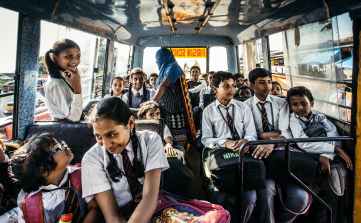
  • Education of the masses, Mass education should be introduced to remove the ignorance of the villagers. Education should be made free and compulsory.
  • Establishment of schools for poor people. Night schools should be set up for poor to teach elementary Hygiene and scientific methods of cultivation.
  • Establishment of cheap medical aid for people in rural areas. Hospitals should be established to give cheap medical aid to the people living in rural areas.
  • Construction of good roads and other means of communication is must.
  • Co-operative Credit Societies should be set up to provide loans to the peasants.

The Ministry of Rural Development is engaged in implementing a number of schemes which aim at enabling rural people to improve their living standards. Education, removal of poverty and speedy socio-economic progress is the goal with which the development programmes are being implemented through a multi pronged strategy, reaching out to the most disadvantaged sectors of society Huge priority is being accorded to provide clean drinking water, rural housing and road. The social security programmes are being implemented for providing assistance to the destitute and downtrodden. Assistance and encouragement to voluntary agencies and training of functionaries forms part of the emphasis on accelerated rural development. The ministry is constantly endeavouring to empower the Panchayt Raj institutions in terms of functions, power and finance. In the new initiative the Gram sabha has become the most significant institutions. Non-Government Organisations self help group and Panchayati Raj institutions have been accorded adequate role to make participating democracy meaningful and effective. Development of waste lands desert and drought prone areas has also been undertaken along with land reforms.

New Education Policy : Key Highlights.

The Union Cabinet chaired by the Prime Minister have approved the new National Education Policy 2020, making way for large scale, transformational reforms in both school and higher education sectors. This is the first education policy of the 21st century and replaces the 34-year-old National Policy on Education (NPE), 1986.

The New Education Policy 2020 has come up as a in the education sector as it aims at creating an equitable and vibrant knowledge for the society by providing high-quality education to all. Also it encourages to develop a deep sense of respect towards the fundamental rights, duties and Constitutional values, bonding with one’s country, and a conscious awareness of one’s role and responsibilities in a changing world. The New Education Policy believes in instilling skills, values, and dispositions that support responsible commitment to human rights, sustainable development and living, and global well-being, thereby reflecting a truly global citizen.

The key highlights of NEP are.

Early Childhood Care Education

The policy focuses on the importance of providing education to children between the age group of 3-6 years at an early age. The kids in the age group 3-5 years will be provided education through the current set-up of pre-schools and anganwadis, and those between the ages of 5-6 years will be included in the schooling system by 2025.

School Education for All

Aiming to make education from pre-primary level till the 12th grade universally accessible, NEP 2020 is looking to achieve 100% Gross Enrollment Ratio in providing the school education by 2030.
New Curriculum & Pedagogical Structure.

The new policy has eliminated the 10+2 education system and replaced it with a more organized 5+3+3+4 structure, that is, 5 years of primary education (for the age group 3-8 years), 3 years of preparatory stage (for the age group 8-11 years), 3 years of middle stage (for the age group 11-14 years), and 4 years of secondary stage (for the age group 14-18 years).

The Flexibility of Choosing Courses

There will be no rigid demarcations between vocational and non-vocational, science and arts, curricular and extra-curricular activities, thus providing equal emphasis on all the subjects and courses. Also, the students will have more choices and flexibility while picking up the subjects they want to study so that their educational path is more focused on their skills and interests.

Emphasis on Mother Tongue & Multilingualism

The policy emphasizes on the inclusion of local language in the curriculum with the medium of instructions in all the schools till at least class 5 (but preferably till 8th standard and beyond) to be either in mother tongue or regional language. Subsequently, foreign languages will be offered as options for students in secondary schools. It also states that Indian Sign Language (ISL) will be standardized across the country.

Assessment System

As per the new policy, though the board examination for 10th and 12th grades will continue to be in place, the structure of the exams will be reformed to make them easier by focusing on core competencies of the students, thus eliminating the need of coaching classes at these stages. Also, the school examinations will be conducted by proper authorities only in grades 3, 5, and 8.

Multidisciplinary Education

The students will be provided with multi-disciplinary holistic education at the undergraduate level to ensure an integrated exposure with multiple entry and exit options. The 3 or 4-year duration undergraduate degree will have exit options (with certifications) during the entire course – a certificate after 1 year, diploma after 2 years and/or a bachelor’s degree after 3 years.

Central Government to remove air fair cap from 31st august.

India will remove the fare caps it imposed on domestic airlines in 2020 during the COVID-19 pandemic from August 31, the country’s civil aviation ministry said on Wednesday, lifting restrictions on ticket prices. The government, in a rare move, had regulated fares by imposing a minimum and maximum band based on the flight’s duration to prevent ticket prices from spiking due to pent-up demand arising from restrictions on air travel easing. Given the current situation, airfares may go up as carriers as jet or aviation turbine fuel (ATF) prices have almost tripled in the last two years.

The ministry had imposed lower and upper limits on air fare after the resumption of services in May, 2020 following the two-month nationwide lock-down to contain the spread of Covid-19. Thereafter, the limits were relaxed in a phased manner as per the improvement in air traffic in the country. The lower caps were meant as a relief for airlines struggling after the pandemic. At the same time, the upper caps on air fare were fixed ensuring that passengers do not have to pay a hefty amount for air travel.

Earlier, discussions on removing the fare bands for domestic air fare were held among the stakeholders, including the government authorities and airlines. The airlines were of the view that removal of the pricing cap is required for the full-fledged recovery of domestic air traffic.

econfiguring curricular and pedagogical structure under NCF

 To take forward the process of widespread consultation for the development of the new National Curriculum Framework (NCF) based on the National Education Policy, 2020, the Ministry of Education held a meeting with senior officials/representatives of all Ministries and Departments of Govt. of India and important bodies including NCERT, Election Commission of India, ICAR, DRDO, etc. The meeting was chaired by Ms. Anita Karwal, Secretary, Department of School Education and Literacy (DoSEL), Ministry of Education (MoE), and focused on how ministries and organisations can contribute in developing a curriculum framework that is responsive and relevant to the developmental needs and interests of learners at different stages of their development.

In the said meeting, the officials present were first taken through a presentation by Ms LS Changsan, Additional Secretary, DoSEL, on how a curriculum framework is prepared, what are its deliverables and what is expected from them. Many areas of contribution were subsequently discussed, such as, the rapidly changing technology, need for innovation and generation of new ideas, need to focus on crucial areas like climate change, future skill requirements, crucial factors for agricultural growth, knowledge of India, especially in those areas where India is at the forefront for instilling a sense of pride, assistive technology for inclusion, enriching subject knowledge with real-life information, how to promote multilingualism, integration of sports, fitness, arts, etc.  The inputs from ministries would help in identifying and integrating several pertinent areas, skills and competencies in the NCF at relevant stages. It was also discussed that it would be very helpful if the ministries also point out their own role in taking certain ideas forward by partnering with school education ecosystem.

The key deliverables of NCF were discussed in detail, including, Early Childhood Care and Education, Foundational Literacy and Numeracy, Competency Based Education, Flexibility in Choice of Subjects in Secondary Classes, Reduction of Curriculum to Core Essentials, Reimagining Vocational education, Identification of Core Skills and Content, Inclusive Education, Multilingualism, Integrating Knowledge of India, citizenship, values like-appreciation of national heritage, respect for public property, taking care of elders, spirit of service, needs of Gifted Children,  Experiential learning, Integration of arts and craft, toys, health and well-being, sports and physical education Guidance and Counselling, Community involvement etc.

Given the crucial nature of the work undertaken by the MoE in preparing the new NCF, participants shared their ideas on how they would be able to contribute to the process. Ideas such as leveraging the innovation ecosystem of the Department of Science and Technology, understanding the efforts that go into agriculture to bring food on the table, the huge role of Gram panchayats in ensuring enrolment and retention in schools, the importance of imbibing volunteerism in early years, the need for every child to participate in activities related to physical health and well-being, focus on Divyang children, exposure to new technology from a young age, etc. were discussed. It was decided that all ministries would soon send written inputs for the National Steering Committee and NCERT to take cognizance of. In the end, the ministries were also requested to whole-heartedly participate in and disseminate the web-app based citizen survey being undertaken by NCERT on https://survey-ncf.inroad.in/#/ where the questionnaire is available in 22 Indian languages and in English.

The NCF process can be seen at: https://ncf.ncert.gov.in/#/web/home

*********

Online Platforms for Learning.

An online learning platform is a webspace or portal for educational content and resources that offers a student everything they need in one place: lectures, resources, opportunities to meet and chat with other students, and more. It is also an excellent way for the student and the teacher to monitor student progress. Whether you want to learn a new language or obtain career-advancing certifications, signing up for an online course could be just the perfect solution. The online class is typically provided through online learning platforms. 

Online learning has numerous advantages over traditional learning methods. Some of these include the possibility for students to make use of self-paced learning and to choose their own learning environments. Additionally, e-learning is both cost-effective and cost-efficient, as it removes the geographical obstacles often associated with traditional classrooms and education. The benefits of an online course platform are that both students and teachers can track the students’ progress through the course material, and everything is neatly organized in one place. Additionally, students may also have an option of interacting with each other on the platform.

Some of the popular Online learning (e-learning) platforms.

Coursera.

Coursera isn’t just a place to take classes that are like college courses—it actually offers real academic courses from real professors and universities at a fraction of the cost of getting an online degree. The platform partners with over 200 universities and companies to provide real learning experiences that can connect to real-world benefits. In some cases, you can even earn certifications or degrees entirely through Coursera, which can then potentially lead to professional benefits like raises, promotions, and more. 

Course Hero.

Course Hero is home to study resources, 24/7 homework help and textbook guides to provide students across top institutions with tailored reinforcement of the courses in which they are enrolled. The library of materials uploaded to Course Hero’s platform can be searched by either school or textbook to find the exact resource a student needs, with tutors available to provide total support.

Edx.

Generally, this online learning platform has a high-end pedigree. edX was established by graduates from both MIT and Harvard University. Real college courses that are generated and taught by real college tutors are available in a vast array of topics and fields. They have a slight leaning toward the Science, Technology, Mathematics, and Engineering fields. Nonetheless, there are plenty of topics in the humanities, arts, and languages as well. By partnering with the universities, this course provides professional degree certificates as well as the “micro” degree programs at both the bachelor’s and the master’s levels. In this sense, they largely serve as tools for professional development. 

Skill Share.

Whereas many online class platforms do confer college-style classes, Skillshare is not formal and is mainly targeted at boosting creative skills. Some business and marketing classes exist on this online education platform. Most of the courses though tend to have a focus on the creative fields and are administered by practicing experts in various fields. Common examples of these fields are interior design, visual arts, animations, films, and photography. 

LinkedIn Learning.

Formerly called Lynda.com, LinkedIn Learning is an educational platform that confers professional course training in the fields of technology, business, creative fields, and technology-related areas mainly in the form of videos. The online learning marketplace is largely available as a premium service for the users of LinkedIn and has so far provided well over 16,000 courses in a whopping 7 languages. Its focus is mainly to aid individuals in investing in their professional development. 

Udemy.

If you want to learn something, it’s probably on Udemy. The site is less of a unified platform and more of a portal or repository where students can access well over 100,000 courses on every topic imaginable. There’s not one standard format for a Udemy course—the platform allows instructors to design multimedia lectures with audio, video, and text elements, plus readings, quizzes, and other activities. Udemy allows students to preview classes they’re interested in and does offer a 30-day refund if you’re dissatisfied.

FutureLearn.

FutureLearn lets you learn online from universities and companies all over the world, including Anglia Ruskin University, King’s College London, Monash University, and the University of Wollongong. On top of their university partnerships, they also partner with specialist organizations such as Accenture, Amnesty International, the British Library, and UNESCO. From personal development video lessons to employment-related course content, FutureLearn definitely deserves its place near the top of our best online learning platforms list.

Key skills one should learn.

Learning new skills is a habit that helps in career, profession, business, and daily life. It can be a technological skill, business management, resume writing, designing, marketing, advertising skills or basic computer skills. Consistent learning and skills development is important for everyone. It’s not only important for students, job seekers, professionals but also important for housewives, seniors citizens and leaders of various field.

Learning means, one self is practicing existing skills, experimenting with new imaginations, reading from books, learning from the internet, doing online and offline courses, learning by observing others, learning from failures and success of others and learning from the problems that you’re facing. Learning new skills is like watering a plant. Its connect to growth. And to grow in business, career and a student it’s important to learn new skills. So that you will become fruitful for companies, people and nation.

Some of the key soft skills are.

Communication skills

Communication skills are the most common and frequently used professional skills in our life. You use communication skills to give and receive different kinds of information, and it helps you to understand and be understood by others while communicating. These skills may include sharing ideas with others, actively listening to conversations, responding, and public speaking.

Teamwork skills

Teamwork skills are the qualities and abilities that allow you to work with a group of people during conversations, projects, meetings or other collaborations to achieve a common goal. Your teamwork skills are dependent on your ability to communicate well, actively listen and be responsible and honest. 

Time management

Time management is the process of organising, planning, and dividing your time between specific activities. Good time management skills enable you to work smarter, not harder. If you work smartly, you will get more done in less time, even when time is tight and pressures are high. Failing to manage your time while performing a task will damage your effectiveness and cause stress. 

Creative Thinking

Creative thinking means your ability to use the imagination to generate new ideas or ability to think about a task or a problem in a new or different way. Creative thinkers look at things from a unique perspective which is invisible to others. They can find patterns and make connections to find opportunities in complex systems. If you are a creative thinker, it will assist you to solve complex problems or find interesting ways to approach tasks.

Interpersonal skills

Interpersonal skills are the traits you rely on when you are interacting and communicating with others. These skills often indicate your ability to communicate and build relationships with others. Interpersonal skills are often called people skills. Because they combine both your innate personality characteristics and how you’ve learned to handle certain social situations. If you use interpersonal skills effectively, these skills can help you during the job interview process and can also have a positive impact on your career advancement.

Leadership skills

Leadership skills are those skills you often use when organizing other people to reach a shared goal or complete a task. It doesn’t matter if you are in a management position or leading a project, leadership skills require you to motivate others to complete a series of tasks before the deadline.

Some of the professional skills, one should learn are.

Graphics Designing

Graphic design is the art of making visual content to communicate messages. Designers apply different page layout methods and visual hierarchy by using letters and pictures to meet the need of end-users. Most companies use graphic design to sell their product or services and to convey complicated information by using infographics.

Web Development

It refers to developing and maintaining web pages, including bits and pieces of concepts like web design, web programming, web publishing, and database management. Further, it includes various types of web development tools and techniques such as text editors for manually coding the websites, Dreamweaver for developing a web page, using a blogging website to update blogs, and more. Having web development language skills will help candidates stand out from the rest. Prominent web developer skills include understanding HTML, design skills, and analytical knowledge.

Animation Designer

Animation design requires a balance of computer software and creativity skills to create animating graphics for an array of industries, including film, television, and marketing. Animation design is the act of creating visual effects and animations for a variety of multimedia, including video games, videos, and digital assets like websites and apps. These effects and animations can be 2D or 3D (CGI) and range from a simple loading icon that indicates something is happening behind the scenes to a full-scale animated video. 

Audio and Video editing

Knowing how to alter video and audio files can be a useful skill, especially for jobs in marketing and entertainment. This capability often requires expertise in editing software, which allows you to manipulate individual clips or add special effects. 

Search Engine Optimization

Search engine optimization (SEO) is a digital marketing strategy that allows companies to improve their website content so it might appear higher on the first page of a search engine’s results. This may involve using best technical practices to compose text, select image formats and include links that connect between two separate pages on a website.

Jaipur : The Pink City of India.

The capital of Rajasthan, the largest state in the country, Jaipur is all about its glorious history. It is also widely known as the Pink City. The name is derived from the fact that the erstwhile area of Jaipur which is now the area around the HawaMahal, was built of pink sandstone. The narrow streets, the colourful clothing, the lovely aromas bursting forth from the food, the vast number of palaces speak volumes of the deep rooted culture of the city.
Maharaja Sawai Jai Singh II invoked the artisans from all over the world and facilitated them with all the things they required, to help in creating the exotic city of beautiful architecture as Jaipur. Today, Jaipur is a hub for rich wedding destinations. Royal weddings are organized here. Exquisite destinations are specially designed for marriages, and offer an experience of one of its kind. Jaipur’s forts, monuments, and museums can be read about further.

Some of the best monuments and sites to visit in pink city are.

Amber/Amer Fort.
At a distance of 13 km from Jaipur Junction Railway Station, Amer Fort or Amber Fort is located in Amer near Jaipur. It is one of the best-preserved forts in Rajasthan, The architecture of Amer Fort is influenced by both Hindu and Muslim styles. Among the famous tourist places in Jaipur, Amer Fort was built using red sandstone and overlooks Maota Lake which is the main water source to the Palace.

City Palace.
City Palace, Jaipur was constructed between 1729-1732, in Jaipur as it paints the picture of heritage and rich culture. Sawai Jai Singh II has started the work of this palace, exclusively the exterior architecture of the building. Moving from Amber, he has moved to the Jaipur city because of the increase in water shortage problem which resulted in an inadequate supply of water to people.

Nahargarh Fort.
Nahargarh is one of three forts in the vicinity of the “Pink City” of Jaipur. Despite its prominence, the fort remained sadly neglected until recent years, resulting in visitors frequently overlooking it in favor of iconic and well-preserved Amber Fort on the opposite end of the ridge. Extensive restoration works and some exciting new attractions have revitalized the fort though, making it one of the top tourist places in Jaipur.

Jai Garh Fort.
Situated on one of the mountains of the Aravalli Range, Jaigarh Fort is a landmark structure in Jaipur. The strategically designed Jaigarh Fort was fundamentally built to protect the Amer Fort from any attack. Jaigarh Fort is popular for numerous reasons and the two most prominent are its mesmerizing architecture, which is a fusion of Rajputana and Mughal style, and for being the hub of artillery during the Mughal era.

Jantar Mantar.
Jantar Mantar is one of the finest monuments and striking creations by astronomers and architectures. It is a compilation of architectural astronomical devices which provided accurate astronomical results. It has even struck the modern approach of science. Jantar Mantar is the most well-known observatories amongst all the buildings formed during the sovereignty of Maharaja Sawai Jai Singh II.

Hawa Mahal.
Hawa Mahal was built by Maharaja Sawai Pratap Singh in 1799 and was designed by architect Lal Chand Usta as a ‘Rajmukut’. The Hawa Mahal was built specifically for Rajput members, and especially for women, so that the royal ladies could watch the daily drama dance in the street below, as well as have a beautiful view of the city from the window.

Central Museum
Central museum is also known as ‘Albert museum’ or ‘Government Central Museum’. This is the oldest museum of the city and was constructed in 1876 beneath the command of Lt. Swinton Jacob. Initially the building was a town hall. But on the order of Maharaja Madho Singh it was transformed into an art museum.

Extreme Poverty to ‘Prosperity’: Unique Case of Indian weight-lifter Achinta Shewli

 Because of poverty many families and many youths in our country could not reach the zenith albeit they have potential. . Regarding poverty, I wish to mention that John Boyd Orr, the first Director-General of the United Nations Food and Agriculture Organization (FAO)   used the calorie concept to explain poverty which was the minimum value of foods a human being required to sustain a good life. In India, poverty has been defined based on a minimum daily requirement of 2,400 and 2,100 calories for an adult in rural and urban areas, respectively which subsequently has been converted to income earning.

Here, I am presenting a case of a youth who in spite of living in extreme poverty has reached the zenith because of strong dedication, devotion, and sincerity.

Achinta Shewli of West Bengal (resident of Howrah) brought gold to the country in the Commonwealth Games but in his childhood in weight-lifting but he passed awful days because of extreme poverty. Arranging good food, particularly protein food was a dream for the families. It is fact that in general Bengali people irrespective of caste or religion eat non-vegetarian items like fish, chicken, mutton, and egg. In childhood eating, the non-veg item was a dream​ for Achinta. His father was a rickshaw van driver earning a paltry amount and unfortunately, his father passed away in April 2013 (38 years age) when Achinta was just 11 years old. After the death of the father, the two brothers Alok and Achinta helped the mother with the lace work. Both the brothers dreamed of becoming weightlifters. But it was not easy to dream where they had to fight to get two meals.  After his father’s death, his grandfather did everything for them. 

​According to him, the goal is to get a medal at the 2024 Paris Olympics and the Commonwealth Games medal will give Achinta confidence to get the same. It may be mentioned that Achinta’s brother Alok told Anandabazar Online, “One day when I was a child, my brother was crying because he wanted to eat chicken -​meat. But later on at that age, he understood the financial condition of the house. After that, he did not cry.”

Achinta’s coach Ashtam Das said, “I had many players who were physically better than Achinta, but they did not have the hunger for sports, which I saw in Achinta.” Achinta’s coach Ashtam Das left his BSF job to train potential weight-lifters. In view of his financial condition, he trained him free of cost. 

Achinta Shewli started weightlifting in the year 2011, admiring his brother who was also a former Weightlifter. Ashtam Das admitted him to the Army Sports Institution in Pune. Since then Achinta’s studies and sports have been going on there. He got a job in the army last year 2021). It seems Ashtam Das spent his personal money on the development of weight lifters but the State Government did not extend any support for the infrastructure development of the ‘practicing center’ although everyone knows the State Government has been spending huge money on much unproductive expenditure. So, I suggest to the State Government please look into such issues as such expenditure is known as ‘Development Expenditure’ i.e. development for human resource.

(Basic inputs collected mainly from two editions of Anandabazar Patrika (Bengali editions), Kolkata, 1/8/22 and 2/8/22)