Block chains, electronic discovery, cyber-security, robotics, Artificial Intelligence and bio-ethics etc. in their curricula

 As per the provisions of Sections 7(l)(h) and (i) of the Advocates Act, 1961, the Bar Council of India (BCI), is entrusted with the function inter-alia of promoting and laying down the standards of legal education in the country. The legal Education Rules, 2008 lay down the mandatory minimum standards and requirements for legal education in India. The BCI has informed that it periodically reviews and updates the curriculum to ensure that it remains relevant and comprehensive, and that it addresses the changing needs of the legal profession. The BCI has encouraged the law schools to include emerging areas of law, such as Intellectual Property Law, Cyber Law, and Environmental Law, in their curriculum. To make law courses more practical, the BCI has also introduced clinical legal education, which requires students to participate in internships, moot courts, and legal aid clinics. This helps students gain practical experience and develop their skills in a real-world setting. As per vision of Hon’ble Prime Minister the BCI has issued circular to all Universities and Centres of Legal Education to incorporate subjects such as block chains, electronic discovery, cyber-security, robotics, Artificial Intelligence and bio-ethics etc. in their curricula. Requisite Circular has also been issued to include the recently introduced three Criminal Laws i.e. Bharatiya Nyaya Sanhita, 2023, the Bharatiya Nagarik Suraksha Sanhita, 2023, and the Bharatiya Sakshya Adhiniyam, 2023 in the curriculum. Overall, the BCI is aware that curriculum of law courses in India remains comprehensive, practical and relevant to the needs of the legal profession and ensures that the graduates are well equipped to handle contemporary legal challenges.

Although, the BCI oversees the legal profession in India but it does not determine the fees for Advocates or Senior Advocates. Therefore, the matter of providing stipends to the junior advocates are totally at the discretion of the individual advocates and senior advocates. The BCI has further informed that the Delhi High Court vide order dated 25th July, 2024 in the case of Simran Kumari vs BCI & Anrs.,{W.P. (c) 10159/2024} has directed to consider representations regarding payment of minimum stipend to junior lawyers hired by advocates and senior advocates.

The BCI as a regulatory body, maintains the standards of legal education. Several circulars have been issued by BCI to State Governments and Universities to meticulously scrutinise the applications of new law Colleges before granting them NOCs and affiliations. If any deficiencies are found on the part of any Centres of Legal Educations (CLEs), the approval of affiliation are not granted. Moratorium to grant NOCs and affiliation to new law colleges and additional sections in existing centres was issued vide resolution dated 11.08.2019 which was subsequently overturned by Punjab and Haryana High Court in its order dated 04.12.2020. The BCI has also constituted a High-Level Committee headed by a former Chief Justice of High Court to identify such Centres of Legal Education which are not complying with the infrastructural, faculty, library and other requirements of Rules of Legal Education by conducting surprise inspections of these Centres of Legal Education without their knowledge. On the basis of the Report of High-Powered Surprise Inspection Committee, the BCI conducts rigorous inspections of Centres of Legal Educations (CLEs). Further, based on not meeting the standard, several CLEs have been barred from admitting students for the academic year 2024-25. The BCI has also launched Legal Education portal in December 2023, which has detected numerous irregularities committed by these CLEs which invite stringent action by BCI.
Schemes for accelerating the adoption of electric vehicles

 Ministry of Heavy Industries is currently implementing the following schemes for accelerating the adoption of electric vehicles in the country:


  1. Electric Mobility Promotion Scheme 2024 (EMPS) with an outlay of  ₹ 778 Crore for a period 6 months, w.e.f. 1st April 2024 till 30th September 2024, which provides incentives to buyers of e-2W and e-3W.
  2. Production Linked Incentive Scheme for Automobile and Auto Component Industry (PLI-AAT) with a budgetary outlay of  ₹ 25,938 Crore. The scheme incentivises various categories of electric vehicles including e-2W, e-3W, e-4W, e-buses & e-trucks also.
  3. Production Linked Incentive Scheme for manufacturing of Advanced Chemistry Cell (PLI-ACC) in the country with a budgetary outlay of ₹18,100 Crore.
  4. Scheme to Promote Manufacturing of Electric Passenger Cars to attract investments from global EV manufacturers and promote India as a manufacturing destination for e-vehicles.


The Ministry of Heavy Industries (MHI) formulated a Scheme namely; Faster Adoption and Manufacturing of (Hybrid &) Electric Vehicles in India (FAME India) Scheme in 2015 to promote adoption of electric/ hybrid vehicles (xEVs) in India. The Phase-I of the scheme was available up to 31st March, 2019 with budget outlay of Rs. 895 Crore. This phase of FAME India Scheme had four focus areas i.e. technological development, demand generation, pilot project and charging infrastructure components.


In the 1st phase of the scheme, about 2.8 lakh xEVs were supported with total demand incentives of Rs. 359 Crore (Approx). In addition, 425 electric and hybrid buses, as sanctioned under first phase of the scheme were deployed across various cities in the country with Government Incentive of about Rs. 280 Crore. The Ministry of Heavy Industries had also sanctioned about 520 Charging Stations/ Infrastructure for Rs. 43 Crore (approx.) under Phase-I of FAME India Scheme.


Projects worth about Rs. 158 Crore were sanctioned for the technology development projects like establishment of testing Infrastructure, setting up of ‘Centre of Excellence’ for Advanced Research in Electrified Transportation, Battery Engineering, etc. to various organisations / institutions like Automotive Research Association of India (ARAI), IIT Madras, IIT Kanpur, Non Ferrous Material Technology Development Centre (NFTDC), Aligarh Muslim University (AMU), etc.


Based on outcome and experience gained during Phase-I of FAME India Scheme and after having consultations with all stakeholders, including Industry and Industry Associations, the Government notified Phase-II of FAME India Scheme for a period of five years commencing from 1st Apri1, 2019 with a total budgetary support of Rs. 11,500 crore.


This phase-II mainly focused on supporting electrification of public & shared transportation, and aimed to support through demand incentive 7,262 e-Buses, 1,55,536 e-3 Wheelers, 30,461 e-4 Wheeler Passenger Cars and 15,50,225 e-2 Wheelers. In addition, creation of charging infrastructure is also supported under the Scheme.


Under Phase-II of FAME India Scheme, as on 31/07/2024, claims of 16,71,606 electric vehicles for Rs. 6,825 crore have been submitted for reimbursement of subsidy by the OEMs (EV manufacturers) as per http://fame2.heavyindustries.gov.in/dashboard. aspx. Category-wise details of claims submitted are as under:


Sl. No.

Wheeler Type

Total No. of Vehicle

1.

2 wheeler

14,69,343

2.

3 wheeler

1,78,952

3.

4 wheeler

23,311


Total

16,71,606


Further, 6862 electric buses were sanctioned to various cities/STUs/State Govt. entities for intra-city operations under the FAME-II Scheme. Out of 6,862 e-buses, 4,853 e-buses have been supplied till 31st July, 2024.


MHI has also sanctioned Rs. 800 Crore as capital subsidy to the three Oil Marketing Companies (OMCs) of the Ministry of Petroleum and Natural Gas (MoPNG) for establishment of 7,432 electric vehicle public charging stations. Subsidy of Rs.560 crore has already been released to OMCs. Further, in March 2024, MHI sanctioned additional Rs.73.50 Crore under FAME II to OMCs for set up/upgradation 980 public fast charging stations by installing new chargers across the country. Subsidy of Rs.51.45 crore has already been released to OMCs.


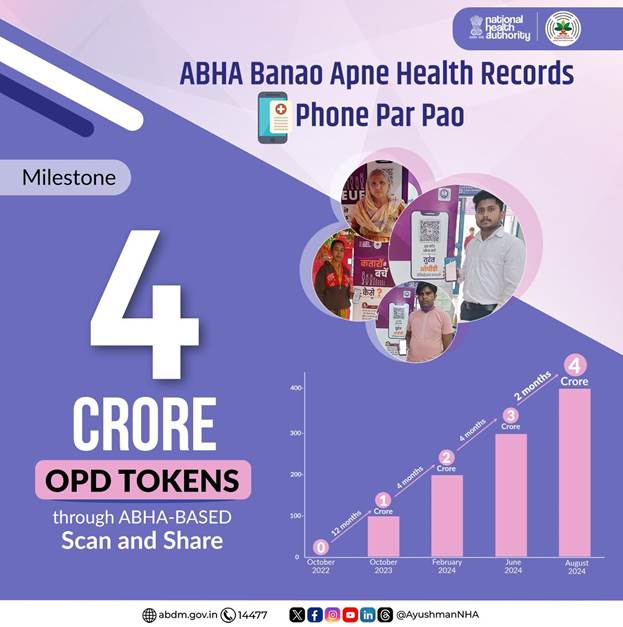
National Health Authority Achieves Milestone with 4 Crore OPD Registrations Through ABHA-based Scan and Share Service

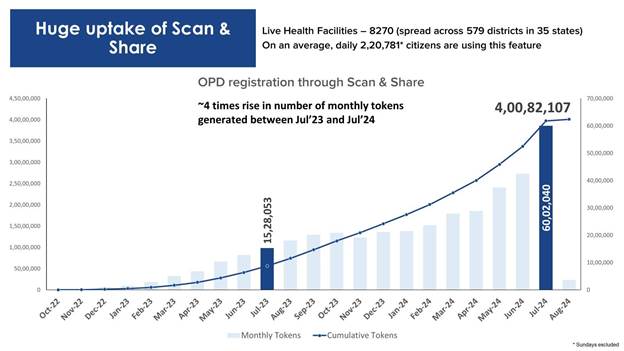
 The National Health Authority (NHA) has achieved a significant milestone in its mission towards digitizing healthcare services with the generation of over 4 Crore tokens for Out-Patient Department (OPD) registrations through the ABHA-based Scan and Share service.

Launched under the Ayushman Bharat Digital Mission (ABDM) in October 2022, this innovative paperless service has revolutionized the patient experience, particularly benefiting vulnerable groups such as the elderly, pregnant women, and those with mobility challenges, by eliminating the need to wait in long queues for appointments.

The ABHA-based Scan and Share service enables patients to conveniently register for OPD appointments by scanning a QR code displayed at the OPD registration counter, thereby instantaneously sharing their ABHA profile for registration.


The Scan and Share service is presently operational across over 8,270 healthcare facilities spanning 579 districts in 35 States and Union Territories of India. Notably, an average of 2.2 Lakh individuals avail the scan and share service daily, highlighting its usefulness and popularity among the citizens. The aforesaid 8,270 healthcare facilities include 5,875 public and 2,845 private healthcare facilities.

Leading the adoption journey are Uttar Pradesh, Andhra Pradesh, Karnataka, and Jammu & Kashmir. Uttar Pradesh has generated the maximum tokens of 1.11 Crore tokens, followed by Andhra Pradesh with 70.35 lakhs, Karnataka with 46.61 lakhs, and Jammu & Kashmir with 41.81 lakh tokens.

The ABDM Public Dashboard (https://dashboard.abdm.gov.in/abdm/) provides insights into the service’s utilization, with notable usage recorded at AIIMS in Delhi, Bhopal, Bhubaneshwar and Raipur. Remarkably, sixteen hospitals from Uttar Pradesh, Andhra Pradesh, and Jammu and Kashmir feature prominently in the top-performing facilities for the overall number of OPD tokens generated using ABHA-based Scan and Share service, exemplifying their dedication to enhancing healthcare accessibility and efficiency.

Government hospitals, including AIIMS in New Delhi with 18.3 lakh tokens, and those in Bhopal, Bhubaneshwar, and Raipur with 7.9 lakh, 6.1 lakh, and 5.7 lakh tokens respectively, have showcased outstanding performance by efficiently facilitating OPD registrations through the scan and share service.

While discussing the importance of digital healthcare services, the CEO of National Health Authority (NHA) said, “The “Scan and Share” feature for OPD registration under the Ayushman Bharat Digital Mission (ABDM) is transforming the way patients engage with healthcare services in India. This service allows patients to easily scan for OPD registration and digitally share their medical documents, such as prescriptions and test results, with healthcare providers.  The Scan and Share benefits approximately 2,20,000 patients daily. By facilitating secure and quick access to comprehensive health information, it enhances healthcare delivery, ensures data security and patient privacy, and contributes to the broader goal of building a connected and interoperable digital health ecosystem.”

Among all the token generations, approximately 76% are first-time users, while 24% use scan and share for subsequent visits, highlighting its widespread adoption and usefulness.

To drive further adoption of the Scan and Share service among hospitals and Digital Solution Companies (DSCs) providing technology to healthcare facilities, NHA offers financial incentives through the ABDM’s Digital Health Incentive Scheme (DHIS) for ‘Scan and Share’ transactions and the generation of electronic health records. More information about DHIS is accessible at https://abdm.gov.in/DHIS.

NHA is leveraging technology to enhance patients’ access to healthcare services. The ‘Scan and Share’ service is now being implemented at pharmacy counters of the public hospitals also and plans are underway to extend it to laboratory settings. Additionally, efforts are being made to launch upcoming services, like ‘Scan and Send’ and ‘Scan and Pay’ leveraging the comfort of citizens with QR codes. ‘ The ‘Scan and Pay’ service will enable the patients to make payments for tests or medicines prescribed to them directly through their app, eliminating the need to wait in lines for payment at healthcare facilities. Similarly, the ‘Scan and Send’ service will soon allow patients to conveniently scan a QR code at a facility (hospital or pharmacy) and send their health records, (including prescriptions or lab reports).

Key Projects worth more than Rs 13 crores added at Paradip Port, Enhancing Infrastructure and Services

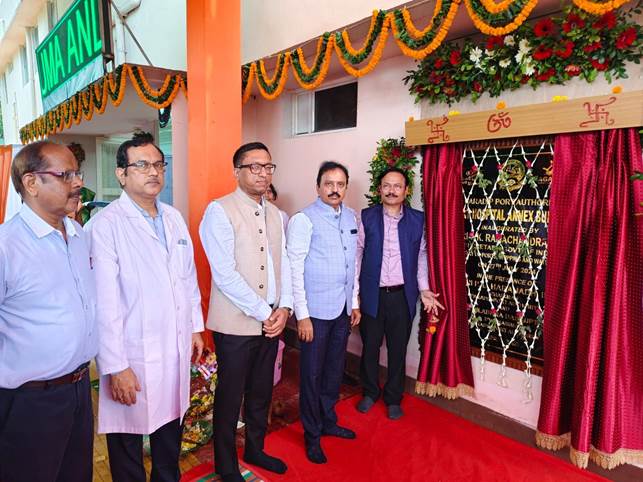
 Shri T.K. Ramachandran, Secretary, Ministry of Ports, Shipping and Waterways (MoPSW), made his maiden visit to Paradip Port Authority (PPA). During his visit he inaugurated and laid foundation stone of several significant projects worth more than Rs. 13 crores.

He inaugurated the Trauma and Burn Care (TBC) Centre in the newly constructed Annex building of Paradip Port Hospital. Constructed at a cost of Rs. 2.90 Crores, the centre will provide curative and rehabilitative services for trauma and burn victims in and around Paradip.

Secretary, Shri Ramachandran laid the foundation stone for the Water Treatment Plant of PPA. The project, being constructed at a cost of Rs. 10.50 Crores, will receive raw water through Taldanda Canal and will have the capacity to filter 16 million litres of water per day. The plant is expected to be completed by December 2024, enhancing the water infrastructure of Paradip Port and supplying quality drinking water to the citizens of Port Township.

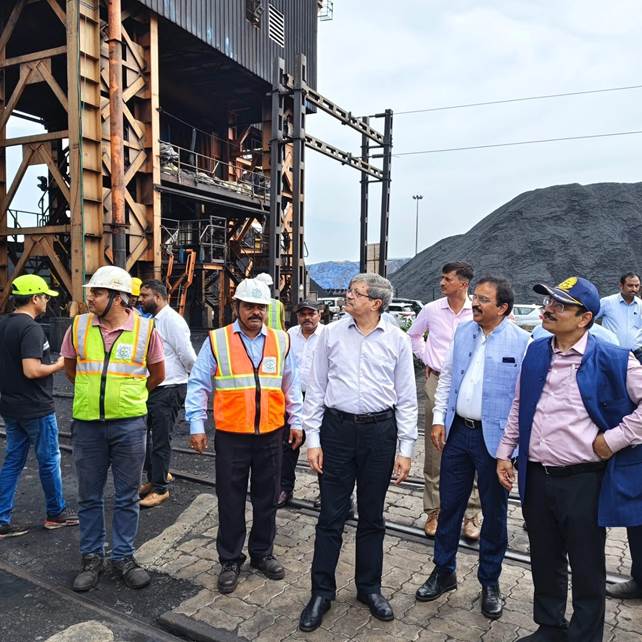
Shri Ramachandran reviewed the functioning of the PPA and interacted with Heads of Departments and Deputy Heads of Departments. He also inspected and reviewed port operations, planning, and expansion at the Mechanized Coal Handling Plant, Twin Wagon Tipplers at JSWPTPL, and KICT silos. He suggested system improvement measures to increase productivity.

The Secretary suggested several measures aimed at improving the overall performance of the port operations. These recommendations are expected to enhance the capacity and streamline the workflow, contributing to Paradip Port’s long-term growth and success.

It is to be noted that, the Paradip Port in Odisha is the highest cargo handling major port of the country. In the financial year 2023-24 PPA became highest cargo handling port by handling 145.38 million metric tonnes (MMT) cargo throughput.

The goal under Vision 2047 is to increase the port handling capacity to 10,000 MTPA. Contours of the plan will soon be spelled out. There will be avenues for private participation that are being worked upon. All ports are preparing a master plan in order to become mega ports by 2047. Improving port infrastructure and facilities, reducing turnaround time, and increasing handling capacity will be the bedrock of the 2047 target.

The latest goal is well above the targets set under the ongoing Sagarmala programme that aims boosting port capacity by 800 MMTPA to an overall 3,500 MMTPA by 2035.

As a part of Sagarmala programme, more than 800 projects at an estimated cost of Rs 5.5 lakh crore have been identified for implementation during 2015-2035. In a nearer goal, the Maritime India Vision (MIV) 2030 has a goal to develop global standard ports in India. The MIV 2030 estimates investments to the tune of Rs 1-1.25 lakh crore for capacity augmentation and infrastructure development at Indian ports.

*****

Housing and road development to every poor in Chhattisgarh

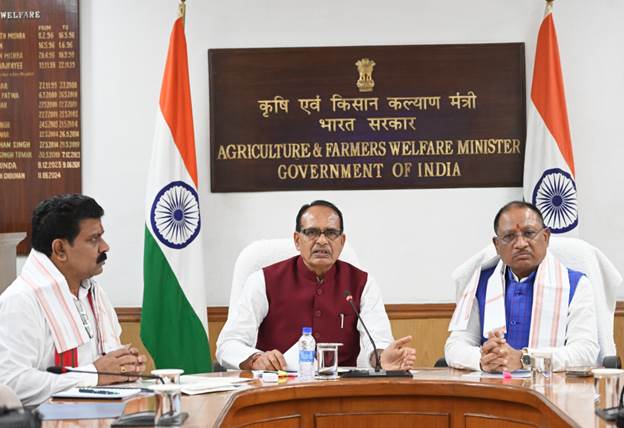
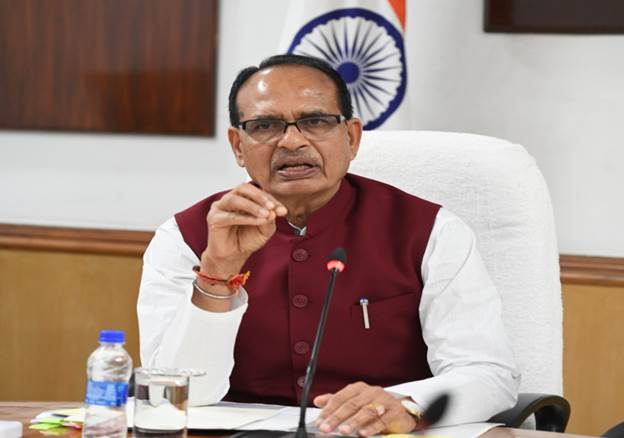
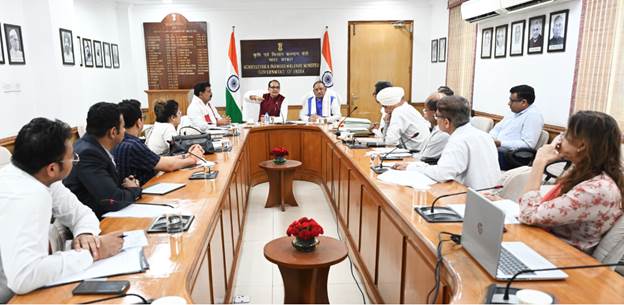
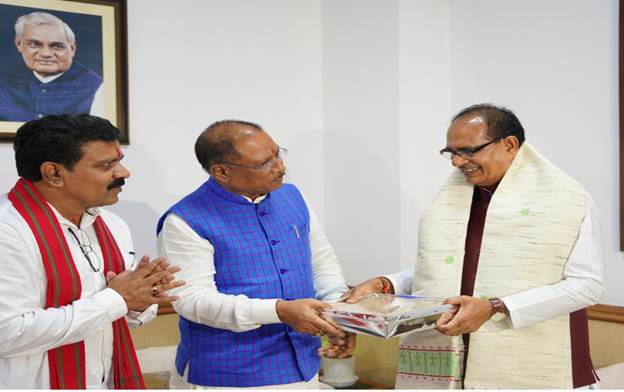
 Union Minister of Agriculture and Farmers’ Welfare and Rural Development Shri Shivraj Singh Chouhan held a meeting with Chhattisgarh Chief Minister Shri Vishnudev Sai and Deputy Chief Minister Shri Vijay Sharma at Krishi Bhavan in New Delhi today.

In the meeting, positive discussions were held on various topics including Pradhan Mantri Gram Sadak Yojana, Pradhan Mantri Awas Yojana (Rural), Mahatma Gandhi National Rural Employment Guarantee Scheme.

Union Minister said that the Central Government under the leadership of Prime Minister Shri Narendra Modi is committed to the development of housing and roads for every poor in Chhattisgarh. The Central and State Governments will jointly complete the public welfare works of the state. Union Minister Shri Chouhan said that houses of all the poor in the state will definitely be built; no poor brother or sister will be deprived of housing under Pradhan Mantri Awas Yojana (Rural). The Central Government is already giving adequate funds to the State Government under public welfare schemes; the present State Government will work seriously in this regard and make good use of the funds.

Shri Chouhan said that the Central Government is also working promptly to build roads under Pradhan Mantri Gram Sadak Yojana in the remote areas of Chhattisgarh. The Central Government is committed to work speedily on the proposals of rural roads in collaboration with the State Government.

Senior central and state officials including Secretary, Rural Development Ministry, Shri Shailesh Kumar Singh were also present in the meeting.

*****

Lok Samvardhan Parv

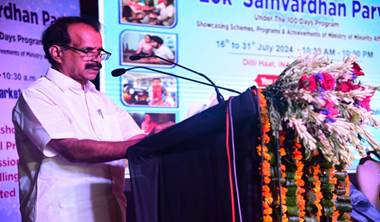
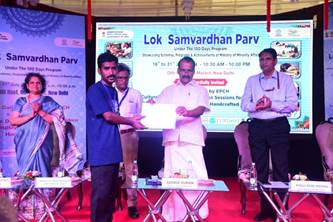
 The valedictory function of ‘Lok Samvardhan Parv’ was presided over by Shri George Kurian, Minister of State for Minority Affairs, Fisheries, Animal Husbandry and Dairying yesterday ( 28th July 2024) . As part of its 100 days’ programme, the Ministry of Minority Affairs is organising “Lok Samvardhan Parv” to showcase the schemes, programmes and achievements of the Ministry and also highlighting the activities undertaken in convergence with partner organisations and success stories under its various schemes. This Parv is being organized at Dilli Haat, New Delhi.


During his valedictory address, the Minister of State appreciated the ‘Lok Samvardhan Parv’ which has proved to be a platform to popularize the schemes and achievements of the Ministry. He observed that the ‘Lok Samvardhan Parv’ has showcased schemes and programmes and achievements of Ministry of Minority Affairs through poster exhibition. Besides unique schemes and success stories of State Channelizing partners of NMDFC were also exhibited in the ‘Lok Samvardhan Parv’.

Shri George Kurian expressed satisfaction that prominent knowledge partners of the Ministry of Minority Affairs viz. National Institute of Fashion Technology (NIFT), National Institute of Design (NID) participated and showcased the artisans supported by them under various schemes of Ministry of Minority Affairs. The United Nations Children’s Fund (UNICEF) YuWaah also highlighted the work of artisans through young people and their partner organizations. He appreciated the Government E Marketplace (GeM), which has assisted the artisans in providing assistance for online marketing. In addition the knowledge partners of NMDFC viz. Ambedkar University, Delhi have assisted in organizing this event. He also appreciated the Ministry for organizing workshops on various aspects of export marketing through Export Promotion Council of Handicraft (EPCH) everyday, which were attended by the Artisans as well as visitors in the Dilli Haat.


The Minister also appreciated the cultural evenings organized during the Lok Samvardhan Parv, which have depicted the rich cultural heritage of all minority communities such as Singhi Chamm (Lion Dance), Manipuri Dance, Bhangra, Langa & Manganiar, Mando, Siddhi Goma, Karagattam, Phaag Dance, and Folk Dance of Kerala.

It was observed that workshops organized in origami, Doll & toy Making and sketching/paintings saw participation  by children from various Delhi schools such as Anglo Arabic Sr. Secondary School, Ajmeri Gate, Guru Harkrishna Public School Tilak Nagar, Jamia Milia Islamia Sr. Sec. School, Hira Lal Jain Sr. Sec. School etc. This would help in inculcating interest in rich traditional heritage amongst the young generation. The added attraction amongst the young visitors has been quiz competition on general awareness wherein they were rewarded with food coupons for right answers.

Lok Samvardhan Parv is celebrating and showcasing over 70 exquisite handicraft and handloom products from various States made by 162 artisans belonging to various minority communities. These participants include artisans promoted under various schemes of Ministry through NIFT, NID and other Project Implementing Agencies (PIAs). Further the artisans have also been nominated by respective State Channelising Agencies of NMDFC. Till 27th July, 2024 the total sales achieved by the artisans was Rs.1.03 Cr.

He also observed that Lok Samvardhan Parv is testimony of the inclusive development programme of the Ministry which has benefitted a large number of persons from all the minority communities, through convergence with partner organization. The Ministry is striving to fulfil the mantra of “Sabka Saath Sabka Vikas Sabka Vishwash Sabka Prayas”.

***

4th anniversary of National Education Policy 2020 with Akhil Bhartiya Shiksha Samagam 2024

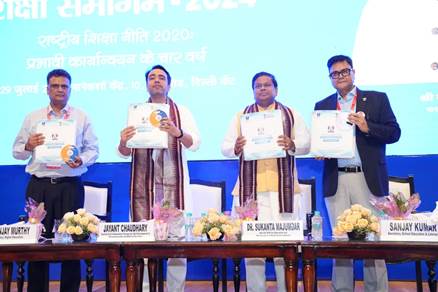
 The Ministry of Education celebrated the 4th anniversary of the implementation of the National Education Policy 2020 with Akhil Bhartiya Shiksha Samagam 2024 in New Delhi’s Manekshaw Centre Auditorium today. Minister of State for Education & Minister of State (IC), Ministry of Skill Development & Entrepreneurship Shri Jayant Chaudhary and Minister of State for Education & Development of North Eastern Region, Dr. Sukanta Majumdar were present at the event. Shri K. Sanjay Murthy, Secretary, Department of Higher Education; Shri Sanjay Kumar, Secretary, Department of School Education & Literacy; academicians, Vice Chancellors of the universities, officials, and students, also attended the event.

Image

The Ministers launched several significant NEP 2020 initiatives of the Ministry of Education, such as Dedicated TV Channels to facilitate learning of various Indian languages, a Tamil Channel; Primers for early graders in 25 Indian languages in pursuance to 54 already done; 10 Bagless days Guidelines aimed to transform learning into a fun, stress-free experience in schools; Career Guidance Guidelines, a massive library of over 500 job cards; NMM (National Mission for Mentoring) and National Professional Standards for Teachers (NPST) in Braille and Audio Books; School Innovation Marathon by AICTE, NITI Aayog, and AIM; and a book on Graduation Attributes and Professional Competencies. They also unveiled four books and lecture notes aimed at promoting the Indian Knowledge Systems (IKS) among students and teachers.

Shri Dharmendra Pradhan, in his message, said that the four-year journey of NEP 2020 has been about bringing in transformative change in the country’s education system for nurturing a new generation of learners. NEP 2020 stands as a symbol of hope for transforming the learning landscape, harnessing the country’s demographic dividend, empowering the population and driving socio-economic development, he also mentioned. He said the implementation of NEP has made learning more vibrant and guided in making the country’s education more futuristic, rooted, global and outcome-oriented. Expressing his gratitude to Prime Minister Shri Narendra Modi, he reiterated his commitment to implement NEP in letter and spirit to make the country a 21st-century knowledge economy.

He also appreciated the musical performance of ‘Panch Pran’ by the students of Kendriya Vidyalaya Sangathan at the function, which was inspired by the vision of Prime Minister Shri Narendra Modi.

While addressing the audience Shri Jayant Chaudhary highlighted the immense impact of the teachers and the values and contributions they make in shaping the lives of their students. Reigns of the country truly lies in the hands of the teachers, he added. Farmers, scientists, and teachers are the three pillars of society who envision the nation’s future, he said. Shri Chaudhary also mentioned how, following the recommendations of the stakeholders of the education ecosystem, the forward-looking policy in the shape of the NEP 2020 was formulated. Breaking away from the legacy of the old system, it revolutionised the educational landscape and aligned it with the needs of the 21st century, he added.

Shri Chaudhary emphasised the importance of States as they are the important stakeholders .He appealed to them to be a partner in the journey with a collective effort and strategy that will benefit the entire education ecosystem involving students, teachers, administrators, and more. He also expressed his gratitude to Shri Dharmendra Pradhan for emphasising the future challenges and how they are to be mitigated. The benefit of the progressive, forward-looking and expansive NEP 2020 can be achieved only with its collective implementation, Shri Chaudhary added. Shri Chaudhary specifically mentioned the presentation on APAAR, which he termed as practical for highlighting not only the positive points but the challenges as well.

Dr. Sukanta Majumdar in his address expressed gratitude to Prime Minister Shri Narendra Modi for his farsighted and progressive ideas that shaped the NEP 2020 which embraces the ideal of education as a transformative journey for personal development, beyond making it just a means to obtain certificates. NEP 2020 includes India’s rich heritage, the synthesis of traditional knowledge with modern advancements, and the integration of value education with nation-building at its core, Dr. Majumdar said. He also said that the Akhil Bhartiya Shiksha Samagam, embodying the essence of “Vikas bhi Virasat bhi,” represents a unique participatory dialogue steered by stakeholders from every corner of the education sector. Dr. Majumdar also expressed his gratitude to Shri Dharmendra Pradhan for successfully spearheading the NEP 2020 for the last three years.

Commending the reformist agenda of the NEP 2020, Shri K. Sanjay Murthy highlighted on seamless integration of school and higher education through the APAAR platform. Presenting a vote of thanks Shri Sanjay Kumar informed how Prime Minister Shri Narendra Modi has mentioned NEP 2020 as the basis for radical change and urged everyone to take the recommendation of the Policy to the grassroots level. He also informed about the week-long campaign, “Shiksha Saptah” that was celebrated in schools all over the country.

Shri Govind Jaiswal, Joint Secretary, Ministry of Education, made a presentation on Credit accumulation and seamless creditization of all types of learning including skilling by using the Platform of APAAR ID.

Akhil Bharatiya Siksha Samagam (ABSS) has been conceptualized as an event to celebrate the adoption of National Education Policy 2020 to reinvigorate the commitment of various stakeholders for its effective implementation and to realize the collective strength for achievement of shared goals through collaborative efforts.

ABSS 2024 witnessed six thematic sessions on different themes & initiatives of NEP 2020 related to Schools and Higher Education. These are:


  1.  Importance of Sustainability in Education Curriculum, Job Prospects, Industry-Academia Collaboration

(ii) PM SHRI (School Education & Skilling)

  1.  Role of HEIs in promoting STEM & enhancing GER through Vidyashakti

(iv) Equivalence of Curriculum and Assessment across all School Boards

(v) Role of Ranking and Accreditation in Enhancing Quality

(vi) NCF-FS and NCF-SE Salient Features and Implementation Roadmap


The event was attended by State Education Secretaries, State Project Directors of Samagra Shiksha, SCERT Directors, State Directors of Primary Education and Secondary Education, Chairperson, State School Boards including CBSE, Head of Autonomous Bodies of DoSEL, Regional Officers of CBSE, KVS, NVS, Principals of DIETs and Schools, Students from KV, JNV, CBSE schools, VCs / Directors / Heads of HEIs – 80 from CFIs and 100 from State Universities, State Project Directors of RUSA, Officials of DoSEL, DoHE, MSDE, UGC, AICTE, NETF, NCVET, NIEPA, ICSSR, ICHR, Officials from other Ministries, Heads of CSO, Panelists for the Breakaway sessions etc.

******

MoD & NSE ink MoU to facilitate capital market access to MSMEs

 Ministry of Defence and National Stock Exchange of India Limited (NSE), on July 29, 2024, signed a Memorandum of Understanding (MoU) to facilitate capital market access to the MSMEs. The MoU was signed by Additional Secretary, Department of Defence Production (DDP) and Managing Director, NSE in the presence of Defence Secretary Shri Giridhar Aramane. The MoU intends to facilitate MSMEs in the defence sector to raise productive capital for their growth plan in an efficient and transparent manner through NSE platform ‘NSE Emerge’. The platform offers new and viable options for raising equity capital from diversified set of investors.

The MoU will be in force for a period of five years, during which, DDP and NSE would conduct an extensive awareness drive through seminars, MSME camps, knowledge sessions, road shows & workshops to guide corporates engaged with the Ministry of Defence for fund raising on NSE Emerge platform. NSE will also assist MSMEs in connecting with intermediaries like merchant bankers, registrar, transfer agent, depositories etc and guide them regarding the capital markets, capital raising mechanism and regulatory compliance and requirement. This MoU will help MSMEs and emerging companies in defence sector to scale-up their business operations, explore new markets and fund their R&D activities.

***

SR/Savvy

Tomatoes procured from three centres, Price Stabilisation Fund not used

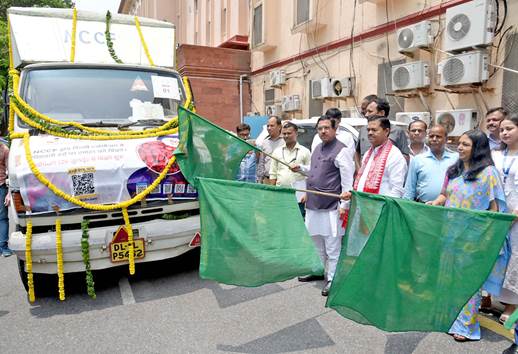
 Union Minister of Consumer Affairs, Food and Public Distribution & New and Renewable Energy, Shri Pralhad Joshi launched the sale of tomatoes at Rs 60 per kg here today. The National Cooperative Consumers’ Federation of India Limited (NCCF) vans will be providing the tomatoes at subsidised rate. The tomatoes will be sold in Delhi along with Noida and Gurgaon. The Centre undertook the market intervention initiative to stabilise rising tomato price in the retail market.


While addressing the media during the flagging off ceremony, Shri Joshi said that to check the surge of tomato price in major cities, especially Delhi, the Department of Consumer Affairs, Government of India has decided to launch this initiative. “From today onwards subsidised tomatoes will be sold for Rs 60 per kg”, said Shri Joshi.

The Union Minister said that under Shri Narendra Modi government, the Centre has set up a Price Stabilisation Fund (PSF) to stabilise rising food prices and protect consumers’ interests. “Whenever a situation arises price of essential commodities increase, we utilise the PSF to procure the commodities. These essential commodities are directly procured from farmers that reduces intermediary costs and ensure availability to consumers”, said Shri Joshi adding on that in this case PSF was not utilised as tomatoes were directly procured from mandis. He further added that this initiative will ease tomato price, stabilise the market and provide tomatoes at subsidised rate to consumers.

NCCF has initiated market intervention to stabilise rising tomato prices in the retail market. NCCF is procuring tomatoes from wholesale mandis and selling them at reasonable retail prices.This move aims to ensure that profit margins remain reasonable at the retail level and prevent windfall gains to intermediaries and thereby protect the interests of consumers.

By this intervention NCCF seeks to cool off price rise and maintain price stability in the market, benefiting consumers and promoting fair trade practices. This intervention demonstrates NCCF’s commitment to protecting consumer interests and promoting a stable market ecosystem.

To begin with, tomato sales will start from today (29 July 2024) at the following locations at the rate of Rs60/- per kilogram – Rajiv Chowk Metro, Patel Chowk Metro, Nehru Place, Krishi Bhawan, CGO Complex, Lodhi Colony, Hauz Khas Head Office, Parliament Street, INA Market, Mandi House, Kailash Colony, I.T.O, South Extension, Moti Nagar, Dwarka, Noida (Sector 14 and 76), Rohini, Gurugram. In the coming days, the number of retail locations may be increased for consumer convenience.

***

Bureau of Indian Standards and Govind Ballabh Pant University of Agriculture and Technology signs Memorandum of Understanding for Standardized Agriculture Demonstration Farm (SADF)

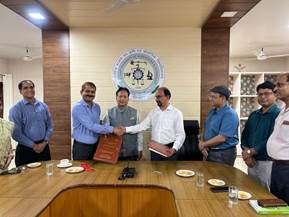
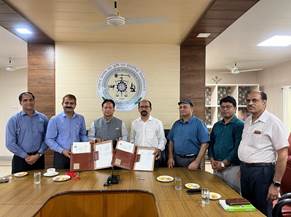
 The Bureau of Indian Standards (BIS) and Govind Ballabh Pant University of Agriculture and Technology (GBPUAT) has signed a landmark Memorandum of Understanding (MoU) to facilitate the development of the first of its kind ‘Standardized Agriculture Demonstration Farm’ (SADF) in India.

The MoU was signed on July 24, 2024, in the presence of Dr. M. S. Chauhan, Vice-Chancellor, GBPUAT, and senior officials from the University, including Dr. Deepa Vinay, Registrar; Dr. Ajeet Kumar Nain, Director of Research; and Deans of various colleges of GBPUAT, along with Dr. S. B. Singh, BIS Chair at GBPUAT.

Shri Rajeev P, Deputy Director General (North), Shri Saurabh Tiwari, Director & Head, BIS Dehradun, and other senior officials of BIS attended the event. This MoU marks the first collaboration between BIS and an agricultural university in the country to develop SADFs.

While emphasising about the potential benefits of MoU, Shri Pramod Kumar Tiwari, Director General, BIS, stated, “This partnership with GBPUAT is a major step forward. It will enhance agricultural practices by integrating Indian Standards, benefiting farmers and advancing agricultural innovation. We look forward to seeing the positive impact this partnership will have on the agricultural sector and the broader community.”

The primary objective of this MoU is to develop SADFs at GBPUAT in collaboration with BIS. These farms will serve as experimental sites for testing and implementing various agricultural practices and new technologies in accordance with Indian Standards. Regarding the fast pace development, it was informed that the Vice-Chancellor has instructed the concerned officials at GBPUAT to commence work on the project immediately and report the outcomes regularly, keeping BIS informed as per the defined periodicity.

This partnership with GBPUAT is a significant step towards promoting standardised agricultural practices and ensuring the implementation of cutting-edge technologies to enhance agricultural productivity and sustainability.

*****

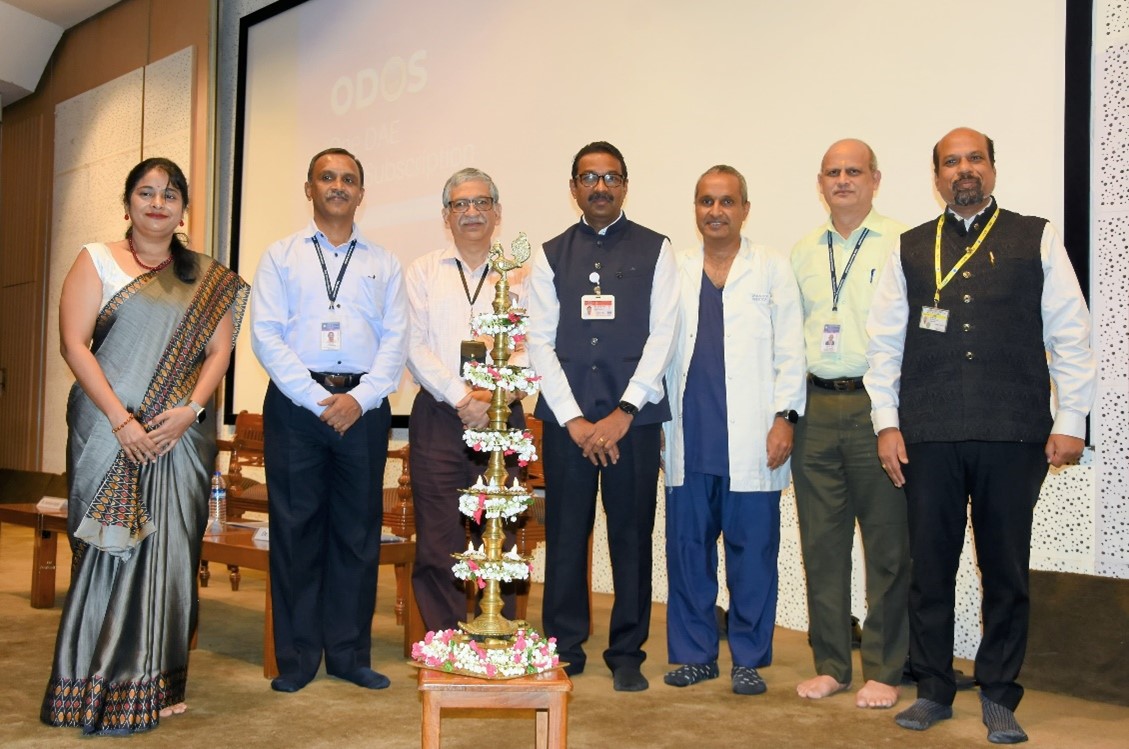
Atomic Energy inaugurates ‘One DAE One Subscription’

 The inaugural ceremony of ‘One DAE One Subscription’ (ODOS) took place today at Tata Memorial Hospital, in Mumbai today. ODOS is a unique idea enabling Department of Atomic Energy (DAE) & all its units/subunits (about 60) together under one umbrella for read and publish access to national and international research papers as well as scientific journals. With this initiative it is now possible to share the resources digitally and evolve collectively. DAE has signed consortium agreements with M/s. Wiley India Private Limited and with M/s. Springer Nature Group in furtherance of the same.

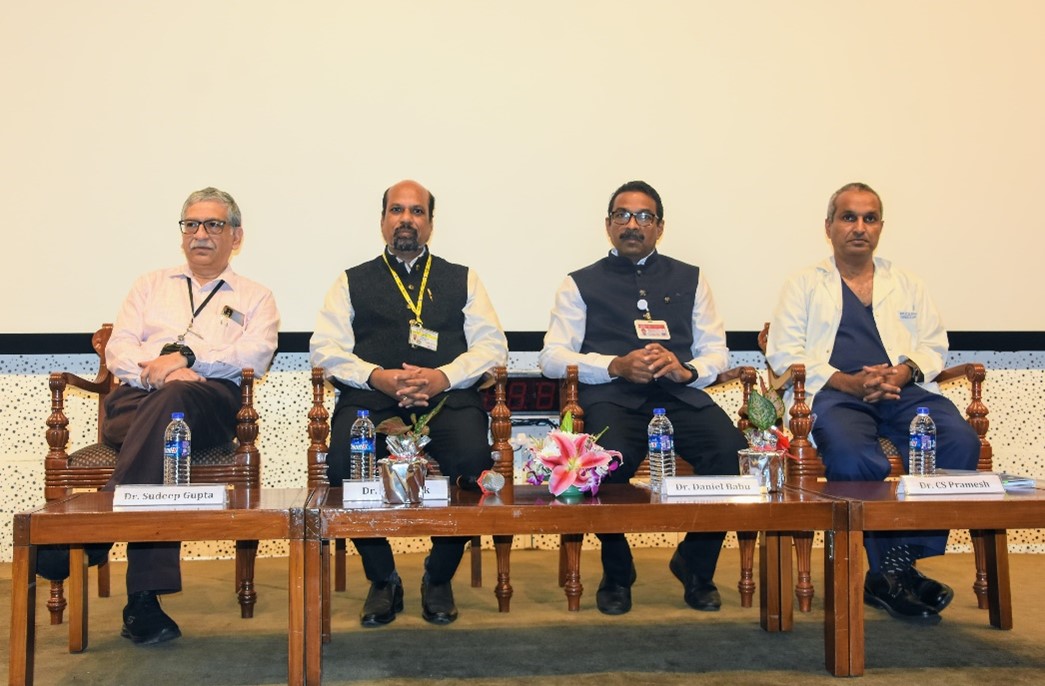
On the occasion of the inauguration, Secretary, DAE and Chairman AEC, Dr. A. K. Mohanty conveyed a congratulatory message to and stated, “The ODOS Transformative Agreement is a significant milestone for synergizing the read access and publishing requirements of DAE. I am sure ODOS will benefit thousands of scientists, engineers, young students of HBNI and researchers of aided institutes to have access to much larger knowledge platform and also publish in open access journals. The ODOS will later get merged with a bigger national initiative, called One Nation One Subscription (ONOS) which has been initiated by the Office of the Principal Scientific Advisor to the Government of India. ONOS is currently under various stages of implementation.” 

Addressing the gathering, Shri. A.K. Nayak, Head, NCPW, DAE, stated that the objective of the ODOS initiative is to make knowledge accessible to as many people as possible. ODOS a small yet decisive step towards ONOS which will in turn make knowledge accessible to everyone and lead to the cherished dream of a developed India.

Dr. Sudeep Gupta, Director, TMC, expressed that libraries are no longer brick and mortar buildings but computers. In the current era, the world lays stress on creative innovation which can only happen when we have access to the current state of wisdom in any particular field. One way to minimize repetitive research is to let everybody access the current state of science so that we move forward and don’t repeat what has already been done. DEA has once again proven it is a pioneer in taking the lead and showing the way.

About ODOS

The first ODOS agreement with M/s. Wiley India Private Limited will provide access to the collection of 1353 Wiley journals including archives from 1997, to the entire DAE community. This is against the current access of 166 unique journals provided to only 12 DAE units without much increase in price. Perpetual rights will be given to all the DAE units for all the journals for the year 2024. DAE will also get the right to publish more articles in open access journals. Under this agreement Article Processing Charges (APC) have been covered.

The second ODOS agreement with M/s. Springer Nature Group will provide access to about 2,686 Springer Nature titles which includes 553 journals as Fully Open Access (FOA). The access will be provided to entire DAE as against 1752 unique journals access provided to 14 units earlier. Perpetual rights will be given to all the DAE units for all the journals for 2024.  The archives from the year 1997 for the Springer titles and from the year 2012 for Nature titles will also be accessible. The agreement will also enable DAE to publish 281 articles in Springer Hybrid journals as open access without Article Processing Charges (APC).

The ODOS Transformative Agreements (TA) signed with M/s. Wiley India Private Limited and with M/s. Springer Nature Group is a significant milestone for the DAE scientific community and enable sustainable growth of science and technology. This will boost scientific morale, foster innovation, promote research and will enhance academic publications.

***

Coaching has become a flouring industry with returns

 Rajya Sabha today held a short duration discussion under rule 176 of Rajya Sabha on the tragic deaths of UPSC aspirant in a coaching centre in Delhi due to water logging.  Allowing the discussion Chairman Rajya Sabha, Shri Jagdeep Dhakhar remarked “I find that youth demographic dividend of the country has to nurtured, I further find that coaching has become virtually commerce….”

Shri Dhankhar also expressed concern over the huge expenditure made by coaching centres on newspaper advertisements, that is made out of the huge fees charged from the students, “Coachings have become a flourishing industry with high returns….every time we read a newspaper front one or two pages are by way of advertisements….Every penny spent on advertisement is coming from the students, every new building is coming from the students”, he added

Comparing to silos created in the country due to coaching culture to no less than ‘Gas Chambers’, Chairman stated “…..In a country where opportunities are getting enlarged this silo is turning out to be a problem…….they are becoming no less than a gas chamber….”.  He further urged members to make the youth aware about the various other employment & skill opportunities available in the country. 

Lamenting over the practice of boycott and rebuff by floor leaders of certain parties when they are called for discussion and making suggestions to ensure functioning of the house to the Chairman’s chamber, Shri Dhankhar said “ let me share my anguish, let me share my pain. This Chairman, when he makes a request for honorable members for a conference in the chamber, this rebuff is not only unprecedented, but dilution of Parliamentary decorum. The fact that floor leaders virtually seek to boycott the Chairman in chamber is certainly not a healthy practice.”

Earlier today Rajya Sabha members including Sudhanshu Trivedi and Swati Maliwal today gave a notice under rule 267 to discuss the matter of death of UPSC in a coaching centre. Chairman allowed the short duration discussion under rule 176 as Parliamentary affairs minister Shri Kiren Rijiju was ready  to discuss the matter under rule 267 citing the matter as urgent but LoP Shri maliikarjun Kharge and other opposition parties disagreed to discuss the matter under rule 267 and Chairman made it categorically clear that anything under rule 267 will only be discussed if the major parties agree and with the consensus of the house.


****

Celebrating the Third Convocation of Sri Sathya Sai University for Human Excellence

Bangalore, Karnataka, India

On the auspicious morning of 21 July 2024, Sri Sathya Sai University for Human Excellence (SSSUHE) celebrated its 3rd Convocation at the Sri Sathya Sai Premamrutham Auditorium. The event was graced by Shri Hardeep Singh Puri, esteemed Minister of Petroleum and Natural Gas, Government of India, as the Chief Guest. This momentous occasion recognised the achievements of 7 honorary doctorates, 6 Doctors of Philosophy, and 154 graduating students. This year’s theme, ekaṁ sat viprāḥ bahudhā vadanti – Truth is one, but the wise call it by many names, highlights SSSUHE’s commitment to embracing diverse perspectives in our pursuit of knowledge.


Chief Guest – Shri Hardeep Singh Puri and Founder of SSSUHE – Sri Madhusudan Sai along with gold medallists from UG and PG courses and the first batch of doctorates


Addressing educational challenges highlighted by the Annual Status of Education Report (ASER 2023: Beyond Basics), which shows that about 25% of rural students aged 14-18 years still cannot read a grade two-level text fluently in their regional language, SSSUHE provides quality education free of cost, including lodging, boarding, and all daily essentials. This commitment significantly benefits youth from rural areas, with over 70% of students below the poverty line, more than 65% being girls, and about 32% being first-generation graduates. The University currently enrolls 117 students across various disciplines, including MBBS, Nursing, and Allied Health Sciences, making a profound impact on bridging the education gap in underserved communities.


Shri Hardeep Singh Puri Minister of Petroleum and Natural Gas, Government of India, praised the initiative, saying, “It is a great honour for me on the auspicious occasion of Guru Poornima to be at the third convocation ceremony of Sri Sathya Sai University for Human Excellence. I congratulate the 154 graduates, 6 doctorates, faculties, and families for their achievements. I personally thank Sri Madhusudan Sai Ji for inviting me. He is a role model for us all, dedicated to raising human consciousness and striving for human excellence. His public-spirited endeavours, spiritual guidance, and humanitarian work uplift the most vulnerable sections of society, touching thousands of lives in India and worldwide. His initiatives span 60 nations. I applaud Sri Madhusudan Sai Ji’s efforts to promote the idea of Vasudhaiva Kutumbakam.”


Sadguru Sri Madhusudan Sai, Global Humanitarian, Spiritual Leader and Founder of Sri Sathya Sai University for Human Excellence, introduced seven honorary doctorate recipients for their selfless service. These are Mr T B Jayachandra; Prof Darshan Shankar; Prof Dr Afksendiyos Kalangos; Dr Lakshmi Prasad; Mr Isaac Tigrett; Mr Dimitris Lambrianos; Dr P T Usha.


Sri Madhusudan Sai emphasised the importance of graduates, postgraduates, and doctorates, acknowledging the sacrifices of devotees for free education. Parents were encouraged to bless their children to walk the path of service. The mission of Vasudhaiva Kutumbakam, rooted in ancient Indian ethos, envisions the world as one family. This concept, emphasised by the Prime Minister at the G20 Summit, was the theme of the Convocation: ekaṁ sat viprāḥ bahudhā vadanti – despite our differences, we are inherently one. This Vedic and scriptural message urges our students not just to be educated but enlightened beings who foster transformational change. With an attitude of living for each other and for God, Sadguru wished the students, their parents, and the guests a prosperous future and blessed Guru Poornima.


Sri B N Narasimha Murthy, Chancellor of Sri Sathya Sai University for Human Excellence, said, “At the Sri Sathya Sai University for Human Excellence, founded by Sadguru Sri Madhusudan Sai, we integrate India’s ancient wisdom with modern science and technology, merging spiritual wisdom with contemporary education. For the first time in higher education, human excellence is given equal importance to academic excellence. Students are assessed on both, with grades out of 10, and their overall grade is the average of the two. Today, we honour students receiving gold medals: 10 undergraduates, 8 postgraduates, and 6 doctorates, who excel in both academic and human excellence. This pioneering approach includes intelligence, emotional, social, and spiritual excellence, aiming to create citizens with individual character, professional excellence, and social responsibility—brilliant heads, compassionate hearts, and competent hands.”


Sri Sathya Sai University for Human Excellence stands out as a unique institution that blends spiritual and worldly knowledge based on the ancient Indian Gurukulam System of Values-based Education. Offering a diverse range of 18 undergraduate and postgraduate courses, the curriculum extends beyond traditional education to include Vedic Studies, Performing Arts, Medical and Paramedical Education, Agriculture, Mental Health, Sports and Yoga, Physical Education, and Vocational Skills. This holistic approach ensures that students are not only academically proficient but also well-rounded individuals ready to contribute to society’s welfare.


About Sri Sathya Sai University for Human Excellence

In a world where education is used as a mere stepping stone for acquiring fame, wealth, power and position, Sri Sathya Sai University for Human Excellence stands in contrast by illuminating the full potential and value of education to the individual and humanity at large. Instead of being narrowly confined to a few aspects of education, the University’s education curriculum touches all aspects that help in the complete unfoldment of an individual, who in turn will use his/her skills and knowledge to help uplift society. The University was established in the year 2019 at Navanihal, Kalaburagi and has a branch in Muddenahalli (boys’ campus) and Nallakadirenahalli (girls’ campus) in Karnataka.


Vision:

To provide free-of-cost quality higher education of global standards of excellence based on ancient Indian ethos and contribute individuals of competent hands, brilliant heads, and compassionate hearts for the universal welfare.


Mission:

  • To establish best-in-class infrastructure in rural areas for the promotion, assimilation, and dissemination of knowledge

  • To impart high-quality subject knowledge with an orientation towards research and innovation

  • To nurture an environment that instils a sense of selfless service, love for fellow beings and deep-rootedness in Indian culture and ethos

  • To prepare the next generation of leaders in every sphere of human society


For more information, please visit  sssuhe.ac.in/


Sri Madhusudan Sai Global Humanitarian Mission

With the motto ‘One World One Family’, Sri Madhusudan Sai, a visionary and a humanitarian spearheads a unique global mission across 60 Countries. Since 2011, Sri Madhusudan Sai has established institutes of excellence in Education, Healthcare, Nutrition and Spirituality across the world.

10 Days Research Methodology Course hosted by Department of Architecture and Planning, MANIT Bhopal

The Department of Architecture and Planning at Maulana Azad National Institute of Technology (MANIT), Bhopal, successfully conducted a 10-day Research Methodology Course from 13th to 22nd July 2024. Sponsored by the Indian Council of Social Science Research (ICSSR), this course aimed to enrich the skills of PhD scholars. It was coordinated by Dr. Kavita Dehalwar and co-coordinated by Dr. Surabhi Mehrotra from the Department of Architecture and Planning.
The 10-day Research Methodology Course was meticulously designed to enhance the research capabilities of research scholars and young faculty members in the fields of social sciences, planning, and architecture. This comprehensive course aimed to prepare participants for rigorous research endeavors by providing expert sessions on a variety of critical topics. These included Research Methodology, Tools and Techniques, Research Ethics and Integrity, Data Management and Analysis, as well as Publication and Writing Skills tutorials. By addressing these key areas, the course sought to equip participants with the necessary knowledge and skills to excel in their research pursuits.
Thirty research scholars were selected from prestigious institutes such as IITs, NITs, and Central/State Universities, representing 15 states across India. This diverse group of participants brought a wealth of perspectives and experiences, enriching the learning environment and fostering a collaborative atmosphere.
The distinguished panel of experts for the course included several prominent figures in the field. Dr. Shankar Chatterjee, former Professor and Head of the Centre for Policy Management and Evaluation (CPME) at the National Institute of Rural Development and Panchayati Raj (NIRD & PR), Hyderabad, shared his extensive knowledge and insights. Dr. Raka Arya, Professor of Political Science, Dean of Student Welfare, and Chief Hostel Warden at the National Law Institute University (NLIU), Bhopal, provided valuable guidance on various aspects of research. Dr. Poonama Prakash, Professor at the School of Planning and Architecture, New Delhi, contributed her expertise in planning and architectural research.
Additionally, Dr. M. Sadik Batcha, Professor and Head of the Department of Library and Information Science at Annamalai University, Annamalai Nagar, Tamil Nadu, offered his profound understanding of data management and research tools. Dr. Kalpana Pandit, Associate Professor in the Department of Architecture at Malaviya National Institute of Technology (MNIT), Jaipur, shared her experience in architectural research and methodologies. Dr. Tanuj Nandan, Professor at the School of Management Studies, Motilal Nehru National Institute of Technology (MNNIT), Prayagraj, discussed management studies and research techniques.
The course also featured Dr. Vishakha Kawathekar, Dean of Faculty Welfare and Head of the Centre for Cultural Knowledge Systems at the School of Planning and Architecture, Bhopal, who provided insights into cultural knowledge systems and their relevance to research. Dr. Sanjeev Khanna from MITS Gwalior, along with other experts such as Dr. Gyaneshwar Singh Kushwaha and Dr. Pushpendra Yadav from MANIT, delivered lectures on various topics related to research methodology. Their contributions significantly enhanced the participants’ learning experience, providing them with a well-rounded understanding of the research process and its practical applications.

Paving the Path to Success

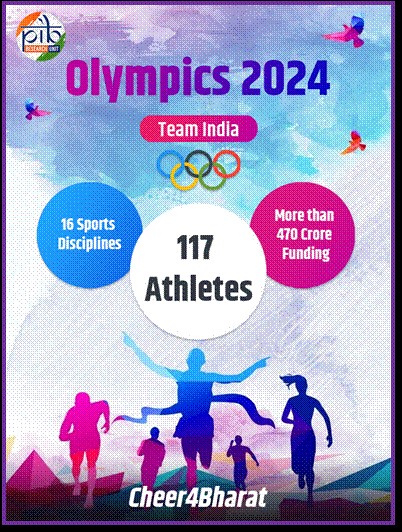
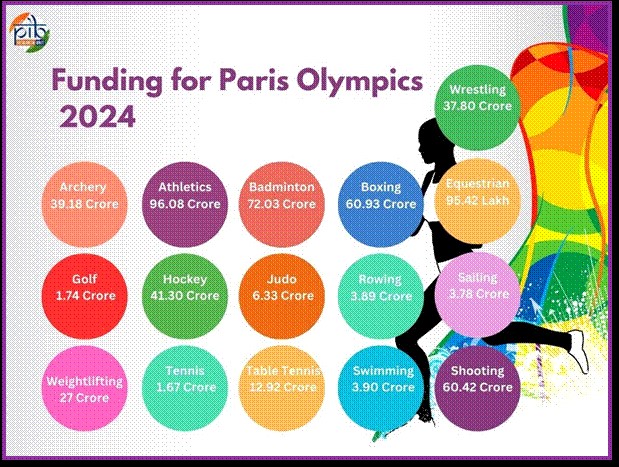
  As the world turns its gaze to Paris for the 2024 Olympics, India proudly announces its largest-ever contingent for the games, consisting of 117 athletes across 16 sports disciplines. This diverse team, which includes 70 men and 47 women, will compete in 69 events with a total of 95 medals at stake. Supported by an impressive funding allocation of over 470 Crore rupees, the Indian athletes are primed to make their mark on the global stage.


Sports landscape in India

India’s sports ecosystem has evolved into an athlete-centric model, with the motto “Athlete-First.” This integrated ecosystem includes the Ministry of Youth Affairs and Sports (MYAS), the Sports Authority of India (SAI), the Indian Olympic Association (IOA), and the National Sports Federations (NSFs). Together, these bodies ensure that athletes can focus solely on their training and competition, with logistics and other support taken care of by the system. Corporate sponsors, CSR partners, athlete families, fans, broadcasters, and media have all played crucial roles in sustaining Olympic sports in India.

Government Efforts for Efficiency and Growth

The Indian government has significantly ramped up its efforts to support athletes and boost the country’s performance in the Olympics. These efforts encompass a variety of initiatives and programs designed to enhance the training, preparation, and overall performance of Indian athletes on the global stage.


  • Target Olympic Podium Scheme (TOPS)

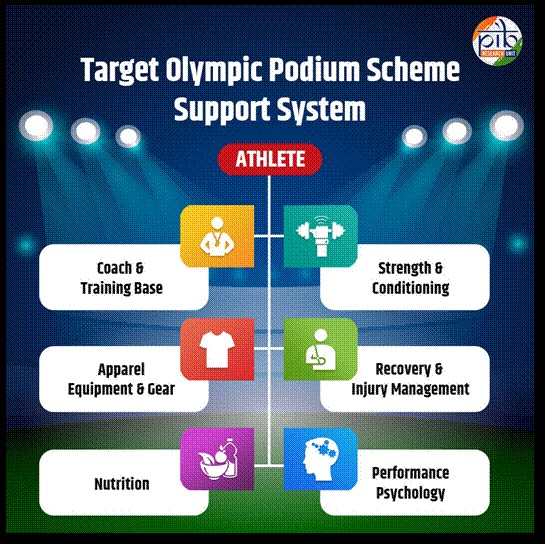
The Target Olympic Podium Scheme (TOPS) is a flagship program aimed at providing targeted assistance to potential Olympic medalists. TOPS offers support in several key areas:

  • Training and Camps: National Coaching Camps and international training sessions.
  • Foreign Exposure: Opportunities for athletes to compete and train overseas.
  • Specialized Support: Hiring of foreign experts, coaches, and support staff.
  • Equipment and Facilities: Provision of necessary sports equipment and training facilities.
  • Financial Assistance: Direct funding to cover various aspects of athletes’ preparation.

The TOPS scheme includes a Core Group of over 170 athletes preparing for the 2024 Olympics and a Development Group of over 130 athletes targeted for the 2028 and 2032 Olympics.


  • National Sports Development Fund (NSDF)

The NSDF supplements the TOPS by providing additional financial support for the specialized training and competition needs of elite athletes. This ensures that athletes receive comprehensive support tailored to their specific requirements.

  • Corporate Support and CSR Initiatives

Corporate sponsors and CSR partners play a crucial role in sustaining Olympic sports in India. Their contributions include funding for training programs, equipment, and other resources necessary for athletes’ development.

  • International Competitions and Exposure

The government has facilitated extensive international exposure for athletes across various sports. This includes participation in international competitions and training camps abroad, which are critical for gaining competitive experience and improving performance.

  • Focus on High Priority Disciplines

The government’s strategy involves focusing on high-priority disciplines with strong medal prospects. These sports include archery, athletics, badminton, boxing, hockey, shooting, and wrestling. For each of these disciplines, detailed funding and support plans have been implemented, ensuring athletes have the best possible preparation.

  • Mission Olympic Cell (MOC)

The Mission Olympic Cell (MOC) is a dedicated body that oversees the implementation of the TOPS. It includes representatives from past elite athletes, IOA, NSFs, and other stakeholders. The MOC is responsible for approving customized programs for athletes, recommending financial disbursements, monitoring performance, and addressing athletes’ immediate needs.

 Achievements and Impact

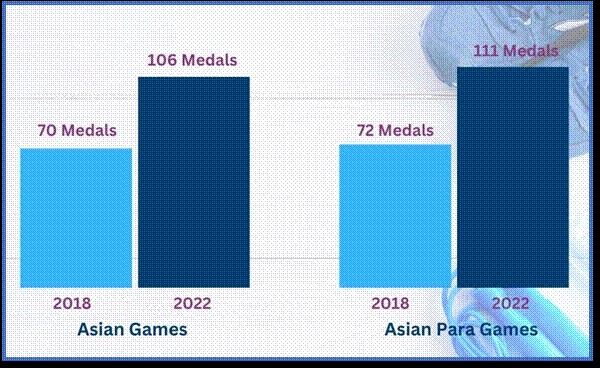
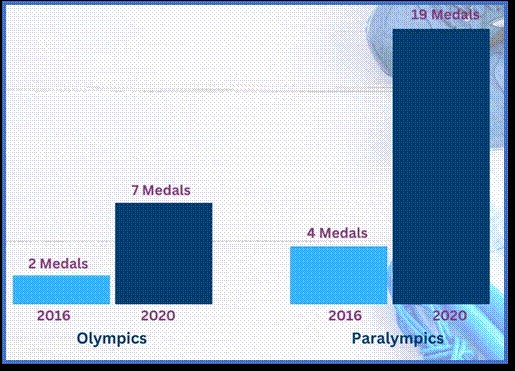
The impact of these efforts is evident from the significant increase in medals won across recent competitions. From winning 2 medals in Rio 2016 to 7 in Tokyo 2020 and from 4 to 19 medals in the Paralympics, India’s performance reflects the enhanced support system, including the Target Olympic Podium Scheme (TOPS), National Sports Development Fund (NSDF), and extensive corporate backing. The nation’s medal count at the Asian Games and Asian Para Games also surged, showcasing the success of an athlete-centric sports ecosystem and comprehensive government initiatives. This upward trajectory underscores India’s commitment to achieving excellence in global sports.

The Indian government’s comprehensive and targeted approach towards supporting its athletes is a reflection of its commitment to achieving excellence in sports. With a robust support system in place, India aims to significantly improve its performance at the Paris Olympics 2024 and beyond, showcasing the nation’s potential on the global sports stage.

References

https://pib.gov.in/PressReleasePage.aspx?PRID=2034434

https://x.com/pibyas/status/1814278906356334618

https://olympic.ind.in/paris-2024

https://pib.gov.in/PressReleseDetailm.aspx?PRID=2034434#:~:text=Union%20Minister%20highlighted%20that%20India,in%20these%20disciplines%2C%20he%20added.

https://pib.gov.in/PressReleaseIframePage.aspx?PRID=2029762

https://pib.gov.in/PressReleaseIframePage.aspx?PRID=2029657

https://sportsauthorityofindia.nic.in/sai/documents

Pathway to Paris pdf: https://static.pib.gov.in/WriteReadData/specificdocs/documents/2024/jun/doc2024629346101.pdf

Click here to see in PDF.

****