Court Systems

With the presidency towns, the lex loci were English laws, and the establishment of the judiciary’s Pyramids configuration that we know of in the present junctures was laid way back by the British codified law. The introduction of the Indian common law is outlined back to 1726 when a Mayor’s Court in Madras Bombay and Calcutta was founded by the East India Company. This was the significance of the company’s transformation from a trading company to a ruling power. The beginning of modern Indian public law appeared in 1833 with the creation of the Indian law delegation which inequitable time (1861) elicited the Indian penal code and deceased the codes of criminal and civil procedure.”

Justice systems fulfill a significant role in ensuring social equity and esteem for fundamental rights.
However, a well-founded functioning justice system not only helps society practice and execute their fundamental
rights, it is a vital factor that stimulates attention and can steer economic growth.

The fact, however, is that billions of people across the world lack equal
and beneficial passage to justice. An assessed 4 billion people living extraneous, the preservation of the rule of law because of their frontier positions in the state. The problem in accessing justice can arise in a well-documented ‘cycle of decline’ within susceptible societies – straight in progressive nations – which feeds a nasty loop of legal and non-legal crises.
Among extra consequences, this impact is economic privation and public exclusion.

Inhabitants in many regions constantly record uncertainties in accessing both criminal and civil justice. Provide
access to criminal justice, measured in time required to secure convictions in serious and minor crimes,
and length of captivity without confidence among other variables. 

The ability to access civil justice is a hurdle. Many types of barriers increase the costs of
turning to courts, which discourages individual citizens and especially small business owners from seeking
protection from the formal legal system. procedures, barriers such as complex procedures, lack of linguistic interpreters, or physical distance of
court facilities, as well as costs.

Opaque government processes and limited availability of court information are a deterrent from
attempting to access the court system, and a hurdle to overcome for litigants.

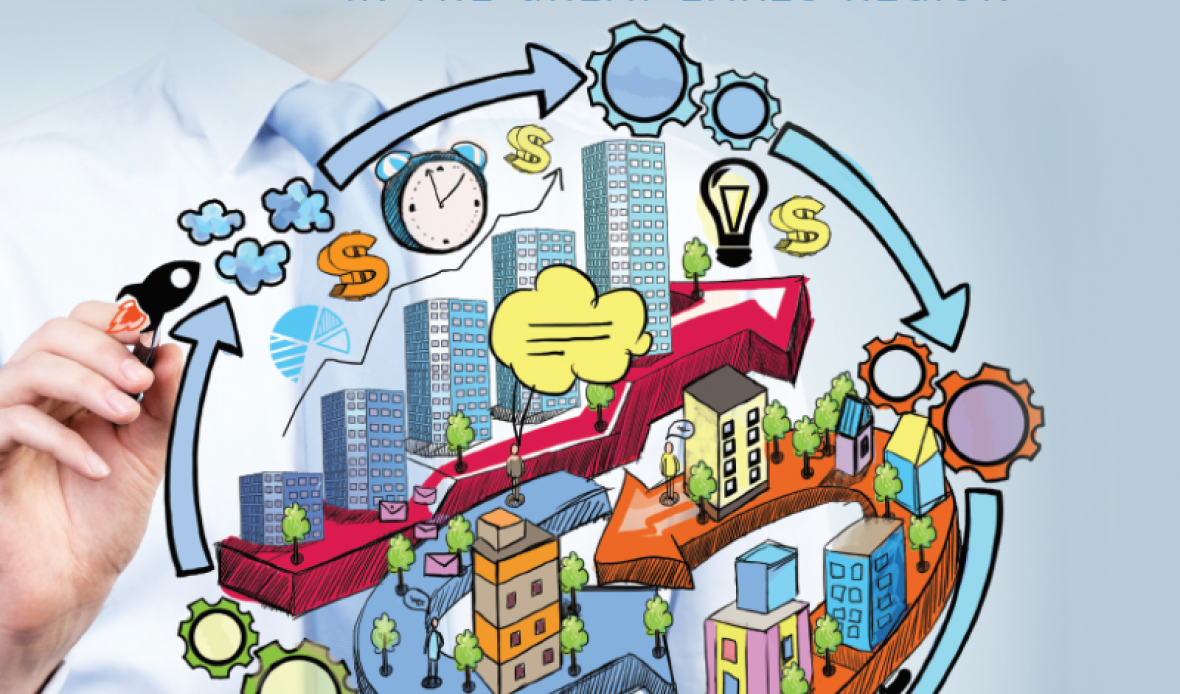
CREATING SMART COURTS:         
When reasonably formulated and executed, digital methods can help courts optimize and refocus inward
strategies, enhance assistance to users, and Democrats castigate passage to justice. Many government
services, arbiter systems around the world are proceeding to turn to digital solutions to grasp their
crises. Amid the many challenges that justice systems face, no two court systems are
similar, and all have unique obstacles. Hence, there is not one way but many ways for a court to
become “smart.”
While the court system custom of the software is as old as the computer, the improvement of the Internet and
cloud computing services have largely improved the scope of problem-solving solutions accessible to courts.
Today, myriad tools are handy that can address different facets of the operation of courts and citizen’s
commerce with them. This spectrum from internally-facing executive tools, to systems for retaining
the virtue of and making available court records, to externally facing resources and interfaces for court
users, to platforms to enhance the speed and accessibility of courtroom proceedings.

Enterprise resource planning — Court systems are organizations that face challenges familiar
to many in the public and private sector: how to best allocate resources, including efficiently
managing finances, administering human resources, and running internal processes. There
are many options currently available that can support these functions to help administrators
run their organizations more efficiently. These can range from discrete software applications
for particular functions to more thorough digital transformation solutions to reinvent legacy
systems and optimize processes.

Public information and virtual help desk — Lack of publicly available information on law and
court procedures can discourage citizens from even attempting to access courts to seek
justice. Online resources (optimized for access and use via computers and smartphone
devices) can make information on law, legal resources, and court procedures instantly
accessible to those with an Internet connection. Functions like a virtual help desk can go one
step further and enable citizens to navigate these resources or respond to many of their
common inquiries and needs.

Case management systems — These solutions build upon document management systems to
enable not just electronic access to documents, but integrated processes for tracking the
progress of and taking actions related to a case throughout its lifecycle. These integrated
systems can help judges and administrators track cases, as well as enable individual citizens
and citizen advocacy groups to monitor the progress of specific cases.

Collaboration tools — Collaboration tools can come in many different forms and can be
components of document and case management solutions. For example, they can enable
direct communication, annotation of documents, and commenting between the various
parties of a case and the judge. These can expedite hearings, and enable better advanced
coordination between the parties.

Video conferencing and virtual presence — Cloud-based videoconferencing tools enable
parties to a case to participate from a remote location. These are often sufficient for routine
or preliminary procedures. Often employed when utilized in connection with minor
infractions, these tools can speed court proceedings and reduce burdens associated with
transporting incarcerated defendants by allowing them to attend their hearing virtually from
their prison. For those with limited mobility or economic means, video conferencing can
facilitate and lower the time cost of accessing justice through courts by allowing them to
participate from a location and electronic device of their convenience, whether their personal
computer or smartphone or a device at another public facility.
Courts in several countries have found productive uses for these solutions. Some, such as the Dubai
International Financial Center (DIFC) Court or the Abu Dhabi Global Markets (ADGM) Court, have
implemented integrated, comprehensive solutions that address all aspects of user interaction and staff
operation. Essentially, they designed fully digital courts from scratch.

Key Benefits of Digital Court :

Courts face resource pressures as do other parts of the government. However, an ever-growing caseload
is not always coupled with a growing allocation of government resources; the result is often delayed. Digital
transformation empowers administrators to run their operations more effectively and do more with less.
Enterprise resource planning tools that manage finance functions and human resources apply equally to
both court systems as well as other large public and private sector organizations. Other applications
tailored to the needs of court administration can, for example, streamline the processing of court
submissions or case files, which can have a beneficial trickle-down effect on the end-user in terms of faster
responses to their submissions.

Public trust is a key component supporting the effectiveness of the justice system, but one that is sorely
lacking in some countries. Corruption and opaque court operations are a roadblock for many systems.
While there is no substitute for a commitment to ensuring the impartiality of judges and prosecutors,
technology can help the justice sector improve accountability through different means, including: the
development of mechanisms that improve access to information (e.g., enabling free access to transcripts,
court records, and judgments online); mechanisms to provide feedback such as court user
surveys and grievance redress (e.g., Kenya’s judiciary dialogue cards); and, ensuring that administrators
and community advocates can maintain visibility to processes that are prone to corruption.

Courts and tribunals have a fundamental mission for society – ensuring justice for all citizens. Yet, marginal
and disadvantaged communities often face barriers that discourage them from seeking justice. Here too,
digital transformation can help ensure that more people maintain access to justice by reducing costs of

interacting with the justice system. New modes of digital transformation have the potential to
democratize access to justice. They empower citizens to more effectively use the justice system without
relying on intermediaries such as law firms and other gatekeepers.

the COVID-19 pandemic has caused vast disruption across the entirety of the criminal justice. 

“People don’t want courts; they want the outcomes courts bring”. Even if that was the closing note that Professor Richard Susskind made, it is of high importance to answer the question of how would it be possible to provide state-based dispute resolution to solve the problems that people have, what is an online court and what is meant by the term “transformation of the public services”? To start with, there are some key issues that should be taken into consideration. The first is the problem itself, in particular, that around 46% of people in our world live under the protection of the law, while in most countries judicial processes are taking long time to be processed or are just expensive for people.

When it comes to the UK, it could be said that the court system does not operate effectively, in other words, it is “fundamentally broken” and needs to be replaced. So, the question here is what’s the fundamental value that our court system delivers to society and whether a digital society is able to deliberate that in an entirely new way? The answer can be found in the mind-set concerning the future of courts and the discussion about the automation and transformation. Automation is what people have on their minds when they are talking about technology, while transformation is concerning the way technology allows achieving goals that were impossible before. In this vein, we are evidencing the transformation of public service. The “1st generation issue” is consisted of two components: the system of online courts and online judges and the extended court. The online judges will be human-judges that will electronically be receiving the evidence while giving the decision to it in the same manner. This means that the communication between the two parties will be based on a “digital dialogue”. Based on the need that our society has, and the assumption that “our court system should do more”, the extended court will help people to organise their evidence, to find some answers to their questions from people who will be working as “case-officers”, not judges. And that would be the “extended court”.

According to Professor Susskind, this system has many benefits, for example, that it will be easy-accessed and cheaper, while in the name of justice some critics and lawyers will try to reduce injustice. But there are some objections. For instance, that these services are concerning “economy-class courts”, or that the trial will not be fair, or that those who do not have access to the internet will be digitally excluded. Nonetheless, having this kind of service will probably encourage people to be more litigious. The “2nd generation” concerns the huge amount of data that are absorbed, while having the ability to use that data, rather than to be able to “code a system”. However, in this process, the “AI Fallacy” is not less important. Being based on algorithms while trying to replicate and copy human behavior will not probably be met with success, while for the foreseeable future machines will not be capable of taking judicial decisions. Last but not least, it could be argued, that the abovementioned “problem” constitutes a global, rather than a local problem, while the suggestion is that the online courts can bridge the gap that has been created between understanding and enforcing human rights. All in all, the decade that has just started will be exciting due to technology and will bring a lot of changes.
Introduction

Yell for a better participation

There is a great need for judicial reform but does artificial intelligence and modern technology have played a great role in enhancing it? In the 21st century where the world is turning towards technology modernization digitization, how could the judiciary survive in a country with centuries-old systems where people are suffering from the pendency of cases and which is increased due to the breakout of the Novel Corona virus pandemic? In India judiciary has indicated growth remarkable for sight for adopting artificial intelligence. The E-Committee for the National Judiciary of India was first solidified back in the year 2004 with the objectives (ICT) and enablement of the Indian Judiciary System. Back then E-Committee has introduced two phases of the e-courts Project:

• Phase I:- It focused on the basics of digitization, set up of hardware, assuring internet availability and accessibility, digitization of cases and their records and operation of the e- court fora.

• Phase II:- It provided independent operation and catered to the need of the litigants, such as (NJDG) means National Judicial Data Grid, which helps permit citizens to check pendency cases across the country via virtual courts, e-Seva Kendra, and the e-court services App.

Though the two phases phase I and phase II helped the judiciary becoming more efficient but are that sufficient enough? Or ceased to function in operating existing mechanisms and skills?

E-Court Phase III:- DVD (Draft Vision Document) endorsed a plan of action for phase III of the e-court Project. It aspires to adopt an ‘ecosystem approach’ where systems are interacting with one another, it also suggested certain ambitions such as the registry of case laws, scheduling, a repository of cases, a digital case management system, the interoperability Justice system, e-filing, and digital hearings.

All the above-mentioned features are based on the Artificial Intelligence System that will enable data-based decision making for judiciaries easier, the system also combines the substantial body of the judicial development to foster legal literacy.

What’s good about it?

(1) Database of legal Precedents- A freely available database for all legal precedence created by the Judiciary which will enable lawyers from all backgrounds to underwent high-quality legal researches and for literacy by permitting citizens to read judgment at a fair cost.

(2) Data Protection- It promises to capture the minimum personally identifiable data keeping the transient data in memory only and storing it in anonymity.

(3) Standardization- Presently, various other lower courts use other methods to categorize specific cases, usage of different ways and vocabulary, makes research difficult as in Shreya Singhal vs Union of India. It will also enable the interchange of data between many services and help to make research and operating easier.

Pollution

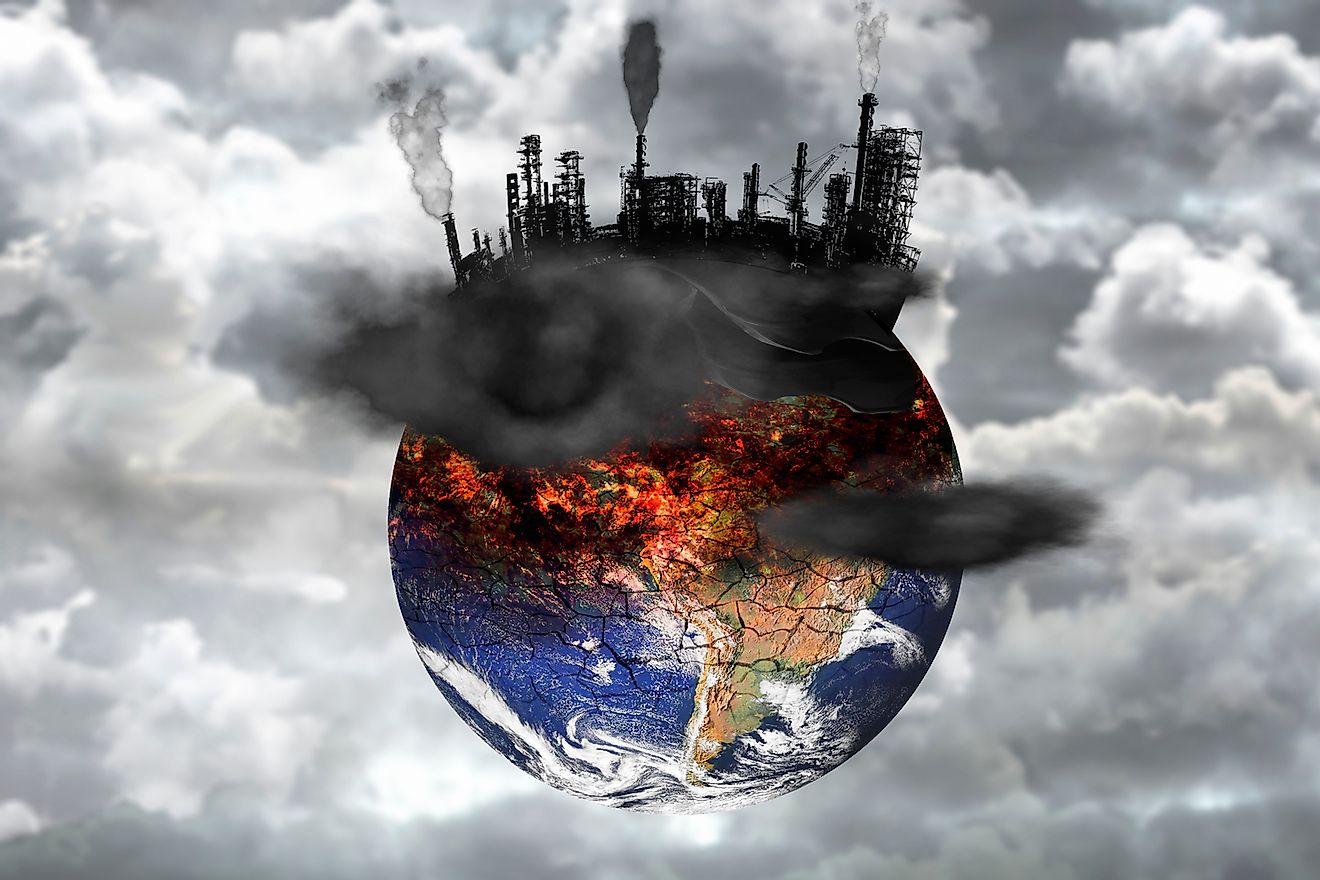
Pollution is the containment of material particles or energy into the natural environment, causing adverse effects on the ecosystem.

Types of pollution

(1) Air Pollution: It occurs when any harmful gas, dust smoke enters the atmosphere and makes it difficult to survive living organisms like plants, animals, and human beings as well. And causes common respiratory diseases such as asthma, bronchitis.

(2)Water Pollution: It is due to the presence of foreign substances like sewage, algae, soluble salts, etc in water. It can also be due to the presence of some metals in water. Some metals like chromium and Arsenic cause diseases like cancer, cadium can cause Itai-Itai disease, and mercury causes Minamata disease.

For a healthy aquatic life, dissolved oxygen (DO) is 5-6ppm. For clean water, BOD (Biochemical Oxygen Demand) is less than 5ppm while for highly polluted water is 17ppm or more.

(3) Soil Pollution: It is an alternation in soil. It is caused by pesticides, insecticides, for example, DDT, BHC, etc, herbicides for example sodium chloride, fungicides like organomercury compounds.

Hazardous Effects of Pollution

Greenhouse Effect- It is the heating of the earth and its objects because of the trapping of Infra-Red radiations by carbon dioxide(CO2), methane, (CH4), nitric oxide (NO), ozone (O3), chlorofluorocarbons(CFCs), and water vapours.

.• Global Warming- It is a result of the increased concentration of greenhouse gases. It may result in the melting of ice caps and glaciers, spreading several infectious diseases like malaria, sleeping sickness, etc.

• Acid Rain- It has a pH of less than 5. It is due to the presence of oxides of nitrogen and sulphur in air that dissolve in rain water and forms nitric acid and sulphuric acid. It damages the buildings and other other structures made up of limestone and results in several diseases such as qskin infections. pH of normal rain water is 5.6.

Pollutants

There are the substances that contaminates the environment and of two types:

(1) Primary Pollutants: These persist in the environment in the form which they have produced, for example, sulphur dioxide(SO2), nitrogen dioxide (NO2), etc.

(2) Secondary Pollutants: These are the products of nitrogen of primary pollutants, for example, PAN (Perocyacylnitrates), nitrogen dioxide (NO2), etc. The order of different pollutants to cause pollution is carbon monoxide (CO, SO2 hydrocraban particulates nitrogen oxides.

Carbon monoxide (CO)- It is formed by incomplete combustion. It is colorless, odourless gas. It contains a triple bond and are fairly polar, resulting in a tendency to bind permanently to haemoglobin molecules, displacing oxygen, which has a lower binding affinity.

Particulates- These are minute solid particles and liquid droplets dispersed in the air, for example, mists, dust, smoke, fumes, etc. They result in causing many serious diseases like pneumoconiosis, due to inhalation of coal dust, silicosis due to inhalation of free silica (SiO2), black lung disease found in workers of coal mines, white lung disease found in textile workers, byssinosis due to inhalation of cotton fiber dust.

Smog- It is a consequence of particulate pollution and is of two types they are:

• Classical smog

• Photochemical smog

Communicable Diseases

These are the diseases that may pass or carry from one human or animal to other. Communicable diseases are illnesses caused by grams such as bacteria, viruses, and spread by an infected person, animal, or object to other person.

Viral Diseases: The virus is parasitic which causes several diseases like:

(1) Bird Flu (H5 N1)- Bird Flu (Avian influenza) is a disease caused by an influenza virus-A, that primarily affects birds. The following persons who may be at higher risk for developing the bird flu are—

• Travellers, visiting affected countries.

• Farmers and others, who work with poultry.

• Those who have touched an infected bird.

• Those who eat raw or undercooked poultry meat, eggs, from infected birds.

Symptoms- Fever, cough, sore throat, muscle aches, and eye infection (conjunctivitis).

Treatment- Treatment with the anti-viral medication oseltamivir (Tamiflu), or zanamivir (Relena) may make the disease less severe. Oseltamivir may also be prescribed for persons, who live in the same house as those diagnosed with Avian flu.

Severe Acute Respiratory Syndrome (SARS): It is a serious form of pneumonia. It is caused by a virus that was first identified in 2003. Infection with the SARS virus causes acute respiratory distress( severe breathing difficulty) and sometimes death.

Symptoms- Cough usually starts 2-3 days after other symptoms like fever, headache, and muscle aches.

Treatment- Antibiotics to treat bacteria that cause pneumonia. Anti-viral medications. High dose of steroids to reduce swelling in the lungs. Oxygen, breathing support (mechanical ventilation), or cheat therapy.

Hepatitis: Hepatitis is swelling and inflammation of the liver. It is not a condition but is often used to refer to a viral infection of the liver. Hepatitis can be caused by—

• Immune cells in the body attacking the liver and causing autoimmune hepatitis. Infections from viruses such as hepatitis A, B, or C, bacteria, or parasites. Liver damage from alcohol, poisonous mushrooms, or other poisons.

• Medication such as an overdose of acetaminophen can cause harm or even death.

Symptoms- Abdominal pain or distention. Breasts development in males. Dark urine and pale or clay-colored stools. Fatigue, general itching, fever, usually low-grade jaundice(yellowing of the skin or eyes), and loss of appetite, nausea, vomiting, and weight loss.

(2) AIDS: Acquired Immuno Deficiency Syndrome(AIDS) is a disease of the human immune system caused by the Human Immunodeficiency Virus (HIV). AIDS was first recognized by the Centers for Disease Control and Prevention(CDC) in 1981.

HIV Infection: AIDS is a condition caused by HIV infection. The condition gradually destroys the immune system, which makes it harder for the body to fight infections.

Transmission- HIV can be spread by the following :

• Through sexual contact i.e. oral, vaginal, and anal sex.

• Through blood transfusions, accidental needle sticks, or needle sharing.

• From mother to child: A pregnant woman can transmit the virus to her fetus through their shared blood circulation or a nursing mother can pass it to her baby through breastfeeding.

Test for AIDS-

• Enzyme-Linked Immunosorbent Assay/ Enzyme Immuno Assay (ELISA/EIA).

• Radio Immuno Precipitation Assay/ Indirect Fluorescent Antibody Assay (RIP/IFA).

• Polymerase Chain Reaction(PCR)

• Western Bolt Confirmatory Test.

Indian Classical Dances

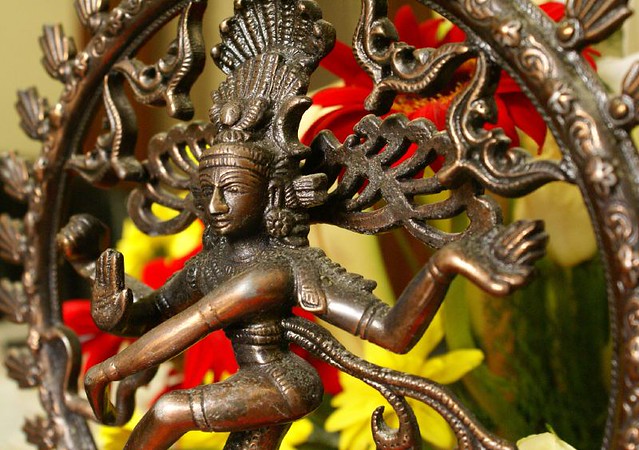
Dance is an ancient and prominent cultural tradition in India. Folk dances abound all across the country, and huge crowds of people can be found dancing at festivals and weddings. Dance and song feature heavily in Indian cinema (so-called “Bollywood” films), too. But where does Indian dance draw its roots from? There are six of the most important classical dance forms of India including many folk dances.

India has an old tradition of thousands of years regarding fine arts and classical and folk music and dances. Some of the world-famous dance forms that originated and evolved in India are: Bharatnatyam, Kathak, Kathakali, Kuchipudi, Manipuri, Mohiniattam, and Odissi.

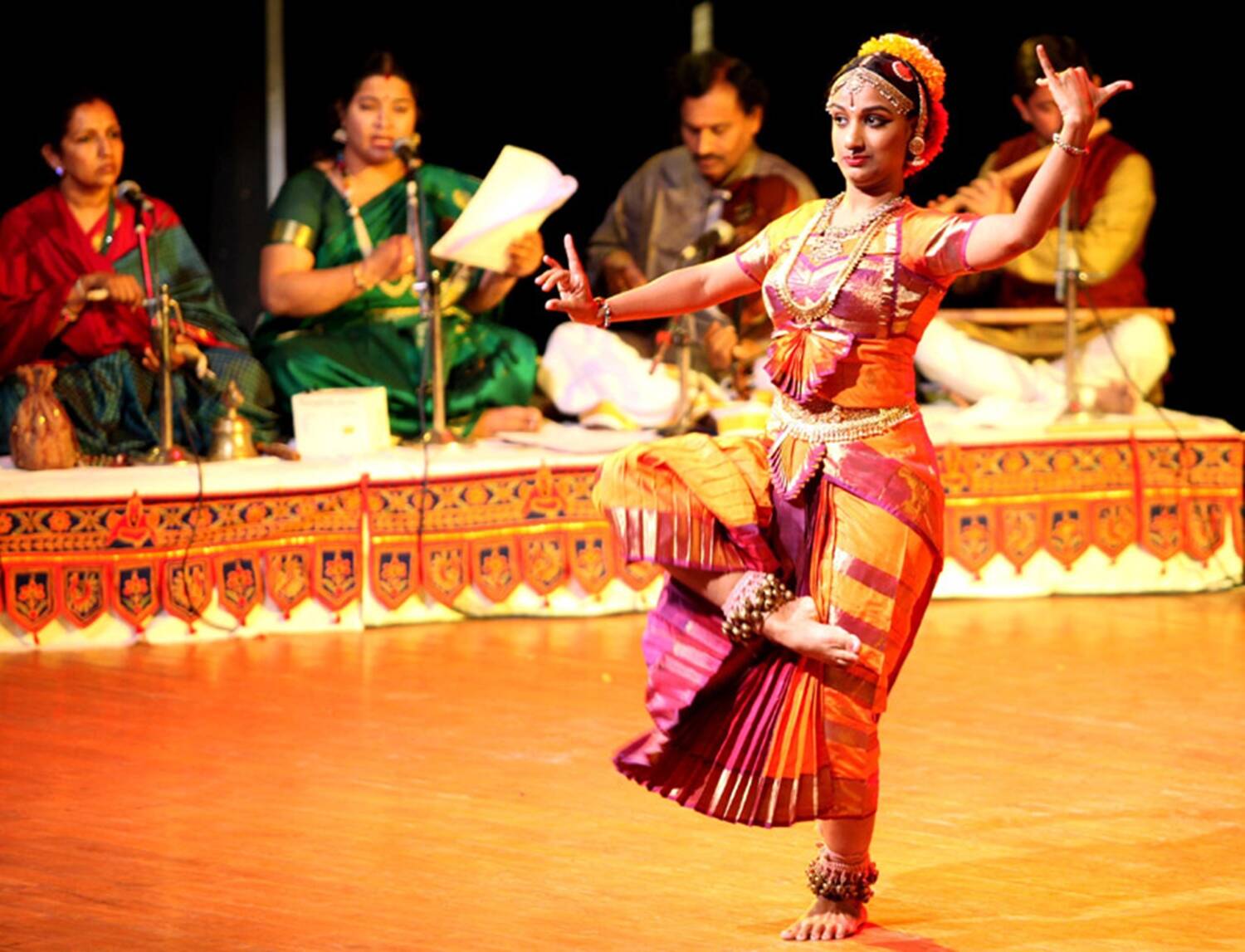
(1) Bharatnatyam: Bharatnatyam is one of the most popular classical Indian dances. Bharatnatyam is more popular in South India states of Tamil Nadu and Karnataka. The music accompanying this dance is Carnatic music. It evolved out of the devadasi system of South Indian Temples. Famous dancers associated with Bharatnatyam are E Krishna Iyer, Rukmini Devi Arundale, and Anna Pavlova.

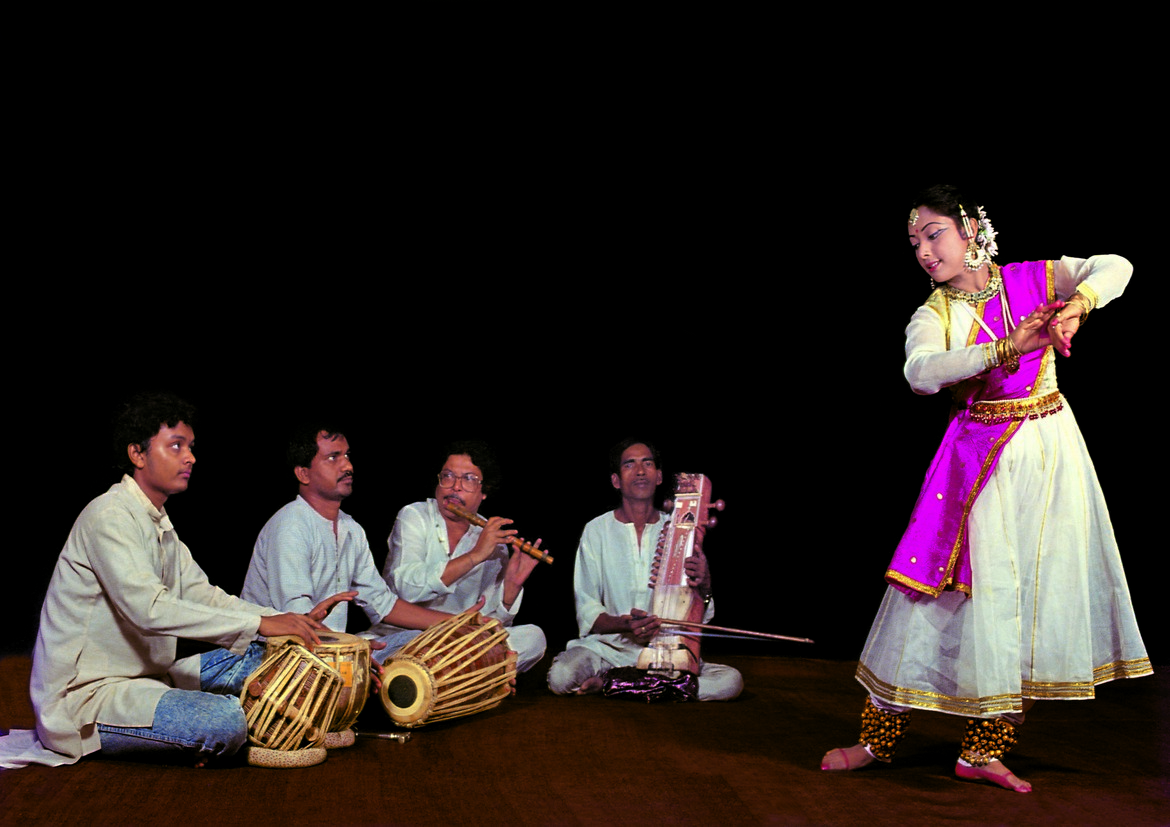
(2) Kathak: Kathak is also one of the most important classical dances of India. Kathak is said to be derived from the word Katha, meaning the art of storytelling. Famous centers are Lucknow and Jaipur. Lucknow school depicts Mughal Court etiquette while the Jaipur school depicts stories of Rajput kings and Gods. Famous exponents are Sitara Devi, Sambhu Maharaj, Uma Sharma Shovana Narayan, etc.

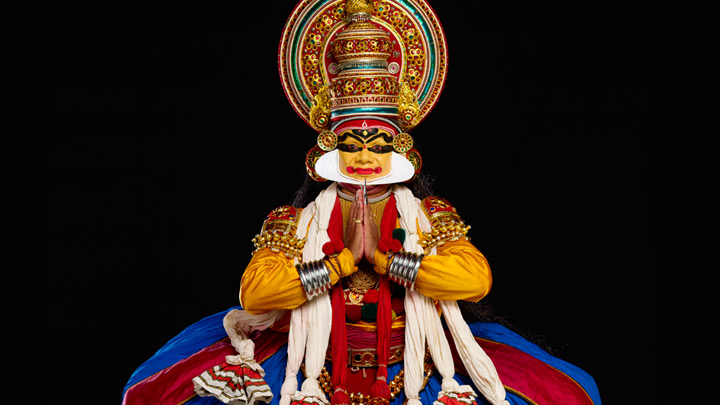
(3) Kathakali: Kathakali is the classical dance form of Kerala. The word Kathakali means the story play. Kathakali is considered one of the most magnificent theatres of imagination and creativity. Famous exponents of Kathakali are Vallathol Narayan Menon, Kunju Kurup, Guru Gopinath, etc.

(4) Kuchipudi: Kuchipudi is one of the classical dance forms of South India. Kuchipudi exhibits scenes from Hindu epics, legends, and mythological tales. Famous exponents of Kuchipudi are Lakshmi Narayan Shashtri, Raja and Radha Reddy, Swapana Sundari and Yamini Krishnamurti.

(5) Manipuri: Manipur is one of the six major classical dances of India. The most striking part of Manipuri dance is its colorful decoration, lightness of dancing feet, the delicacy of abhinaya (drama), lilting music, and poetic charm. Manipuri dance is not only a medium of worship and delight but also essential for all socio-cultural ceremonies of the Manipur people. Popular exponents are the Javeri sisters, Rita Devi, Nirmala Mehta, Guru Bipin Singh, etc.

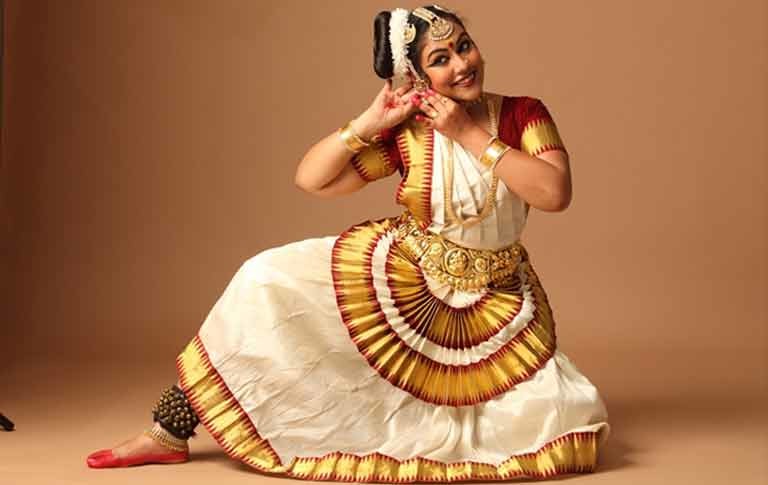
(6) Mohiniattam: Mohiniattam from Kerala is a solo female dance and is known for its rhythmic and unbroken flow of body movements. Mohiniattam has the grace and elegance of Bharatnatyam and the vigor of Kathakali. Famous exponents of this dance form are Kalyani Amma, Vaijayanthimala, Bharati Shivaji, and Hema Malini.

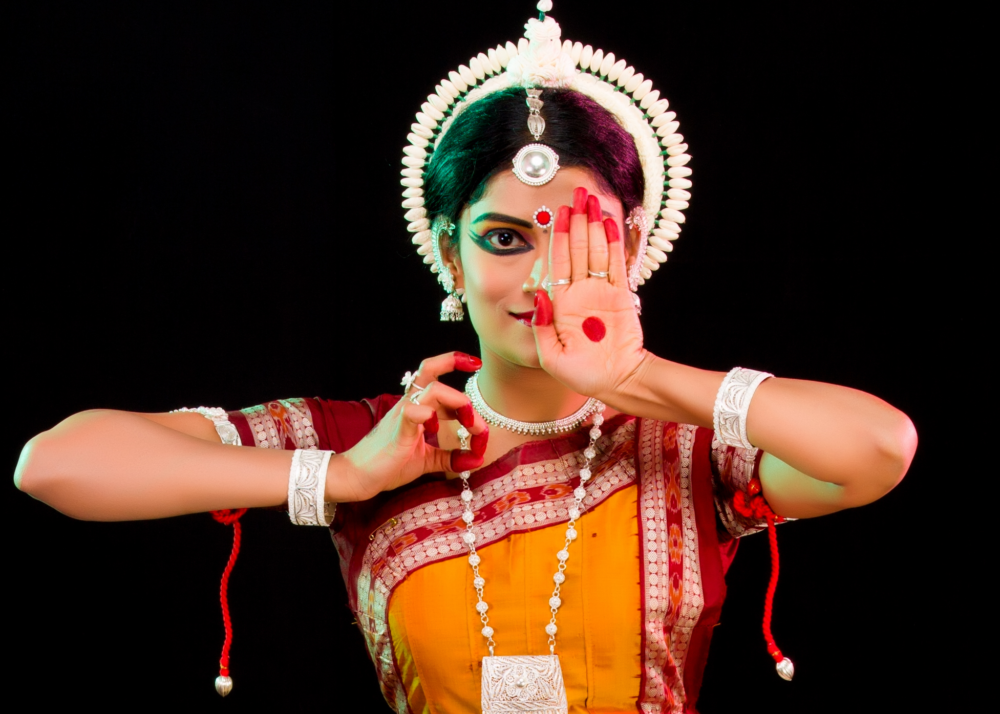
(7) Odissi: Odissi is one of the well-known classical Indian dances from Odisha state. It is a graceful, elegant, and sensuous dance style and involved the tribhanga (three bends) posture. The three bends symbolize the means to escape the limitations of the body. Famous dancers of Odissi are as follows: Indrani Rehman, Sonal Mansingh, Kiran Sengal, Rani Karan, Sharon Lowen, and Myrta Barvie.

Indian Fiscal System

It refers to the management of revenue and capital expenditure finances of the state.

  1. Fiscal system of a country refers to the revenue and capital resources that can be raised by government, the procedure to be observed in raising and spending funds and in case of a federation such as ours the provision that governs the relationship of the constituent unit of federation. It includes with in its purview taxation, expenditure, debt management and inter- governmental fiscal relation.
  2. Indian fiscal system is based on the constitution of India which is federal in character. The constitution envisages two layers of government: the Union of central government and the state government. Local bodies do not find a place in the constitution and the function and resources allotted to them are delegated by the state government.

Fiscal Policy:- It is how a government rectifies its spending levels and tax ratios to monitor and influence a nation’s economy. It is the sister strategy to Monetary Policy through which a Union Bank influences a nation’s money reserve. These uses can affect the following macroeconomic variable in the economy:

• Aggregate demand and the level of economic activity;

• The distribution of income;

• The pattern of resource allocation within the government sector and relative to the private sector.

Sources of Revenue:- The main sources of revenue are custom duties, excise duties, service tax, taxes on property, corporate taxes, and income taxes.

Sources of Expenditure:-

Plan Expenditure includes agriculture, rural development, irrigation, and flood conrol, energy, industry, minerals, transport, and communications, etc.

Non-Plan Expenditure:- It consists of interest payment, defence, subsidies, and general services.

Public Dept:-

Internal Debt comprises loans raised from the open market treasury bills issued to the RBI, Commercial Banks, etc.

External Debt consists of loans taken from World Bank, IMF, ADB, and individual countries.

Deficits:- In a budget statement, four types of deficits are mentioned:

• Revenue Deficit

• Fiscal Deficit

• Capital Deficit

• Primary Deficit

(1) Revenue Deficit: There are various ways to represent and interpret a government’s deficit. The simplest is the revenue deficit which is just the difference between revenue receipts and revenue expenditures.

Revenue deficit = Revenue expenditure – Revenue receipts

(2) Capital Deficit: An imbalance in a nation’s balance of payments capital account in which payments made by the country for purchasing foreign assets exceed payments received by the country for selling domestic assets.

In other words, investment by the domestic economy in foreign assets is less than foreign investment in domestic assets. This is generally not a desirable situation for a domestic economy.

Capital deficit = Capital receipts – Disbursement on Capital acoount

Fiscal Deficit: This is the sum of. revenue and capital expenditure less all revenue and capital receipts other than loans taken. This gives a more holistic view of the government’s funding situations since it gives the difference between all receipts and expenditures other than loans taken to meet such expenditures.

Fiscal Deficit = Difference between country’s expenses and earnings

Fiscal deficit = Revenue receipts (net tax revenue+non tax revenue) + Capital receipts (only recoveries of loans and other receipts) – Total expenditure ( Plan and non- plan) .

Primary Deficit: Amount by which a government’s total expenditure exceeds its total revenue, excluding interest payments on its debt.

Primary deficit = Fiscal deficit – Interest payments.

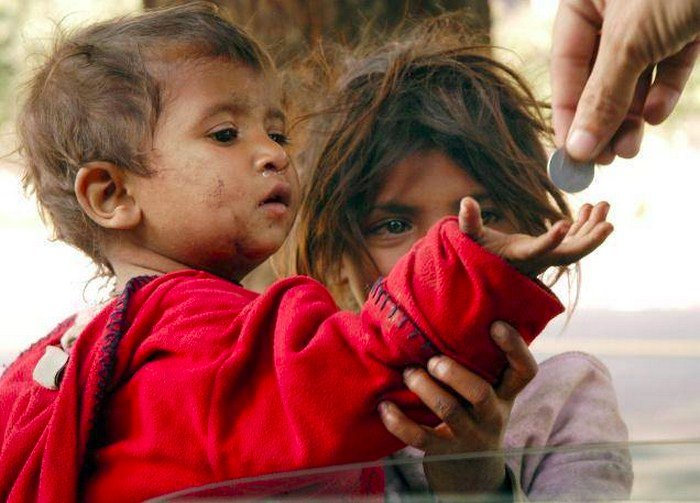
Poverty in India

Poverty is a social phenomenon where few sections of society is unable to live sustainable life. Planning Commission(now NITI Aayog) is the aithoriy, which publishes the poverty estimates based on various rounds of National Sample Survey Organization (NSSO) on monthly per capita consumption expenditure. In India the poverty line is defined on the basis of calories a day has been fixed for urban areas and 2400 calories in rural areas.

Universal Recall Period, consumption data for all items are collected for a 30 day recall period.

Causes of Rural Poverty:-

• Rapid population growth.

• Lack of capital.

• Lack of alternative employment opportunities other than agriculture.

• Excessive population pressure on agriculture.

• Illiteracy

• Regional disparities

• Joint family system

• Child marriage

• Lack of proper implementation of PDS ( Public Distribution System).

Causes of Urban Poverty:-

• Migration from rural areas.

• Lack of skilled labor.

• Lack of housing facilities.

• Limited job opportunities in cities.

• Lack of vocational training.

Poverty and its Study in India:- Various economists and organizations have studied the extent of poverty in India. Some of them are as follow:

Dandekar and Rath’s study of poverty in India:- Dr. VM Dandekar and Mr. Nilkantha Rath estimated the value of the diet with 2250 calories as the desired lowest level of nutrition.

Montek Singh Ahluwalia’s study of Rural poverty:- MS Ahulawalia studied the trends in incidence of rural poverty in India for the period 1956-57 to 1973-74. He used the concept of the poverty line, i.e. an expenditure level of rupees 15 in 196-61 for rural areas and rupees 20 per person for urban areas.

Estimate Poverty by the Seventh Finance Commission 1978:- The Seventh Finance Commission attempted to have a more inclusive concept of the poverty line. Since the NSS data cover the only household consumer expenditure, thus to get a more inclusive measure of welfare or deprivation, an estimate of the benefit of public expenditure was added to the private consumer expenditure norm for calculating the augmented poverty line.

Tendulkar Committee Report:- This committee moved away from just calorie criterion definition to a broader definition of poverty that also includes expenditure on health, education, clothing expenditures in addition to food. According to this report, 41.8% population in rural areas and 25.7% population in urban areas were living below the poverty line.

Rangarajan Report on Poverty:- The expert group under the Chairmanship of Dr. C Ranganrajan to review the methodology for measurement of poverty in the country constituted by the Planning Commission in June 2012 has submitted its report on 30th June 2014. The report retained consumption expenditure measures of NSSO as the basis for specifying poverty. Based on this, it pegged the total number of poor in India at 363 million or 29.6% of the population. This is higher than 269.8 million poor people or 21.9% pegged by the Suresh Tendulkar Committee.

Highlights of the Report:-

• The daily per capita expenditure is pegged at rupees 32 for rural areas and rupees 47 for urban areas.

• Poverty line based on the average monthly per capita expenditure is pegged at rupees 972 for rural areas and rupees 1047 for urban areas.

Economics

Introduction:- The term economic comes from the ancient Greek word oikonomia means ‘management of a household’. The term economic process refers to those activities, through which goods and services aimed at satisfying human needs, are produced distributed, and used. Economic includes the study of labor, land investment of capital, income, and production, and taxes and government expenditures. Adam Smith regarded as the Father of Economics, defines Economics as “the science relating to the laws of production, distribution, and exchange”.

Branches of Economics:- The two chief branches of economics are as follow:

Micro Economics – It examines the behavior of basic elements in the economy including individual agents, such as households and firms, or as buyers and sellers and market and their interactions.

Macro Economics – It studies the economy as a whole and its features like national income, unemployment, poverty, the balance of payments, and inflation. It deals with the formulation of models explaining the relationship between factors such as consumption, inflation, savings, investment, national income, and finance.

Economy:- It represents production, distribution, or trade and consumption of goods and services in a given geographical area by different agents which can be individuals, businesses, organizations, or governments. The study of the economy of any country helps us to find out the financial condition of the population as well as the different working sectors of the economy.

A modern economy is a complex machine. Its job is to allocate limited resources and distribute output among a large number of agents mainly individuals, firms, and governments allowing for the possibility that each agent’s action can directly or indirectly affect another agent’s actions. There are two major types of economies they are:

Open Economy: It belongs to a market economy, which is mainly free from trade obstructions and where exports and imports comprise a lush large percentage of the GDP. No economy is absolute whether open or closed in terms of trade restraints and all governments have fluctuating levels of control over the activities of capital and exchange.

The degree of the vulnerability of an economy determines a government’s freedom to pursue monetary policies of its choice and the exposure of the country to the international economic cycles.

Closed Economy- An economy in which no exercise is conducted with outside economies. A closed economy is self-sufficient, meaning that no imports are brought in and no exports are sent out. The goals of such an economy are to furnish consumers with everything that they need from within the economy’s perimeters.

The degree of exposure of an economy is decided by their respective governments by using policy controls like tariffs, import, and export quotas, and exchange rate limits. In india, since independence, the government has played a major role in planning economic activities.

Present status of the Indian economy: Indian economy is the world’s 6th largest economy or nominal GDP basis and the 3rd largest by Purchasing Power Party (PPP) in 2017. According to CSO, the growth in GDP during 2017-2018 is estimated at 6.5% as compared to the growth rate of 7.1% in 2016-17.

High Court

Every High Court consisted of a Chief Justice and such other Judges as the President may from time to time deemed necessary to appoint. Thus the Constitution does not specify the strength of a High Court and leaves it to the direction of the President. Accordingly, the President determines the strength of a High Court from time to time depending upon the workload.

The Constitution of India provides a High Court for every state, but the 7th Amendment Act 1956 authorized the Parliament to establish a common High Court for two or more states or a state and a union territory.

The territorial jurisdiction of a high court is co-terminus with the territory of a state. There are 25 High Courts in India as of 2019.

Appointment of Judges:-

• Under Article 217, the judges of the High Court are appointed by the President.

• The Chief Justice of the High Court is appointed by the President after consultation with the Chief Justice of Supreme Court and the Governor of the concerned state.

Qualification of Judges:- One should be a:

• citizen of India.

• have held a judicial office in the territory of India for 10 years; or

• have been an advocate of a High Court for 10 years.

Tenure:- Holds Office until he attains the age of 62 years.

Removal:-

• He can resign his office by writing in his hand to the President.

• He can be removed from his office at the recommendation of the President.

• He vacates his office when he is appointed as a judge of the Supreme Court or when he is transferred to another High Court.

Salaries and Allowances:-

• Determined by Parliament from time to time.

Independence of High Court:- Following provisions are made to safeguard and ensure the independence of the High Court:

• Mode of Appointment

• Security of tenure

• Fixed service conditions

• Expenses charged on the consolidated fund of state

• Conduct of judges cannot be discussed

• Power to punish for its contempt

• Freedom of appointment of his staff

• Its jurisdiction cannot be curtailed

• Separate from executive

Jurisdiction and Powers of High Court:- At present, a High Court enjoys the following is the jurisdiction and powers:

• Original Jurisdiction

• Writ Jurisdiction(Article 226)

• Appellate Jurisdiction

• Supervisory Jurisdiction

• Control over Subordinate courts

• A court of record

• Powers of Judicial review

The Supreme Court can issue a writ jurisdiction, only where a fundamental right has been infringed. High Court can issue these writs under Article 226 not only in such cases but also where an ordinary legal right has been infringed. High Court does not have advisory powers as in the case of the Supreme Court.

Appointment of District Judges:- The appointment, posting, and promotion of a district judge in a state are made by the Governor of the concerned state in consultation with the High Court.

A person to be appointed as District judge should have the following:

• He should not already be in the service of the Union or the State Government.

• He should have been an advocate pleader for 7 years

• He should be recommended by the High Court.

State Legislature

There is no uniformity in the creation of State Legislature. Most of the states have unicameral system, only seven states Andhra Pradesh, Bihar, Jammu and Kashmir, Karnataka, Maharashtra, Utar Pradesh, and Telangana are having bicameral system.

Legislative Assembly [Article 170]:- The Legislative Assembly (Vidhan Sabha) consist of not more than 500 members and not less than 60 members. However the Legislative Assembly of Sikkim, Goa, Mizoram, Arunachal Pradesh, Nagaland and Puducherry have less than 60 members.

Legislative Council [Article 171]:- As per Article 169, if the Legislative Assembly passes a resolution for abolition or creating of the Legislative Council by a majority of the total membership of the assembly and by a majority of not less than 2/3rd if the members present and voting, the Parliament may approve the resolution by a simple majority to create or abolish the Legislative Council.

Composition of Legislative Council:- Of the total member of members of a Legislative Council shall consist:

• 1/3rd elected from local bodies

• 1/2th elected by graduates in the states.

• 1/2th elected by teachers of 3 year standing in the state, not lower in standard than secondary school.

• 1/3rd elected by the members of the Legislative Assembly of the state amongst a person who is not a member of the assembly.

• 1/6th are nominated by the Governor from persons of special knowledge, science, art, cooperative movement, and social service.

• 5/6th of the total number of members of the Legislative Council are indirectly elected.

Qualification of members:- Under Article 17, they must fulfill the conditions:

• he must be a citizen of india.

• he must make and subscribe before the person authorized by the Election Commission an oath or affirmation according to the form prescribed in the 3rd Schedule.

• he must be not less than 30 years of age in the case of the Legislative Council and not less than the age of 25 years in the case of the Legislative Assembly.

• he must possess other qualifications prescribed by Parliament, under the Representation of People Act 1951.

Duration of the two House:- Legislative Assembly same as Lok Sabha. And Legislative Council same as of Rajya Sabha.

Presiding Officer of the State Legislature:-

• Speaker/ Deputy Speaker in Legislative Assembly [Article 178].

• Chairman/Deputy Chairman in Legislative Council [Article 182].

Speaker of Legislative Assembly:- Speaker of Assembly is elected by the assembly itself from amongst its members. He can vacate his office earlier in any of the following cases:

• if he ceases to be a member of the assembly;

• if he resigns by writing to be Deputy Speaker; and

• if he is removed by a resolution passed by a majority of all the members of the assembly. Such a resolution can be moved only after providing 14 days of advance notice

Chairman of Legislative Council:- The Chairman is elected by the council itself from amongst its members. The Chairman vacates his office in any of the following cases:

• if he ceases to be a member if the counil.

• if he resigns by writing in his hand to the Deputy Chairman; and

• if he is removed by a resolution passed by a majority of all the members of the coucil.

Powers of the State Legislature:-

• it participates in the election of the President.

• it can remove the Council of Ministers by passing a no- confidence Motion.

• it controls the executive by the various financial committees. It ratified certain Constitutional Amendments, in which participation of half of the State Legislatures is required.

Panchayats

Part IX of the Constitution craves a three-fold system of Panchayats namely (a) The village level; (b) The District Panchayats; (c) The intermediate Panchayats which stands between the village and district in the states where the population is above 20lakhs.

Composition:- All the seats in a panchayat shall be filled by a person chosen by direct election from territorial constituencies in the Panchayat area. The electorate has been named ‘gram sabha’ consisting of a person registered in the electoral rolls relating to a village comprised within the area of a Panchayat.

Duration of Panchayat:- Every Panchayat shall continue for five years from the date of its first meeting. But it can be dissolved earlier by the procedure prescribed by the State law. In case it is dissolved earlier, then the elections must be held within 6months of its dissolution.

Qualifications for Membership:- Article 243 F provides that all persons who are qualified to be chosen to the State Legislature shall be qualified to be chosen as a member of a Panchayat. The only difference is that a person who has attained the age of 21 years will be eligible to be a member.

Powers authority and responsibilities of Panchayats:- State Legislatures have the legislative powers to confer on the Panchayats such as powers and authority as may be necessary to enable them to function as institutions of self-government [Article 243G- 243H]. They are being authorized with the responsibility of (a) preparation of economic development and social justice plans and implementation of schemes for the same, (b) regarding matters listed in the 11th Schedule. The list contains 29 issues including land improvement, minor irrigation, animal husbandry, fisheries, education, women and child development, etc. The 11th Schedule distributes powers between the State Legislature and the Panchayat.

Powers to impose taxes and Financial resources:- Any State by law may authorize a Panchayat to impose, collect, and appropriate taxes, duties tolls, etc. The law may enact the procedure to be fulfilled as well as the limits of these exactions. It can also appoint to a panchayat various taxes and duties etc. collected by the State Government.

Panchayat Finance Commission:- The date on which the Constitution’s 73rd Amendment came into force and afterward every five years the State Government shall appoint a Finance Commission to review the financial position of the Panchayats and to make recommendations to —

(a) the distribution between the State and the Panchayat of the net proceeds of taxes, duties, tolls, and fees leviable by the State which may be divided between them and how the allocation would be made among various levels of Panchayats.

(b) what taxes, duties, tolls, and fees may be assigned to the Panchayats.

(c) grant-in-aid to the Panchayats.

The report of the Commission, together with a memorandum of action taken on it, shall be laid down before the State Legislature. These provisions are modeled on Article 280 which contains provisions regarding appointment of a Finance Commission for the distribution of finances between the Union and the States.

Bar to interference by Courts in Electoral matters:- As under Article 329, Courts shall have no jurisdiction to examine the validity of a law, relating to the delimitation of constituencies or the allotments of seats, made under Article 243K.

The State Executive

Our Constitution provides for a federal Government, having separate systems for administration, the Union, and the States. The Constitution comprises provisions for the governance of both. It provides a uniform structure for the state Government, in Part VI of the Constitution, which applies to all the states including the erstwhile State of Jammu and Kashmir.

The Governor:- At the head of the executive of a State stands the Governor. The executive powers of the state are vested in the Governor. Generally, there shall be a Governor for every state, but an amendment of 1956 makes it possible for the appointment of some person as the Governor for two or more States[Article 153].

Appointment and term of Office of the Governor:- The Governor of a State is not elected but is appointed by the President and holds his office at the pleasure of the President. Any citizen of India who has completed the age of 35 years is eligible for the office, but he must not hold any other office of profit, and should not be a member of the Legislature of the Union of any State [Article 158]. There is no bar for the selection of a Governor amongst the members of a Legislature, but if a Member of any Legislature is appointed as Governor, he should cease the position of member immediately after such appointment.

The normal term of a Governor’s Office shall be five years, but he can be terminated for the following reasons—

(i) Dismissal by the President, at whose pleasure he holds office [Article 158].

(ii) Resignation [Article156 (2)].

The President’s power can be used only in cases of gross delinquency, such as bribery, corruption, reason, and violation of any provision of the Constitution. There is no bar to a person begin appointed as Governor more than once.

Powers of the Governor:- The Governor has no diplomatic or military powers like the President, but he possesses executive, legislative, and judicial powers similar to those of the President.

(1) Executive Powers– The Governor has the power to appoint his Council of Ministers, the Advocate General, and the members of the State Public Service Commission and holds office during his pleasure. But the members of the State Public Service Commission cannot be removed by him [Article 317]. The Governor has no power to appoint the Judges of High Court he is entitled to consult the President in the matter [Article 217(1)]. He can also nominate 1/6th part of the total members of the Legislative Council.

(2) Legislative Power:- The Governor has a right to addressing and sending messages and summoning, prorogue, and dissolving, in association with the State Legislature, just like the President.

(3) Judicial Powers- The Governor has the power to grant pardon, reprieve, respite, or remission of punishment or to suspend, remit, or commute the sentence of any person convicted of any offense against any law relating to a matter to which executive power of the State extends [Article 161]. The Chief Justice and the Judges of the High Court of the State are appointed with the consultation of the Governor by the President.

(4) Emergency Powers- The Governor has no Emergency powers to perform.

The Comptroller and Auditor- General of India

Another essential office in the Government of India is that of the Comptroller and Auditor- General who controls and checks the financial operation of the entire country [Article 148], at the Union as well as State levels. As observed by Dr. Ambedkar, the Comptroller, and Auditor General of India shall be the most prominent officer under the Constitution of India. For he, is to be the guardian of the public purse and he must look after expenditures out of the Consolidated Fund of India or if a state without the authority of the appropriate Legislature. To discharge his duty properly, his office must be independent of any control of the Executive. The office of the Comptroller and Auditor General, in the Constitution, is substantially modeled upon that of the Auditor General under the Government of India Act, 1935.

Conditions of Service:- The independence of the Comptroller and Auditor General has been protected by the following provisions of the Constitution—

Though appointed by the President, the Comptroller and Auditor General may discard only on the ground of ‘proved misbehavior’ or ‘incapacity’, on an address from both the Houses of the Parliament. He thus excepted from the general rule that all civil servants of the Union hold their office at the pleasure of the President [Article 310(1)].

His salary and conditions of service shall be statuary and shall not be liable to variation to his disadvantages during his term of office. Under this power, Parliament has enacted the Comptroller and Auditor General’s Act 1971, as amended, provides as follows:

(i) The term of office of the Comptroller and Auditor General shall he six years from the date on which he presumes office, but—

• he shall vacate office on attaining the age of 65 years if either than the expiry of the six-year term;

• he may, at any time, resign his office, by writing under his hand, addressed to the President of India;

• he may be removed by impeachment [Article 148, 124(4)].

(ii) His salary shall be equal to that of the Judge of the Supreme Court.

(iii) On retirement, he shall be eligible for an annual pension as per the High Court and Supreme Court Judges.

(iv) In order matters his conditions of service shall be determined by the rules applicable to a member of the IAS, holding the rank of a Secretary of the Government of India.

(v) he shall disqualify for any further Government office after retirement.

(vi) the salaries, etc of the Comptroller and Auditor-General, his staff, and administrative expenses of his office shall be charged upon the Consolidated Fund of India and shall be non-votable [Article 148].

Duties and Powers:- The Comptroller and Auditor General shall perform such duties and exercise such powers about the accounts of the Union and the States as may be prescribed by Parliament. In exercise of this power, Parliament has enacted the Comptroller and Auditor General’s duties, powers, and conditions of services Act, 1971 which relieves him of his pre- Constitution duty to compile the accounts of the Union; and the States may enact similar legislation with the prior approval of the President — to separate accounts from audit at the State level, and to relieve the Comptroller and Auditor General of his responsibility in the matter of preparation of accounts, either of the States of the Union.

Powers and Duties of the President of India

Nature of the powers of the President:- The Constitution says that “executive powers of the Union shall be vested in the President”. The President of India shall thus be the head of the “Executive Powers” of the Union. The ambit of the executive powers has been thus explained by our Supreme court— it may be possible to frame an exact definition of what executive function means and implies. Ordinarily, the executive powers connote the residue of governmental functions that remain after legislative and judicial functions are taken away, subject, of course, to the provisions of the Constitution or of any law.

Limitations on President’s Powers:- Firstly, he must exercise these powers according to the Constitution [Article 53(1)]. Thus, Article 75(1) explicitly requires that Ministers can be appointed by the President only on the advice of the Prime Minister. If the President violates any mandatory provisions of the Constitution, he will be dismissed by impeachment. Secondly, the executive powers shall be exercised by the President of India only on the advice of the Council of Ministers [Article 74(1)].

Executive powers of the President are discussed under the following heads:-

(1) The Administrative Powers:- The President is the formal head of the administration. He shall not have any administrative function to discharge or to control or supervise the Department of Government. Though the President shall have the power to appoint —

• The Prime Minister of India

• Other Ministers of the Union

• The Attorney General of India

• The comptroller and Auditor General of India

• The Governor of a State

• The Finance Commission

• The Election Commission

• The judges of the Supreme Court

• The judges of the High Court

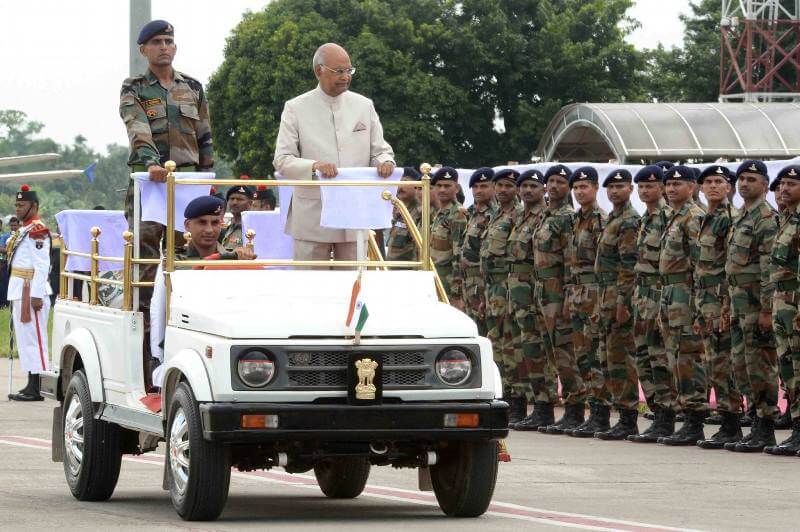
(2) The Military Powers:- The supreme command of the Defense Forces vested in the hand of the President of India, the powers regulated by [ Article 53(2)]. The President may have the powers for declaration of any war or peace or the employment of the Defense Forces.

(3) The Diplomatic Powers:- The task of negotiating treaties and agreements with other countries are subject to ratification by parliament, therefore belong to the President. The President of India represents India in International Affairs and has the powers to appoint Indian representatives for other countries and receiving diplomatic representatives of the other states, acknowledged by the Parliament.

(4) The Legislative Powers:- The Legislative powers of the President, indeed according to Ministerial advice [Article 74(1)] and may discuss in the following heads:

• Summoning, Prorogation, and Dissolution

• The Opening Address

• The right to Address and to send Messages

• Nominations of the members of the Houses

• Laying reports before the Parliament

• Previous sanction to Legislation

• Assent to Legislation and Veto power

• Disallowance of State Legislation

• The Ordinance-making power

(5) Pardoning Power:- The President of India has the power to grant a pardon in case of :

• Punishment by a court-martial.

• Offence against the laws made under the Union and Concurrent Lists.

• Pardoning a sentence of death.

(6) Emergency Powers:- The President of India shall have certain extraordinary powers to deal with emergencies, which deserve a separate treatment. These extraordinary powers of the President arise at the time of:

“Proclamation of Emergency” on the ground of threat to the security of the Nation or any part thereof by war, external aggression, or armed rebellion.

• Break down of the Constitutional machinery may take place either as a result of a political deadlock or the failure by a state to carry out the directions of the Union [Article 356,365].

• Financial stability or credit of India or any part thereof is threatened [Article 360].

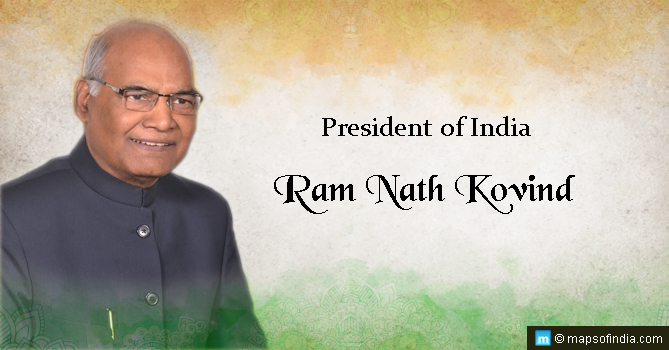
The President

At the head of the Union Executive stands the President of India.

Election of the President of India:- The President of India is elected by indirect election, that is, by an electoral college, by the system of proportional representation using the single transferable vote. The electoral college shall consist of the following:

(a) the elected members of both the House of Parliament;

(b) the elected members of the Legislative Assembly of the state; and the elected members of the Legislative Assembly of the Union Territories [Article 54].

The system of indirect was criticized by some as falling short of the democratic ideal underlying universal franchise, but the indirect election was supported by the framers of the Constitution, on the following grounds-

(i) Direct election by an electorate of some 510 million people would mean an enormous loss of time, energy, and money.

(ii) Under the system of responsible Government introduced by the Constitution, real power would vest in the ministry; so, it would be bizarre to elect the President directly by the people without giving them real power.

Qualification of the President:- In order to be qualified as President of india, one must –

(a) be a citizen of India;

(b) has completed the age of 35 years;

(c) be qualified for election as a member of the House of the People; and

(d) must not hold any office of profit under the Government of India or the Government of any of the state or any local or other authority subject to the control of any of the said Government [Article 58].

Term of Office of President:- The President holds his office for five years from the date of the appointment in the office, and he is eligible for re-election [Article 56-57].

Appointment of the President:- The President is appointed by the Prime Minister into his office.

Termination:- The President’s office may terminate within the term of five years in either of the two ways-

(a) by written resignation in his handwriting, addressed to the Vice President of India.

(b) by removal for the violation of the Constitution [Article 61(1)].

Procedure for the impeachment of the President:- An impeachment is a quasi-judicial procedure in Parliament. Any of the House may charge for the violation of the Constitution, before the other, and shall either investigate the charges by themselves or may stimulate once to be investigated. But the charge cannot be preferable unless-

(a) a resolution passed by the any House of the Parliament with not less than 1/4 of the total members of that House within 14 days of notice.

(b) the resolution was then passed by a majority of not less than 2/3 of the members of both the House of the Parliament.

Employments Allowances of the President:- The President shall be entitled without payment of rent to the use of his official residence and shall also be entitled to such emoluments, allowances, and privileges as may be determined by the Parliament. The emoluments and allowances of the President cannot be diminished till he holds his office [Article 54(4)].