The Impact of Solitary Confinement

Many years ago, the approach toward detention institutions, convicts, and punishment was severe and obnoxious. After a prolonged battle with the government, the principle of recognizing the human being in the convicted perpetrator has been approved. The socio-legal approach is based on peace, mutual respect, and individual human respect. If a person commits a crime, it does not follow that he stops to be a human being and can be denied those components of existence that constitute basic humanity.

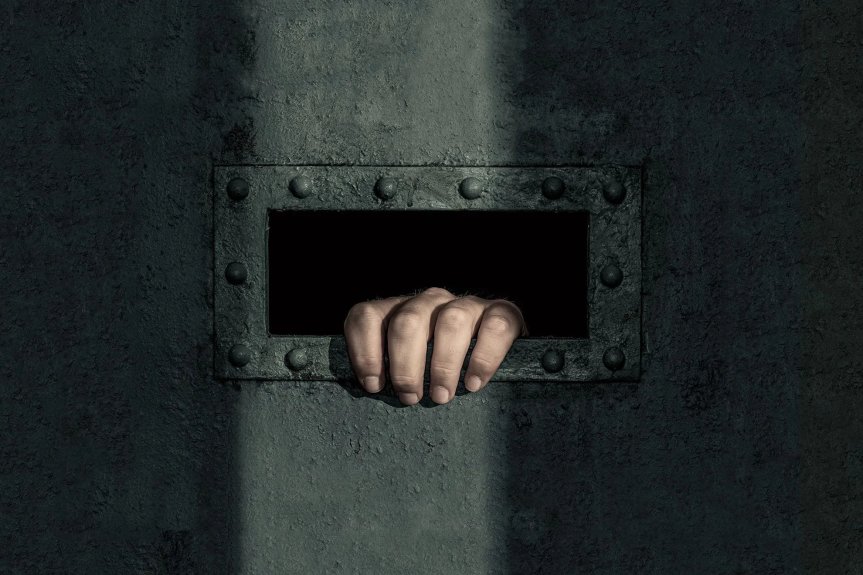
Solitary confinement is a type of imprisonment in which an inmate is segregated from other inmates and subjected to strict observation. It has been proved that such confinement is traumatic and has a negative impact on the prisoner’s overall well-being both physically and mentally. Prisoners are kept in solitary confinement for a variety of reasons. When prisoners are kept in solitary confinement as a form of punishment for what is deemed excessive behavior, such as aggression against fellow prisoners, they are usually forced to stay there for a specified period of time as a measure.

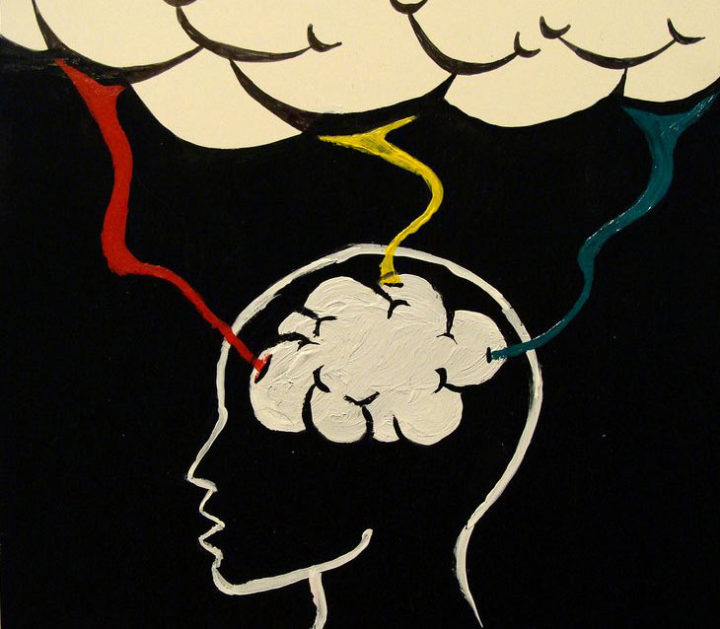
Solitary confinement, according to research findings, fundamentally affects a person’s brain, resulting in major and long-term mental health concerns as well as the expansion of deviant and violent behavior. There is a distinction between loneliness (a highly unpleasant experience to perceived isolation and the imposition of social isolation, also known as social pain) and aloneness (a tendency toward being alone/the decision to be alone), and the brain responds in very different ways. Solitary confinement as a form of punishment is akin to torture, having devastating effects for brain health. Prisoners who are isolated endure a range of psychological impacts, including emotional, cognitive, and psychotic disorders.

Prisons are already destructive, and putting people in solitary confinement adds an added layer of pressure that has been proved to create lifelong abnormalities in people’s minds and characters. In fact, long periods without human interaction have been found to physically decrease the part of the brain that plays a crucial role in memory. And, because humans are social animals by nature, denying people of their capacity to socialize can result in “social pain”, which experts define as “the feelings of sadness and suffering that result from negative social situations such as social deprivation, isolation, rejection, or loss.” Social pain impacts the brain in the same manner that physical pain does, and it can trigger much more suffering due to humans’ tendency to remember social pain months or even years afterwards. Even if a person does not enter solitary confinement with a mental disorder, the consequences of isolation may cause them to acquire a distinct psychiatric syndrome.

Life is more than just animal existence. The people incarcerated cannot be denied the same. A prisoner, whether convicted, under trial, or detained, continues to be a human being. They have all of the rights that a free person enjoys, but with some limitations. Being imprisoned does not strip people of their fundamental rights. Even while imprisoned, he has all of his basic fundamental rights. And especially in this pandemic, when many people are left alone or with a cellmate in confined spaces for 24 hours a day, knowing the negative impacts of solitary confinement and reforming these practices is more necessary than ever.

The Theory of Broken Windows

The “Broken Windows” policing strategy, which has been used in New York and other large American cities since the early 1990s, has been credited with lowering crime in some areas. According to the hypothesis, stopping, warning, and even prosecuting perpetrators of low-impact crimes such as vandalism and disruptive behavior adds to a more cohesive neighborhood and a setting less likely to attract serious crime. In 1982, James Q. Wilson and George Kelling developed the broken window theory, which used the window as a metaphor for a crime. Their idea focuses on preventing crimes in the first place so that they do not escalate into more serious crimes. According to James Q. Wilson, the degree to which a society governs itself has a profound impact on crime and disorder. The “broken windows” referenced in the theory’s name refers to the belief that where one broken window is left un-replaced, there will be many more. A broken window is a tangible manifestation of the fact that the residents of a specific neighborhood do not care about their surroundings and that low-level criminality is permitted. The hypothesis had considerable impact on policymakers on most notably in New York in the 1990s.

According to this theory, there are several stages of a crime but most importantly:

  • Disorder
  • Crime

It is claimed that disorder is nothing more than little visual evidence of a crime, and that the authorities must regulate those obvious signs in order to minimize the crime rate. Their approach was zero – tolerance policy, in which the criminal justice system took low-level crime and anti-social behavior far more strictly than it had previously. This included “three strikes and you’re out” regulations, under which people may face substantial jail time for repeating minor offenses like unsolicited windshield washing, prostitution, drunk and disorderly behavior, and so on.

The concept was that low-level crime should not be accepted and strong punishments for anti-social behavior and minor infractions should be imposed in order to prevent more serious crime and assure that collective consciousness and social cohesion are maintained through clear boundary enforcement.

As we all know, India has yet to put this idea into practice. One of the most populous countries on the planet, as well as one of the hardest impacted by crime, but if India needs anything like this? Stopping the minor visible disorder, in my opinion, is one method to stop the larger crime. It takes a lot of effort to execute something like this in India, and not just the police, but also societal awareness among the general public, is required to reduce India’s crime rate. We can reach the conclusion that the broken window theory is the best tool for reducing crime rates, but we must keep in mind that instead of a zero-tolerance government policy, we can try to accomplish the financial needs of the country.

WRONGFUL CONVICTIONS

The integrity of the criminal justice system is primarily determined by its competence and fairness. Its competence is measured by its ability to investigate and detect crime, identify criminals, and impose appropriate punishments on those convicted of crimes. Wrongful convictions jeopardize the integrity of the criminal justice system. If a person is wrongfully convicted, he or she is punished for an offense that he or she did not commit, but the true perpetrator of the crime is not punished. So wrongful convictions also harm the public since imprisoning an innocent person allows the true perpetrator to go free. In addition, when unjust convictions are discovered, public trust in the system decreases. Condemning the innocent defies justice, depriving men and women of dignity, relationships, time, opportunity, and freedom.

The criminal justice system is founded on the fundamental legal principle that an accused person is deemed innocent until conviction following a trial. This runs counter to the public’s belief that the vast majorities of people accused with criminal offenses are, and will be found to be, guilty. Wrongful convictions undercut both this fundamental legal principle and this public expectation because they demonstrate that the presumption of innocence can be maintained even when it is violated and that the justice system does not simply deal with the guilty. The tragedy of wrongful convictions is caused by a number of circumstances. The great majority of cases involve eyewitness mis-identifications as a result of inadequate crime scene visibility and poor police conduct. Every wrongful conviction exemplifies a unique set of flaws in the criminal justice system that has stopped it from functioning properly and fairly. Because wrongful conviction results reflect a fundamental undermining of the integrity of the criminal justice system, the mechanisms designed for reviewing such cases are exceptional in nature and are hardly found useful. To do differently would be to call the criminal justice system’s legitimacy into doubt and, by drawing attention to its flaws, to destroy public trust.

Immediate action should be made to ensure that no more men and women are wrongfully imprisoned. To improve the accuracy of witness identifications, police personnel conducting lineups should be knowledgeable of the suspect’s identity so as not to impact witnesses’ decisions, should ask witnesses to evaluate their confidence in their identifications, and should film the entire procedure. Confessions from defendants should also be filmed. This safeguard against coercion by authorities attempting to show guilt. Only the most advanced forensic science procedures should be employed to determine guilt. Prosecutors should be trained in ethical principles as well as the grounds of wrongful convictions. States should keep teams of skilled defense lawyers on hand who can dedicate the necessary time to each accused. Furthermore, all states should pass compensation statutes that offer adequate money for defendants to rebuild their lives. No matter what changes are implemented, the reconsideration of convictions will always be an exceptional event; an effective method of carrying out this duty will increase the effectiveness and integrity of the criminal justice system. It has the potential to lessen the likelihood of wrongful convictions while also improving the integrity of our justice system.

The Rule of Harmonious Construction

Law has an important place as a representative for social evolution. In this democratic system of governance, there are many intersections between legal order and social evolution. The source of the law in legislation is called statute law. It is made very fast, definite and does not have to wait for identification by the courts. The courts acknowledge a statute because it is law; it is merely not law because the courts recognize it. The cause for uncertainty of legislation is the basic nature of language. It is not always likely to perfectly turn the real intend of the legislation into written words. The ability to adopt the language inevitably means that there will be equally good or unconvincing arguments for both competing interpretation. Many of times the provisions are having more than one meaning or the uncertainty in the language. The legislature becomes functus officio when after enacting the statues. The interpreters cannot revert back to the legislature and ask the exact meaning of the statute because the legislators would not have take up such a wide variety of conditions while making any particular statute. Thus it is totally depend on the Judges to interpret such provisions to make both effective. To avoid further uncertainty, the legislation has provided us with some of the primary rules of interpretations. Harmonious Construction is one of the most significant rules where it is said that if the two or more or more than two provisions of the same act are conflicting with each other then it must be interpreted in such a manner that effect should be given to both, and the provision which has a wider concept will always prevail.

When there is a conflict or inconsistent between two or more provisions or two or more parts of a statute then the rule of harmonious construction is implemented. This rule follows a very simple theory that each and every statute has a purpose and intent as per the law and should be read as a whole. The interpretation should be adopted when all of the provisions are consistent. In the case in which it is totally impossible to harmonize both the provisions, the court’s decision regarding the provision shall prevail. Harmonious rule brings harmony among the various lists referred to in Schedule 7 of Constitution of India. (The 3 Lists of Legislation – Union list, State list, and Concurrent List). This doctrine follows a settled rule that an interpretation that results in hardship, injustice, inconvenience and anomaly should be avoided. The interpretation with the nearest compliance to justice must be picked.

Harmonious Construction has helped Judges to interpret between two conflicting laws easily and has proved easily in providing the justice to society at large. This does not mean that judicial interpretations always thought to be the true and as per the intention of the legislation. More but not the less their interpretation power has given a space for their own ideas to flourish. Although they in most of the cases they gave their best to bring sense out of miserably worded statute. The legislative inability to anticipate all conceivable future scenarios is understandable, and hence it is the task of the judiciary to make existing laws practical by rational interpretations. Judges must control themselves from their own thoughts and philosophy which affects the judgment and many a times they end up in making of new laws. Filling up of such space will ensure that the interpretation by judiciary in the future will produce fruit bearing results for all.

False Confessions

Would you confess to a crime you didn’t commit if you were being interrogated?

While common belief holds that innocent persons do not confess to crimes, the truth is that false confessions do occur and it happens more frequently than you might expect.

A false confession consists of an admission followed by a post admission narration (a comprehensive description of how and why the crime occurred) of a crime that the confessor did not commit. False confessions pose major concerns among social scientists, mental health experts, policymakers, and the general public. They are continuously one of the most prevalent, yet misunderstood, sources of error in the legal system, and hence one of the most prejudiced sources of false evidence that leads to wrongful convictions. False confessions are classified into three types: voluntary confessions, influenced confessions, and compliant confessions.

Voluntary false confessions are addressed by the confessor’s own psychological conditions or by external pressure applied to the confessor by someone other than the cops or someone else in authority. False confessions made voluntarily are typically attributed to inherent psychological or mental issues. While Influenced false confessions arise when questioning tactics compel an innocent person to doubt his memory and he really becomes convinced, whether temporarily or permanently, that he committed the crime despite having no recall of doing so. And Compliant false confessions on other hand are made in order to escape a difficult situation, evade punishment, or obtain a promised or implied reward. The most noticeable feature of a compliant false confession is that it is done intentionally: the suspect acknowledges guilt while knowing he is innocent and that what he says is untrue.

Even in the lack of coercive threats and offers, stress and a desire to avoid interrogation may result in false confessions. Custodial interrogations are naturally stressful and unpleasant encounters, and an accused may hit a level where he is eager to make a false confession merely to end the confrontation. Confessions are the most compelling and convincing evidence of guilt that the state can present against a defendant. False confessions are thus the most compelling and convincing false proof of guilt that the state can use against an innocent individual. Confessions have a significant inherently biased influence on the views and decision-making of both criminal justice officials and judges because most individuals assume that a confession, particularly a thorough confession, is accurate by definition. As a result, confession evidence tends to characterize a defendant’s case, frequently overwhelming any contradicting information or evidence of innocence.

This article reminds us that not only should we discard the notion that no innocent person in their right mind would confess to a crime, but that in some cases, false confession is rational or at the very least exceedingly reasonable.

Experimental Criminology

The criminal justice system costs taxpayers about billions and billions per year, which is used to pay for municipal policing and the maintenance of state and local prisons. By better understanding of what causes crime and what effective policy responses should be implemented. Experimental criminology tries to minimize the financial burden that crimes impose on nations while also improving safety. Experimental criminology is a branch of criminology concerned with scientific knowledge of crime and its application to the criminal justice system. To put it another way, it employs a variety of scientific analysis to answer issues regarding the crime that occurred, including its prevention, punishment, and injury. These trials are mostly carried out in the actual world rather than in labs. It has a broad scope since it focuses on determining the true cause of the crime and preventing it. In the discipline of experimental criminology, there is a lengthy approach for conducting experiments that includes theoretical, sociological, and methodological stages. In order to completely comprehend crime and the criminal justice system, experimental criminology relies on the work of criminologists, statisticians, and other scientists. Experimental criminology research can use a variety of methods, including observational studies, case-control models, instrumental variables, and natural experiments. Experimental criminology is becoming a major part of the fast growing scientific research and evidence-based social policy movement. This approach is primarily concerned with the improvement and growth of society through the application of high-quality scientific evidence that will assist us in determining what will provide the best results. It includes the controlled investigation of cause and effect, and there are two types of studies: quasi-experimental and experimental. When subjects are chosen at random, research is experimental; however when people are chosen purposefully to explore the cause and effect of a crime, research is quasi-experimental. In experimental criminology, subjects are often divided into two groups and then observed to determine outcome measures that could be used as a deterrent to crime.

Although the state of experimental criminology is currently unknown, it is often regarded as the most effective method for determining the cause-effect relationship of crime and assisting in the development of preventive measures to aid the justice delivery system. However, when experimental criminology is done correctly, it causes fewer risks for society and reports a bigger number of cases that helps in analyzing the causes of crime. This strategy is used by both the police and the court system in India to streamline investigations and judgments. In India, experimental criminology is becoming more well-known. It has decreased the threat of causing harm in the modern era by developing more humane and effective alternatives to long term imprisonment. An observation produced using this method makes a clear point, which makes the evidence credible, and so serves the objective for which it was created.

Finally, the findings of this study showed that the conditions in a community can lead to a rise in both minor offenses and more major offenses. With this in mind, criminologists might advocate for the implementation of a greater number of community-based interventions that will, in return, reduce crime in these communities.

Privacy in Internet era

The use of digital technology is growing, and people are becoming more aware of it, as well as the numerous benefits that technology provides. They are always connected, can contact almost anyone from anywhere, and carry the world’s most powerful information source in their pockets. People, on the other hand, appear to overlook one fact: how much data technology generates. And that’s where the issue of privacy comes into the picture and it is no secret that the modern use of the Internet and social media has a significant impact on people’s privacy. And our need for privacy is one of the characteristics that define us as human beings. Nobody like having their privacy invaded, whether it’s by someone looking over our shoulder or by a data breach. Every day, we come across headlines concerning privacy breaches that make us worry. The Internet is commonly regarded as a tool that has enabled people to write their own stories and share their experiences with a global network of people. As we continue to digitize every aspect of our lives, from gyms to vacation destinations, security and privacy protection will become increasingly more important in the coming years. As a result, it is growing easier to unintentionally give out sensitive information via email, social media, and other means these days. From internet service providers collecting user browsing history to software vendors gathering broad data about our personal life, there is a lot of data being collected about us. As a result, simple laws and regulations ensuring consumers’ ability to opt out of personal data collecting are urgently needed. In the digital era, this would go a long way toward safeguarding privacy.

Until 2021, the total sum of our personal information on the internet will be around 1.2 Million TBs, and it will undoubtedly rise in the future. Have we ever thought about how to keep it safe? If we continue to take this lightly, the day will come when digital privacy issues will attract an increase in cyber attacks, resulting in a loss of reputation, theft of sensitive documents, and a lack of confidence among users.

To emphasize the importance of data privacy in our lives, we should all take a look at the approaches or methods that can help us add value to data privacy.

  • Using technologies to effectively manage compliance and vulnerability in security.
  • Auditing security setups on a regular basis.
  • Staffs should be well-trained and educated on the ongoing threat of ransom ware.
  • Make the Privacy Procedures sound more effective by updating them.
  • Creating and restoring backup files with caution.
  • For reaching the unreachable updates, technology should be used.
  • Obtaining illegible H/W Channels from the attackers.
  • Also education has the duty of transferring awareness, attitudes, skills, and conduct from actual life domains such as home, school, and friends to young people.

From beginning till the end, it can be concluded that data privacy should not be overlooked. And what we should be doing right now is actively participating in the fight to make our lives more secure in this era of digitization.

Cyber Stalking – A Psychological Study

Cyber stalking is a crime in which stalkers use the internet or another electronic device to stalk an individual. It is also known as online harassment or online abuse. It entails harassing or threatening an individual on a regular basis. Stalking can be done in the following ways such as to follow a person till his home or where he does his business, to cause destruction to a person’s property, leaving written messages or objects, or making harassing phone calls.

The Cyber stalkers always think that they’re anonymous and can hide. In other words, the cyber stalker’s greatest power is their ability to rely on the anonymity that the internet offers them, allowing them to monitor their victim’s activities without their name being revealed. Thus, there is a need of efficient cyber tools to investigate cyber crimes and to be prepared to defend against them and to bring victims to justice.

Extreme narcissism, hatred, frustration, vengeance, jealousy, obsession, psychiatric disorder, power and control, sadistic fantasies, sexual predation, internet addiction, or religious bigotry are all psychological reasons for stalking. Some of them are discussed below:

  • Jealousy: Stalking can be motivated by jealousy, especially when it involves ex-lovers and present partners.
  • Obsession: Obsession could be another reason for stalking. The stalker may be drawn to the victim on a sexual or mental basis. The difference between admiring and stalking is very marginal.
  • Erotomania: It’s a type of belief in which the stalker believes the victim, who is usually a stranger or well-known figure, is in love with him.
  • Harassment: Cyber stalking is claimed to be motivated by this. This is due to the fact that the internet reflects actual life.
  • Revenge or Hate- Even though the victim is not the cause of the stalker’s feelings of hatred and revenge, he or she remains the stalker’s target. Based on the aforementioned causes for stalking, a stalker could be obsessed, outraged, psychotic, or crazy, and the Internet appears to be the most convenient venue for the stalker to vent his feelings of hatred and revenge.

In particular, there are three types of stalkers. Obsession stalkers are motivated by their fixation with sexual harassment and sometimes love, deluded stalkers are motivated by the urge to display their authority, and vengeful stalkers are motivated by the want to exact retribution.

The term cyber space means the environment where the communication takes place using internet. To put it another way, the internet has created a world. A global domain inside the digital landscape consisting of the interdependent network of information technology infrastructures, including the Internet, telecommunication systems, computer systems, and embedded processors can be classified as cyber space. Another term is the virtual environment in which worldwide PCs’ electronic data circulates. This is a hazy explanation of cyberspace. Its fundamental feature is that it is made up of many computer networks, switches, routers, servers, and so on. It consists of a collection of infrastructures including transportation, banking, finance, telecommunications, energy, and public health.

Cyber stalking is an activity in which a person, abuser, or stalker uses the internet or electronic media to stalk or harass another person or victim. In cyber stalking, a stalker may communicate with a victim via email, social media, messaging apps, or other forms of online communication. A stalker may use the internet to harass a person by posting messages, pictures, or information about them. Some also track location or online activities of individuals while stalking. Although cyber stalkers do not physically follow the person who has been wronged, they do so virtually. The cyber stalkers do adopt all types of technological and digital instruments assault but it is an emotional assault and harassment which is carried out by using electronic media. However, the provisions made for cyber stalking are not the same as those made for real-life scenarios.

HATE CRIMES

When faced with a crisis, individuals typically revert to a terrible human trait: protecting their own while looking for a scapegoat to blame for the problem. The pandemic increased interpersonal and individual-level prejudice in a variety of circumstances, from discriminatory views toward racial, ethnic, and religious minority groups to verbal threats and physical assaults directed against them. Physical attacks and verbal abuse against LGBT community, Asian-Americans, Muslims who are frequently blamed as carriers, are now commonplace.

Hate crimes are crimes often motivated by prejudice or hatred towards specific groups of people. To be classified as a hate crime, the act must meet two criteria: first, it must be a criminal offense, and second, it must be motivated by bias. Hate crimes are acts of violence committed with the intent of injuring or intimidating someone based on their race, ethnicity, national origin, religion or sexual orientation. Hate crimes may also target people with disabilities. Hate crimes also appear to be more common in societies that are undergoing rapid social change and emerging groups, which may be culturally dissimilar, are seen as a threat to the status quo. Threats, property damage, assault, murder, and any other criminal offense motivated by prejudice are examples of hate crimes. Individuals from specific groups are not the only ones who are victims of hate crimes. Hate crimes can target people or property that are just affiliated with – or even considered to be a member of – a group that shares a recognized characteristic, such as human rights defenders, community centers, or houses of worship.

Hate crimes, unlike other sorts of crimes, have a far-reaching impact on both the immediate victim and others like them. They not only take lives and wreak havoc on families, but they also traumatize the communities where they occur. These activities create distrust and terror among communities, prohibiting them from participating in community life or cooperating with local law enforcement in investigating and preventing crimes. So, it’s extremely important for the authorities to find a way to stop these hate crimes.

Combating Hate Crimes

  • Recognize and condemn all instances of violent hate crimes. Government officials and public figures should send clear and consistent reminders that violent offenses motivated by bias and intolerance will be fully investigated and prosecuted to the full extent of the law.
  • Acknowledging the particular damage caused by hate crimes, authorities should introduce laws that create specific offenses or increases punishments for violent crimes committed on the basis of the victim’s race, religion, ethnicity, sexual orientation, gender, gender identity, mental or physical disabilities, or other similar status.
  • Governments should make sure that people who commit hate crimes face legal consequences of their action.
  • Official monitoring and public reporting systems should be maintained by governments to give reliable data for informed policy decisions to address violent hate crimes.
  • Official anti-discrimination and human rights organizations should have the responsibility to supervise, report, and help victims of hate crimes.
  • Governments should support and strengthen international bodies with anti-discrimination objectives.
  • To minimize fear and support victims, governments should conduct outreach and education activities to communities and civil society groups.

The defense of Insanity

Criminal law is a wide field of study that is riddled with issues. Despite a vast literature on various parts of the issues, the subject of criminal responsibility and mental disorder has posed a challenge to jurists, attorneys, and psychiatrists for centuries, and it has remained an unsolved conundrum. For hundreds of years, the insanity defense has served as a defense against criminal charges for defendants who were unable to understand what they were doing or distinguish between right and wrong. Because most defendants in our criminal justice system must have had some knowledge or intent when committing a crime, the insanity defense offers protection to people who are deemed incapable of establishing such mental states.

Originally, most states required the prosecutor to prove beyond a reasonable doubt that a person was not insane if he or she claimed insanity as a defense. However over the course of time and with help of few modifications the burden of proof is now shifted from the prosecutor to the defense, requiring defense lawyers to prove the defendant’s insanity through clear and compelling evidence.

Even though it was put in place to improve judgment, most people exploit the insanity defense to avoid legal penalties, making it a loophole that encourages more offenders to commit crimes. Such a condition creates a serious problem, as people will become increasingly involved in such crimes since they are not afraid of the law. The Indian government has put in place a number of rules for performing an insanity test on the accused. They must meet two important criteria: the necessity for mental illness and the condition for loss of reasoning. Section 84 of the Indian Penal Code (IPC) deals with this issue.

Essentials: A person of unsound mind must carry out the act.

Such a person was mentally unstable at the time of the incident.

The accused incapacity should be due to mental illness.

Such person had no idea what he was doing was wrong.

Despite the fact that these strict regulations exist, many people try to exploit this defense by falsifying certifications or influencing the judiciary. To avoid the various controversies and confusions it is suggested that a well-defined definition of the term ‘insanity’ should be established. Many countries, notably Germany, Argentina, and Thailand, have prohibited this defense due to its widespread misuse. India can investigate this and decide whether or not the insanity defense should be recognized in the legal system.

Social Control and Self-Control Theory of Crime Causation

Sociologists, psychologists, and criminologists have been attempting to explain delinquent behavior for decades. Despite their tireless efforts and vast expertise, a perfect explanation for delinquent behavior has yet to emerge. Only after a comprehensive examination of the literature dedicated to the search for a single answer does one come to the conclusion that it simply does not exist. Rather, there is universal agreement and evidence that crime is the outcome of a combination of causes rather than a single factor. Whatever its perspective, a comprehensive theory of crime must explain how delinquent patterns of behavior form, what causes people to engage in a delinquent manner, and what sustains their delinquent behaviors. So, Travis Hirschi developed “Social Control Theory” and “Self-Control Theory” in an attempt to encapsulate crime. Hirschi collaborated with Michael Gottfredson to create the latter theory.

Social control theory and self control theory are two theories that explain why some people choose to act on deviant behavior while others do not. Both have opposing yet similar viewpoints on the subject. According to social control theory, people’s behavior is influenced by their social ties; if they have strong ties to society, they will adapt, whereas if they don’t, they will act out or engage in criminal or violent behavior. Individuals are inherently driven to deviate, according to the theory, and will do so unless they are constrained by strong ties to society. This distinguishes the theory from self-control theory, which claims that individuals are socialized to create a personality marked by low self-control throughout their early years of life, and they will have this trait with them for the rest of their life.

According to the social control theory, weak relationships, such as attachment, lead to criminal behavior. Teenagers form strong ties with their friends in some cases, but this type of attachment can be dangerous. They are frequently concerned about being accepted by their peers and will participate in delinquent behavior to acquire acceptance. In example, a lack of parent–child connection during adolescence, especially in the middle, is likely to lead to an increase in peer association. This is also true of the self-control theory, which claims that a child’s level of self-control is predicted by the style of parenting an individual received. Children whose parents provide them with inadequate parental supervision will have low levels of self-control, making them more inclined to participate in criminal behavior. Because commitment is a key component of both theories, the self-control theory and the social control theory are similar. Individuals with poor self-control crave rapid pleasure, and commitment clashes with their drive for the “here and now.” According to these theories, a person who lacks commitment is more prone to engage in deviant behavior. Both the self-control and social control theories point to beliefs as a factor for people not committing crimes. Individuals who are extremely devout may be subjected to stricter constraints in order to combat criminal temptations. Having a strong belief and value system gives significant rewards for self-control, making it easier to resist impulsive behavior temptation. Both theories appear to have survived the test of time and operate concurrently to provide a basic explanation for individual deviant behavior. Although there are some existing inconsistencies and contradictions between the two theories, the depth of their complementary relationship cannot be underestimated, especially since it has not been stated that the Social Control Theory and Self-Control Theory are inherently incompatible.

THE SCIENTIFIC AND NORMATIVE VALUES ON JUVENILE JUSTICE

Recent breakthroughs in neuroscience, particularly enhanced Magnetic Resonance Imaging (MRI) techniques, have given scientists and policymakers a more comprehensive knowledge of how our brains evolve from birth to adulthood. While these studies are still in their early stages, they have already demonstrated that the brain continues to develop long after an individual becomes a legal adult (i.e., at the age of 18), and that the slow maturation process that occurs in the social context is mirrored by a slow maturation process in the neural domain. Despite the tentative nature and ambiguous meaning of this information (i.e., we don’t yet understand the actual link between brain structure and behavior), neuroscience is becoming increasingly involved in long-standing debates about juvenile justice and the extent to which adolescents can be held legally responsible for their actions. Roper v. Simmons, in which the Supreme Court prohibited the death penalty for juvenile criminals under the age of 18, is the most significant example of this tendency to date. Christopher Simmons’ prosecution, sentencing, and habeas corpus petition were the focus of the case after he brutally murdered an elderly woman during a burglary when he was 17 years old. Although the execution of minors was historically regarded acceptable in American culture, the Court ruled that a national consensus had evolved that such a penalty was cruel and unusual, and thus violated the Eighth Amendment. The majority agreed with Simmons’ assertion that teenagers lack the emotional, intellectual, and biological maturity required to be consistently categorized as criminals. Adolescents should be punished for their misdeeds, but they should not have to pay the ultimate price for impulses they couldn’t control. Simmons’ claim was based on fresh brain imaging findings that suggests the adolescent brain is not as mature as the adult brain.

Neuroscience was conspicuously absent from this debate. Developments in brain research that investigate problems of culpability and “blameworthiness” of adolescent offenders are increasingly informing juvenile justice policy around the world. Simmons was 17 years old in 1993 when he robbed a woman, tied her up with electrical cord and duct tape, and flung her over a bridge, similar to the juvenile implicated in the December 16, 2012 gang rape in New Delhi. He was convicted and condemned to death by a Missouri court in 1994 when the case went to trial. By 2004, the Simmons case had reached the United States Supreme Court, which ruled a year later in a historic judgment that capital punishment for crimes committed while under the age of 18 was unconstitutional. To determine the “age of knowledge,” the decision relied on neuroscience and advances in brain science. So, what does science need to say about the Indian government’s decision to permit 16-18 year olds to be tried and sentenced as adults? Simply said, science does not support the decision.

The age of understanding in India is 18 years old, according to the Juvenile Justice (Care and Protection of Children) Act of 2000. And so, legally, a person beyond that age might be held fully liable for his actions. However, neuro-scientific developments within the past decade prove that brain development continues till the person is well into his twenties.

In 2007, the National Institute of Mental Health (NIMH) in the United States examined the brains of over 1,000 healthy children aged 3 to 18. Researchers conducted the Magnetic Resonance Imaging (MRI) scans and followed the particular physical changes within the adolescent brain; believe that brain maturation peaks around the age of 25. “Part of the brain that assists organization, planning, and strategizing is not completed being built yet,” according to a 2005 research titled Adolescence, Brain Development, and Legal Culpability. It’s a little unfair to expect [adolescents] to have adult organizational skills or decision-making abilities before their brains are finished developing.” According to available neuro-scientific data, the frontal lobe, especially the prefrontal cortex, is among the last parts of the brain to completely mature. The frontal lobes are in charge of impulse control, decision-making, judgment, and emotions, and are thus critical when determining “culpability” in cases of juvenile delinquency. Further, we now know conclusively that teenagers tend to be impulsive and susceptible to mood swings because the limbic system — which processes emotions — remains developing.

Many research works have established that under conditions of chronic and severe stress in rats, the prefrontal cortex can shrink by up to 40 per cent leading in brain cells in this area losing their capacity to process information properly. The hippocampus, which is crucial for forming memories of daily facts and events, additionally damaged during a similar fashion.

Thus, the parts of the brain that is crucial for processing information about specific events, and making careful decisions based on them — such as applying the brakes on high-risk behavior — are severely compromised. The amygdala, the emotional centre of the brain that is involved in fear, anxiety, and aggression, on the other hand, is pushed in the other way by stress by making its neurons grow bigger and stronger. Surprisingly, MRI imaging reveals that people with stress disorders experience identical alterations in their brains.

Relevancy and Admissibility of E-Records

Technology has advanced rapidly over a period. This century saw a technological revolution which enthralled not only India but the whole world. In today’s world electronic devices used everywhere. And it is not only limited to established organizations or institutions but available to every individual at swipe of a finger. It helps people to communicate locally and globally with ease. Due to which the reliance on electronic means of communication, e-commerce and storage of information in e-form increasing rapidly. This growth of reliance on electronic means of communications, e-commerce and storage of information in e-form has most certainly caused a need to modify the law relating to information technology and rules of admissibility of electronic records both in civil and criminal matters in India. Electronic evidence is defined as information and data of asset to an investigation that is stored on, received or transferred by an electronic device. It is any probatory information stored or transferred in electronic form that a party to a court case may use at trial. As courts continue to wrestle with this new electronic frontier it is crucial to stress that electronic evidence is subject to the same rules of evidence as paper documents. It can be obtained in mails, digitized photos, transaction logins, instant messages, documents from accounting programs, spread sheets, browser history data, backups, printouts, GPS tracks, videos or audio files. E-records inclines to be more abundant, more difficult to annihilate, not difficult to modified, easily duplicated, potentially more expressive and more readily available, and such unique nature of e-evidence, as well as the ease with which it can be exploited or falsified, creates obstacle to admissibility not faced with other evidence. Electronic evidence challenge evidentiary rules grounded in a more tangible way. Certification of such record is perhaps the most difficult test as courts seek to determine its admissibility.

During trials, judges are often asked to order on the admissibility of electronic records. How the court orders on questions of admissibility could eventually impact the outcome of a civil lawsuit or determine the difference between conviction and acquittal of a defendant. These gadgets, the result of technology can be used for legal and illegal acts. For example, when data recorded or stored in the memory of a computer is printed out in paper if it is not easy to say that the version in the memory is a document. Nor is it easy to determine that the print out is an original or a duplicate. Also, even if such things (audio, tape recording, a video tape recording, electronic mail on computer screen) when submitted as evidence and such things as electronically transmitted directs in commercial transactions can be regarded as document.

The growth of computers, the social impact of information technology and the ability to store information in digital form have all required Indian law to be amended to include provisions on the appreciation of e-records.

In 2000 Parliament enacted the Information Technology (IT) Act 2000, that amended the existing Indian statutes to allow for the admissibility of electronic evidence. The IT Act is based on the United Nations Commission on International Trade Law Model Law on Electronic Commerce and, at the side of providing amendments to the Indian Evidence Act 1872, the Indian Penal Code 1860 and also the Banker’s Book Evidence Act 1891, it recognizes transactions that are administered through electronic information interchange and different means of electronic communication.

Doctrine of Repugnancy

The distribution of powers is an important feature of federalism. When a federal state is formed it involves a division of authority between the central and the state government. The tendency of federalism is to limit on every side the action of the govt. and to separate the strength of the state among co-ordinate and independent authorities are particularly noticeable. In terms of different Articles read with Schedule VII of the Indian Constitution, the Union Parliament and State Legislatures have the power to make legislation. It further provides List I which is allocated for the Parliament, List II being those within the domain of the State Legislatures and List III which represent those areas where both Parliament and State Legislatures carry concurrent law making powers. The Constitution of India through Article 254 states that a law on a subject-matter prescribed in List III enacted by the State Legislature would be valid only in case, where it is not in violation to a law made by the Parliament on the same subject-matter. So as to put more light and certainty the principle “Doctrine of Repugnancy” was introduced, which is used to find out when and where a State law turns repugnant to the Parliamentary legislation.

Repugnancy is described as “a discrepancy or contradiction between two or more portions of a legal instrument (such as legislation or a contract)” by Black’s Law Dictionary. The Constitution of India can be easily described as a federal constitution because it contains the essential principles of a federal constitution. However the word federal isn’t directly mentioned in a very qualifying sense anywhere within the constitution. Dr. Ambedkar while addressing to the Constituent Assembly explained that the word “Union” is employed over “Federation” because “Indian Federation is not the result of an agreement among the States, as in the United States of America. Secondly, the states do not have any right to separate from the federation.” And this also articulates the supremacy of the Centre over the constituent States, and therefore the justification for the same can only be appreciated more in a country like India because of its heterogeneous character. Part XI of the Constitution deals with the “relations between the Centre and the States.” From article 245 to 254, these articles especially deal with the legislative relations between the centre and the states and the principle of Central supremacy is also mentioned in the same provisions too. And it’s in the light of this structural impulse, why we must appreciate the implication of the doctrine of repugnancy in its relation with the Constitutional law. The doctrine of repugnancy is often roughly understood as a conflict resolution principle, which is invoked when there exist two different tiers of Legislature, each competent to legislate on a similar subject, and where there is an irreconcilable inconsistency between the provisions of two laws enacted by the two legislatures on this field in exercise of their legislative competency. And the constitutional provisions which are relevant for solving such questions of repugnancy are to be found in Article 254 of the Indian Constitution.

It asserts that repugnant laws are laws that are so incompatible with one another that they can’t stand together at the same time, and that such a situation emerges when one law’s command, authority, or provision directly conflicts with another law’s command, power, or provision. The word “inconsistent” itself, within the legal sense, has been outlined as mutually repugnant in the sense that acceptance of one leads to the abandonment of the other. In such a situation, the ground-norm foresees a mechanism to resolve such a conflict, for “it is not possible to obey one law without disobeying the other”. The resolution proposed may vary from one polity to the other. Generally, one law prevails over another and the paramount legislation is determined by the nature or character of the federation.

Article 254 of the Constitution of India provides for the resolution of conflicts between Central and State legislations that are wholly repugnant to one another. The term “existing laws” which is mentioned under Article 254 has been defined under Article 366, clause 10, and these are the laws which are made by the competent legislatures before the Constitution. The provisions under Article 254 are attracted only if the statutes in question are wholly incompatible with one another and can’t stand together. And that there is no repugnancy unless the two laws are wholly repugnant to each other and their conjunctive application would manufacture absurd results. This doesn’t mean that the laws ought to be inconsistent in each and every letter and provision, but that in so far as the provisions are in fact inconsistent, the inconsistency should be absolute, so as to be militating against any possibility for harmonious construction.

As an interpretation principle, it’s a well-established principle of procedure that there is a presumption in the favor of the constitutionality of laws and also the onus to prove repugnancy lies on the party assailing the challenged law. Even so, the doctrine of harmonious construction dictates that the courts interpret the provisions of the laws in such a way as to avoid repugnancy and allow for the smooth coexistence of the challenged laws, with the laws being struck down on grounds of repugnancy in the manner prescribed by Art. 254(1) only when “the laws are fully inconsistent and absolutely irreconcilable.”

The laws made by the legislature of a state legislature or the Parliament with respect to their exclusively assigned spheres might incidentally with no consequence get in the restricted sphere, but as long as it can be shown that the legislation in its pith and substance falls in the four corners of the assigned sphere, the law would be intra-vires. The doctrine of pith and substance applies to concerns of repugnancy as well, though in a different way. If it can be shown that a law in pith and substance falls under a State or Union entry and any infringement on a concurrent subject is incidental and inconsequential, no repugnancy would arise.

There have been a number of judgments in India, on cases related to repugnancy arising out of conflicts between legislation with respect to Article 254 of the Constitution, and the widely held view on the scope, meaning and implication of repugnancy in several cases. M. Karunanidhi vs. Union of India[1], where a Constitution Bench of the Supreme Court considered the principles to be applied for determining repugnancy between a law made by the Parliament and a law made by the State Legislature, is one of the most commanding and authoritative judgments on the subject doctrine. Honorable court in this case, laid down following conditions which are essential for any repugnancy to arise.

  • That there is a clear cut and direct inconsistency between the Central Act and the State Act.
  • That such an inconsistency is absolutely irreconcilable.
  • That the discrepancy between the provisions of the two Acts is of such a kind that it brings them into direct conflict with one another, making it impossible to obey one without disobeying the other.

Thereafter, the Honorable Supreme Court after referring to reasoning of many judgments on the subject laid down following propositions:

  • That in order to decide the question of repugnancy it must be demonstrated that the two enactments contain conflicting and irreconcilable provisions, so that they cannot stand together or operate in the same field.
  • By implication, there can be no repeal unless the discrepancy is visible on the face of the two Acts.
  • There is no repugnancy where two statutes occupy the same field but there is room or opportunity for both statutes to operate in the same field without colliding.
  • That where there is no inconsistency but a statute occupying the same field looks to create distinct and separate offenses, no question of repugnancy arises and both the statutes continue to operate in the same field.

The aforesaid analysis of the relevance of the doctrine of repugnancy brings forward some salient points. The doctrine of repugnancy as interpreted by the courts in India, applies to law only when they’re wholly irreconcilable. The doctrine of harmonious construction asserts that the courts should interpret the statutes so as to avoid the occurrence of repugnancy and protect the legislative sanctity of the authority. The widely advocated view confines the application of repugnancy to only Concurrent List enactments. The current judicial position on repugnancy has numerous political implications. While the separation of laws under the State List from scrutiny from the perspective of repugnancy gives the State Legislature the freedom to enact on matters under the State List, the Centre’s supremacy has led to a situation where the Centre has professed a tendency to occupy entire fields in the Concurrent List to its exclusive jurisdiction through its laws. There has also been a tendency to use the President’s assent to advance the Central government’s policy in the states rather than allowing for repugnant but locally necessary laws to operate in the states based on discretion based on policy efficiency and in the spirit of the constitution. The most significant problem, however, has been the push to read Art 254 in a broader sense, to include concurrent field disputes in its scope, which would include Articles 252 and 253. The proposed explanation is that the text of the provisions allows for a much broader interpretation, that the terms “in the Concurrent List” are indicated to qualify only existing laws, and that the phrases “which the Parliament is competent to enact” apply to post-Constitutional laws. It’s also proposed that the provisions in Article 246 only provide the guiding principle, subject to which Article 254 must provide for a more comprehensive dispute resolution mechanism.


[1] [1979] AIR 898, SCR (3) 254

Crime and Psychology

“What was the motive?” is one of first questions law enforcement authorities ask after a crime is committed. Crime scene investigators collaborate with detectives and law enforcement to put the pieces of the puzzle together, but comprehending the psychology of crime demands a different set of skills. Psychology encompasses the study of the mind, behavior, and attitudes, among other things. Individual traits including personality, reasoning, thought perceptions, intelligence, imagination, memory creativity, and so on are studied. Crime, according to psychologists, is a learned behavior that a criminal develops via his interactions with various individuals. And this even affects how the law is implemented on a certain crime. Psychology has been useful in the legal field since it helps in evaluating the mens rea of a criminal while committing the crime, the reliability of witnesses, and the appropriate punishment for a person committing an offense by taking into account the person’s psychological state of mind. With the help of psychology it is possible to obtain a better understanding of some of the most important explanations for criminal behavior, as well as establish crucial variables in determining what motivates people to commit specific sorts of crimes.

In today’s world, psychology has become a vital aspect of the legal system. Psychology is important in law because it encapsulates theories about human behavior. A combination of biological, psychological, and social factors often impact people who engage in criminal activity. There are mainly two important psychological theories that explore this possibility. Behavioral theory, which holds that committing a crime is a developed response to events, is an important psychological theory. Cognitive theory, which looks at how people solve problems through moral growth and information processing, is another important theory. When it comes to criminal behavior, psychological theories look at personality factors including extroversion, neuroticism, agreeableness, openness, and conscientiousness. They also look at the concept of the psychopathic personality, in which a person engages in illegal adrenaline rush activity to make up for low arousal levels. Hostility, narcissism, and impulsivity are personality qualities that have been linked to criminal and violent conduct. The hypothesis is that, like all other forms of behavior, criminality is learned through direct interaction with other criminals, rather than being invented by each criminal individually. Personal interactions with other people are used to teach behavioral skills. According to psychological studies on teenage aggression, there are two basic paths that violent careers take. Before they reach adolescence, some children begin to act violently. They have a higher chance of becoming repeat violent offenders. Children who turn to violence in adolescence are more likely to correct their ways sooner or later. Birth issues, poverty, anti-social parents, bad parenting, hostility, educational failure, psychiatric disorders, alienation from family, school, and other factors can all contribute to violence.

It is clear that the impact of psychology on crime is substantial. It is a step forward in refining the legal system; its position in the legal system contributes in the modification of our legal system as well as the maintenance of justice, equity, and good conscience. Psychology will play a vital role not only in assisting the criminal justice system and political systems, but also by helping the general public to understand the elements that lead to crime and influence criminal behavior.