The Importance of Internships

Growing up in school, students are constantly reminded that a college education is necessary to make a decent salary. Over the years, it has become evident to many young adults that this statement is indeed true. However, as the need for jobs increases, so does the necessity of being more competitive in a work field. Since our generation has grown up knowing that graduating from college is a necessity, a college education is no longer enough to be competitive in the job market; therefore, our generation has given birth to a new requirement to find the right job after college.

This requirement is known as an internship. Despite the fact that not many internship programs pay their students, an internship is an essential element for a student’s career in today’s society. The skills and opportunities attained after having participated in an internship program definitely outweigh any downside to any part of the program.

A college is a place where students become prepared for many aspects of life. One aspect of life that must be well prepared is networking. The more contacts a person has, the higher the chances of that person getting what he needs. College internships are a resource and the ultimate social network. When a student joins an internship program, he is joining a nexus of connections that will last him for a lifetime.

“Internships are mutually beneficial relationships.” The intern gets an opportunity to look into the real world pertaining to his career, while the employer gets a chance to look for the brightest and hardest working members in the program. Many times in life, it doesn’t necessarily come down to “how much you know” but “who you know”. Internships provide the chance to get to know many important people in the area that best interests a student.

Internships secure a successful way to find employment. For example, the majority of the young men who graduate from Hyles-Anderson College end up interning for their home pastors. Interns return home and eventually become Music Directors, Assistant Pastors, School Teachers, or Bus Directors. However, most of these interns usually receive little to no pay at all when they first begin working for their home church. This is indeed one of the most criticized downsides to many internship programs. Nearly 50% of all Internships in the U.S are unpaid and 85% of graduates are actually willing to intern for free.3

Critics believe that colleges and companies are constantly pushing students to join internship programs because these companies save millions of dollars annually by “hiring” interns. Although this may be true, most graduates that enter an intern program finish the internship receiving a highly coveted job offer. On the other hand, a great number of graduates that don’t have the tool of an internship network usually leave college and cannot find a job. These graduates put up with having to wander from one job to another while the jobs usually have nothing to do with their field of study. Students who are willing to sacrifice a couple months of salary usually end up winning because they find a well-fitting and well-paid job in the end.

Most internships equip members with the necessary experience in their field of study. “The dilemma new graduates most often face is that they’ve got fine academic training but no hard experience.” 4 Employers usually look for applicants who have hands-on experience. When very few people are willing to take the risk of hiring a complete rookie, internship programs are designed for this matter. Internships provide students with great experience and references to add to their resumes.

Graduates are also able to add themselves to a real workforce without having to engage in commitment with a company or an employer. That itself is enough to relieve unnecessary stress on anyone! Not only are these programs beneficial for interns, but for employers as well. Companies can be sure that interns are dedicated and truly interested in the field that they are working in.


Time Management

Time management is the act of planning and managing time that is spent on various activities. It helps to
increase the effectiveness and efficiency of the time utilized. It helps us to work smarter instead of harder
and also enables us to get more work done in less amount of time. Planning time may seem like a waste
of time in itself, however, the benefits of time management are enormous. It results in less stress, Increased
productivity, efficiency, professional and personal growth, etc,. Time is limited and hence, it is important that we plan our time wisely and make the best use of the limited
hours in a day. Time is something that we cannot store or save for later use. We cannot retrieve the time
that has been wasted; hence, we need to learn to use it effectively. If we have to manage time effectively,
we need to be organized and focused.
With the help of time management techniques, we can accomplish more with lesser efforts. Time
management includes effective planning of activities, setting of goals, setting deadlines, delegating work,
prioritizing our activities etc.
Most people feel that they always have too much to do and within too little time. Managing time wisely will
help to find the right balance between time and work. A few people resort to multitasking in order to get
the work done within the specified time limit. At times, this may result in poor performance in the various
tasks assigned
The major mistake committed while working is when one is in a rush to meet the deadline without taking
proper breaks for rest or relaxation. It is impossible for anyone to focus on work and to produce good results
without considering any break in between. It helps to perform better if one takes five minutes to break every
two hours of work. One can either take a walk, enjoy a cup of coffee or simply meditate. Proper time
management is the cornerstone of a successful life and ensures the achievement of one’s goals in a healthy
manner.

Artificial Glaciers

Ladakh, a cold desert at an altitude of 3,000-3,500 metres above sea level, has a low average annual rainfall rate of 50 mm. Glaciers have always been the only source of water. Agriculture is completely dependent on glacier melt unlike the rest of river/monsoon fed India. But over the years with the increasing effects of climate change, rainfall and snowfall patterns have been changing, resulting in severe shortage and drought situations. Given the severe winter conditions, the window for farming is usually limited to one harvest season.

It is located between the natural glacier above and the village below. The one closer to the village and lowest in altitude melts first, providing water during April/May, the crucial sowing season. Further layers of ice above melt with increasing temperature thus ensuring continuous supply to the fields. Thus, farmers have been able to manage two crops instead of one. It costs about ` 1,50,000 and above to create one.

Fondly called the “glacier man”, Mr. Norphel has designed over 15 artificial glaciers in and around Leh since 1987. In recognition of his pioneering effort, he was conferred the Padma Shri by President Pranab Mukherjee, in 2015.

There are a few basic steps followed in creating the artificial glacier.

River or stream water at higher altitudes is diverted to a shaded area of the hill, facing north, where the winter sun is blocked by a ridge or a mountain range. At the start of winter/November, the diverted water is made to flow onto the sloping hill face through distribution channels. Stone embankments are built at regular intervals which impede the flow of water, making shallow pools and freeze, forming a cascade of ice along the slope. Ice formation continues for 3-4 months resulting in a large accumulation of ice which is referred to as an “artificial glacier”.

Stress in Everyday Life

Stress is a body reaction to any demands or changes in its internal and external environment. Whenever there is a change in the external environment such as temperature, pollutants, humidity and working conditions, it leads to stress. In these days of competition when a person makes up his mind to surpass what has been achieved by others, leading to an imbalance between demands and resources, it causes psycho-social stress. It is a part and parcel of everyday life.

Stress has a different meaning, depending on the stage of life you are in. The loss of a toy or a reprimand from the parents might create a stress shock in a child. An adolescent who fails in the examination may feel as if everything has been lost and life has no further meaning. In an adult the loss of his or her companion, job or professional failure may appear as if there is nothing more to be achieved.

Such signs appear in the attitude and behaviour of the individual, as muscle tension in various parts of the body, palpitation and high blood pressure, indigestion and hyperacidity. Ultimately the result is self-destructive behaviour such as eating and drinking too much, smoking excessively, relying on tranquilisers. There are other signs of stress such as trembling, shaking, nervous blinking, dryness of throat and mouth and difficulty in swallowing.

The professional under stress behaves as if he is a perfectionist. It leads to depression, lethargy and weakness. Periodic mood shifts also indicate the stress status of the students, executives and professionals.

In a study sponsored by World Health Organisation and carried out by Harvard School of Public Health, the global burden of diseases and injury indicated that stress diseases and accidents are going to be the major killers in 2020.

The heart disease and depression – both stress diseases-are going to rank first and second in 2020. Road traffic accidents are going to be the third largest killers. These accidents are also an indicator of psychosocial stress in a fast-moving society. Other stress diseases like ulcers, hypertension and sleeplessness have assumed epidemic proportions in modern societies.

A person under stress reacts in different ways and the common ones are flight, fight and flee depending upon the nature of the stress and capabilities of the person. The three responses can be elegantly chosen to cope with the stress so that stress does not damage the system and become distress.

When a stress crosses the limit, peculiar to an individual, it lowers his performance capacity. Frequent crossings of the limit may result in chronic fatigue in which a person feels lethargic, disinterested and is not easily motivated to achieve anything. This may make the person mentally undecided, confused and accident prone as well. Sudden exposure to un-nerving stress may also result in a loss of memory. Diet, massage, food supplements, herbal medicines, hobbies, relaxation techniques and dance movements are excellent stress busters.

Hazards of burning plastic waste

When plastic waste is burnt, a complex weave of toxic chemicals is released. Breaking down polyvinyl chloride (PVC) — used for packaging, toys, and coating electrical wires — produces dioxin, an organochlorine that belongs to the family of Persistent Organic Pollutants (POPs). A recent Dioxin Assessment Report brought out by the United States Environment Protection Agency (USEPA) says the risk of getting cancer from dioxin is ten times higher than reported by the agency in 1994.
Yet the Delhi government is giving the green signal to a gasification project which will convert the garbage into energy without removing plastic waste. Former transport minister Rajendra Gupta, the promoter of this project, says this is not necessary.
He claims no air pollution will be caused and that the ash produced can be used as manure. An earlier waste-to-energy project set up in Timarpur failed. The new one, built with Australian assistance, will cost ₹ 200 crores. It will generate 25 megawatts of power and gobble 1,000 tonnes of garbage every day.

“Technologies like gasification are a form of incineration,” says Madhumita Dutta, a central coordinator with Toxics Link, New Delhi. Incineration merely transfers hazardous waste from a solid form to air, water, and ash, she points out.
Toxins produced during incineration include acidic gases, heavy metals as well as dioxins and furans. “The ‘manure’ will be hazardous and a problem to dispose of,” says Dutta.
Municipal solid waste contains a mix of plastics. Breaking down this waste emits hydrochloric acid which attacks the respiratory system, skin, and eyes, resulting in coughing, vomiting, and nausea.
Polyethylene generates volatile compounds like formaldehyde and acetaldehyde, both suspected carcinogenic. Breathing styrene from polystyrene can cause leukemia. Polyurethane is associated with asthma. Dioxin released by PVC is a powerful hormone disrupter and causes birth defects and reproductive problems. There is no threshold dose to prevent it and our bodies have no defense against it.
“Even the best run incinerators in the world have to deal with stringent norms, apart from contaminated filters and ash, making them hugely expensive to operate,” says Dutta. In Germany, air pollution devices accounted for two-thirds of the cost of incineration. Despite such efforts, the European Dioxin Inventory noted that the input of dioxin into the atmosphere was the highest from incineration.

“India does not have the facility to test dioxin and the cost of setting one up is prohibitively expensive,” says Dutta.
Besides, Indian garbage has a low calorific content of about 800 cal/kg, since it has high moisture and requires additional fuel to burn. Toxics Link calculates that the electricity generated from such technology will cost between ₹ 5-7 per unit, which is six times higher than conventional energy. India has chosen a dioxin preventive route and burning of chlorinated plastics is prohibited under Municipal Solid Waste and Biomedical Rules.
Nearly 80 percent of Indian garbage is recyclable or compostable. Resident associations, the informal sector, and the municipal corporation can make Delhi’s garbage disappear in a sustainable manner. “Instead, the government promotes the end of pipeline solutions,” says Dutta.

The Rebellion of 1857

The Rebellion of 1857 was among some of the major yet unsuccessful uprisings against British Rule that contributed in the course of bringing Independence to India. The rebel was actually against the East India Company that worked on behalf of the British Crown Rule.

Many mistakes the Rebellion of 1857 to be the first rebellion of the country against British Rule. But the truth is that many small regional rebellions had already occurred before the 10th of May of 1857. And all these small uprisings indicated that agitation among Indians had started throughout the country.

Some of the mentionable revolts that occurred before the Rebellion of 1857 are the Sanyasi Revolt, The Jungle Mahal Rebellion (1767), Nayak Rebellion, Chuad Rebellion, Santhal Rebellion, the Second Military Rebellion of Bengal (1795), the Vellore’s Rebellion (1803), the Great Rebellion of 1824, Mahikant Rebellion of Gujarat (1836), and Military uprising of 1855.

But it was the Rebellion of 1857 that recorded the most unified support from the Indian population. It was not one reason that caused such a massive uprising. Rather the people had multiple reasons to revolt against the British Government by then.

Some of the causes of the revolt were the Britishers looting Indians of their rightful properties like land and imposing an excessive amount of taxes on the people. The sense of fear among regional rules heightened with the introduction of the Doctrine of Lapse by Dalhousie.

The orthodox conservative families of India were also threatened when Britishers started banning some of the then social norms. Other than this, the Indians working in the military of the British Government were treated very poorly.

One of the major incidents that enraged the Indian people, including Mangal Pandey and his mates, was that the British made them use cow and pig fat covered bullets. These bullet covers were required to be broken using teeth, and the army did so. The British did this, knowing that it would be going against most people’s religious beliefs in India.

The Britishers imprisoned those who did not use those bullets and also hanged them. Thus such injustice gave rise to rebellions in several parts of India. And the Rebellion of 1857 did start in Meerut when the arrested soldiers broke out of the jail and killed several British officers.

The revolt was led by Dhan Singh Gurjar, who was a Katowal in the British army himself. The revolting soldiers went to Delhi to spread the notion of revolt. And they succeeded in doing so because the revolt started in other parts of India as well.

The Britishers were stunned since they were outnumbered compared to the number of Indian soldiers in the British Army who were all revolting. But the British Government wasn’t letting the satiation get the best of them so easily, so they played dirty politics by using several tactics.

Lord Canning ultimately suppressed the Rebellion of 1857. It was because the tactics of the British Government succeeded in creating a massacre as they lured Sikh and Madrasi soldiers in their favor.

New Education Policy

The need for a new education policy was felt in the country for a long time. Three National Education Policies have been introduced in India till now. These three Policies are National Education Policy 1968, National Education Policy1986, and National Education Policy 2020.

The New Education Policy has been brought in keeping with the shortcomings of the previous education policy and the current and future needs, which can lead to large-scale transformative reforms in both the school and higher education sectors.

In June 2017, a committee was formed under the chairmanship of former ISRO chief Dr. K. Kasturi Rangan to formulate a new education policy. The draft of the National Education Policy was presented by this committee in May 2019.

The New National Education Policy 2020 aims at the universalization of education from pre-school to secondary level with a 100% Gross Enrollment Ratio (GER) in schooling by 2030.

The New Education Policy 2020 proposes some changes, including the opening of Indian higher education in foreign universities, the introduction of a four-year multidisciplinary undergraduate program with several exit options. The objective of the New Education Policy 2020 is to make India a global knowledge superpower.

The policy gives an advantage to students of classes 10 and 12 by making the board exams easier. In other words, it plans to test the core competencies instead of mere memorization of facts.

It will allow all the students to take the exam twice. Further, it proposes that an independent authority will be responsible for regulating both public and private schools. Similarly, the policy aims to diminish any severe separation between the educational streams and vocational streams in the schools.

There will also be no rigid division between extra-curriculum. Vocational education will begin at class sixth with an internship. Now, the essay on new education policy 2020 will tell you about the disadvantages of the policy.

Firstly, it can make the education system expensive. Meaning to say, admission to foreign universities will probably result in this. Further, it will create a lack of human resources.

If we look at the present elementary education, we notice that there is a lack of skilled teachers. Thus, keeping this in mind, the National Education Policy 2020 can give rise to practical problems in implementing the system that is for elementary education.

Finally, there is also the drawback of the exodus of teachers. In other words, admission to foreign universities will ultimately result in our skilled teachers migrating to those universities. This policy is an essential initiative to help in the all-around development of our society and country as a whole. However, the implementation of this policy will greatly determine its success. Nonetheless, with a youth-dominant population, India can truly achieve a better state with the proper implementation of this education policy.

What are Black Holes?

Known for its strong gravitational field and captivating mystery, a black hole, also referred as a singularity, remains confusing and indescribable to all of those who attempt to comprehend it; something so fascinating, yet unseen, unrecorded by man, and undetected by technology. Black holes prevail as one of the universe’s greatest phenomenons.

The definition of a black hole is “a region of space [that has] a gravitational field so intense that no matter or radiation can escape” (Smith), which fails to fully describe a black hole. They are not completely understood by humanity, but there are some things that scientists are well aware of, for instance, how they come to be. There are multiple ways to trigger the creation of a black hole, one of them being when a large mass in space accumulates in a very small area. Hawking says “it is like piling more and more books into a library. Eventually, the shelves will give way, and the library will collapse into a black hole” (Hawking). Another way black holes are created is in the collision of two stars within a binary system. After merging, a black hole is born. The third way for a black hole to be created is when a star eventually runs out of fuel, and if the mass of the star is so immense that it can’t be held, then the star will shrink and its matter will be compressed into an “infinitely small, infinitely dense point called a singularity. This is the center of a black hole” (Allen). You may be wondering how it is a black hole dies, given that some of them come from dead stars. In other words, how can something that is already dead… die? This happens because of Hawking radiation. In the event horizon of a black hole, there are matter and antimatter particles merging at all the times and converting into energy. As a consequence, if an antimatter particle falls into the singularity of the black hole then it will merge with a matter particle within the singularity of the black hole, and “antimatter destroys matter” (Brandvold). Therefore, the black hole would shrink but it would be almost insignificant since “The bigger the Black hole, the shorter the lifespan” (Brandvold).

India in the 21st century

India is a rapidly changing country in which inclusive, high-quality education is of utmost importance for its future prosperity. The country is currently in a youth bulge phase. It has the largest youth population in the world—a veritable army of 600 million young people under the age of 25. Fully 28 percent of the population is less than 14 years of age, and with more than 30 babies being born every minute, population growth rates are expected to remain at around 1 percent for years. India is expected to overtake China as the largest country on earth by 2022 and grow to about 1.5 billion people by 2030 (up from 1.34 billion in 2017). The UN projects that Delhi will become the largest city in the world with 37 million people by 2028.

This demographic change could be a powerful engine of economic growth and development: If India manages to modernize and expand its education system, raise educational attainment levels, and provide skills to its youth, it could gain a significant competitive advantage over swiftly aging countries like China.

Some analysts consequently argue that India will eventually economically close in on China, because of India’s greater propensity for entrepreneurial innovation, and its young, technically skilled, rapidly growing English-speaking workforce—which is projected to be in increased global demand as labor costs in China rise faster than in India.

Indeed, India is now the world’s fastest growing major economy, outpacing China’s in terms of growth rates, even though it is still much smaller in overall size. Large parts of Indian society are simultaneously growing richer—the number of Indians in middle-income brackets is expected to increase almost 10-fold within just two decades, from 50 million people in 2010 to 475 million people in 2030. Some analysts now predict that India will become the second-largest economy in the world by 2050.

ndia is a rapidly changing country in which inclusive, high-quality education is of utmost importance for its future prosperity. The country is currently in a youth bulge phase. It has the largest youth population in the world—a veritable army of 600 million young people under the age of 25. Fully 28 percent of the population is less than 14 years of age, and with more than 30 babies being born every minute, population growth rates are expected to remain at around 1 percent for years. India is expected to overtake China as the largest country on earth by 2022 and grow to about 1.5 billion people by 2030 (up from 1.34 billion in 2017). The UN projects that Delhi will become the largest city in the world with 37 million people by 2028.

This demographic change could be a powerful engine of economic growth and development: If India manages to modernize and expand its education system, raise educational attainment levels, and provide skills to its youth, it could gain a significant competitive advantage over swiftly aging countries like China.

Some analysts consequently argue that India will eventually economically close in on China, because of India’s greater propensity for entrepreneurial innovation, and its young, technically skilled, rapidly growing English-speaking workforce—which is projected to be in increased global demand as labor costs in China rise faster than in India.

Indeed, India is now the world’s fastest growing major economy, outpacing China’s in terms of growth rates, even though it is still much smaller in overall size. Large parts of Indian society are simultaneously growing richer—the number of Indians in middle-income brackets is expected to increase almost 10-fold within just two decades, from 50 million people in 2010 to 475 million people in 2030. Some analysts now predict that India will become the second-largest economy in the world by 2050.

This demographic change could be a powerful engine of economic growth and development: If India manages to modernize and expand its education system, raise educational attainment levels, and provide skills to its youth, it could gain a significant competitive advantage over swiftly aging countries like China.

Some analysts consequently argue that India will eventually economically close in on China, because of India’s greater propensity for entrepreneurial innovation, and its young, technically skilled, rapidly growing English-speaking workforce—which is projected to be in increased global demand as labor costs in China rise faster than in India.

Indeed, India is now the world’s fastest growing major economy, outpacing China’s in terms of growth rates, even though it is still much smaller in overall size. Large parts of Indian society are simultaneously growing richer—the number of Indians in middle-income brackets is expected to increase almost 10-fold within just two decades, from 50 million people in 2010 to 475 million people in 2030. Some analysts now predict that India will become the second-largest economy in the world by 2050.

Steps to reduce Global Warming

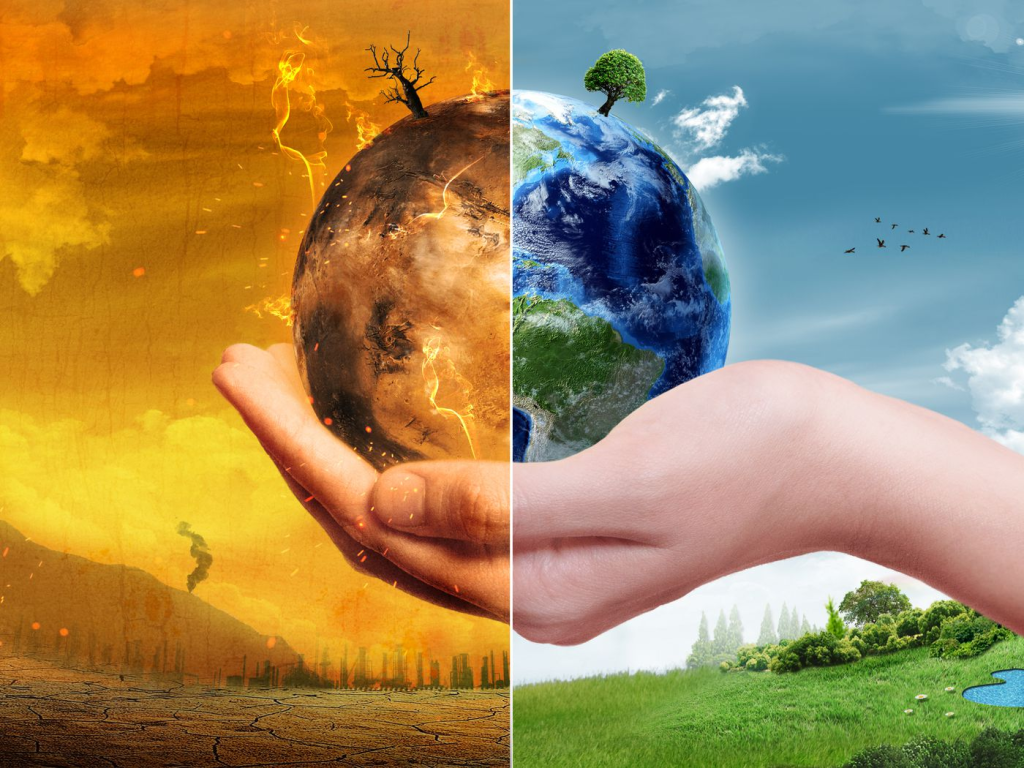
As far as Global Warming is concerned all governments of the world are also taking steps to reduce the emission of greenhouse gases. Countries around the world have recognized this problem and signed a pact in Paris called The Paris Agreement in 2015. They all pledged to reduce their carbon footprints. The Intergovernmental Panel on Climate Change (IPCC), has set a target of not increasing the temperature more than around 2 degrees Celcius and in the later years around 1.5 degrees.

Although everything is not going very well with this agreement. Recently, Donald Trump – president of the United Nations of America pulled out of this agreement citing that developing nations are not doing enough to control their Carbon emission and all the money is going in vain. On the other hand, developing nations like China have argued that developed nations like the United States of America have already developed their nations while polluting the planet. But, it’s now their turn to develop their country and they are doing their bit to curb the carbon emissions.

India is also doing their bit to control the carbon footprint. Under the leadership of the prime minister, Modi India is taking very active steps in the field of renewable energy. Many Solar panel power plants have been opened. Ujjwala scheme was launched to provide LPG connection to the poor which led to an increase in clean fuel consumption in the rural area. We have also been trying to increase our Forrest are by extensively planting trees.

One of the major steps we could take forward is to use renewable sources of energy. To run our home equipment we need to use Solar panels. The government also needs to find ways to use the green energy of electricity production through windmills, Solar panels, etc. We need to use public transport as much as possible. It will reduce the consumption of fuels and thus reduce greenhouse gases. Cycles can also be used for traveling a small distance. We know that while operating, refrigerators and air conditioners release ChloroFluoroCarbons(CFC). When released into the atmosphere they go and react with the ozone and creating a hole in the ozone layer. Through this hole, humans are now exposed to the ultraviolet rays which come with the sunlight.

Advertisements

Advertising plays a very important role in today’s age of competition. Advertising is one thing that has become a necessity for everybody in today’s day-to-day life, be it the producer, the traders, or the customer. Advertising is an important part. Advertising is important for the customers
Just imagine television or a newspaper or a radio channel without an advertisement! No, no one can any day imagine this. Advertising plays a very important role in customers’ life. Customers are the people who buy the product only after they are made aware of the products available in the market. If the product is not advertised, no customer will come to know what products are available and will not buy the product even if the product was for their benefit. One more thing is that advertising helps people find the best products for themselves, their kids, and their family. When they come to know about the range of products, they are able to compare the products and buy so that they get what they desire after spending their valuable money. Thus, advertising is important for the customers. Advertising is important for the seller and companies producing the products. Yes, advertising plays a very important role for the producers and the sellers of the products, because advertising helps increase sales, helps producers or companies to know their competitors and plan accordingly to meet up the level of competition.
If any company wants to introduce or launch a new product in the market, advertising will make a ground for the product. Advertising helps make people aware of the new product so that the consumers come and try the product.
Advertising helps create goodwill for the company and gains customer loyalty after reaching a mature age.
The demand for the product keeps on coming with the help of advertising and demand and supply become a never-ending process.
Advertising is important for the society
Advertising helps educate people. There are some social issues also which advertising deals with like child labour, liquor consumption, girl child killing, smoking, family planning education, etc. thus, advertising plays a very important role in society.

Pegasus Spyware

Recently, a global collaborative investigative effort titled the Pegasus project, revealed that Israeli company NSO Group’s Pegasus spyware targeted over 300 mobile phone numbers in India. As per reports, at least 40 journalists, Cabinet Ministers, and holders of constitutional positions were possibly subjected to surveillance. The reports are based on a leaked global database of 50,000 telephone numbers.

What is Pegasus?


It is spyware created by NSO Group, an Israeli cybersecurity firm founded in 2010.The NSO Group’s founders come from Unit 8200 – Israel’s elite defense force. It is also the Israel Defence Force’s largest military unit and probably the foremost technical intelligence agency in the world.Pegasus spyware can hack any iOS or Android device and steal a variety of data from the infected device.It works by sending an exploit link and if the target user clicks on the link, the malware or the code that allows the surveillance is installed on the user’s phone.Pegasus can be deleted remotely. It’s very hard to detect and once it’s deleted, leaves few traces.It can also be used to plant messages/mails which is why there are theories it may have been used to plant fake evidence to implicate activists in the Bhima Koregaon case.
Pegasus is designed for three main activities:
1 collection of historic data on  a device without user knowledge
 2 continuous  monitoring of activity and gathering of personal information and
3 transmission of this data to third parties.
Israel identifies Pegasus as a cyberweapon and claims that its exports are controlled.

Pegasus spyware has evolved from its earlier spear-phishing methods using text links or messages to ‘zero-click’ attacks which do not require any action from the phone’s user. It is the worrying aspect of spyware.

  • It helps spyware like Pegasus to gain control over a device without human interaction or human error.
  • Most of these attacks exploit software that receives data even before it can determine whether what is coming in is trustworthy or not, like an email client.
  • They are hard to detect given their nature and hence even harder to prevent. Detection becomes even harder in encrypted environments, where there is no visibility on the data packets being sent or received

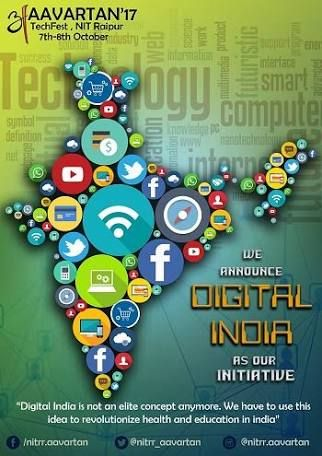
Digital India

Digital India is a massive campaign that the Government of India launched in the year 2015. The implementation of this would give easy access to government services in different regions of the country.

The “Digital India” campaign was launched by the government of India to uplift the usage of technology in India. The objective was to make Government services easily available to the citizens electronically by improving its online infrastructure all over the country. The process would be structured to increase internet connectivity to make the country digitally empowered. It helps to reach out to the masses and encourages them to use technology in their daily lives. Prime Minister Mr. Narendra Modi launched the campaign on July 1, 2015. The initiative aims at connecting rural India with the help of high-speed internet connectivity.

Those days are gone, when people had to stand in long queues and wait for months to get a single work done. No wonder, that technology today has made the life of people convenient. But a country like India could not have imagined a future like today a few years back. Six years back in time, the scenario was quite different as it is of today. The technology was there, but it was limited to only a small fraction of the country.

According to the prime minister of India, “technology first” is the focus of the government and it very well goes with the motto of “Power to empower”. The key vision of this government campaign is broadly divided into three heads:

  • E-Governance for all citizens of India
  • Digitally Empowering citizens
  • Providing a digital Infrastructure for all

The movement of Digital India was made possible with the help of top Industrialists and commerce companies in India like Wipro, Tata Industries, and Reliance Industries. The major concern was to make people use electronic services. Through the campaign of Digital India, the government targeted, e-services to cover more than 600 districts, with the help of major IT companies.

There are three components at the core of the “Digital India” campaign. 

  • Creation of Digital Infrastructure 

To be able to deploy various digital services across the country, it is necessary to create a strong digital infrastructure, especially in rural areas of the country. The interior regions of the country either have very little or mostly do not have any electronic network. This is the reason behind establishing a digital network across the country. Bharat Broadband Network Limited, the governmental body that is responsible for the execution of the National Optical Fiber Network project is responsible for the Digital India project as well. Bharat Net aims to connect 2,50,500 gram panchayats across the country to a high-speed internet network via an optical fiber network. 4,00,000 internet points will be established all across the country as part of the program, from which anybody will be able to access the internet. 

  • Delivery of Digital Service 

A major component of the Digital India campaign is to deliver government services and other essential services digitally. It is easier to change the way of delivering services from physical to digital. Many services of the Government of India were digitized under the Digital India Campaign. 

All ministries would be linked under this scheme, and all departments will be able to reach out to the people with fundamental services like health care, banking, education, scholarships, gas cylinders, water and electricity bills, and judicial services. The daily monetary transactions of people were also converted into digital mode. To ensure transparency in the transactions and curb corruption all the money transactions are being made online, and are supported by one-time passwords. 

  • Digital Literacy 

For full participation of the people of India, the competency that they need to have is called Digital Literacy. The basic behavior, knowledge, and skills required to effectively use digital devices are mandatory. Desktop PCs, laptops, tablets, and smartphones are the digital devices used for the purpose of communicating, expressing, collaborating, and advocating. The mission of Digital Literacy will be covering over six crore rural households. 

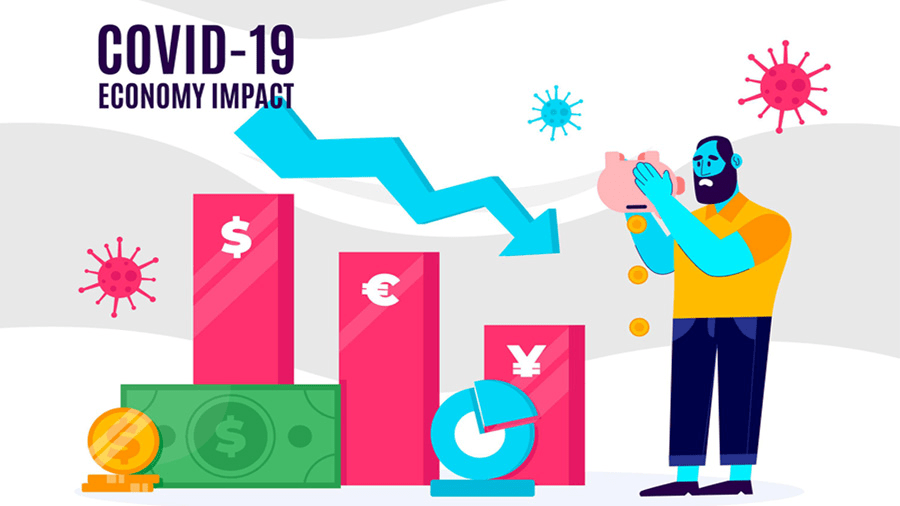
Impact of Covid-19 on India’s economy

The impact of the coronavirus pandemic on India has been largely disruptive in terms of economic activity as well as a loss of human lives. Almost all the sectors have been adversely affected as domestic demand and exports sharply plummeted with some notable exceptions where high growth was observed. India’s growth in the fourth quarter of the fiscal year 2020 went down to 3.1% according to the Ministry of Statistics. The Chief Economic Adviser to the Government of India said that this drop is mainly due to the coronavirus pandemic effect on the Indian economy. Notably, India had also been witnessing a pre-pandemic slowdown, and according to the World Bank, the current pandemic has “magnified pre-existing risks to India’s economic outlook”.

From April to June 2020, India’s GDP dropped by a massive 24.4%. According to the latest national income estimates, in the second quarter of the 2020/21 financial year (July to September 2020), the economy contracted by a further 7.4%. The recovery in the third and fourth quarters (October 2020 to March 2021) was still weak, with GDP rising 0.5% and 1.6%, respectively. This means that the overall rate of contraction in India was (in real terms) 7.3% for the whole 2020/21 financial year.

In the post-independence period, India’s national income has declined only four times before 2020 – in 1958, 1966, 1973, and 1980 – with the largest drop being in 1980 (5.2%). This means that 2020/21 is the worst year in terms of economic contraction in the country’s history, and much worse than the overall contraction in the world.

The Indian Oil & Gas industry is quite significant in the global context – it is the third-largest energy consumer only behind USA and Chine and contributes to 5.2% of the global oil demand. The complete lockdown across the country slowed down the demand for transport fuels (accounting for 2/3rd of demand in the oil & gas sector) as auto & industrial manufacturing declined and goods & passenger movement (both bulk & personal) fell. Though the crude prices dipped in this period, the government increased the excise and special excise duty to make up for the revenue loss, additionally, road cess was raised too. As a policy recommendation, the government may think of passing on the benefits of decreased crude prices to end consumers at retail outlets to stimulate demand.

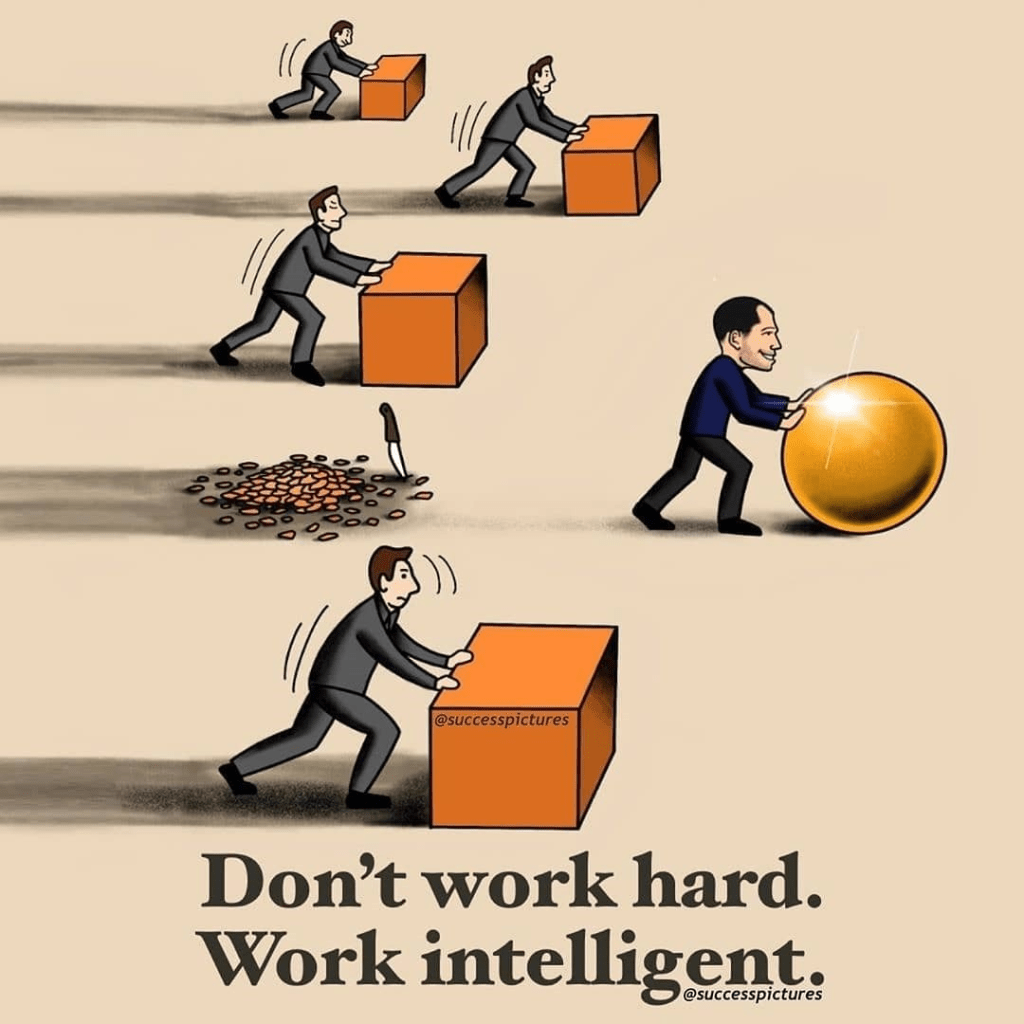
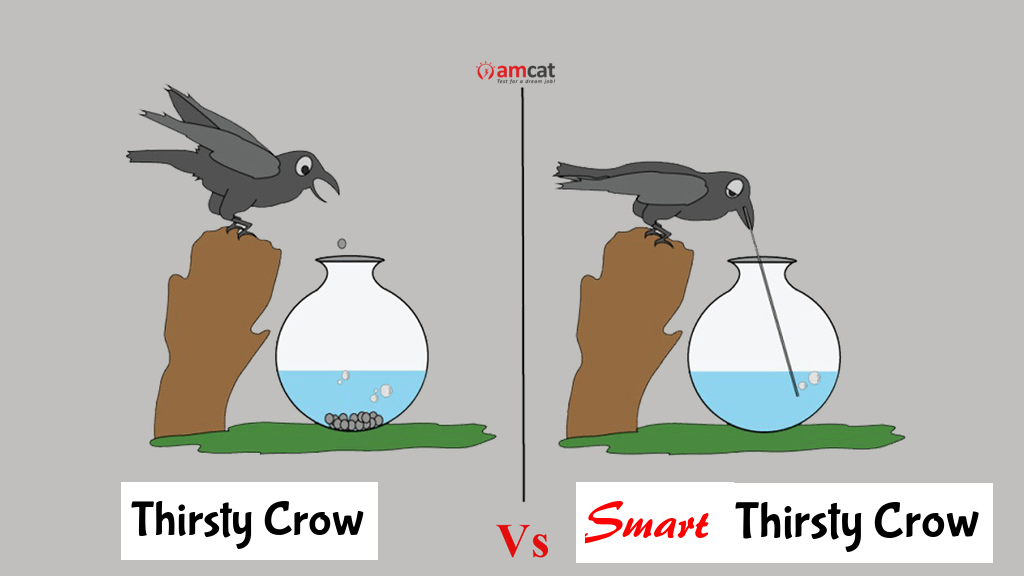
Hard Work V/S Smart Work

Working towards success needs a lot of planning before executing. Deciding on the right way to perform a task is inevitable. Smart Workers are people who use the right strategy to reach the endpoint easily. Hard workers are people who get noticed by everyone. In reality, both Smart Work and Hard Work are important to gain popularity in any field. Any person who has proven to be smart would have started his or her career / performed in examinations because of Hard work in the beginning. Hard Work, in fact, gives people more sense of curiosity to taste victory.

There have been phrases like “Hard Work pays off”, “Hard Work beats talent when talent doesn’t work hard”. But how good these hold true with today’s working world. The hard-working concept has grown so much that people have embedded this quality in them and know everyone has to do it when joining. But, with the technology improving and needs changing so does the requirement of the industry today too. We need smart work now with their usual work. Other than the requirement, it is a matter of personality. Not everyone is smart or not all can work hard.

  Smart work doesn’t mean taking shortcuts, taking out a midway. it’s all about solving the problem and solving it better. Hard Work is putting in the efforts to do a job and if required give it more. If you only work harder you get a good end product, a better sense of accomplishment, significantly more confidence in what you have done, and you receive much more respect for the work put forth. If only working smart then you finish faster, you may use fewer resources, though the end product isn’t as gratifying, your efforts aren’t seen as something of great value from onlookers. But the good ideas of saving money or time will be respected by the ones wearing the cufflinks and working really smart because they’e having you do the work.