Global Maritime India Summit, 2023

 The Union Minister of Ports, Shipping & Waterways and Ayush, Shri Sarbananda Sonowal launched the curtain raiser of Global Maritime India Summit (GIMS), 2023 in Mumbai today. The event is aimed at unlocking potential for new investment opportunities along with collaborations for knowledge and technology to enhance cooperation in trade and promote Ease of Doing Business (EODB). The event was attended by the Union Minister of State for Ports, Shipping & Waterways and Tourism, Shri Shripad Naik among others.
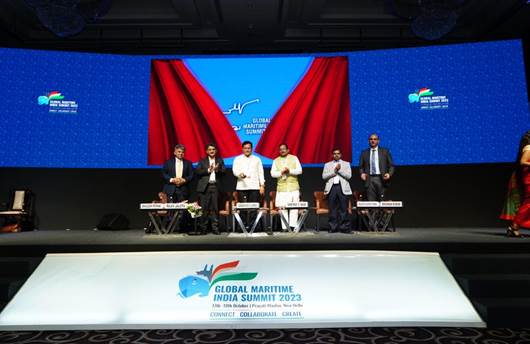
Addressing the Curtain Raiser for the upcoming Global Maritime India Summit 2023, Shri Sonowal emphasised the vital role of the maritime sector in India’s economic progression and the potential it holds for the Asia-Pacific region. “India can lead from the front,” said Sonowal. He added that India’s maritime sector is poised for growth, owing to proactive government policies around, ports, shipping and inland waterways.
The Minister said, “The huge potential of India’s marine sector can play a significant and pivotal role in elevating the economic cycle towards an Atmanirbhar Bharat by 2047 – a vision of our dynamic Prime Minister Shri Narendra Modi ji. As key driver of India’s maritime sector, our ministry has been organising the Global Maritime India Summit, to create value from the vast potential of India’s rich maritime sector. With an identified investment opportunities of more than ₹10 lakh crores in the maritime sector of the country, we are standing at a threshold of a major economic upswing which can generate employment opportunities for more than 15 lakhs youth of India. This summit has been designed to explore and examine riches of India’s Blue Economy. We hope that the best minds of maritime sector will hedge their goodwill, intent, intelligence and skills to produce a roadmap for a sustainable development of maritime sector as well as our country.”
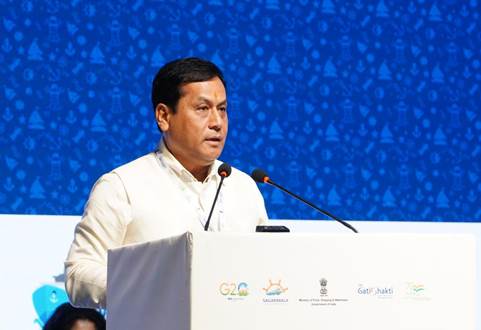
Shri Sonowal further added, “We invite all the maritime stakeholders in India and globally to be part of these investment opportunities. Under the visionary leadership of Prime Minister Shri Narendra Modi ji, India is spearheading the advancement of regional trade within BIMSTEC region, taking a prominent role in the development of various regional projects. India is actively driving the establishment of 5,000 km of multi-country waterways, a significant initiative that will effectively facilitate trade and transportation across the region.”
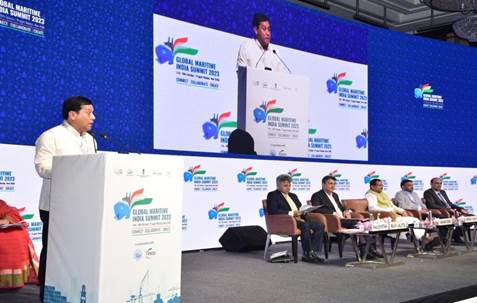
The curtain raiser event is aimed at creating a global forum of thought leaders as well as industry captains from maritime sector to harness the immense potential of Blue Economy and draw a roadmap to unlock value through creation of investment opportunities in the maritime sector of India. The forum will provide a platform for start-ups, researchers, incubators and innovators to showcase their technology & expertise. The focus areas of GMIS, 2023 are Ports of the Future; Decarbonization; Coastal Shipping & Inland Waterways Transportation; Shipbuilding, repair & recycling; Finance, Insurance & arbitration; Innovation & technology; Maritime Safety & Security and Maritime Tourism.

The Union Minister said, “India stands firmly on its commitment to developing environmentally conscious shipping solutions. Under the visionary leadership of Prime Minister Shri Narendra Modi ji, India proudly occupies the second rank in recycling worldwide, with a clear objective to ascend to the top position within the forthcoming two decades. To propel this vision, we plan to inaugurate carbon-neutral alternatives and boost the use of battery-powered vehicles and apparatus in our major ports. With a vast coastline and over 200 ports, India holds a strategic position in global trade. The country has made impressive strides under transformative initiatives like Sagarmala and the Prime Minister’s Gati Shakti National Master Plan, which have modernised port infrastructure, enhanced connectivity, and facilitated port-led industrialisation.”

Speaking on occasion, Shri Shripad Naik, said, “The Global Maritime India Summit 2023 represents a crucial milestone in our efforts to position India as a global maritime hub. Through collaborative discussions and strategic partnerships, we aim to propel our maritime sector towards sustainable growth, bolstered by innovation and cutting-edge technology.”

Shri Rajiv Jalota, Chairman, Indian Ports Association & Mumbai Port Authority; Shri Rajesh Kumar Sinha, Additional Secretary, Ministry of Ports, Shipping and Waterways; Shri Bhushan Kumar, Joint Secretary (SM), Ministry of Ports, Shipping and Waterways; Shri Rajesh Tandon, CEO, Foreign Owners Representative, Ship Managers Association; Shri Anil Devli, CEO, Indian National Shipowners Association; Shri Dhruv Kotak, Chairman, Ports & Shipping, FICCI Committee on Transport Infrastructure & MD, JM Baxi Group along with Shri Shailesh Pathak, Secretary General, FICCI also spoke on the occasion.

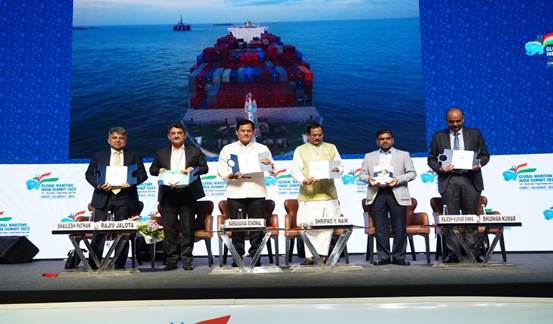
The curtain raiser concluded with the unveiling of the official GMIS 2023 brochure and the launch of the event’s website and mobile app to provide a comprehensive overview of the summit’s agenda and thematic sessions and will serve as essential resources for participants.

About Global Maritime India Summit (GMIS), 2023:
GMIS 2023 is a premier maritime sector focussed event to bring together pivotal figures from the industry to explore opportunities, understand challenges, and stimulate investment within India’s maritime sector. Building upon the legacy of its preceding editions, this third instalment aims to unveil broader prospects for domestic and international maritime stakeholders and investors. Ready to make its presence felt on the global stage, and spotlight India’s maritime industry, the Maritime India Summit has now evolved to the ‘Global’ Maritime India Summit this year. The summit is slated for 17th to 19th October 2023, at Pragati Maidan, New Delhi, with FICCI as the exclusive industry partner.

For more details on the Global Maritime India Summit 2023, including a complete agenda and registration details, please visit the official website at www.maritimeindiasummit.com

*****

PRESIDENT OF INDIA PRESENTS BHOOMI SAMMAN 2023

 The President of India, Smt Droupadi Murmu presented the “Bhoomi Samman” 2023 at a function organised by the Union Ministry of Rural Development in New Delhi today (July 18, 2023). The awards were received by State Secretaries and District Collectors along with their teams who have excelled in achieving saturation of the core components of Digital India Land Records Modernization Programme (DILRMP).

Speaking on the occasion, the President said that acceleration of rural development is essential for the overall development of the country. For the development of rural areas, modernization of land records is a basic requirement as the livelihood of most of the rural population is dependent on land resources. A comprehensive integrated land management system is of utmost importance for the overall development of rural areas.

The President said that digitization increases transparency. The modernization and digitization of land records would have a great impact on the development of the country. Digitization of land records and its linkages with various government departments would help in proper implementation of welfare schemes. It would also be of great help in case of loss of documents due to calamities like flood and fire.

The President was happy to note that under the Digital India Land Information Management System, a Unique Land Parcel Identification Number is being provided which could be useful like Aadhaar Card. She stated that this number would help in making proper use of the lands as well as forming and implementing new welfare schemes. Linking of E-Courts with land records and registration data-base would have many benefits. The transparency that is coming from digitization would curb unethical and illegal activities related to land.

The President said that access to land related information in a free and convenient manner would have many benefits. For example, it would help in resolving disputes related to ownership and use of land. She stated that a large population of our country is involved in disputes related to land and a lot of time of the administration and the judiciary is consumed in these matters. Through digitization and linkages of information, the energy of the people and institutions, which gets consumed in resolving disputes, would be utilized for development.


Please click here to see the President’s Speech

Planning and Management in Companies

 by Shashikant Nishant Sharma 

Planning and management play crucial roles in the growth and success of a company. Here are some ways in which planning and management can help a company in its growth:

Setting Clear Goals: Effective planning and management involve setting clear and achievable goals for the company. These goals provide direction and focus, enabling the company to work towards specific objectives. By defining growth targets and milestones, planning and management help align the efforts of employees and resources towards the company’s expansion.

Strategic Decision-making: Planning and management facilitate strategic decision-making processes. They involve assessing market trends, analyzing competition, and identifying opportunities for growth. Through comprehensive planning and effective management, a company can make informed decisions regarding product development, market entry, expansion strategies, and resource allocation.

Resource Allocation: Planning and management help allocate resources effectively, ensuring they are used efficiently to support growth. This includes managing financial resources, human capital, technology, and other assets. By carefully planning and managing resources, a company can optimize its operations, streamline processes, and minimize waste, ultimately contributing to its growth.

Risk Management: Planning and management involve identifying and managing risks that may impede growth. By conducting thorough risk assessments, developing contingency plans, and implementing risk mitigation strategies, a company can navigate uncertainties and minimize potential setbacks. Effective risk management enables the company to seize opportunities while safeguarding its assets and reputation.

Organizational Structure and Alignment: Planning and management play a critical role in establishing and maintaining an effective organizational structure. They define roles, responsibilities, and reporting lines, ensuring clarity and alignment within the company. A well-structured organization promotes efficient communication, collaboration, and coordination, enabling the company to adapt to growth and scale operations effectively.

Monitoring and Evaluation: Planning and management involve continuous monitoring and evaluation of the company’s performance. By setting key performance indicators (KPIs) and regularly assessing progress, management can identify areas for improvement and take corrective actions. This data-driven approach enables the company to optimize processes, capitalize on growth opportunities, and adapt strategies as needed.

Adaptability and Flexibility: Effective planning and management foster adaptability and flexibility, crucial traits for sustained growth. Companies that can adjust their plans and strategies based on changing market conditions and customer needs are more likely to thrive. By regularly reviewing and updating plans, management can ensure the company remains responsive to evolving trends and remains agile in its operations.

In summary, planning and management provide a structured approach to growth by setting clear goals, making strategic decisions, optimizing resource allocation, managing risks, establishing organizational structures, monitoring performance, and promoting adaptability. By leveraging these practices, companies can position themselves for sustainable growth and long-term success.

Seminar on the ‘Role of Key Constitutional Functionaries of Rajasthan Legislature in Strengthening Democracy’ At Jaipur

 The President of India, Smt Droupadi Murmu addressed a seminar on the ‘Role of key constitutional functionaries of Rajasthan Legislature in Strengthening Democracy’ at Jaipur this evening (July 14, 2023). This Seminar was organized by the Rajasthan Legislative Assembly under the auspices of the Commonwealth Parliamentary Association (Rajasthan Branch) to celebrate the birth centenary of Shri Bhairon Singh Shekhawat. 

Speaking on the occasion, the President said that Shri Bhairon Singh Shekhawat has left an indelible mark of his towering personality not only in the politics of Rajasthan but the whole country. As the Chief Minister of Rajasthan, he envisioned and implemented many schemes for the development of the state and for the welfare of people. As the Vice-President of India, he carried out the high traditions of the Indian Parliament and also enriched them. He played an important role in shaping the destiny of Rajasthan and the country. His ideals are exemplary for all the people’s representatives of our country.

The President said that the democratic system in India is continuously getting stronger. Our country has been moving forward in its developmental journey with democratic methods while incorporating the world’s largest diversity. During the 75 years since independence, our country has kept its democratic values strong while facing all the challenges. She said that the biggest proof of the vibrancy of our democracy is the general elections. In the 17th Lok Sabha elections in 2019, 61.3 crore voters used their franchise, which was a record. She noted that for the first time, the number of women parliamentarians has crossed the 100 mark. She expressed confidence that this number would increase further.

The President said that in our democratic system, representation has been provided to all the people of society, especially the backward and weaker sections and women. The Panchayati Raj system is playing a fundamental role in our democracy. Today, out of more than 31.5 lakh elected representatives in more than 2.75 lakh local rural bodies, 46 percent are women.

The President said that the people of Rajasthan as well as their representatives have played an important role in the success of Indian democracy. She was confident that the people of Rajasthan would strengthen the values of parliamentary democracy and would continue to contribute in the development of the state and the country.

Please click here to see the President’s Speech


*****

Top Ten Professional Courses to Undertake

Top ten professional courses across various fields that are highly regarded and can enhance your career prospects:
Project Management Professional (PMP): The PMP certification is recognized globally and is ideal for professionals involved in project management. It provides comprehensive knowledge and skills in project planning, execution, monitoring, and closure. PMP certification demonstrates your ability to lead and manage projects effectively, making you highly sought after in industries such as construction, IT, healthcare, and finance.

Certified Public Accountant (CPA): CPA is a prestigious qualification for individuals aiming to pursue a career in accounting and finance. It covers various aspects of financial accounting, auditing, taxation, and business regulations. A CPA certification enhances your credibility as an accountant and opens doors to lucrative job opportunities in public accounting firms, corporate finance, and consulting.
Certified Information Systems Security Professional (CISSP): CISSP is a widely recognized certification for professionals involved in information security and cybersecurity. It validates your expertise in areas such as security architecture, risk management, cryptography, and network security. CISSP certification is highly valued by organizations seeking professionals to protect their critical information and systems from cyber threats.
Six Sigma: Six Sigma is a data-driven methodology used to improve business processes and reduce defects. It equips professionals with problem-solving skills and statistical tools to identify and eliminate process inefficiencies. Six Sigma certifications, such as Green Belt and Black Belt, are beneficial for individuals in quality management, operations, and process improvement roles across industries.
Certified Human Resources Professional (CHRP): CHRP certification is designed for HR professionals seeking to enhance their knowledge and skills in various HR functions. It covers areas such as talent acquisition, employee relations, compensation, and organizational development. A CHRP certification demonstrates your expertise in HR practices and can lead to better job prospects and career advancement in the field of human resources.
Certified Digital Marketing Professional (CDMP): With the rapid growth of digital marketing, CDMP certification offers valuable skills in online advertising, social media marketing, search engine optimization (SEO), and web analytics. It equips professionals with the knowledge and strategies to effectively promote products and services in the digital landscape. CDMP certification is beneficial for marketing professionals and entrepreneurs looking to thrive in the digital era.
Certified Supply Chain Professional (CSCP): CSCP certification focuses on the principles and practices of supply chain management. It covers topics such as logistics, inventory management, demand planning, and supplier relationship management. CSCP certification is highly regarded in the field of operations and supply chain, opening up opportunities in manufacturing, retail, logistics, and consulting.
Chartered Financial Analyst (CFA): CFA is a globally recognized certification for finance professionals, particularly in the investment management industry. It provides in-depth knowledge of investment analysis, portfolio management, ethical standards, and financial modeling. CFA certification is highly respected and can lead to career advancement in areas such as investment banking, asset management, and financial research.
Certified Data Scientist (CDS): CDS certification focuses on the application of data science techniques and tools to extract meaningful insights from large datasets. It covers areas such as data preprocessing, machine learning, data visualization, and predictive modeling. CDS certification is beneficial for professionals in data analytics, business intelligence, and data-driven decision-making roles.
Certified Professional in Healthcare Quality (CPHQ): CPHQ certification is designed for professionals involved in healthcare quality improvement and patient safety. It covers topics such as healthcare regulations, quality measurement, performance improvement methodologies, and patient-centered care. CPHQ certification is valuable for healthcare professionals seeking to enhance their skills in quality management and contribute to improving healthcare outcomes.
These ten professional courses span a range of industries and disciplines, providing opportunities for career growth and specialization. Remember to research the specific requirements, eligibility criteria, and accreditation bodies associated with each certification to determine the best fit for your career goals.

VeChain: Revolutionizing Supply Chain Management

 In today’s fast-paced and globalized world, supply chain management plays a critical role in ensuring the efficient flow of goods and services. However, traditional supply chain systems often lack transparency, traceability, and accountability. This is where Bitcoin Era, which is an Online trading platform, comes into the picture. VeChain is a blockchain-based platform that leverages the power of distributed ledger technology to revolutionize supply chain management. If you want to invest in Bitcoin then you can visit online trading platforms like https://immediate-booster.io/

The Power of VeChain

VeChain is an innovative platform that merges blockchain technology with the Internet of Things (IoT) to create a secure and efficient ecosystem for supply chain management. By leveraging a decentralized ledger, VeChain allows businesses to track and verify every step of the supply chain process, from the sourcing of raw materials to manufacturing, distribution, and retail. This transparency and traceability enable businesses to identify bottlenecks, optimize processes, and ensure the authenticity of products.

Photo by Alesia Kozik on Pexels.com

The integration of IoT with VeChain further enhances its capabilities. By connecting physical assets to the digital realm, VeChain enables real-time data collection and analysis, leading to improved automation and operational efficiency. Additionally, the use of blockchain technology ensures the security and immutability of the recorded data, protecting against counterfeit products and fraudulent activities. Overall, VeChain revolutionizes supply chain management by providing a reliable and transparent system that fosters trust among stakeholders and enables businesses to make informed decisions for a more efficient supply chain.

Enhancing Transparency

One of the key features of VeChain is its ability to enhance transparency within the supply chain. By recording every transaction and interaction on the blockchain, VeChain ensures that all stakeholders have access to accurate and real-time information. This transparency not only promotes trust and accountability but also helps to identify and mitigate issues such as counterfeit products and supply chain inefficiencies.

Ensuring Product Authenticity

Counterfeit products pose a significant challenge for businesses across various industries. They not only erode brand value but also compromise consumer safety. VeChain tackles this problem by assigning a unique digital identity to each product on its platform. This digital identity is stored on the blockchain and contains detailed information about the product’s origin, manufacturing process, and distribution history. By scanning a product’s QR code, consumers can easily verify its authenticity and make informed purchasing decisions.

Supply Chain Optimization

VeChain’s blockchain technology allows businesses to optimize their supply chain operations by streamlining processes, reducing costs, and minimizing waste. Smart contracts, powered by VeChain’s blockchain, enable automated and trustless transactions, eliminating the need for intermediaries and reducing administrative burdens. This efficiency not only saves time and resources but also enhances overall supply chain performance.

Sustainability and Social Responsibility

In addition to enhancing operational efficiency, VeChain also promotes sustainability and social responsibility within supply chains. By providing a transparent and traceable platform, VeChain enables businesses to monitor and improve their environmental and social impact. This is particularly crucial in industries such as fashion, food, and pharmaceuticals, where ethical sourcing and production practices are of utmost importance.

Real-World Applications

VeChain has gained significant traction across various industries due to its practical and scalable applications. Here are some real-world examples of how VeChain is revolutionizing supply chain management:

  • Luxury Goods

VeChain’s technology has been adopted by luxury brands to combat counterfeiting. By using VeChain’s platform, consumers can verify the authenticity and origin of high-end products, ensuring that they are purchasing genuine items.

  • Food Safety

VeChain’s blockchain provides a transparent and tamper-proof system for tracking food products from farm to table. This enables consumers to trace the entire journey of their food, ensuring its safety, quality, and ethical sourcing.

  • Pharmaceutical Industry

VeChain’s platform is being used to track and authenticate pharmaceutical products, reducing the risk of counterfeit medicines entering the market. This enhances patient safety and ensures the integrity of the pharmaceutical supply chain.

  • Automotive Industry

Automobile manufacturers are leveraging VeChain to create digital passports for vehicles, storing information about manufacturing, maintenance, and ownership history. This improves trust, facilitates second-hand car sales, and reduces the risk of odometer fraud.

Conclusion

VeChain is revolutionizing supply chain management by harnessing the power of blockchain technology. With its transparent and traceable ecosystem, VeChain enhances transparency, ensures product authenticity, optimizes supply chain operations,and promotes sustainability within supply chains. The real-world applications of VeChain span across various industries, including luxury goods, food safety, pharmaceuticals, and the automotive sector.By leveraging VeChain’s blockchain platform, businesses can gain a competitive edge by providing consumers with trusted and verifiable information about their products. This transparency builds brand trust and loyalty while mitigating risks associated with counterfeit goods and unethical practices.

INTERNATIONAL CONFERENCE ON CURRENT POLICY AND ADMINISTRATIVE RESEARCH TRENDS (2023ICCPART)

 The Presentation Session-1 of the 2023 International Conference on Current Policy and Administrative Research Trends (2023ICCPART) was held on Sunday, July 9th, 2023, from 3:00 PM to 6:00 PM Central European Time (CET) (6:30 PM to 9:30 PM Indian Standard Time – IST). The theme of the session was “Current Trends in Public Policy and Public Administration Research.” The session aimed to explore policy innovation, sustainable governance, and innovations in public administration in a changing world.


The session was chaired by Prof. Inderjeet Singh Sodhi, Professor & Head of the Department of Public Administration, Rajiv Gandhi National Institute of Youth Development, Sriperumbudur, India, and co-chaired by Prof. Sabu Thomas, Professor in Political Science, University of Calicut, Kerala, India.

The moderation for the session was handled by Dr Saurabh Chandra, Assistant Professor of Public Administration, Department of Public Administration, Assam Don Bosco University, Guwahati, Assam, India, along with Dr Meera Rajeev Kumar, Assistant Professor, Department of Public Administration, Madras Christian College, East Tambaram, Chennai, Tamil Nadu, India.

The activities during the session proceeded as follows:

  1. Opening Ceremony: Dr Saurabh Chandra welcomed all the dignitaries and Dr Meera Rajeev Kumar set the tone and objectives for the session.
  2. Address by the Chair: Prof. Inderjeet Singh Sodhi delivered a keynote address as the session chair.
  3. Address by the Co-Chair: Prof. Sabu Thomas, Professor in Political Science, University of Calicut, Kerala, India.
  4. Paper Presentation: Dr Vijayetta Sharma, Associate Professor, Public Policy School of Behavioral and Social Sciences, Manav Rachna International Institute of Research and Studies (MRIIRS), Faridabad, Haryana, India, presented a paper on the topic: “Maternal health in Punjab: Policy response to post-natal care interventions under Janani Suraksha Yojana.”
  5. Paper Presentation: Neha Katoch, Research Scholar (JRF), Deptt. of Public Administration, Panjab University, Chandigarh, Punjab, India, presented a paper on the topic: “Evaluation of the Pradhan Mantri Matru Vandana Yojana: Addressing Maternal Health and Empowerment.”
  6. Paper Presentation: Haritha Surap, ICSSR Doctoral Fellow, Department of Public Administration, Osmania University, Hyderabad, India, and Dr Ravinder Kaur, Professor (Retired), Department of Public Administration, Osmania University, Hyderabad, India, presented a paper titled: “Influence of Socio-Economic and Cultural Factors on Women’s Health in India: An Overview.”
  7. Paper Presentation: Dr Vasantha Gouri, Assistant Professor, Shri Vaishnav Vidyapeeth Vishwavidyalaya, Indore, Madhya Pradesh, India, presented a paper on the topic: “Handling Natural Disasters and Resilience Building: A Study in South Asia.”
  8. Paper Presentation: Dr A. Amudha, Assistant Professor, Post Graduate and Research Department of Public Administration, Anna Adarsh College for Women, Chennai, Tamil Nadu, India, presented a paper on the topic: “Social Inclusion Perspectives of Indian Medical Education under the NEET System.”
  9. Q&A Sessions: Participants had the opportunity to ask questions to the paper presenters during this session.
  10. Closing Ceremony: Prof. Inderjeet Singh Sodhi, the session chair, delivered the closing remarks and offered a vote of thanks.

The 2023ICCPART Presentation Session-1 provided valuable insights into current trends in public policy and public administration research. The session’s speakers shared their expertise and research findings, contributing to a better understanding of policy innovation, sustainable governance, and the complexities of public administration in a changing world.

Mastering the Research with Copy AI

Copy AI, an innovative technology powered by artificial intelligence, has revolutionized the world of content creation. With its ability to generate high-quality and engaging written material, Copy AI has become an invaluable tool for individuals, businesses, and content creators. However, to make the most of this powerful resource, it is important to understand how to use it effectively and responsibly. In this essay, we will explore some essential guidelines for utilizing Copy AI to produce exceptional content.

  1. Understand the Purpose:
    Before utilizing Copy AI, it is crucial to clearly define the purpose of the content you wish to create. Whether it is a blog post, social media copy, product description, or email newsletter, having a well-defined objective will help you provide the necessary instructions to the AI model. Understanding the desired tone, target audience, and key messaging will ensure that the generated content aligns with your intentions.

  2. Craft Clear and Specific Prompts:
    When interacting with Copy AI, formulating clear and specific prompts is essential. Provide the AI with a concise description of what you want the content to focus on, the desired length, and any specific keywords or phrases you want to include. Giving the AI precise instructions will yield more accurate and relevant results, saving you time and effort in the editing process.

  3. Collaborate with the AI:
    Copy AI should be viewed as a collaborative tool rather than a replacement for human creativity. While it can generate impressive content, it is still essential to review and refine the output. Treat the AI-generated text as a starting point and apply your expertise, creativity, and personal touch to enhance and personalize the content. Edit, rephrase, and add your unique perspective to make the content truly yours.

  4. Experiment and Iterate:
    Copy AI is a dynamic tool that improves with experimentation and iteration. Don’t hesitate to try different prompts, approaches, and variations to find the best fit for your needs. Use the feedback loop to learn from the AI’s output and refine your instructions accordingly. By continuously experimenting and refining, you will develop a deeper understanding of how to optimize your engagement with Copy AI.

  5. Maintain Ethical Standards:
    As with any technology, responsible usage is paramount. While Copy AI provides immense convenience, it is essential to use it ethically. Avoid generating content that is plagiarized or infringes upon intellectual property rights. Respect copyright laws, give proper attribution when necessary, and ensure that the content generated by Copy AI is aligned with ethical and legal guidelines.

  6. Continuously Learn and Adapt:
    The field of artificial intelligence is evolving rapidly, and Copy AI is no exception. Stay updated with the latest advancements, features, and guidelines provided by the developers. Regularly visit the platform’s documentation, attend webinars or workshops, and engage with the community to learn from others’ experiences and discover new strategies for maximizing the potential of Copy AI.

Conclusion:
Copy AI is a remarkable tool that empowers individuals and businesses to create compelling and engaging content. By following the guidelines outlined in this essay, you can harness the true potential of Copy AI to enhance your productivity and creativity. Remember to approach Copy AI as a collaborative partner, exercise responsible usage, and continuously adapt your strategies. With these practices in place, Copy AI becomes a valuable asset that can unlock new possibilities and help you excel in content creation.

AuthorAID is an online platform

AuthorAID is an online platform and global research community that provides support and resources for researchers and writers, particularly those from developing countries. It was established in 2007 by INASP (International Network for the Availability of Scientific Publications), an international development organization focused on strengthening research and knowledge systems in developing countries.

The primary goal of AuthorAID is to enhance the quality and visibility of research from low- and middle-income countries (LMICs) by offering support and training to researchers, particularly those who face barriers to publishing their work in international journals. The platform achieves this through various means, including online resources, mentoring, workshops, and networking opportunities.
One of the key features of AuthorAID is its online platform, which serves as a hub for researchers to access a wide range of resources. These resources include e-learning courses, writing guides, interactive forums, and webinars on various aspects of research communication. The platform also hosts a directory of mentors who are experienced researchers and writers willing to provide guidance and support to their peers from LMICs.
AuthorAID organizes workshops and training sessions in collaboration with institutions and organizations worldwide. These capacity-building events focus on topics such as research writing, grant proposal development, data analysis, and publication ethics. Workshops are typically conducted by experienced trainers and mentors who help participants develop their research and writing skills, increasing their chances of successfully publishing their work.
Furthermore, AuthorAID fosters a vibrant and inclusive research community by encouraging collaboration and networking among its members. Researchers from different disciplines and regions can connect with each other through the online platform, exchange knowledge and ideas, and establish valuable professional relationships. This global network allows researchers to expand their research networks, find potential collaborators, and gain exposure to diverse perspectives and expertise.
Over the years, AuthorAID has made significant contributions to improving the research output and visibility of scholars from LMICs. By addressing the specific challenges faced by researchers in these countries, the platform helps bridge the gap between local research efforts and the global scientific community. The support and resources provided by AuthorAID have empowered countless researchers to overcome barriers, enhance the quality of their work, and increase its impact.
In summary, AuthorAID is an invaluable resource for researchers and writers from developing countries, offering support, training, and networking opportunities to enhance the quality and visibility of their research. By empowering researchers with the skills and knowledge needed for effective research communication, AuthorAID plays a crucial role in bridging the research divide and promoting equitable global knowledge exchange.

 main:-

    enter(monkey,room).

enter(monkey,room):-

    write(“Monkey enters the room”),nl,

    checkheight(monkey,banana).

checkheight(monkey,banana):-

    write(“Monkey cannot reach the banana”),nl,

    move(monkey,left).

move(monkey,left):-

    write(“Monkey moves towards the chair”),nl,

    push(monkey,chair).

push(monkey,chair):-

    write(“Monkey pushes the chair towards banana”),nl,

    place(monkey,chair).

place(monkey,chair):-

    write(“Monkey places the chair below banana”),nl,

    climb(monkey,chair).

climb(monkey,chair):-

    write(“monkey climbs the chair”),nl,

    function(check).

function(check):-

    write(‘Enter height of the room’),

    read(H1),

    write(‘enter height of the chair’),

    read(H2),

    write(‘enter height of monkey’),

    read(H3),

B is H2 + H3, check(H1,B). gets(monkey,stick):-

    write(“Monkey Move Towards The Stick”),nl, 

    write(“Monkey Gets The Stick and Climbs Again”),nl,

write(‘Enter Height of Room: ‘),

read(N1),

 write(‘Enter Height of Chair: ‘),

read(N2),

 write(‘Enter Height of Monkey: ‘),

read(N3),

 write(‘Enter Height of Stick: ‘),

read(N4),

 SUM is N2+N3+N4,

check(N1,SUM). check(A,B):-

(

 A>B-> write(“Monkey Still Cannot Reach The

Banana”),nl, gets(monkey,stick);

A

 write(“Monkey Ate The Banana”);

A=B-> write(“Monkey Ate The

Banana”)

    ).

from collections import defaultdict
visited = defaultdict(lambda: False)
jug1=int(input(“Enter Capacity of Jug 1 : “))
jug2=int(input(“Enter Capacity of Jug 2 : “))
aim=int(input(“Enter Goal : “))
def waterJugSolver(amt1,amt2):
if (amt1 == aim and amt2 == 0) or (amt2 == aim and amt1 == 0):
print(amt1, amt2)
return True
if visited[(amt1, amt2)] == False:
print(amt1, amt2)
visited[(amt1, amt2)] = True
return (waterJugSolver(0, amt2) or
waterJugSolver(amt1, 0) or
waterJugSolver(jug1, amt2) or
waterJugSolver(amt1, jug2) or
waterJugSolver(amt1 + min(amt2, (jug1-amt1)),
amt2 – min(amt2, (jug1-amt1))) or
waterJugSolver(amt1 – min(amt1, (jug2-amt2)),
amt2 + min(amt1, (jug2-amt2))))
else:
return False
print(“Steps: “)
waterJugSolver(0,0)

Popular Ethereum Development Tools for Newbies: An Overview

 As a beginner, it can be overwhelming to choose the right framework to kickstart your journey. This comprehensive overview explores popular Ethereum development frameworks, including Truffle, Embark, Hardhat, and Brownie, providing insights into their features, benefits, and use cases. It’s also beneficial to understand how Ethereum’s trading market operates. You can explore the tradding app which offers insights into market trends and dynamics!

Exploring Popular Ethereum Development Frameworks

Photo by Alesia Kozik on Pexels.com

Truffle is a widely used Ethereum development framework that simplifies the process of building decentralized applications (DApps) on the Ethereum blockchain. It offers a comprehensive suite of tools and libraries that streamline smart contract development, testing, and deployment. With Truffle, developers can quickly write, compile, and deploy smart contracts, making it an ideal choice for beginners. One of the key features of Truffle is its built-in testing framework, which allows developers to write automated tests for their smart contracts. This ensures the reliability and security of the code. 

Embark is another popular Ethereum development framework that focuses on rapid prototyping and DApp deployment. It offers a simplified development workflow, making it easier for beginners to get started with Ethereum development. Embark provides a built-in development server that allows developers to quickly preview their DApps in a local environment. With Embark, developers can easily integrate decentralized technologies, such as IPFS (InterPlanetary File System) and Whisper, into their DApps. This framework also supports automated deployment to different Ethereum networks, making it convenient for deploying DApps to testnets or the mainnet.

Hardhat is a developer-friendly Ethereum toolkit that offers a powerful and extensible development environment. It provides a wide range of features and plugins that enhance the development workflow and facilitate smart contract testing and deployment. Hardhat supports TypeScript, making it a preferred choice for developers who prefer statically typed languages. One of the notable features of Hardhat is its integration with popular testing frameworks like Mocha and Chai, enabling developers to write comprehensive tests for their smart contracts. It also offers built-in support for debugging, gas estimation, and contract interaction, making the development process more efficient.

Brownie is a Python-based Ethereum development framework that aims to simplify smart contract development and testing. It offers a high-level and intuitive API that allows developers to write Ethereum contracts and scripts using Python syntax. This makes it an attractive choice for Python developers who want to venture into blockchain development. Brownie provides a range of built-in utilities for contract deployment, testing, and interaction. It integrates with popular Ethereum development tools like Ganache and Metamask, enabling seamless deployment and testing in a local environment. The framework also supports network management, making it easy to switch between different Ethereum networks.

Best Practices for Getting Started with Ethereum Development Frameworks

When starting your journey into Ethereum development using frameworks, it’s important to follow some best practices to ensure a smooth and productive experience. These practices will help you set up your development environment, write efficient and secure smart contracts, and interact with the Ethereum network effectively.

Before diving into Ethereum development, it’s crucial to set up a reliable and optimized development environment. This involves installing the necessary software tools, such as Node.js and a code editor of your choice. Additionally, you’ll need to install the specific Ethereum development framework you’ve chosen, whether it’s Truffle, Embark, Hardhat, or Brownie. Follow the framework’s documentation to properly configure and initialize your development environment.

When writing smart contracts, it’s essential to follow best practices for security and efficiency. Familiarize yourself with Solidity, the programming language used for Ethereum smart contracts, and its best practices. Ensure that your smart contracts follow secure coding principles, such as input validation and protection against common vulnerabilities like reentrancy attacks. Writing unit tests for your smart contracts is another crucial aspect of Ethereum development. Use the testing capabilities provided by your chosen framework to write comprehensive and automated tests. 

Deploying your smart contracts to the Ethereum network requires careful consideration. Make sure you’re deploying to the appropriate network, whether it’s a testnet for development and testing purposes or the mainnet for production deployment. Configure the deployment parameters, such as gas limits and transaction fees, according to your project requirements. Interacting with the Ethereum network involves sending transactions and interacting with deployed smart contracts. Familiarize yourself with the framework provided tools and APIs for contract interaction. 

Conclusion

Whether you opt for Truffle’s simplicity, Embark’s rapid prototyping capabilities, Hardhat’s developer-friendly toolkit, or Brownie’s Python-based approach, each framework offers unique features and benefits tailored to different developer preferences and project requirements. By embracing these frameworks and following best practices for Ethereum development, beginners can unlock their potential to contribute to the ever-growing Ethereum ecosystem and create innovative decentralized applications.

The Impact of Climate Change on Oil Trading

 Climate change has been a widely discussed topic over the past few decades due to its significant impact on various aspects of our lives. The effects of climate change are global and affect not only the environment but also our economies, including the trading of commodities such as oil. If anyone is interested in trading oil, they can click here.

As one of the largest global markets, the oil trading industry is particularly vulnerable to the impact of climate change. The rising temperatures, extreme weather conditions, and changing sea levels all affect the production, transportation, and trading of oil. These factors can cause disruptions in supply chains, increase operational costs, and pose risks to the safety and health of workers in the industry.

Photo by Jonathan Borba on Pexels.com

To mitigate the effects of climate change, the oil trading industry is taking measures to become more sustainable. Many companies are investing in renewable energy sources, such as wind and solar power, to reduce their carbon emissions. Others are exploring new technologies, such as carbon capture and storage, to reduce their carbon footprint..

The Link Between Climate Change and Oil Trading

The relationship between climate change and oil trading is multi-faceted and intricate. On one hand, the production and consumption of oil are major contributors to greenhouse gas emissions, which are the primary cause of climate change. On the other hand, climate change is also having a significant impact on oil trading in several ways.

One of the most notable effects of climate change on oil trading is the growing demand for renewable energy sources. As more countries and companies are committing to reducing their carbon footprint, the demand for oil is expected to decline in the upcoming years. This shift in demand is already being felt in the oil industry, with many companies diversifying their investments to include renewable energy sources.

Another impact of climate change on oil trading is the escalating risk of supply chain disruptions due to extreme weather events. Storms, floods, and wildfires can damage oil infrastructure and disrupt transportation routes, affecting the supply of oil and leading to higher prices. This vulnerability of the oil industry to climate-related disruptions highlights the need for proactive measures to manage risks associated with climate change.

The Response of the Oil Industry

The oil industry is facing mounting pressure to address its impact on climate change, and many companies have committed to reducing their carbon footprint and transitioning to a more sustainable future. In response, the industry is investing in renewable energy sources as one way to combat climate change.

Oil companies are now diversifying their portfolios to include solar, wind, and other forms of renewable energy. This shift is driven not only by environmental concerns but also by economic considerations, as renewable energy sources are becoming increasingly cost-competitive. Investing in them can provide a stable revenue stream for oil companies in the long term.

Another way that the oil industry is responding to climate change is by implementing measures to reduce its carbon footprint. This includes investing in technologies that reduce emissions during the production and transportation of oil, such as carbon capture and storage (CCS) and more efficient transportation methods. By implementing these measures, the industry hopes to minimize its environmental impact while still meeting the growing demand for energy.

Conclusion

Climate change has had a significant impact on the oil trading industry. With the global push towards sustainability, there is a growing demand for alternative energy sources, leading to a decrease in the demand for oil. This has put immense pressure on the oil industry to adapt to this changing landscape.

However, the oil industry has recognized the need to mitigate the effects of climate change and transition towards a more sustainable future. Many companies are investing heavily in renewable energy sources such as wind and solar power to reduce their carbon footprint. Additionally, they are implementing various measures such as carbon capture and storage technologies to minimize their impact on the environment.

This transition towards sustainability not only reduces the industry’s environmental impact but also creates a more stable future for itself. As the demand for alternative energy sources grows, companies that adapt and invest in renewable energy will likely have a competitive advantage in the market.

10 Women researchers from India & 2 from Germany to be supported to participate & collaborate in R&D&I projects under IGSTC

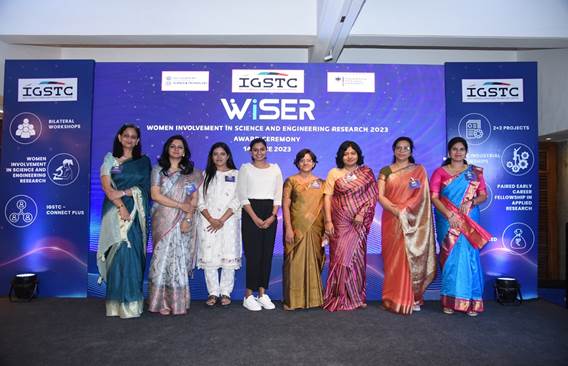
 Ten women researchers from India and Two from Germany were awarded under ‘Women Involvement in Science and Engineering Research’ (WISER) programme to promote women researchers in India/Germany to participate and collaborate in ongoing R&D and innovation projects on the occasion of 13 Foundation day of IGSTC (Indo-German Science and Technology Centre)They will receive financial assistance and will not need to apply for fresh project grants in partnering countries.

“Research efforts should be directed towards contributing to society and making a positive impact on people’s lives,” said S.K. Varshney Head of International Cooperation Division (ICD) at the Department of Science and Technology (DST) and Co-chair of IGSTC at the inauguration of the programme.

Stephan Grabherr, Charge d’Affaires of the German Embassy in Delhi, highlighted the significance of collaborations between industries and universities and stressed the need for fostering strong partnerships and knowledge-sharing between these two spheres.

R Madhan, Director, IGSTC emphasized the significant programs and achievements that have fostered a strong partnership between India and Germany while Annapurni Subramaniam, Director, Indian Institute of Astrophysics (IIA) and Chief Guest for the occasion emphasized on the significance of increasing the representation of women scientists and ensuring a proportional number of women-led projects for fostering inclusivity and diversity within the scientific fraternity.

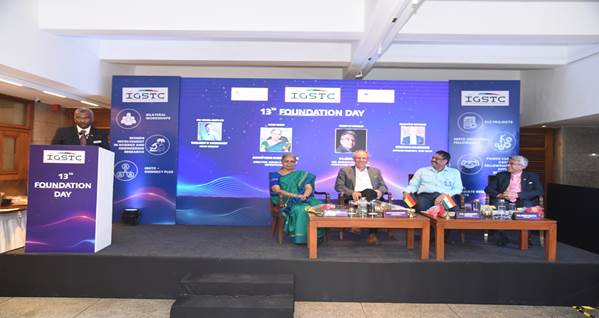
IGSTC celebrated its 13th Foundation Day event on 14th June, 2023 to highlight its achievements and its role in promoting the Indo-German Science and Technology partnerships since its inception in the year 2010.

Industrial Fellowships-2023 Awards were given to 20 young Indian researchers from leading academic and research institutions spread across India. While, this fellowship provides exposure to young Indian researchers at German Industrial ecosystems and applied research Institutions for 06-12 months, the WISER program facilitates lateral entry of women for perusing research in Science and Technology, create avenues for long term Indo-German research collaborations and enhance capacity building & networking.

Mr. Rajesh Nath, Managing Director, German Engineering Federation (VDMA) in India also participated as guest of honour.

IGSTC also organised an outreach event on the day which was attended by scientists, academicians from around 30 Institutions in and around Delhi wherein the attendees were briefed about available opportunities at IGSTC for Indo-German collaboration in S&T. The success stories of IGSTC programmes were also presented during the event.

The Indo-German Science & Technology Centre (IGSTC),  a bilateral institution established by the Department of Science and Technology (DST), Government of India, and the Federal Ministry of Education and Research (BMBF), Government of Germany to promote Science and Technology collaboration with a focus on applied research and technology development, has supported 54 applied research projects on various thematic areas, 55 bilateral workshops, capacity building through 82 Industrial & early career fellowships, 23 WISER fellowships for Women researchers and small ignition funding for 07 projects.

The main focus of IGSTC over the years has been to provide a networking platform between the Indian and the German researchers/Industry personnel and has connected around 6300 + researchers / Industry personnel through its various programmatic activities.

SNC