The Position of Women In India

 The women have held different status and
position at different times in India. She was regarded as mentally inferior to
man. Manu was of the view that the females should not enjoy any freedom in any
walk of life. They should ever remain under the strict control of their father
during girlhood; of their husband during their married life and of their sons
during widowhood.

The women could freely participate in the
religious and public life during the Vedic Period. The couple jointly performed
the sacrifices. A son’s birth always gave greater joy than daughter’s birth.
The brotherless married girls enjoyed the right of inheritance. The women could
attend the social gatherings and freely meet and converse with strangers. The
bride was most heartily welcomed. She reigned supreme over the household. The
could chant the Vedic Mantras. A window could remarry her own brother-in-law at
her sweet will. She stood high in the public. Even if she overstepped moral
laws she was judged mildly and with sympathy. She was her husband’s helpmate in
all the domestic affairs. The society was tolerant. Even the sons of a maiden
were accepted by the society. The son was known as the boat of salvation but
all the performances remained incomplete without the woman’s participation.

Later on she lost her place in the
religious sphere. The daughter’s birth was despised. Social laws and customs
stamped her with a sort of mental deficiency. The luckless girl was treated as
an intruder and was killed in certain tribes even in infancy. She was strictly
confined to home and domestic cares. She was not to be relied upon in matters
of serious concern. She had no free hand in expenditure.

Need to transform agriculture to advanced farming and maintain continuity

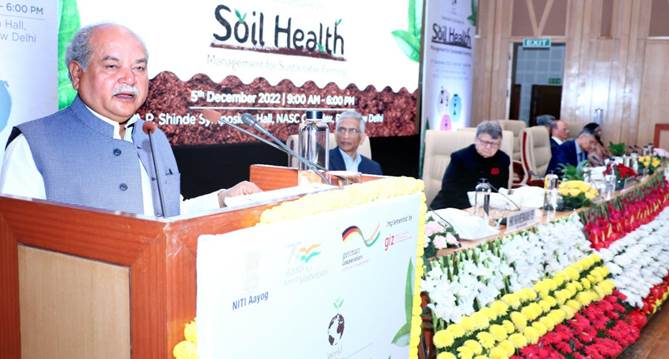
 The Union Minister for Agriculture and Farmers Welfare, Shri Narendra Singh Tomar has said that the Agriculture sector is the backbone of our country and our rural economy and agriculture have such strength that the country can easily overcome even the adverse situations. The Indian Agriculture sector has shown this during the Covid pandemic. The Government of India provided food security to 800 million people of the country, as well as helped friendly countries. Today we are in the first or second place in the world in terms of most of the agricultural produce. Despite this, there are some challenges before the Agriculture sector. There is a need to work in this direction to transform agriculture into advanced farming, technology should be used in agriculture and its continuity should be maintained.

Shri Tomar said this in his virtual address to the National Conference on Enhancing Agricultural Productivity on the topic “Integration of Improved Seeds and Agri Inputs”, organized by the Associated Chamber of Commerce and Industry of India (ASSOCHAM) in New Delhi today. Shri Tomar said that the stronger and more profitable the Agriculture sector is, the stronger the country will be. There is a need to consider the challenges facing Agriculture today. In spite of all the favourable conditions, the area under farming and its profit and loss depend a lot on the nature. People’s curiosity and attachment towards agriculture should increase, agriculture should be attractive for the next generation and farmers can be retained for farming, more work needs to be done in this direction. Shri Tomar said that the government is working to reduce the gap between farmers and the market, providing infrastructure in rural areas and eliminate the role of middlemen. He said that the number of small farmers in the country is more, who have small acreage and do not have money for investment; for such farmers, the Central Government is setting up 10,000 new FPOs, for which a provision of Rs 6,865 crore has been made and small farmers are being mobilized. It is the effort of the government that farmers should do group farming, so that the input costs can be reduced, production quality improves and small farmers can shift to remunerative crops and get the price for their produce on their own terms. FPOs can also process products. For this, the government has extended loans up to Rs. 2 crore without guarantee.

Shri Tomar said that to reduce import dependence in oilseeds, the Oil Palm Mission has been started with a provision of Rs.11,000 crore. 28 lakh hectares of land in the country is suitable for oil palm cultivation. The prospects are high in the Northeast. Provision of Rupees One lakh crore Agri Infra Fund has been made for creation of infrastructure in the villages. Provision has also been made for special packages for Animal Husbandry, Fisheries and Medicinal Farming. Shri Tomar said that the Government of India is also working on the Digital Agriculture Mission, in which farmers, banks and other institutions will be linked, crop assessment made, data collected and crop losses will also be assessed with technology. Mapping will be done in such a way that farmers across the country can be advised through the State Governments as to where and which consumption is there, accordingly profit can be earned by producing as much needed. There will be no panic and there will be no loss. The Government has also emphasized on Natural Farming, in this direction we all need to work ahead. ASSOCHAM members including Secretary General Shri Deepak Sood, Shri Asghar Naqvi and Shri Jai Shroff were present in the programme. A knowledge paper was released on the occasion.

***

Village Fair

 India is a land of fairs and
festivals. They provide us a lot of fun and amusement. The urban people have
many sources of attraction and recreation. They can visit the dazzling bazaars,
big restaurants and cinema halls. The weekly bazaars provide them the
facilities of marketing. The poor villagers lack all such facilities. The
bazaars are far off from the villages. The villagers’ life the very hard and
lacks all charm. They have no means of recreation. Their secludes life is cut off
from the urban modernisation.

Many fairs are held every year
in the villages. These fairs generally take place on the occasion of some
festival. The Holi fair, the Rakhi Bandhan fair, the Basant fair and the
Baisakhi fairs are the chief and common ones. The Baba Haridas Mela is the most
prominent one in our area. It is held at village Jharauda Kalan, twice a year.

Festival of Diwali

 Diwali or Deepawali is one of the most important festivals of the Hindus. It generally falls in the month of October. Fifteenth day of the month of Kartik is the day of its celebration. The festival marks the end of the rainy season and the beginning of winter.

A few days before the festival, houses are cleaned, white-washed and painted. The Hindus decorate their houses with pictures and images of gods. Fairs are held on this occasion in all towns and villages. People purchase parched rice, sugar toys, earthen cups and other things for the worship or goddess Luxmi.

In the right time goddess Luxmi is worshipped with parched rice, sugar toys and sweets. Then the Hindus illuminate their houses by means of earthen cups and candlestricks. Rows of lighted lamps are seen everywhere.

Some people gamble the whole night, while others recite Ramayana, hold keertans and read religious book. All want the blessing of goddess Luxmi on the night.

United Nations World Geospatial Information Congress (UNWGIC 2022)

 Students from 18 schools across the country presented new ideas on how geospatial technologies can be embedded to address local challenges like protecting the heritage, soil fertility, crop diversity, clean city, water management, women empowerment, waste management, digital India, clean energy, climate change and so on to achieve sustainable development goals (SDGs).

Teams from 18 urban and rural schools across India showcased the use of geospatial information and technology in understanding local issues and its use in planning and implementing at a special event titled ‘Geo-enabling the global village with Generation Z and Alpha’ of the Second United Nations World Geospatial Information Congress today (UNWGIC).

Efforts in mapping chemical fertilizer use in farms, as well as their production against organic fertilizer usage along with their production, were showcased. Students also highlighted initiatives of mapping rural biodiversity loss over time, as well as mapping of local recyclable products to source them effectively and increase their usage.

The young teams focused on SDGs of zero hunger, gender equality, decent work and economic growth, sustainable cities and communities, responsible consumption and production, climate action, and life on land. The event could show the way to localize the implementation of the SDGs through geospatial thinking.

In his address, Stefan Schweinfest, Director UN Statistics Division, said that SDGs is not just a document but it is a proper action plan to engage with each other, work together and bring solutions for a better world. “All the projects are truly incredible and great examples for localising the SDGs. Rather than competition, the purpose of this session is to interact with each other, make friends and discuss how to take the ideas forward in the future so that you can be a UN representative for SDGs,” he added.

 Dr. Subha Pandey, Scientist, Department of Science and Technology (DST), who chaired the session, elaborated on the DSTs activities and emphasized on geospatial technology use at school and community levels to localize SDGs.

The Second United Nations World Geospatial Information Congress (UNWGIC 2022) is being held at Hyderabad International Convention Centre (HICC), India, from 10 to 14 October 2022 with the theme ‘Geo-Enabling the Global Village: No one should be left behind. It has been convened by the United Nations Committee of Experts on Global Geospatial Information Management (UN-GGIM) and organized by the Department of Economic and Social Affairs of the United Nations and hosted by the Department of Science & Technology (DST) – Ministry of Science and Technology, Government of India.


SNC/RR

Dilraj Meena

Articles written by Dilraj Meena


1.     https://www.internationaljournalofresearch.org/2022/10/spain-to-give-menstrual-leave-to-women.html

2.     https://www.internationaljournalofresearch.org/2022/10/temples-are-pride-of-rajasthan.html

3.     https://www.internationaljournalofresearch.org/2022/10/national-service-scheme.html

4.     https://www.internationaljournalofresearch.org/2022/10/training-and-placement-cell.html

5.     https://www.internationaljournalofresearch.org/2022/10/taj-mahotsav-celebration-of-indias.html

6.     https://www.internationaljournalofresearch.org/2022/10/college-fest.html

7.     https://www.internationaljournalofresearch.org/2022/10/social-life.html

8.     https://www.internationaljournalofresearch.org/2022/10/importance-of-nature.html

9.     https://www.internationaljournalofresearch.org/2022/10/space-unsolved-mystery.html

10.  https://www.internationaljournalofresearch.org/2022/10/it-ends-with-us-colleen-hoover.html

11.  https://www.internationaljournalofresearch.org/2022/10/social-media-boon.html

12.  https://www.internationaljournalofresearch.org/2022/10/lata-mangeshkars-unwavering-bollywood.html

13.  https://www.internationaljournalofresearch.org/2022/10/the-archies-another-product-of-nepotism.html

14.  https://www.internationaljournalofresearch.org/2022/10/where-is-equality.html

15.  https://www.internationaljournalofresearch.org/2022/10/love-is-love.html

16.  https://www.internationaljournalofresearch.org/2022/10/protection-of-mother-earth-is-in-our.html

17.  https://www.internationaljournalofresearch.org/2022/10/reels-based-on-novels-movies-like.html

18.  https://www.internationaljournalofresearch.org/2022/10/serves-extraordinary-researchers.html

19.  https://www.internationaljournalofresearch.org/2022/10/why-these-bad-names.html

20.  https://www.internationaljournalofresearch.org/2022/10/venom-at-mid-on-city.html

21.  https://www.internationaljournalofresearch.org/2022/10/lassi-since-1944.html

22.  https://www.internationaljournalofresearch.org/2022/10/struggle-to-gain-respect-after.html

23.  https://www.internationaljournalofresearch.org/2022/10/prostitution-is-also-profession.html

24.  https://www.internationaljournalofresearch.org/2022/10/chacha-nehru-our-pride.html

25.  https://www.internationaljournalofresearch.org/2022/10/nature.html

26.  https://www.internationaljournalofresearch.org/2022/10/why-we-fool-ourselves.html

27.  https://www.internationaljournalofresearch.org/2022/10/rabindranath-tagore-true-legend.html

28.  https://www.internationaljournalofresearch.org/2022/10/the-crime-in-which-victim-become-accused.html

29.  https://www.internationaljournalofresearch.org/2022/10/truth-is-ruthless.html

30.  https://www.internationaljournalofresearch.org/2022/10/how-to-fight-like-gandhi.html

DDA Planning Assistant Result 2022 – Download Result & Merit List Here!

 The DDA Planning Assistant Result 2022 will soon be released on the official website of the Delhi Development Authority (DDA). The DDA Planning Assistant Recruitment Result 2022 will be released after the single-stage online test for DDA Planning Assistant closes officially. A total of 15 vacancies have been released this year by DDA for the post of Planning Assistant. The applicants should use their login credentials to check their DDA Planning Assistant Result 2022 online.

  • The DDA Planning Assistant Merit List and Cut Off marks along with the official DDA Planning Assistant Exam Result will be uploaded on the official website. The candidates should verify all the details mentioned in the Result to avoid discrepancies later on.
  • The DDA Planning Assistant recruitment process has only a single-stage online test. DDA Planning Assistant Results will be uploaded on the website a few days after the test ends.
  • For the candidates who clear the DDA Planning Assistant Cut Off marks, the next stage will be document verification.

The candidates can read this article to know the steps to download the DDA Planning Assistant Result 2022 and how they can calculate their marks using the Answer Key. Also check category-wise cut off marks, merit list, and important details regarding the Result of DDA Planning Assistant Exam 2022.

DDA Planning Assistant Result 2022

DDA Planning Assistant Events

Dates

DDA Planning Assistant Written Exam Date

1st September – 30th September 2022

DDA Planning Assistant Result Dates

To be updated soon

Result Direct link

Direct link to Download Result

How to Download DDA Planning Assistant Result 2022?

To download DDA Planning Assistant Results from the official website, candidates can follow the given steps to avoid any discrepancies. The Result will be declared on the official website after a few days of the conduct of the exam.

Step 1: Go to the official DDA website.

Step 2: Click on the “What’s New” tab available on the homepage

Step 3: After that, find the DDA Planning Assistant Result link and click on it.

Step 4: The merit list will be displayed on the screen.

Step 5: Now find your name or roll number in the merit list.

Step 6: Download or print the result PDF file for future reference.

Details to be Checked in the DDA Planning Assistant Result

Candidates should ensure that the details entered in their DDA Planning Assistant Results are correct without any error or mistake. If any mistake or error is found in the Result, the candidate should inform the concerned officials immediately to prevent any future problems. The details which should be checked thoroughly are:

  • Personal information: Candidates need to double-check their personal information, like the spelling of his/her name, name of the guardian, date of birth, gender, category, etc.
  • Score: The candidates should check their acquired score in each section of the paper carefully. You should also check your total score and rank.
  • Cut Off Marks: Check the Cut Off marks to know whether you have qualified or not.
  • Other important information: You may find other relevant instructions regarding the selection processes in your DDA Planning Assistant Result. Make sure to go through that information.

How to Calculate Marks for the DDA Planning Assistant Online Exam?

The DDA Planning Assistant Answer Key for the written exam will be uploaded on the DDA official website. Candidates who want to estimate their tentative marks can use it as a guide. While computing the scores, the candidates should keep the following points in mind:

Step 1: Add the marks assigned for each correct response.

Step 2: If the question is of 01 marks, there will be a penalty of 0.33 marks (negative marking) for wrong answers / multiple answers marked by a candidate in the objective type question papers having four alternatives. However, where the question is of 02 marks, there will be a penalty of 0.66 marks (negative marking).

Step 3: Now total your score to arrive at your DDA Planning Assistant Result.

DDA Planning Assistant Merit List 2022

The Delhi Development Authority will release the DDA Planning Assistant merit list along with the result on their official website. The DDA Planning Assistant Merit List will be prepared on the basis of scores obtained by candidates in the online exam. The merit list comprises the name, and roll number of the candidates who have managed to clear the exam with flying colours. For that, the candidates should be well-versed with the DDA Planning Assistant Syllabus beforehand. The dates for the release of the merit list are yet to be notified by the Authority. Till then follow the Testbook to get immediate updates on the DDA Planning Assistant Result.

DDA Planning Assistant Cut Off 2022

The Authority releases the DDA Planning Assistant Cut Off marks which specify the minimum marks required to qualify for the online exam. Meanwhile, candidates can check the DDA Planning Assistant minimum qualifying marks below:

Category

Minimum Qualifying Marks

EWS

35%

OBC

35%

SC

30%

ST

30%

UR

40%

The Authority decides the Cut Off marks based on the parameters such as the total number of test-takers, availability of vacancies, category, difficulty level, minimum marks, etc. The Cut Off marks for 2022 are not yet declared. Stay tuned to Testbook for updates regarding the same.

DDA Planning Assistant Result 2022: Resolution of Tie Cases

It is expected that if two or more candidates score the same marks in the exam, the person who has the highest age will be considered for the position. However, the details regarding the same haven’t been mentioned in the notification. Result of Stenographs at DDA

What Next After the DDA Planning Assistant Result 2022?

The candidate who will find their name on the merit list will be called for the Document verification. They will have to bring all the valid documents in support of their eligibility, such as Age, Qualification, caste, etc. If they fail to submit any of the required documents, then they will be disqualified from the further selection process. The list of important documents is as follows:

  • 12th or equivalent mark sheet and other educational certificates
  • Caste Certificate
  • Photo Identity Proof (Aadhar Card, Pan Card, Voter ID Card, etc)
  • Other Relevant Documents
  • Passport size photograph

We hope this article was helpful to you. Explore our page to get more details regarding the DDA Planning Assistant online Exam. 

Effects of Animal Husbandry

 Negatives effects of Animal Husbandry in India


Animal husbandry is one of the most important sector which provide sufficient income and development to the community.  Continuous animal husbandry will cause great impacts to the degradation of our planet. In most places we are facing environmental degradation and floods are occurring regularly. Management of waste of animal products, overgrazing, loss of habitat of animals, over fishing are some of the negative side of animal husbandry. Large amount of animals are also becoming extinct due to environmental changes. Animal agriculture produces 65% of the world’s nitrous oxide emissions which has a global warming impact 296 times greater than carbon dioxide. For rearing and animal husbandry activities using of agricultural land  it is one of the greatest contributions to loss of biodiversity,  deforestation and water pollution, soil pollution,  pesticide related health issues. It also generates large amount of green house gases. Animal husbandry in large amount like selling of eggs, fishing can harm and reduce the lifespan of animals, in few years some of the species will become extinct. When the  grazing areas dry up, the  pastoralists will be forced to travel farther to find food and many animals will likely starve. In particular, cattle, goats, camels, sheep, and other animals who depend on access to grazing areas for food will suffer from hunger and dehydration.

Animal husbandry and feed grain production are linked together, the greatest negative effect are global warming and  climate change. Animal husbandry  disrupt the weather, temperature, and ecosystem health. The IPCC predicts a growth of drought-affected areas, lower water availability for large numbers of people, and that events such as heat waves, drought, and storms will lead to more death and disease, especially for those not in the position to adapt.  As  water supplies dry up, farmers and herders are living out an ancient struggle over land and water resources. Maintaining intensive animal production facilities, as well as growing the associated animal feed, may emit 90 million tonnes of CO2 per year due to requirements such as electricity and diesel fuel. It also affect  human health and animal welfare implications of transporting live animals between different cities and countries, and can cause spreading of animal diseases. We should try to create sustainable and zero waste environment and to some extend end the destruction of our ecosystem and economy.

First seminar of Agni Tattva campaign under LiFE mission held in Leh

 Power Foundation of India in association with Vijnana Bharati (VIBHA) is currently running a campaign to create awareness on Agni Tattva under LiFE – Lifestyle for environment. This campaign includes conferences, seminars, events, and exhibitions across the country involving educational institutions, communities, and relevant organisations to create awareness of the core concept of Agni Tattva, an element that is synonymous with energy and is amongst the five elements of Panchmahabhoot.


The first conference of the Agni campaign was organised in Leh yesterday, on the theme of ‘Sustainability and Culture’. It witnessed participation from key stakeholders working in the areas of energy, culture, and sustainability, from diverse fields such as administration, policymakers, academics, and start-ups.

The conference was inaugurated by Shri R K Mathur, Lieutenant Governor of Ladakh. Speaking on the occasion, he said that Ladakh always had a sustainable lifestyle, however, increased modernisation is leading to an imbalance in the ecosystem of the region, and this not only adversely impacts the region but could also alter the monsoon cycle of the entire country since it is inter-linked with the Himalayan ecosystem. He further added that the UT administration of Ladakh has laid out a clear roadmap to reverse this imbalance and move toward sustainable development. He emphasised several key areas.

Ladakh has immense solar energy potential, which should be harnessed. Ladakh should work towards generating systems to provide power to remote areas. The focus is to provide decentralized renewable solar power across Ladakh thereby reducing grid dependency. This is in line with the Prime Minister’s vision of a Carbon Neutral Ladakh.

Geothermal energy is another focus area that holds immense potential in the Ladakh region. Unlike other renewable energy sources, which are intermittent in nature, it is available throughout the day and the year and should be suitably harnessed.

Green Hydrogen is another option in Ladakh, as the region has plenty of solar energy. It also has water. The Hydrogen harnessed from this could be used to substitute petrol and diesel and the oxygen could be used in hospitals and by tourists.

Shri Jamyang Tsering Namgyal, MP of Ladakh emphasized on an interdependent world. He said that Indian philosophy views the world as one and everything in it as one, but in the development model so far, the oneness has been lost. Shri Namgyal underlined that the model being formulated by Hon’ble PM is based on Oneness, such as One Sun, One World, One Grid, and the efforts are on to promote and propagate a lifestyle that is conscious of the environment, based on this Indian philosophy of oneness. He said that Ladakh has always been in harmony with nature and has thrived on interdependency and coexistence. This is something that the rest of the country and the world can learn from, he added.

The other eminent speakers at the Conference highlighted sustainable construction practices, energy access for mountain areas, social behaviour, and its impact on electricity demand.

The Agni Tattva campaign – Energy for LiFE, an initiative under the umbrella campaign of Sumangalam, was launched by Shri R K Singh, Union Minister of Power and New & Renewable Energy, in New Delhi on 21st September 2022. A series of seminars spanning the length and breadth of the country have been planned as a part of the campaign.

Power Foundation of India is a Society formed under the aegis of the Ministry of Power, Government of India, and supported by leading CPSEs. The Foundation is involved in areas of advocacy and research, positively impacting the evolving energy landscape.

***

National Urban Transport Policy

There is an urgent need to conserve energy and land, control pollution and ‘greenhouse gas emissions’, and to alleviate poverty. Urban transport (UT) is a significant cause and also a solution to these issues. Hence planning and management of UT services and infrastructure require immediate attention. The growth story of India shall be written on the canvass of planned urban development and scripted with the instrument of planned urban mobility solutions.

All categories of road users are facing problems in commuting. The pedestrians do not get a safe, conflict-free and obstruction free path to walk. The cyclists have to fight for the right of way with fast moving motorized modes of transport, many a times risking their lives. The users of Public Transport (PT) face long waiting periods, uncertainty in travel time and difficult conditions of travel. The movement of personal motorized modes of transport is slowed down by the slow moving passenger and goods traffic and face significant delays at traffic signals and road junctions. Road users get restless leading to road rage, rash driving and accidents.

The ongoing urbanization will make the situation worse in the ‘business as usual’ scenario. The Energy and Resources Institute (TERI), a Delhi-based non-governmental organization (NGO), has forecast that India’s commercial energy demand and emissions will increase by about six to seven times by 2031-32 under ‘business as usual scenario’1 (if nothing is done to curb the emissions) from the levels in 2011. A committee setup by Ministry of Road Transport and Highways on road safety and traffic management (February, 2007) has estimated about 50% increase in road accidents over a 10 year period (2005-15).

Transport sector is the second largest consumer of energy in India. The growth of transport not only increases pressure on the limited non-renewable energy resources and increase in foreign exchange outgo but also considerably increases environmental pollution. Increasing car dependence in India especially in the urban areas is most visible at the local level – vehicular emissions causing air pollution, noise pollution, and corresponding health effects. Increasing energy consumption, operational pollution, land intrusion and congestion are some of the areas of concern. Therefore the policy aims at increasing the use of green energy sources, energy efficiency and environmental protection.

VISION 

 To recognize that people occupy center-stage in our cities and all plans would be for their common benefit and well-being. 

 To make our cities the most livable in the world and enable them to become the “engines of economic growth” that power India’s development in the 21st century. 

 To allow our cities to evolve into an urban form that is best suited for the unique geography of their locations and is best placed to support the main social and economic activities that take place in the city. 

 To encourage growth of urban transport along low carbon path.

OBJECTIVES 

The objective of this policy is to plan for the people rather than vehicles by providing sustainable mobility and accessibility to all citizens to jobs, education, social services and recreation at affordable cost and within reasonable time. This will involve: 

 Incorporating urban transportation as an important parameter at the urban planning stage rather than being a consequential requirement. 

 Bringing about a more equitable allocation of road space with people, rather than vehicles, as its main focus 

 PT should be citywide, safe, seamless, user friendly, reliable and should provide good ambience with well-behaved drivers and conductors.  Walk and cycle should become safe modes of UT. 

 Introducing Intelligent Transport Systems for traffic management

 Addressing concerns of road safety and trauma response 

 Raising finances, through innovative mechanisms 

 Establishing institutional mechanisms for enhanced coordination in the planning and management of transport systems. 

 Building capacity (institutional and manpower) to plan for sustainable urban transport and establishing knowledge management system that would service the needs of all urban transport professionals, such as planners, researchers, teachers, students, etc.

Thus, a paradigm shift is needed in approach to UT with three key strategies, namely, ‘Avoid, Shift and Improve’ in transport planning as advocated by the Asian Development Bank in its draft ‘Action Plan to Make Transport in Developing Countries more ClimateFriendly’ and reiterated by the Bellagio Declaration 8 in May 2009. This means ‘avoid’ increase in demand for travel both by reducing the number and length of trips. Promote a shift from personal vehicles to other MRT and non-motorized transport (NMT) modes to reduce energy demand and hence pollution in cities. Improve strategy includes use of clean fuels and clean vehicle technology

Cities in India vary considerably in terms of their population, area, urban form, topography, economic activities, income levels, growth constraints, etc. Accordingly, UT planning will have to depend on these city specific features. Further, transport planning is intrinsically linked to land use planning and both need to be developed together in a manner that serves the entire population and yet minimizes travel needs. In short, an integrated master plan needs to internalize the features of sustainable UT. In developing such plans, attention should be paid to channel the future growth of a city around a pre- planned UT network rather than develop UT after uncontrolled sprawl has taken place. Planning should, therefore, enable a city to take an urban form that best suits the geographical constraints of its location and also one that best supports the key social and economic activities of its

residents. 7.1.2. The Government of India would, therefore, promote the development of such integrated land use and transport plans for all cities. To enable this, all urban development and planning bodies in the States would be required to have in house transport planners as well as representation from transport authorities in their management. In order to create models for possible learning and replication, the Government of India would fully support pilot studies in a few sample cities of different characteristics and in different regions of the country. As part of this exercise, each city would also be encouraged to identify potential corridors for future development and then establish UT that would encourage growth around itself. For example, radial corridors emerging from the city and extending up to 20-30 km could be reserved for future development. Such corridors would have to be protected from encroachment by putting up physical barriers and physically constructing roads on short stretches even before settlements come up. This would imply that stretches of the corridor would come up first in order to guide the location of the settlements and not allow undue sprawl to take place. 

Planning should include both the city and the peri-urban areas and the regions around the city, which for legal purpose should be notified as local planning or metropolitan area. Compact cities, redevelopment of inner city areas, mixed land use pattern, etc. are some of the urban growth policies that will restrict transport demand. 

Conventional planning approach aims at flow of motor vehicle traffic. The most comprehensive definition of UT planning is ‘Accessibility’, the ability to reach desired goods, services and activities. It recognizes the value of more accessible land use patterns and mobility substitutes such as tele-commuting and delivery services as ways to improve UT while reducing total physical travel. 

Further, construction, use, operation and maintenance of UT infrastructure can have significant implications on natural environment, its habitants, and the functioning of hydrological systems. Therefore, environmental3 and social impact assessment4 of a UT project should be carried out while planning to ensure that no harm will come to the environment and the habitat on a short or long-term basis.

How to get motivated?

 How to get motivated?

 What is motivation? motivation is a driving force that forces us to do hard work for achieving something in life as we all have ups and downs in our life where we refuse to do anything as we start feeling it is not my cup of tea or not my area of work/interest but here the person who will not stop and keep continuing his or her work that person can achieve something .
why do we need motivation?

  • it is necessary at every stage of life whether it is from external or internal people as we make us inspired ourselves for becoming something but to achieve the same is quite challenging.
  • we used to hear a lot of opinions and comments so we get demotivated but at that moment if we don’t listen and keep continue the hard work then we can achieve something.
  • in our life, there is a different phases personal or professional way where we used to get bored at times for living the same kind of life but when something motivates you like your family members or your financial problem then you will always be motivated.
sources of motivation 
it could be external or internal as some people get inspiration from unknown people or sometimes from intenally.

What is Ecosystem and why it is Important

 An ecosystem is a geographic area where plants, animals, and other organisms, as well as weather and landscape, work together to form a bubble of life. Ecosystems contain biotic or living, parts, as well as abiotic factors, or nonliving parts. Biotic factors include plants, animals, and other organisms. Abiotic factors include rocks, temperature, and humidity.

Every factor in an ecosystem depends on every other factor, either directly or indirectly. A change in the temperature of an ecosystem will often affect what plants will grow there, for instance. Animals that depend on plants for food and shelter will have to adapt to the changes, move to another ecosystem, or perish.

Ecosystems can be very large or very small. Tide pools, the ponds left by the ocean as the tide goes out, are complete, tiny ecosystems. Tide pools contain seaweed, a kind of algae, which uses photosynthesis to create food. Herbivores such as abalone eat the seaweed. Carnivores such as sea stars eat other animals in the tide pool, such as clams or mussels. Tide pools depend on the changing level of ocean water. Some organisms, such as seaweed, thrive in an aquatic environment, when the tide is in and the pool is full. Other organisms, such as hermit crabs, cannot live underwater and depend on the shallow pools left by low tides. In this way, the biotic parts of the ecosystem depend on abiotic factors.

The whole surface of Earth is a series of connected ecosystems. Ecosystems are often connected in a larger biome. Biomes are large sections of land, sea, or atmosphere. Forests, ponds, reefs, and tundra are all types of biomes, for example. They’re organized very generally, based on the types of plants and animals that live in them. Within each forest, each pond, each reef, or each section of tundra, you’ll find many different ecosystems.

The biome of the Sahara Desert, for instance, includes a wide variety of ecosystems. The arid climate and hot weather characterize the biome. Within the Sahara are oasis ecosystems, which have date palm trees, freshwater, and animals such as crocodiles. The Sahara also has dune ecosystems, with the changing landscape determined by the wind. Organisms in these ecosystems, such as snakes or scorpions, must be able to survive in sand dunes for long periods of time. The Sahara even includes a marine environment, where the Atlantic Ocean creates cool fogs on the Northwest African coast. Shrubs and animals that feed on small trees, such as goats, live in this Sahara ecosystem.

Even similar-sounding biomes could have completely different ecosystems. The biome of the Sahara Desert, for instance, is very different from the biome of the Gobi Desert in Mongolia and China. The Gobi is a cold desert, with frequent snowfall and freezing temperatures. Unlike the Sahara, the Gobi has ecosystems based not in sand, but kilometers of bare rock. Some grasses are able to grow in the cold, dry climate. As a result, these Gobi ecosystems have grazing animals such as gazelles and even takhi, an endangered species of wild horse.

Even the cold desert ecosystems of the Gobi are distinct from the freezing desert ecosystems of Antarctica. Antarcticas thick ice sheet covers a continent made almost entirely of dry, bare rock. Only a few mosses grow in this desert ecosystem, supporting only a few birds, such as skuas.

Threats to Ecosystems

For thousands of years, people have interacted with ecosystems. Many cultures developed around nearby ecosystems. Many Native American tribes of North Americas Great Plains developed a complex lifestyle based on the native plants and animals of plains ecosystems, for instance. Bison, a large grazing animal native to the Great Plains, became the most important biotic factor in many Plains Indians cultures, such as the Lakota or Kiowa. Bison are sometimes mistakenly called buffalo. These tribes used buffalo hides for shelter and clothing, buffalo meat for food, and buffalo horn for tools. The tallgrass prairie of the Great Plains supported bison herds, which tribes followed throughout the year.

As human populations have grown, however, people have overtaken many ecosystems. The tallgrass prairie of the Great Plains, for instance, became farmland. As the ecosystem shrunk, fewer bison could survive. Today, a few herds survive in protected ecosystems such as Yellowstone National Park.

In the tropical rain forest ecosystems surrounding the Amazon River in South America, a similar situation is taking place. The Amazon rain forest includes hundreds of ecosystems, including canopies, understories, and forest floors. These ecosystems support vast food webs.

Canopies are ecosystems at the top of the rainforest, where tall, thin trees such as figs grow in search of sunlight. Canopy ecosystems also include other plants, called epiphytes, which grow directly on branches. Understory ecosystems exist under the canopy. They are darker and more humid than canopies. Animals such as monkeys live in understory ecosystems, eating fruits from trees as well as smaller animals like beetles. Forest floor ecosystems support a wide variety of flowers, which are fed on by insects like butterflies. Butterflies, in turn, provide food for animals such as spiders in forest floor ecosystems.

Human activity threatens all these rain forest ecosystems in the Amazon. Thousands of acres of land are cleared for farmland, housing, and industry. Countries of the Amazon rain forest, such as Brazil, Venezuela, and Ecuador, are underdeveloped. Cutting down trees to make room for crops such as soy and corn benefits many poor farmers. These resources give them a reliable source of income and food. Children may be able to attend school, and families are able to afford better health care.

However, the destruction of rain forest ecosystems has its costs. Many modern medicines have been developed from rain forest plants. Curare, a muscle relaxant, and quinine, used to treat malaria, are just two of these medicines. Many scientists worry that destroying the rain forest ecosystem may prevent more medicines from being developed.

The rain forest ecosystems also make poor farmland. Unlike the rich soils of the Great Plains, where people destroyed the tallgrass prairie ecosystem, Amazon rain forest soil is thin and has few nutrients. Only a few seasons of crops may grow before all the nutrients are absorbed. The farmer or agribusiness must move on to the next patch of land, leaving an empty ecosystem behind.

Rebounding Ecosystems

Ecosystems can recover from destruction, however. The delicate coral reef ecosystems in the South Pacific are at risk due to rising ocean temperatures and decreased salinity. Corals bleach, or lose their bright colors, in water that is too warm. They die in water that isnt salty enough. Without the reef structure, the ecosystem collapses. Organisms such as algae, plants such as seagrass, and animals such as fish, snakes, and shrimp disappear.

Most coral reef ecosystems will bounce back from collapse. As ocean temperature cools and retains more salt, the brightly colored corals return. Slowly, they build reefs. Algae, plants, and animals also return.

Individual people, cultures, and governments are working to preserve ecosystems that are important to them. The government of Ecuador, for instance, recognizes ecosystem rights in the countrys constitution. The so-called Rights of Nature says Nature or Pachamama [Earth], where life is reproduced and exists, has the right to exist, persistmaintain and regenerate its vital cycles, structure, functions and its processes in evolution. Every person, people, community or nationality, will be able to demand the recognitions of rights for nature before the public bodies. Ecuador is home not only to rain forest ecosystems, but also river ecosystems and the remarkable ecosystems on the Galapagos Islands.