Bureau of Indian Standards celebrates World Standards Day

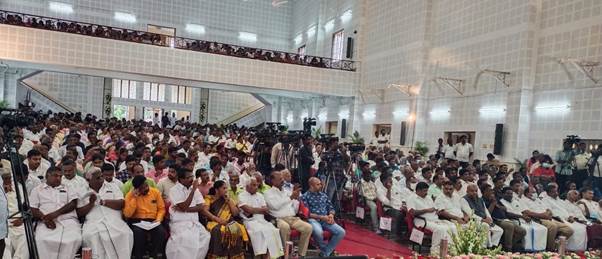
 Standards are the new patents and those who control standards, control markets, prices, processes, manufacturing and innovations, said Shri Piyush Goyal, Union Minister of Consumer Affairs, Food & Public Distribution, Textiles and Commerce & Industry, said in his message on World Standards Day celebration organized at Bureau of Indian Standards (BIS) headquarters here today.

The Union Minister said that under the leadership of Prime Minister, standards are considered as a key pillar of growth. He mentioned that Hon’ble Prime Minister gave the world the mantra of LIFE i.e ‘Lifestyle for Environment’. When a nation sets benchmark for standards, it’s a reflection upon its strong foundation and potential he added.

He said that BIS should become a benchmark for quality control, quality assessment and quality assurance.  He further said that BIS, as the National Standards Body should act as a facilitator for the industry by formulating Standards that support Zero defect, Zero effect and should emerge as a global player and pioneer in the field of standardization. He encouraged all concerned to pledge to make India a quality conscious nation and make Indian quality a matter of pride for every Indian.
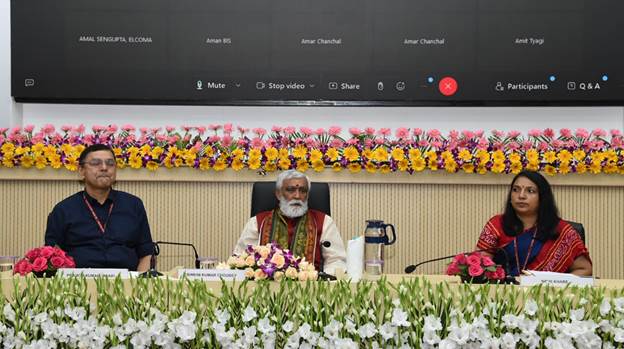
He mentioned that the theme of the World Standards Day shares India’s vision for a better world with focus on standards and sustainable development, as the country is also striving to become a quality conscious nation with an emphasis on sustainability.

Shri Goyal said that with the mantra of quality and sustainability, India can create brand value for Indian products across the world. He opined that BIS must revise and add sustainability in the existing standards for the new standards they create as a part of National Action Plan.
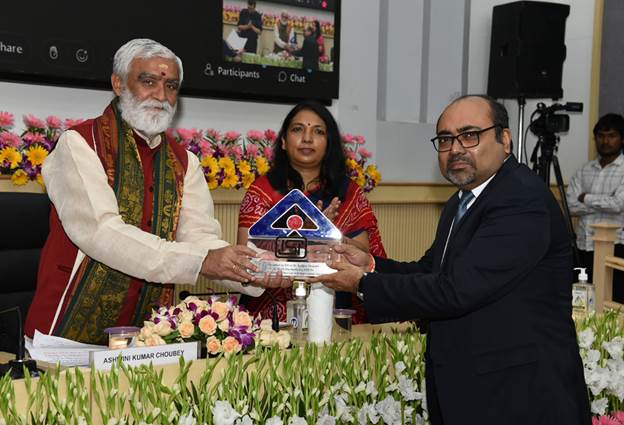
He asked BIS to facilitate businesses and industries by ensuring safety, quality and cost competitiveness and liability of products. BIS should aim to be pioneer in the global world and beat out foreign and non-standard products, Shri Goyal added. In his message on further improvement in the functioning of BIS, the Minister said that BIS must look at the analysis and setup additional labs across the country and modernize the existing labs. He said that such mapping of labs has been done in past and he is confident that in next few months, BIS will ensure high quality modern labs for both the industry and consumers.

The inaugural function was presided over by Shri Ashwini Kumar Choubey, Hon’ble Minister of State, Ministry of Consumer Affairs, Food & Public Distribution & Environment, Forest & Climate Change wherein he appreciated  the efforts made by BIS to involve stakeholders from government, industry, standard developers, academia, consumer groups etc in framing the comprehensive strategy document on national standardization i.e. Standards National Action Plan (SNAP) 2022-27 which is an action plan identifying emerging areas of standardization that support Government’s initiatives in the fields of  Digital India, Smart Agriculture, Smart cities etc. He expressed hope that SNAP 2022-27 would have a forced multiplier effect on the national growth.
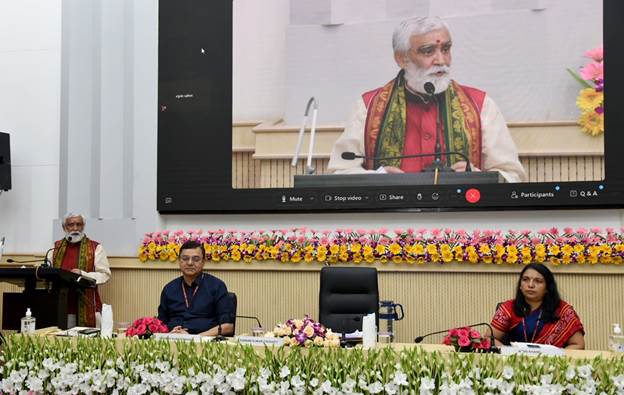
World Standards Day was celebrated in the Headquarters as well as in the 5 regional and 41 branch offices by organizing various activities such as Manak Manthan, Quality Walk and Quality Connect programmes, targeted to reach out to more than one lakh households with the message of quality consciousness. To commemorate the special occasion, BIS offices across the country were lit up in vibrant colours of the National Flag.

During the programme, insights on SNAP 2022-27 were shared by some eminent industry representatives. Further, representatives of eminent Educational Institutions such deliberated on the importance of standards in technical education. Technical Experts were also felicitated for their contribution in the field of standardization.
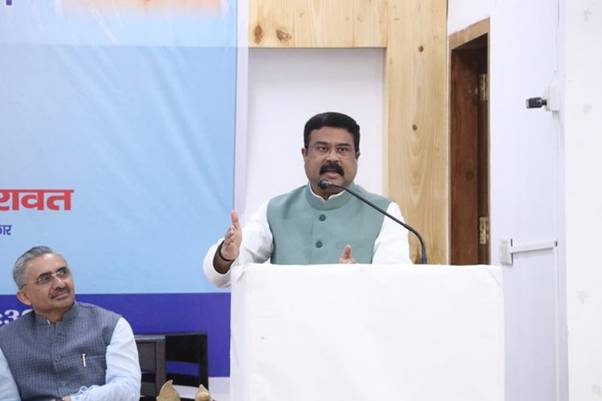
The theme for this year’s World Standards Day is ‘Shared Vision for a Better World’ with reference to the Sustainable Development Goals.  Technical sessions on Standards for Sustainable Communities were held in the afternoon wherein presentations were made by experts and eminent personalities on topics of Circular Economy, Recycling of Plastics and Bio-degradable Plastic, Green Mobility, AYUSH Systems for good Health and Well-Being, Sustainable Cities and Communities, Sustainable Agricultural Practices, Sustainable Cooling and Affordable and Clean Energy.

************
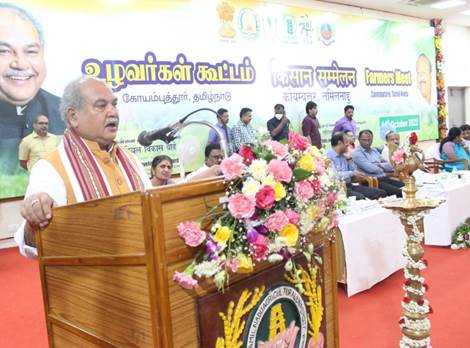
Coconut Community Farmers' Conference at Tamil Nadu Agricultural University, Coimbatore

 The Union Minister for Agriculture and Farmers Welfare, Shri Narendra Singh Tomar has said that the Centre will continue to provide all possible assistance to the farmers in the coastal states to promote coconut cultivation in the country. The efforts made in the field of research and development in the last few years have resulted in the development of new technologies in the field of farming and processing and further improved the available technologies. With the increase in the number of coconut based industries in the country, new products and many employment opportunities are also increasing in the market. Shri Tomar was addressing the Coconut Community Farmers’ Conference in Coimbatore, Tamilnadu.

Shri Tomar further said that he is happy to be among the coconut farmers, he congratulated the Coconut Development Board and Sugarcane Breeding Institute for their initiatives towards the prosperity of the coconut growers community. He said that the agriculture sector is the backbone of the country’s economy, so it is the responsibility of the Central and State governments to strengthen it, promote it and ensure profitable farming for the farmers. The contribution of coconut cultivation in the agricultural economy is very important. India is a leader in coconut cultivation and amongst the world’s three largest producers. Tamil Nadu contributes 21 percent of the area under coconut in the country and 26 percent of the production. Tamil Nadu ranks first in coconut processing activities and Coimbatore is first in terms of area under coconut cultivation, with an area of ​​88,467 hectares under coconut cultivation. Shri Tomar said that the farmers are making significant contribution in the development of coconut sector and increasing the agricultural economy. Coconut Development Board is forming a three-tier farmer group by integrating small and marginal farmers. Presently there are 697 Coconut Growers Societies, 73 Coconut Growers Federations and 19 Coconut Producing Companies in the State. Support has been given to set up 537 new processing units in India with a processing capacity of 3,638 million coconuts per year. This success has been achieved through the Mission Programme implemented by the Coconut Development Board in the country. Out of these, 136 units are from Tamil Nadu, which are creating employment opportunities and also helping improve the financial condition of the farmers.

Shri Tomar said that even after everything is favourable in the field of agriculture, farmers have to face natural disasters, which causes them losses. It is compensated through the Pradhan Mantri Fasal Bima Yojana and the Tamil Nadu State Scheme. Agriculture contributes significantly to strengthen the economy, he said.  Agriculture is so fundamental that it has helped tide over adverse conditions like Covid-19.

Shri Tomar said that Prime Minister Shri Narendra Modi has taken many steps for the betterment of agriculture sector in the last 8 years. Through the Pradhan Mantri Kisan Samman Nidhi (PM-Kisan), more than Rs 2 lakh crore has been deposited in the accounts of about 11.50 crore farmers. In lieu of damage to crops due to natural calamity in last 6 years, claim amount of more than Rs.1.22 lakh crore has been deposited in the accounts of the farmers through the Pradhan Mantri Fasal Bima Yojana. Earlier, there was a provision of Rs 5,000 crore under the micro irrigation scheme, which has been increased to Rs 10,000 crores. 70 lakh hectare farming area has been brought under micro-irrigation. Under the Kisan Credit Card scheme, earlier crop loans were given to farmers only up to five to six lakh crore rupees only, which has been increased by the Prime Minister to about Rs. 18-and-a-half lakh crores. To improve the infrastructure in each and every village, a provision of Rs. one lakh crore Agri Infra Fund has been made. Farmers, group of farmers, FPOs, PACS, Krishi Upaj Mandis all can use this to develop warehouse, cold storage or infrastructure as per requirement in villages. The government is trying to make farmers grow remunerative crops, setting up processing units through FPOs, for which arrangements for loans and subsidies have also been made.

Shri Tomar said that the schemes of the Central Government are for the prosperity of the farmers and to bring happiness in their lives. He assured that the farmers should submit the projects in collaboration with the State Government, the Central Government under the leadership of Prime Minister Shri Modi is standing with farmers and matching step by step for the development of the farmers.

During the programme, the Minister of Agriculture and Farmers Welfare of Tamil Nadu, Shri M.R.K. Paneer Selvam, Vice Chairman, Coconut Development Board, Shri K.R. Narayan, CEO and Joint Secretary of Union Agriculture Ministry Dr. Vijay Lakshmi, Central Horticulture Commissioner Shri Prabhat Kumar, Vice Chancellor Geeta Lakshmi, Director of Sugarcane Breeding Institute and local public representatives and Central-State Government officials and farmer were present.

**** 

Topics

 List of Import National Days and International Days 

In India, we habitually celebrate many days which are of social, international, economic, commemorative, or festive importance. Some of the days are also significant for General Studies as UPSC IAS Prelims exam has at least one question about a celebration of the important days and dates. Nowadays, the exam does ask factual questions related to days when they are in the news due to some other important aspect.

Every international day adopts a theme for that year. The concerned authorities formulate the policies according to the theme adopted for the year. In the UPSC and other Exam questions connected to international days, especially associated with technology, environment and humanity services.

This article will help you with those important dates and events that are important for you read and write

Interns should make sure that they cover every topic mentioned in the LIST of Days !!

Try to write on Those days which is coming in next few days or few weeks., check the following links:

  • Write around 500-1000 words on each topic
  • Try to post daily one Article and maximum two articles in a day. 
  • You can choose any topics of Current Affairs and write on that topic too. 
  • Make sure that you give due references and links to other important sites if you refer them. 
  • At least 30 articles is must for getting the internship certificate. 
  • Write daily and share the link of the published aricle on social media platforms and in whatsapp groups. 

National & International Dates For Exam

Aspirants should have all information about our important days and dates in India. There is a list of dates and their importance, which will help the aspirants to understand the days and dates of both national and international significance.

Day  Events

January

4th Jan International World Braille Day
6th Jan World Day -War Orphans
9th Jan Pravasi Bhartiya Diwas
10th Jan World Hindi Day
11th Jan National Human Trafficking Awareness Day
12th Jan National Youth Day (India)
15th Jan Army Day (India)
17th Jan World Religion Day
24th Jan National Girl child day (India)
25th Jan Tourism Day

National Voters Day

26th Jan Republic Day (India)
27th Jan International Holocaust Remembrance Day
30th Jan Martyrs’ Day

World Neglected Tropical Diseases

Last Sunday of January World Leprosy Eradication Day

February

2nd  Feb World Wetlands Day
4th Feb World Cancer Day
6th Feb International Day of Zero Tolerance to Female Genital Mutilation
9th Feb Safer Internet Day
10th Feb National De-Worming Day
11th Feb International Day of Women and Girls in Science
13th Feb World Radio Day (UNESCO)

National Women’s Day

20th Feb World Day of Social Justice
21st Feb International Mother Language Day
23th Feb World Peace and Understanding Day
24th Feb Central Excise Day
27th Feb World NGO Day
28th Feb National Science Day (India)

March

1st Mar Zero Discrimination Day

World Civil Defence Day

3rd Mar World Wildlife Day
4th Mar World Day of the Fight Against Sexual Exploitation

National Security Day

8th Mar International Women’s Day
11th Mar World Kidney Day
14th Mar International Day of Action for Rivers
15th Mar World Consumer Rights Day
16th Mar National Vaccination Day
18th Mar Ordnance Factories Day
20th Mar World Sparrow Day

International Day of Happiness

21st Mar International Day for the Elimination of Racial Discrimination

World Forestry Day

22nd  Mar World Day for Water
23rd Mar World Meteorological Day
24th Mar World Tuberculosis Day
27th Mar World Theatre Day

April

2nd Apr World Autism Awareness Day
4th Apr International Day of Mine Awareness
5th Apr National Maritime Day 
7th Apr World Health Day
10th Apr World Homeopathy Day
11th Apr National Pet Day

National Safe Motherhood Day

14th Apr Cultural Unity Day (recognized by India, Sri Lanka, Maldives, Bangladesh, and Nepal)
15th Apr World Art Day
17th Apr World Haemophilia Day
18th Apr World Heritage Day
21st Apr National Civil Services Day 

National Administrative Professionals Day

22nd Apr Earth Day
23rd Apr World Book and Copyright Day
24th Apr National Panchayati Raj Day
25th Apr World Malaria Day
26th Apr World Intellectual Property Day
28th Apr World Day for Safety and Health at Work
29th Apr International Dance Day
30th Apr Ayushman Bharat Diwas

May

1st May International Labour Day
2nd  May International Astronomy Day
4th May World Asthma Day
7th May World Athletics Day
8th May World Red Cross & Red Crescent Day

World Thalassemia Day

9th May World Migratory Bird Day
10th May World Mother Day
11th May National Technology Day (India)
12th May International Nurses Day (India)
16th May Dengue Prevention Day (India)
17th May World Telecommunication Day

World Information Society Day

18th May International Museum Day
20th May World Metrology Day

World Bee Day

21st May World Day for Cultural Diversity for Dialogue and Development

Anti-Terrorism Day

22nd May International Day for Biological Diversity
23rd May World Turtle Day
24th May Commonwealth Day
28th May International Day of Action for Women’s Health
29th May International Day of United Nations Peacekeepers

International Mount Everest Day (Chosen by Nepal)

31st May World Anti-Tobacco Day

June

1st Jun World Milk Day
3rd Jun World Bicycle Day
4th Jun International Day of Innocent Children Victims of Aggression
5th Jun World Environment Day
7th Jun World Food Safety Day
8th Jun World Ocean Day
12th Jun World Day Against Child Labour
14th Jun World Blood Donor Day
15th Jun World Elder Abuse Awareness Day
16th Jun International Integration Day
17th Jun World Day to Combat Desertification and Drought
19th Jun World Sickle Cell Day
20th Jun World Refugee Day
21st Jun World Music Day

International Yoga Day

23th Jun United Nations Public Service Day

International Olympic Day

26th Jun International Day against Drug Abuse and Illicit Trafficking International Anti-Drugs Day

International Day in Support of Victims of Torture

29th June National Statistics Day
3rd Sunday of June International Father’s Day

July

1st Jul National Doctor’s Day (India)
2st Jul World UFO Day

World Sports Journalists Day

4th Jul International Cooperative Day
11th Jul World Population Day
15th Jul World Youth Skills Day
17th Jul World Day for International Justice
18th Jul Mandela Day
26th Jul Kargil Memorial Day (India)
28th Jul World Hepatitis Day

World Nature Conservation Day

World Nature Day

29th Jul International Tiger Day
30th Jul International Day of Friendship

August

1st Aug Clergy Sexual Abuse Awareness Day
6th Aug Hiroshima Day
9th Aug Nagasaki Day

World Tribal Day

International Day of the World’s Indigenous People

10th Aug World Biofuel Day

World Lion Day

12th Aug International Youth Day
15th Aug India’s Independence Day
19th Aug World Humanitarian Day
20th Aug World Mosquito Day
21st Aug World Senior Citizen Day
23rd Aug International Day for the Remembrance of the Slave Trade and its Abolition
29th Aug National Sports Day 

International Day against Nuclear Tests

30th Aug National Small Industry Day

September

2nd Sep World Coconut Day
5th Sep Teachers Day (India)
8th Sep International Literacy Day
12th Sep United Nations Day for South-South Cooperation

World First Aid Day

14th Sep Hindi Day (India)
15th Sep International Day of Democracy

National Engineer’s Day

16th Sep World Ozone Day
19th Sep International Talk Like a Pirate Day
21st  Sep International Day of Peace

World Alzheimer’s Day

Biosphere Day

22nd Sep World Rhino Day
23rd Sep International Day of Sign Languages
28th Sep Right to Know Day
30th Sep International Blasphemy Rights Day

October

1st Oct International Day of Older Persons
2nd Oct International Day of Non-Violence

Human Rights Day (10th December)

4th Oct World Animal Welfare Day
5th Oct World Teachers’ Day
8th Oct Indian Air Force Day
10th Oct National Post Day 
13th Oct World Day for Natural Disaster Reduction
15th Oct International Day of Rural Women
16th Oct World Food Day
17th Oct International Day for the Eradication of Poverty
20th Oct International Day of the Air Traffic Controller
24th Oct United Nations Day

World Development Information Day

World Polio Day

27th Oct World Day for Audiovisual Heritage
28th Oct National Ayurveda Day
30th Oct World Thrift Day
31st Oct National Unity Day

November

2nd Nov International Journalist’s Remembrance Day
6th Nov International Day for Preventing the Exploitation of the Environment in War and Armed Conflict
9th Nov World Legal Services Day
10th Nov World Immunization Day
11th Nov National Education Day
12th Nov World Pneumonia Day
13th Nov World Kindness Day
14th Nov Children’s Day (India)
16th Nov International Day for Tolerance

National Press Day

17th Nov International Students Day
18th Nov World Chronic Obstructive Pulmonary Disease Day
19th Nov International Men’s Day

National Integration Day (India)

20th Nov Africa Industrialization Day

Universal Children’s Day

Transgender Day of Remembrance

21st Nov World Television Day

World Fisheries Day

25th Nov International Day for the Elimination of Violence against Women
26th Nov National Law Day (India)

Constitution Day

National Milk Day

29th Nov International Day of Solidarity with the Palestinian People

December

1st Dec World Aids Day
2nd Dec International Day for the Abolition of Slavery
3rd Dec International Day of Disabled Persons
4th Dec Indian Navy Day
7th Dec Indian Armed Force Flag Day

International Civil Aviation Day

9th Dec The International Day Against Corruption
10th Dec Human Rights Day

International Animal Rights Day

11th Dec International Mountain Day
14th Dec National Energy Conservation Day (India)
18th Dec International Migrants Day
20th Dec International Human Solidarity Day
22nd Dec National Mathematics Day
23rd Dec Farmers Day (India)

Important National & International Days in the Year:-Download PDF Here

Neighbourhood Planning


What is neighbourhood planning?

Neighbourhood planning is a right for communities to shape the way their local area is developed through 

the use of Neighbourhood Development Plans.

Introduced through the Localism Act 2011, Neighbourhood Development Plans become part of the wider 

Local Plan and are used to determine the outcome of planning applications.

Neighbourhood Plans allow communities to have more influence and control over their local area to 

ensure they get the right type of development for their neighbourhood. However they cannot influence 

or block development set out previously by the Local Plan.

Neighbourhood Plans are led and produced by an authorised local community organisation such as a 

parish or town council, or where one does not exist a Neighbourhood Forum may be designated.

A Neighbourhood Plan can:

  • Identify a vision for the area and set objectives for the next 5 to 20 years
  • Provide detailed planning policies setting out for example, where new development should be located 
  • and how it should be designed
  • Allocate sites for different types of development such as housing, retail and office space and designate 
  • areas of community greenspace
  • Identify key areas for improvement and set out proposals for them

Neighbourhood Plans will be subject to consultation, examination and a referendum, and once adopted 

form a part of the statutory development plan for Wigan.

An adopted Neighbourhood Plan carries significant weight in determining development proposals for the 

local area, as a result, there are a number of legal requirements that the plan must meet.

A Neighbourhood Plan must:

  • Have appropriate regard to national planning policy
  • Be in general conformity to the strategic policies in the Wigan Local Plan and Places for Everyone plan
  • Contribute to the achievement of sustainable development
  • Be compatible with environmental obligations, as incorporated in UK law
  • Be compatible with human rights requirements.

Neighbourhood planning activity in Wigan Borough

There are currently four designated Neighbourhood Forums in the borough:

Setting up a Neighbourhood Plan

If you are interested in creating a Neighbourhood Plan for your area, or would like more information, 

please contact Neighbourhood Planning. We will be happy to meet with you and talk through 

what is involved.

What is Neighbourhood Planning


What is neighbourhood planning?


Neighbourhood planning gives your community the opportunity to plan for your local area, to decide what the place you live in should look like and define how your neighbourhood should grow and change in the future.

Neighbourhood planning gives your community the opportunity to set out proposals such as:

  • developing a shared vision for your neighbourhood
  • choosing where new homes, shops, offices, and other development should be built
  • identifying and protecting local green spaces
  • having a say on what new buildings should look like

While neighbourhood planning gives your community the opportunities to develop you own area, any neighbourhood plan must align with national planning policies as well as policies contained in our local plans for that area. It is important to mention that neighbourhood plans cannot block development already agreed through the council’s local plan or development which has already been agreed.

Who can start neighbourhood planning activity?

Anyone can identify the need for neighbourhood planning. However, only the relevant parish or town council can initiate this and in doing so, they will be responsible for the progression of the work required, in consultation with us.

In the absence of a parish or town council, you can create a neighbourhood forum (a community organisation) to carry out this role. The same measures for neighbourhood planning activity apply to both designated neighbourhood forums and parish / town councils. Its membership is open to:

  • anyone living in the neighbourhood area concerned
  • anyone working there
  • elected members of the county council, whose area falls within the geographic area concerned

Groups can either work individually or jointly in which case a lead authority would need to be nominated. For the purposes of this web page, we refer to all bodies undertaking neighbourhood planning activities as ‘neighbourhood planning groups’.

Types of neighbourhood planning activity

There are three types of neighbourhood planning that your community may wish to do:

  • Neighbourhood plan
  • Neighbourhood development order
  • Community right to build order

Neighbourhood plan

In addition to existing planning policies for your area, your neighbourhood planning group can develop further policies relating to the future development and use of land in your neighbourhood. This can include general or site specific policies.

Whilst our development plan for your area sets out the broad policies which neighborhood planning activity must conform with, your neighbourhood plan can provide greater detail. Future planning applications will be judged against a neighbourhood plan as well other relevant statutory plans. 

Neighbourhood plans have to meet particular tests (known as ‘basic conditions’) before they can be brought into force. You can find out more about basic conditions at Top tips on Neighbourhood Planning: Understanding the Basic Conditions. Before a neighbourhood plan can be brought into force it must pass an independent examination and gain support from a majority of residents through a referendum. Once a plan is in force, planning decisions for that area will take into account its policies as well as those set out in the current local plan. 

Neighbourhood development order

Neighbourhood development orders allow your community to identify development proposals which can go ahead without having to go through the formal planning application process.. Examples are:

  • extensions of a certain size or type
  • major development schemes
  • new houses (including affordable)
  • a new shop or pub
  • employment units

Community right to build order

Community right to build orders allow you to grant planning permission for your local community to build small-scale housing developments, community facilities or shops. Any benefit from this should stay within your community, for example providing or maintaining a playground, village hall or delivering affordable housing.

Any local community organisation can create a community right to build order, not just parish and town councils or a neighbourhood forum.

What neighbourhood plans cannot do

Neighbourhood plans cannot block development already agreed through our local plan, or development that has already been granted planning permission.

The Position of Women In India

 The women have held different status and
position at different times in India. She was regarded as mentally inferior to
man. Manu was of the view that the females should not enjoy any freedom in any
walk of life. They should ever remain under the strict control of their father
during girlhood; of their husband during their married life and of their sons
during widowhood.

The women could freely participate in the
religious and public life during the Vedic Period. The couple jointly performed
the sacrifices. A son’s birth always gave greater joy than daughter’s birth.
The brotherless married girls enjoyed the right of inheritance. The women could
attend the social gatherings and freely meet and converse with strangers. The
bride was most heartily welcomed. She reigned supreme over the household. The
could chant the Vedic Mantras. A window could remarry her own brother-in-law at
her sweet will. She stood high in the public. Even if she overstepped moral
laws she was judged mildly and with sympathy. She was her husband’s helpmate in
all the domestic affairs. The society was tolerant. Even the sons of a maiden
were accepted by the society. The son was known as the boat of salvation but
all the performances remained incomplete without the woman’s participation.

Later on she lost her place in the
religious sphere. The daughter’s birth was despised. Social laws and customs
stamped her with a sort of mental deficiency. The luckless girl was treated as
an intruder and was killed in certain tribes even in infancy. She was strictly
confined to home and domestic cares. She was not to be relied upon in matters
of serious concern. She had no free hand in expenditure.

Need to transform agriculture to advanced farming and maintain continuity

 The Union Minister for Agriculture and Farmers Welfare, Shri Narendra Singh Tomar has said that the Agriculture sector is the backbone of our country and our rural economy and agriculture have such strength that the country can easily overcome even the adverse situations. The Indian Agriculture sector has shown this during the Covid pandemic. The Government of India provided food security to 800 million people of the country, as well as helped friendly countries. Today we are in the first or second place in the world in terms of most of the agricultural produce. Despite this, there are some challenges before the Agriculture sector. There is a need to work in this direction to transform agriculture into advanced farming, technology should be used in agriculture and its continuity should be maintained.

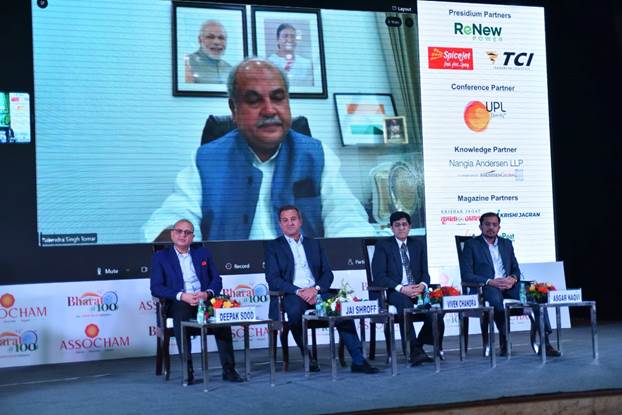
Shri Tomar said this in his virtual address to the National Conference on Enhancing Agricultural Productivity on the topic “Integration of Improved Seeds and Agri Inputs”, organized by the Associated Chamber of Commerce and Industry of India (ASSOCHAM) in New Delhi today. Shri Tomar said that the stronger and more profitable the Agriculture sector is, the stronger the country will be. There is a need to consider the challenges facing Agriculture today. In spite of all the favourable conditions, the area under farming and its profit and loss depend a lot on the nature. People’s curiosity and attachment towards agriculture should increase, agriculture should be attractive for the next generation and farmers can be retained for farming, more work needs to be done in this direction. Shri Tomar said that the government is working to reduce the gap between farmers and the market, providing infrastructure in rural areas and eliminate the role of middlemen. He said that the number of small farmers in the country is more, who have small acreage and do not have money for investment; for such farmers, the Central Government is setting up 10,000 new FPOs, for which a provision of Rs 6,865 crore has been made and small farmers are being mobilized. It is the effort of the government that farmers should do group farming, so that the input costs can be reduced, production quality improves and small farmers can shift to remunerative crops and get the price for their produce on their own terms. FPOs can also process products. For this, the government has extended loans up to Rs. 2 crore without guarantee.

Shri Tomar said that to reduce import dependence in oilseeds, the Oil Palm Mission has been started with a provision of Rs.11,000 crore. 28 lakh hectares of land in the country is suitable for oil palm cultivation. The prospects are high in the Northeast. Provision of Rupees One lakh crore Agri Infra Fund has been made for creation of infrastructure in the villages. Provision has also been made for special packages for Animal Husbandry, Fisheries and Medicinal Farming. Shri Tomar said that the Government of India is also working on the Digital Agriculture Mission, in which farmers, banks and other institutions will be linked, crop assessment made, data collected and crop losses will also be assessed with technology. Mapping will be done in such a way that farmers across the country can be advised through the State Governments as to where and which consumption is there, accordingly profit can be earned by producing as much needed. There will be no panic and there will be no loss. The Government has also emphasized on Natural Farming, in this direction we all need to work ahead. ASSOCHAM members including Secretary General Shri Deepak Sood, Shri Asghar Naqvi and Shri Jai Shroff were present in the programme. A knowledge paper was released on the occasion.

***

Village Fair

 India is a land of fairs and
festivals. They provide us a lot of fun and amusement. The urban people have
many sources of attraction and recreation. They can visit the dazzling bazaars,
big restaurants and cinema halls. The weekly bazaars provide them the
facilities of marketing. The poor villagers lack all such facilities. The
bazaars are far off from the villages. The villagers’ life the very hard and
lacks all charm. They have no means of recreation. Their secludes life is cut off
from the urban modernisation.

Many fairs are held every year
in the villages. These fairs generally take place on the occasion of some
festival. The Holi fair, the Rakhi Bandhan fair, the Basant fair and the
Baisakhi fairs are the chief and common ones. The Baba Haridas Mela is the most
prominent one in our area. It is held at village Jharauda Kalan, twice a year.

Festival of Diwali

 Diwali or Deepawali is one of the most important festivals of the Hindus. It generally falls in the month of October. Fifteenth day of the month of Kartik is the day of its celebration. The festival marks the end of the rainy season and the beginning of winter.

A few days before the festival, houses are cleaned, white-washed and painted. The Hindus decorate their houses with pictures and images of gods. Fairs are held on this occasion in all towns and villages. People purchase parched rice, sugar toys, earthen cups and other things for the worship or goddess Luxmi.

In the right time goddess Luxmi is worshipped with parched rice, sugar toys and sweets. Then the Hindus illuminate their houses by means of earthen cups and candlestricks. Rows of lighted lamps are seen everywhere.

Some people gamble the whole night, while others recite Ramayana, hold keertans and read religious book. All want the blessing of goddess Luxmi on the night.

United Nations World Geospatial Information Congress (UNWGIC 2022)

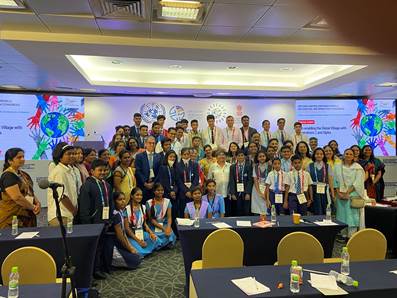
 Students from 18 schools across the country presented new ideas on how geospatial technologies can be embedded to address local challenges like protecting the heritage, soil fertility, crop diversity, clean city, water management, women empowerment, waste management, digital India, clean energy, climate change and so on to achieve sustainable development goals (SDGs).

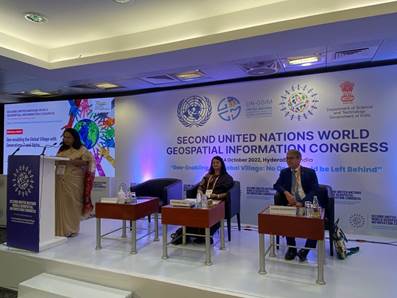
Teams from 18 urban and rural schools across India showcased the use of geospatial information and technology in understanding local issues and its use in planning and implementing at a special event titled ‘Geo-enabling the global village with Generation Z and Alpha’ of the Second United Nations World Geospatial Information Congress today (UNWGIC).

Efforts in mapping chemical fertilizer use in farms, as well as their production against organic fertilizer usage along with their production, were showcased. Students also highlighted initiatives of mapping rural biodiversity loss over time, as well as mapping of local recyclable products to source them effectively and increase their usage.

The young teams focused on SDGs of zero hunger, gender equality, decent work and economic growth, sustainable cities and communities, responsible consumption and production, climate action, and life on land. The event could show the way to localize the implementation of the SDGs through geospatial thinking.

In his address, Stefan Schweinfest, Director UN Statistics Division, said that SDGs is not just a document but it is a proper action plan to engage with each other, work together and bring solutions for a better world. “All the projects are truly incredible and great examples for localising the SDGs. Rather than competition, the purpose of this session is to interact with each other, make friends and discuss how to take the ideas forward in the future so that you can be a UN representative for SDGs,” he added.

 Dr. Subha Pandey, Scientist, Department of Science and Technology (DST), who chaired the session, elaborated on the DSTs activities and emphasized on geospatial technology use at school and community levels to localize SDGs.

The Second United Nations World Geospatial Information Congress (UNWGIC 2022) is being held at Hyderabad International Convention Centre (HICC), India, from 10 to 14 October 2022 with the theme ‘Geo-Enabling the Global Village: No one should be left behind. It has been convened by the United Nations Committee of Experts on Global Geospatial Information Management (UN-GGIM) and organized by the Department of Economic and Social Affairs of the United Nations and hosted by the Department of Science & Technology (DST) – Ministry of Science and Technology, Government of India.


SNC/RR

Dilraj Meena

Articles written by Dilraj Meena


1.     https://www.internationaljournalofresearch.org/2022/10/spain-to-give-menstrual-leave-to-women.html

2.     https://www.internationaljournalofresearch.org/2022/10/temples-are-pride-of-rajasthan.html

3.     https://www.internationaljournalofresearch.org/2022/10/national-service-scheme.html

4.     https://www.internationaljournalofresearch.org/2022/10/training-and-placement-cell.html

5.     https://www.internationaljournalofresearch.org/2022/10/taj-mahotsav-celebration-of-indias.html

6.     https://www.internationaljournalofresearch.org/2022/10/college-fest.html

7.     https://www.internationaljournalofresearch.org/2022/10/social-life.html

8.     https://www.internationaljournalofresearch.org/2022/10/importance-of-nature.html

9.     https://www.internationaljournalofresearch.org/2022/10/space-unsolved-mystery.html

10.  https://www.internationaljournalofresearch.org/2022/10/it-ends-with-us-colleen-hoover.html

11.  https://www.internationaljournalofresearch.org/2022/10/social-media-boon.html

12.  https://www.internationaljournalofresearch.org/2022/10/lata-mangeshkars-unwavering-bollywood.html

13.  https://www.internationaljournalofresearch.org/2022/10/the-archies-another-product-of-nepotism.html

14.  https://www.internationaljournalofresearch.org/2022/10/where-is-equality.html

15.  https://www.internationaljournalofresearch.org/2022/10/love-is-love.html

16.  https://www.internationaljournalofresearch.org/2022/10/protection-of-mother-earth-is-in-our.html

17.  https://www.internationaljournalofresearch.org/2022/10/reels-based-on-novels-movies-like.html

18.  https://www.internationaljournalofresearch.org/2022/10/serves-extraordinary-researchers.html

19.  https://www.internationaljournalofresearch.org/2022/10/why-these-bad-names.html

20.  https://www.internationaljournalofresearch.org/2022/10/venom-at-mid-on-city.html

21.  https://www.internationaljournalofresearch.org/2022/10/lassi-since-1944.html

22.  https://www.internationaljournalofresearch.org/2022/10/struggle-to-gain-respect-after.html

23.  https://www.internationaljournalofresearch.org/2022/10/prostitution-is-also-profession.html

24.  https://www.internationaljournalofresearch.org/2022/10/chacha-nehru-our-pride.html

25.  https://www.internationaljournalofresearch.org/2022/10/nature.html

26.  https://www.internationaljournalofresearch.org/2022/10/why-we-fool-ourselves.html

27.  https://www.internationaljournalofresearch.org/2022/10/rabindranath-tagore-true-legend.html

28.  https://www.internationaljournalofresearch.org/2022/10/the-crime-in-which-victim-become-accused.html

29.  https://www.internationaljournalofresearch.org/2022/10/truth-is-ruthless.html

30.  https://www.internationaljournalofresearch.org/2022/10/how-to-fight-like-gandhi.html

DDA Planning Assistant Result 2022 – Download Result & Merit List Here!

 The DDA Planning Assistant Result 2022 will soon be released on the official website of the Delhi Development Authority (DDA). The DDA Planning Assistant Recruitment Result 2022 will be released after the single-stage online test for DDA Planning Assistant closes officially. A total of 15 vacancies have been released this year by DDA for the post of Planning Assistant. The applicants should use their login credentials to check their DDA Planning Assistant Result 2022 online.

  • The DDA Planning Assistant Merit List and Cut Off marks along with the official DDA Planning Assistant Exam Result will be uploaded on the official website. The candidates should verify all the details mentioned in the Result to avoid discrepancies later on.
  • The DDA Planning Assistant recruitment process has only a single-stage online test. DDA Planning Assistant Results will be uploaded on the website a few days after the test ends.
  • For the candidates who clear the DDA Planning Assistant Cut Off marks, the next stage will be document verification.

The candidates can read this article to know the steps to download the DDA Planning Assistant Result 2022 and how they can calculate their marks using the Answer Key. Also check category-wise cut off marks, merit list, and important details regarding the Result of DDA Planning Assistant Exam 2022.

DDA Planning Assistant Result 2022

DDA Planning Assistant Events

Dates

DDA Planning Assistant Written Exam Date

1st September – 30th September 2022

DDA Planning Assistant Result Dates

To be updated soon

Result Direct link

Direct link to Download Result

How to Download DDA Planning Assistant Result 2022?

To download DDA Planning Assistant Results from the official website, candidates can follow the given steps to avoid any discrepancies. The Result will be declared on the official website after a few days of the conduct of the exam.

Step 1: Go to the official DDA website.

Step 2: Click on the “What’s New” tab available on the homepage

Step 3: After that, find the DDA Planning Assistant Result link and click on it.

Step 4: The merit list will be displayed on the screen.

Step 5: Now find your name or roll number in the merit list.

Step 6: Download or print the result PDF file for future reference.

Details to be Checked in the DDA Planning Assistant Result

Candidates should ensure that the details entered in their DDA Planning Assistant Results are correct without any error or mistake. If any mistake or error is found in the Result, the candidate should inform the concerned officials immediately to prevent any future problems. The details which should be checked thoroughly are:

  • Personal information: Candidates need to double-check their personal information, like the spelling of his/her name, name of the guardian, date of birth, gender, category, etc.
  • Score: The candidates should check their acquired score in each section of the paper carefully. You should also check your total score and rank.
  • Cut Off Marks: Check the Cut Off marks to know whether you have qualified or not.
  • Other important information: You may find other relevant instructions regarding the selection processes in your DDA Planning Assistant Result. Make sure to go through that information.

How to Calculate Marks for the DDA Planning Assistant Online Exam?

The DDA Planning Assistant Answer Key for the written exam will be uploaded on the DDA official website. Candidates who want to estimate their tentative marks can use it as a guide. While computing the scores, the candidates should keep the following points in mind:

Step 1: Add the marks assigned for each correct response.

Step 2: If the question is of 01 marks, there will be a penalty of 0.33 marks (negative marking) for wrong answers / multiple answers marked by a candidate in the objective type question papers having four alternatives. However, where the question is of 02 marks, there will be a penalty of 0.66 marks (negative marking).

Step 3: Now total your score to arrive at your DDA Planning Assistant Result.

DDA Planning Assistant Merit List 2022

The Delhi Development Authority will release the DDA Planning Assistant merit list along with the result on their official website. The DDA Planning Assistant Merit List will be prepared on the basis of scores obtained by candidates in the online exam. The merit list comprises the name, and roll number of the candidates who have managed to clear the exam with flying colours. For that, the candidates should be well-versed with the DDA Planning Assistant Syllabus beforehand. The dates for the release of the merit list are yet to be notified by the Authority. Till then follow the Testbook to get immediate updates on the DDA Planning Assistant Result.

DDA Planning Assistant Cut Off 2022

The Authority releases the DDA Planning Assistant Cut Off marks which specify the minimum marks required to qualify for the online exam. Meanwhile, candidates can check the DDA Planning Assistant minimum qualifying marks below:

Category

Minimum Qualifying Marks

EWS

35%

OBC

35%

SC

30%

ST

30%

UR

40%

The Authority decides the Cut Off marks based on the parameters such as the total number of test-takers, availability of vacancies, category, difficulty level, minimum marks, etc. The Cut Off marks for 2022 are not yet declared. Stay tuned to Testbook for updates regarding the same.

DDA Planning Assistant Result 2022: Resolution of Tie Cases

It is expected that if two or more candidates score the same marks in the exam, the person who has the highest age will be considered for the position. However, the details regarding the same haven’t been mentioned in the notification. Result of Stenographs at DDA

What Next After the DDA Planning Assistant Result 2022?

The candidate who will find their name on the merit list will be called for the Document verification. They will have to bring all the valid documents in support of their eligibility, such as Age, Qualification, caste, etc. If they fail to submit any of the required documents, then they will be disqualified from the further selection process. The list of important documents is as follows:

  • 12th or equivalent mark sheet and other educational certificates
  • Caste Certificate
  • Photo Identity Proof (Aadhar Card, Pan Card, Voter ID Card, etc)
  • Other Relevant Documents
  • Passport size photograph

We hope this article was helpful to you. Explore our page to get more details regarding the DDA Planning Assistant online Exam.