Media as the Fourth Pillar of Democracy

 Media as the Fourth Pillar of Democracy

As the largest democracy, India is considered a role model for a large number of developing countries. We have state and central governments elected by the people. We have a government run by our own elected representatives, known as Members of Legislative Assembly (MLAs) in the state and Members of Parliament (MPs) at the center. The democratic government has three pillars:

a) A Legislature: State Assemblies and Parliament, responsible for framing laws and deciding the way we run our affairs.

b) An Executive: The Governor, the Chief Minister, and the Ministers who run the state and the President, Prime Minister, and the Council of Ministers who run the country.

c) A Judiciary: The Supreme Court, High Courts, and other courts decide whether laws and constitutional provisions are followed by the elected governments.

The fourth pillar of Democracy:

Media work to provide information about what is happening in our surroundings. Media keep an eye on everything happening in the nation and it is the fastest way to know about current happening and other relevant information. Media is considered the fourth pillar of democracy. It plays an important role as play by the legislature, executive, and judiciary in the functioning of a democratic country. As these three pillars run the government of the country for the welfare and development of all the people, the media also work for the same.

 In a democracy, the people should know what the three institutions, namely the Legislature, the Executive, and the Judiciary are doing for the welfare of the people. These institutions in turn need to know how the people are reacting to what they are doing. This can be only possible through the media because media is the easiest way to disseminate information quickly and easily across the country.

The government can’t spread the information about the decision they made or new policies they made, to individual people of the country. And it is also not possible for the citizens of the country to keep an eye on every decision-making of government. So, the media is the only way to connect both. The main role of the media is to act as a bridge between the people and the government.

Media can spread the information about government through TV news, newspaper, website, or social media platform, which help people to get in touch with what is happening in the administration. In the same way, the government can know about the needs, demands, thoughts, and problems of people. This helps them to work for the betterment of the nation. Media also work to expose corruption and raise social issues. Thus, the media play a great role in the functioning of the country.

Real estate, types of real estate

 Real estate

Real estate is property in the form of land , houses, or other buildings. It is real property that consists of land and improvements , which include buildings , fixtures , roads , structures , and utility systems.
It having generally immovable property . 
For anyone who want more gain in property with low investment and more gain they should have real estate . 
There are many benefits of investing in real estate include passive income , stable cash flow , tax advantages, diversification, and leverage.
There are five main categories of real estate which include residential, commercial, industrial, raw land , and special use.
Investing in real estate includes purchasing a home , rental property, or land . Investment in this immovable property help person in future as everyone need money for their survival without money nothing can been taken in this world . So by investing in these properties people will gain more with their less investment after sometime in the future.

Types of Real Estate

1. Residential real estate – 

Any property used for residential purposes. Examples include single – family homes , condos , cooperatives, duplexes , townhouses, and multi-family residences.

2. Commercial real estate – 

Shopping centres, restaurants, schools , hospitals, and office spaces all are some examples of commercial properties that we are probably familiar with. Investing in them is more expensive as computer to residential properties, but the chances of profit generation are better too.

3. Industrial real estate – 

Buildings and factories used for manufacturing goods and warehousing are known as industrial properties. They are generally located far away from the city to avoid the citizens getting affected by their pollutants. Each factory produce polluting agents so it’s better that it should be far away.

4. Mixed use real estate – 

Mixed use real estate is fun investment because it allows you to play with both residential and commercial real estate.
The cool thing about mixed use real estate is that it can be single homes zoned on commercial land , which means a home can become a business such as a barber shop or boutique. It also includes properties like apartment building with retail stores on the first floors. 

5. Land – 

I think buying a land is one of the best idea in this generation. As day by day the price of land is increasing and if one person buy land today then in future he will get profit as their price will increase. Here investors typically receive more ROI when they purchase a building and rent it out as opposed to buying property with the purpose of holding on to it and selling it at a later date .
So investing in a real estate is good idea for anyone . We always need some property to ensure our financial condition will be good in the future. If a person don’t have any real estate he or she will regret later as everyone need money for their livelihood and maintaining their status in the society.
Try to invest in real estate it will surely help you in your difficult time .

Describing "Loan"


What’s a loan?

A loan is anything loaned to another person in exchange for future repayment of the loan value plus interest and other financing charges, whether it be property, money, or other tangible goods. A loan can be obtained as an open-ended line of credit with a set maximum or for a fixed, one-time sum. There are many various types of loans, including unsecured, secured, commercial, and personal loans.


Know about the loans


A loan is a debt that a person or an organisation incurs. A lender is the other party to the transaction; typically, it is a government agency, financial institution, or business. They lend the borrower the necessary amount of money. In exchange, the borrowers consent to pay a specific set of conditions, such as any finance fees, interest, etc., using the money they initially borrowed.

How is the loan process carried out?


You apply for a loan from a business or a bank when you need money. You must supply particular information, including the reason you need the loan, as well as your financial background, Social Security Number (SSN), and other facts that may differ from lender to lender.

In order to determine if you can afford to repay the loan, the lender will examine your application and look at your debt-to-income ratio. The lender will either accept or reject your application based on it. If your application is turned down, the lender is required to give a justification.

A contract between you and the lender is signed if your application is accepted. The loan amount, together with interest and other fees, are sent to your account by the lender.

Before a loan contract is completed and funds are dispersed, certain terms must be agreed upon by both parties. The loan paperwork will specify any requirements for collateral, which the lender may in some circumstances require. The majority of loans also include clauses defining the maximum rate of interest and the grace period before repayment is necessary.

When and why are loans given?


Loans are given out for a variety of reasons. A borrower can require a loan to finance a purchase, debt relief, business endeavours, home improvements, or for investments. Business loans can support a company’s expansion.

Loans, in other words, enable the expansion of an economy’s total money supply and promote competition by funding new enterprises. Lenders (banks) receive income from the interest and other fees they charge borrowers.

When taking out a loan, one key consideration


The importance of interest rates to a borrower is one of the key considerations when applying for a loan. The borrower will spend more money for loans with higher interest rates since they require larger monthly payments or take longer to repay than loans with lower interest rates.

What inquiries must to be made while applying for a loan?


A few inquiries one should make while applying for a loan include:

Q. How long will it take to receive the funds?,

Q. What is the loan’s interest rate?,

Q. What is the loan’s duration? Do there charge any fees?

What are the three primary categories for loans?


Loans can be divided into three basic groups: traditional, open-end and closed-end loans, unsecured and secured loans.

What elements influence loan approval?


Loan approval is influenced by a number of variables, including credit score, debt-to-income ratio, down payment, employment history, home valuation, and condition.

Amritsar- The Holy City

 Amritsar- The Holy City

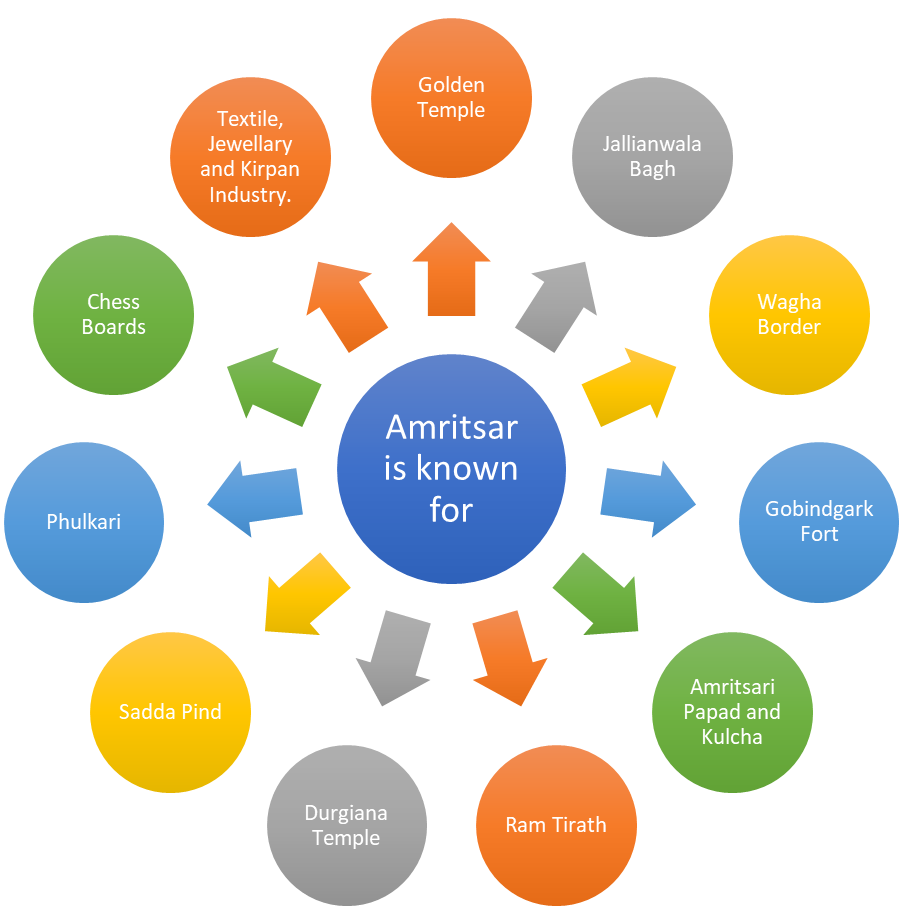
Amritsar also called Ambarsar and historically known as Ramdaspur, is located in the Punjab state of India. It derives its name from Amrit Sarovar which was built by Guru Ram Das in the village of Tung. Guru Ram Das believed that the waters of the lake had healing powers. Amritsar is the largest and most important city in Punjab and is a major commercial, cultural, and transportation center. It is also the center of Sikhism and the site of the Sikhs’ principal place of worship—the Harmandir Sahib which is popularly known as the Golden Temple. The hospitality of Amritsar is very good and the people here are so overwhelming.

 5 most important reasons to visit Amritsar


1.    The very first reason to visit Amritsar is Golden Temple. The peace and tranquility of the temple is the main reason why travelers love visiting the temple. The langar served at the temple is yet another reason why this is a popular place to visit in Amritsar. The Architecture and ambiance of the temple will touch your heart.


2.    The second thing is the Wagah border. The Wagah Border is what divides India and Pakistan. Every evening, a ceremony called the ‘lowering of the flags’ is hosted half an hour before the sunset, and it sees a huge gathering on both sides of the border. The ceremony has been going on every day since 1959 and is worth an experience. 


3.    The third reason to visit Amritsar is Jallianwala Bagh. No Indian can forget the massacre and the tragic history of the Jallianwala Bagh during India’s struggle for freedom. The memorial is a tribute and a way to pay respect to everyone who lost their lives here. Still, you can see the signs of history here.


4.    The fourth thing is food, which is so good that you can’t stop yourself. You eat at one Dhaba, and you’ll find yourself eating at a Dhaba throughout your trip to Amritsar. Kesar Da Dhaba is one of the most popular Dhaba in the city, and you’ll be drawn to it the moment you’re anywhere near it. The smell of desi ghee and parathas will draw you to the Dhaba. It’s also one of the oldest dhabas in the city. You will find a lot of Dhabas in Amritsar and don’t forget to order a big glass of lassi while you’re at it. The chole, parathas, dal, and phirni are some of the other specialty food items you must try out.


5.    The fifth reason is locals and the market. Interacting with the locals is one of the best things to do in Amritsar. You will learn a lot about their culture, and you will leave with a bunch of friends and a wonderful experience. The people here are extremely hospitable and will become your best buddy very quickly and quite easily. Head over to Old Amritsar to experience what Amritsar is all about. You will find a lot of bazaars here and some that have been there for over a hundred years. 

 Thus, the reasons to visit Amritsar are endless. Once you visit the place you will connect with the place heartly. This place will teach you to how to enjoy your life happily and keep others happy too.


Tourist Destination and 5 reasons you should visit Goa

 What do you mean by tourist destination?

A tourist destination is any city or place where you can visit and explore things. It attracts the nature of that particular place, the beauty, the most historical monuments, temples and their famous food.

Goa

Goa is the smallest state in India. It is bounded by the states of Maharashtra in the north and Karnataka in the south and east and the Arabian Sea in the west. Goa’s capital is Panaji. It is located 400 km south of Mumbai. Goa is very famous for its beaches and its goan foods. The climate of goa is equally high and low temperature throughout the year and it receives rainfall in the monsoon season. 

Agriculture is an important factor in goa’s economy. It has a large fisheries industry and they have agricultural farms where they grow mangoes, cashew, sugarcane, pulses, coconuts, and betel. 

The transportation service to Goa is available by road, sea, rail and air.

Goa is the most beautiful place to visit and explore new things. Till now I have not visited goa but for sure to go one time for a vacation. There are some famous beaches, food and monuments there. 

Let’s explain it briefly

1. Calangute Beach

It is one of the most popular beaches in Goa. It is located in the district of North Goa. The main tourist attraction is in New Year and Christmas time and during the summer of May. Calangute beach is the most adventurous beach. It has many watersports like parasailing, banana rides and jet- skiing.

2. Fort Aguada

Fort Aguada is situated in North Goa. From September to March it is the best time to visit Fort Aguada and see the beauty of the fort. It is built at the mouth of the Mandovi river and it takes 2 hours to visit and sees the entire fort.

3. Baga Beach

Baga beach is situated in North Goa. It is a popular beach with bars, restaurants and clubs. It has many watersports such as parasailing,net-skiing, kite surfing, and wakeboarding. There is a Tibetian market on Baga Road for shopaholics. 

Baga beach has an indoor snow park where you can enjoy many games in the play area and sledge in the sledging area.

4. Dudhsagar waterfall

Dudhsagar waterfall is also known as the Sea of Milk and it is the highest waterfall in India. November and December is the most beautiful time to visit Dudhsagar waterfall and the nearest railway station to reach Dudhsagar waterfalls is Castle Rock Station. It is located in the Mandovi river in the state of Goa.

5. Butterfly Beach

 Butterfly beach is located in south goa. It is also known as honeymoon beach. Butterfly beach has a very beautiful view and is surrounded by a thick forest. These beaches have dolphins and butterflies on the top hillside.

5 reasons why you should visit Goa 

* Goa is a beautiful place to go for a vacation with your loved ones. You can enjoy the sunset beach walk and doing shopping in the markets.

* Goa has its famous food which is called Goan food. Goan food is incomplete without fish, rice and fish curry. Once you eat this Goan food you will always be in love with this famous Goan food of Goa. Another snack which is very popular in India is the samosa. Many people love samosas but Goan samosas is one of the best snacks served in every tea corner or stall in Goa.

* In Goa you can enjoy doing watersports available on beaches. Example – parasailing, jet- skiing, banana ride, boat ride, Ringo ride, windsurfing and many more.

* If you want to enjoy a festive atmosphere you can plan a trip to Goa. Many carnivals are there to enjoy and the church at Christmas time. It is one of the most beautiful views in Goa.

* Dolphin spotting is another reason you must visit Goa. There are many dolphins on Goa beaches and if you take a banana boat and ride into the ocean you will see dolphins jumping out to play. Candolim beach is very popular for dolphin spotting.

Hope you will find this blog helpful if you plan a trip to Goa and if you want more details about the planning and booking of tickets, and resorts in Goa, you can check their official website.

PageRank Checker – Check Your Google Page Rank

PageRank is an algorithm used by Google Search to rank websites in their search engine results. Page Rank was named after Larry Page, one of the founders of Google as a way of measuring the importance of website pages.

What is Google PageRank and Why Is It Important

According to Google:

“PageRank works by counting the number and quality of links to a page to determine a rough estimate of how important the website is. The underlying assumption is that more important websites are likely to receive more links from other websites.”

Briefly, the Page Rank is an assessment of the importance of a web page. This relevance is calculated and published on a scale from 0 to 10. Google basically takes into account the number of backlinks that each page receives, however, the number doesn’t matter that much if we don’t build high quality backlinks from sites which are related to our links, preferably internal links.

A greater importance has the quantity of internal links linked by other websites, which happens when you create a post and someone publishes the link that redirects to this post that you created. So, the more backlinks your blog or site has, the higher is the chance of having a good PageRank.

Now that we have a basic understanding of what Page Rank is, how about checking yours?

Check Google Page Rank using the PageRank Checker

You can easily calculate your page rank and check the importance of your page. Just enter the address of your website / blog below and check it out:

Check Page Rank of your Web site pages instantly:


This page rank checking tool is powered by Page Rank Checker service

Do you want to share your page rank with your visitors? You can add a button to your blog by visiting the PageRank Buttons page.

What is an Insurance Policy?

 A contract between a person (Policyholder) and an insurance business is known as an insurance policy or plan (Provider). According to the terms of the contract, you pay the insurer regular sums of money (referred to as premiums), and they pay you if the sum assured is realised in the case of an unpleasant occurrence, such as the early death of the life insured, an accident, or damage to a home. Let’s learn more about what insurance is and the different features, advantages, and forms of insurance that are offered in India.

If an event occurs, the insurer pays a lump sum settlement to the policyholder/nominee in accordance with the insurance terms.

Depending on a person’s needs and life goals, they will decide which kind of insurance coverage to purchase.

An insurance policy has a number of different parts, each of which should be well understood before selecting the one that best suits your needs.

Insurance-Related Items

Listed below are some of these elements to assist you comprehend “what is insurance” and how it operates:

Policy for Insurance Premiums

The amount you must pay to purchase a certain quantity of insurance coverage is known as the premium of an insurance policy. It is often described as a consistent expense that you have during the period of premium payments, whether it is monthly, quarterly, half-yearly, or annually.

The premium for an insurance policy is determined by a number of variables by an insurance provider. The purpose is to determine if an insured person is qualified to purchase the particular sort of insurance policy that he or she desires.

For instance, if you are in good health and have never received treatment for serious physical ailments, you will probably pay less for health insurance or a life insurance policy than someone who is unwell.

Additionally, you should be aware that different insurance providers may charge various costs for comparable types of plans. So it does take some work to choose the appropriate one at a price you can afford.

Policy Limit

It is described as the highest sum that an insurance provider is accountable for covering for damages covered by the insurance policy. Based on the timeframe (the policy term), the loss or injury, and comparable other considerations, it is decided. 

Generally speaking, the higher the coverage limit, the more expensive the premium will be. The highest sum that an insurer will pay to the nominee under a life insurance policy is referred to as the sum assured.

Deductible

The amount or percentage that the policyholder agrees to pay out of pocket prior to the insurer beginning to settle a claim is the deductible associated with an insurance policy. It also serves as a deterrent to the numerous petty, unimportant claims that people make under their insurance coverage.

According to the conditions of a certain type of policy, deductibles are applied per policy or per claim. High deductible insurance policies are typically less expensive because fewer claims are filed due to the greater out-of-pocket costs.

How Do Insurance Policies Work?

According to the definition given above, an insurance policy is a binding legal agreement between the policyholder and the insurance provider. It contains all the information on the terms or situations under which the insured person or the policy nominee will receive insurance benefits from the insurer.

You can protect yourself and your loved ones from a financial crisis by purchasing insurance. You purchase an insurance policy for the same, and the insurance provider assumes the associated risk and provides insurance coverage for a set fee.

The insured or nominee may submit a claim to the insurer in the event of any occurrence. The insurer examines the claim application and resolves the claim based on the criteria for claim evaluation.

India’s Insurance Options

The four forms of insurance that people most frequently purchase are:

Health Insurance

Medical Insurance

Vehicle Insurance

Property Insurance

Gains from Insurance :

Insurance plans have numerous advantages for both individuals and society as a whole. Other advantages of insurance, besides the obvious ones, are less well known or spoken of.

1. Protect against ambiguity

It is among the most notable and significant advantages of insurance. According to the insurance plans, the insured person or organisations are protected against losses. The correct kind of insurance coverage might help you protect yourself from losses brought on by various life’s uncertainties.

2. Managing Cash Flow

The management of cash flow is greatly impacted by the uncertainty of covering the losses out of pocket. However, you can deal with this uncertainty with ease if you have an insurance coverage on your side. The selected insurance company

3. Possibilities for Investment

A portion of the premium for the unit-linked insurance plan is invested in various market-linked funds. They make it possible for you to consistently invest money in order to benefit from market-linked returns and achieve your life goals.

Benefits of Insurance for Taxes

You can receive income tax benefits in addition to protection benefits from insurance plans.

Article 80C

According to Section 80C of the Income Tax Act, the premiums for life insurance policies may be deducted from taxable income. The maximum deduction allowed is Rs. 1.5 lakh.

Article 80D

According to Section 80D of the Income Tax Act of 1961, health insurance premiums paid to purchase policies for you and your parents are also tax deductible.

Chapter 10 (10D)

This clause exempts from taxation any life insurance benefits that you or the insurance policy nominee receive from the insurer.

Purchase insurance to be safeguarded.

In today’s world, having insurance to stay protected is essential. Even while many people invest in various insurances, not everyone is aware of all the benefits they can provide. Insurance, such as life insurance, safely and affordably guarantees the financial security of your family as well as your own. Additionally, buying life insurance promotes the development of a consistent saving routine. It so gives you the ability to create a significant corpus.

You may protect your financial situation and that of your family with the aid of insurance plans from one of the available Life Insurance policy, such as term plans and health insurance plans, and you can also benefit from a number of other advantages. Now that you understand what insurance is and how it functions, you should think about getting the kind that’s right for you and stay safe!


Role of NGOs in India

    Role of NGOs in India

NGO means non-Governmental organization, which is a voluntary group with social mission. These organization are independent from government. These are non-profitable organization whose mission is to fight the social issues and do charity for public good. They have high degree of public trust which make them more concerned about the society. People join NGOs as their member to work for the welfare of society from their end by keeping the goal of NGO as their primary concern. NGOs receive funding from the government, an individual, or an organization.

NGOs were first called in Article 71 in the charter of newly formed United Nation in 1945. NGOs activity includes environment, social advocacy, human rights, consumer protection, health, development, etc. They work at different level like local, regional, national, international, etc.

Different NGOs work in different form like providing charity (beneficiaries provide input) to the needy people, providing healthcare and education services, by participating in the cause in the form of money, land, material, etc., by aware and empowering the poor people to understand the social, political, economical factor which affects their lives.

Different NGOs in India

1.   CHILDLINE India foundation

CHILDLINE aims to reach out to every child in need and ensure their rights and protection. There four Cs model – Connect, Catalyse, Collaborate and Communicate – is the system that enables them to reach out to more and more children, every year.

2.  Pratham

Pratham is one of the largest NGO in India that provides innovative learning to improve the quality of education in the country. It focuses on high-quality, low-cost interventions to address the gaps in the education system. Pratham partners with several state governments to help children acquire foundational skills. Their programs have successfully reached millions of children every year.

3.   Smile Foundation

Smile Foundation wants to bring about change in the lives of the underprivileged society by enabling civil society to engage proactively in the change process.Smile Foundation aims to empower the lower strata of society especially children and women through relevant education, innovative healthcare and market-focused livelihood programs.

4.   CRY (Child rights and you)

Their vision is that every child is happy, healthy and creative and whose rights are protected and honoured in an equal and dignified society. They want to enable people to take responsibility and make them aware of their potential for action and change. It wants people to commit to helping secure, protect and honor the rights of Indian children.

5.      Nanhi kali

This education NGO aims to positively impact India’s development by educating girls and encouraging people to contribute to a worthy cause. Nanhi Kali has ensured that 90% of girls in their program successfully complete their schooling till Class X. Project Nanhi Kali supports underprivileged girls by providing them daily academic assistance through Academic Support Centres, Annual Supplies Kit and Digital Tablets to secondary school girls.

Thus, The numbers of NGOs are not limited. There are a lot NGOs who are working to reframe the society and it’s our responsibility to support them in their good cause. As much as we become responsible, the quality of life of needy people will increase. If we share a little part of what we have we can build a great nation.

Business software and it's types.

 Business software and it’s types.

What is business software?

Business software is any software or set of computer programs used by business users to perform various business functions.
Some common types of software used in business are – 
1. Word processing program
2. Accounting software
3. Billing software
4. Payroll software
5. Database software
6. Asset management software
7. Desktop publishing programs
With the help of business software, a person done many useful things which gives benefit to their business. 
Many decisions is taken on the basis of management information system. As business software is very useful for the businessman .
They make their work easy and provide relief to the businessman.

Types of business software

1. Customer Relationship Management –

Customer Relationship Management is used by companies to solicit, review, store, and analyze customer data . It also helps to manage customer interaction, facilitates the sales process , and enable relevant partner relationships.

2. Project Management Software – 

One of the most popular forms of software used by businesses is project management software.
With this software you can define the scope of a project and the milestone associated with it. This then makes it easy for you to get a snapshot view of a projects progress , and how long it will take until the project is completed.

3. Accounting software – 

Accounting software helps businesses manage the financial side of their business.
Accounting software is especially helpful because it allows businesses to do a better job of keeping records. That’s because this software automatically tracks the transactions that take place in a company.

4. Enterprise resource planning – 

Enterprise application software, is computer software used to satisfy the needs of an organisation rather than individual users. Such organisation include businesses, schools, interest – based user groups, clubs , charities, and government.

5. Freshbooks – 

Freshbooks accounting software is comprehensive and is designed primarily for small businesses in the service industry.

6. Quick Books – 

QuickBooks is a comprehensive accounting software suite with all the modules you need to carry out the accounting functions of your small business.

7. Communication software – 

Businesses need communication software to help their employees collaborate with others . This type of business software helps businesses expand their Market reach and get in touch with other businesses in their industry.

8. Human Resource Information System –

Human resources is one of the most essential units of the team . They handle significant roles such as employee management, recruitment, maintaining employee records, training , and payroll system.

Real estate and its types

 Real estate

Real estate is a real property consisting of own land, natural resources and many more. Real estate is different from personal property such as jewellery, furniture, vehicles etc.

Types of real estate

1. Commercial real estate

Commercial real estate is any property which is for business purposes. Example – parks, complex, gas stations,  stores, shopping mall, movie hall grocery stores, restaurants, hospitals

2. Residential real estate

Residential real estate is only for own residential purposes. Example – own house, cooperative,multifamily residences and more.

3. Industrial real estate

Industrial real estate is a property which is for industrial purposes. Example – storage, distribution, manufacturing, research and development.

4. Land

Land is for undeveloped property like agricultural lands such as farms, orchards and timberland.

Online Courses by SWAYAM


Online Courses by SWAYAM

SWAYAM is a programme initiated by Government of India and designed to achieve the three cardinal principles of Education Policy viz., access, equity and quality. The objective of this effort is to take the best teaching learning resources to all, including the most disadvantaged. SWAYAM seeks to bridge the digital divide for students who have hitherto remained untouched by the digital revolution and have not been able to join the mainstream of the knowledge economy.

This is done through a platform that facilitates hosting of all the courses, taught in classrooms from Class 9 till post-graduation to be accessed by anyone, anywhere at any time. All the courses are interactive, prepared by the best teachers in the country and are available, free of cost to any learner. More than 1,000 specially chosen faculty and teachers from across the country have participated in preparing these courses.

The courses hosted on SWAYAM are in 4 quadrants – (1) video lecture, (2) specially prepared reading material that can be downloaded/printed (3) self-assessment tests through tests and quizzes and (4) an online discussion forum for clearing the doubts. Steps have been taken to enrich the learning experience by using audio-video and multi-media and state of the art pedagogy / technology.

 In order to ensure that best quality content is produced and delivered, nine National Coordinators have been appointed. They are:


  AICTE (All India Council for Technical Education) for self-paced and international courses

  NPTEL (National Programme on Technology Enhanced Learning) for Engineering

  UGC (University Grants Commission) for non-technical post-graduation education

  CEC (Consortium for Educational Communication) for under-graduate education

  NCERT (National Council of Educational Research and Training) for school education

  NIOS (National Institute of Open Schooling) for school education

  IGNOU (Indira Gandhi National Open University) for out-of-school students

  IIMB (Indian Institute of Management, Bangalore) for management studies

  NITTTR (National Institute of Technical Teachers Training and Research) for Teacher Training programme

Courses delivered through SWAYAM are available free of cost to the learners, however learners wanting a SWAYAM certificate should register for the final proctored exams that come at a fee and attend in-person at designated centres on specified dates. Eligibility for the certificate will be announced on the course page and learners will get certificates only if this criteria is matched. Universities/colleges approving credit transfer for these courses can use the marks/certificate obtained in these courses for the same.

How to apply for the SWAYAM Courses?

1.    Step 1Search for the SWAYAM website or you can click on https://swayam.gov.in/ to go directly to                  the website.

2.   Step  2The webpage will open and you can register on the website by clicking on SIGN-           IN/REGISTER button.

3.   Step 3After registering on the website click on All Courses at the top of the page to find the relevant course. The page will appear which shows all the courses.

4.   Step 4You can find the course of your choice by searching in the Course Catalog option or by scrolling down. You can also apply a filter (shown on the left of the above image) to search for the course according to your convenience.

5.  Step 5After choosing your favorite course click on it. This will direct you to the page showing all the information about that particular course. You can get every information about that course and can join the course by clicking on the JOIN button.


I hope, the information is helpful for you to find free courses by the government of India. Enroll yourself now and get started with government authorize short-term courses.

 Source– https://swayam.gov.in/ 


Seventh Governing Council meeting of NITI Aayog

 As India commemorates 75 years of Independence, there is a reinforced need for the states to be agile, resilient and self-reliant and move towards ‘AatmaNirbhar Bharat’ in a spirit of cooperative federalism.  In the drive towards building a steady, sustainable and inclusive India, the Seventh Governing Council meeting of NITI Aayog will be held on 7th August 2022 and will pave the way for synergies towards a new era of collaboration and cooperation between Centre and States/ Union Territories.

Prime Minister Shri Narendra Modi will chair the seventh meeting of the Governing Council at Rashtrapati Bhawan Cultural Centre, New Delhi.  The agenda of the meeting, interalia, includes crop diversification and achieving self-sufficiency in oilseeds and pulses and agri-communities; implementation of the National Education Policy–school education; implementation of the National Education Policy–higher education; and urban governance.

As part of preparations for the meeting, the National Conference of Chief Secretaries held in Dharamshala in June 2022 which was the culmination of the six month long rigorous exercise by the Centre and States. The conference was chaired by the Prime Minister and attended by the Chief Secretaries of all States and UTs, along with senior officials of the Central and State Governments.  The 7th Governing Council Meeting will endeavour to finalize a roadmap and outcome oriented action plan on each of the above themes. 

This would be the first in-person  meeting of the Governing Council since July 2019. It is particularly important as we enter Amrit Kaal against the backdrop of the Covid-19 pandemic and in light of India hosting the G20 Presidency and summit next year. The meeting would also lay emphasis on the importance of the Presidency for India for the federal system and the role that states can play in highlighting their progress at the G-20 Platform.

NITI Aayog’s Governing Council is the premier body tasked with evolving a shared vision of national priorities and strategies with the active involvement of States and Union Territories.  The Governing Council presents a platform to discuss inter-sectoral, inter-departmental and federal issues. It comprises the Prime Minister of India; Chief Ministers of all the states and union territories with legislature; Lt Governors of other UTs; Ex-Officio Members; Vice Chairman, NITI Aayog; Full-Time Members, NITI Aayog; and Union Ministers as Special Invitees.  It provides one of the most important forum for deliberations between the Centre and States and identifying key strategies for cohesive action with a whole-of-Government approach.

*****