

Author: Admin
Track2Training for students. Learn more on https://track2training.com
Consideration of Environmental Factors in Planning and Development of Ur…
Environmental Factors Affecting Urban Planning
DDA Planning Assistant Syllabus 2022
Part-I
i.Basic concepts of urban planning and Architecture, Planning Legislation
and GIS.
Section 1: Architecture
Section 2: Environmental Planning and Design
Section 3: Services, Infrastructure and Transportation
Section 4: Planning Legislation and GIS
ii. Delhi Development Act, (DD Act), 1957 will include all sections and provisions of the Act.
iii. Master plan of Delhi 1962-2021 will include provisions, strategies and Master Plan
proposals as per documents published from time to time.
Part-II:
To measure candidate’s reasoning ability, quantitative aptitude and proficiency in English and
General Awareness
a) Test of Reasoning
b) Test of Quantitative Aptitude
c) Test of General Awareness and
d) Test of English Language
DDA Planning Assistant Syllabus 2022: Detailed Syllabus
Part-I
i.Basic concepts of urban planning and Architecture, Planning Legislation
and GIS.
Section 1: Architecture
Elements, construction, architectural styles and examples of different periods of Indian and Western History of Architecture;
Oriental, Vernacular and Traditional architecture;
Architectural developments since Industrial Revolution;
Influence of modern art on architecture;
Art nouveau, Eclecticism, International styles, Post Modernism, Deconstruction in architecture;
Recent trends in Contemporary Architecture;
Works of renowned national and international architects.
Section 2: Environmental Planning and Design
Ecosystem- natural and man-made ecosystems;
Ecological principles Concepts of Environmental Impact Analysis;
Environmental considerations in planning and design;
database for incorporation of environmental concerns in planning analysis, land suitability analysis, vulnerability analysis;
Climate responsive design;
Solar architecture; methods of addressing environmental quality;
Green Building Concepts and Rating; ECBC; Building Performance Simulation and Evaluation;
Environmental pollution- types, cause, controls and abatement strategies.
Section 3: Services, Infrastructure and Transportation
Urban infrastructure- Transportation, Water Supply, Sewerage, Drainage, Solid Waste Management, Electricity and Communications;
Process and Principles of Transportation Planning and Traffic Engineering; Road capacity;
Traffic survey method; Traffic flow characteristics;
Traffic analyses and design considerations; Travel demand forecasting;
Land use transportation – urban from inter-relationships; Design of roads, intersections/ grade separates and parking areas, Hierarchy of roads and level of service;
Traffic and transport management and control in urban areas;
Mass transportation planning; Para-transits and other modes of transportations Pedestrian and slow moving traffic planning; Intelligent Transportation Systems.
Section 4: Planning Legislation and GIS
Planning legislation will include acts and legislation related to development management and maintenance of Delhi and other towns of NCR, municipal corporation and local bodies, Land Acquisition Act, PPP etc. Local self- Governance.
ii. Delhi Development Act, (DD Act), 1957 will include all sections and provisions of the Act.
iii. Master plan of Delhi 1962-2021 will include provisions, strategies and Master Plan
proposals as per documents published from time to time.
Part-II:
To measure candidate’s reasoning ability, quantitative aptitude and proficiency in English and
General Awareness
a) Test of Reasoning
b) Test of Quantitative Aptitude
c) Test of General Awareness and
d) Test of English Language
Videos Lectures Covering these Topics are available at
https://www.youtube.com/c/Track2Training
What is Environmental Planning
Consideration of Environmental Factors in Planning and Development of Urban Areas
In order to ensure safety and adequate conditions of life of the population, to limit the negative impact of economic and other activities on the environment and to ensure the protection and rational use of natural resources for the benefit of present and future generations, local governments in the implementation of spatial planning should take environmental factors into account. Therefore, speaking about environmental factors, we should pay attention to those functional areas that are most dependent planning in relation to environmental factors or themselves have an impact on the environment.
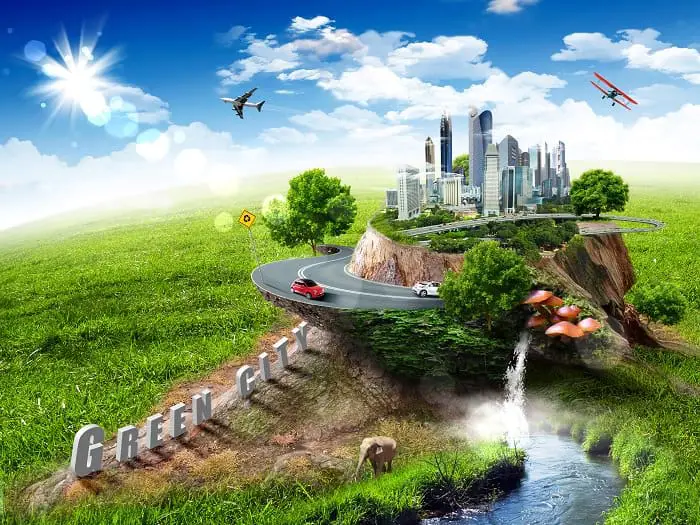
These are production zones, zones of engineering and transport infrastructures, residential and recreational areas. Production zone designed to accommodate industrial, municipal and warehouse facilities. The production area recommended to be placed on territories with a calm relief, providing convenient transport links to places of settlement employed in the enterprise workers and external facilities and urban transport. Planning should take into account the fact that in the production area included the territory of sanitary protection zones of the objects themselves and in these sanitary protection zones are not allowed in residential houses, preschool and educational institutions, and healthcare institutions, leisure, recreational and sports facilities, horticultural, suburban and gardening cooperatives and agricultural production.
In addition to production areas should pay attention to the zones of engineering and transport infrastructure, which is designed to accommodate activities and facilities and communications of railway, road, river, Maritime, air and pipeline transport, communications and engineering equipment, and also have in one way or another impact on the environment. When planning must take into account compliance with the required distances from such facilities to areas of residential, social, business and recreational areas and other requirements to prevent harmful effects on the environment. It should be understood that the objects of engineering and transport infrastructure, possessing the feature of a direct harmful impact on the security of the population, must be located outside urban and rural settlements.
Also in planning land use should pay attention to the location of the city’s recreational areas. As these areas are intended for the organization of places of rest of the population you need to consider that their territories are not permitted the construction and expansion of existing industrial, communal and storage objects, which can have a negative impact on human health and the environment. The exception may be only industrial, municipal and warehouse facilities, which is directly related to the operation of facilities health and recreational purposes.
Territorial planning of the municipal district is accompanied by the preparation of necessary documentation for territorial planning.
• documents of territorial planning;
• documents zoning;
• documentation on planning the territory.
In accordance with article 18 of the town planning Code of the Russian Federation territorial planning documents of municipalities are:
• territorial planning schemes of municipal districts;
• master plans of settlements;
• master plans of urban districts
The General plan of the municipal formation is main planning document that determines the prospects of development of the city for a long time. It must be presented not only transport, architectural planning, engineering, social and industrial aspects of city development and the ecological living conditions of the population and prospects of preservation of the environment. With the development of project planning documentation should consider the regulations and restrictions on natural resources, the sanitary-hygienic norms and rules, and other regulations governing environmental safety of living of population, natural features areas, the demographic features of the territory, its historical and cultural value and other environmental factors, or otherwise influencing the adoption of planning decisions.
Such a collection of information about the area required for the implementation of investment projects for the integrated development of the city. Detailed preliminary analysis of the relevant documents allows to predict the possible risks at the initial stage of implementation of the investment. These documents are very important for the investor because on the basis of the relevant documents, management decisions that may affect the interests of holders of land plots and capital construction objects (for example, decisions on seizure of land plots).
Environmental factors
Ecological factors are processes or individual elements of the environment, natural or anthropogenic, are considered when planning land use in order to ensure favorable living conditions of the population and protection of sustainable functioning of natural ecological systems from pollution and other negative impacts of economic and other activities.
For effective management of urban areas and improve the planning should include the parameters of the natural environment as good or bad as air, drinking water quality, the presence or absence of green areas, noise, the presence or absence of unattractive objects. Very often three of the above factors — air quality, the presence of landscaping and the absence of industrial facilities that form people’s opinions about the good or bad quality of the environment and create preconditions for increase of prestige of urban areas and, consequently, increase in property prices of the cities.
Thus, in the urban planning law defines the concept of sustainable development of territories. In accordance with paragraph 3 of article 1 of GRK of the Russian Federation sustainable development of territories is a provision in the implementation of urban development of safe and favorable conditions of human life, the limitation of negative impact of economic and other activities on the environment and the protection and rational use of natural resources for the benefit of present and future generations.
The concept of sustainable development has a similar wording in the international law document – the Rio Declaration on the environment. On the basis of recommendations and principles published documents in Rio de Janeiro in 1992 at the UN Conference on environment and development.
The analysis of the documentation on territorial planning and materials for the assessment of the ecological status of the city, helped to identify the main problem areas of the municipality. Such today are:
• environmental pollution by industrial enterprises and motor transport;
• the poor state of hydrographic system of the Piedmont historical part of the city;
• flooding and flooding of territories;
• pollution of surface waters;
• solid waste management.
In the framework of the environmental project acquired a mobile laboratory, which today can produce a sample of atmospheric air in any part of the city and the industrial site.
It should be noted that industrial activities has a negative impact not only on air quality but also on water sources, therefore, for the protection of water environment and prevention of negative impact of industrial enterprises on its facilities in the city master plan is provided to develop projects for the organization water protection zones and coastal shelterbelts on water bodies. To clean the territories of water protection zones from industrial waste, to identify businesses that unauthorized use of water objects and to apply penalties, in accordance with environmental legislation.
It should be noted that industrial enterprises have a negative impact not only on atmospheric air and water objects, but also on the soil condition of the city district. To recover and also to prevent contamination and destruction of the soil cover of the city, the master plan proposes to develop a series of measures on protection of water objects, pesticides, industrial and other technological waste. For this reason provided for activities such as reclamation and rehabilitation of the territories of the liquidated farms, agricultural enterprises and other polluting objects. You should also organize agrotechnical service for continuous monitoring for quality changes of soil and taking appropriate measures for its protection, ensuring quality control and timeliness of performance of works on recultivation of disturbed lands.
In connection with these factors to improve the environmental situation in the city, to avoid the periodic flooding of urban areas and partial waterlogging, increasing the service life of pavement, as well as to reduce pollution of surface water the master plan provides for the comprehensive development of the Sewerage system of storm (rain) wastewater and protection from flooding of the city, as well as works on Bank protection of the river in the area of the cemetery and the construction of the dam embankment.
On the territory of the municipality of solid waste represents a source of environmental pollution, contributing to the spread of hazardous substances. However, they contain in their composition components (ferrous and non-ferrous metals, plastics), which can be used as secondary resources. Production debris, similar in composition to MSW could be used as valuable secondary raw material after special processing. Food waste (catering, vegetable bases, etc.), if they do not require sorting, are also of great value. In any case, the separation of food and non-food solid waste allows us to offer an adequate technology of their processing.
Environmental Factors Affecting Urban Planning
Environmental factors, in varying degrees, always have a direct influence on the urban environment formation and the provision of favorable and safe conditions for the life of the population. Their role in the planning and development of urban areas remains an integral part of the management of such areas. Management should be aimed at improving the efficiency of use of the territories and ecological environment improvement. Planning must be done with the consideration of identified ecological processes in cities on the basis of the information about their occurrence in the past and present. Currently, cities face a multitude of problems that require urgent and immediate solutions. One of the most important issues is the poor state of the urban environment, so the environmental factors remain one of the most critical problems that should be considered by the authorities while implementing the urban areas’ development plans.

It should be noted that urban development depends very much on investment policies, where the state, local governments are trying to develop a mechanism for development .
The main sources of pollution of surface waters are insufficiently treated and untreated wastewater of industrial and utility companies, untreated sewage urban stormwater, runoff agricultural enterprises. As before, almost everywhere water bodies contaminated stubborn organic substances, compounds of iron, copper, zinc, manganese, oil products. The high content of these substances, with the exception of petroleum products, caused by natural factors.
Intense sources of pollution are urban stormwater, landfills for industrial and household waste from the territory of which there is erosion and filtering pollutants .
The impact of individual industries on the environment of the city
Industrial influence
The problem of all the industrial enterprises, the formation of large quantities of waste, air emissions, wastewater and solid waste production. The reduction of areas of forests, savannas, steppes in connection with the rapid construction of cities, industrial enterprises and highways leads to the reduction of oxygen in the atmosphere.
Therefore, the subjects of such enterprises should seek to take into account and improve the greening of production in the process of financial and economic activities.
Mining and processing enterprises for industrial purposes use large quantities of water. This entails the formation of wastewater contaminated with various substances, which in contact with water bodies is detrimental to their inhabitants. In the surface water is discharged petroleum products, copper compounds, iron, zinc, phosphorus, phenol, ammonia and nitrite nitrogen. Very often these and other harmful substances are in the groundwater, where they seep from landfills production and agriculture.
Transport influence
Transport is one of the most important elements of the material-technical base of social production and a necessary condition for the functioning of modern industrial society, as it is used for the movement of goods and passengers.
Transport is a major source of acoustic pollution of the environment. In large cities, the noise level of 70-75 acoustic decibels, which is several times exceeds admissible norms.
The combustion of fuel in engine cylinders are formed non-toxic (water vapor, carbon dioxide) and toxic substances. The latter are the products of combustion or side-reactions occurring at high temperatures. The main toxic component of exhaust gases released during the operation of gasoline engines is carbon monoxide. It is formed by incomplete oxidation of carbon fuels due to lack of oxygen in the whole volume of the engine cylinder or in its separate parts.
The priority areas of reduction of environmental pollution by motor transport are the use of new types of vehicles, minimally polluting (e.g., electric vehicle), rational organization and management of traffic flows and the use of better and more environmentally friendly fuels (e.g. gas).
Sewage and waste water
At present, domestic sewage is a huge problem both from the point of view of ecology and the environment, and economic side. Of the household domestic waste water to the hydrosphere do organic substances which are decomposed by oxygen-consuming colonies of bacteria. With the necessary access of air to the aerobic bacteria convert the wastewater into environmentally harmless substances. Given the restricted access of oxygen to the sewage decreases the activity of aerobic bacteria, thereby developing the anaerobic bacteria, implying the process of decay.
With sewage from domestic wastewaters into the water includes pesticides, phenols, surfactants (e.g., detergents). Their decomposition process is slow, some substances do not decompose at all. Via food chains from the organisms of aquatic animals and fish, these substances enter the human organism, negatively affect human health, which can further lead to various acute and chronic infectious diseases.
Municipal solid waste
Environmental pollution household waste affects the person through air, water, foods of plant origin grown on the poisoned soil debris.
Entering the soil chemical compounds accumulate and lead to a gradual change of chemical and physical properties, reduce the number of living organisms, impair fertility. Along with pollutants, often in soil bacteria, helminth eggs and other harmful organisms. Currently the recycling of trash is becoming the phenomenon only in a few countries, but there is an important need for more active use. Such methods of disposal of waste placement on landfills and incineration is not innocuous. Landfills emit methane gas, which creates a menacing our planet, the greenhouse effect, trapping heat in the earth’s atmosphere.
Main Functions of New Towns
What is Zonal Plan
Origin and Growth of Towns
Origin of towns: Topographical Features
If a survey is carried out regarding the origin of some of the important existing towns and cities of the world, it can be easily established that any town or city has originated because of certain specific cause. The origin of towns can be broadly classified into two categories, namely, topographical and functional.
The topographical features of origin of towns are as follows.
1. Conditions favorable for industrial units
2. Hilly areas to achieve the objects of defense
3. Plain areas useful for business activities
4. River banks
5. Sea or ocean fronts
The functional aspects of origin of towns are as follows.
1. Education
2. Health resorts
3. Political
4. Community
Growth of Town
The towns grow during passage of time in number of ways and various forces which contribute to the overall development of a town are transportation facilities, industries, safety for public, proximity of agricultural lands, availability of electric power, political importance, etc. Some of the reasons why the people would like to stay in urban areas can be enumerated as follows.
- It is quite likely that people have often found to stay in groups or societies to safeguard themselves from dangers of theft.
- The humans by nature are social animal and they get much satisfaction of living their life in the company of friends and community.
- An urban man can develop contacts and make friends with like-minded people having common interest.
- The urban dwellers can maintain a very high degree of privacy.
- The urban are provide with reliable water supply, good market for business, large amount of opportunities to succeed, etc.
Also the facilities of transport and communication increase the population and leads to the growth of towns. The means of transport may take up the following forms:
- Aerial ports : In some cases, the airports plays an important role in the growth of a town.
- Railways : If the town is connected with railways, there will be increase of passengers and goods traffic even from long distances.
- Roadways : The neighbouring area is connected with the town and it leads to overall expansion of trade and industry.
- Waterways : If facilities of waterways are available, the town can grow as a harbour with possibility of foreign trade and business.
The above mentioned means of transport have led to the horizontal growth of town. But the availability of mechanical lifts, escalators and elevators has made it possible to have vertical growth of town in the form of skyscrapers.

Types of growth of towns
Types of Growth of Town
The growth of towns and cities can be studied in the following two ways:
I) Growth according to origin
II) Growth according to direction
1) Growth According to Origin
The growth of towns and cities according to the origin can be divided in two categories.
A) Natural Growth
Most of the towns in the past have grown in a natural way, that is, the development of the town as such has taken place without any future planning. The provisions of various essential amenities such as road system, parks, playgrounds, schools, industrial units, commercial centres, hospitals, cinemas, etc., are made in an irregular way without consideration for future expansion of the town. The natural growth of a town may be in the form of following four types.
a) Concentric spread
b) Ribbon development
c) Satellite growth
d) Scattered growth
a) Concentric Spread
- It is the natural tendency of the people to be as near as possible to town or city, therefore the town develops in form of concentric rings with nucleus as town.
- These type of growth create many complicated problems such as traffic congestion, narrow streets,concentration of population, improper housing, etc.
- The town growth is represented by a series of concentric circles or rings.
- The first zone represents central business like commercial and social life of the town.
- The second zone represents low-income housing, better-class residences and high-class residences are subsequently formed.
- The idea of concentric spread is based on the fact that similar or functionally related activities will be located at the same distance from the centre of an urban area.

Concentric spread
b) Ribbon Development
- It has been observed that because of improvement of road surface and growth of motor traffic, everyone build or occupy the places as near as possible to the main road.
- The building activity therefore expands in a natural way along the sides of main road and long fingers or ribbons of houses, factories, shops, etc., develop as show in figure below.

Ribbon development
Disadvantages
- As houses extend in a long strip or ribbon, there is increase in cost of utility services such as water supply and electricity, postal deliveries, etc.
- It results into wastage of available resources.
- It lacks social life as ribbon development causes scatter of community.
- The future improvement becomes costly and difficult, in some place it becomes impossible.
- The interior place are left undeveloped which results in wastage of valuable land.
- It causes accidents and traffic delays (jams) due to pedestrians on the main road.
- The traffic capacity and efficiency of main road are reduced.
- The ribbon development spoils the countryside view as it becomes non-visible at least for road users.
- The problem of ribbon development is complex involving social-economic, political, technical and legal measures for its solution.
c) Satellite Growth
When a town reaches a certain size, satellite growth is bound to take place. The satellite town is mainly due to the metropolis and it indicate a body under the influence of a more powerful body but possessing its own identity. Development of satellite towns around the parent city is shown in the figure below.

Satellite growth
The features of a satellite town are as follows.
- It has its own local government and corporate life.
- It is a town in the full sense but it depends to a certain extent upon a nearby large town or city.
- It is connected to the parent city by local trains, buses, etc. in such a way the people can reach to the parent city easily.
- It is free to decide its economic, social and cultural activities.
- It is generally situated beyond the green belt of the parent city.
- It is mainly residential area having only local shops, schools for children, etc.
- No industries are permitted, the people will have to depend on the parent city for employment opportunities.
- It is neither a village nor a suburb.
- It need not have zoning regulations.
- Its size and development are controlled in such a way that it does not affect the parent town in future.
- The satellite may even be considered to be the part of market for some goods and services from the parent town.
- The workers living in particular satellite may belong to the labour force of a certain industry. It gives a wider choice to the employers of such industries for finding the best man for the job.
Disadvantages
- The main disadvantage of satellite growth is the necessity of the long journey to work. (It may be long journey in distance does not necessarily mean a long journey in time due to efficient modes of transport and traffic).
- Satellite growth may be deprived of entertainment and cultural activity.
- It is responsible for preventing the development of a community spirit.
- Lack of community centres and halls.
d) Scattered Growth
- The growth of the town takes place in very irregular way.
- It results in traffic congestion.
- Encroachment of industries on residential areas.
- Development of slums.
- Lack of parks and various other problems which prove to be too difficult to be solved in future.
B) Planned Growth
In case of a planned growth, a town develops in a pre-determined line as conceived by the town planner. The overall growth of the town is controlled by the enforcement of suitable rules and regulations. There is rational distribution of various blocks such as residential, industrial, commercial, etc.
The provision of various amenities such as widths of streets, drainage lines, water supply lines, parks, playgrounds, etc. is made to meet with the future requirements. The modern concepts of town planning can very well be seen and appreciated in some of the recent new towns in many parts of the world.
2) Growth According to Direction
With respect to direction, the growth of towns and cities can take place in the following two ways.
1. Horizontal Growth
The town expands and develops horizontally in all directions. It is clear that such a growth will be possible at places where land is available in plenty at nominal cost.
Advantages
- In general, there will be saving in cost as the buildings will usually consist of two or three floors.
- It does not require the service of high technical personnel.
- Maximum possible use of the natural light in the buildings.
- The density of the population can be restricted.
- There is economy of floor space as the provision of columns, lifts, etc. will not be required.
- The surrounding marginal space can be utilized for developing gardens.
Disadvantages
- It uses more land and hence, it will prove to be uneconomical where the land value are very high.
- The foundation cost per unit area will be more.
- There will be absence of group living.
2. Vertical Growth
The buildings of the town are designed and developed as multistoried flats. It is quite evident that such a growth will be possible at places where land is costly.
Advantages
- A sense of group living and unity develops as many families live in same building.
- The foundation cost will be distributed between all the floors, therefore the foundation cost per unit area will be in the reasonable limit.
- For floor above certain height, the natural sceneries such as sea view, river view, etc. can be enjoyed in a better way.
- It will be possible to make maximum use of the modern technology such as fire-proofing, sound-proofing, heat insulation, air-conditioning, high speed elevators, etc.
- There will be considerable saving in land and hence, it will prove to be economical where land values are very high.
- There will be economy in construction cost as the buildings will be designed as framed structures with repetition of a typical floor plan at each floor level.
Disadvantages
- In case of natural calamities such as earthquakes or fire, it will be difficult for the inhabitants (dwellers) of the upper floors to escape safely.
- The density of population will be more.
- The design of flats will be stereo-typed and there is no scope for personal likes or dislikes.
- The evils of group living will have to be tolerated.
- The failure of lift, pumps, etc. will cause great inconvenience.
- The people staying at upper floors will be deprived of natural living near the ground level.
- There will be some wastage of floor space as lifts, supporting columns, etc. will have to be provided.
Types Town Planning
To maintain the continuity in the planning process, the following five forms of planning are to be considered.
1. Local planning
2. Country planning
3. Regional planning
4. National planning
5. International planning
1) Local Planning
- The development plan of a city or town is prepared by keeping in view the local conditions.
- It aims at proper distribution of population densities, regulation of traffic, location of shopping and recreational centres, provision of green belt, suitable division of area in various zones, etc.
- Local planning is influenced by economic conditions and finances available for the development of the town.
2) Country Planning
- The area surrounding a town cannot be allowed to develop in a haphazard way.
- Generally, a town is surrounded by villages and rural planning becomes necessary for proper functioning of the town.
- The surrounding village is linked up with suitable transport system in country planning.
- Village industries such as dairy, poultry farming, basket and rope making, weaving, etc. are encouraged.
- A proper balance between the agricultural and industry should be maintained without disturbing the character of rural area.
- Country planning and town planning are related to each other and cannot be treated as two separate entities.
3) Regional Planning
- It includes proposals in a region for the distribution of population, industry, transport facility, rural services, etc.
- The regional planning helps in controlling and reshaping the growth of major towns in the region.
- In general, a region may be defined as an area within which interaction is more intense than its interaction with other areas and the modern practice is to include the following in regional planning.
1. Agricultural regions.
2. Industrial areas.
3. Large hydro-electric power stations.
4. Resort and recreational areas.
5. Suburban zones of cities.
The regional planning is necessary for the following reasons.
- To ensure profitable utilization of the resources at minimum expense for maximum benefit.
- It gives the information regarding the economic functions.
- It gives the local planners knowledge of relationship between the areas of the region, which will help them in planning.
- It allows planned and harmonious development of the national economy.
- It reveals new town planning and building principles.
- It serves as a link of co-operation and co-ordination between the areas of the region.

4) National Planning
- It suggests the setting up of the planning procedure on a national level.
- By proper and careful national planning, the resources of national importance like railways, irrigation projects, heavy industries, hydro-electric works, etc. can be utilized in the best possible manner.
- Developments is from top level to bottom level, that is international level to local level or vice-versa.
- Developments in terms of various economic sectors such as agricultural, fishing, forestry, mining, quarrying, etc.
- Developments in terms of various social sectors such as clothing, housing, food, education, health, employment, recreation, etc.
5) International Planning
- With the establishment of United Nations Organization (UNO), the international planning has come into existence and efforts are made at international level to promote goodwill and co-operation between different countries of the world.
- The various agencies appointed by UNO conduct surveys in various fields of human life such as education, health, housing, food, etc. such surveys helps in finding out remedies and solutions of complicated problems at an international level.
What is Industrialization
Industrialization is the process by which an economy is transformed from primarily agricultural to one based on the manufacturing of goods. Individual manual labour is often replaced by mechanized mass production and craftsmen are replaced by assembly lines. Characteristics of industrialization include economic growth, more efficient division of labour, and the use of technological innovation to solve problems as opposed to dependency on conditions outside human control.

Industrialisation is the process of manufacturing consumer goods and capital goods and of building infrastructure in order to provide goods and services to both individuals and businesses. Proto industrialization is the phase before industrialisation. Problems with proto industrialization are expensive machines, high maintenance cost and uncertainty in performance. India was one of the leading producers of cotton textiles. European companies gained power and started to control Indian textiles. They introduced British machine made goods in Indian markets. The traditional textile industry of India went under de-industrialization during British rule. There was political changes, decline of feudalism, growth of democracy and rise of capitalist class. Nationalism got stimulated in colonies. Nonetheless, modernization of India’s textile industry took place during the early 19thcentury; the first textile mill in the country was established at Fort Gloster near Calcutta in 1818. First cotton mill was started in Bombay in 1854, cotton mills in Ahmedabad (1861) and spinning mills in Madras (1874).
Industrialization influences the four major sectors of the economy: primary, secondary, tertiary, and quaternary. The primary sector deals with the extraction and production of raw materials, and entails farming and mining. The secondary sector takes the materials gained from the primary sector and transforms the raw materials into final goods such as textiles and automobiles. The tertiary sector involves the provision of services such as banking, finance, and cinema to consumers and businesses. Last of all, the quaternary sector usually appears the latest in a country’s modernization process. It entails technological research and education.
Causes of Industrialization
· Natural resources
· Growing population
· Improved transportation
· High immigration
· New inventions
· Investment capital
The industrial revolution was a period when new sources of energy, such as coal and steam, were used to power new machines designed to reduce human labor and increase production. The move to a more industrial society would forever change the face of labor.
Origin of the Industrial Revolution
The first Industrial Revolution began in Great Britain after 1750. There were several factors that combined to make Great Britain an ideal place for industrialization. First, the agricultural revolution of the 18th century created a favourable climate for industrialization.
By increasing food production, the British population could be fed at lower prices with less effort than ever before. The surplus of food meant that British families could use the money they saved to purchase manufactured goods. The population increase in Britain and the exodus of farmers from rural to urban areas in search of wage-labour created a ready pool of workers for the new industries.
Britain had financial institutions in place, such as a central bank, to finance new factories. The profits Britain had enjoyed due to booming cotton and trade industries allowed investors to support the construction of factories.
British entrepreneurs interested in taking risks to make profits were leading the charge of industrialization. The English revolutions of the 17th century had fostered a spirit of economic prosperity. Early industrial entrepreneurs were willing to take risks on the chance that they would reap financial rewards later.
Britain had a vast supply of mineral resources used to run industrial machines, such as coal. Since Britain is a relatively small country, these resources could be transported quickly and at a reasonable cost. The British government passed laws that protected private property and placed few restrictions on private business owners. Britain’s merchant marine could transport goods to foreign markets. Lastly, Great Britain’s colonial empire created a ready supply of consumers to purchase its manufactured goods.
Environmental Disadvantages
The biggest negative effect of industrialization is on the environment. Pollution is the most common by-product of industrialization. However, the degradation of ecological systems, global warming, greenhouse gas emissions and the adverse effect on human health have garnered widespread concern. Because many industrialized companies are often not forced to pay damages for the environmental harm they cause, they tend to impose a major negative externality on human society in the form of deforestation, extinction of species, widespread pollution, and excessive waste. In the United States, Congress appointed the Environmental Protection Agency (EPA) to issue limits for toxic air emissions, rules to phase-out ozone-depleting chemicals and their proper disposal, and other major tasks to reduce environmental risks.
Financial Disadvantages
Financially, industrialization results in a wide gap between the rich and poor due to a division of labour and capital. Those who own capital tend to accumulate excessive profits derived from their economic activities, resulting in a high disparity of income and wealth.
Social Disadvantages
Industrialization typically leads to the migration of workers to cities, automation, and repetitive tasks. Due to these factors, factory workers tend to lose their individuality, have limited job satisfaction, and feel alienated. There can also be health issues, brought on by dangerous working conditions or simply factors inherent in the working conditions, such as noise and dirt.
Rapid urbanization brought on by industrialization typically leads to the general deterioration of worker’s quality of life and many other problems for society, such as crime, stress and psychological disorders. Long working hours usually lead to poor nutrition and consumption of quick and low-quality foods, resulting in increased incidences of diseases, such as diabetes, heart attack, and strokes.
Effects of Urbanization
The urban centres in India are experiencing rapid growth of population, particularly in the post-independence era. The primary reason for population growth is industrial progress. The industrial progress has resulted in the increase of population density in the urban areas and integration of this population is creating pressure on urban land. Due to industrialization, new factories, offices or service centres come up, which in turn leads to housing complexes, market areas, recreational centres, and so on, resulting in congestion and overcrowding.
Whatever the measures adopted, there is a dearth of space in the urban areas. Therefore, many cities are expanding beyond their statutory limit that is for every urban area growth has spilled beyond the city boundary. This situation is expected to bring many undesirable changes in the land-use pattern within the city as well as its surrounding areas. But not enough is known about the magnitude of these land-use changes and the relationship of these changes to population growth.
The rapid growth of population and the process of urbanization have resulted in an increasing demand for land in urban settlements. The prime factors of this increase in demand are also the population growth and the related requirements of urban life, such as the development of transport and communication and other infrastructure facilities. The pattern of city growth and its spatial structure is determined by various historical, economic, social and ecological forces that influence urban land use.
The improper use of urban land poses serious problems in all countries simply because the supply of surplus land is limited and subject to many competing claims. Dissatisfaction with the emerging urban forms is almost universal. Therefore, proper planning of urban land use is the most essential for an orderly and efficient growth of urban areas. Planning has to be done in such a way that the utmost available land is utilized.
Sometimes, there arises a mismatch between the demand and supply of land. This mismatch between the supply and demand of land leads to the degradation of environmentally fragile land, occupation of hazard-prone areas, and loss of cultural resources, open space and prime agricultural land. Within the existing built-up areas of cities, uncontrolled growth of population and inadequate infrastructure may cause irreversible losses of cultural resources and open space. Poorly managed development may also cause excessive urban sprawl and negative impact on air quality, energy consumption and aesthetic quality. The conversion of prime agricultural land to urban use may increase the costs for locating, storing and purchasing food.
In India, the expansion of urban population has resulted into a rapid rise in the demand for housing, land for industry and commerce, and public buildings and infrastructure. Broadly speaking, the densities in cities and towns in India have increased during the last two decades, though in some instances this increase has been concealed by the extensions of their areas. For example, the density per square mile in Mumbai was 25,579 per square mile in 1951, but now, its density in 2001 is 119,676 per square mile. As a result, many competing claims for urban land and the consequent rise in land prices can be noticed.
Increase in population also affects the supply of basic infrastructure facilities. For instance in 1951, almost 80 per cent of the 185 towns of 20,000, and cities of 50,000 or more population in India had public electricity supply. The proportion of the supply of electricity has now declined very fast with the population above 20,000 for towns and 50,000 for cities. Similarly during 1950 to 1951, 128 towns with a population of 50,000 and over 60 towns with populations between 30,000 and 50,000 and 210 towns with smaller populations had protected water supply.
Moreover, about 80% of the urban population was estimated to be without sewage facilities. The water supply facilities are available in these cities only to the population that resides in the areas laid out during 1950 to 1951. The extended areas that have come up due to increase in population in these towns and cities still lack these basic facilities.
The percentage distribution of households by floor space per person and population size group of towns can be explained as follows. The proportion of households with a floor space up to 100 square feet per person was 47% in towns below 15,000; 39% in towns of 15,000-50,000: 47% in towns 50,000-1,00,000; 35% in towns above 1,00,000; and 53% in the four big cities: and the All-India urban population is 46%.
Take for instance, Mumbai and Kolkata, two of the big four cities. According to the surveys of these cities, the proportion of the households with a floor space up to 100 square feet per person was 93% in Mumbai while 63% of the multi-member households in Kolkata had only up to 40 square feet room space per person. In other cities too, the surveys have revealed much more overcrowding.
Urban environments of today are characterized by areas that contain many acres of hard surfaces like buildings, streets, etc. Natural vegetation such as forests and fields slow rainwater or other running water down, allowing it to soak into the surface. In contrast, streets, roofs, parking lots and manicured lawns all provide hard, impervious, surfaces that prohibit rain from soaking into the ground. Since the excess rain water or running water cannot soak into the ground, it accumulates and rushes into storm sewers and waterways.
The water that travels into storm sewers does not get treated at the local wastewater treatment plant. But urban dwellers do not know this fact; therefore, they dump or dispose pollutants in these storm drains. Thus, storm drains carry large amount of pollution away from urbanized areas mixed with the excess storm water.
Street litter, pet and yard waste, motor oil, anti-freeze, household hazardous wastes, and paint are just a few of the pollutants that find their way into storm drains. This water travels from storm drains into local streams, ponds and lakes, and ultimately into local streams and rivers.
The greatest threat to loss in soil resources in urban areas is during construction activities. Later, if good storm water management was not designed into the development, flooding and stream bank erosion become a problem. With the development site cleared of all vegetation, the area is now prone to soil losses in excess of 70 tons per acre.
Sites started and then abandoned also create soil erosion problems. Each home site not protected from erosion can lose one or two dump truck loads of soil. Offsite damages can be enormous. clogged drainage ways, silt-laden streams, reservoirs filled with sediment, damage to the adjacent landowners, all with environmental and financial costs.
As more homes, shopping centres and roads are built, more water runs off the land, and faster. Areas once safe from flooding are now prone to flooding. Gently flowing backyard streams now become a cancer under cutting soil from homes. Urbanization also causes pressure on the land as the secondary effects. For example, the quarrying of sand and mineral aggregates for the construction of urban dwellings represents about 20% of the total land lost to urbanization.
How Public Participation Take Place
What is Migration

Human migration is the movement by people from one place to another with the intentions of settling, permanently or temporarily in a new location. The movement is often over long distances and from one country to another, but internal migration is also possible, this is the dominant form globally.
People have always migrated to improve their lives. Today, movements from developing countries to other parts of the world are of intense interest to many policymakers, yet relatively little is known about the impacts of labour mobility on the people who move and their home societies.
Causes of Migration
Push Factors
The push factors refer to the poor economic conditions and the resultant economic misery or lack of opportunities for advancement which push the people out of region in search of better opportunists. Thus, the push factors compel the people to leave the place.
- Drought (A single drought can mean disaster for communities whose lives and livelihoods rely on regular, successful harvests)
- Hurricanes and Flooding
- Earthquakes
- Disease
- War and Conflict
- Poverty
- Unemployment
- Lack of safety
- Lack of services
Pull Factors
Pull factors are those which encourage migration of people to an area where better economic and employment opportunities, facilities and amenities of life are available. These facilities attract the people to these areas. There is usually an exodus of population to the cities where rapid expansion of industries and commerce takes place.
- Better economic opportunities
- More jobs
- Promise of a better life
- Safer atmosphere
- Fertile land
- Greater wealth
- Less risks of natural hazards
- Political security
- Better service provision
There are two basic types of migration studied by demographers.
Internal Migration
This refers to a change of residence within national boundaries, such as between states, provinces, cities, or municipalities. It includes urban to urban, urban to rural, rural to rural and rural to urban migrations.
International Migration
This refers to change of residence over national boundaries.
Impacts of Migration
Migration is becoming a very important subject for the life of cities. Many opportunities and attraction of big cities pull large numbers of people to big cities. Migration can have positive as well as negative effects on the life of the migrants.
Positive Impacts
- Unemployment is reduced and people get better job opportunities.
- Migration helps in improving the quality of life of people.
- It helps to improve social life of people as they learn about new culture, customs, and languages which help to improve brotherhood among people.
- Migration of skilled workers leads to a greater economic growth of the region.
- Children get better opportunities for higher education.
- The population density is reduced and the birth rate decreases.

Negative Impacts
- The loss of a person from rural areas, impact on the level of output and development of rural areas.
- The influx of workers in urban areas increases competition for the job, houses, school facilities etc.
- Having large population puts too much pressure on natural resources, amenities and services.
- It is difficult for a villager to survive in urban areas because in urban areas there is no natural environment and pure air. They have to pay for each and everything.
- Migration changes the population of a place, therefore, the distribution of the population is uneven.
- Many migrants are completely illiterate and uneducated, therefore, they are not only unfit for most jobs, but also lack basic knowledge and life skills.
- Poverty makes them unable to live a normal and healthy life.
- Children growing up in poverty have no access to proper nutrition, education or health.
- Migration increased the slum areas in cities which increase many problems such as unhygienic conditions, crime, pollution etc.
- Sometimes migrants are exploited.
- Migration is one of the main causes of increasing nuclear family where children grow up without a wider family circle.
Le Corbusier Concept
Le Corbusier was a Swiss-French architect, designer, painter, urban planner, writer, and one of the pioneers of what is now called modern architecture. He was born in Switzerland and became a French citizen in 1930.
Philosophy of Le Corbusier
- No matter how open and green, cities should be frankly urban, urban surroundings are to be definitely contrasting with rural surroundings.
- Densities are in themselves not a problem. Congestion and slum conditions in the cities are due to excessive coverage, persistence of old street patterns and unrestricted land speculation
- Slums exist because of the failure to provide the proper surrounding for high density living.
- He protests against strict functionalism. “Human creations that survive are those which produce emotions, and not those which are only useful”.
1) Concentric City
A city for 3 million people was proposed by Le Corbusier in 1922, which was based on four principles.
- Decongestion of the centre of the cities
- Augmentation of the density
- Enlargement of the means of circulation
- Increase in the number of parks and open spaces
Three Zones in Concentric City
- Central city
- Protected green belt
- Factories and satellite towns

Concentric city
- It consists of rectangle containing two cross axial highways. At its heart was a six-level transport interchange – centre for motor, rail lines (underground and main line railways) and roof of which is air-field.
- 24 cruciform skyscrapers – 60 storied office building with density 1200 ppa and covers 5% of the ground.
- Surrounding skyscrapers was apartment district – 8 storey buildings arranged in zigzag rows with broad open spaces with density of 120 ppa (people per acre).
- The buildings in the central area were raised on stilts (pilotis) so as to leave panoramas of unbroken greenery at ground level.
- The city espoused space, speed, mass production and efficient organization, but also offered combination of natural and urban environments.
Criticism
- Class based conception of life – different classes being separately housed.
- Doubts were expressed about the scale and degree of centralization.
- Critics attacked its focus on the central city, where land values were highest and dislocations most difficult.
- The creation of vast empty spaces in place of close knit streets with their varied civic life.
2) Linear Industrial City
- Leaving the ‘evils of the sprawling town’, the new industrial communities are located along the main arteries of transportation – water, rail and highway connecting the existing cities
- Factories are placed along the main arteries, separated from the residential section by the highway and a green strip
- The residential areas include the ‘horizontal garden town’ of single houses and vertical apartment buildings with civic center.
- Sports, entertainments, shopping and office facilities are distributed in this district and all community facilities are placed within ample open space.
3) Radiant City
Le Corbusier rearranged the key features of the concentric city. The basic ideas of free circulation and greenery were still present, but the juxtaposition of different land uses had changed. For example, the central area was now residential instead of a skyscraper office core.
 Eduindex
You must be logged in to post a comment.