A Webinar organized to create awareness on newly notified CCS (Pension) Rules, 2021

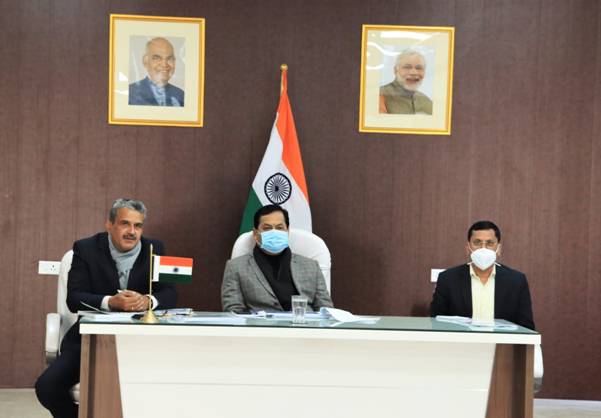
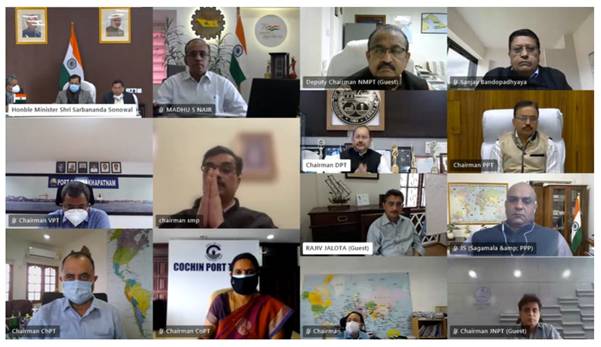
 A webinar was organized for all the Pensioners’ Associations under the chairmanship of Shri V. Srinivas,   Secretary (P&PW) with the objective to create awareness on newly notified CCS (Pension) Rules, 2021 and generation of Digital Life Certificates using Face Authentication Technology.  Central Government Pensioners Associations from all parts of the country participated in the meeting. Presentations were given on CCS Pension Rules 2021 and on DLC generation through Face Authentication followed by a Question Answer session after each presentation.

Secretary (P&PW) expressed his happiness to meet such a large group of 52 participants from the various Associations and to have a constructive interaction. He appreciated the intensity of the discussion and the various queries raised, given the release of CCS Pension Rules 2021 on 25th December 2021 and the recent launch of DLC generation through face authentication. The curiosity among pensioners was very understandable and such interactions would continue with a view to stay in touch and ensure that every association reached out to.  He also requested each Association to have regular interactions with their membership.

He reiterated that the objective of the meeting was to enhance interaction between the department and the pensioners’ associations, especially at his level so that he could know each one personally and the associations could be assured that the Secretary would be in a position to understand and listen to areas where concern exists. He informed that since the pension department is a very legalistic and policy based department, it is important to understand where reforms are necessary and constant updations and amendments in law may be required to ensure greater benefits given to pensioners and that will be the objective of the entire exercise. He expressed hope that membership of each association is more than 300 and they are interacting regularly with the members.

Self reliance in Energy sector is must for achieving the goal

 Union Education Minister rode the Energy Swaraj Yatra Bus from his residence to his office today. The bus is fitted with solar energy and equipped to be a complete work cum residential unit. The Minister accompanied by Dr. Chetan Singh Solanki, a professor from IIT Bombay, who has conceptualised and built the Bus.


https://static.pib.gov.in/WriteReadData/userfiles/image/image0015THV.jpg

https://static.pib.gov.in/WriteReadData/userfiles/image/image002VN15.jpg

 Speaking on the occasion Shri Pokhriyal said that the New Education Policy has in-built framework under which life skills to use solar energy can be given at schools and colleges. Shri Pokhriyal said that climate change awareness is essential to attain sustainability. He further said that self reliance in Energy sector is integral in achieving the goal of Atmanirbhar Bharat. The Minister was happy to learn that in the wake of serious and catastrophic climate change, the Energy Swaraj Yatra is designed with purpose to create public movement towards adoption of 100% solar energy. The Minister appreciated Professor Solanki for this unique initiative.

Deeply committed to the mission of creating public movement towards adoption solar energy, Dr. Chetan Singh Solanki has pledged not to go home until 2030 and live & travel in the solar bus. The bus has facilities to go through all daily activities including sleeping, working, cooking, bathing, meeting, training, etc. The bus is fitted with 3.2 kW solar panels and 6 kWh of battery storage.

The Energy Swaraj Yatra began in year 2020 and will continue till 2030. Professor Solanki has been recently conferred with the Brand Ambassador of Solar Energy of Madhya Pradesh by Chief Minister, Madhya Pradesh, Shri. Shivraj Singh Chouhan.

*****

Enhance voting and credibility of election process

 Vice President of India Shri M. Venkaiah Naidu today urged the Election Commission and the citizens to ensure a voter turnout of 75% in the next general elections to make electoral democracy more inclusive and also sought consensus on simultaneous polls to sustain the tempo of development.

In a message on the occasion of the 12th National Voters Day today, Shri Naidu stressed that no voter should be left behind and urged the citizens to judge the contestants in the elections on merit. As Shri Naidu is in home isolation in Hyderabad after testing corona positive, his address was  read out at the  event in New Delhi.

Referring to the increase  in  voter turnout from 44.87% in the first general elections to Lok Sabha during 1951-52 to the highest ever 67.40% for the 17th Lok Sabha in 2019, marking an increase of 50% in  voting, Shri Naidu complimented all stakeholders for the same. Alluding to the sustained efforts of the Election  Commission of India in this regard striving for excellence during the 70 years of the country’s electoral journey, Shri Naidu hailed the Commission as a  credible, responsive and forward looking institution every  votary of democracy can legitimately be proud of.

Shri Naidu noted that the challenge before the Election Commission is to ensure a steady increase in voting in every election to make our electoral democracy more inclusive by addressing the barriers to voter participation.

The Vice President urged: “In the 75th year of our Independence, let us resolve to leave no voter behind and aim to increase the voter turnout to at least 75% in the next general elections. Let each one realize that vote is not only a right but a responsibility. We, as a nation, must think and arrive at a consensus to have simultaneous polls to all the three tiers of federal set up and move towards better governance by focusing our attention on all round development of our people”.

Shri  Naidu referred to the substantial 8% increase in voter turnout from 58.21% in 2009 general elections to 66.44% in 2014, suggesting that it is feasible to reach 75%  voter turnout target from 67.40% in 2019. He complimented the SVEEP(Systematic Voter Education and Electoral Participation) initiative of the Election Commission launched in 2009 for improving voter participation.

Shri Naidu expressed delight over women voting more than men in the 2019 general elections by a margin of 0.17%, for the first time in 70 years, ending the gender gap in the country. (In 1962  general elections, men voter turnout was 16.71% more than that of  women)

Shri Naidu stressed on the need for more swift resolution of election disputes and creation of a more informed citizenry empowered to judge the merits of each  candidate in the elections. He urged the Commission to further explore innovative ways in which technology can enhance the credibility and accessibility of the voting process. He also referred to high voter turnout in the range of 74% to 84% in the elections to five State Assembly held under covid protocol last year.

The 12th National Voters Day is being organized on the theme “Making our Elections Inclusive, Accessible and Participative”. January 25th is being so celebrated as the Election Commission was set up on January 25, 1950, a day before the country became a Republic with the Constitution coming into force from January 26, 1950.

Following is the full text of the Vice President’s message (It was read at 12th National Voters’ Day celebrations organized by Election Commission of India today) –

Chief Election Commissioner Shri Sushil Chandra, Election Commissioners, senior officials from the Union and State Governments, distinguished invitees and friends from the media !

At the outset, I extend my hearty felicitations and  greetings to all of you and all fellow citizens on the occasion of 73rd Republic Day tomorrow. We are meeting at the confluence of 70 years of elections in our country, the 73rd Republic Day and the 75th year of our hard fought Independence.

Looking back at the past seven decades, we can legitimately be proud of our achievements in various fields. However, what is most remarkable is our continuous endeavour to strengthen our democratic structures to transform India, the world’s largest democracy, into a vibrant, inclusive, participative and progressive democracy where each citizen has a voice that is heard and each citizen contributes to the governance and development of the nation.

We not only took the bold step of introducing universal suffrage right from the time we became independent but established a credible institutional framework to conduct elections to ensure that the voting right of every citizen is protected.

I compliment the Chief Election Commissioner, the Election Commissioners, the staff of the Election Commission and the Chief Electoral Officers in the states as well as every functionary engaged in conducting elections right up to the polling station level for continuously enriching our democracy. You are, indeed, the proud inheritors of an illustrious legacy that your predecessors have  left behind.

We have come a long way from the first General Elections of 1952 when only 44.87%  of the eligible voters turned out to vote. In the last general elections in 2019,  67.40% or more than two-third of the eligible voters exercised their franchise. It is heartening to note that today, we are among the highest voting nations in the world with a substantial  increase of 50%  in voter turnout in 70 years.

All this calls for a celebration of the remarkable foresight of our constitution makers, the indefatigable efforts of countless dedicated officials, the media, civil society partners and the active involvement of people and the political parties as well as their implicit faith in the Election Commission.

This is what we are doing today as we look back at the 70 years of our country’s electoral history and the ceaseless quest for excellence that has made the Election Commission of India a credible, responsive and forward-looking institution every votary of democracy can legitimately be proud of.

The theme of today’s 12th National Voters Day is ‘Making our Elections Inclusive, Accessible and Participative’.

The challenge before the Election Commission and the country is to ensure a steady increase in the voter turnout in every election to make our electoral democracy more inclusive by addressing the barriers to voting. This year’s theme of inclusive,  accessible and participative elections is, hence, very apt.

I am pleased to note the consistent efforts of the Election  Commission of India to improve voter turnout and also enhance the integrity of the election process.

Thanks to initiatives like Systematic Voter Education and Electoral Participation (SVEEP), voter turnout has increased by  8% from 58.21% in 2009 to 66.44%  in 2014. I am delighted that in the last general elections in 2019 and for the first time, women voter turn was more than that of men by a margin of 0.17%. Elections to five State Assemblies last year held under Covid protocol formulated by the Commission has witnessed huge voter turnout in the range of 74% to 84%.

Voter registration process is now considerably simpler with the  Election Laws Amendment Act, 2021 enabling voters to  register  four times in a  year. The Election Commission has ensured access to voters in remote areas like the Spiti valley located at 15,256 feet above sea level and has been making sustained efforts to curb electoral malpractices. However, there is much more to be done including a swifter  resolution of election disputes and creation of a more informed citizenry empowered to judge the merits of each candidate. The Commission can further explore innovative ways in which technology can enhance the credibility and accessibility  of the voting process.

In the 75th year of our Independence, let us resolve to leave no voter behind and aim to increase the  voter turnout to at least  75% in the next general elections.  Let each one realise that vote is not only a right but a responsibility. We, as a nation, must think and arrive at a consensus to have simultaneous elections to all the three tiers of federal set up and move towards better governance by focusing our attention on all round development of our people.

I compliment the awardees being recognized today for their commendable performance in the last elections.

I extend my greetings to the Election Commission and all the officials, to the enlightened leaders of political parties, to the media, civil society partners and most importantly, every citizen of our country who are making democracy work and are continuously contributing to a robust, well-functioning democracy.

*****


demand for Grants for Education

 Union Education Minister Shri Ramesh Pokhriyal‘Nishank’ replied to the discussion on the demand for Grants of Ministry of Education for Year 2021-22, in LokSabha on 16th March, 2021.

Speaking on National Education Policy 2020, Union Minister said NEP will build strong foundations for an Atmanirbhar Bharat and help India claim its status as a Vishwaguru.ShriPokhriyal emphasized that NEP was formulated after holding broadbase and wider consultations with every stakeholders including teachers, students, academicians, parents and students among others.

The Minister said that NEP is national, international, impactful, interactive, innovative and inclusive and is based on firm foundations of equity, quality and accessibility. He spoke about features of NEP 2020 which includes imparting vocational education from class 6 onwards, Progress Card in place of report card, 5+3+3+4 structure, multidisciplinary education with easy entry/exit options and academic bank of credit.ShriPokhriyal also added that several countries have acknowledged NEP as the biggest reform of the world.

Speaking on the Budget allocation for Education for year 2021-22, ShriPokhriyal said that for Department of School Education and literacy, total budget allocation in BE 2021-22 is Rs 54873.66 crore, which is an increase of Rs 2,684.59 crore as compared to RE Budget allocation in 2020-21. For Department of Higher Education, the total Budget allocation in BE 2021-22 is Rs. 38350.65crore, which is an increase of Rs. 5450.65 crore as compared to RE Budget allocation for the year 2020-21. Speaking about Government’s impetus to boosting research and innovation, Minister mentioned about National Research Foundation. He also said that there is a shift from package culture to patent culture among students now. 

Enumerating initiative and efforts taken by the government to ensure continuity of education during challenging times of covid, ShriPokhriyal said education was provided via Online and Digital mediums throughSwayam, SwayamPrabha, E Pathshala, DIKSHA. He also mentioned that Manodarpan Portal was launched to provide 24*7 counselling services to the students.Board Exams and competitive exams (JEE and NEET) were conducted successfully, he added.

Minister also highlighted that in year 2019-20, 8.19 lakh students were being provided education through IGNOU, while the figure was 3.98 lakh students in year 2013-14. Number of Research Scholars in Higher Education in the year 2019-20 stood at 2.02 lakhs while it was 1.07 lakh in year 2013-14, he added.   

Bhavika

 https://track2training.net/2022/01/17/best-app-for-online-education-zoom/

https://track2training.net/2022/01/17/%e2%9a%ab-topic-top-4-loud-music-player-for-android/

https://track2training.net/2022/01/17/%e2%9a%abrise-of-covid-19-cases-day-by-day/

https://track2training.net/2022/01/18/%e2%ad%95teachers-day%e2%ad%95/

https://track2training.net/2022/01/18/what-is-journalism-and-mass-communication/

https://track2training.net/2022/01/18/apj-abdul-kalam-the-missile-man-of-india/

https://track2training.net/2022/01/18/pandit-jawahar-lal-nehru-the-first-prime-minister-of-india/

https://track2training.net/2022/01/18/indira-gandhi-first-woman-prime-minister-of-india/

https://track2training.net/2022/01/18/personality-development/

https://track2training.net/2022/01/18/%e2%ad%95interpersonal-communication-%e2%ad%95/

https://track2training.net/2022/01/18/beti-bachao-beti-padhao/

https://track2training.net/2022/01/19/%e2%ad%95clean-india-%e2%ad%95/

https://track2training.net/2022/01/19/%e2%9a%abrepublic-day%e2%9a%ab/

https://track2training.net/2022/01/19/%f0%9f%94%98sports-can-boost-learning-effectiveness-%f0%9f%94%98/

https://track2training.net/2022/01/19/doing-your-best-is-better-than-being-the-best/

https://track2training.net/2022/01/19/health-is-wealth/

https://track2training.net/2022/01/20/entrepreneurship/

https://track2training.net/2022/01/20/what-is-controllingimportance-of-controlling-in-management/

https://track2training.net/2022/01/20/what-is-the-role-of-youth-in-present-india/

https://track2training.net/2022/01/20/why-is-self-care-important/

https://track2training.net/2022/01/20/unemployment/

https://track2training.net/2022/01/20/career-planning/

https://track2training.net/2022/01/20/%f0%9f%94%98depression-%f0%9f%94%98/

https://track2training.net/2022/01/20/drug-addiction/

https://track2training.net/2022/01/21/woman-enpowerment/

https://track2training.net/2022/01/21/child-marriage/

https://track2training.net/2022/01/21/women-molestation-and-sexual-assault/

https://track2training.net/2022/01/21/tryst-with-destiny/

https://track2training.net/2022/01/21/family%e2%9d%a4/

https://track2training.net/2022/01/21/women-should-also-be-financially-independent/


National War Memorial

 Wrestler Anshu Malik, who recently etched her name in history books by becoming the first Indian woman to win Silver in the World Championships, visited the National War Memorial at New Delhi.

The 20-year-old Indian wrestler took a tour around the national monument which is designed in a circular form, with ramps leading down into a large amphitheatre-like circular space, in the centre of which stands an obelisk. At the base of this, burns the eternal flame ‘Amar Chakra’ in the memory of all the soldiers who laid their lives during the armed conflicts of Independent India.

“Visiting this monument of great national importance, I feel that it has so much knowledge to offer about the glorious war history of our country. Seeing the names of around 26,500 fallen soldiers carved in the bricks of the Tyag Chakra made me feel as that each soldier is like another strong brick in the nation’s defensive wall”, said Anshu.

“Like the eternal flame in the Amar Chakra, all of these martyrs as well as their act of valour will always remain immortal in the heart of every Indian,” she added.

Meanwhile, Anshu paid tribute to Capt. Pawan Kumar from Dogra Regiment who also hailed from her native town, Jind in Haryana. “It was a great experience visiting the National War Memorial. I urge every Indian to visit this Memorial and witness an important part of India’s history.”

“When a common citizen or any other public figure shows interest in visiting and knowing the war history of the country, we as a soldier feel very encouraged and honoured about belonging to the Armed Forces,” said an Army Official who guided the athlete in understanding all the sections of the memorial.

*******

National Girl Child Day

 National Girl Child Day is celebrated in the country on January 24 every year with an objective to provide support and opportunities to the girls of India. It aims towards promoting awareness about the rights of the girl child and to increase awareness on the importance of girl education, and their health and nutrition and also to promote the girls position in the society to make their living better among the society. Gender discrimination is a major problem that girls or women face throughout their life. National Girl Child Day was first initiated in 2008 by the Ministry of Women and Child Development.

Objectives of National Girl Child Day

The objective of National Girl Child Day is to create awareness about the rights a girl owns and to give girls the opportunities like everyone else, also to support the girl child of the nation and remove gender-based biases. Another objective of celebrating this day is to promote awareness about the inequalities that a girl child faces and educate people about girl’s education. Basically to value them and to respect them like everybody else and give a new perspective towards girl child and to decrease discrimination. The main focus is on changing society’s attitude towards girls, decrease female feticide and create awareness about the decreasing sex ratio.

Steps Taken by the Government

Government of India has taken several steps over the years to improve the conditions of girls. Government has started several campaigns and programmes some of them are :

  1. Save the Girl Child,
  2. Beti Bachao Beti Padhao,
  3. Sukanya Samriddhi Yojana
  4. CBSE Udaan Scheme
  5. Free or subsidized education for girl child,
  6.  Reservation for women in colleges and universities

g. National Scheme of Incentive to Girls for Secondary Education


Background of BBBP


Census 2011 data was a call for urgent action, because it highlighted that the girl child is increasingly being excluded from life itself. The unabated decline in Child Sex Ratio (CSR) since 1961 (from 976 in 1961 to 927 in 2001 and 918 in 2011) was   a matter of grave concern as it reflected the low status of women in our society and indicates her disempowerment over a life-cycle continuum. Declining CSR is also indicative of pre-birth discrimination manifested through gender biased sex selection and post birth discrimination against girls (in terms of health care, nutrition and educational opportunities).

Year

1961

1971

1981

1991

2001

2011

Child Sex Ratio

976

964

962

945

927

918


CSR continued declining in spite of a strong legal and policy framework and various Government initiatives. The sharp decline is associated with an intersection of various factors such as the increasing spread and misuse of technology for prenatal sex selective elimination, changing aspirations of urban and rural societies, changes in family structures and reproductive decision making, favoring a smaller family size. This has accentuated the son preference, associated with the low status of women in society, patriarchal social norms and the disturbing pattern of gender based violence faced by girls and women across the life cycle.

Despite various policy and programmatic provisions, addressing adverse and steeply declining CSR remains a critical challenge. Efforts are needed to ensure survival, protection and education of girl child to help realize her full potential. In this   regard, the Hon’ble President of India, in his address to the Joint Session of the Parliament on June 9, 2014 had stated that “With a commitment of “Beti Bachao Beti Padhao”, my government will launch a mass campaign for saving the girl child and enabling her education. Further the Finance Minister in Budget speech 2014-15 also reiterated Government of India’s commitment by setting aside Rs. 100 Cr. Hon’ble Prime Minister expressed deep concern over the decline in CSR in his Independence Day address.

In this background, Beti Bachao Beti Padhao (BBBP) Scheme was launched by the Hon’ble Prime Minister on 22nd January, 2015 in Panipat, Haryana to address the issue   of decline in CSR and related issues of empowerment of girls and women over a life cycle continuum.


The Scheme was initially launched in 100 districts in 2014-15 (Phase-1), and was  expanded to 61 additional districts in 2015-16 (Phase-2). Following initial success of the scheme, the initiative has been expanded to 640 districts of the Country (as per Census 2011) on 8th March 2018.

The Overall Goal of the Beti Bachao Beti Padhao (BBBP) Scheme is to celebrate the girl child, enable her education.


 Objectives and target groups:


The Scheme is being implemented with a goal to celebrate the girl child and   enable her education. The objectives of the Scheme are as under:


    1. To prevent gender biased sex selective elimination
    2. To ensure survival and protection of the girl child
    3. To ensure education and participation of the girl child

Implementation Status and acheivement:


Scheme has stirred up collective consciousness towards changing the mindset of the public to acknowledge the rights of the girl child. The scheme has resulted in increased awareness and sensitization of the masses. It has raised concerns around the issue of declining CSR in India. As a result of collective consciousness of the people supporting the campaign BBBP has found its place in public discourse.


  • Increase in 19 points in Sex Ratio at Birth at National level from 918 (2014-15) to 937 (2020-21). (Source: HMIS data, MoHFW (April-March, 2014-15 & 2020-21)
  • Gross Enrolment Ratio (GER):  Enrollment of Girls in secondary education increased from  77.45% in 2014-15 to 81.32% in 2018-19. (Source: U-DISE, Mo Education (2018-19 data is provisional)
  • Under Five Child Mortality (Female) has reduced from 45 in 2014 to 36 in 2018. (Source: SRS census india.gov.in)
  • Percentage of 1st Trimester ANC Registration has shown improvement from 61% in 2014-15 to 73.9% in 2020-21. (Source: HMIS data, MoHFW (April-March, 2014-15 & 2020-21)
  • Percentage of Institutional Deliveries has also shown an improvement from 87% in 2014-15 to 94.8% in 2020-21. (Source: HMIS data, MoHFW (April-March, 2014-15 & 2020-21)

NATIONAL GIRL CHILD DAY-2022

In view of COVID 19 situation in the country, it has been decided that all programs should be organised on virtual/ online mode and all kinds of physical interactions should be avoided.

Pradhan Mantri Rashtriya Bal Puraskar-2022

On the occasion of National Girl Child Day on 24th January and as part of Azadi Ka Amrit Mahotsav, a virtual function would be held to recognise the exemplary achievements of children by facilitating PMRBP awardees of 2022. Hon’ble Prime Minister would interact virtually with winners of PMRBP-2022.  The children along with their parents and concerned District Magistrate of their respective district would join the event from their district Head Quarters.

During the function, Hon’ble Prime Minister would give digital certificates to winners of PMRBP.  The certificates would also be given to winners of PMRBP 2021, who could not be given the certificates last year due to COVID situation. The cash prize of Rs.1,00,000/- to be given to the awardees of PMRBP 2022 would also be transferred to the respective account of winners during the programme.


Webinars to be held on 24.1.2022

The Minister, MoWCD, Smt Smriti Zubin Irani will interact with children  from few marginalised identities from across the country in an online event ‘Kanya Mahotsav’- #LadkiyanJahanKhushiyanwahan organised by UNICEF as part of Azadi Ka Amrut Mahotsav. The program will be livestreamed.

The Minister, Ministry of Textile, Commerce and Industries, Consumer Affairs and food & Public Distribution, Shri Piyush Goyal will hold a virtual interactive session with young girls who have made noteworthy innovations in different areas that is pioneering.

        The Minister of State, Ministry of Science and Technology, Shri Jitendra Singh will also interact with young women entrepreneurs who have made noteworthy achievements in the fields of science and technology on a virtual platform.

These interactions with the Ministers will act as a catalyst and inspire such other million girls to have conviction in their ideas and to follow their heart on the path towards economic independence.

National Commission of Women is organizing a virtual discussion through which their speakers will contribute to raise awareness about the rights of girls and on the importance of girl education.

NIPCCD will be organising a webinar on “Addressing Comprehensive Needs of Adolescent Girls in India” #Ladkiyanjahankhusiyanwahan. The talking points of the Webinar will be   Healthy eating during adolescence · Challenges of Adolescent Girls with reference to Education & Way forward · Need and importance of Psychosocial Development among Adolescent Girls

NCPCR will be holding a webinar on the topic,’ Legislative Rights of the Girl Child’. Hon’ble Justice Shri Kalpesh Satyendra Jhaveri, former Chief Justice of Orissa High Court will be the main speaker for the webinar.

All the States/UTs s and 405 multi – sectoral districts under BBBP to organize online programmes such as Gram Sabha/Mahila Sabha on CSR, programme with schools on value of girl child, Posters/Slogan-writing/ Drawing/ Painting competition among school on STEM related topics, and run stories in local media about BBBP local champions etc.

********

Children of India have shown their modern and scientific temperament

 Prime Minister Shri Narendra Modi interacted with Pradhan Mantri Rashtriya Bal Puraskar (PMRBP) awardees today via video conference. Digital certificates were conferred on PMRBP awardees for the years 2022 and 2021 using Blockchain Technology. This technology was used for the first time for giving certificates to awardees. Union Women and Child Development Minister Smt Smriti Zubin Irani and Dr. Munjpara Mahendrabhai, Minister of State were among those present on the occasion.

Interacting with Master Avi Sharma of Indore, Madhya Pradesh the Prime Minister enquired about the secret of his prolific output with regard to various aspects of Ramayana. Master Avi Sharma said that he got the inspiration by the decision of broadcasting the serial Ramayana during the lockdown. Avi also recited some couplets from his creation. The Prime Minister narrated an incident when he went and heard Sushri Uma Bharti Ji when, as a child, she showed immense spiritual depth and knowledge in a programme. He said there is something in the soil of Madhya Pradesh that gives rise to such precocious talent. The Prime Minister told Avi that he is an inspiration and an example of the adage that you are never too young to do big things.

Interacting with Kumari Remona Evette Pereira from Karnataka, the Prime Minister discussed her passion for Indian Dance. He inquired about the difficulties she faced in pursuing her passion. The Prime Minister complimented her mother for ignoring her own adversities to realise her daughter’s dreams. The Prime Minister said that Remona’s achievements are much bigger than her age and told her that her art is a way of expressing the strength of the great country.

Interacting with Kumari Puhabi Chakraborti of Tripura, the Prime Minister enquired about her COVID related innovation. She also informed the Prime Minister about her fitness app for sportspersons. The Prime Minister asked about the support she receives from the school, friends and parents in her endeavour. He asked about her balance in devoting her time to sports as well as developing innovative apps.

Interacting with Master Dhiraj Kumar from West Champaran, Bihar, the Prime Minister asked about the incident where he saved his younger brother from a crocodile attack. PM asked about his state of mind while saving his younger brother and how he feels after the fame he got now. The Prime Minister praised his courage and presence of mind. Dhiraj told the Prime Minister that he wants to serve the country as an Army soldier.

Interacting with Master Meedhansh Kumar Gupta from Punjab, the Prime Minister enquired about his achievement of creating an app for COVID issues. The Prime Minister said that in children like Meedhansh he feels that the government efforts to promote entrepreneurship are bearing fruit and a tendency to become job providers instead of being job seekers is becoming more pronounced.

Interacting with Kumari Tarushi Gaur from Chandigarh, the Prime Minister enquired about her opinion on the balance between sports and studies. The Prime Minister asked why Tarushi idolises Boxer Mary Kom. She informed the Prime Minister that she likes her because of her commitment to excellence and balance that she strikes as a sportsperson and as a mother.  The Prime Minister said that the government is committed to providing all the facilities to the sportspersons and creating a mindset of winning at every level.

Addressing the gathering, the Prime Minister noted that these awards become all the more significant in the light of the fact that they have been conferred during the important period when the country is celebrating Azadi Ka Amrit Mahotsav. He said this is the time to draw energy from the past and dedicate oneself to achieving great results in the coming 25 years of the Amrit kaal.  He also greeted the daughters of the country on National Girl Child Day.  The Prime Minister remembered the glorious history of the Freedom Struggle and the contribution of Birbala Kanaklata Barua, Khudiram Bose and Rani Gaidinilu. “These fighters had made the country’s freedom the mission of their lives at a very young age and had dedicated themselves for it” the Prime Minister noted.

The Prime Minister also recalled his visit to the Nowshera sector of Jammu and Kashmir on Diwali last year where he met Baldev Singh and Basant Singh who had played the role of child soldiers in the post-independence war. They Helped his army at such a young age without caring about their life. The Prime Minister paid tribute to the bravery of these heroes.

The Prime Minister cited examples of the bravery and sacrifice of the sons of Guru Gobind Singh Ji. He pointed out that when the Sahibzadas had sacrificed with immense valour, they were very young. Their sacrifice for India’s civilization, culture, faith and religion is incomparable. The Prime Minister asked the youngsters to know more about the Sahibzadas and their sacrifice.

The Prime Minister remarked that a digital statue of Netaji Subhas Chandra Bose has also been installed near India Gate in Delhi. “We get the biggest inspiration from Netaji –  duty of the nation first.  Taking inspiration from Netaji, you have to proceed on the path of duty for the country”, Shri Modi added.

The Prime Minister said that in any sector, policies and initiatives are keeping youth at the centre. He cited initiatives like Start Up India, Stand Up India, Digital India, Make in India along with Jan Andolan of Aatmnirbhar India and creation of modern infrastructure. This, he said, is in sync with the speed of the youth of India who are leading this new epoch both in India and outside. The Prime Minister underlined the growing prowess of India in the innovation and start-up sphere. He conveyed the nation’s pride in the fact of major global companies being led by Indian young CEOs. “Today we feel proud when we see the youth of India excelling in the world of startups. Today we feel proud when we see that the youth of India are innovating, taking the country forward”, the Prime Minister said.

The Prime Minister said in areas where daughters were not even allowed earlier, daughters are doing wonders in them today. This is the new India, which does not hold back from innovating, courage and determination are the hallmarks of India today.

The Prime Minister lauded that the children of India have shown their modern and scientific thinking in the vaccination program as well. Since January 3, in just 20 days, more than 40 million children have got the corona vaccine. He also lauded them for their leadership in the Swachch Bharat Abhiyan. The Prime Minister appealed to them to be an ambassador for Vocal for Local and lead the campaign of Aatmnirbhar Bharat.

***

developing the linkage between educational institutions, Industries and R&D Institutions

 Steps taken by the Government for developing the linkage between educational institutions, Industries and R&D Institutions are as follows:

I.          Impacting Research Innovation & Technology (IMPRINT): This initiative aims at providing solutions to the most relevant engineering challenges and translating knowledge into viable technology in 10 selected technology domains, viz. Health care, energy, sustainable habitat, nano technology hardware, water resources and river systems, advanced materials, Information and communication technology, manufacturing, security and defense, and environmental science and climate change. It is a pan IITs and IISc Joint Initiative seeking to develop a roadmap for research. During 2018-2019 Rs. 46.30 crore and during 2019-2020 Rs. 47.20 crore has been released.

I.          Research Park: Research park at IIT Delhi, IIT Guwahati, IIT Kharagpur, IIT Kanpur, IIT Chennai, have been established which provide an interface between entrepreneurship and Industry to establish their R&D units in collaboration with students & faculty members of the IITs. In the year 2020-21 Rs. 144.50 crore has been released.

II.        UchhatarAvishkarYojana (UAY): This initiative promotes innovation of a higher order that directly impacts the needs of the Industry and thereby improves the competitive edge of Indian manufacturing. The project envisages collaboration between the academia and industry – within or outside India.

In order to provide impetus to vocational education the allocation in 2021-22 for National Apprenticeship Training Scheme has been kept at Rs. 500 crore. Further, UGC has already issued guidelines for Apprenticeship/Internship Embedded Degree Program.

use artificial intelligence for education transformation

 The National Education Policy (NEP) 2020 has recommended introducing contemporary subjects like Artificial Intelligence in curriculum, at relevant stages. The National Council of Educational Research & Training (NCERT) has initiated the process for preparation of a new National Curriculum Framework for School Education in pursuance of the NEP, 2020 during which the possibility of introducing an introductory course on Artificial Intelligence (AI) at secondary level would also be explored.  Meanwhile, the Central Board of Secondary Education (CBSE) has introduced Artificial Intelligence as a subject in class IX from session 2019-2020 and in Class-XI from session 2020-2021 in their affiliated schools.  

Artificial Intelligence has already been applied to education primarily in some tools that help develop skills and testing systems. Artificial Intelligence can drive efficiency, personalization and streamline administrative tasks to allow teachers the time and freedom to provide understanding and adaptability.  By leveraging the best attributes of machines and teachers, the vision for Artificial Intelligence is one where they work together for the best outcome for students. 

All AICTE approved institutions have been suggested to offer Artificial Intelligence as an elective in B.Tech. courses and also start B.Tech course in Artificial Intelligence and Data Science to augment the human resource in Artificial Intelligence and Data Analytics.  So far as the Indian Institutes of Technology (IITs) are concerned, their Acts and Statutes allow them to have their own curriculum, academic & research collaboration with Institutions and Universities across the world. Most of the IITs offer various Artificial Intelligence related courses such as Deep Learning Foundations & Applications, Foundation of Artificial Intelligence and Machine Learning, Reinforcement Learning, Probabilistic Reasoning in Artificial Intelligence, Predictive & Prescriptive Data Analytics, Deep Learning, System Identification, Cyber Physical Security, Digital Image Processing, etc. Besides, IITs also organize short term programmes,inter-alia, on Artificial Intelligence for the working professional and interested students.

Commitment towards women empowerment through its R- Day tableau

 India Post has been serving the nation since the last 167 years, standing unabated in its dedication and undying passion of rendering postal, financial and government services, in the remotest corners of the country. As the nation celebrates Azadi Ka Amrit Mahotsav, commemorating the seventy fifth year of independence, India Post, through the Republic-Day tableaux, has attempted to reaffirm its commitment towards women empowerment both within and through the Post offices.

THE THEME OF INDIA POST R-DAY TABLEAUX IS INDIA POST:75 YEARS@ RESOLVE-WOMEN EMPOWERMENT”


The tableaux shall showcase the following elements:

FRONT PORTION:

India Post stands as a model employer of women and with its mandate for financial inclusion almost 50% account holders of the India Post Payments Bank as well as the Post Office Savings Bank are women.  

The tableau displays the robust outreach and the modern face of India Post that ties the entire country in one thread and aims to portray its focus on women empowerment through the ‘All Women Post Offices’.  Divyang friendly post offices as portrayed by the ramp reiterate our social commitments. 

Post Woman:The tableau presents the modern face of India Post featuring a young post woman with a digital device in one hand and a postman’s bag in the other, thus conveying the message of blending technology with tradition. Standing tall beside her is the ubiquitous red-letter box that reflects people’s unabated faith in India Post. Also displayed are India Post Services like speed post, e-commerce, ATM Cards etc. which are trusted by millions of customers. The image of the postwoman is juxtaposed with that of the Harkara on high relief projecting the transition of India Post over the decades.  The two images are set in the foreground of the ubiquitous red-letter box.

The recently concluded “75 Lakh Postcards to PM Campaign” is also showcased.


REAR TRAILER:


FLOATING POST OFFICE: The trailer features the Floating Post Office of Srinagar emphasizing the SUKANYA SAMRIDDHI YOJANA, a scheme under Hon’ble PM’s initiative of Beti Bachao Beti Padhao campaign.

All WOMEN POST OFFICE: The All Women Post Office showcases India Post’s resolve and a step towards gender equality.

The 3D images of the post office counters where we see women officials rendering multifarious service to the customers such as Aadhar enrolment as well as Postal ATM Counters, emphasizes India Post’s resolve towards women empowerment. In case of India Post Payments Bank, almost 50% account holders (2.24 Cr.) are women and 98% of such accounts have been opened at doorsteps.

KOLKATA GPOAt the rear is the Kolkata GPO; the oldest GPO, a proud witness to the journey of India Post and one of the iconic heritage buildings of India.

THE LOWER PART OF THE TRAILER: Adorning the tableau, a collage of stamps pertaining to the country’s freedom struggle, digitally printed on khadi and meant to be displayed in different post offices across the country after the Republic Day.

GROUND ELEMENT: However, the uniqueness of the tableaux lies in its foot soldiers who are real-life postmen/post women from different parts of India. They stand symbolic to the transition of India Post from the harkaras to the postmen in bicycles and e-bikes, thus highlighting our journey.


Financial Support Being Extended Under ‘Sub-Mission on Agriculture Mechanization’

 In amajor boost to promote precision farming in India, the Union Ministry of Agriculture and Farmers Welfare has issued guidelines to make drone technology affordable to the stakeholders of this sector. The guidelines of “Sub-Mission on Agricultural Mechanization” (SMAM) have been amended which envisages granting upto 100% of the cost of agriculture drone or Rs. 10 lakhs,whichever is less, as grant for purchase of drones bythe Farm Machinery Training & Testing Institutes, ICAR institutes, Krishi Vigyan Kendras and State Agriculture Universities for taking up large scale demonstrations of this technology on the farmers’ fields.

The Farmers Producers Organizations (FPOs) would be eligible to receive grant up to 75% of the cost of agriculture drone for its demonstrations on the farmers’ fields.

A contingency expenditure of Rs.6000 per hectare would be provided to implementing agencies that do not want to purchase drones but will hire drones for demonstrations from Custom Hiring Centres, Hi-tech Hubs, Drone Manufacturers and Start-Ups. The contingent expenditure to implementing agencies that purchase drones for drone demonstrations would be limited to Rs.3000 per hectare. The financial assistance and grants would be available until March 31, 2023.

In order to provide agricultural services through drone application, 40% of the basic cost of drone and its attachments or Rs.4 lakhs, whichever less would be available as financial assistance for drone purchase by existing Custom Hiring Centers which are set up by Cooperative Society of Farmers, FPOs and Rural entrepreneurs. The new CHCs or the Hi-tech Hubs that will be established by the Cooperative Societies of Farmers, FPOs and Rural entrepreneurs with financial assistance from SMAM, RKVY or any other Schemes can also include Drone as one of the machines along with other agricultural machines in the projects of CHCs/Hi-tech Hubs.

Agriculture graduates establishing Custom Hiring Centers would be eligible to receive 50% of the basic cost of drone and its attachments or up to Rs.5 lakhs in grant support for drone purchases. Rural entrepreneurs should have passed class tenth examination or its equivalent from a recognized Board; and should have remote pilot license from Institute specified by the Director General of Civil Aviation(DGCA) or from any authorized remote pilot training organization.

The subsidized purchase of agriculture drones for CHCs/Hi-tech Hubs will make the technology affordable, resulting in their widespread adoption. This would make drones more accessible to the common man in India and will also significantly encourage domestic drone production.

The drone operations are being permitted by Ministry of Civil Aviation (MoCA) and Director General of Civil Aviation (DGCA) through the conditional exemption route. MoCA has published ‘Drone Rules 2021’ vide GSR No. 589(E) dated 25th August 2021 to regulate the use and operation of Drones in India. The Department of Agriculture & Farmers Welfare has also brought out Standard Operating Procedures (SOPs) for use of Drone application with pesticides for crop protection in agricultural, forestry, non-cropped areas, etc. and for Drone Application in Spraying for Soil and Crop Nutrients. The demonstrating institutions and all the providers of agricultural services through drone application have to comply with these rules/regulations and SOPs

Click Here for SOP for Use of Drone Application

*****

APS/JK

Limit of 5 persons for door to door campaign enhanced to 10 persons

 The Election Commission of India today held a review meeting with the Secretary, Ministry of Health and Family Welfare, Government of India through virtual mode. The Commission also held virtual meetings with Chief Secretaries, Chief Electoral Officers and Health Secretaries of Goa, Manipur, Punjab, Uttarakhand and Uttar Pradesh.

Chief Election Commissioner Shri Sushil Chandra along with Election Commissioners Shri Rajiv Kumar and Shri Anup Chandra Pandey accompanied by Secretary General and concerned Deputy Election Commissioners held a comprehensive review of the present situation with respect to status and projected trends of COVID pandemic in the five poll going states. The Commission also reviewed Vaccination status and action plan for expeditiously completing vaccination for 1st, 2nd and booster dose for eligible persons amongst polling personnel. The Commission deliberated on relaxing restrictions for physical rallies in the wake of prevailing situation.

After taking into consideration inputs and ground reports from these officers, the Commission also deliberated on requirements of the campaign period in phases where candidate list will be finalised on January 27, 2022 for Phase 1 and on January 31, 2022 for Phase 2.

After considering the present situation, facts and circumstances as also the inputs received in these meetings, Commission has decided as follows:

(1) No road show, Pad-yatra, cycle/bike/vehicle rally and procession shall be allowed till January 31, 2022.

(2) Since contesting candidates for Phase 1 elections will be finalised on January 27, 2022, Commission has decided to allow physical meetings of concerned Political parties or contesting candidates in designated open spaces with a maximum of 500 persons or 50% of the capacity of the ground or the prescribed limit set by SDMA, whichever number is lesser, from January 28, 2022 till February 8, 2022 (excluding the silence period).

(3) Since contesting candidates for Phase 2 elections will be finalised on January 31 2022, Commission has decided to allow physical meetings of concerned Political parties or contesting candidates with public in designated open spaces with a maximum of 500 persons or 50% of the capacity of the ground or the prescribed limit set by SDMA, whichever number is lesser, from February 1, 2022 till February 12, 2022 (excluding the silence period).

(4) The Commission has also enhanced the limit of door to door campaign. Instead of 5 persons, now 10 persons, excluding security personnel, will be allowed for door to door campaigns. Other instructions on door to door campaigns will continue.  

5) Commission has already granted relaxation for the political parties to the extent that indoor meetings of a maximum of 300 persons or 50% of the capacity of the hall or the prescribed limit set by SDMA is allowed.

(6) Commission has also allowed video vans for publicity with usual COVID restrictions at designated open spaces with a maximum of 500 viewers or 50 % of the capacity or the limit set by SDMA, whichever number is lesser, in the poll going States subject to public convenience and no hindrance to smooth flow of traffic. (Instructions in this regard are being sent to the CEOs separately).

(7) Political parties and contesting candidates shall ensure the compliance of COVID appropriate behaviour & guidelines and Model Code of Conduct at all occasions during the activities connected with elections.

(8) It shall be the responsibility of the DEO concerned to identify and to notify the designated spaces in advance for the aforesaid purposes.

(9) All remaining restrictions as contained in the Revised Broad Guidelines for Conduct of Elections, 2022 issued on January 8, 2022 shall continue to operate.

All concerned State/District authorities shall ensure full compliance of these instructions.

The Commission will review these instructions at a subsequent date.

***

linking of OTPRMS certificates with DigiLocker with complete waiver of registration fees

 Union Education Minister Shri Ramesh Pokhriyal ‘Nishank’ announced that in order to ensure hassle free access to verified Online Teacher Pupil Registration Management System (OTPRMS) Certificates, the Ministry of Education has decided to link the certificates with DigiLocker. The issued certificates will automatically be transferred to DigiLocker and the same may be traced at the website of National Council for Teacher Education (NCTE) at https://ncte.gov.in/website/DigiLocker.aspx and DigiLocker at https://digilocker.gov.in/ . DigiLocker App may be downloaded from for Android phone and for iPhone.

 The Minister also informed that the registration fee of Rs. 200/-, payable for obtaining OTPRMS Certificates, issued by NCTE has been waived off. This will enable all stakeholders across India to be digitally empowered facilitating ease of doing busines.

*****

India’s First “District Good Governance Index”

 The Union Minister of Home and Cooperation Shri Amit Shah will virtually release India’s First “District Good Governance Index”, prepared by DARPG in collaboration with Government of Jammu & Kashmir in the august presence of Minister of State for PMO, Personnel, PG and Pensions Dr. Jitendra Singh and the Lieutenant Governor of Jammu & Kashmir Shri Manoj Sinha at Convention Centre Jammu today. 

The collaboration received from Chief Secretary Government of Jammu & Kashmir, Shri Arun Kumar Mehta, enabled the conceptualization and formulation of an index that measures the diversity of governance model in the Union Territory of Jammu and Kashmir. It provides a roadmap for similar benchmarking of Governance at District level for all States and Union Territories of India.

The Union Minister of Home and Cooperation Shri Amit Shah had released the National Good Governance Index on December 25, 2021. The Good Governance Index 2021 indicated that Jammu and Kashmir had registered an increase of 3.7 percent in Good Governance Indicators over the 2019 to 2021 period. Strong performances were witnessed in Commerce and Industry, Agriculture and Allied Sectors, Public Infrastructure & Utilities, Judiciary and Public Safety Sectors. Significant improvements were reported in Ease of Doing Business, Tax collection, Skill trainings imparted, Connectivity to rural habitations, Economic empowerment of women, Health insurance coverage and Housing for all. There were improvements in conviction rates, disposal of court cases and proportion of women police personnel. Citizen Centric Governance sector witnessed a strong performance.

 In this backdrop of strong governance performance at National level, the Government of Jammu & Kashmir’s initiative of benchmarking governance at District level assumes considerable significance. The District Good Governance Index has helped identify the impact of various governance interventions at district level and provide a futuristic roadmap for improving district level governance with targeted interventions. The stakeholder consultations necessitated 10 rounds of meetings at Government of India level including meetings with Chief Secretary J&K, District Collectors, Directorate of Economics and Statistics, consultations with Academia and Sector Specialists from other States all of which were coordinated by DG IMPARD.

Some of the key highlights of the results the DGGI has presented are

    1. In Agriculture and Allied Sector – Universal coverage has been achieved in Kisan Credit Card scheme, Soil Health Card Scheme and Animal Vaccination. Most Districts of Jammu & Kashmir witnessed growth of Food Grain Production, Horticulture produce, Milk and Meat production, poultry production, agriculture credit.
    2. Commerce and Industry Sector – improvement is seen in GST registration, MSME units registered online, Credit to Handicrafts and Credit for Self-Employment. There is a 109 percent increase in credit to handicrafts in 2019-2021 period.
    3. Human Resources Development Sector – The percentage of Schools with Drinking Water, Separate Toilets and Electricity Facilities have shown an increase as also the percentage of schools with access to computers and number of children served mid-day meals. In 10 districts 100 percent skill trainings have been imparted to registered students.
    4. Public Health Sector – Full Immunization represents a significant success story, percentage of PHC/ Sub-Centers converted to Health & Wellness Centers, proportion of Anganwadis with own buildings have shown improvements.
    5. Public Infrastructure and Utilities Sector – Housing for all scheme indicates more than 50 percent of sanctioned houses being grounded in 12 districts, Ganderbal and Srinagar achieving 100 percent access to safe drinking water, 18 districts achieving 100 percent access to sanitation facilities, improvements in households electrified and construction of all-weather roads.
    6. Social Welfare and Development Sector – 80 percent Aadhar seeding of ration cards represents a major milestone.
    7. Financial Inclusion Sector – Financial inclusion under Jan Dhan Yojana has achieved universal coverage, financial support under self-employment schemes has also registered double digit growth.
    8. Judicial and Public Safety Sector – disposal of court cases has gone up significantly.
    9. Citizen Centric Governance Sector – tremendous momentum in government offices converted to e-Office, almost 100 percent progress in grievance redressal and significant increases in government services provided online.

The Prime Minister has said “In the Amrit period of Independence, we are marching ahead rapidly to create a transparent system, efficient process and smooth governance to make development all-round and all-inclusive. The Government is committed to strengthening good governance that is pro-people and proactive governance. Guided by the ‘citizen-first’ approach, we remain untiring in our efforts to further deepen the outreach of our service delivery mechanisms and make them more effective.”

Over the past 2 years, the DARPG has under the leadership of Dr. Jitendra Singh successfully collaborated with Government of Jammu & Kashmir in adoption of e-Office, capacity building programs for J&KAS, JK-IGRAMS integration with District Portals, conduct 3 regional conferences on replication of good governance practices.  The District Good Governance Index of Jammu & Kashmir represents a significant milestone in realizing this vision of Prime Minister for Next Generation Administrative Reforms during the Amrit Kaal period. 

On this occasion, DARPG thanks each of the officials who have enabled scripting this document and taking the Nation’s Governance model of “Maximum Governance – Minimum Government” forward.