Space Start-Ups have gone up, from just 1 in 2014 to 189 in 2023 as per DPIIT

 The number of Space Start-Ups have gone up, from just 1 in 2014 to 189 in 2023 as per DPIIT Start-Up India Portal, Union Minister Dr Jitendra Singh said today. The investment in Indian Space Start-Ups has increased to $ 124.7 Million in 2023, he added.

The Union Minister of State (Independent Charge) Science & Technology; MoS PMO, Personnel, Public Grievances, Pensions, Atomic Energy and Space, said this in a written reply in the Lok Sabha today.

Dr Jitendra Singh said, the current size of the Indian Space Economy is estimated around $8.4 billion (around 2-3% of global space economy) and it is expected that with the implementation of the Indian Space Policy 2023, $44 billion Indian space economy can be achieved by the year 2033. The role of the private sector will be prime to achieve the expected economy figure. It is expected that private sector will take up independently end to end solution in satellite manufacturing, launch vehicle manufacturing, provide satellite services, and manufacture ground systems.

In a separate reply, Dr Jitendra Singh said, presently, FDI in space sector is allowed under Government route for satellite establishment and operations. In order to promote Foreign Direct Investment (FDI) in Space Sector, the Department of Space in consultation with DPIIT is in the process of reviewing the FDI policy guidelines of space sector, he said.

Dr Jitendra Singh said, some Non-Government Entities (NGEs) launched their own satellites. Many other Space Industries and Start-Ups are also building their own Satellites & constellations. These satellites shall contribute to applications in agriculture, disaster management, environmental monitoring, etc.

Dr Jitendra Singh said, while one NGE launched their sub-orbital launch vehicle, a private launchpad and mission control centre has been established within the ISRO campus for the first time by an NGE. Sub-orbital launch by that NGE is scheduled shortly. The government has announced the Indian Space Policy 2023, which enables end-to-end participation of NGEs in all domain of space activities.

Dr Jitendra Singh enumerated the following other developments and impact in the space sector:

  • Private companies are exploring satellite-based communication solutions.  Private players are increasingly participating in space-based applications and services.
  • Satellite integration and testing facilities are coming up in private sector.
  • The local manufacturing of the satellite subsystems and Ground systems are being taken up by private sector.
  • Indian private space companies are increasingly entering into collaborations and partnerships with international space organizations and companies.

Dr Jitendra Singh said, efforts that are being taken in reaching out to the academic community as well as young startups through handholding, ecosystem support and funding in the country’s backward areas are as follows:

  1. A national committee for adoption of space technology education in India is formed by IN-SPACe, with an aim to facilitate and promote the integration of space technology education across academic institutions in India, fostering awareness, skill development and research.
  2. List of retired ISRO subject experts is published on IN-SPACe Digital Platform (IDP). NGEs can approach these mentors directly for expert advice etc.
  3. Periodically invite willingness from the technocrats having experience in space sector as mentors and connect them to NGEs.
  4. To encourage Students/Academic Institutions to carry out space activities, a committee has been constituted which will evaluate their proposal and provide necessary guidance.
  5. In order to develop quality manpower in the space sector, IN-SPACe is periodically organising skill development short term courses in association with ISRO along with Seed Fund Scheme.

Dr Jitendra Singh said, various schemes to encourage and hand hold private sector also announced and implemented by IN-SPACe, i.e., Seed Fund Scheme, Pricing Support Policy, Mentorship support, Design Lab for NGEs, Skill Development in Space Sector, ISRO facility utilization support, Technology Transfer to NGEs.

IN-SPACe has signed around 45 MoUs with NGEs to provide necessary support for realization of space systems and applications envisaged by such NGEs, which is expected to increase the industry participation in manufacturing of launch vehicles and satellites, he said.

Dr Jitendra Singh said, there are several industry associations in the country related to space sector, the Indian Space Association (ISpA) being one among them. The activities being carried out by such industry associations does not come under the purview of government, he said.  

  ****

MNR Educational Trust at Hyderabad

 The President of India, Smt Droupadi Murmu graced the golden jubilee celebrations of MNR Educational Trust at Hyderabad today (December 20, 2023). 

Speaking on the occasion, the President said that good education opens the doors of progress and good health keeps a person active in life. She stated that the fact that an institution has been active and growing continuously for 50 years underlines the fact that it was started with clear vision and that meaningful and well-conceived efforts have been continued to fulfil that vision.

The President said that today India holds an important place in the world’s knowledge economy. The IT companies located in Telangana, especially in Hyderabad, and the talented IT professionals of this state have a huge contribution in the reputation of India. Our IT professionals are praised all over the world. Students pursuing their education in Hyderabad have made their mark in all professions, including engineering. Educational institutions have a remarkable contribution in this success.

The President said that institutions active in the field of education and health should move forward with the spirit of cooperation in overall nation-building. For this, they will have to pay special attention to rural education and medical facilities for the people of rural areas.

The President said that making education and health services accessible to all is essential for the overall development of Telangana and the entire country. She urged the MNR Educational Trust to make continuous efforts for the educational development and health welfare of people from deprived sections. She said that it should contribute more towards women empowerment by paying special attention to their education and health.


Please click here to see the President’s Speech – 

How to Write Research Scholar Profile Brief – A Free Template to Use


A research profile for a scholar typically includes a concise summary of the individual’s academic achievements, research interests, notable publications, and contributions to their field of study. It serves as a snapshot that provides colleagues, institutions, and the academic community with a quick overview of the scholar’s professional background and contributions. Here’s a template for a brief note on a research profile:


[Scholar’s Full Name] – Research Profile

Academic Background:
[Scholar’s Name] holds [Degrees Earned, e.g., Ph.D. in [Field], M.A. in [Field]] from [Institution]. Their academic journey includes [mention any prestigious institutions or awards].

Research Interests:
[Scholar’s Name] is a dedicated scholar with a keen interest in [Research Area 1], [Research Area 2], and [Research Area 3]. Their research focus revolves around [Brief description of main research themes].

Notable Publications:
[Scholar’s Name] has made significant contributions to the field, with publications in renowned journals such as [Journal 1], [Journal 2], and [Journal 3]. Some of their notable works include [Title of Publication 1], [Title of Publication 2], and [Title of Publication 3].

Research Achievements:
[Scholar’s Name] has been recognized for their outstanding contributions with awards such as [Award Name] and invitations to present at prestigious conferences like [Conference Name].

Collaborations and Impact:
[Scholar’s Name] actively collaborates with researchers in [Collaborating Institution/Group] and has contributed to [mention any collaborative projects or initiatives]. Their work has had a positive impact on [specific aspects of the field or community].

Current Affiliation:
Currently, [Scholar’s Name] is affiliated with [Current Institution/Department] where they [mention any roles or responsibilities].

Contact Information:
[Provide relevant contact information, such as email or institutional webpage].

This brief research profile aims to encapsulate [Scholar’s Name]’s commitment to advancing knowledge in [Field of Study] and highlights their significant contributions to academia.

‘Viksit Bharat @2047: Voice of Youth’

 The Prime Minister, Shri Narendra Modi launched ‘Viksit Bharat @2047: Voice of Youth’ via video conferencing today. During the program, Prime Minister Modi addressed the Vice Chancellors of Universities, Heads of Institutes and faculty members in workshops organized at Raj Bhawans across the country to mark the beginning of this initiative.

The Prime Minister began his address by extending a huge thank you to all the Governors for organizing today’s workshop for the development of Viksit Bharat and said that today is a special occasion regarding this resolution. He lauded their contributions of bringing together all the stakeholders who hold the responsibility of guiding the youth of the nation in accomplishing the goal of Viksit Bharat 2047. Prime Minister Modi highlighted the role of educational institutions in the personality development of an individual and said that a nation becomes developed only with the development of its people. Underlining the importance of personality development in the present era, the Prime Minister extended his wishes for the success of the Voice of Youth workshop.

The Prime Minister said that in the life of any nation, history provides a time period when the nation can make exponential strides in its development journey. For India, “This Amrit Kaal is ongoing” and “this is the period in the history of India when the country is going to take a quantum leap”. He gave examples of many nearby countries that took such a quantum jump in a set timeframe and turned into developed nations. “ For India, this is the time, right time (Yahi Samay hai, Sahi Samay hai)”, he said, adding that each and every moment of this Amrit Kaal should be utilized. 

The Prime Minister reiterated the glorious struggle for freedom as a source of motivation. He said each endeavour such as Satyagrah, revolutionary path, non-cooperation, swadeshi, and social and educational reforms during that time were geared towards freedom. This period saw Universities like Kashi, Lucknow, Vishwa Bharti, Gujarat Vidyapeeth, Nagpur University, Annamalai, Andhra and University of Kerala strengthen the consciousness of the nation. An entire generation of youth dedicated to the freedom of the nation came into being whose every effort was directed toward the goal of Independence. “Today, every institution and every individual should move with a resolution that every effort and act will be for Viksit Bharat. The aim of your goals, your resolutions should be only one – Developed India”. The Prime Minister emphasized that teachers and universities ponder about finding ways to make India a developed country at a faster pace and also identify specific sectors for improvement towards becoming a developed nation. 

Prime Minister Modi underlined the need to channel the energy of the students and the youth of every university towards achieving the common goal of ‘Viksit Bharat’. Noting the diversity of ideas, the Prime Minister stressed linking all the streams towards building a developed India. Shri Modi urged everyone to go beyond their limits to contribute to the vision of Viksit Bharat@2047. He suggested running special campaigns in every college and university in the country to connect more and more youth with this campaign. The Prime Minister mentioned the launch of Ideas Portal related to Viksit Bharat and informed that suggestions can be given on 5 different themes. “A prize has also been arranged for the best 10 suggestions. You can also give your suggestions on MyGov”, he added. “Idea starts with an ‘I’ just like India begins with an ‘I’”, the Prime Minister remarked as he underlined that the idea of development can only begin with the ‘I’ of the self. 

Elaborating on the exercise of seeking suggestions, the Prime Minister emphasized the need to create an Amrit generation which keeps the national interest paramount. He stressed the need to go beyond education and skills and called for alertness for the national interest and civic sense among the citizens. “When citizens,  in whatever role, start doing their duty, the country moves forward”, the Prime Minister said. He gave examples of the preservation of natural resources through water conservation, saving electricity, using fewer chemicals in farming and using public transport. He asked the educationist fraternity to suggest ways of giving new energy to Swachhta Abhiyan, combating lifestyle issues and exploration of the world beyond mobile phones by the youth. He asked them to be role models for the students. He said that social thinking is reflected in the governance too and asked the gathering to see that degree holders should have at least one vocational skill. “You should carry forward a comprehensive process of brainstorming on these topics at every cap, every institution and at the state level”, he added. 

Drawing the analogy of the period of development of ‘Viksit Bharat’ to that of an examination, the Prime Minister mentioned the confidence, preparation and dedication of the students as well as the contributions of the families in maintaining the required discipline to accomplish the goal. He remarked that the exam date has also been declared for us as citizens of the country. “We have 25 years of Amrit Kaal in front of us. We have to work 24 hours a day for the goal of Viksit Bharat. This is the environment we have to create as a family”, the Prime Minister emphasized. 

Noting that the rapidly increasing population of the country is empowered by youth, Shri Modi informed that India is going to be the leader in terms of the working-age population for the coming 25-30 years and the world recognizes this. “Youth power is both the agent of change and also the beneficiaries of change”, PM Modi said. He emphasized that the next 25 years are going to be decisive for the careers of the youth in colleges and universities of today. Noting that it is the youth who are going to create new families and a new society in the future, the Prime Minister said that it is they who have the right to decide how a developed India should be. With this spirit, the Prime Minister added, the government wants to connect every youth of the country with the action plan of a developed India. The Prime Minister stressed moulding the voice of the country’s youth into the policy strategy for building a developed India and highlighted the role of educational institutions that maintain maximum contact with the youth.

Concluding the address, the Prime Minister underlined that the roadmap of progress will not be decided by the government alone but by the nation. “Every citizen of the country will have input and active participation in it”, Shri Modi said pointing out that even the biggest resolutions can be accomplished by the mantra of Sabka Prayas, i.e. public participation. He gave examples of Swachh Bharat Abhiyan, Digital India Campaign, resilience during the Corona pandemic, and Vocal for Local highlighting the power of Sabka Prayas. “Viksit Bharat has to be built only through Sabka Prayas”, the Prime Minister said. Shri Modi reiterated the high expectations from the scholars present on the occasion as it is they who shape the vision of the country’s development and channelize the youth power. “This is a great campaign to write the future of the country”, the Prime Minister concluded and urged them to turn in their suggestions to further enhance the grandeur of Viksit Bharat.

Background

In line with the Prime Minister’s vision to actively involve the youth of the country in the formulation of national plans, priorities and goals of the country, ‘Viksit Bharat @2047: Voice of Youth’ initiative will provide a platform to the youth of the country to contribute ideas to the vision of Viksit Bharat @2047. The workshops will be a key step towards initiating the process of engaging youth to share their ideas and suggestions for Viksit Bharat @2047.

Viksit Bharat @2047 is the vision to make India a developed nation by 2047, the 100th year of independence. The vision encompasses various aspects of development, including economic growth, social progress, environmental sustainability, and good governance.


***

45TH CONVOCATION OF MAHATMA GANDHI KASHI VIDYAPITH

 The President of India, Smt Droupadi Murmu graced and addressed the 45th convocation of Mahatma Gandhi Kashi Vidyapith at Varanasi today (December 11, 2023).

Speaking on the occasion, the President said that association of two Bharat Ratna with this institution is a proof of the glorious heritage of Mahatma Gandhi Kashi Vidyapith. Bharat Ratna Dr. Bhagwan Das was the first Vice Chancellor of this Vidyapith and former Prime Minister Shri Lal Bahadur Shastri was the student of the first batch of this institution. She said that it is expected from the students of this institution that they should adopt the life values ​​of Shastri ji in their conduct.

The President stated that the journey of this Vidyapith began 26 years before the independence of our country, with the goals of self-reliance and Swaraj as envisioned by Gandhiji. This university, as an institution born out of the non-cooperation movement, is a living symbol of our great freedom struggle. She said that all students of Mahatma Gandhi Kashi Vidyapith are the flag bearers of our national ideals of the freedom struggle.

The President said that the intention behind naming the Kashi Vidyapith, as Mahatma Gandhi Kashi Vidyapith, is to express respect for the ideals of our freedom struggle. Following those ideals and making an effective contribution to the progress of the country during the Amrit Kaal will be a true tribute to the nation-building founders of the Vidyapith.

The President said that Varanasi has been the center of Indian knowledge tradition since ancient times. Even today, the institutions in this city are contributing in the promotion of modern knowledge and science. She urged students and teachers of Mahatma Gandhi Kashi Vidyapith to continue enriching the glory of their institution in keeping with the tradition of the center of knowledge.


Please click here to see the President’s Speech – 


 Experiment 1: Study Basics of OpenMP API

Study Basics of OpenMP API

#include

#include

int main() {

    int size;

    // Get the size of the matrices from the user

    printf(“Enter the size of the matrices: “);

    scanf(“%d”, &size);

    int A[size][size], B[size][size], C[size][size];

    // Get matrix elements from the user for matrices A and B

    printf(“Enter elements for Matrix A:\n”);

    for (int i = 0; i < size; ++i) {

        for (int j = 0; j < size; ++j) {

            printf(“A[%d][%d]: “, i, j);

            scanf(“%d”, &A[i][j]);

        }

    }

    printf(“Enter elements for Matrix B:\n”);

    for (int i = 0; i < size; ++i) {

        for (int j = 0; j < size; ++j) {

            printf(“B[%d][%d]: “, i, j);

            scanf(“%d”, &B[i][j]);

        }

    }

    // Multiply matrices A and B

    #pragma omp parallel for shared(A, B, C) collapse(2)

    for (int i = 0; i < size; ++i) {

        for (int j = 0; j < size; ++j) {

            C[i][j] = 0;

            for (int k = 0; k < size; ++k) {

                C[i][j] += A[i][k] * B[k][j];

            }

        }

    }

    // Display the result matrix C

    printf(“\nResult Matrix C:\n”);

    for (int i = 0; i < size; ++i) {

        for (int j = 0; j < size; ++j) {

            printf(“%d “, C[i][j]);

        }

        printf(“\n”);

    }

    return 0;

}

Experiment 2: Message Passing Interface MPI

MPI Sum of an Array

#include
#include
#include

int main(int argc, char* argv[]) {
int pid, np, elements_per_process, n_elements_received;

MPI_Status status;

// Creation of parallel processes
MPI_Init(&argc, &argv);

// find out process ID and how many processes were started
MPI_Comm_rank(MPI_COMM_WORLD, &pid);
MPI_Comm_size(MPI_COMM_WORLD, &np);

// master process
if (pid == 0) {
int n;

printf(“Enter the size of the array: “);
scanf(“%d”, &n);

// dynamically allocate array ‘a’
int* a = (int*)malloc(n * sizeof(int));

// input array elements
printf(“Enter %d elements for the array:\n”, n);
for (int i = 0; i 1) {
// distribute the portion of the array
// to child processes to calculate
// their partial sums
for (i = 1; i < np – 1; i++) {
index = i * elements_per_process;

MPI_Send(&elements_per_process, 1, MPI_INT, i, 0, MPI_COMM_WORLD);
MPI_Send(&a[index], elements_per_process, MPI_INT, i, 0, MPI_COMM_WORLD);
}

// last process adds the remaining elements
index = i * elements_per_process;
int elements_left = n – index;

MPI_Send(&elements_left, 1, MPI_INT, i, 0, MPI_COMM_WORLD);
MPI_Send(&a[index], elements_left, MPI_INT, i, 0, MPI_COMM_WORLD);
}

// master process adds its own sub-array
int sum = 0;
for (i = 0; i < elements_per_process; i++)
sum += a[i];

// collects partial sums from other processes
int tmp;
for (i = 1; i < np; i++) {
MPI_Recv(&tmp, 1, MPI_INT, MPI_ANY_SOURCE, 0, MPI_COMM_WORLD, &status);
int sender = status.MPI_SOURCE;

sum += tmp;
}

// prints the final sum of the array
printf("Sum of array is: %d\n", sum);

// free dynamically allocated memory
free(a);
}
// slave processes
else {
MPI_Recv(&n_elements_received, 1, MPI_INT, 0, 0, MPI_COMM_WORLD, &status);

// dynamically allocate array 'a2'
int* a2 = (int*)malloc(n_elements_received * sizeof(int));

// store the received array segment in local array 'a2'
MPI_Recv(a2, n_elements_received, MPI_INT, 0, 0, MPI_COMM_WORLD, &status);

// calculate the partial sum
int partial_sum = 0;
for (int i = 0; i < n_elements_received; i++)
partial_sum += a2[i];

// send the partial sum to the root process
MPI_Send(&partial_sum, 1, MPI_INT, 0, 0, MPI_COMM_WORLD);

// free dynamically allocated memory
free(a2);
}

// cleans up all MPI state before the exit of the process
MPI_Finalize();

return 0;
}

Experiment 3: RMI Techniques

Java RMI Sum Program

Experiment 4: Publisher/Subscriber Paradigm

Pub/Sub RabbitMQ 

Experiment 5: Web Service using Flask

Flask Web Service

Empowerment of Persons with Disabilities (Divyangjan)-2023 on International Day of Persons with Disabilities

 The President of India, Smt. Droupadi Murmu will be the Chief Guest on the ‘International Day of Persons with Disabilities’ to be organized by the Department of Empowerment of Persons with Disabilities (Divyangjan), Union Ministry of Social Justice & Empowerment on 3rd December, 2023 at Vigyan Bhawan in New Delhi. President Smt. Droupadi Murmu will confer prestigious National Awards to outstanding Persons with disabilities (Divyangjan) and Individuals/organizations, who are working for the Empowerment of Persons with Disabilities. 

Union Minister for Social Justice & Empowerment Dr. Virendra Kumar will preside over the function, while Union Ministers of State for Social Justice & Empowerment Shri Ramdas Athawale, Shri A. Narayanaswamy and Ms. Pratima Bhoumik will also grace the occasion.

On the occasion of the International Day of Persons with Disabilities i.e. 3rd December, the Department of Empowerment of Persons with Disabilities (Divyangjan), Ministry of Social Justice and Empowerment confers National Awards on Individuals, Institutions, Organizations, State/District etc for their outstanding achievements and work done towards empowerment of Persons with Disabilities every year.

National Awards for the Empowerment of Persons with Disabilities for the year 2023, are being given under following categories:-

I           National Award for Empowerment of Persons with Disabilities-2023 Individual Excellence

1) Sarvshrestha Divyangjan

2) Shrestha Divyangjan

(A) Locomotor Disability- (Locomotor, Muscular Disability. Dwarfism, Acid Attack VictiSushri, Leprosy Cured, Cerebral Palsy)

(B) Visual Impairment – (Blindness, Low Vision)

(C) Hearing Impairment (Deaf, Hard of Hearing, Speech & Language disability.

(D) Intellectual Disability (Mental Retardation, Mental Behavior, Specific Learning Disability, Autism Spectrum Disorder)

(E) Any specified disability except the disabilities mentioned from Sr. (a) to (d) above.  

3) Shrestha Divyang Bal/Balika  

4) Sarvshrestha Vyakti – Divyangjano Ke Sashaktikaran Ke Liye Karyarath

5) Sarvshrestha Punarvas Peshevar (Rehabilitation Professional/ worker) – Divyangatha  Ke Kheshtra Mein Karyarath  

II.  National Award for Institutions engaged in Empowering Persons with Disabilities-2023

 a. Divyang Sashaktikaran Hetu Sarvshrestha Sansthan (Private organization, NGO)

 b. Divyangao Ke Liye Sarvshrestha Niyoktha – (Govt.organisation/ PSEs/Autonomous bodies /Pvt. Sector)  

      c. Sugamya Bharat Abhiyan KeKaryanvayan/Badhamukta Vatavaran Ke Srijan Mein Sarvshrestha Rajya/UT/Zila  

d. Sarvshrestha Sugamya Yatayat ke Sadhan/Soochana Ewam Sanchar Prodyogiki (Govt./Private organization)  

e. Divyangjano Ke Adhikar Adhiniyam/UDID Evam Divyang Sashktikaran ki Anya Yojanaon ke Karyanvayan Mein Sarvshrestha Rajya/UT/Zila  

f. Divyangjano Ke Adhikar Adhiniyam, 2016 Ke Apne Rajya Mein Karyanvayan Mein Sarvshrestha Rajya Divayngjan Aayukta

g. Punarvaas Peshewaron Ke Vikas Mein Sanlagn Sarvshrestha  Sangathan   

NationalAwards for the Empowerment of Persons with Disabilities (Divyangjan), 2023

*****

"Bio-vision" for Bharat

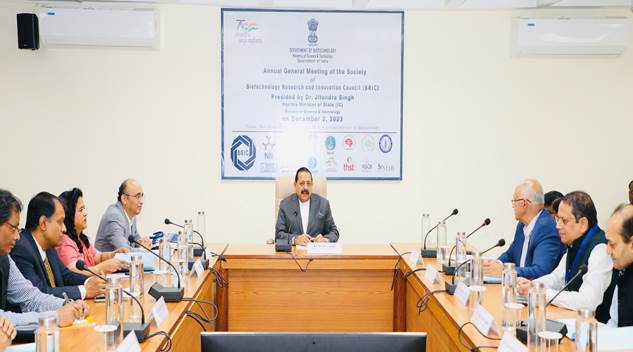
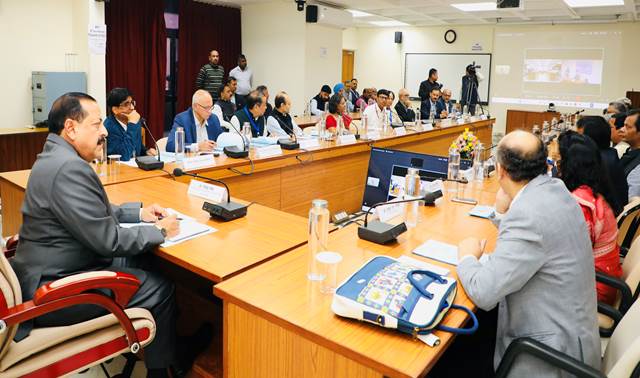
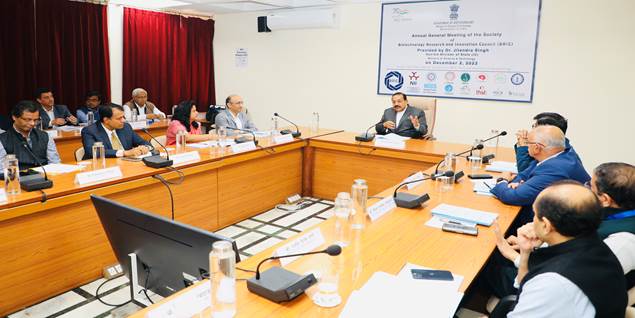
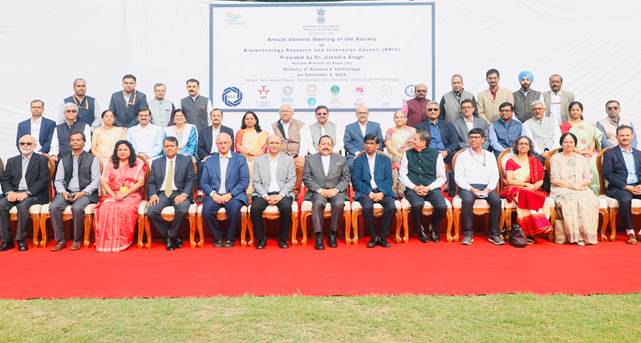
 Addressing the first-ever meeting of the BRIC Society after its registration on 10th November, 2023 after getting the Cabinet approval, Union Minister of State (Independent Charge) Science & Technology; MoS PMO, Personnel, Public Grievances, Pensions, Atomic Energy and Space, Dr Jitendra Singh said here today that time has come for defining “Bio-vision” for Bharat.

Dr Jitendra Singh today said that the new Apex Autonomous Society called Biotechnology Research and Innovation Council (BRIC) will fulfil Prime Minister Narendra Modi’s Vision for Atma Nirbhar Bharat in areas like healthcare, food and energy needs by scaling biotech research and innovation.

Dr Jitendra Singh said, Indian Bio-economy recorded 13 times increase in the last ten years.

The Minister quoted PM Modi as saying, “India is not too far from reaching the league of top-10 countries in Biotech’s global ecosystem”. He added that BRIC is going to be a testimony to this and again by inculcating the spirit of Sabka Prayas, the government is bringing together the best minds on a unified platform.

Dr Jitendra Singh informed that the Department of Biotechnology (DBT), Ministry of Science and Technology is functioning as the nodal agency for promotion of Biotechnology in the country. It was accorded the Cabinet approval for rationalization of its 14 Autonomous Institutions (AIs) by subsuming them under one Apex Autonomous Society viz. Biotechnology Research and Innovation Council (BRIC), for centralized and unified governance to maximize impact of biotech research across the country.


Dr Jitendra Singh described the BRIC meeting as a historical event in India’s Biotech Ecosystem, where elite institutions are consolidating their efforts to impact the biotech R&D ecosystem. He expressed hope that BRIC will prospectively enrich India’s progress in every front including economy and employment. The Minister said, as accomplished institution-builders, he would like to seek their views for defining the Bio-Vision for Bharat in this significant meeting, as they are supposed to bring in tremendous value to this noble mission.

Dr Jitendra Singh also pointed out that this is one of the first Departments in the Government of India to have successfully executed “Rationalization of Autonomous Bodies” for process and performance enhancement of its Autonomous bodies.

Dr Jitendra Singh said, some of the significant changes that will be driven by BRIC include that each of the 14 subsumed BRIC Institutions will maintain their distinct research mandates, governed by one Governing Body, at BRIC. He said, Institutes would be allowed utilization of institutional lab space, not exceeding one third, for researchers from outside DBT institutes and their collaborators (from industry or other institutes) to carry out R&D for start-ups emerging out of institutional research.

Dr Jitendra Singh also underlined that BRIC and its Institutes can engage in public-private research partnerships and receive endowments including funds from non-Governmental resources for research-related activities.

Dr Jitendra Singh also added that new Ph.D programs across BRIC institutions with a common course curriculum at RCB and immersion training for field or experimental studies for validating research hypotheses prior to thesis work. During the Immersion phase (for about 3 months) students will get additional fellowships from Grand Challenges India program. Additionally, to enhance the scientific character of the institutions, additional 120 scientific positions are being brought in. Parity across levels and cadres are also being pursued. Further improving service prospects for scientists are also being taken up, the Minister added.


The DBT initiated this restructuring activity as per the directives on “Rationalization of Autonomous Bodies” issued by Department of Expenditure, Ministry of Finance. However, they have used it as an opportunity to introspect and overhaul the way research is conducted across the DBT institutions. It is envisioned to improve governance, efficiency, encourage collaborations through greater interdisciplinary interactions and democratize resources. The compliance to governmental processes and administrative issues will be centrally managed in a coordinated effort thereby achieving “Minimum Government, Maximum Governance”.

The 14 institutes to be governed by the Society of the new Apex Body of BRIC are: :i) National Institute of Immunology (NII, New Delhi); ii) National Center for Cell Science (NCCS, Pune); iii) Institute of Life Sciences (ILS, Bhubaneshwar); iv) Rajiv Gandhi Centre for Biotechnology (RGCB, Thiruvananthapuram); v) Centre for DNA Fingerprinting & Diagnostics (CDFD, Hyderabad); vi) National Brain Research Centre (NBRC, Manesar); vii) National Institute for Plant Genome Research (NIPGR, New Delhi); viii) Institute of Bioresources and Sustainable Development (IBSD, Imphal); ix) National Institute of Animal Biotechnology (NIAB, Hyderabad); x) Institute for Stem Cell Science and Regenerative Medicine (inStem, Bangalore); xi) National Institute of Biomedical Genomics (NIBMG, Kalyani); xii) Translational Health Science and Technology Institute (THSTI, Faridabad); xiii) National Agri-Food Biotechnology Institute (NABI, Mohali); xiv) Center of Innovative and Applied Bioprocessing (CIAB, Mohali). NABI and CIAB have been merged into one administrative unit with one Director.

Dr. Jitendra Singh today also launched the ‘Zero Waste Life on Campus’ program on the occasion of first Society Meeting of BRIC.

The ‘Zero Waste Life on Campus’ program is aimed at achieving sustainability through application and adoption of knowledge and technologies, and promotion of management models focused on co-responsibility, on each BRIC campus. The diverse locations, cultures and climatic conditions of the 13 BRIC campuses will provide an opportunity to understand the benefits and challenges related to recycling technologies and techniques. This program will forge a new direction for research towards integrated waste management by the community at large.

The Minister in his remarks said that this is a people centric movement that will serve as a beacon leading India into sustainable waste management. This programme will strengthen collaborations among all these institutions and also serve a catalyst for other institutions across India to follow the concept of Zero Waste.

This program is aligned with Prime Minister Shri Narendra Modi’s Mission LiFE movement said, Dr Jitendra Singh.

<

National Best Tourism Village and National Best Rural Homestays Competition 2024

 Ministry of Tourism has launched National Best Tourism Village Competition 2024 and the National Best Rural Homestay Competition 2024 to strengthen the promotion and development of Rural Tourism in the country. The earlier version of the National Best Tourism Village Competition 2023 recognized 35 villages all over India in Gold, Silver, and Bronze categories.

For the enhancement of Rural Tourism in India the Ministry of Tourism, Government of India launched the comprehensive National Strategy and Roadmap for the Development of Rural Tourism in India, along with the National Strategy for the Promotion of Rural Homestays. The Ministry has initiated the implementation of the National strategies in collaboration with the Indian Institute of Tourism and Travel Management. One of the strategic initiatives for the promotion of Rural Tourism and Rural Homestays is conducting the National Best Tourism Village and National Best Rural Homestays Competition.

To foster collaboration and create a conducive environment for the growth of Rural Tourism, the Ministry has actively engaged Governments, industry stakeholders, Non-Governmental Organizations (NGOs), and local communities through these competitions. This multi-stakeholder approach synergizes the efforts to strengthen the rural economies.

The competitions aim to develop healthy competitiveness among the villages and the rural homestays to identify and reward outstanding contributions to Rural Tourism, thereby incentivizing communities and individuals for active contribution to the sustainable development goals.

The competitions will not only boost tourism in lesser-explored regions but also create a ripple effect to increase community involvement, preserve cultural authenticity, and promote sustainable and Responsible practices in the tourism sector.

The Ministry of Tourism has established the Central Nodal Agency Rural Tourism and Rural Homestay (CNA RT & RH) for the effective implementation of the initiatives for Rural Tourism. CNA RT & RH is conducting the capacity building session for the states to create the Master Trainers for the propagation of the competitions to the village level.

The competition was launched on World Tourism Day i.e., 27th September 2023, and the applications for the competitions are open from 15th November to 31st December, 2023. The application portal can be accessed through www.rural.tourism.gov.in

***

AIM– NITI Aayog launches new accelerator to support Australian and Indian circular economy startups to rise


Startups and small to mid-sized enterprises(SMEs) in India and Australia working on circular economy technologies and solutions will benefit from a new accelerator program designed to open new doors to explore opportunities between the two countries.

AIM, NITI Aayog today launched a new accelerator called Rapid Innovation and Startup Expansion (RISE) to support Australian and Indian circular economy startups.

The India Australia RISE Accelerator is delivered in partnership between CSIRO, Australia’s national science agency, and Atal Innovation Mission (AIM), the Government of India’s flagship initiative to promote a culture of innovation and entrepreneurship.

Mr Manpreet Vohra, High Commissioner of India to Australia said, “In the dynamic landscape of international relations, the strategic partnership between India and Australia stands as a testament to our shared values, economic interests, and geopolitical objectives that bind the two nations together. The RISE Accelerator will not only strengthen diplomatic ties but also paved the way for collaborative efforts across various domains”

Dr Chintan Vaishnav, Mission Director – Atal Innovation Mission – NITI Aayog said, “RISE Accelerator stands as a pioneering multi-year bilateral program, uniquely crafted between India and Australia, dedicated to addressing the shared challenges of both economies. Focused on the overarching theme of environment and climate technology, RISE provides a platform for startups to innovate solutions that transcend global challenges.”

Tamara Ogilvie,CSIRO’s RISE Accelerator program director said the program focusses on startups and SMEs that have mature technologies and a desire to expand between India and Australia.

“Over the nine-month RISE Accelerator program, we’ll help startups navigate early steps in a new region, fast-track connections to the right partners, customers and talent, and build credibility to succeed in international markets,” Ms Ogilvie said.

“For the first round of RISE Accelerator, we’re calling for startups and SMEs developing innovative business models, technologies, and or resource ingenuity to support India’s and Australia’s transition to a circular economy.”

Pramit Dash, AIM’s RISE Accelerator lead said the Australian and Indian startups would be well supported to validate and adapt their technology and research overseas.

“This is a real opportunity for startups from Australia and India to work with industry and researchers in their target market,” Mr Dash said.

“As well as developing cultural literacy,participants will develop meaningful bilateral industry and research collaborations.”

The first round of the program aligns with CSIRO’s Circular Economy for Missions initiative, which is focused on creating a sustainable future built on waste innovation.

Heinz Schandl, CSIRO’s Circular Economy for MissionsLead said that we need to design materials and products with a zero-waste mindset.

“A circular economy means products are designed in such a way that they can be used again, or even multiple times, to maximise their value,” Dr Schandl said.

“We hope this program will help to accelerate technologies and solutions to grow economies, create jobs and reduce waste.”

There is no charge for startups to participate in the program, which will be delivered virtually, with a number of opportunities to travel between Australia and India. Participating startups may also be eligible for up to INR 40,00,000 in non-equity grants.

Applications for the RISE Accelerator program are open now, and will close Saturday 7 January 2024.

For more information, and to apply, visit https://riseaccelerator.org/


***

AADHAR Authentication towards Ujjwala Yojana

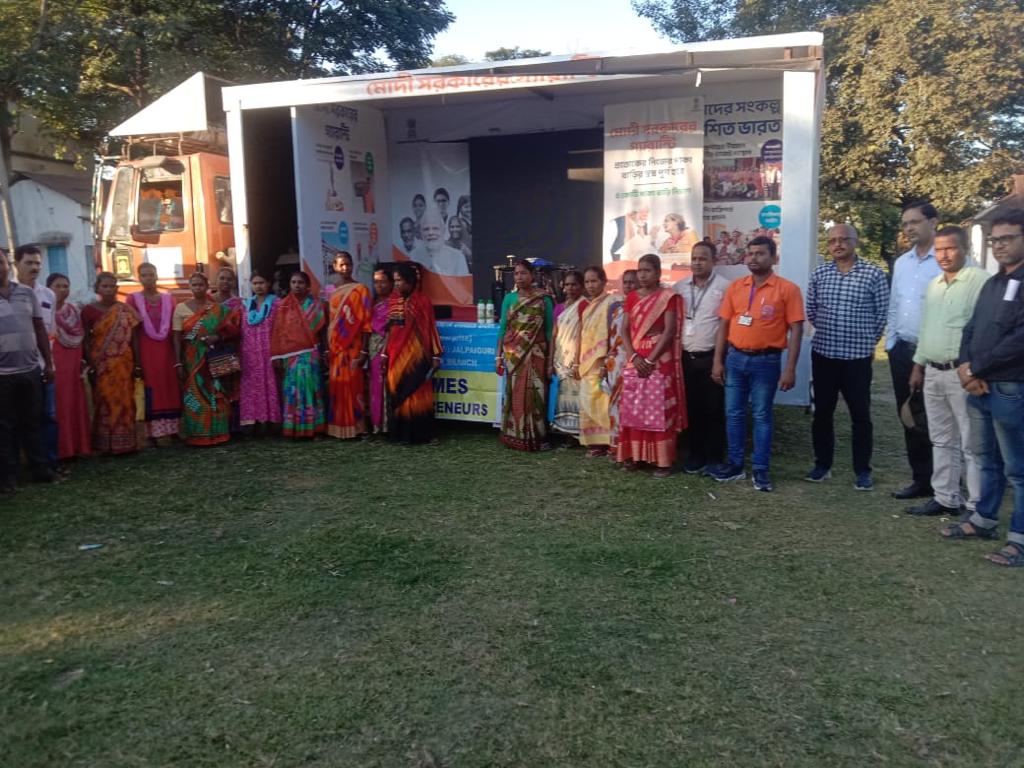
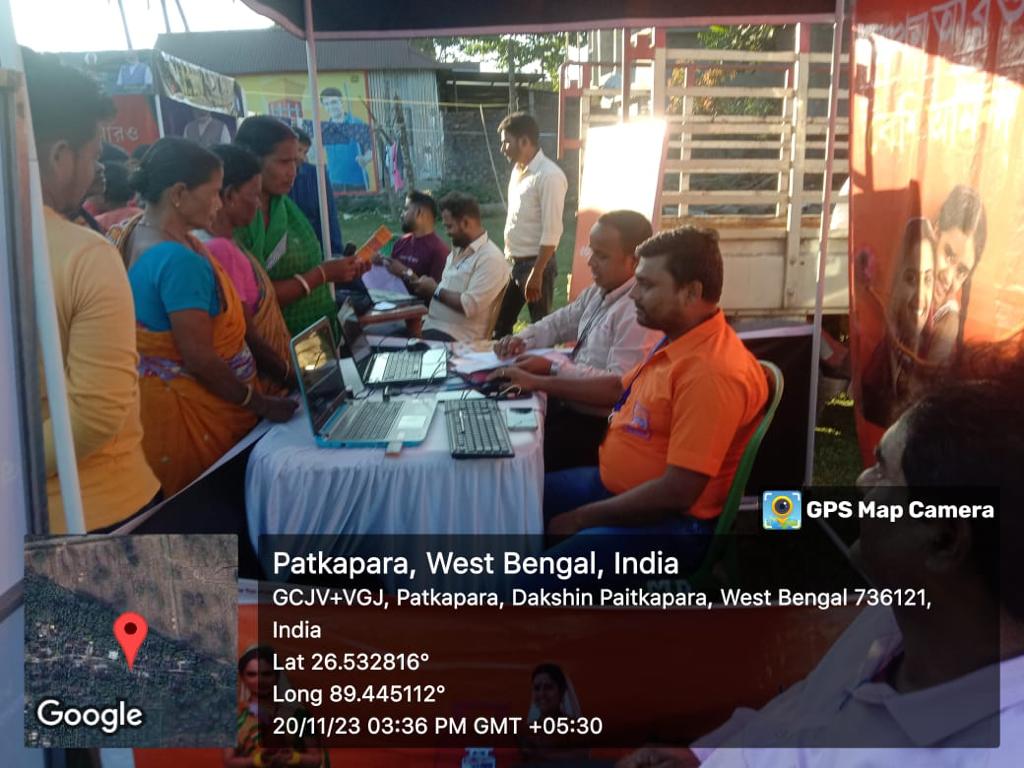
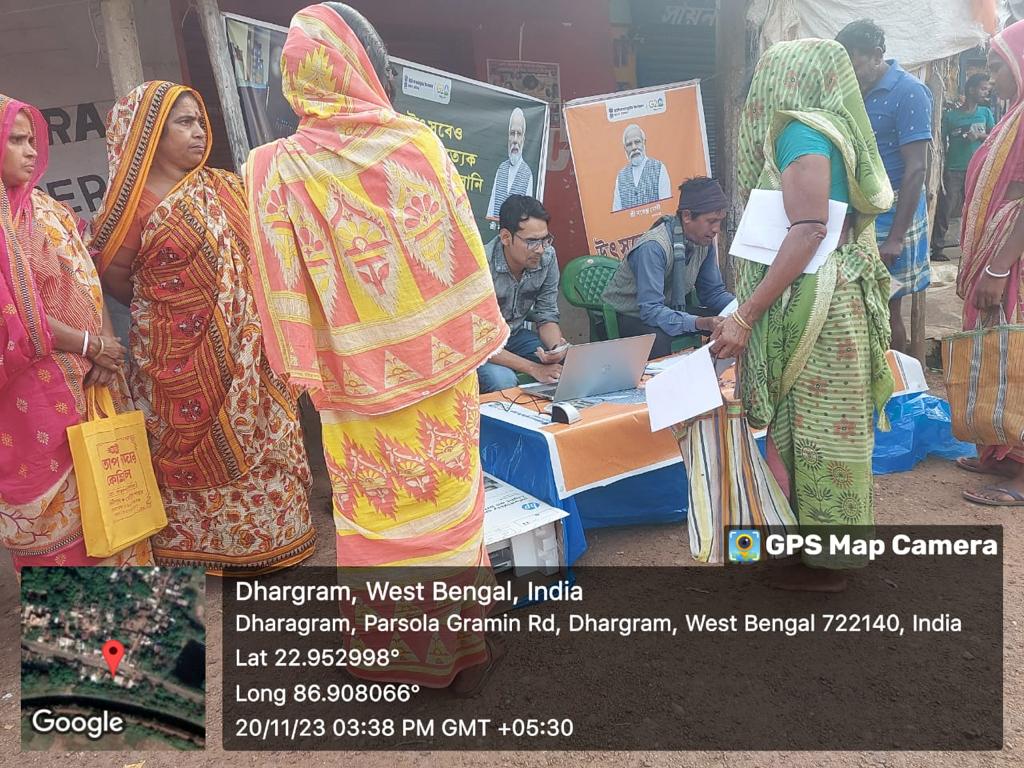
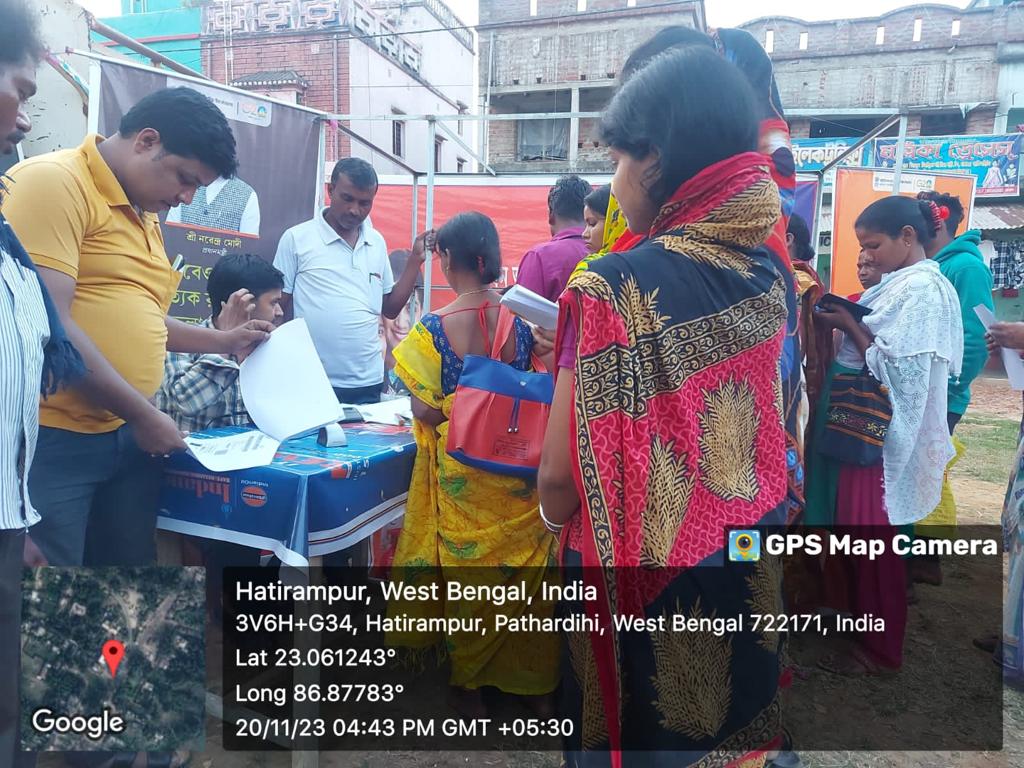
 The Centre is very much in the spree of empowering marginalised women and have come up with various initiatives to help them in pursuing ease of living, like that of providing subsidised gas connection through Pradhanmantri Ujjwala Yojana and the necessity of AADHAR authentication for that. Besides, Krishi Vigyan Kendras of ICAR at various districts have come forward to augment income of the women farmers. And that became imminent in the Vikasit Bharat Sankalp Yatra (VBSY) events at various locations of Bankura, Paschim Medinipur, Alipurduar.


Besides, The farmers took much interest in spreading pesticides in the fields bearing crops through drones.

Today, BCKV, ICAR explained to SHG members on schemes to augment income at Lodhasuli of Jhargram district. Here also, women involved in agriculture thronged in numbers listening with apt attention schemes towards agriculture.


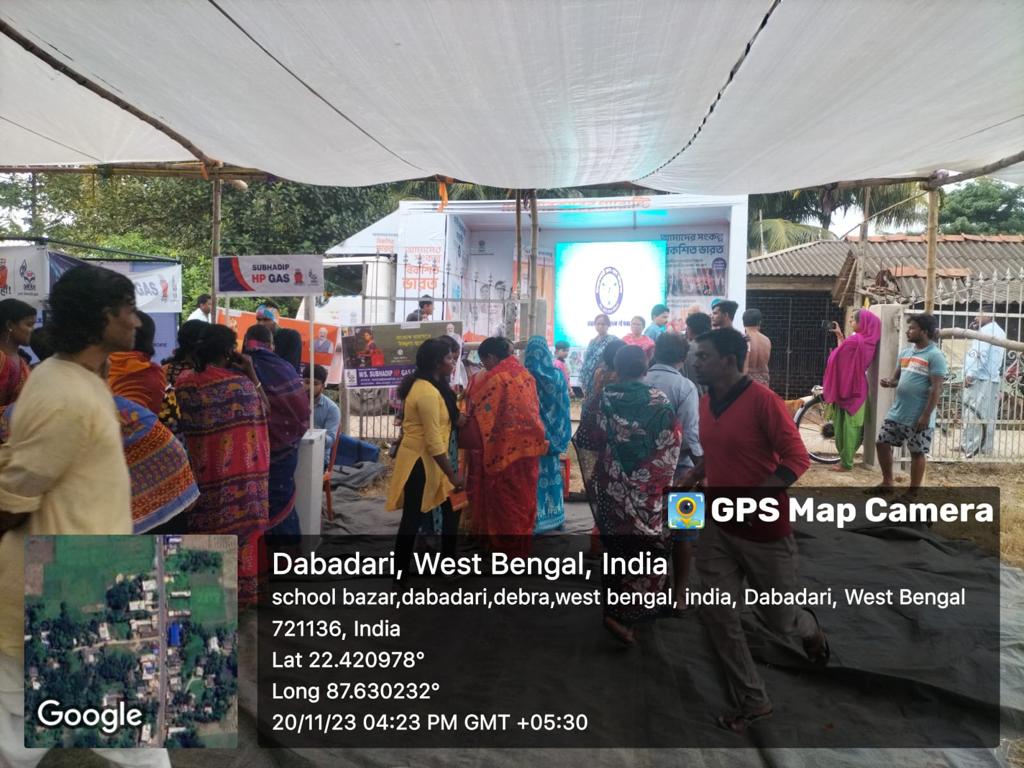
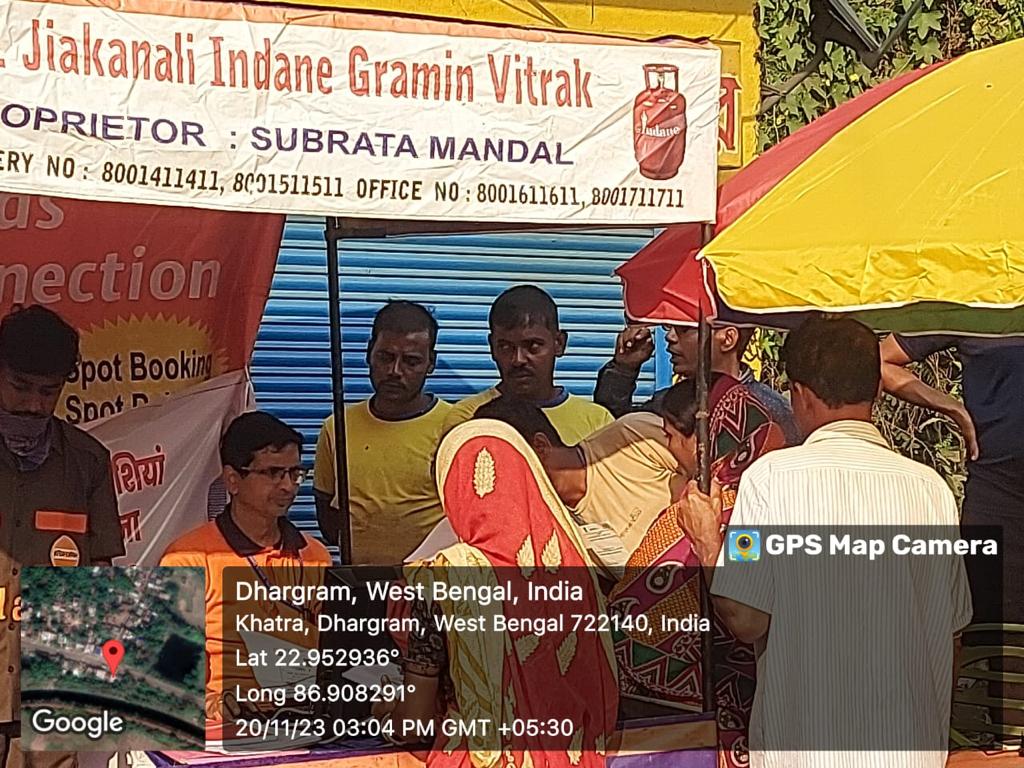
On Monday, the second phase of the VBSY programme was held at Topshikhata Gram Panchayat of Alipurduar 1. Besides, the first phase of VBSY was held at Salkumar-2 Gram Panchayat of Alipurduar 1 today. This apart, VBSY events also took place at Dabadari Gram Panchayat of Debra block, Paschim Medinipur, Dhargram under Dahala Gram Panchayat of Khatra block, bankura.  


Oil marketing companies involved in the domestic gas sector are providing AADHAR authentication services to facilitate subsidy transfer to the bank account of the beneficiaries, especially women beneficiaries in most of the VBSY sites.


That apart, change in personal details regarding gas connection is also being provided at the venue, which attracted several women beneficiaries in most of the places where VBSY is going on.

****

EPFO adds 17.21 lakh net members during the month of September 2023

 EPFO’s provisional payroll data released today highlights that EPFO has added 17.21 lakh net members in the month of September, 2023. Month-on-month comparison of payroll data shows an increase of 21,475 net members over the previous month of August 2023. Year-on-year comparison of payroll data reflects an increase of 38,262 net members over the previous year of September, 2022.

The data indicates that around 8.92 lakh new members have enrolled during September, 2023. Among these newly joined members, the age-group of 18-25 years constitutes 58.92% of total new members added during the month. This demonstrates that majority of the members joining organised sector workforce of the country are youth, who are mostly first-time job seekers.

Payroll data shows that approximately 11.93 lakh members exited but rejoined EPFO. These members switched their jobs and re-joined the establishments covered under the ambit of EPFO and opted to transfer their accumulations instead of applying for final settlement thus, extending their social security protection. As compared to the previous month, number of exits have decreased by 12.17% with 3.64 lakh exits in the month of September, 2023. The data also highlights that the number of members exiting EPFO has been declining since June, 2023.

Gender-wise analysis of payroll data represents that out of the total 8.92 lakh new members added during the month, around 2.26 lakh are new female members, joining EPFO for the first time. Also, the net female member addition during the month stood at around 3.30 lakh.

State-wise analysis of payroll data denotes that net member addition is highest in the 5 states of Maharashtra, Tamil Nadu, Karnataka, Gujarat and Haryana. These states constitute around 57.42% of net member addition, adding a total of 9.88 lakh members during the month. Of all the states, Maharashtra is leading by adding 20.42% of net members during the month.

Month-on-month comparison of industry-wise data displays significant growth in the members working in establishments engaged in the Sugar industry, courier services, iron and steel, hospitals, travel agencies etc. Of the total net membership, around 41.46% addition is from expert services (consisting of manpower suppliers, normal contractors, security services, miscellaneous activities etc.). 

The above payroll data is provisional since the data generation is a continuous exercise, as updating employee record is a continuous process. The previous data hence gets updated every month. From the month of April-2018, EPFO has been releasing payroll data covering the period September, 2017 onwards. In monthly payroll data, the count of members joining EPFO for the first time through Aadhaar validated Universal Account Number (UAN), existing members exiting from coverage of EPFO and those who exited but re-joining as members, is taken to arrive at net monthly payroll. 

****

All-India Consumer Price Index Numbers for Agricultural and Rural Labourers

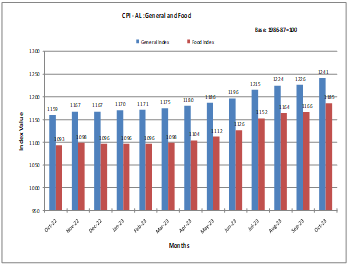
 The All India Consumer Price Index Number for Agricultural Labourers (CPI-AL) and Rural Labourers (CPI-RL) (Base: 1986-87=100) for the month of October, 2023 increased by 15 points and 14 points respectively to stand at 1241 (one thousand two hundred and forty-one) and 1251 (one thousand two hundred and fifty-one) points respectively. The major contribution towards the rise in general index of Agricultural Labourers and Rural Labourers came from food group to the extent of 13.20 and 12.48 points respectively mainly due to increase in prices of rice, wheat atta, pulses, vegetables, milk, onion, chillies (green), mixed spices etc,.

There has been an upward trend in the index across all the states. In the case of Agricultural Labourers, it recorded an increase of 1 to 10 points in 5 States, 11 to 20 points in 13 states and an increase of more than 20 points in 2 states. Tamil Nadu with 1427 points topped the index table whereas Himachal Pradesh with 960 points stood at the bottom.

In the case of Rural Labourers, it recorded an increase of 1 to 10 points in 5 states, 11 to 20 points in 13 states and an increase of more than 20 points in 2 states. Andhra Pradesh and Tamil Nadu with 1415 points each topped the index table whereas Himachal Pradesh with 1011 points stood at the bottom.

Amongst states, the maximum increase was experienced by Jammu & Kashmir for both CPI-AL and CPI-RL (32 and 29 points respectively) mainly due to rise in the prices of rice, wheat atta, onion, kadam saag/spinach, etc. The minimum increase in both the indexes was experienced by Kerala (1 point each).

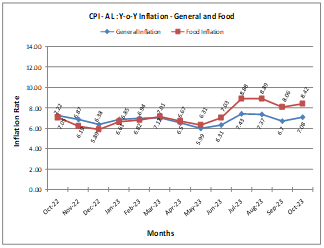
Point to point rate of inflation based on the CPI-AL and CPI-RL stood at 7.08% and 6.92% in October, 2023 compared to 6.70% and 6.55% respectively in September, 2023 and 7.22% and 7.34% respectively during the corresponding month of the previous year. Similarly, food inflation stood at 8.42% and 8.18% in October, 2023 compared to 8.06% and 7.73% respectively in September, 2023 and 7.05% & 7.00% respectively during the corresponding month of the previous year.

All-India Consumer Price Index Number (General & Group-wise):

Group

Agricultural Labourers

Rural  Labourers


September, 2023

October, 2023

September, 2023

October, 2023

General Index

1226

1241

1237

1251

Food

1166

1185

1171

1190

Pan, Supari,  etc.

2004

2009

2014

2019

Fuel & Light

1307

1308

1299

1299

Clothing, Bedding  &Footwear

1261

1266

1307

1315

Miscellaneous

1274

1277

1278

1278


The CPI – AL and RL for the month of November, 2023 will be released on 20th December, 2023. 

***

Annual PhD Workshop at Indian Institute for Human Settlements (IIHS) New Delhi

 The Indian Institute for Human Settlements (IIHS) will host the tenth edition of the Annual PhD Workshop in a hybrid format (virtually and in-person) from 8 to 10 January 2024.


With a strong interdisciplinary focus, as well as an emphasis on the relationship between research and practice, IIHS nurtures research and innovation focused on the challenges and opportunities of India’s urban transition. IIHS has built a substantive on-ground presence of direct policy and programmatic engagement across India, across middle and senior administrative levels, and in multiple urban contexts in the Global South. This makes for a globally unique opportunity for scholars intending to research the Urban where it matters – at the intersection of theory and practice. IIHS’ Post-Doctoral programme and the proposed doctoral programme emphasise the institute’s wider connections into domestic and international policy, and to overlapping communities of practice. IIHS is also building an integrated programme of quality campus-based education and research, training and lifelong learning for working professionals, distance and blended learning, as well as an array of practice and advisory services.


About the PhD Workshop

The PhD Workshop is a unique educational intervention on interdisciplinary urban research designed to provide a dedicated space for PhD candidates to expand on their work. They do this by interacting with eminent urban scholars and practitioners from IIHS and leading universities, and research institutions across the world including Yale, MIT, IIT-Madras, TISS, among others.


Initiated in 2013, the PhD Workshop has had close to 200 participants from leading global and domestic institutions including University of Oxford, MIT, University of Pennsylvania, Cornell University, NUS, JNU, TISS, IIT-Bombay etc., across a wide range of disciplines such as Architecture, Planning, Sociology, Urban Health, Economics, Public Policy, Climate Change, Anthropology, Engineering, Governance and Law. The Workshop provides participants with an opportunity to explore emerging areas of urban research especially in India and other parts of the global South and give them the opportunity to theorise from both research and practice.


The Workshop aims to shape the trajectory of a doctoral career and enable participants to engage with the imperatives of the changing form of disciplines, and meet the substantive academic demands of the doctoral process. The foundational ethos of the Workshop is an interdisciplinary approach to the Urban, guided by theories of and from the Global South with an emphasis on grounded understandings. The Workshop provides scholars with a space to critically examine urban related issues of their interest, and their own position within it. This self-reflexive criticality allows participants to approach their field of inquiry as actors within, rather than as mere viewers of urban phenomena. In addition to guiding students through their work, the Workshop deals with specific processes of earning a doctoral degree. The aim is to create a space of convivial co-learning that opens conversations not only on fields of inquiry, but also on experiences of students navigating the path to a doctoral degree.


Structure of the Workshop

This iteration of the PhD Workshop is open to participants from across a wide range of disciplines, with a common thread being an interest in urban research and practice. The Workshop is designed to provide a platform for in-depth exploration and for early and mid-to-late stage PhD students and fine-tune their work. The structure of the Workshop and the modules within it are designed to be relevant to students from different disciplines and at different stages of their doctoral career. The structure also allows for specific attention to the needs of individual scholars and enables peer to peer learning.


In addition to thematic relevant to particular disciplines, the Workshop will also have a Commons track, and two specialised tracks. The Commons track will primarily involve engagement with eminent urban scholars and practitioners as they explore the possibilities of new methods and pedagogies in and around the Urban. This track provides an opportunity to learn about and understand a range of methods and data sources that are unique to urban India, ethical practices in research as well as the nuances of publishing in academia. Two specialised tracks will focus on early career students who are in the process of finalising their questions (Track 1) and late career students working on finalising their dissertation (Track 2).


The PhD Workshop will be in a hybrid format this year from 8 to 10 January 2024. Interested candidates should send in their submissions by 27 November 2023.


For queries on the Workshop, write to us at research@iihs.ac.in.

Vacancy for Faculty Positions at National Institute of Technology (NIT) | Calicut, Kerala | Architecture, Planning


Vacancy for Faculty Positions at National Institute of Technology (NIT) Calicut

The National Institute of Technology Calicut (NIT Calicut or NITC) is a premier technical institution in India located in Calicut, Kerala. It is one of the 31 National Institutes of Technology in the country and was established in 1961 as the Regional Engineering College Calicut. It was later granted Institute of National Importance status and renamed as the National Institute of Technology Calicut in 2002.

Here are some key points about NIT Calicut:

  1. Academic Programs: NIT Calicut offers undergraduate, postgraduate, and doctoral programs in various engineering, technology, and science disciplines. These programs include B.Tech, M.Tech, M.Sc, MBA, and Ph.D. degrees.

  2. Campus: The campus is spread over a vast area and provides facilities like hostels, sports complexes, academic buildings, laboratories, and a library.

  3. Research and Development: NIT Calicut is involved in cutting-edge research and development activities. The institute encourages faculty and students to engage in research projects and publish their findings in reputed journals.

  4. Departments: The institute has various departments, including departments of Engineering, Sciences, and Humanities. Each department offers specialized courses and conducts research in its respective field.

  5. Placements: NIT Calicut has a strong placement record, and its graduates are sought after by leading companies in the industry. The institute’s placement cell facilitates interactions between students and potential employers.

  6. National Importance: Being an Institute of National Importance, NIT Calicut receives funding and support from the Government of India, allowing it to maintain high academic standards and infrastructure.

  7. Cultural and Technical Festivals: The institute hosts various cultural and technical festivals, providing students with opportunities to showcase their talents and interact with peers from other institutions.

  8. Notable Alumni: NIT Calicut has produced many successful professionals and entrepreneurs who have made significant contributions in various fields.

It’s important to note that specific details about academic programs, admission procedures, and other relevant information may change, so it is recommended to check the official website of NIT Calicut for the latest and most accurate details.

Positions: Assistant Professor (Grade II)
Institution: National Institute of Technology (NIT)
Department: Architecture and Planning/Civil Engineering
Qualification: ✔️ Detailed educational qualifications, experience, and other criteria for selection shall be according to the recruitment rules for Faculty in NITs as per Schedule E of the first statutes of the NITs (amendment statutes 2017) issued vide Gazette of India dated 24th July 2017, and clarification issued by Ministry of Education dated 16th April 2019.
Experience: ✔️ Details Provided Below.
Job Description: ✔️ Details Provided Below.
Type: Full Time
Location: Calicut, Kerala
Salary: ✔️ Pay level: 10 (AGP 6000)
Apply at: ✔️ Apply Link
Last Date: 30 November 2023