MYSTERY OF SRI YANTRA DESIGN ON OREGON LAKE BED

The Sri Yantra is a Mystical diagram, where the word “Sri” is known as “wealth” and the word “Yantra” is known as an “instrument”. This diagram is formed by nine interlocking triangles that are surrounded and radiated out from the Central (Bindu) point. The Two-dimensional Sri Yantra, when it is projected into three- dimensions is called a Maha Meru. In Hindu Vedas it is believed that worship of Sri Yantra creates a numerous positive effects. In simple words Sri Yantra is the symbol of Hinduism, which is purely based on the Hindu philosophy of vedas. In todays article I’m going to explain about a mystery on Sri Yantra which was found in Oregon, USA at 1990.

In the year of 1990 on august 10th an Air National Guard pilot Bill Miller noticed a strange formation on an Oregon dry lake bed that the Air National Guard frequently flew over on training missions. He noticed that massive formation is a quarter mile wide and is located 70 miles southeast of Burns, Oregon. Later they found that strange formation on lake bed as a Sri Yantra which occupied 13 miles in length and width. 

Most of the officials suspected that mysterious formation took thousands of dollars and a lot of man power to complete along with high tech equipment and lasers and some people, including professors and researchers in USA believed that it was done by aliens and a team also assigned for searching clues about its formation.

For some time this event was treated with the head scratching bewilderment that accompanies crop formations. On the ground investigations revealed no tell tale signs of vehicles or human intervention. Word spread fast that it was an extra terrestrial event. People were intrigued and fascinated but got stuck on the how? And the wow! The event was debated for some time.
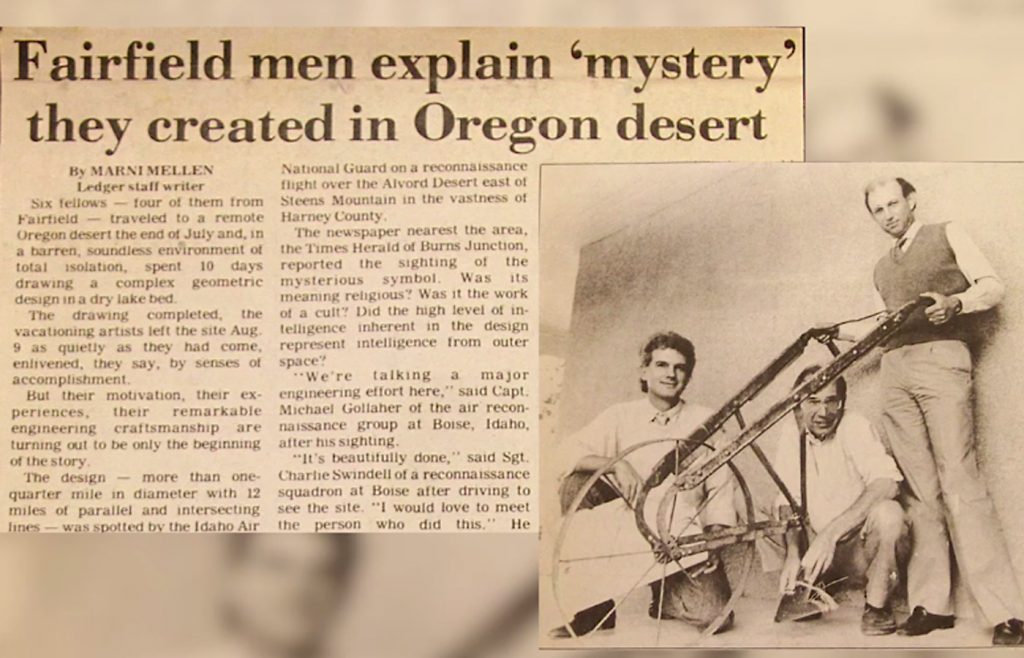
Suddenly everyone got surprised when an artist named as Bill Witerspoon from Iowa and his friends came into the picture of investigation by saying that, the mysterious formation of Sri Yantra on Oregon lake bed was done by them with the use of sticks, wires, 12 miles of string and a basic plow but most of the people doesn’t accepted with their statement on Sri Yantra formation. After a detailed interview with Bill witerspoon and his friends on this matter they said about the following matter

” In the year of 1990 on summer, Bill Witerspoon along with his group of friends went to a remote alkali lake bed in the high desert of southeast Oregon to inscribe a large Sri Yantra in the earth and they were also decided to live in the large central point that contain in Sri Yantra. For drawing the massive art form they chosen that site because of its beauty and remoteness. Almost no one, except a few ranchers, ever went there and they also felt that inscribing lines in the alkali surface would not disturb any vegetation and it would be a transitory event which eventually disappears back into the surface through the natural action of wind and the occasional water that floods the lake bed every few years. They also said that drawing of that art form took almost ten days for it’s completion.

After the completion of the art work they lived in the nine-foot central circle of the Sri Yantra for almost three weeks. During that period of their stay in that central circle they observed remarkable changes in the workings of Nature within the design and in the valley where it was situated.”

The art form that was drawn on that landscape subjected to change of the “feeling” within the valley which was eventually noted by ranchers and other people who have known the area for a long time. People reported experiencing qualities of energetic peacefulness, harmony with nature and enhanced intuition when they were in the design and valley. Another influence was a radical change in the quality of meditation that would repeatedly occur if individuals moved a few feet out of the central circle into the innermost triangle of the design or vice versa.

Changes in the environment were also observed vastly within the design, which had been inscribed in highly alkaline silt, incapable of supporting any kind of vegetation, there were remarkable changes in the direction of increased fertility. So, Guys this is the mystery behind the formation of SRI YANTRA on Oregon lake bed and there is no doubt in saying that people near Oregon lake bed had experienced the favourable changes only because of the Sri Yantra design on that landscape.


HOW TO FILE A PATENT IN INDIA?

If any one have created or invented a process, product or service that can be defined as an original invention, then it is important to get it patented because it helps to safeguard ones invention.  It can protect any product, design or process that meets certain specifications according to its originality, practicality, suitability, and utility.  In most cases, a patent can protect an invention for up to 20 years. This time period starts soon as you file your patent.  The first and foremost thing that a person must do for getting a patent is to file a formal application of Patent at patent office. 

However, patent registrations are not applicable for all inventions because the invention should satisfy specific criteria to obtain a patent in India. So, let us know about who can file a patent and what types of inventions get patented in a clear way.

WHO CAN FILE FOR A PATENT ?

A patent registration application for an invention can be made by the people either alone or jointly. Most of the patents were applied by the true inventor or the assignee of first inventor and sometimes it can also be applied by the representative of the deceased true and first inventor assignee. In the case of a proprietorship firm, the application should be made in the proprietors’ name and if it is a partnership firm, then the names of all personally responsible partners must be included in the patent application. Most importantly the applicant is required to disclose the name, address, and nationality of the true and first inventor.

WHAT CAN BE PATENTED?

The Patent Act states that for an invention to be patentable, the invention must be a new product or process that involves an inventive step and can be used in the industry. For an invention to obtain patent registration, it should be technical and the invention should possess utility so that it can be used either in industry or market. The invention must possess novelty i.e the specified invention should not published in India or elsewhere priorly. These all should be cross checked before filing the patent application in India.

PATENT APPLICATION PROCEDURE:

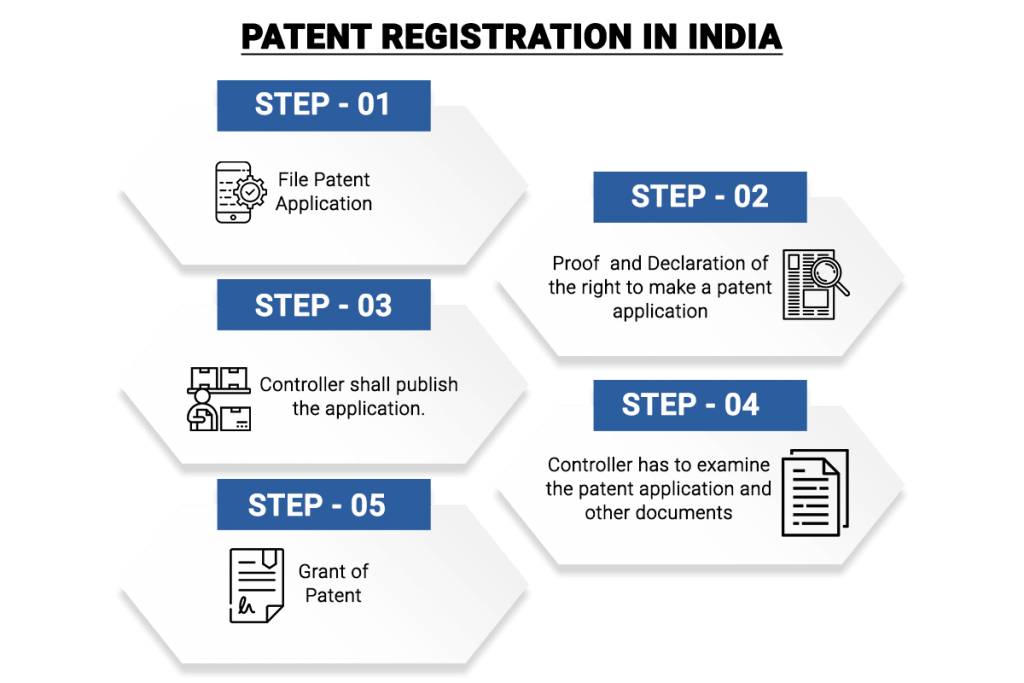
Step 1 – PATENTABILITY OPINION:

Before you begin the patent registration process, you need to check if your invention is patentable. This means that you need to check if another individual has filed a patent for a similar technology for which you are filing. Performing an in-depth patentability search helps you to understand whether you have a chance of getting a patent for your invention or not.

Step 2 – DRAFTING & FILING THE PATENT APPLICATION:

After successfully completing the first step, you can begin the patent application process. Indian applicants need to fill Indian Patent Application Form 1 and along with that you need to provide a Form 2 mandatorily for specifying the type of patent where you can choose between a provisional and complete patent application, based on the stage of invention. This means that if your invention is still under testing then, you need to apply for a provisional patent application where you can get a period of 12 months to complete the invention and can file for a complete patent.

You need to pay special attention when you are drafting your patent application and should include clauses like usability and outcome of the invention in detail. It is also necessary to include the intention to get license on the invention while drafting the patent application and be meticulous in including all the clauses that prevent the competition from others who use same technology.

Step 3 – PUBLISHING THE PATENT APPLICATION :

After submitting all the documents, the patent application is safely secured by the Indian Patent Office and applied patent is then published in an official patent journal after a period of 18 months approximately. However, inventors who wish to have their patent application published before this 18 month period can submit Form 9 (form that requests for early publication) so that the application can be published in official patent journal within 1 month of making request.

Step 4 – EXAMINING THE PATENT APPLICATION:

Before granting the patent, the patent application needs to be examined thoroughly. As per rules of the patent application process in India, applied patent should examined based on the merits of the invention and described in the patent specification form. Unlike the publication process, this is not an automatic process and the applicant needs to make a request to examine their patent application by submitting Form 18 because the patent office queues the application form for examination only after a formal request for examination is made.

When the application lands on the examiner’s desk, it is scrutinized according to the Patent Act and underlying rules along with that the examiner also searches for similar technologies to ensure the invention satisfies patentability criteria or not. After reviewing the application, the first examination report is submitted. The examiner lists his objections in detail which can further extend the application process by another 6- 9 months.

Step 5 – DECISION TO GRANT PATENT:

Once the examiner finds no objections in the patent application, he grants the patent and then the patent is then published in the official patent gazette.

Step 6 – RENEWING THE PATENT:

The patent holder also needs to renew his patent by paying an annual renewal fee. In India, it is possible to renew your patent for a period of 20 years at maximum, from the date the patent was first filed.

OVERVIEW OF PATENT PROCEDURE

CONCLUSION:

Finally, the patent filing process is long and complex, one must remember its importance in the long run. The entire process can take anywhere in between 3-5 years. However, This process is created with the intention of ensuring that the inventor gets credit for his invention and also ensures that no other individual can claim rights over the invention. The legal rights that an inventor earn through patent can prevent competitors from using the invention for financial benefits. In any wrong case the related true inventor of invention can also sue on such individuals and claim compensation for using invention without their approval.

So, guys this is the procedure to file a patent in India and I have tried my level best to make you understand about the patent procedure

WHAT IS THE NEED OF PROTECTING INTELLECTUAL PROPERTY RIGHTS

Protecting intellectual property is essential to remain profitable because intellectual property of a company prevent others from infringement of their own products and innovations. Particularly, protecting IP’s are relevant in today’s competitive market. Intellectual properties can cover a wide range of topics such as brand name, logos, services, processes etc.. of a company. An organisation is bound to face losses when these concepts are used without their permission. Let me explain you about the importance of protecting intellectual property with a case study.

CASE STUDY:

YOU ARE NOT BAJAJ:

A Hyderabad food retain chain, Urban Food Mart, India pvt.ltd has told by the Bombay high court to stop using the name ” BAJAJ SUPER MARKET ” for its business. The justice has passed an interim order on Feb 5th, 2021. Retaining urban food mart using the name of Bajaj and has directed into remove all signatures i.e use of marks on shopping bags, cartons, parking material etc… with in 3 weeks.

Bajaj electricals sued urban food mart saying that it had been using the name Bajaj continuously and extensively since 1961.

In the above case study we can clearly identify that Hyderabad related food retain chain has violated the term Trademark in IPR by copying the name of Bajaj electronics with out it’s permission. As I mentioned in previous articles also, Intellectual property highlights the important assets of an entrepreneur, Intellectual property rights is the collective term for creations of the mind which can be used for the commercial good will.

Almost every company in this technical world has undeniably benefited from the internet, which allows goods, services, and marketing messages to reach a large audience at a low cost – but it has also raised the risk of intellectual property infringements. This ultimately makes the protection of Intellectual Property as one of the most important things in today’s business world.

Most of the entrepreneurs because of having lack of knowledge in intellectual properties ignore important steps that they have to take for protecting their IP assets later which results into loss for their company. So a proper attention should be given for protecting IPR of a company by both management and employees. It will be good for the company, if it nominate a manager who takes the responsibility for understanding and protecting IP rights.

LIFE CYCLE OF INTELLECTUAL PROPERTY(IP):

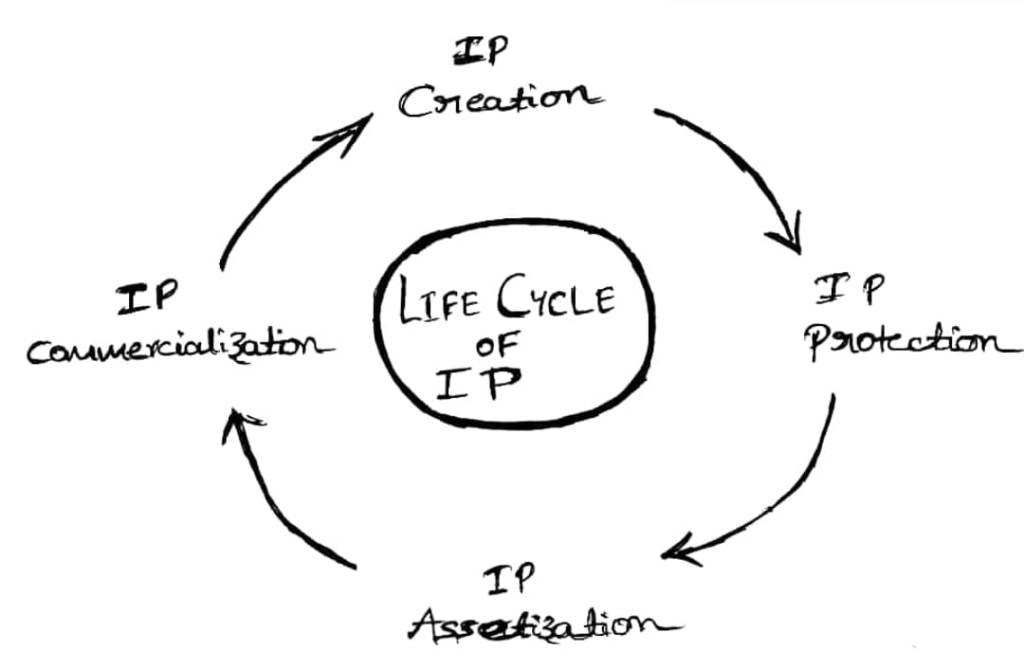
Protecting IP assets at the right time will always maximize the value of business. Now let us see the life cycle of intellectual properties in the following picture.

IP CREATION: Creation of IP enables innovators and inventors to identify and develop the potential research works in various fields.

IP PROTECTION: It enables in getting ownership rights and overall control on IP of a firm.

IP ASSETIZATION: Facilitates the development of IP based products of a company.

IP COMMERCIALIZATION: It enables business to make revenue and helps in expanding the market of the company.

HOW TO PROTECT INTELLECTUAL PROPERTIES:

The following are the five tips that every entrepreneur or owner of a firm must keep in mind for protecting IPR are as follows:

1 APPLY FOR PATENTS, COPY RIGHTS, TRADEMARKS:

Companies can protect their core management and their research & development activities through intellectual property rights and registrations. They also have a better bargaining position for cross-licensing and counterclaims. Intellectual property rights and registrations also allow a corporation to obstruct competing goods, determine new entrants, and pave the way for future market share via technological advancements. Intellectual property rights come in a variety of forms, such as Patents (used to protect technical information), Copyrights ( used to protect original artistic expressions of text, drawings etc..) and Trademarks (used to protect logos, brand names etc..). Each one of these must be applied in prior to protect the companies rights in order to sue if a third party infringes. 

2 SECURE YOUR INTELLECTUAL PROPERTY BOTH PHYSICALLY & DIGITALLY :

Companies must protect their IP in both Physical and digital protection and should maintain high security where sensitive data is stored, whether it is in the server farm or it is in the paper form. Keep track on the person who has the keys. Use passwords and limit employee access to important databases.

3 AVOID JOINT OWNERSHIP FOR INTELLECTUAL PROPERTY RIGHTS:

Make an effort to escape joint intellectual property rights. It is always beneficial for you to have control of your rights. In the long run, joint ownership of such rights can cause confusion and legal issues threatening the security of these assets, causing harm to all parties involved.

4 GET EXACTLY-MATCHING DOMAIN NAMES:

An exact-match domain name is one of the best intellectual property protection strategies for trademarks and copyrights (that you already own). Though it can be a bit expensive but it will help you in the long-term benefits.

5 KEEP YOUR IDEA A SECRET UNTIL YOU HAVE FILED A PATENT APPLICATION:

Make sure that you never share your idea with anyone before you have protected the same. This is because the other person might file for a patent before you and gain ownership rights over it. There is an old maxim that says “a secret shared is not a secret anymore”. So, don’t share the total information about the idea or invention with anyone and keep it as a confidential matter.

ECONOMICS BEHIND INTELLECTUAL PROPERTY RIGHTS

In todays world several companies use the Intellectual Property Rights (IPR) to protect their new inventions and company secrets. IPR are the legal rights granted by government to encourage innovation and creative output by ensuring that creators reap the benefits for their inventions or works. Intellectual property rights include several forms such as patents, trade secrets, copyrights, trademarks, or geographical indications (GIs).

World intellectual property organization(WIPO) defines IPR as a creation of mind inventions, literacy, artistic works and symbols, names, images and designs used in commerce. When a company hold its physical properties with out any IPR then those properties are considered as tangible where as IPR possessed properties are considered as Intangible. Intellectual property is essentially needed for a private nature belong to either through a natured person or legal person( Companies, Institutions). IPR can be own, bought and sold, rented , protected and infringed upon by others.

EVALUTION OF IPR IN INDIA:

Intellectual Property Rights (IPR) in India was imported from the west through the Indian Trade and Merchandise Marks Act 1884 which was considered as the first Indian Law on IPR. The first Indian Patent Law was enacted in 1856 followed by a series of Acts being passed. There is an Indian Patents and Designs Act in 1911 and Indian Copyright Act in 1914 is the first enacted copy write act in India. Later after getting independence the Comprehensive Copyright Act was enacted in the year of 1957 to consolidate the laws related to copyrights in India.

In 1948, the Indian Government appointed the committee to review the prevailing Patents and Designs legislation. In 1957, Government appointed to revise the Patent Law in order to balance the constitutional guarantee of economic and social justice enshrined in the preamble of the constitution. The report submitted by the committee outlined the policy behind the Indian Patent system. After the revision of previous acts on patents, a new patent act was released in the year of 1970 which process the patents only for food, agrochemicals, alloys, drugs and fixed 7 years term for food, drug and 14 years for others with having compulsory license provisions.

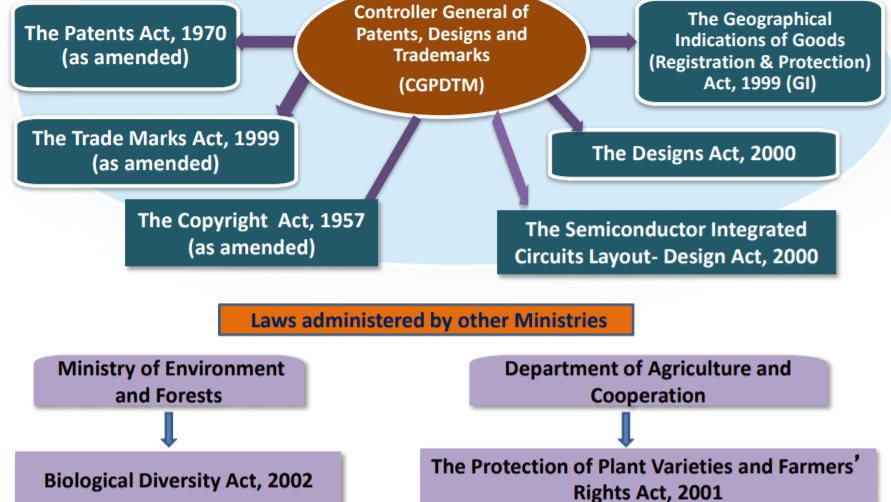
IPR LAWS ADMINISTERED BY OFFICE CGPDTM

EVALUTION OF INTERNATIONAL PERSPECTIVE OF IPR:

Every country has some relationship with other foreign countries in the form of trading, such as imports and exports. The foundation of International Intellectual Property Protection was created in the 19th century in the view of protection of Industrial Property which was created at Paris Convention in the year of 1883 regarding the terms of Patents, Trade Marks and Industrial designs that were granted protection at that convention. In 1998, India also became a member of the Paris Convention. In 1886, International Copyright Act was passed.

The Paris Convention marked the beginning of the International Trade Marks Protection laws and introduced the concept of a well known mark. In 1960 the World Intellectual Property Organization was created which governs the Paris and Berne Convention. In 1977 World Trade Organization (WTO) was created and become an important international organization for the development and understanding the IPR. This WTO was the successor to the General Agreement on Tariffs and Trade(GATT).

The importance of intellectual property in India is well established under statutory, administrative and judicial levels with an agreement made with World Trade Organization (WTO). This Agreement concentrates on Trade Related Aspects of Intellectual Property Rights (TRIPS) which came into force from 1st January 1995. It lays down the minimum standards for protection and enforcement of intellectual property rights in member countries which are required to promote effective and adequate protection of intellectual property rights with a view to reducing distortions and impediments to international trade.

The IPR scene in India has undergone a dramatical change since 1995 with the creation of various tools of Intellectual Property which shows compatibility with TRIPS.

ECONOMICAL PERSPECTIVE OF IPR IN DEVELOPING COUNTRIES :

Intellectual property rights have a great importance in the growth of a country. Intellectual property law differs from county to country. In many developed countries, the strict enforcement of the IPR has a huge contribution to economic growth. IPR promotes innovation which leads to the economic growth. Nowadays every business in the world is looking for the creation of Innovations.

So, protecting those new innovations has become necessary for companies these days. Not only protecting the new inventions of the company but also established companies should also protect their company names also in order to avoid duplicates in the market. Some big companies sell their names in exchange of huge amount in exchange of huge amount of money. Intellectual property rights have a great influence on the financial improvement of a nation. Different country governments face a complex choices on how to design an IP system in the best way to serve their policy objectives.

As India is one of the fastest growing countries, innovation became the first priority to most of the startup companies and as well as established firms including Government firms. Significance of IPR gives a competitive edge in the market for a company and also protects from hackers and pirates. Developing countries went along with the TRIPS agreement for a variety of reasons, ranging from the hope of additional access to agricultural and apparel markets in rich nations, to an expectation that stronger IPR would encourage additional technology transfer and innovation.

From business perspective IPR helps to create a strong brand identity and obtain valuable competitive intelligence. Along with these they help in making revenue through licenses. The main flexibility that is obtained through IPR is freedom of operating. After the introduction of TRIPS the market in India started changing vastly and the act started to provide space for operation and opportunities to companies and innovations. The private sector has started investing in research and development. Finally, The intellectual property right development plays a crucial role on economy for the development of business in a country.

TERMS OF INTELLECTUAL PROPERTY RIGHTS

INTELLECTUAL PROPERTY RIGHTS:

Intellectual Property is an intangible property, which is a product of human intellect, capital, labour, etc. such as artistic creations, literary works, inventions and so forth. It is intangible because it cannot be identified with the help of its physical characteristics.

Intellectual property is an asset by which one can own their business identity, technology, works of authorship, logo, slogans and many other practical expression of the ideas that drives the business forward. Intellectual property plays a vital role at all levels of your business.

To safeguard the interest of the creators, intellectual property rights are introduced which give them the right over their property and prevents others from using it in an illegal way. There are several terms in intellectual property rights, they are described clearly in the following paras:

TERMS OF INTELLECTUAL PROPERTY RIGHTS:

COPYRIGHT:

Copyright is a legal IPR term used to describe the rights that creators have over their literary and artistic works. Works covered by copyright range from books, music, paintings, sculpture, and films, to computer programs, databases, advertisements, maps, and technical drawings. Copyright provides the owner with exclusive rights to use, display, copy, exhibit, modify and distribute the work.

PATENT:

A patent is an intellectual property right which is exclusively related for an invention and grant rights on that invention. The invention may be a product or a process that provides in general for a new way of doing something, or offers a new technical solution to a problem. To get a patent, technical information about the invention must be disclosed to the public in a patent application. There are different types of patents are existed they are:

  • Utility patents: These are the most common form of patents to protect physical inventions, chemicals and processes.
  • Design patents: These patents protect the unique form, appearance or design of an item.
  • Plant patents: These patents protect the development of a new variety of plant through an asexual reproduction in a controlled setting.

TRADEMARK:

A trademark is a sign capable of distinguishing the goods or services of one enterprise from those of other enterprises. Trademarks are protected by intellectual property rights. In simple words trademarks are those things that make up your brand with having certain phrases, logos, unique words, and graphic design elements can be trademarked. Trademarks defend against confusion or dilution of the brand in the marketplace. Trademarks have to be distinctive in order to gain protection. The mark’s that are associated with business denotes its strength, which plays a vital role for defending the piracies.

GEOGRAPHICAL INDICATIONS:

A geographical indication (GI) is a sign used on products that have a specific geographical origin and possess qualities or a reputation that are due to that origin. In order to function as a GI, a sign must identify a product as originating in a given place. A geographical indication is often related to industrial property, which adverts referring to a country or to a place, situated for the origin of that product. This geographical indication not only refers to where the product was made, but more importantly, it identifies the product’s special characteristics which are the result of the products origin. Using the place name where the product was made.

INDUSTRIAL DESIGN:

Industrial design is also a term in intellectual property. It is a process of design applied to products that are to be manufactured by mass production. It can be applied to a wide variety of factors like, materials, production processes, business strategy and prevailing social research activities, commercial or aesthetic attitudes.

As per the Indian law, under the design act 2000, Industrial design protection is a type of intellectual property right that gives the exclusive right to make, sell and use articles that embody the protected design to the selected people only.

TRADE SECRETS:

Trade secrets are intellectual property (IP) rights on confidential information which may be sold or licensed. In general, to qualify as a trade secret, the information must lie in commercially valuable because it is secret and should be known only to a limited group of persons and also it should be subjected to a reasonable steps taken by the rightful holder of the information to keep it secret, including the use of confidentiality agreements for business partners and employees.

The unauthorized acquisition or use or disclosure of such secret information is referred as an unfair practice and considered as violation of the trade secret protection.

So, These are some of the terms that are related to Intellectual property rights. Which are useful and necessary for any type of organization or firm to protect their new inventions, logos, artistic works etc… from their competitors.

INNOVATION MANAGEMENT: TYPES OF INNOVATION

In today’s constantly changing business environment, new opportunities and challenges arise every day which are often driven through digitalization. As a result various market forces like knowledge as business capital, the Information and Communication technologies, Internet of things and of course due to digitalization every organization seeks a competitive advantage. To master over the resulting challenges and get benefited from the opportunities, we must have a systematic and well managed Innovation. That is why now a days innovation has become a core focus area for high performing organizations to ensure long-term survival by making the desired revenue and goals.

WHAT IS AN INNOVATION?

According to Peter Drucker innovation the specific function for entrepreneurship whether in an existing business or a public service institution or a new venture started by a lone individual in family kitchen. Innovation is the means by which the entrepreneur either creates new wealth producing resources or endows existing resources with enhanced potential for creating wealth.

WHAT IS INNOVATION MANAGEMENT ?

Innovation management involves the process of managing an organization’s innovation procedure, starting from the initial stage of ideation to its final stage of successful implementation. It encompasses the decisions, activities and practices of devising and implementing an innovation strategy. These decisions, practices and actions are aimed at achieving a certain target – to generate an idea, product or a service that is of sizeable business value.

According to Gartner, innovation management is a structured process of generating, capturing, discussing and improving, organizing, evaluating and prioritizing valuable insight or alternative thinking that would otherwise not have emerged through normal processes.

The innovation management process necessitates the use of certain management tools that assist in bringing both managers and other entities on a common platform and get them to move towards a common goal. These innovation management tools can look simple but are most effective in reality. Such management tools are considered as brainstorming sessions, planning and finally prototyping. Let’s discuss about various types of innovation which helps in the growth of business.

TYPES OF INNOVATION:

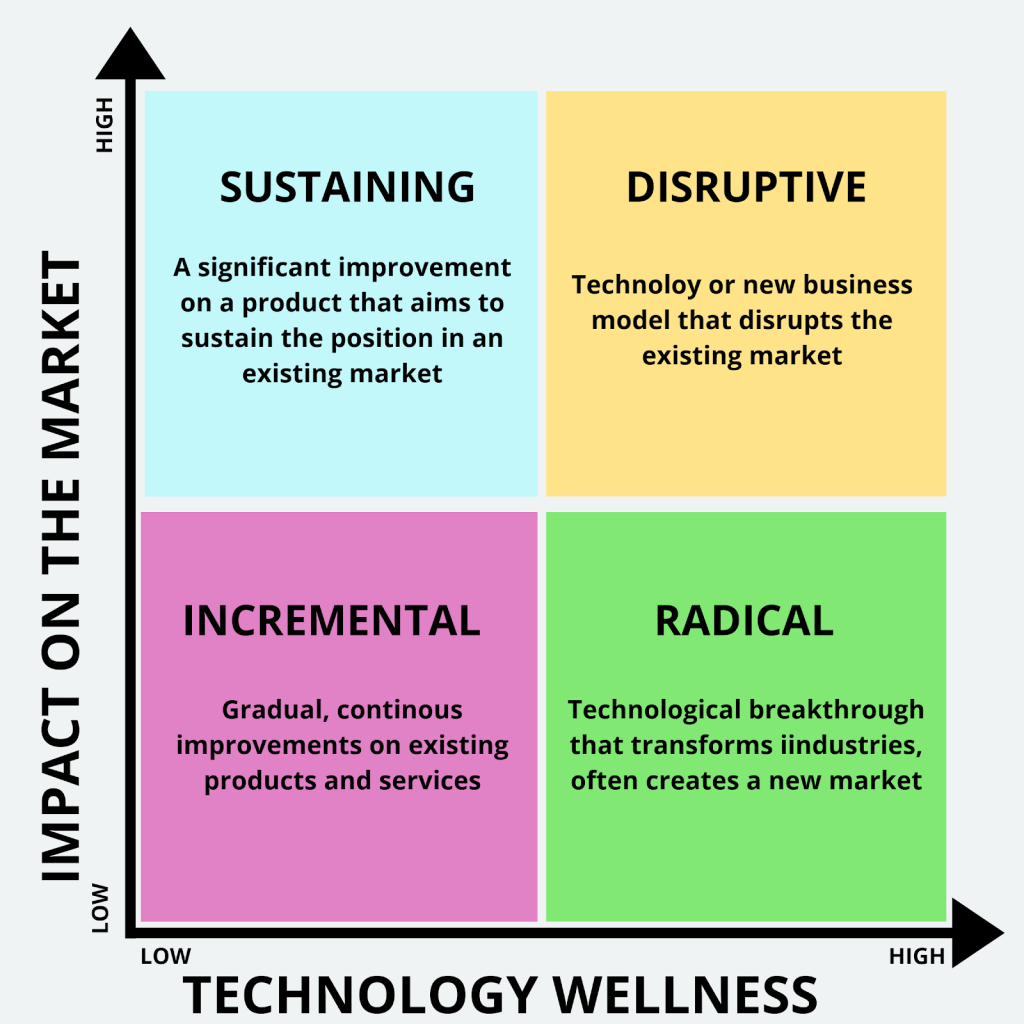
INCREMENTAL INNOVATION: The overwhelming majority of innovations are incremental in nature. Incremental innovation is nothing but improvement or adding new features or characteristics to already existed product which brings a large-scale organisational change. Incremental innovation is arguably the most accessible form of innovation, as it can often be performed without requiring huge budgets, a large team or a reorientation of the business’s strategy.

LED LIGHTBULB (Example of Incremental Innovation)

Incremental innovation doesn’t change it’s original dominant design. Incremental innovation will have less financial risks because this innovation doesn’t bring a new product or services into market rather it just modifies already existed product. This innovation can build a strong customer relationships and improves the product longevity in the market and most importantly incremental innovation is the best strategy to get a quick win in the competitive market.

The best example of incremental innovation is, The most famous E-commerce site COCO COLA, CADBURY etc…

DISRUPTIVE INNOVATION: Disruptive innovation is a theory that refers to a concept, product, or a service that creates a new value of network either by entering an existing market or by creating a completely new market. Moreover disruptive innovation refers to innovations by using new technologies that make expensive or sophisticated products and services accessible and more affordable to a broader market.

Disruptive innovation requires enabling technology with an innovative business model for building a coherent network value. One of the key features of disruptive innovation is that it modifies the process of evaluating the company and helps in the provision of better services with its new modification brought in the industry. It improves and modernize a lot of processes of a company, which further benefits the company a lot.

Examples of disruptive innovation are TESLA MOTORS, YOU TUBE, SKYPE etc…

SUSTAINING INNOVATION: Sustaining innovation is the opposite of disruptive innovation as it exists in the current market and instead of creating new value networks, it improves and grows the existing ones by satisfying the needs of a customer. Just like incremental innovation, the products that perform sustaining innovation is slightly made better with every iteration by reducing defects.

A sustaining innovation targets the high-end customers with its better performance than previously available one. The established competitors always win the battles when they operate sustaining technology efficiently. This strategy entails making a better product that can sell for higher profit margins to their best customers.

Examples of sustaining innovation are, IBM, TOYOTA etc..

RADICAL INNOVATIONS: Radical innovation is rare. It has similar characteristics to disruptive innovation but it is different in a way that it simultaneously uses revolutionary technology and a new business model.  Radical innovation solves global problems and addresses needs completely in a new way. This type of innovation completely transforms the market, or even the entire economy .

Technological innovations, such as personal computer and the internet are examples of radical innovations that have transformed the way the entire world functions and communicates. These disruptive innovations provide our society with a platform to build on top of which leads to highly accelerated economic growth where as radical innovation destroys or supplants an existing business model and blows up with something that is entirely new to the market. This types of innovation typically require a lot of time and technological development before they’re ready for the mainstream markets.

Examples of Radical innovation are, I PHONE, NETFLIX, INTERNET etc..

HOW TO MAKE MONEY? – FINANCING ENTREPRENEURSHIP

Securing the needed amount of financing is one of the most important functions for starting a business. It highlights what sources of financing exists at various stages of venture development. So, depending on the industry and aspirations of the entrepreneur(s) has a need to attract money to fully commercialize their concepts. Thus they must find investors – such as their friends and family, a bank (or) an angel investors (or) a venture capitalist funds (or) through a public stock offering (or) some other source of financing.

When dealing with most classic sources of funding, entrepreneurs face numerous challenges like disagreeing to the business and financial plans, requests for large equity stakes, tight control and managerial influence and limited understanding of the characteristic of growth process that start-ups experience.At the initial stage , Bootstrapping is an effective way of start up financing but in order to stabilize the start up entrepreneurs should follow various fund raising methods to raise money.

MOST FORMAL SOURCES OF FUNDING :

SEED CAPITAL FINANCING: Seed capital financing is the earliest source of investment for a startup. The sources of this funding will from your family, friends, crowd funding or from your savings. Usually these amounts in this type of investing are not too high and are typically repaid through the loan (with or even without interest) or are invested in exchange for a small equity share in the company.

ANGEL INVESTOR FUNDING: When your startup needs to grow and it requires funds towards product development, marketing (or) just to expand your team to keep up the momentum then the angel investors comes into the picture as a solution for raising money.

VENTURE CAPITAL FINANCING: VC funding can provide resourcing for scaling the business to new business channels, customer segments or to increase marketing efforts for additional customer acquisition. At this stage of financing the startup either may run with profits or may get out of negative cash flows.

BRIDGE LOANS: At this stage of financing your startup may be with constant growth and looking to scale significantly with a commercially available product. The funds during this stage will be raised due to merge and acquisitions. At this stage the investors want to see the clear route map towards profits of the firm.

THE GRAPHICAL REPRESENTATION ON GROWTH OF A FIRM

IPO( INITIAL PUBLIC OFFER): IPO is not the end goal for all the startup’s. However, in order to expand the firm further for raising money. At this stage the firm will be listed out in the stock market for going into public as an option of making money.

EQUITY FINANCING: In equity financing, from an entrepreneur perspective the cost of equity is considered as the loss of control over the venture as the founders must share the ownership of business now.

DEBT FINANCING: At this stage the version of an entrepreneur will be as, the cost of debt financing is the interest that they pay for the use of money that they barrowed, where as the perception from the investor side is obtaining the interest as a reward in addition to money that they have lend to an entrepreneur or borrower.

Finally, Capital raising challenge really begins once the MVP(Minimum Viable Product) phase is reached. This is the point where capital is required for product development , sales and market ,patent preparation etc… So, Every start up founder has a need to understand that MVP’s  are not only for raising money but also helps to get data about potential customer of the start up. So, the founders of start up can raise money with a prototype GTM(Go-To-Market Strategy) plan.

Advertising is also one of the best way for start ups to make money because advertising increases the name of the firm within your industry and helps to attract partners to expand business which in turn increases profitability. So, these are some money making or financing methods which are followed by most of the firms to make money efficiently .

WHAT IS THE WAY TO OUTLINE YOUR BUSINESS PLAN

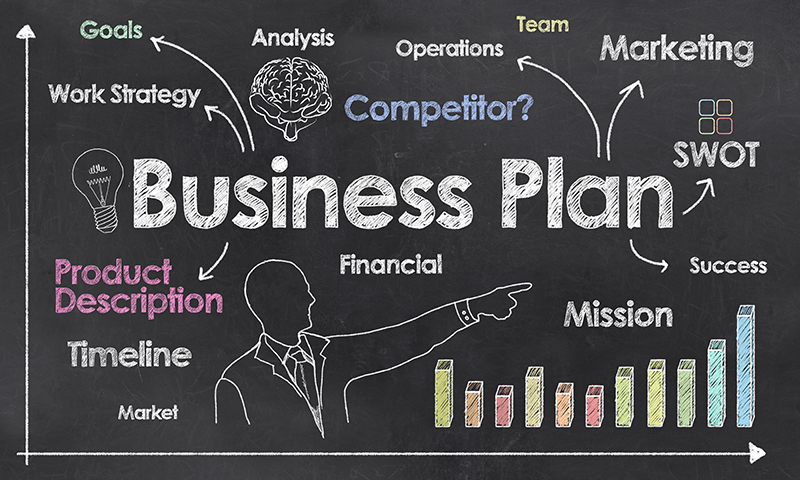
BUSINESS PLAN: A business plan is a written document that describes in detail about a business and it also defines its objectives and how the firm is going to achieve its goals. A business plan lays out a written roadmap for the firm in both financial and operational standpoints. So, Business plans typically include detailed information that can help improve the business’s chances of success, like a market analysis, competitive analysis, customer segmentation, marketing, logistics and operations plans, cash flow projections and an overall path to the long-term growth.

WHAT IS THE USE OF HAVING A BUSINESS PLAN?

These business plans help entrepreneurs to assume the exact position of the firm or startup and also they help business owners to see the plan ahead, make important decisions, and improve the overall likelihood of success. Formulation of a business plan should be the first thing done when starting a new business. Business plans are also important for attracting investors so that they can determine that whether your business is on the right path or not and worth investing money or not.

Building a business plan allows you to determine the answer to some of the most critical business decisions ahead of time. Without a business plan, objectives often become arbitrary. So, having a business plan can help make those benchmarks more intentional and consequential and it can also help founders of the firm to be accountable for the long-term vision and strategy, and we can also get the insights into how the applied strategy is coming together over time.

OUTLINE OF A BUSINESS PLAN : The below provided information show’s the step by step process of writing a business plan and highlights about the points that are to be included in each step.

STEP1- INTRODUCTORY PAGE:

  • Include Name & Address of the business, Nature of the business, Statement of financing needed.
  • INDUSTRIAL ANALYSIS:
    • Write about, Future outlook & Trends
    • Analysis of competitors
    • Market segmentation
    • Forecast on Industry & Market

STEP2- DISCRIPTION OF VENTURE:

  • Introduce about Product(s), Services(s), Background of entrepreneur and size of business.

STEP3- PRODUCTION PLAN:

  • Include Manufacturing process
  • Physical plan
  • Write about needed Machinery & Equipment.
  • Write names of supplies of raw materials.

STEP4- OPERATIONS PLAN:

  • Describe flow of orders for goods (or) services
  • Technology utilization
  • Description of company operation.

STEP5- MARKET PLAN:

  • Describe about Pricing, Distribution, Promotion & Product forecast.

STEP6- FINANCIAL PLAN:

  • Include sources and applications of funds.
  • Assumptions
  • Cash flow projections
  • Break even point (Analysis)
  • Balance statement & Income statement

STEP7- ORGANISATIONAL PLAN:

  • Write clearly about Form of ownership
  • Identification of partners (or) Principal shareholders
  • Roles and responsibilities of members in the organization

So, the above described steps are the steps that have to be included while writing a business plan. Hope this article makes you to understand about the importance of business plan along with it’s out line structure.

WHAT TYPE OF ENTREPRENUER YOU ARE?

Entrepreneurs are essential for the growth of any country. They usually set up something new on their own and create many jobs for others. They also play an important role in the economy. However, to choose the right path in entrepreneurship, we need to know about different types of entrepreneurs. Each type has its responsibilities, roles, functions, and more. In this article, we are discussing different types of entrepreneurs and their definitions.

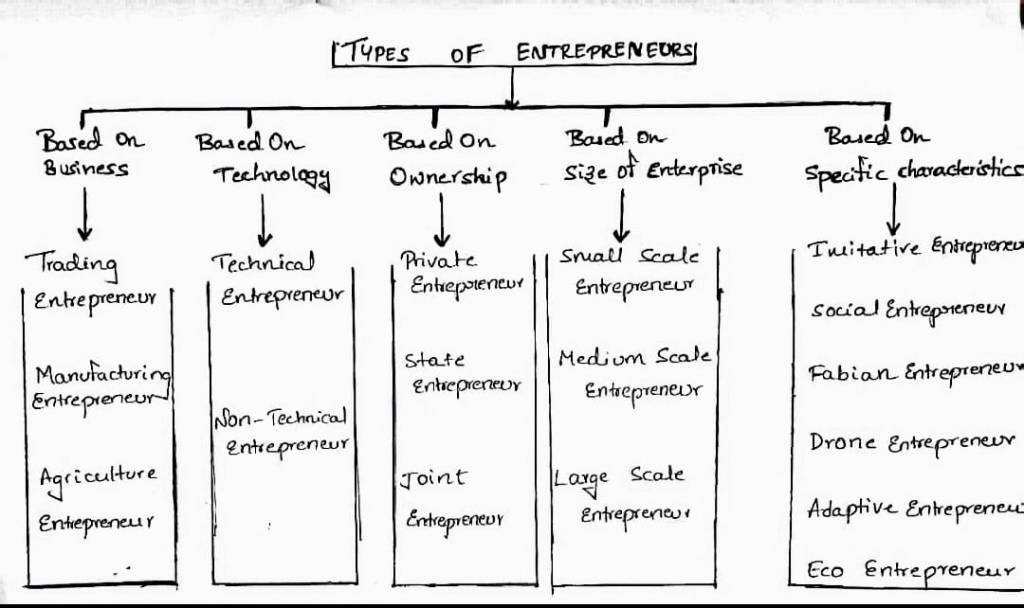
Entrepreneurs are categorized into different types and these types usually vary depending on the country, region, and even sector. Here there are six categories of various entrepreneurs:

BASED ON BUSINESS:

TRADING ENTREPRENEUR: A trading entrepreneur refers to a person who undertakes business-related activities through trading. These types of entrepreneurs usually buy finished goods in bulk quantity from manufacturers with some discount and then they sell those products directly or with the help of retailers or vendors with profits. A trading entrepreneur usually acts as a mediator between manufacturers and customers. These trading entrepreneurs mostly be as wholesalers, retailers, dealers, etc.

MANUFACTURING ENTREPRENEUR: This type of entrepreneurs plays a main role in manufacturing products. Manufacturing entrepreneurs analyze market needs or customer needs and manufacture products to meet such needs using various resources or technologies. In simple words, manufacturing entrepreneurs transform raw materials into finished products according to the customer’s needs. Manufacturing entrepreneurs basically be in fields of manufacturing textile products, food products, industrial machinery and equipment etc..

AGRICULTURE ENTREPRENEUR: Agricultural entrepreneurs refer to the types of entrepreneurs who primarily practices with agricultural works. They are also called “Agric-entrepreneurs”. These entrepreneurs be within the agricultural sector who are engaged in the cultivation, production and marketing of agricultural products.

BASED ON TECHNOLOGY:

TECHNICAL ENTREPRENEUR: These are the entrepreneurs who used to start and continue industries primarily based on science and technology. These entrepreneurs develop new ideas and turn those ideas into technology-based inventions. They always work to create new methods of production in the fields of technology and science. Besides, they also manufacture products that can help ordinary citizens and other non-technical entrepreneurs for their enterprises. Example personalities of technical entrepreneurs are Jeff Bezos, Elon Musk, Bill Gates etc..

NON-TECHNICAL ENTREPRENEUR: These are the entrepreneurs who do not set up and run enterprises based on science and technology. In short, non-tech entrepreneurs are those who work for innovations using traditional methods. They typically use alternative and exemplary marketing methods and follow non-technical delivery strategies to engage directly with customers. Example personalities of non-technical entrepreneurs are Starbucks fame Howard Schultz, Reliance fame Dhirubhai Ambani etc..

BASED ON OWNERSHIP:

PRIVATE ENTREPRENEUR: When an entrepreneur starts something personal of his or her own, such as setting up an enterprise, he/she is called a private entrepreneur. A private entrepreneur is the only person who plays the sole proprietor role for a business venture and bears the risk associated with it. Examples of private entrepreneurship are Tesla, hospitals etc..

STATE ENTREPRENEUR: When a state or government does a business or industrial undertaking, it is referred to as a ‘state entrepreneur’. In this case, the government is the sole owner of the enterprise and will bear all the profits and losses involved with it.

JOINT ENTREPRENEUR: When a business or industrial undertaking is established and operated jointly by the private entrepreneur and the government, it is called joint entrepreneurship. The parties involved are called joint entrepreneurs. In this case, risk and profits are shared by both parties. However, the sharing percentages generally depend on the type of business and the agreement between the two parties. Examples of joint ventures are ONGC, BHEL etc…

BASED ON SIZE OF THE ENTREPRENEUR:

SMALL SCALE ENTREPRENEUR: If an entrepreneur has invested up to a maximum of one crore in starting an enterprise, including plant and machinery, such entrepreneur is called Small Scale Entrepreneur.

MEDIUM SCALE ENTREPRENEUR: If an entrepreneur has invested a minimum of 1 crore to a maximum of 5 crores in starting an enterprise, including plant and machinery, then such entrepreneur is called Medium Scale Entrepreneur.

LARGE SCALE ENTREPRENEUR: If an entrepreneur has invested more than 5 crores in starting an enterprise, including plant and machinery, such an entrepreneur is called a large-scale entrepreneur. This includes any investment above 5 crores.

BASED ON SPECIFIC CHARACTERISTICS:

IMITATIVE ENTREPRENUERS: Imitative entrepreneurs are the one who mainly follow and adopt the innovative entrepreneurs’ who are in existing successful enterprise system. They do nothing new of their own. Imitative entrepreneurs apply strategy from other enterprises in a manner where all core fundamentals of the original business model are replicated, and all efficiencies are retained. These entrepreneurs help improve any product, production process or suggest the use of improved technology addressed by other enterprises. Imitative entrepreneurs are also called as Adoptive entrepreneurs.

SOCIAL ENTREPRENEUR: These type of entrepreneurs recognize the problems in society and try to reduce those problems by applying some entrepreneurial skills. Most of the social entrepreneurs don’t seek for profits they solely work on the controlling social problems.

FABIAN ENTREPRENEUR: Fabian entrepreneurs are defined as an entrepreneurs who generally do not seek to implement changes in their enterprise techniques. They are very careful in applying any approach and cautious in exercising any change. These entrepreneurs are known for not making sudden decisions. They imitate the change in their strategy only when they know that enterprise surely results in profit making.

DRONE ENTREPRENEUR: Drone entrepreneurs are defined as entrepreneurs who do not like to adopt any changes in their enterprise techniques. They strictly follow their traditional strategies or methods for development, production or marketing. These entrepreneurs feel or experience pride and tradition in the old ways of doing business. This is why drone entrepreneurs sometimes suffer losses, yet they do not adopt changes in their current methods.

ECO ENTREPRENEUR: Eco entrepreneurs are the one who spot the opportunities in the environment to start business which support sustainability. The innovations of eco entrepreneur are considered as green business innovations.

So, Guys I have tried my best to explain the various kinds of entrepreneurs. Now it’s your turn to let me know what type of entrepreneurial character you have in the above listed types through your comments.

ENTRY STRATEGIES OF AN ENTREPRENUERSHIP

Entrepreneurship can be defined as the recognition of opportunities and the use of creation of resources to implement innovative ideas for new, thoughtfully planed ventures. The essential characteristic of an entrepreneur is identifying the opportunity and elaborating that opportunity into a formal but it is also important to have an entry strategy while setting up a startup. So, today in this article we are going to learn the entry strategies and risk reduction strategies that are applied by every entrepreneur is explained clearly.

ENTREPRENEURIAL STRATEGIES:

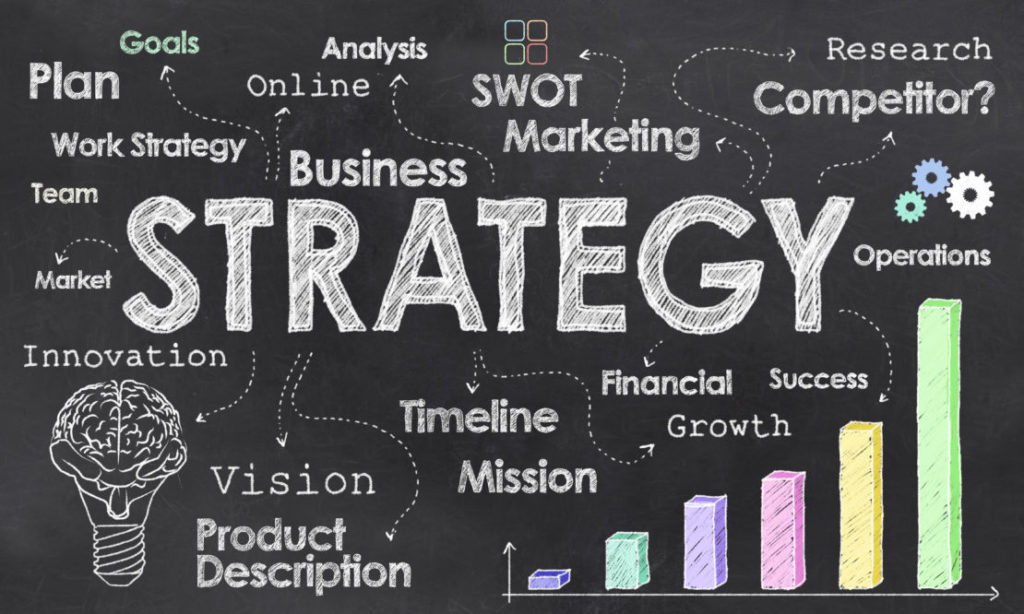
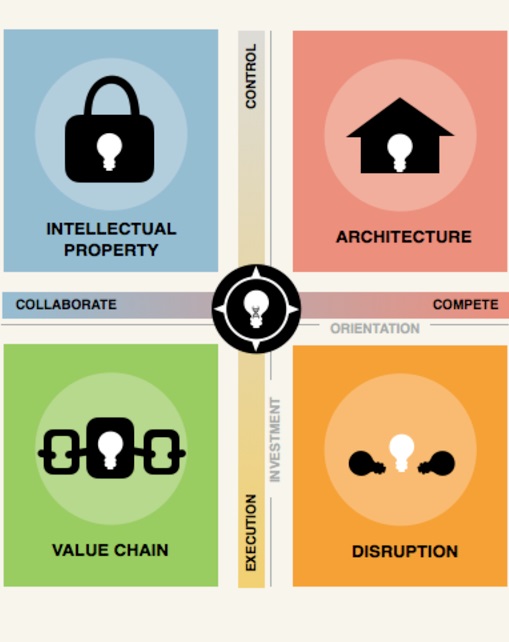
Entrepreneurial strategy involves identifying and choosing among a set of distinct choices that define a company as it translates an idea into a meaningful value proposition. So, setting up a strategy clearly describes ” what not to do? ” that is, a strategy act as a back bone for an entrepreneurship. The four strategies that can be explored for an idea are as follows:

FUNDAMENTAL ENTREPRENEURIAL STRATEGIES

1 INTELLECTUAL PROPERTY STRATEGY:

Entrepreneurs who pursue intellectual property strategy for their ideas choose to invest in control over their underlying innovation in order to construct a value chain through collaboration with incumbent firms in industry to create value for the final end consumers.

  • This type of startups focuses on idea generation and development to avoid the cost of down stream, customer facing activities. because cooperation requires alignment with incumbent activities. Simply, the startup which use this strategy probably choose technological investments with existing systems.

2 DISRUPTION STRATEGY:

This type of strategy highlights about decision to compete directly with incumbents emphasizing commercialization of idea and rapid growth of market share rather than control on ideas of development. Disruption entrepreneur aims to redefine established value chain.

  • Therefore, a disruption startup chose the competition orientation against established firms in the industry by choosing to compete through execution. Disruption strategy founders will inevitably face threat of imitative competition from incumbents and new entrants alike because of choosing invest in execution than in getting control over their idea.
  • Even value chain strategy is also similar to the disruption strategy where entrepreneurs choose to invest in execution rather than control but the only difference is that, they create value with the cooperation of industry incumbents.

3 ARCHITECTURAL STRATEGY:

The final strategy in the entrepreneurial strategy framework is architectural strategy. Unlike the other type of strategies , architectural strategy is about architecting an entire new value chain in the market place rather than boosting the performance of an existing value chain.

  • This type of strategy requires entrepreneurs to figure out how to build a new and integrated value chain that delivers value to customers while also building an economic support by maintaining control over their idea as they compete directly against incumbents.
  • Architectural entrepreneurs establish competitive advantage through the traditional strategic approaches. Compared to other strategies, architectural strategy used entrepreneurs must be committed to their vision and plan.

RISK REDUCTION STRATEGIES:

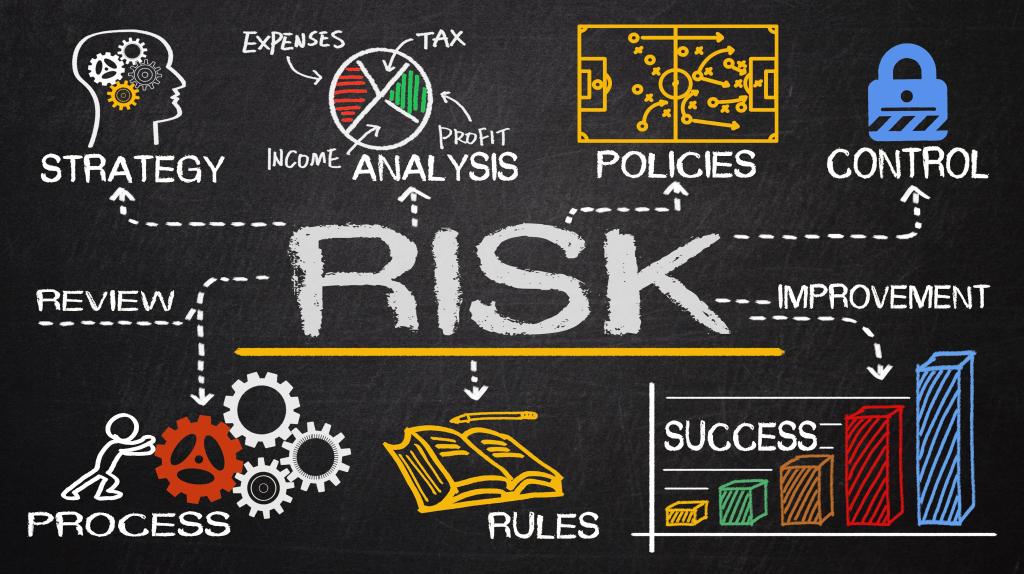
The situation that threatens the capability of the startup or a company to achieve its financial goals is considered as a risk to the business. There may be ma strategies in order to manage and reduce the financial loss to the company. The three type of risk reduction strategies are as follows:

1 NARROW SCOPE STRATEGY: Narrow-scope strategy offers a small product range to a small number of customer groups to satisfy a particular need. The narrow scope can reduce the risk that the firm will face competition with larger firms. A narrow-scope strategy is vulnerable to the risk that market demand does not materialize as expected. Having a narrow-scope strategy is like putting all your eggs in one basket that is, it reduces some competition-related risks but also increases the risks associated with market uncertainties.

2 BROAD SCOPE STRATEGY: Broad scope strategy highlights portfolio approach dealing with uncertainties about attractiveness of different market segments. By offering a range of products the entrepreneur gains knowledge on whole market through a process of trial and error. A broad-scope strategy reduces risks from market uncertainties, but it increases the exposure of competition. When the risk of competition is great and market uncertainties are minimal, a narrow-scope strategy is more effective at reducing risk but when a new firm entered into market with same sort of creation then, a broad-scope strategy reduces the major risk of uncertainties over customer preferences.

3 IMITATION STRATEGY: Imitation strategy copy’s the best practices of other firms in order to minimize the risk of downside loss associated with new entry in to the market. An imitation strategy has the potential of reducing the entrepreneur’s costs associated with R&D and also reduces the customer uncertainty over the firm. Imitation strategy makes the new entry to look legitimate from day one onwards. This imitation strategy is also known as me too strategy.

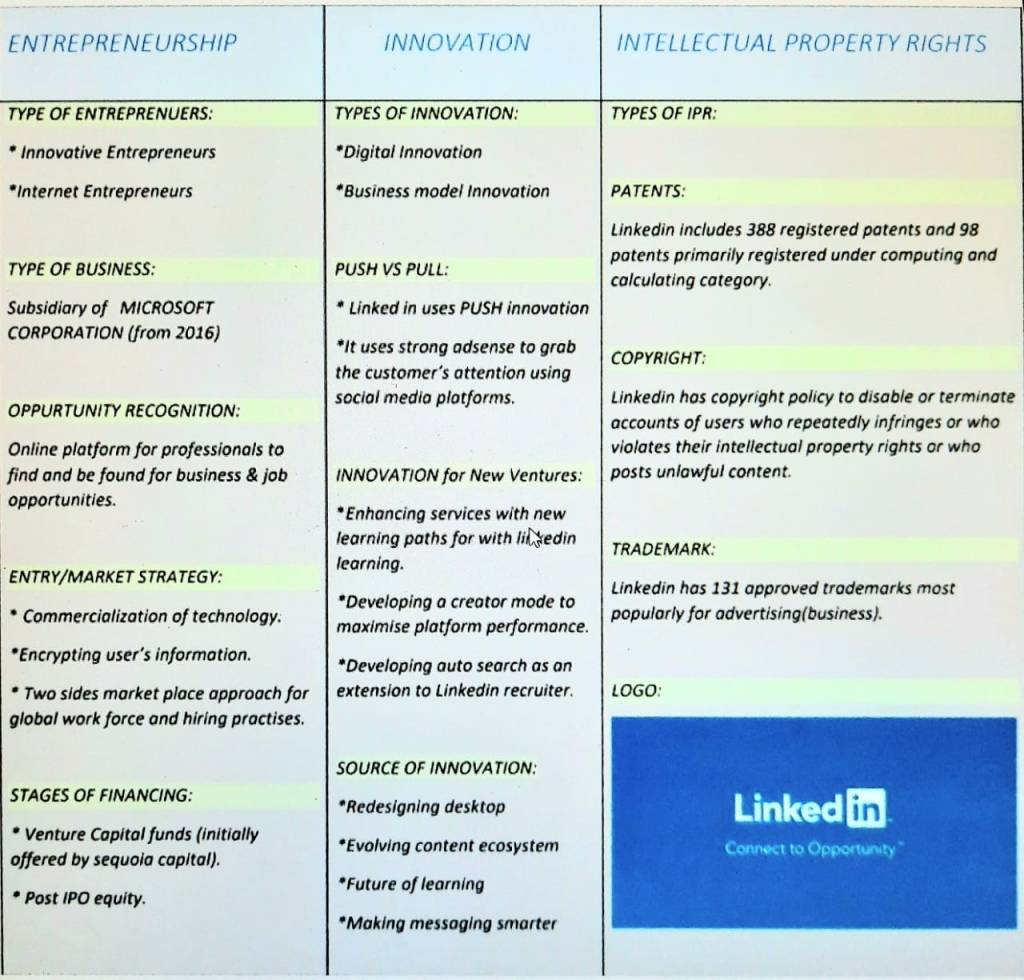
UNDERSTANDING LINKEDIN AS A BUSINESS MODEL

As we all know that ” Linked in ” corporation is one of the leading networking website which functions on describing user created profiles with their work experience, education and training, skills, and a personal photo so that users can find jobs, people and business opportunities recommended by someone in one’s contact network. Users can save jobs that they would like to apply for. Users also have the ability to follow different companies.

In the above para we discussed about the working of linked in corporation with user provided data but we can understand it’s business marketing strategies and it’s growth from initial stage in a clear manner when we see linked in as a business model.

Linked in was found on may 5, 2003 at mountain view, California, US by Reid Hoffman. Initially the company started getting it’s financing through the help of venture capitalist company and later it struggled to get investors in IPO but at the year of 2011 LinkedIn priced its IPO at $45 per share giving the company valuation of $4.5 billion but at the year of 2016 Microsoft announced the valuation of LinkedIn for $196 per share which in all cash transaction valued as $26.2 billion and acquired the company.

CHALLENGES THAT ARE ACCEPTED BY LINKEDIN :

As a networking site the first and foremost challenge faced by LinkedIn is data encryption of user along with the data encryption LinkedIn should also concentrate on following terms:

PRIORITISING LINKEDIN GROUPS: LinkedIn contains many community groups with managers to share/discuss ideas for improving their work/business. So, they have to arrange the groups with out arising any type of ambiguity.

CONSTANTLY CHANGING THE WAY OF ADVERTISING : We get too many irrelevant ads when we use LinkedIn. Sometimes, getting non-sink advertisements also creates a negative impact on the site. So, that it should constantly change the patterns of presenting adds with new algorithms to avoid negative footprints on site.

ARTICULATING THE DORMANT PROFILES: LinkedIn says it’s growing, but there are many inactive accounts that should be removed after a reasonable period of time by keeping the active users accounts effectively and let inactive users go by the wayside.

MAKING LINKEDIN FROM “HAVE TO” TO “WANT TO” FOR BUSINESS PROFESSIONALS: Many people are on LinkedIn because they feel that they “have to” be there for expanding their network but very few professionals LOVE logging in to their LinkedIn. So, to attract more people on internet then LinkedIn must use competitive content on it’s pulse.

MARKETING STRATEGIES APPLIED BY LINKEDIN:

LinkedIn used Traditional marketing strategy at its initial stage of growth. LinkedIn approached it’s users through branding it’s company with chocolates. Similarly, LinkedIn adopted several marketing strategies on internet for improving it’s sustainability.

Most of the business organisations put a great deal of effort into creating the perfect website, and invest a significant portion of the marketing budget on curating the ultimate customer experience. So for that purpose LinkedIn has created virtual circle of influence by combining LinkedIn marketing and remarketing on your website. In order to attract efficient business professionals LinkedIn promoted paid marketing system which can afford a wide variety of ad formats and business targeting opportunities.

LinkedIn provides sponsored content, sponsored messaging, Text adds and Dynamic adds which are considered as native ads that will appear in the viewer’s LinkedIn feed and it tends to be customer centric with helping it’s customers on getting control over their business marketing.

Overview of the company

One of the main reason for it’s sustainable marketing growth is, LinkedIn seamlessly fills in the fields and provides you with information it already knows about your prospect. The up side of this capability is that it reduces the user’s submission time, and also diminishes their friction to signing up for whatever you are offering to the opposite person .It also target the customised accounts for the profile that is provided by user and also allows you to run account based marketing campaigns, powered by LinkedIn data.

Finally, LinkedIn is particularly well-suited for personal branding and which actively manages one’s image and unique value to position oneself for career opportunities. LinkedIn has evolved from being a mere platform for job searchers into a social network which allows users a chance to create a personal brand. LinkedIn’s constant adoption and application of new technologies and new strategies in market has improved it’s standards and sustainability in the competitive corporate field.

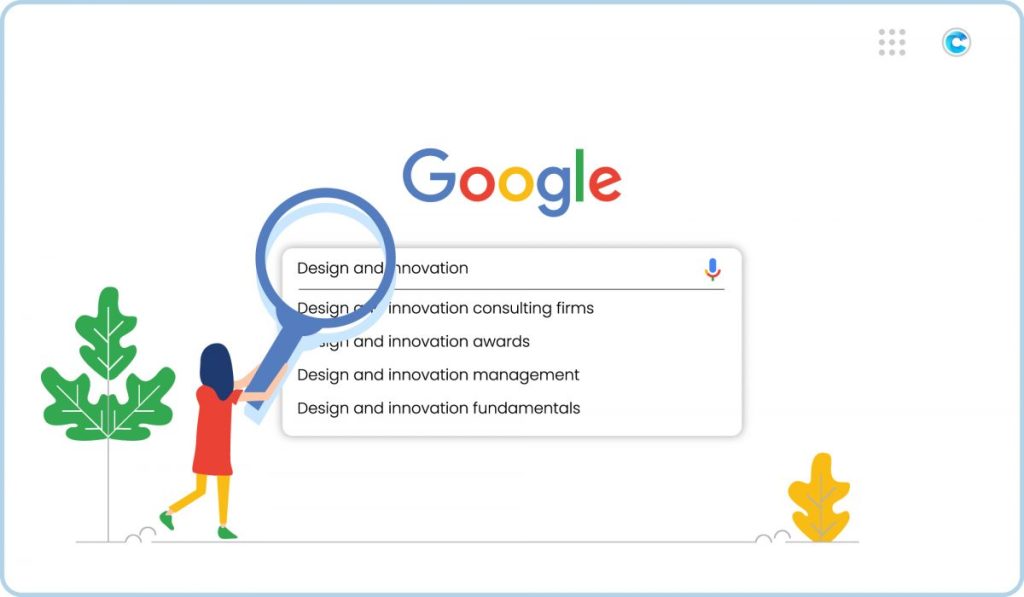
HOW DOES SEARCH ENGINE GOOGLE WORKS?

Almost everyone of use google chrome for searching information today but do we ever think about how the google functions in order to give the accurate results. Today we are going to know about the functionality of search engine google.

INTRODUCTION ABOUT SEARCH ENGINE:

Search engine came into our world in the year of 1990 in the form of “archie”, which was an ftp indexing tool that allowed people to obtain certain files. A “ search engine “ is several interlinked mechanisms that work together to identify pieces of web content like images, videos , website pages, etc… based on the words you type in the search bar. The search engines always looks for the best solution, the right product, the most relevant video & the most accurate answers to better up the search experience of user.  

Search engine look simple from outside but that deceptively easy interchange requires a lot of computation and heavy lifting backstage. The too complicate matters in search engines are the algorithms used for searching. Most of the search algorithms are not only kept secret but are also constantly being changed and revised.  The hard work of search engine start it’s way before you make a search .Search engine work round-the-clock by gathering and organising information. 

FUNCTIONALITY OF A GOOGLE SEARCH ENGINE:

Understanding how a search engine works is vital to know about rank of a website. As the rank of a website is higher, the traffic that the website gets is also higher which leads to more income. The functioning of every search engine begins with the three-step process which is clearly explained in following steps:

CRAWLING:

Search engines rely on crawlers to scour the web information. Crawlers start out with a list of websites. The algorithms dictate crawlers about how many pages to crawl and how frequently.    A crawler is an internet bot that systematically browses the world wide web. Typically used by search engines . These crawlers are also called as spider.   Crawlers visit each site on the list systematically, following through tags like HREF & SRC to     jump to internal or external pages . Over time crawlers build an ever expanding map of interlinking pages

INDEXING & PAGE RANKING:

Once the content from web pages has been crawled, the web pages should be indexed based on the occurrence of multiple keywords.  When the web page content is indexing, the common elements are avoided and indexed information is stored in an organized manner. The organisation of indexed pages is called as page ranking. Search engines use algorithms for determining the rank of a web page.

PageRank is the first algorithm used by Google to evaluate web pages. It uses a simplistic model of web surfing to estimate the probability of browsing to each site on the internet. It uses the concept of random walks in a Directed Acyclic Graph.

The factors include in page ranking are Backlink quality, Mobile friendliness and how recently content was updated or Freshness. Engagement and Page speed. So, These three process steps play a vital role in “Search Engine” for query processing. The following video picturizes about the functionality of google search engine in a clear way.

CONCLUSION:

As billions of search queries per day are being performed in google, The quality of search results is closely monitored by google search quality team. The caffeine index of google takes up around 1,00,000,000 gigabytes and fills “server farms” , thousands of computers of google never get turned off around the globe. Google’s synonym system allows the search engine to recognize when groups of words mean the same thing.  For example: when you type “ dark coloured dresses”, search engine’s will results for black dresses as well as dark tones. That is the engine understands that dark as often synonymous with black

Finally, Google search engine is provided by Google LLC which is handling 40 billion indexed pages containing results along with advertisements in it. The three main reasons why internet user’s love google beside other search engines are because of it’s high quality results and regular updation of search algorithms. This is the reason why google has become most popular search engine even today in the world though it was developed at 1997 and it has almost 92% share of the global search engine market. 

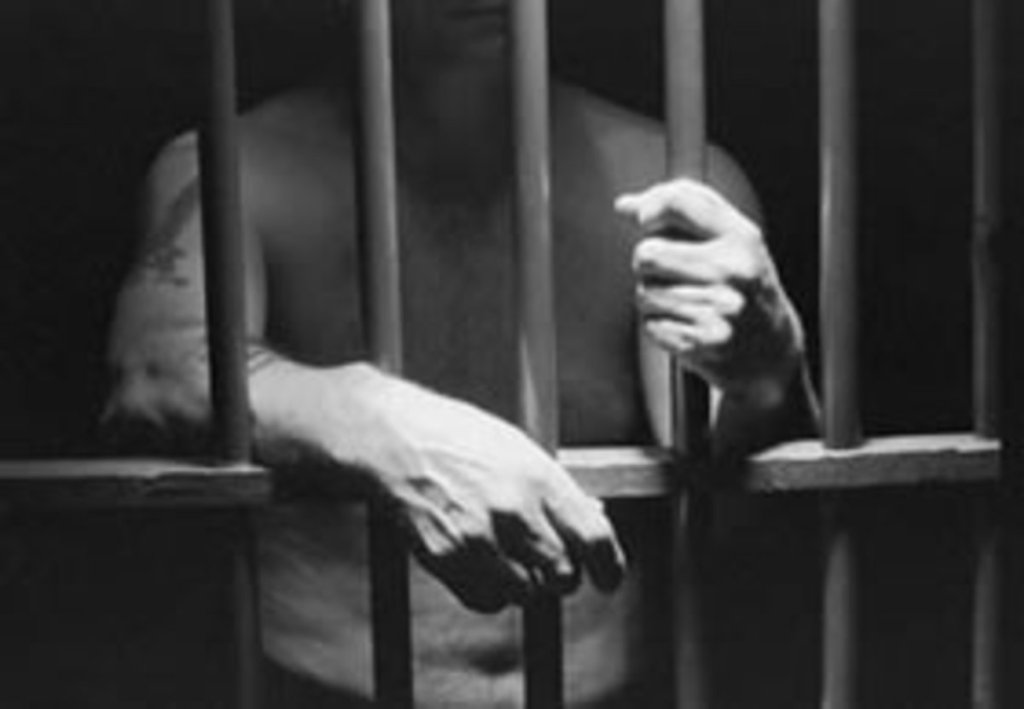
CRIMINALS:ARE THEY BORN (OR) MADE

When we think about how we should prevent and punish criminals on the question of whether criminals are born or made. We first should understand the behaviour traits of criminals because personality is the major factor in many kinds of behaviour, one of which is criminal behaviour. To determine what makes a criminal to become as “a criminal,” we must understand his/her personality.

Are criminals born or made? This question has been crushed the brains of psychologists, sociologists, and criminologists for many years at several incidents and efforts have been made to establish the nature of criminality. The born or made argument, known as the “nature versus nurture” debate, arises the question, whether criminality is due to genetic factors, and therefore unavoidable, or whether it is the product of social, situational, environmental surroundings, and other external factors.

Criminal behaviour has been increasing virtually throughout the every part of the world because such behaviour may be passed on from father to son and the genetically deprived criminal under class is breeding faster than the rest of society, he argues. Majorly, the psychological factors which inhibit criminal behaviour are fear and conscience.

Psychologists after many experiments they came up with an opinion that criminal behaviour lie in genetics and as well as environmental situations but it doesn’t mean that every criminal will posses with same type of behavioural traits. According to the population census of India the children who were born to thug is used to be recorded as a thug, this was registered under the criminal tribe act(1870). This act resembles that there is a chance of getting criminal behaviour if the child was born to a thug.

In these days we are observing that even some of the common people are also becoming criminals with out having any past crime background. So, this is the point where we have to think about the impact of society or the environment on the criminal. Guys, a criminal is also a human who posses all the common things as we all have but the only difference is that the perspective and the surrounding where a criminal has risen.

Most of the teenagers and children has a high tendencies to learn from their surroundings. Petty crimes committed by children may appear to be a tale to friends who may also be involved the same for pleasurable. Over duration of time, this behaviour may prove to become a permanent thing. Peer pressure is mainly clear in the slums where houses close to one another. Among other factors, this explains why crime rate is on the higher on average in poor vicinity.

According to study, families in inner cities are facing many challenges. There is extremely huge number of single parent families where mostly the father is missing. This impacts the children in those families a lot especially boys need a father figure in the family to help them grow and learn how to control their manhood. Surroundings around a person influences a person a lot as like an old proverb says that wicked group damage decent principles. There are several reasons behind a person to become as a criminal that may be because of his financial standards or because of family issues or sometimes because of being as victim also.

Now a days we see many people who are at higher positions in their career are also becoming as a criminals. This type of scenarios clearly show us that having lots of degrees in hand can’t stop the people in turning them as a criminals. The main reason behind these scenarios are lack of essential values and ethics which are missing in todays education system and this effect is adversely creating a negative roots on society.

THE REAL SLUMDOG MILLIONAIRE- KALPANA SAROJ

Most of us are well known about Indian famous women personalities like Kalpana Chawla, Kiran Bedi, Indira Gandhi, Saina nehwal and etc.. because we always do listen their successful stories in many meeting as an inspiration. Today I’m going to post about the life story of Kalpana Saroj who is the most struggled women personality and who became as an industrialist with out having any degree and competed equally with the top most business personalities.

Kalpana Saroj is a female entrepreneur and Tedx speaker. She was born in 1961 in Roperkheda village, Maharashtra, India. She is the chair person of “ kamini Tubes” and bagged the honourable “Padma shri “ award in 2013 in the field of Trades and Industries. She is described as the real “ SLUMDOG MILLIONAIRE ” and also sometimes considered  as India’s first women entrepreneur.

EARLY ROOTS OF HER LIFE:

Kalpana was born in a Dalit family and her father was a constable. As she was from Dalit community, she is refused by everyone in her school. At that time’s, there was a custom to marry of the girls at an early age. Similarly, Kalpana parents were also fixed her alliance at the age of twelve years. After her marriage she move to the slum area of Mumbai along with her husband’s family. At a very tender age she faced torture in both physically and mentally at her mother-in-law house. She became as a sex toy to her husband and as a maid to her mother-in-law.

When her father visited her after the six months of marriage, he was shocked to see her daughter in horrible situations at her home and he immediately took her back to home. After moving back to her native place she was taunted by every person in her village and later after same days, she mentally got weaken and attempted suicide. After her suicide attempt, she became strong and empowered with regained energy and again moved to Mumbai in the search of her new life.

BUILDING A NEW PATH IN HER LIFE:

As and when she moved to Mumbai she started working as a tailor in a garment factory, with in a few months she mastered at the art of sewing and managed to get get a decent hike but when the things in her life was improving suddenly her life took an U-turn with death of her younger sister who was died because of insufficient amount of money for the treatment, Then she got realized about the importance of money in once life.

After few months of her sister’s death, she decided to begin a new life in the form of business. One day she heard about the Government loan scheme for Dalits in radio and she applied for that scheme. After the Government loan got sanctioned, she turned that amount into a few sewing machines and started working sixteen hours per day on them. As it is a profitable venture she got profits in her first business and she started investing the profits on the furniture business along with the tailoring business.

ENTERING INTO THE REAL TIME BOOM MARKET:

One day, a man approached Kalpana with a proposal of buying land, at a price of 2.5 lakhs which was caught in legal troubles because of having the need of money urgently, he supposed to sell his land to kalpana. Kalpana grabbed that opportunity and gave him a lakh in advance and paid the remaining amount within a few months. For two years, she fought the legal battle and cleared the litigation issue of the land.

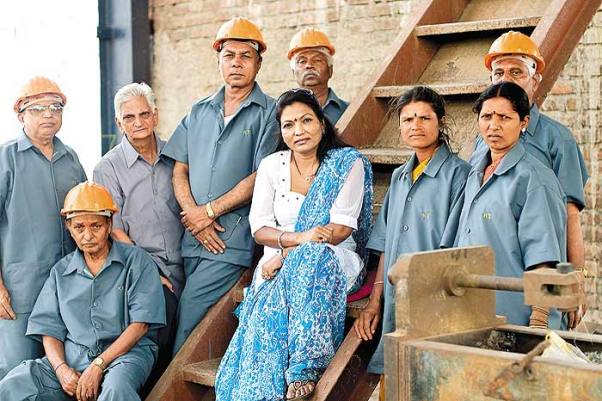
The workers of Kamani Tubes( A metal engineering company) got impressed with her logical and entrepreneurial skills in dealing with the land litigation issue they approached her to take charge over the company and settle the debts. With her perseverance and patience she cleared all the debts of company in the short span of time and restructured that company to bring back to profit’s path with her entrepreneurial and managing skills.

Today, She is the chairperson of an Industrial setup and owns net worth of 112 million dollars(Rs. 2000 crore). She also started a film production house which is named as KS FILM PRODUCTION. This is the successful story of Kalpana Saroj who crossed many barriers to reach this position. Her life shows us the reality of facing hardships with out giving up. Soon, Kalpana Saroj biopic is going to be filmed out in future where we can see her struggles clearly in that film.

CONCLUSION:

Guys finally do remember that, “Life is full of events and situations which act as a sources of infinite wisdom. We have to find ways out of the multitude of adversities which will teach us valuable lessons on the importance of will power and hard work”

CALL FOR A CHANGE

THE WORSE CONDITIONS FACED BY CHILDREN WHO LOST THEIR PARENTS DUE TO COVID-19

We all are aware about the worse situations in INDIA due to new phase of pandemic. We all listened and watched about several heart touching incidents that happened around us, many families has destroyed because of covid-19 but we never think about the survival of children who lost their parents in these situations. Let me show you a video on statistics of children who became orphans because of pandemic.

Child hood phase is the critical phase in everyone’s life and it is essential to take care about the child in this phase because in this phase only the personality and emotional resilience will be developed but because of this pandemic situations the children who lossed their families are facing a lot of troubles in the hands of child traffickers and illegal adopters. Let me share you a story about a child who lost his parents in this pandemic and turned as a beggar on the streets.

” Once I encountered a tot on our street, he asked me 5/- to obscure his hunger. I offered him a meal instead of giving him money and later I asked him about the reason why he has turned into a beggar then he replied me that, he lost his both parents a few months ago because of covid virus and no one of his relatives doesn’t like to take care of him and with in few days one of their relatives left him in the bus stop and went away. ” After hearing to his words, I felt bad for the situations he faced with out any takecarer and immediately I decided to make a call for childline number to give him better future. I explained him about what I did for him but initially he felt scared about my proposal but after sometime he realised and felt happy. With in few days volunteer’s of some NGO who received information from childline help center rescued him successfully.

We all crave to sleep like a child. Do you savvy, there are more than twelve million children who can’t sleep due to starving stomach in India and that number has increased much more due to these pandemic situations. ”If God is the one who writes the fate, then be the demigod for these tots.” Childline 1098 is a service of Ministry of women and child development. ” CHILDLINE INDIA” a foundation which is non-governmental organization in India. It operates with a telephone helpline called childline, for children in distress. It is India’s 24-hour toll-free phone outreach service for children.

A single phone call can make a large change in the entire life of a child, It cost’s nothing guys for making a phone call guys but it can give a new life to the child who is in tough situations. We all know the role play of youth in building a nation and also we know that, today’s children are tomorrow’s leader’s. Let us all unite and play as a role of gardener’s of a garden named as India and fill it with blossoms of children’s smile.

I think I have sown a seed of spreading awareness about rescuing the homeless children using the helpline number of childline India. Remember guys nature of helping others will give us a lot self satisfaction. Guy’s please Join your hands to continue this chain, So that we can at least save few children from our side. Finally, Guys do remember the childline India helpline number (1098) to save the distressed children in our surroundings.

” LET US CHANGE!
BE FOR CHANGE! & CALL FOR THE CHANGE! ”