66A IT ACT

News –Supreme Court found the enforcement of
Section 66A of the Information Technology
(IT) – six years after it was struck down.

Section 66 A of IT act

• Dealt with information related crimes

• Sending information – found to be offensive, disrespectful and threatening – are punishable offence
 Communication – sent by means of a computer resource or through any
communication device

THE INFORMATION TECHNOLOGY ACT, 2000
CHAPTER XI – OFFENCES
66A.

Punishment for sending offensive messages through
communication service, etc.–Any person who sends, by
means of a computer resource or a communication device,–
(a) any information that is grossly offensive or has
menacing character; or
(b) any information which he knows to be false, but for the
purpose of causing annoyance, inconvenience, danger, obstruction, insult, injury, criminal intimidation, enmity, hatred or ill will, persistently by making use of such computer resource or a communication device;
(c) any electronic mail or electronic mail message for the purpose of causing annoyance or inconvenience or to deceive or to mislead the addressee or recipient about the origin of such messages, shall be punishable with
imprisonment for a term which may extend to three
years and with fine.

Weakness of Section 66A

• Created an offence on the basis of undefined actions
 Sub section (b) – law can be enforced when the information is found to be
causing inconvenience, danger, obstruction – fails to define the terms
 Gives a scope for wider interpretation – may go against the purpose of this
law
• Such terms do not fall among the exceptions granted under Article 19 of the Constitution

• Section 66A did not have procedural safeguards like other sections of the law.
NIPUN BHARAT

National Initiative for Proficiency in Reading with
Understanding and Numeracy (NIPUN Bharat).

• Under Department of School Education and
Literacy, Ministry of Education

• Important step for implementation of the
National Education Policy (NEP) 2020.

• Vision: To create an enabling environment to
ensure universal acquisition of foundational
literacy and numeracy.
 To ensure that every child achieves the
desired learning competencies in reading,
writing and numeracy by the end of Grade 3.
 To be achieved by 2026-27.
• Under the aegis of the centrally sponsored scheme
of Samagra Shiksha.

• A five-tier implementation mechanism.
 At the National- State- District- Block- School
level in all States and UTs.

• It may emphasise goal setting and accountability
for State governments.
 Guidelines for teacher training, assessment and
the creation of printed resources etc.

• NEP 2020: achieve universal foundational literacy
and numeracy in primary school by 2025.
 Target postponed due to academic disruptions
caused by Covid19.

Chief minister

• Governor is the nominal executive authority, Chief
Minister is the real executive authority.

• Governor is the head of the state ,Chief Minister is
the head of the government.
Appointment of Chief Minister (Ar 164).

• Does not contain any specific procedure.

• Chief Minister shall be appointed by governor.

• Conventions of parliamentary system – governor has to
appoint leader of the majority party in state
legislative assembly.

• No party clear majority – governor discretion.
 In such a situation, the governor
usually appoints the leader of the
largest party or coalition -seek a vote
of confidence within a month.

• The Constitution does not require – person
must prove his majority.
 The governor may first appoint him –
then ask him to prove his majority
within a reasonable period.

• Person who is not a member – can be
appointed as Chief Minister for six months
Tenure.

• Theoretically, Chief Minister holds office during
pleasure of the Governor.

• Chief Minister remains in office so long as he
continues to be the leader of the majority.

• Governor can dismiss him -loses his majority
support.

• The State Legislative Assembly can also remove
him by passing a vote of no-confidence against
him.

RAINING FISH

Paddy-fish system


• An integrated rice field or rice field and pond complex .

• Fishes are grown concurrently or alternately
with rice .

• Fish – deliberately introduces/ fishes may enter
fields naturally from surrounding waters when
flooding occurs/ mix of both. • Allows the production of fish and other aquatic
animals, from the same rice field area without causing reductions in rice yields

Advantages .

• Readily available paddy fields can be utilized .

• Can serves as an off season occupation for farmer .

• Fish serves as an excellent agent for integrated Pest Management (IPM) .

• Fish – increase soil productivity and boost
the production of paddy.

• boosts productivity and income from unit area
Rabha tribe .

• Scheduled tribes of India.

• Mainly inhabit Assam and West Bengal .

• Live in small, isolated groups commonly called
as Rabha Basti .

• Indian journal of medical science
 HbE – a haemoglobin variant, is found in
high incidence among the Rabha tribes
(PS – For Anthropology optional)

Krishna River

• Rises from the Western Ghats in Maharashtra.

• Total length – 1,400 km.

• Outfall – Bay of Bengal.

• Extension – Andhra Pradesh ; Telangana ;
Maharashtra; Karnataka .

• 8% of the total geographical area.

• Boundary – Balaghat range (north), Eastern Ghats (south and the east) , Western Ghats
(west)

Major tributaries – 13

Right bank tributaries – Six

• The Ghataprabha

• The Malaprabha

• The Tunga Bhadra

Left bank tributaries – Seven

• The Bhima

• The Musi

• The Munneru

• Major Hydro Power stations

● Koyna ; Tungabhadara ; Sri Sailam ; Nagarjuna
Sagar ; Almatti ; Naryanpur ; Bhadra.

• Rich mineral deposits – industrial development.

• Important industrial activities – Iron and steel,
cement, sugar cane, vegetable oil extraction and rice milling.

• Major Urban Centers – Pune, Hyderabad.

• Hydrological observation – Central and State Governments.

OPEC

Organization of the Petroleum Exporting
Countries (OPEC):

• A permanent Intergovernmental Organization ofb14-oil exporting developing nations.

• Created in 1960 at the Baghdad conference by
Iran, Iraq, Kuwait, Saudi Arabia and Venezuela.

• The other members of OPEC include Algeria,NAngola, Congo, Ecuador, Equatorial Guinea, Gabon, Libya, Nigeria, and United Arab Emirates.

• Qatar which was a member, left OPEC on
January 2019.

• Other oil exporting nations join OPEC meetings as

observers.

• Mission:
 To ensure that they remain stable so that there is an efficient, economic and
regular supply of petroleum, to the consumers.
 To ensure steady income to the oil producers. It will also ensure the business interests of the investors in the petroleum industry.

• Headquartered at Vienna, Austria.

• The OPEC Secretariat – executive organ:
located in Vienna.

• Releases the publication called the ‘World Oil
Outlook’. OPEC+ :

• A group of 24 oil-producing nations: 14 members of the OPEC; and 10 other non-OPEC members, including Russia.

• Born in 2017 with a deal to coordinate oil production among the countries in a bid to the stabilize prices of oil.

• Reached deals for members to voluntarily cut and ramp-up production in response to changes in global oil prices.

• Members collectively agree on how much oil to produce.

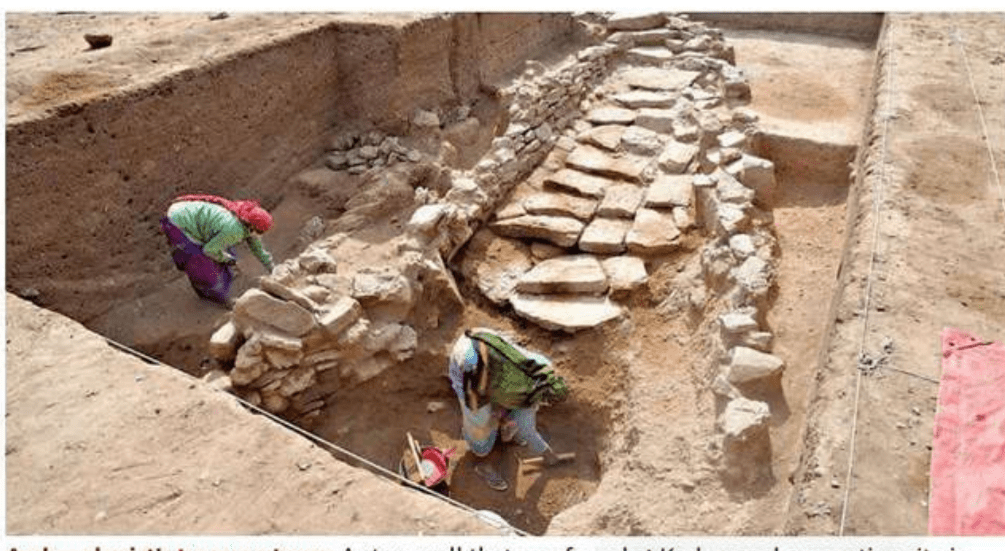
2300 year old step well found near Erode

Kodumanal Excavation site

• Located – Erode, a district in Tamil Nadu.

• Northern bank of the Noyyal river – Tributary of River Cauvery.

• Excavation – Megalithic period; Early historic period. • Habitation-cum-industrial site.

• Excavations since 1981.

• Industrial complex – beads and semi- precious stones were manufactured.

• Iron smelting units – forged steel at the site.
• Trade centre – 5th – 1st BCE. • Village – Chera capital of Karur with the Chera port of Muciri in Pattnam in Kerala.

Excavations

• Circle-shaped step-well – found for the first time. • Scientific dating – 2,300 years old.

• 2020 – Rubble masonry wall of 3.5 metres – waterway.

• Current excavation – trench was dug near the
last year’s trench • Result – Discovery of the well.
• Well – 2.65 metres wide; Depth – deposits were
removed.

• Steps – weathered rocks, slopes down from the
ground to the well that served the habitation.

• Two rubble masonry walls existed on either
side of the steps.

• Site – habitation come industrial site
 Water – Used both for household needs as
well as for polishing beads and other industrial activities.
Other Findings:
 Pottery – Black and red ware, black slipped
ware, russet coated ware and red slipped ware.
 Beads – Quartz and clay.
 Potsherds
 Megalithic cairn circle
 Iron sword
 Double edged axe
 Small daggers

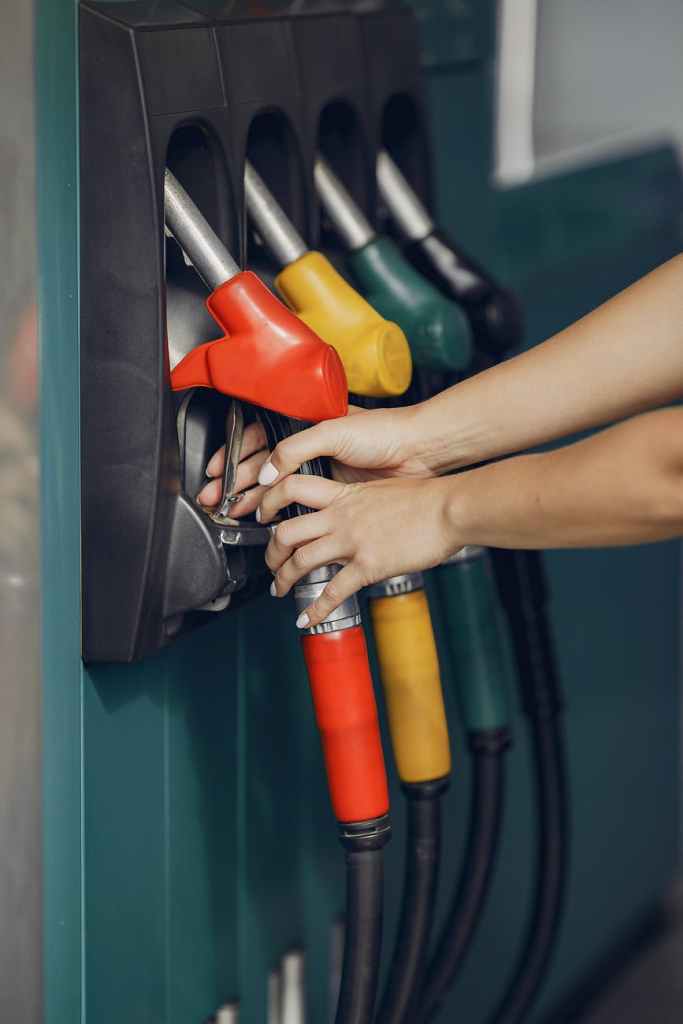
Huge spike in fuels prices

Huge spike in fuels prices

• Four factors influencing rise in prices:
 Crude oil, freight and processing charges to the dealer.
 Excise duty charged by the
government.
 Dealer commission to the gas station.
 Value Added Tax levied by the state government.

Impacts of taxes on fuel price hike

• Increasing central and state taxes on fuel – key
reason for high fuel prices.

• 2020: Centre hiked the excise duty on petrol and
diesel by Rs. 13 and 16 per litre.
 To shore up revenues.

• Example: In Delhi, central and state taxes – 57 % of
pump prices of petrol and is about 51.4 % for diesel.

• Central government has not cut central taxes – taxes
on auto fuels should be cut to curb inflation.

Fuel price hike and inflation

• When fuel prices rise, so does inflation.

• Higher the inflation – lower will be the inflation-adjusted returns.

• India’s retail inflation became 6.3% in May 2021- breached the upper
limit of RBI (6%).

Way forward

• ICRA: government may cut cess levies on retail prices
of petrol and diesel to ease prices.

• Petrol consumption is estimated to grow 14% and diesel 10% year-on-year in FY22.
 Reason: Recovering economic activities and mobility – easing of curbs and accelerating Covid19 vaccinations.

• Higher consumption of fuels – support a rise in the
indirect taxes levied on them. • Growth in consumption would result in Rs. 40,000 crore of extra cess collections.

• Existing fuel price can be cut by ₹4.50 per litre for
petrol and diesel.

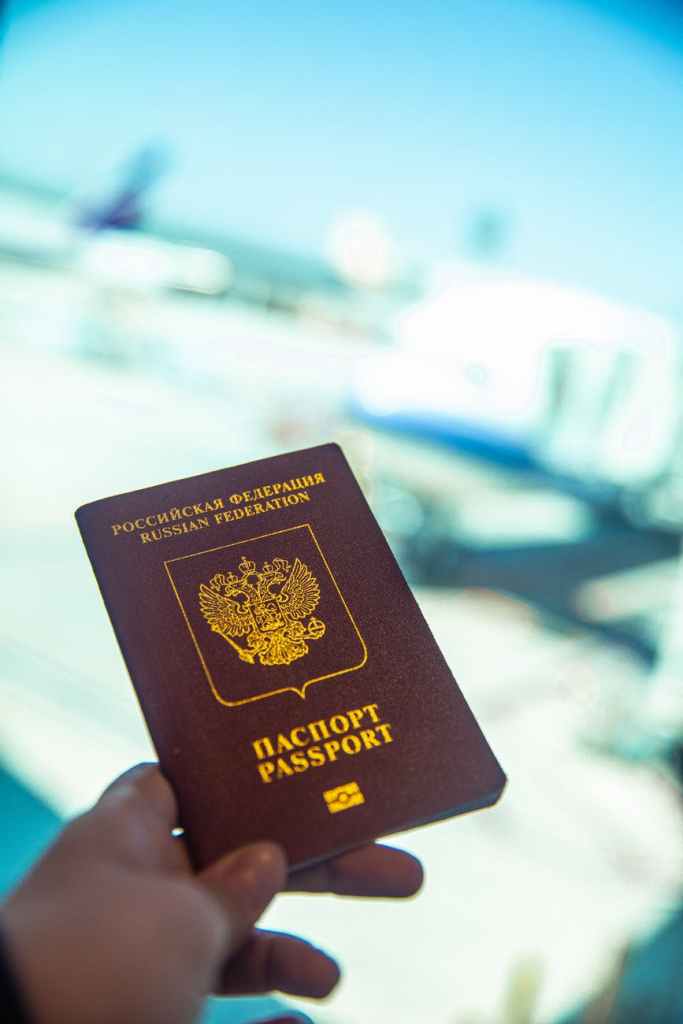
Vaccine passport system introduce by European union.

News

• New Vaccine passport system has come into effect across the European Union from July 1st

Green Passport

• European Union – EU Digital COVID Certificate.
 Ease travel restrictions for people travelling to
EU countries.

• Digital proof – Attests informations of the person.
 Vaccinated by any one of the four European Medicines Agency approved vaccines.
 Received a negative test result.
 Recovered from the viral infection.

• Certificate – digital signature which is verified
when the QR code is scanned. • Issuing body – own digital signature key, all of which
are stored in a secure database in each country.

• Certificate – recognized by all 27 EU countries,
Switzerland, Liechtenstein, Iceland and Norway.

• Possession of the certificate – exempted from free
movement restrictions.

• Member States – refrain from imposing additional
travel restrictions unless necessary.

• Lack of certificate – subjected to the usual travel
restrictions and quarantine rules which are in effect
in every country.

Issue

• EMA – listed only four vaccines.
 Vaxzevria (Oxford-AstraZeneca)
 Comirnaty (Pfizer-BioNTech)
 Spikevax (Moderna)
 Janssen (Johnson & Johnson).

• None of the three vaccines – approved for use in India till date is featured on the list.
 Covishield, Covaxin and Sputnik V.

• Only essential travel is allowed into EU
countries and that too special permission has
to be taken.

• Global concerns – Delta variant (first detected
in India), more restrictions are put in place.

Stand of the European Union

• Reason behind excluding – Serum Institute of India’s Covishield is a biologically different product.
 Needs to apply separately for EMA clearance.

• Serum Institute of India and AstraZeneca – Process of seeking clearances.

• Covaxin – yet to gain recognition from the
World Health Organization.

• Claim – Hint of racism.
 Vaccines cleared by the EMA are those taken
by residents in Europe and North America.

World Health Organisation

• Stand of the WHO
 Vaccine passports should not be made mandatory for travel and should be optional.
 The proof of COVID-19 vaccination should not
be required as a condition of entry and exit from a country.

India’s stand on the Issue

• Recent G20 ministerial conference – External Affairs
Minister registered a strong protest over the issue.

• Sources – India was prepared to initiate reciprocal harsh quarantine measures against countries that discriminate against Indians.

India’s concerns – three-fold

• Vaccine inequality – vaccine passports being restricted to passengers from countries that don’t have the same access to vaccines

• Gain recognition to Covishield

• Indian-approved vaccines – Worldwide recognition.
Stance of Africa .

• African Union and Africa Centres for Disease Control and Prevention – statement raising concerns
 Covishield vaccine was the “backbone” of the EU-supported international
COVAX alliance’s programme in Africa.

Current Status

• Nine countries – agreed to independently make
exemptions for Covishield
 Austria, Germany, Greece, Iceland, Ireland,
the Netherlands, Slovenia, Spain and Switzerland have.

• Estonia – accepted both Covishield and
Covaxin.

• Hope – enough pressure will be built on the EMA to include exemptions for Indian vaccines
as well.

CHINA AWARDED A MALARIA FREE CERTIFICATION FROM WHO

News

• After a 70-year effort, China has been awarded a malaria-free certification from WHO.

Malaria

• A life-threatening disease caused by Plasmodium
parasites.

• Vector – Mosquito.

• P. falciparum and P. vivax pose the greatest threat.

• 2019: 229 million cases of malaria worldwide.

• Most malaria cases and deaths occur in sub-Saharan Africa.
• Also prevalent in South-East Asia, Eastern Mediterranean, Western Pacific, and the
Americas.

• 40 countries/ territories are malaria-free -WHO.

• China – first country in WHO Western Pacific
Region to be awarded a malaria-free certification in more than 3 decades.
 Other countries in the region – Australia (1981), Singapore (1982) and Brunei
Darussalam (1987).

• India is not yet a malaria free country.

China’s Malaria elimination journey

• 1950s: Chinese health authorities worked to locate
and stop the spread of malaria.
 Provided preventive antimalarial medicines.

• A major effort to reduce mosquito breeding grounds

  • use of insecticide spraying. • 1967: Chinese Government launched the “523 Project”.
  •  Nation-wide research programme aimed at finding new treatments for malaria.
     Led to the discovery in the 1970s of artemisinin.
     Core compound of artemisinin-based combination therapies (ACTs) – most effective antimalarial drugs available today.
    • 1980s: China – one of the first countries in the world to extensively test the use
    of insecticide-treated nets (ITNs).
  • • 1988: more than 2.4 million nets had been
    distributed in China.
  • • 1990: number of malaria cases in China fell to 1,17,000; deaths were reduced by 95%
  • • Funding by the Global Fund to Fight AIDS, Tuberculosis and Malaria, launched in 2002.
  • • 2021: China was declared as a Malaria free country.

India-Chinarelations

• Progressive talks – disengagement of troops
near Pangong Tso Lake and Kailash ranges.

• China – Tactical manoeuvres in border regions
across Ladakh.
 New militia units comprising local Tibetan
youth – deployed in Eastern Ladakh – high
altitude warfare and surveillance.

• Peaceful relationship – peaceful functioning of
the world.

• No proper answer – why China chose to attack
Indian positions in Ladakh.

Global Concerns .

• Nations expressing concern about threat posed
by China to the existing world order.

• G-7 and NATO – Criticized China for its
military ambitions.

• China – undeterred in its ambitions.
 Aggressive actions in the South and East
China Seas.
 Subjugating the Uighur Muslim minority.
 Risks – Democracy and laissez faire
economic system of Hong Kong.
 Continues – Tactical manoeuvring on Indian
borders.

• Reasons for China’s attack on India
 India’s prominent role – Quad grouping.
 India’s significant role in Indo-Pacific region.
 China’s internal turmoil.

Past Lessons from Mao Tse Tung/Mao Zedong .

• Ill-conceived policies and programmes – Huge issues.

• Worst famines – Great Leap Forward Movement.
 Chinese communists – Tried to organize vast
population into large-scale rural communes.
 Develop labor-intensive methods of industrialization

  • Emphasize manpower rather than machines and
    capital expenditure.
     Gradual accumulation of capital and
    purchase of heavy machinery.
  • • Internal problems in Communist party of
    China.
     Many members were critical of Mao’s autocratic attitude and ill-conceived
    policies.
  • • Attacked India as a diversion and to
    strengthen his position inside the party.

Xi Jinping – Mao clone

• Sheer dominance over the CPC.

• Trying to consolidate power and achieve pre-
eminence – enjoyed by Mao Zedong.

• Pushing China to become a super power by
overtaking the U.S.

• Chinese military – making it world’s most
powerful military.

• Issues:
 Aspirations of Xi Jinping are stalling and CPC
members questioning his policies and moves.
 Chinese economy showing signs of slow down.

 Other countries are tilting towards India –
diplomatic flexibility and ideological
sophistication.
 CPC – leaders and members wanted ‘peaceful coexistence’ with India.
 Finding it difficult to push through ‘new
socialist ideology with Chinese
characteristics’.

• Diversion tactic – attacked India and
escalated tensions last year.

Conclusion

• India should expect, and prepare for more
similar situations.

Swayam Prabha

• Group of 34 DTH channels – telecasting high-quality educational programmes.

• 24.X.7 telecast using the GSAT-15 satellite.

• Channels are uplinked – Bhaskaracharya National Institute for Space Applications and Geo-informatics.

• Contents – provided by NPTEL, IITs, UGC,CEC, IGNOU, NCERT and NIOS.

• Web portal maintained by Information andLibrary Network Centre.

SWAYAM – The Study Webs of Active Learning for Young Aspiring Minds

• To achieve 3 Fundamental principles of Education
Policy – access, equity and quality.

• Objective – to take the best teaching learning resources to all, including disadvantaged sections.

• Courses hosted
 Video lecture
 Specially prepared reading material
 Self-assessment tests
 An online discussion forum.

• Seeks to bridge the digital divide for students.

National Digital Library of India (NDL)

• Virtual repository of learning resources.

• Provides host of services for the learner community.

• Filtered searching – to facilitate focused searching.

• Group-specific services – Examination Preparatory for School, College students and
job aspirants.

• Sponsored and mentored by the Ministry of Education through its National Mission on Education through Information and
Communication Technology (NMEICT).

DIKSHA (Digital Infrastructure for Knowledge
Sharing)

• National platform for school education.

• Initiated by National Council for Education
Research and Training.

• Developed on the core principles of open
architecture, open access, open licensing diversity and choice.

• Policies and tools – make education ecosystem
to participate, contribute and support a common platform. • Can be accessed by learners and teachers across the country.

• Supports 18+ languages and the various curricula of NCERT, CBSE and SCERTs across India.

GREEN PASSPORT

Background: European Union (EU)’s Covid19 passport (green pass).
 For all EU citizens, residents and some
categories of travellers from third countries.
 Effective since July 1.

EU Digital COVID Certificate Regulation.

• For all EU citizens who are vaccinated or tested negative or recovered from COVID-19. • Recognised by all EU 27 member states and
Switzerland, Iceland, Norway and Liechtenstein.

• Vaccines authorised in the European Union:
 Approved by European Medicines Agency (EMA).

 Vaccines:
 Comirnaty
 Vaccine Janssen
 Spikevax (Vaccine Moderna)
 Vaxzevria (Vaccine AstraZeneca).

• Not eligible for the green pass – India’s vaccines Covishield and Covaxin and vaccines from Russia and China.
 Covishield – Indian-made version of AstraZeneca’s Vaxzevria jab – cleared by WHO.
• Recent G7 conference → India criticised COVID- 19 vaccine passports.
 “Discriminatory and disadvantageous to
developing nations”.

• Developing countries – lower levels of vaccination
than developed countries.
 Example: only 3% of India’s population is fully
vaccinated.

• Racism in EU’s policy – EMA list of vaccines only includes vaccines already used by Europe and North America.

• Other issues: equitable and affordable access, supply and distribution of safe and effective vaccines etc.

• Letter of protest issued by the African Union.
 Covishield is the backbone of COVAX alliance.

• Positive development – several EU members
approved India’s Covishield for arriving travellers – Austria, Germany, Slovenia,
Greece, Ireland and Spain etc.

Way forward

• More nations may go for vaccine passports in the near future – more vaccine programmes and the impending third wave.

• Nations shall come together against
discriminatory practices.

4000 year old settlement found due to excavation in odisha

News

• Archaeological wing,Odisha discovered a 4,000-year-old settlement and ancient
artifacts in Balasore.
 Traces of three cultural phases:
 Chalcolithic period (2000 to 1000 BC.)
 Iron Age (1000 to 400 BC)
 Early Historic Period (400 to 200 BC).

Human colonization in India

• Two broad periods – prehistoric and historic.
 Prehistoric – divided into stone, bronze and iron ages.
 Stone age: divided into palaeolithic, mesolithic
and neolithic periods.

• Neolithic period: a settled, food-producing way of life.

• Introduction of Copper – the chalcolithic period.

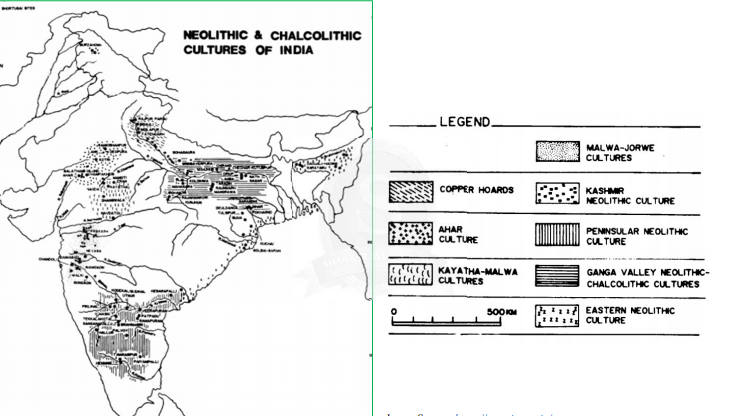
Image Source: https://www.ias.ac.in/

Neolithic and Chalcolithic period

• India – Neolithic period and Chalcolithic period flourished simultaneously – 4th to 2nd millennia B.C.
 Represents farming based, settled village way of life.

• Neolithic culture – restricted distribution.
 Kashmir valley, northern Vindhyas, middle Ganga
valley, and eastern, north-eastern and south India.

• Chalcolithic cultures – wider distribution.
 Entire Ganga valley, eastern RJ, Malwa or western MP, some parts of GJ, western MH, and the northern Vindhyas.

Differences

• Mainly regarding distribution pattern,
technology, architecture and ceramics.
 Marked increase in the number of settlements.
 Introduction of copper-bronze – tools, weapons and ornaments etc.
 Improvement in architecture.
 Introduction of wheel-made pottery.
 Diversification of wares.
 Decoration of vessels by painted and incised designs.

India’s Important chalcolithic cultures

  1. Ochre-coloured pottery (OCP) culture:
     Indo-Gangetic Divide and upper Ganga-Yamuna
    Doab.
     Named after a ceramic type – extremely rolled
    and fragile – wash of red ochre which is easily
    washed off.
     First recognised by B.B. Lal in 1951 in a small
    excavation at Bisauli and Rajpur Parsu (U.P).
  2. Ahar culture or Banas culture:
     Mewar region of Rajasthan.
     Among the earliest Chalcolithic cultures of India.
     Type site – Ahar, in District Udaipur, Rajasthan – excavated in1961-62.
  3. Kayatha and Malwa cultures:
     Malwa region of western MP.  Kayatha site in Ujjain dist., MP.  Malwa culture – most predominant
    chalcolithic culture of central India.
  4. Malwa and Jorwe cultures – western
    Maharashtra.
     Jorwe – important and characteristic
    chalcolithic culture of Maharashtra –
    extend all over except the coastal
    strip on the west and Vidarbha.
     Jorwe site in Ahmadnagar district,
    Gujrat – discovered in 1950.
  5. Narhan culture and variants – northern
    Vindhyas and the middle and lower Ganga
    valley.
     Narhan village situated at the left bank
    of Ghaghara river – Gorakhpur, Uttar
    Pradesh.
     Pre-iron Phase Chalcolithic culture with
    the principal ceramic assemblages of
    white painted Black-and-Red Ware.

Enforcement Directorate

Enforcement Directorate

• Specialized, financial investigation agency.

• Department of Revenue – Ministry of Finance
of the Indian Government.

• Origin – 1956.

• Enforcement Unit – Department of Economic
Affairs.
 Exchange Control Laws violations under the
Foreign Exchange Regulation Act, 1947.

• Shifted – Department of Revenue for
administration in 1960.

• Renamed – Enforcement Directorate in 1957.
• Composition – persons who are appointed through direct recruitment.

• Directorate – officers from across different
investigating agencies on deputation
 Customs & Central Excise, Income tax, Police etc.

• Headquarters in New Delhi.

• Regional offices all over the country.

• Headed by the Director of Enforcement.

• Major functions:
 Investigating violations of Foreign Exchange
Management Act (FEMA) laws and provisions.
 Investigating offences of Prevention of Money Laundering Act, 2002 (PMLA) laws and provisions.
 Processing cases of fugitive/s from India under the Fugitive Economic Offenders Act, 2018.
 Adjudicating show cause notices issued under
the repealed FERA (Foreign Exchange Regulation Act, 1973).
 Sponsoring cases of Preventive Detention
under the Conservation of Foreign Exchange and Prevention of Smuggling Activities Act,
1974 (COFEPOSA) with respect to FEMA violations and also
 Rendering cooperation to foreign countries in matters related to money laundering and restoration of assets under the PMLA provisions.