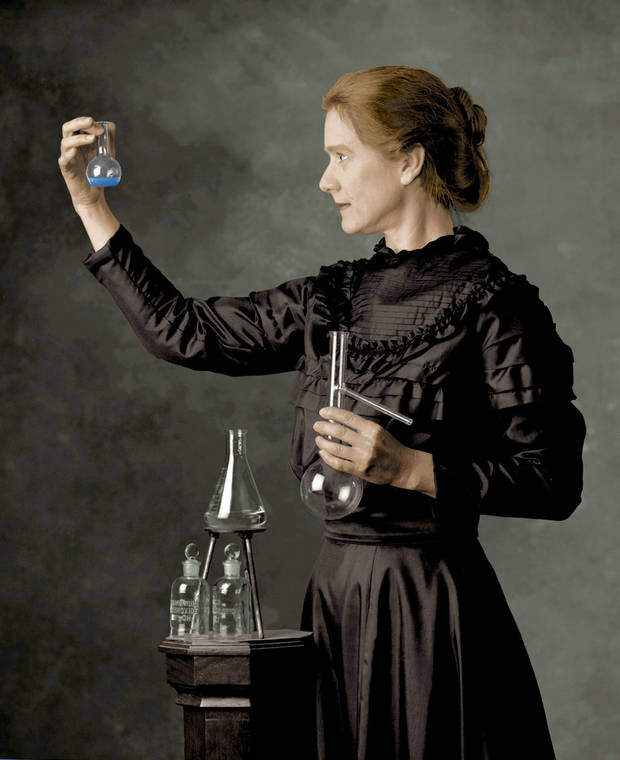
Marie Curie became the first woman to win a Nobel Prize and the first person man or woman to win the award twice. With her husband Pieree Curie, Marie’s efforts led to the discovery of polonium and radium and, after Pierre’s death, the further development of X-rays. The famed scientist died in 1934 of aplastic anemia likely caused by exposure to radiation.
Early Life and Education
Maria Sklodowska, later known as Marie Curie, was born on November 7, 1867, in Warsaw (modern-day Poland). Curie was the youngest of five children, following siblings Zosia, Józef, Bronya and Hela.
Both of Curie’s parents were teachers. Her father, Wladyslaw, was a math and physics instructor. When she was only 10, Curie lost her mother, Bronislawa, to tuberculosis.
As a child, Curie took after her father. She had a bright and curious mind and excelled at school. But despite being a top student in her secondary school, Curie could not attend the male-only University of Warsaw. She instead continued her education in Warsaw’s “floating university,” a set of underground, informal classes held in secret.
Both Curie and her sister Bronya dreamed of going abroad to earn an official degree, but they lacked the financial resources to pay for more schooling. Undeterred, Curie worked out a deal with her sister: She would work to support Bronya while she was in school, and Bronya would return the favor after she completed her studies.
For roughly five years, Curie worked as a tutor and a governess. She used her spare time to study, reading about physics, chemistry and math.
In 1891, Curie finally made her way to Paris and enrolled at the Sorbonne. She threw herself into her studies, but this dedication had a personal cost: with little money, Curie survived on buttered bread and tea, and her health sometimes suffered because of her poor diet.
Curie completed her master’s degree in physics in 1893 and earned another degree in mathematics the following year.
Born on 13th February 1879, Sarojini Naidu was a Bengali. She was born in Hyderabad to a prosperous family. Since her young age, she showed exceptional skills that made her stand out from the crowd. She had beautiful skills of writing poems. Her marvellous writing skills offered her an opportunity to study in two of the best institutions, Girton College, University of Cambridge, and King’s College in England.
It was her family that instilled progressive thoughts and high values in her mind. She grew up in a very forward environment. This is the reason why she believed in equality and justice for all. With these excellent personality features, she grew up to be one of the best poetesses in India and an ardent political activist.
When the British Government implied the divide and rule policy to curb down the independence movement in Bengal by partitioning the state in 1905, she took it very seriously. She became a political activist and traveled a lot of places in India to deliver speeches. She wanted to see all the natives of contemporary India unite against the tyranny of the British colonial rule. All her speeches and lectures focused on nationalism and social welfare.
She took a step ahead and formed the Women’s Indian Association. This association was formed in the year 1917. She gathered many women activists like her. After three years, she then joined Mahatma Gandhi in the Satyagraha movement. She then carried her nationalistic deeds under the supervision of Mahatma Gandhi. She also took part in the 1930’s Salt March. The British police arrested the protesters and she was one of them.
She was on the frontline leading the Civil Disobedience Movement and Quit India Movement. Many significant nationalists and freedom fighters were present at that time. These two movements literally shook the pillars of British rule. She continued to fight for the independence of her country. After India got independence, she was appointed as the first governor of the United Provinces. She was also the first female governor of India.
She wrote excellent books on poetry. She had remarkable poetry skills. When she was in school, she wrote a Persian play named Maher Muneer. It was so good that she got praised by the contemporary Nizam of Hyderabad. In 1905, she published her first poetry collection with the name ‘The Golden Threshold’. She was a remarkable poetess who knew how to write poems for all. She has amazed children with her skills. She also instilled patriotism with her critical poems. Her tragic and comedic poems also have immense significance in Indian literature.
Education is important for both men and women as both have an essential role in the development of a healthy and smart society. Education is a necessary way for delivering a brilliant future and at the same time performs the most significant part in the growth and improvement of the nation. The citizens of the nation are responsible for the greater future and progress of the nation.
Extremely educated citizens form the foundation of a developed nation. Hence, decent education builds a brilliant tomorrow for both the individual and the nation. It is only educated directors who make the country and bring it to the top of prosperity and growth. Education makes everyone brilliant and as excellent as possible.
A reliable education provides many purposes to life like an individual improvement, increase of social situation, development in social well-being, financial growth, prosperity to the country, establishing life purposes, informing us of many social concerns, and determining the circumstances to offer best solutions for any issue and other relevant matters.
Nowadays, everyone can get education using modern technology-based platforms, and also various distance education programs are available for the same. And such a modern education system is completely proficient in discussing social problems of illiteracy and inequality among every one of various castes, religion, and caste.
Education expands the creativity of people on a massive scale and benefits them to overcome all the diversity in the nation. It allows us to study properly and know every phase of life. Education gives the sense to know all human liberties, social freedoms, responsibilities, and obligations towards the nation. In short, education has the power to reform a nation in the best way.
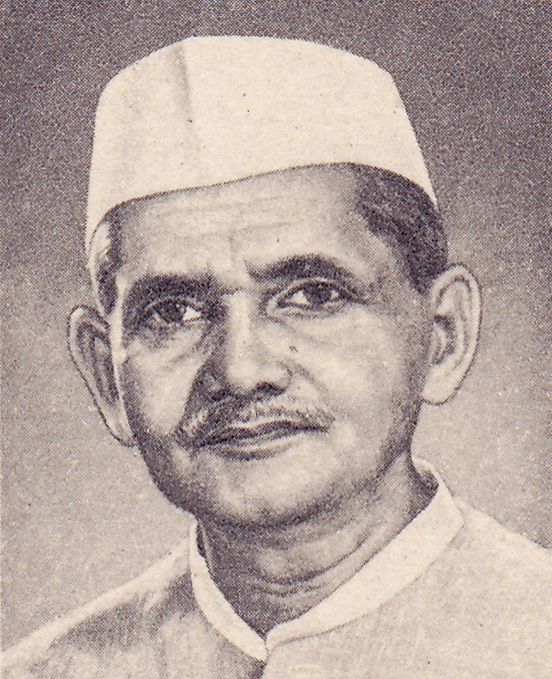
Honesty is the core value of Lal Bahadur Shastri. Everyone in India loved him the most. He was born on the 2nd of October in Varanasi.
His mother’s name was Ramdulhari, and his father’s name was Sharada Prasad Srivastava. His father was a school teacher and died of the plague. After his death of his father, his mother took care of him and his two sisters to her parent’s house.
Lal Bahadur Shastri got a sense of patriotism from one teacher named ‘Nishkameshwar Prasad Mishra. He was a very patriotic person and influenced his teacher. He went to prison when he was in the tenth standard. He completed his Bachelor’s in Philosophy and got the title of ‘Vidyapeeth.’
He showed a rare quality of courage and determination during his ministry. He gave a slogan named ‘Jai Jawan, Jai Kisan.’ After he died, he was awarded the ‘Bharat Ratna.’ Thus, a memorial ‘Vijay Ghat’ was built for him in New Delhi. He was known for his honesty and simplicity in India.
He joined the National Congress and went to jail for two and a half years. He participated in many events and movements.
He was very close to Mahatma Gandhi and Pandit Jawahar Nehru. When he was studying his Degree, he delivered many speeches on Gandhi. He became one of the loyal followers of Gandhi.
After India got Independence, he became the Minister of Police and Transport in UP. He brought many changes during his ministry, like allowing women to work, using water jets to disperse crowds, etc.
He worked as the PM in India from the year 1964 to 1966. Lal Bahadur Shastri served as PM for a short period. He died at Tashkent when he was there for signing the peace treaty to stop the India-Pakistan war. His cause of death is still a mystery for the whole world.
A huge Republic Day procession begins early in the morning. Doordarshan broadcasts a running commentary on the programme. A large no of Army, Navy and Air Force personnel participate in this procession. Cadets of N.C.C., A.C.C. , Boy Scouts, Girl Guides also participate.
The country also exhibits its weaponry strength. The biggest attraction are the tableaux of various states and their cultures. Some departments also bring their own tableaux. The spectators cheer each and every activity happening at India Gate.
In the end, color balloons are released into the sky. Tricolor made by the aeroplanes is also a very memorable show. The whole environment is filled with patriotic zeal. Here we get a great opportunity to see the unity of India at one spot.
Not only in Delhi, Republic Day Celebrations take place in other parts of the country with same passion. In schools, especially, there is great atmosphere. There are activities – Cultural and Sports. There is also the Chief Guest of the Programme.
The activities include parade, P.T. exercises, speeches, songs, skits, fancy dress competition etc. The honorable speakers tell the students about Indian Freedom Struggle, role of Freedom fighters etc. They also urge them to work harder to serve the country in a better way.
So, Republic Day is a great Indian Festival. It creates feeling of patriotism among the people. It reminds us of the supreme sacrifices made by great freedom fighters. Republic Day also realizes us our responsibilities towards our country. It makes us feel proud to be Indian.
Science is a blessing to human beings. The role of science is very important in our everyday life. We cannot think of our life without science. The most important invention of science is Electricity. It is the most important thing to keep the wheel of progress running. The invention of electricity brings an incredible change in human civilization. Electricity helps us to run fa, air conditioners, trains, heavy machinery, industries, or other heavy wagons. Electric fans, lights, mobiles, Air conditioners have made our life more comfortable. All the scientific technologies rest on electricity have made our life ease.
Science is the base for preparing wonderful medicines which give us immediate relief. Science helped us to overcome many dangerous and deadly diseases. Many vaccinations and medicines have been discovered with the help of science to save humans from many diseases. Nowadays it is possible that we can transplant every part of the human body by the surgery.
Science and surgery can give us eyes to see, ears to hear and legs to walk. Medical science is doing unbelievable improvements. Blood transfusion and organ transplantation have now become possible with the help of science. Now diagnosing the problem becomes much easier with the help of the invention of X-Ray, Ultrasonography, ECG, MRI, Penicillin, etc.
Inventions of science have made our traveling fast and comfortable. We can reach safely at any part of the world within a few hours. We can easily travel by bicycles, buses, cars, trains, ships, airplanes, and other vehicles. Also, these are used to transport goods.
Science also developed a way of communication. In past days we have to wait for a long time to get one’s letter but today we can talk to our relatives even if they are too far away from us. Not only talk to them but also we can even see them on our mobile phones. The invention of mobiles and the internet has reduced the distance between people.
Many innovations and discoveries of science help farmers grow a good quality crop. The Harvesting machines, Tractors, Manures, and good quality seeds are the gift of science to a farmer. In dairy and manufacturing business, types of machinery are helping to grow their business.
The first invention of science for entertainment was Radio. In the old days, the radio is used to listen to songs and news. But now science has changed everything with its new and wonderful innovations in the field of entertainment. Now, we can watch TV programs videos on mobiles, T.V and also on computers. These are now one of the most basic needs of humans.
Science also developed our education and trade sector. The invention of printing, typing, binding, etc. has boosted our education system. Similarly, the invention of the needle, scissors, and the sewing machine to the heavy industrial machinery has done huge progress in the industrial field. In one word we can’t live a minute without science.
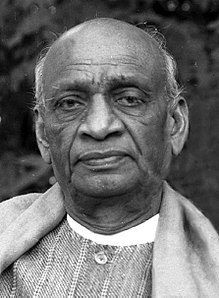
Sardar Vallabhai Patel is called the ‘Iron man of India’ for his courage and willpower. He was born in a farmer’s family in 1875 in Gujarat which was then a part of Bombay State. His father’s name was Jawar Bhai.
He had his school education at Baroda and during his school career, he was a brilliant student. He was bold and fearless from his childhood. After finishing his school education, he joined college and finally passed his law degree with credit.
He started his practice as an advocate at Ahmedabad and earned fame as well as fortune. He started leading a luxurious life. During this period he came under the influence of Mahatma Gandhi and on his motivation gave up his practice and joined the Civil Disobedience Movement. He continued to be a staunch Congress worker and leader in all other movements undertaken by Congress.
Most famous of the movements led by Sardar Vallabhai Patel was the Bardoli Farmers Movement, which he very successfully conducted. It was a no-tax campaign and the Bombay Government had to yield to the demands of the Bardoli farmers. He was one of the top leaders in Congress like Gandhiji and Nehru and no policy decision was taken without consulting him. Though he hailed from Gujarat he was and All India leader from the beginning and had a powerful voice in Congress.
After independence he became the Deputy Prime Minister of India, the first to occupy that distinguished post. Jawaharlal Nehru was the Prime Minister.
In 1947 when we got Independence, there were a number of Princely States in India and the unity of India depended on their accession to Indian Union. There was some difficulty in respect of some Princely States like Hyderabad and Travancore. With tact and willpower of Sardar Vallabhai Patel, it became easy to get all Princely States merged with the Indian Union. By consolidating all Princely States, Sardar vallabhai Patel proved that he is really and Iron Man of India. But for him, the Police Action against the Nizam of Hyderabad would not have been taken. On account of his efforts, we had a United India before we became a Republic in 1950.
The Iron man of India breathed his last on 15th December 1951 at Bombay, leaving the new nation firm and on good foundation. Many are of the opinion that if only had Patel lived longer India would have become stronger than what it is today.
Health is God’s gift to us. Health refers to the physical and mental state of a human being. To stay healthy is not an option but a necessity to live a happy life. The basic laws of good health are related to the food we eat, the amount of physical exercise we do, our cleanliness, rest, and relaxation. A healthy person is normally more confident, self-assured, sociable, and energetic. A healthy person views things clearly, calmly, and without prejudice.
Introduction
We live in a super-fast age. The Internet has shrunk the world dramatically and people are connected 24×7. Multitasking is the order of the day, as we struggle to fulfill our responsibilities for everyone in life. In this fight, we often forget to spare time for ourselves. The stress levels continue to build up until one day a major collapse may make us realize that in all this hectic activity, we have forgotten to take care of one important thing – our health.
As we spend days shuttling between hospital and home, put our body through one test after another, trying to find out what has gone wrong, we are forced to remember that ‘Health is indeed Wealth’.
In earlier days, life was very simple. People worked for a stipulated time, often walked everywhere, ate more homemade food, did household chores, and enjoyed a healthy balance in life.
Now people have cars and bikes to commute, so they walk less. With the demand for more working hours, people are awake till late nights and indulge in more junk food than home-cooked food. Modern equipment at home has reduced the labour work and increased dependency on this equipment. People don’t have enough time to exercise or even get enough sunlight. Basically, nowadays people are living very unhealthy lifestyles.
Unhealthy living conditions have increased the contraction of people to various diseases like obesity, diabetes, heart attacks, hypertension, etc. This has alarming implications in our near future. So it is very important to focus on our health as much as we focus on our work. Moderation in food habits, daily exercise, and balanced work-life can surely make a big difference to our health and body. When a person stays mentally and physically fit, his action and decision are more practical and logical and hence he is more successful in life. Furthermore, good health has a direct impact on our personality.
Importance of Good Health
A healthy body has all the major components that help in the proper functioning of the body. The essential component is the state of physical health. Your life term extends when you maintain good physical fitness. If you are committed to exercising with a sensible diet, then you can develop a sense of well-being and can even prevent yourself from chronic illness, disability, and premature death. Some of the benefits of increased physical activity are as follows.
1. It Improves Our HealthIt increases the efficiency of the heart and lungs.
2. A good walk can reduce cholesterol levels.
3 . Good exercise increases muscle strength.
4. It reduces blood pressure.
5. It reduces the risk of major illnesses such as diabetes and heart disease.
Improved Sense of Well-beingIt helps in developing more energy.
1. It reduces stress levels.
2. Quality of sleep improves.
3. It helps in developing the ability to cope with stress.
4. It increases mental sharpness.
Improved AppearancesWeight loss contributes to a good physique.
1. Toned muscles generate more energy.
2. Improved posture enhances our appearance.
3. Enhanced Social LifeIt improves self-image
It increases opportunities to make new friends.
It increases opportunities to share an activity with friends or family members.
Increased Stamina
Increased productivity.
Increased physical capabilities.
Less frequent injuries.
Improved immunity to minor illnesses.
Along with physical fitness, a good mental state is also essential for good health. Mental health means the emotional and psychological state of an individual. The best way to maintain good mental health is by staying positive and meditating.
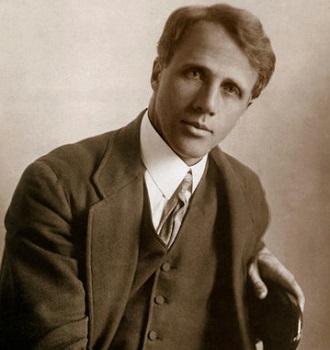
Robert Frost was an American poet and winner of four Pulitzer Prizes. Famous works include “Fire and Ice,” “Mending Wall,” “Birches,” “Out Out,” “Nothing Gold Can Stay” and “Home Burial.” His 1916 poem, “The Road Not Taken,” is often read at graduation ceremonies across the United States. As a special guest at President John F. kennedy’s inauguration, Frost became a poetic force and the unofficial “poet laureate” of the United States.
Frost spent his first 40 years as an unknown. He exploded on the scene after returning from England at the beginning of World War II. He died of complications from prostate surgery on January 29, 1963.
Early Years
Frost was born on March 26, 1874, in San Francisco, California. He spent the first 11 years of his life there, until his journalist father, William Prescott Frost Jr., died of tuberculosis.
Following his father’s passing, Frost moved with his mother and sister, Jeanie, to the town of Lawrence, Massachusetts. They moved in with his grandparents, and Frost attended Lawrence High School.
After high school, Frost attended Dartmouth college for several months, returning home to work a slew of unfulfilling jobs.
Beginning in 1897, Frost Harvard University but had to drop out after two years due to health concerns. He returned to Lawrence to join his wife.
In 1900, Frost moved with his wife and children to a farm in New Hampshire — property that Frost’s grandfather had purchased for them—and they attempted to make a life on it for the next 12 years. Though it was a fruitful time for Frost’s writing, it was a difficult period in his personal life, as two of his young children died.
During that time, Frost and Elinor attempted several endeavors, including poultry farming, all of which were fairly unsuccessful.
Despite such challenges, it was during this time that Frost acclimated himself to rural life. In fact, he grew to depict it quite well, and began setting many of his poems in the countryside.
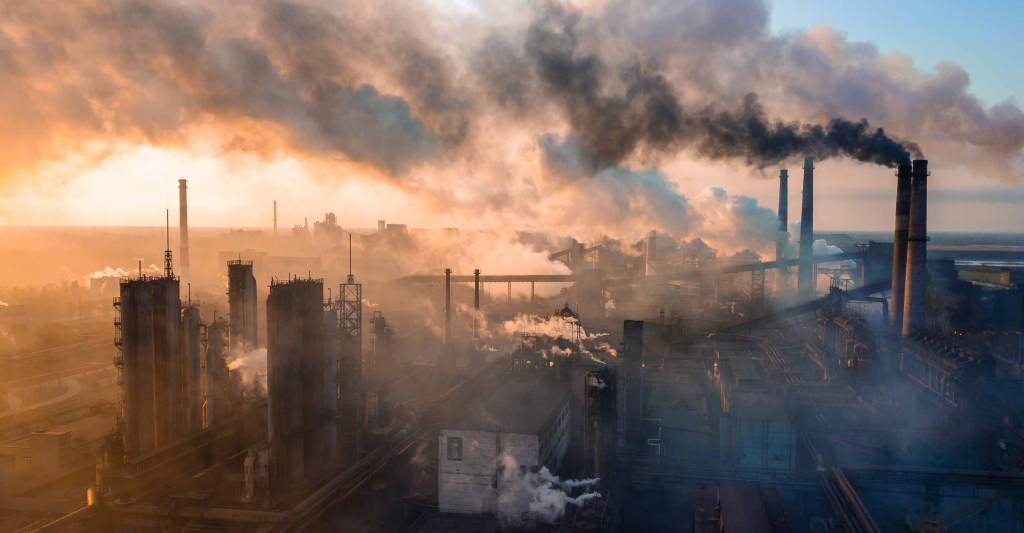
Pollution is the process in which undesirable toxic contaminants contaminate our environment like air, water, soil, etc. It is creating sudden changes in the ecosystem, which is directly on indirectly leaving adverse effects on the lives of human beings, animals, and plants. It creates an imbalance in the natural system. Many things which are making our lives easy are harmful to the environment. For example, vehicles leave gases that pollute the air. Industries and household garbage pollute both water and air.
Every living being on Earth depends on air and water. When these two things get polluted, all the lives on Earth come at a risk. It is seen that urban areas get more polluted than in rural areas. Though rural areas also get polluted by harmful pesticides used in farming lands. Because of pollution, many new diseases appear daily, which are extremely dangerous for the health of living beings. It has now become a serious problem globally. Global Warming is now the cause of headaches for all human beings worldwide. It is the pollution that is indirectly affecting the change in the weather. This global issue needs immediate action. Otherwise, it will be challenging to lead a healthy lifestyle.
Types of Pollution
There are various kinds of pollution around us. Here, we will discuss more on the types of pollution.
– Air Pollution: It is sometimes visible like we can see polluted air left by the vehicles on the road because of its different colour. In most cases, it is not visible. Polluted air mainly affects the eyes and lungs of human beings as well as animals. It can even kill a living creature within a few minutes. We know about many incidents where harmful gas leakage has killed people. Even natural disasters can make the air toxic. Like volcanic eruptions produce harmful gases that affect human health and other natural resources as well. Vehicles and factories produce harmful gases that, in reaction to sunlight, creates thick fog. Air pollution also contributes to Acid Rain. It can destroy water life, forests, etc.
– Water Pollution: Same like water, one kind of water pollution is visible like muddy water, water with garbage, etc. At the same time, some visibly clean water can contain chemicals that are dangerous to our health. Drinking polluted water can cause serious health issues. A lot of people die worldwide by consuming contaminated water. It can also indirectly affect humans and animals. Like if we eat a fish from a polluted river or sea, we also absorb the potential pollutants. Natural gas and oil can also contribute to the pollution of water. Liquid wastes from factories also pollute the water. Solid wastes disturb the drainage system. Sewages, agricultural waste, acid rain are essential causes of water pollution.
– Soil Pollution: Solid wastes from factories and households pollute the land. Harmful chemicals mix in the soil through the pesticides used in agriculture. Pollutants from landfills mix in the ground and pollute it. When we eat plants that have grown in the polluted land, we indirectly consume contaminants harmful to our health.
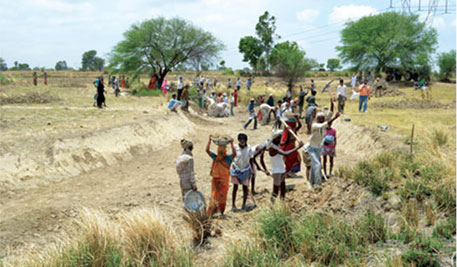
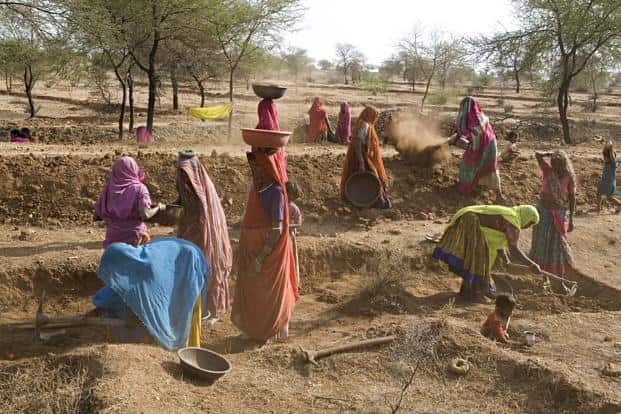
Rural areas are also known as the ‘countryside’ or a ‘village’ in India. It has a very low population density. In rural areas, agriculture is the chief source of livelihood along with fishing cottageindustries, pottery, etc.
The quest to discover the real rural India still continues in great earnest. Almost every economic agency today has a definition of rural India. Here are a few definitions: According to the Planning Commission, a town with a maximum population of 15,000 is considered rural in nature.
In these areas the panchayat makes all the decisions. There are five people in the panchayat. The National Sample Survey Organization (NSSO) defines ‘rural’ as follows:An area with a population density of up to 400 per square kilometer.
Villages with clear surveyed boundaries but no municipal board,
A minimum of 75% of male working population involved in agriculture and allied activities.
RBI defines rural areas as those areas with a population of less than 49,000 (tier -3 to tier-6 cities).
It is generally said that the rural areas house up to 70% of India’s population. Rural India contributes a large chunk to India’s GDP by way of agriculture, self-employment, services, construction etc.
As per a strict measure used by the National Sample Survey in its 63rd round, called monthly per capita expenditure, rural expenditure accounts for 55% of total national monthly expenditure. The rural population currently accounts for one-third of the total Indian FMCG sales.
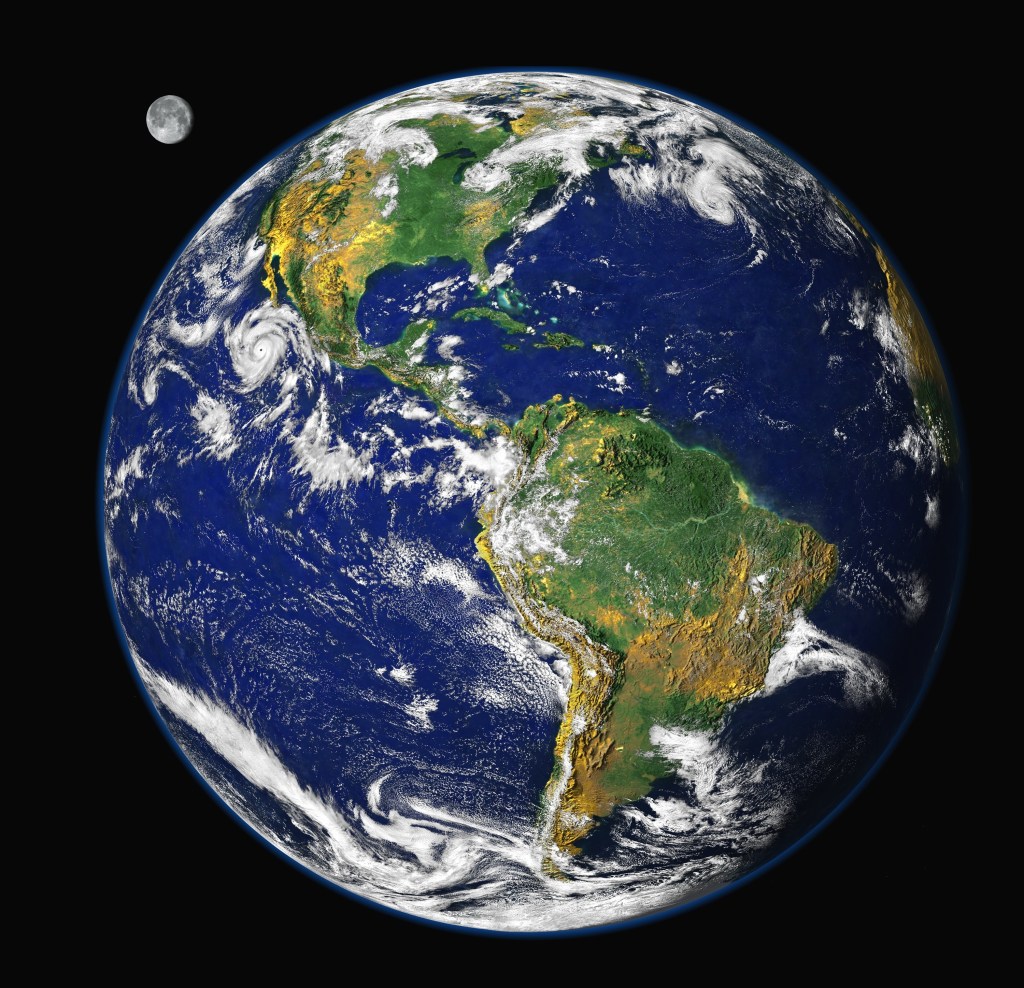
Earth, our home planet, is a world unlike any other. The third planet from the sun, Earth is the only place in the known universe confirmed to host life.
With a radius of 3,959 miles, Earth is the fifth largest planet in our solar system, and it’s the only one known for sure to have liquid water on its surface. Earth is also unique in terms of monikers. Every other solar system planet was named for a Greek or Roman deity, but for at least a thousand years, some cultures have described our world using the Germanic word “earth,” which means simply “the ground.”
Our dance around the sun
Earth orbits the sun once every 365.25 days. Since our calendar years have only 365 days, we add an extra leap day every four years to account for the difference.
Though we can’t feel it, Earth zooms through its orbit at an average velocity of 18.5 miles a second. During this circuit, our planet is an average of 93 million miles away from the sun, a distance that takes light about eight minutes to traverse. Astronomers define this distance as one astronomical unit (AU), a measure that serves as a handy cosmic yardstick.
Earth rotates on its axis every 23.9 hours, defining day and night for surface dwellers. This axis of rotation is tilted 23.4 degrees away from the plane of Earth’s orbit around the sun, giving us seasons. Whichever hemisphere is tilted closer to the sun experiences summer, while the hemisphere tilted away gets winter. In the spring and fall, each hemisphere receives similar amounts of light. On two specific dates each year called the equinoxes both hemispheres get illuminated equally.
Many layers, many features
About 4.5 billion years ago, gravity coaxed Earth to form from the gaseous, dusty disk that surrounded our young sun. Over time, Earth’s interior which is made mostly of silicate rocks and metals differentiated into four layers.
At the planet’s heart lies the inner core, a solid sphere of iron and nickel that’s 759 miles wide and as hot as 9,800 degrees Fahrenheit. The inner core is surrounded by the outer core, a 1,400-mile-thick band of iron and nickel fluids. Beyond the outer core lies the mantle, a 1,800-mile-thick layer of viscous molten rock on which Earth’s outermost layer, the crust, rests. On land, the continental crust is an average of 19 miles thick, but the oceanic crust that forms the seafloor is thinner about three miles thick and denser.
Earth, our home planet, is a world unlike any other. The third planet from the sun, Earth is the only place in the known universe confirmed to host life.
With a radius of 3,959 miles, Earth is the fifth largest planet in our solar system, and it’s the only one known for sure to have liquid water on its surface. Earth is also unique in terms of monikers. Every other solar system planet was named for a Greek or Roman deity, but for at least a thousand years, some cultures have described our world using the Germanic word “earth,” which means simply “the ground.”
Our dance around the sun
Earth orbits the sun once every 365.25 days. Since our calendar years have only 365 days, we add an extra leap day every four years to account for the difference.
Though we can’t feel it, Earth zooms through its orbit at an average velocity of 18.5 miles a second. During this circuit, our planet is an average of 93 million miles away from the sun, a distance that takes light about eight minutes to traverse. Astronomers define this distance as one astronomical unit (AU), a measure that serves as a handy cosmic yardstick.
Earth rotates on its axis every 23.9 hours, defining day and night for surface dwellers. This axis of rotation is tilted 23.4 degrees away from the plane of Earth’s orbit around the sun, giving us seasons. Whichever hemisphere is tilted closer to the sun experiences summer, while the hemisphere tilted away gets winter. In the spring and fall, each hemisphere receives similar amounts of light. On two specific dates each year—called the equinoxes—both hemispheres get illuminated equally.
Many layers, many features
About 4.5 billion years ago, gravity coaxed Earth to form from the gaseous, dusty disk that surrounded our young sun. Over time, Earth’s interior—which is made mostly of silicate rocks and metals—differentiated into four layers
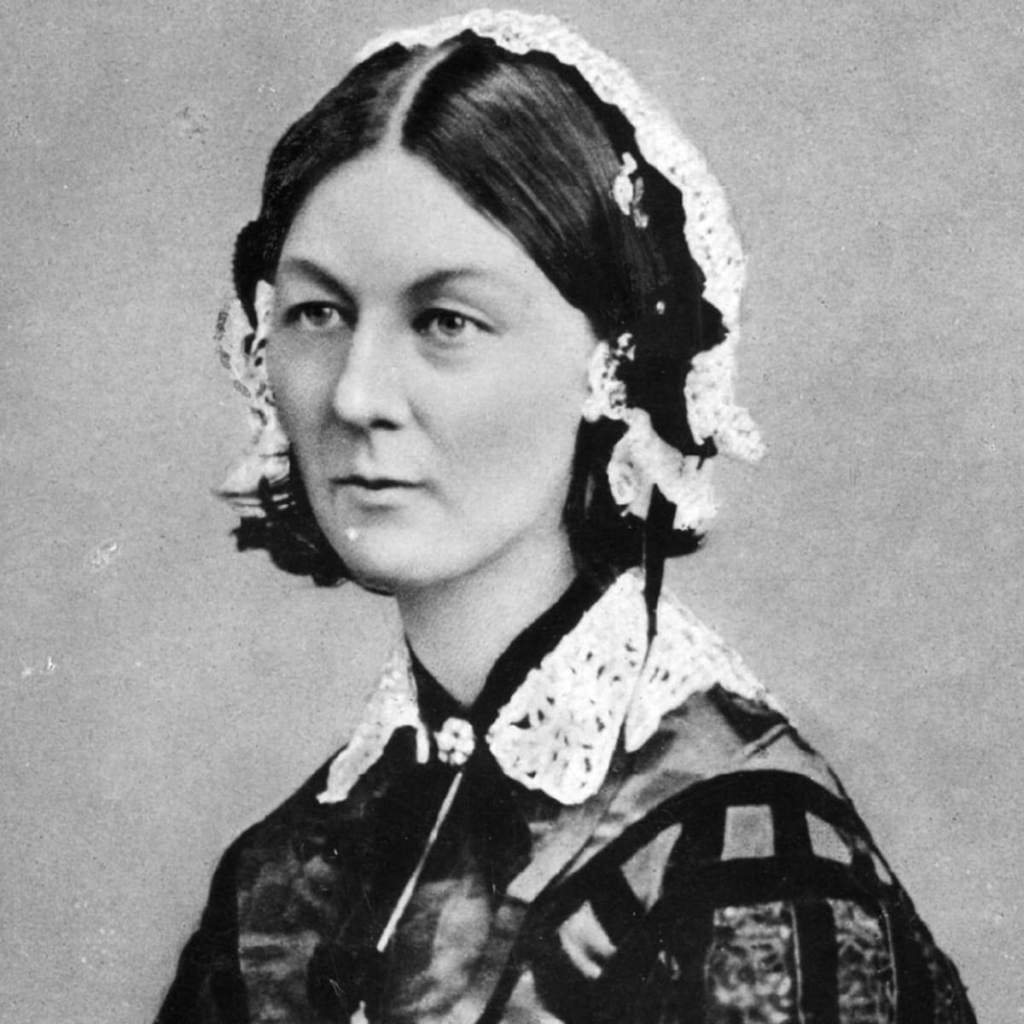
Florence Nightingale was born on May 12, 1820, in Florence, Italy to Frances Nightingale and William Shore Nightingale. She was the younger of two children. Nightingale’s affluent British family belonged to elite social circles. Her mother, Frances, hailed from a family of merchants and took pride in socializing with people of prominent social standing.
Despite her mother’s interest in social climbing, Florence herself was reportedly awkward in social situations. She preferred to avoid being the center of attention whenever possible. Strong-willed, Florence often butted heads with her mother, whom she viewed as overly controlling. Still, like many daughters, she was eager to please her mother.
Florence’s father was William Shore Nightingale, a wealthy landowner who had inherited two estates—one at Lea Hurst, Derbyshire, and the other in Hampshire, Embley Park—when Florence was five years old. Florence was raised on the family estate at Lea Hurst, where her father provided her with a classical education, including studies in German, French and Italian.
From a very young age, Florence Nightingale was active in philanthropy, ministering to the ill and poor people in the village neighboring her family’s estate. By the time she was 16 years old, it was clear to her that nursing was her calling. She believed it to be her divine purpose.
When Nightingale approached her parents and told them about her ambitions to become a nurse, they were not pleased. In fact, her parents forbade her to pursue nursing.
During the Victorian a young lady of Nightingale’s social stature was expected to marry a man of means—not take up a job that was viewed as lowly menial labor by the upper social classes.
When Nightingale was 17 years old, she refused a marriage proposal from a “suitable” gentleman, Richard Monckton Milnes. Nightingale explained her reason for turning him down, saying that while he stimulated her intellectually and romantically, her “moral…active nature…requires satisfaction, and that would not find it in this life.” Determined to pursue her true calling despite her parents’ objections, in 1844, Nightingale enrolled as a nursing student at the Lutheran Hospital of Pastor Fliedner in Kaiserwerth, Germany.
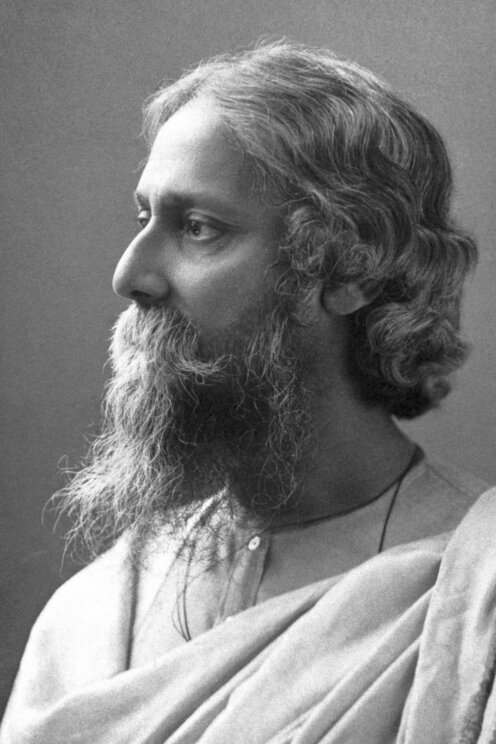
Rabindranath Tagore was a legendary Indian poet. Furthermore, he was also a great philosopher, patriot, painter, and humanist. People often made use of the word Gurudev with regard to him. This exceptional personality was born on the 7th of May in 1861 at Calcutta. His early education took place at home by a variety of teachers. Also, through this education, he got knowledge of many subjects. His higher education took place in England. Above all, Rabindranath Tagore began writing poems from a very young age.
Works of Rabindranath Tagore
Rabindranath Tagore began to write drama from sixteen years of age. At the age of twenty, Rabindranath Tagore wrote original dramatic piece Valmiki Pratibha. Most noteworthy, Rabindranath Tagore works focused on feelings and not on action. In 1890 he wrote another drama work Visarjan. Visarjan is probably the best drama work of Rabindranath Tagore.
Similarly, from the age of sixteen Rabindranath Tagore began to write short stories. His first short story was Bhikarini. Most noteworthy, he is the founder of the Bengali-language short story genre. Tagore certainly wrote numerous stories from 1891 to 1895. Also, stories from this period form the collection of Galpaguchchha. It is a big collection of 84 stories.
Rabindranath Tagore was certainly in touch with novels as well. He wrote eight notable novels. Furthermore, he wrote four novellas.
The best collection of poetry of Rabindranath Tagore is Gitanjali. Most noteworthy, Rabindranath Tagore received the Nobel Prize in 1913 for Gitanjali. Furthermore, his other important poetry works are Manasi, Sonar Tori, and Balaka.
Rabindranath Tagore’s contribution to politics
Rabindranath Tagore was active in politics. He was in total support of Indian nationalists. Furthermore, he was in opposition to British rule. His work Manast contains his political views. He also wrote a number of patriotic songs. Rabindranath Tagore increased the motivation for Indian independence. He wrote some works for patriotism. There was great love among the masses for such works. Even Mahatma Gandhi showed his favor for these works.










 Eduindex
You must be logged in to post a comment.