Gemma Chan

Gemma Chan is an English actress. Gemma is an Asian-born Englishwoman. Gemma Chan was born in London, England, at Guy’s Hospital. Her father grew up in Hong Kong as an engineer, while her mother was born in Greenock, Scotland when her parents immigrated from China. Chan describes herself as a British Asian. Gemma grew up to be a peaceful and responsible young lady who studied violin and piano in a music studio and was professionally enrolled in swimming and ballet.

She was born in London and grew up in Kent, she attended Newstead Wood School for Girls and then went on to Worcester College, Oxford, to study law before deciding to pursue a career in acting and enrolling at the Drama Centre London.

Doctor Who: The Waters of Mars (2009), starring David Tennant and Lindsay Duncan, premiered in the UK on November 15, 2009, in which Chan played geologist Mia Bennett. Secret Diary of a Call Girl (2007), the fourth and last season, aired on ITV2 in the United Kingdom and Showtime in the United States in 2011. She also starred in Sherlock (2010) and the fourth season of Channel 4’s The IT Crowd (2006).

In the second season of Sky Living’s supernatural thriller Bedlam (2011) and True Love (2012), Chan appeared in a five-part semi-improvised television series created by Working Title for BBC One. She featured opposite Douglas Henshall and Steven Robertson in the new BBC One crime thriller Shetland (2013), and guest acted in the BBC’s Death in Paradise (2011). She was a member of the cast of Channel 4 romantic drama, Dates (2013).

She made her professional theatrical debut in the British Premiere of Bertolt Brecht’s final piece, Turandot, directed by Anthony Clark at the Hampstead Theatre in London. In November 2012, she appeared at the Finborough Theatre in Anders Lustgarten’s new piece, The Sugar-Coated Bullets of the Bourgeoisie.

Chan testified before the Old Bailey in central London in September 2013 as a witness to a deadly stabbing near Putney Bridge tube station.

From 2011 through 2016, Chan dated comedian Jack Whitehall.

Chan was linked to Dominic Cooper in 2018, according to reports.

In 2017, she traveled to Lebanon with Save the Children to meet with Syrian child refugees.  Chan teamed up with Moet to help Help Refugees UK in 2018. During the COVID-19 epidemic, she volunteered with Cook-19, an organization that serves meals to essential personnel.

Chan has been a supporter of UNICEF UK since 2015, and in 2019 she traveled to Jamaica with the organization to raise awareness about domestic abuse. In 2019, she took part in Soccer Aid to raise money for the organization. In 2020, Chan took part in commemorations on World Children’s Day. In 2021, she was named a UNICEF UK celebrity ambassador.

Some interesting points related to the professional and personal life of Gemma Chan

  1. She was a part of Captain Marvel and played the role of Minn-Erva.
  2. In Transformers: The Last Knight, she played a character.
  3. She was the primary character in the first season of the TV program Humans.
  4. She appeared in a Dr. Who episode as a guest star.
  5. She saw the murder of a homeless guy in 2012.
  6. She is a classically trained violinist and pianist.
  7. She worked as a model to help pay for her theatre school education.
  8. Gemma was one of three models selected for Project Catwalk on Sky One.
  9. In 2008, she graduated from the Drama Centre in London. 
  10. She went to Oxford University to study law.

10 Best Places to visit in Bhutan

Bhutan is a landlocked country in the Eastern Himalayas, officially known as the Kingdom of Bhutan. Bhutan is the world’s only Vajrayana Buddhist country, and the tradition’s profound teachings are carefully preserved and have a tremendous effect on many parts of society.

Some places you must visit if you are visiting Bhutan are –

Buddha Dordenma, Thimphu

Buddha Dordenma is a massive golden Shakyamuni Buddha statue built to honor the fourth monarch of Bhutan, Jigme Singye Wangchuk’s, birthday. The monument, which stands atop a golden meditation hall in Kuenselphodrang Nature Park, overlooks Thimphu’s southern gate. It stands at 169 feet tall and has 1,25,000 smaller Buddha sculptures. The monument was built in 2015 at a cost of over $100 million. Buddhists regard it to be a holy location. 

Simtokha Dzong, Thimphu

Simtokha Dzong’s historical significance may be understood from the fact that it was the first of its type when it was built in 1629. It is currently a museum as well as a prominent Dzongkha language study facility.

The Tashichho Dzong (Thimphu Dzong), Thimphu

The Tashichho Dzong (Thimphu Dzong) is a Buddhist monastery and fortress in the city’s northern outskirts, near to the Wang Chu’s western bank. It has been the seat of government since 1952, and it now houses the throne chamber as well as numerous other royal departments such as the ministries of Home Affairs, Finance, and the Secretariat.

Dochula Pass, Thimphu

Dochula Pass, on the route from Thimphu to Punakha, is a mountain pass in the Himalayas. Dochula Pass, at 3100 meters above sea level, is 30 kilometers from the country’s capital. The eldest Queen Mother, Ashi Dorji Wangmo Wangchuk, constructed 108 memorial stupas here.

Philatelic Bureau

The hobby of collecting and analyzing stamps is known as philately. The main post office in Thimphu, Bhutan, serves as a one-of-a-kind philately facility that will wow you with the variety of gifts you may offer yourself for a small fee. All you have to do is bring a photo of yourself or have a portrait taken on the spot. The staff will then turn your photo into a personalized stamp for you, and they will even give you a whole sheet of these stamps.

Thimphu Chorten (Memorial Chorten)

For Bhutanese people, Memorial Chorten is one of the most important religious sites where they pray on a regular basis. As a sacred rite, people walk around the Chorten’s circumference throughout the day. It is an exceptional example of Buddhist culture and architecture, having been built in 1974.

Punakha Suspension Bridge, Punakha

Prior to Thimphu, Punakha was the capital of Bhutan. Punakha Suspension Bridge, which spans the Po Chhu River and is 160 meters long, is one of Bhutan’s longest suspension bridges. Punakha Town and Punakha Dzong are connected by this bridge.

Punakha Dzong, Punakha

Punakha Dzong literally translates to “the palace of great happiness or bliss” and a visit to this dzong will convince you of its significance. It is quite popular with tourists because of its stunning architecture. This dzong is historically significant since it is where all of Bhutan’s monarchs have been crowned. The building of Punakha Dzong, which now serves as the administrative headquarters of Punakha District, began in 1637.

Taktsang Palphug Monastery, Paro

Taktsang Palphung Monastery, often known as “Tiger’s Nest,” is one of Bhutan’s most famous tourist destinations, attracting photographers, explorers, and pilgrims alike. Everything about the monastery is unique, from its location to its architecture. The Taktsang Palphung Monastery is surrounded by hills that are covered with beautiful green vegetation. Though getting to this magnificent monastery might be difficult, it is well worth the effort.

Rinpung Dzong, Paro

Rinpung Dzong, or ‘Fortress on a Heap of Jewel,’ is the name of this dzong. The Dzong is home to 14 shrines and chapels, making it one of Bhutan’s most significant religious sites. The majority of the chapels, however, are currently closed to travelers. It is also the seat of the Bhutan Supreme Court, which is located in Paro Town in Western Bhutan.

10 Best Places to visit in Goa

Goa is a state on India’s southwest coast that is part of the Konkan area, which is separated from the Deccan highlands by the Western Ghats.

Some places you must visit if you are visiting Goa are –

Calangute Beach

Calangute Beach, also known as the “Queen of Beaches” in Goa, caters to a wide range of tourists, from nature lovers to thrill seekers to party animals. This beach is the largest and most popular in North Goa, serving as a sanctuary for nature lovers in particular.

Roam at Tito’s Street

Tito’s Street is one of the greatest nightclubs in town. Tito’s Street, named for the street on which it is located, is a popular nightclub that draws large audiences due to its great location and excellent service. The place has two levels: the bottom level is a dance floor with distinct dancing areas for couples, while the top-level allows patrons to relax and observe the action below while eating and drinking.

Anjuna Beach

The southern and northern ends of Anjuna beach, which stretch along the golden shoreline, provide a variety of activities. While the southern end has a rocky outcropping, the northern end offers water activities such as bungee jumping, rough banana rides, and more. Goa’s “multidimensional entertainment hub” is Anjuna Beach. Anjuna beach offers magnificent views and a photo opportunity at sunrise and sunset. The unmatched vista is created by the mix of white sand and dazzling blue water.

Dudhsagar Waterfalls

The Dudhsagar Waterfalls, located on the Goa-Karnataka border, are a must-see attraction in India. On the Mandovi River, the four-tiered waterfall formation is one of the highest in India. From a height of almost 1017 feet, the white water flows down a practically vertical mountain wall.

Fort Aguada

Fort Aguada, another Portuguese legacy, has stood sternly on the beach facing the Arabian Sea since 1612 when it was built to offer protection against invading Dutch and Marathas. It was a magnificent ancient fort at the time, with the potential to house 79 cannons and other defensive weaponry. It was one of the Portuguese’s most cherished assets. Today, it serves as a popular Goa tourist attraction, separating Sinquerium Beach from Candolim Beach.

Grand Island

The heaven of Goan water sports is Grand Island. From diving to snorkeling to fishing, there is much to do here. Scuba diving is the most popular activity in Goa since it allows for so much underwater exploration. There are shipwrecks as well as some reefs can be discovered here. Divers love the “Suzy” wreck and the “Davy Jones Locker,” as well as Serge City, Bounty Rock, and Turbo Tunnel. 

Sinquerim Beach

Sinquerim Beach is located north of Goa’s renowned beaches, such as Calangute, Baga, and Candolim, and has a beautiful beachfront. Sinquerim’s waters are ideal for a relaxing swim. The renowned Sunburn Festival, held each year in December, is one of Sinquerim Beach’s main attractions. The Aguada Fort, which is located right close to the beach, is another popular site. 

Vagator Beach

Tourists and travel enthusiasts may have a once-in-a-lifetime experience at Vagator Beach in Goa. It is located on the far northern outskirts of Bardez Taluka, on the other side of the Chapora River, which originates in Morjim, Pernem. Anjuna, one of Goa’s oldest tourist attractions, is located to the south of Vagator Beach.

Sunburn Goa

Sunburn Goa is an annual electronic dance music event hosted in Goa that is described as Asia’s largest gathering of its type. The event lasts three days and is jam-packed with incredible performances by some of the world’s most well-known DJs.

Dona Paula Beach

The Dona Paula Beach, a tiny beach with a terrible past involving love and suicide, is the best location to visit in Goa. In terms of water sports and sightseeing, it has a lot to offer. Tourists go to the jetty close to the beach because of the beautiful view of the Arabian Sea it provides. The sad legend says that the spirit of Dona Paula rises from the water at night, wearing just a pearl necklace, looking for her love. On the beach, she is thought to have committed suicide.

10 Best Places to visit in Kashmir

Kashmir is the Indian subcontinent’s northernmost geographical area.

Srinagar

Srinagar is one of Kashmir’s and India’s most attractive and well-known tourist destinations. Srinagar offers it everything, from boating to trekking, bird viewing to water skiing. This location is regarded as the “mirror to the mountains” by the locals. This location provides an up-close glimpse into Kashmiri cuisine and culture.

Dal Lake

Dal Lake, often known as the “Jewel in the Crown of Kashmir,” is one of Kashmir’s most exquisite pieces of heaven. For decades, the lake has been the region’s favorite summer getaway, surrounded by magnificent Mughal gardens and dotted with British-built houseboats.

Indira Gandhi Memorial Tulip garden

You enter the garden with your eyes closed, then open them to find yourself immersed in a lake of flowers. Tulips of different colors may be found in this garden, which was planted using seeds brought in from Spain. They’re at their finest in the springtime, and the neighboring Dal Lake provides the perfect backdrop for photography.

Gulmarg

Gulmarg, also known as the ‘Meadow of Flowers,’ is a big attraction with its stretch of colorful flowers set against the backdrop of snow-capped mountains. For all the right reasons, Gulmarg is regarded as one of the greatest locations to visit in Kashmir. Because of the numerous opportunities for skiing in the snow while taking in the scenery, this region of Kashmir is also regarded as an adventurer’s paradise.

Sonmarg

Sonamarg is known as the ‘Golden Meadow,’ as its name indicates. Its attractions include an unending stream of beautiful flowers and undulating hiking trails.

Pahalgam

Pahalgam, at a height of 2740 meters, is considered a representation of paradise on earth. It is 95 kilometers from Srinagar and is surrounded by thick woods, lovely lakes, and flower-filled meadows. This small town is famous for pulling all of a visitor’s tension away, making it one of the greatest locations to visit in Kashmir.

Betaab Valley

Many trekkers begin their journey in this valley, which is surrounded by beautiful green meadows and snow-capped mountains. The thick greenery of conifers and lush green bushes encapsulate Kashmir’s genuine nature. This valley, which is dotted with colorful cottages, shelters, and a variety of bird species, is unique in its own right. You may go horseback riding or enjoy a picnic on the banks of the snow-fed Jade River in the Betab Valley, which flows south from the snowy peaks. The water in Jade is so clean that it is used for drinking by the locals!

Nishat Garden

On the shores of Dal Lake, this one is regarded as one of the biggest Mughal Gardens. Nishat Garden is also known as the Garden of Bliss, which is fitting given the stunning Zabarwan Mountains in the background. This garden is historically significant, and it was created by Asaf Khan, Nur Jahan’s brother.

Shalimar Garden

The well-known Emperor Jehangir built this garden specifically for his wife, Nur Jahan, in the year 1616. Another garden, Faiz Baksh, was added to this one after a while. Inside the garden, there is a canal with polished stones around the edges.

Sinthan Top

Sinthan Top, at 3,658 meters above sea level, provides stunning panoramic views of the area’s snow-capped mountains and low-lying areas. The location is easily accessible from a highway, but you must navigate yourself and overcome a few challenges before reaching the summit. You may even continue walking and land on the snow while enjoying a beautiful and magnificent 360-degree panorama of the entire area.

10 Best Places to visit in Shimla

Shimla is also known as Simla and is the capital and the largest city of the Indian state of Himachal Pradesh. 

Some places you must visit if you are visiting Shimla are –

The Ridge

The Ridge is one of Shimla’s most popular tourist destinations. All other major places in Shimla, such as the Mall Road, the Scandal Point, and the Lakkar Bazaar, are easily accessible. The Ridge is the ideal location for shopping, eating, and nightlife, with many architectural marvels, lush foliage, and gorgeous scenery.

Mall Road

In the hill stations, mall roads are often a stretch of road surrounded by a number of small stalls, stores, and branded showrooms. Mall Road in Shimla is one of the lively roads where you can find a variety of shops, cafés, food stalls, cafes, bank ATMs, and money exchange websites to satisfy your needs.

Christ Church

Christ Church is one of Shimla’s most famous tourist attractions, ranking in the top 10 sites to see in the city. The Christ Church is a magnificent architectural landmark constructed during the British era to allow Christians to worship the Almighty Jesus. 

Kufri

Kufri is one of Himachal’s most scenic destinations. The little town’s steep valleys are pleasantly green in the summer and ethereally snowy in the winter, providing some of the most breathtaking views. Kufri Fun World, in Kufri, is one of the world’s highest amusement parks. 

Himalayan Bird Park

The Himalayan Bird Park is a fantastic place to visit. Peacocks, pheasants, and the Himalayan Monal are among the unique and rare bird species that call the Bird Park home.

Kali Bari Temple

The Kali Bari Temple is a well-known tourist destination. The temple was built in 1845 and is devoted to Goddess Kali, also known as Shyamala. Shimla takes its name from the Goddess Shyamala, the capital of Himachal Pradesh.

Ride on Toy Train

This 96-kilometer route will take you past 20 stations, 103 tunnels, 800 bridges, and over 900 sharp turns. The distance between Barog and Shimla is the most fascinating portion of the ride, since the train slows due to a steep ascent, allowing you to see some breathtaking sights.

Kuthar Fort

One of the greatest things to do in Shimla is taking a trip to Kuthar Fort. The eternal calmness of the Himalayas surrounds Kuthar Fort. The fort covers an area of roughly 52.8 square kilometers and is set against an exotic backdrop with lakes and lovely gardens.

Lakkar Bazaar

This is a well-known name for an ancient flea market in Shimla, which is located near the Ridge. It is known for wooden toys, walking sticks, the Regal building, the Roller skating rink, Indian foods such as Aloo Tikki and Chole Bhature, and Meena Bazaar, among other things.

Hip Hip Hurray Amusement Park

This one-of-a-kind amusement park is located at an elevation of 8500 feet above sea level in Kufri. It is one of Shimla’s greatest tourist attractions, including sports such as the Burma Bridge, Flying Fox, Rock Climbing, Commando Net, Bumping Boats, Rowing, and Valley Crossing, among others. In the winter, you may go ice skating or boating on the snow-covered terrain.

10 Best Places to visit in Manali

Manali is a resort and tourism town in the Himachal Pradesh highlands of India. It is located in the Kullu Valley, which is created by the Beas River.

Some places you must visit if you are visiting Manali are –

Hadimba Temple

This historic temple, also known as Hidimba Devi Temple and Dhungari Temple, was built by Maharaja Bahadur Singh in 1553. The temple is devoted to Hidimba Devi, Bheema’s wife, as the name suggests. On the grounds, there is another temple dedicated to Hidimba Devi’s son Ghatotkacha.

Solong Valley

Manali is only a short drive away from Solang Nala. It’s a sanctuary for adventure and sports enthusiasts, and you can test your abilities on a pair of skis or go on a snowmobile adventure while you’re here. People come here to do zorbing and paragliding when the weather warms up. You may also take a cable car ride to see breathtaking views of the Himalayas. Winter is the greatest season to visit if you want to participate in snow-based activities and sports, while summer is excellent for other adventure sports.

Hampta Pass

The Hampta Pass walk offers spectacular views of the Kullu Valley and the Lahaul Valley. The trek’s main feature is Chandratal Lake, which is located along the way. The pass is located at an elevation of nearly 4000 meters in the Pir Panjal Range, and the path includes spectacular river crossings.

Arjun Gufa (Arjun Cave)

The Arjun Cave, which lies adjacent to the Beas River’s rushing currents, is linked to a legend from the Hindu epic Mahabharata. Arjun, one of the Pandava brothers, is said to have meditated here. Arjun Cave, one of the greatest spots around Manali for a basket picnic, offers breathtaking views of the surrounding hills and valleys.

Himalayan Nyingmapa Buddhist Temple

The serene stillness of Manali’s Nyingmapa Buddhist Temple can soothe even the most frayed nerves. This Shangri-La-style sanctuary is in the heart of the bustling city, with pagoda-style buildings and vivid colours adding a magical charm to the scene.

Vashisht Hot Water Springs and Temple

Vashisht village is home to a magnificent temple nestled within the spectacular Himalayan landscape, making it a spiritually significant location. The shrine’s interiors include wooden carvings, ancient figures, and paintings, and the temple is thought to have a history of over 4000 years. The existence of hot springs, which are thought to have therapeutic powers, adds to the uniqueness of this place.

Beas River

The Beas River is a natural icon in the area that will accompany you on your Manali vacation for the most of the time. Vashisht village is known for having some of the greatest views of the river valley, while a journey to Kothi will get you up close to its beautiful blue waters. Water sports such as kayaking and rafting are popular in the Beas.

Great Himalayan National Park

Many unique species, including over 1000 plants, 209 bird species, and 31 animal species, may be found in the park. The secretive snow leopard reigns supreme, with populations of Himalayan tahr and brown bears also present. Photographers will be fascinated by the variety of wildflowers and glacial valleys that dot the landscape.

Gulaba

A vacation to Manali should involve trips to surrounding villages to learn about the local culture as well as take in the breathtaking scenery. The village features some of Himachal Pradesh’s most fascinating trekking paths, making it a popular winter destination for those seeking snowy scenery.

Rohtang Pass

This high mountain pass in the Pir Panjal Range, at an elevation of 4000 meters above sea level, will take your breath away. Rohtang Pass is a haven for adventurous sports like mountain biking and skiing, in addition to being a favorite hub of nature enthusiasts, painters, and photographers for decades.

10 Best Places to visit in Dalhousie

Dalhousie is a hill station in the Himachal Pradesh state of northern India, located in the Chamba district.

Some places you must visit if you are visiting Dalhousie are –

Khajjiar

Khajjiar, often known as the ‘mini-Switzerland of India,’ is a small town near Dalhousie noted for its green meadows, deodar trees, and cottages. There is a tiny lake in the midst of the meadow where you may relax and enjoy the landscape or participate in adventure sports like paragliding, zorbing, and horseback riding. During the winter, however, the road to Khajjiar may be blocked due to severe snowfall.

Kalatop Wildlife Sanctuary

The Kalatop Animals Sanctuary is made up of thick deodar foliage, a wealth of wildlife, snowcapped mountains, carpets of green meadows, and easy-on-the-eye streams of fresh water. It is also known as the Kalatop Khajjiar Sanctuary and is located in Himachal Pradesh’s scenic mountainous Chamba region. The term Kalatop means ‘black cap,’ referring to the dense, black forest cover on the sanctuary’s highest peak.

Chamera Lake

The Chamba Lake is a man-made reservoir for the Chamba Dam, located near Dalhousie in Himachal Pradesh’s Chamba District. It’s a popular picnic site as well as a sailing spot. On a speed boat or a rowboat, one may explore the lake and participate in sports such as kayaking and canoeing.

Rock Garden

Dalhousie’s Rock Garden is a lovely garden and a favorite picnic place. Apart from resting and refreshing at the park, you may also participate in one of the many adventure activities offered in the region, such as zip-lining.

Indo – Tibetan Market

The Tibetan market in Moti Tiba is one of Dalhousie’s greatest locations to buy, selling traditional Kashmiri shawls, needlework, purses, carpets, and a variety of handicrafts. Gandhi Chowk is home to the lively Indo Tibetan market, as well as various handloom and handicraft businesses, providing for an excellent shopping experience.

Chamba

Chamba is a Himalayan town in the Himachal Pradesh district of Chamba. Chamba is known for its breathtaking views of the Pir Panjal, Zanskar, and Dhauladhar mountains, as well as historic temples, caves, and edifices that speak well of Indian history.

This location should not be confused with the Uttarakhand town of Chamba.

Mall Road

Gandhi Chowk, often known as GPO, is Dalhousie’s busiest and most lively street. Dalhousie, unlike other hill stations, lacks a mall road, thus Gandhi Chowk serves as Dalhousie’s Mall Road. Dalhousie has numerous local bazaars and commercial hubs, including Gandhi Chowk. Simple local trinkets, woolen clothing, and daily gems may be found in the shops. GPO is also home to all of the main buildings and hotels. 

Cafe Dalhousie

Cafe Dalhousie is one of Dalhousie’s most renowned cafes, noted for its amazing food and ideal ambience. The cafe, which serves international food, also has magnificent views of the surrounding hills and valleys. Snacks including grilled sandwiches, pizza, and shakes are among the cafe’s most popular items.

Chamunda Devi Temple

The temple, which is devoted to Goddess Kali, is a significant religious site in the town. Goddess Ambika is supposed to have slain the demons, Munda and Chanda, at this temple. The Goddess’s divinity is kept covered in crimson fabric, holy and untouchable by the public. The region also has some stunning scenery and vistas.

Jot

On the Pathankot-Nurpur-Chowari-Chamba section, Jot is one of the highest altitude tourist spots in Chamba. It is closed to cars during the winter months since it is covered with heavy snow. In the summer, the road reopens, but because it is a less commercialized area, it is not overwhelmed with people. It’s a prehistoric stretch, ideal for people who enjoy exploring the unknown. Trekking and hiking are popular in Jot.

10 Best Places to visit in McLeod Ganj

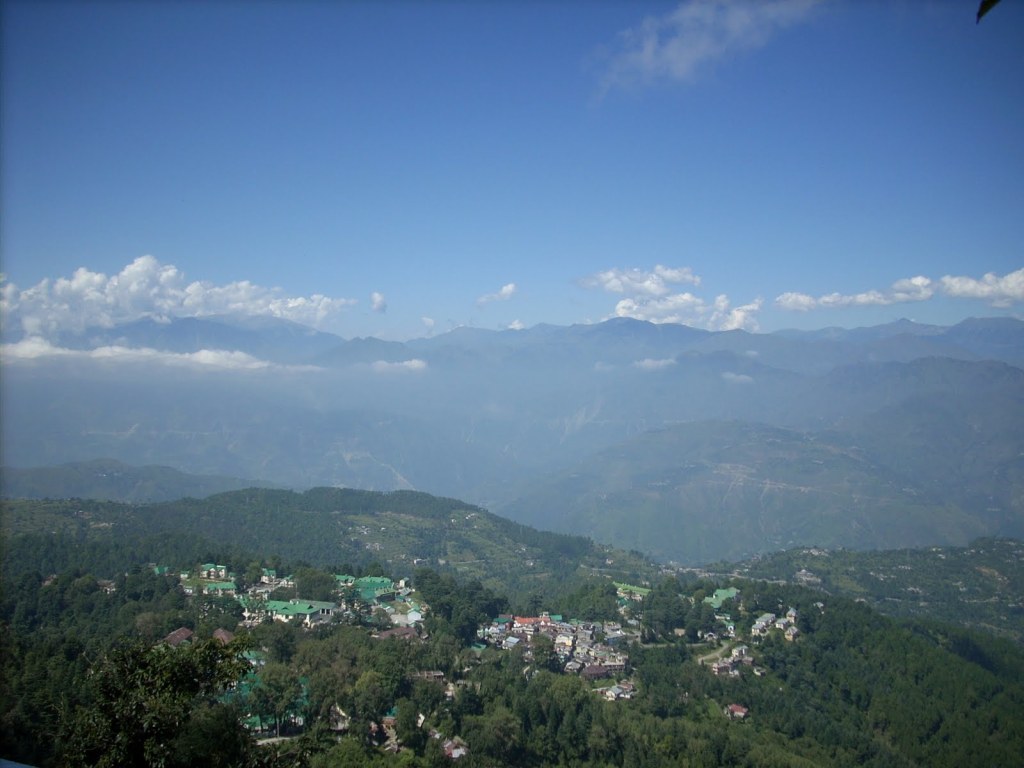
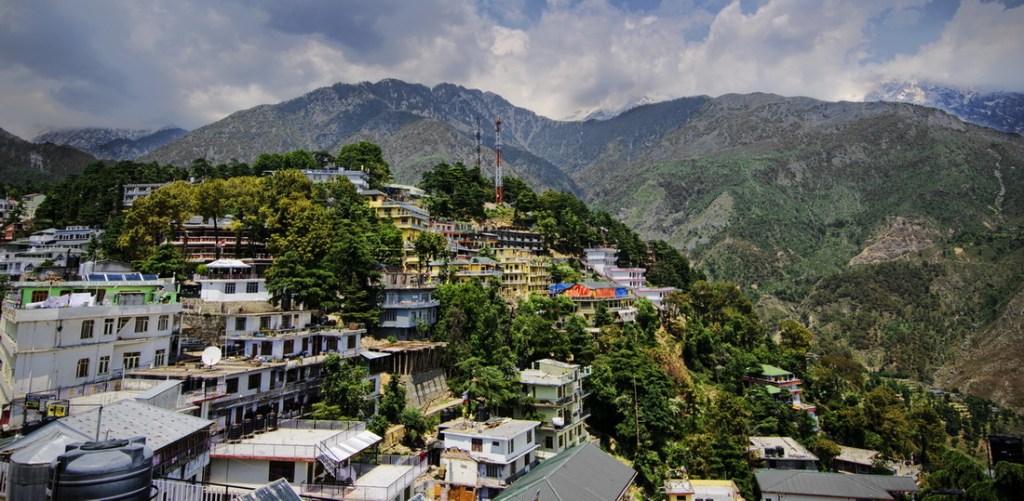
McLeod Ganj was named after Sir Donald McLeod, Lieutenant Governor of Punjab. McLeod Ganj is also known as Little Lhasa. It is also known as Nature’s Lover Paradise. The best season for tourists to visit McLeod Ganj is September to June. The average elevation of McLeod Ganj is 2,082 meters.

Dharamshala, Palampur, Kangra, Sidhbari, Tatwani, and Machhrial are also significant towns around McLeod Ganj.

Some places you must visit if you are visiting McLeod Ganj are –

Namgyal Monastery or Dalai Lama’s Temple

Namgyal Monastery or Dalai Lama’s Temple. Also known as Namgyal-Tantric College. It is the personal monastery of the 14th Dalai Lama. This is the largest Tibetan temple outside Tibet. This monastery was founded in the 16th century by the second Dalai Lama. It was established so that Namgyal monks could assist Dalai Lama in public religious affairs. Tibet martyr’s names are also written there.

Visiting time: 5:00 a.m. to 8:30 p.m.

Tsuglagkhang

Tsuglagkhang is a place where Dalai Lama resides (Photang). There is a Tibet museum inside the Tsuglagkhang. It has got a big meditation hall. There is a place called Namgyal Gompa which is reserved for Tibetan monks for their religious debate.

St. John in the Wilderness

This church is an Anglican church dedicated to John the baptism. It lies inside a dense jungle between McLeodganj and Forsythganj. The Belgian stained-glass windows donated by Lady Elgin, Lord Elgin’s wife, are the major attraction. The structure is so powerful that it even survived the 1905 Kangra earthquake.

Dal Lake

This is a small lake near village Tota Rani in Kangra district. The lake is surrounded by deodar trees. Many people go boating in the river.

Tibetan Institute of Performing Arts

This was founded by Tenzin Gyatso, the 14th Dalai Lama. It is the first institute set up by Dalai Lama.

Library of Tibetan Works and Archives

This library was founded by Tenzin Gyatso on 11 June 1970. It’s one of the world’s most important libraries of Tibetan literature. The second floor contains a museum.

Norbulingka Institute

It was founded by Kelsang and Kim Yeshi at Sidhpur. It is dedicated to the preservation of the Tibetan culture in its library and artistic forms.

Bhagsu Nath

This temple is one of the oldest ancient temples located near McLeod Ganj. The temple is surrounded by major tourists.

Bhagsu Falls

This is a very beautiful waterfall. It has 20 minutes of walking distance from the temple. It has a height of 30 feet. It’s a lovely location for a picnic.

McLlo Restaurant

This the oldest restaurant in McLeod Ganj and is famous for opening till late for tourists. On the top floor, you can go with your friends and can have a beer while listening to some cool music.

If you are visiting McLeod Ganj, you should visit these amazing places. The monasteries are so peaceful and beautiful. The market is also really nice for shopping.

McLeod Ganj is a very beautiful and calm place.

Money Making Ideas for Students

  • Starting a YouTube Channel: YouTubers like Prajakta Koli, Ashish Chanchlani, Bhuvan Bam all started their careers through YouTube. They utilized their talent to make their friends laugh as well as get internet followers. As their fan base increased, more businesses approached them about using their celebrity to sell their products.
  • Becoming Instagram Influencer: Instagram is a platform that is rapidly growing to become the greatest option for students to make money online. If you love keeping an online presence, you might use it to debate a certain topic. These might be make-up suggestions, workout advice, vacation advice, and so on. As your following grows, you’ll be prepared to arrange more partnerships with companies.
  • Online Tutoring: Many people search for answers to their homework questions on the internet. As a consequence, you may help these people by replying to their questions on the spot.
  • Sell Online Courses: If you are not able to make enough progress with online tutoring, selling online courses is the next best option for students who want to earn money online. Platforms nowadays allow aspiring instructors to join their platforms and sell their own lessons online. You may create a course on whatever talent you have and sell it, from dancing to art to cooking. As the popularity of your course increases, more will be the money you get.
  • Content Writing: If you are a student who is proud of your writing talents and can generate compelling works that elicit admiration from others, becoming a content writer is an excellent way to put your skills to use while also earning money online. There are several websites where you may find article writing work like Internshala, Freelancer, iWriter, UpWork, HireWriters, etc.
  • Online Blogger: Blogging is rapidly becoming one of the most popular ways for students to earn money online. As more students realize the value of blogging, they are writing down their opinions on a range of subjects and topics on popular blogging platforms such as Blogger, Tumblr, WordPress, Weebly, and others.
  • Graphic Designer: If you’re excellent at editing photographs online or utilizing Adobe tools like Photoshop, being a graphic designer is the greatest option for students to make money online. Graphic designers are in high demand right now, as everyone from businesses to individuals wants cool-looking digital art to use on their websites, social media accounts, brochures, and other materials.
  • Selling Photos Online: If you own a camera and enjoy going on picture walks to capture the natural wonders of the globe, you can put your photography abilities to work and earn money. Photography is one of the greatest methods for students to make money online.
  • Digital Marketing: Digital marketing is rapidly becoming a popular way to earn money online for students. As more businesses want to establish a digital presence, they are increasingly providing students opportunities to make money by assisting them with activities such as establishing and maintaining minor marketing campaigns for businesses, mostly on social media or through other websites.
  • Social Media Manager: A social media manager’s job description is quite the same as that of an Instagram influencer, and both contribute significantly to the company’s recognition. They are supposed to build large followings and distribute information about a company’s products or services. They must engage their followers in discussions about the benefits of using the product through likes and comments. 
  • Virtual Assistant: A virtual assistant is someone who performs all of the functions of an assistant but does it through the internet. Another to earn money online is to work as an online or virtual assistant. As many firms choose there are many firms that choose to hire such an assistant who works remotely and for a lower salary. This may be an excellent choice for you if you have good organizational and communication abilities. Whether you are a student, a housewife, or a working person, this job will help you earn extra money. Each virtual assistant position is distinct from the others. Data input, social media administration, and research are some of the common qualities that may be expected. Some professions may need you to transcribe notes and make reminders.
  • Becoming Translator: Many international corporations now employ a low-paid translator. You can also seek these jobs if you are bilingual or studying a new language. Because this kind of employment not only pays well but also broadens your horizons. You might be hired to translate documents, subtitles, messages, emails, or papers for companies. It will expose you to a wide range of business options.

Building Blocks of IoT

Sensors

Sensors can be found all over the world. They may be found in our homes and offices, as well as retail malls and hospitals. They’re built into cellphones and play a key role in the Internet of Things (IoT). Sensors are the IoT devices’ front-end. In the Internet of Things, they actually mean “things.” Their primary responsibility is to collect required data from the environment and transmit it to databases or processing systems. Because they are the primary front-end interfaces in a vast network of other devices, they must be individually identifiable by their IP address. Sensors gather real-time data and can be self-contained or controlled by the user. Sensors are vital to the success of many modern enterprises. They can alert you to possible issues before they turn into major issues, allowing firms to undertake preventative maintenance and avoid costly downtime.

Gas sensors, water quality sensors, moisture sensors, and other sensors are examples of sensors.

Processors

Processors, like computers and other electrical systems, are the IoT system’s brain. Processors’ primary function is to turn raw data acquired by sensors into useful information and knowledge. In short, its role is to provide intelligence to the data. Applications can readily manage processors, and one of their most essential functions is data security. They are in charge of data encryption and decryption.

Processors built within microcontrollers, embedded hardware devices, and other devices may process data.

Gateways

A gateway for the Internet of Things (IoT) is a physical hardware or software program that connects the cloud to controllers, sensors, and intelligent devices. An IoT gateway, which can be either a specialized hardware appliance or a software application, is responsible for transferring data between IoT devices and the cloud. An intelligent gateway or control tier is another name for an IoT gateway. The primary function of gateways is to route processed data to appropriate databases or network storage for suitable use. In other terms, the gateway facilitates data transmission. IoT systems require communication and network access to function.

LAN, WAN, PAN, and other gateways are examples.

Applications

Another end of an IoT system is applications. Because it is adaptable to practically any technology capable of giving useful information about its own operation, the execution of an activity, and even the environmental conditions that we need to monitor and manage at a distance, IoT technologies have a wide range of applications. Many organizations from many industries are now using this technology to simplify, enhance, automate, and control various operations. Applications make good use of all acquired data and offer users an interface through which they may interact with it. These apps might be cloud-based and are in charge of rendering the data acquired. Applications are controlled by the user and serve as delivery points for certain services.

Smart home apps, security system control apps, industrial control hub apps, and so on are examples of applications.

The raw data collected by the sensors is transmitted to embedded processors in the IoT Building Blocks. Processors convert raw data into useful information, which they subsequently send to remote cloud-based apps or database systems via gateway devices. The data is subsequently transferred to the apps for effective application and data analysis through big data.

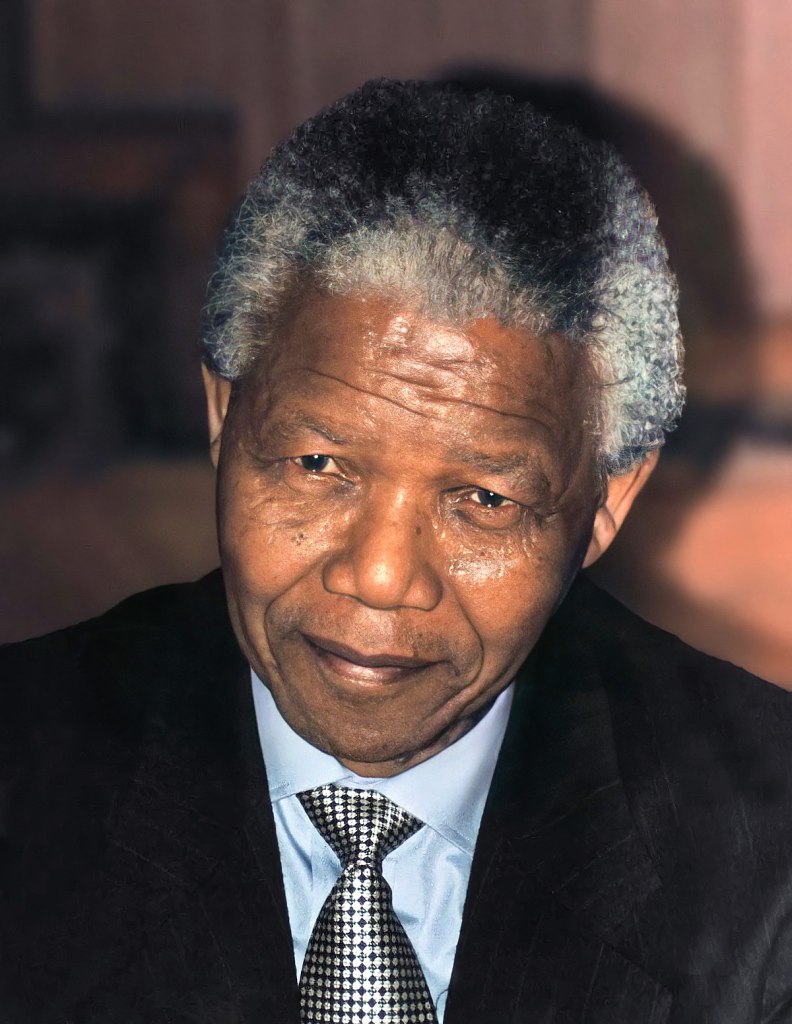
Nelson Mandela

Leaders

Leaders – we presumably see or hear about them practically every day from our parents, on television, and at school. The captain of our football team, our classroom teachers, and the individuals in charge of our country are all leaders. Leaders have only one task: to guide their followers toward a shared objective. This aim might be anything from winning a football game to passing an exam to bettering the country. The world would be a chaotic place if there were no leaders.

A Leader’s Recipe

So, what does it take to be a good leader? Many people think that some people are “born” leaders, that they are gifted with unique abilities that no one else possesses. Anyone may become a leader; acquiring the attributes of a good leader is not difficult.

Good Leader:

  • Accept responsibility for their acts.
  • Others should be explained, informed, taught, and guided.
  • When making decisions, show courage.
  • Are determined and compelled to succeed.
  • Are trustworthy and eager to work.
  • Encourage and encourage others to follow in their footsteps.
  • They pay attention to, comprehend, and care for their followers.

Great leaders have ‘charisma.’ It attracts people to listen, to trust, and to follow them.

Nelson Mandela is among the greatest statesmen of the 20th century. He fought apartheid in South Africa, where people of color were treated badly by the whites. 

When Nelson Mandela was a young man, apartheid in South Africa prohibited white and black people from doing activities together and forced them to live separate lifestyles.

White people, who were a small part of the population, were in charge of everything in South Africa.

Black people were not allowed to use the same items or go to the same locations as white people, and white people had superior schools and hospitals.

Basic rights, such as the ability to vote in elections, were also denied to black people. Nelson Mandela, on the other hand, felt that everyone should be treated equally.

In 1944, Mandela became a member of the African National Congress (ANC). In 1964, he was imprisoned for life, by the white minority government of South Africa, for conspiracy to overthrow the government.

Photos of Mandela were prohibited while he was in jail, and it was even prohibited to mention him in public.

People from all around the world, on the other hand, pushed for his release.

Even while in jail, Mandela remained a leading representative for the fight for equality. Following global pressure, Mandela was released from prison in 1990. Mandela had spent 27 years in jail and was greeted as a hero on his release. In 1991, the government abolished the laws, which legalized apartheid. Mandela, along with the South African President, Frederick Willem de Klerk, was awarded the Nobel Peace Prize in 1993. In 1994, Mandela was elected South Africa’s first black President, in the nation’s first multiracial election. 

After being elected president, Nelson Mandela set out to bring people of all races together.

South Africa hosted its first big sporting event, the Rugby World Cup, in 1995.

Mandela gave his support to the South African rugby team, made up mostly of white men so that it would unite the country. The team, known as the Springboks, went on to lift the trophy.

Mandela became a global celebrity and one of the most popular leaders in the world, with politicians and celebrities wanting to see him.

Mobile Phone Radiation Effects and Measures

Mobile Phone Radiation Effects on the Skin

  • Dermatitis: Dermatitis is a broad word that refers to any type of skin irritation. This condition causes your skin to become red and itchy, and it can manifest itself in a variety of ways owing to a variety of factors. Bloated rashes, blisters, oozes, or flake-offs are sometimes present, and the skin appears dry, swollen, and red. Antigens are accelerated considerably more by mobile phone radiation in allergy sufferers. When combined with radiation, the usage of nickel and cobalt in phone trims can cause skin dermatitis.
  • Crow’s feet: Crow’s feet are a type of branching wrinkle that appears near the outside corner of a person’s eye. The term comes from the fact that these lines typically deviate from a point in a bird footprint pattern. Because of small muscular contractions that occur every time you make a facial expression, crow’s feet develop over time. Long periods of gazing at a smartphone device or constant staring down might cause wrinkles around the eyes and neck. The issue is aggravated by the decreased text size and reduced brightness.
  • Wrinkled Neck: The continuous craning of your neck to stare down at your computer or phone screen has an effect on the structure of your spine and can lead to the formation of fine lines and wrinkles around the neck. Continuously staring down for an extended period of time can produce wrinkles on the neck, which are one of the first indications of aging. The collagen in the neck is eventually harmed by constant and regular staring. Neck wrinkles occur as a result of this.
  • Dark Circles: This is one of the most well-known and often noticed skin effects. The blue light emitted by mobile phones has an effect on sleeping habits. The less sleep a person gets, the more likely they are to develop eye bags and dark circles beneath their eyes. Staring at a television or computer screen for long periods of time may put a lot of pressure on your eyes. Blood vessels around your eyes may expand as a result of this stress. The skin around your eyes may darken as a result.
  • Skin allergies and acne: Mobile phones have been found to be important carriers of bacteria and pathogens, according to studies. Mobile phones, according to experts, are even more unhygienic than public restrooms. Throughout the day, the phones come into contact with a variety of surfaces, transferring germs. We continue to use our phones in the same manner, without understanding how many germs we are allowing into our bodies, resulting in allergies and pimples.

Measures to Protect Skin from Mobile Phone Radiation’s Harmful Effects

  • Do not stare at your phone screens for an extended time.
  • Before going to bed, avoid using your phone.
  • Using sanitizers/alcohol swabs, clean your cellphones throughout the day.
  • When the phone is hot, do not use it. Overexposure decreases the synthesis of melanin in the skin, resulting in uneven skin tone and even dark patches.
  • Keep an eye out for skin problems on the dominant side of your face that comes into touch with the phone.

MIMO Configuration

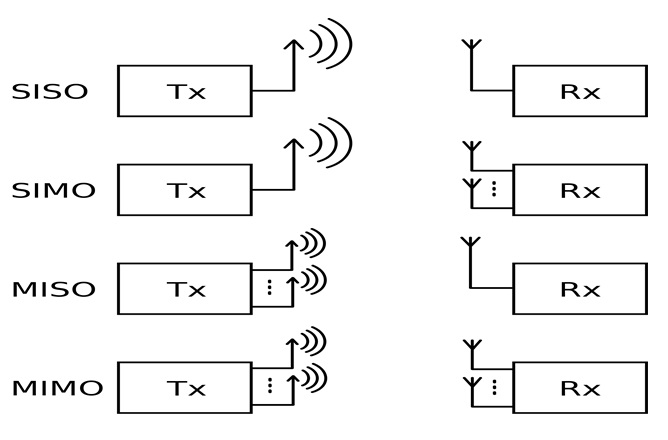
The various types of single/multiple antenna connections are defined as follows:

  • SISO – Single Input Single Output
  • SIMO – Single Input Multiple Output
  • MISO – Multiple Input Single Output
  • MIMO – Multiple Input Multiple Output

SISO – Single Input Single Output

SISO – Single Input Single Output – is the simplest version of the radio connection in MIMO terminology. This is essentially a normal radio channel, as both the transmitter and receiver use a single antenna. There is no need for extra processing because there is no variety.

A SISO system has the benefit of being simple. In terms of the different types of diversity that may be utilized, SISO does not require any processing. The SISO channel, on the other hand, has performance limitations. The system will be more affected by interference and fading than a MIMO system, and the channel bandwidth is restricted by Shannon’s law, with the throughput being determined by the channel bandwidth and signal-to-noise ratio.

SIMO – Single Input Multiple Output

The SIMO (Single Input Many Output) variant of MIMO uses a single antenna for the transmitter and multiple antennas for the reception. Receiving diversity is another name for this. It’s frequently employed to counter the effects of fading in a receiver system that receives signals from several independent sources. It has been used for many years to fight the effects of ionospheric fading and interference with short wave listening/receiving stations.

SIMO has the benefit of being very simple to implement, but it does have certain drawbacks, such as the need for processing in the receiver. In many applications, SIMO may be appropriate, however, if the receiver is situated in a mobile device, such as a cellular handset, processing levels may be constrained by size, cost, and battery drain.

MISO – Multiple Input Single Output

Transmit diversity is another name for MISO. The identical data is redundantly broadcast from the two transmitter antennas in this scenario. The receiver is thus able to receive the best signal, which it may subsequently utilize to retrieve the data it needs.

MISO has the advantage of transferring numerous antennas and redundancy coding/processing from the receiver to the transmitter. This may be a substantial benefit in situations like cellphone UEs, saving space for antennas, and lowering the amount of processing necessary in the reception for redundancy coding. Because the reduced degree of processing demands less energy use, this has a beneficial influence on size, cost, and battery life.

MIMO – Multiple Input Multiple Output

MIMO stands for Multiple Input Multiple Output, and it occurs when both ends of a radio link have more than one antenna. Both channel robustness and channel throughput may be improved using MIMO.

It is important to be able to use coding on the channels to segregate the data from the different routes in order to fully benefit from MIMO. This involves processing, but it adds to the channel’s robustness and data throughput capability. The underlying principle behind MIMO technology is that more antennas equal greater data transfer. MIMO is a potential technique for meeting greater demands in modern wireless networks.

MIMO

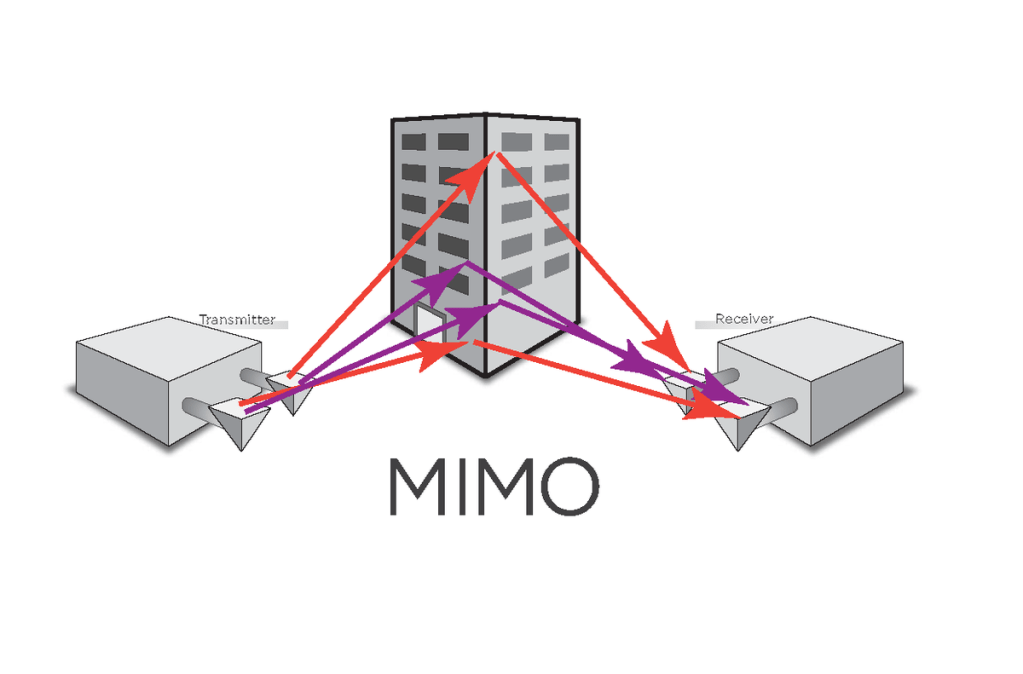
MIMO (multiple input, multiple output) is a wireless communications antenna technique that employs multiple antennas at both the source (transmitter) and the destination (receiver).

The same data is broadcast by many antennas along the same route in the same bandwidth in a MIMO system. As a result, each signal travels a different path to the receiving antenna, resulting in more dependable data. The number of sending and receiving antennas also affects the data rate.

It’s a radio communications technology, also known as RF technology.

The new MIMO wireless technology is used in Wi-Fi, LTE (Long Term Evolution), and many other radios, wireless, and RF technologies to deliver higher connection capacity and spectrum efficiency, as well as better link stability.

To reduce mistakes and increase data speed, the antennas at either end of the communications circuit are merged. MIMO is one of many smart antenna technologies, the others being MISO (multiple input, single output) and SIMO (single input, multiple output) (single input, multiple output).

Why we are using MIMO?

A single antenna is used at the source in traditional wireless communications, and another single antenna is used at the destination. This can lead to issues with multipath effects in some situations. When an electromagnetic field (EM field) collides with obstacles like hills, canyons, buildings, and utility lines, the wavefronts disperse and take many pathways to reach their target. Fading, cut-out (cliff effect), and intermittent reception are all difficulties caused by the late arrival of dispersed sections of the signal (picket fencing).

It can slow down data transmission and increase the frequency of mistakes in digital communications systems like wireless Internet. The use of two or more antennas at the source and destination, as well as the transmission of multiple signals (one for each antenna), overcomes the problems caused by multipath wave propagation and can even take advantage of it.

Advantages of MIMO

  • Improved Signal Strength: Because MIMO systems use bounced and reflected RF signals, they give better signal strength even when there is no clear line-of-site.
  • Higher Throughput: A higher throughput enables higher quality and quantity of video to be transmitted across the network.
  • Improved Video or Audio Quality: Using several data streams reduces the number of lost data packets, resulting in improved video or audio quality.
  • Increasing Data Rate: The increased number of antennas enables a higher number of routes to be utilized, allowing for considerably more data to be delivered in a shorter amount of time.
  • Increasing Basic Link Signal-to-Noise Ratio: One of the major advantages of MIMO systems is that they may be utilized to increase the entire system’s signal-to-noise ratio. This may be pushed to a new level with the usage of massive MIMO.

Disadvantages of MIMO

  • Higher Level of Signal Processing: At the transmitter and receiver end, the system needs a higher amount of signal processing.
  • Battery Limitation: The increased power consumption is due to the hardware resources. Due to the execution of complex and computationally demanding signal processing algorithms, the battery drains faster. MIMO-based devices’ battery life is reduced as a result.
  • Costly: Due to extra hardware and complex software requirements, MIMO-based systems are more expensive than single antenna-based systems.

Precautions to Reduce Exposure of Mobile Phone Radiation

If you are concerned about your exposure to RF radiation, you may take the following steps to decrease it:

  • Choosing a phone with a low specific absorption rate (SAR), which refers to how much RF radiation is absorbed by human tissues.
  • Being careful of claims that protective equipment or “shields” may minimize RF radiation exposure; there is no proof that these devices function. In reality, they can increase RF radiation since the phone will immediately boost its RF output to counteract the shield’s effects and provide the greatest possible connectivity.
  • Carry your phone away from your body. Manufacturers of mobile phones cannot guarantee that the quantity of radiation you are exposed to is safe.
  • While driving, do not chat on the phone or text. This raises the chances of a car accident. When walking or doing other activities, use caution when talking on the phone or texting. Injuries caused by “Distracted Walking” are also on the rise.
  • If you want to see a movie on your phone or tablet, download it first and then watch it in airplane mode to minimize unwanted radiation exposure.
  • Keep an eye on the strength of your signal (i.e. how many bars you have). Y our phone has to work harder and it will emit more radiation if the mobile signal is weaker. It is preferable to use your smartphone after you have a stronger signal.
  • Avoid making phone calls when in a car, elevator, train, or bus. Because the phone has to work harder to get a signal through metal, the power level rises.
  • Make use of your landline phone. Use your landline instead of your cell phone if you have one at home or at work.
  • When you’re not using your phone, turn it off or set it on airplane mode. It’s tough, but not impossible, to follow. You may turn it off or put it on airplane mode whenever you don’t need constant data access for a few hours. As much as feasible, do it. It’s something you can do before going to bed.
  • When chatting on the phone, it is preferable to utilize a hands-free speaker or earbuds. Make it a habit to do so. Remove your earbuds once you’ve finished speaking. Keep your phone 1-2 cm away from your ear if you don’t want to utilize hands-free. Bluetooth should not be used.
  • To reduce the amount of radiation you are exposed to when sleeping, turn off your phone. Also, keep your phone away from your head, such as beneath your pillow. Radiation is reduced by 95% when you keep your phone 20 inches away from you.
  • The skulls of children are thinner than those of adults. Radiation has the potential to infiltrate their brains and cause additional harm. To avoid further problems, limit your children’s screen usage completely.
  • Don’t chat on the phone while it’s charging since the quantity of radiation it emits is ten times higher at that time.
  • When your phone’s battery is low, avoid using it. When your phone’s battery is low, avoid using it since the radiation level rises.