Cyber fraud? Here’s your help!

The Ministry of Home Affairs has operationalised the national Helpline 155260 and Reporting Platform for preventing financial loss due to cyber fraud. The helpline was soft-launched on 1st April.

The National Helpline and Reporting Platform provides a mechanism for persons cheated in cyber frauds to report such cases to prevent loss of their hard earned money.

Also, a National Cyber Security Strategy 2020 is being formulated by the Office of National Cyber Security Coordinator at the National Security Council Secretariat.

What is Cyber security?

  • Cyber Security is protecting cyber space including critical information infrastructure from attack, damage, misuse and economic espionage.
  • Critical Information Infrastructure: According to Section 70(1) of the Information Technology Act, CII is defined as a “computer resource, the incapacitation or destruction of which, shall have debilitating impact on national security, economy, public health or safety”.
  • Cyber Fraud: It is the crime committed via a computer with the intent to corrupt another individual’s personal and financial information stored online. It is the most common type of fraud and individuals and organisations need to be vigilant and protect their information from fraudsters.

How does this help?

  • The helpline has been made operational by the Indian Cyber Crime Coordination Centre (I4C), in coordination with the Reserve Bank of India, all major banks, payment banks, wallets and online merchants.
  • The Citizen Financial Cyber Fraud Reporting and Management System has been developed by I4C to integrate Law Enforcement Agencies and Banks and Financial Intermediaries.
  • The facility empowers both the banks and the police, by leveraging new-age technologies for sharing online fraud related information and taking action in almost real time.
  • Since its soft launch, in a short span of two months, the helpline has assisted in saving more than Rs 1.85 crore.

What is I4C?

  • I4C is Indian Cyber Crime Coordination Centre
  • The scheme to set up I4C was approved in October 2018, to deal with all types of cybercrimes in a comprehensive and coordinated manner.
  • It has seven components:
    • National Cyber Crime Threat Analytics Unit
    • National Cyber Crime Reporting Portal
    • National Cyber Crime Training Centre
    • Cyber Crime Ecosystem Management Unit
    • National Cyber Crime Research and Innovation Centre
    • National Cyber Crime Forensic Laboratory Ecosystem
    • Platform for Joint Cyber Crime Investigation Team.
  • 15 States and Union Territories have given their consent to set up Regional Cyber Crime Coordination Centres.
  • This state-of-the-art Centre is located in New Delhi.

What are other initiatives to tackle Cyber Crime?

  • Draft Personal Data Protection Bill, 2018 (based on the recommendation of Justice BN Srikrishna Committee) to secure citizens data.
  • Cyber Swachhta Kendra: The “Cyber Swachhta Kendra” (Botnet Cleaning and Malware Analysis Centre) is a part of the Government of India’s Digital India initiative under the Ministry of Electronics and Information Technology (MeitY).
  • Indian Computer Emergency Response Team (CERT-IN): It is an organisation of the MeitY, with the objective of securing Indian cyberspace. It is the nodal agency which deals with cybersecurity threats like hacking and phishing.

Conclusion

Data is the new gold, it is very important that we protect our data from cyber fraudsters and cyber criminals. We have to stay aware and stay safe! But if we realise a data breach / cyber fraud / cyber crime, we have to report it immediately !

Remember ” A stitch in time saves nine! “
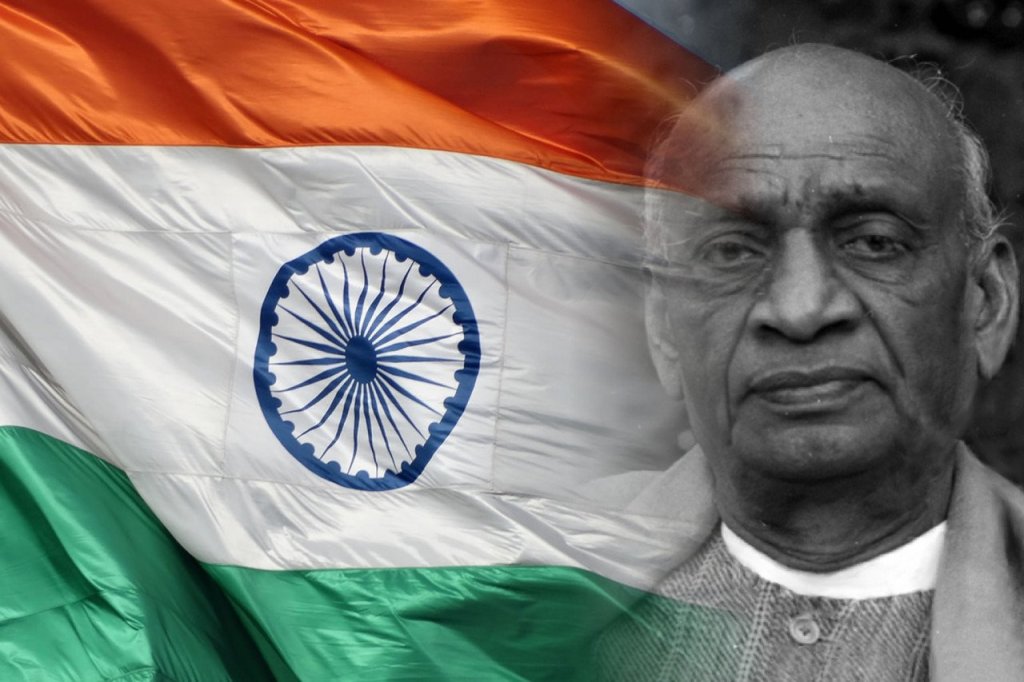
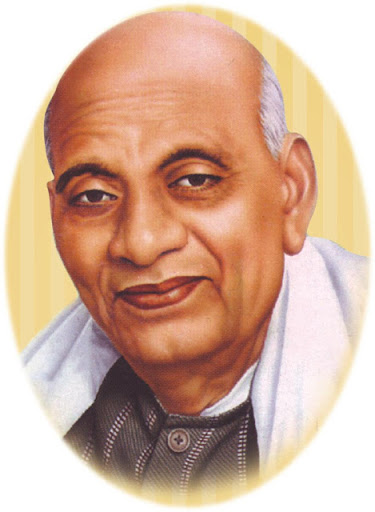
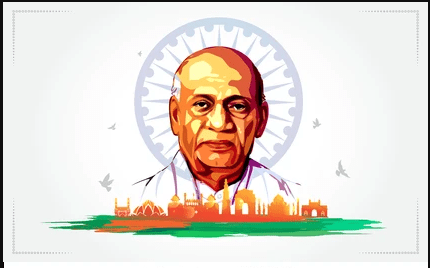
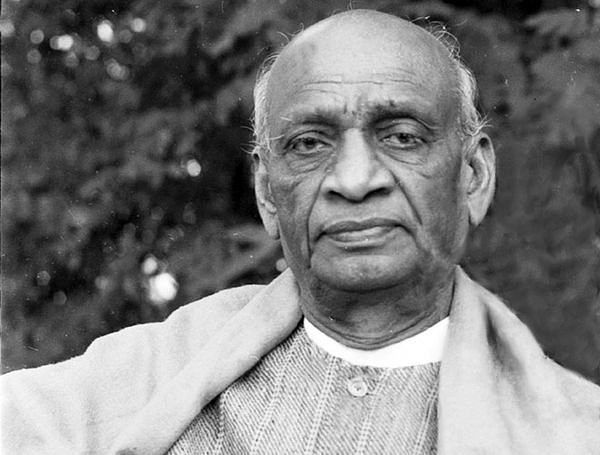
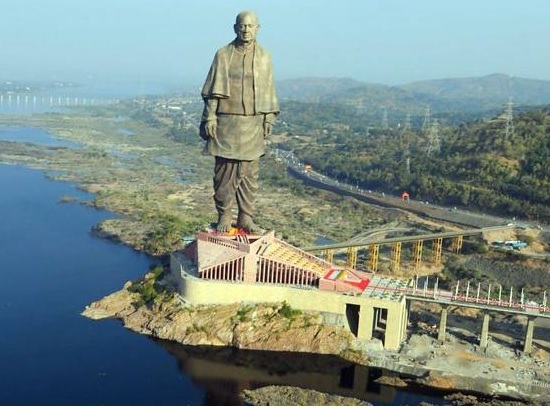
The Iron Man of India!

Do you know who is the iron man of India?

It is Sardar Vallabhbhai Patel

A few Golden traits of Sardar Vallabhbhai Patel

  • A Leader: Sardar Vallabhbhai Patel has set the example of unity by integrating 500 princely states into an independent Indian Union. And this is the reason, Patel’s Birthday is celebrated as “Rashtriya Ekta Divas”- The National Unity Day.
  • Vallabhbhai Patel initiated a movement inspired by Mahatma’s ideology through which he motivated farmers to be the part of this non-violent protest against taxes. As an outcome of the protest, that year the British Government gave them a tax holiday. Hence, Gandhi ji, awarded the title of “Sardar” to Vallabhbhai Patel
  • A Man of his word: During Congress elections in 1946, thirteen out of sixteen states chose Sardar Patel as their president, who was the more popular candidate and would have eventually become the first Prime Minister of independent India. But upon Gandhi’s request, he stepped down as a candidate and endorsed Jawaharlal Nehru instead.
  • Epitome of Sincerity: Sardar Patel was in the court, cross examining a witness when he got the news of his wife’s death. Patel, read the noted, pocketed it and continued the case and won it. This shows his sheer dedication and commitment towards his duties. He was only 33 years old, but he loved her deeply and so, never remarried.
  • A Man of principle: He was offered a job on multiple occasions by British government after his return from England and practice in Ahmadabad. Patel turned down all the offers.
  • A True Friend: Despite the doctor’s instructions, he cared for his friend suffering from Plague. This Bubonic Plague effected Patel too but he survived. The Bubonic Plague swept 12 million lives across India and China.
  • A Man of Determination: Patel wanted to become a lawyer and spent years studying on his own with books borrowed from other lawyers. He cleared his examination within two years. Later, he became one of the most successful barristers of the country.
  • Patron saint for civil servants: As he always thought that being the country of extensive diversity, multiple culture and traditions, numerous languages, India requires a strong bureaucratic service. He played an effective role in the initiation of Indian Administrative Services (IAS).

Our brave freedom fighter, The Iron Man of India Sardar Vallabhbhai Patel died on December 15, 1950 in Mumbai.

Sardar Vallabhbhai Patel was posthumously awarded the Bharat Ratna in 1991.

“Every Indian should now forget that he is a Rajput, a Sikh or a Jat. He must remember that he is an Indian and he has every right in his country but with certain duties,” Patel had famously said.

Father of Indian Renaissance

Who is the father of Indian Renaissance?

Who is considered the maker of modern India?

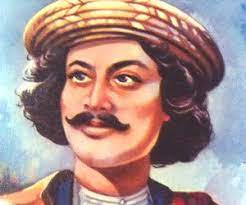
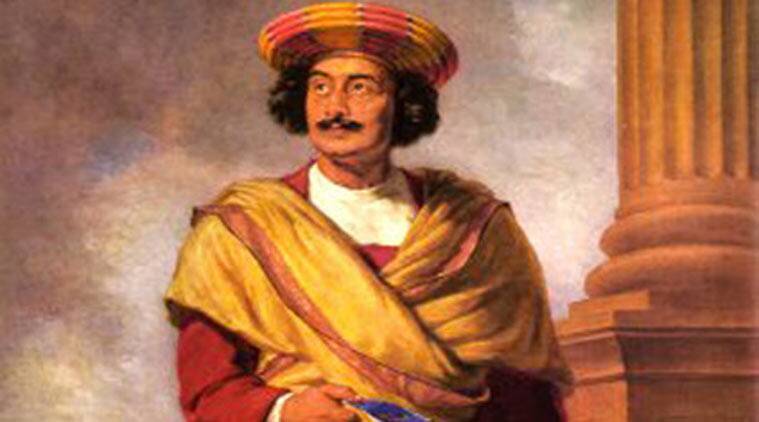
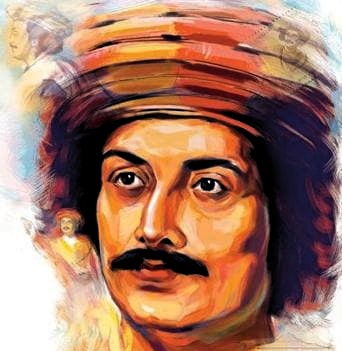
It is Raja Ram Mohan Roy

The founder of Bhramo samaj and the person behind the abolition if Sati Pratha

Raja Ram Mohan Roy was born on May 22, 1772, in Bengal. Raja Ram Mohan Roy influenced fields of politics, education, religion and public administration. Raja Ram Mohan Roy was also ranked number 10 in BBC’s poll of greatest Bengali of all time in 2004. He had learnt as many as ten languages – Persian, Arabic, Sanskrit, English, Urdu, Hindi, Hebrew, Greek, Latin and French.

A cosmopolitan thinker as well as a nationalist reformer who believed in rationalist thinking. Through his memoranda, books, public activities for religious, social, educational, economic and political reforms he inaugurated liberal reformist modernisation in India.

His Social Reforms

  • Raja Ram Mohan Roy conceived reformist religious associations as instruments of social and political transformation.
  • He founded the Atmiya Sabha in 1815, the Calcutta Unitarian Association in 1821, and the Brahmo Sabha in 1828 which later became the Brahmo Samaj.
  • He was well known for his pioneering thought and action on the emancipation of women and especially on the abolition of sati and widow remarriage.
  • He attacked child marriage, illiteracy of women and the degraded state of widows and demanded the right of inheritance and property for women.
  • He campaigned against the caste system, untouchability, superstitions and use of intoxicants.

His Educational Reforms

  • Raja Ram Mohan Roy did much to disseminate the benefits of modern education to his countrymen. He supported David Hare’s efforts to find the Hindu College in 1817, while Roy’s English school taught mechanics and Voltaire’s philosophy.
  • In 1825, he established Vedanta college where courses in both Indian learning and Western social and physical sciences were offered.
  • He advocated the study of English, Science, Western Medicine and Technology.
  • He established a number of schools to popularise a modern education system in India
  • He was instrumental in setting up several institutions including the Hindu College in Calcutta in 1817, in collaboration with David Hare; the Anglo-Hindu School in 1822; and the Vedanta College to spread his teachings of Hindu monotheism. 
  • He also helped establish the Scottish Church College in 1830.

His Political Reforms

  • Civil liberties: Roy was impressed and admired the British system of constitutional government for the civil liberties it gave to the people. He wanted to extend the benefits of that system of government to Indian people.
  • Press freedom: Through his writings and activities, he supported the movement for free press in India. When press censorship was relaxed by Lord Hastings in 1819, Ram Mohan found three journals- The Brahmanical Magazine (1821); The Bengali weekly, Samvad Kaumudi (1821); and the Persian weekly, Mirat-ul-Akbar.
  • Administrative reforms: He demanded the Indianisation of superior services and separation of the executive from judiciary. He demanded equality between Indians and Europeans.

His Economic Reforms

  • Taxation reforms: Roy condemned oppressive practices of Bengali zamindars and demanded fixation of minimum rents. He also demanded the abolition of taxes on tax-free lands.
  • He called for a reduction of export duties on Indian goods abroad and the abolition of the East India Company’s trading rights.

Conclusion:

Raja Ram Mohan Roy was one of the few people in his time to realise completely the significance of modern age. He knew that the ideal of human civilisation does not lie in isolation of independence, but in the brotherhood of inter-dependence of individuals as well as nations. His attempt was to establish Indian people in the full consciousness of their own cultural personality, to make them comprehend the reality that was unique in their civilisations in the spirit of sympathetic cooperation.

Interesting facts about our country India!

  • India never invaded any country in her last 100000 years of history.
  • When many cultures were only nomadic forest dwellers over 5000 years ago, Indians established Harappan culture in Sindhu Valley (Indus Valley Civilization)
  • The name ‘India’ is derived from the River Indus, the valleys around which were the home of the early settlers. The Aryan worshippers referred to the river Indus as the Sindhu.
  • The Persian invaders converted it into Hindu. The name ‘Hindustan’ combines Sindhu and Hindu and thus refers to the land of the Hindus.
  • Chess was invented in India.
  • Algebra, Trigonometry and Calculus are studies, which originated in India.
  • The ‘Place Value System’ and the ‘Decimal System’ were developed in India in 100 B.C.
  • The World’s First Granite Temple is the Brihadeswara Temple at Tanjavur, Tamil Nadu. The shikhara of the temple is made from a single 80-tonne piece of granite. This magnificent temple was built in just five years, (between 1004 AD and 1009 AD) during the reign of Rajaraja Chola.
  • India is the largest democracy in the world, the 7th largest Country in the world, and one of the ancient civilizations.
  • The game of Snakes & Ladders was created by the 13th century poet saint Gyandev. It was originally called ‘Mokshapat’. The ladders in the game represented virtues and the snakes indicated vices. The game was played with cowrie shells and dices. In time, the game underwent several modifications, but its meaning remained the same, i.e. good deeds take people to heaven and evil to a cycle of re-births.
  • The world’s highest cricket ground is in Chail, Himachal Pradesh. Built in 1893 after leveling a hilltop, this cricket pitch is 2444 meters above sea level.
  • India has the largest number of Post Offices in the world. And world’s only floating post office.
  • The largest employer in India is the Indian Railways, employing over a million people.
  • The world’s first university was established in Takshila in 700 BC. More than 10,500 students from all over the world studied more than 60 subjects. The University of Nalanda built in the 4th century was one of the greatest achievements of ancient India in the field of education.
  • Ayurveda is the earliest school of medicine known to mankind. The Father of Medicine, Charaka, consolidated Ayurveda 2500 years ago.
  • India was one of the richest countries till the time of British rule in the early 17th Century. Christopher Columbus, attracted by India’s wealth, had come looking for a sea route to India when he discovered America by mistake.
  • The Art of Navigation & Navigating was born in the river Sindh over 6000 years ago. The very word Navigation is derived from the Sanskrit word ‘NAVGATIH’. The word navy is also derived from the Sanskrit word ‘Nou’.
  • Bhaskaracharya rightly calculated the time taken by the earth to orbit the Sun hundreds of years before the astronomer Smart. According to his calculation, the time taken by the Earth to orbit the Sun was 365.258756484 days.
  • The value of “pi” was first calculated by the Indian Mathematician Budhayana, and he explained the concept of what is known as the Pythagorean Theorem. He discovered this in the 6th century, long before the European mathematicians.
  • Algebra, Trigonometry and Calculus also originated in India. Quadratic Equations were used by Sridharacharya in the 11th century. The largest numbers the Greeks and the Romans used were 106 whereas Hindus used numbers as big as 10*53 (i.e. 10 to the power of 53) with specific names as early as 5000 B.C. during the Vedic period. Even today, the largest used number is Terra: 10*12(10 to the power of 12).
  • Until 1896, India was the only source of diamonds in the world (Source: Gemological Institute of America).
  • The Baily Bridge is the highest bridge in the world. It is located in the Ladakh valley between the Dras and Suru rivers in the Himalayan mountains. It was built by the Indian Army in August 1982.
  • Sushruta is regarded as the Father of Surgery. Over 2600 years ago Sushrata & his team conducted complicated surgeries like cataract, artificial limbs, cesareans, fractures, urinary stones, plastic surgery and brain surgeries.
  • Usage of anaesthesia was well known in ancient Indian medicine. Detailed knowledge of anatomy, embryology, digestion, metabolism,physiology, etiology, genetics and immunity is also found in many ancient Indian texts.
  • The four religions born in India – Hinduism, Buddhism, Jainism, and Sikhism, are followed by 25% of the world’s population.
  • Jainism and Buddhism were founded in India in 600 B.C. and 500 B.C. respectively.
  • Indian Constitution is the longest constitution till date.
  • Islam is India’s and the world’s second largest religion.
  • The oldest European church and synagogue in India are in the city of Cochin. They were built in 1503 and 1568 respectively.
  • Jews and Christians have lived continuously in India since 200 B.C. and 52 A.D. respectively.
  • Varanasi, also known as Benaras, was called “the Ancient City” when Lord Buddha visited it in 500 B.C., and is the oldest, continuously inhabited city in the world today.
  • His Holiness, the Dalai Lama, the exiled spiritual leader of Tibetan Buddhists, runs his government in exile from Dharmashala in northern India.
  • Martial Arts were first created in India, and later spread to Asia by Buddhist missionaries.
  • Yoga has its origins in India and has existed for over 5,000 years.

Why is Ladakh so important?

Ladakh, also known as “the Land of Passes‟ (La-passes, dakh-land) is administered by India as a union territory.

Quick facts about Physical geography of Ladakh

  • Bordering regions: It is bordered by the Chinese Tibet Autonomous Region to the east, the Indian state of Himachal Pradesh to the south, both the Indian union territory of Jammu and Kashmir and the Pakistan-administered Gilgit-Baltistan to the west, and the southwest corner of Xinjiang across the Karakoram Pass in the far north.
  • River system: The Indus River and its major tributaries, the Shyok-Nubra, Chang Chenmo, Hanle, Zanskar, and Suru-dras rivers, drain the region. Glacio-fluvial processes aided by freeze- thaw weathering have formed the high altitude landscape of Ladakh.
  • Climate: Ladakh has an extremely harsh environment and one of the highest and driest inhabited places on earth. Ladakh’s climate is referred to as a “cold desert” climate due to its combined features of arctic and desert climates.
  • Vegetation: The entire area is nearly devoid of vegetation with the exception of valley floors and irrigated areas, due to the following factors:
  • Temperature and altitude: These include wide diurnal and seasonal fluctuations in temperature, from -40°C in winter to +35°C in summer, and extremely low precipitation, with an annual 10 cm to 30 cm primarily from snow. Due to high altitude and low humidity, the radiation level is amongst the highest in the world.
  • Soil type: In Ladakh soils range from gravely and sandy loams on the alluvial fans to sandy and silt clay loams on the flood plains of Indus. Ladakh’s soil is described as skeletal, calcareous with an alkaline reaction. By and large, soil is coarse and sandy, having varying quantities of pebbles. The soils are characterized by low organic matter content and poor water retention capacity.

Strategic importance of Ladakh

The importance of Ladakh to both India and China is rooted in complicated historical processes that led to the territory becoming union territory in 2019 (earlier it was part of the state of Jammu and Kashmir), and China’s interest in it post the occupation of Tibet in 1950.

  • Rich in natural resources: Ladakh is situated within the upper reaches of the Indus watershed, which in total supports about 120 million people in India (in the states of Haryana, Himachal Pradesh, Jammu & Kashmir, Punjab and Rajasthan) and about 93 million in the Pakistan province of the Punjab (literally, “Land of the Five Rivers”). Careful management of water resources within Ladakh is therefore vitally important, not only for the livelihoods of Ladakhis and the ecosystems of Ladakh, but for the health of the whole river system.
  • Solar radiation: It is one of the most abundant natural resources in Ladakh, with annual solar radiation exceeding averages for other areas of India with high insulation.
  • Geothermal potential: surveys have identified a geothermal resource at depths suitable for exploration and development. This resource could be developed to provide grid connected power to small settlements and army bases sited on the national highway.
  • Tourism industry: Popularly known as the Lama Land or little Tibet, Ladakh lies at altitudes ranging between about 9,000 feet and 25,170 feet. From trekking and mountaineering to Buddhist tours of various monasteries, Ladakh has it all.
  • Provides connectivity: The passes of Ladakh region connect some of the politically and economically significant zones of the world like Central Asia, South Asia, China and the Middle East.
  • Market access: The south Asian countries can reach Central Asian markets through this region. Countries like Uzbekistan, Turkmenistan and Kazakhstan are rich in uranium, cotton, oil and gas resources.
  • Energy security: In future, the oil and gas pipeline from Iran to China can pass through this mountainous corridor. India’s energy needs can also be met by constructing a pipeline from Central Asia via this region.
  • Geopolitical Significance: The land of Ladakh enjoys the significance of being located at the ancient Silk Route which passes through these regions and played a very vital role in the development of culture, religion, philosophy, trade and commerce in the past.
  • Geostrategic location: The presence of resources is what makes India, China and Pakistan struggle over Ladakh, in order to gain control over resources in this region. Pakistan and China are in conflict with India over Siachen and Aksai chin in this region. Ladakh’s geostrategic significance has increased in the backdrop of these conflicts.

Disputes in Ladakh

  • Pakistan and China border dispute: Ladakh became a contested territory between the newly independent nations of India and Pakistan. In the early 1960’s a substantial area of eastern Ladakh was annexed by China.
  • Due to increasing tensions between India and Pakistan, the Chinese invasion of Tibet in the 1950s, and their occupation of the Aksai Chin region in 1962, Ladakh has become one of India’s most important strategic zones.
  • Strategic location and border disputes with Pakistan and China have assured a firm foothold for army presence since the past 50 years
  • The origins of this contention date back to the British Raj which failed to demarcate the border between its colony and China definitively.
  • Recently, Indian and Chinese armies are engaged in the standoff in Pangong Tso, Galwan Valley, Demchok and Daulat Beg Oldie in eastern Ladakh.
  • The Galwan Valley area comes under Sub Sector North (SSN), which lies just to the east of the Siachen glacier and is the only point that provides direct access to Aksai Chin from India.
  • All these border disputes are because India continues to maintain the McMahon Line as the legal border, while China has never accepted the border, stating that Tibet was never independent. Hence when China annexed Tibet these border clashed gained momentum.

Conclusion

Ladakh is an integral part of INDIA and has the potential to act as a vessel to feed India its required energy resources. For this peace in Ladakh is a condition. For peace, equal unbiased development is mandatory.

Therefore, India’s policymakers, while drafting their policies for Ladakh, should consider its geographic location, fragile environment, resource potentials and its people’s aspirations. In such a strategic location, it is crucial to keep all these aspects in harmony to take advantage of it to its fullest.

What is EI?

Rule Your Feelings, Lest Your Feelings Rule You. 

— Publilius Syrus

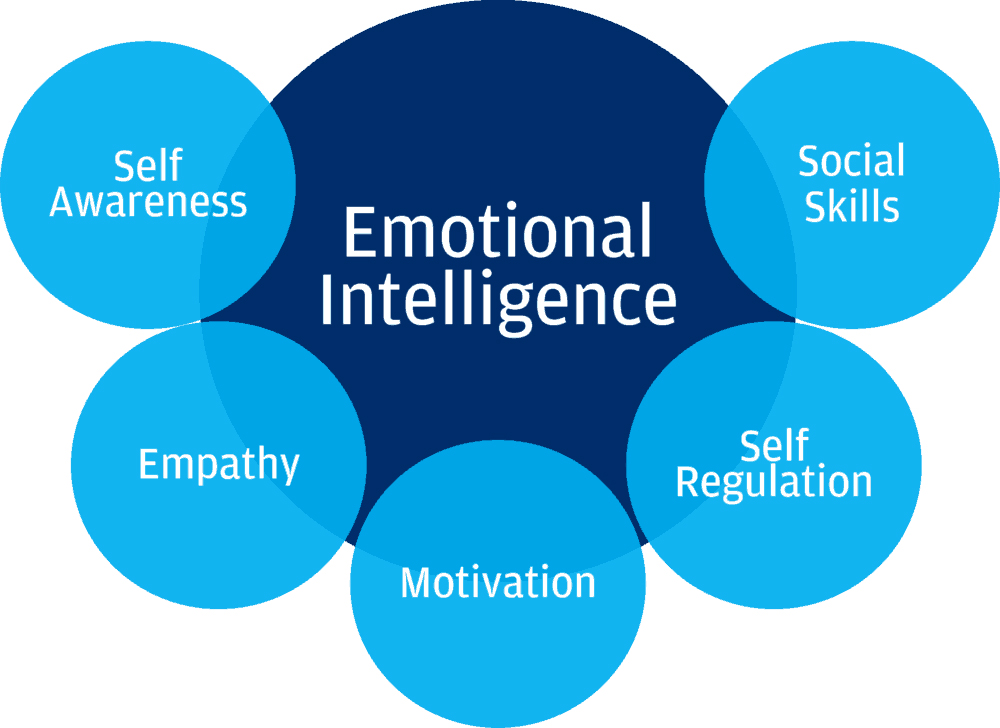
Emotional Intelligence (EI)

  • Emotional intelligence refers to ‘the ability to identify one’s own emotions and those of others, harness and apply them to tasks, and to regulate and manage them’.
  • Emotional Quotient (EQ) is a measure of one’s EI i.e. through a standardized test, one’s awareness of emotions in relation to self and others is known.

“What really matters for success, character, happiness and lifelong achievements is a definite set of emotional skills – your EQ — not just purely cognitive abilities that are measured by conventional IQ tests.”

– Daniel Goleman

Daniel Goleman’s Elements of EI

  • Self-Awareness: It is the skill of being aware of and understanding one’s emotions as they occur and as they evolve.
  • Self-Regulation: It is about controlling one’s emotions i.e. instead of reacting quickly; one can reign in one’s emotions and thus will think before responding.
  • Internal Motivation: It includes one’s personal drive to improve and achieve commitment to one’s goals, initiative, or readiness to act on opportunities, and optimism and resilience.
  • Empathy: It is an awareness of the needs and feelings of others both individually and in groups, and being able to see things from the point of view of others.
  • Social Skills: It is applying empathy and balancing the wants and requirements of others with one’s. It includes building good rapport with others.

EQ in common words

  • EQ is a measure of a person’s level of emotional intelligence. It refers to a person’s ability to perceive, control, evaluate, and express emotions.
  • EQ is centered on abilities such as identifying emotions, evaluating how others feel, controlling one’s own emotions, perceiving how others feel, using emotions to facilitate social communication and relating to others.

Why is EI important?

EI is very important for our everyday lives because it is

  • The ability to perceive emotions in oneself and others accurately.
  • The ability to use emotions to facilitate thinking.
  • The ability to understand emotions, emotional language, and the signals conveyed by emotions.
  • The ability to manage emotions so as to attain specific goals.

How can we improve our EI

  • By self-evaluating oneself, one can know one’s emotions and reactions to different situations.
  • By observing others, one can comprehend feelings of others.
  • By improving one’s expression, one can communicate better.
  • By analyzing the impact of one’s action over others, one can fine tune the actions.

“Anybody can become angry, that is easy; but to be angry with the right person, and to the right degree, and at the right time, and for the right purpose, and in the right way, that is not within everybody’s power, that is not easy.”

—Aristotle

Poverty is not just lack of money

“Poverty is not just a lack of money; it is not having the capability to realize one’s full potential as a
human being”
This is a Quote by Amartya Sen

According to the ​ World Bank​ , Poverty is pronounced ​ deprivation in well-being, and comprises many dimensions​ . It includes low incomes and the ​ inability to acquire the basic goods and services necessary for survival with dignity​ . Poverty also encompasses low levels of health and education, poor access to clean water and sanitation, inadequate physical security, lack of voice, and insufficient capacity and opportunity to better one’s life.


Poverty is more than just lack of money, deprivation of a person’s capabilities to live the life they have reason to value​ . The capability approach looks at the range of options available for the individual to choose from and the freedom to exercise that choice. A person below poverty line is not just lack of money, it is an indication of the inability to acquire the basic goods and services necessary for survival with dignity. Poverty is not just lack of money but is a mark of low levels of health and education, poor access to clean water and sanitation, inadequate physical security, lack of voice, and insufficient capacity and opportunity to better one’s life. ​ This incapability​ leads to hopelessness , And in this global world with an plethora of opportunities this hopelessness leads to fear and uncertainty Which fades away the hope of a better future​ . Hence poverty is not just lack of money, it is a ​ multi dimensional social evil.


Furthermore Poverty leads to a ​ devilious “Poverty Trap” which ​ affects both Growth and Development cycle​ . How poverty affects ​ Growth cycle: Low income leads to low saving which in turn leads to low investment which results in low economic growth which ultimately results in low income thus forming a vicious cycle​ , Similarly The development cycle also runs in the opposite direction as Low income leads to low level of education and health care which in turn leads to low level of human capital which results in low productivity which ​ ultimately results in low income thus forming another
vicious cycle​ and thus ​ poverty becomes inevitable and slowly people drown in this brutal cycle​ . Generally poverty is associated with lack of money, measured on the basis as those who live on $1.90 per day or less . ​ In India the poverty line is defined on the basis of monthly spending on food, education, health, electricity and transport. According to this estimate, a ​ person who spends Rs. 27.2 in rural areas and Rs. 33.3 in urban areas a day​ are defined as living below the poverty line. It is regretful that in India, ​ 21.9% ​ of the population lives below the national poverty line in ​ 2011​ . ​ The
Global Multidimensional Poverty Index (MPI) found that about ​ 420 million people are considered destitute (People having an extreme lack of basic living standards). Most of them live in South Asia. About ​ 343 million live in India​ .


While on the bright side The ​ Global Multidimensional Poverty Index-2018 released by the UN noted that ​ 271 million people moved out of poverty between 2005-06 and 2015-16 in India. The ​ poverty rate in the country has nearly halved, falling from 55% to 28% over the ten-year period. Still a big part of the population in India is still living Below the Poverty Line. As Poverty is not just lack of money, Hence, ​ Policies which concentrate beyond just increasing the income are the need of the hour ​ as rightly quoted by Amartya Sen (nobel laureate).

“Poverty is the deprivation of opportunity.”


The Government of India has recognised the need for ​ policies that focus not just on increasing income of the people below poverty line, the focus of the policy makers has also ​ shifted on increasing capability of the poor people through expanding opportunities of healthcare, education, skill development and ending gender based and caste based partiality leading to deprivation of opportunities​ . Thus in recent years ​ schemes like National Rural Health Mission (NRHM) ,Beti bachao beti padhao , Skill India mission and Sarva shiksha Abhiyaan and many such policiesl point out that that government wants to increase the capability of the poor people so that they could live a life meaningful to them in long run.

One Nation One Ration Card

The pandemic has hit hard on the economy and disrupted the lives of many around the world. For some it is the question of health, for some it is the question of lives vs livelihood. One of the worst hit section of the society are the migrant workers for whom food, shelter and income has become the main concern.

In order to tackle the issue of food security, the Government of India introduced the One Nation One Ration Card scheme (ONORC). ONORC allows a beneficiary to access his food entitlements from anywhere in India irrespective of the place where the ration card is registered.

Presently, thirty-two States and Union territories have already completed the formalities of the scheme, which include linking beneficiaries’ ration cards with their Aadhaar numbers and installing e-Point of Sale (e-POS) machines in each FPS.

The full mobility of food subsidy under the National Food Security Act (NFSA), 2013 relies on digitisation of the public distribution system (PDS), a network of over 5,00,000 fair-price shops (FPS). This would be ensured on the basis of Aadhaar authentication and validated data.

The Integrated Management of Public Distribution System (IMPDS) portal records all purchases made under ONORC.

What are the benefits of this scheme?

  • Ensuring Right To Food: Previously, ration cardholders can avail their entitlement of subsidised food grains under the National Food Security Act, only from the designated Fair price shop (FPS) within the concerned state. However, if a beneficiary were to shift to another state, he/she would need to apply for a new ration card in the second state. Thus, ONORC envisages removing the geographical hindrance to social justice and enabling the right to food.
  • Supporting the migrant Population: Nearly, 37% of the population is that of migrant labourers. The scheme is therefore important for anyone who is going to move from one place to the other.
  • Reducing Leakages: The ONORC can reduce leakages, because the fundamental prerequisite of this scheme is deduplication. This will ensure that the same person does not figure as a beneficiary in two different locations of the country. Further, the scheme is linked with Aadhaar and biometrics, this removes most possibilities of corruption.
  • Reducing Social Discrimination: ONORC will be particularly beneficial for women and other disadvantaged groups, given how social identity (caste, class and gender) and other contextual factors (including power relations) provide a strong backdrop in accessing PDS.

What are the Roadblocks?

  • Exclusion Error: The digitisation of this PDS process, through Aadhaar-linked ration cards and smart cards, has been pushed in an effort to reduce leakages. However, there has been a rise of exclusion errors in post-Aadhaar seeding. There are many sections of society who still don’t have Aadhar Cards, thereby depriving them of food security.
  • Domicile-Based Social Sector Schemes: Not only PDS, most of the anti-poverty, rural employment, welfare and food security schemes were historically based on domicile-based access and restricted people to access government social security, welfare and food entitlements at their place of origin.
  • Disrupting Supplies At FPS: An FPS receives the monthly quota of products strictly in accordance with the number of people assigned to it. The ONORC, when fully operational, would disrupt this practice, as some FPSs may have to cater to more numbers of cards even as others cater to less, owing to migration of people.

Suggestions by some experts

  • Opening up Alternate Delivery Centres: If emergencies continue to hamper uptake at ration shops, alternate delivery channels can be considered for delivering food grains to vulnerable groups.
  • Focusing on Nutritional Security: Food security should be seen from a broader framework of nutritional security. Therefore, ONORC must allow the portability of Integrated Child Development Services, Mid-Day Meals, immunisation, health care and other facilities.
  • Replacing PDS With Food Coupons: In the longer run, the PDS system may be replaced by a fool-proof food coupon system or direct benefit transfer. Wherein, a Below Poverty Line family can buy rice, pulses, sugar and oil from any Kirana store at the market price, by either paying fully through the coupon or by cash.

Conclusion

ONORC is the far-reaching reform of the public distribution ecosystem since the Food Security Act. It will provide food security to jobless migrants and will help achieve the target set under SDG 2: Ending hunger by 2030.

Our Nation! Our Identity!!

Ever wondered what is common between you and a person in a different state having different background and ideologies?

It is “INDIA”. It is our country and a sense of patriotism and brotherhood which unites two people in two different parts of India having different background and ideologies. It is this Pride of being an INDIAN which keeps us together and fills our heart with Pride when we hear the name of our country “INDIA”.

India is one of the oldest civilizations in the world with a kaleidoscopic variety and rich cultural heritage. It has achieved all-round socio-economic progress since Independence. As the 7th largest country in the world, India stands apart from the rest of Asia, marked off as it is by mountains and the sea, which give the country a distinct geographical entity. Bounded by the Great Himalayas in the north, it stretches southwards and at the Tropic of Cancer, tapers off into the Indian Ocean between the Bay of Bengal on the east and the Arabian Sea on the west.

Here the National Identity Elements of our country INDIA

National Flag

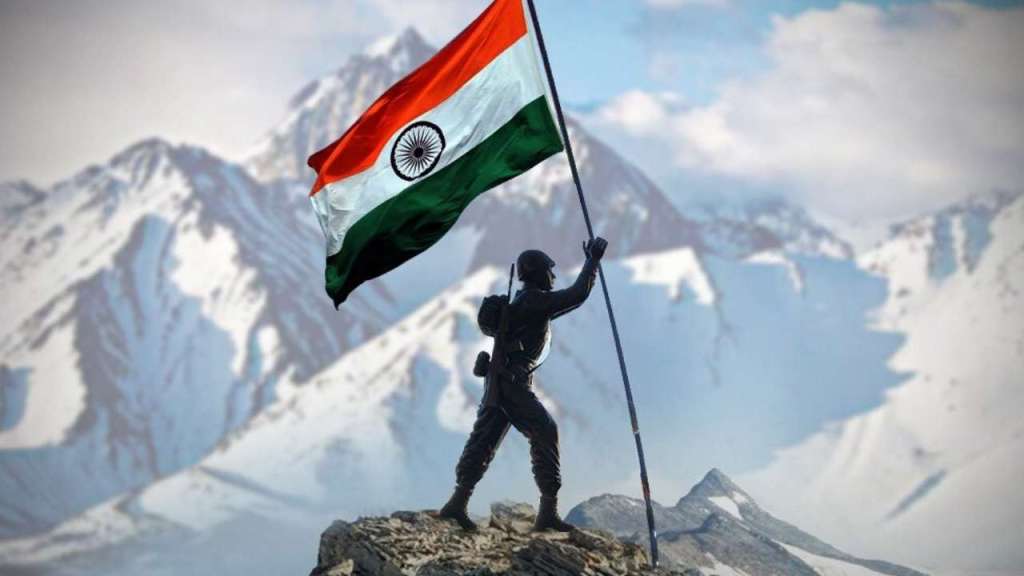
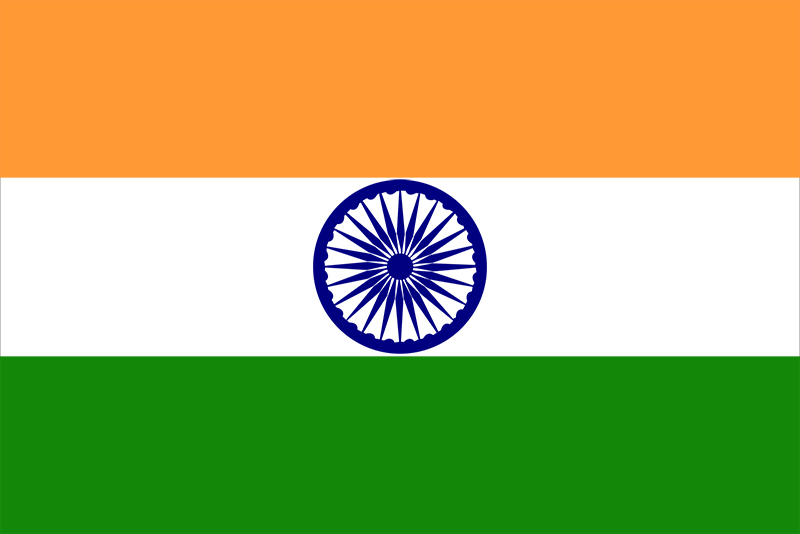
The National Flag is a horizontal tricolour of India saffron (kesaria) at the top, white in the middle and India green at the bottom in equal proportion. The ratio of width of the flag to its length is two to three. In the centre of the white band is a navy-blue wheel which represents the chakra.

The top saffron colour, indicates the strength and courage of the country. The white middle band indicates peace and truth with Dharma Chakra. The green shows the fertility, growth and auspiciousness of the land.

Its design is that of the wheel which appears on the abacus of the Sarnath Lion Capital of Ashoka. Its diameter approximates to the width of the white band and it has 24 spokes. The design of the National Flag was adopted by the Constituent Assembly of India on 22 July 1947.

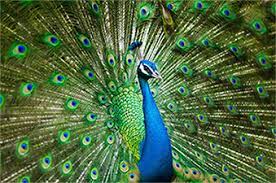
National Bird

The Indian peacock, Pavo cristatus, the national bird of India, is a colourful, with a fan-shaped crest of feathers, a white patch under the eye and a long, slender neck. A bird with a glistening blue breast and neck and a spectacular bronze-green tail of around 200 elongated feathers. The elaborate courtship dance of the bird, fanning out the tail and preening its feathers is a gorgeous sight.

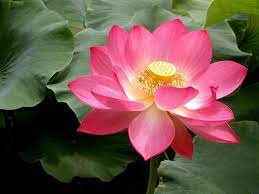
National Flower

Lotus (Nelumbo Nucifera Gaertn) is the National Flower of India. It is a sacred flower and occupies a unique position in the art and mythology of ancient India and has been an auspicious symbol of Indian culture since time immemorial.

India is rich in flora. Currently available data places India in the tenth position in the world and fourth in Asia in plant diversity. From about 70 per cent geographical area surveyed so far, 47,000 species of plants have been described by the Botanical Survey of India (BSI).

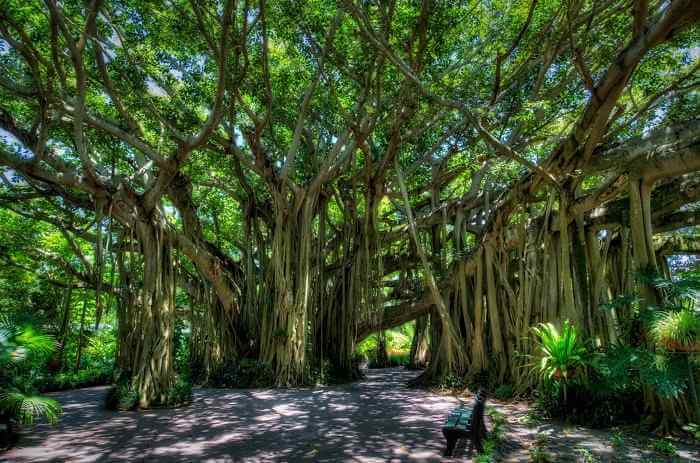
National Tree

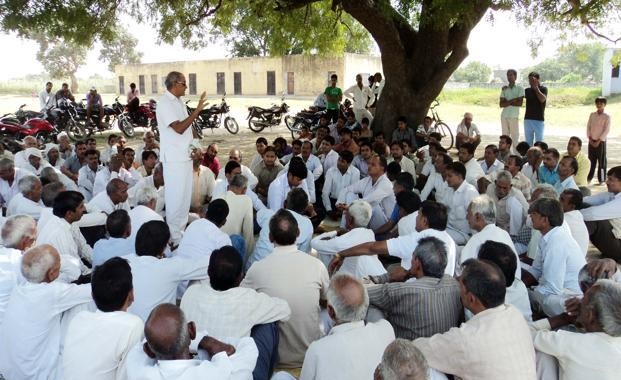
Indian fig tree, Ficus bengalensis, whose branches root themselves like new trees over a large area. The roots then give rise to more trunks and branches. Because of this characteristic and its longevity, this tree is considered immortal and is an integral part of the myths and legends of India. Even today, the banyan tree is the focal point of village life and the village council meets under the shade of this tree.

National Anthem

The “National Anthem of India” is played or song on various occasions. It represents the rich cultural heritage, geography, History, the courage and bravery of Indians.

Jana-gana-mana-adhinayaka jaya he
Bharata-bhagya-vidhata
Punjaba-Sindhu-Gujarata-Maratha
Dravida-Utkala-Banga
Vindhya-Himachala-Yamuna-Ganga
uchchala-jaladhi-taranga
Tava shubha name jage, tava shubha asisa mage,
gahe tava jaya-gatha.
Jana-gana-mangala-dayaka jaya he
Bharata-bhagya-vidhata.
Jaya he, Jaya he, Jaya he,
jaya jaya jaya, jaya he.

State Emblem

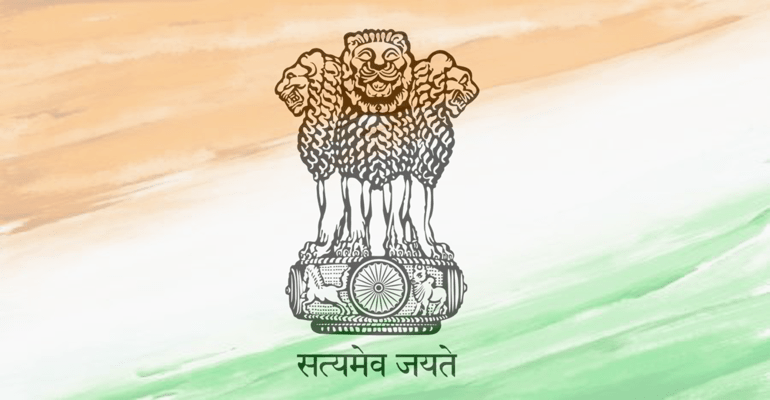
The state emblem is an adaptation from the Sarnath Lion Capital of Ashoka. In the original, there are four lions, standing back to back, mounted on an abacus with a frieze carrying sculptures in high relief of an elephant, a galloping horse, a bull and a lion separated by intervening wheels over a bell-shaped lotus. Carved out of a single block of polished sandstone, the Capital is crowned by the Wheel of the Law (Dharma Chakra)

In the state emblem, adopted by the Government of India on 26 January 1950, only three lions are visible, the fourth being hidden from view. The wheel appears in relief in the centre of the abacus with a bull on right and a horse on left and the outlines of other wheels on extreme right and left. The bell-shaped lotus has been omitted. The words Satyameva Jayate from Mundaka Upanishad, meaning ‘Truth Alone Triumphs‘, are inscribed below the abacus in Devanagari script.

National Animal

The magnificent tiger, Panthera tigris is a striped animal. It has a thick yellow coat of fur with dark stripes. The combination of grace, strength, agility and enormous power has earned the tiger its pride of place as the national animal of India. Out of eight races of the species known, the Indian race, the Royal Bengal Tiger, is found throughout the country except in the north-western region and also in the neighbouring countries, Nepal, Bhutan and Bangladesh.

Currency Symbol

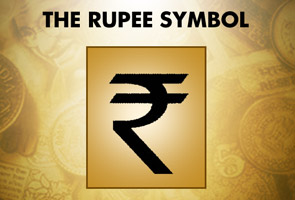
The symbol of Indian Rupee typifies India’s international identity for money transactions and economic strength. The Indian Rupee sign is an allegory of Indian ethos. The symbol is an amalgam of Devanagari “Ra” and the Roman Capital “R” with two parallel horizontal stripes running at the top representing the national flag and also the “equal to” sign. The Indian Rupee sign was adopted by the Government of India on 15th July, 2010.

The symbol, conceptualised and designed by Udaya Kumar, a post graduate in Design from Indian Institute of Technology Bombay.

National Calendar

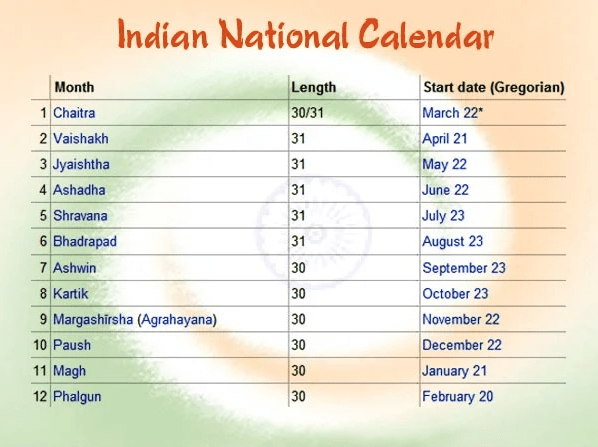
The national calendar based on the Saka Era, with Chaitra as its first month and a normal year of 365 days was adopted from 22 March 1957 along with the Gregorian calendar for the following official purposes:

  1. Gazette of India.
  2. News broadcast by All India Radio.
  3. Calendars issued by the Government of India.
  4. Government communications addressed to the members of the public.

Dates of the national calendar have a permanent correspondence with dates of the Gregorian calendar, 1 Chaitra falling on 22 March normally and on 21 March in leap year.

The National Symbols of India fill a sense of pride in our heart! It is very important that we give atmost respect to our National Identity Symbols! Jai Hind

References:

Know India – This is an official website of India, used and can be used to get authentic information.

Wikipedia

https://www.india.gov.in/

Important Constitutional Rights granted exclusively for women

These are some important rules that EVERY INDIAN must know!

Human’s rights are Woman’s rights and Woman’s rights are Human’s rights

Hillary Clinton

Legal provisions for women that everyone should know

We live in a world where gods and goddesses are worshipped and women are harassed, tortured, abused and abducted every single day. The Government of India confers important rights to Indian women, investigating cases related to many women. Unfortunately, many women in India are not aware of their rights which are provided in different Indian laws.

On the basis of gender equality, an Indian woman has 11 rights in India.

1. Women have a right to Zero FIR

A FIR that can be filed at any police station irrespective of the location where the incident occurred or a specific jurisdiction it comes under, the Zero FIR can later be transfered to the Police Station in whose jurisdiction the case falls under. This ruling was passed by the Supreme Court to save the victim’s time and prevent an offender from getting away scot-free.

2. Women have the right against being stalked

Section 354D of the IPC makes way for legal action to be taken against an offender if he/she follows a woman, tries to contact her to foster personal interaction repeatedly despite a clear indication of disinterest; or monitor the use by a woman of the internet, email or any other form of electronic communication.

3. Female sexual assault victims have the right to keep their identity anonymous

To ensure the protection of privacy of a woman, a woman who has been sexually assaulted may record her statement alone before the district magistrate when the case is under trial, or in the presence of a female police officer.

4. Women have the right against workplace harassment

The Sexual Harassment of Women at Workplace Act gives a female the right to file a complaint against any kind of sexual harassment at her place of work. Under this act, she can submit a written complaint to an Internal Complaints Committee (ICC) at a branch office within a period of 3 months.

5. Women have right not to be arrested at night

Unless there is an exceptional case on the orders of a first class magistrate, a woman cannot be arrested after sunset and before sunrise. In addition, the law also states that the police can interrogate a woman at her residence only in the presence of a woman constable and family members or friends.

6. Women have a right against domestic violence

Section 498 of the Indian Constitution looks to protect a wife, female live-in partner or a woman living in a household like a mother or a sister from domestic violence (including verbal, economic, emotional and sexual) by the hands of a husband, male live-in partner or relatives. The accused shall be punished with a non-bailable imprisonment for a term which may extend to three years and shall also be liable to fine.

7. Women have the right to get free legal aid

Under the Legal Services Authorities Act, female rape victims have the right to get free legal aid or help from the Legal Services Authority who has to arrange a lawyer for her.

8. Women have the right to equal pay

According to the provisions listed under the Equal Remuneration Act, one cannot be discriminated on the basis of sex when it comes to salary, pay or wages. Working women have the right to draw an equal salary, as compared to men.

9. Women have the right to dignity and decency

In an event of accused being a woman, any medical examination procedure on her must be performed by — or in the presence of another woman.

10. Women have the right against indecent representation

Depiction of a woman’s figure (her form or any body part) in any manner that is indecent, derogatory, or is likely to deprave, corrupt or injure the public morality or morals, is a punishable offence.

11. Women have the right to register virtual complaints

The law gives women the provision for filing virtual complaints via e-mail, or writing her complaint and sending it to a police station from a registered postal address. Further, the SHO (Station House Officer) has to a police constable to her place to record her complaint. This is in case a woman is not in a position to physically go to a police station and file a complaint.

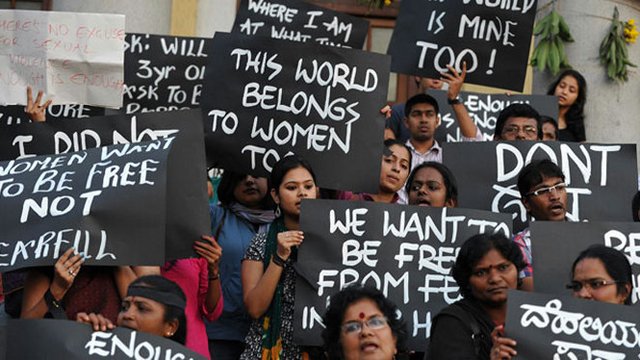
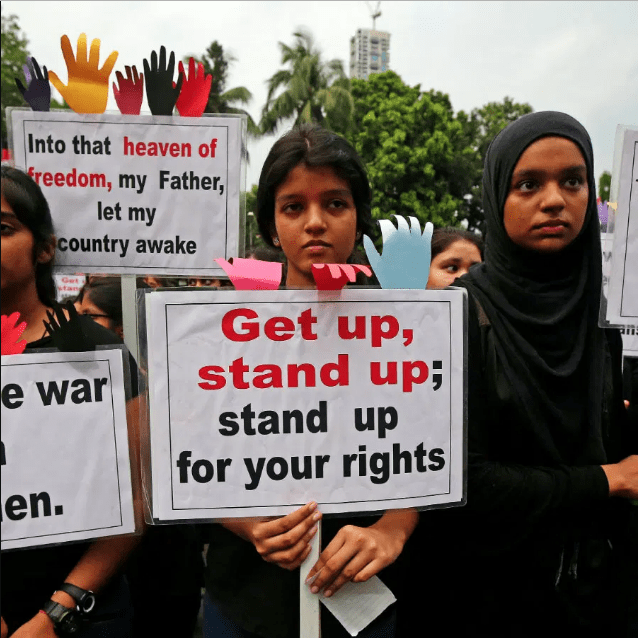
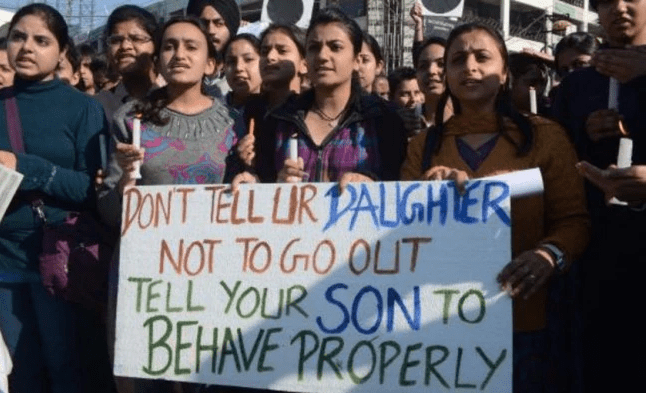
It is high time Women become aware of their rights and Stand up strong! Rise up together against the injustices happening against Women!!

References: India Today

Women in Indian Military

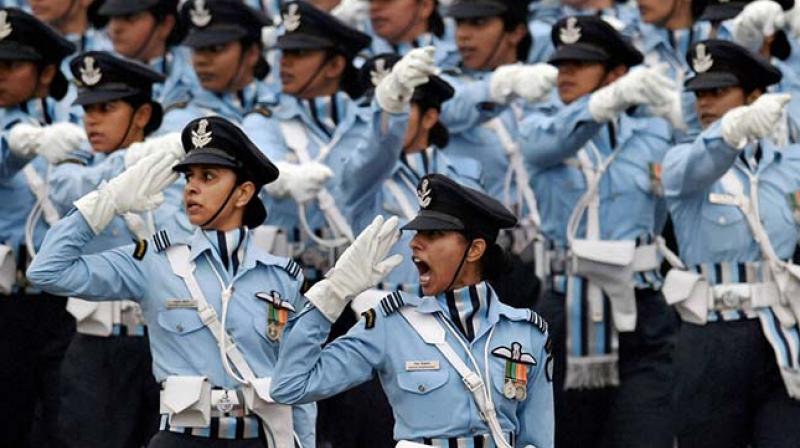
Yes! you read it right! Women are recruited in the Indian Military

Deployment of Women in Armed Forces

  • The Army, Air Force and Navy began inducting women as short-service commission (SSC) officers in 1992.(This was the first time when women were allowed to join the military outside the medical stream.)
  • One of the turning points for women in the military came in 2015 when Indian Air Force (IAF) decided to induct them into the fighter stream.
  • In 2020, the Supreme Court (SC) ordered the central government to grant permanent commission (PC) to women officers in the Army’s non-combat support units on par with their male counterparts.
  • In early 2021, the Indian Navy deployed four women officers on warships after a gap of almost 25 years. India’s only aircraft carrier INS Vikramaditya and fleet tanker INS Shakti are the warships that have been assigned their first women crews since the late 1990s.
  • In May 2021, the Army inducted the first batch of women into the Corps of Military Police, the first time that women joined the military in the non-officer cadre.

Number of Women in Armed forces

  • There are 9,118 women currently serving the army, navy and air force.
  • According to 2019 figures, women comprise only 3.8% of the world’s second-largest army – compared to 13% of the air force and 6% of the navy.

Why is it Important?

  • Gender is not a Hindrance: As long as an applicant is qualified for a position, one’s gender is arbitrary. In modern high technology battlefield technical expertise and decision-making skills are increasingly more valuable than simple brute strength.
  • Military Readiness: Allowing a mixed gender force keeps the military strong. The armed forces are severely troubled by falling retention and recruitment rates. This can be addressed by allowing women in the combat role.
  • Effectiveness: The blanket restriction for women limits the ability of commanders in theater to pick the most capable person for the job.
  • Tradition: Training will be required to facilitate the integration of women into combat units. Cultures change over time and the masculine subculture can evolve too.
  • Global Scenario: When women officially became eligible for combat positions in the American military in 2013, it was widely hailed as another step towards the equality of sexes. In 2018, the UK military lifted a ban on women serving in close combat ground roles, clearing the way for them to serve in elite special forces.

Conclusion

  • Women were being kept out of command posts on the reasoning that the largely rank and file will have problems with women as commanding officers. Thus, changes have to take place in the culture, norms, and values of not only the rank and file of the Army but also that of society at large. The responsibility to usher these changes lies with the senior military and political leadership.
  • The United States, Israel, North Korea, France, Germany, Netherlands, Australia and Canada are among the global militaries that employ women in front-line combat positions.
  • It is the right of every woman to pursue a career of her choice and reach the top since Equality is a constitutional guarantee.

What are Gram Nyayalayas?

Gram Nyayalayas are village courts for speedy and easy access to the justice system in the rural areas of India.

When was it established?

The Gram Nyayalayas were established following the recommendation of 114th report of the Law Commission of India for providing speedy, substantial and inexpensive justice to the common man. Hence Gram Nyayalayas Act, 2008 was passed by the Parliament of India.

Structure of Gram Nyayalayas

Each Gram Nyayalaya is a court of Judicial Magistrate of the first class.

Its Nyayadhikari (presiding officer) is appointed by the State Government in consultation with the High Court.

The Gram Nyayalaya shall be established for every Panchayat at the intermediate level or a group of contiguous Panchayats at the intermediate level in a district.

The seat of the Gram Nyayalaya will be located at the headquarters of the intermediate Panchayat; they will go to villages, work there and dispose of the cases.

Jurisdiction of Gram Nyayalayas

Gram Nyayalayas have jurisdiction over an area specified by a notification by the State Government in consultation with the respective High Court.

Nyayadhikari can hold mobile courts and conduct proceedings in villages.

Gram Nyayalayas have both civil and criminal jurisdiction over the offences.

  • They can try criminal offences specified in the First Schedule and civil suits specified in Second Schedule to the Act.
  • The Central as well as the State Governments have been given the power to amend the First Schedule and the Second Schedule of the Act.
  • The pecuniary jurisdiction of the Nyayalayas is fixed by the respective High Courts.

High Courts can transfer eligible cases from the District court to the Gram Nyayalayas.

The Court shall try to settle disputes via conciliation between the parties and the court can make use of the conciliators to be appointed for this purpose.

Why are Gram Nyayalayas important?

  • Lack of infrastructure like buildings, office spaces and related equipment
  • Lack of man-power resources, notaries, stamp vendors etc. at sub-district level
  • Inadequate Central assistance
  • Lack of awareness among lawyers, police officials
  • Non-cooperation of enforcement agencies
  • The reluctance of state functionaries to invoke the jurisdiction of Gram Nyayalayas
  • Setting up of legal services institutions at Taluk level reducing the dependency on Gram Nyayalayas

What are the critisims associated with the Gram Nyayalayas?

  • The number of disputes settled by Gram Nyayalayas are negligible and most are referred to District forums by appeal. Hence, they are not effective in reducing the burden of District Courts.
  • Absence of a regular cadre of Gram Nyayadhikari
  • Ambiguities regarding jurisdiction due to the parallel existence of alternate dispute mechanisms, tribunals, adalats etc.
  • Some Gram Nyayalayas are located at cities and towns which doesn’t provide any utility to villagers.
  • Inadequate awareness amongst various stakeholders

Some suggestions by experts to improve the functioning of Gram nyayalayas

  • Establishing a regular cadre of Gram Nyayadhikaris
  • Conducting procedures in local language and with simpler procedures
  • Creating awareness amongst stakeholders via seminars, press releases etc.
  • Establishing permanent Gram Nyayalayas at the intermediate level in a suitable location proving easy access to the common people
  • Clearly specifying the jurisdiction of Gram Nyayalayas and re-defining it to remove any ambiguities
  • Providing building, staff etc. for Gram Nyayalayas and provisioning them in the state budget

Conclusion

The Preamble to the Gram Nyayalayas Act envisions access to justice to the citizens at their doorstep and to ensure that opportunities for securing justice are not denied to any citizen.

Despite the many challenges and shortcomings of the existing framework of the Village Courts in India, they have a positive role in providing access to justice to the poor and reaching out to marginalized sections of the society.

It has the potential to reduce the pendency of cases at higher levels. However, to achieve the stated objectives, some efforts must be made to revamp the organizational and jurisdictional aspects of Gram Nyayalayas.

Indian National Anthem

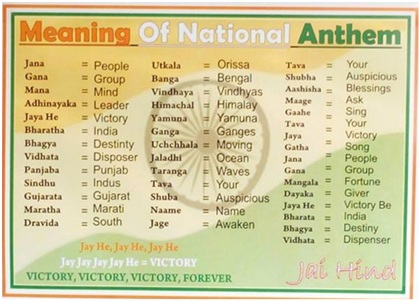
We have sung our national anthem since our childhood, Do we know the meaning behind it?

Indian National Anthem:

Jana-gana-mana-adhinayaka jaya he

Bharata-bhagya-vidhata

Panjaba-Sindhu-Gujarata-Maratha

Dravida-Utkala-Banga

Vindhya-Himachala-Yamuna-Ganga

uchchala-jaladhi-taranga

Tava Subha name jage, tave subha asisa mage,

gahe tava jaya-gatha.

Jana-gana-mangala-dayaka jaya he

Bharata-bhagya-vidhata.

Jaya he, Jaya he, Jaya he,

jaya jaya jaya jaya he.

Meaning of our National Anthem

The following is Tagore’s English rendering of the anthem:

Thou art the ruler of the minds of all people,
Dispenser of India’s destiny.
Thy name rouses the hearts of Punjab, Sind,
Gujarat and Maratha,
Of the Dravida and Odisha and Bengal;
It echoes in the hills of the Vindhyas and Himalayas,
mingles in the music of Jamuna and Ganges and is
chanted by the waves of the Indian Sea.
They pray for thy blessings and sing thy praise.
The saving of all people waits in thy hand,
Thou dispenser of India’s destiny.
Victory, victory, victory to thee.

Source:https://knowindia.gov.in/national-identity-elements/national-anthem.php

A simplified version:

You are the ruler of minds of people, let the victory be with you,

The dispenser of the destiny of India

Punjab, Sindh, Gujarat, Maratha, Dravid, Orissa, Bengal

There are echoes in hills of Vidhya, and the Himalayas and music is mingled in Yamuna, and Ganga which is chanted by foaming waves of Indian Sea

Wake up listening to the auspicious name of yours and pray for your blessings,

The saving of all the people is lying in your hands.

You are the one to impart well being to the people

the dispenser of the destiny of India

May you get victory, victory, and victory for you!

Source: https://www.mapsofindia.com/my-india/india/what-does-the-indian-national-anthem-jana-gana-mana-mean

Facts about our National Anthem

  • The song Jana Gana Mana is the National Anthem of India which was composed by Rabindra Nath Tagore, originally in Bengali.
  • It was adopted by the constituent assembly on January 24, 1950, in its Hindi version.
  • The song “Jana Gana Mana” was first published under the title “Bharat Vidhata” in Tattva Bodhini Patrika in January 1912.
  • The song was translated into English in 1919 with the title “Morning Song of India”.
  • The very first time it was sung at the Kolkata Session of Congress on 27 December, 1911.
  • It takes about 52 seconds for its total completion, while it takes 20 seconds for the first and last lines of the stanza.

GST – Good and Simple Tax?

Its been 4 years since Goods and Services Tax (GST) was introduced! How much do we know about it?

What is GST

  • The GST is a value-added tax levied on most goods and services sold for domestic consumption.
  • The GST is paid by consumers, but it is remitted to the government by the businesses selling the goods and services.
  • GST, which subsumed almost all domestic indirect taxes (petroleum, alcoholic beverages and stamp duty are the major exceptions) under one head, is perhaps the biggest tax reform in the history of independent India. It was launched into operation on the midnight of 1st July 2017.

What is special about GST?

  • Applicable on Supply Side: GST is applicable on ‘supply’ of goods or services as against the old concept on the manufacture of goods or on sale of goods or on provision of services.
  • Destination based Taxation: GST is based on the principle of destination-based consumption taxation as against the principle of origin-based taxation.
  • Dual GST: It is a dual GST with the Centre and the States simultaneously levying tax on a common base. The GST to be levied by the Centre is called Central GST (CGST) and that to be levied by the States is called State GST (SGST).
  • Import of goods or services would be treated as inter-state supplies and would be subject to Integrated Goods & Services Tax (IGST) in addition to the applicable customs duties.
  • GST rates to be mutually decided: CGST, SGST & IGST are levied at rates to be mutually agreed upon by the Centre and the States. The rates are notified on the recommendation of the GST Council.
  • Multiple Rates: GST is levied at four rates viz. 5%, 12%, 18% and 28%. The schedule or list of items that would fall under these multiple slabs are worked out by the GST council.This is apart from the tax on gold that is kept at 3% and rough precious and semi-precious stones that are placed at a special rate of 0.25% under GST.

The GST Council

  • It is a constitutional body (Article 279A) for making recommendations to the Union and State Government on issues related to GST.
  • The GST Council is chaired by the Union Finance Minister and other members are the Union State Minister of Revenue or Finance and Ministers in-charge of Finance or Taxation of all the States.
  • It is considered as a federal body where both the centre and the states get due representation.

GST – Reform?

  • Creation of a common national market: By amalgamating a large number of Central and State taxes into a single tax.
  • Mitigation of cascading effect:
    • The GST that a merchant pays to procure goods or services (i.e. on inputs) can be set off later against the tax applicable on supply of final goods and services. The set off tax is called input tax credit.
    • The GST thus avoids cascading effect or tax on tax which increases the tax burden on the end consumer.
  • Reduction in Tax burden: From the consumers’ point of view, the biggest advantage is in terms of reduction in the overall tax burden on goods.
  • Making Indian products more competitive: Introduction of GST is making Indian products more competitive in the domestic and international markets owing to the full neutralization of input taxes across the value chain of production.

What are the achievements of GST

  • Automated Indirect Tax Ecosystem:
    • The introduction of e-way bills coupled with the crackdown on fake invoicing has helped in bringing in a substantial portion of GST revenues, which were either being evaded or under-reported.
    • E-invoicing system would also usher the taxpayers into a fully automated compliance regime wherein the computation of tax liabilities and matching of input tax credit would become very simple.
  • Simplification of Compliance:
    • Various initiatives like linking the customs portal with GST portal for credit availability on imports, making available proper means for matching input tax credit, increased automation of the refund procedure to seamless operation of the Invoice Registry Portal, helped simplify tax compliance.
  • Functioning of GST Council:
    • The GST Council made corrections to law, issued clarifications on complex issues, rationalized GST rates and introduced relaxations for dealing with the Covid-19 pandemic, which establishes that the GST Council structure has been very functional and agile.
  • Example to the World:
    • India has served as an example to the world by successfully implementing one of the most complex tax transformation projects for the country.

Criticisms of GST

  • Fiscal Federalism:
    • This issue became controversial when GST collections fell because of the pandemic.
    • Because GST entailed a bigger surrender of taxation powers for the states – states do not levy direct taxes or customs duties – a guaranteed revenue growth of 14% for a period of five years was offered to them by the centre to get them to agree.
  • Issues Highlighted by the 15th Finance Commission:
    • The 15th Finance Commission has highlighted several areas of concern in the GST regime relating to multiplicity of tax rates, shortfall in GST collections vis-à-vis the forecast, high volatility in GST collections, inconsistency in filing of returns, dependence of States on the compensation from Centre and so on.
  • Large Businesses vs Small Businesses:
    • The fundamental principles on which the GST law was built were seamless flow of input credits and ease of compliance has been impaired by IT glitches.
    • Indirect taxes, unlike direct taxes such as income tax, do not differentiate between the rich and the poor and therefore put a bigger burden on the later.
    • Further, small and medium businesses are still grappling to adapt to the tech-enabled regime.

What are some suggestions by experts?

  • With oil prices sky-rocketing across the country, the policymakers need to contemplate the inclusion of petroleum and related products within the GST net.
  • It is vital to finally constitute the GST Appellate Tribunal as it is obvious that all taxpayers do not have the finances or means to approach the High Court for every practical difficulty faced.
  • Streamlining of anti-profiteering measures and simplification of compliance procedures also needs to be revisited to ensure that the cost efficiency and reduction in prices envisaged under GST law finally reaches the common man.

Conclusion

In the four years of GST, It has undoubtedly been successful in many areas but the pandemic has exposed several problems in its structure and implementation. The law is still a ‘work-in-progress’, and the process of evolution, in such a complex journey, cannot be eliminated. The Government is taking several measures to make it resilient. We can definitely hope for a Good and Simple tax in the times to come.

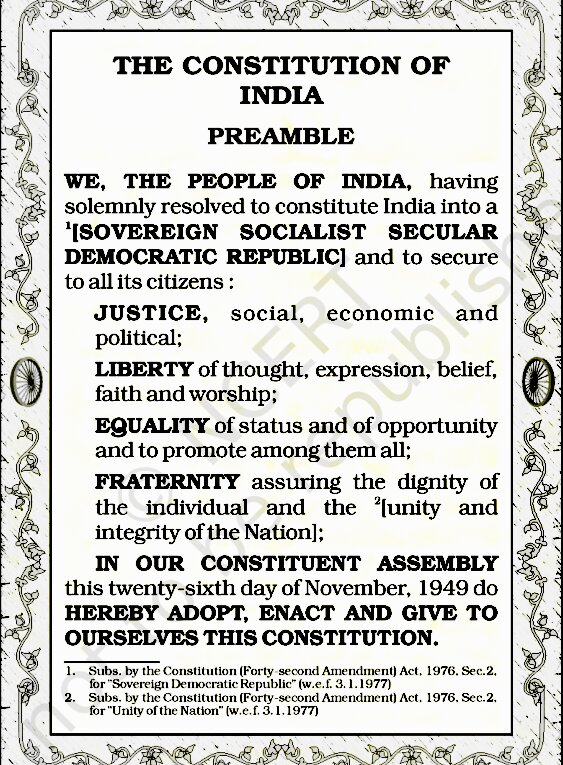
WE, THE PEOPLE OF INDIA

What is the first thing that strikes your mind when you read this?

Its the starting of the PREAMBLE of INDIA.

How much do we know about the Preamble of our Country?

What is a Preamble?

  • A preamble is an introductory statement in a document that explains the document’s philosophy and objectives.
  • In a Constitution, it presents the intention of its framers, the history behind its creation, and the core values and principles of the nation.
  • Although not enforceable in court, the Preamble states the objectives of the Constitution, and acts as an aid during the interpretation of Articles when language is found ambiguous.

What is it about?

  • Source of the Constitution
  • Nature of Indian State
  • Statement of its objectives
  • Date of its adoption

Components of Preamble

  • It is indicated by the Preamble that the source of authority of the Constitution lies with the people of India.
  • Preamble declares India to be a sovereign, socialist, secular and democratic republic.
  • The objectives stated by the Preamble are to secure justice, liberty, equality to all citizens and promote fraternity to maintain unity and integrity of the nation.
  • The date of adoption of the preamble is mentioned i.e. November 26, 1949.

Words in bold – The key words

  • We, the people of India: It indicates the ultimate sovereignty of the people of India. Sovereignty means the independent authority of the State, not being subject to the control of any other State or external power.
  • Sovereign: The term means that India has its own independent authority and it is not a dominion of any other external power. In the country, the legislature has the power to make laws which are subject to certain limitations.
  • Socialist: The term means the achievement of socialist ends through democratic means. It holds faith in a mixed economy where both private and public sectors co-exist side by side.
  • It was added in the Preamble by 42nd Amendment, 1976.
  • Secular: The term means that all the religions in India get equal respect, protection and support from the state.
  • It was incorporated in the Preamble by 42nd Constitutional Amendment, 1976.
  • Democratic: The term implies that the Constitution of India has an established form of Constitution which gets its authority from the will of the people expressed in an election.
  • Republic: The term indicates that the head of the state is elected by the people. In India, the President of India is the elected head of the state.
  • Equality: The term ‘Equality’ means no section of society has any special privileges and all the people have given equal opportunities for everything without any discriminations. Everyone is equal before the law.
  • Liberty: The term ‘Liberty’ means freedom for the people to choose their way of life, have political views and behavior in society. Liberty does not mean freedom to do anything, a person can do anything but in the limit set by the law.
  • Fraternity: The term ‘Fraternity’ means a feeling of brotherhood and an emotional attachment with the country and all the people. Fraternity helps to promote dignity and unity in the nation.
  • Justice: It is necessary to maintain order in society that is promised through various provisions of Fundamental Rights and Directive Principles of State Policy provided by the Constitution of India. It comprises three elements, which is social, economic, and political.
    • Social Justice – Social justice means that the Constitution wants to create a society without discrimination on any grounds like caste, creed, gender, religion, etc.
    • Economic Justice – Economic Justice means no discrimination can be caused by people on the basis of their wealth, income, and economic status. Every person must be paid equally for an equal position and all people must get opportunities to earn for their living.
    • Political Justice – Political Justice means all the people have an equal, free and fair right without any discrimination to participate in political opportunities.

Why is Liberty, Equality and Fraternity so important?

It provides a way of life. It includes fraternity, liberty, and equality as the notion of a happy life and which can not be taken from each other.

  • Liberty cannot be divorced from equality, equality cannot be divorced from liberty. Nor can liberty and equality be divorced from fraternity.
  • Without equality, liberty would produce the supremacy of the few over the many.
  • Equality without liberty would kill individual initiative.
  • Without fraternity, liberty would produce the supremacy of the few over the many.
  • Without fraternity, liberty and equality could not become a natural course of things.

Amendment of the Preamble

  • 42nd Amendment Act, 1976: After the judgment of the Kesavanand Bharati case, it was accepted that the preamble is part of the Constitution.
  • The term ‘Socialist’, ‘Secular’, and ‘Integrity’ were added to the preamble through 42nd Amendment Act, 1976.