Android or iOS

If you buy a new smartphone today, chances are it will work for one of two operating systems Google’s Android or Apple’s Apple. The two platforms became the new Smartphones introduced a few years ago. The good news is that both smartphones are great. They are very similar, but there is an important difference you want to process. We will set up Android against iOS in several stages here and select each winner. In the end, it’s a very good platform for you, well, you. Choose the things that are most important to you, count the defeats in those categories, and have a recommendation made for you.

The Affordability
Apple has always been at the top of the market in terms of pricing, but the iPhone x took things to a whole new level with an initial price of 80,000 rupees and the iPhone 11 Pro Max starts at 1,10,000. If you need something less expensive, the iPhone 11 starts from r, 53,000 and the latest iPhone SE from 47,000. That is cheaper as it is available without having to touch the second hand market.
In terms of size and variety, nothing competes with Android. You can spend a lot of money if you want, – for example, the new Samsung Z system costs around $ 1,25,000 but there is also a huge selection of low, low handsets from a variety of manufacturers, and the platform has been deliberately designed to work on hard-end Hardware . The fact that Android also leads the field in free apps makes it a natural choice to be able to budget.
The obvious winner is Android.

Applications
IOS apps: 1.8 million
Android apps: 2.5 million
Of course, prices are not a very good metric because most of us use very few and very popular apps available in both forums. Traditionally, iOS has been a very lucrative platform for developers, so there has been a tendency for new apps to appear first, but that is changing as the Android market share continues to grow. In the U.S., iOS is still leading the way, but developers in some areas are increasingly looking at Android first.
Fortunately, both operating systems have been taking security measures when it comes to malicious applications and spyware, making the apps more secure to download than ever before.
Google Play Store still has a higher percentage of free apps than the App Store. But the best mobile games are still available on iOS first and are not always available on Android. Lastly, the size of the beats is quality so this is a small win for iOS.
Winner: iOS
Working Stores
It’s hard to organize millions of apps and games and either Google Play Store or Apple’s Store is doing just fine. All in all, we think Apple’s App Store offers a better browsing experience on your phone and does a better job with selected recommendations. The Google Play Store is easy to search and you can download and install apps from a web browser on your PC or laptop.
Winner: IOS

Weakening Labour Laws

The Covid-19 pandemic has influenced the economy harshly, bringing about development stoppage in significant segments. The horticulture, vehicle, lodging, travel and the travel industry, assembling and administrations segments are completely hit. The suspension of monetary exercises during the national lockdown time frame in India has cost the economy $235 billion, Barclays Company evaluated. As per the Chicago Booth’s Rustandy Centre for Social Sector Innovation, which broke down information from the Centre for Monitoring Indian Economy (CMIE), has seen that over 84% of family units in India lost salary during the lockdown time frame.

In this time, some state governments have passed statutes and new guidelines influencing the work laws and their application. Nearly 10 states have achieved changes in the labour laws, for the most part in The Factories Act, 1948, The Industrial Disputes Act, 1947, and The Labour Laws (Exemption from Furnishing Returns and Maintaining Registers by Certain Establishments) Act, 1988. The state governments have asserted that these measures are important (I) to launch financial exercises (ii) to draw in outside speculation and (iii) to support development possibilities.

Not long after proclamation of these statutes, worker’s guilds the nation over, rights activists, work specialists and even industrialists censured these measures as being in opposition to laborers’ privileges. These measures disregard the set up guidelines of International Labor Organization (ILO) and the Fundamental Rights and Directive Principles of State Policy of the Indian Constitution. Numerous PILs (Public Interest Litigation) were documented in the separate state high courts and in the Supreme Court. The Allahabad High Court sent notification to the Uttar Pradesh government, following which the UP government pulled back one request, that on the 12-hour work move.

Labour is a subject in the Concurrent List and subsequently both Union and state governments are equipped to authorize enactments relating to work government assistance. Thing 24 on the Concurrent List explicitly makes reference to arrangements for the “government assistance of work, including states of work, fortunate assets, bosses’ obligation, laborers’ pay, shortcoming and mature age annuities and maternity benefits” of Article 246 of the Constitution. Any adjustments in the laws identified with the subjects recorded in the Concurrent List must be made in counsel with the Union government. Something else, the law passed by the Union government stands substantial according to Article 254(1). The state governments appear to have disregarded this while giving their laws. The debilitating of work laws have seriously obliged the government assistance and equity plan inserted in the Constitution.

The utilization of the law to suitable the privileges of average workers individuals is the plan of neoliberal administration systems. In the period of contractualisation of work, laborers’ privileges are seriously undermined as the administering power has moved from State to the private division. The withdrawal of the State from government assistance is in progress, as is obvious from these laws. These measures will remove the respect of work and its related rights. In “A Tale of Three States: Labour Reforms in the States of Gujarat, Madhya Pradesh and West Bengal,” Kingshuk Sarkar says that consideration was given to “guaranteeing simplicity of working together instead of securing laborers’ privileges and qualifications.”

The genuine issue lies not with the labour laws yet with the idea of the State. With these mandates, the state governments have disintegrated the standards of ‘helpful federalism’. With regards to the Covid-19 emergency, it would be judicious for the for the Indian State to maintain laborers’ privileges and poise to upgrade its own social authenticity and open trust.

Child labour in India

Child labour


“Child” as defined by the child labour (prohibition and regulation) Act 1986 is a person who has not completed the age of 14 years .As a layman we can understand that Child labour is the practice of having children engage in economic activity, on a part or full time basis. Every child is considered as a gift of god, it must be nurtured with care and affection with in the family and society. But unfortunately due to the socio economic problems children were forced to work in industries, leather factories, hotels and eatery. The child labour is not an isolated phenomenon it is coupled with socio economic problem of the society so in order to eliminate child labour first we should focus on socio economic issues of the society. It is in the hands of administrative .It should bring effective measures to eliminate child labour.

According to the ILO (International Labour Organization), child labour is work carried out by children under the age of 18 that in any way exploits them, causes them mental, physical or social harm, or places them in moral danger. It is work that interferes that blocks their access to education and “deprives them of their childhood, their potential and their dignity”.

Rights of Children Under International Law:

Universal declaration of human rights 1948 –  stipulates under article 25 para 2 that childhood is entitled to special care and assistance. The above principles along with other principles of universal declaration concerning child were incorporated in the declaration of the rights of the child of 1959

International covenant on civil and political rights under Article 23 and 24 and International Covenant on economic, social and cultural rights –  under article 10 made provision for the care of the child .
International labour organisation (ILO) - provides universal standards and guideline, a specialized agency of  UN ,aims to provide guidance and standards for labour practices around the world .
Convention on the rights of  the child, 1989 It is another international instrument which protects the child.

Rights of Children Under National Laws:

India has also taken effective measure under national level. In order to eliminate child labour, India has brought constitutional, statutory development measures. The Indian constitution has consciously incorporated provisions to secure compulsory elementary education as well as the labour protection for the children. Labour commission in India have gone into the problems of child labour and have made extensive recommendations. The constitution of India, too provides certain rights to children and prohibits child labour such provisions are as follows:

  1. No child below the age of 14 years shall be employed in any factory or mine or engaged in any other hazardous work.
    2.state in particular shall direct its policy towards securing that the health and strength of workers, men and women and the tender age of the children are not abused and that citizen are not forced by economic necessity to enter vocations unsuited to their age or strength.
  2. Children are given opportunities and facilities to develop in a healthy manner and in conditions of freedom and the dignity and that childhood and youth are protected against exploitations and against moral and material abandon.
  3. The state shall endeavour to provide, within the period of 10 years from the commencement of constitution, free and compulsory education for all children until they complete the age of 14 years.
  4. The state shall provide free and compulsory education to all children between the ages of 6 to 14 years as such a manner as the state may by law determine.
  5. Who is parent or guardian to provide opportunities for education to his child or the case may be, ward between the age of six and fourteen years.
    There are wide range of laws ,which guarantee the substantial extent the rights and entitlement as provided in the constitution and in the UN convention.

What Are Some Solutions to the Problem of Child Labour?

Many children in hazardous and dangerous jobs are in danger of injury or even death. Between 2000 and the year 2020, the vast majority of new workers, citizens and new consumers — whose skills and needs will build the world’s economy and society — will come from developing countries. Over that 20-year period, some 730 million people have joined the world’s workforce — more than all the people employed in the most developed nations in 2000. More than 90 percent of these new workers will be from developing nations, according to research by Population Action International.

In order to fairly and adequately meet the needs of this growing workforce and not rely on child labour, a few things must be prioritised, namely:

increased family incomes

social services — that help children and families survive crises, such as disease, or loss of home and shelter

education — that helps children learn skills that will help them earn a living

Conclusion

There are many laws and regulatory departments for child labour, yet it is ineffective in controlling ongoing child labour. This is possible only when there is a cooperation of all the sections of the society and the law enforcement agencies and by removing or minimizing the causes of child labour. The main thrust should be on controlling the population of the country, education of the children and providing sufficient funds for its removal from the gross domestic product of India.

HOW POLITICAL FREEDOM LEADS TOWARDS ECONOMIC AND SOCIAL FREEDOM

Political freedom is one of the most essential features of democracy. Freedom in political context means to live in a social system where individuals rights are upheld and citizens are able to participate in political process of a country without any coercion. Political freedom ensures the rule of law. Everyone is equal in the eye of law and law is supreme. Universal adult suffrage gives freedom to people to run the government by electing their own representatives (Article 326). Political freedom ensures fair and just elections. Everyone has the freedom to contest it in election as well. By the virtue of Article 19, freedom of speech and expression, every individual has right to criticize government schemes and policies and suggest regarding the same. Certain rights are given to citizens under the constitution of India and independent Judiciary makes it certain to take action in case of the infringement of rights. Political freedom is associated with social and economic freedom and the three areas cannot be separated.

 Social freedom signifies characteristic of an individual in an open society  where individual or group can feel open about their opinions and live with dignity without any discrimination on the basis of race,caste,religion,gender and place. Economic freedom is the freedom of an individual to make choice regarding his/her profession,production, investment,expenditure and maintenance of property. political freedom to and social and economic freedom go hand by hand.  By choosing our representatives it is we people who decide  for our future. Society and economic growth is dependent up on such representatives so it is essential to decide wisely. Political freedom helps people to decide the formulation of policy which covers current requirement of people for example, the protection of Human Rights Amendment Bill,2019 and Pradhan Mantri Garib Kalyan Yojana. In case of lawlessness and misuse of law, citizens can always act to ensure law and order in the society. Right to Information Act,2005 gives citizens power to information related to the working of government and this way individuals can know how much money is being spent on which sector for economic and social growth.

Despite having all the political freedom, there are certain instances which shows us political growth doesn’t always brings social and economic growth like it is suppose to bring.For example, there are still some practices prevalent like gender discrimination in the matter of employment,untouchability and lawful restrictions from the government’s side like limited freedom of right to speech and right to life except etc.Hence the conclusion is political freedom is a slow and gradual way to reach towards economic and social freedom but if used to its full extend can cause satisfactory results.

Civil Society and Covid19

The ongoing COVID-19 pandemic has given us something that the majority of us haven’t found in the course of our lives: Large quantities of individuals are not able to have two meals every day.

The disaster is that the administration has enough and more food grains to take care of individuals during this time; the main problem is of dissemination—both as far as broken gracefully chains, just as the request of the legislature to restrain circulation to recipients under the National Food Security Act (NFSA), ie, need proportion card holders. This methodology is defective on the grounds that the NFSA has numerous avoidance, with probably the most unfortunate of poor people, itinerant or Adivasi people group, and the urban poor being forgotten about. Additionally, proportion cards are of no utilization to vagrant specialists stuck outside their home state. There are comparative issues of rejection in different administrations too, for example, vocations and human services. This is the place common society must advance in—to squeeze the legislature to universalize these administrations.

Network of civil society

Civil society should construct a system that cuts the nation over. We should plan the various associations and gatherings giving help in each area, square, and down to each town. We can do this since we have volunteers and laborers—from field staff of not-for-profits to government teachers—everywhere throughout the nation, and we know whom we can contact for any data or help at wherever.

The quality of Civil society lies in knowing and being the little, decentralized units that have assumed liability for their whole region—recognizing the quantity of individuals in the zone, the help required, the holes in government alleviation, the difficulties on the ground, etc. By uniting them and shaping a system, we can empower these units to call upon one another for help, for example, securing material or revamping flexibly chains. Above all, the system can have a voice at the national-level that says everybody is qualified for benefits, regardless of whether they are not apportion card holders or dynamic specialists under NREGA.

Work with the government

The job of civil society doesn’t stop at squeezing the legislature. There are numerous zones that the legislature can’t reach; we need to reach there. We need to utilize our straightforwardness and responsibility systems to screen the administration’s work and ensure state assets are all around utilized. We additionally need to proactively discover the holes, and help fill those holes.

The administration structure is functioning admirably in certain zones and not working in others. In a portion of those spots, the legislature is itself requesting our assistance. Given the hugeness of the intercession required, the administration can’t do it all alone, and common society can’t supplant the huge job of the legislature in confronting this emergency. While civil society associations can assume liability for one zone and completely guarantee the prosperity of the individuals there, we should likewise work with nearby governments, assist individuals with getting to help quantifies down to each country and urban ward, and fill the holes in the administration’s reaction. Panchayats and nearby self-governments additionally have an extremely enormous task to carry out in this exertion.

What’s more, ultimately, let us not overlook democratic system as of now—right to speak, the right to challenge, the right to argue—in light of the fact that today, the main thing a large number of needy individuals have is a voice. We have to enhance that voice to guarantee that the most defenceless get the most help, and the individuals who are well-off possibly get something on the off chance that it helps the most powerless. How much consideration we pay to the millions who have been most exceedingly terrible influenced by COVID-19 and the lockdown will decide if we come out of this emergency.

Harmony management at Organisation

IN modern business world, Harmony management is very essential for an organisation which is helping to manage organisational behaviour and employees. If there is not presence this then organisation can’t running smoothly and never achieve their goals and success in the market. If their employees are not happy at workplace, they are not productive and there are arises conflicts in the organisation between their employees, sub- ordinates and employers. In the absence of it trigger a huge amount of stress which affect the organisation as well as employees efficiency. Employees exposed to such work conditions will waste a lot of energy on trivial things, which will consequently affect their productivity and focus.

A well- organised workplace will not only increase employees’ creativity, but wil turn your office in serene, yet efficient work environment. Since happy workers are more productive workers, treating them with care and respect bring tangible benefits to your business, as well.

” New research suggests we work more effectively, creatively and collaboratively when we are happy.”

For all these reasons, we have analyzed many of different ways to bring harmony at workplace in modern business world. There are some business strategies which will help business owners to improve their office ambience and work organisation.

There are several types of employees in the organisation with different cultures, languages, religion and customs at a workplace who works together to get an organisational goals and objectives.

# Develop a system of rewards

No employees will feel good working in a stable and bleak environment. This is why every business owner and HR expert need to develop a system of bonuses for their employees. It is motivated to employees for working / perform their work effectively in workplace. It should be clear a set of promotion and rises is must for every business.

# Practice supportive communication

Now a days, people mostly refer to communication as to what we do when we speak on the phone, chat via social media or text one another. There is both types of communication follow up like…formal and informal communication between employees and employer. There is clear communication and both side massage understand in same manner. If there is some confusion they should discuss again on that massage/ information.

# Listen carefully to your employees

Instead of turning a deaf ear in their workers’ complaint and problems, proactive business executives should listen with great interest. If they listen their problems then they can take a corrective action regarding that problem to sought out and workers’ close to him. If there is coming any problem in workplace, employees also inform about that problem which affects the organisational work and objectives. Sometimes they suggest their opinion and ideas regarding the problems which arises in the organisation.

“Good listening is much more than being silent while the other person talk.”

# Invest in employees’ knowledge

Workers who don’t climb the ladder will soon lose motivation and energy for work. While we gmhave already discussed the importance of internal system of rewards, what also matter is the opportunity to learn those. If employee want to learn new technologies and want to getting another knowledge there have opportunities in the organisation. The most practical early to enable your employees to become more competitive is to invest in their education. For example, they can enroll on one of numerous online courses and extend their knowledge.

“Back in the day, if you wanted to learn something new, you’d go to school for it. “

If you pay only one part and the employees pay the rest , they will have a stronger sense of obligation to finish those courses and get back to work with new skills.

There are some measures which will help to maintain / bring harmony at workplace.

Importance of training and development in HR

It is very important for an organisation to develop their employees skills which develop the organisation and develop their work efficiency and work performance towards organisation. Its satisfied employees work and develop their new skills to perform their work in an organisation.

According to a survey conducted by office team in 2015, 38% of HR professionals consider training and developing employees their greatest staffing concern. Ofcourse, companies that manage to train and develop their employees with the jackpot.

Training programs boost employee satisfaction and improve employee retention

Employee appreciate being able to build new skills, improve their job performance and potentially evolve towards more challenging roles. Even more importantly, supporting and providing training opportunities show a company’s commitment to it’s employees growth. Employees feel their value to a company where employees education is promoted. Ongoing training opportunities publicized since they are an important perk in company’s compensation programs.

Developing talent is the best and cheaper way of staff

From the HR Perspective, developing talent is the best way to staff a company’s roles. It is always cheaper to source skills. The more junior position, the lower the recruiting cost, even after accounting for the replacement of junior position. It is usually easy and quicker to bring as internal hire up to speed as the newbie already knows everything there is to know about the company. In this system they can promote their employees to develop their skills and giving him higher post and they safe their cost on spend to search new employee for that particular job and not more time given to understand work environment like external source

Developing talent of staff ever changing company needs is such a holistic circle that values had been written on the subject of employee training. Introducing learning opportunities through a digital workplace will maximize the value of all of your training programs .

Develop a culture of teaching and learning

One of the greatest ways to study is to learn from peers and managers. The kind of culture where managers want to develop their team members and are value for the effort , and where all employees encouraged to learn new skills and share them, is not easy to create. And, as with all other corporate initiatives, the company internet is great tool to promote this culture and elicit the desired behaviour.

Learning by collaborating and interacting with peers

Digital workplace provideWays for employees to collaborate on work projects and interact with each other regardless of their location. Social collaboration tools help in searching for answers, sourcing skills and experience, and interacting with peers throughout the company.

communication tools for coaching opportunities

communication channels in a digital workplace that are synchronous ( like chats and video- conferencing) or asynchronous ( like activity streams conversation and forums ) can be used to enhance the training and coaching experience for all employees, whatever their location.

Detect training needs

In this system the find out the gaps of skills in employees in the organisation . A company intranet allow you to survey employees and managers and identify the gaps in employees skills. For example: if all your employees need basic excel skills, the easiest way to identify the gap between the reality and expectation is to conduct an anonymous self- assessment and consolidate the results at the department level.

Is Work from Home Beneficial?


In these times where the entire world has been brought down to its knees
and everyone is sequestered in their homes, work from home has been a
lifesaver for many.

Nevertheless, there is a flip side as well and let’s first
explore both of them.


The productivity and efficiency of an employee increases manifolds, no
time is lost in commuting and one works with a fresh state of mind, setting
the seal on a better quality of output.

There are gains for the company as well. It saves a huge amount of greens
in terms of electricity bills, food expenditure and also creates an elbow
room to divert funds into more beneficial investments.

Not only this, work from home is favourable for the environment too. Fewer
people commute to the office reducing the traffic and, hence, lowering
pollution levels. This, in the long term, leads to a healthier society that
coexists with nature.

Likewise, it is also a terrific option for new mothers, for people with
disabilities and for those who struggle to travel to the workplace. The
company now has more options to hire from, becomes more inclusive
making the employee network more diverse and the company profile
extraordinary.

But there are two sides of every coin.

Work from home may lead to occasional burnouts as the worker may get
carried away and forget that all work and no play is also bad. Another
fallout is that anxiety issues related to business matters follows one into
their safely guarded shells.

Work from home may lead to occasional burnouts as the worker may get
carried away and forget that all work and no play is also bad. Another
fallout is that anxiety issues related to business matters follows one into
their safely guarded shells.

Also social isolation in some cases may set in. Communication between
the workers may take a back seat bringing in a trust deficit.
All things considered, with its drawbacks, the bounty of work from home is
tremendous and holds something good, in plenty, for everyone.

NALSA being the succour to the incarcerated undertrials deprived of their right to seek justice and the fundamental rights

By Udbhav Bhargava

An appalling truth the nation’s confinement system faces today, is, that the undertrials have astonishingrly outnumbered the convicts in the ‘already crowded’ jails.    The existing pendency rates of these courts spell doom for them, as the undertrials find them trapped in a quagmire of lack of justice and wrongful restraint. Justice delayed is justice denied. And the status quo is observed not only prisons in urban areas but also in those away from cities. They languish, despite the government’s order to do so, without court or legal assistance against it.

The National Legal Services Authority (NALSA) steps forward and aims to bring the succour. It aims to reach outside the metro and state capital and offer such help to those who cannot afford legal assistance. According to news sources, NALSA charts the whereabouts of 4,19,623 inmates in 1,401 prisons according to a media report. The enormous research often includes listing all allegations against them, as well as figuring out, among them who could not employ a lawyer. Former Indian Chief Justice and NALSA’s executive chairman Dipak Misra said: “The notion behind digitizing data on cases against prisoners, 67% of whom face trial in the current time-frame, is to identify who needs legal assistance. Each state legal services authority or state law enforcement agency will have a legal aid system staffed by specialists who can communicate with state prisons and meet poor and needy inmates who need legal aid. Since, the driving force behind this initiative is to preserve, enforce, and universalize the precious fundamental right to a fair and swift trial which the Supreme Court long ago declared a fundamental human right.  “The strength of paralegal volunteers has been increased from 54,000 to nearly 80,000 to make this happen. In the initial stage, an attempt will be made to secure bail for those inmates who have endured a significant proportion of the sentence that would be awarded to them upon conviction, after evaluating cases of each prisoner”. He also mentioned that there will be video conferencing facilities between the legal assistance system in each state legal services agency and each inmate to allow practitioners volunteers to keep in contact with undertrials in order to truly comprehend their situation and provide urgent legal aid.

Foxconn plans to setup their plant in India

Foxconn plans to invest up to $ 1 billion to grow a factory in southern India where a Taiwanese contractor company collects Apple iPhones, two sources said.

The move, an unprecedented measure, is part of Apple’s peaceful and slow-moving production shift away from China as disruption of the trade war between Beijing and Washington and the cholera epidemic.

“There is a strong request from Apple for its customers to ship part of the iPhone production to China,” one source with specific information on the matter told Reuters.

Foxconn said it did not comment on customer-related issues, while Apple did not respond to a request for comment.

Foxconn’s planned investment in the Sriperumbur area, where the Apple XR is located 50 kilometers west of C Chennai, will continue for three years, a second source said.

Other Apple models and other Apple models, made by Poxconn in China, will be made for this plant, said both sources, who declined to be identified as confidential talks and details yet to be finalized. Taipei-headquartered Foipec will add about 6,000 jobs to the Sriperumbur factory in Tamil Nadu province under the program, one source said. It works with a unique plant in the southern Indian state of Andhra Pradesh, where we make Smartphones from Xiaomi Corp China, among others.

Foxconn chairman Liu Young-way last month said it would increase their investment in India, without providing details. Apple priced at about 1% of smartphone sales in India, the world’s second-largest smartphone market, where its expensive iPhones are often seen as a sign of status.

Apple is shutting down one of its industries from China amid a growing technological war between Beijing and Washington.

“There is a strong request from Apple to its customers to remove part of the iPhone production out of China,” one source told Reuters.

Production of other Apple’s Apple products, made by Foxconn in China, will move to the Sriperumbur plant in Tamil Nadu province, where Apple’s Apple XR is being made, a source told Reuters.

The planned factory expansion will create 6,000 new jobs, one source said, according to Reuters.

Some experts say making more calls in India will help Apple save import taxes and labor costs in India where iPhones are considered a status symbol due to higher prices.

Apple’s production changes are in line with the Indian government’s plan, launched last month, to offer incentives to global smartphone brands with promises to establish or increase production in the South Asian country.

Building more phones in India will also help Apple save on income tax that furthers its prices.

Apple is assembling a number of models with Taiwanese Wistron Corp in a technology center south of Bengaluru. Wistron is also set to open a new plant, which plans to make more Apple devices, Reuters reported earlier.

“With India’s performance cheaper compared to China, and with the gradual expansion of its supplier base here, Apple will be able to use the country as an export hub,” said Neil Shah of Hong Kong, a Hong Kong technology researcher.

You are here not to live average

I thought of doing hardwork but I don’t untill it’s required. I know that work will done before it had to be done. But if we work to gain something then it’s worth. Completing the work at the last moment for the ske of finishing it doesn’t make it done. We shoukd self analyse the things that are going to be done and introspect us while doing. Intrest isn’t something that comes suddenly. It is something that gets builded over a period of time. Doing a thing repeatedly creates Intrest once we feel intrested.

Don’t work to work. Work for something big. Dream big, think big and do big. Small things are done anyways by anyone. Focus more to become big. Push yourself atleast a bit. Have a good time to live. The only thing that you can’t control is your life because we can die whenever since it’s in our hands. Let your life be lived the way you feel. Have a nice life because it’s you who can make it happen. Thinking big isn’t bad but doing it requires something more than that. Thinking is easy because it just happens the moment you think. Making it happen is something you should think.

Achieve your aim, believe in becoming, care your curiosity, dare to be in danger, enlight the enthusiasm, forget the fear, goal to gain, hope to have, Impress your inside, add Joy to your journey and be the king of your kingdom. I thought of completing all the necessities of the adjectives of our personalities over there, but in order to make you think I am letting you think the rest and hope you start your thinking and stop it by finishing the task.

Everyone will have a goal because it’s easy to have it. But few will achieve it because it’s hard to reach there. To be someone from everyone, you have to do something that everybody will not do. Have a spirit to gain atleast something that you wished. Have guts to get what you felt. Be brave enough to face it because you are here to live only once. Don’t be shy to feel shy. Believe in yourself and behave accordingly. You are no one’s puppet. You can choose your life, but before that have a clarity. Choosing is easy but choosing correct option isn’t that easy. Life is full of choices and it’s easy to be wrong. But leading a life to realise that thing is waste of life. Don’t search for the life. Live the life that you search in your dreams. You are not here to fetch your dollars to your future kids. They can earn their money. You are here to spend your money on you. You is more important than we. Atlast it’s you who will be you and remain with you.

Don’t lead a good life when you have a chance to live best. Do what all you could and don’t make your dream to be the dream if your kids. Your dream should make them dream about their dream. Have a great relaity and live the fullest life. Let us celebrate the life.

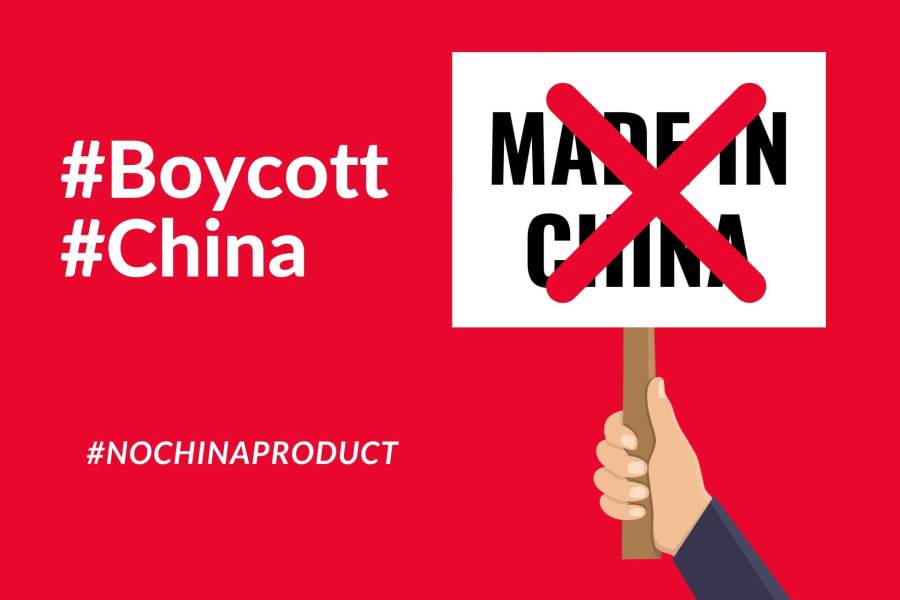
Saying No To China, Could It Be A Tough Road For India?

What happened at Galwan valley of Indian Ladakh had raised tensions between India and China to all time high. The clash between Indian and Chinese forces led to nationwide outburst against China.

Fuelling this, there had been a sudden disagreement for buying any Chinese product or services. This is to make sure that Chinese economy doesn’t receive a single penny from India and its citizens, making it obvious after China bearing malice towards its neighbours, specifically India. The initiative has greatly boosted with GOI’s (Government of India) decision of banning 59 Chinese applications in India and by increasing the import taxes on Chinese goods or services. The Indian armed forces had already been deployed at disputed regions of border and are ready for any surprise from counter side.

With Governments and Armed forces holding tight on attempts to self-reliant India, the dice of responsibility falls our side too. By us I mean, all the common or less common citizens of India whose decision of just boycotting Chinese products could shatter its trade. Already many huge economies of the world have turned against China, amid Corona virus outbreak and deaths of 600,000 (still rising) innocent people.

Boycotting Chinese items won’t be that easy as it sounds, one has to spend a little more of their money while switching to non-chinese brands, as the only PSP (product selling protocol) of Chinese products is its cheap pricing. This pricing gets balanced with its poor quality and doesn’t last any longer. Yet, Chinese products have kept its dominance in certain sectors of Indian market.

The mobile phone sector

India had imported mobile phones worth $11.3 billion from China in 2016-17, and that was about 68 per cent of all mobile phones (both push-button feature phones and smart devices) imports into the nation that year. In 2017-18, even as the duties were imposed, the value of mobile phone imports from China climbed to $15.6 billion, or 71 per cent of the mobile phones imported. As the tax measure began to hurt and local manufacturing of mobile phones gathered momentum, imports of these devices from China halved to $7.4 billion and about 41 per cent of all mobile phone imports in 2018-19. Imports of phones, by value, from China declined further in 2019-20 but not the share, which remains at 40 per cent. If we just speak of alternatives, we have few options of some Korean, Taiwanese, American and just few Indian tech companies. These options are:

  • LG
  • Samsung
  • Nokia
  • Apple
  • Asus

The drop in electronic imports gradually implemented by the GOI in recent years but this won’t be enough and buyers need to push their expenses to continue supporting the campaign of #boycottchina.

Other imports from China include toys, gift items, fabrics and garments, and thousands of small value items that are popular with consumers. CAIT (Confederation of All India Traders) estimates that there are some 3,000 items that can be easily substituted with India-made products in the first phase of the boycott of Chinese goods campaign. The list of China-made items popular with consumers includes fairy lights with tiny LED bulbs that are used to decorate homes during festivals, idols of deities, home decors, kite strings and even incense sticks (agarbattis). It is estimated that about 80 per cent of the incense sticks sold in India are imported from China.

For all of it to happen, for this campaign to succeed we all should hold our horses and should maintain an adequate transition of market into indigenous domain. This would be the only secure and once for all time solution to problems India facing with the dragon as war could never be a solution. It would just tear up economies at both ends and loss of Brave Indian soldiers shouldn’t happen any further.

Human Physiology

Human physiology is the study of how the human body functions. This includes the mechanical, physical, bioelectrical, and biochemical functions of humans in good health, from organs to the cells of which they are composed. It serves as the foundation of modern medicine. The human body consists of many interacting systems of organs. These interact to maintain homeostasis, keeping the body in a stable state with safe levels of substances such as sugar and oxygen in the blood. Each system contributes to homeostasis, of itself, other systems, and the entire body. Some combined systems are referred to by joint names. For example, the nervous system and the endocrine system operate together as the neuroendocrine system

As a discipline, it connects science, medicine, and health, and creates a framework for understanding how the human body adapts to stresses, physical activity, and disease. Human physiology is closely related to anatomy, in that anatomy is the study of form, physiology is the study of function, and there is an intrinsic link between form and function. The study of human physiology integrates knowledge across many levels, including biochemistry, cell physiology, organ systems, and the body as a whole.

History of Human Physiology

The study of human physiology began with Hippocrates in Ancient Greece, around 420 BCE, and with Aristotle (384–322 BCE) who applied critical thinking and emphasis on the relationship between structure and function. Galen (ca. 126–199) was the first to use experiments to probe the body’s functions. The term physiology was introduced by the French physician Jean Fernel (1497–1558).In the 17th century, William Harvey (1578–1657) described the circulatory system, pioneering the combination of close observation with careful experiment. In the 19th century, physiological knowledge began to accumulate at a rapid rate with the cell theory of Matthias Schleiden and Theodor Schwann in 1838, that organisms are made up of cells. Claude Bernard (1813–1878) created the concept of the milieu interieur (internal environment), which Walter Cannon (1871–1945) later said was regulated to a steady state in homeostasis.

Study of human physiology

The major systems covered in the study of human physiology are as follows:

  • Circulatory system – including the heart, the blood vessels, properties of the blood, and how circulation works in sickness and health.
  • Digestive/excretory system – charting the movement of solids from the mouth to the anus; this includes study of the spleen, liver, and pancreas, the conversion of food into fuel and its final exit from the body.
  • Endocrine system – the study of endocrine hormones that carry signals throughout the organism, helping it to respond in concert. The principal endocrine glands – the pituitary, thyroid, adrenals, pancreas, parathyroids, and gonads – are a major focus, but nearly all organs release endocrine hormones.
  • Immune system – the body’s natural defense system is comprised of white blood cells, the thymus, and lymph systems. A complex array of receptors and molecules combine to protect the host from attacks by pathogens. Molecules such as antibodies and cytokines feature heavily.
  • Integumentary system – the skin, hair, nails, sweat glands, and sebaceous glands (secreting an oily or waxy substance).
  • Musculoskeletal system – the skeleton and muscles, tendons, ligaments, and cartilage. Bone marrow – where red blood cells are made – and how bones store calcium and phosphate are included.
  • Nervous system – the central nervous system (brain and spinal cord) and the peripheral nervous system. Study of the nervous system includes research into the senses, memory, emotion, movement, and thought.
  • Renal/urinary system – including the kidneys, ureters, bladder, and urethra, this system removes water from the blood, produces urine, and carries away waste.
  • Reproductive system – consisting of the gonads and the sex organs. Study of this system also includes investigating the way a fetus is created and nurtured for 9 months.
  • Respiratory system – consisting of the nose, nasopharynx, trachea, and lungs. This system brings in oxygen and expels carbon dioxide and water.

Immune system plays important role in our body

The immune system is the body’s defense against infectious organisms and other invaders. … One of the important cells involved are white blood cells, also called leukocytes, which come in two basic types that combine to seek out and destroy disease-causing organisms or substances.

How Does the Immune System Work?

When the body senses foreign substances (called antigens), the immune system works to recognize the antigens and get rid of them.

B lymphocytes are triggered to make antibodies(also called immunoglobulins). These proteins lock onto specific antigens. After they’re made, antibodies usually stay in our bodies in case we have to fight the same germ again. That’s why someone who gets sick with a disease, like chickenpox, usually won’t get sick from it again.

This is also how immunizations (vaccines) prevent some diseases. An immunization introduces the body to an antigen in a way that doesn’t make someone sick. But it does let the body make antibodies that will protect the person from future attack by the germ.

Although antibodies can recognize an antigen and lock onto it, they can’t destroy it without help. That’s the job of the T cells. They destroy antigens tagged by antibodies or cells that are infected or somehow changed. (Some T cells are actually called “killer cells.”) T cells also help signal other cells (like phagocytes) to do their jobs.

Humans have three types of immunity — innate, adaptive, and passive:

  • Innate immunity: Everyone is born with innate (or natural) immunity, a type of general protection. For example, the skin acts as a barrier to block germs from entering the body. And the immune system recognizes when certain invaders are foreign and could be dangerous.
  • Adaptive immunity: Adaptive (or active) immunity develops throughout our lives. We develop adaptive immunity when we’re exposed to diseases or when we’re immunized against them with vaccines.
  • Passive immunity: Passive immunity is “borrowed” from another source and it lasts for a short time. For example, antibodies in a mother’s breast milk give a baby temporary immunity to diseases the mother has been exposed to.

In our current situation of covid-19 immune system plays vital role we should eat those things which can make our immune system stronger and helps to fight with bacteria.

Everyone’s immune system is different but, as a general rule, it becomes stronger during adulthood as, by this time, we have been exposed to more pathogens and developed more immunity.

That is why teens and adults tend to get sick less often than children.

Once an antibody has been produced, a copy remains in the body so that if the same antigen appears again, it can be dealt with more quickly.

That is why with some diseases, such as chickenpox, you only get it once as the body has a chickenpox antibody stored, ready and waiting to destroy it next time it arrives. This is called immunity.

Slavery

Slavery is a term that reflects the injustices that have afflicted mankind since the 1600s. Every time the word appears, people often picture rich white people ruling over black people. However, that is not the end of the case. After careful study, historians found evidence that suggested the existence of slavery in almost every culture. It was not so basically the people who worked in the fields, but the alternatives. Slavery often occurs because of social class distinctions. It is still present in various parts of the world. It may not be the most difficult, however, it happens.


The Effect of Slavery
Slavery is one of the leading causes of racism in most cultures. It has severely damaged American racial relations where divisions were created between whites and blacks.


The effects of slavery have caused irreparable damage that can still be seen. Even after the abolition of slavery in the United States in the 1800’s, racial tensions continued to rise.


In other words, this made them separate from each other rather than close. Slavery also brought white prominence that made people think they were naturally superior because of the colour of their skin and their offspring.


Speaking of other forms of slavery, human trafficking has done much damage. He is a wicked man at work today, destroying hundreds of thousands of innocent people. Slavery is the sole cause of all this.


The result
Although slavery was abolished 150 years ago, the stains are still there. Slaves have not forgotten the hardships of their ancestors. It lives in their hearts that makes them more secure than usual. They are angry at the people their ancestors brought to their list.
Even today many people of colour are victims of apartheid in the 21st century. For example, black people face heavier penalties than white men. They are still mocked for their skin colour even today. There is a great need to overcome slavery and all manifestations of the status and security of all citizens regardless of race, religion, social status or economic status.


In short, slavery has never done anything good for anyone, in the majority or in the minority. We also segmented as human beings and put tags on each other. Times change and so do people’s thoughts.
One needs to be socially aware of the evils that lie in our society in different ways. We must come together to fight it. Every citizen has a responsibility to make the world a safer place for everyone who lives on it.