Success comes from hard-work

We all want success. Every person you see around yourself, be it your mom, your dad, your siblings or friends. Everyone strives for success and would love to have it. 

It is one of those things that will never be enough to satisfy a person. We all somewhere want that constant dose of dopamine in life. 

Success comes in various forms. It can be in the form of money, fame, love, respect etc. any kind of achievement that one has worked for can be counted as true success. Unfortunately, success doesn’t come easy. 

We all know the majority of people who live in this world are unsuccessful. And often we get upset over failing at something. Whether it is a relationship, or a job, or any type of task, failure always makes us upset. 

But while being upset about something is natural and understandable, it often makes us ignore the bright sides of it. There is always something to learn from your unsuccessful attempts which we usually forget about and do not pay attention to because we are too contained by the depression that comes with it. But if that lesson is learnt you can not only have a better attempt next time but it also matures you know broadens your knowledge. 

Let us look at an ant as an example. An ant is a very persistent insect, it may fall from a wall a hundred times but still doesnt give up. It continues to try to get over it’s obstacles and eventually after many many attempts it gets its win. We should take inspiration from this amazing insect, even after failing numerous times it continues to put effort towards it and never gives up. While us humans are no way near like that, most of us quit after a few unsuccessful attempts and then give excuses. 

Success is an old school building. There is no elevator that would get you to the top. In order to succeed in any field. We have to put continuous effort and climb the ladders. Which is always the toughest part as it takes a tremendous amount of courage and determination to keep trying even after a few unsuccessful attempts. Any successful man in the world has worked tremendously hard for it for years and each one of them failed many times as well but the difference is they kept trying. 

 Here are some of the key points you will need in order to succeed-

1- Be consistent- Brushing your teeth for 1 hr one day would barely make any difference but brushing them for 2 minutes for 30 days will make a way more significant difference. 

2- Learn from your mistakes- Your mistakes are your stepping stones to success, do not stop at one. Learn from them and keep trying. 

3- Hard-Work- Do not be lazy about your goals. If you want to achieve them, the only way is working hard. Success does not land in your balcony ,you have to go and get it 

Turn these three tips into habits and eventually, slowly but surely, you will achieve your goals.

Sanskrit:The new language for computer programming!

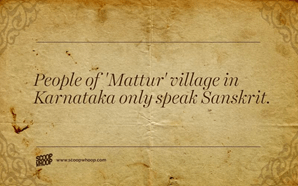
Sanskrit is the world’s strongest logical language, one of the oldest language and it was one of the major languages of India but now is a minority language. It’s known as the perfect language and is also known as mother of all modern languages. It’s the language of Gods in India.

It’s an Indic language and holds a significant value till date all over the world, our vedic scripts were written in Sanskrit and there was a time when Sanskrit was even used as a language during conversations, Sanskrit is the official language of Uttarakhand and is very close to every Indian’s heart. Even some of the major texts of Jainism and Buddhism have been written in Sanskrit.

Though it is being understated now and its use is decreasing day by day but experts say it can be the new language which will be needed in technological advances. The structure of Sanskrit is very logical and the precision it offers cannot be matched by any other language due to which it is considered as a god language for computer programming.

Sanskrit is one of the most ancient languages and it is said that the earliest literature was written in Sanskrit. Initially Sanskrit was said to have no traces in the form of written manuscripts, it was widely spoken, it was around 250 years back that people started writing in Sanskrit in their own respective script, hence Sanskrit scripts have been written in various languages and hence Sanskrit is said to have no official (default) script.

Sanskrit is one of the most phonetically sound languages and it has said to improve one’s learning e of Sanskrit skills and speech, many speech therapists make use of Sanskrit while working with different clients and  also teachers include Sanskrit as part of school curriculum as it is said to improve brain functioning and has many other benefits.

It’s one of the most sacred languages in the Indian culture and one mostly gets to hear recitations in Sanskrit during holy rituals or wedding ceremonies and it is said to have a an soothing and calming effect on our minds due to the vibrations it produces. In India many schools have abided to teaching Sanskrit as the third language in their school curriculum which is an advantageous move as people have slowly withered away from their mother language and it is going unappreciated, especially with the new generation, most of them are clueless about the importance of Sanskrit and the opportunities it has to offer.

According to many experts Sanskrit is the best language for computer programming and also for artificial intelligence, due to its precision and logical base and also because of certain characteristics it poses as a good option as it can be converted into a machine language and can enhance the working of artificial intelligence. This was stated by Rick Briggs who published his paper in 1985, he was an associate scientist working for NASA and he stated that the strict grammar rules of Sanskrit allow for easy conversion and reduces ambiguity when it comes to the use of the language.

Sanskrit as a language holds a lot of value be it one of the best languages for computer programming or one of the most logical languages to be learnt. It is somewhere or the other going unnoticed in its own country and needs to be uplifted by us!

Stray Dogs Stressed Out: The Pandemic Effect

We generally tend to think that only people are in distress for the outbreak of COVID-19. But stray animals are also very much affected due to it particularly during the lockdown. They all were left hungry for several days. Social distancing and restrictive lockdown measures forced people to stay home. This led to the neglect of stray animals in the country. In many cases they are subject to violence— from physical assault to murder. There are over thirty five million free roaming dogs in India. Shutdown of the most vital sources of food, such as restaurants, roadside eateries and markets, deprived them of leftover. Did some of us think about them? When many were struggling with decline in income and even loss of jobs they did not have a chance to think about the stray creatures. Their only source of food were garbage bins and some good Samaritans who ventured out to feed them.

Many hungry stray dogs fell sick amidst the lockdown. The dog-loving locals could not get them to veterinary hospitals due to the restrictions in movement. There was no dedicated ambulance available for them. It forced them to die on roads without any medical help. Puppies who were few days old died mainly because of lack of proper nutrition. Accidents by speeding cars on roads where stray dogs would venture out to look for food from their localities would cause their death. The irregular and uncertain food supply would lead to aggressive behaviour and biting incidents in some stray dogs. This resulted in an increase in rabies infected dogs. India already has the world’s greatest number of rabies cases— 20,000 annually.

At one point a rumour became viral that the dreaded coronavirus can be transmitted through stray animals. The news was found to be fake. But many people thought it to be true. Even some who were helping them out with food started neglecting them. Worse still, some owners discarded their pets to stay protected. Animal welfare NGOs found a rise in rescue cases during the pandemic. The stubborn dog lovers began to face harassment for feeding neighbourhood dogs and cats. There are cases in which volunteers were beaten up by the locals for daring to care about the stray dogs. Some people took the law in their hands to vent anger against stray dogs.

We have seen how much nature changed during the pandemic. People could hear more of birds chirping, see few animals roaming freely on roads. Most animals stay happy on their own— without the human presence. But dogs are an exception. That is why they are called ‘man’s best friend’. Those who are habituated to human touch are missing the feeding, patting and attention towards them. It also affects their mental health. Some dogs are confused, feel betrayed and become depressed. Stray dogs need us not only for food but also for mental support.

Each one of us can also contribute in our own way to protect and help local stray animals. We may reach out to as many of them as possible. We may follow some steps to help them:

  • To take or share responsibilities of local dogs/cats.
  • To save some rice or milk and feed them at a fixed time every day.
  • To keep a bowl of water outside our house to quench their thirst.
  • To donate some grains or food or any other necessary items to animal welfare NGOs.
  • To use a bowl or newspaper to feed them regularly.
  • To quickly contact nearest police station or contact NGO to seek help for any helpless or sick animal.
  • Not to feed them chocolate or anything cooked with ghee or butter.

There is a positive trend now among many in India to have stray dogs as pets. The obsession with having only high breed dogs seems to be offset by having stray dog as family member. Even if not everyone would like to have them as pets a little more caring attitude towards them makes a world of difference not only in their life but also in ours.

CHAOTIC MIND!

What will be your reaction if I start my story with “once upon a time?”

Oh too old and boring it would be. If you ever listened too close to silence you might have heard the ringing between two adjacent words, “unspoken spells”.

Truth isn’t always the most exciting version of things or the best or the worst; it’s in between somewhere! Deserves to be heard and yet remains unspoken. In this chaotic story of mine

Wondering what does the theory say: Maybe it isn’t exactly about Chaos but a tiny little change in a big system that changes everything! Or maybe it’s just an illustration my mind giving to my heart preventing it from sinking deep down some yards!

Watching life closely, it seemed like no Matter what I did, I kept letting people down. And what does that feels like, it feels like nothing LIKE A DEEP, ENDLESS, ALWAYS BLANK NOTHING!

“Soap VS Sanitizer – What Experts Believe?”

Today’s is a time when we humans are living with a pandemic which is growing all over the world. People are getting infected and dying in numbers and it’s count seeing no end. This virus has been named as Corona or Covid-19. This virus infects a person leading him/ her to high fever, cough and lack in breathing. This surely affects the respiratory system of humans, and thus spreads. Since we know that these viruses do require a host to survive, and when they get so, they just multiply. This is a virus which can spread through touch, so mostly advise to maintain a distance of 1 metre or more while talking with a person. But What doctors are so concerned with is the fact that these viruses are going through mutations and are mutating as they spread from one person to another. This surely is a sign of concern, this not only changes the DNA of the virus but also can make it difficult to track  the presence of the virus, since the technique must not be able to catch the virus, as it has evolved, thus the virus may be present even if any individual test negative. So what can be done to prohibit and remain safe from this deadliest virus. 

Doctors advise to maintain a distance of 1 metre or more while talking, use a handkerchief while sneezing or coughing and frequently wash hands with soap or sanitizer. But one of the frequently asked questions by patients and other individuals is which is better Soap or Sanitizer

So to test  and investigate the effectiveness of these  two and figure out which is better, did an experiment. They included and worked on  two scenarios. 

  1. Washing hands with sanitizer 
  2. Washing hands with the soap. 

Doctors in the microbiology lab experimented the effectiveness of E. Coli bacteria. They rubbed their hands with the bacteria and then  hands were runned on the plates, thus leaving hand impacts which were filled with bacteria. Then they washed their hands with the sanitizer but a very small quantity. Then again with a new simple but with a heavy quantity of sanitizer and the same results were recorded. The second scenario was to rub hands in E. Coli and wash hands with soap. Similar experiment was done, first washing hands for merely 10 seconds and second time for more than 30 seconds.The plates were then set to rest for 24 hours and then results were recorded. 

The results were really amazing, hand sanitizer with much of a quantity removed almost all the bacteria than with the little quantity. Same was the case with the soap, the time period of rubbing hands for. More than 30 seconds helped remove more of the bacteria than just running and washing away. But the interesting fact to record was that sanitizer is able to remove almost all the bacteria and clean our hands as compared to soap which helps some of bacteria still intact with the patch. 

“So sanitizer as per experts, doctors and scientists are much more effective as compared to soaps. It’s better to use sanitizer anyway since every drop of it remains untouched and pure and thus is an effective way out to stay away from bacteria and virus and thus stay safe

The fight to free pregnant student activist Safoora Zargar is a battle for India’s very soul

The legitimacy of constitutional courts is imperilled by their tacit deference to indefensible state action.

The incarceration of student activist Safoora Zargar and the obduracy of courts in refusing her bail raises some fundamental questions on which the very survival of the Constitution depends. This is about Zargar first, but as she must, she leads us into the deeper, more searching quest for India’s soul.

Zargar, a 27-year-old research scholar in sociology at Jamia Millia Islamia, Delhi, was arrested almost exactly two months ago, on April 10, on charges of blocking a road and obstructing traffic. After securing bail in that case, she was re-arrested on April 13 under the draconian provisions of the Unlawful Activities (Prevention) Act, 1967. She was implicated in a conspiracy that allegedly sparked the violence that engulfed Delhi at the end of February and placed in judicial custody.

In reality, Zargar was part of the peaceful resistance against the discriminatory Citizenship Amendment Act – a resistance led by women and students, notably the women of Delhi’s Shaheen Bagh neighbourhood. At the time of her arrest, Safoor Zargar was pregnant.

What does the brutality of the state towards a pregnant Muslim peaceful resister during a pandemic lockdown tell us about the deep perils in which our Constitution is mired at this moment? We have reached a nadir. The use of imprisonment and carcerality under conditions of pandemic vulnerabilities to willfully deny Zargar her right to personal liberty is one part of an exercise of state repression.

Added to this is the move by the state to target her in such a manner as to impose disproportionate punishment that includes imposing the risk of prenatal harms and inflicting injuries that may intergenerationally maim a pregnant resister.

Indefensible state action

It is far more grave than a violation of Article 21, which protects life and liberty. What does it tell us about the technologies of rule of this state, which presses its armed Hindutva civilian foot-soldiers, its supporters in the media, its armed police, and its collusive criminal justice system into service to hold Zargar in custody in the knowledge that she is pregnant, although the case against her is clearly one that is targeted and a display of executive vindictiveness?

Online Learning Platforms And Courses.

What is Online Learning ?

Online Learning, or, e-learning, is the education that is done by, or through the internet. Online learning provides u an institution without the walls, you can learn, study and get certified by just being at your place. It reduces the need of travelling, or the traditional classroom sessions or 8 hours, e-learning gives you the chance to learn from anywhere and at anytime.

Resources you get while learning online:

  • EBooks
  • Videos
  • Recorded Lectured
  • Live Sessions for query
  • Journals
  • Quizzes

Some disadvantages of Online Leaning.

  • Lectures are not downloadable: The lectures available in the online learning platforms are not downloadable, this is not suitable for those who do not have proper network.
  • Multiple devices: The same account can be used by multiple users if the id and password is shared.
  • Only for certifications: Few users opt the courses just for the sake of getting certificate, they do not have to watch the whole lectures, if they have paid, they will get the certificate.

Some Online Learning Platforms.

  1. Udemy: It is an American online learning platform, founded in May 2010. Here, the courses are available in 65 different languages, like, English, Chinese, Dutch, French, German, Japanese, Korean, Polish, and etc. Here are several courses available in the field of design, development, marketing, photography, IT and software, personal development, and many more. Total number of instructors teaching in Udemy: 57K Total number of courses available in Udemy: 150K Total number of enrollments in Udemy: 295M
  2. Coursera: It is founded by Stanford computer science professors Andrew Ng and Daphne Koller in 2012. You can access it through mobile, and download the lectures and watch them offline, this is a boon for those who don’t have proper network in their area. The courses are available in more than 40 languages with subtitles. Total number of courses available in Coursera: 4,300+ Total number of learners in Coursera: 63M
  3. Skillshare: It is an American online learning platform, founded in November 2017, by Michael Karnjanaprakorn and Malcolm Ong.There are courses available for designing, business, photography, and etc.
  4. Byju’s: For students of class 1st to 12th. It was founded in 2011, in India, by Raveendran. It offers learning programs for the students of class 1st to 12th, and aspirants of exams, like, JEE, IAS, NEET.

BEST ONLINE COURSES WHICH WORTH LEARNING.

  • Digital Marketing Course: It means the use of internet, mobile, or social media to reach customers.The basics of digital marketing are, social media advertising, social media management, email marketing, search engine optimization, search engine marketing, content marketing, web analytics.
  • Data Science Course: It is the study of data, which includes, recording, storing and analyzing the data. Work of data scientists is to do data modeling process, create algorithms and predictive models to extract the data.
  • Advanced Microsoft excel: It refers to the features and functions of Microsoft Excel tools, that are required to perform large and complex calculations, data processing, data analysis and better representation of data. In today’s time, many jobs require advanced Excel skills, which includes, data formatting, power query formatting, tables formatting, conditional formatting, advanced charting, and etc.
  • Graphic Designing Course: It involves problem solving through typography, photography, iconography and illustrations. in other words, it is the process of visual communication. The graphic designers need to create visual concepts,to communicate ideas with the consumers.
  • Content Writing Course: It is the process of planning, writing and editing the content, or we can say the web content. It includes, writing blog posts, articles, or content for specific platform.

CREATIVITY AND INNOVATION

Creativity is the act of turning new and imaginative ideas into reality. Creativity is characterised by the ability to express the world in new ways, to find hidden ideas to make connections between seemingly unrelated phenomena, and to generate solutions. Creativity involves two processes: thinking, then producing. By this process we can change our world totally. Their are a lot of inventions discovered on daily basis.

If you have ideas but don’t act on them, you are imaginative but not creative. So be creative, don’t stop after imagination, execute your imagination. Make it working, and see how your imagination work.

“Creativity is a connective force: it’s our ability to tap into our ‘inner’ pool of resources – knowledge, insight, information, inspiration and all the fragments populating our minds.

“Creativity is the process of bringing something new into being. Creativity requires passion and dedication. It brings to our awareness what was previously hidden and points to new life with new innovative ideas.

Creativity is a skill that can be developed and a process that can be managed. Creativity begins with a foundation of knowledge, learning a discipline, and mastering a way of thinking. You can learn to be creative by experimenting, exploring, questioning assumptions, using imagination and synthesing information.The creative process allows a child to gain cognitive skills, scientific method, dexterity and exertion, problem solving and the ability to identify symbols, patterns and shapes. The most important aspect of creativity is the process of self-expression or apply your ideas. Being creative helps you become a better problem solver in all areas of your life and work. your creative side can approach a situation from all angles. Creativity helps you see things differently and better deal with uncertainty, and you see the world from new vision.Creativity is a skill that can be developed and a process that can be managed, it is not inherited it is acquired. Creativity begins with a foundation of knowledge, learning a discipline, and mastering a way of thinking. You can learn to be creative by experimenting, exploring, questioning assumptions, using imagination and synthesing information.

Creativity is the act of turning new and imaginative ideas into reality. Creativity is characterised by the ability to perceive the world in new ways, to find hidden patterns, to make connections between seemingly unrelated phenomena, and to generate solutions. Creativity involves two processes: thinking, then producing.

What is Innovation?

Innovation is the implementation of a new or significantly improved product, service or process that creates value for business, government or society.

Some people say creativity has nothing to do with innovation— that innovation is a discipline, implying that creativity is not. Well, I disagree. Creativity is also a discipline and a crucial part of the innovation equation. There is no innovation without creativity. The key metric in both creativity and innovation is value creation.

Creativity and Economic Development:

Creativity is the Most Crucial Factor for Future Success.Creativity begins with a foundation of knowledge, learning a discipline, and mastering a way of thinking. You can learn to be creative by experimenting, exploring, questioning assumptions, using imagination and synthesing information. Learning to be creative is akin to learning a sport. It requires practice to develop the right muscles and a supportive environment in which to flourish.

Spread the Flowers of Happiness

“Never become someone’s happiness, instead add happiness into their lives”. You must be a teenager, an adult or maybe a 70 year oldie, but do you really know what happiness means, what things gives you the spark of happiness or what all things make the butterflies dance in your stomach. We human beings tend to find happiness at every step of our lives, be it our crush, our pets, cooking or be it any other thing, we always think of being happy at every stage of our lives. Now the thing which I am talking about is different, it’s not about being happy it’s about spreading happiness, making the others happy and contibuting something to the society. Money is a materialistic and perishable which will not stay with us forever and which can only make us happy for a short period of time, but happiness is immortal, we will remember the moments of happiness till the last breath of our lives and it will always add a spark in us. In the same way if we follow the ” give and take” rule, contribute happiness to the society, we can master the art of living, we can live with a happy heart and hence look at the society with a different perspective.

freepik.com

If you are busy or confused about how to spread happiness follow these steps to enlighten your lives with different colours.

1.Be happy inorder to make someone happy: First step starts with changing yourself because if we will change ourselves, we will be able to change the others. Be happy, find happiness in small things, have patience in every situation and do not lose hope. This will give you the power to fight with every obstacle and will help you to overcome it.

2.Smile: The best mantra to be happy and to spread happiness. Don’t wait to be happy, think of the moments that make you smile, watch shows that will make you happy and just turn your rough day into a happy happy day.

3.Appreciate others: If your wife makes tasteless food with extra salt, don’t scold her or taunt her, she had put in extra efforts and gave her precious time just to make food for you, appreciate her, infact make another dish for her and spend a lovely happy time. This will not only bring a smile on her face but will also show a sign that you love her and care for her.

4.Be a good listener: There are endless problems going on in everyone’s family these days but what can we do is become a good listener and listen to their problems patiently, guide them, give them a solution or else just tell them that their problems will end soon, you just have to be happy and never lose hope in the situation of crisis.

5.Be a hero for the others: Wish everyone with a smiley face and turn their dark sad days into happy days. This will help you to relieve their pain and bring a sigh of relief in their lives.

6.Feed the stray animals or help the poor: Lat but not the least, the most important part of being happy is by feeding others, is by never letting them sleep with empty stomach and always helping them as a saviour.

As you know that these are the days are of pain and suffering where people are surrounded with endless problems, depression, anxiety and other things and in this time we as a human being can help them by sharing their burden, by always telling them that no matter what happens we are like the pillars of happiness who will never leave you alone. Follow this for once and you will see the difference.

The best way to cheer yourself is to cheer someone else up- Mark Twain

The Emergency: Recalling the horror of sterilisation that took place after the declaration of national emergency on 25 June 1975.

Declaration of The Emergency

On this day, 45 years back, on 25 June 1975, the then President of India Fakhruddin Ali Ahmed declared a State of Emergency at midnight after a meeting with Indira Gandhi who was the prime minister of India back then. The ordinance issued by the president granted all the powers to the prime minister without any restriction. The decision of National Emergency was taken the next day after Indira Gandhi was convicted and unseated from her MP post by the Supreme Court against the charges of exploiting the government machinery and staff for her election campaign. Indira Gandhi sent all her political rivals to prison and reduced the power of the judiciary after imposing emergency all over India. Though the emergency was welcomed by the public at the beginning, this belief changed after they witnessed denial of fundamental rights and human rights violence. One of the cruelest human rights violations that took place during the emergency was forced sterilization.

Population threat to developed nation

The pressure for mass sterilization in India began far earlier before the emergency was imposed. It all started when “The Population Bomb,” a 1968 book by Paul Ehrlich convinced the Industrialised and developed countries that India and other developing countries would pose a threat to their Food security. The author mentioned that population explosion in India can lead to famine in India while it can have indirect effects on other developed countries too. The rising population of India was seen as a threat by the developed countries. Hence, through the financial help of the World Bank and a few American based Philanthropic foundations the Indian Government agreed to control its population vigorously. 

Implementation of mass sterilisation by the Indian government

In 1970, the government followed ‘the camp approach’ which stressed on district authority for intensifying the sterilisation campaign. This campaign saw an all time high in sterilisation number exceeding 3-million in the year 1972-73. However, ‘the camp approach’ was abandoned by the government in the following year. But this number skyrocketed during the period of emergency. Sanjay Gandhi, son of Indira Gandhi, spearheaded the sterilisation campaign. The campaign which previously used incentives to convince the people for sterilization was forcing people to undergo sterilisation process against their will. The most affected people by this scheme were the poor peasants because of their economic vulnerability. While the patients were charged extra if they didn’t possess the sterilisation certificate, the government servants were threatened with transfer punishment if they didn’t procure any sterilization cases. Steps like this pressurised both the authorities and the poor to take part in aggressive sterilization goals.

Brutal human rights violation

But the scene became brutal when the government authorities forcefully captured people returning from late night shows, work etc, They even raided the public transport buses to catch people to conduct vasectomy on them. Vasectomy is a sterilization process for the men. The main targets were men because they were more likely to come out of their houses. It is reported that at some places, the police took all the men from a village to conduct vasectomy on them. It is estimated that around 7 million such victims were affected during the emergency throughout the country.

End of brutality 

The tragic situation came to end when the national emergency was withdrawn on 21 march 1977. This was one of the significant reasons for the fall of Congress in the following election. Since then the population of India has doubled while India has never witnessed any famine till date.   

CHEESE- introduction and production

Cheese is a most commonly used dairy product which is a product derived from milk. Cheese is available in the market in various textures, forms and flavors. It is basically the product of coagulation of milk protein, casein. Cheese is said to be a concentrated form of two major products i.e. Milk protein (casein) and Milk fat. Combination of these two results in the production of cheese which is very much liked by everyone nowadays.
The other ingredients of cheese besides milk are a particular, selective strain of a bacterium, a milk clotting agent and some amount of sodium chloride (to give a salty flavor).
Various types of cheese are present in the market which is basically due to the variation in its basic constituents. No new ingredient is actually added in forming the new type of cheese. Just a basic variation in the already present ingredients can help. Sometimes there is a need to add new additional ingredients which give rise to completely different variety of cheese. It has also been observed and noted that the change in any environmental conditions surrounding the manufacture and subsequent ripening of cheese also affects its manufacturing and thus type.
BASIC CHEESE MANUFACTURING PROCESS –
The basic cheese manufacturing process consists of 3 main stages – Curdling, Curd processing and ripening. All different varieties of cheese can be manufactured at different levels of manufacturing means some cheese can be made in the first step while some needs all the 3 steps to completely occur.

  1. CURDLING –
    It is the first and the most important step in the production of cheese. In this step, there is a separation of milk into solid curds and liquid whey. Usually, this step is achieved by the addition of acidifying (souring) agent in milk and adding the enzyme RENNET. The acidification can also be achieved by directly adding some acidic agent such as vinegar. But most commonly for this acidification purpose, a starter bacteria is used which converts milk sugars into lactic acid and without even the addition of any acidic substance, the acidification is achieved. The common starter bacteria which are used are from Lactococcus, Lactobacillus, or Streptococcus families. Swiss cheese requires the addition of Propionibacter Sherman, which is used to produce Carbon dioxide bubbles during ageing resulting in the hole like structure of Swiss cheese.
    Some fresh cheeses are curdled only the acidification process, but most cheeses require the addition of enzyme, rennet which sets the cheese as strong and rubbery. It also allows the curdling step at low acidity.
  2. CURD PROCESSING
    Till this step, the cheese has now set into a very moist gel. Some soft types of cheeses are essentially complete in the first step. They are just drained, salted and packaged. But from other cheeses, which are not been prepared in the single step, the curd is cut into small cubes which allows the remaining water to drain off from the individual pieces of curd itself.
    Some harder cheeses are then heated at a normal temperature which deliberately forces out the whey from the cut curds. This step changes the taste and flavor of the cheese. Apart from providing a salty flavor to cheese, salting has some other benefits also like it prevents cheese from spoiling, it drains out moisture and also it is used in firming he cheese’s texture in an interaction with its proteins. Different cheeses have different processes of getting texture.
  3. RIPENING
    Most of the cheeses are already prepared in the last step, some of which are not prepared yet are of harder varieties and more rubbery in texture which is completely attained in this step. In this step, the cheeses are left to rest under controlled conditions. This step is also known as AGING. This step may take several years to complete. As a cheese ages, the microbes and the enzymes secreted by them transform its texture and also intensify the flavor. This transformation is more of a result of the breakdown of casein proteins and milk fat into a complex mixture of amino acids, amines and fatty acids.

Earth’s Eight lost continent Zealandia found

An underwater continent whose existence was discovered 25 years ago named as Zealandia by a geophysist in the year 1995. It ranges about nearly 2 million square miles. It is located at 3500 feet under south Pacific Ocean. The land had been submerged years ago and scientists found it in the year 2017 and it took them nearly 3 years to figure it’s breadth.

Scientists from GNS science in Newzealand officially announced the range and size if the continent accurately. They had also launched the map of our eight continent. “We’ve made these maps to provide an accurate, complete, and up-to-date picture of the geology of the New Zealand and southwest Pacific area — better than we have had before,” Nick Mortimer, who led the work, said.

Map of earth’s Eight continent

We can’t survive there because only 6% of continent lies above the sea level and rest submerged under the sea. It is predicted that this continent is 85 million years old. The person coined the term for eight continent said that “The reason I came up with this term is out of convenience,” Luyendyk said. “They’re pieces of the same thing when you look at Gondwana. So I thought, ‘Why do you keep naming this collection of pieces as different things?'”

How are continents formed?

Pangea splited into two halves namely Laurasia and Gondwana which eventually breakers into Europe,Asia, North America and Africa, Antarctica, South America and Australia respectively. These continents rearranged themselves and formed a structure that we see in our maps. In the mean time this division caused some of the land to mere itself underwater 30 million years ago. The rearrangement of the continents made one of the continent to merge in water. Untill 2017 Zealandia was considered to be a microcontinent because its range was unclear. After discovering it’s size now it has been able to fit into the features and descriptions of a continent.

If we could pull the plug on the world’s oceans, it would be quite clear that Zealandia stands out,” he told science news in 2017 adding, “If it wasn’t for the ocean level, long ago we’d have recognized Zealandia for what it was a continent.”

We may have a chance to live underwater if we scientists could research there. Government can rather spend it’s money on underwater survival rather than spending it on space and research. Research where you live before you leave. Hope someday someone will find a way to live underwater when there is no life above the ground.

How the lockdown has changed our lives

Almost no nation has been spared as the novel coronavirus has swept around the world. But responses to the coronavirus have differed greatly from country to country. Quarantines and lockdowns have become ubiquitous, but even then there is great variance in their severity. In South Africa, tens of thousands of troops have been brought in to enforce one of the world’s strictest lockdowns, while countries like South Korea and Taiwan have managed to contain their outbreaks without closing everything down.

Drastic changes to our routines have forced us to alter our social habits and re-evaluate our relationships – the effects of which could continue into our lives after lockdown, according to experts speaking to Euronews.These changes could also have a significant impact on our mental health even as stringent stay-at-home measures continue to lift across Europe.”Massive levels of stress and anxiety are a big factor,” clinical psychologist Dr Eddie Murphy told Euronews. “It will impact different populations in different ways, but individual stresses have been ramping up.”

The Ireland-based psychologist noted that each nation would be looking at its own protections for mental health amid the pandemic, but stressed that psychological first aid would be necessary.He said: “This would be a one-off immediate approach, and would be around for the general public to use if they are distressed.”According to Dr Murphy, the interventions being crafted are built around three specific stages: the first being broad-based for stress and anxiety, a second for generalised anxiety and “disrupted grief”, and a peak level for those who could be experiencing post-traumatic stress disorder (PTSD).He said the interventions would be in place for everyone, but would be on a particular alert for children, those with disabilities, and the vulnerable.

It’s ‘time to re-prioritise’ what matters in relationships

The effect of lockdowns across Europe aren’t always negative. For many, they will have also proven to be a good opportunity to re-evaluate personal relationships.For cohabiting couples, social psychologist and relationship scientist Veronica Lamarche said partners could use the lockdown to work to “re-prioritise what they want to be getting out of these relationships.””Think of lockdown as a clean slate. Things that weren’t working well before, we can focus on and re-invest.”She then noted that some couples would be feeling a strain due to unusual circumstances “bringing to light issues” when spending a lot of time together.”Some countries will say there has been a sudden increase in divorce rate, which is partly natural because you’re forced to evaluate and re-prioritise what matters,” she said.But for others, she added: “Some are really valuing and appreciating the time they’re able to spend with their partners.”Before lockdown, external [factors] may have been taking away from the relationship.

The ‘value’ of face-to-face interaction

More widely than this, an extended lack of physical face-to-face communication could prompt people to realise just “how valuable” social interactions can be, according to behavioural psychologist Benjamin Voyer.He told Euronews: “Humans are very social by nature. The things we find to replace these [interactions] do have merit, but people are discovering how tiring virtual communication can be.

“With face-to-face communication, we can sense and communicate in a much more subtle way.”But with online interaction, we need to compensate for the lack of cues that we usually use to signal we are engaged, happy, etc.”This makes it more tiring.”

A cultural shift?

Voyer said lockdowns could also lead to a shift in values of Europe’s traditional cultural mindset – from one where “everyone is expected to take care of themselves” to another where “the default is to take care of others because you expect others to take care of you.””People are likely to develop these as they are forced to take the perspective of others and understand their difficulties – see parents realising that teaching children is much more challenging than it may look like.”

Examples of this level of empathy can be widely seen amid the pandemic, such as the #StayHomeSaveLives campaign in the UK that encourages people to consider protecting the lives of others.The personal merits of face-to-face interactions are also clear among those kept apart by lockdowns in public posts detailing things people have missed the most.

Will habits and detrimental psychological effects fade?

Any long term changes in social habits are more likely to be personal rather than societal, Voyer said, adding that this could vary depending on our experiences of the lockdowns.He added: “Some may have discovered working from home and may want to stick to it after the lockdown.”For others, it is about establishing a routine of video calls with friends – or getting everything delivered.”

“Virtual partying” is a term that has gained currency over the past two months as a world in quarantine looked around for new ways to socialise, along with other words or phrases that have become commonplace, like “social distancing” and “Zoom bombing”. And, as we take uncertain steps into a not-so-brave new world after lockdown, another term will perhaps get even more commonplace. The “new normal”.Though initially used to describe business conditions in the western world following the financial meltdown of 2007-2008, the term has resurged now globally following the Covid-19 pandemic. The “new normal” is already here, and the changes go way beyond the mask you have to wear.

 THERE’S NO PLACE LIKE HOME

The lockdown may have made us retreat into a bubble, but it is a digitised bubble—from virtual parties to conference calls, webinars to online learning courses. The trend is here to stay, at least to some extent. While the benefits for employees include saving time from commuting and better work-life balance, employers have actually experienced more productivity, accountability and transparency from employees. There are practical reasons, too. Social distancing norms mean many offices will not be able to function with full strength, at least until a vaccine for Covid-19 is found. WFH, coupled with hot-desking (allocating desks to workers when they are required or on rotation) and technology means you need lesser office spaces.

TOUCH ME NOT

In the post-Covid-19 world, “no contact” might become the standard. Sanitary- and gadget-makers are working hard to bring out products that work on sensors, and tech companies like Apple and Samsung are trying to bring out phones that could work as virtual debit cards. Recently, the Reserve Bank of India wrote to payment networks like Visa, Mastercard and the National Payments Corporation of India to allow tap-and-go functionality on card payments at all shops, soon, instead of swiping. “A contactless revolution in communication, collaboration and commerce is imminent.”

KEEP DISTANCE

The new rules of social engagement will include a big dose of distancing. IITs have already earmarked a new matrix for classrooms as well as staggered schedules. The directorate general of civil aviation has proposed a seating arrangement where a certain number of seats in flights are left vacant. From Restaurants Association of India talking about fewer tables and contactless menu to multiplexes talking about new seating arrangements, everyone is preparing themselves for a new reality.

HEAL THE WORLD

The lockdown period spawned many memes, some funny and some poignant, on human impact on the world. “Ideally, I would like this black swan event to help us lead lives that are less materialistic and leave less carbon footprints.” “Of course, the way our society has been leading this consumption-fuelled life has just been unsustainable. This is nature’s revenge; we have to change. In many ways, I am actually so respectful of this new normal.”But will it last? “While a few people may make lifestyle changes, I believe [soon enough], we will largely be sucked back into the same enticing lifestyle as before,” sighs Kumar. It will be curious to see whether the “new normal” is just a bump along the way or a path-changing reality.

Once the storm is over, you won’t remember how you made it through, how you managed to survive. You won’t even be sure whether the storm is really over. But one thing is certain. When you come out of the storm, you won’t be the same person who walked in.”

Haruki Murakami, Kafka on the Shore

Gyms are going to open from July- Good or Bad decision

A gym after two months lockdown open for cleaning

Due to Covid 19 , in our country, the gyms are closed since March 2020. But now may be they will be going to reopen from next month. Many bodybuilders already showed their anger on social media platforms. Many online movements also run down in this period.


Dumbles really needed to be sanitize properly

But the question arises with masks the heavy breathing how can be achieved. And how the social distancing can be possible. With wearing masks, the inhalation process also too much disturbed. This can create a problem related to respiratory system. All these questions are major issues. And it’s very needed to do the exercises with proper precautions regarding Covid 19.

Although it is very necessary to be fit but through gyming it can be dangerous in this pandemic situation of Covid-19. Instead of going to gym, people should make home gym and also do yoga for fitness.

Love marriage vs Arrange marriage

Their are different kinds of people in this world and everyone has different mindset, different opinions and views over things. Some people prefer love marriages while some prefer arrange marriages. Everyone thinks about the pros and cons of these two and chooses one for them accordingly. Everything is planned by a person for their future.
But the life donot goes on according to our plan, it always shows twists and turns on the very moment we feels everything is going on according to our plan.

Marriages don’t goes according to your plan. Those who wants to do love mariage often ends up doing arrange marriage and vice versa. It’s all about the entry of right person at right time in your life. Even if you don’t want to love a person, but falls for them that was not in your plan but it occurred. Many times you wanted to do love marriage it’s your family who tells you marry as soon as but you don’t have any partner at that time and ends up doing arrange marriage that was also not your plan.

Everyone has their own views on the advantages of type of marriage they prefer and disadvantages of the other one. But in actual both types of marriages has proven to be very successful in history, in present and will be in future.

In love marriage, we knew that person already, we knows that weather we are compatible for eachother or not, weather we can live a happy life together forever and sometimes it is found to be difficult between couples to manage things because adjustments are needed as it’s not the same after the marriage as it was before while in arrange marriage, we don’t that person clearly but we gets some time to know that person before marriage, and after marriage we slowly comes to know more about our partner, however a littel bit of more adjustments are needed in a less amount of time to make eachother happy.

Hence, the most crucial thing in a relationship is adjustments which can only be possible when we love the person and our main priority becomes to make them happy and comfortable and this priority makes it easier to do adjustments in the starting and one’s we get used to of our partner then no more adjustment things comes to our mind, automatically everything happens which is needed for a happy life.

Hence, in a relationship love is needed the most to live a happy and successful marriage life.