CBSE Evaluation Criteria for 10th 12th Result 2020 released – Explained, how marks would be calculated

CBSE Evaluation Criteria has been released for CBSE 10th 12th Results 2020. Result for all students would be released. Here is how the marks would be calculated for the papers that were cancelled.

Central Board of Secondary Education, CBSE has submitted the assessment and evaluation criteria for the cancelled 10th 12h board examinations. The board would be awarding the students based on the papers they have attempted. For the students who have not attempted a minimum of 3 papers (especially students of North East Delhi) the results would be based on internal evaluation. Check complete notice and details here.

For students whose all papers were complete, the marks would be declared basis the performance in the examination For students of classes 10 and 12 who have appeared in more than 3 subjects, the marks for the pending subject would be based on the average marks obtained in the best three subjects For students who have appeared only for 3 subjects, average marks on the basis of the three attempted subjects would be used for determining the marks of the pending exams that were cancelled For the Class 12 students whose only 1 or 2 papers could be conducted (true for students from North East Delhi), their results would be declared basis the performance in the appeared subjects as well as the performance in the internal/practical/project assignment. These students would have an option to appear for the examination at a later date. The results of all such students, however, would be announced along with the results of all the students.

For CBSE Class 10 students (barring students from North East Delhi), all core exams of 5 subjects were completed. The CBSE Class 10 results of the students, hence would be basis the performance in the examinations attempted. All the other examinations were cancelled this year and as such the board would not be grading students on those papers.

Results would be declared by the board by July 15, 2020 for all CBSE Class 12 students, irrespective of the number of subjects students had appeared for, so as to facilitate the admissions to higher educational instituted. Marks and option to appear for the examinations at the later date would depend on the way their result is calculated.

Students who appeared for all their papers

Most of the students of CBSE Class 12 had already appeared for the papers they had opted for. For all such students, the marks would be awarded basis the performance in the examinations attempted. All such students would not get an option to appear for the examination at a later date. Their results would be binding.

Students who appeared three or more papers and 1 or 2 subjects were pending

For such students, the board would be awarding students as per the average of the best three performed subjects. For instance, say a student appeared for English, Maths, Accountancy and Economics and the Business Studies paper was pending. Now, the student scored (out of 100), 75 in English, 45 in Maths, 85 in Accountancy and 90 in Economics, then the student’s marks in English, Accountancy and Economics would be considered for calculating the average marks in Business Studies. All such students would have an option of appearing for the board exam for the subject that was cancelled when it is conducted by CBSE at a later date. Students can also choose to accept the average marks awarded by the board. However, should the student choose to opt for and appear in the examination at the later date, the marks thus obtained by the students in the examination would be considered final (even if they are less than the average score that was awarded).

Students who appeared for only three other papers

For all such students, the marks would be awarded on the basis of the average score of the three subjects appeared for by the student. For example, say the students appeared for English, Physics and Chemistry and secured (out of 100) 75, 80 and 80 marks respectively, the marks for the remaining two subjects would be given on the basis of the average of these three subjects. All such students too would have an option of appearing for the cancelled papers at the later date. Again, should the students opt to appear for the examination at the later date, the marks thus obtained would be considered final – irrespective.

Students who appeared for only 1 or 2 papers (Students from North East Delhi)

For such students, the marks would be a combination of the average of the performance in the subjects the students appeared in as well as their performance in internal assessment (practical, project, etc.). These students too would be allowed to appear for the examination at a later date to improve their performance.

IMPORTANT TO NOTE

No exams for Class 10 students would be conducted. The results thus calculated and released would be finale. CBSE Class 12 students would have an option to appear for the exams whose marks were awarded based on averages as detailed above. In such a case, the performance in the paper appeared would be considered. CBSE has not shared when the students need to share their choice for optional.It can be assumed the CBSE may provide the students the option to appear for the examination once the results are declared.

CBSE Class 10, 12 Board Exams 2020 which were scheduled for July have been cancelled. The board presented the evaluation criteria to the Supreme Court, which has in turn accepted and allowed CBSE to release the same. The notification detailed above would be released on cbse.nic.in by end of day today. ICSE Board, too, decided to cancel the pending exams. The evaluation criteria, as per CISCE Counsel, would be slightly difference from CBSE and students may be given an option too. The evaluation criteria of ICSE board would be released in a weeks’ time.

By :- Kanika

CBSE 2020 results date: CBSE class 10 and Class 12 board exam results announced; read here

The Central government on Friday told the Supreme Court that the results of CBSE and ICSE board exams of Class X and XII will be declared around mid July

The Centre on Friday told the Supreme Court that the results of CBSE and ICSE board exams of Class X and XII will be declared by July 15. The Top court also permitted CBSE to go ahead with its assessment scheme to award marks to students for cancelled exams.

Solicitor General Tushar Mehta, appearing for the Centre and the CBSE, said that the assessment scheme will consider marks achieved by students in last three papers of board exams.

According to Exam Controller Sanyam Bhardwaj, the exams which were pending due to the COVID-19 situation have been cancelled.

‘Class 12 students will get an option’

“Results will now be declared following an alternate assessment scheme. Class 12 students will get an option to appear for exams later to improve their score. However, for students who chose for sit for exams, their marks in the exams will be treated as the final score,” Bhardwaj said in an official notification.

“Class 10 students will not get the chance to appear for improvement exam. Their result declared by the board shall be treated final,” he added.

The CBSE on Thursday had informed the top court that the Board has decided to cancel the remaining Class X and XII board examinations in light of the rising number of COVID cases across the country.

‘Conducive time’ will be decided by the Centre General Tushar Mehta told the Supreme Court that for now, the exams that were scheduled from July 1 to July 15 have been cancelled and will be conducted at a conducive time for Class XII students. The ‘conducive time’ will be decided by the Centre’

ICSE board told the Supreme Court that they too were agreeable with the CBSE decision to cancel the board exams for students of Classes X and XII. The state of Maharashtra, on behalf of ICSE, had earlier informed the Bombay HC that they will be unable to conduct the exams for the students this year.

ICSE has however clarified to the Supreme Court that they will not be providing any student with an option to appear for the exam at a later date and the results for all students in Class X and XII for the ICSE board will be declared on the basis of their marks in the internal assessment.

The CBSE class XII exams had started on February 15 and were to conclude on April 3. The class X exams had started on February 21 and were to end on March 29. However, the nationwide lockdown to contain the spread of the coronavirus (COIVD-19) pandemic came into force from March 25.

No exams for students of all UNIVERSITIES


Union HRD Minister Ramesh Pokhriyal ‘Nishank’ has asked the University Grants Commission (UGC) to revisit the guidelines issued earlier for intermediate and terminal semester examination, and the academic calendar

Exams for final year students in universities and higher education institutions which were to be held in July are likely to be cancelled in view of the spike in COVID-19 cases, and the commencement of the new session is likely to be deferred to October, according to officials.

Union HRD Minister Ramesh Pokhriyal ‘Nishank’ has asked the University Grants Commission (UGC) to revisit the guidelines issued earlier for intermediate and terminal semester examination, and the academic calendar.

According to officials, a panel, set up by UGC and headed by Haryana University vice-chancellor R C Kuhad, has been asked to revisit the guidelines and come up with alternative options. The revised guidelines are expected to be announced by the higher education regulator within a week’s time.

“The ministry has made it clear that the foundation for revisited guidelines shall be the health and safety of students, teachers staff. The expert committee is of the view that the examinations due in July in most universities as per the revised academic calendar be cancelled and marks for final examination be awarded based on the past performance of each student.

“Students who are not happy with the final marks being given to them based on previous examinations, can be given a chance to improvise their scores by taking examinations later when the pandemic subsides,” a senior official said.

“Similarly, the commencement of the new academic session, which was earlier planned for already enrolled students from August and freshers from September, is also likely to be deferred to October. The deliberations are on and final guidelines in this regard will be announced soon. However, any guidelines framed will be subject to review depending upon the COVID-19 situation,” the official added.

Universities and schools across the country have been closed since March 16 when the central government announced a countrywide classroom shutdown as one of the measures to contain the COVID-19 outbreak.

A nationwide lockdown was announced on March 24, which came into effect the next day. While the government has eased several restrictions, schools and colleges continue to remain closed.

The UGC had in April formed two committees to deliberate on issues arising due to the lockdown to avoid academic loss and take appropriate measures for the future of students.

One of the committees, led by Haryana University Vice-Chancellor R C Kuhad, was tasked with looking into ways of conducting exams in universities amid the lockdown and work on an alternate academic calendar.

The second committee, formed to suggest measures to improve online education, was led by Indira Gandhi National Open University (IGNOU) Vice-Chancellor Nageshwar Rao.

Based on the recommendations of the two panels, the HRD Ministry had on April 29 announced the guidelines recommending the exams for final semester students be conducted in July.

The commission had said that the universities may decide whether to conduct exams online or offline keeping in view the support system available with them and ensuring a fair opportunity to all students.

The UGC had recommended that intermediate semester students may either be evaluated on the basis of internal assessment or in states where the COVID-19 situation has normalised, exams be conducted in July only.

The commission had also said the new academic session for freshers may begin in universities from September and for already enrolled students in August while the admission process may begin in universities from August 1

However, due to spike in coronavirus cases, various states recommended cancellation of final year exams. A few states like Maharashtra and Madhya Pradesh have already announced their plans in this regard.

The cancellation is also likely to put to rest the standoff between DU administration and students and a section of teachers over the university’s decision to conduct Open Book Examination (OBE) online for final year students. PTI GJS GJS NSD NSD


Discouraged Lion

When you own your legacy with no unfolded stories life it becomes easy to fight with anything. And in case of reverse inspite of being lion you are discouraged to do so. No political angle in it- it’s one of the professional antiquates.

How Pop Culture Trends Influence Youth….

At times, students fail to complete their assignments successfully due to the complexity of a topic. Some topics are difficult to cover because they should analyze many issues. For example, the relations between pop culture and youth are complex and include a lot of things to consider and explain. In the meanwhile, it’s a very interesting and popular theme for debates. A human being is a social creature that desires to interact with other people. Thus, people unite due to a common purpose and initiate small communities, which steadily develop into a real nation. Every nation has its culture and it affects the youth. The further division of culture creates popular culture trends that play an important growth in the development and maturing of young generations. Popular culture trends may have positive and negative effects for the youth and we should be aware of every manifestation.

Popular culture has long been associated with youth. TV and movie producers, as well as celebrities and their agents, frequently market their wares specifically to young people. Teens find extreme sports appealing and love to try trends. But pop culture has gone beyond reality TV and bungee jumping. It’s become more about making a personal connection with teens and having them interact with popular culture and each other.

influence young people today, such as TV, movies and celebrities, were popular with previous generations. However, the way that teens access and interact with popular culture has been revolutionized by technology and specialization. They don’t just experience popular culture and react to it; they interact with it and affect it in real time. They’re using technology to do it, and youth leaders can utilize these same technologies to establish relationships between our teens, their views of culture and their faith.

Pop culture has a huge influence on teens. They tend to imitate current trends and other people. The influence shapes the way they think (psychologically), act (behaviorally), and feel (emotionally). It helps to define themselves. They recognize themselves and see as if with the eyes of other people. The image that is taken from culture shapes their worldview and affects personal choices. It’s really nice when teenagers follow a celebrity who has healthy habits, is kind, educated, leads to a healthy lifestyle and so on. Nonetheless, many celebrities are far from being a good example to follow. Many of them take drugs and drink a lot of alcohol. Thus, many youngsters imitated this terrifying lifestyle and ruined their own lives. Teens likewise lose interest in school and normal things that used to make them happy.

Pop-culture is a timeless notion. It happens in every moment of the history and influences people who enjoy mass values. It is not only about youth: adults also get affected by popular culture if they stay in touch with the current trends and monitor what’s new. Older generations are adherents to popular culture of their own youth so that they are least likely to follow new trends.

By popular culture, we mean everything that happens in the media, arts, sports, society, or entertainment. Today, online media have become a potent transmitter of popular culture to young people who use them most. Social activities are arranged on Facebook where people can discover them. TV shows and movies are discussed and popularized online too. People who actively use social media are very likely to follow popular culture as news and updates are displayed in their newsfeed. There is no doubt that popular culture changes generations. Both youngsters and adults are likely to adopt features popular among their peers, and pop culture is the largest source of such features.

The influence of popular culture has a strong impact on young generations. It can be noticed in numerous manifestations and interacts with all sides of our life. There are great chances that teens will imitate the wrong model of behavior. Accordingly, parents and society should keep an eye on this issue.

Refrences:-

https://scallywagandvagabond.com

Facebook or Fakebook?

Facebook is one of the most remarkable names in the field of social networking domains that has evolved to be a brand with no competition whatsoever. Although there are other apps like Twitter, WhatsApp, Instagram and the like, but literally nothing can be compared to Facebook in terms of the wide range of usage it happens to cover. Facebook has become an option that literally provides a huge range of elements to its users which include but are not limited to news, sports, memes, jokes, promotional posts, motivational posts, current affairs and so on. Facebook has made it possible for us to be a part of the global world with just one click in absolutely no-time!

However, the fact that has come to the surface with the gradual development of Facebook should also be mentioned in this regard. A tendency to pretend to be someone else has come up to be one of the major repercussions of using Facebook in a regular manner. Everyone likes putting their daily lives up there on Facebook without thinking about its consequences. It is not bad to post stuff on Facebook but the fact that it has helped a tendency to evolve out of people that goes on to present a mask-like persona. Everyone pretends to show how happy they are in their real life by posting stuff on Facebook regularly no matter what is going on in their life. It has both positive and negative side effects. Therefore it gets clear how Facebook has contributed in making the digital world a domain of pretentiousness which can be really harmful at times.

Facebook has also caused a rise of the rate of cyber bullying along with a huge number of cyber-crimes in today’s world. With each passing day thousands of people create their accounts on Facebook and the rate of cyber bullying and cyber -crime increase by 5%. Teenagers are the most affected ones who have to go through different kinds of humiliations and harassments on a daily basis due to the heinous crimes committed by the cyber criminals.
Facebook has gradually blurred the boundaries between the digital and the real world. It enables people to pretend what they actually are not and present different versions of themselves which are supposedly a more acceptable one to the others. This way, it has also gone forward to create a huge impact on mental health issues.

The fact that Facebook allows everyone to post their heart out has many repercussions. Racist, sexist, homophobic, transphobic and misogynistic posts seem to be floating around all over Facebook without having any counter action from the authorities. It promotes different problematic sets of ideologies that affect every one present on Facebook in some way or the other.
Facebook plays a huge role in influencing and eventually controlling the youth of the world. Considering all these aspects that come along with the positive sides of Facebook everyone should start being more careful about their online presence since it has so much power nowadays.

-Suvasree Bandyopadhyay

16 Year Old Tik-Tok Star Siya Kakkar Commits Suicide.

The year 2020 has been a devastating and shocking year for everyone around the world. When it comes to the entertainment platform which mainly includes acting and dancing there had been many shocking up comings in this year which includes the death of the famous bollywood star sushant singh rajput due to poor mental health and depression. When everyone had not gotten over the death of sushant singh rajput there has been another incident where a famous tik-tok star has committed suicide in Delhi. The 16 year old had caught the eye of the audience with her brilliant set of dancing skills. It has been reported that the 16 year old lived with her family and was found dead around 9 pm the previous night. As per the police reports there has been no suicide note found.

It has been come to light that the star had around 11 lakh followers on tik-tok and her last post was 6 days prior to the incident. The news of the stars death was confirmed by her manager who reportedly said “This must be due to something personal…work wise she was doing well.I had a word with her last night for a new project and she sounded normal. Me and my company Fame Experts manage lots of artist and Siya was a bright Talent. I am heading to her home in Preet Vihar.” she said.

It is absolutely shocking that children of such age can take such a drastic step in their life and put an end to everything. It is the parents that have to suffer for the rest of their lives in guilt that they could not save their child irrespective of the situation. The digital world of movie stars and all sorts of actors and dancers have come under the spotlight as what kind of mental and peer pressure they tend to face in their lives.

Word cup 1983

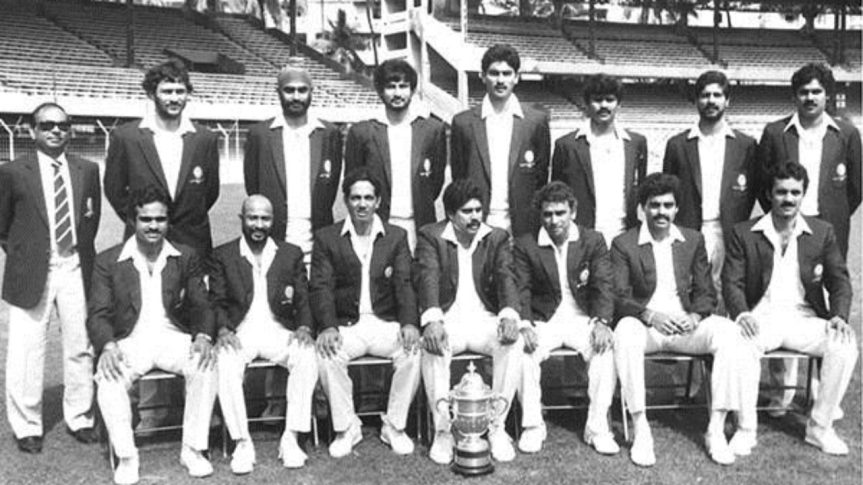
25th June 1983, was the first time that India won the cricket world cup. It was the first time that India had made an appearance in the finals, and they were up against West Indies  for whom this was their third consecutive world cup finals appearance. The world cup was hosted by the company Prudential that is why the world cup is also called Prudential world cup .The finals was played in Lord’s  cricket stadium also called  Lord’s in London which had had hosted world cup for the third time. India defeated West Indies by 43 runs. Kapil Dev lifting the Trophy from the balcony of the Lord’s cricket ground still remains the image of savor for the India fans. Even after 37 years people acknowledge this finals as the most memorable game played by the India cricket team.

India were the underdogs in the tournament, there was not much expectations from the team. However they defeated Zimbabwe in a crucial match, thanks to Kapi Dev who made 175 runs which lead the team to win the match. India was at 78 runs 5 wickets when Kapil dev came for batting his extraordinary innings took Indian team to victory. Unfortunately this historical match was not telecasted as British Broadcasting corporation  was on a strike  that day. In semi finals England was defeated by India by six wickets with thirty two balls remaining and Mohinder Amarnath becoming the player of the match. West indies defeated Australia in the semi finals by seven wickets with thirteen balls remaining and Vivin Richards became the man of the match.

West Indies and India made it to the finals, at that time West indies had really good bowling attack. So when they won the toss they chose to ball first and allowed India to Bat.  First came Sunil Gavaskar but his innings was short as he got out for just two runs but Krishnamachari Srikanth and Mohinder Amarnath had a good partnership and brought the runs to the fifty mark. Then soon Srikanth got out making  thirty eight runs, after that as the score was marching towards a hundred Mohinder Amarnath and Yashpal sharma lost their wickets after making twenty six runs and eleven runs respectively. Then came the captain Kapil Dev who stroke three boundaries in eight balls but got out in just 15 runs. Nor could the next players like Kirti Azad and Roger Binny could make runs, they did not even cross the double digit. Then Sandip Patil could only score 27 runs and The all rounder Madan lal came back to the pavilion after making 17 runs. India was all out in 54.4 overs making 183 runs.

Then came India’s turn to bowl, the first wicket was taken in just 11 balls by Balwinder singh sandhu that too of Gordon Greenidge who was really in a great form, he could only take 5 runs. West indies also had a great partnership of  Desmond Haynes and Vivin Richards which enabled west indies to cross the 50 mark, but  both of them were dismissed by  Madan Lal and Kapil Dev respectively. Soon West Indies was all out in 52 overs making 140 runs and India won by 43 runs and Mohinder Amarnath becoming the Man of the match. No Man of the series was awarded that year.

This victory not only made these players a hero but also changed the perception of games in India. This also lead to a high commercialization of cricket as a game, people started to think sports as a career and also many people really got engaged to the game. This win also brought a sense of ” we can do it” for the Indian team.


Media in India: Politics of regulation in a time of false News

The media plays a pertinent role by providing information which is indispensable for two reasons. Primarily, it ensures that citizens formulate proper and updated views by analysing the authentic and genuine facts as provided by media. Secondly, it provides information as a “checking function” by guaranteeing that the chosen government and its representatives act upon electoral promises.

Media thus plays a central role since it is the single means through which public opinion is engendered. The stability of a country is assessed by the way the media report the news of that country. Thus, it becomes the obligation of the media to circulate only applicable and valid facts locally and globally.

The role of media has been changing from what it was perceived. The neutrality of news in reporting is missing in the mainstream media today because of the hidden agendas that many press and media outlets hold.

 Media in India is mostly self-regulated.  The existing bodies for regulation of media such as the Press Council of India which is a statutory body and the News Broadcasting Standards Authority, a self-regulatory organization, issue standards which are more in the nature of guidelines.   Press Council of India established under the PCI Act of 1978 for the purpose of preserving the freedom of the press and of maintaining and improving the standards of newspapers and news agencies in India.

Even though the Constitution guarantees freedom of the press, the government does regulate some media. Print media are largely unregulated, and newspapers and magazines can print nearly anything as long as they don’t slander anyone. The Internet has also gone largely unregulated, despite congressional efforts to restrict some controversial content. Broadcast media, however, are subject to the most government regulation.

Decision-making power in the Indian media regulation is fairly centralized, with the central Government and ministries making the final calls when it comes to new policies and appointments. Politicians have a keen interest in news media regulation owing to the high degree of political ownership in the sector. Thus, political and electoral logic shapes media regulation.

Prime Minister Narendra Modi at the top of the decision-making list.  Modi follows a centralized decision-making model with significant power allotted to his Prime Minister’s Office (PMO), Modi has been a vocal advocate of the use of online media for political mobilization, participation and propaganda. Key influencers in the Indian regulation include Mukesh Ambani, chairman of the Reliance Group of Industries, Amit Shah, an MP and current president of Bharatiya Janata Party (BJP), Subhash Chandra, the chairman of Essel Group, Bennett Coleman & Co. Ltd (BCCL), which owns The Times of India.

WhatsApp has become the platform of choice for politicians because of its massive reach that goes beyond a party’s loyal voter base, but also because of the lack of gatekeepers. Messages forwarded through the system have no context about where they originate, but benefit from the trust of coming from a contact . . one of the BJP leaders denies the  spreading polarising content, but public  WhatsApp data collected by analysts and anecdotal evidence show that Indians are being flooded with propaganda memes, much of it anti-Muslim and critical of the opposition Congress party.

In April smriti Irani’s  ministry issued a circular saying that in order to fight the rise in fake news in print and electronic media, the government had decided that journalists who had complaints of creating/propagating fake news against them, would immediately have their press accreditation suspended.The following day, the Prime Minister’s Office asked her ministry to withdraw it.

Recently A picture of Vadra with the Chinese envoy. Both Republic TV and Times Now got excited enough over a picture of Robert Vadra to launch hashtags and primetime shows. Alt News had to give a video tutorial to Times Now and Republic TV to avoid such rookie mistakes. The picture was from a Chinese food festival that was also attended by India’s Railway Minister Suresh Prabhu, Sitaram Yechuri from CPIM, KC Tyagi from JDU and other leaders from BJP such as Tarun Vijay and Udit Raj. A quick google search could have avoided these channels the embarrassment though we suspect that they neither consider this as an embarrassment nor are they interested in the truth.

Similarly there was a statement attributed to Arundhati Roy – ‘’70 lakh Indian soldiers cannot defeat Azadi gang in Kashmir”  . A fake statement made in a non-existent interview during a trip that never took place was enough to launch prime time debates on Republic TV and CNN News 18 attacking Roy. The fake news had originated from some obscure Pakistani website called times of Islamabad

What followed was attack on Roy by BJP MP Paresh Rawal and prime time debates on the topic. Arnab Goswami called Roy a “one book whiner wonder” and continued to rant about his favorite topic of Lutyens media and pseudo liberals. An investigation by The Wire revealed the truth behind the fake outrage fueled by the news channels and this piece  by News laundry explored it further News laundry had republished an op-ed responding to Roy’s fake quote and it apologised for its editorial oversight and retracted the piece. There was no retraction or apology from Republic TV or CNN News 18 for attacking Roy based on fake news.

Indian media is grappling with many problems, but the country’s regulators fail to address them.

It took the Ministry of Information and Broadcasting (MIB), a key player in India’s media policy, two years and seven months to release public data that had been officially requested in 2015 by TheHoot.org, a website mapping media ownership in India. The ministry said that such data couldn’t be released as it was “third party information.” The ministry’s argument was just tosh as media companies have to reveal ownership data to qualify for a license to operate.

The episode epitomizes the excessively bureaucratic, politicized and clientelistic media regulation in India whose decisions have negative consequences for news media operations

Decision-making in matters related to the Indian media is riddled with political influence, regulatory parallelism and clashes over jurisdiction, involving not only decision-making authorities but also industry players,

Rasputin: The death that changed history

Mystics and holy men, some call them the voices of gods while some refer to them as shams and con-men who try to trick the gullible people of society. Whatever be the truth, the fact is that they have been influential in shaping history throughout the world since time immemorial. These kinds of people often gain a large popularity, are hailed as having the power of gods and yet like every other person, have skeletons on their closets. One such man who changed the course for the Russian monarchy is Grigori Yefimovich Rasputin, a Russian mystic and self-proclaimed holy man who befriended the family of Emperor Nicholas II, the last monarch of Russia, and gained considerable influence in late imperial Russia.

Photo by Mitja Juraja on Pexels.com

Born to a peasant family in rural Siberia, Rasputin lived an obscure life till adolescence and might have continued to do so had he not converted himself to the Russian Orthodox church. After being inspired by many of the wandering humble monks of his generation, Rasputin moved aimlessly from one holy site to another. He spent years of his life on pilgrimages across Russia, and along his travels he amassed a large following due to his charismatic and magnetic presence. He was even believed to have had the power of divination and healing. And despite his repetitive acts of petty theft, heavy drinking and over promiscuous nature with the ladies, he was hailed as a holy monk across Siberia, and he gained the attention of both the powerful orthodox clergymen and common people.  Once he finally reached St. Petersberg, he used his innate charisma and gained popularity and connections to win the favour of the imperial family’s spiritual advisor and soon wormed his way up and was introduced to the Tsar Nicholas II. He like all other “holy men” before and after him had the ability and know-how to milk every opportunity to the fullest. Like every opportunist mystic in the world, he researched about his targets and found out that the Tsar and his wife were devout believers of the supernatural and mysticism.  Rasputin cemented his control in the Tsar’s court by performing a “miracle”. The young heir to the throne had a disease known as hemophilia, a life-threatening blood disease. He refused to let the doctors administer anything to the heir and when Alexie’s health got better, he was hailed as a mystic with supernatural powers. What actually happened was that the doctors had prescribed him aspirin which worsens the hemophilia’s effect in the body, thus it seemed that the young heir got better. Thus, to cement his place of power, he proclaimed that should he die or be deserted the royal crown and their son would also disappear. Due to his increasing popularity in court and his ill habits of theft and skirt-chasing, the orthodox had begun to hate him and decided to have him killed prevent his further acts of corruption to the royal family and to stabilize the kingdom, not taking into account that to the public Rasputin was hailed as the public’s hero. In 1916, a group of nobles led by Felix Yusupov, tried to kill Rasputin by lacing his pastries with cyanide or so they thought as one of their co-conspirators had changed the poison with something harmless out of pity for Rasputin. As that plan failed, Yusupov shot Rasputin at point blank range, which again Rasputin miraculously survived and punched away his assailant and ran away. However, the group of noblemen gave chase and shot Rasputin dead and dumped his body in the Malaya Nevka river. However rather than stabilizing the kingdom, his death enraged the peasantry who were already on a boil from decades long political tensions within the area, saw this as the tipping point and took down the Tsar’s regime. As Rasputin prophesised his death was soon followed by the royal families. Thus, ended the tale of a monk who reshaped the Russian history.

SEX EDUCATION- still a taboo?

So here’s another theme one should be concerned about. Yes, whether you mention it as an orgasm or simply sex, this education is actually far broader than that. According to me, the lack of sex education results in Rape, sexual abuse, sexual assaults, and many such issues. Whenever we hear someone mumbling the word sex, we often become slightly uncomfortable and uneasy. A recent research from Columbia University’s Sexual Health Initiative to Foster Transformation (SHIFT) project implies that comprehensive sex education protects students from sexual assault even after high school. A survey by researchers at the Harvard Graduate School of Education’s Making Caring Common initiative found that 65 percent of young-adult respondents wished they had talked about relationships at school. At some places when students study the chapter of Reproduction in biology, they are advised to operate different batches in coaching centers for boys and girls. This shows how uncomfortable and delusional students are about this issue.

What is sex education?

Sex education is high-quality teaching and learning about a broad variety of topics related to sex and sexuality. Various other aspects include safe sex, age of consent, reproductive health, emotional relations, etc. The increasing incidents of teenage pregnancy, in the mid 20th century, led to the introduction of sex education. Also, the eruption of an increasing number of cases in AIDS/ HIV led as a curtain-raiser towards sex education. Country like India has a massive population along with more no.of cases of sexual abuse, teen pregnancy.

According to SIECUS, the Sexuality Information and Education Council of the United States, 93% of grown-ups researched support for sexuality education in high school, and 84% supported it in junior high school. In fact, 88% of the parents of junior high school students and 80% of parents of secondary school students conclude that sex education in school makes it simpler for them to talk to their adolescents about sex.

Being sex-positive.

This may take you to various meanings.

  • No more feeling ashamed and embarrassed talking about sex or sexuality. 
  • Behaving toward straight, bisexual, gay and lesbo the same.
  • No more tagging sex as a dirty thing.
  • Promoting sex education for safe intercourse.
  • Accepting one’s body.

The latest report by UNESCO on comprehensive sexuality education (CSE) points out the urgent need for imparting this education to young people to help them lead healthy and sexually satisfying lives.  Admitting how you were born, yes, of course, you are a result of intercourse.  How to be sex-positive:

  1. Undirty The Word ‘Sex’– Why treat it with shame? It’s a positive emotion so it has to be dealt with positivity. There’s nothing wrong about not being a virgin until it wasn’t forced.
  2. Treat ‘sex’ with respect– Making love is not a crime. Treating the thought of sex with respect can also change to help you being sex-positive.
  3. Reach out to your friends and discuss– This does not mean to ask random people about their intercourse. Maybe it would leave a negative impact. Talking and sharing ideas with dear ones will actually broaden the thinking about ‘sex’. 
  4. ‘No’ to dirty jokes– There’s always a difference between what sounds good and what’s dirty. Vulgarity should be eliminated and healthy sex jokes should be appreciated. 

https://www.shethepeople.tv/news/sex-dirty-word-change-perception/amp/

Mutuality and Maturity play a vital role in this education.

People usually talk about rapes and the root cause of such crimes. Of course, we can’t control this but we can educate the upcoming generations and broaden their circle of thinking. Proper sex education helps in dealing with such principles.

Effective Leadership


Leadership is a process by which a person influences others to accomplish an objective and directs the organization in a way that makes it more cohesive and coherent. Leaders help their team and organization make progress and act in the right way. They can be found at many levels in our communities, businesses, organizations, and in homes across the world. Good leaders should build a vision, set clear goals and directions, and map a dynamic path forward for their team or group. True leadership can be determined, observed and measured by others desire to follow. Leadership means that leaders work with their followers to achieve objectives that they all share. Establishing shared objectives that leaders and followers can consolidate is difficult but worth the effort. Leaders who are willing to expend time and effort in determining appropriate goals will find these goals achieved more effectively and easily if followers and leaders work together. Leader-imposed goals are generally harder and less effectively achieved than goals developed together. Also leadership tends to operate in groups. It is about influencing a group of people who are engaged in a common goal or purpose and works towards achieving their goals. Therefore, leadership is about directing a group of people toward the accomplishment of a task by working skillfully.

Leaders exert influence on the environment through the goals and performance standards they establish, the values they establish for the organization and the business and people concepts they establish. People want to be guided by leaders they respect and who have a clear sense of direction. Hence effective leadership requires certain important characteristics. These include:

1.To be an effective leader, you need to roll up your sleeves and take charge. They must have strong self-confidence and must be confident enough to ensure others follow him. This includes being confident enough to lead, knowing that your plans and vision are not only viable for the team but the absolute best decision possible.

2.If you’re in a leadership role, good communication skills are absolutely crucial. Being able to express yourself openly and build empathy with other people is the foundation of effective leadership. Good communication will increase the rate of work.

3.Integrity is a set of values about which we must never compromise, no matter the circumstances. \We must have a strong handle on those values is critical to the basis of trust and loyalty, and allows people to identify whether or not we are someone they want to follow. An honest leader succeeds when they stick to their word, live by their core values, lead by example, and follow-through. Without integrity, no real success if possible.

4.A good leader must be an excellent innovator. He must display a creative attitude in his work. Most noteworthy, innovation is a guarantee of survival of a group or innovation. Without creative thinking, progress is not possible.

5.Great leadership styles focus on problem-solving and team dynamics much more than self-promotion. A great leader will never be effective if they’re more concerned with themselves than with the well-being of their team. Being humble and vulnerable with their team members will make a leader much more relatable and effective.

Good leaders are made not born. If we have the desire and willpower, we can become an effective leader.

Power of Positive Thinking ..!

Positive thinking sounds useful on the surface. Most of us would prefer to be positive rather than negative, but, “positive thinking” is also a soft and fluffy term that is easy to dismiss. In the real world, it rarely carries the same weight as words like “work ethic” or “persistence.”

But those views may be changing.

Research is beginning to reveal that positive thinking is about much more than just being happy or displaying an upbeat attitude. Positive thoughts can actually create real value in your life and help you build skills that last much longer than a smile.

The impact of positive thinking on your work, your health, and your life is being studied by people who are much smarter .

What Negative Thoughts Do to Your Brain

Let’s say that you’re walking through the forest and suddenly a tiger steps onto the path ahead of you. When this happens, your brain registers a negative emotion — in this case, fear.

Researchers have long known that negative emotions program your brain to do a specific action. When that tiger crosses your path, for example, you run. The rest of the world doesn’t matter. You are focused entirely on the tiger, the fear it creates, and how you can get away from it.

In other words, negative emotions narrow your mind and focus your thoughts. At that same moment, you might have the option to climb a tree, pick up a leaf, or grab a stick — but your brain ignores all of those options because they seem irrelevant when a tiger is standing in front of you.

This is a useful instinct if you’re trying to save life and limb, but in our modern society we don’t have to worry about stumbling across tigers in the wilderness. The problem is that your brain is still programmed to respond to negative emotions in the same way — by shutting off the outside world and limiting the options you see around you.

For example, when you’re in a fight with someone, your anger and emotion might consume you to the point where you can’t think about anything else. Or, when you are stressed out about everything you have to get done today, you may find it hard to actually start anything because you’re paralyzed by how long your to–do list has become. Or, if you feel bad about not exercising or not eating healthy, all you think about is how little willpower you have, how you’re lazy, and how you don’t have any motivation.

In each case, your brain closes off from the outside world and focuses on the negative emotions of fear, anger, and stress — just like it did with the tiger. Negative emotions prevent your brain from seeing the other options and choices that surround you. It’s your survival instinct.

What Positive Thoughts Do to Your Brain

 When you are experiencing positive emotions like joy, contentment, and love, you will see more possibilities in your life. These findings were among the first that proved that positive emotions broaden your sense of possibility and open your mind up to more options.

But that was just the beginning. The really interesting impact of positive thinking happens later…

How Positive Thinking Builds Your Skill Set

The benefits of positive thoughts don’t stop after a few minutes of good feelings subside. In fact, the biggest benefit that positive thoughts provide is an enhanced ability to build skills and develop resources for use later in life.

Let’s consider a real-world example.

A child who runs around outside, swinging on branches and playing with friends, develops the ability to move athletically , the ability to play with others and communicate with a team , and the ability to explore and examine the world around them (creative skills). In this way, the positive emotions of play and joy prompt the child to build skills that are useful and valuable in everyday life.

These skills last much longer than the emotions that initiated them. Years later, that foundation of athletic movement might develop into a scholarship as a college athlete or the communication skills may blossom into a job offer as a business manager. The happiness that promoted the exploration and creation of new skills has long since ended, but the skills themselves live on.

As we discussed earlier, negative emotions do the opposite. Why? Because building skills for future use is irrelevant when there is immediate threat or danger (like the tiger on the path).

All of this research begs the most important question of all: if positive thinking is so useful for developing valuable skills and appreciating the Big Picture of life, how do you actually get yourself to be positive?

The Power of a Constraint You Believe In

Every decision is made within some type of constraint. Maybe it’s how much knowledge you have. Maybe it’s how much money you have. Maybe it’s how many resources you have. Why not what values you have?

Making better choices is often a matter of choosing better constraints. By limiting your options to those that fit your values, you are taking an important step to ensuring that your behavior matches your beliefs.

Know your principles and you can choose your methods.

How to Put This Into Practice

Most people never take the time to think about their values, write them down, and clarify them. Maybe it sounds too simple or unnecessary. keep pushing. Don’t chalk things up to “just a dream.” It can be something small like making it to the gym or something big like buying that one-way ticket to Buenos Aires, but if you keep pushing enough, it’s going to be a reality instead of a dream.

Dil Bechara : The Last Magic

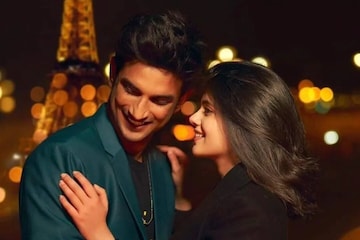
Once again the world will witness the death of Sushant Singh Rajput in his last project Dil Bechara. It is the official hindi remake of 2014 Hollywood romantic drama ‘The Fault In Our Stars’ which was based on John Green’s popular novel of the same name.


The Fault in Our Stars is Green’s fourth solo novel, and sixth novel overall. It was published on January 10, 2012. The title is inspired by Act 1, Scene 2 of Shakespeare’s play Julius Caesar, in which the nobleman Cassius says to Brutus: “The fault, dear Brutus, is not in our stars, / But in ourselves, that we are underlings.”


If you are someone who has already read the book or has watched the original movie, then you must be knowing that it is a story of two cancer patients Hazel Grace Lancaster and Augustus Waters who met at a cancer support group and embark on an unforgettable journey.


The movie stars Sushant Singh Rajput and Sanjana Sanghi as the main leads who will play the role of Augustus Waters known as Mannie in the movie and role of Hazel Grace known as kizie in the movie respectively.


Dil Bechara will mark the directorial debut of Mukesh Chhabra. The hindi adaptation of the movie was done by Shashank Khaitan and Suprotim Sengupta and this adaptation ages up the characters and changes the main setting to India. Amitabh Bhattacharya has given the lyrics and A.R Rahman has given music to the movie. The movie is produced by India’s Fox Star Studios.


Due to COVID-19 pandemic it won’t be possible for us to watch this great work of a equally great actor on the big screen. Even the fans demanded on Twitter to release Dil Bechara on the big screen so they can watch the last work of this amazing personality for one last time but the cinema halls aren’t going to open soon because of the pandemic so the producers have decided to release it on the OTT platform Disney+Hotstar on 24 July 2020. It will be available to both subscribers and non subscribers in honour of Sushant Singh Rajput’s memory.


We never thought that we would watch Dil Bechara in the permanent absence of Sushant. He would have impressed us a little more with his intellectual and candid comments in the promotional events of the movie but all that is not going to happen because he left us with his extraordinary performance.

This is too tragic to accept that after this movie we will not see him any longer on the big screen.We will not see any new posts and stories on Instagram with his killer looks, any new tweets on Twitter.


The exceptional work which has done in little span of time will be remembered forever and the diverse roles which he has played in his eleven movies and two shows will keep him alive until this industry exists. The future generation will know that a middle class boy who became a star without any godfather in this cruel industry lost his life to nepotism and favouritism.

Make your children good decision makers….

We usually think children shouldn’t take decision, as they are small and they don’t know what is right and what is wrong and we wait till they mature and make them include in the decision making, but we forgot if we suddenly force them to take decision, how will they take without any prior experience pr anything.

So it is necessary to let the child involve in decision making since childhood. Teaching your child to make their own decisions has several benefits. If you led them to take small decisions, and when they make good decisions, they gain a great amount of satisfaction and fulfilment because they chose it and if they take wrong decision they may suffer, but they can learn from it and they can make better decisions in future. It doesn’t mean that you give your child the complete freedom of decision making. It may be dangerous sometimes. Give your child freedom to make some decision based on their age, maturity and previous decision making abilities.

To help the child with decision making first educate the about it a little bit. Start withbsome steps if he had done homework of his own so is it a good choice or a bad choice, similarly helped you in household chores. So we can talk about various decisions which led them to think.

Teach them to pause and think before taking a decision. A few second of thinking prevent a lot of bad decisions. Guide them while thinking about options they have and also evaluate the consequences. They need to weigh thr risks and benefits of their decisions both in the short term and long term. Then led them to act upon the best options and allow them to from the experience whether the decision was good or bad.

Allow them to sometime take the decision of their own, which you think may not harm the children. Give them the opportunity to think about their decision, do not overreact on their decision and allow them to learn from their mistakes.

So it is necessary for parents to guide and help their children in developing good decision making skills so that they will grow up and become an independent, responsible and happy adult.