What is the right time to start, to decide?

Article by – Shishir Tripathi

Intern at Hariyali Foundation
In collaboration with
Educational News

Many people at present (and in past too) have very big dreams for their life. Dream of getting their desired profession, getting their dream car, having their beloved as their life partner, following the time table they made and what not. Desires and dreams are actually endless, but the time required to fulfill those desires and acquire those goals is limited.

People know how to proceed in the process of acquiring their goals and their dreams but 7 out of 10 people are always confused thinking about, ‘When to start’? People basically assume that yes they’ve decided what they always dreamt of but they never could decide when to give it a start.

It is a general tendency that people start from tomorrow. Tomorrow, being a new fresh day looks like the perfect day to start something good. People make plans and strategies which they will be following in the process of achieving their goals and turning their dreams into reality. Whereas some people think that starting of a month, or a week or a year is the perfect time to start something special and something good.

People think that before getting indulged into the race of acquiring their goals and their desires, they must take rest. People think that they must gather strength and the power. People spend hours and days and months just gathering the so called strength and the power. They waste a lot of time thinking that they are resting.

People before taking any important decision, they think that we must give rest to their brain before deciding something. People think that they are making their mind for that particular decision. To some extent it is important that, people must ponder upon the situation and outcomes of the decision but it must not happen that people spend excess time just thinking, thinking and making their mind. Some bizarre people, with a habit of shouting out their decisions to the world waste hours telling about their decision and end up giving up the thought of making a bold move and wise decision.

It has been told since very long that one must respect and value time in order to get their goals and the desires fulfilled. Time goes on like moving water in rivers and falling sand. Each passing moment, each second becomes the part of the past. When one more moment and one more again turns into days, weeks and months, nobody could actually notice it. But it is important for each and every individual to realize the worth of the time.

As time passes by, situations and circumstances also change. It might happen that an individual is in the best state to start something new and take a decision now. Nobody has seen the future; It might happen that circumstances in future are not so good for giving something a new start or making a bold move. Obviously, nobody knows that what will be happening in future.

Therefore, an individual must realize that the present is absolutely into their control. They are the ones’ who can shape their present for a much better future. There’s not all a particular right time to start. An individual after thinking about all the aspects of his decision and the after effects in future can take the best decision. An individual can start anything at anytime, at any moment. The right time is now. Start thinking about it and get into achieving your dreams and your goals as soon as possible.

Meanwhile, one must also realize that missions started and decisions taken in hurry could result in adverse results. Hence, after all the proper planning and mind making, an individual must not waste even a single minute and get onto his work for a better future, a better life.
Corona virus

Priya Yadav,

The World Health Organization (WHO) has declared the coronavirus an epidemic. The coronavirus is a very subtle but effective virus. The coronavirus is 900 times smaller than human hair, but corona infection is spreading rapidly around the world.

What is the Corona virus?

Corona virus belongs to a family of viruses whose infection can range from a cold to a problem with breathing. This virus has never been seen before. The virus infection started in December in Wuhan, China. According to WHO, fever, cough, shortness of breath is symptoms. So far no vaccine has been made to stop the virus from spreading.

As a result of this infection, problems like fever, cold, shortness of breath, runny nose, and sore throat arise. This virus spreads from one person to another. Therefore, great care is being taken about this. The virus was first caught in China in December. It is expected to reach other countries.
Viruses that resemble the corona are spread through droplets falling from coughs and sneezes. The corona virus is no longer spreading in China at the same speed as it is spreading in other countries of the world. The virus named COVID 19 has so far spread to more than 70 countries. Due to the increased risk of corona infection, caution is needed to prevent it from spreading.

What are the symptoms of this disease?

Covid-19 / corona virus has the first fever. This is followed by a dry cough and then after a week, there is trouble breathing.
These symptoms do not always mean that you have a corona virus infection. In severe cases of corona virus, pneumonia, excessive breathing difficulties, kidney failure, and even death can occur. The risk may be severe in the case of the elderly or people who already have asthma, diabetes, or heart disease. Similar symptoms are also found in colds and flu viruses.

When the corona virus infection occurs?

. Currently, there is no cure for the corona virus but medicines can be given to reduce symptoms of the disease.

. Stay separate from others until you recover.

. Work is underway to develop a vaccine to treat the corona virus.

. It will be tested on humans by the end of this year.

. Some hospitals are also testing antiviral medication.

What are the preventive measures?

. The Ministry of Health has issued guidelines to prevent the corona virus.

. According to these, hands should be washed with soap.

. Alcohol-based hand rub can also be used.

. Keep the nose and mouth covered with handkerchiefs or tissue paper while coughing and peeling.

. Stay away from people who have cold and flu symptoms.

. Avoid the consumption of eggs and meat.

. Avoid exposure to wild animals.

Who and how to wear masks?

. If you are healthy, you do not need a mask.

. If you are caring for a person infected with the corona virus, you must wear a mask.

. People who have a fever, phlegm, or breathlessness should wear a mask and immediately go to the doctor.

Method of wearing a mask: –

. Masks should not be front-handed.

. If you feel hands, then hands should be washed immediately.

. Masks should be worn in such a way that your nose, mouth, and part of the beard are covered.

. While removing the mask, one must remove the mask or the lace of the mask, do not touch the mask.

. Masks should be changed every day.

. How to reduce the risk of the corona, read the remedy

. Viruses that resemble the corona are spread through droplets falling from coughs and sneezes.

. Wash your hands well

. Cover your mouth while coughing or sneezing.

. If the hands are not clean then avoid touching the eyes, nose, and mouth.

How to prevent corona infection from spreading?

. Do not travel by public vehicles such as bus, train, auto, or taxi.
. Do not invite guests to the house.
. Ask for someone else’s household item.
. Do not go to the office, school, or public places.
. If you are living with more people, be more cautious.
. Stay in separate rooms and clean the shared kitchen and bathroom continuously.
. Do this for 14 days so that the risk of infection is reduced.
. If you have come from an infected area or have been in contact with an infected person, then you may be advised to stay alone. So stay home.

A similar threat was posed by the SARS virus about 18 years ago. In 2002-03, over 700 people died due to SARS. Thousands of people across the world were infected by it. It also had an impact on economic activities. No such evidence has yet been found about the coronavirus that the coronavirus is spread through parcels, baits, or food. Viruses such as the coronavirus cannot survive outside the body for much longer.

There has been a different uneasiness among the people regarding the coronavirus. There is a shortage of masks and sanitizers in medical stores, as people are increasingly rushing to buy them.

Based on information received from the World Health Organization, Public Health England, and the National Health Service (NHS), we are giving you ways to prevent the corona virus. Be its screening of passengers at the airport or screening of people in the lab, the government has made several preparations to deal with the corona virus. Apart from this, to avoid any kind of rumors, some instructions have been issued to protect themselves so that the corona virus can be dealt with.

FUTURE OF MARKETING

There is a famous proverb that change is the rule of nature and it applies to marketing as well. Marketing is something which keeps on changing after short durations. The advertisements and banners whether digital or physical are to be posted where eyeballs are maximum in number . but showing your ads or banners to wrong eyeballs are not going to give you good returns on the money you invested for marketing. Now the reason why the equations of marketing keeps on changing is the changing of eyeballs. Previously it use to be on newspapers but now it is on social media. In social media also previously Facebook was very popular but now the audience is shifting more towards instagram. But if your target audience is of students then telegram can also be useful to you if you are marketing for educational organisation.

Few years back the newspapers, radios and television were the only place for marketing. Other than that tellecalling and door to door sales were used. Broadly we can say that it was an era of outbound marketing where you reach customers and offer your services or tell about your goods. But now inbound marketing is getting more prominent and customers themselves come to the business. Inbound marketing includes SEO, Social media marketing, PPC, Digital sales E commerce.

Aatmanirbhar Bharat – Can We Make It?

Our beloved prime minister announced a mission called Aatmanirbhar Bharat a few days back. A thick package was also announced to achieve this goal. First of all, I honestly feel very happy and proud of this decision. It made me feel like India is taking a step towards the nation which Dr. Abdul Kalam wanted to create.
It looks too great on paper. Everything made in India, no foreign support. But is it really practical? Just funding a huge amount to our industrial sector will help? Just take this money and manufacture every single component at the workplace. Is it that easy? Obviously, it is not.
We live in a nation and society where education is only about scoring good marks and finally making it to the job of a thick package. The primary level student has the most curious brain. They keep on thinking out of the box. But do they get support? No, they don’t. Even they try to approach their parents or teachers with innovative thoughts and questions, they get ignored. Teachers ask them to focus only on studies calling their ideas foolish. It is the point where we kill an innovation, knowingly or unknowingly. These ignited minds struggle every point in their life. Everybody laughs at them for their ideas, right from school to college to office. They always feel their talent getting spoiled. Now, these people after taking a huge frustration, move abroad to earn and join a firm. These pure super brains go in foreign countries, work hard in the companies, innovative things they always wanted and make that nation’s economy grow. At last, we are only left with a newspaper heading stating ” an Indian origin” person innovated something.
We need to begin from the root level before focusing on the manufacturing sector. If we prepare good students, encourage their ideas, make them grow then these students are the only innovators of tomorrow. Innovation should be included in the syllabus of our education system. I don’t mean final year projects here. We all know how students do that and how innovative it is. I’m talking about pure innovation in every standard of the education system. Only putting innovation in the syllabus won’t help. The teachers need to encourage student’s ideas and help them to innovate out of it. Right from the ancient time, our nation has been blessed with many super brains that ever existed. But it happened many times that their talent got spoiled or stolen by the foreigners. So to really make India aatmanirbhar, we first need to improve these little things. Little by little, this mentality will change for sure. One day we all will say with pride looking at things around ” Made In India “. It will be the win for Aatmanirbhar Bharat.

Paradox…

A logically self contradicting statement is a paradox. Also known as antinomy. You can say it is a sentence that runs contrary to one’s expectations. Actually it’s just a smart mess. It does have valid reasoning but leads to a self contradictory or a logically unacceptable conclusion. It might seem absurd but is kind of the ultimate truth. That’s what makes it all the more interesting.

Let’s see some of the many interesting paradoxes that exist and try to understand them.

•Achilles and the tortoise 🐢🏃

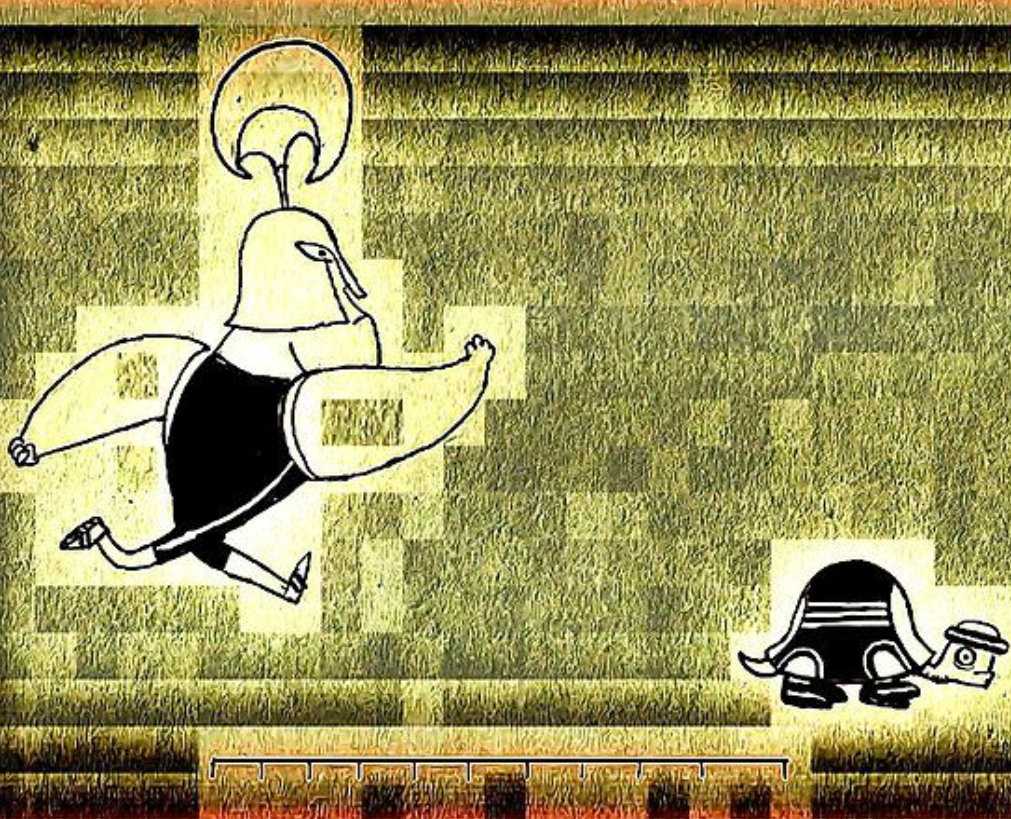
One of the “greatest” there is. It was put forward by the Greek philosopher Zeno of Elea in the 5th century BC. It so happens that the great hero Achilles challenges a tortoise to a footrace. Being the hero that he is, he allows the tortoise a headstart of 500m. No doubt, when the race starts, Achilles is at a must faster speed than the tortoise such that by the time he has reached the 500m mark, the tortoise has only walked 50m further than him. When he has reached 555m mark, the tortoise has walked another 0.5m, then 0.25m, then 0.125 m and so on. It is a chain of such infinite small distances with the tortoise always moving forwards while Achilles always has to catch up. Now, logically, Achilles can never overtake the tortoise. Except, of course, intuitively he can overtake.

Don’t think of it in terms of distances and races but rather as an example of how finite value can always be divided an infinite number of times, no matter how small its divisions might become!

•Birthday paradox 🎉🎂

This is personal favourite. It is maths based by the way. Probability to be specific. You have already heard of this probably. It goes like this that in a group of 23 randomly selected people there is a 50% chance two of their birthdays match. Interesting? Wait. In a group of 367 random people there is a 100% possibility atleast two of their birthdays match. Sounds like such a small number. It counts as a paradox because we can’t handle such numbers.

•Crocodile paradox 🐊

A crocodile snatches a young boy from the riverbank. Pretty common situation right? Anyways, his mother pleads with the crocodile to return the boy. The crocodile being in a fun mood, wants the mother to guess if he will return the boy or not. Takes one guess to get the boy out safely. It looks simple – the mother guesses he will return the boy, if she is right she gets the boy, if she is wrong, the crocodile gets the boy. If she answers that the crocodile will not return him, however, we end up with a paradox!

If she is right and the crocodile never intended to return her child, then the crocodile has to return him but in doing so breaks his word and contradicts the mother’s answer. And if she is indeed wrong and the crocodile did intended to return the boy, the crocodile must then keep him even though he intended not to, thereby also breaking his word. It’s a brain twisting dilemma.

•Paradox of fiction 🎟️📕

Are you fixated with the harry potter characters? You ofcourse have a crush on the Marvel or DC comic characters. Oh or did you cry when Augustus died?

So here is the paradox. Point 1 People have emotional responses to characters, objects, events etc. which are fictitious. Point 2 In order to be emotionally moved, we must believe that these characters or events by no way exists in real. Point 3 No person who takes characters to be fictional at the same time believes that they are real. All three of these points one at a time can be true. If any two points are considered to be true then the third must be false or else produce a contradiction. There exist various proposed solutions to this paradox such as pretend theory or thought theory or illusion theory.

•The card paradox 🃏

This one is a little bit similar to the crocodile paradox. A little. So I say we have a card with us. On one side, the front side, “the sentence on the other side of this card is TRUE” written on it. You flip and “the sentence on the other side of this card is FALSE”. You take one as true and it leads to a paradox!

Thank you for reading. Have a nice day!🌼

Sơn Đoòng, the largest cave in the world

It was 1991. A Vietnamese logger named Ho Khanh was hiking through the jungle near his home in Phong Nha, in central Vietnam. Drawn by the sound of rushing water, he came to an opening in a cliff. A strong wind blew clouds out of the cave—an intimidating site, and enough to keep Ho Khanh from searching deeper—so he turned around and went about his business. That was the unceremonious discovery of Sơn Đoòng, the largest cave in the world. “It’s five miles long, 650 feet high, and 500 feet wide,” writes Ken Jennings for Traveler. “It could hold an entire city block of Manhattan, including 40-story skyscrapers.”At the time discovered Son Doong cave, Ho Khanh didn’t know about the cave value. Not long after his trip, he quit finding agarwood and went back to farming.

15 years later, the whereabouts of this cave was still in the dark. Untill 2006, when an expedition of the British Royal Association went to search for new caves in Phong Nha – Ke Bang, Khanh told his story about the cave to them. That was when the journey looking for the old cave started.

Son Doong Cave is known as the world’s largest natural cave, housing many limestone grottoes, stalactites and stalagmites. Set within Phong Nha-Ke Bang National Park (about 500km south of Hanoi), the cave is a must visit for adventurous travellers looking to explore one of Vietnam’s natural gems during their holiday.With sections reaching up to 200m tall and 150m wide and a total measured volume of 38.5 million cubic metres, Son Doong could store about 68 Boeing 777 aircraft. Even this figure may be larger because according to scientists, the most modern facilities of today has not fully explore the real length of this cave.

And somehow, it managed to remain a secret for centuries. But by 2005, the surrounding area had become something of a destination for spelunkers, and Ho Khanh realized he might have been on to something. It took three years of searching, of tracing his steps, before he was able to find the opening again, but when he did in 2009 with a British caving expedition, they became the first people to tackle Sơn Đoòng. Only a thousand or so people have done it since—including us. This is our five-day trek into the center of the earth.

 Not only famous for the enormous size Son Doong is also known by a variety of biological landscape. In the Son Doong cave, explorers discovered a primitive forests with rich vegetation, there has never been human traces. Experts have called the forest even in this cave is the “Garden of Eden” in honor of the sheer beauty of this aesthetic.To reach Hang Son Doong, it’s a six-km-long hike through the rainforest, which includes passing through a small village that’s home to the Ban Doong ethnic group.According to geologists, Son Doong cave was formed by around 2-5 million years ago, when the river runs along the limestone buried along a fault line. The water current causes erosion and creates a giant tunnel as today.The size of Son Doong cave is very large with a length of at least 5 kilometers, which is equivalent to the capacity of about 68 Boeing 777 airplanes.Featuring one of the Son Doong cave, which is the system of stalactite and “pearl” giant cave. Over millions of years under the influence of external forces, Son Doong owns the column stalagmite as high as 70m. In addition, it is also found these “pearls” caves (wrap a jade jewel-like seeds of the sea, the component mainly calcite) to the world’s most in Son Doong. Typically, the member “pearls” of this type only about 1cm in diameter but in the Son Doong, they as big as baseball

  Even this figure may be larger because according to scientists, the most modern facilities of today have not fully explore the real length of this cave.With her beauty, Son Doong has attracted a lot of tourists to 98% are foreigners. Among them, there are three generations of the family have ever conquer this cave, or even the super model as Jasmina Mala (Czechs) and Prince Ahmed Hamdan (Abu Dhabi coming).


Not only famous for the enormous size Son Doong is also known by a variety of biological landscape. In the Son Doong cave, explorers discovered a primitive forests with rich vegetation, there has never been human traces. Experts have called the forest even in this cave is the “Garden of Eden” in honor of the sheer beauty of this aesthetic.Son Doong cave is famous for not only its giant size but also a variety of biological landscape .In the Son Doong cave, explorers discover a primitive forests with abundant vegetation, there has never been human traces. Experts have even called the forest in this cave as “The  Garden of heaven” to honor this breathtaking beauty.

Bollywood list-A Actors getting summoned in Drug probe case by NCB

In a massive development, accused drug peddler Karamjeet Singh has allegedly given a list of 150 names to the Narcotics Control Bureau (NCB) of those involved in the Bollywood drug cartel. This list comes along with big names from the industry being summoned in the probe, including Deepika Padukone, Sara Ali Khan, Rakul Preet Singh, Shraddha Kapoor, Simone Khambatta, as well as TV stars like Abigail Pande and others, and producers such as Dharma Productions’ Executive Producer Kshitij Ravi Prasad.

The Narcotics Control Bureau has registered two FIRs as part of its probe that followed the death by suicide of actor Sushant Singh Rajput. The first case (FIR 15/20) was on the basis of purported chats of actor Rhea Chakraborty that were retrieved by the Enforcement Directorate (ED) that is probing a money laundering case against her. The ED provided these chats to NCB as they claimed that some of the chats were about marijuana.

Two days after this case, the NCB registered another FIR (16/20) suo moto with the express target of “uprooting the drug citadel in Bollywood” and have arrested 19 persons in the case, including Rhea and her brother Showik. So far no arrests have been made in the first FIR registered against Rhea.

As per the latest reports, Kshitij Ravi Prasad has been asked to join the probe by 11 am on Friday. His summons will take place on the same day as Deepika Padukone is to be questioned by the agency. The NCB which has managed to track down multiple drug peddlers across Mumbai and Goa has begun to compile a list of ‘A-listers’ who are involved in the alleged drug cartel in the film industry. 

NCB officials said they have summoned Deepika and her manager Karishma Prakash, another Kwan employee, based on some WhatsApp chats of Jaya Saha. Apart from them, even producer Madhu Mantena, also a Kwan director, was summoned on the basis of Saha’s questioning. Since Saha is named as an accused in the first FIR all of them have been called in connection with this case. Rakul Preet Singh too has been summoned in connection with this context.

Amidst all of this drug conspiracy, KWAN Talent Management Agency’s name has been floating around, more so after certain chats between talent managers and celebs revealed a drug connection. KWAN manages the work of top Bollywood actors such as Deepika, Shraddha, Tiger Shroff, Jacqueline Fernandes amongst various others. 

There are two versions here. While NCB sources said their names had come up during the interrogation of Rhea Chakraborty between September 6–9, before she was placed under arrest, her lawyer Satish Maneshinde has said Chakraborty has not mentioned any names during her interrogation. Sara and Shraddha have been summoned in FIR 16/20 in which Rhea Chakraborty, her brother Showik and 17 others have been arrested.

Following are chats accesed by times now which are circulating in the social media.

As per the chats, N says to J, “You promised me, get me some nice MD (apparently referring to MDMA) in Bombay and we will party together.”

To which, J responds, “How you are making me into a peddler. However, your wish is my command.”

In another WhatsApp exchanges, J says, “Hello, I’m sending the CBD oil with Jinal today.” Replying to J, S says, “Thank you.”

The Bollywood A-listers whose names appeared in these chats are under NCB scanner and are likely to be summoned by the anti-drugs agency in the near future.

The ones with N and S initials are allegedly top female actors.

In another chat that dates back to 2017, D asks K, “…Maal you have.” To which, K says, “ I have but at home. I am at Bandra…”

K further says, “I can ask Amit if you want”. D replies, “Yes!! Please.”

“Amit has, he is carrying it,” K says, to which D replies, “hash na. No weed.”

According to sources within NCB, the person with D initial is Deepika Padukone.

Dean Jones, former Australia cricketer passes away due to severe cardiac arrest

Jones was in Mumbai as part of the commentary team at Star Sports for IPL 2020 when he passed away on Thursday, 24 September. Former Australia cricketer Dean Jones died of a heart attack on Thursday in Mumbai. He was 59. Dean Jones was in India to fulfil his commitments for the host broadcasters of the Indian Premier League. He suffered a massive heart attack at a hotel in Mumbai after 12 PM on Thursday.

“Our thoughts and prayers are with his family and friends,” Star Sports India, the host broadcasters for IPL 2020, confirmed the news of Jones’s passing in a statement.

It is with great sadness that we share the news of the passing away of Mr. Dean Mervyn Jones AM. He died of a sudden cardiac arrest. We express our deep condolences to his family and stand ready to support them in this difficult time. We are in touch with the Australian High Commission to make the necessary arrangements.

Dean Jones played 52 Tests and 164 ODIs for Australia during an international career which spanned 8 years between 1984 and 1992. He scored 3631 runs in red-ball cricket at an average of 46.55 with 11 hundred and 14 half-centuries.

In one-day internationals he amassed 6068 runs at 44.61 with 7 hundred and 46 fifties.

His most memorable Test innings came in 1986, when in the heat and humidity of Chennai, he battled exhaustion and illness to make a heroic 210 in what would be only the second tied Test ever.

That was just his third Test, coming two years after his debut against West Indies in 1984. With plenty to prove, he came out at No.3, and stayed in the middle for 330 minutes, despite being sick on the field and finding himself in hospital at the end of the knock.

Jones went on to make 10 more hundreds, with a career-best 216 against West Indies in Adelaide in 1989. But it was in ODIs that he really made his name, gaining a reputation as an attacking batsman and a fast runner between the wickets – and, by his own admission, also the first player to wear sunglasses on the field. He attained a high of 918 ranking points on the ICC Men’s ODI Rankings for Batting in March 1991, putting him fifth on the all-time list.

“Winning the 1987 World Cup in front of about 100,000 in Kolkata will remain the biggest moment of my career,” he had said.

Dean Jones was one of the great ambassadors of the game associating himself with Cricket development across South Asia. He was passionate about discovering new talent and nurturing young Cricketers. He was a champion commentator whose presence and presentation of the game always brought joy to millions of fans. He will be sorely missed by everyone at Star and his millions of fans across the globe.

His compatriot and fellow commentator for the ongoing season of the Indian Premier League, Brett Lee, was with him, and they had breakfast together earlier. When he suffered the cardiac arrest in the lobby of the hotel, Lee tried to resuscitate Jones by giving him CPR, but was unable to save him.

We all will miss his extra ordinary commentary that used to create a aw in all the cricket fraterninties.

Dheeran Chinnamalai-Tamil Freedom fighter

Dheeran Chinnamalai was an Indian revolutionary and chief of Kongu Nadu who revolted against the supremacy of British rule in India. He was a Palayakkarar in Tamil Nadu who fought against the British East India Company in the 18th century B. C.

He was born on 17th April 1756 in Melapalayam near Erode in Tamil Nadu. His birth name was Theerthagiri Sarkkarai Mandraadiyaar. He belonged to the famous Palaiya Kottai Pattakarar family. His parents are Rathnaswamy and Periyaatha. He had four brothers, Kudandiswamy, Thambi, Kilothar and Kuttiswamy and one sister Parvatham.

He got good training of Silambu and archery. He headed a huge army that fought in the Second Polygar War in 1801 to 1802. In late 1700s he Kongu Nadu was controlled by Mysore King Hyder Ali. When the diwan of Hyder Ali came to collect taxes from the farmers, he with his brothers seized the entire tax collected and distributed them back to the farmers. This incident took place between Sivan Malai and Chennimalai. He refused to accept the supremacy of Hyder Ali.

After the death of Hyder Ali on 12th July 1782, his son Tipu Sultan became the king of Mysore. He helped Tipu Sultan to gain victory in the battles at Chitheswaram, Mazahavalli and Srirangapatna by providing a big army of soldiers. More than 1000 Kongu Tamils joined the regiment of Tipu. After the death of Tipu he settled at Odanilai and fought with British at Cauvery, Odanilai and Arachalur.

As Dheeran Chinnamalai was running his own kingdom and did not respect the rules and regulations of the British East India Company they were annoyed. So they sent Colonel Makistan and his men to arrest him. Chinnamalai fought against him and won the battle. Again Captain Harris was sent to capture him. By his intelligence Chinnamalai was able to win this time also.

Velappan in the British army acted as an informer to Dheeran Chinnamalai. Later he was shot dead. After that the British arrested him and his brothers and kept them in the prison at Sankagiri. When they were asked to accept the rule of British they refused and so they were hanged by rope at the top of the Sankagiri fort on 31st July 1805

Puliu thevar-Fighter legacy continued

Puli Thevar was a poligar (or palayakarar) who ruled Nerkattumseval situated in the Sankarankoil taluk of Tamil Nadu. Puli Thevar who belongs to the warrior Maravar community was one of the earliest freedom fighters. He is one of the first Indian kings to have fought and defeated the British in India.Puli Thevar was born on September 1, 1715 in Puli Nadu, a part of Pandya Nadu to Chitraputra Thevan and Sivagnanam Nachiyar. Venni Kaladi was the general of Puli Thevar’s army

He is one of the earliest opponents of the British rule in South India. He was involved in a vendetta with the Nawab of Arcot who was supported by the British. Thevar’s prominent exploits were his confrontations with Marudhanayagam, who later rebelled against the British in the late 1750s and early 1760s.

Nelkatumseval was the headquarters of Puli Thevar, the first chieftain in India to resist the British.The author of the Thirunelveli District Gazetteer, H.R. Pate, observes as follows:

Nelkatumseval is chiefly memorable as having been in the eighteenth Century stronghold of the redoubtable Puli Thevar, who figured for many years as the leader of the Marava Confederacy against the troops of the Nawab and the Company. He had a shrewd insight into the political situation of the time and was a veritable thorn against the side of the Nawab’s agents.

Pulithevar remains one of the illustrious figures in the chequered history of palayakarars. The vivacity of his character gave him an ascendancy over the western palayakarars, while his determined resistance to the Nawab’s overlordship made him a potential enemy of the Wallajahs. He was the principal architect of the coalition of the palayakkars organised against the Nawab. The Nawab acknowledged his victory by presenting him with a gold plate and sword.

Pulithevar is regarded as the first ruler in Indian history, who sowed the seed, by his gallant resistance, to expel foreigners from his native land. His services to the nation are honoured; the government of Tamil Nadu has erected a memorial for him in Nelkatumseval where there are the remnants of his palace.

What happened after is nothing less that divine intervention. Puli Thevar started singing hymns in praise of Mahadeva and all of sudden the sound of the cracking of handcuffs were heard by the soldiers camping outside the temple. Disturbed by the sounds the soldiers rushed inside the temple to see what happened, only to see broken handcuffs and chains with Puli Thevar nowhere in sight and never to be seen again by any mortal. Some say he was taken by the Lord himself to his abode……

Not being a man who would give up or prostrate in front of the British their Muslim lackeys, Puli Thevar was thoroughly maligned by the British historians as a man who never kept his word and was deceitful to the core. While these events occurred in late 1760, the truth of the events was never fully told by the Marxist historians of secular India. Therefore I shall try and tell the tale of the heroic exploits of this man who very few Hindus outside of Southern India have ever heard about

Reasons for Illiteracy in India.

Illiteracy is one of the biggest problems in India. Gone are the days when the basic needs were referred to ROTI,KAPDA AND MAKAAN. There is an addition to it. Now it stands for ROTI,KAPDA,MAKAAN,EDUCATION AND HEALTH.  Lack of qualified education and basic knowledge has resulted in a lack of economic growth. Education is very important for an individual’s mental as well as physical growth. For a country to have a productive Human capital it is important that they are well educated and literate. It is because of the lack of education that poverty exists. The crimes increase because people do not have a living and also a sense of rational thinking. Moreover if we compare the illiteracy rate of women is much higher than men because there are still people who do not believe to educate their girls. The infrastructure for education is also not well developed. The quality of education of a public education varies too much from a private school. And it is the reason that private schools are costlier and not all can afford to go there.

There are several reasons for illiteracy in India. Some of these are :

Less educated parents – There are times when the parents are not so educated and they also lack the knowledge as to why education has such an important role .Therefore leading to less education of their children too.

Lack of Infrastructure – The educational infrastructure is still not developed as the way it should have post so many years of Independence. Due to which there are still people who can not access education. It is the duty of the government to reach out to the most vulnerable sections of the society.

Poverty- This is the root cause of Illiteracy .There are still people who do not have access to proper food, shelter and clothing . They can not afford to even send their children to school and are forced to put them to work may be in the farming activities or any other form of work they are in.

Population – The rapid increase in population also plays a role in the increasing rate of Illiteracy. The resources are scarce and the users are in great numbers . The poor people think that if they have more number of children and send their children to work they will earn more living and so instead of education they force them to work.

Corruption – The red tapism and corruption have led to this condition. The funds provided for deducation are often misleaded and and are used for filling the pockets of the officials.

Brain Drain- The educated people in India often take a decision to settle abroad or find a job there because they do not get their favorable job in India. They feel their talent is under utilized and thus they move abroad leading to brain drain in the country.

Backward thinking – The gender biasness still exist in the society . They believe that the education of girls is not so important and so they only send their boys to school further leading to imbalance of education ratio between girls and boys.

Finally for a country to grow and prosper it is really important that it’s citizens are educated enough to contribute to the society. The launching of policies alone will not work what is important is it implementation and effectiveness. There is a lack of awareness among people. It is high time that education reaches to the remote areas as well as the big cities equally and adequately. It is that even after so many years of independence India is still lacking behind in providing education to its countrymen.

Mental Health and Competitive Exams

India’s youth is pushed into participating in a rat race for entry into engineering and medical colleges, which is a whirlpool of broken dreams and identities. Students are groomed to prepare for entrance exams like NEET and JEE, from very young ages. Parents spend lakhs on coaching institutions that enrol children as young as ten years old. The journey to top medical and engineer colleges is filled with cutthroat competition and sleepless nights devoid of age-appropriate activities and socialisation. Many, despite preparing for years, fail to crack these entrance exams, and they often succumb to mental illnesses and stress-related ailments. This statement can be corroborated by a recent study by the National Health and Neuroscience, which found that one in every five teens suffer from some kind of mental illness. 

At any given point in time, millions of students fight with their peers to emerge on top, an exercise that proves to be futile for all but a few. Society expects excellence from all, leaving no room for average lifestyles and humble aspirations. Performances that are no worse than what would be expected from an average student inspire shame and admonishment from demanding parents and mentors. Students are expected to sacrifice their social life and coming-of-age experiences and devote their youth to the pursuit of ranks. Failure is simply unacceptable both to parents and to students who find themselves robbed of their childhood and their dreams. The result is that students are conditioned to be more afraid of failure than death itself. 

Entrance exams are winner-takes-all games where a handful of students monopolise the best institutions in our country. The stakes are high for students and thus, their stress levels skyrocket. Anxiety and depression are common among students, who are told to ignore them and soldier on. Society views health through a reductionist lens, only acknowledging physical diseases. Quality of life and mental health are equally ignored by parents and teachers who push students to touch the sky regardless of their inherent intersects and abilities. Deaths by suicide among students are spiking even as we, as a society, fail to re-evaluate the systemic failure of our education system. Why is it that we fail to free our children from the shackles of our own unfulfilled dreams and unrealistic expectations?

It is important for students to forge meaningful relationships with their peers and their family. A strong social support system is needed for a child to bounce back from psychological distress caused by competitive exams. Students should be allowed to choose their own vocation instead of conforming to the medicine-engineering binary that has been imposed on them. Failure should be treated not only as normal but as a welcome experience that teaches valuable lessons to students. Even the students who succeed in entrance exams are not free from the toll the preparation takes on their mental health. Students in esteemed institutions fail to cope with the stress that comes with living in a high-stress environment, and may even choose to end their lives to escape the never-ending spiral into progressively building expectations.

Bhagat Singh & assembly incident

Bhagat Singh was an Indian socialist activist who at 23 years of age made him a hero of the Indian independence movement by two acts of dramatic violence against British citizens in India and his executions.

For some time, Singh had been using the power of drama as a way to encourage the rebellion against the British, purchasing a magic lantern to display slides that enlivened his talks about revolutionaries such as Ram Prasad Bismil who had died as a result of the Kakori conspiracy. In 1929, he suggested a dramatic act to the HSRA intended to obtain significant attention for their aims. His intention was to blow a bomb inside the Central Legislative Assembly, inspired by Auguste Vaillant, a French anarchist who bombed the Chamber of Deputies of Paris. The nominal aim was to denounce the Public Safety Bill and the Trade Differential Act, which were defeated by the Assembly but passed by the Viceroy with its special power; it was actually the intention of the perpetrators for prosecution and release to use court appearances.

The leaders of the HSRA initially opposed Bhagat ‘s participation in the bombing because they knew that his previous participation in the shooting of the Saunders meant he would be executed in the end. But ultimately they agreed he was their most fitting choice. Together with Batukeshwar Dutt, Singh hurled two bombs from his gallery during his meeting in the Assembly Chamber on 8 April 1929. The explosives were not intended to kill but some members of the Viceroy Executive Council were wounded, including George Ernest Schuster. The bombs filled the House with smoke, so that Singh and Dutt could well have eschewed uncertainty if they had wanted to. The slogan “Inquilab Zindabad!” instead remained screaming and hurled flyers. Both men had been arrested and later transferred to a number of prisons in Delhi.

“Public condemnation of this terrorist activity was unambiguous,” according to Neeti Nair, associate Professor of History. Again, Gandhi issued strong words of condemnation for his actions. The imprisoned Bhagat was, however, claimed to have been exhilarated and was referred to as “drama” during the ensuing litigation. Finally, Singh and Dutt replied in writing the Bomb Statement of the Assembly to the criticism:   Over and beyond terms, we keep human life sacred. Neither are we perpetrators of the nauseous outrage nor are we ‘lunatics’ as the Lahore tribune and some others would have it believed that force is morally unjustifiable if it is actively applied, but it does have a moral justification if used to promote a valid cause.

After a preliminary hearing in May the trial started in the first week of June. On 12 June, the two men were sentenced to life imprisonment for: “causing unlawful, malicious explosions that might endanger their lives.” Dutt was defended by Asaf Ali, though Singh stood up. The credibility of the evidence given during the trial was challenged. The electronic gun Singh was carrying when he was arrested was an significant difference. Some witnesses said that he had shot two or three times while the police sergeant who arrested him testified that the weapon was pointing downwards when he picked it up. Accruity witnesses had been coached, their findings wrong, and Singh had handed over the pistol himself according to an article in the India Law Journal. A life sentence was awarded to Singh.

The HSRA set up the Lahore and Saharanpur bombing factories in 1929. The Lahore bombing plant was discovered by the police on 15 April 1929 and other HSRA members, such as Sukhdev, Kishori Lal, and Jai Gopal, were arrested. Shortly afterwards, the Saharanpur factory was also raided and some conspirators were informed. The police could link the three streams from the killings, the assembling bombing, and the bombing industry with the new information available. The killers of Saunders accused Singh, Sukhdev, Rajguru, and 21 others.

Khawa Ijen: The Electric Blue Beauty

Nature has its own way to astonish us. Sometimes, in the forms of blooms, sometimes in the form of volcanoes. Now, when we hear volcane, the first picture that comes to our mind must be of red, hot and viscous lava, flowing down the edges of the volcano. But that image is going to change soon, hopefully. And the credit goes to the Ijen, a volcano complex in Indonesia.

The Blue Beauty

Indonesia, apart from being the country with the largest number of volcanoes, also houses a natural uniquiety, Kawah Ijen volcano. Part of the Ijen volcano complex, situated in East Java, Indonesia, this volcano is famous for two things: a mass of electric blue liquid flowing down the sides of the volcano and the lake situated in its crater. Also known as the Kawah Ijen Crater lake, this lake has the status of being the largest highly acidic crater lake. The acidity of the water can be as high as 0.5  at the edges and 0.13  in the middle, in terms of pH. Due to the high levels of acidity, the water of this lake maintains a turquoise shade. This lake also happens to be the origin source of the river Banyupahit, which obviously, also has a high concentration of acidic compounds and metals. 

The reason behind the high acidity of the lake is that the water is saturated with hydrochloric acid. The source of this hydrochloric acid is the hydrogen chloride gas emitted by the volcano. The hydrogen chloride gas, when reacts with the water, gives rise to hydrochloric acid, with pH upt almost 0. The acidity sometimes imparts a slightly strong green colour to the water sometimes.

The reason for this electric blue wonder, though, is just pure, simple chemistry. Between sulphur and oxygen. Sulphuric gas, originating under high pressure and temperature (600°C) conditions, emerge through cracks and vents in the volcano structure. Coming in contact with the atmosphere (360°C), specifically oxygen, triggers the sulphur to combust, in the process, shooting flames at a height upto 5 metres (16 feet). 

When the gases condense into liquid sulfur, while burning, this liquid flows down the volcano slopes, along with the sulfur rich lava, giving the ultimate spectacle of blue flames. Infact, this phenomenon is also known as the Api Biru (Blue Fire) amongst the locals.

Needless to say, there is a vast expanse of sulfur in this volcanic structure. And as a part of the industrial development, this treasure mine of a resource has also been tapped. Naturally, the burning gases, on gradual condensation, deposit sulphur around the lakes. To speed up the production of sulphur, a mining company has devised their own system to aid the condensation. They have installed ceramic pipes on an active vent near the edge of the lake, which condenses and liquefies the sulfur gases passing through them. To assist this process, miners often spray cold water over the pipes. This liquid sulfur is diverted through the vent slopes to get deposited onto the sulfur mats, where they solidify. 

The miners cut these sulfur into manageable pieces and take them down the mountains on their back. They are known to carry loads of around 80 to 100 kilograms once everyday, or twice, if they work through the night. Apart from that, they also collect sulphur stalactites, which sometimes form from the dripping sulphur drops, to sell to the tourists. And for the elemental chunks of sulphur, they get about 680 Indonesian rupiah (about 6 USD cents) per kilo. 

The Darker Side 

The working conditions are far from ideal. Not only have they been exposed to highly toxic volcanic ashes and gases, more so due to the lack of protection, but also are at risk due to the dangerous trek they need to do to reach the carter. Many miners suffer from chronic and severe health problems due to the inhalation of the toxic sulfuric air, over a long period of time. Several media houses and individuals have made documentaries and pieces regarding the plight of these local sulfur miners.

Speaking of the tourists, this incredible phenomenon got its due attention when National Geography mentioned about this place. Since then, Ijen has witnessed a surge of tourists, whose most preferred activity is a night time, two hour hike to enjoy the electric blue flames in the fullest glory. But certainly not without precautionary measures!

Website Reference:

https://www.nationalgeographic.com/news/2014/1/140130-kawah-ijen-blue-flame-volcanoes-sulfur-indonesia-pictures/

https://en.wikipedia.org/wiki/Ijen

https://interestingengineering.com/blue-lava-largest-sulfuric-acid-lake-ijen-volcano

Image Credit: Reddit

The Faerie Queene

Fairy Queen is a famous epic of Edmund Spenser published in 1590 during the sixteenth century. The poet craftily impersonates The Renaissance and Reformation elements. The poet also presents different types of allegory. Faerie Land” is signified to hold a figurative significance in the real world. Each character in Spenser’s epic can be referenced somehow back to the church, political climate, or disputes and spirituality of his era. Though she never appears in the poem, the poem Faerie Queene represents Queen Elizabeth and her castle is the ultimate goal or destination of many of the poem’s characters. The poem is written in what began to be identified as the Spenserian stanza: eight lines of 10 syllables followed by one 12-syllable line, rhyming ababbcbcc. One of the most prominent symbolic episodes in The Faerie Queene is Redcrosse’s fight with the Error. Redcrosse represents the knight of Holiness in the story and this protagonist gets his name from the blood-red cross emblazoned on his shield. Error, the Red Cross Knight’s first adversary, a monster that lives in the wandering woods is portrayed as a frightful creature with the features of a woman and the hind part of a serpent resembles to be a biblical reference back to the tale of Adam and Eve. Eve, having erred by having an apple from the tree of knowledge of good and evil, was coaxed to do so by Satan in the appearance of a serpent. 

Error hates the light and the stanza “Ay wont in desert darkness to remaine” makes it evident. Redcrosse makes the light enter the cave because it ricochets off his armor but he is also metamorphically the light. Error has no interest in the light he has to offer and only wants to remain evil or lack of faith. The clash among the Knight and the beast proved to be the most intense one. At one point in the course of his clash, the Knight discovered himself in the choking grasp of the monster’s huge tail. At this point, Lady Una shouted to the Knight to prove his courage. She urged him to have faith in himself and Jesus Christ and to battle valiantly. Motivated by the lady’s words, the Knight attacked with strengthened power and bravery. He was able to rescue himself from the hold of the monster’s tail. He then clasped the monster’s throat with such restraint that she threw out a lot of filth from her mouth. Black poison and big lumps of flesh and raw meat came out from her gut. The beast had many young ones that had all sought safety inside her mouth when the Knight had entered the cave and these little offsprings had now emerged from the monster’s mouth. Finally, the Knight succeeded in splitting off the monster’s head and killing her. Her offspring then began to drink the blood which was oozing from her with it, and their bellies burst open which resulted in their death. This was the prime venture of the Red Cross Knight and Lady Una felicitated him on his achievement. 

Behind these simple facts, there are spiritual and ethical interpretations that combine and merge in each other. The Redcross Knight stands for Holiness. Lady Una stands for Truth and her parents symbolize Humanity. The foul Dragon is a symbol of the Devil or Satan. The purpose of holiness is to champion the belief of motivation of honesty and retrieve the virtue of the human race, held in bondage by the powerful force of darkness. To conclude we can say that Spenser has impersonated The Redcrosse Knight’s clash with the Monster Error with exceptional talent. He describes the blunders and risks that plagued humanity in the world and explains how they may be overcome in the course of life and endures the popularity and universality of Spenser’s The Faerie Queene.