THE PARTING

Michael Drayton, was an English poet, the first to write odes in English in the style of Horace. The Parting by Michael Drayton is a sonnet. It is a poem about the breakup of the relationship between the poet and his companion. This sonnet has a very strict form and the poet has been cautious in composing his poetry, to assure that it fits the design constraints. The sonnet is very short, it consists of only 14 lines. Oftentimes, he has to synopsize in a single line of the poem, something he would ordinarily have penned a. The line, “Shake hands forever, cancel all our vows” summarizes quite a precise sense of the dispute signifying enduringly, with no chance of reconciliation. There is a change from the aggression of the first half of the poem, there remains a slight hint in the second half, as the author threatens his lover, telling her that if she leaves him, then she will be a murderess, who has killed not only their endearment but love itself. The language is harsh and cold, and after the Volta, in the third and fourth quatrains, the language is softer and more personal. Again, this is a function of the form of the sonnet; there must be a drastic change of ideas after line eight. For example, there is the brutally aggressive “you get no more of me” in the second line, and the much gentler “Now at the last gasp of love’s latest breath”. The poet uses the Volta not just to change the language but also to the entire message. Instead of pushing her apart from him as he did in the first eight lines, he is now emphasizing her of how consequential the end of the relationship will be. He goes from demanding to practically pleading. The orders in the first two quatrains such as “be it not seen” are replaced with conditionals, such as “if thou would’ st”; it seems almost as though he is pleading with her. Also, worth noting is how he goes from using the aggressive “you” to the gentler “thou” after the Volta.

In a sonnet, the rhythm is always iambic pentameter, which means that there must always be ten syllables per line, with each second syllable being stressed and the author breaks this pattern. Besides, to the constraints of the number of lines, because of which the poem is compressed, simplifying the poem’s purpose, and enhances it. For example, in the first line, “SINCE there’s no help, come let us kiss and part— ” there should be no stress on the third syllable, but the author has written the poem so that there is, stressing the “no” and giving weight to the preciseness of the first two quatrains. The author again breaks the rhythm in the last two lines that are ” —Now if thou would’st, when all have given him over, From death to life thou might’st him yet recover.”  using eleven syllables instead of ten. This is not a blunder or an accident, it has been done for one of two purposes; to add importance to these lines because it appears out of place due to their length, or because the poet thought that he clearly could not sum up his feelings in the eleven syllables that the conventional sonnet allows him. When looking at the rhythm, we should look not only at the line length but also at the rhyme scheme. In the first two quatrains, the rhyme words are very harsh, distancing the author from the poem. For example, there are the very harsh consonant sounds of “part” and “heart”, However, in the third quatrain, there are much softer sounds, such as “breath”, “death”, “lies” and “eyes”. The harsh ‘r’s and ‘t’s are replaced by softer ‘th’s and ‘s’s. This pattern is mirrored throughout the poem; in the first two quatrains. 

The structure of the sonnet has considerably added to the essence of the poem. In perfecting the poem to suit the constraints, the poet has illuminated the message and intensified the sense of what he is trying to say. Besides, where the poet for some purpose breaks the rules of the poem which adds more meaning to the poem, highlighting specific elements and making other parts exceptional.

Developing a Drug-Free Lifestyle

Hello readers I am the intern of HARYALI NGO and want to share my thoughts through this article ,so please read this, may be it would be helpful to you😊.

If you are trying to maintain abstinence from alcohol or drugs over a long period of time, it is important to develop a drug-free lifestyle in all aspects of your life—at home, at work and during your leisure hours.

How to Build an Alcohol Free Social Life After Rehab

If you sought treatment from a professional rehab program for your alcohol or drug problem, one of the most important objectives of your continuing or follow-up care is to help you learn to replace your previous destructive behaviors with more healthy and productive alternatives.

Supportive Friends and Family

One of the first steps in developing a drug-free lifestyle is to avoid those people who were directly involved in your former drinking or drug-using lifestyle—those who helped you get drugs, use drugs or were your drinking buddies. 

Developing a Structured Schedule

Another important aspect of developing a drug-free lifestyle is to develop a structured daily schedule that you can consistently follow. Structure and organization in your life can be your best friends in recovery, while a chaotic and disorganized lifestyle can be your enemy.

Developing Larger, Expanded Goals

While maintaining your sobriety remains a high priority in your life, in order to develop a long-term drug-free lifestyle, it is helpful to identify larger goals for your future. Now that you have achieved more than 90 days of abstinence, you will probably begin to develop larger, long-term goals such as going back to school, changing career paths or saving toward financial goals.

Developing Spirituality

Spirituality can be an important factor in any successful recovery program. It involves connecting to a power that extends beyond the concerns of daily living. Your counselor will encourage you to become involved in efforts “greater than yourself” such as doing service work for your support group, becoming more involved in your religious organization, doing community service or volunteering for charity work.

THANK YOU

Fake Job Rackets Are Increasing Due To Shrinking Jobs

Fake job offers being reported is on a constant rise. With no practical workplaces, and employees interacting with customers face-to-face without supervision, on-demand economy runs with a risk of reputational risks of hiring fraud, unethical candidates with possible criminal background, fake identity or mal-intentions.

Al Zahra Hospital Dubai - Beware of Fake Job Offers: There has been an  increasing number of 'fake job' reports where fraudsters have reached out  to unsuspecting job applicants and made fake

Job seekers need to be more aware and cautious. The world is connected now and a lot of information is available online with forums, news and company details. One simple check is that no genuine recruiter would ask you to pay for hiring you. If there’s any discussion of paying in advance, it’s most likely a fraud. Second, research about the company online – its office locations, its hiring & interview process, its empanelled recruiting partners etc. Most companies have their process mentioned on their website. In case of any doubt, a candidate can get in touch with the company through contacts mentioned on the website.

Ashiztooambitious: Fake Job Alert & Beware of these fake job offers

Big companies are used by fake job racketeers to allure their prey because there’s a sense of aspiration attached with working for such companies. Plus sectors like IT, ITES hire in large volumes and various information becomes accessible to manipulate. While it’s a huge hit to careers and morale of job seekers along with financial loss, it is likely damaging the reputation of these companies. Many companies have become wary of these trends but many are still to take strict actions. Companies can be transparent about their job openings, hiring process, recruitment calendar, empanelled partners etc. They must look out for fake websites and social media handles in their names. Today, technology can resolve many authentication concerns like digitally secure offer letters.

Many job scams like many other crimes go unreported due to lack of proper channels and tedious law & judiciary process. But this is changing as we see more than 3700 incidents being reported till Oct this year in comparison to 1800 same time last year. 

It’s important to report and highlight these scams to make people realize the extent of this problem. News about these frauds, candidates’ stories and experiences could be learning for many seekers. Law enforcement is another area to ensure trials and strict punishments for fraudsters. At a macro level, where the education system needs major improvements, such stories can build awareness and sensitize job seekers to be more careful, savvy and diligent while seeking jobs.

Anniversaries (as of 2019)

150th birth anniversary

•Mahatma Gandhi, the father of our nation is an inspiring person, who shaped world history. Gandhiji stands out among the great men of the world as a symbol of non violent resistance to political and social repression. Mohandas Karamchand Gandhi was born on October 2nd, 1869 in Gujarat. He became the leader of a movement that attracted millions in the struggle for freedom. He was strong advocate of non-violence. India got freedom on August 15th, 1947. Gandhiji was assassinated on January 30th, 1948.

100th birth anniversary

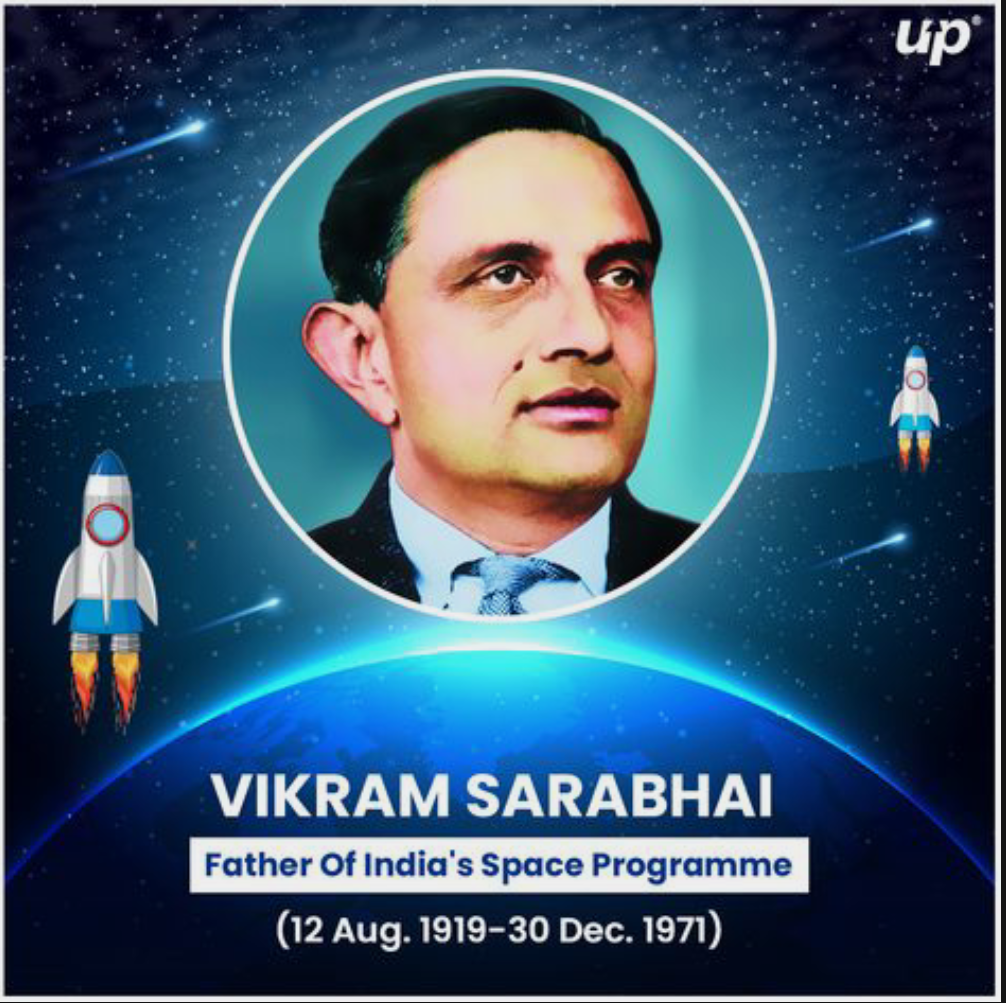
• The year 2019 marks the 100th birth anniversary of Dr. Vikram Sarabhai, the father of the Indian space programme. He was born on 12th August, 1919. Dr. Sarabhai has put India on the international map in the field of space research. In 1962, he became chairman of the Indian National committee for space research. The establishment of the Indian space research organisation, also known as ISRO, was one of his greatest achievements. Dr. Sarabhai died on 30th December 1971.

500th death anniversary

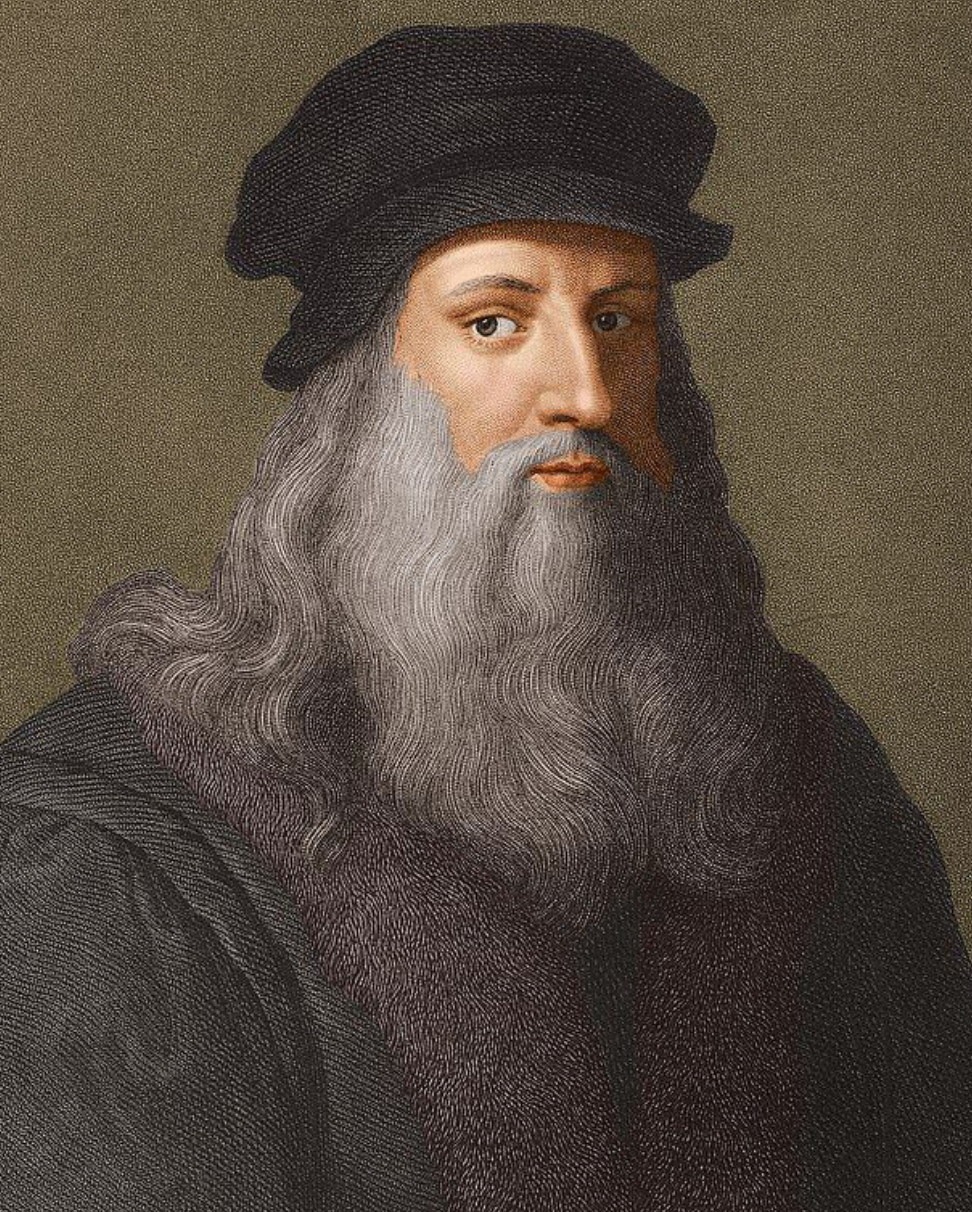
• Leonardo da Vinci was perhaps the most widely talented person ever to have lived. He was a consummate painter and sculptor, a great inventor, military engineer, scientist, botanist and mathematician! He lived during the Renaissance in Italy and while working in Milan as an artist, he began writing texts for his students and apprentices. His notebooks covered more than 1000 pages of observations and illustrations. They remained unpublished for more than a century and were printed only after his death. He was born on April 15th 1452 and died on May 2nd 1519.

150th anniversary

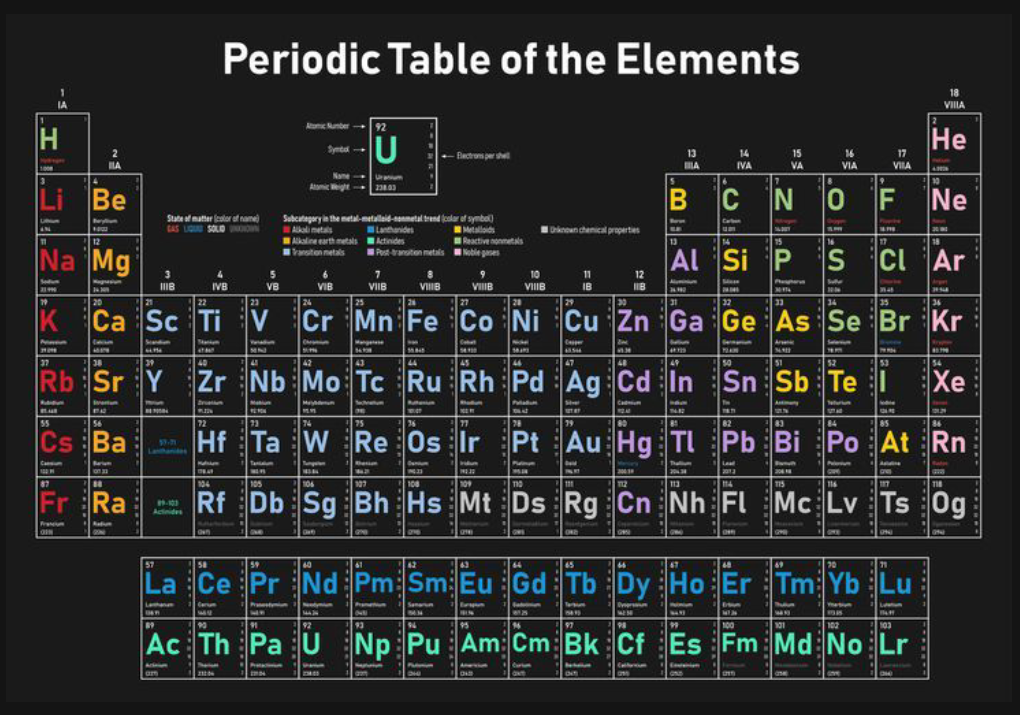
• The period table gives us information about element symbols and atomic weights. It brings order to information about the chemical elements and helps chemists to understand why elements react as they do. The milestone in the development of the periodic table was set by the Russian chemist Dmitri Mendeleev in 1869, who is acknowledged as the ‘father’ of periodic table though the title is also claimed by the German scientist Lothar Meyer. Today, the periodic table organizes the elements by order of increasing atomic number.

150th year of publication

• 2019 marks the 150th year of one of the greatest novels ever written – Leo Tolstoy’s ‘War and Peace’. This classic work from Russia was first published in the book form in 1869. Tolstoy took almost 7 years to finish this epic work and a Russian magazine named ‘Messenger’ serialised some portions of it during 1865-67. But the full novel came out as a book only in 1869. The story woven around Napoleon’s invasion of Russia covers a period of over 15 years. The unique literary style and the historical context make ‘War and Peace’ a monumental work.

125th year of publication

• Is there anyone who isn’t familiar with the famous character ‘Mowgli’? Hopefully none. The main character of the evergreen ‘Jungle Book’, a collection of stories written by Rudyard Kipling is a huge part of our childhood. ‘The Jungle Book’ was first published in 1894.

100th anniversary

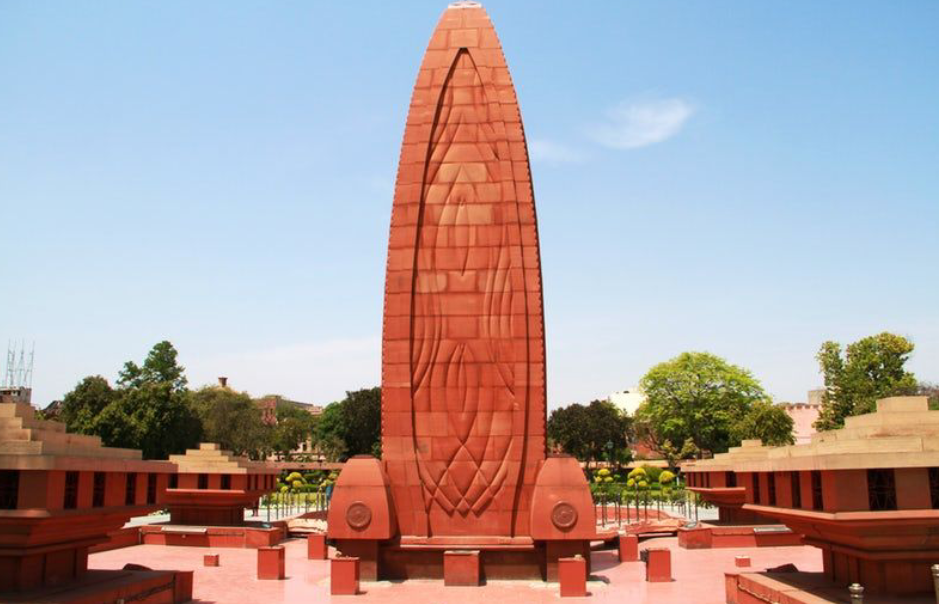
• The Jallianwala Bagh massacre was a turning point in our freedom movement. The British troops under the command of Colonel Reginald Dyer, opened fire on unarmed Indians on 13th April 1919. This event took place in the heart of Amritsar. Hundreds were killed and thousands injured. This was followed by widespread protests across a grieving country. Many Indians became convienced that the British had to be paid back in their own coin that violence has to be met with violence. The 100th anniversary of that cruel incident fell last year.

300th year of publication

• Daniel Defoe’s ‘Robinson Crusoe’ has fascinated readers around the world for the last 300 years. Daniel Defoe was an English writer, famous for his novel Robinson Crusoe that was published in 1791. One reason for it’s popularity is that it us packed with excitement and adventure, with sailing ships, stormy seas and guns. Without doubt, Defoe’s ‘Robinson Crusoe’ established a realistic style of fiction and set the tone for modern novels.

Thank you for reading. Have a nice day!🌼

Quicksand

You might have come across this term manner times,maybe even witnessed it. Movies love to portray at least one scene of quicksand. You might’ve even seen the ‘forwarded’ messages where one is literally bouncing on the ground. How does this happen. More specifically,why does it happen? 

  • What is quicksand?

Okay,let’s not dig directly into the concept. First….. Let’s get to know about what exactly is this quicksand. So,have you ever seen people playing and diving in oobleck? What is this ‘oobleck’? Basically,oobleck is cornstarch or cornflour +water. When you mix water with this oobleck, it does something completely ofbeat.If you’ve not seen this ‘oobleck’ then just grab on some cornflour and water and mix them. But…what does this imply and how the heck is it related with quicksand??!?

Okay! No more suspense! Let me ask you something. Do you believe this statement that everything in this world is made of some..or the other ‘matter’. First of all,why should I believe in these statements just because my textbooks say so. Well, actually it’s completely on us whether to believe these statements or not. By believing these factors, these statements,these assumptions,we can categorise,classify and discover many more things. And the species of humans are achingly curious. They do not limit anywhere and continue to explore,invent and discover. So,by the statement that ‘everything is made of some ‘matter’ or some basic ‘elements’ is our own postulates which actually help us to live in a better way. So ya,to understand a few concepts,you have to accept these postulates even if they are wrong. (Just like I have to get an yearly paid membership to binge-watch various shows,even if that means pulling up and all nighter. Sad? I know..)

 In our textbooks this diagram is very common,

Matter→ Molecules→Atoms→ Electrons,Protons,Neutrons

So,this statement is pretty contradictory about an atom being invincible because then your next statement is that an atom is made up of three things and we will not delve into that part,at least not for now.

So ya,oobleck also has some particles in them. Alright,till the all cool. But this is when it’s dry and something very enthalpy. And what is that….??

Okay,so you might have believed until now that,’Physics and chemistry applies for non-living beings and biology is the only branch where living things’   Hate to make this complicated for you but,All The Three Branches Of The Above Science Apply To Everything Which Belongs. Which is why they are branches of science. What is Science? Anything which is studied deeply is called a science of that particular object.

Oobleck,when dry has some particles in it,and when you play with dry corn flour,it has small particles which distribute themselves when you play with it. But upon adding water,this distribution kind of changes. Now it becomes a sheer thickening liquid. What do mean by sheer thickening liquids? Basically,it reacts to pressure in a different way than normal liquids do. That is,upon applying pressure,it acts like a solid and upon releasing the pressure,it acts like a liquid. Which basically gives it one more synonym: a Non Newtonian liquid. ‘Liquid’ would arise yet another contradiction and therefore the term  ‘mixture’ is more preferable.

Now that you know oobleck,just know that quicksand has almost the exact properties that of oobleck. Quicksand is nothing but water mixed into the sand. Only that this ‘mixture’ is present in large quantities and  occures naturally without any human interference . By this, I mean that none of the human interference end up being the result of  the formation of quicksand. The only difference oobleck and quicksand is that sand is much more 

‘granular’ than oobleck and this makes it a bit different from oobleck.

Source:Pinterest

  • What makes quicksand harmful?

Well well, here’s the thing which is mind boggling, isn’t it? Quicksand, initially acts like a vacuum.Why?How? Well because of its sheer thickening property, anything and everything which stands still on its surface,the objects tends to get sucked inside the quicksand. The formation of quicksand can also be observed in forest in the cases of ‘granular soil’ mixed with water. As per experiments,as sand is more granular and has more minute particles in them,the quicksand free near the forests are usually more dangerous. Ultimately,if you just run on a quicksand it would  not engulf you,unless you stand still or dump in right into the quicksand,the quicksand will not gulp you. Just remember the property of the sheer thickening mixtures,and be a bit more watchful and..You’re good to go!

  • But what if you did manage to get yourself into quicksand?

First of all,that would not be pleasant. But if you did,then your only chance is to make space or a greater surface area. Usually, quicksand pits are not all that deep,and normally can come up to an average adult’s  waist. But do not be faxed by this,there were cases when two people who unknowingly stepped on quicksand died of choking because the pit was too deep. First of all,DO NOT PANIC. Every situation can be handled smoothly if you stop ripping those hair off your head. One can bend behind to create a surface area or keep on wiggling your feet. DO NOT try to fight quicksand by shaking your whole body. The less mass on you,the better. As a precaution,be careful and gentle while shaking your feet because any carelessness can result in severe damage. Many types of ‘survival instincts’ can be found with illustrations by experts on sites. At least I haven’t gotten the pleasure to see a quicksand pit. So,even if I do tell you a lot,I still can’t describe more. Because  I can just give you a theory. The practical use is all upon you!!

Fact: Quicksand is twice as dense as us!!

Affirmative Action in India : Across these years

Introduction of the Affirmative Action in India

The first backward classes had appeared in India in 1870’s in Madras Presidency. It was under the British they the ‘shudras’ and ‘untouchables’ grouped together as the backward classes. This lead to an increase in the number from 39 to 131 in 1920. In 1925 the depressed classes were separated from the untouchables. After independence Nehru gave them a new name the “other backward classes”, classes other than the untouchables and tribes. The constituent Assembly of that time initiated article 340 which stipulated the president to appoint a commission in charge of identifying the socially and educationally backward classes and suggest measure to improve the condition of OBC’s.

Under Article 340 the first backward commission which is known as the ‘Kaka Kalelkar Commission was appointed in 1953. It submitted it report in 1955. And they included 4 major criteria for classifying the OBC’s

  •  A degraded status
  • Lack of education
  • Under representation in the civil service
  • Under representation in the secondary and tertiary sector

But this report was rejected by the chairman saying that it went against the objective of creating a classless society. The quota system which was introduced by the British in the British India and Princely state based on caste was questioned after independence. The socialist party which was found by Ram Manohar Lohia passed a resolution in favor of reserving 60% of civil services jobs in the OBC. He is an ardent advocate of affirmative action. He called it as positive discrimination. Chaudhary Charan Singh also played a crucial role in mobilizing OBS’s in Uttar Pradesh and formed a party called as the Bharatiya Lok Dal. It had its support among the middle caste peasants and jats.

1967 elections marked the successful win of the backward classes over the congress in 8 states. Even though it won it couldn’t stay in power for a long time since the party was a coalition.

Article 341 and 342 of the constitution had listed a number of castes and tribes who were to get the affirmative policies and they are listed as the Scheduled Caste and Scheduled Tribes. As a result of this a positive discrimination such as reserving seats for these classes were done at the national and state level in university positions and public service commission. In 1979, a commission under the chairmanship of B.P.Mandal – popularly known as the Mandal Commission – was established by the ruling Janata Party under the Prime Ministership of Morarji Desai with the objective of identifying the Other Backward Classes. In 1980, it published its findings, placing a total of 3428 ‘communities’ in the OBC category, comprising 54.4 percent of the country’s population.

 The Mandal Commission recommended that there should be employment quotas in public sector organizations (including nationalized banks and private sector undertakings which received financial assistance from the government in one form or the other) and reserved places in higher educational institutions of 27 percent for OBC in addition to the 25.5 percent job quotas and seats in higher educational institutions that were already in place for SC and ST . The figure of 27 percent was arrived at as the Supreme Court limited total reservations to under 50 percent.

As a matter of fact the need for Affirmative action for the SC/ST was always accepted since the post-independence period by the congress because these people were not a threat to the dominance but this couldn’t be said in the same for OBC since they were in large numbers across the country. The constituent Assembly did not enter into debate over this. Instead it added the Article 340.

The importance of implementing affirmative action laid in its after effects. If this was successfully implemented then the lower castes and classes would be brought into the limelight and would also get the same opportunities as the rich and higher classes do. They will be having equal opportunities in the government sectors. These people who had historically faced discrimination would now be having equal opportunities. This can lead to improved lifestyles for the lower caste people. When more representation is given in the electoral sector, their voices will also be heard. This can serve justice to their unheard voices of the past years. Now with their leader in power they could also come forward.

Government under the then Prime Minister Morarji Desai. The Commission was chaired by an MP, B P Mandal. The chief mandate of the Mandal Commission was to identify the socially or educationally backward classes of Indiaand to consider reservations as a means to address caste inequality and discrimination. The Commission submitted its report to the President on 31st December 1980.

After India achieved independence, affirmative action started for the “Depressed Classes” or the Scheduled Castes and Tribes providing benefits to the most backward and socially ostracised of India’s communities. However, there were no benefits or even a list of the country’s other backward classes, which although not as politically and socially backward as the ST/SCs, but were still marginalised in society, and behind forward castes in fields of education, employment and economic development. To address this problem, the country’s first Backward Classes Commission was set up headed by Kaka Kalelkar in 1953. This was also called the Kalelkar Commission. In 1955, the commission submitted its report which stated that there were 2399 backward groups in India out of which 837 were ‘most backward’ and the major evidence of backwardness cited was caste. However, the Union Government, in its pursuit of ultimately creating a casteless society, rejected its recommendations.

Affirmative Action Policies

Various policies have been taken under Affirmative Action. Some of the important ones are as follows

  • In 1935 itself under the Government of India Act, various castes were listed deserving special treatment. And extensions in the list were made in 1990’s to the OBC’s
  • Reservations in the State and Central legislatures, in the government jobs across all the sectors and in educational institutions too.
  • Caste Disabilities Removal Act of 1850
  • Article 17 of the Indian Constitution
  • Prevention of Atrocities(against SC/ST communities)  Act of 1989.
  • 93rd amendment act provided for reservation

Success of Affirmative Policies

Over time there has been a considerable increase in the share of SCs and STs in government employment and educational institutions. Reservations in the legislature have also provided a space for SCs and STs in the executive and in the decision-making process. The formal reservation policy in the government sector, and the general developmental and empowerment measures in the private sector, have also contributed to an improvement in the human development of SCs and STs. However, during the course of the implementation of India’s reservation policy some problems have become apparent. First, the success of the policy has been uneven across sectors and departments. Second, the policy is limited to the government sector, while more than 90 percent of SC and ST workers are employed in the private sector. Finally, despite the improvement in human development among SCs and STs, disparities in attainment with non-SCs and non-STs persist even to this day. This indicates that addressing social exclusion is often a far more difficult challenge than anti-poverty policy.Reservation is accompanied by other provisions designed to increase the ability of SCs and STs to compete for government jobs. These include the relaxation of minimum age for entry into the service, relaxation in the minimum standard of suitability (subject to a required minimum qualification), the provision of pre-examination training, separate interviews for SCs and STs, and representation of people with SC or ST backgrounds on selection committees.

The Central Government has developed an administrative mechanism for regulating, monitoring and implementing the reservation policy. The main institutions involved are the Department of Personal and Training, the National Commission for SCs and STs, the Committee of Parliament on Welfare of SCs and STs, the Ministry of Social Justice and Empowerment, and the Ministry of Tribal Affairs. The DOPT regulates and monitors the reservation policy in government services. Its main function is to enforce the rules and monitor the fulfilment of the quotas. It is supported by administrative units within each Ministry and/or government supported organisation. The National Commission for SCs and STs has responsibility for investigating specific complaints received from SC or ST employees regarding appointment and promotion matters. The Commission has the power of a Civil Court, and can call employers for enquiry. It also prepares an annual report which has been discussed in the national Parliament in every year since 1950. The Ministry of Social Justice and Empowerment and the Ministry of Tribal Affairs are responsible for the all-round development of SCs and STs, and carry out various schemes related to education and economic development. The Committee of Parliament on Welfare of SCs and STs, which is comprised of the SC and ST members of parliament, is entrusted with examining progress regarding the legislative representation of SCs and STs, and also makes recommendations for effective implementation of policies and programmes.

 The number of SC and ST employees has also increased significantly in public sector undertakings, nationalised banks, and public insurance companies. There are, however, variations between different type of jobs, and quotas are much closer to being met in lower categories of jobs. Reservations in political representation are accompanied by a time limit. They were initially provided for a ten-year period, with a provision for extension every ten years (the present extension is up to 2010). By contrast, in the areas of government services and education it is left to the government to use reservations up to the point where it is considered that discrimination against SCs and STs is no longer a major problem. There is a minority view which expresses concern about the extension of reservation policies without a time limit. Nevertheless, the majority view is in favor of extension as long as discrimination and social exclusion of SCs and STs persists, and there is general support in government for

Over time there has been a considerable increase in the share of SCs and STs in government employment and educational institutions. Reservations in the legislature have also provided a space for SCs and STs in the executive and the decision-making process. The formal reservation policy in the government sector and the informal affirmative action policy in the private sector have also contributed to an improvement in the human development of SCs and STs. However, the rate of improvement has been rather slow, and disparities in human development attainment between SCs and STs on the one hand, and non-SCs and non-STs on the other, continue even today. During the course of the implementation of India’s reservation policy, some problems have become apparent. First, its success has been uneven across sectors and departments. Generally speaking, participation of SCs and STs is close to their population shares in lower categories of jobs, but much lower than their shares in high-grade positions. Due to indirect resistance, the extension and spread of reservation policy to several government sectors has also been slow. Another issue is the demand by SCs and STs to extend formal affirmative action policy to private sector employment and private educational institutions. This is currently under active consideration by the government. reservation policies without explicit time limits.

At the end of the end it is not just in the hands of the government to help them but also they should take initiatives an come into the limelight. Many backward classes people have published books detailing their experiences and so on. More or less people are treated equally but even so sometimes we can hear news of people being discriminated and so on. India has a long way to go in this matter

How to get the right solutions in life by The lessons and learning of others

Article by – Shishir Tripathi

Intern at Hariyali Foundation
In collaboration with
Educational News

Article by – Shishir Tripathi

Intern at Hariyali Foundation
In collaboration with
Educational News

In life an individual faces different types of problems every day. Each time a person falls, stands up, walks and again falls. The same cycle repeats everyday and hence every time with almost everyone. Sometimes, there are the life experiences which help the person to stop doing those things which cause trouble to him in future. Whereas, sometimes when caught in strange situations, a person needs help from outside.

There are friends, mentors and especially parents to help and guide in such tough walks of life. Even sometimes, when people are hesitant they start searching solutions to problems from the World Wide Web i.e., Internet. People start searching solutions form influencers available on different platforms like YouTube, Facebook, etc.

The person who has faced problems in life is the one who’ll be able to understand and feel that how it feels when there is no way to go out of that situation. People need a support just even from a pebble, for coming out that dark ocean of problems. A hand of affection, love and also good advice is just sufficient to help a person stand up and start walking again. But things don’t go as simple as they are said and written. There are problems at ground level which are needed to be talked about.

Parents, family, friends, mentors and everyone want the person to come out of the situation and become happier and normal like previously. Man being a social animal, needs love and attention. Attention for his problems, attention for his difficulties. Hence, everyone tries to give the best possible solution to person.

Everyone tries to give advices and solutions to the person from their own life experiences, the situations they’ve encountered, the type of people they’ve met, the type of life they’ve lived and the habits and the lifestyle they’ve followed themselves. People always try to uplift their loved ones from the dark ocean of confusion and sadness.

But it is generally heard from people that they are not able to solve problems in life even after the suggestions and advices from their loved ones. Now the problem arises that why this happens?

This basically happens with everyone. For instance a medicine used for curing a particular disease cannot be used for curing some other disease. The other disease will not get cured, but some other complications will occur to the patient. Similarly, life experiences and solutions from one person’s life cannot be the clear cut solution in some other person’s life. The reason being that each person is different, their thinking is different, lifestyle is different and entirely all the aspects of their lives are different.

Now question arises that how to solve such problems and get back to a normal life. The solution too is again very, very simple. Calmly, just listen to the advice the people, the loved ones of yours are giving to you. Now as you know that you live a different life with totally different thinking then try finding out similar ways to solve the problems by taking into consideration, the solutions by others. Now what happens if you find a solution by some other person better? Just don’t blindly follow people and try to deeply ponder upon the after effects and the probability of the accuracy of the solutions.

Whenever in life, you face some problem; just don’t at all remain quit. Try to discuss it with your parents or friends or your wife or even your children too (if they are well grown and turned into adults). Try finding different approaches to the problems in life and after all the analysis just follow one way, one solution and one remedy. If it works then thank God and person who gave the advice and even if it doesn’t works have faith on yourself and hope in your heart. Try different solutions in life and whichever suits you, follow it and start walking again with your head raised high, smile on your face and hope in your heart.


Therefore, in such way you’ll be able to cross each sea of difficulties gracefully.

Financial Literacy – Its components and significance

Financial literacy is the possession of the set of skills and knowledge that allows an individual to make informed and effective decisions with all of their financial resources. Raising interest in personal finance is now a focus of state-run programs in countries including Australia, Canada, Japan, the United States and the United Kingdom. Understanding basic financial concepts allows people to know how to navigate in the financial system. People with appropriate financial literacy training make better financial decisions and manage money better than those without such training.

The Organization for Economic Co-operation and Development (OECD) started an inter-governmental project in 2003 with the objective of providing ways to improve financial education and literacy standards through the development of common financial literacy principles. In March 2008, the OECD launched the International Gateway for Financial Education, which aims to serve as a clearinghouse for financial education programs, information and research worldwide. In the UK, the alternative term “financial capability” is used by the state and its agencies: the Financial Services Authority (FSA) in the UK started a national strategy on financial capability in 2003. The US Government established its Financial Literacy and Education Commission in 2003.

Components of Financial Literacy :

There are five core competencies of financial literacy: Earning, Saving and Investing, Spending, Borrowing, and Protecting.

Earning –

“Earning” refers to bringing money home from a job, self-employment, or return on various investments. Most individuals earn money via employment in the form of a paycheck. The average employee pays between 28-30% of their gross income in taxes and other deductions before receiving their net income or take-home income. It is extremely important to understand gross versus net in a paycheck, in addition to understanding the federal, state and local individual income tax imposed on citizens and residents of the country.

Saving and Investing –

“Saving” and “Investing” deals with the understanding of financial institutions and services available to you. First of all, you should have a saving and a checking account to manage your own financial transactions. Start SAVING EARLY and PAY YOURSELF FIRST to help you understand the concept that saved money grows over time which also leads you to explore long-term investments for retirement planning.

Spending –

“Spending” is probably the most important concept because it is a personal reflection of your values, lifestyle, and your financial behavior. Differentiating between NEEDS and WANTS is the basic concept of controlling spending.  Budgeting is the most powerful and impact-full tool you can adopt to control spending to allow for saving and investing.

Borrowing –

“Borrowing”is acquiring debt to create assets. Most students have to borrow student loans to finance their educational goals, and with a financial plan for repayment, they can turn this investment in their education to their advantage. Mortgages or loans to buy homes are another form of borrowing or acquiring debt to create assets.  Business loans to create self-employment opportunity or build a business, and real estate investments, are also good examples of how borrowed money can be turned into assets and wealth accumulation.

Protecting –

“Protecting” deals with insurance, ID theft, and retirement planning. The idea is to stay protected at all levels in your life; on personal, health, and social levels. You will need to understand risk management, insurance coverage, identity theft protection, fraud, and scams, in order to master self and family financial protection in life.

Significance of Financial Literacy :

Financial Literacy helps in improving the financial knowledge of individuals. It brings clarity on basic financial concepts and principles such as compound interest, debt management, financial planning etc. It enables you to manage your personal finances efficiently. It helps in making appropriate financial decisions about investing, saving, insurance, managing debts, buying a house, child education, retirement planning etc. It helps individuals to achieve financial stability and financial freedom. It helps in understanding the difference between assets and liabilities. It helps in developing the skill sets required for better financial planning and managing your money. It provides in-depth knowledge on financial education and strategies which are indispensable for achieving financial growth and success. It helps you in generating, managing, saving, spending and investing money. It enables you to be debt free by inculcating financial knowledge and debt strategies.

In India, Financial Literacy has still not become a priority like other developed nations. Lack of basic financial knowledge results in poor investments and financial decisions. That’s why most people invest in short-term plans and physical assets to accomplish their personal goals which give lesser benefits and does not help in the economic development of the country. According to a global survey, about a staggering 76% of Indian adults do not understand basic financial concepts and are unfortunately financially illiterate even today. The survey confirms the financial literacy rate in India has been consistently poor as compared to the rest of the world. It is indeed high time for a developing country like India to realise the importance of financial literacy as such poor financial literacy rate can prove to be a major setback to India’s ambition of becoming an economic superpower in the coming years.

Financial Literacy has become one of the topmost priorities for most nations today as understanding basic financial concepts allows people to manage their wealth in a more organized way which in turn helps in the economic growth of the nation. It is proved that people with appropriate financial education and knowledge make better financial planning and makes the most of the available financial resources for maximum benefit. In the United States of America, financial literacy was initiated way back in 1908 by the American Credit Union Movement. In 1957, financial education was made mandatory by the state of Nevada and then other states followed. Australia also provides financial literacy education through customised programs. Singapore and Indonesia are among few of the Asian countries who have started this initiative and have taken the first step towards Financial Literacy.

Data Scientist Evergreen Career – Demand for Data Scientist is growing around the World

Data consumption has already increased manifold during the global pandemic anyway. As much data is being generated, its consumption is also being done accordingly. Mobile phones, social media, apps, payment wallets are generating so much data that the need of experts is being felt to manage it.

According to a study, the demand for data scientists around the world is estimated to increase by about 28 per cent. At the same time, India is second after the US in terms of making the most appointments in the field of data science or analytics.

Actually, data scientists study data. By analyzing the data, they help companies or institutions plan for the future. Under this, they first collect data. Then store them and then sort them into different categories i.e. packaging of data. Finally, data delivery takes place. Simply to say that data scientists know how to visualize data better. Apart from all this, they also help in finding the lost data, removing the chaos and avoiding other flaws.

Important skills with academics

To become a data scientist, a candidate must have an M.Tech or MS degree in Maths, Statistics, Computer Science, Engineering, Applied Science. Under Data Science people have to study Maths, Algorithm Techniques, Statistics, Machine Learning and Programming languages like Python, Hive, SQL, R, etc. which requires a lot of hard work, time and patience. The data scientist should also have a good understanding of the business and strong communication skills. Also, it is good to gather complete information about any program or course before selecting it. 

Course

Many top institutes in the country offer courses related to it. For example, the Post Graduate Diploma in Business Analytics (Data Science) program jointly run by IIM Calcutta, ISI Calcutta and IIT Kharagpur is quite popular. Apart from this, you can also do a course from IIIT Bengaluru. If you want to learn online, you can explore the platforms of Simplilearn, Jigsaw Academy, Edureka, Learnbay, etc. According to experts, the maths background is beneficial for making a career in data science.

The possibilities

By 2026, it is expected to be around 11 million new jobs coming in this sector. Talking about India, the demand for data scientists in 2018 was seen to increase by 4.17 per cent, which is likely to continue in the coming time. Youngsters aspiring to pursue a career in this field can work on the profiles of data engineers, data administrators, statisticians, data and analytics managers, etc. There will be good demand in sectors like agriculture, healthcare, aviation, cybersecurity etc.

Hiring will increase even after COVID 19

Data scientists play a key role in building business analytics, data products, and software platforms. Today, 2.5 quintillion bytes of data is being created in the world every day, which will require skilled professionals to manage. There will be tremendous opportunities for them. Especially in Big Data Analytics and IT industry, they will have special demand.

According to a global study, after COVID 19, millions of data science professionals will be needed in the US alone. Global companies will hire a large number of data scientists to manage their businesses.

A similar situation will prevail in India. For this, youth can enrol in postgraduate courses offered in different universities of the country or can also take online courses from Coursera, Metis, MIT (EDX), Harvard or Udemy. But doing a full course would be better. If you can work with machine learning in deep learning frameworks like Neural Networks, TensorFlow, Keras, PyTorch, and have working knowledge of Hadoop and Spark, then there can be golden opportunities to move forward in the industry. It is also important for the data scientist to have critical thinking.

Premier Institutes:

ASI Calcutta

http://www.isical.ac.in

IIM, Calcutta

https://www.iimcal.ac.in/

IIT Kharagpur

http://www.iitkgp.ac.in/

Indian Institute of Management, Bangalore

https://www.iimb.ac.in/

Great Lakes Institute of Management, Tamil Nadu

https://www.greatlakes.edu.in/

IIIT Bangalore

https://www.iiitb.ac.in/

Stock Market

Shares

A share is the division of the total capital of the company in certain number of units. The owners of these shares are the owners of the company. The person having shares in a particular company are termed as the shareholders of that company. The amount required by the company to start the business is acquired by these shareholders. The denominated value of a share is called its face value. The total of the face value of issued shares represent the capital of a company, which may not reflect the market value of those shares. The income received from the ownership of shares is a dividend.  The shares are collectively known as “stock”.

Stocks –

Stock is all of the shares into which ownership of the corporation is divided. A single share of the stock represents fractional ownership of the corporation in proportion to the total number of shares. This typically entitles the stockholder to that fraction of the company’s earnings, proceeds from liquidation of assets, or voting power, often dividing these up in proportion to the amount of money each stockholder has invested. Not all stock is necessarily equal, as certain classes of stock may be issued for example without voting rights, with enhanced voting rights, or with a certain priority to receive profits or liquidation proceeds before or after other classes of shareholders.

Stock Market –

A stock market is the aggregation of buyers and sellers of stocks, which represent ownership claims on businesses. These may include securities listed on a public stock exchange, as well as stock that is only traded privately by stock holder, such as shares of private companies which are sold to investors through equity crowd-funding platforms. Investment in the stock market is most often done via stockbrokerages and electronic trading platforms. Investment is usually made with an investment strategy in mind. Stocks can be categorized by the country where the company is domiciled.

A stock exchange is an exchange where stockbrokers and traders can buy and sell shares (equity stock), bonds, and other securities. Many large companies have their stocks listed on a stock exchange. This makes the stock more liquid and thus more attractive to many investors. The exchange may also act as a guarantor of settlement. These and other stocks may also be traded “over the counter” (OTC), that is, through a dealer. Some large companies will have their stock listed on more than one exchange in different countries, so as to attract international investors.

Stock exchanges may also cover other types of securities, such as fixed-interest securities (bonds) or (less frequently) derivatives, which are more likely to be traded OTC. Trade in stock markets means the transfer (in exchange for money) of a stock or security from a seller to a buyer. This requires these two parties to agree on a price.  Equities (stocks or shares) confer an ownership interest in a particular company.

Participants in the stock market range from small individual stock investors to larger investors, who can be based anywhere in the world, and may include banks, insurance companies, pension funds and hedge funds. Their buy or sell orders may be executed on their behalf by a stock exchange trader.

Some exchanges are physical locations where transactions are carried out on a trading floor, by a method known as open outcry. This method is used in some stock exchanges and commodities exchanges, and involves traders shouting bid and offer prices. The other type of stock exchange has a network of computers where trades are made electronically. A potential buyer bids a specific price for a stock, and a potential seller asks a specific price for the same stock. Buying or selling at the market means you will accept any ask price or bid price for the stock. When the bid and ask prices match, a sale takes place, on a first-come, first-served basis if there are multiple bidders at a given price.

The purpose of a stock exchange is to facilitate the exchange of securities between buyers and sellers, thus providing a marketplace. The exchanges provide real-time trading information on the listed securities, facilitating price discovery.

NSE –

National Stock Exchange of India Limited (NSE) is the leading stock exchange of India, located in Mumbai, Maharashtra. NSE was established in 1992 as the first dematerialized electronic exchange in the country. NSE was the first exchange in the country to provide a modern, fully automated screen-based electronic trading system which offered easy trading facilities to investors spread across the length and breadth of the country. Vikram Limaye is Managing Director and Chief Executive Officer of NSE.

National Stock Exchange has a total market capitalization of more than US$2.27 trillion, making it the world’s 11th-largest stock exchange as of April 2018.  NSE’s flagship index, the NIFTY 50, a 50 stock index is used extensively by investors in India and around the world as a barometer of the Indian capital market. The NIFTY 50 index was launched in 1996 by NSE.  However, Vaidyanathan (2016) estimates that only about 4% of the Indian economy / GDP is actually derived from the stock exchanges in India.

The National Stock Exchange of India Limited (NSE) commenced trading in derivatives with the launch of index futures on 12 June 2000. The futures and options segment of NSE has made a global mark. In the Futures and Options segment, trading in NIFTY 50 Index, NIFTY IT index, NIFTY Bank Index, NIFTY Next 50 index and single stock futures are available. Trading in Mini Nifty Futures & Options and Long term Options on NIFTY 50 are also available.  The average daily turnover in the F&O Segment of the Exchange during the financial year April 2013 to March 2014 stood at ₹1.52236 trillion (US$21 billion).

On 29 August 2011, National Stock Exchange launched derivative contracts on the world’s most-followed equity indices, the S&P 500 and the Dow Jones Industrial Average. NSE is the first Indian exchange to launch global indices. This is also the first time in the world that futures contracts on the S&P 500 index were introduced and listed on an exchange outside of their home country, USA. The new contracts include futures on both the DJIA and the S&P 500 and options on the S&P 500.

On 3 May 2012, the National Stock exchange launched derivative contracts (futures and options) on FTSE 100, the widely tracked index of the UK equity stock market. This was the first of its kind of an index of the UK equity stock market launched in India. FTSE 100 includes 100 largest UK listed blue chip companies and has given returns of 17.8 per cent on investment over three years. The index constitutes 85.6 per cent of UK’s equity market cap.

On 10 January 2013, the National Stock Exchange signed a letter of intent with the Japan Exchange Group, Inc. (JPX) on preparing for the launch of NIFTY 50 Index futures, a representative stock price index of India, on the Osaka Securities Exchange Co., Ltd. (OSE), a subsidiary of JPX.

Moving forward, both parties will make preparations for the listing of yen-denominated NIFTY 50 Index futures by March 2014, the integration date of the derivatives markets of OSE and Tokyo Stock Exchange, Inc. (TSE), a subsidiary of JPX. This is the first time that retail and institutional investors in Japan will be able to take a view on the Indian markets, in addition to current ETFs, in their own currency and in their own time zone. Investors will therefore not face any currency risk, because they will not have to invest in dollar denominated or rupee denominated contracts.

In August 2008, currency derivatives were introduced in India with the launch of Currency Futures in USD–INR by NSE. It also added currency futures in Euros, Pounds, and Yen. The average daily turnover in the F&O Segment of the Exchange on 20 June 2013 stood at ₹419.2616 billion (US$5.9 billion) in futures and ₹273.977 billion (US$3.8 billion) in options, respectively.

Small yet distinct

The word ‘country’ makes one think of a large land mass. However, not every country is huge. There are some countries that are really small in size. They are so tiny, that some of them can even be covered by foot! Some of these countries can fit entirely within the city of another country. The smallest country in the world, the Vatican City, for example, can fit into the city of Rome, capital of Italy. Many of these countries are only small in size. With their wealth and natural resources, they can even compete with any of the larger countries. So, here’s a showcase of some of the small, yet distinct countries.

• Vatican City

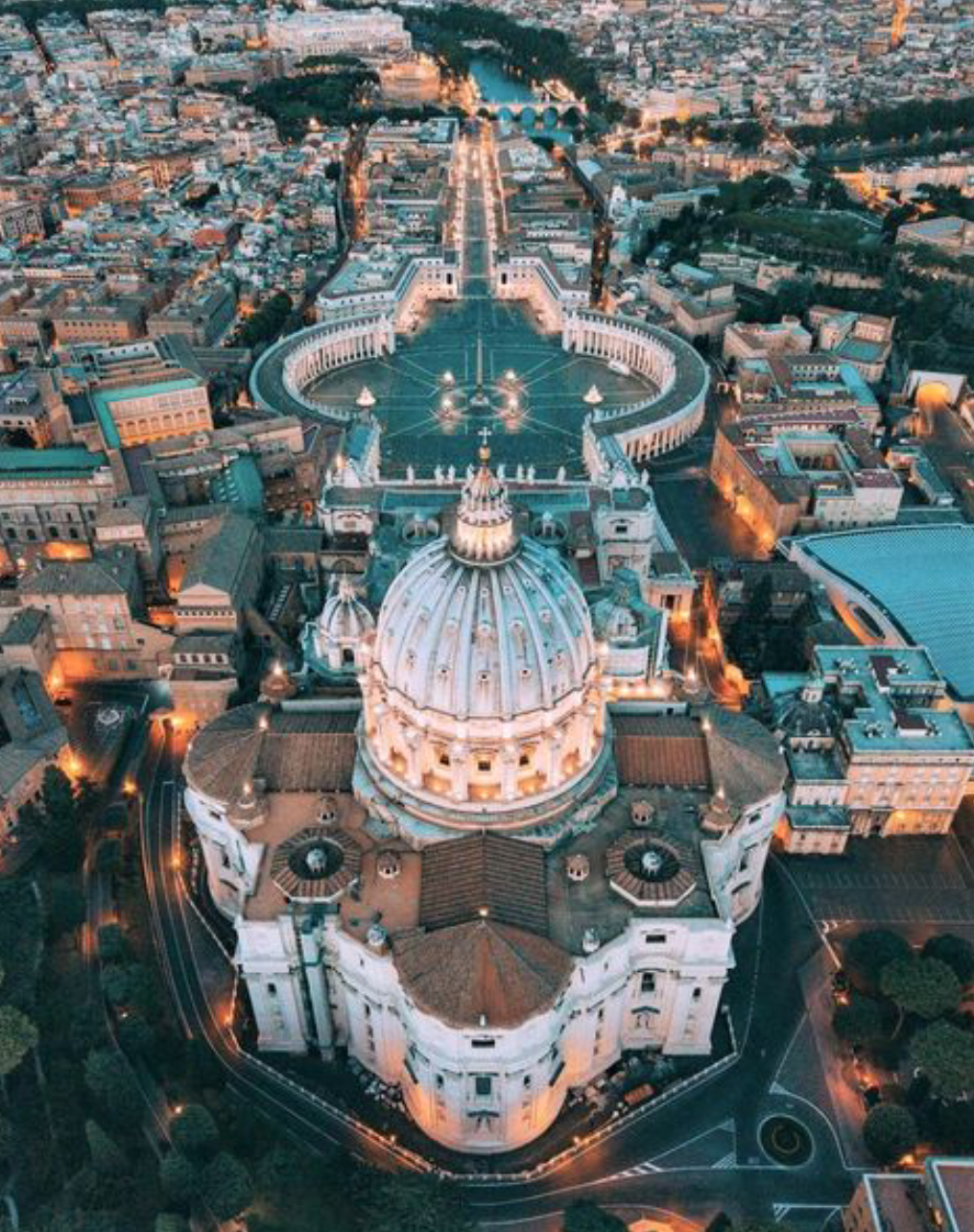
Vatican City is the world’s smallest fully independent nation state. It is also the smallest by population. Situated on the western bank of the Tiber river, the Vatican City’s 3.2 kilometre border is landlocked by Italy. The Vatican City has served as the official home of the pope of the Catholic church since 1377. However, Vatican City was not declared an independent state until the Lateran treaty of 1929 which created the independent state of Vatican City for the Catholic church. Today nearly 75% of the Vatican’s citizens are members of the clergy. Along with the centuries old buildings and gardens the Vatican maintains its own banking and telephone systems post office pharmacy newspaper and radio and television stations. Its 600 citizens include the members of the Swiss guard a security detail charged with protecting the Pope since 1506. The most significant building in Vatican City is Saint Peter’s Basilica. It is the Italian language that is used by most of those located within the state however the official documents are written in Latin.

• South Korea

Compared to the giants of Asia like India and China, South Korea is much smaller in size. Its total area is 100,032 square kilometres. South Korea has one pf the most homogeneous populations in the world which are thought to be descended from several Mongol tribes that migrated from central Asia. Tourism is a fast growing industry in South Korea.

• Portugal

Portugal is a sovereign state in Western Europe. It comprises of the continental part of Portugal on the western coast of the Iberian Peninsula and the small archipelagos of Madeira and the Azores in the Atlantic Ocean.

• Hungary

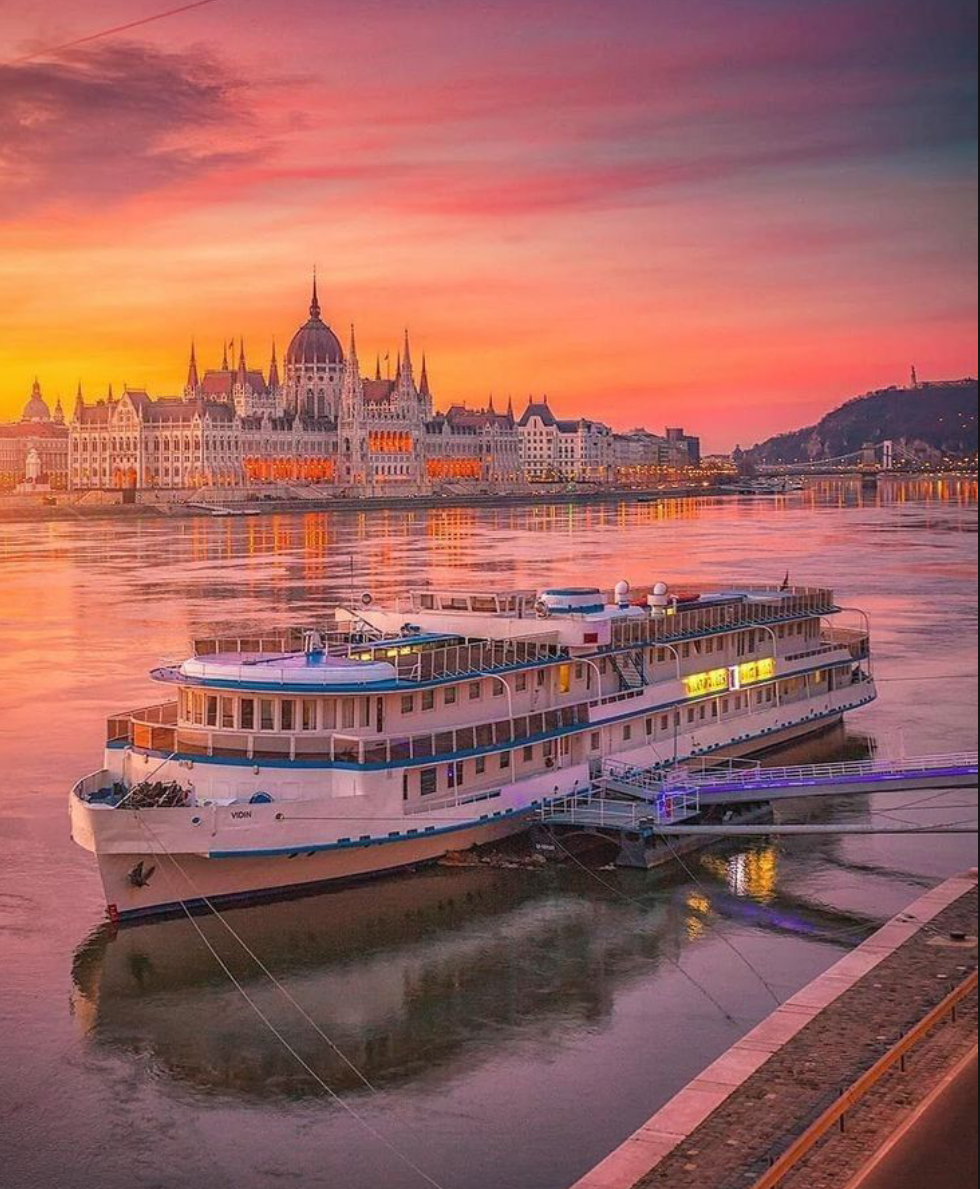
The name “Hungary” may very well come from the medieval Latin word ‘Hungaria’ which translates as “Land of Huns”. Another source states that the name is derived from the Turkish words on ‘Ogur’ meaning ‘ten arrows’ or ‘ten people’

• UAE

The United Arab Emirates is a constitutional federation of seven Emirates; Abu Dhabi, Dubai, Sharjah, Ajman, Umm al-Quwain, Ras al-Khaimah and Fujairah. The federation was formally established on 2nd December, 1971. The UAE’s oil reserves are the seventh largest in the world while its natural gas reserves are the worlds seventeen largest. The Dubai police fleet includes Lamborghini, a Ferrari and a Bentley. This is to allow them to catch speeders who can outrun other cars.

• Dominican republic

The island of Hispaniola, the second largest island of the Antilles in the Caribbean contains two separate countries, the Dominican republic and Haiti. The Dominican republic is the only country in the world to have an image of the Holy Bible on its national flag.

• Panama • Georgia • Ireland • Iceland • Sri Lanka • Costa Rica • Bhutan • Switzerland • Belgium • Israel • Fiji • Qatar • Jamaica • Singapore • Maldives …to name a few others.

Thank you for reading. Have a nice day!🌼

Maruthu Pandiyar-Brothers in Arms

The Maruthu Pandiyar brothers (Periya Maruthu & Chinna Maruthu) ruled Sivagangai, Tamil Nadu during the last part of the 18th century and they were the first to issue a proclamation of independence from the British rule from Trichy Thiruvarangam Temple, Tamil Nadu on June 10, 1801, which is 56 years before the North Indian rebellion – Sepoy mutiny of 1857.

In the year 1772, the English military of the East India Company, under the command of Lt.Col. Bon Jour attacked the state at Kalayar Kovil. As the war worsened, Raja Muthu Vaduganadhar lost his life on the spot. But the Maruthu brothers managed to escape along with Rani Velu Nachiar, wife of Raja Muthu Vadughanadhar and arrived at Dindigul which was ruled by Hyder Ali – the Sultan of Mysore as refugees. Hyder Ali supported them with all respects.

Arcot Nawab, the alliance partner of East India Company was not able to collect any taxes from the people of Sivaganga state for eight years, arranged for an agreement whereby the rule of Sivaganga was restored to Rani Velu Nachiar after he collected his dues from her. The Marudu brothers with 12,000 armed men surrounded Sivaganga and plundered Arcot Nawab’s territories. The Nawab on the 10th of March 1789 appealed to the Madras Council for aid. On 29th April 1789, the British forces attacked Kollangudi. It was defeated by a large body of Marudu’s troops.

They were in close association with Veera Pandiya Kattabomman of Panchalankurichi. Kattabomman held frequent consultations with Marudhus. After the execution of Kattabomman in 17th October 1799 at Kayattar, Chinna Marudhu gave asylum to Kattabomman’s brother Oomadurai (dumb brother). But, the British took this reason to invade and attacked Sivaganga in 1801 with a powerful army. The Maruthu Pandiyars and their allies were quite successful and captured three districts from the British. British considered it as a serious threat to their future in India that they rushed additional troops from Britain to put down Maruthu Pandiyars’ rebellion. These forces surrounded Maruthu Pandiyars’ army at Kalayar Koil, and the latter scattered. The Maruthu Brothers and their top commanders escaped. They regrouped and fought the British and their allies at Viruppatchi, Dindigul and Cholapuram. While they won the battle at Viruppatchi, they lost the other two battles.

The Marudhu Pandiyars, was the first king man who planned to war against British empire for India’s independence. They gave the protection to Velunachiyar from the British empire. They along with the war leader Sivagangai and many of their family members, were captured at Cholapuram and were killed at Thirupatur. They were hanged in the fort of Tirupputhur, which is now Sivaganga district, Tamil Nadu, on 24 October 1801.The kallarai of maruthu padiyar is located at Sivagangai.

Maruthu Brothers are good in aerodynamics and invented many variants of spears and Valari. They also founded guerilla war tactic in India during the early stages of colonisation. A commemorative postage stamp was released in October 2004. Every year people conduct Maruthu Pandiar Guru Puja at the Kalayakoil temple in October

Tamil Helmsman- Part-2

You can refer here for more details

Vulaganathan Othapidaram Chidambaram Pillai or V.O.C was born on 05 September 1872 to an eminent lawyer Vulaganathan Pillai and Paramyee in Ottapidaram, Tirunelveli district of Tamil Nadu state in India. After completing schooling in Othapidaram and Tirunelveli he worked for a few years in the Othapidaram district administrative office. Later following his father’s footsteps he completed law.

As a lawyer he often pleaded for the poor, at times appearing against his father, who appeared for the affluent. Among his notable cases, he proved corruption charges on three sub-magistrates. In the Kulasekaranallur Asari case he proved innocence for the accused.

V.O.C., drawing inspiration from Ramakrishnananda, a disciple of Swami Vivekannanda, resorted to Swadeshi work. Following requests by local citizens, he initiated steps to break the monopoly of British shipping in the coastal trade with Ceylon.

On 12 November 1905, V.O.C. formed the Swadeshi Steam Navigation Company, by purchasing two steamships ‘S.S. Gaelia’ and ‘S.S. Lawoe’, thanks to the assistance and support of Lokamanya Bal Gangadhar Tilak and Aurobindo Ghose. The ships commenced regular service between Turicorin and Colombo (Srilanka), against the opposition of the British traders and the Imperial Governmetn. V.O.C. was thus laying the foundation for a comprehensive shipping industry in the country, more than just a commercial venture.

Until then the commerce between Tuticorin and Colombo was a monopoly enjoyed by the British India Steam Navigation Company (BISN). This was later to be merged with P&O lines and its Tuticorin agents, A & F. Harvey.

His efforts to widen the base of the Swadeshi movement, by mobilizing the workers of the Coral Mills (also managed by A. F. Harvey) brought him into increasing conflict with the British Raj. On 12 March 1908, he was arrested on charges of sedition and for two days, Tirunelveli and Tuticorin witnesses’ unprecedented violence, quelled only by the stationing of a punitive police force. But newspapers had taken note of VOC. Autobindo Ghosh, acclaimed him in Bande Mataram (March 27, 1908)

“Well Done, Chidambaram! A true feeling of comradeship is the salt of political life; it binds men together and is the cement of all associated action. When a political leader is prepared to suffer for the sake of his followers, when a man, famous and adored by the public, is ready to remain in jail rather than leave his friends and fellow workers behind, it is a gign theat political life in India is becoming a reality. Srijut Chidambaram Pillai has shown throughout the Turicorin affair a loftiness of character, a practical energy united with high moral idealism which show that the is a true Nationalist. His refusal to accept release on bail if his fellow-workers were left behind is one more count in the reckoning. Nationalism is or ought to be not merely a political creed but a religious aspiration and a moral attitude. Its business is to build up Indian character by educating it to heroic self-sacrifice and magnificent ambitions, to restore the tone of nobility which it has lost and bring back the ideals of the ancient Aryan gentleman. The qualities of courage, frankness, love and justice are the stuff of which a Nationalist should be made. All honor to Chidambaram Pillai for having shown us the first complete example of an Aryan reborn, and all honor to Madras which has produced such a man”.

The British had assumed the Indian venture would collapse like a house of cards, but soon found the Indian company to be a formidable challenge. To thwart the new Indian company they resorted to the monopolistic trade practice of reducing the fare per trip to Re.1 (16 annas) per head. Swadeshi company responded by offering a fare of Re. 0.5 (eight annas). The British company went further by offering a free trip to the passengers plus a free umbrella, which had ‘S.S. Gaelia’ and ‘S.S. Lawoe’ running nearly empty. By 1909 the company was heading towards bankruptcy.

To widen the Swadeshi base and to create awareness of British Imperialism V.O.C. became instrumental in mobilizing the workers of Coral Mills (also managed by A. & F. Harvey) (now part of Madura Coats) in Tirunelveli. This brought him into increasing conflict with the British Raj. On 12 March, 1908, he was arrested on charges of sedition and for two days, Tirunelveli and Tuticorin witnessed unprecedented violence, quelled only by shooting four people to deah (a Muslim, a Dalit, a baker and a Hindu temple priest). Punitive police forces were brought in from neighboring districts.

But newspapers had taken not of V.O.C. Sri Aurobindo’s nationalist Bengali newspaper Bande Mataram (splet and pronounced as Bonde Matorom in the Bengali language) acclaimed him (March 27, 1908) with “Well Done, Chidambaram”. Apart from the Madras press, Ananad Bazaar Patrika from Koldata (Calcutta) carried reports of his prosecution every day. Funds were raised for his defence not only in India but also by the Indians in South Africa.

Apart from the Madras press, Ananad Bazaar Patrika from Koldata (Calcutta) carried reports of his prosecution every day. Funds were raised for his defence not only in India but also by the Indians in South Africa. Bharathy gave evidence in the case which had been instituted against him. V.O.C was confined in the Central Prison, Coimbatore from 9 July 1908 to 1 December 1910.

Man vs Machine

Human beings and machines work differently as machines are the creation of Human. Machines were created to make human life easier. A machine is only a motorized gadget consisting of different parts. When it comes to artificial intelligence vs human brain then there are some people who believe artificial intelligence is more efficient than the human brain. As time passed by humans became dependent on machines. Humans have a need to interact with each other because communication is not possible with machines. We feel comfortable in expressing, probing and getting our problems solved with humans.Our history and our literature show us that for most of human history machines were seen as tools to help people do more than they were capable of on their own. From simple stone tools to the inventions of the Iron Age and Bronze Age, technology augmented human capability for survival, competitive advantage and convenience. The ancient Greek legend of Icarus and Daedalus told the story of augmenting humans with wings so they could fly like the birds. For thousands of years life and art mirrored each other in a story of man AND machine, working together for the betterment of humanity.Over the years, man has come up with countless inventions, each more resourceful than the last. However, as the computer age continues, mankind is threatened. Ridiculous, some may say, but I say look around! The computer has already begun to control so many of the vital functions that man has prided himself upon before. Our lives are now dependent on a computer and what it tells you. Even now, I type this essay on a computer, trusting that it will produce a result far superior to what I can do with my own to hands. Humans are creative and imaginative. They can create and invent new things but machines cannot do such types of work because they use artificial intelligence. Machines are operated and guided by humans. Humans are blessed with intelligence and emotions while machines have artificial intelligence. Humans have many diverse abilities in several things such as language, pattern recognition, and creative thinking.

As jobs are automated we again see people in the labor force striking back against the machines in an effort to maintain their livelihood. The fight itself evolved during this time as workers were now represented by unions and many companies are no longer led by a single individual but rather faceless shareholders creating an depersonalized, institutional “us versus them” dynamic.We see the conflict play out in a wide range of stories, but especially in science fiction as writers imagine how new technologies can be used evil as well as good.A person can work with a wide variety of methods, seeing new, more efficient ways of handling problems. It can come up with infinite ways of getting around problems encountered in day to day life, while a computer has a limited memory of new tricks it can come up with, limited by its programming. Should improved programming be introduced, it is the human brain that figures out the programming that will allow any improvements for the computer. The human brain can learn to understand anything, it can grasp the central concept of anything. Also, emotions are not capable in a computer. It allows the human brain to have evolved beyond a problem-solving machine. Emotions open the mind to an endless realm of possibilities.Machines and technology are replacing manpower for certain jobs and this is the big reason for unemployment and which is also a drawback of the machines. As humans are being replaced by machine hence certain jobs are disappearing. The industrial revolution has also led to unemployment, as a result, there is a loss of medium skill jobs in various sectors.

The reason why computers cannot create is because of the lack of emotions. For example, anger allows the imagination to roam, inventing concepts of new, ever more powerful weapons of destruction. Puzzlement causes the mind to think of solutions. Curiosity leads to attempts to satisfy it, producing new discoveries and ideas. Some effects of a machine on humans are competency, wars, and destruction, The radiation released from smartphones is absorbed by human bodies which can cause tumor, and also the power consumption has increased.

Technology is advancing faster than ever. Even new business and economic models, from the gig and sharing economies to crypocurrencies and initial coin offerings, are both creating new opportunities for those who know how to take advantage of them as well as threatening long established business and jobs. Threats no longer come head on from known competitors but can come from any direction, including companies that seemingly pop out of nowhere. To be successfully you need to not only understand the environment you are in but also to understand who you are. You cannot be an expert in all the new technologies, including the technologies in your own field.

On the other hand, the computer is clearly superior in many other aspects. In sheer speed of computation and retrieval of data, the computer is obviously by far the stronger. Machines have become a very important part of our lives and are helpful in many ways. Though it also has a negative impact on our lives as well. There is no competition between humans and machines because humans are the creators of the machine. Humans have created machines for various purposes and it is also important to know the purpose of developing artificial intelligence and its impact on human life. Machines are used for creation as well as destruction by the power of human intelligence.

#MeToo – But I’m Not A Woman!…

The #MeToo campaign has again taken the limelight. Many women coming forward to tell the nightmares they’ve been through. We as a third-person watching it put our judgement giving sympathy to a particular gender. We don’t even try to understand another side of the story. We spoke of gender equality, so justice must be served in that way only. In our society, a man is guilty until proven innocent and a woman is innocent until proven guilty. I genuinely feel that justice need to be served to the one holding the truth.
The saddest and most unheard truth is men too get harassed. If you go and check the stats of male sexual harassments, you will be shocked. Men also get harassed right from the teenage till to the workplace. Men do go through all this and the worst thing is they can’t even come up to complain because they know that it’ll be the only who will be taken as a guilty. We have developed a mentality of a soft corner for gender in such cases. But this needs to be changed. Every man should stand by the women in such case and every woman should do the same as well. That’s only how it’ll work. If we are against rape, then there shouldn’t be any discrimination of gender as the criminal can be anybody with sick mentality irrespective of gender. Women cases have strong law and which is a thing to be appreciated but there is no such strict law for men. We see only figures which are recorded. But there are so many cases in which the victim don’t even dare to report because of the fear of getting proven guilty. This need to change. Nobody should live with this fear. Men and women are made by god. God made us to support each other through thicks and thins. But we end up taking the easiest judgement and assumption proving the innocent guilty. Rather if we stay by the side of truth to the best of our knowledge then only justice will have some value. Justice comes only with a fight and we need to stick together for the right. We, men and women together can eradicate this. The only thing we need is to support each other and fight for the right!…