Human Security and Development

The concept of human security has given rise to a range of responses and attracted a lot of attention. It has connected the idea of security with that of human development. The very notion of human security has become a part of a broader political discourse. Typically speaking, the concept represents a departure from traditional security studies, which focus on the security of the state. The subjects of the human security approach are individuals, and its end goal is the protection of people from traditional (i.e. military) and non-traditional threats such as poverty and disease.

The advocates of human security have generally been less focused on meta-theoretical debates about the nature of security and have instead focused on influencing policy to take into account the security of individuals in a more practical sense. The concept of Human Security is often believed to have its basis in the realm of policy and the 1994 UNDP Report is believed to be the key official statement of the concept. The report sought to shift the focus from inter-state conflict to that of issues related to development.

Beyond territorial and military concerns, the Report argued that human security is fundamentally concerned with human life and dignity. For analytical purposes, UNDP classified its four main characteristics as: 1) it is universal, 2) its components are interdependent, 3) it is best ensured through prevention, 4) and it is people-centred.

For UNDP, human security meant safety from chronic threats such as hunger, disease, and repression, and it meant protection from sudden and hurtful disruptions in the patterns of daily life. Understood in these terms, it has also been embodied in the policy axiom of “freedom from fear” and “freedom from want”. While acknowledging the varying intensity of possible threats to human welfare, UNDP grouped these threats in seven non-exhaustive and nonexclusive security categories: –

1) community- protection of traditional culture of ethnic groups

2) economic- freedom from poverty

3) environmental- protection from factors such as pollution and degradation

4) food security- i.e. access to food

5) health- access to healthcare

6) personal- physical safety from the use of violence

7) and political- protection of civil liberties and freedom of political expression

One of the key debates in regarding the definition of Human Security. Primarily these are narrow human security and broad human security. The narrow definition emphasizes on ‘freedom from fear’ i.e. essentially conflict prevention and resolution. On the other hand, the broad definition emphasizes on ‘freedom from fear’ and ‘freedom from want’ i.e. conflict prevention and resolution as well as broader social issues such as health and education.

For many scholars operating within the ambit of critical security studies, the emerging practices associated with human security and development are a source of both critical opportunity and concern. Some say that what usually happens is that the policies and practices, in the name of human security, often fail to fulfill its progressive potential. Thus, Human Security is one of the most challenging contemporary ideas that critical approaches to Security are trying to come to terms with. The concept of Human Security provides a continuing source of debate.

Out of sight out of mind

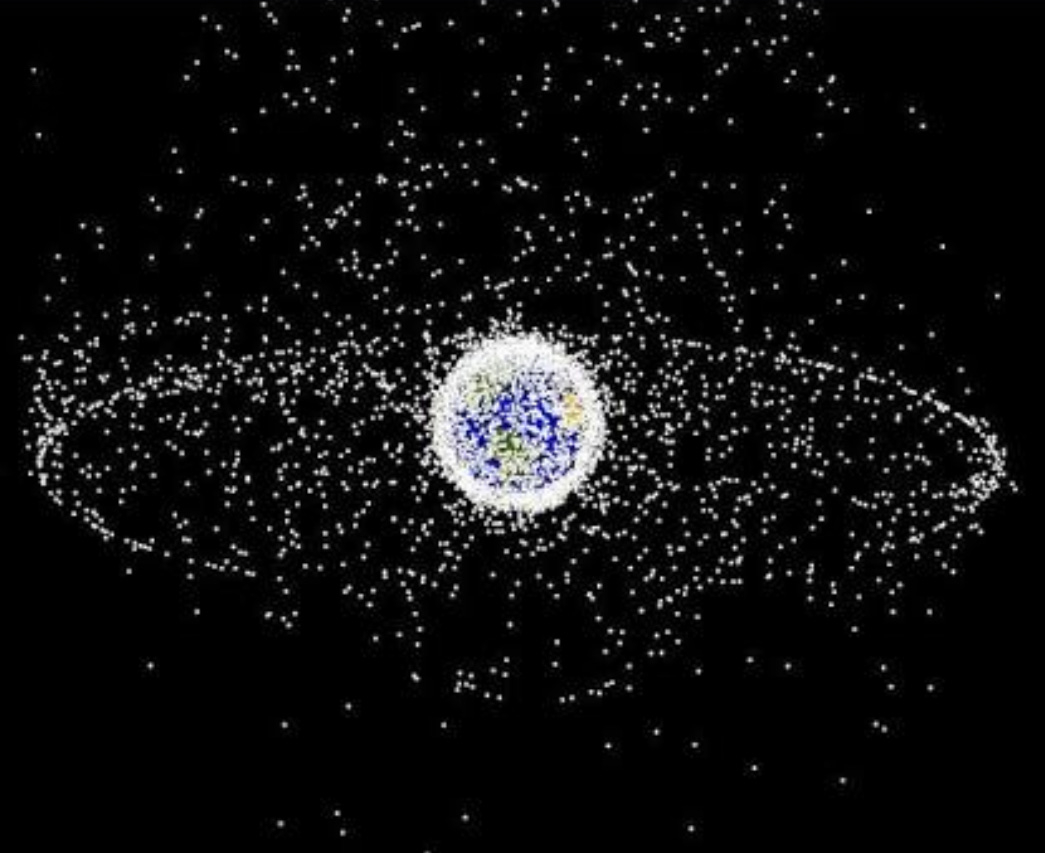
The world has so much problem with the waste production and dumping and landfills. We need more space. Why not send it to outer space? You know take some amount of trash at a time and send it to space and let it go. Sounds easy but turns out it isn’t that easy.

First of all it costs a LOT to send a spaceship into the space. We would need a large number of rocket launches to actually get rid of the insane amount of garbage the world produces(1.2 trillion kg). That way, the rise in air pollution… unimaginable. Also, complex infrastructure requirements! We need a lot more launch pads.

Suppose we do find a way to manage the costs and send a rocket filled with trash to be thrown out in the space. Imagine if some technical issue occurs and it blasts. It would rain burning plastic. Not good for the environment.

Even if we throw it out, the accumulation would make our atmosphere so dense that it would be a toxic world to live in. Also we couldn’t use satellites plus space travel would be tough. What if it comes floating back. Gross sight.

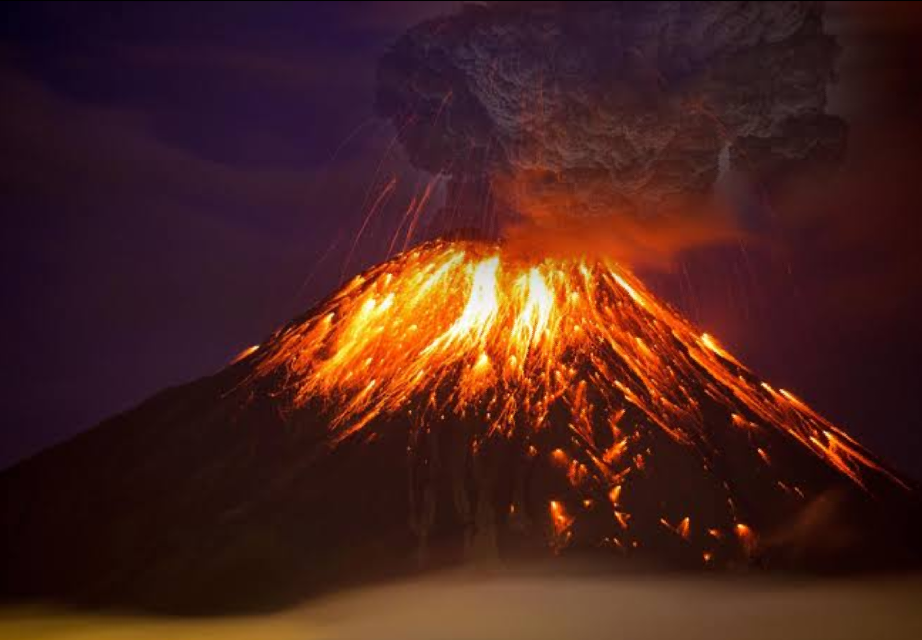
There’s another thing we could do. Burn the trash in the volcanoes. Trash incinerators have filters to filter out poisonous gases. In case of volcanoes filtering is not possible so again toxic world. Besides throwing something in the lava, disturbing the surface, would instantly trigger a chain reaction leading to an explosion. So not an option.

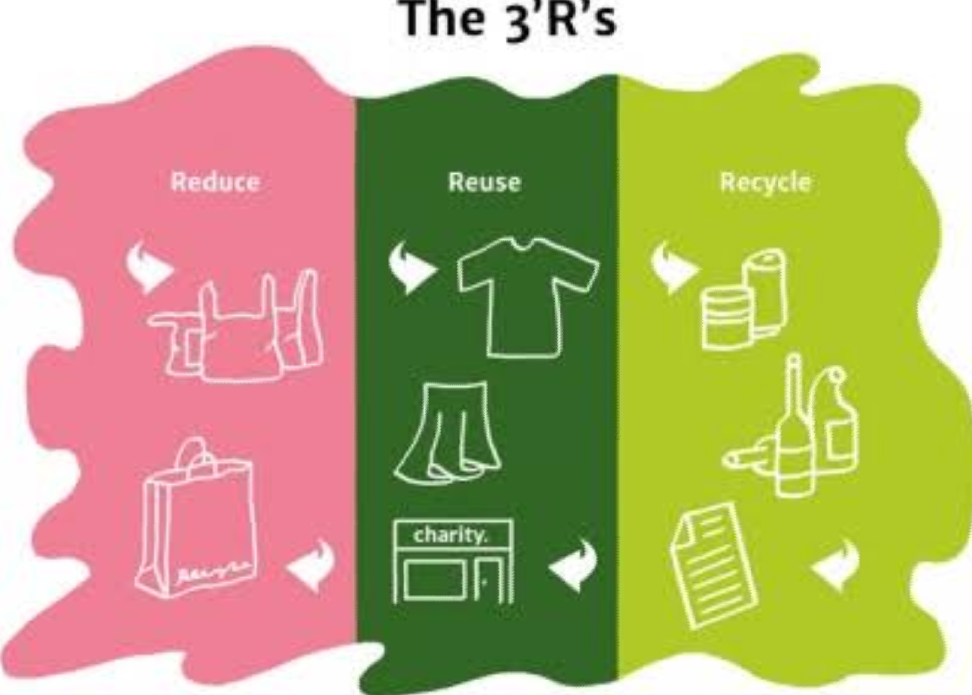
Guess we have to find other sources to convert the trash into some kind of energy. Maybe some day. Till then we need to manage our trash and follow the three R’s. (Reuse, Recycle, Reduce)

Thank you for reading. Have a nice day!

Securitization

The notion of Securitization is among the most significant conceptual innovations to have emerged out of the debate on the nature of Security. It is associated with the Copenhagen School of security studies which is linked to the likes of Barry Buzan and Ole Wæver. However, overtime, the concept has also been taken up and adapted by those outside the realm of Copenhagen School.

What is securitization? The work of Copenhagen School and their initial development of the concept of securitization as the basis for a new framework of analysis can be understood as a fusion of two works. First being Buzan’s notion of different sectors of security and second, Wæver’s concept of securitization. Later authors have asked the question of how to define security in the context of the ever-broadening agenda. The all important question was- what is a security issue and what is not one? They argue that we need a principle to help answer this. Otherwise, it would become way too broad a concept and effectively.

To answer the question of what is a security issue and what is not a security issue, they say that security as a concept is fundamentally about survival. Therefore, an issue is a security issue when it is represented as possessing an existential threat to the survival of a referent object. This is the same basic principle that is found in the conventional notion of national security and defence. One of the ways to identify an existential threat is to see the response it generates because when an issue is presented as an existential threat, it legitimizes the use of exceptional political measures. For example: A State’s right to self-defence when under attack, it can legitimately use extraordinary measures that go beyond normal day-to-day politics. It can declare emergency and suspend or change its functions during it. An appropriate understanding of Securitization would thus be: shifting an issue from the realm of normal politics to that of emergency politics by presenting it as an existential threat.

One of the most striking implications of the Securitization Theory is that it believes that security need not always be a good thing. It states that more securitization need not always be better as securitization of an issue brings with it emergency politics where space and time for deliberation and participation is constricted and also results in a militarized mode of thinking. Thus, thinkers like Wæver argued that in most cases we should aim for Desecuritization. It refers to shifting an issue out of the realm of emergency politics back to the that of normal political or technical debate. He also suggests that the condition of Asecurity is optimal. It refers to a condition where occurrence of securitization is minimal or absent and issues, unless necessary, are not conceptualized in terms of security.

Securitization Theory has had significant impact on the way security is studied as it offers a clearly identifiable research agenda. It studies societal security as an alternative to focusing solely on the state. It offers an analytical framework and also a site of critical opportunity for thinking through the important questions of the nature of contemporary security politics.

7 METHODS FOR SALES PROMOTION

Each and every activity performed in a business organisation is performed only to achieve a single goal that is sales. Sales makes the topline of a balance sheet

There are various ways to do sales promotion it depends on business to business that which method will give you best results may be all 10 methods will give you the results or only few so first understand the methods and then analyse them accordingly

  1. DISCOUNT- It is the most common way whiciis used by various business organisations to attract more customers and broaden their customer base.But using this method will effect your gross margin keep it as a backup method use it if nothing works.
  2. REFUNDS- This method is only suitable for premium market or for rental business like if you run a car rental business or own a coworking complex so to attract more customers you can start a scheme of refunds this method is not for Chinese goods or non recurring business.
  3. PRODUCT COMBINATION- A good product combination made with adequate research of consumer behaviour can give new heights to your sales like for example Johnsons baby kit or a cricket kit and many more. Observe the needs and requirements of your target audience.
  4. QUANTITY GIFTS- This method is also known as freebie sales. It is giving a low price commodity free on the purchase of high price quantity like free mouse with laptop.
  5. FULL FINANCE@0%- IT is the most trending method of sales promotion you must have heard of bajaj finserv they give full finance at 0% interest if you have qualified credit score you can also use this method if you deal in high price commodities.
  6. LUCKY DRAW- It is an evergreen method of sales promotion a lucky draw can change the buying decision of a customer but play safe be calculative while announcing the price.
  7. CONTEST – This method is used by various corporates you can either sponsor a contest or can conduct of your own and grow up your sales

Earphones and Headphones….are harmful?

In our lives, we use earphones/headphones at many occasion.For ex. An virtual meeting, music, while talking to someone etc. But do we know the detrimental effects of this careless habit. Not really…. But awareness can make one more alert and watchful .So let’s  understand, what makes the earphones so harmful!

  • How is it harmful ?

If you visualise, just think about an object, which is rarely cleaned or disinfected. What is likely to happen? Well, obviously it will start to grow microbe if it is in contact with what the microbe needs to breed. Now, we don’t know if the microbe growing is a pathogen or not. There may be a chance that they are harmless but the possibility is so less, that it can be counted as non-existent. Similarly, earphones/headphones are in contact with our body for most of the time. If it is in contact with our body, surely micro organisms are prone to grow. Eventually leading to uncomfortable problems like rashes, ear pains etc. Micro organisms are no creatures to play with. What makes it even more harmful is, we don’t even know what type of microbe it is. We can’t even assume because there are so many pathogens that could be residing  in your ear itself. And we have a really bad habit of sharing earphones. Even if it’s your loved ones,diseases do not see that. By sharing earphones, You’re practically transmitting the disease yourself and that would not be good.

Photo by Burst

Earphones/headphones, if used for long durations of time may result in induced or permanent hearing loss. Now the problem is, the  microphone has a direct contact to your ear. Your ear is a very sensitive part of your body and it’s a vital organ. It consists of 3 parts, namely – 1. The outer ear 2. The middle ear 3. The inner ear.  You might have noticed  some hairs in your ears. It is called the cochlea.  It is present in the part of the inner ear. Now, cochlea is a very important structure. Basically, the cochlea sends  signals from the outside environment to the brain  by vibrating, due to which we hear and make sense of what we hear. Sort of connects the outer world to our brain in the medium of sound. Prolonged duration of using earphones (when I am writing only earphones, do note to add headphones as well!) makes the cochlea to vibrate exorbitantly and the cochlea can seriously lose the sensitivity to vibrations. Unlike other parts of your body, your ear doesn’t have the ability to regenerate itself. Which makes curing it even harder.  Listening, with high volume makes the condition worse. Your ears don’t have a choice but to respond to that noise, even if it makes the cochlea die and never recover. This is why one often experiences ear pains after prolonged periods of using earphones.

 Photo by Andrea Piacquadio from Pexels

  • What is More harmful?

Alright, the usage of earphones and headphones is harmful. But which is more harmful?… earphones are. In the case of headphones, you still have some space between your device and your ear,but in earphones or an earpiece,which makes a direct contact by being plugged inside your ears,has a greater Impact. Probably intensifies the sound by 6 to 7 decibels ( a unit through which the intensity of sound is measured). It cannot be said that headphones don’t have any ham, though. As headphones have a greater area, the amount of microbe breeding also, could be greater..

Photo by Andrea Piacquadio

  • Result

Okay, it is harmful to use  earphones carelessly. But…what possible problems can even occur by this? Nothing serious……right? According to ColumbiaAsia Hospitals, there is a probability that following problems can happen-

  1. NHL- Noise induced hearing (NHL) is when one experiences a temporary loss of hearing, due to  extended time periods of using earphones.
  2. Tinnitus- When the cochlea(hair cells) is damaged, one can experience some buzzing or ringing noise in their ears. This condition is called Tinnitus.
  3.  Hyperacusis- A condition where one tends to be sensitive to the noise produced by the environment.
  4. Dizziness- Increase of pressure in the ear canal leads to dizziness.

These are a few of them. Ears are counted in one of the sensory organs. With that being said, the ears are extremely sensitive. An ear is not made of bones but  cartilage. Otherwise, you wouldn’t be able to twist your ears as you please. Cartilage can be described as a gel-like  substance acting like a connective tissue.

Photo by Christina Morillo 

Take a while to remember to clean the outer ears properly and regularly. Ear wax (cerumen) is present in your skin to moisturize the dry skin. So not try to deliberately remove it, especially using a  cotton swab. It only makes the earwax to go nearer towards the inner ear.

Avoid extended periods of using earphones/headphones. One can use the trick to not use the volume beyond 60 decibels. And let the time period to use an earphone be 60 minutes. Prefer using the speaker rather than microphone(let the others be annoyed😉). And regularly sanitize or disinfect the earphones and headphones. Yes, it will be a pain. But it ‘ll  be worth it!

And do not worry. There is always a cure if the right moderation a are used. If you experience any of the above symptoms for a constant period of time. Immediate consultancy to the doctor is advisable.

References

https://www.healthyhearing.com/report/52503-Headphones-when-hearing-danger-is-closer-than-you-think

https://www.columbiaindiahospitals.com/health-articles/harmful-effects-listening-music-earphones-headphones

https://kidshealth.org/en/teens/earbuds.html

History Of Mass Communication In India


https://in.pinterest.com/

   TV, radio, newspapers, magazines, movies, websites & portals are some of the widely known forms of communication that the Indian media uses. Indian media is one of the oldest in the world. The history stretches from writing manuscripts & cave paintings that can be spotted in Ajanta & Elora caves to weekly newspapers that took months to reach the rural areas to surfing on the internet to find information, it was a long way. 

   Even when one looks back in the reign of Akbar’s era, where messages sent through messengers. They used to strike their drum amid the market to grab the attention of the people & then make their announcements. This was a mode of public communication. On the other hand, to meet the needs of the local people, such kingdoms used to have darbars to tackle the problems faced by the public. Similarly to send messages from one kingdom to the other, one used to send their messenger with a scroll to inform them. 

   Rolling back to recent times, when the technology was still lacking in the country, people used to communicate long-distance through letters & telegrams. And much later by landline phones. The primitive form of cellular phones was introduced much later in the scene after the optimum development of technology in India. And now is the era of sending messages just a tap away. The world is touching new heights with time, as technology & media go hand-in-hand. 

https://www.pexels.com/

   The Indian media has gone active since the late 18th century & since then there has been no turning back. Many of the media are controlled largely by profit-making corporations, which reap revenue by advertisements, subscriptions &, etc. 

   The print media started in India as early as 1780 while radio broadcasting began in 1927. Radio broadcasting was initiated in 1927 but became state responsibility only in 1930. In 1937 it was given the name All India Radio and since 1957 it has been called Akashvani. The Ministry of Information & Broadcasting owns it & is responsible for maintaining the audio-visual apparatus, including the television channel Doordarshan. Although later an autonomous body was established in the name of Prasar Bharti to take care of the public service broadcasting. 

    Now are the days of DTH & Android TV. While one can easily connect their cell phones to the TV or even laptop. Gone are the days when pigeons were used to sending letters. Also, fax machines are no longer in use. Rather have been replaced by printers & all. 

    So this is how everything changed down the lane. And even though times have changed with the advancements of all the modes. All this has lead to a drastic improvement in the face of the country. Directly or indirectly affecting the job sector & easing out the process altogether. Contented that the country is forging out towards a much brighter future. 

Why Pune tops in COVID-19 cases across the Country

Total no. of cases in Pune crosses tally of 2 lakh mark with total of 2,04,037 with active cases of 61,363 and recovered cases with 1,34,527. Pune is now top of the list in whole India. Pune has surpassed Delhi in recent days. As India as country is still not able to deal with the Corona Virus, in fact it is somehow struggling badly which has put India in leading no. is terms of cases in top with 1 other countries. These countries are trying everything to control the spread and reduce it somehow. India has surpassed Brazil with 67,007 new cases last day.

India is too giving many advices and steps to increase the effective check-ups and trials to get more hold on cases and minimize it by making every little effort. Now check-ups are happening at more faster rates. Daily tests conducted is reaching 4-5 lakhs in numbers.

Doctors have now called for more tests across the state’s rural areas and non-metropolitan zones to reduce patient load on hospitals in the major cities. There have been several instances of critical patients from rural areas being rushed to hospitals in the major cities after initial delays in treatment.

Every week, at least a dozen patients — with serious Covid-19 — are being moved from the rural areas to units such as Sassoon General Hospital, Yashwantrao Chavan Memorial Hospital or the Aundh Chest Hospital. And specialists said it’s these cases, which have already entered the critical stages of COVID-19 infection, that are some of the most difficult to treat
For example, in June, it was estimated that 20% of all admissions at most hospitals in Pune city were from outside Pune district. In past few days, frequency of corona positives has increased gradually as cases has started to come from rural areas. Earlier most of the cases were coming out of urban areas as there were not much contact with deeper village areas. However as effective ways for corona are reaching there so it is spreading,

In August, Pune’s first Sero survey found that over 50 per cent of residents from five high-incidence areas in the city have been exposed to the COVID-19 infection. Pune is also the only district in the country which has crossed the 50,000 mark in terms of active cases. The district now has 54,760 active cases with 1,23,292 declared recovered.


The senior Pawar’s intervention, in fact, seems to have been triggered by the death of a television journalist last week after he reportedly could not find an ICU on time. Pune authorities are blamed for failing to create adequate health facilities, with instances of coronavirus patients dying because of non-availability of ICU.

The survey, which is done to detect the presence of specific antibodies and assess the prevalence of a disease in the population, was conducted by taking samples of 1,664 respondents. The main reason behind this surge in Coronavirus cases is the increase in the number of COVID19 testing. Pune is having the greatest number of coronavirus testing in Maharashtra. The number is twice that of Mumbai. Pune authorities have ordered one lakh antigen test kits in July and have ordered another one lakh recently.

Lying: Does it give satisfaction?

Largely, lies hide truth, mystery or reality. A lie is something that is believed to be false and generally it carries a negative connotation. And it gives you a sense of success in doing that. By hoaxing the other you derive pleasure or fun out of that. Lying to another person acts as a solution to your mind’s turmoil. It gives the satisfaction of creating something new or non-existent. It is an attempt to get away with something that we don’t want to occur. You badly want to abstain from the unpleasant consequences of truth. Because you are afraid to face them, that’s why you prefer to lie. But why would someone get this feeling of achievement or kind of satisfaction after lying? Of course, it is because achievement is their top priority. Most do that out of their ignorance that they cannot get deeper and longer satisfaction by lying. At one point, when you manage to fool someone, you develop a hidden feeling of superiority complex (in clinical terms) and often lies get reflected on your face. Lies can serve as instrumental, interpersonal or Psychological ways for the individuals who use them. You get the joy of preserving the truth within your inside by not disclosing it. Some derive sadistic pleasure in duping the other by giving wrong information or creating improbity. Some do it because they are habitual of lying and then only lying can give them satisfaction. They do not understand that except instant contentment or insignificant satiety lying costs you your dependability, trustworthiness and goodwill. People tend to lying also to ensure harmony, security, freedom from fear. Do you know when you lie there is a weird feeling of achievement? It’s because we expect and wish that our excuse should be accepted by others because it is right. Sometimes people lie because they want to appear better than they are. Lying does not work every time, sometimes we get stuck badly in the situation where the only solution to get out is by telling the truth, Truth is preferable, but remember the corporate sector, as well as the business, which doesn’t work on a full truth policy. The outcomes of lying are transient that will fade away very soon. When the truth is highlighted, it makes you look miserable in your own eyes. So, if one is a self-critic, they must be careful before lying. But the one who are prudent, you cannot dodge them as they have ability to judge your false wordings. If you are lying to someone from words of mouth, your feelings/emotions and body language is expressing the truth. People come to know of the truth as you come to know of others. It is different that they would not let you know about it, as you also never disclose for not creating unpleasantness. Truth satisfies your trinity (mind, body and soul), which lying can never. Your one lie can make someone’s life hell or heaven. Learn! To tell a lie is to keep others in the dark. Lie can even seperate you from your family, friends and society. Lying can only give you satisfaction on a temporary basis but not for your whole life. So remember, do think about it before commuting.

The Organic Evolution: How Did The Current Biodiversity Reached Its Present Form

We see the actual spirit of diversity in Nature.But have things always been like this, barring a few minor change-in-scenes, since times immemorial? If not, how did and how much has life forms changed? So, let’s find out from where all this started.

The Beginning: Life on Earth

After formation, Earth was not exactly suitable for housing or nurturing any kind of organisms. After undergoing drastic changes -including solidification of crust, formation and accumulation of various gases (like nitrogen,ammonia,methane,oxygen,hydrogen etc.) in the atmosphere, gradual development of ozone layer and formation of water molecules- Earth became close to be able to support even the most basic forms of ‘life’.

The earliest organic forms, though did not really satisfy our definition of life, but are considered to be the most basic forms of living cells.Experiments by Stanley Miller (1953), Sidney Fox and Oparin (1936), gave the world some theories about the formation of living organisms. Another mention worthy point is that the first life forms originated in water, as for the longest time, Earth was what we can imagine as a giant sea, with no signs of land whatsoever. These organic forms might have developed into self replicating units, then into primitive organisms and at later stages, resulted into some distinct type of chlorophyll synthesizing bacteria, some 2.5-2.3 billion years ago. This gradual process of arising of life from non-living matter (such as simple organic compounds) is termed as abiogenesis.

Evolution of chlorophyll occured around 600 million years ago. With that, the production of oxygen and ozone (after chemical conversion under suitable circumstances) sped up and gradually accumulated in the atmosphere. Ozone layering encased the surface of Earth and provided protection against UV rays, which is detrimental for living organisms. Before that, all organisms developed in deep water, which provided protection against the UV rays. Only after the formation of ozone layer did life flourished on land surface.

The Precambrian age, that last from 4600 to 542 million years old, has very few fossil records. Hence, such a large period of time is not subdivided into further categories in terms of biological evolution. The fossil of this period mainly of cellular organisms.The first living organisms are believed to have developed around 3.8-3.6 billion years ago, from the primitive organic soup (accumulation of large number of complex organic molecule assemblages). Around 3.5 billion years ago,first organisms with prokaryotic cells (cells without true nucleus and having a rudimentary cell structure) are believed to have developed. Those cells were at similar cell complexity level like the present day bacteria.Skip to 2.4 billion years later, the eukaryotic cells are supposed to have developed. For the longest period of time, only unicellular life forms flourished on Earth. Then,evidences indicated that, around 700 million years ago, the first signs of multicellular organisms were traced. Since then, there has been a steady flow of evolution. 

The ‘Complex’ Evolution

The Cambrian period (542- 488.3 million years) is considered to be a milestone in evolution. Even the fossils have records from around 600 million years ago. It is widely assumed that around 600 million years ago, organisms had developed to be able to leave fossilized records. The transition of life forms from water to land had supposedly begun around 500 million years, when plants started growing on land.Later different varieties of plants and animals populated the lands.

The Carboniferous period was an important landmark, which lasted from about 359 to 299 million years in the past, is an important landmark in the journey of evolutionary history. The environ domain was actively dynamic during that period. Humid and warm climate, swampy large areas, changes in sea levels, flood, mud and sand were deposited over the vegetations, etc.

Due to compaction and incomplete decomposition of  plant material in swamps, they converted into peat bogs, and then, into coal. Hence the name carboniferous. In the late Carboniferous period (about 300 million years) tropical rainforests were present in the equator region of Euramerica. Later, ferns replaced the forests, which are present even today.These vascular plants are without seeds as they do not produce flowers and fruits, and are generally found in temperate to tropical parts of Earth. These plants can be mainly divided into stem, leaves and true root; reproduction being facilitated through special structures, known as sporangia (singular:sporangium), that contain spores, which are dispersed into different mediums and germinates on coming in contact with the soil with suitable conditions.

Next period in the geological time scale in the Permian period, which started off around 299 million years ago. This period witnessed major altering activities in the continental lithosphere (which are broken into tectonic plates) starting from the joining of Euramerica, Asia and Gondwana led to the formation of a single landmass called Pangea (Greek translation: All lands), which is considered to be a supercontinent. In terms of ecology, this period was mainly dominated by forests of conifers and tree ferns,large amphibians and reptiles habituating them, and a huge variety of fish and shellfish in the ocean. But, at the end of Permian period, a mass extinction took place, commonly referred to as the ‘Great Dying’. It occured around around 252 million years ago, and wiped out about 90% of all the species present on Earth.Also, trilobites (meaning: three lobes), which a group of arthropod (a group of invertebrate animals with exoskeleton, segmented body, and appendages) and sea scorpions, which had survived the tides of oceans and time for hundreds of million of years, went extinct. 

Next in the line, the Triassic period had set off around 240 million years ago.It is believed that true mammals first evolved during this period, more precisely, during late Triassic period. Also, a specialized subgroup of  Therapsids, which is a group of reptile-like animals that included mammals and their ancestors, also evolved. Early Therapsids demonstrated traits of the present day mammals, such as erect posture. First flying vertebrate animals are supposed to have originated around 215 million years ago, and lasted for 150 million years, vanishing at the end of the Cretaceous period. Another mention worthy occurence in the Triassic period timeline is the splitting of Pangea into two separate land masses. The northern one was named Laurasia and the southern one, Gondwana. Primitive forms of dinosaurs are said to have emerged around 231.4 million years ago.

The Jurassic period is known as the ‘Age of Reptiles’, as they were present in abundance and had a diverse variation throughout this period. The land animals included Stegosaurus, Ceratosaurus, Brachiosaurus and Allosaurus. The oceans were traversed by Ichthyosaurus and Plesiosaurus and the skies are believed to be dominated by the likes of Rhamphorhynchus and Archeopteryx. This period coincided with the emergence of first mammals and birds.

 The Cretaceous period, which started around 145 million years ago, is geologically characterized by separation of India from Gondwanaland, formation of Andes and Rocky mountains, and extensive volcanic activities. Dinosaurs dominated the face of Earth and were of different types. They lived through a period of 135 million years, that is , throughout the Jurassic and Createceuos period. The Cretaceous-Paleogene mass extinction is considered to be the main cause of dinosaurs disappearing from Earth. An important claim by the scientists, on the basis of fossil records, is that the birds evolved from the Theropod dinosaurs, and the development took place in the Jurassic period. Some birds lived through the extinction and their descendents continue to live presently. This period also marks the appearance of angiosperms; plants that could produce flowers. 

Next chapter

The next major development in the course of evolution is considered to be the evolution of humans. But that’s a story for another day. As for our evolution is anything but simple and short. As Carlo Rovelli said in his book, Seven Brief Lesson of Physics: “We are a species which is naturally moved by curiosity, the only one left of a group of species (the genus Homo) made up of a dozen equally curious species. The other species in the group have already become extinct; some, like the Neanderthals, quite recently, roughly thirty thousand years ago. It is a group of species which evolved in Africa, akin to the hierarchical and quarrelsome chimpanzees — and even more closely akin to the bonobos, the small, peaceful, cheerfully egalitarian and promiscuous type of chimps. A group of species which repeatedly went out of Africa in order to explore new worlds, and went far: as far, eventually, as Patagonia — and as far, eventually, as the moon.

It is not against our nature to be curious: it is in our nature to be so.”

Website References

https://en.wikipedia.org/wiki/Abiogenesis

https://www.goodreads.com/quotes/9344668-we-are-a-species-which-is-naturally-moved-by-curiosity

Bibliography

Extinctions: No Comebacks by M.A. Haque

Money does not get Locked ,it’s get invested:MUTUAL FUNDS

A mutual fund is a company that pools money from many investors and invests the money in securities such as stocks, bonds, and short-term debt. The combined holdings of the mutual fund are known as its portfolio. Investors buy shares in mutual funds.

Mutual funds are a popular choice among investors because they generally offer the following features:

  • Professional Management. The fund managers do the research for you. They select the securities and monitor the performance.
  • Diversification or “Don’t put all your eggs in one basket.” Mutual funds typically invest in a range of companies and industries. This helps to lower your risk if one company fails.
  • Affordability. Most mutual funds set a relatively low dollar amount for initial investment and subsequent purchases.
  • Liquidity. Mutual fund investors can easily redeem their shares at any time, for the current net asset value (NAV) plus any redemption fees.

How to buy and sell mutual funds

Investors buy mutual fund shares from the fund itself or through a broker for the fund, rather than from other investors. The price that investors pay for the mutual fund is the fund’s per share net asset value plus any fees charged at the time of purchase, such as sales loads.Mutual fund shares are “redeemable,” meaning investors can sell the shares back to the fund at any time. The fund usually must send you the payment within seven days.

Types of mutual funds

  • Money Market Funds: have relatively low risks. By law, they can invest only in certain high-quality, short-term investments issued by U.S. corporations, and federal, state and local governments.
  • Bond funds: have higher risks than money market funds because they typically aim to produce higher returns. Because there are many different types of bonds, the risks and rewards of bond funds can vary dramatically.
  • Stock funds: invest in corporate stocks. Not all stock funds are the same. Some examples are:
    • Growth funds focus on stocks that may not pay a regular dividend but have potential for above-average financial gains.
    • Income funds invest in stocks that pay regular dividends.
    • Index funds track a particular market index such as the Standard & Poor’s 500 Index.
    • Sector funds specialize in a particular industry segment.
  • Target date funds: hold a mix of stocks, bonds, and other investments. Over time, the mix gradually shifts according to the fund’s strategy. Target date funds, sometimes known as lifecycle funds, are designed for individuals with particular retirement dates in mind.

Nalanda University

Today Nalanda is an UNESCO world heritage site.Nalanda University, which was set up at Rajgir in Bihar in 413 AD during the Gupta dynasty, had emerged as a world seat of learning before it was destroyed sometime in the 11th century.According to historical studies, University of Nalanda was established during the era of the Kumaragupta. He was a famous Gupta emperor. Prajnavarman and Xuanzang, both claimed him as the laying founder of the university, which is also proved by the seal discovered at the site of ruins of the Nalanda University.Today Nalanda is an UNESCO world heritage site.It is believed that the whole University campus is spread across over 15,000,000 sq meters and only 10% of which has been excavated while the rest of the ruins still lie under the ground.At that time it was the only international university in the world. There were around 10000 students and 2700 faculties in the university who came from all over the world like Korea, Japan, China, Tibet, Indonesia, Iran, Persia, Greece, Mongolia and many more.Nalanda was first of its kind which was a boarding university.

During the reign of Skandagupta, Huns were the first one who tried to destruct the university under Mihirakula. But the library was restored and improved with bigger building and better faculties by Skanda’s successors. The second invasion was done by the Gaudas which was again restored by Harshavardhana; the Buddhist king. Khilji was an illiterate person who was hired by some Turkish rulers due to his military skills.  But the army led by Turkish leader Bakhtiyar khilji did the most destructive attack in 1193 who tried to destroy the roots of knowledge, Buddhism and Ayurveda, from the country.

The curricula of the university offered the study Philosophy, Religion, Logic, Astronomy, Mathematics, Medicine,theology, grammar,History,Linguuistic,Literature etc.

In each classroom, there used to be 100s of students and they were not allowed to go outside until the lecture was over.To add to their facility, even a well was there in most of the classroom to quench the thirst of the students if they were thirsty and teachers used to sit on the dash and students on the ground.

At that point of time, the Library was a very prestigious and renowned repository of the Buddhist knowledge throughout the world. The library of the Nalanda University was called Dharma Gunj which meant the “Mountain of Truth”. The library constituted of three main buildings, which stood up to nine stories. It was composed of hundreds and thousands of volumes of books. This is quite evident from the fact that it took about 3-6 months for it to burn down completely, at the time when it was set aflame by the Muslim invaders. The three library buildings were called upon by their respective names that included Ratnasagara-The Sea of Jewels, Ratnarañjaka-Delighter of Jewels and Ratnodadhi-The Ocean of Jewels. The library constituted of three main buildings, which stood up to nine stories.It was composed of millions of manuscripts. This is quite evident from the fact that the library kept burning for more than 5 months when it was set aflame by the Muslim invaders.

Till today, a number of ruined structures survive at the ruins of the university. The excavated ruins are known to extend over an area of about 150,000 square foot meters. According to the report, it is believed that 90% of the remains at Nalanda University is still unexcavated.

Nalanda University certainly was one of the only Universities that was closed for around 800 years after is destruction. In recent times the University was reopened after efforts made by A.P.J Abdul kalam during his visit.

Presently, Nalanda University is also considered as one of the self-sustained campus oriented universities of the country.

Road Safety

We all live in a world where we take our lives for granted, we always forget safety measures and put ourselves in constant risk especially while driving. Driving safely and using appropriate measures not only saves our lives but also of the ones around us. Everyday we can see new cases being reported of accidents been caused due to carelessness. These happen due to our own little mistakes, if we take proper precautions we can always be safe from these kind of accidents. Wearing safety belts and helmets whenever we go out always ensures us of our safety while driving.

It is advisable to not mix drinking and driving together. Using phones while driving leads to a lot of accidents these days. Drunken drivers had often ended up bringing  trouble to other passengers too. Many accidents have been reported across the countries where drunken dries has run over homeless people especially during night time .

Road safety is an important part of our lifestyle. We take issues like this so lightly that we forget its gravity and how it can affect us. Driving rashly can cost us our lives. There is no point in regretting after things have happened, we always have to be careful and fully aware of our surroundings while driving and on road.

It is high time that we take issues like road safety very seriously. Government of India has taken up various policies for the safety of its citizens but what’s more disturbing is that people do not follow it. People have gained ignorance and have not so caring attitudes towards road safety. Often we see people paying fine for overspeed or not wearing a helmet or seatbelt.

Listed below are a few basic road safety rules that applies to everyone.

  • As per the Indian law, you should have minimum 18 years of age to avail a driving license.
  • While driving, you should not use mobile phones  as it can cause serious road accidents
  • Drinking and driving is not allowed as it seems to be a deadly combination for you
  • You need to wear seat belt while driving a four wheeler
  • Helmets are necessary when you use two wheelers for travelling.
  • Make sure that you keep left on the road, when you use cycles for travelling.

Recently road safety has gained enough amount of attention among people, especially the youth. They have taken up initiatives to rise the issue in various platforms. Many organisations have been build by students across the country to spread awareness on the need for road safety.

Hoping to see people taking issues like road safety more into perspective so as to see a budding nation of responsible adults. As a citizen of India it is very important for us to follow the rules and regulations made for us. It is in the best interest of the citizens of the nation these laws are made. Traffic signs provide valuable information to drivers and other road users. They represent rules that are in place to keep you safe, and help to communicate messages to drivers and pedestrians that can maintain order and reduce accidents. Neglecting them can be dangerous.

Amitabh Bachchan begins shooting for KBC during this Pandemic

Weeks after recovering from COVID-19, bollywood megastar Amitabh Bachchan kickstarted the shoot of his quiz reality game show Kaun Banega Crorepati 12, as he shared pictures from the set  and wrote, “20 saal, 12wa parva, KBC: Kaun Banega Crorepati, aarambh! (sic)”.The pictures feature the production unit of the show clad in blue coloured PPE kits.”It’s back to work .. in a sea of blue PPE .. KBC 12 .. started 2000 .. today year 2020 .. 20 years ! Amaze .. that’s a lifetime,” Bachchan wrote in the caption of the post.

He added, “this was never expected .. never the time to see such visuals .. but there it is …. recognised faces now unrecognisable .. and the doubts whether we are in the right place , with the right people .. but .. we muster up the fears and be on …. there is great consideration and care being extended .. all precautions carefully worked out and followed …. precautions were there earlier too in times of distress .. but this time its severe .. its personal .. this time they know its fatality , God forbid .. and that lingers .. the lightheartedness has sealed itself .. isolated .. do the do and leave ..

“In July, four members of the Bachchan family including Big B, Abhishek, Aishwarya and Aaradhya tested positive for COVID19. Junior Bachchan took to Twitter to share the information with his fans. After undergoing treatment, the family recovered from the deadly virus. Abhishek had tweeted, “My father, thankfully, has tested negative on his latest Covid-19 test and has been discharged from the hospital. He will now be at home and rest. Thank you all for all your prayers and wishes for him.”

Sexism in India

What is Sexism?

Sexism is defined as discrimination against a person solely on the basis of their sex or gender. This may lead to constraints on a certain gender in social, economic, cultural and political spheres. People tend to be prejudiced against women because they perceive them as inferior to men or believe that they should be prevented or oppressed from occupying the position they deserve in society. A product of society and its culture is gender roles which means assigning certain tasks or roles to genders which they are expected to fulfil. For instance, a widely popular gender role is that women belong inside households and the outer world is only for men. 

History of Sexism in India

For centuries, gender bias has been prevalent in India. From the earliest times, the Indian society has followed patriarchy, a system in which men are seen as superior and as authority figures whereas women are forced to take a backseat. In the Vedic period, any political rights that they earlier had were taken away and practices such as child marriage became popular. This started a long history of gendered bias against women marked by dislike towards the birth of daughters to such an extent that female infanticide and foeticide were and are in practice even today. The social structure developed in such a way that women came to be seen as assets that men had to protect. Men were taught that their duty was to protect their two possessions- ‘zan and zamin’, women and land. Moreover, Brahmanical texts which laid down the laws did not give women equal rights. Women were expected to devote their lives to their husband and children, whereas polygamy among men was not uncommon. Women did not possess the right to property or inheritance, the only wealth they could own was ‘stridhan’, the money they received as a gift at their wedding. Moreover, Manusmriti advised women to not be greedy and use this money after their husband’s permission. During the British rule as well, the social customs did not change. However, there was a rise in demand for women empowerment. It was in the post Independence era that positive changes were observed but equality has not yet been achieved. 

There remain many sexist issues that women have to overcome. Many female students still do not have access to education as reflected by the high elementary drop out rate and the low rate of women pursuing higher education. Apart from this, women are restricted by their families or taunted by society for wearing clothes that are not ‘acceptable’ whereas men feel free to urinate on the street or walk around in their underpants. 

The minimum age of marriage is not gender-neutral in our country. When women get married, they are burdened with the responsibility of taking care of a new family along with giving up their identity by changing their surname. 

Growing up in a society which places them on a pedestal, men often develop a feeling of entitlement over women. The bias towards men is clearly visible and we have to work till women are given equal status in the society. 

Let’s shatter the patriarchy together. 

POVERTY LEADS TO INEQUALITY.

Even though money won’t buy happiness in today’s era most people are willing to sacrifice their happiness for money and we cannot blame them because everyone judges you based on how much money you earn and spend. If you earn a lot then you hold a special place in society.Inequality has been surging sharply since the last three decades. The wealthiest have cornered an enormous portion of the assets built through cohort capitalism and legacy. They are becoming richer at a very faster speed while the underprivileged are still trying to earn a minimum wage and access standard education and healthcare services, which continue to suffer. People in poverty are those who are considerably worse-off than the majority of society. Their level of need means they are powerless to obtain gains and aids that most people hold necessary to an adequate measure of existing.The best example is inequality in healthcare facilities which has taken a serious.


Inequality, by distinction, is always a comparative term that relates to the disparity within levels of living standards, wages, etc. across the entire financial division. Poverty and inequality oftentimes up rise and befall collectively though this need not surely be the fact. Inequality can be high in a society without great levels of poverty due to a huge distinction within the top and the middle of the revenue spectrum. An important part of inequality is apparent because of the high numbers of labor organizations work in sectors with low productivity for example agriculture. To overcome inequality, low- productivity workers should be incentive to shift to more fecund sectors. Concurrently, structural improvements require to be fulfilled to improve the fecundity of these divisions.


Technology should not be made a substitute or deemed a rival. It should be seen as a means to address inadequacy and inequality. Enhanced technology can create more prominent demands. These next can enable more inclusive hiring of the low and the medium-skilled. Technology can enhance the potency of the agrarian sector. It can further promote versatility to sectors with tremendous productivity, as is apparent from the vast numbers of people foregoing farming for jobs in the help sector.


Education is the foundation for a fulfilling and leading a satisfactory life. For a nation to be packed with the understanding it has to adopt education as it is the solitary guarantee for a stable economy and a secure domain. Education shapes people into efficient and hardworking individuals. The importance of such an accomplished and knowledgeable society would help nurture a community that is operating as one for the economic advancement of the entire nation. The proficient workforce would be formed by education. Also of vital importance is the contribution of education towards the development of best economic policies. The government should break the cruel progress of poverty which makes inequality, which does not only negatively harms sustainable financial growth but also creates various socio-economic problems. The government should create job opportunities and employment that will be the key strategy to eradicate poverty and inequality.