Vacations Over!

The European countries have finally decided to reopen the schools after months of shutdown due to the Covid-19 pandemic. Realizing the limitations of online learning, several countries are now finding ways to restart the classroom studies. The governments have brought forward various rules and regulations to minimize contagion in schools and protect the students from the virus attack. Let’s have a look on the different approaches that the countries are taking to reopen the schools in this “new normal”!

In Britain, the schools started opening in June and finally all years are back full time this week. The classes have been split into small groups or “bubbles”, with each group keeping a safe distance from the others to prevent any widespread infection. The recess periods are changed and the start times staggered, to prevent crowding. The face masks rules depend upon the lockdown situation in the area.

In France, the schools have opened from today September 1st. The masks are compulsory at all times, regular disinfection of classrooms and proper ventilation shall be ensured. The school attendance is mandatory though schools can temporarily shutdown according to the outbreak in the neighborhood.

In Germany, the schools started in early August with compulsory mask wearing for students except while sitting at their desks. The classes should keep to different places during the interval time. The doors and windows are kept to open at all times.

In Italy, the schools are set to get back on track from 14th September with new single desks being introduced to ensure a social distancing norms. Mask wearing is mandatory while entering and leaving the school, though can be removed during the lessons. Some secondary schools with larger class sizes say they will use a mix of distance learning and on-site teaching to prevent overcrowding

In Norway, the schools have reopened with normal routine and even the masks are not compulsory for the pupils. The break times are staggered and different classes have been assigned specific area of the playground. The students having symptoms of Covid-19 are required to stay at home and get tested.

The case of India is significantly different, with daily record-breaking high cases of Covid-19. The schools are shut and no reopening can be possible in the near future. For how long the students will have to stick to their screens for daily lectures is the million dollar question!

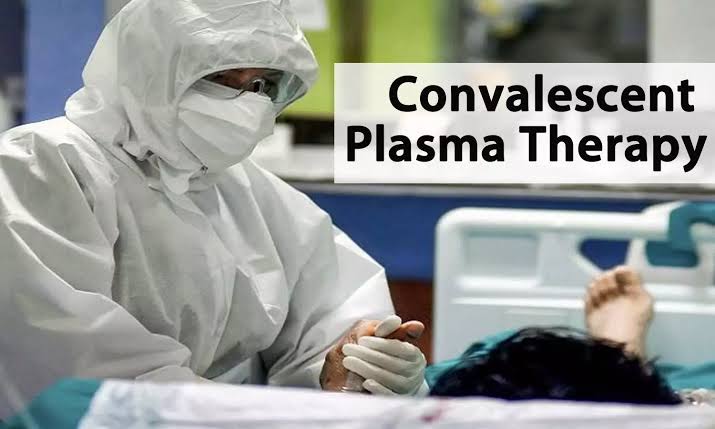
Is Plasma therapy a useful treatment for COVID-19?

The emergency use approval authorisation by US Food and Drug Administration (US FDA) to use plasma as a potential therapy for Covid in US is expected to provide impetus to its used as yet ‘promising’ treatment option in India, even as doctors say clear scientific evidence is needed.

The US President announced US FDA approval on August 23, though the agency put it on hold over doubts on it’ efficiency. Doctors claim that the therapy of using recovered Covid-19 patients plasma to treat infected people will get even more widespread in India, given the endorsement from US. This would be similar to the sharp surge in demand witnessed for anti-malarial drug hydroxychloroquine as a potential covid 19 treatment, after President Trump’s repeated backing and later failed in global trials.

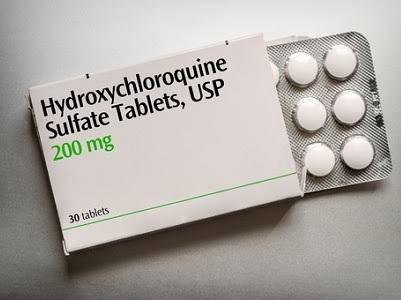
US FDA previously issued an EUA to allow hydroxychloroquine sulfate and chloroquine phosphate donated to the Strategic National Stockpile (SNS)to be distributed and used for hospitalized Covid-19 patients. In fact, these two drugs have been used for decades for the therapy and control of malaria and autoimmune diseases.

Preliminary studies have suggested HUQ may have utility in fighting covid-19. Distinct possible effects may be selected to its function in the treatment of covid-19 patients : A. anti-virus, B. anti-inflammation and C. anti-thronebotic. As until now there have been no data indicating HCQ has any immunity boosting effect, here we will mainly discuss the anti-virus and anti-inflammation effects. Both CQ and HCQ have been shown to possess anti-viral activity against various viruses such as human immunodeficiency virus (HIV), hepatitis A virus, hepatitis C virus, influenza A and B viruses, influenza A HSNI virus and others. Recent studies reported that CQ and HCQ could also inhibit SARS-CoV-2 in vitro, suggesting that they are potentially applicable to Covid-19 patients. However, there is to date no convincing report of the in viro anti-viral effects of HCQ/CQ. Several randomized controlled trials brought comforting news that CQ and HCQ showed potential effects in reducing respiratory symptoms and pulmonary inflammation as evaluated by computed tomography (CT) of covid 19 patients. It led to panic buying as people attempted to acquire this purpoted ” life saving drug”. Even some physicians stocked up CQ and HCQ for personal use in US and some European countries.

One person in US died and another become seriously ill after using verterinary formulation of CQ tablets intended for use in fish tanks in an effort to present Covid-19. Shortly after permitting the use of CQ and HCQ for treating covid-19, the US FDA issued precautions on using those drugs. Hence, we believe that serious discussions of the potential mechanisms are urgently needed to guide the potential clinical application, evaluation of efficacy and prevention of adverse effects of these drugs.

Plasma therapy has become the most common and simple treatment used niw-a-days in Covid-19 treatment. The US FDA announced that convalescent plasma may be effective in treating covid-19 and potential benefits of the product outweigh the risks based on scientific evidence available.

In India, multi-centre clinical trials to study whether plasma therapy is a useful covid-19 treatment are underway by the Indian Council of Medical Research. Further, States like Maharashtra are running the world’s largest plasma therapy trials, Project Platina, in 18 medical colleges, but response from donars reportedly has been lackluster. Covid therapy is highly individualised. The use of plasma therapy can be life-saving in certain cases and is being used in compassionate grounds. It is a promising treatment option if used earlier in the cycle of the disease. It has been used as therapy for over 100 years, but for COVID-19, we need to document this in a research programme. We also need better methodology for its use while screening donors so as to know the adequate level of neutralizing antibody, ortiters”, told Dr.Shashanka Josh.

Significantly, World Health Organisation on Monday remaind cautious about endorsing the use of plasma to treat infected people. “The results are not conclusive”, its chief scientist Soumya Swaminathan said’ adding ” We recommend that convalescent plasma is still and experimental therapy, and should be continued to be evaluated in well-designed randomised clinical trials.”

The US FDA decision was based on an observational study that gave “some positive signals that convalescent plasma can be helpful in treating COVID-19” and might reduce the mortality if administered early after diagnosis. This article is posted on preprint service and is yet to find its way into a medical journal. However, the claims made by the US FDA commissioner have considerably done more harm to the science and raised unrealistic hopes among the public.

In India, plasma is being promoted asking people to donate plasma to save lives, and shaming COVID-19 survivors who chose not to donate. We seem to have accepted plasma therapy widely without any good quality evidence supporting its use. This is likely to give even more widespread with the endorsement from the US, said Dr.Lancelot Pinto consultant respirologist at Mumbai-based PD Hinduja Hospital.

Plasma reduces death rates if there are enough neutralizing antibodies in the donor plasma. As of now, our labs are not accurately measuring the titres of antibodies in donor plasma – thus it is a wild guess if plasma administered to the COVID patient would indeed benefit the patients”, Kalantri added.

US FDA’s statement implies a 35% absolute improvement in outcomes, when the reality is a 32% improvement and that two comparing early late plasma, Dr.Pramesh said, adding, the danger of such a public statement is that ongoing randomised trials of convalescent plasma will struggle to recruit patient. However, the US FDA still recommend that randomised trials of plasma continue.

Final Year Exams 2020: Maharashtra University exams not to be held in September- Uday Samant

Maharashtra Final Year Exams 2020

Photo credit: Google

Uday Samant has recently tweeted that the Maharashtra University Final Year exams 2020 would not be held till September 30, 2020. He said, “the universities are trying to ensure that the final year exams can be conducted to the students from home. The exams will not be held until September 30. ‍ The Vice-Chancellor suggested that the government should request the UGC to extend the term till October 2020”.

Maharashtra government is all set to announce the decision on the conduct of Final Year Exams 2020 in the state. The announcement would be made for both graduation and post-graduation courses.

The team or committee formed by the state government comprises of six-members headed by Dr. Suhas Pednekar, Vice-Chancellors from Mumbai, Pune, Aurangabad, Nagpur, Nanded, and SNDT universities along with two former Mumbai University Vice-Chancellors and directors of Higher and Technical education. The committee will decide on the conduct of final year exams in the state and would also give recommendations on how to conduct the exams in the state.

The state government will also disclose uniform guidelines for the conduct of exams and also that the committee will ask the universities to check the feasibility of the online exam from college

The committee was formed by the state after Uday Samant, state higher and technical education minister raised concerns over the conduct of exams followed by the Supreme Court’s verdict to conduct the final year exams. In his tweet he has asked the center to clarify as to how the exams will be held by September 30, if schools and colleges are closed and what exactly should the state governments and students do.

Meanwhile, the students’ body of Maharashtra has written to the state government, suggesting ways to conduct final year exams. This comes after the Supreme Court ruled in favour of the University Grants Commission (UGC) to conduct exams for final year students in India. Reportedly, 16 bodies of student organization

Social impact of Covid 19 :-

The COVID-19 pandemic has had far-reaching consequences beyond the spread of the disease itself and efforts to quarantine it, including political, cultural, and social implications.

pandemic on politics :-
A number of provincial-level administrators of the Communist Party of China (CPC) were dismissed over their handling of the quarantine efforts in Central China, a sign of discontent with the political establishment’s response to the outbreak in those regions. Some experts believe this is likely in a move to protect Communist Party general secretary Xi Jinping from people’s anger over the coronavirus pandemic. Some commentators have suggested that outcry over the disease could be a rare protest against the CPC. Additionally, protests in the special administrative region of Hong Kong have strengthened due to fears of immigration from mainland China. Taiwan has also voiced concern over being included in any travel ban involving the People’s Republic of China (PRC) due to the “one-China policy” and its disputed political status. Further afield, the treasurer of Australia was unable to keep a pledge to maintain a fiscal surplus due to the effect of the coronavirus on the economy. A number of countries have been using the outbreak to show their support to China, such as when Prime Minister Hun Sen of Cambodia made a special visit to China with an aim to showcase Cambodia’s support to China in fighting the outbreak of the epidemic.

The United States president Donald Trump was criticised for his response to the pandemic. He was accused of making several misleading or false claims, of failing to provide adequate information, and of downplaying the pandemic’s significance. Trump was also criticised for having closed down the global health security unit of the United States National Security Council, which was founded to prepare the government for potential pandemics.

The Government of the Islamic Republic of Iran has been heavily affected by the virus, with at least two dozen members (approximately 10%) of the Iranian legislature being infected, as well as at least 15 other current or former top government officials, including the vice-president. Advisers to Ali Khamenei and Mohammad Javad Zarif have died from the disease. The spread of the virus has raised questions about the future survival of the regime.

Sovereignty

Geoeconomics and country risk-experts have emphasized the potential erosion of political and economic sovereignty that may affect some already-enfeebled countries like Italy: Edward Luttwak has called Covid-19 “the virus of truth”. M. Nicolas Firzli, director of the World Pensions Council (WPC) and advisory-board member at the World Bank Global Infrastructure Facility (GIF), refers to the pandemic as “the Greater Financial Crisis”, that will “bring to the surface pent-up financial and geopolitical dysfunctions … [many] national economies will suffer as a result, and their political sovereignty itself may be severely eroded”.

Civil Rights and Democracy :- Iran, Jordan, Morocco, Oman, and Yemen banned the printing and distribution of newspapers. On 30 March, the parliament of Hungary granted Prime Minister Viktor Orban the power to rule by decree for an indefinite period.

World Peace :- The coronavirus pandemic appears to have worsened conflict dynamics; it has also led to a United Nations Security Council resolution demanding a global ceasefire. On March 23, 2020, United Nations Secretary-General António Guterres issued an appeal for a global ceasefire as part of the United Nations’ response to the COVID-19 coronavirus pandemic. On 24 June, 2020, 170 UN Member States and Observers signed a non-binding statement in support of the appeal, rising to 172 on 25 June, 2020. On 1 July 2020, the UN Security Council passed resolution S/RES/2532 (2020), demanding a “a general and immediate cessation of hostilities in all situations on its agenda,” expressing support for “the efforts undertaken by the Secretary-General and his Special Representatives and Special Envoys in that respect,” calling for “all parties to armed conflicts to engage immediately in a durable humanitarian pause” of at least 90 consecutive days, and calling for greater international cooperation to address the pandemic.

Education impacts ;- The pandemic has affected educational systems worldwide, leading to the widespread closures of schools and universities. According to data released by UNESCO on 25 March, school and university closures due to COVID-19 were implemented nationwide in 165 countries. Including localized closures, this affects over 1.5 billion students worldwide, accounting for 87% of enrolled learners.

Coronavirus and inequality :-
Low income individuals are more likely to contract the coronavirus and to die from it. In both New York City and Barcelona, low income neighborhoods are disproportionately hit by coronavirus cases. Hypotheses for why this is the case include that poorer families are more likely to live in crowded housing and work in the low skill jobs, such as supermarkets and elder care, which are deemed essential during the crisis. In the United States, millions of low-income people may lack access to health care due to being uninsured or underinsured. Millions of Americans lost their health insurance after losing their jobs. Many low income workers in service jobs have become unemployed.

Religious Impact :- The pandemic has impacted religion in various ways, including the cancellation of the worship services of various faiths, the closure of Sunday Schools, as well as the cancellation of pilgrimages surrounding observances and festivals. Many churches, synagogues, mosques, and temples have offered worship through livestream amidst the pandemic. Relief wings of religious organisations have dispatched medical supplies and other aid to affected areas. Adherents of many religions have gathered together to pray for an end to the pandemic, for those affected by it, as well as for the God they believe in to give physicians and scientists the wisdom to combat the disease; in the United States, Trump designated 15 March 2020 as a National Day of Prayer for “God’s healing hand to be placed on the people of our Nation”.

Psychological impact

On 18 March 2020, the World Health Organization issued a report related to mental health and psychosocial issues by addressing instructions and some social considerations during the COVID-19 outbreak.

Due to doubts if pets or other livestock may pass on coronavirus to humans, many people were reluctant to keep their pets fearing transmission, for instance in the Arab World, celebrities were urging people to keep and protect their pets. Meanwhile, people in the U.K. tended to acquire more pets during the coronavirus lockdown.

Suicide :- The coronavirus pandemic has been followed by a concern for a potential spike in suicides, exacerbated by social isolation due to quarantine and social-distancing guidelines, fear, and unemployment and financial factors.

Personal Gatherings :-

The impact on personal gatherings has been strong as medical experts have advised, and local authorities often mandated stay-at-home orders to prevents gatherings of any size, not just the larger events that were initially restricted. Such gatherings may be replaced by teleconferencing, or in some cases with unconventional attempts to maintain social distancing with activities such as a balcony sing-along for a concert, or a “birthday parade” for a birthday party. Replacements for gatherings have been seen as significant to mental health during the crisis. Social isolation among alcohol users has also adopted a trend towards Kalsarikänni or “pantsdrunking“, a Finnish antisocial drinking culture.

Domestic violence :- Many countries have reported an increase in domestic violence and intimate partner violence attributed to lockdowns amid the COVID-19 pandemic. Financial insecurity, stress, and uncertainty have lead to increased aggression at home, with abusers able to control large amounts of their victims’ daily life. United Nations Secretary-General António Guterres has called for a domestic violence “ceasefire”

Elderly care

Older people are particularly affected by COVID-19. They need special attention during the COVID-19 crisis, and their voices, opinions and concerns are important in formulating responses.

Global data are extremely uncertain at present, nonetheless, the heightened risks of COVID-19 for older persons are evident in all national data. The scale of testing and nature of reporting vary between governments and hence there is risk of misinformation by generalizing from the experience and reports of a given country.

While the number of older persons is relatively and absolutely smaller in developing countries, particularly in Africa, this coincides with other serious structural risks. Countries with the fewest older persons (such as many of the least developed countries), have the fewest health resources, limited experience caring for older patients (including few geriatric specialists), less institutional care for older persons, and far fewer public or NGO support structures for outreach, screening and community-based care of older persons.

Older persons living in long-term care facilities, such as nursing homes and rehabilitation centers, are particularly vulnerable to infection and adverse outcomes from COVID-19. Older persons who live alone may face barriers to obtaining accurate information, food, medication, and other essential supplies during quarantine conditions and community outreach is required. Older persons, especially in isolation, those with cognitive decline, and those who are highly care-dependent, need a continuum of practical and emotional support through informal networks (families), health workers, caregivers, and volunteers.


Is US economy hit the worst?

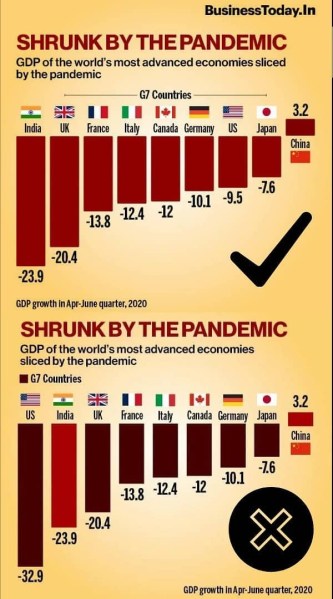
We are all aware that this pandemic has hit our lives and economies badly. But how bad is it and what’s the truth?

GDP growth rate.

1. India’s GDP is the worst performer.

2 . US is the worst performing economy.

Reality behind these headlines. The ADVANCE gross domestic product showed that in the second quarter of 2020, US GDP declined at an annualised rate of 32.9%.

32.9% is an ‘annualised rate’. This is the fact which is hidden in the media to create a false frenzy.

What is ‘annualised rate’? The US has traditionally reported GDP and some other economic statistics as annual rates. Rather than simply giving a percentage change from one quarter to the next, the government reports, how much GDP would grow or shrink if that rate of change were sustained for a full year. ( Because growth rates are compound on themselves this calculation is abit more complicated than simply multiplying by four. The figures also adjusted for seasonal patterns so they’re more properly described as “seasonally adjusted annuall rates”.

Annualised GDP data can be misleading. When it reports quarterly GDP, the BEA presents the data in several different ways to aid the analysis. Among them are: 1) Growth or contraction from one quarter to the next (which was – 9.5% in the preliminary Q2 GDP report). 2) Growth or contraction in the quarter on an annualised basis (which was -32.9% in preliminary Q2 GDP report).

The latter ‘annualised rate’ projects how much economy would grow or shrink if the rate of change seen in the quarter continued at the same pace for four consecutive quarters with some adjustability for seasonality and compounding effects.

In order for the economy to actually contract as a whole by an annualised rate of -32.9% , the GDP would need to contract in Q3 and Q4 at least by -9.4%.

This pandemic is a big jerk to the economy. The difference in economic activity will be large from one quarter to another, it cannot be considered same across the year.

Hence the comparison made by some news articles is very much misleading and blinding the public. This does not portrait the true picture of the economic condition.

What is NTA and who conducts JEE-NEET and many other examinations?

National Testing Agency (NTA) conducts competitive examinations like NEET, JEE, CAT, UGC NET, G-PAT. NTA was established under the Indian Institution Registration Act-1860. It is an autonomous institution that conducts entrance examinations for admission and scholarship in higher educational institutions of the country. The objective of this agency is to be efficient, transparent and test based on international standards to assess the eligibility of candidates for admission and recruitment.

Now, academic sessions of all medical colleges, IITs, NITs, CFTIs and ICAR-AU depend on these entrance exams, know why NTA is insisting on getting these exams early. This agency conducts the examination in online medium for which it has to select such schools and universities where all basic facilities are available and the conduct of the examination does not affect their academic routine

Why this exam is very important for NTA?
This entire exercise is to save the academic calendar. It is necessary for many candidates to conduct entrance examinations to save one year. So the NTA’s is trying very hard and giving their full effort to save one year of students, even if the sessions are slightly delayed for courses.

NTA Functions
-Making question papers of all subjects with the help of state-of-the-art technology.
-To create a panel of subject matter experts for testing along with a strong R&D culture.
-Providing training and advisory services from time to time in Indian educational institutions.
-Working closely with international organizations such as Educational Testing Services.
-Conduct of an examination in case of various ministries and central government departments and state governments entrusted with the responsibility of conducting the examination.
-To ensure improvement along with training in schools, boards and other bodies and periodically check the testing standards of entrance examinations.
-The President of NTA is a noted educationist and is appointed by the Union Ministry of Education.
-Its Chief Executive Officer is a Director-General who is appointed by the Central Government.
-The establishment of a specialized testing agency like NTA has reduced the burden of conducting examinations from institutions like Central Board of Secondary Education All India Council for Technical Education.

-NTA is helping all the individual colleges and universities in the country in the field of testing, training and providing advisory services to the institutions in India. To provide quality testing services for the institutions in India.
-NTA conducts examinations at least twice every year through online medium thereby increasing the chances of admission for candidates preparing for competitive examinations.
-This agency is setting up its centers at the district level and sub-district level to increase the reach in rural areas and for the convenience of the candidates.
-The National Testing Agency has set up practice testing centers along with the introduction of a mobile app, with the help of which candidates can also conduct mock tests on their smartphones and do their pre-test evaluation.

Yoga in Daily life

To live in unison with oneself and with the physical environment is the desire of every human. However, in the present time, larger physical and emotional demands are perpetually placed upon several areas of life. The consequence: more and more people suffer from physical and mental tension like stress, anxiety, insomnia, And there’s an imbalance in physical activity and correct exercise. This is often why strategies and techniques for the attainment and improvement of health, still as physical, mental and religious harmony, are of nice importance, and it’s specifically during this respect that “Yoga in Daily Life” comprehensively offers aid to assist one’s self. Yoga is ancient, however, it’s not unchanged. By stopping for an instant to think about yoga’s past, we are able to acknowledge the crucial role that every one of us can and should play in shaping our future. The majority of people nowadays associate yoga closely with exercise and postures, referred to as asanas, designed to make up the physical culture. There is additional to yoga, but then the physical. Yoga additionally encompasses devotion, contemplation and meditation. 

Yoga is basically a religious discipline justifying a particular delicate science, which focuses on communicating harmony between mind, soul and body. It’s an art and science of healthy living. Yoga is obtained from the Sanskritic language word ‘Yuj’ which implies to combine together; the association of the individual self with the superior self. As indicated by the standard definition by Patanjali, yoga implies dominant changes of the soul. There are a couple of forms of yoga, however, the centre thought of every vogue is dominant in the soul. 

During this age, adherents of Patanjali Yoga gave another viewpoint by giving additional noteworthy significance to the asanas, kriyas and pranayama, for the purging of the body and soul. The filtration of body and soul helped specialists reach additional elevated levels of coaching, as Samadhi. This sort of yoga is called yoga. Yoga encloses devotion, rumination and meditation. Individuals who are inactive or senior, yoga is the best exercise for the development of mind and body to start their life energetically. Yoga helps to strengthen the bones and muscles and to improve posture for overall health and liveliness. As a result, we need not be in peak physical form to apply yoga, it’s the proper activity for inactive youth and for seniors who may not otherwise exercise. Instructors will facilitate modified yoga poses. We need not get down on the floor to apply yoga. In fact, we can do yoga merely by sitting on a chair.

There are eight forms of yoga-like Vinyasa Yoga, Ashtanga Yoga, Iyengar Yoga, Bikram Yoga, Power Yoga, Sivananda Yoga and Yin Yoga. But now, we will focus on Ashtanga Yoga which is incredibly powerful.

What is Ashtanga Yoga?

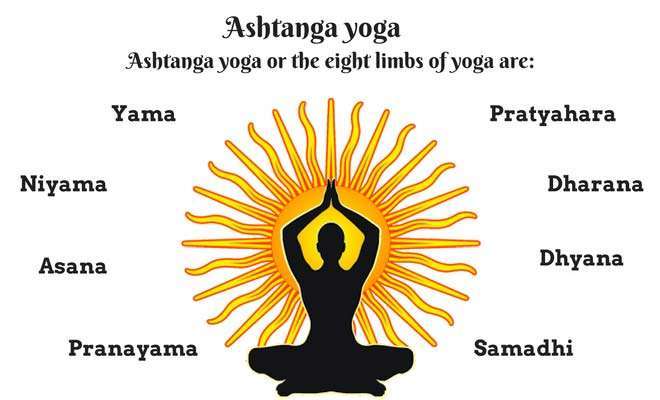
Ashtanga yoga suggests (having eight limbs or branches) that focuses on muscle training develops physical strength. Practising Ashtanga rejuvenates our body, creating it stronger, toned and in addition versatile and controlled. Ashtanga Yoga as the name encompasses all eight limbs of yoga and develops each mental and physical health.

The 8 elements of Ashtanga Yoga includes:

  • Yamas: ethical codes or behaviour.
  • Niyamas: codes or behaviours that purify the connection we have a tendency to establish with ourselves.
  • Asana: a physical part of the yoga practices which has respiration, concentrating, balance, stability, strength, flexibility and areas of management.

  • Pranayama: set of practices associated with the management and enlargement of important energy or prana.
  • Pratyahara: apply mental yoga through the management of senses by varied exercises.
  • Dharana: exploitation of concentration techniques
  • Dhyana: a state of meditation, during which the mind remains immobile.
  • Samadhi: final state of realization or supreme consciousness by deep meditation.

Benefits of Ashtanga Yoga:

  • Makes the body additional versatile
  • Cleanses and detoxifies the body
  • Improves the health of the lungs
  • Improves blood circulation
  • Improves the facility of concentration
  • Builds apply 
  • Helps gain confidence
  • It offers strength to fight stress and tension

Yoga is something apart from physical health and material wealth. Yoga is the medication for nearly every drawback. As we have a tendency to apply yoga, it doesn’t solely enhance our physique however, helps in maintaining our inner peace and restful mind. Thus, there is just nothing that yoga won’t facilitate. Moreover, yoga isn’t simply a one-day practice; it is a long commitment.

Assassination of Julius Caesar

You either die a hero or live long enough to see yourself become a villain.

Harvey Dent,  Batman: The Dark Knight.

In ancient times, the Romans(who strongly believed in Republic) would give all of Rome’s power to a single man called the ‘dictator‘ standing at the gates of Roman empire to save them all from an impending military crisis. Julius Caesar was one such man.

He maybe portrayed as a tyrant in history but at a young age , He fought for free Rome in many battles and rose to great military power. He was also a man of great wealth at that time. This accompanied with the victory over Pompey in a crucial civil war helped him rise to a well respected position among the Senators. Caesar was not only loved by the people of Rome but by Rome herself. Statues were erected, temples were dedicated, and the love for Caesar made the people of Rome to rename a month after him – Julius( Now called July ).

Julius Caesar was a great man of honor. He took Brutus, one of the supporters of Pompey during the civil war period. Caesar not only intervened and saved his life but also made him one of his senior advisors. Caesar was also portrayed as a man loved by the poor. Many ancient texts cites proofs of people considering Caesar as their Savior. Many of the senators themselves wanted to favor the side of Caesar. In 44 BCE Caesar was given the post of “Dictator Perpatuo” meaning Dictator of Rome for an infinite period. This baffled some of the senators because they saw the destruction of something that they have protected all their life- the Republic. They did not like the idea of the fate of great Roman empire in the hands of a tyrant with a military mindset. They could not allow Caesar’s ambition to take over Rome’s liberty. So they started conspiring against him and planning for a plot to assassinate him. This group of senators called themselves the “Liberators”.

The conspirators led by Cassius began pulling other senators to their side by forecasting the events of Rome’s destruction under the rule of Julius Caesar. This overwhelming attractive force did not spare even Brutus. At first Brutus was hesitant to conspire against a man who treated him like a son , but at the end the fear of Caesar’s ambition and insistence of Cassius won over. The conspirators plotted to kill him on 15 March, 44 BCE . 60 Conspirators surrounded Caesar to assassinate him. History states that Julius tried fighting valiantly against the conspirators. But at the moment he saw his beloved Brutus among the conspirators he covered his face and gave up the fight, falling to the ground after being stabbed 23 times.

Unfortunately for the conspirators , they had underestimated Caesar’s popularity among the Roman public. There was all the ingredients needed for a great Riot- Frustrated people, outrageous events and a common enemy(conspirators).And for the final special ingredient came the great speech of Mark Antony at Caesar’s funeral which made the public over throw the senators and forced the liberators out of Rome. A series of civil wars broke out during which Brutus took away his own life and at last the Liberators had destroyed the one thing they protected- the Republic.The power of Rome was now concentrated to the Office of Emperor. Even today we cannot consider Brutus to be a man who tried saving Rome or a man who is an opportunistic traitor. But we know one thing for sure, that there is always unintended consequences for our ignorant actions.

Online Classes

Our country is going through a dangerous pandemic which has disrupted the academy year, cancelled classes and examinations. To run the education system smoothly through this difficult time Government have started a new class system that is Online classes. Online classes are now playing a vital role in the student life. We don’t know when the whole country will overcome from this pandemic so online classes are good and important for every student. It involves the use of digital services to create a virtual classroom. The teacher and students sign into a communication application and sit in front of their device.

Online learning is a form of distance learning that takes place over the internet.Shy students are able to ask questions because they can ask them online without facing the instructor. An access to all resources of a traditional course helps participants learn wherever they are, leaving them the freedom to choose the time for study. With basically an Internet connection, a person can attend different courses. Education system also conduct exams in online format. That is a very good approach. There is no chance of getting infected by virus. Student can easily can study without having any difficulties. All the information that you will need will be safely stored in an online database. This includes things like live discussion documents, training materials and emails. This means that if there’s ever anything that needs to be clarified, the student will be able to access these documents fast, saving valuable time. This is especially useful for individuals that need to carry out research for a project and submit their findings to a panel.Students in traditional classrooms may not get the personalized attention they need to have concepts clarified. Although class sizes are small at CCA, most colleges have classes of students that number in the hundreds. This is not a problem for this type of education because online guided discussions and personal talk time with their professors and lecturers is a hallmark of online classes. This increases the chances of a student performing well due to the time their instructors give them. This also enhances their problem-solving and communication skills, as well as knowing how to defend their arguments to superiors if needed.

However there are many disadvantages of online class like internet problem,a lay man cannot use the internet for classes,etc.A very strong disadvantage of online classes is the lack of interaction with peers. However, fortunately today’s generation has access to data networks and voice and video calls are possible with ease. Though it is not the same as face-to-face conversations, it allows students to interact with friends and even teachers. Teachers have gone out of the way to help students and are on duty practically all day.Online class method currently practiced in education tend to make participating students undergo contemplation, remoteness and a lack of interaction. As a result, many of the students and teachers who inevitably spend much of their time online can start experiencing signs of social isolation, due to the lack of human communication in their lives. Social isolation coupled with a lack of communication often leads to several mental health issues such as heightened stress, anxiety, and negative thoughts.Lack of self-motivation among students continues to be one of the primary reasons why students fail to complete online classes. Unfortunately, one of the biggest disadvantages of online class continues to be cheating through various methods. Compared to on-campus students, online students can cheat on assessments more easily as they take assessments in their own environment and while using their personal computer. The students cannot be directly observed during assessments without a video feed, making cheat detection during online assessments more complicated than for traditional testing procedures.The lack of face-to-face communication ties together with many of the previously mentioned disadvantages of online learning. A lack of any kind of face-to-face communication with the instructor inhibits student feedback, causes social isolation, and could cause students to feel a lack of pressure.

Online classes have both advantages and disadvantages but still we have to go with it because for now this is the best way to deal with the pandemic. We should all hope to overcome this big problem very soon.

Never settle, without exploring.

Traveling around the world or along the brightest and darkest sides of things, both of them leaves us great experiences and adventures. sometimes,the adventure may also turns into tragedies, which ignite the fear within to take any risk again. Risk lies in everything, if we fear of risk and get settled, we can never explore the beautiful book called life and only remains at page one, untill we die.

It is inevitable that risks are part and parcel of our life, and they always haunts us every second from various dimensions. But our ability to tackle the risk and transform it into amusing opportunity, proves who we are.

Most of us don’t dare to think beyond, because of the risk associated from peer pressure and also from societal influence. But,before you settle down with your thoughts, before you come to a conclusion. Just explore as much as you can, as a free bird, where you can find your passion and can realize your true potential.

As being a student, most of us only fed to prepare for exams and to remember the formulas…explore the new ways of learning things beyond classroom. The greatest gift of our generation is internet and free open resources, which provided an opportunity to explore the cultures,ideologies,lifestyle and many more across the world. One innocent thing about the students are just being confined themselves to only stick to the academic curriculum and syllabus.But the harsh truth is that curriculum is designed in consideration with all your peers. What if majority of peer group is below average or worst performers ?.Obviously, the standard of curriculum is reduced to very minimal level in order to save the majority group. But, in this holocaust, why should bright students settle up with following degraded curriculum? This flaw in education system, not being able to provide flexible curriculum has turned many of the nations bright minds into mediocre.THIS IS WHY, TO THINK OUT OF BOX AND EXPLORE BEFORE YOU SETTLE.

This beautiful principle ” explore and settle ” not only confined to academics, it plays a vital role in shaping one as a person. We are made up of the influence of people, places, customs and traditions that surround us. If we able to interact with wide range of people and new places and customs helps us to really find our interests and helps to live the life to the fullest. Especially, the lifestyle of people influences us a lot and enables to grow in all aspects of life.

Beliefs and perception are also highly dependent on our experiences. sometimes, we end up following false notions and beliefs. The only way to get rid of that rut, is to explore the new pathways and compare our perception with those of others and having conversation with various members on your way, helps you to elude from myths and find a redefined solution. Some of the major problems related to sex, inferiority complex ,suicidal thoughts,discrimination cannot be solved by reading books, but only exploring until you realize on your own, without settling down with mediocrity.

GDP: Why India’s growth rate is shrinking rapidly?

India’s economy posted the biggest contraction among major economies last quarter, with a recent surge in coronavirus infections weighing on the outlook for any recovery.

Gross domestic product shrank 23.9% in the three months to June from a year earlier, the Statistics Ministry said in a report Monday. That’s the sharpest decline since the nation started publishing quarterly figures in 1996, and was worse than any of the world’s biggest economies tracked by Bloomberg. The median estimate in a survey of economists was for an 18% contraction.

Once the world’s fastest-growing major economy, India is now on track for its first full-year contraction in more than four decades. While there are early signs that activity began picking up this quarter as lockdown restrictions were eased, the recovery is uncertain as India is quickly becoming the global epicenter for virus infections.

Economists had anticipated the economy shrinking anywhere between 15-25% while an ET Now Poll projected Q1FY21 GDP at -19% YoY.

As largely expected, agriculture was the only silver lining among all sectors as it grew by 3.4% in the April-June quarter.  

Manufacturing, construction and trade (hotels, transport, communication & services related to broadcasting) shrank by 39.3%, 50.3% and 47% during the quarter. Interestingly, governmetn expenditure during the quarter also contracted by 10.3% as per NSO figures.   

Let us find the reasons in this article that what are the reasons behind the decline in the Indian GDP

1. Sharp decline in overall demand:

Increment in the employment opportunities leads to further demand of the other products in the economy. Since last few months Indian economy is facing the problem of lower demand which ultimately trapped the whole economy.

2. Sharp fall in consumption

Consumption has accounted for 55-58% of GDP. Remember consumption is at the core of domestic demand in India. Indian economy experienced a sharp decline in private final consumption expenditure from 7.2% in the March quarter to 3.1% in the June.

3. Decline in investment

The value of declared investments in the same quarter is Rs 71,337 crore, which is also the lowest since September 2004. This is a big indication that industries are not yet confident in India’s economic future.

4. Poor condition of banking sector

The recent announcement of the mergers of the banks may further create the atmosphere of anarchy in the mind of the investors and depositors.

BAD DAY FOR POLITICAL PARTY:PRANAB MUKHERJEE DEATH(1935-2020)

Former President of India(13th) Pranab Mukherjee died on 31st August 2020 at the age of 84 after battling a long illness.In mid-August, he had undergone a brain surgery at the Army Research and Referral hospital in New Delhi. Hours before his death, hospital authorities said his condition had deteriorated and he was in a state of septic shock due to a lung infection.Prior to surgery, he tested COVID-19 positive on 10 August 2020.

His Personal Life :

Pranab Mukherjee was born on 11th December 1935 in the village of Mirati in Birbhum district in West Bengal. His father’s name is Kamada Kinkar Mukherjee, who was an activist in the Indian independence movement. His mother was Rajlakshmi Mukherjee. He married Suvra Mukherjee on 13 July 1957.

His Career :

Pranab Mukherjee took his education at Birbhum. He got MA degree in political science and history and also an LL.B degree from the department of law of the University of Calcutta. He began his career as a clerk in Post and Telegraph Department in Calcutta. He also worked as a journalist with the ‘Desher Dak’ before entering politics.

Pranab Mukherjee became a member of the Rajya Sabha in 1969. He was re-elected to the house in 1975, 1981, 1993 and 1999. He was appointed as Union Deputy Minister in 1973. He was appointed as Cabinet Ministers. He held many important posts in the government. He became the 13

th President of India on 25 July 2012.

His Honours:

National Honour:

1.Padhma Vibhushan-India’s second-highest civilian award in 2008

2.Bharat Ratan Award- India highest civilian in 2019.

Foreign Honours

1- Bangladesh Muktijuddho Sanmanona– Bangladesh Liberation War Honour in March 2013. 

2- Grand Cross of National Order of the Ivory Coast– highest state order of knighthood of the Ivory Coast in June 2016.  

3- Grand Collar of the Order of Makarios II– highest order of Merit awarded by Cyprus. 

Academic Honours

  • Hon.Doctor of Letters degree by the University of Wolverhampton, the UK in 2011.
  • Hon.D.Litt by Assam University in March 2012.
  • Hon.D.Litt. by Visvesvaraya Technological University; Belgaum, Karnataka in 2012
  • Hon.LL.D. by President of Bangladesh and Chancellor Md. Zillur Rahman at the University of Dhaka on 4 March 2013.
  • DCL (Doctor of Civil Law) (honoris causa) by University of Mauritius on 13 March 2013.
  • Hon.Doctorate by Istanbul University on 5 October 2013.
  • Honorary Doctorate from the University of Calcutta in on 28 November 2014.
  • Hon.Doctorate in Political Science by University of Jordan on 11 October 2015.
  • Hon.Doctorate by Al-Quds University of Ramallah, Palestine on 13 October 2015.
  • Hon. Doctorate by Hebrew University of Jerusalem, Israel on 15 October 2015.
  • Hon.Doctorate by Kathmandu University, Nepal on 3 November 2016.
  • Hon. Doctorate by Goa University on 25 April 2017.
  • D.Litt.(Honoris Causa) by the Jadavpur University on 24 December 2017.
  • Hon.D.Litt by University of Chittagong on 16 January 2018.

Other Recognitions

1- Best Finance Minister in World (1984)– a survey by Euromoney magazine. 

2- Finance Minister of Year for Asia (2010)– Emerging Markets, the daily newspaper of record for World Bank and IMF. 

3- Finance Minister of Year (2010) by the Banker. 

4- Honorary Citizenship of Abidjan, the Republic of Côte d’Ivoire in June 2016.

Pranab Mukherjee: Books Written

  1. Midterm Poll
  2. Beyond Survival: Emerging Dimensions of Indian Economy – 1984
  3. Off the Track – 1987
  4. The saga of Struggle and Sacrifice – 1992
  5. Challenges before the Nation – 1992[13]
  6. A Centenary History of the Indian National Congress – Vol. V: Volume-V: 1964-1984 – 2011
  7. Congress and the Making of the Indian Nation – 2011
  8. Thoughts and Reflections – 2014
  9. The Dramatic Decade: The Indira Gandhi Years – 2014
  10. Selected Speeches – Pranab Mukherjee – 2015
  11. The Turbulent Years: 1980 – 1996″ – 2016
  12. The Coalition Years

VIRGINITY-NOT a definition of character!…

It was arranged marriage, a doctor guy marring an engineer girl, both were modern enough as they studied in metro cities. After all the rituals, it was time for their first night. White bedsheets decorated with roses were arranged in their room. When both were entering in the room, aunt of the groom said, “We need to check the sheets tomorrow”and everyone laughed.
But she was scared. Both were sitting on the bed. He saw her tensed face and asked her what’s wrong. She told him”I’m not virgin”. His reply was calm and casual”so what?I’m also not”. We both had relationships in the past which didn’t end up well and that’s completely okay, said the groom. But she was still scared. She said, We live in a village with people of typical mindset, they’ll judge me when they’ll get to know about this tomorrow. Then he said, I married you the way you are and nothing else matters for me and if you’re scared that something bad will happen because of this, then it’s my promise that I’ll be there by your side no matter what. I’ll tell them that I’m also not and if then also some mess happens, then I’ll face all the consequences along with you whatever it may be. I’m not gonna leave you, don’t you worry! Tears rolled down her cheeks by his words and she felt herself lucky that she got the perfect soulmate for life!….

An Anonymous Feeling

Yes it’s a weird topic but according to today’s situation we need to discuss this feeling ,the feeling of Being alone in a room full of people,feeling of not being loved,feeling of getting ignored,feeling of being stupid about things ..but do we really need these feelings? And if by any chance the answer is “YES” then do we need to commit suicide or not giving chance to us for one last time? Do we really need to do that?

Yes ..i am talking about the person who was too good for the world …”sushant singh rajput”…suicide of sushant took us in shock …personally i was numb …like what the hell was he feeling the it was easy for him to take his life than to live…that what on earth was hurting him so hard that he took this decision.

Yes if anyone of you feel like this or anything that is hurting you so much and having these anonymous feeling then for god sake please think of your parents ,family, friends and don’t commit anything that would leave your loved ones in grief….and yes as we all know it’s easy to take a life but it’s tough to live one….so you should be that much stronger to lead a happy life

And last but not the least …you should atleast try one last time … talk to people around you and share what you feel..I’m sure they would understand…and if one does not then go to next because we are living in a place full of people…so try and never lose hope.

Books are amazing!

In today’s world, problems like stress, anxiety etc. are a common issue. Studies have found out that at an average of 10 people, 6 usually suffer from these issues. The solution? Well , a distraction. A distraction for some hours, to be free from all the notifications, the social media posts, the pending work, the recent gossip, everything. Because we all have adapted ourselves to this ‘lifestyle’ so readily that we overlooked the consequences like the mental issues we are facing today.Not only adults, but even children and adolescents! But, can you imagine a book can help you with that? No? So here are some  ridiculously amazing things a book can do!

        (Image source- pexels.com)

  • Helps with various disorders.
  • Makes your day peaceful.
  • Improves your vocabulary and pronunciation.
  • Makes one curious!
  • Increases your confidence.
  • Introduces you to various concepts and develops your imagination

•Helps with various disorders

The core principle behind reading is that it helps one to focus and think. And this is beneficial because it helps in curing of various disorders.A cognitive Neuropsychologist Dr. David Lewis stated  that reading can reduce stress levels by 68 percent. Research  has shown that reading gradually helps insomnia patients to sleep. Many people suffering with anxiety and depression, even by reading just for minimum 20 minutes everyday, helped. It may sound boring to read but when you do start, you explore so many things , imagine yourselves in God knows many world’s,

you just can’t stop!

(Source: Pixabey)

•Makes your day peaceful

According to a research, reading may relax one’s body by lowering his heart rate and easing his muscles. It’s because reading may include you battling  a whole army but in your mind! The 2009 study found out that reading calms your mind and lowers aggression. Books help you to think, interact and imagine infinite thoughts.

•Improves your vocabulary and pronunciation .

As you read you find out meanings of words you’ve never heard of , often helping in improving your writing skills.By doing this, you get familiar to many words and their synonyms. English is a mixture of various ancient languages, which means you also learn the origin of the words. This makes one understand various cultures and spoken languages and dialects. When you understand  a particular word, you start trying to pronounce it. Eventually you are able to pronounce difficult words easily and helps for a  fluent pronunciation .

•Makes one curious!

While reading, you might find different terms, anthologies etc. You acquire knowledge through the books. And this does not require any research, it is an experiment you can do on yourself ! We humans  love to learn, even if we deny it. Everything you do, everything you act  was through observing, examining and learning. Be it now to play video games or to read. While video games are fun to play, it makes one hard to focus when given a topic to elaborate. It makes you experience different situations, through which one inculcates it in his life as well. Curiosity may have killed the cat but satisfaction had bought it back!

•Increases your confidence.

Confidence is not procured by fairness creams, but  through your acts and work. Now that your vocabulary is increased, your words are smooth as butter and this makes you feel confident. Children stutter while reading in front of a crowd. Reading , indirectly Maidstone read in a correct grammatical order because you’ve practiced. Not only for English language ,but every language, if one practice while reading them, he is sure to add that language. Sure enough you can’t just keep reading the whole day, while that would have been great, but unfortunately ,we all have other crucial works to complete as well. But we can make it a point to read at least a paragraph from a novel, or a small  article from the newspapers/magazines. Our first step is to start reading, not just making timetables about reading on this particular time. They ended up reading nothing and wasting all the time making timetables. It’s alright if you just can’t read due to excessive work assignments, one should read according to his own speed and his own convenient time but remember to read everyday. 

•Introduces you to various concepts and develops your imagination

Books have their own hierarchy. Listed from self help to mystery, from rom-com to thriller, from action(yes they do!)

to sweet romance stories, fantasy etc. and so many authors , trying hard everyday to give you a variety of stories and so much more. Printed books are more preferred over digital reading for they provide a lesser strain on your eyes but it’s alright if you read e- books  in a limit. If you are not able to get your hands on a printed books , the e- version is always available with paid memberships. If you are looking for free books, apps like Wattpad, Radish fiction etc give you access to many interesting stories . Wattpad is also a field where you, yourself can write your own stories. Infact, many Wattpad stories are published and famous , for example The Storm and silence series by Rob Thier (comedy) , Chasing Red by Issabelle Ronin (romance) and the After series by Anna Todd (the book was  produced into a movie as well!)

(Source: Goodreads)

(Source : Goodreads)

The conclusion? Well reading helps you with many things,     but by the end of the day it’s always your choice to read. If you are looking for some book recommendations, here are some books!

  1. The mortal instruments by Cassandra Clare (fantasy)
  2. The fault in our stars by John Green (young adult)
  3.  Me before you by Jojo Mayes (drama)
  4. Mahashweta by Sudha Murthy (drama)
  5. The silent patient (mystery)

These are handful of books(not technically) but you can find millions of book recommendations on Goodreads, Pinterest etc.

Enjoy!!