Power of your Subconscious Mind

The Power Of Your Subconscious Mind is a spiritual self-help book, which teaches you how to use visualization and other suggestion techniques to adapt your unconscious behavior in positive ways.

Understanding your subconscious mind as a photographic mechanism removes the emotion and struggle from changing your life, because if it is simply a matter of replacing existing mental images with new ones, you begin to see the ease with which you may change.

‘The law of your mind is the law of belief itself,’ Murphy says. What we believe makes us who we are. William James observed that whatever people expect to be true, will be so, irrespective of whether the object of their belief exists in fact. In the West we have made ‘the truth’ our highest value; this motivation, while important, is weak next to the actual power of belief in shaping our lives.

1. You Receive Answers To Prayer Because Of Mental Acceptance About What You Pray

Murphy proposes that your religious affiliation is not what makes prayer effective. Rather, it is based on your ability and willingness to accept what you pray.

It makes sense that whatever you can and do accept on a conscious level has to be accepted by your subconscious as well.

Another statement that expands on this idea is this one: “the subconscious mind is subject to the conscious mind.” What Murphy is saying is that you can train your subconscious mind to believe what you can accept on a conscious level.

2. Your Subconscious Mind Has The Answer To All Your Problems

This statement makes perfect sense if you don’t have any problems with the idea that your subconscious mind = God.

Even if not for that, though, it speaks to the power of the subconscious mind. You don’t need to go looking outside for the answers you seek – Murphy is saying – you can look inside, and pose questions to your subconscious.

The answers may not come immediately, but your mind is always working on problems you submit to it even when you’re doing other things, and it will eventually present to you a workable solution.

3. Faith Is The Only Universal Healing Principle Operating Through Everybody

I believe the implication here is that faith is created by accessing and harnessing the power of our subconscious minds. Illness, physical ailments, and even traumatic experiences can be healed by repeatedly submitting thoughts of healing to our subconscious minds.

Can we be healed by any other means? According to Murphy, no. Faith is the universal healing principle. Of course, I don’t think he would discount the importance of medicine and other orthodox cures, but I have to guess that in this case he is referring to instances of healing that have occurred in so-called “healing services”, churches, or religious gatherings.

4. If A Prayer Is Answered, It Is Answered Scientifically

What Murphy is suggesting is that there is a formula to prayers that are answered. He explains that “science” means knowledge that is coordinated, arranged and systematized, so the idea here is that we can cooperate with our subconscious minds to see more of our prayers answered.

If anything, the entire book sheds light on how little attention and thought we give to our subconscious minds, and what fantastic tools they are in helping us achieve ends that we desire to see in our lives.

5. Don’t Compel Your Subconscious Mind To Accept Your Idea By Willpower

Although Murphy does talk about presenting positive thoughts and images to our subconscious minds, he is also quick to caution us that we can’t force things. Our willpower is limited, and it continues to decrease and diminish throughout the day. Can you imagine how tiring it would be to force yourself to think the same things and visualize the same images all day long?

I think the idea is that we can plant seeds and nurture them, but we shouldn’t be constantly uncovering the soil to see how our seeds are doing. We must keep pulling the weeds and watering the seed, and while that may require a daily investment, it shouldn’t take more than a couple of minutes.

6. The World You Live In Is Determined By What Goes In Your Mind

Regardless of whether you subscribe to Murphy’s theology, I think this is something we can all agree on. What goes into your mind is hugely important. If you choose poorly, you’ll assimilate bad attitudes, behaviors, and thoughts. If you choose well, you’ll begin to see positive changes within yourself.

What world do you want to live in? Have you thought about it? If you aren’t sure what you want to achieve in your lifetime, it makes it much harder to select input that will assist you on your journey. If you are fully in alignment with your objectives, choosing the right input becomes much easier.

7. Man Punishes Himself With His False Concepts Of God

We create our own misery. No one else does it for us. I think I know exactly what Murphy was saying here. I can attest to the fact that my false concepts of God led me down a path of misery.

In 2014, I went through a period of depression. Up until that point, I had felt that there was a clear path laid out ahead of me. Suddenly, that path disappeared and I could no longer see what was ahead. I cried out to God, but to no avail. My prayers kept hitting the ceiling. And, in retrospect, I feel it was my false ideas of the divine that were responsible for my bouts of depression.

Mysticism is the belief that something outside you controls your life. Recognizing that you are in control and you can rely upon your subconscious mind for the answers you seek is empowering. Right or wrong is not something you can check against a book. Right or wrong is embedded deep within you already, and to try to fit yourself into someone else’s ideas is to try to put a square peg in a round hole.

  1. Be willing to see the unchangeable change.
  2. Give yourself permission to be successful.
  3. Don’t allow other people’s fears to cast shadows of doubt.
  4. Surround yourself with positive reinforcement.
  5. Speak your success as a present fact, not a future plan.
Terrorism, Extremism, Radicalization

When a decision is made that fear, terror and violence are justified to achieve ideological, political
or social change, radicalization to violent extremism occurs’
Terrorism, radicalization and extremism are subjective concepts that have different meanings for
different people. Furthermore, their meanings are constantly evolving as they manifest
themselves in different ways in different parts of the world, exploiting new vulnerabilities,
technologies and approaches.
1.1. Terrorism
‘Terrorism is a complex and contested issue, as are the associated labels of extremism, violent
extremism and radicalization’
There is no single universally accepted definition for terrorism because the concept is invariably
political and cannot be framed in a manner that excludes the state. Most acceptable words to
understand terrorism are ‘acts committed with the objective of seriously intimidating a
population, destabilizing or destroying structures of a country or international organization or
making a government abstain from performing actions’.
1.2. Extremism
‘Violent extremist ideologies have found fertile ground in fragile communities characterized by
little access to development’
Extremism is generally understood as constituting views that are far from those of the majority
of the population. Accordingly, one definition describes extremism as ‘activities (beliefs,
attitudes, feelings, actions, strategies) of a character far removed from the ordinary’. Though this
is clearly a relative term which invites disagreement regarding benchmarks, it is broadly agreed
that extremist views are not necessarily illegal and do not automatically lead to violence or harm.
Indeed those with extremist views, who may also choose to observe extreme practices with no
impact on the civil liberties of fellow citizens, are rightly protected under fundamental freedoms
and human rights norms.
Extremism becomes a concern when those views threaten democratic and tolerant societal ideas,
or promote the use of violence to coerce their followers or to achieve their objectives. This form
of extremism is described as violent extremism, a term which remains contested, but which
generally refers to the creation of ideologically motivated or justified violence, as well as support
for such acts.
1.3. Radicalization
‘Radicalizer’s work by pointing to social, political and economic injustice around their followers.’
Like terrorism and violent extremism, radicalization is a contested term with various definitions.
It is commonly understood, however, as the social and psychological process of incrementally
experienced commitment to extremist political and religious ideologies. It does not necessarily
mean that those affected will become violent. However, when a decision is made that fear, terror
and violence are justified to achieve ideological, political or social change, radicalization to violent
extremism occurs.

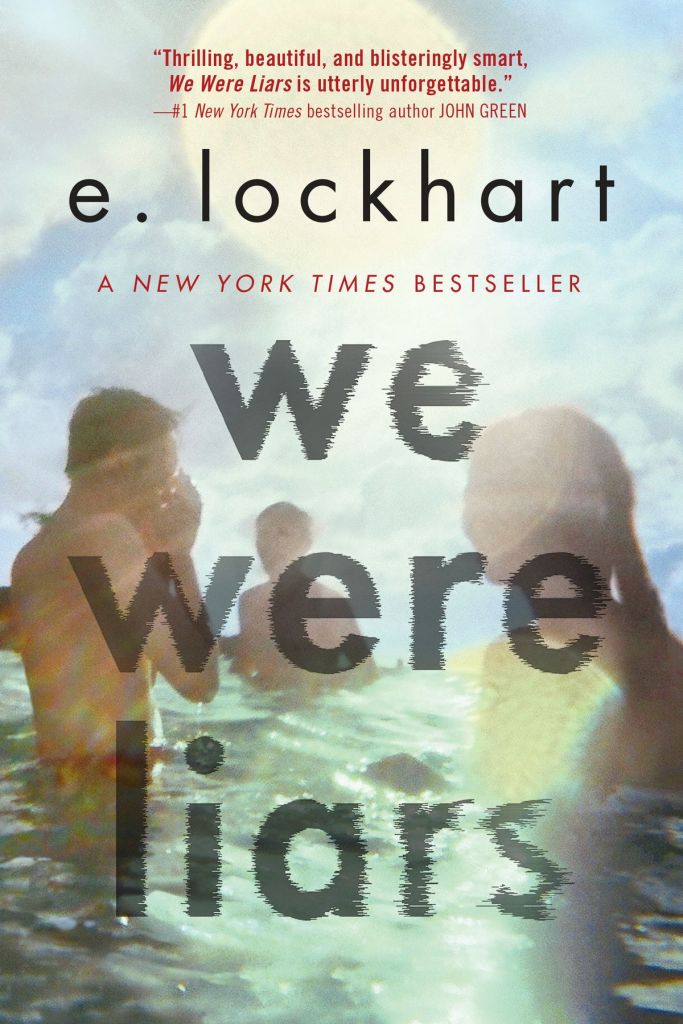
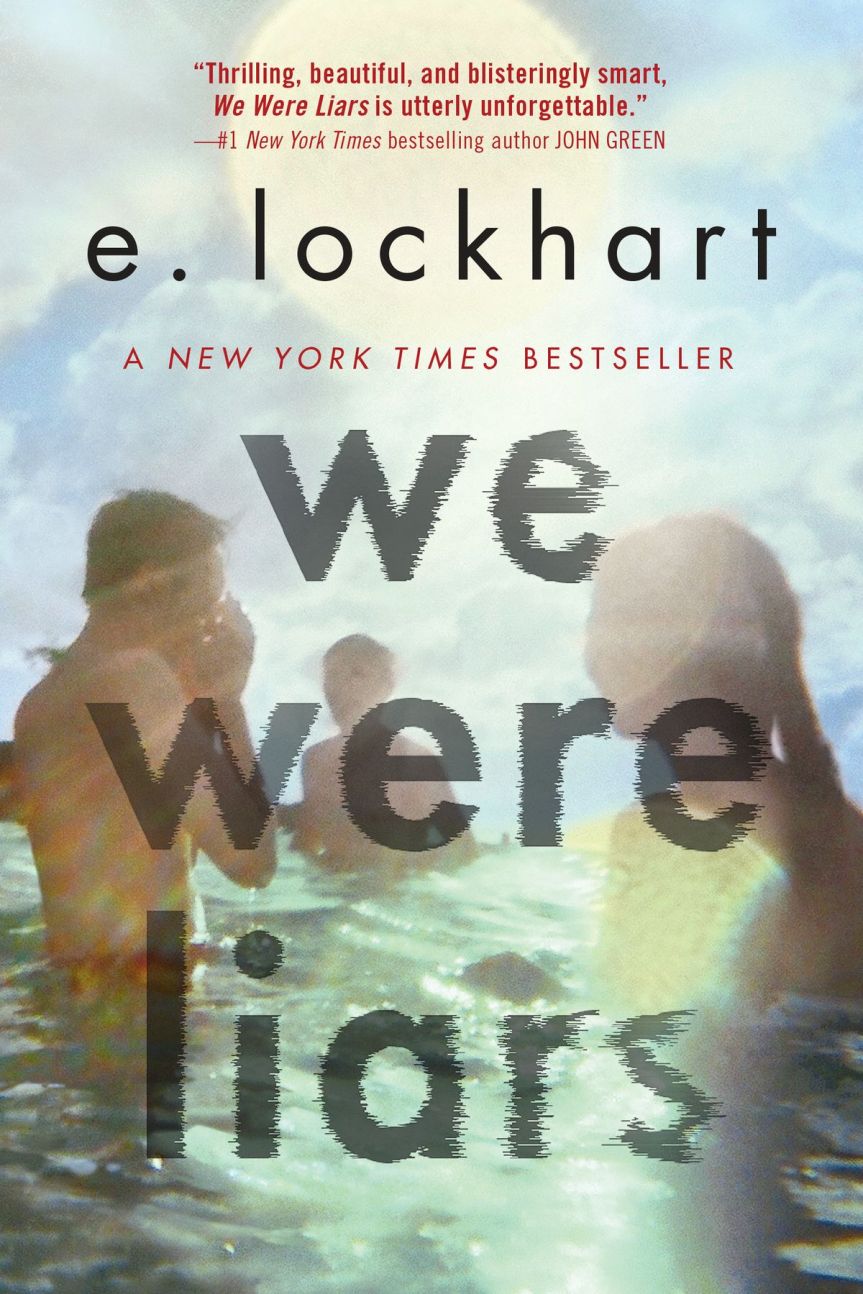
Booktok made me read it. – Review on the book ‘We were liars’

Yes, you read it write. This book has been trending on Booktok (book recommendation tiktoks) under the titles of “books that I would sell my soul to read for the first time again”, “books that will make you sob” or something as simple as “must have books”. But this particular book made many heads turn.

So, what’s all the hassle about? That’s exactly what we are here to find out.

Book history-

This book was written by E. Lockhart in 2014 and did a commendable job. The real hype began when in 2019 this book made an appearance in Booktok and ever since it’s still in the lists of many.

Popular sites like Daily Trojan recently added “We were liars’ on their must read pile. Publishers weekly too has named it as one of the most discussed book on TikTok.

Plot check.-

Nope, sorry can’t say. My lips are sealed.

 But still for the sake of our lovely readers I will give you some insight. The plot is everything. It’s about a family, a rich one, whose story is narrated by a girl who can’t remember the last summer she spent on that island. No literally she can’t remember what happened. And believe me when I say that’s the only the start of the mysteries that revolve around the great Sinclair family.

Next up comes the plot twist. The suspense of this book will make you question reality. It will toy with your brain. But this book make every misery it puts us through worth it.

Theme park.-

The themes portrayed by the author E. Lockhart is quite literal slap on the society. The book challenges social norms head on. Ranging from racism to rich/poor and everything in between this book has it all. It also deals with psychological disorders which I might add is a very sensitive and controversial territory. But E. Lockhart sashayed her way into it quite elegantly.

This book can be added in our school syllabus and no one would question it. Cause that is life. Real one not the Shakespearean where people die unnecessarily or take unfinished revenges.

Why are Tiktokers hyped about it?

The reason behind this is one word “narration”. The lines can be stolen, plot can be copied, hell even if entire idea of this book is plagiarized, still no one can copy the way the author narrates this book. The narration keeps you on edge, makes you restless and leaves a mark right on your soul. The ending will have you wailing in a corner of your room and question life and the entire credit goes to how beautiful the story has been narrated.

And that’s right I would personally sell my soul to read for the first time again.

Not just luck-

‘We were liars’ made I to the popular list mainly due to Booktok but what makes this entire ordeal a little disappointing is that why such a great book written by a very talented author need a social media platform to get popular and sell some copies. It’s been a long time since I have been a reader, whilst social media is a great advertising platform, I still feel books should have a separate platform where we can find genuine books which are of our interest and not just the books which were lucky enough to reach Tiktokers.

‘We were liars’ is like a ride on emotional rollercoaster. It takes you to another level of epiphany. This book has the capability to change one as a person and I am so not exaggerating.

Booktok made me read it but I hope you can say the review made you read it.

BOOK REVIEW- “THE ALCHEMIST”- PAULO COELHO

BY DAKSHITA NAITHANI

ABOUT THE BOOK

“Treasure is there where the heart is,” says Paulo Coelho, author of one of the world’s best-selling books, ‘The Alchemist.’ Because of its extremely inspiring, enlightening, and life-changing substance, this book has sold millions of copies.

It was originally written and published in Portuguese in 1988. It is a worldwide best-seller that has been translated into over 70 languages. With only 167 pages, the book is relatively brief.

PLOT

The narrative is about a shepherd kid named Santiago who lives in the desert near Egypt’s pyramids and dreams of a treasure hidden in the midst of the desert. Later, he is compelled by a magician to go in quest of his wealth. He, on the other hand, does not take the advise seriously and begins working at a bakery, where he earns a decent sum of money. He encounters an elderly guy on a daily basis who tells him about the god’s omens.

MAKTUB is a term that meaning “everything is written” in Arabic. It has been used numerous times. Later, with the assistance of the strange old man and the bakery owner, he realises that his treasure is his destiny, so he embarks on a trek through a vast desert to Egypt’s pyramids. He falls in love with a tribal girl while on the voyage, but he needs to leave her in order to continue his quest, but he vows to return. He also encounters a genuine alchemist, who explains the science of alchemy to him. He falls in love with the desert and its enchantment throughout this long trek. 

Santiago travels through the Mediterranean and the Sahara in search of his treasures in Egypt, as well as to fulfil his own legend, which is his life’s mission. The book chronicles his trip and the numerous encounters he had while pursuing his ambition. Santiago meets a lot of new people and faces a lot of challenges along the road, which helps Santiago learn and grow along the way. Is he able to locate the treasures in Egypt’s Pyramids?

For a large number of people, the book has proven to be life-changing. It’s a lot of fun to read since it’s full of action, suspense, and thrills. The quotations strewn throughout the book are also quite enlightening. This book is highly recommended for everyone who wants to make a positive change in their life and is looking for inspiration.

QUOTES FROM THE BOOK

  • “One’s Personal legend(destiny) is what you have always wanted to accomplish. Everyone, when they are young, knows what their Personal Legend is. “At that point in their lives, everything is clear and everything is possible. They are not afraid to dream, and to yearn for everything they would like to see happen to them in their lives. But, as time passes, a mysterious force begins to convince them that it will be impossible for them to realize their Personal Legend….whoever you are, or whatever it is that you do, when you really want something, it’s because that desire originated in the soul of the universe. It’s your mission on earth.” Paulo Coelho, The Alchemist
  • “Tell your heart that the fear of suffering is worse than the suffering itself. And that no heart has ever suffered when it goes in search of its dreams, because every second of the search is a second’s encounter with God and with eternity. ”Paulo Coelho, The Alchemist
  • “If someone isn’t what others want them to be, the others become angry. Everyone seems to have a clear idea of how other people should lead their lives, but none about his or her own.” Paulo Coelho, The Alchemist
  • “Love is not to be found in someone else but in ourselves; we simply awaken it. But in order to do that, we need the other person.” Paulo Coelho, The Alchemist
  • “One is loved because one is loved. No reason is needed for loving.” Paulo Coelho, The Alchemist
  • “You can become blind by seeing each day as a similar one. Each day is a different one, each day brings a miracle of its own. It’s just a matter of paying attention to this miracle.” Paulo Coelho, The Alchemist
  • “It’s the possibility of having a dream come true that makes life interesting.” Paulo Coelho, The Alchemist
  • “There is only one thing that makes a dream impossible to achieve: the fear of failure.” Paulo Coelho, The Alchemist

ALICE IN WONDERLAND FILM REVIEW.

What will be your response if your dreams become your reality? Wouldn’t you be delighted to live your alternate reality! What it’s a goofy fantasy? Let me take you all in the world of fantasy; Alice in Wonderland is a movie directed by Tim Burton, is a 3-D blend of live action and animation of Lewis Carroll novel Alice in Wonderland.

SYNOPSIS

The story starts with a girl named Alice who has a reoccurring dreams since her childhood. She has turned 19 year old mourning over the death of her father. She is attending a garden party at Lord Ascot’s estate, she is confronted into an unwanted marriage relation with Ascot’s son. Taking some time to take a decision she in haste follows a rabbit to a rabbit hole under a tree, unintentionally falling into it. The story takes a drastic turn by that incident and opens a portal to her recurring dream world from where she begins her journey to the Wonderland and also finding her true self. On her journey she meets the different characters of wonderland ; the Caterpillar (played by Alan Rickman), Mad Hatter (played by Johnny Depp), White Rabbit (played by Michael Sheen), Red Queen (played by Helena Bonham Carter), White Queen (played by Anne Hathaway) and many more. The destiny unfolds the secret of her presence in Wonderland. She was brought her to fulfill the pronounced Oracle. This adventure helps Alice to overcome her fears, insecurities and emerge as victorious. The adventure helps Alice to realise her potential and follow her own will and doesn’t get lost in the society rituals or let them decide your potential and future.

Overall the movie is pretty good, it’s a bit intense and scary at times for younger children who could not understand the film depictions just because of the scary secens. As it’s the Lewis Carroll bizzare imagination not many can match that level of fantasy creativity. The cast was great, everyone perfectly fits into their allotted characters. Their costumes, the makeup, the dialogue delivery everything was perfectly done. My personal favourite would definitely be The Red Queen I feel her presence on screen always keep’s the audience jolly and entertained. Her carzy acting her weird dressing sense everything just speaks confidence it just creates a feeling of nostalgia. I love everything about her in my opinion well sorry on advance for being baised! I feel the cinematography was substantial thr visual effects makes a person experience the scenes. According to me the story unfolds quite briskly. The direction was great but the writer could have added more parts of the actual novel, the film can be more descriptive. But what can we say after all it’s Tim Burton film who is unique in his work. So it’s a must watch movie .

Shutter Island – book review

About the book

Author : Dennis Lehane

Genre : Gothic, Psychological Horror, Crime

Pages : 380

Publication date : April 15, 2003

Story plot

In 1954, widower U.S. Marshal Edward “Teddy” Daniels and his new partner, Chuck Aule, go on a ferry boat to Shutter Island, the home of Ashecliffe Hospital for the criminally insane, to investigate the disappearance of a patient, Rachel Solando (who was incarcerated for drowning her three children). Despite being kept in a locked cell under constant supervision, she has escaped the hospital and the desolate island.

In Rachel’s room, Teddy and Chuck discover a code that Teddy breaks. He tells Chuck that he believes the code points to a 67th patient, when records show only 66. Teddy also reveals that he wants to avenge the death of his wife Dolores, who was murdered two years prior by a man called Andrew Laeddis, whom he believes is an inmate in Ashecliffe Hospital. The novel is interspersed with graphic descriptions of World War II and Dachau, which Teddy helped to liberate. After Hurricane Carol hits the island, Teddy and Chuck investigate Ward C, where Teddy believes government experiments with psychotropic drugs are being conducted. While separated from Chuck for a short while in Ward C, Teddy meets a patient called George Noyce, who tells him that everything is an elaborate game designed for him, and that Chuck is not to be trusted.

As Teddy and Chuck return to the main hospital area, they are separated. Teddy discovers a woman (in a sea cave he tried to take refuge in) who says she is the real Rachel Solando. She tells him she was actually a psychiatrist at Ashecliffe, and when she discovered the illegal experiments being run by them, she was incarcerated as a patient. She escaped and has been hiding in different places on the island. She warns him about the other residents of the island, telling him to take care with the food, medication and cigarettes, which have been laced with psychotropic drugs. When Teddy returns to the hospital, he can’t find Chuck and is told he had no partner. He escapes and tries to rescue Chuck at the lighthouse, where he believes the experiments take place. He reaches the top of the lighthouse and finds only hospital administrator Dr. Cawley seated at a desk. Cawley tells Teddy that he himself is in fact Andrew Laeddis (an anagram of Edward Daniels) and that he has been a patient at Shutter Island for two years for murdering his wife, Dolores Chanal (an anagram of Rachel Solando), after she murdered their three children.

Andrew/Teddy refuses to believe this and takes extreme measures to disprove it, grabbing what he thinks is his gun and tries to shoot Dr. Cawley; but the weapon is a toy water pistol. Chuck then enters, revealing that he is actually Andrew’s psychiatrist, Dr. Lester Sheehan. He is told that Dr. Cawley and Chuck/Sheehan have devised this treatment to allow him to live out his elaborate fantasy, in order to confront the truth, or else undergo a radical lobotomy treatment. Teddy/Andrew accepts that he killed his wife and his service as a US Marshal was a long time ago.

The ending of the novel has Teddy receive a lobotomy in order to avoid living with the knowledge that his wife murdered their children and he is her murderer.

Review

Have you seen the movie Shutter Island starring Leonardo DiCaprio? If you haven’t yet, read the Shutter Island book first. It was originally published in 2003 by Dennis Lehane, and made into a movie not long ago, 2010 actually. I personally haven’t seen the movie either, but after reading the book I’ve decided I HAVE to see the movie adaptation.

Why was the book so good? Many people will already be familiar with Lehane’s work, he’s a famous thriller/crime novelist, so to start off the book is really well written. Not only that, but the plot is fantastic, with lots of twists that you never see coming, which always makes great for a screenplay as well. The copy of the book that I read was a lent to me by a colleague of mine, so it was an older, well-loved paperback from a while back; a nice change from the brand new books I typically get! Anyway, as mass market paperbacks typically do, it had quotes and blurbs from press reviews all over the cover, and a few of them described the book as ‘cinematic’, meaning the descriptions of the scenery and characters are so vivid that readers can easily imagine these scenes in their mind. Of course these were just predictions at the time, but the book was good enough for Martin Scorsese to take notice, as he was the eventual director of the film.

For those of you who like ‘spooky’ summer time reads, this book is definitely for you, so make some time for some ‘oldies but goodies’ on your shelf, and then clear away an afternoon to watch the movie when you’re done the book.

BOOK REVIEW “THE WIZARD’S OF OZ”

. ABOUT THE AUTHOR

L.Frank Baum was an American author born on May 15,1856 Chittenango New York. He has written 14 novel on Oz, plus 41 on others and many more works.

. SUMMARY

Let’s talk about one of the greatest literary work of L.Frank ‘The Wizard’s of Oz’ which became a classic of children literature. The novel is about a girl named Dorothy, who lives with her uncle Henry and aunt Em with her pet dog Toto in Kansas. A sudden cyclone strikes and swift away Dorothy and Toto along with her uncle’s farmhouse and dumped it in the land of Munchkin of Oz’s, in the process killing the wicked witch of East. Wanting to go back to her homeland the story embarks her journey on the yellow brick road to the emerald City of great wizard of oz. On the way she makes friends with the Scarecrow who wants a brain, the Tin woodmen who wants a heart and a cowardly Lion who wants courage. After many adventures they reach the Emerald City to the great wizard of Oz. The wizard lay’s a condition only if they kill the wicked witch of west the desires will be fulfilled. They commence their journey on killing the witch , after a lot of difficulties they are able to kill the witch. On returning back to the wizard they are left shocked………. Let me leave the summary on this note so the readers curiosity is not killed.

. THEME

The story has many theme ; one must find their strength in oneself and their friendship. The courage to tackle the problems comes from within and the good circle of friends who surrounds them. The grass is not greener on the other side , we should enjoy our present and stay contented from within . It also depicts there no place like home one can not find the happiness of a family to a foreign land but their own land . Life throws you many hurdles but one must fight with it with their full potential and never to lose hope .

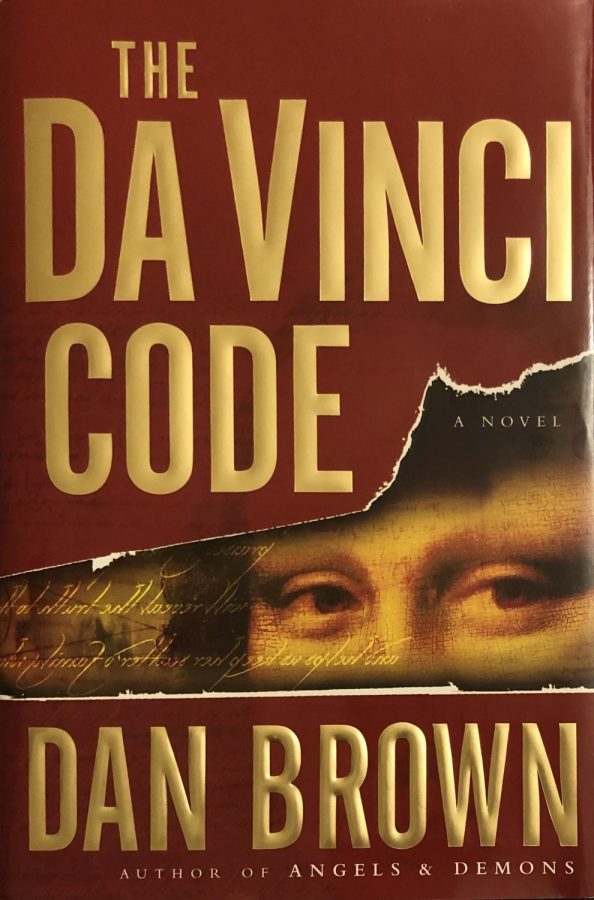
The Da Vinci Code – book review

About the book

Author : Dan Brown
Publication date : April 2003
Pages : 689 (U.S. hardback)
489 (U.S. paperback)


The novel explores an alternative religious history, whose central plot point is that the Merovingian kings of France were descended from the bloodline of Jesus Christ and Mary Magdalene, ideas derived from Clive Prince’s The Templar Revelation (1997) and books by Margaret Starbird. The book also refers to The Holy Blood and the Holy Grail (1982) though Dan Brown has stated that it was not used as research material.

Characters

Robert Langdon: A professor of symbology at Harvard University and the protagonist of the novel.

Jacques Saunière: The grandmaster of priory of Sion, Curator of Louvre Museum and primary antogonist of the novel.

Sophie Neveu: A Cryptologist of French police and granddaughter of Saunière.

Bezu Fache: A member of Opus dei and a French police.

Silas The monk: A member of Opus dei who murders Saunière.

Manuel Aringarosa: A bishop of Vatican and member of Opus dei.

Sister Sandrine: A Seneschal of priory of Sion and sister of St. Sulpice.

André Vernet: A guard of Zurich bank.

Sir Leigh Teabing The Teacher: A Grail scholar, living in Paris and secondary antogonist of the novel.

Rémy Legaludec: A maid who assist Teabing.

Jérôme Collet: A French police.

Marie Chauvel Saint-Clair: Sophie’s grandmother and Saunière’s wife.

Summary


In the Louvre, a monk of Opus Dei named Silas apprehends Jacques Saunière, the museum’s curator, and demands to know where the Holy Grail is. After Saunière tells him, Silas shoots him and leaves him to die. However, Saunière has lied to Silas about the Grail’s location. Realizing that he has only a few minutes to live and that he must pass on his important secret, Saunière paints a pentacle on his stomach with his own blood, draws a circle with his blood, and drags himself into the center of the circle, re-creating the position of Da Vinci’s Vitruvian Man. He also leaves a code, a line of numbers, and two lines of text on the ground in invisible ink.

A police detective, Jerome Collet, calls Robert Langdon, the story’s protagonist and a professor of symbology, and asks him to come to the Louvre to try to interpret the scene. Langdon does not yet realize that he himself is suspected of the murder.

After murdering Saunière, Silas calls the “Teacher” and tells him that, according to Saunière, the keystone is in the Church of Saint-Sulpice in Paris. The Teacher sends Silas there. Silas follows Saunière’s clues to the keystone’s location and discovers that he has been tricked. In a fit of rage, he kills Sister Sandrine Bieil, the church’s keeper and a sentry for the Priory of Sion. At the Louvre, Langdon meets Jerome Collet and Bezu Fache, the police captain, and realizes that the two policemen suspect him of the murder.

Sophie Neveu, an agent of the department of cryptology and Saunière’s granddaughter, arrives at the crime scene and tells Langdon that he must call the embassy. When Langdon calls the number Sophie gave him, he reaches her answering service. The message warns Langdon that he is in danger and should meet Sophie in the bathroom at the Louvre.


In the bathroom, Sophie shows Langdon that Fache is noting his movements with a tracking device. She throws the device out the window onto a passing truck, tricking the police into thinking that Langdon has escaped from the Louvre.

Sophie also tells Langdon that the last line in the secret message, “P.S. Find Robert Langdon,” was her grandfather’s way of alerting her: P.S. are the initials of her grandfather’s nickname for her, Princesse Sophie. Langdon thinks that P.S. might stand for Priory of Sion, an ancient brotherhood devoted to the preservation of the pagan goddess worship tradition, and to the maintenance of the secret that Saunière died protecting.

Langdon decodes the second and third lines in Saunière’s message: “Leonardo Da Vinci! The Mona Lisa!” Sophie returns to the paintings to look for another clue. The police have returned to the Louvre as well, and they arrest Langdon. Sophie finds a key behind the Madonna of the Rocks. By using the painting as a hostage, she manages to disarm the police officer and get herself and Langdon out of the building.

As Sophie and Langdon drive toward the Swiss bank identified on the back of the key, Langdon explains the history of the Priory of Sion and their armed force, the Knights Templar. He reveals that the Priory protects secret documents known as the Sangreal, or the Holy Grail. Langdon’s latest manuscript is about this very subject.

When Sophie and Langdon enter the bank, an unnamed security guard realizes that they are fugitives and calls the police, but André Vernet, the bank’s manager and a friend of Saunière’s, recognizes Sophie and helps her and Langdon escape. Sophie and Langdon figure out that the number left near Saunière’s body must be the account number that will open the vault. When they open the vault they find a cryptex, a message delivery device designed by Da Vinci and crafted by Saunière. The cryptex can only be opened with a password.

Vernet successfully smuggles Sophie and Langdon past Collet in the back of a locked armored car. Vernet turns on them, but they manage to get away with the cryptex, which Langdon realizes is actually the Priory keystone—that is, the key to all of the secrets the Priory holds about the location of the Holy Grail.

Langdon and Sophie go to the house of Sir Leigh Teabing, a historian, to ask for his help opening the box. Teabing tells them the legend of the Grail, starting with the historical evidence that the Bible didn’t come straight from God but was compiled by Emperor Constantine. He also cites evidence that Jesus’ divinity was decided by a vote at Nicaea, and that Jesus was married to Mary Magdalene, who was of royal blood, and had children by her. Teabing shows them the hidden symbols in The Last Supper and the painted representation of the Magdalene. He tells them that the Holy Grail is actually Mary Magdalene’s body and the documents that prove Mary’s blood line is related to Jesus. He says he thinks Saunière and the others may have been killed because the Church suspected that the Priory was about to unveil this secret.

As Langdon is showing off the cryptex, Silas appears and hits him over the head. Silas holds Sophie and Teabing at gunpoint and demands the keystone, but Teabing attacks Silas, hitting him on the thigh where his punishment belt is located, and Sophie finishes him off by kicking him in the face. They tie Silas up.

Collet arrives at the castle, but Sophie, Langdon, the bound Silas, Teabing, and his servant, Rémy, escape and board Teabing’s private plane to England. Sophie realizes that the writing on the cryptex is decipherable if viewed in a mirror. They come to understand the poem, which refers to “a headstone praised by Templars” and the “Atbash cipher,” which will help them arrive at the password. Langdon remembers that the Knights Templar supposedly worshipped the god Baphomet, who is sometimes represented by a large stone head. The word, unscrambled by the Atbash Cipher, is Sofia. When they open the cryptex, however, they find only another cryptex, this one with a clue about a tomb where a knight was buried by a pope. They must find the orb that should have been on the knight’s tomb.

Fache realizes that Teabing and the rest of them are in the jet. He calls the British police and asks them to surround the airfield, but Teabing tricks the police into believing that there is nobody inside the plane but himself. Then he goes with Sophie, Langdon, Rémy, and Silas to the Temple Church in London, the burial site of knights that the Pope had killed.

Rémy frees Silas and reveals that he, too, follows the Teacher. Silas goes to the church to get the keystone, but when he tries to force Langdon to give it up, Langdon threatens to break it. Rémy intervenes, taking Teabing hostage and thus forcing Langdon to give up the cryptex.

Meanwhile, Collet and his men look through Teabing’s house and become suspicious when they find that he has been monitoring Saunière. Over the phone, the Teacher instructs Silas to let Rémy deliver the cryptex. The Teacher meets Rémy in the park and kills him. The Teacher calls the police and turns Silas in to the authorities. As Silas tries to escape, he is shot, and he accidentally shoots his idol, Bishop Aringarosa.

Silas takes Bishop Aringarosa to the hospital and staggers into a park, where he dies. In the hospital the next day, Aringarosa bitterly reflects that Teabing tricked him into helping with his murderous plan by claiming that if the Bishop delivered the Grail to him, he would help the Opus Dei regain favor with the Church.

Sophie’s and Langdon’s research leads them to the discovery that Sir Isaac Newton is the knight they are looking for, the one buried by a Pope, because they learn he was buried by Alexander Pope. They go to Westminster Abbey, where Newton is buried. There, the Teacher lures them to the garden with a note saying he has Teabing. They go there only to discover that Teabing himself is the Teacher. Teabing suspected that Saunière had decided not to release the secret of the Priory of Sion, because the Church threatened to kill Sophie if the secret was released. Wanting the secret to be public knowledge, he had decided to find the Grail himself.

Teabing gives Langdon the cryptex and asks Langdon and Sophie to help him open it. Langdon figures out that the password is apple—the orb missing from Newton’s tomb. He opens the cryptex and secretly takes out the papyrus. Then he throws the empty cryptex in the air, causing Teabing to drop his pistol as he attempts to catch it and prevent the map inside from being destroyed. Suddenly, Fache bursts into the room and arrests Teabing.

The papyrus inside the second cryptex directs Sophie and Langdon to Scotland, where Sophie finds her brother and her grandmother. During the reunion, she discovers that her family is, indeed, of the bloodline of Jesus and Mary Magdalene. Sophie and Langdon part, promising to meet in Florence in a month. Back in Paris, Langdon comprehends the poem, which leads him to the small pyramid built into the ground in the Louvre, where he is sure the Grail must be hidden

Review

The Da Vinci Code by Dan Brown was a wonderful book. At several points in the book I found myself wondering what the next twist would be. The Da Vinci Code is about a symbologist named Robert Langdon.

I enjoyed how the author tied symbology into his novel. I learned things that I was not expecting to in a way that did not feel like I was in a class. I also feel that the action-packed novel kept me engaged with the characters. I often found myself sitting on the edge of my seat waiting for the next piece of the puzzle to be revealed. I highly recommend The Da Vinci Code to any who love mysteries or even to those looking for an adventure.

STEVE JOBS BY WALTER ISAAC- OVERVIEW

Steve Jobs by Walter Isaac is a biography of Steve Jobs that entails not only Steve’s detailed account about founding the iconic Apple company but it also details various aspects of his personal life and his decision making process. This article is not a review of the biography but it is just a list of things that I wanted to point out that were applicable to my own life and what lessons I learnt from it.

I have only ever seen Steve Jobs through online videos where he is introducing some of the most quintessential products of the decade like the iPhone, Mac air, and iPod that would all dictate the technological world for many years to come. The very first video I so of him was when he was on stage eloquently introducing the Mac book Air, he was so calm and collective and I remember being so enticed and willing to buy a product that was over a decade old. After watching a few more videos, I was absolutely awe struck by his sales technique. It was then that I realized that his method of presentation far exceeded the product on display and with enough time he’d be able to sell sand in a desert. But despite this spectacle, I was never really inspired to follow suit to develop my own presentation techniques to market myself better as a person. This was because when Steve was on stage he never stuttered or felt lost for words even once-as I often do. This made me think that maybe some people are just born confident with that level of leadership skills. It just felt so out of reach. That is before I came across his biography.

In the early days of his childhood and high school teens his demeanor was not much different from that of an average introverted person. He had very few friends and would spend most of his time working in the garage with his father. But, from a young age he showed a very potent interest in the field of engineering. Also, by a sheer stroke of luck, he happened to be living right in the middle of silicon valley, where the next decade’s worth of technological innovations would come from. Although success at this point feels tangible, Steve was still not the charismatic business magnet that we know him for today. He was no doubt brilliant in the field of engineering, but he was nowhere near the best. That title went to Steve Wozniack who is the Co-founder of apple. So if he did not find success through the field of engineering, how was he actually successful?

When he joined Reed college in the summer of 1972, he was just a normal skinny kid who liked to pull pranks all the time. His first step of growth was when he met Robert Friedland when he was selling his old type writer to him. Robert was unlike anyone Steve ever met before, he immediately took a liking to him. Robert was a very audacious and outgoing personal, unlike Steve. He would always speak his mind no matter what the situation or how it would make the other person feel. Steve was intrigued by his orthodox methods of dealing with problems and he soon accepted Robert as his sensei. Over the years Robert’s personality would rub off into his own and it was not long before he started developing his cold unforgiving stare and reality distortion field. Steve would then undertake many spiritual trips to discover himself and commit many mistakes on the way before becoming Steve Jobs the Co-founder of APPLE.INC. What this taught me is that no one is born a leader and even the best of the best have not always been the person they are today. I learnt that leadership comes with your own personal experience and the endeavors you have taken throughout your life time.

4 reasons to learn multiple programming languages

ARTICLE


4 Reasons To Learn Multiple Programming Languages

Learning your first programming language is a huge step in your journey to becoming a developer, but if the learning stops there it can dramatically impact your career prospects and income potential.

Technology is emerging at an unprecedented pace, with new coding languages created every year to keep up with this rapid innovation. Believe it or not, there are currently more than 500 programming languages, and that number continues to rise!

Companies like Shutterstock that used to be dedicated to only one language (Perl) are now multi-lingual with a developer team that programs in Node.js, Ruby, Java, Python, PHP, and Objective-C. A company using multiple programming languages isn’t the exception, it’s the norm.

So, here’s the million dollar question: Can someone really become a successful developer only knowing a single programming language? While there are specialized roles in single languages, including JavaScript, the majority of companies and jobs do, in fact, require knowledge of multiple programming languages.

Whether you already have one programming language under your belt, or are deciding where to start, here are a 4 reasons to learn multiple programming languages.

1. More Tools To Get The Job Done

As a developer, the end goal isn’t learning as many languages as you can, or even learning how to code. Instead, it’s about being able to look at a problem and figure out what tools (read: programming languages), you can bring in to get the job done. Naturally, the more tools you have under your belt the more ways you’ll be able to tackle different problems.

Just as there are hammers, screwdrivers, sanders, and an array of other tools for different tasks, there are countless programming languages, with each serving a unique purpose.

2. Pick and Choose the Jobs You Love

Knowing a variety of programming languages, especially in this day and age, helps open up the job market tremendously.

Let’s say you recently graduated from a coding bootcamp and are ready to dive headfirst into the field of programming. There are dozens of companies looking for junior developers, although you find only a fraction of them are hiring for the language you learned while attending a coding bootcamp. By default, only knowing one programming language automatically limits you to fewer roles.

Take a look at the market demand for each of these 9 programming languages:

programming-languages-ranked-by-number-of-jobs-graph-infographic

Having a solid grasp of multiple programming languages, on the other hand, means you have an edge in the job market and qualify for a wider range of job opportunities. You can pick the role and company you love, rather than settle with the limited options you’re dealt with after graduation.

3. Increase Your Salary Potential

More languages equals more money. Don’t believe me? Here’s a recent blog post that highlights the increasing number of companies looking for developers who can work across a number of different functions (and what they’re willing to dish out in return):

And while companies are often [cross-functional developers] to keep costs down, they’re also prepared to pay more to get someone who can switch between projects and has three or four programming languages at their fingertips. In fact, they’re prepared to pay up to a year more for developers who can work in multiple languages.

Facebook is another example of a company that uses a mashup of languages. Facebook.com’s front-end is built on JavaScript, back-end built on Hack, PHP, C++, Java, Python, Erlang, D, Xhp and Haskell, and its database on MySQL, HBase and Cassandra.

Additionally, there are several contributing factors when it comes to determining a developer’s salary. One being whether or not someone is a front-end, back-end or full-stack developer. Full-stack developers know all aspects of the development process, and can use both front-end and back-end technologies, making them more valuable to a company. Because of this, companies are willing to pay an average salary that tops out at roughly $20,000 higher than that of a front-end or back-end developer.

4. Don’t Get Left Behind: Become A More Versatile Developer

Learning a programming language isn’t all that different from learning a foreign language. Once you learn your first foreign language, it becomes progressively easier to learn your second,  third or even forth. The reason for this is because while learning your first foreign language you were essentially “learning how to learn.” You can also start recognizing similarities across languages, which accelerates the learning process. The same principle goes for learning additional programming languages.  

One of Coding Dojo’s lead instructors has been in the industry for 25 years. During that time, he’s learned more than 20 different programming languages! Throughout his career he applied for jobs not knowing any of the languages they used, but was still hired because he showed that he was able to quickly learn, and run with, new languages and technologies.

Being a versatile developer and knowing multiple programming languages means your skills will never become outdated, and you can quickly adapt to industry trends. You can use your vast knowledge of software and web development to keep your job opportunities varied and fresh. Even if you get hired on to work as a programmer for a specific programming language, it’s not unusual for companies to switch course and decide to move to or bring in new technologies. In this day and age, you really can’t afford not to know more than one programming language!

THE TIME TRAVELLER’S WIFE -BOOK SUMMARY

About the book

The Time Traveler’s Wife is the debut novel by the American author Audrey Niffengger, published in 2003. It is a love story about Henry, a man, with a genetic disorder that causes him to time travel unpredictably, and about Clare, his wife, an artist, who has to cope with his frequent absences and dangerous experiences of reappearing in odd places. Niffenegger, who was frustrated in love when she began the novel, wrote the story as a metaphor for her failed relationships. The tale’s central relationship came to Niffenegger suddenly and subsequently supplied the novel’s title. The novel, which has been classified as both science fiction and romance, examines the themes of love, loss, and free will. In particular, the novel uses time travel to explore miscommunication and distance in relationships, while also investigating deeper existential questions.

Summary

Using alternating first-person perspectives, the novel tells the stories of Henry DeTamble (born 1963), a librarian at the Newberry Library in Chicago, and his wife, Clare Anne Abshire (born 1971), an artist who makes paper sculptures. Henry has a rare genetic disorder, which later comes to be known as Chrono-Impairment. This disorder causes Henry to involuntarily travel through time. When 20-year-old Clare meets 28-year-old Henry at the Newberry Library in 1991 at the beginning of the novel, he has never seen her before, although she has known him most of her life.

Henry begins time traveling at the age of five, jumping forward and backward relative to his own timeline. When he vanishes, where he goes, and how long his trips will last are beyond his control. However, his destinations are tied to his subconscious—he most often travels to places and times related to his own history. Certain stimuli such as stress can trigger Henry’s time traveling; he often goes jogging to keep calm and remain in the present. He searches out pharmaceuticals in the future that may be able to help control his time traveling. He also seeks the advice of a geneticist, Dr. Kendrick. Henry cannot take anything with him into the future or the past, which means that he always arrives naked and then struggles to find clothing, shelter, and food. He does amass a number of survival skills, including lock-picking, self-defense, and pickpocketing. Much of this he learns from older versions of himself.

Once Henry and Clare’s timelines converge “naturally” at the library—their first meeting in his chronology—Henry starts to travel to Clare’s childhood and adolescence in South Haven, Michigan, beginning in 1977 when she is only six years old. On one of his early visits (from Clare’s perspective), Henry gives her a list of the dates he will appear and she writes them in a diary so she will remember to provide him with clothes and food when he arrives. During another visit, Henry inadvertently reveals that they will be married in the future. Over time they develop a close relationship. At one point, Henry helps Clare frighten and humiliate a boy who abused her. Clare is last visited in her youth by Henry in 1989, on her eighteenth birthday, during which they make love for the first time. They are then separated for two years until their meeting at the library.

Clare and Henry eventually marry. Soon after their marriage, Clare begins to have trouble bringing a pregnancy to term because of the genetic anomaly Henry is presumably passing on to the fetus. After six miscarriages, Henry wishes to save Clare further pain and has a vasectomy. However a version of Henry from the past visits Clare one night and they make love; she subsequently gives birth to a daughter named Alba. Alba is diagnosed with Chrono-Impairment as well but, unlike Henry, she has some control over her destinations when she time travels. Before she is born, Henry travels to the future and meets his ten-year-old daughter on a school field trip. Unfortunately, during this trip, he learns that he dies when Alba is five years old.

When he is 43, during what is to be his last year of life, Henry time travels to a Chicago parking garage on a frigid winter night where he is unable to find shelter. As a result of the hypothermia and frostbite he suffers while sleeping in the parking garage, his feet are amputated when he returns to the present time. Both Henry and Clare know that without the ability to escape when he time travels, Henry will certainly die within his next few jumps. On New Year’s Eve 2006 Henry time travels into the middle of the Michigan woods in 1984 and is accidentally shot by Clare’s brother, a scene foreshadowed earlier in the novel. Henry returns to the present and dies in Clare’s arms.

Clare is devastated by Henry’s death. She later finds a letter from Henry asking her to “stop waiting” for him, though it also describes a moment in her future when she will see him again. The couple does reunite when Clare is 82 years old and Henry is 43. The novel’s last scene shows a time when Clare, well into her old age, still waits for Henry, as she has done most of her life.


Surgical Strike

We sleep because our soldiers wake. We live in peace because they guard and protect us. What army does is always and only for the country. Surgical strike is a well planned militant affair of crossing the borders of their nation and destroying the camps, and arms and kill terrorists. In a surgical strike, the forces do no harm to the innocent people and to the public property. The army performs it with proper guidance and instructions of Defence Ministry and Army authorities. That surgical strike was held by Indian Army against Pakistan on 28th and 29th September 2016.

Surgical Strike of 2016

Since 1947, the Indo-Pak cold war is one of the most talked-about rivalries in the world. After that Pakistan has always sought ways to attack our nation. The events leading to surgical strike can be dated back to 18th September 2016 when four Pakistani attacked Indian army at Uri-base in Jammu and Kashmir. It was Jaish-e-Mohammad Fidayeen group of Pakistan who planned the attack.

On 21st September India gave a protest letter to Pakistan High Commissioner Abdul Basit regarding the involvement of Pakistan in those attacks. It, in turn, back-fired India as Pakistani Defence minister blamed us of carrying Uri attack to grab the attention from protestors group in Jammu and Kashmir. These events offended India and consequently led to its outbreak in the form of surgical strike.

On 28th September 2016, at 12.30 am, the commandos of Indian Army were dropped at Line of Control (LoC) in the region of Pakistan. The surgical operation was conducted in Bhimber, Hotspring, Kel and Lipa sectors. India claims that during the surgical strike 7 military launch pads with 38 terrorists and 2 Pakistani soldiers were killed and destroyed.

Before the attack was held the army forces walked for 1-3 km destroying terrorist bases. This kind of operation or strike always requires coordination among the government, intelligence agencies and the security forces for the success.

After Effect of Surgical Strike

After the surgical strike, there was a heated discussion on the political grounds. Pakistan claimed that there had been no surgical strike conducted by India. The formation of allied groups in Pakistan was also seen and they feared another attack by India on a larger scale.

The Modi government got support from the neighboring countries like Japan and Germany whereas Pakistan tried to improve their relationship with China. In today’s political scenario every country is trying to strengthen its powers.

Conclusion.

A nation with no terrorism, extortion, black money and murders is a dream of every citizen. Whereas peace and harmony is yet the ultimate desire of every being. No matter how we justify the cause of destruction which these attacks create on either side of the border, can never be reasonable. At the end of the day what anyone aspires from life is immense happiness, peace, and satisfaction. If every civilian adheres to it the world would be a happy and peaceful place to live in.

The phrase surgical strike might be more acceptable if it were common practice to perform surgery with high explosives.

—Gesnge Carlin

Benefits of Regular Exercise

Exercise is defined as any movement that makes your muscles work and requires your body to burn calories.

There are many types of physical activity, including swimming, running, jogging, walking, and dancing, to name a few.

Here are the fews ways regular exercise benefits your body and brain.

It can make you feel happier

Exercise has been shown to improve your mood and decrease feelings of depression, anxiety, and stress.

It produces changes in the parts of the brain that regulate stress and anxiety. It can also increase brain sensitivity for the hormones serotonin and norepinephrine, which relieve feelings of depression.

Additionally, exercise can increase the production of endorphins, which are known to help produce positive feelings and reduce the perception of pain.

It can help with weight loss

Some studies have shown that inactivity is a major factor in weight gain and obesity.

To understand the effect of exercise on weight reduction, it is important to understand the relationship between exercise and energy expenditure.

Your body spends energy in three ways:

👉digesting food
👉exercising
👉maintaining body functions like your heartbeat and breathing
While dieting, a reduced calorie intake will lower your metabolic rate, which can delay weight loss. On the contrary, regular exercise has been shown to increase your metabolic rate, which can burn more calories to help you lose weight.

It can help skin health

Your skin can be affected by the amount of oxidative stress in your body.

Oxidative stress occurs when the body’s antioxidant defenses cannot completely repair the cell damage caused by compounds known as free radicals. This can damage the structure of the cells and negatively impact your skin.

Even though intense and exhaustive physical activity can contribute to oxidative damage, regular moderate exercise can actually increase your body’s production of natural antioxidants, which help protect cells.

“Good things come to those who sweat.”

Top 6 Websites to Find Data Science Freelance Jobs

Freelancing is a great choice, especially today

Photo by Bram Naus on Unsplash

As professional or aspiring data scientists today, we face so many challenges: Learning new skills, improving existing skills, building a strong professional network, job hunting, and landing a role. Data science is one of the glamorous tech fields at the moment, from being an analyst to deep learning professional. The resources to learn are many, the interested candidates are there, but the job availability is not always a match.

To move on in your career, especially in data science, you need to build more projects, hone your skillset, and prove your value as a data scientist. But, how are you going to do that if you can’t find a job or if you weren’t given a chance to put your knowledge to use and prove you can use it correctly?

One of the great options to improve your skills, gain experience, strengthen your portfolio, and have an income is freelancing. Personally, I am a big fan of freelancing; although I am fully aware that succeeding as a freelancer is not easy, it’s very doable. As a freelance data scientist, you can choose the projects that you find interesting and really want to work on. You can also set your hourly pay, and most importantly, you get to be your own boss.

Perhaps my favorite thing about being a freelancer is the freedom of time. You get to choose when to work and when to take some time off, which is not always an option in regular 9-to-5 jobs. So now, you probably have a few questions, like, how do I get started with freelancing? Where do I find a freelance role (a gig)? What kinds of gigs exist out there?

I answered the latter question in another article, and I will write one answering the first question later this month. But today, let’s focus on the middle question, “where can I find and browse available data science freelance gigs?” So I will focus today on the top 6 websites you can use to find freelance data science roles.

№1: LinkedIn Job Finder

I will start with a great website that is often ignored, especially when looking for LinkedIn freelance gigs. Of course, we all know the professional networking website, and some of us have found our full-time job on LinkedIn. But, LinkedIn won’t probably come to mind if you’re looking for a freelance project.

LinkedIn can be used to look for freelance jobs; the trick is to filter the role type to “contract” or “temporary” only to see the freelance roles. Another good thing about using LinkedIn to find freelance roles is that you can set your experience level only to see jobs that match your skillset.

№2: AngelList

Next up on the list is a website very popular with startups, AngelList. AngelList is one of the top websites to find freelance tech roles in general and data science ones in particular. So, all you need to do is build a potent profile and start browsing available roles.

On AngelList, you can find roles for every experience level. Whether you are a fresh graduate, a self-learner, or a professional, you find well-paying roles for your experience. The website has many roles, both remote and in specific locations, with the possibility of being remote.9 Free Quality Resources to Learn and Expand Your Python SkillsLearn Python regardless of your technical background.towardsdatascience.com

№3: Lemon.io

My next website is not your typical freelance website; it’s a community of developers and startups, Lemon.io. We all understand the importance of community, of belonging especially in the freelance world. However, being a freelancer may feel lonely; Lemon tries to overcome that by building an exclusive community.

In Lemon, you can find different freelance roles for all tech specialties, from pure Python to web dev to data science, with hourly pay anywhere from $35~ to $55. To ensure quality, you will need to pass a simple English test and technical interview with one of Lemon’s developers to join Lemon.

№4: Toptal

When you ask an experienced freelance data scientist to recommend you a website to find roles, one of the websites that you will hear often is Toptal. Toptal is a remote talent company that aims to match skilled people with projects that match their skillset.

Toptal is more than a hiring website; it offers many resources and events to improve your skills and learn more about the future of work. Once you pass the initial screening and based on your experience and skill level, you can have an hourly rate ranging from $20 to $100+.6 Lesser-Known Data Science Blogs That Are Worth Followingtowardsdatascience.com

№5: Upwork

Next on today’s list is a website famous for being the freelance holy grail, not just tech freelance, but any freelance out there, Upwork. Create a profile, pass the screening, start browsing available roles, or just wait for clients to contact you.

In Upwork, you can mainly find two types of jobs based on payment: fixed payment and flexible roles. The fixed price has a fixed price to a specific amount of hours, while the flexible ones have average hourly pay starting from $20 and up.

№6: Kolabtree

Last but not least is a freelance platform with over 20,000 scientists and experts on board, Kolabtree. Kolabtree connects freelancers of all levels of experiance to businesses of all sizes from all over the world, with hundreds of projects are posted every month, and you can filter it by the exact topic you want to work on, like data science or a more specific subject areas.

Kolabtree is free to signup for and starts applying for projects with an hourly rate starting from $30 on data analysis, machine learning, and statistical analysis projects.

Final thoughts

As a data scientist myself and a computer science instructor, I fully understand the frustration of applying to tens of jobs and sometimes not hearing back from any. I know what it is like to feel unworthy and not enough, skilled enough, smart enough, and good enough. Unfortunately, the current way job hunting work tends to strengthen this feeling of unworthiness and leave the applicant mentally tired.

But, one of the ways I was able to overcome that feeling of being unemployable is freelancing. So, I decided to get out of the job-hunting world and make my own path to prove myself, to myself first, and to employers out there. I made a profile and started doing freelance projects. I started small, and the size of my projects and my skills grew with time.5 Python Books to Transfer Your Code to The Next Leveltowardsdatascience.com

So, if you reached a good point in your learning journey or got tired of your company and looking for something new, something challenging and rewarding, I suggest you give freelancing a try. Check the websites I proposed in this article out, and maybe you will find a gig that matches your skills and that you will feel excited about.

After all, you build your own path to success.

“Poverty is the worst form of violence”. – Mahatma Gandhi.

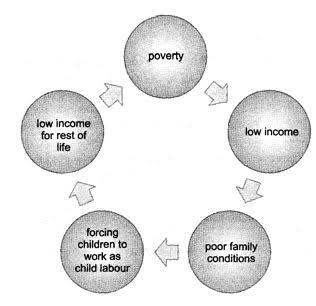
We can define poverty as the condition where the basic needs of a family, like food, shelter, clothing, and education are not fulfilled. It can lead to other problems like poor literacy, unemployment, malnutrition, etc. A poor person is not able to get education due to lack of money and therefore remains unemployed. An unemployed person is not able to buy enough & nutritious food for his family and their health decline. A weak person lacks the energy required for the job. A jobless person remains poor only. Thus we can say that poverty is the root cause of other problems.

How Poverty is Measured?

For measuring poverty United nations have devised two measures of poverty – Absolute & relative poverty. Absolute poverty is used to measure poverty in developing countries like India. Relative poverty is used to measure poverty in developed countries like the USA. In absolute poverty, a line based on the minimum level of income has been created & is called a poverty line. If per day income of a family is below this level, then it is poor or below the poverty line. If per day income of a family is above this level, then it is non-poor or above the poverty line. In India, the new poverty line is Rs 32 in rural areas and Rs 47 in urban areas.

Causes of Poverty

According to the Noble prize winner South African leader, Nelson Mandela – “Poverty is not natural, it is manmade”. The above statement is true as the causes of poverty are generally man-made. There are various causes of poverty but the most important is population. Rising population is putting the burden on the resources & budget of countries. Governments are finding difficult to provide food, shelter & employment to the rising population.

The other causes are- lack of education, war, natural disaster, lack of employment, lack of infrastructure, political instability, etc. For instance- lack of employment opportunities makes a person jobless & he is not able to earn enough to fulfill the basic necessities of his family & becomes poor. Lack of education compels a person for less paying jobs & it makes him poorer. Lack of infrastructure means there are no industries, banks, etc. in a country resulting in lack of employment opportunities. Natural disasters like flood, earthquake also contribute to poverty.

In some countries, especially African countries like Somalia, a long period of civil war has made poverty widespread. This is because all the resources & money is being spent in war instead of public welfare. Countries like India, Pakistan, Bangladesh, etc. are prone to natural disasters like cyclone, etc. These disasters occur every year causing poverty to rise.

Ill Effects of Poverty

Poverty affects the life of a poor family. A poor person is not able to take proper food & nutrition &his capacity to work reduces. Reduced capacity to work further reduces his income, making him poorer. Children from poor family never get proper schooling & proper nutrition. They have to work to support their family & this destroys their childhood. Some of them may also involve in crimes like theft, murder, robbery, etc. A poor person remains uneducated & is forced to live under unhygienic conditions in slums. There are no proper sanitation & drinking water facility in slums & he falls ill often & his health deteriorates. A poor person generally dies an early death. So, all social evils are related to poverty.

Government Schemes to Remove Poverty

The government of India also took several measures to eradicate poverty from India. Some of them are – creating employment opportunities, controlling population, etc. In India, about 60% of the population is still dependent on agriculture for its livelihood. Government has taken certain measures to promote agriculture in India. The government constructed certain dams & canals in our country to provide easy availability of water for irrigation. Government has also taken steps for the cheap availability of seeds & farming equipment to promote agriculture. Government is also promoting farming of cash crops like cotton, instead of food crops. In cities, the government is promoting industrialization to create more jobs. Government has also opened ‘Ration shops’. Other measures include providing free & compulsory education for children up to 14 years of age, scholarship to deserving students from a poor background, providing subsidized houses to poor people, etc.

Poverty is a social evil, we can also contribute to control it. For example- we can simply donate old clothes to poor people, we can also sponsor the education of a poor child or we can utilize our free time by teaching poor students. Remember before wasting food, somebody is still sleeping hungry.

Overcoming poverty is not a gesture of charity. It is an act of justice.

—nelsen mandela