The disturbing thoughts swim in the conscience as one could clearly hear the sound of social implosion in Ram Madhvani’s compelling thriller, lined with commentary on media ethics
In the week of big public apology, comes a film where a common man seeks repentance from a powerful minister for not being able to do his duty. A gutsy idea that fills you with nervous energy, the film is an official remake of a Korean flick but, closer home, it reminds you of the angry common man of ‘A Wednesday’.
In the Neeraj Pandey film, the desperate everyman threatened to bomb Mumbai, here the despairing migrant crosses the line. The film makes you wonder what has changed in the last decade. Perhaps, the trust of the marginalised has been breached. Perhaps, it was reflected during the mass exodus from big cities to villages during the pandemic. It is not that the last man standing in the row was getting attention earlier but he was not being fed hope by a section of rapacious media. His trust was not being played with 24×7.
What seems like a ‘usual’ terror attack/ hostage situation to him that he intends to milk, quickly turns personal as his estranged wife (Mrunal Thakur) is reporting from ground zero. Even as the threat lurks into the newsroom, the remnant of journalism left in his system is smoked out by a hard-nosed producer Ankita Malaskar (Amruta Subhash). For her, truth and news are two different things.
In the ensuing moral battle, it becomes increasingly clear who is the bigger villain of the piece. But, at the same time, the narrative also becomes increasingly predictable. As the taut thriller starts getting flaccid, you start picking up faults in the plot. When a film takes a high moral ground, the margin to slip also reduces. When a film that seeks to expose the artifice of prime-time news starts looking staged, it pains.
The set design and cinematography are top-notch but the functioning of the newsroom, the motivations of the ‘villain’, and the actions of the officer of the anti-terror unit (Vikas Kumar) leave you unsated. After taking you to the edge of the seat, the climax is a tad disappointing. A few more drafts, a little more sharpness would have helped. No such issue with Amruta who excels in a minutely observed character that exemplifies the state of a section of electronic news media.
Karthik has been astutely cast in the role of the hollow television anchor fattened by opportunism, teleprompter, and TRPs. Like in ‘Love Aaj Kal’, he plays the ‘straying’ part well but when it comes to the transformation, he fumbles. Thankfully, that portion is short here.
BA in English Literature is an undergraduate course that is opted for following the completion of the 10+2 formal schooling. Do you have a knack for analysing poetry or writing one? Are you keen about learning the history and evolution of different forms of arts and literature? Then a BA in English Literature was an ideal choice for your graduation. Many great inventions today across different fields such as astronomy, engineering and medicine are influenced by ancient literature and several art forms.
For example, Nicolaus Copernicus’ book “The revolutions of the celestial spheres” popularised the heliocentric theory that proposed the sun as the centre of the universe. With the majority of students opting for medical, engineering or legal degrees, Bachelor of Arts as a degree course is often undermined. There are a lot of common misconceptions and stigmas surrounding this graduation course.
Students studying BA in English Literature are assumed to lackluster in studies.
It is a course often idealised as suitable for women.
Students opting for BA in English LIterature can only become a teacher or professor.
Many students graduate in English Literature as they are passionate about what the course has to offer. Although women are the majority among English Literature graduates, Men also specialise in this field and go on to pursue post graduation alongside women.
As we have debunked some of the misconceptions and stigmas surrounding BA in English Literature, let us look at the doors of opportunities this course leads us to.
Courses to take up after BA In English Literature
BA in English Literature is a three year graduation course that familiarises you with the evolution of English language and its literature through plays, different forms of poems, novels and theatre. Its curriculum consists of literary analysis, literary criticism and communication skills. Graduating in English Literature qualifies you for several job opportunities and higher studies.
For further specialisation or better job opportunities, doing a Masters course following BA in English Literature might be an ideal choice.
Here are the following courses you can consider following your graduation in English Literature.
MA in Communication is a postgraduate program for the duration of 2 years which equips students with information regarding transmitting messages and principles of communication.
This masters course prepares its candidates for professions such as film directors, producers, screenwriters, journalists, public relations officers, and other professional careers.
Eligibility
Minimum requirement for admission to MA in Communication is a Bachelor’s degree in any stream from a recognized university.
Students must have secured 50% in their bachelor’s degree course.
Candidates may be required to pass entrance exams conducted by specific colleges or universities.
Employment Opportunities
Choosing MA in Communication following BA in English Literature can set you up for the following employment roles.
MA in Sociology is a postgraduate program like MA in Communication. Students keen about social studies, politics and economics can pursue this masters course following BA in English Literature. The MA Sociology curriculum consists of the study of religion and society, political society, Indian society, economy and society, social development, and research in sociology.
Eligibility
Interested candidates must be graduated in any stream of education from a reputed university.
Candidates must have scored a minimum of 50% in the undergraduate level.
Some colleges expect students to be a graduate in psychology while the others accept candidates across different streams.
Colleges conduct entrance exams that need to be cleared by the admission seeking candidates.
Employment Opportunities
MA in Sociology opens doors to an expansive range of career opportunities after your graduation in English Literature. Following are some of the job profiles that might get you interested.
Nothing seems more appropriate than studying for MA in English Literature post your graduation from BA in English Literature. This post graduation course in English Literature is the study of ancient and modern English literature, consisting of poetry, drama and fiction. Literature in the English language is not only written by English authors from England but also writers from across the world.
Post graduation in English Literature sets you up for job profiles such as a teacher or a journalist. Candidates interested in writing and translating for agencies can also benefit from this masters course.
Eligibility
Already being a graduate in English Literature, one needs to make sure that he or she has earned upto 50% marks to be qualified for admission.
Your graduation course should be from a recognized university.
Admissions can be provided on both merit basis as well as clearance of entrance exams.
Employment Opportunities
Upon completion of your post graduation course, you will be qualified for the following job profiles.
Bachelor of Law is a popular choice for higher studies among graduates of English Literature. A degree in LLB familiarises students with environmental law, consumer protection act, arbitration, and insurance law including others. Following the completion of Bachelor in Law, candidates can opt to study LLM (Masters of Law) for further specialisation, practice law after registering with certain agencies or take up careers as legal professionals in public or private sectors.
Eligibility
Students aspiring to study Bachelor of Law must have graduated from a recognized university with an aggregate of 45% in any stream.
Selection for the course is based on the results from entrance exams such as SLAT, CUET, and CLAT.
Employment Opportunities
Careers after a Bachelor of Law are not confined to courtroom duties involving defending clients. Law graduates today have scope for job profiles in corporate firms, legal agencies, IT firms, and administrative services. Following are some of the job profiles mentioned below.
Graduates who want to begin a career in the field of teaching can further study Bachelor of Education. This post graduation course acquaints the candidates with different learning methods and Pedagogy of a school subject. The course lasts for a duration of 3 to 4 years.
After the completion of B.Ed, clearing aptitude tests such as TET and CTET will qualify you for teaching in primary and secondary schools.
Eligibility
A bachelor’s degree from a recognized university with 50% aggregate marks.
A master’s degree from a recognized university with 50% aggregate marks.
Aspirants for B.Ed must be at least 21 years old, irrespective of their graduation or post graduation.
Job Profiles
Job profiles for B.Ed graduates are usually related to the field of teaching. One can become a teacher with specialisation in a particular subject or head teacher in a primary or secondary school.
Happy Learning!
References
Vinayak Kashyap, mycourseguru.in/courses after ba english/
Team Careers360 | Updated on Sep 29, 2021 – 3:32 p.m. IST career360.com/10 best career options to progress with after llb degree/
Let’s begin by knowing what Mass Media or Mass Communication is. Mass media refers to the media technologies such as movies, songs, news, podcasts, advertisements and photos, that are utilized to carry information to the masses.
Importance of Mass Media
This blog you are reading is helping you gain knowledge about Mass Media and communication. Hence this blog becomes a media technology and educating you in the field of Mass Media defines its importance. From applying for a job to reaching out to a friend on your phone, everything becomes a portion of Mass Media as they help users pass on information from one place to another or one person to another.
Here are some advantages of Mass Media to highlight its importance.
It becomes a voice for the voiceless: Mass Media provides every individual with an opportunity to practice their freedom of speech and spread their ideas among the world. YouTube is a great example of Mass Media. As a platform in this 21st century it helps both small and large creators publish their videos for everybody to watch.
Enables widespread communication: Today, the world is often referred to as a global village. This is made possible due to several types of mass media technologies such as social media, internet, and other digital content. It helps governments, businesses and organizations to communicate with each other and stay connected.
Diversifying culture: Mass Media helps in diversifying languages and cultures beyond its place of origin. A good internet connection and a mobile phone or a computer is all you need to learn a new language or gain knowledge about a new culture. You can even take a peek around the world without leaving your home.
The Evolution of Mass Media
Mass Media can be traced back to the 800 AD which consisted of prehistoric arts, writings and some basic printing technology. The introduction of Gutenberg’s printing press in the 1450s helped art and literature gain a wider reach among the people.The year 1605 witnessed the publishing of the first weekly newspaper in Antwerp, known as ‘Relation’. This was followed by the inventions of radio and television in 1895 and 1925 respectively. Finally in 1990, the world wide web was introduced by Tim Berners Lee.
The number of people benefiting from these media technologies witnessed a steady growth from a handful, to thousands, and millions with the introduction of newspapers, radios and televisions. Today, due to the internet, these numbers are reaching billions. In 2018, the number of World Wide Web’s users was estimated to be 4 billion.
The 21st century has introduced the ability for even individuals to broadcast a customised message for thousands across the globe. You no longer need to be a part of some huge networking channel to do so. A good internet connection and a hand held device can do the job.
The functions of Mass Media
Mass Media, in the form of writing, podcasting, and publishing, has a significant effect on the masses. Commercials on television, billboards and social media influence the audience into buying a product or availing a service. Hence companies across the world look for suitable mediums such as social media, blogs, forums, or video streaming platforms to convey their messages based on their businesses. Once they find the right mass media technology, they conduct campaigns to communicate their ideas.
Majority of the companies today create and maintain their social media pages, maintain blog posts on their websites, and run advertisements on video streaming platforms to educate viewers about their products or to entertain them. These define the functionality of Mass Media.
Courses in the field of Mass Media and communication
After addressing the ‘Wh’ questions of Mass Media, let us dive into the courses one can opt for in the field of Mass Media and communication. There are three kinds of courses available for aspiring students in the field of Mass Media and communication. Courses at undergraduate, postgraduate and diploma levels.
Both the course levels familiarise students both practically and theoretically in the field of Mass Media and Communication.
Eligibility for courses in Mass Media and communication (UG PG)
A student aspiring to seek admission in a Bachelor of Arts in Mass Communication course, he or she must fulfil some eligibility criterias.
The applicant should have completed senior secondary schooling (10+2) from a recognized university.
The applicant must have scored a minimum of 50% from the aggregate in their senior secondary schooling.
Similarly, students aspiring for seeking admission in the Master of Arts in Mass Communication course must fulfil the following eligibility criterias.
The applicant must have a Bachelor’s degree in any stream from a recognized university.
The applicant must have scored a minimum of 50% from the aggregates in their Bachelor’s degree.
Institutes may also require you to give an entrance exam to fulfil the admission process.
Here’s what you will learn from Mass Media and Communication courses
Courses in Mass Media helps you get acquainted with subjects such as Public Relations, Design and Graphics, Digital Media, Reporting and Editing for Print Media, Data Journalism, Photojournalism, Event Management, and Media Law and Ethics. The courses are inclusive of Computer based learning, Guest Lectures, Seminars, Workshops, Massive Open Online Courses, Individual and Group projects, and community based projects.
Scope for Mass Media courses under employment prospect.
With an increase in media technologies following new inventions and establishments such as Television Channels, Radio Stations, Advertising Agencies, PR Agencies, etc. Scope in this field is also parallely increasing. Here are some of the job profiles candidates can look out for upon completion of the course.
Journalism
Public Relations
Advertising
Media Planner
Broadcasting and Production
Event Manager
Conclusion
Mass Media and Communication as a field in academics has a great scope in India and overseas. Freshers with expertise in specific areas and sufficient experience will be hired by prominent media companies for different job profiles. Individuals with good communication skills, writing proficiency, and passion for learning can pursue an undergraduate or a postgraduate course in Mass Media and Communication.
References
Ritika Shrivastava, May 17, 2021 09:36 IST, shiksha.com
HC restrains chairpersons from taking major decisions.
The division bench of Justice Rajiv Shakdher and Justice Talwant Singh said that the power to appoint chairpersons is expressly conferred upon the executive council and not the vice-chancellor. Rejecting the varsity’s argument that the VC had exercised the powers under Statue 4(5) of the Statute of the university, the court said that the VC can exercise such powers only when immediate action is required “on account of emergent situation”, which then is reported to the concerned authority for obtaining its approval.
Observing that Sood had objected to the agenda for the 296th meeting of the executive council and informed the latter that the appointments made by the VC are flawed, the court said therefore prima facie the authorities were put to notice that the course on which they were proceeding was perhaps not the correct one.
“Despite this, respondent no.2 (VC), it appears, went on to appoint the Chairpersons of the concerned Centres/Special Centres,” reads the order.
The division bench also noted a submission made by Sood’s counsel Abhik Chimni that after a single bench of the high court refused to stay the nine appointments made by the VC, he went ahead with the appointment of another person as chairperson of Centre of Spanish, Portuguese, Italian and Latin American Studies/School of Language, Literature & Cultural Studies on October 08, again exercising the emergency powers vested in him.
Observing that the vice-chancellor of Jawaharlal Nehru University (JNU) is not vested with the power to appoint chairpersons of centres, the Delhi High Court has restrained the nine chairpersons appointed by Prof M Jagadesh Kumar from taking any major decisions, including those relating to the convening of selection committees or carrying out selections concerning the centres or special centres.
The division bench of Justice Rajiv Shakdher and Justice Talwant Singh said that the power to appoint chairpersons is expressly conferred upon the executive council and not the VC.
“Therefore, prima facie, respondent no.2 could not have exercised the power to appoint Chairpersons of Centres/Special Centres,” said the court, adding that the appointments made by the VC prima facie are without authority.
The court was hearing a matter relating to the appointment of professors as chairpersons of the centres or special centres by the VC. Professor Atul Sood has approached the court with a petition challenging the approval granted by the executive council to the nine appointments made by the VC. It has been argued before the court that the appointments cannot emanate from the VC.
Every person has their own language of expression. Each being express themselves in a way that is so unique to them and that way gives them next level comfort and warmth. Every morning they find one or other way of letting people know what they are feeling but the best way they can and should and mostly express themselves is through their love language. A language that makes them more of themselves and less of everyone else, a language that describes them in the most perfect way, a language that makes them free, independent and illuminated. This language is so pure and pious. And this language as said, have many forms and states but with each different personality these forms and states of this language also becomes different making it not only unique but special in its own way.
Poetry has to be the one that is close to my heart and special to my personality. But as mentioned, it might not necessarily be same poetry as someone else. I might write in way that not only describes my state of mind but also my insecurities or even the thoughts that are deep engraved in by sub-conscious. My language has to be poetry, it is the way I express myself. My poetries not only make me free but also lead me out of the dark tunnel of silence in to the world that has bright sunny day of full of thoughts and intellect. I express only grief, anger, or despair through my poetries but also, love, compassion and even bliss through it. Every emotion finds its place in my poetry and just fit well in its position to portray myself being just the way I want to.
Some people have painting as their language. They communicate their thoughts, feelings through painting them in colours. They choose red for love and green for happiness and black for grief and they go for white to describe peace. These colours express them way better than words could ever. They paint the canvas of their life with these colours of emotions and passion and at the same convey their opinions in the most colourful way to the person across the room. They have colour for each occasion and they have the best strokes to kill the heart breaking moments of life. Their paintings not only describe them as the painter who knows how well to use colours but those pieces are the reflection of their inner self and that they paint a part of themselves with each of their painting and say it out loud in those art works just as perfectly anybody could through writing.
Along with these languages that mostly involve the imagination in their expression, there come are languages that help beings express themselves through the moves of their body. Dance as they say, one must dance to express, not to impress has to be one of the most powerful of expressing and channeling their inner energy in conveying what they want to. With all the gloomy days taking a toll on the dancers they become quite and choose to perform only for themselves or on the music that fits their conditions but sometimes, their performance has a glow that shows us how happy or contended they are. This dance language is the language that makes us express through our body, a language that makes us believe in the beauty of this self that god created.
Computer Crime Cyber crime encompasses any criminal act dealing with computers and networks (called hacking).Additionally, cyber crime also includes traditional crimes conducted through the internet. For example; The computer may be used as a tool in the following kinds of activity- financial crimes, sale of illegal articles, pornography, online gambling, intellectual property crime, e-mail spoofing, forgery, cyber defamation, cyber stalking.The computer may however be target for unlawful acts in the following cases- unauthorized access to computer/ computer system/ computer networks, theft of information contained in the electronic form, e-mail bombing, Trojan attacks, internet time thefts, theft of computer system, physically damaging the computer system
Cyber Law is the law governing cyberspace. Cyberspace is a wide term and includes computers, networks,software, data storage devices (such as hard disks, USB disks), the Internet, websites, emails and even electronic devices such as cell phones, ATM machines etc.
Computer crimes encompass a broad range of potentially illegal activities. Generally, however, it may be divided into one of two types of categories
(1) Crimes that target computer networks or devices directly; Examples – Malware and malicious code, Denial-of-service attacks and Computing viruses.
(2) Crimes facilitated by computer networks or devices, the primary target of which is independent of the computer network or device. Examples – Cyber stalking, Fraud and identity theft, Phishing scams and Information warfare.
CASE STUDIES
Case no:1 Hosting Obscene Profiles (Tamil Nadu)
The case is about the hosting obscene profiles. This case has solved by the investigation team in Tamil Nadu. The complainant was a girl and the suspect was her college mate. In this case the suspect will create some fake profile of the complainant and put in some dating website. He did this as a revenge for not accepting his marriage proposal. So this is the background of the case.
Investigation Process
Let’s get into the investigation process. As per the complaint of the girls the investigators started investigation and analyze the webpage where her profile and details. And they log in to that fake profile by determining its credentials, and they find out from where these profiles were created by using access log. They identified 2 IP addresses, and also identified the ISP. From that ISP detail they determine that those details are uploaded from a café. So the investigators went to that café and from the register and determine suspect name. Then he got arrested and examining his SIM the investigators found number of the complainant.
Conclusion
The suspect was convicted of the crime, and he sentenced to two years of imprisonment as well as fine.
Case no:2 Illegal money transfer (Maharashtra)
ThIS case is about an illegal money transfer. This case is happened in Maharashtra. The accused in this case is a person who is worked in a BPO. He is handling the business of a multinational bank. So, he had used some confidential information of the banks customers and transferred huge sum of money from the accounts.
Investigation Process
Let’s see the investigation process of the case. As per the complaint received from the frim they analysed and studied the systems of the firm to determine the source of data theft. During the investigation the system server logs of BPO were collected, and they find that the illegal transfer were made by tracing the IP address to the internet service provider and it is ultimately through cyber café and they also found that they made illegal transfer by using swift codes. Almost has been The registers made in cyber café assisted in identifying the accused in the case. Almost 17 accused were arrested.
Conclusion
Trail for this case is not completed, its pending trial in the court.
Case no:3 Creating Fake Profile (Andhra Pradesh)
The next case is of creating fake profile. This case is happened in Andhra Pradesh. The complainant received obscene email from unknown email IDs. The suspect also noticed that obscene profiles and pictures are posted in matrimonial sites.
Investigation Process
The investigators collect the original email of the suspect and determine its IP address. From the IP address he could confirm the internet service provider, and its leads the investigating officer to the accused house. Then they search the accused house and seized a desktop computer and a handicam. By analysing and examining the desktop computer and handicam they find the obscene email and they find an identical copy of the uploaded photos from the handicam. The accused was the divorced husband of the suspect.
Conclusion
Based on the evidence collected from the handicam and desktop computer charge sheet has been filed against accused and case is currently pending trial.
Hacking is a widespread crime nowadays due to the rapid development of the computer technologies. In order to protect from hacking there are numerous brand new technologies which are updated every day, but very often it is difficult to stand the hacker’s attack effectively. With some of these case studies, one is expected to learn about the cause and effect of hacking and then evaluate the whole impact of the hacker on the individual or the organization.
Childhood is the most memorable time in any person’s life and among all other things the television shows had to be the best part of the evenings in those days. All the different characters, with so simple yet entertaining story lines let us enjoy our little make believe world so much so that we would wait for school to get over and be home and watch those shows. With development and advancement in technology and easier accessibility to the shows any time, any where the butterflies that waiting for those shows would give the children in those days do not easily come to children these days. These shows were sometimes superficial and most of the time fiction still made our childhood better and more fun. Here are some the most loved and remembered shows of those times:
SHARARAT
If you are true magic fan you definitely loved SHARARAT. This was a show with three generations engaging in magic and living their lives as PARIS. With Jia being the main protagonist who would always mess up her magic spells and get herself and people around her in trouble and her NANI coming to her rescue, always cleaning her mess and thereby giving a life lesson with the beauty of magic had to give us the most funny moments of all the times.
AGADAM BAGDAM TIGDAM
Do you think you have the craziest family? Wait till you meet a family that has apples as their phones and has smoke coming out of their ears now and then and belong to a planet named ZOLTAR, now this is what you call actual crazy. This show revolves around the MALHOTRAS who happen to be aliens looking like humans surviving on Earth while trying to keep their secret safe come what may. The show aired in 2007 and though might not have been as famous as others but was one of kind, first among the science fiction in the children dramas.
KYA MAST HAI LIFE
If you follow Shaheer Sheikh you definitely know him from the days of this show. This had five main characters, all enjoying their college lives while being the coolest group in the college. There is no denying that this show raised our hopes for the perfect college life while we end up attending our farewells crawled up in blankets. The show made us fall in love with Shaheer way before we even knew the meaning of love. With actor like Shweta Tripathi reaching all the heights today still remains the cute Zeeniya who solved everyday problems of her friend Ritu telling us what true friendships are for us.
SHAKE IT UP
Though very few know or talk about this show now, but this was one of the first dance programmes that lit the fire of being a dancer on growing up in every child that saw it. The show is about two teenage boys who love dancing and even excel in it so much so that become a part of a dance reality show along with the troubles that they encounter and try and solve them all by themselves. It might not have been huge hit but still has to be a hidden gem.
All these shows were the coolest thing back in early 2000s and they gave us major streaming goals. we can only thank the makers of the shows for making our childhood more fun and giving us memories of a lifetime. We owe it to these shows.
The people of India have a special love for the language of English. With it being one of the official languages of India, people have obsessed over it now for years. It is considered supreme to any other local or regional language, the language of the elites, the language of the educated, the language of the rich, the language of the better, the language of the greater. Why the knowledge of an alien language has been recognised as the mark of standard or class? Why do Indians take pride in celebrating the English language more than any other? Why do the older generations boast about their children being able to speak English so much? Why do Indians being proud about their culture, traditions, ethnicity, customs and festivals are not as proud of their mother tongues as they are of English? These questions pop up every time a non- English speaking person is humiliated or belittled for their poor English speaking skills. But the real question is do we really need this toxicity of humiliating someone just for the sake of a mere language? No, absolutely we do not.
The answers to all these questions go back to the pre independent era. Ever since the British ruled over India they started with the policy of rejecting non-English, non-white, natives so as to establish strong foot of their supremacy. They dented the minds of naive Indians with the theory that only English speaking, white, educated (the western way) people were supreme and had the capability of ruling over others. With decades of humiliation and degradation, the people in pre independent India accepted the superiority of the English language and this made them bound to have inferiority complex about their very own language and mother tongue. The effect was so profound that even after independence, the people educated in English were considered better than those who were equally skilled but not in this supreme language. The Indian population were now interested in educating their children in an English medium school. The liking for the society with English read people enlarged to a level that it lead to the decay and ultimately the end of traditional schools with Indian native languages.
As India’s economy started to grow and new industries and establishments were born, the culture of hiring mostly and after some time only English speaking people grew to an unexpected level. The new businesses wanted English conversing people as they were now associated with better intelligence and know how. When we look back into the history of the relation between English language and the skills or expertise or wisdom we do not find any strong logical evidence to support that. It was merely the supremacy of the language created by the British that Indians starting judging themselves on the basis of the English speaking skills. The interviews were taken only in English language so as to ensure their hold of the language. Students with better grip of this foreign speech were preferred over others. Even this lingo came to be recognised as the symbol of intelligent, sincere and best for any job students.
Society made it very clear with their over likeness towards English that only the privileged, classy, affluent and powerful individuals could afford and were entitled to this learning. This obsession with a foreign tongue was so unhealthy and unwanted that till this day citizens of India have not been able to accept the fact that it is just a language and that the understanding of this speech has nothing to do with intelligence or wisdom. The folks with lesser experience or practice in English are judged too quickly as being the lesser ones. There is a swift shift in people’s attitude after they realize they are conversing with someone with no skills for English language than with the one who is an expert in it. Though with developing nature of the society today, the respect and glory of the local, regional or native language that was lost decades ago is returning back but nevertheless the tilt towards the English language continues, bent enough to stay an obsession.
The variety of cartoon from my childhood time for which almost all kids from my generation have spend their all time watching is nothing compared to what the kids from these days generation are watching. And the biggest difference I make is that this generation shows have from mine were that most of the shows of my generation was anime and Japanese cartoon but now a days all the cartoon were shown to kids are mostly Indian based story cartoon and some rerun of my time anime.
I still remember how after doing my homework I run towards the tv punctually on 7 pm as the shows were to be start with good contented stories, continuity, good moral and each episodes make me curious at the end about all kind of the things like what gonna happen the next day. But the cartoon happens to kids favorite are all comical with no sense and no continuity , just for fun purpose only.
Some loved and epic shows still to be remembered and watched are –
NARUTO
Naruto was something else to talk about it was so popular around my time , bullshit it still is. As it being the anime of Japan dubbed in Hindi there was some changes in the line of story as the Naruto was parted into two- Naruto and Naruto Shippuden. In India, only Naruto was broadcasted Hindi dubbed and become much more popular than Indian cartoon were ever were among children around 9 and above. Popularity of cartoons are shown very different as their taglines becomes popular as in this case were the jutsu names, mainly the famous ” RASENGAN” were used in many imaginative fight between kids for fun.
DRAGON BALL AND DRAGON BALL Z
Dragon ball in one of the most famous anime broadcasted in India and were the most popular one among the kids. The story based on the baby found by an old man who named him Goku and his journey to learn martial arts and to fight the most powerful fighter around the world. As he moved forward with his journey he meet and make many friends and foes who he with and against fights for the world peace and sometimes for the dragon balls which makes some of the wishes of the callers true. With friends like Bulma, kuririn, Master Roshi , Piccolo etc being part of the gang and after being married to chichi and having a kid named Gohan and getting informed of him being a alien warrier species called “Saiyyan” bring more of the troubles in the name of “Vegeta” and with him the bigg boss ” frieza”. The most famous line of this show becomes the “KAMEHAMEHA” the powerful energy ball of attack and the real term call “CHI” the internal energy used in martial arts.
POKEMON
Pokemon was the only anime amongst the other animes whose mostly all season were broadcasted hindi dubbed in India. Story revolves around the main character Ash and his first pokemon Pikachu and his group of friends Misty and Broke, which he make during his journey to become a pokemon master was divided into many season based on regions while catching more pokemon to become more powerful. Most of the pokemon got popularity among kids, who chooses their own favourite pokemon and most popular was the one called pikachu, Bulbasaur, Charizard etc. This anime was the only one which was popular among all age group and gender kids because it involves both cute pokemon and the one who can fight.
TAKESHI’S CASTLE
Takeshi’s castle even being not an anime but still make it to this list as the fun and entertaining show is being among the kids was overwhelming in India and viewership wasn’t limited to just the kids but to adults also well with the show being what is was its expected to be like that. The fun format of the show was to have contestant over 80 to 150 people whom General Tani forced to participate in some series of physical challenges to eliminate half of the contestants and put them against his own henchmen and Count Takeshi in the FINAL SHOWDOWN. The best and fun part of the show find by the Indian viewer is the funny and witty commentary and comments by comedian Javed Jaffrey on the beaten and eliminated contestants. The funny henchmen and twisted and sadistic challenges were the attraction for the kids who find it funny and entertaining.
Social networking sites- these three words bring a very large world together on a single platform and in a simple and easy way. If we see the positive side, there are a number of benefits of social networking. How can we forget that how social media helped Malala Yusufzai become the youngest nominee for the noble peace prize. It were these sites only which made it possible not only for her but for 1000s of girls like her to have higher education. The social media has been playing a crucial role in making today’s teens aware about the events around globe by just one click. Social media has proven to be the fastest medium to update ourselves with daily world events. Social media updates every single second bringing the entire world together every second. Although globalisation has to be given its due credit for bringing the world closer economically and further culturally but it is social media platforms that have made it possible for a person in India to watch a French show at the comfort of their home and without any extra cost. With these social networking sites not only now people could talk, interact, respond to someone in the opposite corner of the world but can also be there without actually being there.
Social networking sites have provided a platform for protesting in some rather unusual but effective ways, from BLACKLIVESMATTER to METOO to BRINGBACKOURGIRLS and many more social media have been proved to be the best way of protesting for the right and just cause. As social media does not connect people from just one city or country but all over the world the movements on social media have a greater impact and helps in bringing greater good in the society. Back in 2013 people from different parts of India were able to raise funds from different campaigns on Facebook, Twitter for Uttrakhand flood victims. In 2014 John Bunnel, a US based sheriff was able to mobilize 5000 youngster for a basic life support training campaign only through Facebook campaign. Our Prime Minister Mr. Narendra Modi has been able to reach to a million people of our country on a personal level through his social media and special programme MANN KI BAAT. These sites made a 14 year old boy Ahammad Mohammed in America fight against the injustice he felt in his school for wearing a handmade watch. It was twitter and facebook only that brought on him the focus of the then President of USA Barack Obama and then later earned him a scholarship too.
There is no doubt that in today’s modern era whether it is a motion of physics or politics of civics we can get all the useful links by just a single click. In no means we can deny that internet has changed everything for good and it is social media that has made it so flexible. It only depends on us, how we take it, as a head or as a tail. Social networking is an ever changing fad which in every field from communication to examination has become our supporting tool. Today no one can even imagine a life without these social networking sites. From dusk to dawn, from entertainment to welfare, our lives now run on these media platform platforms. And as harmful as it’s over usage is as beneficial is its appropriate use.
Poverty still rising all over the world, COVID-19 pandemic made it even worse. About 1.89 billion people, or nearly 36% of the world’s population, lived in extreme poverty. Nearly half the population in developing countries lived on less than $1.25 a day. Why should we spend money on space exploration when we already have so many problems here on Earth? Is it really that important? It’s like What if our ancestors thought that it would be a waste of time to figure out agriculture while we can do hunting? Or why should we spend so much time on exploring new lands while we have so many problems in our land? Each year, space exploration contributes to a lot of innovations on earth. It gave answers to many fundamental questions about our existence, and a lot of questions there to be answered if only we could increase our investment on space exploration. NASA’s annual budget is 23 billion dollars but, its only 0.1% of the total revenue. even if we were to increase the international budget 20 times it would only be a small fraction of GDP. isn’t our future worth a quarter of a percent?
“That’s one small step for man, one giant leap for mankind”.
Benefits of space exploration:
Improves our day to day life
Since 1969, Neil Armstrong became the first human to ever set foot on moon, our interest in science and technology has improved a lot. In 22nd February 1978, US space agency launched the first satellite for its program of global positioning system (GPS). Currently there are 31 global positioning system (GPS) satellites orbiting the earth.Space exploration helped us to create many inventions like television, camera phones, internet, laptops, LED’s, wireless gadgets, purifying system of water and many more that we are using in our day to day life. There are nearly 3,372 active satellites providing information on navigation, business & finance, weather, climate and environmental monitoring, communication and safety.
Improving health care
The international space station plays a vital role in health and medical advancements. The Astronauts who works on the ISS able to do experiments that aren’t possible on earth due to the difference in the gravity. The project of Exomedicine – the study of medicine and micro-gravity, gravity has an effect on a molecular level so working in an environment where it can be eliminated from the equation allows discoveries that would otherwise be impossible. Medical advancements due to space exploration include,
Diagnosis, treatment, and prevention of cardiovascular diseases
Treatment of chronic metabolic disorders
Better understanding of osteoporosis
Improvements in Breast cancer detection
Programmable pacemakers
Laser angioplasty
NASA’s device with Space technology for Asthma
ISS plays vital role in vaccine development
Early detection of immune changes prevents shingles
Development of MRI s and CT or CAT Scans
And invention of ear thermometers
Proxima Centauri b is an exoplanet orbiting the red dwarf star Proxima Centauri
Need for space colonization
Overpopulation is one of the major crises in our planet. Currently we have 7.8 billion people alive on earth. Experts predict that there will be 9.7 billion people by 2050 and 11 billion by 2100, our earth can carry only 9 billion to 12 billion people with the limited food and freshwater resources. That means we have to find an exoplanet with suitable conditions soon. We already went to moon 6 times, we already sent a rover to Mars. Robotic missions are cost efficient, but if one is considering the future of human race we have to go there ourselves. Elon Musk announced that SpaceX is going to send people to Mars I 2022. NASA planned to make a colony on Mars by 2030. These missions are not something we need at this moment. But it may play an important role on our future. Proxima Centauri b is an exoplanet which is 4.24 light years away from us. With our current technology, it is impossible to reach it in our lifetime. But we should make it as an aim for interstellar travel over the next 200 to 500 years. Stephen hawking said that the human race has existed as a separate species for about 2 million years. Civilization began about 10,000 years ago, and the rate of development has been steadily increasing. If the human race is to continue for another million years, we will have to boldly go where no one has gone before.
The day we stop exploring is the day we commit ourselves to live in a stagnant world, devoid of curiosity, empty of dreams. –Neil deGrasse Tyson
As we grow older, we sometimes forget about how much fun we had as children and how much we use to love waking up on Saturday morning and after returning from school to watch cartoons. Now that we are all grown up, it is easy to get lost in our long lists of things-to-do and forget to appreciate the little things.
The mind is a complicated thing, and although we have pushed back many of our childhood memories, it still harbours every theme song, character and saying that we use to live by. So, all it would take is for someone to hum a certain tune, and once recognized, you would probably be able to sing it out — word by word.
If you recently happened to flip through the channels, you might have caught a glimpse of today’s cartoons and been slightly disappointed at what you saw. Times are changing and with that the quality of TV shows are rapidly disintegrating. So be happy that you were born when you were and make sure to take a trip down memory lane every once in a while.
SOME MOST APPRECIATED AND ENJOYED CARTOON DURING MY TIME
BOB THE BUILDER
Bob the builder is one of my favorite cartoon show and I thoroughly enjoyed watching it as a kid. And the title track of this cartoon is super iconic, it just freshes up all the beautiful memories of my childhood. The show focused on Bob a building contractor who solves all the problems with a positive attitude along with his vehicles who can actually talk.
THE POWERPUFF GIRLS
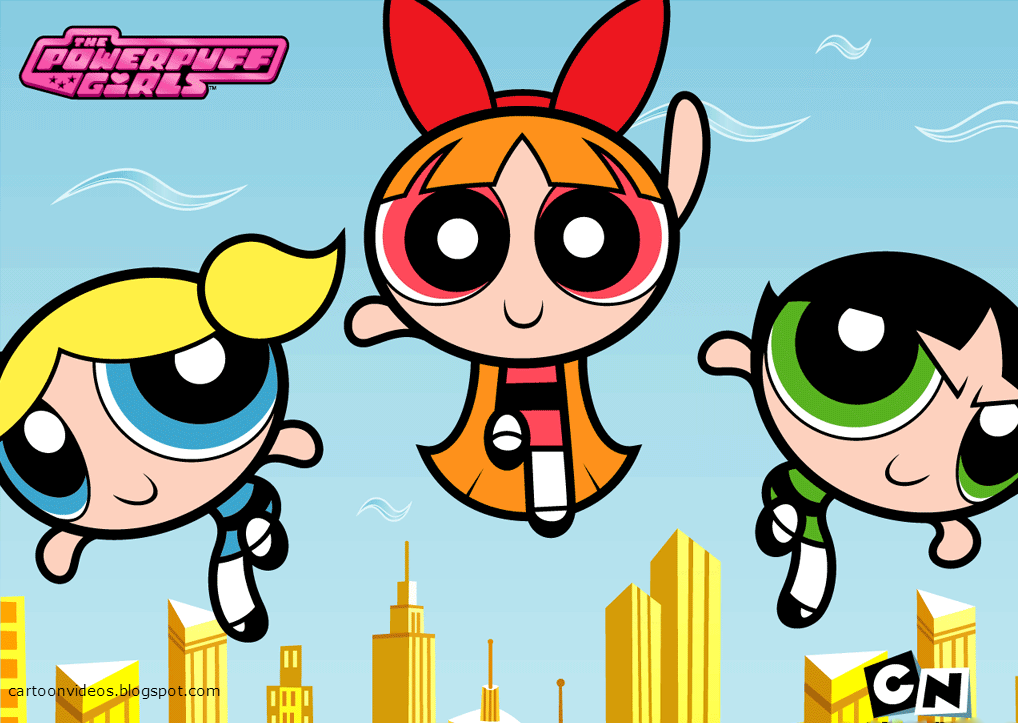
Whenever I think of Cartoons, the first thing that pops into my head is “Powerpuff Girls”. The Powerpuff Girls – Blossom, Bubbles, and Buttercup were created by Professor Utonium in an attempt to create the “perfect little girl” using a mixture of “sugar, spice, and everything nice”. However, he accidentally spilled a mysterious substance called “Chemical X” into the mixture, creating three girls and granting all three superpowers including flight, superhuman strength, superhuman speed, superhuman senses, nigh-invulnerability, x-ray vision, red heat vision, energy projection, space survivability, and thermal resistance. Despite being the main characters of the show, the villain of the show was most popular character i.e. MOJO JOJO and his popularity was so high that you could do a freaking show on Mojo JoJo alone!
Ed, Edd n Eddy
The show is based on three adolescent boys, Ed, Edd n’ Eddy. They hang around their suburban neighborhood of Peach Creek Estates, coming up with scams to con their peers for cash, so they can buy themselves a handful of their favorite treat, jawbreakers. Their plans normally fail though, leaving them in predicaments and situations that always go hay-wire. The characters almost never leave the neighborhood, and adults are nowhere to be seen, as well as any other kids. The characters are funny and the jokes are creative. Most of the episodes are funny with the Ed’s and my favorite one is Ed because he is stupid in a funny way and comes up with the most things he says. My least favorite characters are the Kanger Sisters, Kevin, Sarah, and Jimmy.
JOHNNY BRAVO
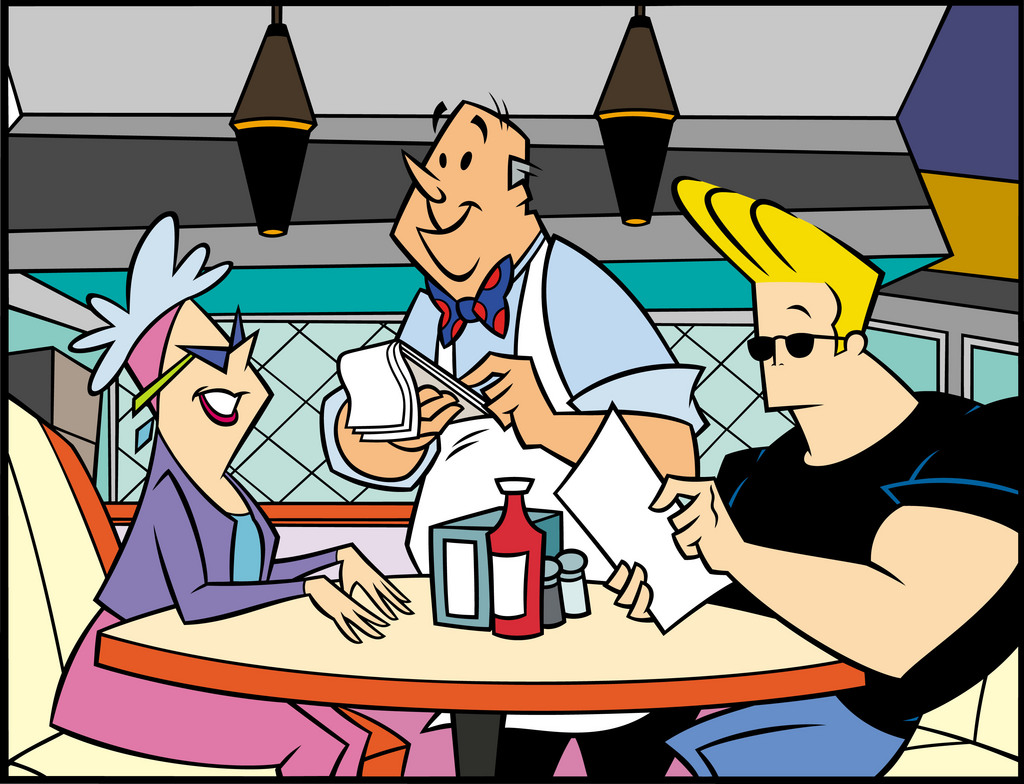
This is a show I grew up with. And probably the only show on this list that I’ve watched on and off for over a decade. Regardless of what age I was at, “Johnny Bravo” has *always* made me laugh! And it made me laugh *a lot*! As you probably already know, Johnny is a 20 age something egotistical super-star wannabe. What makes “Johnny Bravo” such a great show isn’t just the settings. It’s purely the main character! Constant Banters between Johnny and his mother were the most hilarious one of all things.
RECESS
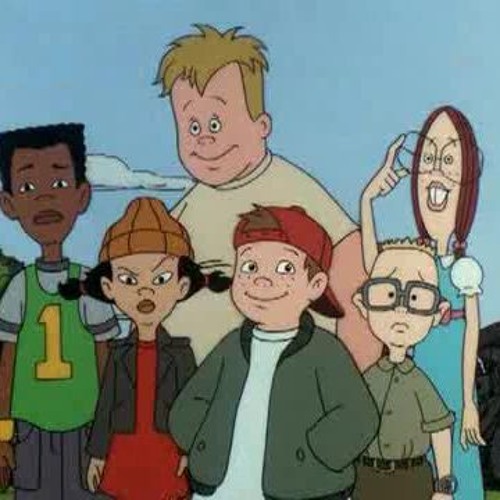
Recess is an American animated show that revolves around 6 brave elementary school kids. This cartoon show was best, it used to come on Disney channel. Almost every 90s kid has grown up watching recess in their childhood. It was just great watching recess after coming from school, this cartoon show holds so many beautiful childhood memories. This was the time where these idiotic storyline made me to cause ruckus in my own school and get punished very tough and fun time that was.
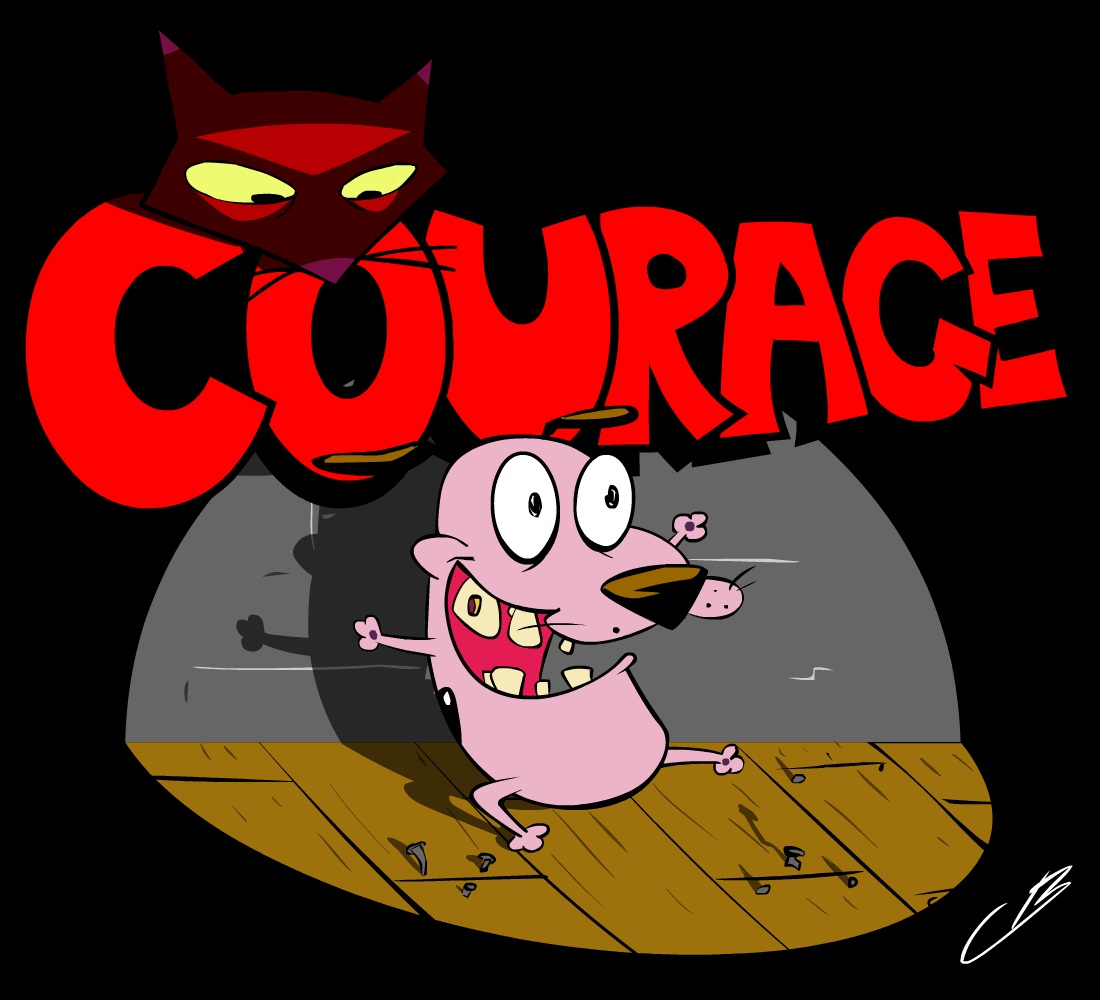
COURAGE THE COWARDLY DOG
“Courage the Cowardly Dog” I Watched “Courage” when I was 10 years old it was one of the 1st times I remember feeling… genuinely disturbed while watching a cartoon. There was a real sense of atmosphere in these settings. The colors were this strange contrast of bleak, yet alien. It really added to the sense of mystery in the show. All with alien, curses , psychopaths follows the dogs like a bad mojo and add to it the hilarious abuse he get from his male owner. I watched it both in English and Hindi, I seriously found it more hilarious in Hindi dude that psycho barber episode really give me goosebumps.
DEXTER’s LABORATORY
It mentions a scientific genius who conducts countless experiments in his secret laboratory while always keeping his eyes on his elder sister Dee Dee. This boy even has to use both his teeth and fingernail to prevent her from invading his lab.
POWER RANGERS FRANCHISE
Power ranger was one of the most enjoyed show of all times especially in my time, kids were hooked on the special postures and tag lines to transform in the super gears. Popularity of power ranger over the kids was equally in both gender despite having some violent fight sequence it didn’t affected its popularity. Each series revolves around a team of youths recruited and trained by a mentor to morph into the eponymous Power Rangers, able to use special powers and pilot immense assault machines, called Zords, to overcome the periodic antagonists.
These were some of my favourite show which was cherished and enjoyed not only by me but all from my age and still do.
In today’s world we can’t even imagine life without Technology. And since the pandemic broke out the technology has became an absolute necessity. In the current time, everything we do is mostly online whether it is classes, meetings, webinar etc. And this might be the way our future will be working.
Technology as friend
No place limitation : Technology has remove the hindrance of place as you can have your meetings classes webinars competition online from all over the world at any place in the any corner of the world
Connecting to a wider range of people: with the help of social media you can connect to wider range of people, know more about the culture tradition or you can connect with the people who like you, might be friends with you from any part of this world.
Learn coursesonline: it provides with the opportunity to learn online on your pace and time when ever you want.
Online payment : now no longer we have to keep a wallet with ourselves, we just need our smartphone and there is no fear of theft as everything is locked with secure password.
Online shopping : no need to roam shop to shop to get your favourite outfit or anything and at your price, home delivery with just one click.
Technology as foe
Slave of Technology: we are so much dependent on technology that we don’t use it are actually became a slave of it.
Loss of memory power : earlier when there were no call logs present, we use to remember the numbers of everyone but now we have started storing everything in our phones, laptop we have started losing the memory power.
Causing damage to Eyes : the screen time has increased ever since the pandemic has started everything we attend is online and it is causing damage to our eyes.
Online fraud : the cases for online fraud has increased as we don’t know whom to trust and whom to not. We are not meeting anyone personally or know where to report it.
Unethical hacking : hacking has increased which cause us loss of money in even leads to stalking.
Trolling and bullying online : everyone is on social media when we post anything there are mean comment, trolling, bullying which cause mental pressure.
At the end I want to say that there is a positive and a negative side of everything we should always focus on the positive side and stay happy in our life.
A group of cognitive psychologists, curriculum theorists and instructional researchers, and testing and assessment specialists published in 2001 a revision of Bloom’s Taxonomy with the title A Taxonomy for Teaching, Learning, and Assessment. This title draws attention away from the somewhat static notion of “educational objectives” (in Bloom’s original title) and points to a more dynamic conception of classification.
The authors of the revised taxonomy underscore this dynamism, using verbs and gerunds to label their categories and subcategories (rather than the nouns of the original taxonomy). These “action words” describe the cognitive processes by which thinkers encounter and work with knowledge.
A statement of a learning objective contains a verb (an action) and an object (usually a noun).
The verb generally refers to [actions associated with] the intended cognitive process.
The object generally describes the knowledge students are expected to acquire or construct. (Anderson and Krathwohl, 2001, pp. 4–5)
The cognitive process dimension represents a continuum of increasing cognitive complexity—from remember to create. Anderson and Krathwohl identify 19 specific cognitive processes that further clarify the bounds of the six categories.
The Cognitive Process Dimension – categories, cognitive processes (and alternative names)
The knowledge dimension represents a range from concrete (factual) to abstract (metacognitive) (Table 2). Representation of the knowledge dimension as a number of discrete steps can be a bit misleading. For example, all procedural knowledge may not be more abstract than all conceptual knowledge. And metacognitive knowledge is a special case. In this model, “metacognitive knowledge is knowledge of [one’s own] cognition and about oneself in relation to various subject matters . . . ” (Anderson and Krathwohl)
The Knowledge Dimension
Factual
knowledge of terminology
knowledge of specific details and elements
Conceptual
knowledge of classifications and categories
knowledge of principles and generalizations
knowledge of theories, models, and structures
Procedural
knowledge of subject-specific skills and algorithms
knowledge of subject-specific techniques and methods
knowledge of criteria for determining when to use appropriate procedures
Metacognitive
strategic knowledge
knowledge about cognitive tasks, including appropriate contextual and conditional knowledge
self-knowledge
Bloom’s Revised Taxonomy Model
Note: These are learning objectives – not learning activities. It may be useful to think of preceding each objective with something like, “students will be able to…:
The Knowledge Dimension
Factual
The basic elements a student must know to be acquainted with a discipline or solve problems in it.
The Knowledge Dimension
Conceptual
The interrelationships among the basic elements within a larger structure that enable them to function together.
The Knowledge Dimension
Procedural
How to do something, methods of inquiry, and criteria for using skills, algorithms, techniques, and methods.
The Knowledge Dimension
Metacognitive
Knowledge of cognition in general as well as awareness and knowledge of one’s own cognition
The Cognitive Process Dimension
Remember
Retrieve relevant knowledge from long-term memory.
Remember + Factual
List primary and secondary colors.
Remember + Conceptual
Recognize symptoms of exhaustion.
Remember + Procedural
Recall how to perform CPR.
Remember + Metacognitive
Identify strategies for retaining information.
The Cognitive Process Dimension
Understand
Construct meaning from instructional messages, including oral, written and graphic communication.
Understand + Factual
Summarize features of a new product.
Understand + Conceptual
Classify adhesives by toxicity.
Understand + Procedural
Clarify assembly instructions.
Understand + Metacognitive
Predict one’s response to culture shock.
The Cognitive Process Dimension
Apply
Carry out or use a procedure in a given situation.
Apply + Factual
Respond to frequently asked questions.
Apply + Conceptual
Provide advice to novices.
Apply + Procedural
Carry out pH tests of water samples.
Apply + Metacognitive
Use techniques that match one’s strengths.
The Cognitive Process Dimension
Analyze
Carry out or use a procedure in a given situation.
Analyze + Factual
Select the most complete list of activities.
Analyze + Conceptual
Differentiate high and low culture.
Analyze + Procedural
Integrate compliance with regulations.
Analyze + Metacognitive
Deconstruct one’s biases.
The Cognitive Process Dimension
Evaluate
Make judgments based on criteria and standards.
Evaluate + Factual
Select the most complete list of activities.
Evaluate + Conceptual
Determine relevance of results.
Evaluate + Procedural
Judge efficiency of sampling techniques.
Evaluate + Metacognitive
Reflect on one’s progress.
The Cognitive Process Dimension
Create
Put elements together to form a coherent whole; reorganize into a new pattern or structure.
When a decision is made that fear, terror and violence are justified to achieve ideological, political or social change, radicalization to violent extremism occurs’ Terrorism, radicalization and extremism are subjective concepts that have different meanings for different people. Furthermore, their meanings are constantly evolving as they manifest themselves in different ways in different parts of the world, exploiting new vulnerabilities, technologies and approaches. 1.1. Terrorism ‘Terrorism is a complex and contested issue, as are the associated labels of extremism, violent extremism and radicalization’ There is no single universally accepted definition for terrorism because the concept is invariably political and cannot be framed in a manner that excludes the state. Most acceptable words to understand terrorism are ‘acts committed with the objective of seriously intimidating a population, destabilizing or destroying structures of a country or international organization or making a government abstain from performing actions’. 1.2. Extremism ‘Violent extremist ideologies have found fertile ground in fragile communities characterized by little access to development’ Extremism is generally understood as constituting views that are far from those of the majority of the population. Accordingly, one definition describes extremism as ‘activities (beliefs, attitudes, feelings, actions, strategies) of a character far removed from the ordinary’. Though this is clearly a relative term which invites disagreement regarding benchmarks, it is broadly agreed that extremist views are not necessarily illegal and do not automatically lead to violence or harm. Indeed those with extremist views, who may also choose to observe extreme practices with no impact on the civil liberties of fellow citizens, are rightly protected under fundamental freedoms and human rights norms. Extremism becomes a concern when those views threaten democratic and tolerant societal ideas, or promote the use of violence to coerce their followers or to achieve their objectives. This form of extremism is described as violent extremism, a term which remains contested, but which generally refers to the creation of ideologically motivated or justified violence, as well as support for such acts. 1.3. Radicalization ‘Radicalizer’s work by pointing to social, political and economic injustice around their followers.’ Like terrorism and violent extremism, radicalization is a contested term with various definitions. It is commonly understood, however, as the social and psychological process of incrementally experienced commitment to extremist political and religious ideologies. It does not necessarily mean that those affected will become violent. However, when a decision is made that fear, terror and violence are justified to achieve ideological, political or social change, radicalization to violent extremism occurs.






















 Eduindex
You must be logged in to post a comment.