The Farce

Introduction:

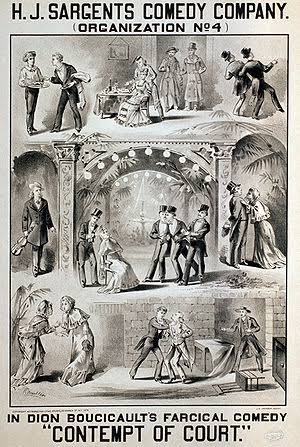
The Farce is a dramatic work designed solely to produce laughter. Originally a farce was an explanatory or additional matter introduced into the main play sometimes to increase its length. Slowly actors begin to use this as an occasion and thus it became a part of the play.

The Plot of the Farce:

In Farce no attempt is made at Fidelity to life. Its aim is merely to provide laughter. For this purpose, it employs funny incidents absurd characters, humorous situations, and witty dialogue. Farce does not aim at a realistic representation of things but provides caricature. The plot in a farce usually appears nonsensical, characters in the indulge in deception impersonations, and irrationalities. There are angry wives, helpless husbands, and funny old men indulged in the most unexpected activities. Serious and respectable people are drawn into the most undignified positions, grave and priggish persons are debunked. Most farce is centered around love affairs which themselves are caricatures. In the end, everybody comes out without any harm.

The elements of the Farce:

The elements of the farce can be seen even in the early English plays. Shakespeare’s ‘A midsummer night’s dream’ and ‘Twelfth Night’ are examples to show how farcical elements could be interspersed with comedy with great effect. Event tragedies had farcical scenes as we see in Marlowe’s Dr. Faustus.

Some Famous works of Farce:

As a separate form of entertainment, the farce came into vogue towards the close of the seventeenth century. The first popular farce was ‘The Rehearsal’ by the Duke of Buckingham. But The anti-sentimental comedy almost destroyed farce. But the anti-sentimental comedies of Sheridan and Goldsmith brought back farcical humor into English drama. Some of the scenes in Sheridan’s ‘The Rivals’ and most of the scenes in his “School for scandal” are enchantingly Farcical. Similarly in the play “She Stoops Conquer” by Goldsmith. In the Victorian period, the farce attained a sort of respectability. Farces such as ‘ The Private Secretary’ and ‘Charley’s Aunt’ were several times.

In modern times, the farce is an accepted form of dramatic entertainment. Most of the plays of Oscar Wilde and Bernard Shaw have farcical situations and dialogue. The farce requires unusual inventiveness, a craftsman, and a sense of humor on the part of the writer.

Most modern comic one-act plays tend to be farces. The purpose of such plays is only to give brief entertainment without malice and laughter without vulgarity. Modern one-act plays like ‘The Dear Departed’ are essentially farce designed to produce laughter.

Conclusion:

The Farce is a famous literary form in earlier literature. In this form, most of the scenes from the plays and characters from the novels will have some comical and entertaining content. Which boosts up the audience’s mindset. These literary forms are used to length the drama in earlier periods. But, most of the audience loved this method and they often started to use it regularly in stage dramas. Farce is used merely for the entertainment of the audience. Even now, most of the writers include some comical scenes in their works to make the plot entertaining.

Start your own business part 1

Start your own business part 2

Honor Killings in India.

Honor killing is an act of murder by the members of the family. This crime usually takes place when two consenting adults marry or want to marry each other but do not belong to the same religion, caste or gotra. Such marriages bring dishonor to the family and hence their family members punish them or sometimes due to the pressure from society.

   Majorly in the Rural regions, villages are very homogenous. No one is supposed to break the laws/norms of society. If anyone dares to- suffers the punishment that is decided by the villagers or the panchayat. Many a time, this punishment is murder. The family also has to face punishment in the form of a social boycott or many times- eviction from the village. In such a situation, the need to removes the family’s dishonor is palpable. Thus, the family members of these consenting adults kill them. According to the official records, the cases of honor killings are not too many but in reality, every year there are more than 10,000 such killings. Normally, if a person goes missing, the family is the one who runs to the police station but in case of killings related to honor, the family members are themselves the perpetrators. Besides, the villagers also do not report this as according to them, this itself is the ‘justice’. On the contrary, such killings are reported by the relatives as ‘suicides’, with family members destroying evidence. Usually, females are more likely to be subjected to suck killings as compared to their male counterparts. According to a report, women constitute 90%+ of the honor killings.   

  The prime factor of the crime is that the majority of caste members do not accept inter-caste marriages on the pretext of maintaining the decorum of their caste or the status of their family in society. The crime of honor killing is increasing at a high pace due to the complex socio-cultural problems. To restore the honor and respect lost due to the inter-caste love marriage

In 2012, the Law Commission submitted a report outlining a unique legal framework for dealing with honor killings. The Prohibition of Interference with the Freedom of Matrimonial Alliances Bill was aimed at curbing activities and behaviors associated with honor crimes by criminalizing, for example, the unlawful assembly of groups of people for the purpose of condemning a marriage, and criminal intimidation of a couple. It also recommended punishments, protection measures for vulnerable couples, and counseling and legal awareness for couples. Sadly, this Bill was not brought up by an MP in Parliament. 

Honor killing happened in the area where the sex ratio is lower and girls are bought for marriages because of a large disparity in the sex ratio, causing the difference in sex ratio to increase. Illiteracy and lack of awareness of rights to freedom and constitutional rights to safeguard their protection from exploitation are the primary reason for the rising of crimes.

Khap Panchayats: 

Khap panchayats are gatherings impersonating courts, presided over by the caste leaders. These leaders are the judges of these illegitimate courts. Just as legitimate judges pass judgments according to the Indian constitution, these panchayat leaders give judgments in accordance with the village and societal norms and rules. Marrying outside the caste or religion is not allowed as per these so-called societal norms and such couples are hence eligible for punishment. The khap leaders hold supremacy within their cast as custodians of honor. Khap panchayats often nullify marriages that are inter-caste and inter-religion and also separate such married couples. In March 2018, the Supreme Court of India declared illegal any attempt by Khap panchayats to end a marriage between consenting adults. But even today, khaps fearlessly continue to nullify marriages and sentence death to eloped couples. 

THE HISTORICAL NOVEL

Introduction:

The Historical Novel is a work of fiction that attempts to convey the spirit manners and the social conditions of the past age with realistic details and nearly perfect fidelity to historical facts. The subject matter may compass both public and private events. The protagonist may be an actual historical figure or an invented figure. The historical novel can be The dramatic interest of plot and character with the more or less detailed picture of the varied features of the life of a particular age. The most important feature of the historical novel is its vivid reproduction of the life of a bygone age.

Even before the coming of the historical novel comer writers had used history in their novels. As a result of the impulse to word novelty during the Renaissance and after several writers made use of history. In England, Horace Walpole used a particular period in history as background to his Gothic novels.

First Historical novel:

The passing away of the feudal system created and nostalgia for the past. compared with social and economical changes caused by the French Revolution and the industrial revolution, This nostalgia created the proper climate for the emergence of the historical novel. The first great historical novel in English was Sir Walter Scott’s Waverley published in 1814. A series of novels based on Scottish history appeared. Among them, the most important is “Guy Mannering”, Kenilworth, Old Morality, and “The Heart of Midlothian”. Among the more popular of Scott’s novels are “Ivanhoe” and the Talisman dealing with the Crusades. In this novel, memory and imagination serve Scott’s creative purpose of the central narrative is supported by a strong love of humanity.

The tradition of the historical novel continued into the story and age. Charles Dicken’s “A tale of two cities” Thackeray’s “The history of Henry Esmond Esquire” George Eliot “Romola” and Charles Reade’s “The cloister and the Hearth” is important historical novels of the Victorian period. In the continent, the historical novel florist in the writings of Balzac, Dumas, and Tolstoy. It is generally agreed that Tolstoy’s “War and Peace” is the greatest among the historical novel. “Robert Grave’s I Claudius” is another historical novel of significance.

The historical novel marches on one side with the realistic novel and the other side with the national epic. Saintsbury has remarked that historical novelists give only a subordinate position to the actual historical figure and should allot a prominent position to the imaginary figure because the chief object of the novel is the interpretation of the human character.

In the Historical novel, The recreation of the spirit undertone of the bygone ages is more important than other runs to the truth. The historical novel list has to reconcile the clients of history and art.

Conclusion:

The historical novel has limitations for stop it is suffering from the weakness of both history and novel. Unless the novelist is scholarly and unprejudiced, he is likely to give you a half-digested and biased view of historical facts. It is also open to question whether the imaginative recreation of facts is preferably the fact to themselves.

The Humanitarian Movements

The Social Novel

All about Horoscope

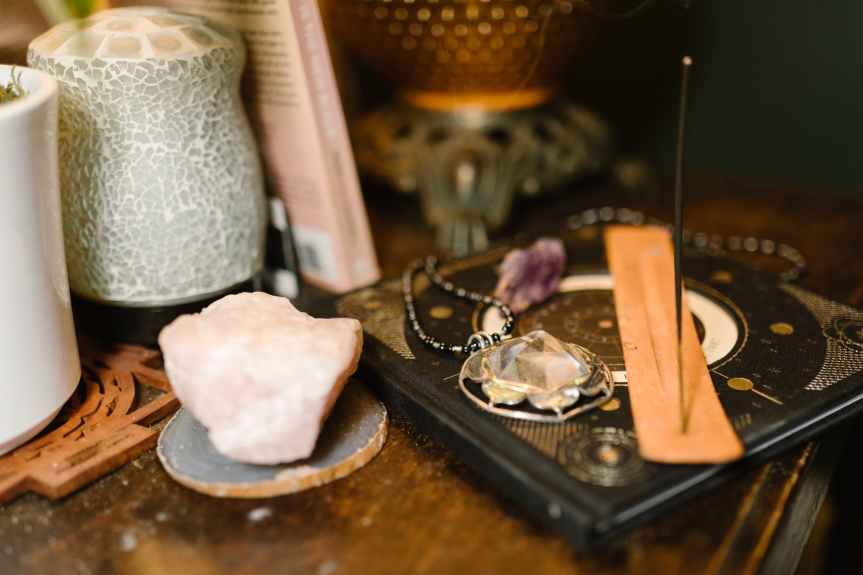
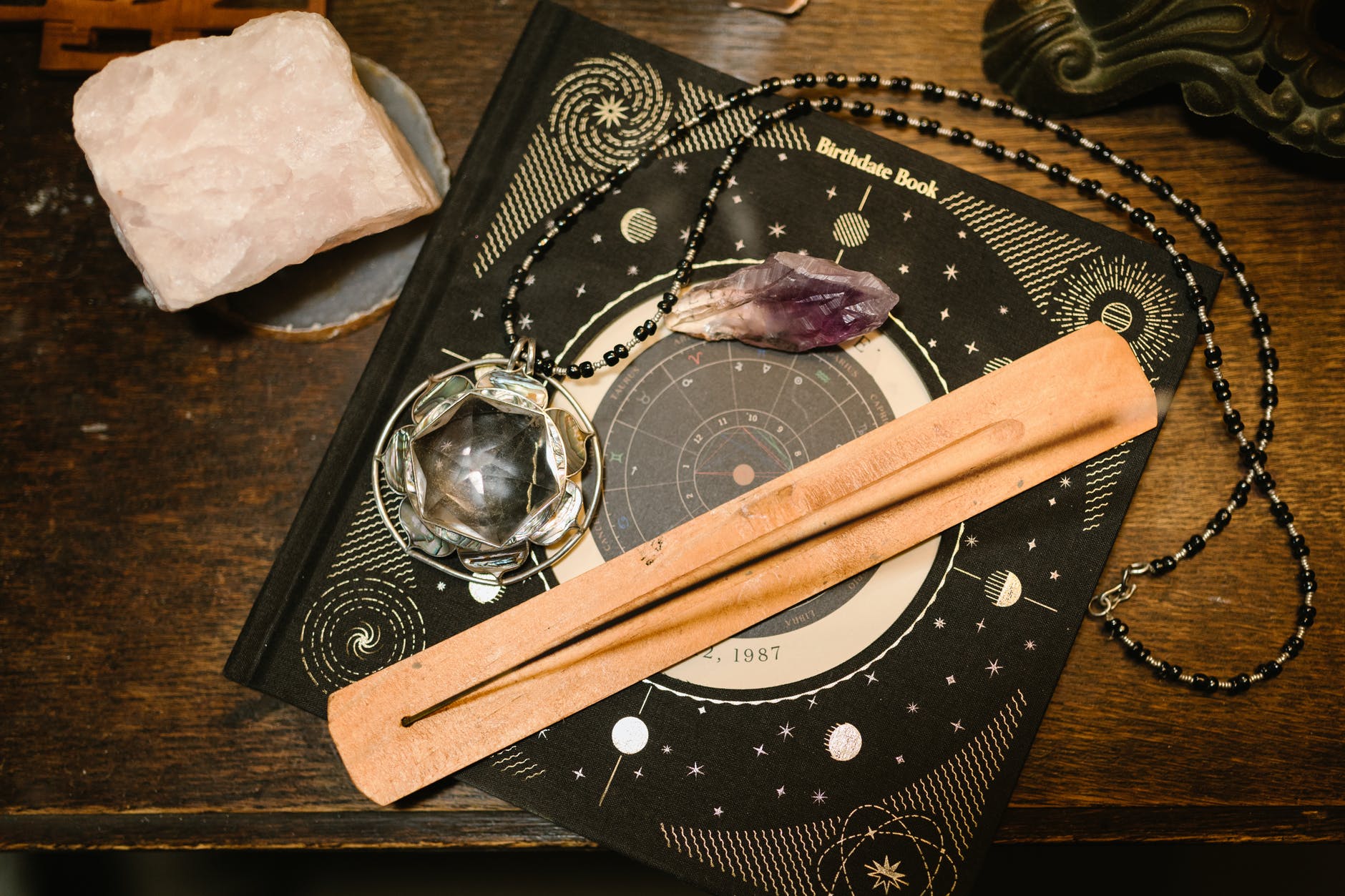
A horoscope (also known as a natal chart, astrological chart, astro-chart, celestial map, sky-map, star-chart, cosmogram, vitasphere, radical chart, radix, chart wheel, or simply chart) is an astrological chart or diagram that depicts the positions of the Sun, Moon, planets, astrological aspects, and sensitive angles at the time of an event, such as a birth.

Photo by RODNAE Productions on Pexels.com

Horoscope comes from the Greek words ra and scopos, which mean “time” and “observer” (horoskopos, pl. horoskopoi, or “hour marker(s)”). It is utilised as a means of divination for occurrences related to the time period it symbolises, and it is the foundation of astrology’s horoscopic traditions.

The horoscope depicts the skies as a stylised map over a certain area at a specific time. In most cases, the viewpoint is geocentric (heliocentric astrology being one exception).

The chart includes the positions of the actual planets (including the Sun and Moon), as well as entirely calculated features such the lunar nodes, house cusps (including the midheaven and ascendant), zodiac signs, fixed stars, and the lots.

Aspects are angular relationships between planets and other points that are commonly determined. 

The vernal point (the first day of spring in the northern hemisphere) is defined by the tropical zodiac as the first degree of Aries, although the sidereal zodiac permits it to process.

Many individuals are perplexed by the distinction between the sidereal and tropical zodiac signs.

t is worth pointing out that the sidereal signs and the tropical signs are both geometrical conventions of 30° each, whereas the zodiacal constellations are pictorial representations of mythological figures projected onto the celestial sphere based on patterns of visible star groupings, none of which occupy precisely 30° of the ecliptic.

So constellations and signs are not the same, although for historical reasons they might have the same names

An astrologer must first determine the exact time and location of the subject’s birth, or the start of an event, in order to generate a horoscope.

At the same time, the local standard time (adjusted for daylight saving time or wartime) is transformed into Greenwich Mean Time or Universal Time. To be able to calculate, the astrologer must translate this to the local sidereal time at birth.

Photo by RODNAE Productions on Pexels.com

The astrologer will then examine an ephemeris, a set of tables that displays the positions of the Sun, Moon, and planets for a given year, date, and sidereal time in relation to the northern hemisphere vernal equinox or fixed stars for a given year, date, and sidereal time (depending on which astrological system is being used).

The horoscope is divided into 12 sectors that circle the ecliptic, beginning with the ascendant or rising sign on the eastern horizon.

The houses are the 12 sectors, and there are several techniques for computing these divisions. Since the 19th century, tables of dwellings have been issued to make this otherwise difficult work easier.

Horoscopes and the zodiac sign have always been popular, and they continue to be so today. From celebrities to the ordinary population, there are a large number of devoted fans.

It can be tough to accept that astrology is not based on scientific facts and is a pseudoscience when there are so many believers and perhaps a personal connection to the horoscope or the zodiac.

Reference

http://www.wikipedia.com

http://www.timesofindia.com

http://www.elle.com

Jhunjhunwala plans to have 70 planes in four years of airline

Billionaire investor Rakesh Jhunjhunwala is planning on having 70 aircraft within four years for a new airline he wants to set up.

Photo by Pixabay on Pexels.com

Jhunjhunwala, who is considered to be investing 35 dollar million and would own 40% of the carrier, is expected to get a no-objection certificate from the aviation ministry in the next 15 days, he said in an interview on wednesday.

The ultra low cost airline will be called Akasa Air and the team, which includes a former senior executive of Delta Air Lines Inc is looking at planes that can carry 180 passengers, he said.

Its a bold bet by Jhunjhunwala, who’s known locally as India’s Warren Buffett, in a market that has seen some airlines collapse in the face of intense fare wars and high costs.

Still, what was once the world’s fastest -growing aviation market holds an allure and Jhunjhunwala is looking at opportunities to woo flyers with a brand new carrier offering low fares.

Photo by Alexander Mils on Pexels.com

All of these facts, however, do not prevent Jhunjhunwala from investing in the aviation industry, as he is well-versed in the reality of doing business in this area. “I believe some of the increment players will not recover,” he remarked, but he praised his partners, saying, “I have some of the best airline people in the world as my partners.”

Jhunjhunwala is investing $35 million in Akasa and expects the Aviation Ministry to provide a no-objection certificate (NOC) soon. A fleet of 70 planes is planned. The new arrival into India’s aviation sector comes at a time when the COVID-19 pandemic is having a significant influence on the industry.

Reference

http://www.moneycontrol.com

http://www.hindustantimes.com

http://www.timesofindia.com

HOW DID K-POP AND K-DRAMA BECOME SO POPULAR ?

Prior to going to that point we should concentrate some set of experiences about South Korea also called Republic of Korea. South Korea got it autonomy on 15 August 1947 same as India. However, why it grew so quick that now it is considered as evolved country. At the point when South Korea got it’s freedom around then it was extremely poor. The food that U.S.A used to supply was just sustenance around then for individuals. Pushing forward, in the year 1997 South Korea was confronting major financial emergency. It was such a lot of that individuals didn’t have anything to eat, they were losing their employment and were neglecting to accomplish considerably pitiful assets. Around then Korean government took a credit of 58 billion dollar from I.M.F which should be paid off by 24 August 2001. So without with nothing to do the entire nation comes right into it. They began giving their gold, cash to the public authority.

K-Drama Couples - Free Instagram Stories Template by @itsmariaalyssa |  Korean drama list, Korean drama tv, Kdrama

SETTING UP THE K-POP INDUSTRY

Yet at the same time in the wake of doing that much they had the option to gather just 8 billion dollar actually left with 50 billion dollars. To take care of the remainder of the cash, they set up Korean inventive substance agency(KOCCA)which objective was to put Korean melody on the map in other nation to bring in cash. They got going by playing a Korean show in a Hong Kong’s T.V station free of charge. This didn’t give cash however offered a brief look at Korean culture in western market which as a trade off benefits them. They before long passed a law in which they will give 1% of state financial plan in culture. Three major organizations accepted the open door and they made the Korean Music Industry.

12 Times K-Pop Groups Made History In The Last Decade | Soompi

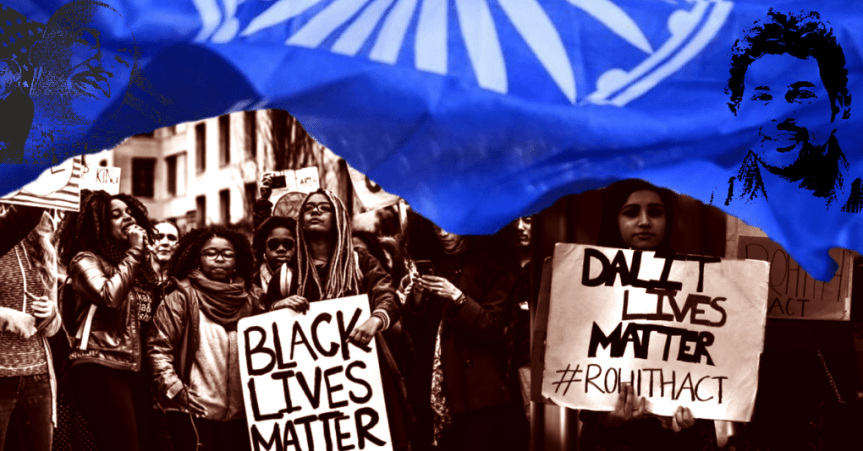
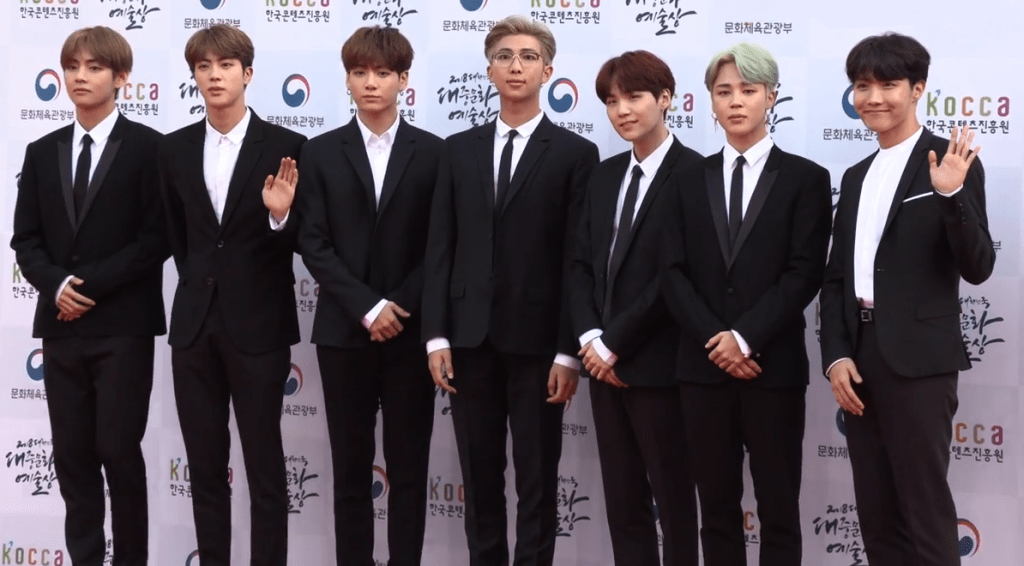
Korean music doesn’t have any one performer, it comprises of numerous individuals actually like BTS has 7 individuals. To interface with more western crowd they keep their gathering name in English and they additionally have some English verses in their tunes. These gathering individuals are prepared for quite a long time in singing, rapping and dancing. They buckle down since youthful age to turn into a part in a K-Pop group. However, online media likewise assumed a significant part in accomplishment of K-Pop and K-Drama. Gangnam style was the primary Korean music to contact the worldwide crowd. It was the first run through when individuals paid attention to Korean music however bunches like BTS, BLACKPINK and EXO have mainstreamed it. Till now BTS has added 3.6 billion dollar to Korean economy. BTS has additionally started a mission with UNICEF called Love Myself mission and they likewise gave 1 million dollars to BLACK LIVES MATTER.

BTS are encouraging the world to #SpeakYourself in their UN speech

Isn’t it’s extraordinary that the music business which was framed to take care of the obligation turned into the greatest music industry on the planet. This is the primary driver of South Korea’s turn of events.

RESOURCES:

Save a ‘GEOLOGICAL HERITAGE’ – Part 1.

Look at the photograph given here. This is The Three Stooges, a bizarre rock formation that can be found in Goblin Valley. There are some exceptionally unique rock formations all over the world.

Vanishing Rocks of Hyderabad:

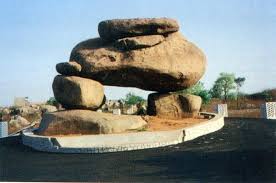
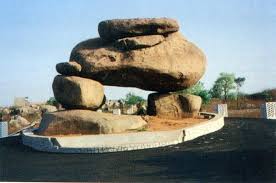
One of the most interesting facets of Hyderabad is the mammoth granite rocks in bewitching poses that capture one’s eye and imagination. Rocks large and small precariously balance on one another to form shapes that mesmerise the mind.These rocks, among the oldest in the world, are Hyderabad’s true heritage. Even the mighty Himalayas at 40-60 million years old are younger than these rocks!

Nature’s Sculptures:

The gigantic boulders inspire creativity and reverence in people, forcing them to look beyond the obvious shapes to create imaginary forms. These rocks seem to strike poses and imitate life-a puppy seated on its hind legs with its front legs raised in the air, a car-shaped formation, flying saucer resting on rocks, four chambers of the heart, and a woman standing with her face to the a woman standing with her face to the breeze; these are just a few shapes that tickle your imagination. It is no wonder then that people have taken to naming certain rocks after the shape they think they resemble or the idea they think they epitomise.

Some of these names have stuck on and the rocks have thus become landmarks in the city. And in some other places, rocks with their symbolic shapes have inspired the devout. Natural openings and cave like structures formed by the rocks have been used as temples by locals. Many people even consider them as symbols of the divine and worship these silent sentinels.

Tortoise Rock

Maintaining ecological balance:

Apart from being a visual treat for viewers, these rocks play an integral role in preserving and nurturing the ecological balance of the region. Lakes and ponds have always formed on adjoining rocky patches. This is a as rocks help natural occurrence create the natural drainage system of the area. Subterranean passages created by these rocks result in the natural flow of rain water to that area, aiding the formation of ponds and lakes and recharging ground water levels.

And where there is green, there are birds and bees. Rocky hills often act as the biodiversity hub for the area. Prickly thick shrubs and dry deciduous forests ensconce the rocks. Along the lakebeds, tall grass grows in wild abandon. Often even medicinal plants and aromatic herbs are found in the area. And hidden in this medley of plants are insects, birds and reptiles. So don’t be surprised if a Baya weaver flies by or a snake wiggles past you, when you are trekking about the rocks. Fauna and flora of varied kinds thrive in rocky eco-systems. Nature is at its best in these spots and here is where people can go to for a whiff of the wild, But today, such spots are disappearing with alarming alacrity. Rocks are being destroyed indiscriminately; the price the city is paying for growth.

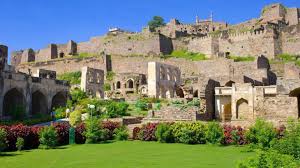
Image Source -google. Golconda fort of hyderabad.

Development at the cost of nature Part1:

It is easy to wonder why someone would destroy rocks that are billions of old. For centuries now these rocks have been the building material for the city. Even the famous Golconda fort of Hyderabad which sits atop a granite hill is made of the very same granite rock. The problem however lies at the speed and magnitude with which these rocks are now disappearing. Just consider the following statistics. The official 2001 census stated the Hyderabad population was around 3.7 million. But today the overflowing buses, traffic jammed streets, and expanding city borders tell a very different story. Today, this natural legacy is giving way to tall residential high-rises and software parks. Hills are being replaced with malls and buildings.
As the massive inflow of population continues, rocks are being quarried round- the-clock to cater to the exponential boom in the construction industry. Large tracts of land have been approved for residential or commercial use, without taking into consideration what actually lies on the land. The rocks are blown down, land is cleared and the hard crystalline rocks are used as construction material. In the past four years itself, vast stretches of hills around the city’s fringes have been turned to rubble or have completely disappeared. If you visit the places where the development is taking place your heart will bleed at the sight of the half quarried, half-eaten mountains…..

to be continued ……….,……..

Gender Pronouns.

Have you ever come across an Instagram/ social media bio, where the account has either she/her, his/him, they/them or he/she/they written and gotten confused as to why people are writing their pronouns on the Instagram page?

A bio or a social media bio typically means information about the person. 

A pronoun is a term that is used instead of a noun or noun phrase. Pronouns refer to either a noun that has already been mentioned or to a noun that does not need to be named specifically. And the addition of pronouns helps not to misgender a person who isn’t gender conforming. 

Source: www.personneltoday.com

Gender is not what you are assigned at birth, rather what you identify with. It refers to you as an individual psychologically, socially and emotionally. 
Using pronouns in social media bios help people with inclusivity. 

As kids, always in our English grammar class, we are taught to assume the gender of the person based on their physical form. But sometimes this assumption leads to be disrespectful and oppressive to people who don’t go by the pronouns assigned due to their appearance. 

As pronouns are connected to gender identity and a way for people to feel like their own person. Hence it’s important to always ask someone their pronouns and continue to call them by their pronouns even if they are not around.

If you are unsure about someone’s pronouns, all you have to do is ask them. And even if you misgender them, apologise and do not belittle and complain as to why you have to call them by their pronouns. Misgendering more often may lead to depression, anxiety and suicidal tendencies. It invalidates their identity. 

For cisgender people, this may feel like stating the obvious at times. But here’s why it’s crucial: It isn’t appropriate for you. And, rather than dominating the conversation, it’s occasionally necessary to employ cis-privilege in a way that really contributes to equality. So, even if adding pronouns to your “Hello, my name is and these are my pronouns.” routine is a little odd at first, but stick with it. You’ll grow accustomed to it. When persons who are not cisgender use pronouns on a daily basis, they will eventually become less noticeable.

It’s worth mentioning though, that some individuals don’t feel comfortable declaring their gender pronouns publicly, and just because you announce yours it does not entitle you to everyone else’s.

Pronouns Dos and Donts:

Do! 

1) Recognise that even cisgender people have pronouns. 

2) Remember that some people go by more than one set of pronouns. Ask people about the pronouns they use. 

3) Peoples pronouns may change regularly, hence it’s necessary to ask.

4) Consider using ways to make the language more gender-inclusive. 

Don’t!

1) Don’t describe to the pronouns are preferred, as it is not a preference. 

2) Don’t say, male pronouns and female pronouns. Pronouns are not necessarily tied to someone’s gender identity, as pronouns are not necessarily tied to someone’s gender identity.

Its is necessary to not misgender a person and be respectful to their pronoun.

———————–

Reference and source:

1)  https://www.thesmujournal.ca/editor/normalizing-pronouns-why-cis-gendered-folks-should-use-personal-pronouns-too

2)https://in.style.yahoo.com/pronouns-bios-mean-why-sensitive-164629025.html

3) https://www.merriam-webster.com/dictionary/pronounce

Biography- Sri Ramakrishna Paramhansa

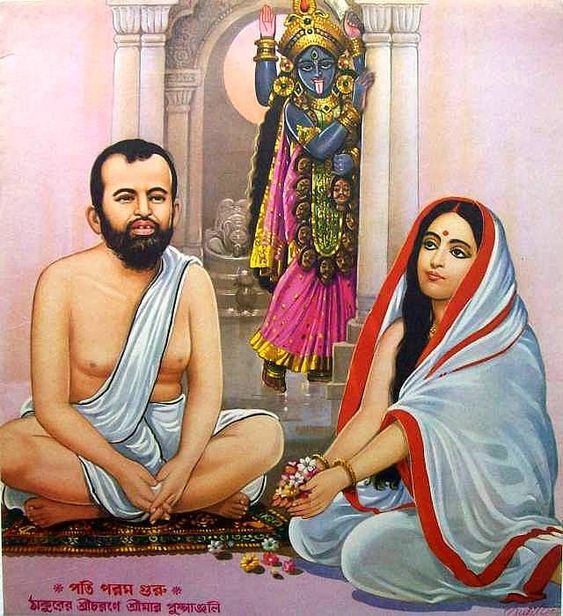
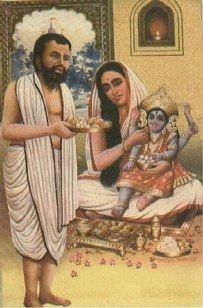
Sri Ramakrishna, the God-man of modern India, was born on 18 February 1836 at Kamarpukur in the Hooghly district in India. His parents Khudiram and Srimati Chandramoni were exceptionally devoted persons and earned the love and respect of the villagers for their charity, truthfulness and kindness. Sri Ramakrishna’s early name was Gadadhar Chattopadhyaya or Gadai and later known as Ramakrishna Paramhansa.  Paramhansa is a title of honor applied to Hindu spiritual teachers who have become enlightened. He learnt some lessons in the village pathshala but he was not very much interested in it. Sri Ramakrishna experienced spiritual ecstasies from a young age and was influenced by several religious traditions, including devotion toward the Goddess Kali, Tantra, Bhakti and Advaita Vedanta. Gadadhar was seven years old when his father died. At the age of sixteen, Gadadhar came to Calcutta (now Kolkata) with his elder brother Ramkumar, who wished his assistance in his priestly duties. At that time a rich widow named Rani Rasmani built a temple for the goddess Kali on the eastern bank of the Ganga at Dakshineswar. Being invited by Rasmani, Ramkumar with his brother Gadadhar came to the sacred temple garden and Gadadhar found greater opportunities to pursue his spiritual practices. In 1855 Ramakrishna was appointed as the priest of Dakshineswar Kali Temple, built by Rani Rashmoni. To Sri Ramakrishna, the image of Kali was not an inert stone, but the Mother herself. Rani Rashmani was greatly attracted to Sri Ramakrishna, for she felt that his strange behaviour was for the fullness of devotion to goddess Kali. Sri Ramakrishna had a catholic spirit from the very beginning and he made no distinction between one form of God in Hinduism to another in Islam or Christianity. Rumours spread to Kamarpukur that Ramakrishna had become unstable as a result of his spiritual practices at Dakshineswar. Ramakrishna’s mother and his elder brother Rameswar decided to get Ramakrishna married, thinking that marriage would be a good steadying influence upon him—by forcing him to accept responsibility and to keep his attention on normal affairs rather than his spiritual practices and visions. Ramakrishna himself mentioned that they could find the bride at the house of Ramchandra Mukherjee in Jayrambati, three miles to the northwest of Kamarpukur. The five-year-old bride, Saradamani Mukhopadhyay (later known as Sarada Devi; she is also considered as an avatar) was found, and the marriage was duly solemnised in 1859. Ramakrishna was twenty-three at this point, but this age difference for marriage was typical for nineteenth-century rural Bengal. They later spent three months together in Kamarpukur. Sarada Devi was fourteen, while Ramakrishna was thirty-two. Ramakrishna became a very influential figure in Sarada’s life, and she became a strong follower of his teachings. After the marriage, Sarada stayed at Jayrambati and joined Ramakrishna in Dakshineswar at the age of eighteen.

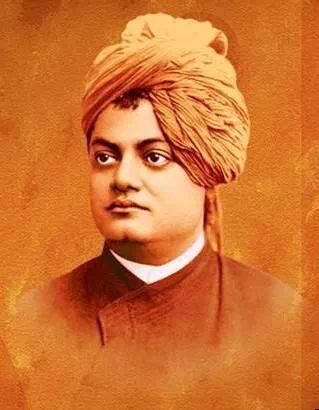
To spread his message to the world around Sri Ramakrishna needs a strong instrument. And such an instrument was found in Narendranath Dutta, his beloved Naren, later known to the world as Swami Vivekananda.

The last days of Sri Ramkrishna were with his devoted disciples. Ramakrishna’s condition gradually worsened, and he died in the early morning hours of 16 August 1886 at the Cossipore garden house. According to his disciples, this was mahasamadhi. After the death of their master, the monastic disciples led by Vivekananda formed a fellowship at a half-ruined house at Baranagar near the river Ganges, with the financial assistance of the householder disciples. This became the first Math or monastery of the disciples who constituted the first Ramakrishna Order.

Love or friendship

Love is an intense feeling towards someone but as a science student I call it just hormonal action.

Friendship is the purest love…

– osho

Friendship is the sweetest form of love. Try to find love and friendship both in same person.

It is an intense affection towards a person or thing. It maybe anything like if a person read the novel and their hobby is to read a novel. By doing this he or she is just forget everything what is happening in this whole world. They can do anything just to read the next part of the book. Their mood is depend on what is going on in that novel.

Like if a person attracted towards someone, then the person sacrifice their own happiness for them.

As parents sacrifice their happiness just for the sake of their child’s happiness. They do everything just to see a smile on our face. that

Mother’s and father’s love is very different as we see mother’s love everyday Like- how can she make good meals for us, she make us feel good when we at our worst.

If we need something we don’t directly go to the Dad, we just say that to the mom and as a postman mom deliver our messages to the Dad. And she convinces the dad for doing that.

Dad don’t show us that how much they love us, how much day care for us. But he do every single thing everyday just to give us some comfort.

I Remember one thing in when my mom was admitted to the hospital, my dad has a bicycle there was a little seat on its rod and where I used to sit and a seat is also on back of the bicycle where my brother was used to sit. Dad take us to the hospital by bicycle and we used to talk all over the way to the hospital and it is best my memory of life.

My Dad was dropping and picking me up after school is my best memories of school time.

Dad work all the day just for us. So that we spend time with mom. And that is another way of showing love.

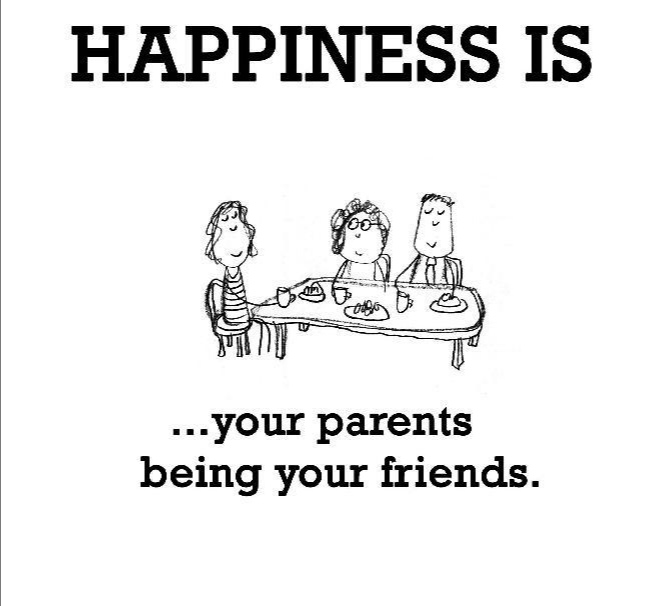
Dad was always doing things for me we talked like friends. And also my mom behave like a friend to me. We always share our feelings, everything. Mom never judge me what I say. She always understands my intentions. She always wants me to do right. She motivates me.

Whenever I think of that time, Nostalgia hit me like a truck.

In today’s world everyone thought love is just only between two couples.

Love has no limitations. It may be started from a little child’s affection towards their toy to a various sacrifices of our parents.

Pure love has sacrifices, trust, affection, care, mutual understanding. There is no space for selfishness.

Friendship is very important in every single relationship.

If there is no friendship in between parent – student, teacher – student, 2 couples or every single relationship then that relationship has to end at last.

Like we observe the relationship between 2 best friends are unbroken. No matter what happens between them their bond always remains same.

So only love is not necessary for a relationship, friendship is more important.

In every relationship, love and friendship both is very important.

Caste Discrimination

Caste discrimination is one of the most exceedingly awful denials of basic freedoms on the planet today. It is minimal perceived and infrequently recognized, and influences in excess of 260 million individuals around the world. Through a hierarchical situation, the task of essential rights among different castes is profoundly inconsistent, with those at the top getting a charge out of most rights combined with least obligations and those at the base performing most obligations combined with no rights. The situation is kept up with through the inflexible implementation of social segregation (an arrangement of social and financial punishments).

Caste discrimination includes enormous infringement of common, political, financial, social and social rights. It is normal banned in nations influenced by it, yet an absence of execution of enactment and caste-inclination inside the equity frameworks to a great extent leave casualties without security.

The rejection of supposed ‘lower caste networks’ by different gatherings in the public eye and the intrinsic underlying disparity in these social connections lead to significant degrees of neediness among influenced populace gatherings. There is little admittance to advantages and improvement measures, and their position by and large blocks contribution in dynamic and significant investment openly and common life.India’s caste framework is maybe the world’s longest enduring social progressive system. A characterizing highlight of Hinduism, caste includes an unpredictable requesting of gatherings of people based on custom immaculateness. An individual is viewed as an individual from the caste into which the person in question is conceived and stays inside that caste til’ the very end, albeit the specific positioning of that caste might differ among areas and over the long run. Contrasts in status are generally advocated by the strict regulation of karma, a conviction that one’s place in life is controlled by one’s deeds in past lifetimes.

Conventional grant has portrayed this over 2,000-year-old framework inside the setting of the four head varnas, or enormous caste classes. Arranged by priority these are the Brahmins (ministers and educators), the Ksyatriyas (rulers and officers), the Vaisyas (dealers and merchants), and the Shudras (workers and craftsmans). A fifth classification falls outside the varna framework and comprises of those known as “untouchables” or Dalits; they are regularly appointed undertakings also customarily dirtying to justify incorporation inside the customary varna system.7 Almost indistinguishable designs are likewise noticeable in Nepal.

Regardless of its established abrogation in 1950, the act of “distance”- the inconvenience of social incapacities on people by reason of birth into a specific caste-stays a lot of a piece of rustic India. Addressing more than one-6th of India’s populace or exactly 160 million individuals Dalits suffer close to finish social segregation. “Untouchables” may not go too far isolating their piece of the town from that involved by higher castes. They may not utilize similar wells, visit similar sanctuaries, or drink from similar cups in tea slows down. Dalit youngsters are regularly made to sit at the rear of study halls. In what has been called India’s “covered up politically-sanctioned racial segregation,” whole towns in numerous Indian states remain totally isolated by caste.

“Distance” is supported by state portion of assets and offices; separate offices are accommodated separate caste-based areas. Dalits frequently get the less fortunate of the two, in the event that they get any whatsoever. In numerous towns, the state organization introduces power, disinfection offices, and water siphons in the upper-caste segment, however fails to do likewise in the adjoining, isolated Dalit region. Fundamental conveniences, for example, water taps and wells are additionally isolated, and clinical offices and the better, covered rooftop houses exist solely in the upper-caste province. As uncovered by the contextual analysis underneath on the tremor in Gujarat, these equivalent practices remain constant even in the midst of extraordinary cataclysmic event.

4 K-Pop Group Famous in the World

Everyone  have heard about K-Pop culture .It’s origin is South Korea . K-Pop means Korean Pop Culture . A group of young girls & boys are trained & become professional in dancing & singing .They then together release song videos with their amazing hip-hop dance .This K-Pop culture is now very famous  all around the world . These K-Pop bands are internationally very acknowledged .Let’s talk about some of them —–

1. BTS : It is the most internationally famous K-Pop band .It is a 7 boys band group .The other name of BTS is Bangtan Boys .Their formation time is 2010 & they first debuted in 2013 .They work under Big Hit Entertainment company of South Korea .Name of the & boys are – V or, Kim Tea-hyung (He is a vocals ) ,Jeon Jungkook (He is the main vocals) , Park Ji-min (he is the lead vocalist) , Kim Seok-jin (he is a vocals) , Suga or ,Min Yoon-gi (he is a rapper) , RM or, Kim Nam-joon (he is also a rapper) , J-Hope or, Jung Ho-seok ( he is also a rapper) . Their fandom circle is called BTS Army . They have achieve numerous awards ,recognition , credits for their works from all around the world . Their song Dynamite had nominated for Grammy award . Some of their album are — Youth ,Wake up ,Love yourself , The most beautiful moment in life  and many others .

BTS

2. Blackpink : It is one of the most internationally recognized girl K-Pop band group in Korea .There are 4 girls in this Group .Their name are  — Jennie or, Kim Jennie (she is the lead vocalist 7 also a rapper) , Lisa or, Lalisa Manoban (She is the main dancer) ,Rose or, Park Roseanne  (she is the main vocals) , Jisoo or, Kim Ji-soo (she is the lead vocalist) . They work under YG Entertainment in Korea .They first debuted in the August of the year of 2016 . They have also got many awards . Some of their album are  – Kill this love , square up  and many more .

BLACKPINK

3. EXO : It is also one of the famous boys band of Korea which is globally recognizes .It works under SM Entertainment . Their group was formed in 2011 & they first debuted in 2012 . At first they were a 12 members group including 4 chinese members .But after 2016, 3 chinese members (Kris ,Luhan ,Tao) have left the group & now they are a & membered boys group .Name of these 9 members —  Kai or, Kim Jong-in (he is vocals & a very good dancer) , D.O. or, Doh Kyung-soo (he is the main vocals & also an actor) ,Beakhyun or, Byun Baek-hyun (He is the main vocals & an actor) , Chanyeol or, Park Chan-yeol (he is a vocals) ,Sehun or, Oh Se-hun (he is the main rapper) ,Chen or, Kim Jong-dae (he is the main vocals) ,Suho or, Kim Jun-myeon (he is the group leader &  the lead vocalist) ,Lay or, Zhang Lay (he is a vocal & a Chinese actor) ,Xiumin or, Kim Min-seok (he is a lead vocalist) .They also got numerous awards .Some of their album are – Wolf ,Love shot ,XOXO ,Exodus ,Tempo ,Obsession & many others .Currently some of the members are serving in Military (like Suho ,Beckhyun ,Chanyeol) , D.O. & Xiumin had already finished their military training & remaining members will be enlisted in future .

EXO (Except Lay)(All Korean members)
EXO (Current 9 members)
EXO (Total 12 members in the past )

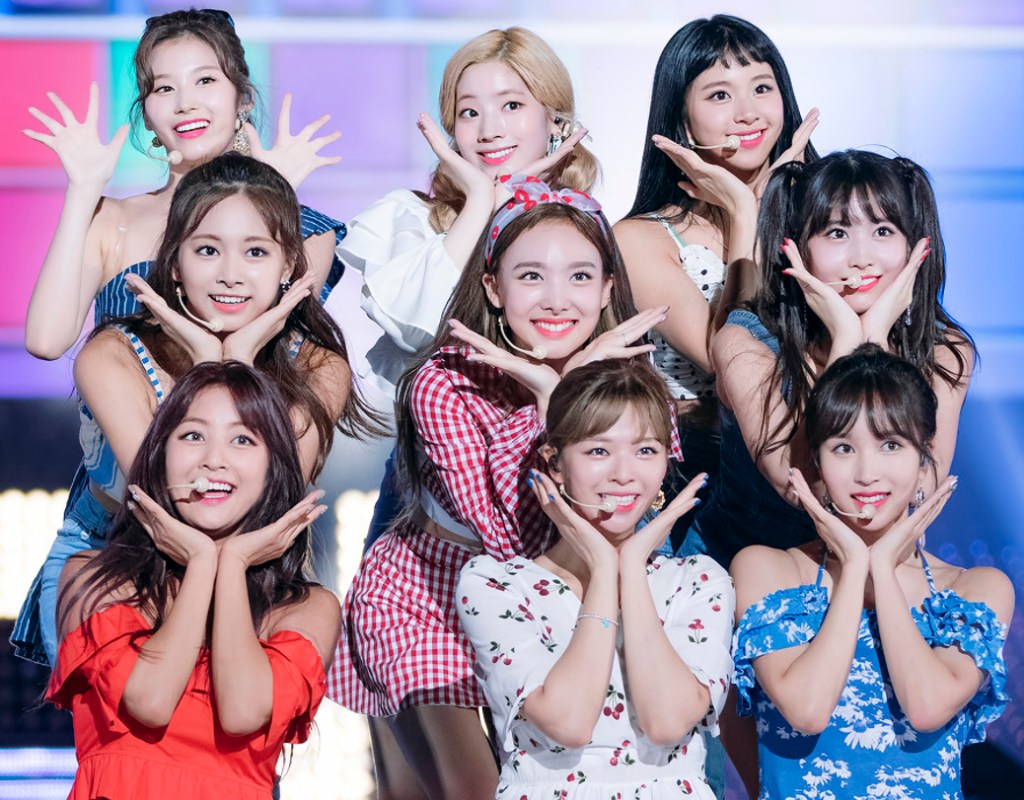
4. TWICE : It is also a very famous girls group in Korea .This group works under JYP Entertainment .They debuted in the year of 2015  .They are 9 girls member . Their name – Sana (She is a vocals) ,Tzuyu ,Momo (she is the main dancer) ,Nayeon (she is the vocals) ,Jeongyeon (she is the lead vocalist) ,Mina (she is the vocals) ,Jihyo (she is the main vocals) ,Dahyun (she is the main rapper) ,Chaeyoung (she is the main rapper) . They also have got many awards .Some of their album are — Perfect World , Merry & Happy ,Taste of Love ,What is love and many more .

TWICE
TWICE

THE SOCIAL NOVEL

The Social Novel may be defined as a fictional narrative that focuses on the varieties of human behavior in society and the way in which the characters reflect or contradict the values of that society.

In this genre, the characters are seen in the background of their social milieu and culture. The inner life of the characters find the place in such novels, greater importance is given to their conflicts and collisions with classes and believes. The essence of a social novel is the conflict between the individual and the society that surrounds him based on different concepts of values.

Two Groups of Social Novel:

Social novels can be divided into two groups.

  • The novel of Manners.
  • The novel of Civilization.

The novel of Manners:

The novel of manners is concerned with social behavior and its correctness in a given society. The concept of behavior achieves some grant moral effect as we find in the novels of Jane Austen “Pride and Prejudice” and Emma are the best examples. The novelist is preoccupied with the niceties of social conduct and often, commerce by the employment of Irony and satire exposes undesirable passions like arrogance, hypocrisy, and snobbery. Henry James’ novel ‘The ambassador’ is a successful social novel of manners. It depicts with great humor and delicacy the reaction of different American types to a European environment. Evelyn Waugh’s “A handful of dust” is a social novel of manners that presents The vision of sin and guilt in the modern world. The social novel of manners has a satiric structure as we find in Jane Austen. Even modern novelists make use of the same formula. For instance, Philip Roth satirizes the self-protective attitude of the modern middle class in his novel ‘Goodbye Columbus’.

The novel of Civilization:

The social novel of Civilization takes a comprehensive view of the whole Civilization. The best examples are Charles Dickens’s “Little Dorrit” and Tolstoy’s “War and Peace” the novel Civilization aims at revealing the meanings, principles, and social styles that govern people’s lives. The action of individuals is examined in the light of the Civilization that surrounds them. In “Little Dorrit” Dickens explores the English society dominated by the corrupt business class. In the novel Civilization characters or viewed as part of the developing environment. The splendor or shame of their past is exploding. The significance of the character’s behavior becomes clear only in the background of the Civilization which he represents. In “War and Peace” Tolstoy presents the different stages in the development of each character. The novel Civilization, sometimes, depicts the different stages in the growth of the writer’s consciousness as in Marcel Proust’s ‘Remembrance of Things Past’. Sometimes it uses our family story as in Faulkner’s ‘Sartoris’ or Galsworthy’s ‘Forsyte Saga’.

The Social Novel is a technique in literature. In which the authors express and illustrate society, ethics, etiquette, and protocols. Nowadays, various authors are following this technique in their writings. Especially, to illustrate the Epic society, Dynasty, and fictional Mythologies. This literary form serves as a device to illustrate society.

The Detective Novels

The Gothic Novels

COLD WAR

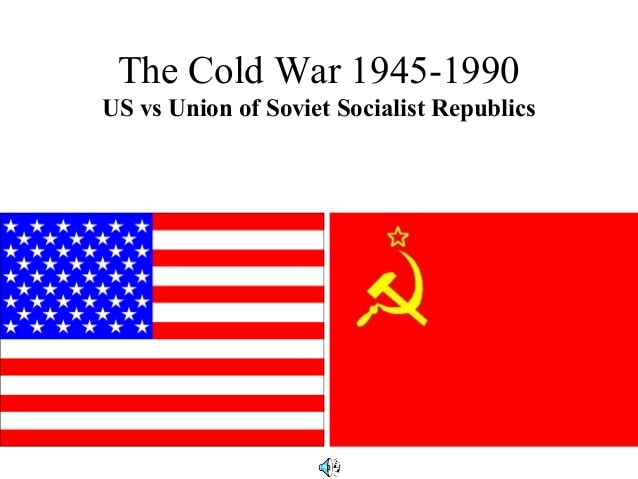
The Cold War is the term used to describe the extreme political and friendliness that existed from the end of world war II to the late eighties between groups of Communist and non communist countries. On one side with the USSR and its communist allies known as the Eastern bloc and walked and on the other side by the western powers of the USA and its allies.

There was mutual suspicion distressed and misunderstanding between two blocs. The USA and its allies felt that the USSR’s game of spreading communism throughout the world threatened their security. The soviets on the other hand accused the USA of practicing imperialism and after attempting to stop revolutionary activities in other Nations. Each bloc had its own political ideas which were diametrically opposed to the other.

THE BEGINNING OF COLD WAR:

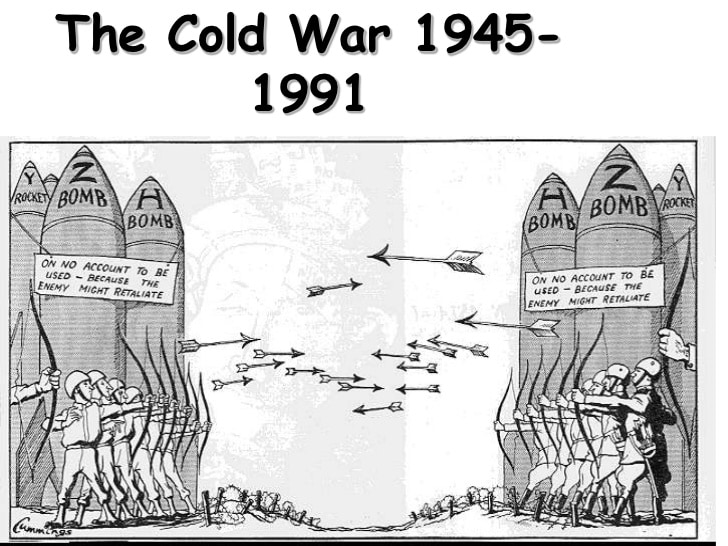
Soon after world War II the two great blocs were formed and the cold war began. It intensified during the 1940’s and 1950’s and reached its peak in the 1960’s. World peace was severely threatened the arms race begin a fresh with both sides experimenting with nuclear weapons at the same time there was a space race between the USA and USSR. The world was in astonishment as the Americans and the soviets try to outdo each other in conquering space. By the seventies both sides begin to realise the dangers involved in recklessly amazing powerful weapons that could wipe out large cities and populations in minutes. In the eighties many efforts were made to improve relations between the two superpowers.

HISTORIANS ABOUT THE COLD WAR:

Most historians agree that the cold war begin after the Yalta conference. The Big Three-President Franklin D Roosevelt of the USA, Premier Joseph Stalin of the USSR and the Prime Minister Winston Churchill of Great Britain met at the Yalta (Ukraine) in February in 1945 to plan for the peace that would follow the war. Stalin would not co-operate with the other leaders regarding the peacetime program. Great Britain join the USA in criticizing the USSR plan to spread communism in Eastern Europe.

IRON CURTAIN

During 1945 and 1946 the USSR broke off all contacts between west and the occupied territories of Eastern Europe in March 1946 Churchill want that an “Iron Curtain” had descended across the continent. The Berlin wall became a symbol of the confrontation between the two blocs.

NUCLEAR WEAPON:

In the 60 the world came dangerously close to a nuclear war. this time both block started to practice nuclear weapon and they started to treat each other with weapons many efforts made to improve relationship between both two superpowers. The cold war took a fresh turn in the eighties when Mikhail Gorbachev took over the leadership of the USSR. Glasnost ( openness) and Perestroika (reconstructio) were the terms which came to be associated with the campaign of Gobrachev to reform the economic and political missionary of the USSR.

GREAT BRITAIN:

Great Britain as one of the country’s belonging to The Western bloc, had to support the USA in any action that it took against the USSR. Britain had to pay a high price for the cold war she had to face every high military expenditure and there was uneasiness in the minds of the British that they were playing second fiddle to the USA. In the seventies Britain’s role as washington’s partner was reduced due to her economic deterioration.

MARGARET THATCHER:

Margaret Thatcher became the prime minister in 1979 and she paved the way for an economic revival and sought to avoid any public conflict with the USA. Through her personal friendship with President Reagan of the USA she was able to make Britain’s position more respectable. Up to 1982 to 83 Thatcher continue to repeat the anti-Soviet rhetoric of the Reagan administration. she was the “Iron Lady” in the USSR after she was re-elected in 1983 she changed her approach. The British government began to establish contact with the Warsaw pact countries. Thatcher paid a visit to Hungary and later she went to Moscow.

The Warsaw pact was a treaty signed by the communist nations of Europe that were under Soviet military command. They were Albania, Bulgaria, Czechoslovakia, East Germany, Hungary, Poland and Romania.

FRESH START BY THATCHER:

In 1984 she made a visit to the USA and the secured the Camp David pacts which said that the USA would not seek nuclear superiority over the Soviet member that played a major role in the negotiations leading to the signing of this treaty. President Reagan spoke of a fresh start in East West relationships.

BREAKING OF BERLIN WALL:

The breaking of the Berlin wall in 1989 was a symbolic act which site signalled the end of bitterness between the power blocs. The cold war become a thing of the past with the disintegration of the Soviet Union in 1991.

THE REAL STORY OF THE ANCIENT OLYMPIC GAMES

A short history of the winter olympic games | Sutori

The Olympic Games, which originated in ancient Greece as many as 3,000 years ago, were revived in the late 19th century and have become the world’s preeminent sporting competition. From the 8th century B.C. to the 4th century A.D., the Games were held every four years in Olympia, located in the western Peloponnese peninsula, in honor of the god Zeus. The first modern Olympics took place in 1896 in Athens, and featured 280 participants from 12 nations, competing in 43 events. Since 1994, the Summer and Winter Olympic Games have been held separately and have alternated every two years. The 2020 Summer Olympics, delayed one year because of the COVID-19 pandemic, will be held from July 23 to August 8, 2021 in Tokyo, Japan.

The Olympics Begin in Ancient Greece

The first written records of the ancient Olympic Games date to 776 B.C., when a cook named Coroebus won the only event—a 192-meter footrace called the stade (the origin of the modern “stadium”)—to become the first Olympic champion. However, it is generally believed that the Games had been going on for many years by that time. Legend has it that Heracles (the Roman Hercules), son of Zeus and the mortal woman Alcmene, founded the Games, which by the end of the 6th century B.C had become the most famous of all Greek sporting festivals. 

The ancient Olympics were held every four years between August 6 and September 19 during a religious festival honoring Zeus. The Games were named for their location at Olympia, a sacred site located near the western coast of the Peloponnese peninsula in southern Greece. Their influence was so great that ancient historians began to measure time by the four-year increments in between Olympic Games, which were known as Olympiads.

After 13 Olympiads, two more races joined the stade as Olympic events: the diaulos (roughly equal to today’s 400-meter race), and the dolichos (a longer-distance race, possibly comparable to the 1,500-meter or 5,000-meter event). The pentathlon (consisting of five events: a foot race, a long jump, discus and javelin throws and a wrestling match) was introduced in 708 B.C., boxing in 688 B.C. and chariot racing in 680 B.C. In 648 B.C., pankration, a combination of boxing and wrestling with virtually no rules, debuted as an Olympic event. Participation in the ancient Olympic Games was initially limited to freeborn male citizens of Greece; there were no women’s events, and married women were prohibited from attending the competition.

Tokyo Olympic Torch to be powered by hydrogen

Decline and Revival of the Olympic Tradition

After the Roman Empire conquered Greece in the mid-2nd century B.C., the Games continued, but their standards and quality declined. In one notorious example from A.D. 67, the decadent Emperor Nero entered an Olympic chariot race, only to disgrace himself by declaring himself the winner even after he fell off his chariot during the event. In A.D. 393, Emperor Theodosius I, a Christian, called for a ban on all “pagan” festivals, ending the ancient Olympic tradition after nearly 12 centuries.

It would be another 1,500 years before the Games would rise again, largely thanks to the efforts of Baron Pierre de Coubertin (1863-1937) of France. Dedicated to the promotion of physical education, the young baron became inspired by the idea of creating a modern Olympic Games after visiting the ancient Olympic site. In November 1892, at a meeting of the Union des Sports Athlétiques in Paris, Coubertin proposed the idea of reviving the Olympics as an international athletic competition held every four years. Two years later, he got the approval he needed to found the International Olympic Committee (IOC), which would become the governing body of the modern Olympic Games.

The Olympics Through the Years

The first modern Olympics were held in Athens, Greece, in 1896. In the opening ceremony, King Georgios I and a crowd of 60,000 spectators welcomed 280 participants from 12 nations (all male), who would compete in 43 events, including track and field, gymnastics, swimming, wrestling, cycling, tennis, weightlifting, shooting and fencing. All subsequent Olympiads have been numbered even when no Games take place (as in 1916, during World War I, and in 1940 and 1944, during World War II). The official symbol of the modern Games is five interlocking colored rings, representing the continents of North and South America, Asia, Africa, Europe and Australia. The Olympic flag, featuring this symbol on a white background, flew for the first time at the Antwerp Games in 1920.

The Olympics truly took off as an international sporting event after 1924, when the VIII Games were held in Paris. Some 3,000 athletes (with more than 100 women among them) from 44 nations competed that year, and for the first time the Games featured a closing ceremony. The Winter Olympics debuted that year, including such events as figure skating, ice hockey, bobsledding and the biathlon. Eighty years later, when the 2004 Summer Olympics returned to Athens for the first time in more than a century, nearly 11,000 athletes from a record 201 countries competed. In a gesture that joined both ancient and modern Olympic traditions, the shotput competition that year was held at the site of the classical Games in Olympia.