Places in India that turn beautifully green during Monsoons.

Monsoons not only give new life to nature, but also drape the surroundings in lively greens. While those used to city life might be unaware of such a thing, India boasts of places that turn lush green during the rainy season. If you are also interested to visit such places, here’s a list of places that turn beautifully green during the monsoons.

Top stunning places for your monsoon wishlist.


Cherrapunji, Meghalaya
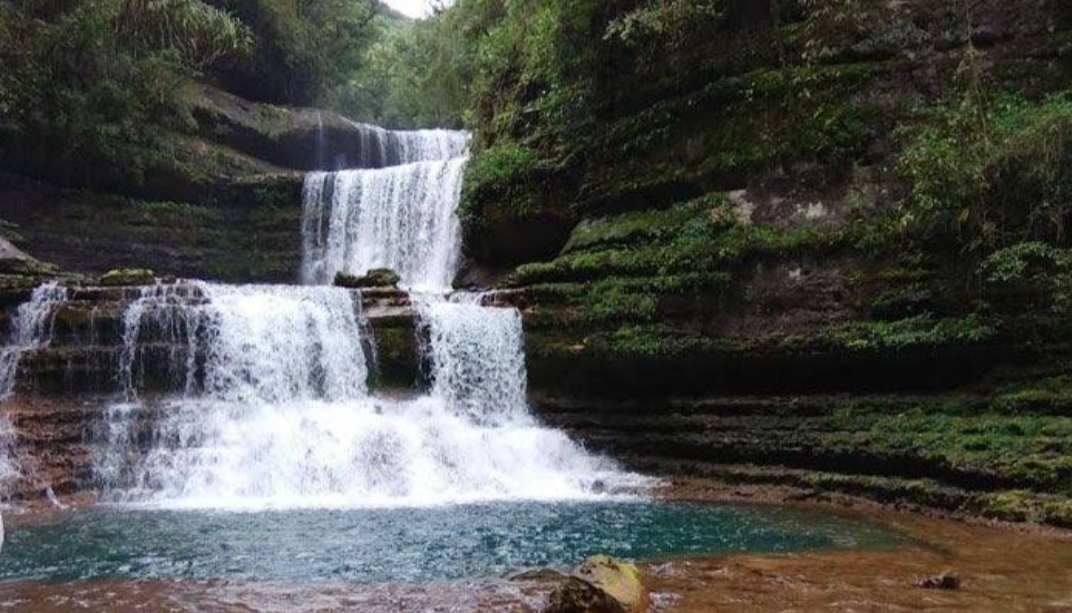
Cherrapunji, being the second wettest place on Earth, boasts of pleasant weather throughout the year. When here, you might witness rains coming in with such velocity that you will be drenched in no time. And although it receives a huge amount of rainfall, the beauty of this place is that it does not get flooded. In fact, the place turns livelier during the rainy season, with sounds of chirping and humming of birds and insects, along with the thundering sound of rivers flowing at the bottom of the valley.


Chikmagalur, Karnataka
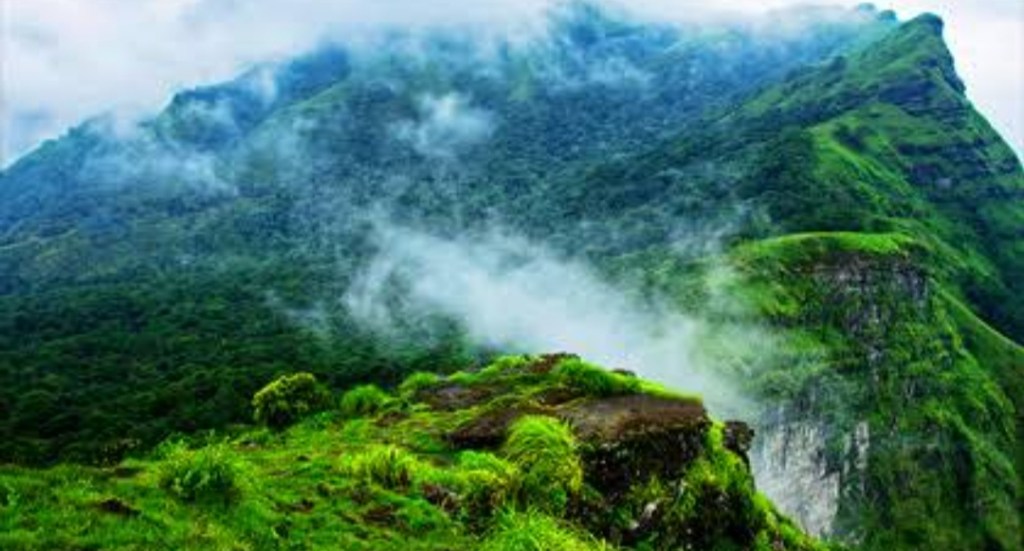
Chikmagalur is blessed with many attractions that turn magical during the monsoons. Sitting in the lap of Western Ghats, it is one of the places that you will make you crave for more. During this time, you can enjoy a drive to Charmadi Ghat near Chikmagalur; the drive will take you through the Western Ghats, home to many gorgeous waterfalls. Further, the spot is also dotted with tall mountains, vast tropical rain forests, and green valleys, all of which turn alive during the monsoons. You need to visit this spot during this time to believe it.

Bhandardara, Maharashtra
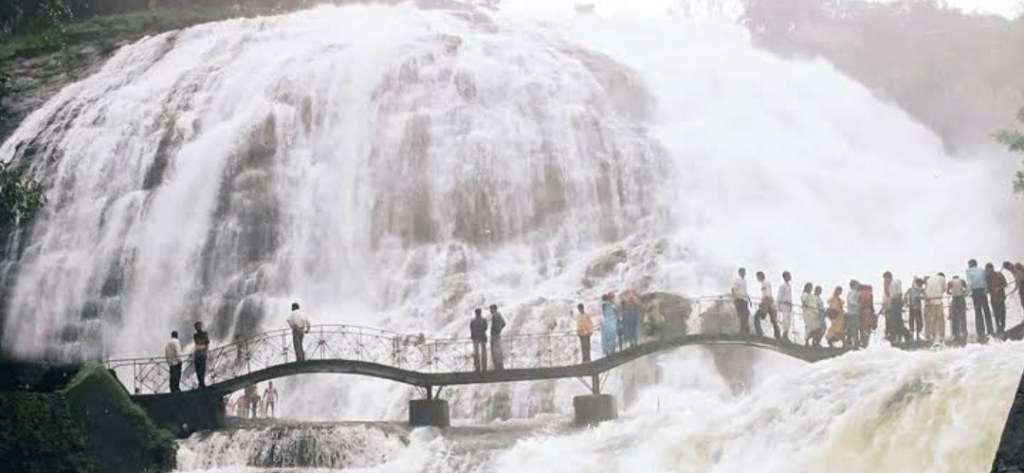
Monsoon is a very pleasant time in Bhandardara, as the Randha Falls and streams and lakes get drenched in monsoon rains. The landscape turns fresh, dewy, and green, making it a lovely spot to visit during this time. Further, Bhandardara being situated in the Sahyadri Mountains of the Western Ghats, it also turns into a haven for hikers and trekkers in and around Maharashtra. However, be sure to avoid the trails that turn slippery during the rains.

Mussoorie, Uttarakhand
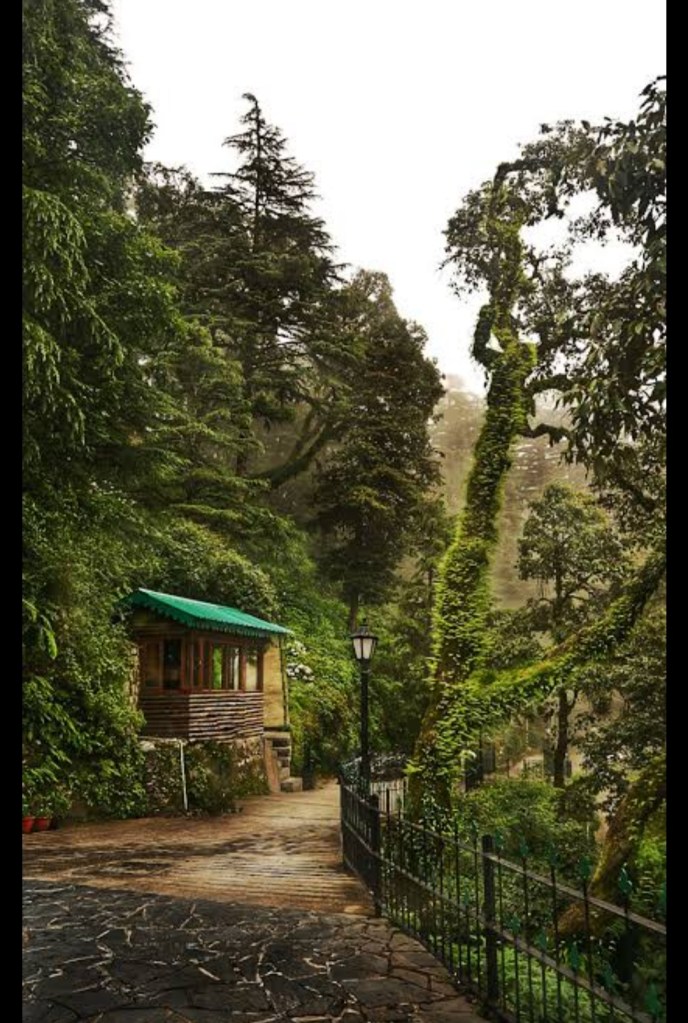
During monsoons, Mussoorie turns greener than ever, and makes rains the best time to visit. The crowd too gets thinner at this time as compared to summers and winters. If you visit the Queen of Hills during the rainy season, you get the opportunity to witness the dreamlike setting of monsoon that brings out the best of Mussoorie. The beautiful landscapes, serene ambience, make this spot a must ‘green getaway’ during the rainy season.


Banswara, Rajasthan
Also known as the City of Hundred Islands, it’s a paradise of a place to visit during the monsoons. It got its name from the bans or bamboo trees that once grew in abundance here. Lush green hillocks, scenic surroundings, the presence of youthful lakes and rivers, make this spot so gorgeous that you will forget that you are in Rajasthan. When here, visit the lake banks and Mahi river dam that turn stunning during the rains, thereby making it a dreamy monsoon destination.
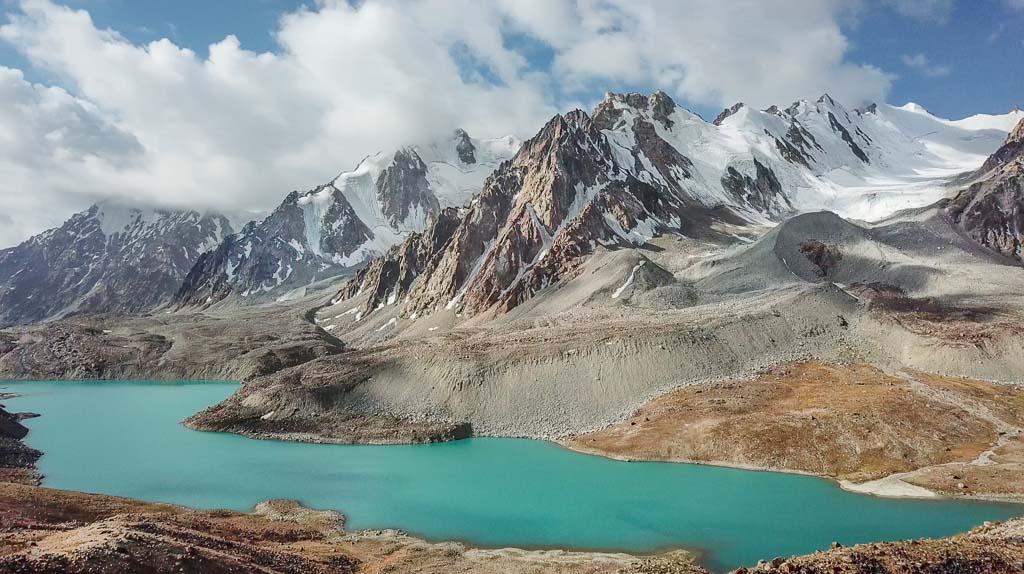
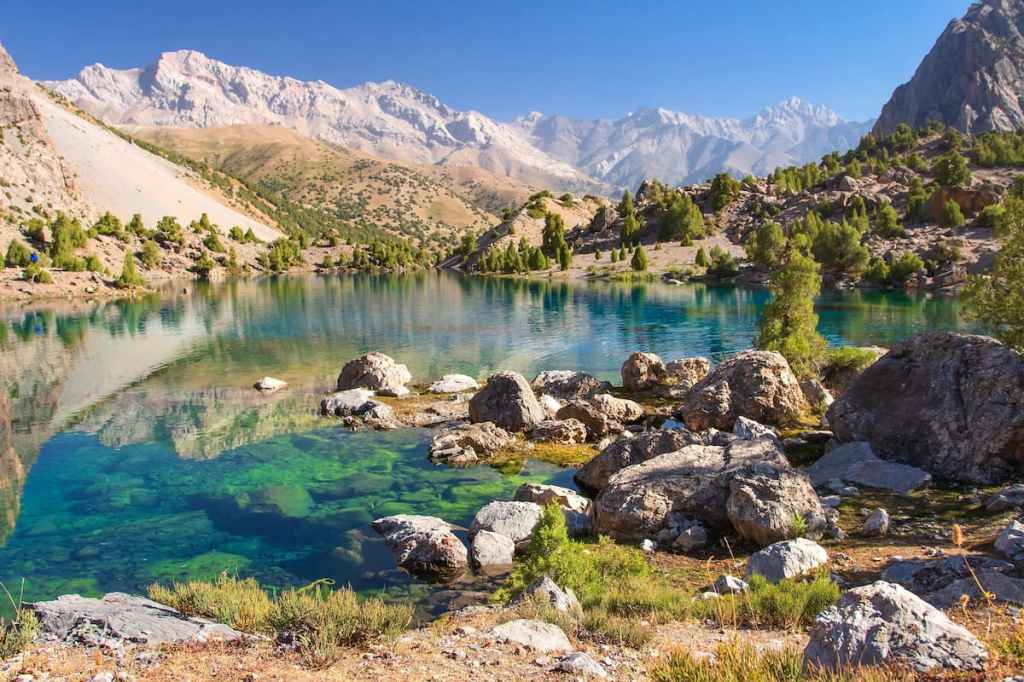
The Surreality of the Pamirs

Amongst the World’s highest ranges, the majestic Pamir Mountains are situated between Central Asia, South and East Asia. They are located at the junction of the Himalayas with the Karakoram, Hindu Kush and the Tian Shan ranges.

Geography

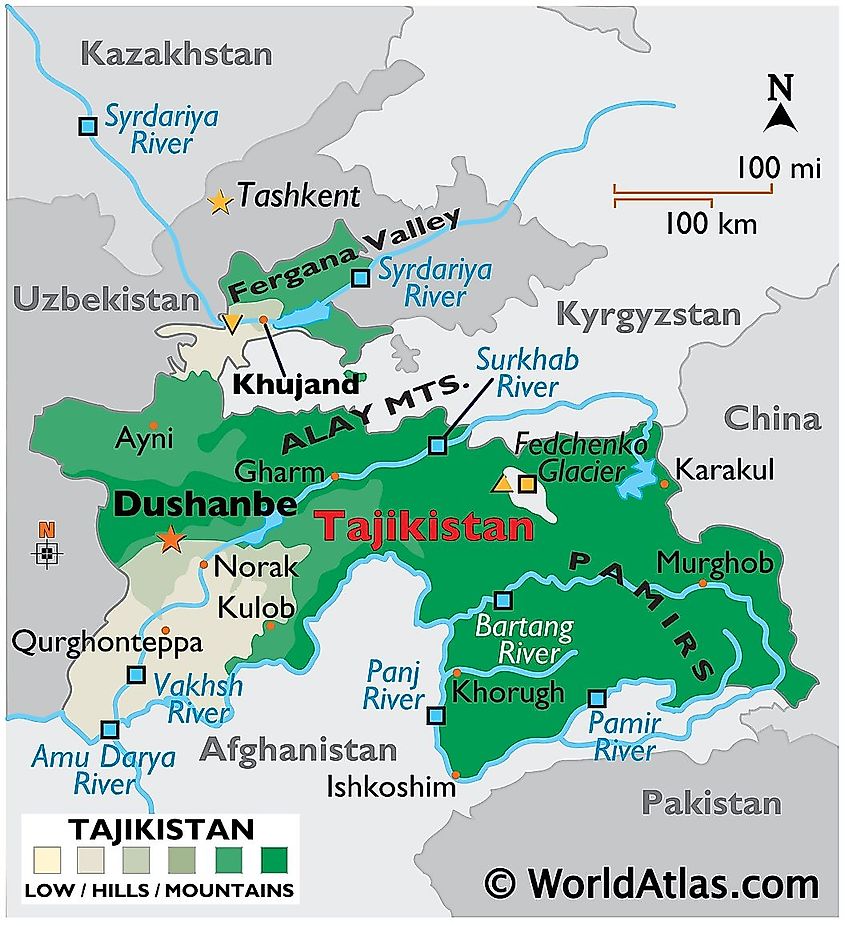
The lie mainly in the Gorno-Badakshan autonomous region of Tajikistan. The connect the Tian Shan mountains to the North, along the Alay valley of Kyrgyzstan. To the south, they border the Hindu Kush mountains along Afghanistan’s famous anomaly of a province, the Wakhan corridor. To the east, they extend to the range that includes China’s Kongur Tagh, the Pamir’s highest point,  separated by the Yarkand valley from the Kunlun Mountains. The Panj and the Pamir are the major rivers that flow through the ranges.

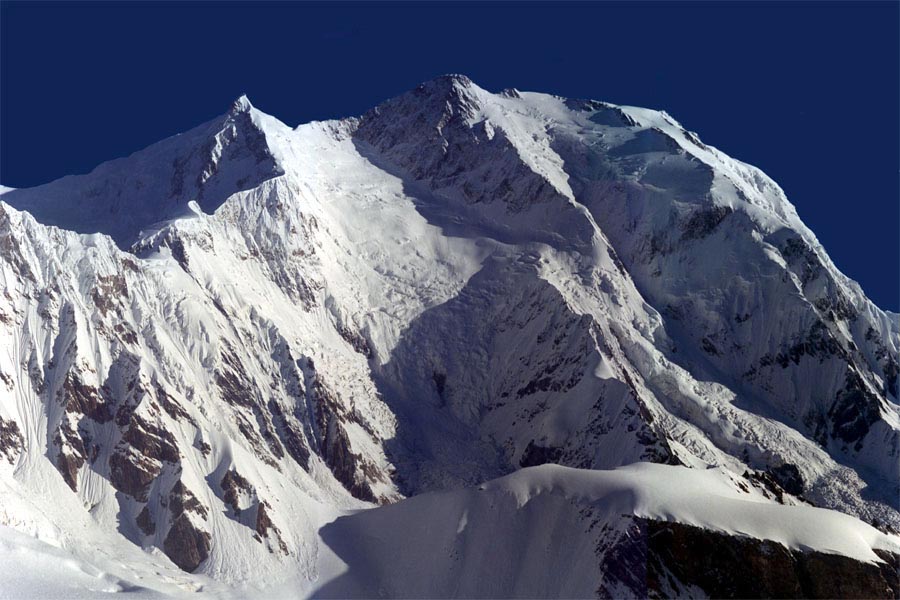
The three highest mountains in the Pamirs core are the Ismoil Somoni (known from 1932 to 1962 as Stalin Peak, and from 1962 to 1998 as Communism Peak), 7,495 m (24,590 ft), Ibn Sina (still unofficially known as Lenin Peak), 7,134 m (23,406 ft); and Korzhenevskaya ,7,105 m (23,310 ft). Kongur Tagh lies in China in the region known as the ‘Eastern Pamirs’.

There are many glaciers present in the ranges. The 77 km long Fedchenko Glacier is the longest in the former USSR and the longest outside the Polar regions. The majestic lake Karakul is located in the nearby region.

Climate

The ranges are covered in snow throughout the year and has mainly alpine climate, the Pamirs are famous for having long and bitterly cold winters, and short, cool summers. Annual rainfall is about 130 mm (5 in), which supports grasslands but very few types of trees.

History

Historically, the Pamir Mountains were considered a strategic trade route between Kashgar(Xinjiang, China) and Kokand(Uzbekistan) on the legendary Silk Road, a prehistoric route, and had been subject to numerous territorial conquests. The Northern Silk Road connected the ancient Chinese capital of Xi’an over the Pamir Mountains towards the west to emerge in Kashgar before linking to ancient Parthia.

Potential

The region has massive tourism potential and many hiking enthusiasts, travelers, mountaineers and adventure seekers do visit this massive region. The region’s importance will only grow further due its unique strategic location.

https://uncorneredmarket.com/pamir-mountains-beginners-guide/#langar

https://www.worldatlas.com/articles/pamir-mountains-natural-wonders-of-asia.html

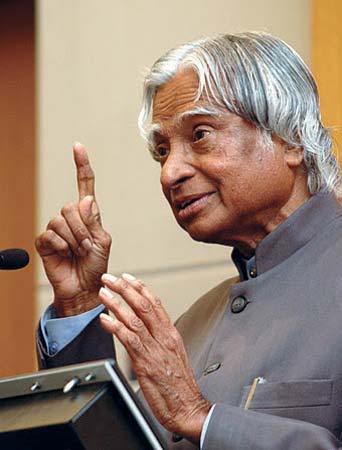
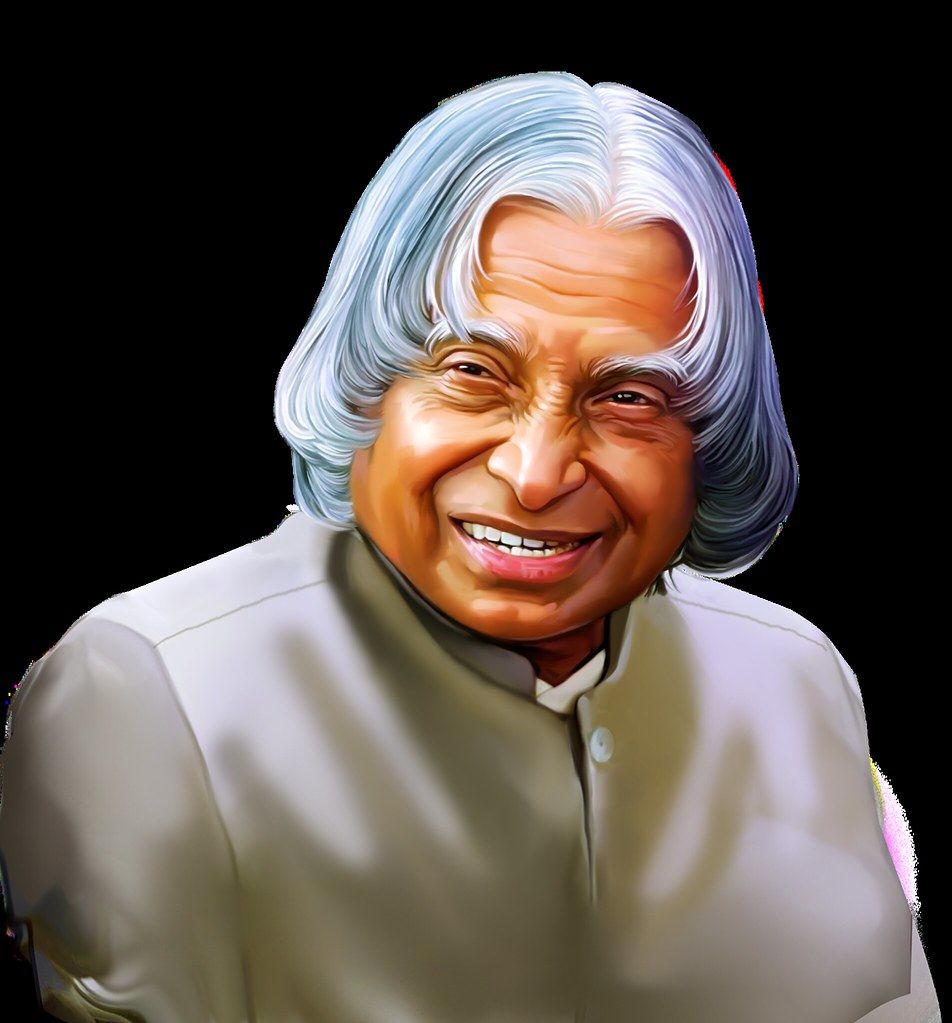
APJ ABDUL KALAM

Dr APJ Abdul Kalam was a scientist who later became the 11th President of India and served the country from 2002 to 2007.

He was the most respected person in the country, as he contributed a lot to the country as a scientist and a president.

His contribution to the Indian Space Research Organization is unforgettable.

There were many projects under his leadership such as Rohini-1, Project Devil and the launch of Project Valent, missiles (under Mission Agni and Prithvi), etc.

For his great contribution in increasing India’s nuclear power, he is popularly known as “Missile Man of India”. He has been awarded the highest civilian awards for his dedicated work.

After completing his service to the Government of India as President, he served the country as a visiting professor at various valuable institutions and universities.

HIS CAREER AND CONTRIBUTION:

He was born on 15 October 1931 to Zainuldeben and Aashiyamma. His family’s financial situation was a bit bad, so he started supporting his family financially at an early age.

He started earning money to support his family but never gave up his education.

He completed his graduation from Madras Institute of Technology in 1954 from St. Joseph’s College, Tiruchirapalli and Aerospace Engineering.

After completing his graduation, he joined the Aeronautical Development Foundation of the Defense Research and Development Organization (DRDO) as a leading scientist.

Soon he moved to the Indian Space Research Organization as the Project Director of India’s first indigenous satellite launch vehicle.

He also served as the Chief Executive of the Integrated Guided Missile Development Program, which is involved in the simultaneous development of missiles.

He had also become the Chief Scientific Adviser of the Prime Minister and Secretary of the Defense Research and Development Organization from the year 1992 to 1999.

He was called the “Missile Man of India” after his successful contribution as the Chief Project Coordinator for Pokhran II nuclear tests.

Pilpantri: a model of environmentalism and feminism

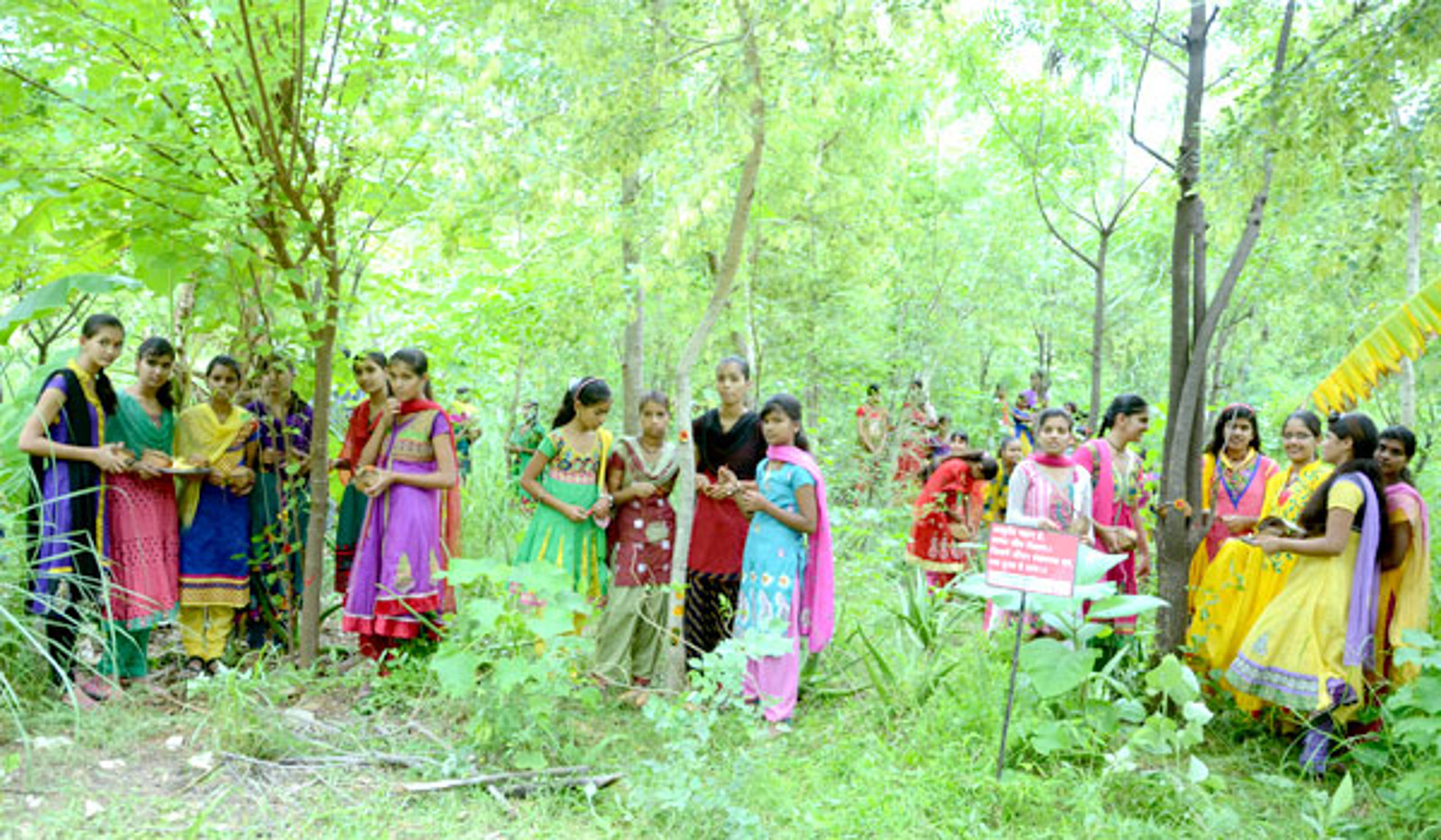
Pilpantri, a village with a population of 8000 , located in Rajasmand district of Rajasthan has been a matter of pride for the entire nation. It is the perfect example of how the cycle of change starts from one person itself. This small village has been attracting attention from all over the world due to its efforts of saving the environment and promoting the girl child birth and education. Now, feminism and Rajasthan in one sentence may be shocking to some as Rajasthan has a tanned image for female infanticide, child marriage and is considered to be one of the least progressive state for females. However, times are changing. Pilpantri, itself being an example of this change which has made it a role model of eco feminism.
This village plants 111 trees for every single girl child being born there. The number of trees being “111” for every girl child has a different story behind it. India is a land of traditions which is what makes us unique. It is a tradition in India that on every auspicious occasion a donation of 101, 111, 1100 or the similar numbers being made ,which is termed as “shagun” in Indian terms. The traditions when used in an innovative way may prove extremely beneficial for the present times. The plantation of such a huge number for every girl child born increases the green cover around the village protecting the people there from the pollution and its aftermath, which is one of the biggest problems in India. The saying “Nature has solution to every problem provided you regard it well” holds true.

History of the plantation drive

In 2005, when Shyam Sunder Paliwal had taken over as the village sarpanch, the entire area surrounded by hills was denuded for mining. The district of Rajasmand is known for marble block mining and is the largest producer of marble in the entire country. Mining leads to the loss of vegetation and invites several problems in the mined areas such as floods, water logging, soil erosion as the natural protectors of environment i.e. the trees are sacrificed in mining and no or least attempt is made to restore them.

Two years later, when Kiran , Paliwal’s 17 year old darling daughter died due to dehydration, he decided to honor her by planting a tree in her name on the village entrance. He then thought of implying this scheme for the birth of every daughter in the village . Not only to celebrate the birth of a girl (which is a very rare practice in India) are trees planted but also to commemorate the lives of those who died. The village plants 11 trees in the memory of every person that dies here.

Pilpantri as a model of feminism

In India, where patriarchy has a strong hold, females are neglected since birth and are seen only as an institution to carry on the generations forward. The birth of the female becomes a matter of shame for the family while some starts to worry about the dowry of a new born girl. To put a stop to all these problems, the people came with a very “horrifying” solution which is to kill the girl before she is born. A report suggests that in Rajasthan, the child sex ratio is 888 girls per 1000 boys. The census also revealed that of total deaths in Rajasthan, over 20% of them were infant deaths. Overall, the female child population (age 0-6) between 2001 and 2011 dropped by 3 million. One journalist referred to this as “the silent genocide.” Female infants are sometimes tragically killed by opium poisoning, starvation, or even being crushed with stones or drowned in water.

Pilpantri , a small hamlet not only cares for the environment with every girl born but also secures her future through the various schemes implemented by the village. As reported by The Hindu, Rs. 21,000 is collected from the village residents at the birth of a girl child and Rs.10,000 from the girl’s father and this sum of Rs. 31,000 is made into a fixed deposit for the girl, with a maturity period of 20 years. Also, the village authorities make these parents sign an affidavit promising that they would not marry her off before the legal age, send her to school regularly and take care of the trees planted in her name.

When the girls grow up, they tie Rakhi( a holy sibling bond signifying the protection of each other) to the trees.

Pilpantri as a model for environmentalism

According to a report by BBC, the region now has more than 350,000 trees, from mango and gooseberry to sandalwood, neem, peepal and bamboo, growing across the once-barren lands and covering an estimated 1,000 hectares. To plant the trees what is required is soil and water along with the saplings. The more the greenery, it will attract higher numbers of birds , bring more rain and prosperity to the region.

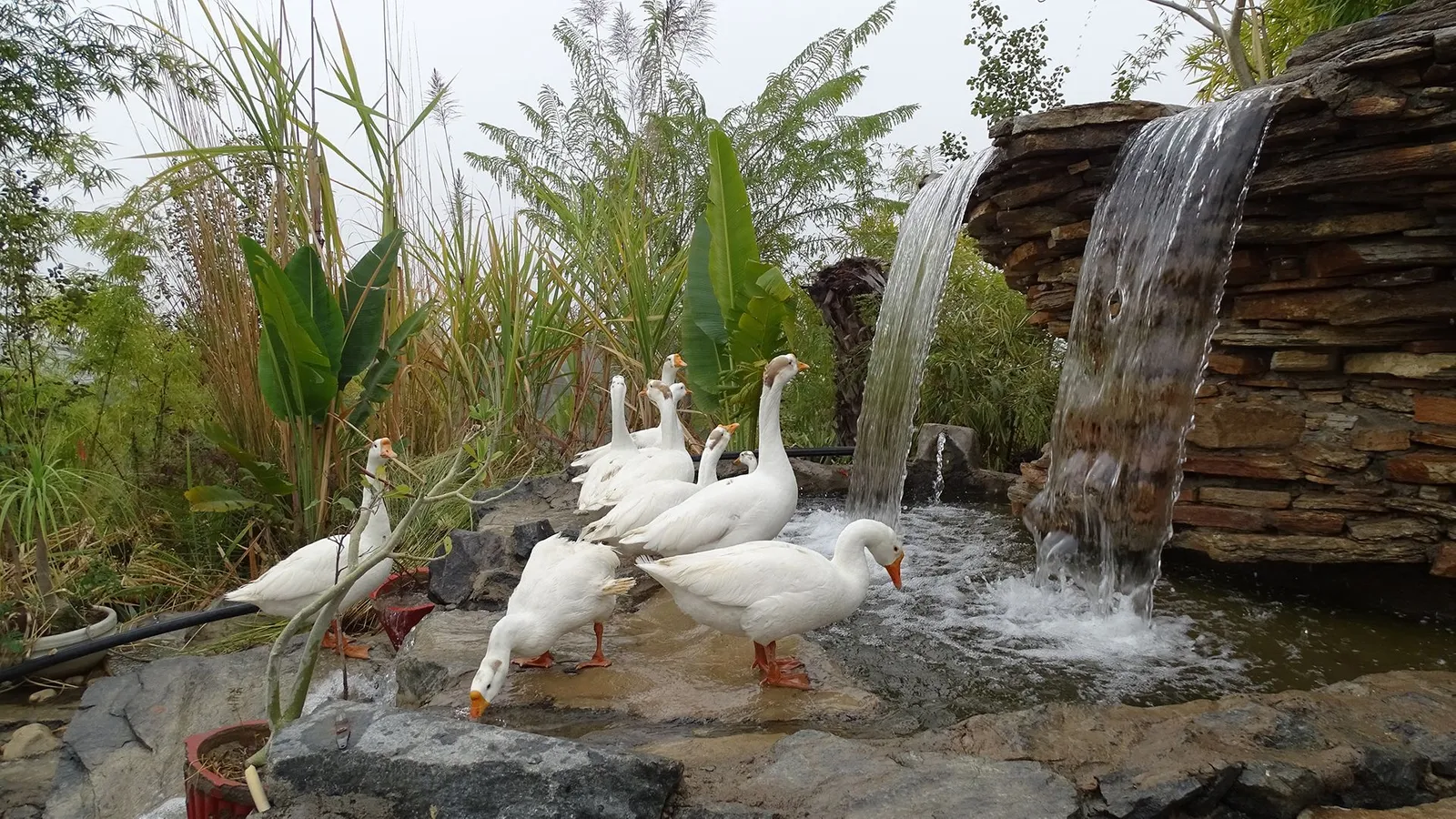
The village has also developed a water harvesting system , where the run off rain water is collected through ditches, bunds and dams. Now, clear pools of water shone and adorn the village attracting animals like geese and rabbits.

Also, to protect the large number of trees from termites villagers plants aloe vera in large amounts near the trees which in turn is utilized by the women of the village to make aloe juice ,gels and cosmetics for sale in the market, increasing the village economy and their independency.

In 2018 the state government instituted a training center there to educate people on the “Piplantri Model”. The building hosts engineers, officials and residents from other districts who hope to replicate Piplantri’s model of water harvesting and tree planting elsewhere in Rajasthan and the country. As many as 50 to 60 visitors come to Piplantri some days – most of whom come to attend workshops in the training center – and the village even has a set of cottages to house them. 

Now, the birth of a daughter is no more considered to be a burden but a matter of pride and celebration. It is the efforts of Shyam Sunder Paliwal which have adorned the earlier dried village considering females as a burden , into a developed hamlet which is an inspiration for the entire country in more than one ways. The woman has been associated with “fertile lands” in literary terms by many poets since ancient times . It is not only because of her ability to reproduce which gives her this association but also her ability to nurture and regrow an arid land of which Pilpantri is the best example.
CHILDREN DAY

All the kids chin up, smile and celebrate the day dedicated specially to you! November 14 is celebrated as Children’s Day (also called Bal Diwas) in our country and the occasion also commemorates the birth anniversary of Jawaharlal Nehru, the first Prime Minister of India. As the schools and colleges gear up to celebrate this day, here is all you need to know about the history, importance and significance of the occasion.

Nehru was known for his affection and love for kids, whom he regarded as the ‘future of the country’ and was fondly called as Chacha Nehru. “The children of today will make the India of tomorrow. The way we bring them up will determine the future of the country,” he exclaimed once. He always emphasised on the education of children and played a major role in establishment of colleges in the country which are still considered one of the best in the country.

After his demise in 1964, his birth date, November 14, was decided to be celebrated as Children’s Day every year.

On this day, schools and colleges organise various programmes like plays, competitions, cultural events etc., and sweets, books, stationary and other gifts are distributed to children. Also, November 20 is celebrated as the Universal Children’s Day, as declared by the United Nations.

The day is a reminder that every child deserves education, nurturing and the best of everything. They are the building blocks of the nation and hence, the future of the nation depends how well they are brought up. To those who are now an adult, keep the kid inside you alive.

GENERATION GAP

ACCORDING TO CAMBRIDGE DICTIONARY “situation in which older and younger people do not understand each other because of their different experiencesopinionshabits, and behaviour.”

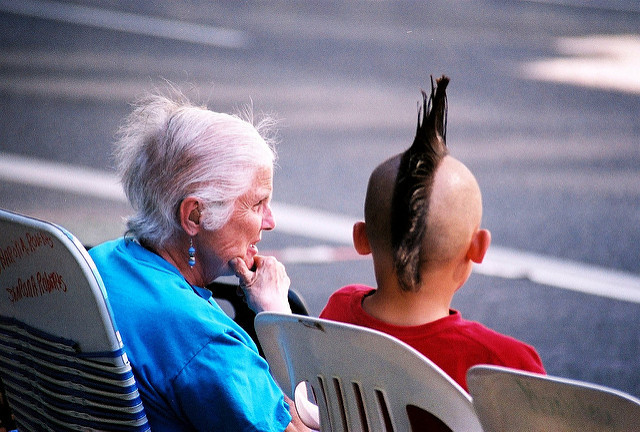
The gap between the old and the young people is called generation gap. Old people feel that lack of respect for the elders and disrespect to the existing system of the society will bring disaster for young generation. Young boys and girls, on the other hand, feel that ‘the old are fools’. The gap between the old and the new generations is widening owing to several reasons.

First, all young people feel that the present education has no relation with the realities of life. Secondly, the present life has become busy and fast. Thirdly, the young people are generally idealistic. When they find corruption in every sphere of life, they feel disgusted. Fourthly, to express their unhappiness with the existing state of affairs, young people take to violence or behave oddly.

In order to bridge the generation gap, elders should be sympathetic towards the young. They should realise the emotion, ambition and problems of the young. The young should realise that they have no experience in life.

So, they should value the advice of the elders. The general gap between the two groups of people is so wide in the western countries that they live separately. In India the traditional joint family system has slowed the growth of this gap. But now such a family also is breaking down.

MAHATMA GANDHI

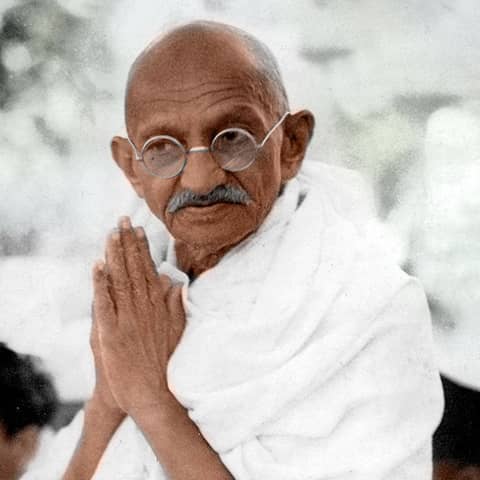
Gandhi was the youngest child of his father’s fourth wife. His father—Karamchand Gandhi, who was the dewan (chief minister) of porbandar, the capital of a small principality in western India (in what is now gujrat state) under British suzerainty—did not have much in the way of a formal education. He was, however, an able administrator who knew how to steer his way between the capricious princes, their long-suffering subjects, and the headstrong British political officers in power.

Early Life

Mohandas Karamchand Gandhi was born on October 2, 1869, at Porbandar, in the present-day Indian state of Gujarat. His father was the dewan (chief minister) of Porbandar; his deeply religious mother was a devoted practitioner of Vaishnavism (worship of the Hindu god Vishnu), influenced by Jainism, an ascetic religion governed by tenets of self-discipline and nonviolence. At the age of 19, Mohandas left home to study law in London at the Inner Temple, one of the city’s four law colleges. Upon returning to India in mid-1891, he set up a law practice in Bombay, but met with little success. He soon accepted a position with an Indian firm that sent him to its office in South Africa. Along with his wife, Kasturbai, and their children, Gandhi remained in South Africa for nearly 20 years.

The Birth of Passive Resistance

In 1906, after the Transvaal government passed an ordinance regarding the registration of its Indian population, Gandhi led a campaign of civil disobedience that would last for the next eight years. During its final phase in 1913, hundreds of Indians living in South Africa, including women, went to jail, and thousands of striking Indian miners were imprisoned, flogged and even shot. Finally, under pressure from the British and Indian governments, the government of South Africa accepted a compromise negotiated by Gandhi and General Jan Christian Smuts, which included important concessions such as the recognition of Indian marriages and the abolition of the existing poll tax for Indians.

Leader of a Movement

As part of his nonviolent non-cooperation campaign for home rule, Gandhi stressed the importance of economic independence for India. He particularly advocated the manufacture of khaddar, or homespun cloth, in order to replace imported textiles from Britain. Gandhi’s eloquence and embrace of an ascetic lifestyle based on prayer, fasting and meditation earned him the reverence of his followers, who called him Mahatma (Sanskrit for “the great-souled one”). Invested with all the authority of the Indian National Congress (INC or Congress Party), Gandhi turned the independence movement into a massive organization, leading boycotts of British manufacturers and institutions representing British influence in India, including legislatures and schools.

Why do North Koreans hate South Korea and America (USA)?

Korea was a part of the Japanese empire between 1910 to 1945. The dynastic kingdom- Joseon Korea had signed the Japan-Korean Treaty in 1876 and formed a coalition with the Meiji government of Japan. Through the treaty, Japan had indirect control of Korea as it also gave protection to it, followed by the annexation of Korea by Japan in 1910. This annexation was arbitrary and without the consent of the Korean emperor. 

  As with any other colonization in the world, it too was a brutal one. People were exploited by the Japanese army. Industrialization was accelerated in Korea to benefit Japan. Soon they also attacked Korean history and culture. The environment too was exploited. Soon, the need for a freedom movement became palpable. Many rallies took place throughout the nation after the death of the Korean emperor as there was widespread suspicion that he was poisoned. The Japanese violently responded to these protests and subsequently suppressed the movement. An estimated 2 million people participated in the country-wide protests and about 7000 people were killed by the Japanese forces during the 1 year. According to the Korean reports, almost 50,000 people were arrested and 16000 wounded.

March 1 movement

  Following the dropping of atomic bombs on Hiroshima and Nagasaki, Japan surrendered to the Allied forces on 15 August 1945, ending 35 years of Japanese occupation. American forces under General John R. Hodge arrived at the southern part of the Korean Peninsula on 8 September 1945, while the Soviet Army and some Korean Communists had stationed themselves in the northern part of the Korean Peninsula. U.S. Colonel Dean Rusk proposed to Chischakov, the Soviet military administrator of northern Korea, that Korea should be split at the 38th parallel. This proposal was made at an emergency meeting to determine post-war spheres of influence, which led to the division of Korea. After the surrender of Japan on 15 August 1945, the United States and the Soviet Union divided Korea along the 38th parallel into two zones of occupation. The Soviets (Russia and allies) administered the northern zone and the Americans administered the southern zone. Post World War 2, the Cold war began. It was an ideological war between Communism of Russia & allies and The Capitalism of the USA. 

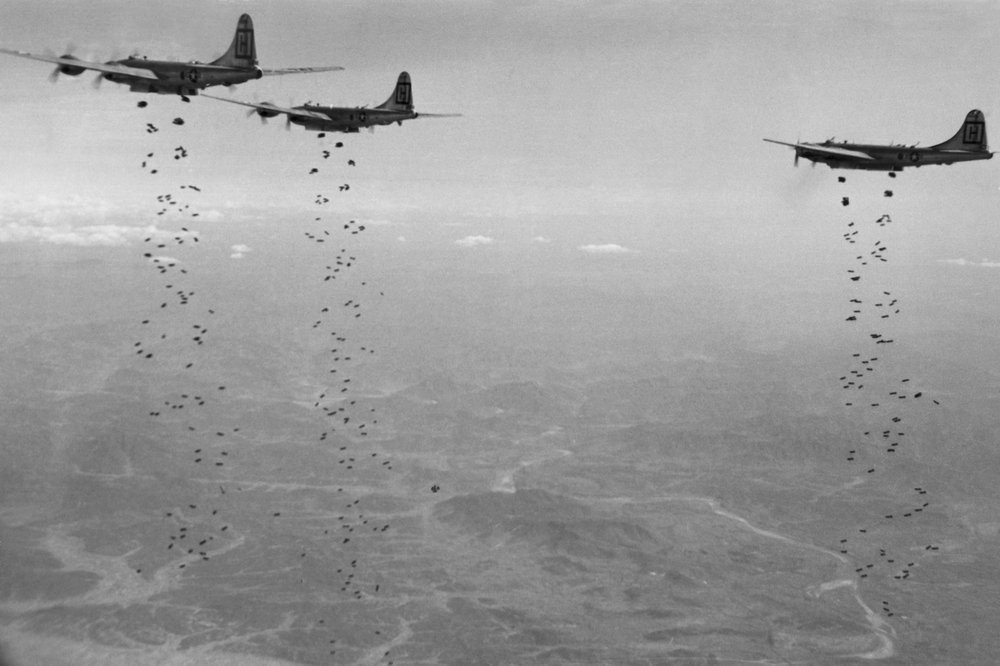
The US bombings.

  The Soviet Army crossed the borders and attacked South Korea in June 1950. The UN denounced this as arbitrary and an invasion. Soon the UN sent their forces to help the South Korean army and counter the attack. Twenty-one countries of the United Nations eventually contributed to the UN force, with the United States providing around 90% of the military personnel. Russia, too, sent in more forces to help the North Korean attack. The South, backed by UN and US forces, was successful in defending and driving the invading forces out. Post this, they invaded the north. China too joined the war and backed its ideological ally- Russia and helped the North. The Chinese army invaded the South but was pushed back to positions around the 38th parallel from where it all started. The North had to face immense American bombing. Many civilians died. The backbone of the northern army was broken. This war which started in June 1950 ended in July 1953. Approximately 3 million people died in the Korean War, the majority of whom were civilians, making it perhaps the deadliest conflict of the Cold War era. Compounding this devastation for Korean civilians, virtually all of the major cities on the entire Korean Peninsula were destroyed as a result of the war. The May 1953 bombing of major North Korean dams threatened several million more North Koreans with starvation, although large-scale famine was averted with emergency aid provided by North Korea’s allies. North Korea was the country most devastated by the war, which resulted in the death of an estimated 12%–15% of the North Korean population (appox. 10 million), “a figure close to or surpassing the proportion of Soviet citizens killed in World War 2”, according to Charles K. Armstrong. Post-war, South Korea took comparatively less time to recover. As America was an ally, South Korea grew on the principles of Capitalism and Democracy while, North Korea, having the Soviet Union as an ally, moved ahead with Communism, and no sooner it turned into a dictatorship. People’s life there is miserable. No freedom of speech, expression. No press freedom. South Korea, on the other hand, is very democratic and is one of the fastest-growing economies. But South Korea is constantly at threat of war with the North. With the dictator of North Korea having now initiated many nuclear tests, even the US is under a threat of attack. North Korea was devastated to a great extent by the south and the US. The hatred of the North Koreans and the dictator himself towards these two is very evident.

10 Best Places to visit in Kashmir

Kashmir is the Indian subcontinent’s northernmost geographical area.

Srinagar

Srinagar is one of Kashmir’s and India’s most attractive and well-known tourist destinations. Srinagar offers it everything, from boating to trekking, bird viewing to water skiing. This location is regarded as the “mirror to the mountains” by the locals. This location provides an up-close glimpse into Kashmiri cuisine and culture.

Dal Lake

Dal Lake, often known as the “Jewel in the Crown of Kashmir,” is one of Kashmir’s most exquisite pieces of heaven. For decades, the lake has been the region’s favorite summer getaway, surrounded by magnificent Mughal gardens and dotted with British-built houseboats.

Indira Gandhi Memorial Tulip garden

You enter the garden with your eyes closed, then open them to find yourself immersed in a lake of flowers. Tulips of different colors may be found in this garden, which was planted using seeds brought in from Spain. They’re at their finest in the springtime, and the neighboring Dal Lake provides the perfect backdrop for photography.

Gulmarg

Gulmarg, also known as the ‘Meadow of Flowers,’ is a big attraction with its stretch of colorful flowers set against the backdrop of snow-capped mountains. For all the right reasons, Gulmarg is regarded as one of the greatest locations to visit in Kashmir. Because of the numerous opportunities for skiing in the snow while taking in the scenery, this region of Kashmir is also regarded as an adventurer’s paradise.

Sonmarg

Sonamarg is known as the ‘Golden Meadow,’ as its name indicates. Its attractions include an unending stream of beautiful flowers and undulating hiking trails.

Pahalgam

Pahalgam, at a height of 2740 meters, is considered a representation of paradise on earth. It is 95 kilometers from Srinagar and is surrounded by thick woods, lovely lakes, and flower-filled meadows. This small town is famous for pulling all of a visitor’s tension away, making it one of the greatest locations to visit in Kashmir.

Betaab Valley

Many trekkers begin their journey in this valley, which is surrounded by beautiful green meadows and snow-capped mountains. The thick greenery of conifers and lush green bushes encapsulate Kashmir’s genuine nature. This valley, which is dotted with colorful cottages, shelters, and a variety of bird species, is unique in its own right. You may go horseback riding or enjoy a picnic on the banks of the snow-fed Jade River in the Betab Valley, which flows south from the snowy peaks. The water in Jade is so clean that it is used for drinking by the locals!

Nishat Garden

On the shores of Dal Lake, this one is regarded as one of the biggest Mughal Gardens. Nishat Garden is also known as the Garden of Bliss, which is fitting given the stunning Zabarwan Mountains in the background. This garden is historically significant, and it was created by Asaf Khan, Nur Jahan’s brother.

Shalimar Garden

The well-known Emperor Jehangir built this garden specifically for his wife, Nur Jahan, in the year 1616. Another garden, Faiz Baksh, was added to this one after a while. Inside the garden, there is a canal with polished stones around the edges.

Sinthan Top

Sinthan Top, at 3,658 meters above sea level, provides stunning panoramic views of the area’s snow-capped mountains and low-lying areas. The location is easily accessible from a highway, but you must navigate yourself and overcome a few challenges before reaching the summit. You may even continue walking and land on the snow while enjoying a beautiful and magnificent 360-degree panorama of the entire area.

EDUCATION DEVELOPMENT DAY IN TAMILNADU!!!

Though many National leaders rendered their selfless service to our country, one among them to be noted was the Kingmaker Kamaraj. K. Kamaraj, familiarly known as Kamarajar was an independent activist and the former Chief Minister of Tamil Nadu. He was popularly known as the Kingmaker of India during the 1960s. He supported Lal Bahadur Shastri, to be the President of India after the death of Nehru. After the sudden dismissal of Lal Bahadur Shastri, he supported Indira Gandhi to be the President of India. He was a man of simplicity and known for his best leadership in the development of Tamil Nadu. The Midday Meals Scheme introduced by him was very popular in India. He was popularly known as Karmaveerar, KalviKan Thirantha Mudhalvar, etc.

K KAMARAJ – Former Chief Minister Of TamilNadu

Kamaraj was born on 15th July 1903 at Virudhunagar in TamilNadu to Kumarasamy and Sivagami Ammal. His birth name was Kamatchi and later changed to Kamarajar. He studied primary education in a traditional school and he was to drop out because of his father’s death to support his family. He had a younger sister named Nagammal. He worked in his uncle’s shop and begun to attend political meetings and common meetings related to Home Rule Movement. He developed his interest in politics by reading daily newspapers. In 1920, at the age of 18, he became a very enthusiastic person and joined Indian National Congress. He organized public meetings for leaders in Virudhnagar and was very eager to meet Mahatma Gandhi. As he wished, he met Gandhiji for the first time in the meeting. Kamaraj went to jail for two years for taking part in ‘Salt Sathyagraha’ led by C. Rajagopalachari at Vedaranyam.

At the age of 34, he contested in the Legislative election for the first time and marked his first victory at Sattur in 1937. He stuck by the principle ‘ One should not accept any post/leadership to which one could not do full justice ‘. In 1954, Kamaraj became the Chief Minister of Tamil Nadu. Various schemes and deeds introduced by him as a Chief Minister are as follows:

  • He removed Hereditary Education Policy introduced by Rajaji.
  • He reopened more than 12,000 schools during his leadership as a Chief Minister.
  • Education and trade hiked during his period.
  • Kamarajar aimed to eradicate illiteracy and introduced compulsory education. The literacy rate was 7% during the British period but during his period, the literacy rate increased to 37%.
  • He also introduced the Midday Meals Scheme to provide atleast one healthy meal per day to the poor and needy children. He introduced the uniform scheme to the school children to eradicate the germination of caste-based flaws in young minds.
  • He built several irrigation canals during his period. He built nine dams which are appreciated till now and they are as strong as him.
  • Huge investment industries such as Neyveli Lignite Corporation, BHEL, etc. were started during his period.

He has been the Chief Minister of Tamil Nadu for three consecutive terms, by the victory in 1957 and 1962. His ruling period was known as the Golden Age of Tamil Nadu. Kamaraj was a great follower of Mahatma Gandhi, yet to this fact, he died on 2nd October 1975 during his sleep in his native Virudhunagar. He was awarded ‘Bharat Ratna’ posthumously in 1976. The Chennai Airport is named after him as Kamaraj Terminal.

His birthday is celebrated as ‘ Education Development Day ‘ in Tamil Nadu every year. Though he died, his good deeds remain in the hearts of the people.

Intelligence plus character – that is the goal of Education.

– K Kamaraj.

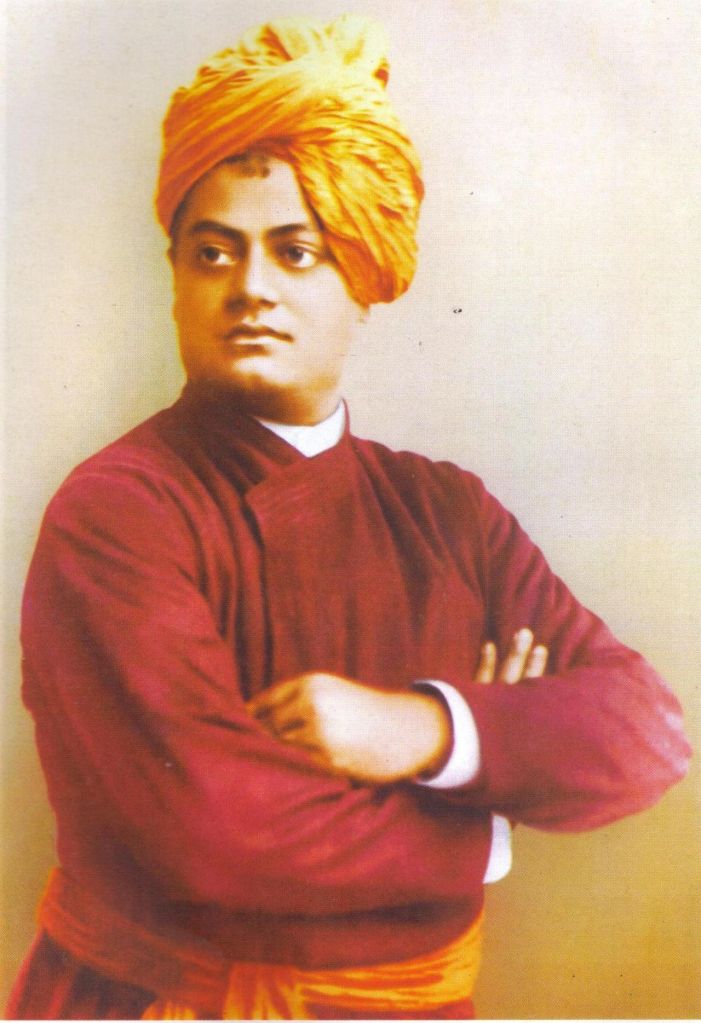
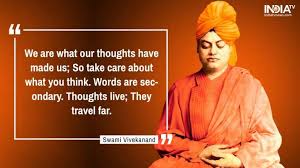
BIOGRAPHY of ‘Swami Vivekanand’

Born: 12 January, 1863

Place of Birth: Kolkata, India

Childhood Name: Narendranath Dutta

Father: Vishwanath Dutta

Mother: Bhuvaneshwari Devi

Education: Calcutta Metropolitan School; Presidency College, calcutta

Religion: Hinduism

Guru: Ramakrishna

Founder of: Ramakrishna Mission (1897), Ramakrishna Math, Vedanta Society of New York

Philosophy: Advaita Vedanta

Literary works: Raja Yoga (1896), Karma Yoga (1896), Bhakti Yoga (1896), Jnana Yoga, My Master (1901), Lectures from Colombo to Almora (1897)
Death: 4 July, 1902

Place of Death: Belur Math, Belur, Bengal

Memorial: Belur math, west bengal

About Swami Vivekanand:-

There are some rare men who leave their footprints on the sands of time, becoming a source of motivation for thousands of lost wanderers in the battlefield of life. Swami Vivekananda is one such example. “Come up, o lions and shake off the delusion that you are sheep; you are souls immortal, spirits free, blest and eternal….’ These words of stunning optimism proclaimed the arrival of a prophet- philosopher no less than Swami Vivekananda on the stage of the world. Such were his words that shook the world in the Chicago address on 19 September 1893. A young, educated man, Narendranath Dutta once walked the path of scepticism and even cynicism when it came to religion.

All the powers in the universe are already our. It is we who have put our hands before our eyes and cry that it is dark.”- –Swami Vivekananda

A visit to Ramakrishna Paramahansa changed his life. He challenged Ramakrishna’s claims of having seen God. Ramakrishna put his fingers on Naren’s heart, and in a moment of overwhelmingly powerful spiritual vision, Naren discovered God everywhere- from the rich man in his mansion to the poor rickshaw puller on the streets of Kolkata. God was no more a wishful thinking confined to the Kali temple at Ramakrishna’s Dakshineshwar. He was a living entity beyond all limitations of caste, creed, religion, language, time and space. Thus Narendranath Dutta metamorphosed into Swami Vivekananda, a disciple of Ramakrishna. This, however, was merely the beginning. The master, Ramakrishna, had told him before his passing away that he, Naren, would have to do ‘Mother’s work’, to teach mankind and be like a banyan tree, giving shelter to the tired and weary. In January 1891, he left the company of his brother monks and traversed the country from the North to the South alone with God. He wept to see the suffering and ignorance of the poor, and was disturbed at the material complacency of the affluent classes. The picture of ancient India appeared vividly before his eyes in all its grandeur and glory, and the contrast was unbearable. Swamiji set upon himself the task of rebuilding a new and rejuvenated India.

Learn everything that is good from others but bring it in, and in your own way absorb it; do not become others.” –Swami Vivekanand‘.

Be it his journey to America or the lecture at Chicago or the setting up of the Ramakrishna Mission in 1897, his main aim was service to mankind and the rebuilding of a young, vibrant and educated India. · Ramakrishna Mission today is a giant organisation which dedicates itself to the execution of extensive educational and philanthropic work in India and abroad, and expounds the profound Vedantic philosophy preached by Swamiji. The impact Swamiji had on India and across the world can be best understood by the comment made by The New York Herald about his speech at Chicago; ‘He (Swamiji) is undoubtedly the greatest figure in the Parliament of Religions. After hearing him, we see how foolish it is to send missionaries to this learned nation.

“Take up one idea. Make that one idea your life; dream of it; think of it; live on that idea. Let the brain, the body, muscles, nerves, every part of your body be full of that idea, and just leave every other idea alone. This is the way to success, and this is the way great spiritual giants are produced.”

― Swami Vivekananda

Narendranath Dutta was born on 12 January 1863, and Swam Vivekananda passed away on July 4, 1902. But the lionheart with his piercing eyes, mobile lips, swift movements, clad in yellow and orange, shining like the sun of India in the heavy atmosphere of Chicago, lives on in the memory of millions. He inspires every ma in the world to ‘arise, awake, and stop not till the goal is reached.

You have to grow from the inside out. None can teach you, none can make you spiritual. There is no other teacher but your own soul.”
― Swami Vivekananda

If anyone wants to study the origin of the Vedanta movement in America then study Swami Vivekananda travels across the US. He was a great thinker, great orator, and passionate patriot. It is not wrong to say that he was more than just a spiritual mind.

“Be the servant while leading. Be unselfish. Have infinite patience, and success is yours.”
― Swami Vivekananda

GREAT DEPRESSION

The Great Depression was the worst economic downturn in the history of the industrialized world. Lasting from 1929 to 1939. It began after the stock market crash of October 1929, which sent Wall Street into a panic and wiped out millions of investors. Over the next several years consumer spending and investment dropped. Causing steep declines in industrial output and employment as failing companies laid off workers. By 1933, when the Great Depression reached its lowest point some 15 million Americans were unemployed and nearly half the country’s banks had failed.

Throughout the 1920s the U.S economy expanded rapidly and the nation’s total wealth more than doubled between 1920 and 1929 a period dubbed “the Roaring Twenties. The stock market centered at the New York Stock Exchange on Wall Street in New York City, was the scene of reckless speculation, where everyone from millionaire tycoons to cooks and janitors poured their savings into stocks. As a result, the stock market underwent rapid expansion, reaching its peak in August 1929.

By then production had already declined and unemployment had risen leaving stock prices much higher than their actual value. Additionally, wages at that time were low, consumer debt was proliferating the agricultural sector of the economy was struggling due to drought and falling food prices and banks had an excess of large loans that could not be liquidated. The American economy entered a mild recession during the summer of 1929 as consumer spending slowed and unsold goods began to pile up which in turn slowed factory production. Nonetheless, stock prices continued to rise and by the fall of that year had reached stratospheric levels that could not be justified by expected future earnings.

Stock market crash of 1929

On October 24, 1929 as nervous investors began selling overpriced shares mass the stock market crash that some had feared happened at last. a record 12.9 million shares were traded that day known as “Black Thursday”. Five days later on October 29 or Black Tuesday some 16 million shares were traded after another wave of panic swept Wall strret. Millions of shares ended up worthless and those investors who had bought stocks “on margin” were wiped out completely. As consumer confidence vanished in the wake of the stock market crash the downturn in spending and investment led factories and other businesses to slow down production and begin firing their workers. For those who were lucky enough to remain employed wages fell and buying power decreased. Many Americans forced to buy on credit fell into debt and the number of foreclosures and repossessions climbed steadily. The global adherence to the gold standard which joined countries around the world in a fixed currency exchange, helped spread economic woes from the United States throughout the world especially Europe.

Great Depression end

The Great Depression was a worldwide economic depression that lasted 0 years. GDP during the Great Depression fell by half, limited economic movement. A combination of the New Deal and World War II lifted the U.S out of the Depression. Those war jobs seemingly took care of the 17 million unemployed in 1939. Most historians have therefore cited the massive spending during wartime as the event that ended the Great Depression.

FRIENDSHIP DAY

True friendship is a way of being mutually lovable to each other! In fact every flourishing relationship has a whiff friendship into it. It’s that transparent and lucid bond between two people.

Friendship is all about  trust, emotional attachment, caring each other or compassion, responsible relationship, mutual support in both sadness and happiness and its sharing of all things between two peoples who emotionally attached with each other.

We do not have boundation to select our friends on any ground including caste, age, sex, creed or any such differentiation that exit within the society.

Friendship Day is a day in several countries for celebrating friendship.
In India, National friendship day is celebrated every year on first Sunday of August. This year the Indian Friendship Day will be celebrated on 1 August, 2021.

It was first proposed in 1958 in Paraguay as the “International Friendship Day“.
Friendship Day was originated by Joyce Hall, the founder of Hallmark cards in 1930, intended to be 2 August and a day when people celebrated their friendships by holiday celebrations.

Art Therapy

“Art washes from the soul the dust of everyday life.” —Pablo Picasso

“Expressive art therapy integrates all of the arts in a safe, non-judgmental setting to facilitate personal growth and healing. To use the arts expressively means going into our inner realms to discover feelings and to express them through visual art, movement, sound, writing or drama. This process fosters release, self-understanding, insight, and awakens creativity and transpersonal states of consciousness.” -Natalie Rogers

Art therapy is a kind of therapy that uses art as a means of communication and le people explore and express their emotions and thoughts. This therapy is also known as expressive therapy.

In the process of the therapy arts, therapists use fine arts and performing arts to improve physical, mental, and emotional well-being. Fine arts and performing arts include drawing, painting and drama, dance, and movements respectively to improve physical, mental, and emotional well-being. In the process, the therapists work with individuals or groups using arts to create meaning rather than focusing on the end product. This process includes activities like creating stress painting, designing a postcard that one will never send, creating an emotional wheel, collage, doodling and scribbling, finger painting, photography, sculpting, working with clay, etc. Art therapy is more useful for people who cannot verbalize their feelings. This therapy is perfect for people of all ages because of its versatility.

Art therapy can help in treating a wide range of mental disorders and psychological distress.

Certain studies and institutions recommend art therapy for people suffering from schizophrenia (a long-term mental disorder of a type involving a breakdown in the relation between thought, emotion, and behavior, leading to faulty perception, inappropriate actions and feelings, withdrawal from reality and personal relationships into fantasy and delusion, and a sense of mental fragmentation.) and other related conditions. People who face difficulties in learning, art therapy are great for them.

People suffering from Dementia (a chronic or persistent disorder of the mental processes caused by brain disease or injury and marked by memory disorders, personality changes, and impaired reasoning). Due to art therapy, people use creative parts of their brain, which helps them to manage stress levels and restore a sense of personal identity.

People suffering from Autism spectrum disorder (ASD) (a complex developmental condition that involves persistent challenges in social interaction, speech, and nonverbal communication, and restricted/repetitive behaviors). Art therapy helps people to distract and calm themselves and also improve their communication skills.

It also helps prisoners to help in their feelings. It can also be used for people suffering from Post-traumatic stress disorder and depression.

Things to keep in your mind to participate in art therapy

•             People do not need to have artistic ability or special talent. According to some researchers sometimes only the presence of art can play a part in boosting mental health.

•             Art therapy is not the same as art classes. Art classes are focused on teaching techniques while art therapy is more about let people focus on their inner feelings. People do not need to create masterpieces in art therapy but they need to express their feelings with the help of color or anything they feel connected with.

•             People do not need to have experience in arts for participating in art therapy.

In this pandemic like situation people are facing issues like stress, depression and mental health more than ever. To get out of these situations people started to do yoga and many more things. So here is the suggestion you can start art therapy at your home. You just need to practice regularly to overcome the issues. Art therapies can help you open up emotions you have been pushing back. The therapy forces you to notice them and work on them. So start playing with colors or dance or sing in your own way and let yourself express what you feel.

THE CONTINUATION ( MAHABHARAT)

LAKSHAGRAHA (the lac house)

After the deaths of Pandu and Madri the Pandavas with their mother Kunti return back to the Hastinapur palace. Yudhishthira is Crowned Prince of Hastinapur by Dhritarashtra.But  Dhritarashtra also wanted his son Duryodhana to crowned as the king of Hastinapur.

Uncle Shakuni, Duryodhana, and Dushasana plan to get rid of the Padu’s Son the Pandavas. Shakuni ask architect Purochana to build the palace which can catch fire easily. He then requests for the Pandavas and Mother Kunti to stay there and plan to set it alight. However, after all this incident set by the Shakuni, Duryodhana and Dushasana the Pandavas escape with the help of  their wise uncle,Vidur. They escaped to safety and go into hiding. During this time one of the Pandava’s brother Bhima marries Hidimbi who was a demon, and they had a child son named Ghatotkacha. And in Hastinapur, the Pandavas and Kunti were declared to dead.

DRAUPATI’S MARRIAGE

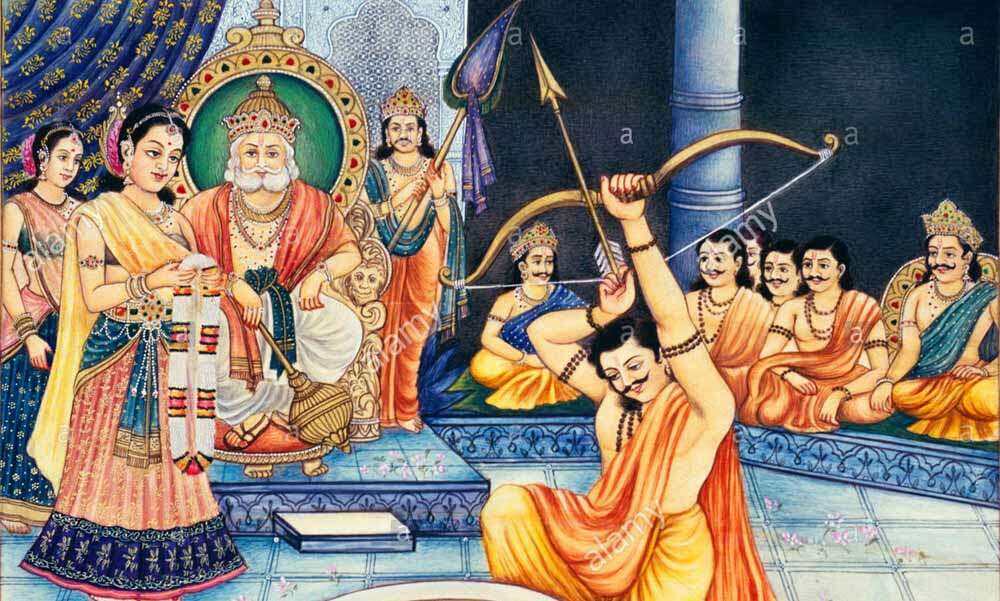
During the period when the Pandavas was hiding, got to find the swayamvara of the princess of Pancala Draupati. The Pandavas witness the event being as bharmhin. Meanwhile, Krishna and Draupati became good fridends, and tells her to look out for Arjuna (which was considered to be dead). The competion was shoot a target on the ceiling, on the eye of a moving artificial fish while looking at the reflection of the fish in oil below., Karna proceeds to the attempt but by Draupadi refuses to marry a. After all this the swayamvara got opened to all the Brahmins hence the Arjuna wins the competion and marries Draupadi. The Pandavas return home and Arjuna inform their mother about what he have won in the copetion and what they have got after winning  the competion. Without even looking at anyone, Kunti asks them to share whatever Arjuna has won among all five brother. Thus, Draupadi ends up being marrying and being wife of all five brothes.

INDRAPRASTHA

After being married, the Pandava werecalled up in the Hastinapura. The Kuru family didn’t liked that the Pandavas got married to one lady at a time hence his made all five brother and Draupati to leave the kindom and led them to build their own kingdom at Indraprastha.

Soon after this, Arjuna seceratly marries Krishna’s sister, Subhadra.

As times passed the Pandavas built their new palace for them, They also  invite their Kaurava cousins to Indraprastha, Duryodhan seeing a pond and assumes it will not have any water in it and falls in. All Pandava brothers (except Yudhishthira) everyone laughed at him including Draupadi. Furious by the insult, and jealous at seeing the wealth of the Pandavas, Duryodhana decides to arrange a dice-game as suggested by Shakuni.

THE GAME OF DICE

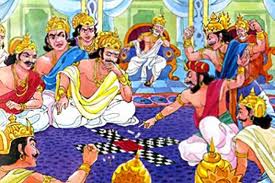
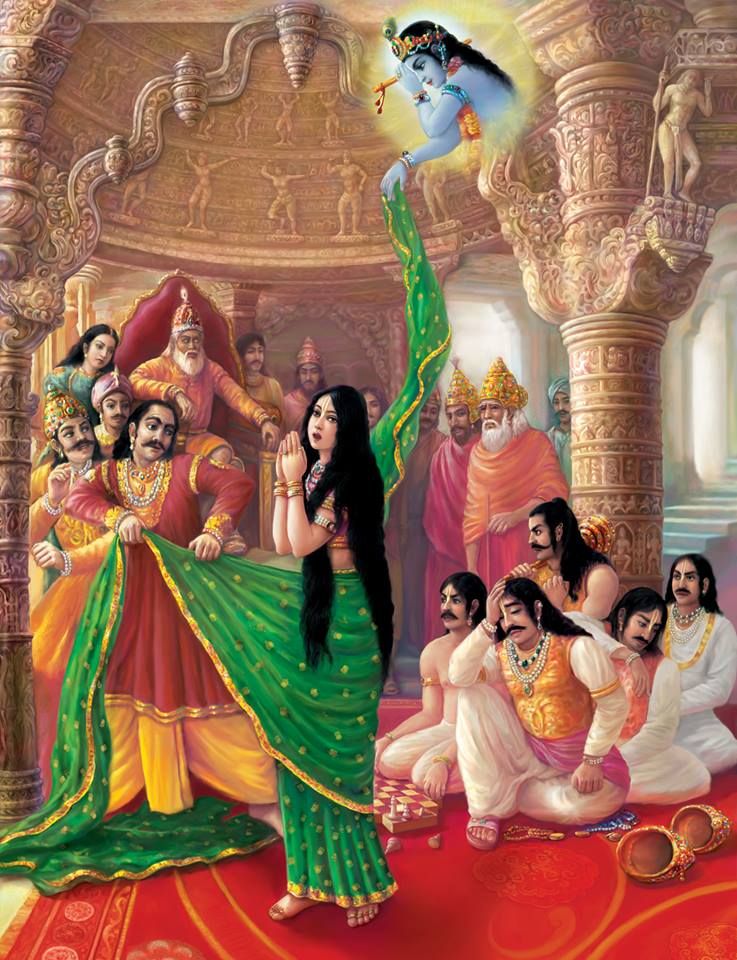
Shakuni, Kaurava’s uncle, arranges a dice game,played against Pandavas elder brother Yudhishthira. In the game of dice, Yudhishthira loses all his wealth, then his kingdom. And then he also gambles his brothers, himself, and finally his wife Draupati. The Kauravas then get chance to take their revenge for Duryodhan’s insult and this leads to disrobe Draupadi in front of the entire court, but this disrobe is prevented by Krishna, who magically made her saree endless, therefore it couldn’t be removed.

After all  Duryodhana says there is no place for two crown princes in Hastinapura. Hence Dhritarashtra orders for another game of dice. After the second game of dice now the Pandavas are required to go into exile for 12 years, and in the 13th year, they must remain hidden. And if they were seen by any kaurava in their 13th year of exile, then they again have to go for 12 year of exile.

THE KURUKSHETRA BATTLE.

Soon after the completion of 13 years of exile, the Pandavas return back to Hastinapur.

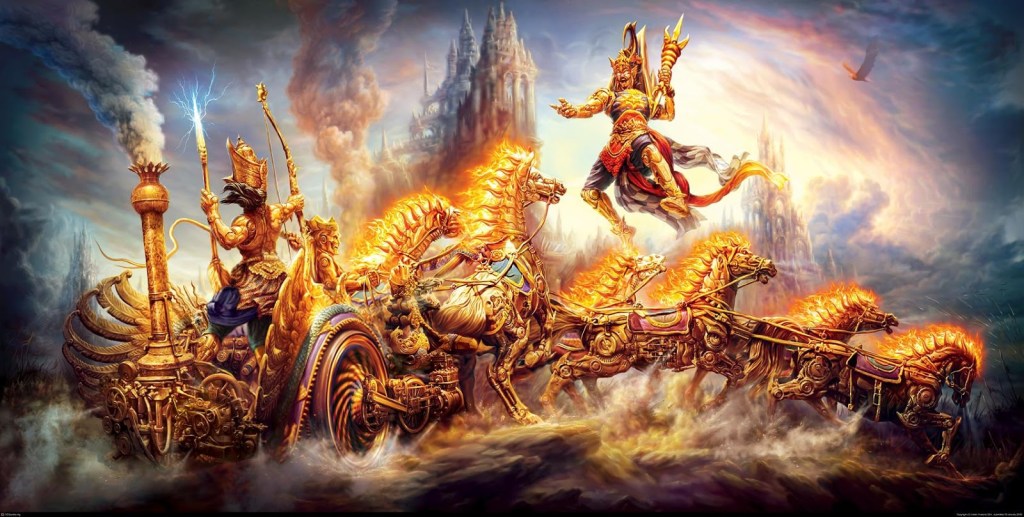
The battle took place because of the disrespect of the Draupati in the court during dice game.She wanted not to repeat this injustice and torture to any other women in the Hastinapur.Hence lord Krishna was always with the Panadav and guided them during the war. The war was of 18 days. At the end of the 18-day battle, only the Pandavas,Yuyutsu, Ashwatthama and Krishna survive. Yudhisthir becomes King of Hastinapur and Gandhari curses Krishna that he will also face the same situation as she faced.

THE END