A relatively large number of people in Western societies are single; that is, they are not involved in any romantic relationship. That actually couldn’t be further from the truth, however. There’s so much value in being single that people often overlook, when we should be embracing and appreciating it instead. When you’re not legally bound to another person, you have the freedom to learn, grow, and explore, without any of the guilt associated with taking time for selfcare. And the payoff there is that if you do decide you’d like to pair off with someone, you know exactly who you are and what you want.
More specifically, men were more likely than women to indicate that they were single in order to be free to flirt around, and because they were not into family making; while women were more likely to indicate that they were single in order to avoid getting hurt, and because they have considered themselves not to be desirable as mates. Older people were more likely to indicate that they were single in order to be free to do what they have wanted.
I think it is the right of the individual whether men or women to be in a relationship or to do marriage.The society do not have a right on this take .Everyone makes their own opinions that now a days women gets freedom and misuse this by making these types of decisions .But why everyone women do according to this society want them to do,it’s her choice .As it is famously said that “ALL FINGERS ARE NOT SAME”,so why we think every girl wants to marry in future ,it’s her choice and priority what to do in future.The society thinks its not safe for a women to live single in the society as anyone can take advantage of this status of her.
Maybe, counterintuitively, women are the ones who are especially likely to want to live alone. In our cultural imaginations, men are supposed to be the rugged individualists, the solo explorers, and the swaggering cowboys. But maybe, in fact, they are the ones pining for a live-in partner.
In a heartwarming essay from the upcoming book, Single by Choice, sports journalist Sharda Ugra recounts a scene from more than 10 years ago. A male friend, upon walking into her Delhi apartment (where she lived alone), asked astonished, “Who did all this?”“What provoked this question perhaps, was its sheer normalcy,” Ugra writes. And possibly the assumption that unmarried women lead dark, forlorn, depressing lives. But the writer goes on to remind us that singlehood is, in fact, a normal experience.
Most of the students are now undertaking online classes due to the ongoing Coronavirus pandemic. This is indeed a cause of worry for many parents because children spend extra hours on mobile phones and laptops. Experts also speak of the hazardous effects that digital classes can have on eyes of young children. Parents must take precautions and measures to ensure safety of the child’s eyes.
Needless to say, excessive usage of mobile phones, laptops or any other gadgets can affect children in many ways. This can be mental and physical. Eye strain is one amongst the most common problems. Some of its symptoms include excessive blinking, tearing, frequent rubbing of the eyes, dry eyes, headaches from eye strain and even tiredness. Parents must be extremely watchful and careful on how the child spends time online.Most of the classes, especially for children above class 8, goes on for long hours. Parents must cut short their time spent on video games, TV and other gadgets. Only a strict no works with most children!
During the last two weeks, a few school children in the age group of 8-10 came to my clinic with complaints of dryness in their eyes and frequent blinking of eyes. Prolonged reading on the mobile screen and watching it from close range may result in this type of problems,” says G. Hanumantha Rao, an ophthalmologist, who runs his clinic on MVP Double Road. He suggests that a laptop or a desktop with a large screen should be preferred. It also ensures that proper viewing distance is maintained, at least to some extent.
“Prolonged use of earphones can result in noise-induced deafness. It can also cause tinnitus and the child may experience ringing sounds in the ear. Severe exposure may cause inability to hear certain frequencies. The problems depend on the duration and intensity of the sound,” says B. Ramachandra Rao, an ENT surgeon at the Government ENT Hospital in the city.
Moral police is an umbrella category of vigilante groups which act to enforce a code of morality in India. Some of India’s laws, and some actions of police forces in India are also considered to be instances of moral policing.The target of moral policing is any activity that vigilante groups, the government or police deem to be “immoral” and/or “against Indian culture”.
India has several vigilante groups that claim to protect the Indian culture. They resist and oppose cultural concepts that they deem to have been imported from the Western culture. They have been known to attack bars and pubs.Some of these groups have attacked or have forced to shut down art exhibitions, where they claim obscene paintings were being displayed. They have issued diktats against western attires. Some have also condemned beauty parlours. Some members of the media have also colluded with such groups.Some politicians have supported such viewpoints and occasionally such activities.This question has striked hard in the light of recent events of the moral policing attack on kollywood actress Samyuktha Hedge in a public park in Bangalore.
Kannada actor Samyuktha Hegde on Saturday alleged that she and her friends were morally policed, abused and assaulted in a Bangalore park by a lady called Kavitha Reddy and some men for wearing a workout clothes in a public place.
Samyuktha recorded the entire altercation on Instagram live. In another video, a man threatens Samyuktha that he will tell the media that she was doing drugs. Kavitha had called the cops and she wished for Samyuktha and her friends to be booked for public indecency.
“After being in a democracy and following all the norms of social distancing, we were abused and ridiculed by Kavitha Reddy and the mob in Agara Lake for practicing our hula-hoop while wearing sportswear. Despite being polite and trying to solve the problem, the lady hit my friend and used disparaging remarks about me and my friends,” Samyuktha Hedge said in her Instagram post.
“I was extremely disappointed with how the police who came to the location behaved, like nothing was wrong and spoke to her with respect while asked us to be quiet. The cops stood there while her mob harassed us and even after requesting the police continuously, they decided to stand there and support this (proof on igtv). Yesterday was really hard and it was so disturbing to go through this,” she added.
After the consequences of her Action Kavitha publicly apologized to Samyuktha saying that she was always against moral policing and that she realized her actions were constructed as such. She also apologized for her aggressive reactions as well.
Samyuktha accepted Kavitha Reddy’s apology and wrote, “Apologies accepted Ms Kavitha Reddy. I hope we can all move forward from the incident and make women feel safe everywhere.
This action and reaction has made us to think again that should we need moral policing when there is law and order to protect the citizens of India.
There are three things india should say goodbye to:
There are many people who talks about it , and few screams and fight to end it…………but since ages, it’s not being possible to make a difference, and still have not got independence from it’s foul smell, where someone dwelling in it , without sense. But, should we live in this rut forever ?…And to accept ourselves as incapable of destroying it, and to live like a looser.
I have a one brilliant rule, if it comes into play that undoubtedly changes the fate of the country. Before i reveal it, let us know why this rule works besides many measures being taken were failing since decades. The main feasible condition for corruption, is lack of surveillance and awareness among people,and how it greatly damages our standard of living. So,creating awareness among all the people might sometimes work, but most of the time it rewards us with great disappointment. because, India has biggest population, it’s hard to make all of us to bring on to one platform with one voice.
But, there was no dearth of solution, if we think and the first said idea is…………. This idea works with collection of students, professors, university bodies, govt anti corruption and adminstrative bodies , police. You may wonder that how, could you connect students, professors with police? The bitter fact is, about 90% of indian passouts graduates are unskilled according to the several esteemed surveys. The main reason for it is, not having a platform to access practical knowledge, we have severe shortage of internship opportunities and real time project works. This problem can also be indirectly solved by our main idea.
The govt should make project works mandatory and give them more importance in their course, some may refrain with this idea…but if we couldn’t able to perform on projects itself, how can we able to sustain after getting to global market; initially it might be hard, but with support of our peer and lecturers we can excel gradually. Now, we all should be assigned project works by our colleges in collaboration with national education body (now MHRD), only on all governmental assets and organisations….here comes a game changing shot. But, how is it possible?
The government must allow all the students to study governmental organisations, properties, and projects build by them.(let’s say a dam, hospital etc…). This helps to make an assessment for the quality of work being done in various govt fields and organisations.The reports submitted by students can be used by anti corruption agencies and help them to understand the situation at very ground level. As it’s not possible for anti corruption agencies to keep an eye over every inch of the whole country, they can use this student community as a strongest trustworthy network as they don’t provide false reports, if in case; the professor and the whole college who guided him will be felt guilt, and leads to their lack of reputation in society. so, this locking system can help students ro not provide false reports.
All the students must be allotted some projects on live aspects(like dams, hospitals ,industries built and being run by govt) in their respective fields, and we have to start analyzing their maintenance and prepare and submit the report of it’s quality and working efficiency. Here itself, we get an opportunity to dig up the flaws went up and to make a change by preparing efficient reports of the atrocities made and corruption that underwent.
For say, i’m a student of civil engineering, got a project to understand about kaleshwaram dam and have to submit report on it. I started by when it has built, and how much cost it took, what are the materials used in it, what are the technologies use in it, why does the walls of the dam is being getting cracks just after 5 years of its inauguration, what is the reason for recent fire accident……..when i submit the detail report to the college, I am gonna get my marks The above said will be the work of every student in every field, not only engineering also health,law, agriculture,finance and every field. Instead the anti corruption bureau working on intensive ground level, they can collect all the project reports form all colleges and will be easier for them to take action, by using the information. As, it is a real time project, the professor of individual group must take care of no flaws and genuinity of information, as it will be a major source for higher govt authorities to take action. In simple, students has to set on to study the past govt projects and organisations; and the detailed project reports and student community acts as a strong surveillance framework and it bring out the corruptions of the past as well as prevents the corruptions of the future. This idea, if it honed by the bright minds of our country, it can surely be an influential act.
Water, you might have known it’s value, when your are thirsty but out of water. we nearly feel like to be gonna die. For, traditional Indians, you might known it’s value when you experience sudden cutoff of water supply ,in bathroom. All of us take this important thing for granted, but if once water wants to escape from us, the screams of 1.3 billion bangs the whole world. You may wonder, why only Indians scream …….ok, before you wanna know about it, also think ; Is your drinking water safe?, hey!..don’t tell that, i’m alright from the time i have born, no problem with drinking water.
Here, i just would like to bring up some most fundamental aspects of our life, i wanna recall we aren’t so much safe and being effected by things, but we never realize until they blasts a bomb in our life. One such is, drinking water; seems to be pure in color, no visible dust particles to our naked eye, but they have already been carrying invisible toxic substances with it, and ready to destroy us slowly after getting inside of us. Most of you might not care this, and stamps this as a boring story, but never forget; your taking some chemicals at every time you have a sip, and leaving your organs as a playground for the toxics that have gone inside you, along with the water you intake.
You better know the water sewage infrastructure in india, even some have been setup for namesake. So, the only option left for us to take care of ourselves. we cannot stop the flow of untreated chemicals and industrial waste into water. sometimes, There rises a campaigns and goes to sleep within no time.
Then, how to get a solution for this problem and to have a safe drinking water. The one thing is to setup water treatment plants by forming as a community, or to use water purifiers at home, leaving no space to compromise with it’s quality, Just even getting into debt; in long run saves you from unsolvable threats. But the bitter fact is, the cost of water purification is too high. But sadly we were pretending to believe the low level mechanisms and being fooled. One such example is, at rural areas or some public water suppliers , can get a 10 litres of water for just 2 rupees, whereas the premium water brands like tata provides the purified mineral water bottle of 1 litre for 20 rupees. This scenario can make us understand , how we are being pretended that low filtered water as mineral.The looters have just redefined the meaning of name itself.
we have been facing many health issues, one of the most important is, elders are facing problems regarding bone strength and losing immunity at very mid ages. This was an indirect effect of consuming water, because there is a clear picture of releasing pollutants from industries into water, but we confine ourself it might be because of age. This gonna definitely show impact on generations, if not resolved our life span keeps on reducing untill we open our eyes.
There is a huge need for communities to come forward and have awareness about the fundamental thing of our life, and come up with a feasible solutions.
Engineering is being one of the most popular courses since few decades, especially in India. But, the idea of exactly what a engineer is ?.. lacking among most of us. That’s ok, not a problem…..because our’s is a nation, where most of the people recently got being aware about education. So, it takes sometime to build strong educational infrastructure and awareness among us. This process, can be done faster only when all of us actively take up initiatives on our own, which indirectly affects the whole nation’s growth.
Internet been a great game changer, without which the technology evolution would be infinitesimally small. Do you know, India is providing internet at very cheap price than any other countries in the world. So,we are really lucky to have easy access to such powerful resource. So, i will get started to atleast introduce you with one interesting thing and you will start using it, when necessary.
Engineering definitely demands creativity and also knowledge. There are humongous amount of resources available, but sometimes only few delivers the best content and meets our requirements. I just want to give you a few names of websites to find about your academics. But, engineers should also have sound knowledge of basics, mostly of class 11 and class 12, through only helps us to understand further concepts. Toppr is one the best website provides you with free content,in a creative way. Embibe, will be a best source for solving questions and provide you with analytical reports and schedules. Vedantu,byjus,unacademy,askiitians,brilliant.org are the other few that provides various articles on individual topics.
Now, to getting onto the engineering academics, there are no specific websites that fulfills all of your interest, because various colleges design curriculum in their own way. But, The knowledge we learn always gives us an extra edge over others. It is always necessary to follow up the trends of education and industrial requirements. so, we have to follow some premium resources, and for us it’s better to refer the websites and social pages of iits,nits and government organisations. They always be helpful to measure our position nationally.
khan academy, edx, coursera, futurelearn, cisco will be some best resources to learn courses for free, but can obtain certificate by paying some money after completion of your course. Nptel is one of the best resource available to all, and also can value your learning by getting certificate at very reasonable pay, after giving a test.
here comes up with good youtube channels…iisc banglore, 3blue1brown,crashcourse, Neso academy, Tutorial point, mathsindepth, allaboutelectronics, letslearn,math-u- see, nptel, gradeup, seeker, IMA video, quanta magazine are few channels.
And there were few channels that able to improve your lifestyle, and are mike boyd, wall street journal, quint, mind your decisions, mind valley, momspresso, tedx, fightthenewdrug,cs dojo, kodegod,timelabpro, fearless soul, phlearn and many more.
There is always many more to explore in your own style, but every resource above directs towards various perspectives. pdfdrive, internet archive, z-library for books and for basic programming w3schools, tutorialpoint,javatpoint,sololearn, programiz, begineersbook.com and others.
WE ALL ARE IN LIGHT OF THE STATEMENTS THAT ARE HIGHLIGHTING IN THE MEDIA ABOUT ECONOMIC SLOWDOWN AND INDIA’s GDP . IT IS ALEARDY PREDICTED INDIA ‘s ECONOMIC GROWTH IS GOING TO FACE MORE DECLININGS , AS SAID BY THE GREAT SCHOLARS , HOW MUCH OUR COUNTRY’s GDP WILL DOWN AND MAY STRIKE NEGLEGIBLE.
INDIA RISKS STAGNATION IF THE GDP DOES N’T GROW ANNUALLY THAT TOO AT THE RATE OF 8% PER ANNUM . THE GROWTH HAS HAVE TO OCCUR AT A GREAT PACE BUT NOT AT THE SLOW PACE .
IF OUR GROWTH RATE TOUCHES 8% PER ANNUM FOR THREE YEARS CONSECUTIVELY THEN INDIA CAN SAVE ITSELF FROM MANY CHALLENGING CONSEQUENCES .
IT HAS BEEN HIGH TIME , NOW GOVERNMENT SHOULD ATLEAST FOCUS ON THE SOCIO-ECONOMIC CHANGES AND NOT ON POLITICAL ONES. WE ARE FACING UNEMPLOYMENT AND POVERTY IN A STRETCH . THE GOVERNMENT HAS IMPLEMENTED ATMA NIRBHAR BHARAT BUT I THINK IT SHOULD BE IMPLEMENTED EARLIER , THEN , WE WOULD HAVE NOT FACED THIS SITUATION WHAT WE ARE FACING NOW . YES ! SELF RELIANT IS THE KEY BUT WE HAVE DELAYED ITS IMPLEMENTATION . AND WE ARE INCURRING THE COST OF OUR DELAY IN COVID-19 IN THE FORM OF WEAK HEALTH INFRASTRUCTURE , POVERTY AND UNEMPLOYMENT . THEY ARE STANDING AS ICEBERGS IN OUR PATH , JUST BECAUSE OF OUR INEFFICIENT DECISION MAKING.
INDIA IS NEED OF THE GROWTH OF 8% TO 8.5% ANNUALLY TO CREATE THE OPPORTUNITIES AFTER COVID-19 AS THERE IS A RISK OF THE STAGNATION OF ECONOMIC GROWTH , INCOME AND GOOD QUALITY LIFE FOR A DECADE , WHICH IS A HUGE LOSS ! .
THERE IS NEED TO FABRICATE ALL THE REFORMS AND SCHEMES DESIGNED , A GOOD IMPLEMENTATION OF ALL IS MANDATORY TO CATCH THE ROPE OF THE GOOD ECONOMIC GROWTH.
THE NEXT TWELVE TO EIGHTEEN MONTHS ARE VERY CRUCIAL FOR US AS IT HAS BECOME A LIMMITED PERIOD OFFER FOR A GROWTH TO OCCUR AND THEESE ARE THE MONTHS .
IF WANTING TO INCREASE THE PRODUCTIVITY , CREATING EMPLOYMENT OPPORTUNITIES FOR THE PEOPLE , MINIMISING POVERTY BECAUSE POVERTY CAN NEVER BE FINISHED , IT JUST CAN BE MINIMISED , LIVING GOOD QUALITY OF LIFE , DEVOLOPMENT , GROWTH , SOCIETAL OBJECTIVES THEN , YOU HAVE TO HAVE ……
THE EMOTION FOR THE SOCIETY AND SOCIO-ECONOMIC OBJECTIVES !!
Rs. 2000 notes were introduced by the Government of India after the announcement of the demonetisation of 500 and 1000 rupees notes in November, 2016. Currently, it is the highest denomination currency note of the country. According to the annual report of the RBI, the Rs 2000 denomination note was not printed at all during 2019-2020. These notes were introduced after the government announced demonetisation of old Rs 500 and Rs 1,000 notes 4 years back. At that time, those two denominations had accounted for 86% of the then total currency in circulation.
The number of Rs 2,000 denomination notes had peaked at 3.36 billion units in 2017-18. This number had dropped to 3.29 billion in the years 2018-19. It has again fallen to 2.73 billion in 2019-20. The currency note presses of the Reserve Bank of India (RBI) did not print even one Rs 2,000 note in the last year. This happened because the presses did not receive any order for printing those. This seems to indicate a conscious decision for starting the trend of decreasing the number of notes which are circulated. The 2000 notes under circulation was 50% in 2016-17 and it has come down to almost 22% in 2019-20. These figures are based on RBI’s Annual Report for 2019-20, which was released on August 25 2020.
It is also known that RBI has also disposed a disproportionate share of Rs 2,000 notes in the soiled category. This has raised many questions on the government’s plan about the 2000 denomination note. In January, 2019 the was an indication that the Rs. 2000 notes were not being printed any further because there was adequate supply.
A total of 176.8 million pieces, which is quite a high number, of Rs 2,000 notes under the category of soiled notes were disposed of in 2019-20 by the RBI. While in 2018-19, just 1 million Rs 2,000 notes were disposed of and in 2016-17 or 2017-18, no Rs 2,000 notes were disposed of. Both the 2000 and 500 denomination notes were introduced after demonetization. In 2019-20, the share of Rs 2000 notes which were disposed of was 6.5% while that of Rs.500 notes was 0.6%. Out of the 22 billion currency notes printed in 2019-20, more than 50% of those were of the Rs 500 denomination. Due to these changes in currency composition, the Rs 500 notes has reached a very high share in the total currency under circulation.
The Minister of State for Finance Anurag Singh Thakur had told the Lok Sabha on March 16 2020 that, “Printing of bank notes of particular denomination is decided by the government in consultation with RBI to maintain the desired denomination mix for facilitating transactional demand of public. No indent was placed with the presses for printing of Rs 2,000 denomination notes for 2019-20. However, there is no decision to discontinue the printing of Rs 2,000 bank notes.”
A government official said that, “The Rs 2,000 notes were introduced in 2016 to quickly fill the gap created by demonetization of Rs 500 and Rs 1,000 notes. It was the need of the hour. Gradually, with increased supply of smaller notes, including new notes of Rs 100 and Rs 200, and with growing popularity of digital transactions, the urgency to issue new Rs 2,000 notes is no longer there. But this does not mean that there is any move to discontinue Rs 2,000 notes. Increasingly, commercial banks are also using more and more smaller notes because their customers often find difficulties in getting change for Rs 2,000 notes.”
India – a land of diverse landscape, language and culture, offers a variety of destinations for travellers to add to their bucket list. Whether its heavenly mountains, historical forts or peaceful beaches, every nook and corner has something beautiful to offer. These exotic places will surely take your breath away.
DAL LAKE, KASHMIR
Being one of the most prominent lakes in India, Dal Lake is also known as Srinagar’s Jewel. Pristine clear water with the backdrop of heavenly hills and mountains is sure to take your breath away. A Shikara ride in the Dal Lake is a must to explore in Kashmir. Shikaras are beautiful houseboats which are used to travel across the lake. The lake also has a travelling market. With an old world charm, the lake gives you a breathtaking experience.
THE RANN OF KUTCH, GUJARAT
The Rann of Kutch is a salt marsh in the Thar desert located in the border between India and Pakistan. It is one of the largest salt deserts in the world. It is a really popular exotic travel location. The Rann festival is the best time to visit when the region celebrates with crafts, handwork, cultural and musical performances. It is famous for its colourful and intricate crafts. On a full moon night, the sparkling salt desert looks spectacular and is a treat to the eyes.
ANDAMAN & NICOBAR ISLANDS
The Andaman Islands is an Indian archipelago of about 300 islands scattered in the Bay of Bengal. Its palm lined beaches and coral reefs is sure to give you a wonderful experience. The islands are known for its popular tourist sights like Havelock Island, Neill Island, and Wilson Island. You can also enjoy exotic sports like Parasailing, Snorkeling, and Scuba Diving.
PANGONG LAKE, LADAKH
Also known as Pangong Tso, it is a beautiful lake situated in the Himalayas. The beautiful lake situated on a height of 4350 m, attracts tourists from all over the world. The alluring blue waters is a sight to soothe sore eyes. The best time to visit the lake is summer because in winter the whole lake freezes into ice. It is also a great place for bird lovers as it is home to different birds like cranes, seagulls and rodents.
BACKWATERS, KERALA
The Kerala backwaters are a network of lagoons and lakes on the Arabian sea coast. With its rivers and inlets it is connected with almost 900 kilometres of waterways. The picturesque site with its lush green landscapes and diverse wildlife is a popular tourist attraction of South India. You can visit the backwaters by boat or shikara from Alleppey. Watching the sunset from a shikara in the midst of green landscapes and serene waters will give an experience of a lifetime.
VALLEY OF FLOWERS, UTTARAKHAND
Valley of Flowers is an Indian national park, located in North Chamoli and Pithoragarh in Uttarakhand. With rare and exotic Himalayan flora it is located in the dense forests close to the Pushpawati river. The beautiful meadows with blossoms of Alpine flowers is a treat to any nature lover. The best time to go on a trek to the Valley of Flowers is March to October as during this time the valley is also known to change colours due to its colourful blossoms.
LOKTAK LAKE, MANIPUR
Loktak is the largest freshwater lake in Northeastern India. It is mostly known for the unique sight of floating phumdis which are heterogeneous mass of soil and organic matter at various stages of decomposition. It is the most popular tourist attraction around Imphal. Being almost like a miniature inland sea, the lake mesmerises all visitors.
LIVING ROOT BRIDGE, MEGHALAYA
Located in the Khasi and Jaintia hills, the suspended root bridge is made up of a species of the Indian Rubber tree with a very strong root system. These are estimated to be around 500 years old and attract tourists all around the year. There are dozens of these root bridges near Cherrapunji. Since they are located in very remote places you may need a guide to reach there. The spectacular bridges in the Meghalayan villages will be a treat to any traveller.
In a well-balanced, well-reasoned, well-analysed and well-articulated judgment, a two Judge Bench of Supreme Court comprising of Justice Indu Malhotra and Justice Indira Banerjee in Hari Krishna Mandir Trust vs State of Maharashtra in Civil Appeal No. 6156 of 2013 delivered on August 7, 2020 reiterated that the right to property is still a constitutional and a human right. This was held so while allowing an appeal filed by Hari Krishna Mandir Trust in the matter of a land dispute with the Pune Municipal Corporation. Very rightly so!
To start with, this latest, landmark and laudable judgment authored by Justice Indira Banerjee for herself and Justice Indu Malhotra sets the ball rolling by first and foremost observing in para 1 that, “This appeal is against a judgment and order dated 15.09.2008 passed by a Division Bench of Bombay High Court dismissing Writ Petition No. 904 of 2008 filed by the appellant, challenging an order dated 3.5.2006, whereby the State Government refused to sanction modification of a Scheme under the provisions of Section 91 of the Maharashtra Regional and Town Planning Act, 1996, hereinafter referred to as “the Regional and Town Planning Act”.”
While discussing the facts of the case, it is then enunciated in para 2 that, “One Thorat family was the owner of Plot No. 1092 at Bhamburda in Pune. By a registered deed of conveyance dated 21.12.1956 one Mrs. Krishnabhai Gopal Rao Thorat sold the northern part of the plot admeasuring 4910 sq.m. jointly to Swami Dilip Kumar Roy, one of the most eminent disciples of Sri Aurobindo, and Smt. Indira Devi, daughter disciple of Swami Dilip Kumar Roy. The names of Swami Dilip Kumar Roy and Smt. Indira Devi were duly recorded in the relevant revenue records in 1959.”
Interestingly enough, it is then disclosed in para 3 that, “Swami Dilip Kumar Roy had moved to Pune to propagate the philosophy of Sri Aurobindo and established the Hare Krishna Mandir with his daughter disciple Smt. Indira Devi, on the land purchased from Mrs. Krishnabai Gopal Rao Thorat.”
To be sure, it is then disclosed in para 4 that, “According to the appellants, by an order dated 20.8.1970 of the Pune Municipal Corporation, Plot No. 473 which was originally numbered Survey No. 1092, was divided. Final Plot No. 473B was sub divided into 4 plots being plot Nos. 473 B1 comprising an area of 1025 square meters, 473 B2 comprising an area of 603.00 square meters, 473 B3 comprising an area of 2838 square meters and 473 B4, a private road admeasuring 414.14 square meters.”
Furthermore, it is then revealed in para 5 that, “Plot No. 473 B1 was owned by Mrs. Kanta Nanda, Plot No. 473 B2 by Mr. Premal Malhotra and Plot No. 473 B3 by Swami Dilip Kumar Roy and Smt. Indira Devi. Plot No. 473 B4, which was a vacant plot of land, was shown as an Internal Private Road measuring 444.14 Sq. mtr., in the possession of Swami Dilip Roy and Smt. Indira Devi and the holders of Plot Nos. 473 B1 and 473 B2, namely Mrs. Kanta Nanda and Mr. Premal Malhotra. It is not in dispute that the Pune Municipal Corporation was not mentioned in the order dated 20.8.1970.”
While continuing in the same vein, it is then stated in para 6 that, “On 20.8.1970 the City Survey Officer directed issuance of separate property cards in view of a proposed Development Scheme under the Regional and Town Planning Act which included Final Plot No. 473, and an Arbitrator was appointed. The Arbitrator made an Award dated 16.5.1972 directing that the area and ownership of the plots were to be as per entries in the property register.”
Going ahead, it cannot be overlooked that it is then explicitly mentioned in para 92 that, “From the records of the case, particularly the order dated 20.8.1970 of sub division of plot number 473B and the award of the arbitrator, it is patently clear that the name of Pune Municipal Commissioner was at no point of time reflected as holder of the private road. There is no whisper as to how the road came to be shown in possession of Pune Municipal Commissioner nor of the procedure adopted for effecting changes, if any, in the property records.”
Interestingly enough, it is then further revealed in para 93 that, “On perusal of the documents, there can be no doubt at all that the road in question measuring 444.14 sqm. Never belonged to the Pune Municipal Corporation. In the property records, there was no private road. There were three plots 473B1, B2, B3 and 473B4 shown as vacant land held by the owners of all the three adjacent plots.”
Most significantly, it is very rightly underscored in para 96 that, “The right to property may not be a fundamental right any longer, but it is still a constitutional right under Article 300A and a human right as observed by this Court in Vimlaben Ajitbhai Patel v. Vatslaben Ashokbhai Patel and Others, (2008) 4 SCC 644 (para 42). In view of the mandate of Article 300A of the Constitution of India, no person is to be deprived of his property save by the authority of law. The appellant trust cannot be deprived of its property save in accordance with law.”
To put things in perspective, the Bench very rightly makes it a point to put across in a forthright manner in para 98 that, “It has been established beyond any iota of doubt that the private road admeasuring 414 sq. meter area had never been acquired by the Pune Municipal Corporation. The right to property includes any proprietary interest hereditary interest in the right of management of a religion endowment, as well as anything acquired by inheritance. However, laudable be the purpose, the Executive cannot deprive a person of his property without specific legal authority, which can be established in a court of law.”
As it turned out, the Bench then makes it clear in para 99 that, “In case of dispossession except under the authority of law, the owner might obtain restoration of possession by a proceeding for Mandamus against the Government as held by this Court in Wazir Chand v. State of Himachal Pradesh AIR 1954 SC 415. Admittedly, no compensation has been offered or paid to the appellant Trust. As observed by this Court in K.T. Plantation Private Limited and Anr. V. State of Karnataka (2011) 9 SCC 1 even though the right to claim compensation or the obligation of the State to pay compensation to a person who is deprived of his property is not expressly provided in Article 300A of the Constitution, it is inbuilt in the Article. The State seeking to acquire private property for public purpose cannot say that no compensation shall be paid. The Regional and Town Planning Act also does not contemplate deprivation of a land holder of his land, without compensation. Statutory authorities are bound to pay adequate compensation.”
More crucially, the Bench then also makes it amply clear in para 107 that, “In the facts and circumstances of the instant case, in the light of admissions, on the part of the respondent authorities that the private road measuring 414 sq. was private property never acquired by the Pune Municipal Corporation or the State Government, the respondents had a public duty under Section 91 to appropriately modify the scheme and to show the private road as property of its legitimate owners, as per the property records in existence, and or in the award of the Arbitrator. In our considered opinion, the Bombay High Court erred in law in dismissing the Writ Petition with the observation that the land in question had vested under Section 88 of the Regional and Town Planning Act.”
Equally significant is what is then stated in para 115 and para 116. Para 115 states that, “In the absence of any proceedings for acquisition or for purchase, no land belonging to the Appellant Trust could have vested in the State.” Para 116 further states that, “The High Court also erred in its finding that the modification proposed involved substantial alteration by deletion of a public road and was therefore impermissible. The modification only involved deletion of the name of Pune Municipal Corporation as holder of the private road. The finding that deletion of a public road is a substantial alteration is, for the reasons already discussed above, completely baseless.”
Be it noted, it is then observed in para 117 that, “The appeal is therefore allowed, and the judgment and order under appeal is set aside.”
Finally, it is then observed in the last para 118 that, “In exercise of our power under Article 142 of the Constitution of India to do complete justice between the parties, we direct the Respondent authorities to act in terms of the Award dated 16th May, 1972 and delete the name of the Pune Municipal Corporation as owner of the private road in the records pertaining to the Scheme and carry out such other consequential alterations as may be necessary under Section 91 of the Regional and Town Planning Act. The appellant trust shall within a fortnight from the date of this order, give an undertaking to the Planning Authority not to obstruct access of adjacent plot owners through the private road in question. The necessary alteration or modification under Section 91, as directed above, shall be carried above, shall be carried out within six weeks from the date of furnishing of the undertaking by the appellant, as directed above.”
In essence, the key takeaway from this latest, landmark and extremely laudable judgment is that the two Judge Bench of Apex Court comprising of Justice Indu Malhotra and Justice Indira Banerjee has once again very firmly reiterated that right to property is a constitutional as well as human right. It is also made clear that the Executive has no right to deprive a person of his/her property without specific legal authority. There can be no denying or disputing it!
In a latest, landmark and laudable judgment titled “Nipun Sharma vs Post Graduation Institute of Medical Education and Research, Sector 12 Chandigarh through its Director” in Civil Writ Petition No. 10684 of 2020 (O&M) delivered just recently on August 14, 2020, the Punjab and Haryana High Court unequivocally upheld the Medical College’s righteous decision to not admit the ‘general category’ candidate to ‘sponsored category’ vacancy. The two Judge Bench of Punjab and Harayana High Court comprising of Justice Rajeev Sharma and Justice Harinder Singh Sidhu were hearing this case. Justice Harinder Singh Sidhu authored the judgment for himself and Justice Rajeev Sharma.
To start with, it is first and foremost pointed out in para 1 that, “This writ petition has been filed for issuance of writ, order or direction for reading down condition 7(3)(g) as contained in the Prospectus for Session July, 2020 issued by respondent – PGIMER for admission to DM/M.Ch. Courses, wherein it has been provided that no request for change of category applied for shall be entertained after submission of application to the extent that in case no eligible candidate is available under the ‘Sponsored Category’, then eligible candidate if available, under ‘General Category’ be considered and granted admission to the course of Master of Surgery (M.Ch.) (Plastic Surgery) on fulfilling the requisite eligibility conditions.”
What follows next is stated in para 2 that, “Further prayer has been made for setting aside the action of respondent in not considering the candidature of petitioner for said course against vacant seat available under ‘Sponsored Category’ in view of fact that petitioner had applied for direct category.”
To put it succinctly, para 3 then states that, “It is also prayed that the NOC/Sponsorship Certificate (Annexure-P6) issued in favour of petitioner by Department of Health and Family Welfare, Himachal Pradesh be accepted.”
In hindsight, while dwelling on the petitioner’s past academic background, it is then put forth in para 4 that, “The petitioner secured admission in MBBS Course at Indira Gandhi Medical College and Hospital at Shimla (2006-2012) and served in rural area after appointment in 2013 for a total period of 2 ½ years. He was selected for Post Graduate Course in General Surgery in 2017 as a sponsored candidate (2017 to 2019) in PGIMER, Chandigarh and secured 2nd rank in Post Graduation final examination. After completing his Post Graduation successfully with the respondent institution he joined back as a Medical Officer in Deendayal Upadhyay Zonal Hospital, Shimla. Thereafter, the petitioner with an aim to study further and super specialize in the field of Plastic Surgery decided to get admission in the Master of Surgery (M.Ch.) (Plastic Surgery).”
To be sure, it is then envisaged in para 5 that, “As per the Prospectus for the Session July 2020 in the PGIMER for securing admission in Post Graduation or Super Speciality Course i.e. M.Ch., two categories have been provided i.e. (a) General category and (b) Sponsored Category. In ‘General Category’, a candidate can apply directly i.e. without seeking permission of any State authority directly whereas in the ‘Sponsored Category’ only that candidate can apply, who is sponsored by the State Government with which he or she is employed. The sponsorship so made by the State Government is also in the nature of a No Objection Certificate whereby a candidate is authorized by the State Government to do a Super Specialty Course with an undertaking to serve the State Government for a specified period.”
Coming to the chief grievance of the petitioner, it is henceforth stated in para 11 that, “Thus the grievance of the petitioner is that despite there being no other eligible candidate available till date, the candidature of the petitioner, who applied under the ‘General Category’, is not being considered under the ‘Sponsored Category’. In case, the respondent-institution accepts the candidature of the petitioner then not only the petitioner would secure admission in the super specialty course of M.Ch. (Plastic Surgery) but the vacant seat will also get utilized and would not be left vacant.”
As a corollary, it is then further stated in para 12 that, “It was also pleaded by the petitioner that two candidates Dr. Lucky Kumar and Dr. Ashok Garg, who hail from Himachal Pradesh had applied for admission in M.Ch. in Cardiology and Neonatology respectively with respondent. Those candidate also secured their NOC cum Sponsorship certificate after the declaration of the result. They have been granted admission and their NOC cum Sponsorship certificate has been duly accepted. Thus the petitioner has been discriminated against.”
What cannot be left unnoticed is what is then stated in para 14 that, “It has been stated that as per clause 7 (3)(g) of the Prospectus:
“No request for a change of category applied for shall be entertained after the submission of the application”.
Since, Petitioner applied under ‘General Category’, therefore his request for grant of admission on the vacant seat under ‘Sponsored Category’ cannot be considered.”
Having said this, it is then observed in para 20 that, “The examination for admission to the M.Ch. Plastic surgery course was held on 21.06.2020. The result was declared on 26.05.2020. On 30.06.2020 the institute vide notice dated 30.06.2020 uploaded a tentative list of selected candidates wherein petitioner was shown at Waiting list No. 1 in the Direct Category. The petitioner was given the NOC/Sponsorship Certificate on 08.07.2020. Clearly as per condition 7(3)(g) of the Prospectus the request for change of category from ‘General’ to ‘Sponsored’ could not be entertained at a stage when even the result have been declared in view of Clause 7(3)(g) of the Prospectus.”
While adding further weight to its ruling, the Bench then observes in para 21 that, “It has been consistently held in different Full Bench decisions of this Court that prospectus has a force of law and is to be strictly followed. Reference can be made to Amardeep Singh Sahota v. State of Punjab 1993 (4) S.C.T. 328, Raj Singh v. Maharishi Dayanand University 1994 (2) S.C.T. 766, Sachin Gaur v. Punjabi University 1996 (1) S.C.T. 837, Rahul Prabhakar v. Punjab Technical University, Jalandhar 1997 (3) S.C.T. 526, Indu Gupta v. Director of Sports, Punjab 1999 (4) S.C.T. 113 and Rupinder Singh v. The Punjab State Board of Technical Education & Industrial Training, Chandigarh 2001 (2) S.C.T. 726.”
To put things in perspective, it is then noted in para 23 that, “This being the settled legal position the respondent-institution is right in strictly adhering to condition 7(3)(g) of the Prospectus and not entertaining the request of the petitioner for change of category after the last date of application and granting him admission against the vacant seat in the sponsored category.”
As it ostensibly turned out, the Bench then also clearly and convincingly holds in para 24 that, “The contention of the Ld. Counsel that provision 7(3)(g) be read down to the extent that in case no eligible candidate is available under the ‘Sponsored Category’, then eligible candidate, if available, under ‘General Category’ be considered and granted admission to the course of Master of Surgery (M.Ch.) (Plastic Surgery) on fulfilling the requisite eligible conditions also is not tenable.”
No wonder, it is then rightly held in para 27 that, “The respondent-institution in its reply has given valid reasons as to why such a provision has been incorporated and any deviation from it would create an untenable and uncertain situation.” Finally, it is then held in the last para 28 that, “Accordingly, there is no merit in the petition and the same is dismissed.”
In conclusion, the two Judge Bench of the Punjab and Haryana High Court comprising of Justice Rajeev Sharma and Justice Harinder Singh Sidhu in this notable judgment has clearly and convincingly for cogent reasons explained above has rightly rejected the contention of the petitioner! The arguments forwarded by the petitioner were found to be not tenable by the Chandigarh High Court. The Court also made it amply clear that the respondent-institution is right in strictly adhering to condition 7(3)(g) of the Prospectus and not entertaining the request of the petitioner for change of category after the last date of application and granting him admission against the vacant seat in the sponsored category! Very rightly so!
WELL AWARE OF HOW OUR INDIAN ECONOMY IS DETORIATING AND WILL KEEP ON DIMMING IN THE MONTHS AHEAD AS DECLARED BY INTERNATIONAL MONETARY FUND IN 2019 THAT INDIA WILL BE THE WORST EFFECTED COUNTRY FROM THE GLOBAL ECONOMIC SLOWDOWN. OUR GDP GROWTH IS 4.2% AND FORECASTES TO LOWER DOWN IN NEGATIVE . THE GOVERNMENT IS TAKING BOLD STEPS AND ENSURING TO BRING THE ECONOMY AT THE FAST PACE BY TRYING TO UPLIFT THE PROFIT MAKING. RECENTLY , YOU HEARED OF PRIVATISATION IN RAILWAYS SECTOR , AS DUE TO THE UBIQUITOUS QUALITY OF THE PRIVATE SECTOR , THE INTREST BEING ONLY IN THE ANTICIPATION OF PROFITS . IN MY OPINION , THERE IS NEED OF INCREASE IN PUBLIC INVESTMENT IN THIS SITUATION AS INFLATION IS HIGH DUE TO WHICH , WE ARE FACING ECONOMIC SLOWDOWN AND PEOPLE ESPECIALLY LOWER CLASS AND LABOURS ARE GOING THROUGH THE HARD TIME . ATLEAST WE ARE SITTING AT HOME AND WORKING , BUT , THEY ARE JOBLESS AND VULNERABLE , TIED UP WITH UNEMPLOYMENT AND POVERTY . THEY ARE LEFT SHATTERED , I THINK IF YOU WANT GROWTH , YOU NEED TO ERADICATE POVERTY BECAUSE WHEN IT BACKFIRES , IT WILL MAKE ECONOMY LOOSE ITS BREATH , WHICH IS UNDENIABLY HARMFUL FOR THE COUNTRY . PRIVATISATION EYES ONLY ON MAKING PROFITS WITHOUT GIVING ANY PERKS AND INCENTIVES TO THE EMPLOYEES AS IN PENSIONS AFTER RETIREMENT ETC . ATLEAST GOVERNMENT JOBS ARE SAFE IN THIS ASPECT. MULTINATIONAL COMPANIES WILL OPEN THEIR BRANCHES HERE AND HIRE OUR PEOPLE. THEY WILL MAKE INVESTMENT IN OUR COUNTRY AND PROVIDE LIQUIDITY TO OUR COUNTRY . IS IT WE DON’T HAVE ENOUGH FUNDS WITH US OR INVESTMENTS ARE MADE ONLY IN CORRUPTION JUST TO IBNCREASE THEIR WORTH ? .
THEY GOVERNMENT HAS COME UP WITH THE IMPLEMENTATION OF THE SCHEME NAMED ” ATMA NIRBHAR BHARAT ” WITH THE STRONG MESSAGE OF MAKING “A SELF RELIANT INDIA ” . I THINK IT SHOULD HAVE BEEN DONE EARLIER ,NOT AT THE TIME OF DIFFICULTY , SO THAT WE COULD HAVE NOT FACED THIS ICEBERG IN OUR PATH . THE SCHEME IS GRANTING FUNDS FOR DIFFRENT SECTORS , BUT , THIS MUCH IS NOT SUFFICIENT , THAT’s WHEN THE PRIVATISATION ENTERS. HERE , I AM GOING TO REIMAGINE THE EVENTS AND PUT IT IN FRONT OF YOU .
MAIJOR FUELS
LARGE BUSINESSES ARE THE BEST CONTRIBUTOR IN GENERATING A HUGE SHARE TO GDP , ENHANCING THE GROWTH IN THE ECONOMY . WE ALL KNOW IN OUR COUNTRY , MAIJORLY BUSINESS HOUSES ARE THE ECONOMIC DRIVERS.
MICRO , SMALL , MEDIUM ENTREPRISES ARE LIFELINES TO OUR ECONOMY AS IT TARGETS MIDDLE INCOME POPULATION OF THE ECONOMY WHICH IS ABUNDANT IN OUR COUNTRY.
THE TREND OF START UPs HAS A HUGE CONTRIBUTION TO THE ECONOMIC GROWTH AND DEVOLOPMENT. IT IS THE MEANS OF INJECTING INNOVATIONS AND NEW TECHNOLOGIES IN OUR COUNTRY ALONG WITH THE CREATION OF EMPLOYMENT OPPORTUNITIES.
WE ALSO HAVE PEOPLE LIVING ABROAD AND ARE RESIDENTS OF INDIA , BRINGING BUNDLE OF INVESTMENTS IN INDIA , WHICH IS ADDING TO OUR ECONOMY.
SUPPORT TO FUELS
GOVERNMENT IS SUPPORTING LARGE BUSINESSES TO SUPPORT THEIR OPERATIONS BY WAY OF GRANTING THEM TAX INCENTIVES , PROCUREMENT OF RAW MATERIALS AND OTHER GOODS AND SERVICES , POWERING CONSUMER DEMAND AND FUNCTIONING OF VENDORS , MSME’s.
RSERVE BANK OF INDIA , ANOTHER HELPING HAND WE ALSO CALL IT THE LENDER OF LAST RESORT , PROVIDE RESTRUCTURING OF LOANS TO ALL THE BANKS , SO THAT THEY CAN GIVE LOANS TO SMALL ENTREPRISES TO START OFF THEIR BUSINESSES.
PREPARATION OF FIVE YEAR PLANS BY THE GOVERNMENT AS 60% OF THE COMPANIES IN CHINA HAVE MOVE OUT FOR INVESTING IN INDIA . IT IS A GOOD NEWS BUT WHAT ABOUT SELF RELIANT INDIA?.
FRAMEWORK OF GLOBAL TRADING OPERATIONS FROM INDIA , A GLOBAL TRADING HUB. EXPORTING FINISHED GOODS OUTSIDE INDIA , YES, IT IS A STEP TO SELF RELIANCE.
ESTABLISHMENT OF INDEPENDENT INDUSTRIAL CELLS , COMMERCIALS , MARK SPACE MANUFACTURING , EDUCATION , RESIDENTIAL AND IMPROVING SOCIAL INFRASTRUCTURE.
THEY ARE TOTAL TEN SECTORS THAT RESIDE IN MAKE IN INDIA , FOCUSING IN ATTAINING SELF RELIANCE – ELECTRICAL , PHARMACEUTICAL , MEDICAL DEVICES , AUTOMOTIVE , MINING , ELECTRONICS , HEAVY ENGINEERING , FOOD PROCESSING , RENEWABLE AND CHEMICLA TEXTILES . THIS WILL HELP US TO ACHIEVE THE SUSTENANCE. COUNTRIES LIKE JAPAN , USA , SOUTH KOREA HAVE SHOWN INTREST IN INDIA .
SUNRISERS
ENCOURAGING NATURAl RESOURCES INDUSTRIES SUCH AS BATTERY MANUFACTURE , SOLAR PANEL , BLOCK CHAIN , ROBOTICS , ARTIFICIAL INTELLIGENCE , MACHINES LEARNING , AUGMENTED REALITY , DATA ANALYTICS AND CYBER SECURITY .
AS I SAID EARLIER , THE BENIFITS OF HAVING START UPS IN OUR COUNTRY . THERE IS NEED TO SUPPORT START UP SYSTEMS AS PILING UP OF PRESSURE DUE TO LACK OF LIQUIDITY . THIS RESULTS IN DRIVING INNOVATION AND JOB CREATIONS .
THE CONTRIBUTION TO AUTOMOBILE INDUSTRY , CONTRIBUTING 9% TO GDP , REDUCING GST RATES , OLD VEHICLE SCRAP POLICY AND TABLE THE TAX INCENTIVES EMPHASISING DEMAND CREATION FOR NEW VEHICLES .
MAHARASTRA HAS COME OUT WITH THE PLUG AND PLAY MODEL FOR FOREIGN INVESTORS THAT STATES MUST ACT TOGETHER IN LAND ACQUISITION , LABOUR LAWS , PROVIDING SOCIAL ENVIROMENT AND INFRASTRUCTURE.
REFORMS IN LABOUR LAWS , PROVIDING FACILITIES TO THE TO THEM AND MANTAINING DISCIPLINE WITHIN FACRTORY PREMISES, DEMANDING HIGHER PRODUCTIVITY , PROVIDING HEALTH INSURANCE FACILITIES.
NRI’s AND OCI’s INVESTING IN INDIA IN DIVIDENDS AND INTRESTS OF INDIAN COMPANIES . DIRECT INVESTMWENT SHOULD BE INCENTIVISED . REDUCTION IN CURRENT RATE OF DIVIDENDS OF FOREIGN COMPANIES FROM 15% TO 5% , RESULTING IN MORE FUNDS TO SUPPORT LOCAL PROJECTS.
TAX INCENTIVES
INCOME EARNED FROM DIVIDENDS , INSTRESTS , MUTUAL FUNDS BY NRI’s . THE CAPITAL GAINS ARE TAXED AT 50% OF THE RATES APPLICABLE IN NEXT 30 YEARS.
INTRESTS , ROYALITY DIVIDENDS SHOULD BE TAXED AT 5% FOR OVERSEAS INDUSTRIES . GOVERNMENT HOLDING 3 TO 4 YEARS OF MONOTARIUM FOR LOW COST BORROWINGS .
SHARES ISSUED BY NRI’s WILL BE PROVIDED RELAXATION ON THE FUNDS RECIEVED BY THEM . THEY ARE SUBJECT TO SIMPLE DOCUMENTS SUCH AS BANKS FOREIGN INWARD , KYC DOCS ETC.
TO STRUCTURE OUTSIDE BUSINESSES IN INDIA , SO INDIAN LAWS WILL BE APPLICABLE . FOR INSTANCE , SETTLE THE BUSINESS IN MUMBAI FROM SINGAPORE , AN OFF SHORE INVESTMENT.
EVERYTHING WITH THE OBJECTIVE OF BECOMING SELF-RELIANT !
An electric car is just a car propelled by one or more electric motors using energy stored in rechargeable batteries, instead of burning petrol or diesel internally and exhausting fumes. There are broadly three kinds of electric cars at present:
1. Solar-powered electric cars and vehicles
2. Hybrid electric cars powered by a mix of internal combustion and batteries
3. Electric cars with on-board battery packs also known as battery electric vehicle (BEV)
More often than not, electric cars in the context of mobility and environmental conservation refer to battery electric vehicles, but may also refer to plug-in hybrid electric vehicles (PHEV)
In the Indian context, automobile manufacturers have announced electric four-wheelers such as Hyundai Kona Electric, Mahindra e-Verito, Mahindra e2o, Porsche Taycan, Tata Tigor EV 2019, MG ZS. But many more will be needed if India is to take meaningful steps towards becoming an EV-first nation.
Some questions arise that need to be discussed these
* How do you see the evolution globally of electric vehicles in the coming years?
* Are there pockets or regions where EVs will take off sooner?
* What will happen to ICE platforms?
* What does that mean for global automakers in different regions such as Asia, Europe and US?
* What can be done to push the take rate of EVs?
What Are The Advantages Of Electric Cars Over Fuel Cars?
At a fundamental level, electric cars offer a dramatically lower operating cost compared to conventional internal combustion engines. On average, electric vehicles are 75-80% cheaper from fuel and maintenance perspective, which is an important consideration for many consumers who have high usage. This reality holds across form factors because it’s materially cheaper to charge a battery compared to refuelling a conventional liquid fuel tank.
Moreover, EVs have 75-80% fewer moving components and this ultimately translate to a much lower maintenance bill. Over and above the robust operating cost angle, EVs also possess an inherent advantage when it comes to performance and driveability.
What Are The Challenges In Consumer Adoption Of Electric Cars?
Breaking away the old norms and establishing new consumer behaviour is always a challenge. It is common to find users anxious about the speed and range of EVs. Thus, a lot of sensitisation and education is needed, to bust several myths and promote EVs within the Indian market, Zoomcar’s Moran told Inc42.
Apart from this, there are several challenges in the adoption of electric vehicle cars in India shortly. These include:
1. Charging infrastructure
2. Battery performance
3. Supply-demand gap
4. Creating the closed-loop
Lack of battery cell manufacturing
There is a complete absence of primary battery cell manufacturing in India which poses the risk of increasing our trade deficit. At the moment, most manufacturers rely on batteries imported from Japan, China, Korea and Europe. Hence, the Indian market needs encouragement for indigenous technologies that are suited for India from both strategic and economic standpoint, such as aluminium fuel cells.
How Can The Government Promote Electric Cars Further?
The Indian government is gunning for its goal of making 30% of Indian vehicles electric by 2030. The steps taken in 2019 to promote electric vehicles in the country include:
1. Special policy measures such as slashing GST on EVs to 5% versus 28% for combustion engines
2. INR 1.5 lakh tax exemption on loans to buy electric vehicles
3. INR 10K Cr allocated to FAME II to push electric mobility through standardisation
4. Union cabinet has proposed customs duty exemption on certain EV parts including electric drive assembly, on-board charger, e-compressor and a charging gun to cut down costs
5. To localise the value chain, cabinet outplayed a five-year phased manufacturing programme (PMP) until 2024
6. Nearly a dozen states either issued or proposed electric vehicle policies till date, with Delhi being the latest one.
“We will soon be pushing for setting up of bigger factories for battery manufacturing. We are open to listening to new ideas and pushing them, so I encourage all founders to push the envelope,” Amitabh Kant, CEO, Niti Aayog, said recently.
Further, the industry leaders Inc42 spoke to highlighted more measures that are needed:
1. More incentives, tax cuts or rebates for every stakeholder in the mix, including the manufacturers and consumers
2. Facilitating access to capital both for R&D as well as manufacturing
3. Promotion of indigenous technology and capacity
5. Offering a permit distribution for shared micro-mobility services as against a tendering system to open up the market
6. Promoting mobility-as-a-service using EVs
7. Phasing out ICE vehicles. For OEMs, 60% of new vehicles sold after April 1, 2025 should be zero-emission vehicles. This could be applied in a gradual way leading to 60% by 2025.
8. Access to vehicular loans for EVs to the end-user at interest rates at par with normal vehicles even for new brands.
Application under section 14 for conversion of public company into private company.
(1) An application under the second proviso to sub-section (1) of section 14 for the conversion of a public company into a private company, shall, within sixty days from the date of passing of special resolution, be filed with Regional Director in e-Form No. RD-l along with the fee as provided in the Companies (Registration Offices and Fees) Rules, 2014 and shall be accompanied by the following documents, namely:-
(a) a draft copy of Memorandum of Association and Articles of Association , with proposed alterations including the alterations pursuant to sub-section (68) of section 2 of the Act;
(b) a copy of the minutes of the general meeting at which the special resolution authorising such alteration was passed together with details of votes cast in favour and or against with names of dissenters;
(c) a copy of Board resolution or Power of Attorney dated not earlier than thirty days, as the case may be, authorising to file application for such conversion;
(d) declaration by a key managerial personnel that pursuant to the provisions of sub-section (68) of section 2 of the Act , the company limits the number of its members to two hundred and also stating that no deposit has been accepted by the company in violation of the Act and rules made thereunder;
(e) declaration by a key managerial personnel that there has been no non-compliance of sections 73 to 76A, 777 , 178,185,186 and 188 of the Act and rules made thereunder;
(f) declaration by a key managerial personnel that no resolution is pending to be filed in terms of sub- section (3) of section 779 and also stating that the company was never listed in any of the Regional
Stock Exchanges and if was so listed, all necessary procedures were complied with in full for complete delisting of the shares in accordance with the applicable rules and regulations laid down by Securities Exchange Board of India: Provided that in case of such companies where no key managerial personnel is required to be appointed, the aforesaid declarations shall be filed any of the director.
(2) Every application filed under sub-rule (1) shall set out the following particulars, namely:-
(a) the date of the Board meeting at which the proposal for alteration of Memorandum and Articles was approved;
(b) the date of the general meeting at which the proposed alteration was approved;
(c) reason for conversion into a private company, effect of such conversion on shareholders, creditors, debenture holders, deposit holders and other related parties;
(d) details of any conversion made within last five years and outcome thereof along with copy of order;
(e) details as to whether the company is registered under section 8.
(3) There shall be attached to the application, a list of creditors, debenture holders, drawn up to the latest practicable date preceding the date of filing of application by not more than thirty days, setting forth the following details, namely:-
(a) the names and address of every creditor and debenture holder of the company;
(b) the nature and respective amounts due to them in respect of debts, claims or liabilities;
(c) in respect of any contingent or unascertained debt, the value, so far as can be justly estimated of such debt: Provided that the company shall file an affidavit, signed by the Company Secretary of the company, if any, and not less than two directors of the company, one of whom shall be managing director, where there is one, to the effect that they have made a full enquiry into affairs of the company and, having done so, have formed an opinion that the list of creditors and debenture holders is correct, and that the estimated value as given in the list of the debts or claims payable on contingency or not ascertained are proper estimates of the values of such debts and claims that there are no other debts, or claims against, the company to their knowledge.
(4) A duly authenticated copy of the list of creditors and debenture holders shall be kept at the registered office of the company and any person desirous of inspecting the same may, at any time during the ordinary hours of business, inspect, and take extracts from the same on payment of ten rupees per page to the company.
(5) The company shall, at least twenty-one days before the date of filing of the application
(a) advertise in the Form No.INC.25A, in a vernacular newspaper in the principal vernacular language in the district and in English language in an English newspaper, widely circulated in the State in which the registered office of the company is situated;
(b) serve, by registered post with acknowledgement due, individual notice on each debenture holder and creditor of the company; and
(c) serve, by registered post with acknowledgement due, a notice to the Regional Director and Registrar and to the regulatory body, if the company is regulated under any law for the time being in force
(6)(a) Where no objection has been received from any person in response to the advertisement or notice referred to in sub-rule (5) and the application is complete in all respects, the same may be put up for orders without hearing and the concerned Regional Director shall pass an order approving the application within thirty days from the date of receipt of the application.
(b) Where the Regional Director on examining the application finds it necessary to call for further information or finds such application to be defective or incomplete in any respect, he shall within thirty days from the date of receipt of the application, give intimation of such information called for or defects or incompleteness, on the last intimated e-mail address of the person or the company, which has filed such application, directing the person or the company to furnish such information, to rectify defects or incompleteness and to re-submit such application within a period of fifteen days in e-Form No. RD-GNL-5:
Provided that maximum of two re-submissions shall be allowed
(c) In cases where such further information called for has not been provided or the defects or incompleteness has not been rectified to the satisfaction of the Regional Director within the period allowed under sub-rule (6), the Regional Director shall reject the application with reasons within thirty days from the date of filing application or within thirty days from the date of last re-submission made. as the case may be.
(d) Where no order for approval or re-submission or rejection has been explicitly made by the Regional Director within the stipulated period of thirty days, it shall be deemed that the application stands approved and an approval order shall be automatically issued to the applicant.
(9) (i) Where an objection has been received or Regional Director on examining the application has specific objection under the provisions of Act, the same shall be recorded in writing and the Regional Director shall hold a hearing or hearings within a period thirty days as required and direct the company to file an affidavit to record the consensus reached at the hearing, upon executing which, the Regional Director shall pass an order either approving or rejecting the application along with reasons within thirty days from the date of hearing, failing which it shall be deemed that application has been approved and approval order shall be automatically issued to the applicant.
(ii) In case where no consensus is received for conversion within sixty days of filing the application while hearing or otherwise, the Regional Director shall reject the application within stipulated period of sixty days: Provided that the conversion shall not be allowed if any inquiry, inspection or investigation has been initiated against the company or any prosecution is pending against the company under the Act.
(10) On completion of such inquiry inspection or investigation as a consequence of which no prosecution is envisaged or no prosecution is pending, conversion shall be allowed.
(11) The order conveyed by the Regional Director shall be filed by the company with the Registrar in Form No. lNC-28 within fifteen days from the date of receipt of approval along with fee as provided in the Companies (Registration Offices and Fees) Rules, 2014.
“Cyber” is a prefix used to describe a person, thing, or idea as part of the computer and information age. Taken from kybernetes, the Greek word for “steersman” or “governor,” it was first used in cybernetics, a word coined by Norbert Wiener and his colleagues. The virtual world of internet is known as cyberspace and the laws governing this area are known as Cyber Laws and all the netizens of this space come under the ambit of these laws as it carries a kind of universal jurisdiction.
Cyberlaw can also be described as that branch of law that deals with legal issues related to use of inter-networked information technology. In short, cyber law is the law governing computers and the internet. The growth of Electronic Commerce has propelled the need for vibrant and effective regulatory mechanisms which would further strengthen the legal infrastructure, so crucial to the success of Electronic Commerce. All these regulatory mechanisms and legal infrastructures come within the domain of Cyberlaw.
Cyberlaw is important because it touches almost all aspects of transactions and activities on and involving the internet, World Wide Web and cyberspace. Every action and reaction in cyberspace has some legal and cyber legal perspectives.
Cyberlaw encompasses laws relating to:-
Cybercrimes
Electronic and digital signatures
Intellectual property
Data protection and privacy
WHY IS CYBER LAW THE NEED OF THE HOUR IN INDIA?
Firstly, India has an extremely detailed and well-defined legal system in place. Numerous laws have been enacted and implemented and the foremost amongst them is The Constitution of India. We have inter alia, amongst others, the Indian Penal Code, the Indian Evidence Act 1872, the Banker’s Book Evidence Act, 1891 and the Reserve Bank of India Act, 1934, the Companies Act, and so on.
However, the arrival of Internet signalled the beginning of the rise of new and complex legal issues. It may be pertinent to mention that all the existing laws in place in India were enacted way back keeping in mind the relevant political, social, economic, and cultural scenario of that relevant time.
Nobody then could really visualize about the Internet. Despite the brilliant acumen of our master draftsmen, the requirements of cyberspace could hardly ever be anticipated. As such, the coming of the Internet led to the emergence of numerous ticklish legal issues and problems which necessitated the enactment of Cyber laws.
Secondly, the existing laws of India, even with the most benevolent and liberal interpretation, could not be interpreted in the light of the emerging cyberspace, to include all aspects relating to different activities in cyberspace. In fact, the practical experience and the wisdom of judgment found that it shall not be without major perils and pitfalls, if the existing laws were to be interpreted in the scenario of emerging cyberspace, without enacting new cyber laws. Hence, the need for enactment of relevant cyber laws.
Thirdly, none of the existing laws gave any legal validity or sanction to the activities in Cyberspace. For example, the Net is used by a large majority of users for email. Yet till today, email is not “legal” in our country. There is no law in the country, which gives legal validity, and sanction to email. Courts and judiciary in our country have been reluctant to grant judicial recognition to the legality of email in the absence of any specific law having been enacted by the Parliament.
As such the need has arisen for Cyberlaw. Fourthly, the Internet requires an enabling and supportive legal infrastructure in tune with the times. This legal infrastructure can only be given by the enactment of the relevant Cyber laws as the traditional laws have failed to grant the same.
E-commerce, the biggest future of the Internet, can only be possible if necessary legal infrastructure compliments the same to enable its vibrant growth. All these and other varied considerations created a conducive atmosphere for the need for enacting relevant cyber laws in India.
CYBERCRIME ON THE RISE
As per the cybercrime data maintained by the National Crime Records Bureau (NCRB), a total of 217, 288, 420 and 966 Cyber Crime cases were registered under the Information Technology Act, 2000 during 2007, 2008, 2009 and 2010 respectively.
Also, a total of 328, 176, 276 and 356 cases were registered under Cyber Crime related Sections of Indian Penal Code (IPC) during 2007, 2008, 2009 and 2010 respectively.
A total of 154, 178, 288 and 799 persons were arrested under the Information Technology Act 2000 during 2007-2010. A total number of 429, 195, 263 and 294 persons were arrested under Cyber Crime related Sections of Indian Penal Code (IPC) during 2007-2010.
Crime head-wise and age-wise profile of the offenders arrested under Cyber Crimes (IPC) for the year 2011 reveals that offenders involved in 9 forgery cases were more in the age-group of 18-30 (46.5%) (129 out of 277). 50.4% of the persons arrested under Criminal Breach of Trust/Cyber Fraud offences were in the age group 30-45 years (65 out of 129).
Meanwhile, 9 out of 88 mega cities did not report any case of cybercrime i.e., neither under the IT Act nor under IPC Sections during the year 2011. And 53 megacities have reported 858 cases under the IT Act and 200 cases under various sections of IPC.
There was an increase of 147.3% (from 347 cases in 2009 to 858 cases in 2011) in cases under IT Act as compared to the previous year (2010), and an increase of 33.3% (from 150 cases in 2010 to 200 cases in 2011) of cases registered under various sections of IPC. Bangalore (117), Vishakhapatnam (107), Pune (83), Jaipur (76), Hyderabad (67) and Delhi (City) (50) have reported a high incidence of cases (500 out of 858 cases) registered under IT Act, accounting for more than half of the cases (58.3%) reported under the IT Act.
Delhi City has reported the highest incidence (49 out of 200) of cases reported under IPC sections accounting for 24.5% followed by Mumbai (25 or 12.5%). A major programme has been initiated on development of cyber forensics specifically cyber forensic tools, setting up of infrastructure for investigation and training of the users, particularly police and judicial officers in the use of this tool to collect and analyze the digital evidence and present them in Court.
Indian Computer Emergency Response Team (CERT-In) and Centre for Development of Advanced Computing (CDAC) are involved in providing basic and advanced training of Law Enforcement Agencies, Forensic labs and judiciary on the procedures and methodology of collecting, analyzing and presenting digital evidence.
Cyber forensic training lab has been set up at Training Academy of Central Bureau of Investigation (CBI) to impart basic and advanced training in Cyber Forensics and Investigation of Cyber Crimes to Police Officers associated with CBI.
In addition, Government has set up cyber forensic training and investigation labs in Kerala, Assam, Mizoram, Nagaland, Arunachal Pradesh, Tripura, Meghalaya, Manipur and Jammu & Kashmir.
In collaboration with Data Security Council of India (DSCI), NASSCOM, Cyber Forensic Labs have been set up at Mumbai, Bengaluru, Pune and Kolkata. DSCI has organized 112 training programmes on Cyber Crime Investigation and awareness and a total of 3680 Police officials, judiciary and Public prosecutors have been trained through these programmes.
Indian Computer Emergency Response Team (CERT-In) issues alerts, advisories and guidelines regarding cybersecurity threats and measures to be taken to prevent cyber incidents and enhance the security of Information Technology systems.
IMPORTANT TERMS RELATED TO CYBER LAWAS PER INFORMATION TECHNOLOGY ACT,2000
“Access” with its grammatical variations and cognate expressions means gaining entry into, instructing or communicating with the logical, arithmetical, or memory function resources of a computer, computer system or computer network. (Sec.2(1)(a) of IT Act, 2000)
“Addressee” means a person who is intended by the originator to receive the electronic record but does not include any intermediary. (Sec.2(1)(b) of IT Act, 2000.
“Affixing Electronic Signature” with its grammatical variations and cognate expressions means adoption of any methodology or procedure by a person for the purpose of authenticating an electronic record by means of Electronic Signature. (Sec.2(1)(d) of IT Act, 2000)
“Asymmetric Crypto System” means a system of a secure key pair consisting of a private key for creating a digital signature and a public key to verify the digital signature. (Sec.2(1)(f) of IT Act, 2000).
“Certifying Authority” means a person who has been granted a license to issue an Electronic Signature Certificate under section 24. (Sec.2(1)(g) of IT Act, 2000)
“Communication Device” means Cell Phones, Personal Digital Assistants (Sic), or combination of both or any other device used to communicate, send or transmit any text, video, audio, or image. (Sec.2(1)(ha) of IT Act, 2000)
“Computer” means any electronic, magnetic, optical or other high-speed data processing device or system which performs logical, arithmetic, and memory functions by manipulations of electronic, magnetic or optical impulses, and includes all input, output, processing, storage, computer software, or communication facilities which are connected or related to the computer in a computer system or computer network (Sec.2(1)(i) of IT Act, 2000)
“Computer Network” means the interconnection of one or more Computers or Computer systems or Communication device through- (i) the use of satellite, microwave, terrestrial line, wire, wireless or other communication media; and (ii) terminals or a complex consisting of two or more interconnected computers or communication device whether or not the interconnection is continuously maintained. (Sec.2(1)(j) of IT Act, 2000).
“Computer Resource” means computer, communication device, computer system, computer network, data, computer database or software. (Sec.2(1)(k) of IT Act, 2000)
“Computer System” means a device or collection of devices, including input and output support devices and excluding calculators which are not programmable and capable of being used in conjunction with external files, which contain computer programmes, electronic instructions, input data, and output data, that performs logic, arithmetic, data storage and retrieval, communication control and other functions. (Sec.2(1)(l) of IT Act, 2000)
“Cybercafe” means any facility from where access to the Internet is offered by any person in the ordinary course of business to the members of the public. (Sec.2(1)(na) of IT Act, 2000)
“Cyber Security” means protecting information, equipment, devices, computer, computer resource, communication device and information stored therein from unauthorized access, use, disclosure, disruption, modification or destruction. (Sec.2(1)(nb) of IT Act, 2000) (o)
“Data” means a representation of information, knowledge, facts, concepts or instructions which are being prepared or have been prepared in a formalized manner, and is intended to be processed, is being processed or has been processed in a computer system or computer network and may be in any form (including computer printouts magnetic or optical storage media, punched cards, punched tapes) or stored internally in the memory of the computer. (Sec.2(1)(o) of IT Act, 2000)
(p) “Digital Signature” means authentication of any electronic record by a subscriber by means of an electronic method or procedure in accordance with the provisions of section 3. (Sec.2(1)(p) of IT Act, 2000)
“Electronic Form” with reference to information means any information generated, sent, received or stored in media, magnetic, optical, computer memory, microfilm, computer generated micro fiche or similar device. (Sec.2(1)(r) of IT Act, 2000) “Electronic Record” means data, record or data generated, image or sound stored, received or sent in an electronic form or microfilm or computer generated microfiche. (Sec.2(1)(t) of IT Act, 2000)
“Electronic signature” means authentication of any electronic record by a subscriber by means of the electronic technique specified in the second schedule and includes a digital signature. (Sec.2(1)(ta) of IT Act, 2000)
“Function”, in relation to a computer, includes logic, control, arithmetical process, deletion, storage and retrieval and communication or telecommunication from or within a computer. (Sec.2(1)(u) of IT Act, 2000)
“Information” includes data, message, text, images, sound, voice, codes, computer programmes, software and databases or microfilm or computer generated microfiche. (Sec.2(1)(v) of IT Act, 2000)
“Intermediary” with respect to any particular electronic records, means any person who on behalf of another person receives, stores or transmits that record or provides any service with respect to that record and includes telecom service providers, network service providers, internet service providers, web 14 hosting service providers, search engines, online payment sites, online-auction sites, online market places and cyber cafes. (Sec.2(1)(w) of IT Act, 2000)
“Key Pair”, in an asymmetric cryptosystem, means a private key and its mathematically related public key, which are so related that the public key can verify a digital signature created by the private key. (Sec.2(1)(x) of IT Act, 2000)
“Originator” means a person who sends, generates, stores or transmits any electronic message or causes any electronic message to be sent, generated, stored or transmitted to any other person but does not include an intermediary. (Sec.2(1)(za) of IT Act, 2000)
“Private Key” means the key of a key pair used to create a digital signature. (Sec.2(1)(zc) of IT Act, 2000)
“Public Key” means the key of a key pair used to verify a digital signature and listed in the Digital Signature Certificate. (Sec.2(1)(zd) of IT Act, 2000)
“Secure System” means computer hardware, software, and procedure that -: (a) are reasonably secure from unauthorized access and misuse; (b) provide a reasonable level of reliability and correct operation; (c) are reasonably suited to performing the intended functions, and (d) adhere to generally accepted security procedures. (Sec.2(1)(ze) of IT Act, 2000)
“Subscriber” means a person in whose name the Electronic Signature Certificate is issued. (Sec.2(1)(zg) of IT Act, 2000)
ABOUT INFORMATION TECHNOLOGY ACT, 2000
Information Technology Act, 2000 is India’s mother legislation regulating the use of computers, computer systems and computer networks as also data and information in the electronic format. This legislation has touched varied aspects pertaining to electronic authentication, digital (electronic) signatures, cyber crimes and liability of network service providers.
The Preamble to the Act states that it aims at providing legal recognition for transactions carried out by means of electronic data interchange and other means of electronic communication, commonly referred to as “electronic commerce”, which involve the use of alternatives to paper-based methods of communication and storage of information and aims at facilitating electronic filing of documents with the Government agencies.
This Act was amended by Information Technology Amendment Bill, 2008 which was passed in Lok Sabha on 22nd December 2008 and in Rajya Sabha on 23rd December 2008. It received the assent of the President on 5th February 2009 and was notified with effect from 27/10/2009.
The IT Act of 2000 was developed to promote the IT industry, regulate eCommerce, facilitate e-governance and prevent cybercrime. The Act also sought to foster security practices within India that would serve the country in a global context.
The Amendment was created to address issues that the original bill failed to cover and to accommodate further development of IT and related security concerns since the original law was passed. The IT Act, 2000 consists of 90 sections spread over 13 chapters [Sections 91, 92, 93 and 94 of the principal Act were omitted by the Information Technology (Amendment) Act 2008 and has 2 schedules.[ Schedules III and IV were omitted by the Information Technology (Amendment) Act 2008].
SALIENT FEATURES OF THE INFORMATION TECHNOLOGY ACT, 2000
The term ‘digital signature’ has been replaced with ‘electronic signature’ to make the Act more technology-neutral.
A new section has been inserted to define ‘communication device’ to mean cell phones, personal digital assistance or combination of both or any other device used to communicate, send or transmit any text video, audio or image.
A new section has been added to define cyber cafe as any facility from where the access to the internet is offered by any person in the ordinary course of business to the members of the public.
A new section has been added to define cyber cafe as any facility from where the access to the internet is offered by any person in the ordinary course of business to the members of the public.
A new definition has been inserted for an intermediary.
A new section 10A has been inserted to the effect that contracts concluded electronically shall not be deemed to be unenforceable solely on the ground that electronic form or means was used.
The damages of Rs. One Crore prescribed under section 43 of the earlier Act of 2000 for damage to computer, computer system etc. has been deleted and the relevant parts of the section have been substituted by the words, ‘he shall be liable to pay damages by way of compensation to the person so affected’.
A new section 43A has been inserted to protect sensitive personal data or information possessed, dealt or handled by a body corporate in a computer resource which such body corporate owns, controls or operates.
If such body corporate is negligent in implementing and maintaining reasonable security practices and procedures and thereby causes wrongful loss or wrongful gain to any person, it shall be liable to pay damages by way of compensation to the person so affected.
Sections 66A to 66F has been added to Section 66 prescribing punishment for offences such as obscene electronic message transmissions, identity theft, cheating by impersonation using computer resource, violation of privacy and cyber terrorism.
Section 67 of the IT Act, 2000 has been amended to reduce the term of imprisonment for publishing or transmitting obscene material in electronic form to three years from five years and increase the fine thereof from Rs.100,000 to Rs. 500,000. Sections 67A to 67C have also been inserted.
While Sections 67A and B deal with penal provisions in respect of offences of publishing or transmitting of material containing sexually explicit act and child pornography in electronic form, Section 67C deals with the obligation of an intermediary to preserve and retain such information as may be specified for such duration and in such manner and format as the central government may prescribe.
In view of the increasing threat of terrorism in the country, the new amendments include an amended section 69 giving power to the state to issue directions for interception or monitoring or decryption of any information through any computer resource. Further, sections 69A and B, two new sections, grant power to the state to issue directions for blocking for public access of any information through any computer resource and to authorize to monitor and collect traffic data or information through any computer resource for cybersecurity.
Section 79 of the Act which exempted intermediaries has been modified to the effect that an intermediary shall not be liable for any third party information data or communication link made available or hosted by him if; (a) The function of the intermediary is limited to providing access to a communication system over which information made available by third parties is transmitted or temporarily stored or hosted; (b) The intermediary does not initiate the transmission or select the receiver of the transmission and select or modify the information contained in the transmission; (c) The intermediary observes due diligence while discharging his duties.
However, section 79 will not apply to an intermediary if the intermediary has conspired or abetted or aided or induced whether by threats or promise or otherwise in the commission of the unlawful act or upon receiving actual knowledge or on being notified that any information, data or communication link residing in or connected to a computer resource controlled by it is being used to commit an unlawful act, the intermediary fails to expeditiously remove or disable access to that material on that resource without vitiating the evidence in any manner.
A proviso has been added to Section 81 which states that the provisions of the Act shall have overriding effect. The proviso states that nothing contained in the Act shall restrict any person from exercising any right conferred under the Copyright Act, 1957.
OVERVIEW OF THE INFORMATION TECHNOLOGY ACT, 2000
The Information Technology Act was enacted with a view to give a fillip to the growth of electronic-based transactions, to provide legal recognition for e-commerce and e-transactions, to
facilitate e-governance, to prevent computer-based crimes and ensure security practices and procedures in the context of the widest possible use of information technology worldwide.
APPLICABILITY OF THE ACT
The Act will apply to the whole of India unless otherwise mentioned. It applies also to any offence or contravention thereunder committed outside India by any person.
The Act shall not apply to the following documents or transactions –
A negotiable instrument as defined in Sec.13 of the Negotiable Instruments Act, 1881;
A power of attorney as defined in Sec.1A of the Powers of Attorney Act, 1882;
A trust as defined in Section 3 of the Indian Trusts Act, 1882;
A Will as defined in Sec.2(h) of the Indian Succession Act, 1925 including any other testamentary disposition by whatever name called;
Any contract for the sale or conveyance of immovable property or any interest in such property.
SCHEME OF THE ACT
Chapter – I – Preliminary
Chapter – II – Digital Signature and Electronic Signature (Sections 3 & 3A)
Chapter – III – Electronic Governance (Sections 4 to 10A)
Chapter – IV – Attribution, Acknowledgement and Dispatch of Electronic Records (Sections 11 to 13)
Chapter – V – Secure electronic records and secure electronic signatures (Sections 14 to 16)
Chapter – VI – Regulation of Certifying Authorities (Sections 17 to 34)
Chapter – VII – Electronic Signature Certificates (Sections 35 to 39)
Chapter – VIII – Duties of Subscribers (Sections 40 to 42)
Chapter – IX – Penalties, Compensation and Adjudication (Sections 43 to 47)
Chapter X – The Cyber Appellate Tribunal (Sections 48 to 64)
Chapter XI – Offences (Sections 65 to 78)
Chapter XII – Intermediaries not to be liable in certain cases (Section 79)
Chapter XIIA – Examiner of Electronic Evidence (Section 79A)
Chapter XIII – Miscellaneous (Sections 80 to 90)
First Schedule – Documents or Transactions to which the Act shall not apply
Second Schedule – Electronic signature or Electronic authentication technique or procedure
IMPORTANT PROVISIONS OF THE ACT
A) Digital signature and Electronic signature:
Digital Signatures provide a viable solution for creating legally enforceable electronic records, closing the gap in going fully paperless by completely eliminating the need to print documents for signing. Digital signatures enable the replacement of slow and expensive paper-based approval processes with fast, low-cost, and fully digital ones.
The purpose of a digital signature is the same as that of a handwritten signature. Instead of using pen and paper, a digital signature uses digital keys (public-key cryptography). Like the pen and paper method, a digital signature attaches the identity of the signer to the document and records a binding commitment to the document.
However, unlike a handwritten signature, it is considered impossible to forge a digital signature the way a written signature might be. In addition, the digital signature assures that any changes made to the data that has been signed cannot go undetected.
Digital signatures are easily transportable, cannot be imitated by someone else and can be automatically time-stamped. A digital signature can be used with any kind of message, whether it is encrypted or plaintext. Thus Digital Signatures provide the following three features:-
(i) Authentication– Digital signatures are used to authenticate the source of messages. The ownership of a digital signature key is bound to a specific user and thus a valid signature shows that the message was sent by that user. Integrity – In many scenarios, the sender and receiver of a message need assurance that the message has not been altered during transmission. Digital Signatures provide this feature by using cryptographic message digest functions.
(ii) Integrity– In many scenarios, the sender and receiver of a message need assurance that the message has not been altered during transmission. Digital Signatures provide this feature by using cryptographic message digest functions.
(iii) Non-Repudiation – Digital signatures ensure that the sender who has signed the information cannot at a later time deny having signed it.
A handwritten signature scanned and digitally attached with a document does not qualify as a Digital Signature. An ink signature can be easily replicated from one document to another by copying the image manually or electronically. Digital Signatures cryptographically bind an electronic identity to an electronic document and the digital signature cannot be copied to another document.
B) ELECTRONIC SIGNATURE
This has also been dealt with under Section 3A of the IT Act, 2000. A subscriber can authenticate any electronic record by such electronic signature or electronic authentication technique which is considered reliable and may be specified in the Second Schedule.
Any electronic signature or electronic authentication technique will be considered reliable if-
The signature creation data or the authentication data are, within the context in which they are used, linked to the signatory or, as the case may be, the authenticator and of no other person;
The signature creation data or the authentication data were, at the time of signing, under the control of the signatory or, as the case may be, the authenticator and of no other person;
Any alteration to the electronic signature made after affixing such signature is detectable;
Any alteration to the information made after its authentication by electronic signature is detectable; and
It fulfils such other conditions which may be prescribed. An electronic signature will be deemed to be a secure electronic signature if-
(i) the signature creation data, at the time of affixing the signature, was under the exclusive control of signatory and no other person; and
(ii) the signature creation data was stored and affixed in such exclusive manner as may be prescribed. (Sec.15)
An Amendment to the IT Act in 2008 introduced the term electronic signatures. The implication of this Amendment is that it has helped to broaden the scope of the IT Act to include new techniques as and when technology becomes available for signing electronic records apart from Digital Signatures.
There are various other provisions of the IT Act which are important which are as follows:
E-Governance
Attribution, Acknowledgement and Dispatch of Electronic Records
Certifying Authorities
Controller of Certifying Authorities (CCA)
Root Certifying Authority of India (RCAI)
Certifying Authorities
Under the IT Act the licensed Certifying Authorities (CAs) are –
Safescrypt
NIC
IDRBT
TCS
MTNL
Customs and Central Excise
(n)Code Solutions CA (GNFC)
e-Mudhra
NOW LET’S COME TO THE POINT THAT “WHO CAN BECOME A CERTIFYING AUTHORITY”?
The following persons can apply for the grant of a licence to issue Digital Signature Certificates, namely:-
(a) an individual, being a citizen of India and having a capital of five crores of rupees or more in his business or profession;
(b) a company having–
(i) paid-up capital of not less than five crores of rupees; and
(ii) net worth of not less than fifty crores of rupees: No company in which the equity share capital held in aggregate by the Non-resident Indians, Foreign Institutional Investors, or foreign companies, exceeds forty-nine per cent of its capital, will be eligible for grant of licence.
(c) a firm having – (i) capital subscribed by all partners of not less than five crores of rupees; and (ii) net worth of not less than fifty crores of rupees. No firm, in which the capital held in aggregate by any Non-resident Indian, and foreign national, exceeds forty-nine per cent of its capital, will be eligible for grant of licence.
(d) Central Government or a State Government or any of the Ministries or Departments, Agencies or Authorities of such Governments.
There are various other important provisions also that are to be kept in mind in relation to the certifying authority:-
Submission of performance bond
Submission of application:- Every application for a licensed Certifying Authority should be made to the Controller in the form given in Schedule I of the Information Technology (Certifying Authorities) Rules, 2000. Rule 10 of IT (Certifying Authorities) Rules, 2000 prescribes what all are the documents to be submitted along with the application.
Issuance of licence
Security Guidelines for Certifying Authorities
Commencement of Operation by Licensed Certifying Authorities
Procedures to be followed by Certifying Authorities
Audit of Certifying Authority
Registration Authority (RA)
ELECTRONIC SIGNATURE CERTIFICATES
Provisions relating to Electronic/Digital signature certificates are covered in Chapter VII i.e. Secs.35 to 39 of the IT Act, 2000 and Rules 23 to 30 of the IT (Certifying Authorities) Rules, 2000 and IT (Certifying Authority) Regulations, 2001. A Digital Signature Certificate is an electronic document which uses a digital signature to bind together a public key with an identity — information such as the name of a person or an organization, their address, and so forth. Digital certificates are the digital equivalent (i.e. electronic format) of physical or paper certificates. Examples of physical certificates are driver’s licenses, passports or membership cards.
Depending upon the requirement of assurance level and usage of Digital Signature Certificate, the following are the classes of Digital Signature Certificates:-
1) Class -1 Certificate
2) Class – 2 Certificate
3) Class – 3 Certificate
Different types of digital signature certificates that are issued:–
1) Individual Digital Signature Certificates (Signing Certificates)
2) Server Certificates
3) Encryption Certificates
Certificate Revocation
Digital Signature Certificates are issued with a planned lifetime, which is defined through a validity start date and an explicit expiration date. A certificate may be issued with a validity of up to two years. Once issued, a Certificate is valid until its expiration date. Under such circumstances, the issuing CA needs to revoke the certificate. In case a Digital Signature Certificate is compromised, one should immediately contact the respective CA to initiate revocation. The CA will then put the certificate in the Certificate Revocation List.
Duties of Subscribers
“Subscriber” means a person in whose name the Electronic Signature Certificate is issued. Chapter VIII i.e. Secs.40 to 42 of the IT Act, 2000 deals with the duties of subscribers.
CASE LAWS
i) State of Tamil Nadu Vs Suhas Katti
The Case of Suhas Katti is notable for the fact that the conviction was achieved successfully within a relatively quick time of 7 months from the filing of the FIR. Considering that similar cases have been pending in other states for a much longer time, the efficient handling of the case which happened to be the first case of the Chennai Cyber Crime Cell going to trial deserves a special mention.
The case related to the posting of obscene, defamatory and annoying message about a divorcee woman in the yahoo message group. E-Mails were also forwarded to the victim for information by the accused through a false e-mail account opened by him in the name of the victim.
The posting of the message resulted in annoying phone calls to the lady in the belief that she was soliciting. Based on a complaint made by the victim in February 2004, the Police traced the accused to Mumbai and arrested him within the next few days. The accused was a known family friend of the victim and was reportedly interested in marrying her.
She, however, married another person. This marriage later ended in divorce and the accused started contacting her once again. On her reluctance to marry him, the accused took up the harassment through the Internet. On 24-3-2004 Charge Sheet was filed u/s 67 of IT Act 2000, 469 and 509 IPC before The Hon’ble Addl. CMM Egmore by citing 18 witnesses and 34 documents and material objects.
The same was taken on file in C.C.NO.4680/2004. On the prosecution side, 12 witnesses were examined and entire documents were marked as Exhibits. The Defence argued that the offending mails would have been given either by the ex-husband of the complainant or the complainant herself to implicate the accused as accused alleged to have turned down the request of the complainant to marry her.
Further, the Defence counsel argued that some of the documentary evidence was not sustainable under Section 65B of the Indian Evidence Act. However, the court relied upon the expert witnesses and other evidence produced before it, including the witnesses of the Cyber Cafe owners and came to the conclusion that the crime was conclusively proved. Ld.
Additional Chief Metropolitan Magistrate, Egmore, delivered the judgement on 5-11-04 as follows: ” The accused is found guilty of offences under section 469, 509 IPC and 67 of IT Act 2000 and the accused is convicted and is sentenced for the offence to undergo RI for 2 years under 469 IPC and to pay fine of Rs.500/-and for the offence u/s 509 IPC sentenced to undergo 1-year Simple imprisonment and to pay fine of Rs.500/- and for the offence, u/s 67 of IT Act 2000 to undergo RI for 2 years and to pay fine of Rs.4000/- All sentences to run concurrently.” This is considered as the first case convicted under Section 67 of the Information Technology Act 2000 in India.
ii) Syed Asifuddin and Ors. V. The State of AP. & Anr., 2005CriLJ4314
Tata Indicom employees were arrested for manipulation of the electronic 32-bit number (ESN) programmed into cell phones that were exclusively franchised to Reliance Infocomm. The court held that such manipulation amounted to tampering with computer source code as envisaged by section 65 of the Information Technology Act, 2000.
Reliance Infocomm launched a scheme under which a cell phone subscriber was given a digital handset worth Rs. 10,500/- as well as a service bundle for 3 years with an initial payment of Rs. 3350/- and monthly outflow of Rs. 600/-. The subscriber was also provided with a 1-year warranty and 3-year insurance on the handset.
The condition was that the handset was technologically locked so that it would only work with the Reliance Infocomm services. If the customer wanted to leave Reliance services, he would have to pay some charges including the true price of the handset. Since the handset was of a high quality, the market response to the scheme was phenomenal.
Unidentified persons contacted Reliance customers with an offer to change to a lower-priced Tata Indicom scheme. As part of the deal, their phone would be technologically “unlocked” so that the exclusive Reliance handsets could be used for the Tata Indicom service.
Reliance officials came to know about this “unlocking” by Tata employees and lodged a First Information Report (FIR) under various provisions of the Indian Penal Code, Information Technology Act and the Copyright Act.
The police then raided some offices of Tata Indicom in Andhra Pradesh and arrested a few Tata Tele Services Limited officials for reprogramming the Reliance handsets. These arrested persons approached the High Court requesting the court to quash the FIR on the grounds that their acts did not violate the said legal provisions.
Some of the issues raised by the defence in the case were – It is always open for the subscriber to change from one service provider to the other service provider; The subscriber who wants to change from Tata Indicom always takes his handset, to other service providers to get service-connected and to give up Tata services; The handsets brought to Tata by Reliance subscribers are capable of accommodating two separate lines and can be activated on principal assignment mobile ( NAM 1 or NAM 2).
The mere activation of NAM 1 or NAM 2 by Tata in relation to a handset brought to it by a Reliance subscriber does not amount to any crime; A telephone handset is neither a computer nor a computer system containing a computer programmed; there is no law in force which requires the maintenance of “computer source code”. Hence section 65 of the Information Technology Act does not apply.
Following were the observations of the Court –
As per section 2 of the Information Technology Act, any electronic, magnetic or optical device used for storage of information received through satellite, microwave or other communication media and the devices which are programmable and capable of retrieving any information by manipulations of electronic, magnetic or optical impulses is a computer which can be used as a computer system in a computer network.
The instructions or programmed given to a computer in a language known to the computer are not seen by the users of the computer/consumers of computer functions. This is known as source code in computer parlance. ESN and SID come within the definition of “computer source code” under section 65 of the Information Technology Act.
When ESN is altered, the offence under Section 65 of Information Technology Act is attracted because every service provider has to maintain its own SID code and also give a customer-specific number to each instrument used to avail the services provided.
OTHER IMPORTANT CASE LAWS
P.R. Transport Agency Vs. Union of India (UOI)
SMC Pneumatics (India) Private Limited v. Jogesh Kwatra




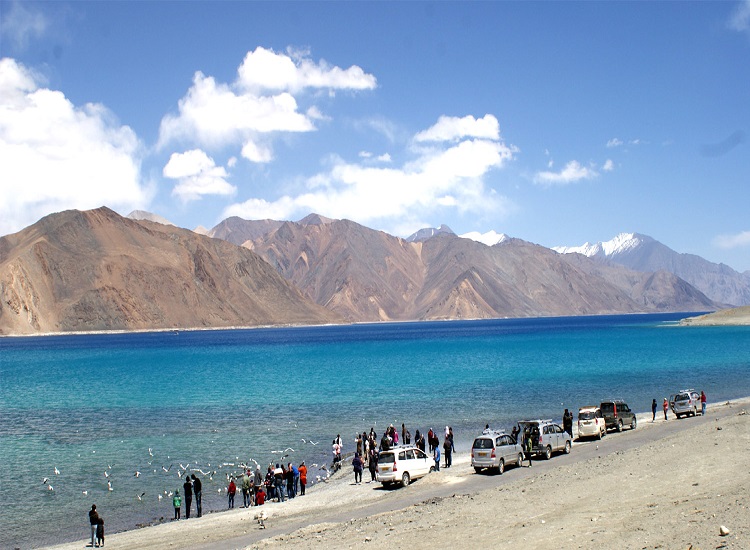








 Eduindex
You must be logged in to post a comment.