

No doubt corruption is one of the biggest obstacles in the growth of our nation. From the last 60 years corruption has deeply installed itself in very root of Indian society. Earlier corruption was mostly synonymous with Government officials. But today even the private sector has joined the race.
Corruption is defined as lack of integrity and honesty or to use a position of trust for personal benefits. In India for any kind of work that needed to be got done from government officer, he had to be bribed first. It does not matter whether the job was perfectly legal and part of his duty.
The corrupt employees went on to amass a large amount of wealth and lead a luxurious lifestyle. This corruption can be seen in every sphere of activity, from the sanctioning of loans to giving licenses or for booking the railway ticket and whether you want admission in a good college, you have to bribe first.
Today India has become an aspiring superpower with the fastest growing economy in the world, Indian companies are raking in millions. But sadly this has led to a more devastating form of corruption called ‘corporate corruption’. While the old corrupt employees of the olden days dealt with thousands or lakhs rupees and these modern corporates corrupt eat away millions of rupees. If all this money is put to use for developing the nation, we could easily feed the poor, treat the sick children, provide shelter to everyone, provide free education to deserving kids.
Some promising steps to root out corruption have come from government. A number of Investigative journalists through their sting operations and reports have nailed down quite a few high profile officers indulging in corruption. But still a lot more needs to be done. Each one of us can help in rooting out corruption by simply refusing to pay bribes to anyone, no matter how urgent our need is.
Category: Education
Education is the process of facilitating learning, or the acquisition of knowledge, skills, values, morals, beliefs, and habits.
The Prestige : Science or Magic
Directed by Christopher Nolan The Prestige based on the 1995 novel by Christopher Priest follows the story of 2 rival magicians set at the end of the 19th century London. The magicians Alfred Borden played by Christian Bale and Robert Angier played by Hugh Jackman are bitter rivals who once worked together and were good friends. Their friendship ended when Angier’s wife fails to escape a water tank trick due to a mistake made by Borden while tying her up. Thus began their rivalry as they both started their careers as stage magicians, always finding a way to one up each other. Angier takes the name “The Great Danton” continuing to work with John Cutter a stage engineer played by Michael Cain, Borden takes up the stage name “The Professor” and works with his mysterious partner Fallon.
Their rivalry continues when they keep trying to one up each other by performing seemingly impossible tricks, their rivalry takes dark turn when Angier sabotages one of Borden’s tricks. Angier replaces a bullet that Borden removed beforehand for a bullet catching trick, Angier plans to kill Borden but Fallon thwarts the attempt. This attempt on Borden’s life though unsuccessful causes him to loose 2 of his fingers and his reputation. Borden decides to make Angier pay by sabotaging one of his famous tricks the disappearing bird, when selected as a volunteer Borden messes with the contraption that hides the caged bird so that it not only kills the bird but injures another volunteer. This in turn diminishes Angier’s reputation as well.
Borden comes up with a new trick to regain his lost reputation, he seemingly teleports between 2 wardrobes almost instantaneously. Angier cant figure out the secret to the transporting man trick, he decides to imitate the trick by hiring a body double to come out the other wardrobe. The imitation is a success but Angier a very egoistical man hates the fact that his body double gets all the cheers. Borden easily sees through the ruse and sabotages Angier again by taking away the padding meant to dampen his fall when he falls through the wardrobe, this cripples Angier and fuels his hatred even more. Hell bent on getting the secret to the trick Angier acquires an encoded diary that belongs to Borden, he gets the key to decode the diary after threating Fallon’s life.
The Diary leads Angier to Nikola Tesla played by David Bowie who he believes to have created a machine for Borden. Angier travels to America hoping convince Tesla to build a machine for him. Angier finds out that the diary was just a distraction planted by Borden with the help of his assistant Oliva played by Scarlett Johansson, Tesla nevertheless decides to try and build such a machine for Angier. After numerous failed attempts Tesla and Angier are about to give-up when Mr. Alley Tesla’s assistant played by Andy Serkis discovers that the machine didn’t completely fail. The machine was cloning the objects placed inside it and transporting them a short distance away. Tesla warns Angier to not use the machine fearing the consequences.
The Prestige gives a tiny glimpse into the rivalry that still makes people think, it talks about the rivalry between Thomas Edison and Nikola Tesla. Its well known now that most of Tesla’s world changing ideas were opposed by Edison for being different.
The movie is definitely a complex one and I have chosen to leave the ending out, giving away the final plot device would make no sense. The end makes you think not just about the story but about emotions and makes you question yourself. This is must watch watch movie for anyone interested in Science Fiction. If you are like one of fans hoping for a crossover between DC and Marvel this movie is the closest we could ever get, we have Hugh Jackman who played the iconic Wolverine, Christian Bale who stared as Batman in a trilogy directed by Nolan himself and Scarlett Johansson who plays Black Widow.
In Conclusion its an amazing movie and definitely worth a watch.
Sustainability In India
Pollution is not just an undesirable outcome that causes environmental deterioration in India; it is also a major roadblock to growth and development in the country. It would have a negative effect on economic growth if it is not addressed properly and managed.
This resulted in a major shift in people’s attitudes and political will. Significant advances in clean energy technologies have opened the path for commercial possibilities arising from the ‘green economy transformation.’ Clean technology will be in high demand. Countries that adequately upskill and establish industry sectors to manufacture it stand to benefit greatly. They may earn profit from clean technology exports and earn access to global markets.
While India already is trying to make tremendous progress in the field of sustainability, there seems to be an imperative need to involve our country’s youth in order to fulfil our sustainable development goals.
Sustainability became one of the most defining terms of the twenty-first century, and for valid reason: the contemporary world is now struggling with the consequences of unrestricted consumption and production tendencies. Simply stated, even as our population grows and technology advances at a breakneck pace, our quality of life is progressively deteriorating. India, which is on the verge of a new age of growth, is at an important crossroads in terms of its approach to sustainability. While our nation has some of the lowest per-capita emissions in the world, we are the third-largest emitter globally. The two most significant hurdles to our approach to sustainability are our population and the swift pace of our economic progress.
India, though, has made significant progress as an aspiring change-maker in addressing climate change and developing development plans which are in line with the Sustainable Development Goals, that were implemented in September 2015 and encapsulate the social, environmental, and social dimensions of sustainability, as well as the abolition of all forms of poverty.
To that aim, attempts have been made to include all stakeholders – public and private – in the development of successful guidelines, implementation methods, and best practises. For example, in February 2018, a nationwide seminar on capacity building was organised with the objective of localising the SDGs. In December 2018, the NITI Aayog released the SDG India Index — Baseline Report 2018 to monitor the progress the states and union territories have made on the strategies and initiatives launched by the central government.
The country was also a significant participant in formulating the Paris Agreement and has implemented a variety of energy-efficiency initiatives. Sustainability is also an important aspect of Indian culture, thought, and beliefs. Rural areas, which accounted for about 70% of the nation’s population in 2011, maintain a modest and inexpensive way of living. According to Greendex, an international study on sustainable living which analyses how individuals respond to environmental issues in their housing, transportation, food, and products choices, India ranks first among 18 countries, including China and the United States.
India has also had one of the most effective programmes in terms of eliminating single-use plastic and promoting the Swachh Bharat campaign, an initiative launched by the central government. This has aided in increasing awareness beginning in primary school, with children asking their parents about their right to cleanliness.
That being said, as the economy develops and grows, there is a noticeable change in socio-economic patterns. The nation still has to confront several significant environmental challenges, particularly in terms of building sustainable communities.
Being one of the world’s youngest countries — 42% of India’s population is between the ages of 15 and 35, and this estimate is expected to rise to 55% in the coming 30 years — the youth in our country should be encouraged to develop environmentally friendly economic solutions.
|Ageing Dams|
India is ranked third in the world in terms of building large dams, of the over 5,200 large dams built so far, about 1,100 large dams have already reached 50 years of age and some are older than 120 years.
Minor and medium dam shelf-life is lower than large dams for example Krishna Raja Sagar dam built in 1931 is 90 years old and Mettur dam built in 1934 is 87 years old.
Implications of ageing dams:
In a paper ‘supply-side hydrology last gasp’ Rohan D’Souza writes the siltation rate of Bhakra dam is 130.86 % so at this rate it will function for merely 47 years as against the original estimate of 88 years.
When when the dams ages the soil replaces water, the supply of water decreases and this in turn leads to reduction in the cropped area as less water is received and which increases dependency on on the rain which is erratic in nature and groundwater is overexploited, the crop yield increases and farmers income thereby decreases.
By 2050 this will pose difficulties such as scarcity of water to feed the ever increasing population.
The flawed siltation rates reinforce the argument that designed flood cushions within several reservoirs across many river basins may have already depleted substantially due to which floods become more frequent downstream of dams. For example the flooding of Bharuch in 2020, Kerala in 2018 and Chennai 2015 a few examples attributed to downstream releases from reservoirs.
Way forward:
The way forward in the situation can be the building of medium or minor irrigation based small storage structures, identifying mechanisms to recharge aquifers and store water underground.
Hence, India will eventually feel difficulty in finding sufficient water in the 21st century to feed the rising population by 2050, grow abundant crops, create sustainable cities, or ensure growth. Therefore all stakeholders must come together to address this situation urgently.
What is Astrophysics?
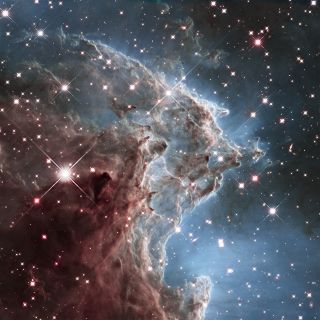
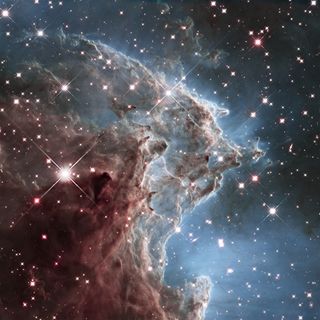
In the most rigid sense:
Astronomy measures positions, luminosities, motions and other characteristics
Astrophysics creates physical theories of small to medium-size structures in the universe
Cosmology does this for the largest structures, and the universe as a whole.
In practice, the three professions form a tight-knit family. Ask for the position of a nebula or what kind of light it emits, and the astronomer might answer first. Ask what the nebula is made of and how it formed and the astrophysicist will pipe up. Ask how the data fit with the formation of the universe, and the cosmologist would probably jump in. But watch out — for any of these questions, two or three may start talking at once!
Goals of astrophysics
Astrophysicists seek to understand the universe and our place in it. At NASA, the goals of astrophysics are “to discover how the universe works, explore how it began and evolved, and search for life on planets around other stars,” according NASA’s website.
NASA states that those goals produce three broad questions:
- How does the universe work?
- How did we get here?
- Are we alone?
It began with Newton
While astronomy is one of the oldest sciences, theoretical astrophysics began with Isaac Newton. Prior to Newton, astronomers described the motions of heavenly bodies using complex mathematical models without a physical basis. Newton showed that a single theory simultaneously explains the orbits of moons and planets in space and the trajectory of a cannonball on Earth. This added to the body of evidence for the (then) startling conclusion that the heavens and Earth are subject to the same physical laws.
Perhaps what most completely separated Newton’s model from previous ones is that it is predictive as well as descriptive. Based on aberrations in the orbit of Uranus, astronomers predicted the position of a new planet, which was then observed and named Neptune. Being predictive as well as descriptive is the sign of a mature science, and astrophysics is in this category.
Milestones in astrophysics
Because the only way we interact with distant objects is by observing the radiation they emit, much of astrophysics has to do with deducing theories that explain the mechanisms that produce this radiation, and provide ideas for how to extract the most information from it. The first ideas about the nature of stars emerged in the mid-19th century from the blossoming science of spectral analysis, which means observing the specific frequencies of light that particular substances absorb and emit when heated. Spectral analysis remains essential to the triumvirate of space sciences, both guiding and testing new theories.
Early spectroscopy provided the first evidence that stars contain substances also present on Earth. Spectroscopy revealed that some nebulae are purely gaseous, while some contain stars. This later helped cement the idea that some nebulae were not nebulae at all — they were other galaxies!
In the early 1920s, Cecilia Payne discovered, using spectroscopy, that stars are predominantly hydrogen (at least until their old age). The spectra of stars also allowed astrophysicists to determine the speed at which they move toward or away from Earth. Just like the sound a vehicle emits is different moving toward us or away from us, because of the Doppler shift, the spectra of stars will change in the same way. In the 1930s, by combining the Doppler shift and Einstein’s theory of general relativity, Edwin Hubble provided solid evidence that the universe is expanding. This is also predicted by Einstein’s theory, and together form the basis of the Big Bang Theory.
Also in the mid-19th century, the physicists Lord Kelvin (William Thomson) and Gustav Von Helmholtz speculated that gravitational collapse could power the sun, but eventually realized that energy produced this way would only last 100,000 years. Fifty years later, Einstein’s famous E=mc2 equation gave astrophysicists the first clue to what the true source of energy might be (although it turns out that gravitational collapse does play an important role). As nuclear physics, quantum mechanics and particle physics grew in the first half of the 20th century, it became possible to formulate theories for how nuclear fusion could power stars. These theories describe how stars form, live and die, and successfully explain the observed distribution of types of stars, their spectra, luminosities, ages and other features.
Astrophysics is the physics of stars and other distant bodies in the universe, but it also hits close to home. According to the Big Bang Theory, the first stars were almost entirely hydrogen. The nuclear fusion process that energizes them smashes together hydrogen atoms to form the heavier element helium. In 1957, the husband-and-wife astronomer team of Geoffrey and Margaret Burbidge, along with physicists William Alfred Fowler and Fred Hoyle, showed how, as stars age, they produce heavier and heavier elements, which they pass on to later generations of stars in ever-greater quantities. It is only in the final stages of the lives of more recent stars that the elements making up the Earth, such as iron (32.1 percent), oxygen (30.1 percent), silicon (15.1 percent), are produced. Another of these elements is carbon, which together with oxygen, make up the bulk of the mass of all living things, including us. Thus, astrophysics tells us that, while we are not all stars, we are all stardust.
Astrophysics as a career
Advertisement
Becoming an astrophysicist requires years of observation, training and work. But you can start becoming involved in a small way even in elementary and high school, by joining astronomy clubs, attending local astronomy events, taking free online courses in astronomy and astrophysics, and keeping up with news in the field on a website such as Space.com.
In college, students should aim to (eventually) complete a doctorate in astrophysics, and then take on a post-doctoral position in astrophysics. Astrophysicists can work for the government, university labs and, occasionally, private organizations.
Study.com further recommends the following steps to put you on the path to being an astrophysicist:
Take math and science classes all through high school. Make sure to take a wide variety of science classes. Astronomy and astrophysics often blend elements of biology, chemistry and other sciences to better understand phenomena in the universe. Also keep an eye out for any summer jobs or internships in math or science. Even volunteer work can help bolster your resume.
Pursue a math- or science-related bachelor’s degree. While a bachelor in astrophysics is the ideal, there are many other paths to that field. You can do undergraduate study in computer science, for example, which is important to help you analyze data. It’s best to speak to your high school guidance counselor or local university to find out what degree programs will help you.
Take on research opportunities. Many universities have labs in which students participate in discoveries — and sometimes even get published. Agencies such as NASA also offer internships from time to time.
Finish a doctorate in astrophysics. A Ph.D. is a long haul, but the U.S. Bureau of Labor Statistics points out that most astrophysicists do have a doctoral degree. Make sure to include courses in astronomy, computer science, mathematics, physics and statistics to have a wide base of knowledge.
Natalie Hinkel, a planetary astrophysicist who was then at Arizona State University, gave a lengthy interview with Lifehacker in 2015 that provided a glimpse into the rewards and challenges of being a junior astrophysics researcher. She described the long number of years she has put into doing her research, the frequent job switches, her work hours and what it’s like to be a woman in a competitive field. She also had an interesting insight about what she actually did day to day. Very little of her time is spent at the telescope.
“I spend the vast majority of my time programming. Most people assume that astronomers spend all of their time at telescopes, but that’s only a very small fraction of the job, if at all. I do some observations, but in the past few years I’ve only been observing twice for a total of about two weeks,” Hinkel told Lifehacker.
“Once you get the data, you have to reduce it (i.e. take out the bad parts and process it for real information), usually combine it with other data in order to see the whole picture, and then write a paper about your findings. Since each observation run typically yields data from multiple stars, you don’t need to spend all of your time at the telescope to have enough work.”
Energy-harvesting design aims to turn high-frequency electromagnetic waves into usable power
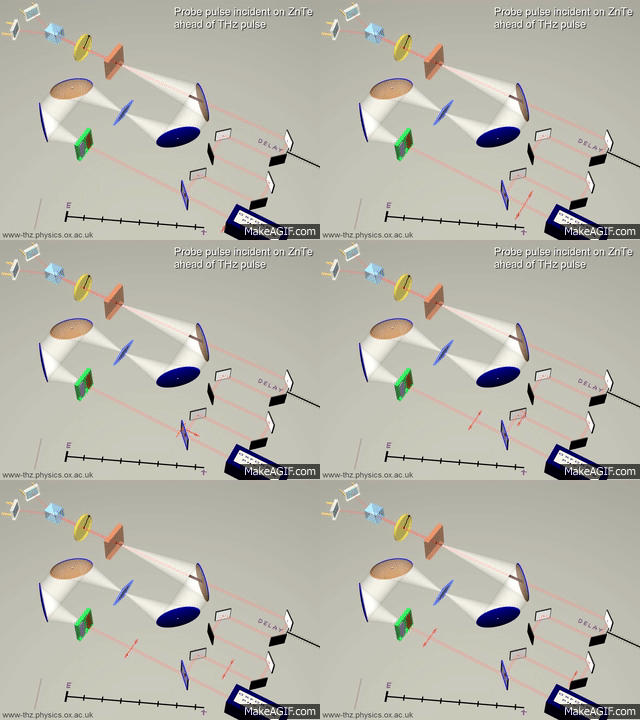
Device for harnessing terahertz radiation might help power some portable electronics.

Terahertz waves are electromagnetic radiation with a frequency somewhere between microwaves and infrared light. Also known as “T-rays,” they are produced by almost anything that registers a temperature, including our own bodies and the inanimate objects around us.
Terahertz waves are pervasive in our daily lives, and if harnessed, their concentrated power could potentially serve as an alternate energy source. However, to date there has been no practical way to capture and convert them into any usable form.
Now physicists at MIT have come up with a blueprint for a device they believe would be able to convert terahertz waves into a direct current, a form of electricity that powers many household electronics.
Their design takes advantage of the quantum mechanical, or atomic behavior of the carbon material graphene. They found that by combining graphene with another material, in this case, boron nitride, the electrons in graphene should skew their motion toward a common direction. Any incoming terahertz waves should “shuttle” graphene’s electrons, like so many tiny air traffic controllers, to flow through the material in a single direction, as a direct current.
The researchers have published their results today in the journal Science Advances, and are working with experimentalists to turn their design into a physical device.
“We are surrounded by electromagnetic waves,” says lead author Hiroki Isobe, a postdoc in MIT’s Materials Research Laboratory. “If we can convert that energy into an energy source we can use for daily life, that would help to address the energy challenges we are facing right now.”
Isobe’s co-authors are Liang Fu, the Lawrence C. and Sarah W. Biedenharn Career Development Associate Professor of Physics at MIT; and Su-yang Xu, a former MIT postdoc who is now an assistant professor chemistry at Harvard University.
Breaking graphene’s symmetry
Over the last decade, scientists have looked for ways to harvest and convert ambient energy into usable electrical energy. They have done so mainly through rectifiers, devices that are designed to convert electromagnetic waves from their oscillating (alternating) current to direct current.
Most rectifiers are designed to convert low-frequency waves such as radio waves, using an electrical circuit with diodes to generate an electric field that can steer radio waves through the device as a DC current. These rectifiers only work up to a certain frequency, and have not been able to accommodate the terahertz range.
A few experimental technologies that have been able to convert terahertz waves into DC current do so only at ultracold temperatures — setups that would be difficult to implement in practical applications.
Instead of turning electromagnetic waves into a DC current by applying an external electric field in a device, Isobe wondered whether, at a quantum mechanical level, a material’s own electrons could be induced to flow in one direction, in order to steer incoming terahertz waves into a DC current.
Such a material would have to be very clean, or free of impurities, in order for the electrons in the material to flow through without scattering off irregularities in the material. Graphene, he found, was the ideal starting material.
To direct graphene’s electrons to flow in one direction, he would have to break the material’s inherent symmetry, or what physicists call “inversion.” Normally, graphene’s electrons feel an equal force between them, meaning that any incoming energy would scatter the electrons in all directions, symmetrically. Isobe looked for ways to break graphene’s inversion and induce an asymmetric flow of electrons in response to incoming energy.
Looking through the literature, he found that others had experimented with graphene by placing it atop a layer of boron nitride, a similar honeycomb lattice made of two types of atoms — boron and nitrogen. They found that in this arrangement, the forces between graphene’s electrons were knocked out of balance: Electrons closer to boron felt a certain force while electrons closer to nitrogen experienced a different pull. The overall effect was what physicists call “skew scattering,” in which clouds of electrons skew their motion in one direction.
Isobe developed a systematic theoretical study of all the ways electrons in graphene might scatter in combination with an underlying substrate such as boron nitride, and how this electron scattering would affect any incoming electromagnetic waves, particularly in the terahertz frequency range.
He found that electrons were driven by incoming terahertz waves to skew in one direction, and this skew motion generates a DC current, if graphene were relatively pure. If too many impurities did exist in graphene, they would act as obstacles in the path of electron clouds, causing these clouds to scatter in all directions, rather than moving as one.
“With many impurities, this skewed motion just ends up oscillating, and any incoming terahertz energy is lost through this oscillation,” Isobe explains. “So we want a clean sample to effectively get a skewed motion.”
One direction
They also found that the stronger the incoming terahertz energy, the more of that energy a device can convert to DC current. This means that any device that converts T-rays should also include a way to concentrate those waves before they enter the device.
With all this in mind, the researchers drew up a blueprint for a terahertz rectifier that consists of a small square of graphene that sits atop a layer of boron nitride and is sandwiched within an antenna that would collect and concentrate ambient terahertz radiation, boosting its signal enough to convert it into a DC current.
“This would work very much like a solar cell, except for a different frequency range, to passively collect and convert ambient energy,” Fu says.
The team has filed a patent for the new “high-frequency rectification” design, and the researchers are working with experimental physicists at MIT to develop a physical device based on their design, which should be able to work at room temperature, versus the ultracold temperatures required for previous terahertz rectifiers and detectors.
“If a device works at room temperature, we can use it for many portable applications,” Isobe says.
He envisions that, in the near future, terahertz rectifiers may be used, for instance, to wirelessly power implants in a patient’s body, without requiring surgery to change an implant’s batteries.
“We are taking a quantum material with some asymmetry at the atomic scale, that can now be utilized, which opens up a lot of possibilities,” Fu says.
This research was funded in part by the U.S. Army Research Laboratory and the U.S. Army Research Office through the Institute for Soldier Nanotechnologies (ISN).
Juvenile Delinquency ( Meaning , Definitions Causes and Prevention Measures )
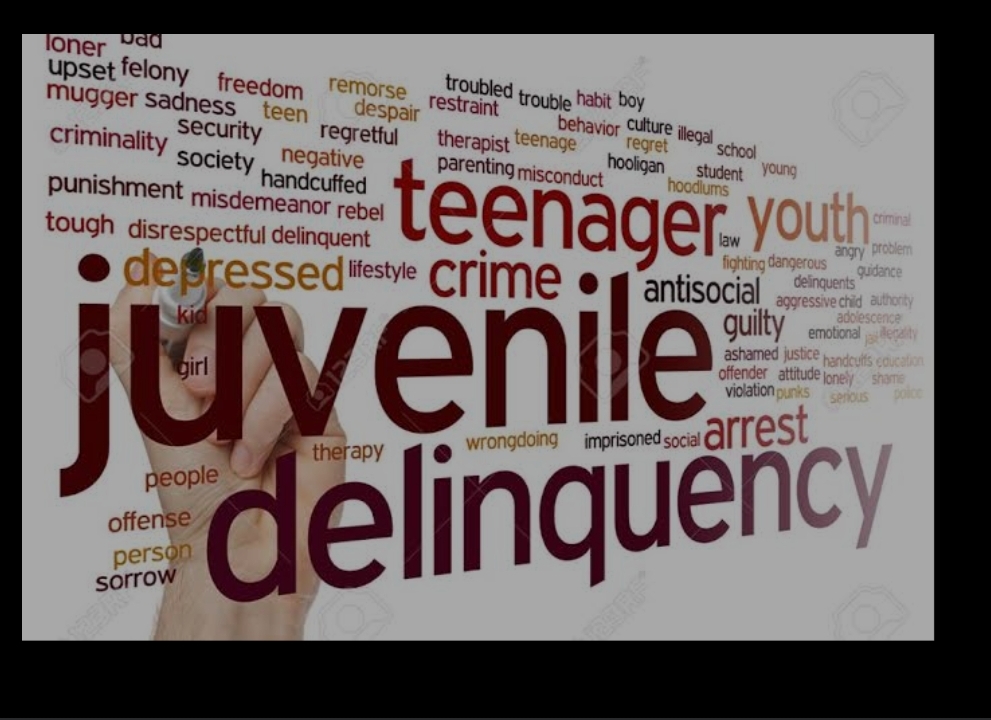
Juvenile Delinquency is one of the most serious problems of the society , a huge cause of disorganisation.
Mr. G.C.Dutt states,
“Juvenile Delinquency is rapidly becoming a serious menace in India and with the progressive industrialization of many parts of the country , this problem will soon assume the same proportion as many of the Western Countries . ”
What is Juvenile Delinquency ?
Delinquency undoubtedly is a social evil.
It is a socially unacceptable behaviour .Delinquency in general means misconduct .
When an individual deviates from the course of normal social life ,his behaviour is called delinquency.
Delinquency implies conduct that does not conform to the legal or moral standards of society; it usually applies only to acts that, if performed by an adult, would be termed criminal.
Delinquency in the view of Coleman (1981) refers to “behaviour of youths under 18 years of age which is not acceptable to society and is generally regarded as calling for some kind of admonishment, punishment or corrective actions”.
Delinquency includes all sorts of crimes committed by children.
Starting from the business and use of illegal drugs and homicide murder, it may include various types of dangerous criminal offences.
It is a crime categorized mainly based on age. The age of juvenile delinquency has not been similarly determined in all countries . It varies from country to country but is within the usual limits of 16 and 20 .
Definitions :-
Cyril Burt defines delinquency as occurring in a child ” When his antisocial tendencies appear so grave that they become the subject of official action .”
Friedlander says , ” Delinquency is a juvenile misconduct that might be dealt with under the law .”
The Second United Nations Congress on the Prevention of Crime and Treatment of Offenders (1960) states , ” By juvenile Delinquency should be understood the commission of an act which , if committed by an adult , would be considered a crime .”
C.B Mamoria writes , ” The phrase ‘ juvenile delinquency ‘ may be loosely used to cover any kind of deviant behaviour of children which violates normative rules , understanding or expectations of the social system .”
In simple words , juvenile delinquency is a type of abnormal or antisocial behaviour by a juvenile who is below an age specified by statute .
Who is a juvenile delinquent ?
Juvenile delinquents are minors, usually defined as being between the ages of 10 and 18, who have committed some act that violates the law. Read on to learn about different types of delinquent acts as well as how to detect and prevent juvenile delinquency.
Deliquescent acts may include running away from home , spending time idly beyond limits , visiting gambling centers , committing sexual offences etc.
Offence Committed :-
Offenses committed by juveniles aren’t called “crimes” as they are for adults.
Rather, crimes committed by minors are called “delinquent acts.”
Instead of a trial, the juvenile has an “adjudication,” in which they receive a “disposition” and a sentence.
Juvenile proceedings differ from adult proceedings in a number of other ways as well.
Delinquent acts generally fall into two categories.
The first type of delinquent act is one that would be considered a crime had an adult committed it. For particularly serious crimes, some jurisdictions will even try children as adults. When children are tried as juveniles, on the other hand, parents are often required to pay the court costs for the child.
The second type of delinquent act is one that wouldn’t normally be a crime had an adult performed it. These are typically known as “status” offenses since it’s considered an offense because of the person’s age. The most common examples of status offenses are staying out past curfew, alcohol possession or consumption, and truancy, which is the continued failure to attend school.
Causes of Juvenile delinquency :-

There’s no single cause or simple reason for the development of delinquent behaviour .
Causes can be external factors including social elements or internal factors including physical and psychological Causes.
In the book , “ Approach and Concept of Criminology “ , the causes of Juvenile delinquency may be classified under two major factors
• Social Factors
• Personality Factors
1) Social Factors includes :–
• Family:-
The major situations in the family that cause many factors that may lead to juvenile delinquency .
Situations such as a broken house , attitude of parents , conduct of parents etc.
A study of juvenile delinquency has revealed that the greatest number of delinquents come from broken families . A broken family ,as the term indicates home where all ties are broken ,where there’s no interaction or family love to make one feel like they belong .
Interaction in home is a very important means for teaching the child socialisation .
Lack of parents’ affection , security , absence of loving mother or father etc. has a huge contribution in factors in spreading juvenile delinquency.
• Poverty :-
Crime and poverty are intimately related. Study conducted by Shaw , McKay and Elliot revealed that among juvenile delinquents a majority belonged to families with a high poverty ratio .
According to Bonger and Fornasiri , poverty acts as an incentive to crime .
Poverty compels the children to consciously or unconsciously join hands with gangsters and become delinquents.
Poverty leads to family quarrels and dissensions , inadequate education , lack of affection from parents , necessity of basic life products etc. which are more active factors that lead to juvenile delinquency behaviour .
• Delinquency Areas :-
The delinquents come mostly from the areas that are underground , crime dominated , liquor shops , motels and clubs etc. Such a neighborhood places a high influence upon a child .
• Bad Company :-
Charles Shaw said ,” delinquency is a product of community forces ” .
As a child grows older he goes into the neighborhood and becomes a member of the peer group . If by chance he joined the group or the gang that fosters delinquent attitudes he is likely to become a delinquent.
In slum areas peculiar social groups called gangs are found . These gangs are found to be associated with crime in all aspects like delinquency , rioting , corrupt politics , etc.
According to famous criminologist Edwin H. Sutherland , criminal behaviour is acquired through interactions with others .
Hence , bad companionship leads to juvenile delinquency behaviour.
• School Dissatisfaction :-
Some students get dissatisfied with school life and such dissatisfaction makes them regularly absentee , wandering around in the streets forming gangs if their own , gambling , eve teasing , pickpocketing , smoking , drugs etc. leads them on .
2) Personality Factors
Personality factors are mainly factors related to mental deficiency and emotional disturbances .
• Mental Deficiency
It has been observed that a good number of delinquents are mentally deficient .
Some Psychiatrists and neurologists believe that the psychopathic personality is a cause of crime .
According to Tappan , psychopathic children are very crude , obstinate , suspicious , self centered , lonely , revengeful , hyper sexual , etc .
Such persons are devoid of repentance over their own crude doing and the pain and suffering of others.
• Emotionally/ Psychological Problems of the Individual :-
Emotional instability is one of the most common causes of crime .
A child’s personality is rendered unbalanced through lack of love and affection, emotional insecurity , strict discipline , feeling of insufficiency and inferiority, such factors that inspire the mind of the child to criminal behavior.
From a psychological point of view , “Delinquency is a rebellion and an expression of aggression which is aimed at destroying , breaking down or changing the environment .”
This rebellion is mostly against the social conditions which deny the individual his basic rights and the satisfaction of his fundamental needs . Thus delinquents are not born but they become so due to social circumstances and personal deficiencies .
The delinquent individual who is governed by the “pleasure principle “ wants to get immediate pleasure and immediate satisfaction for his needs and so they become a victim to his own impulses.
Remedies For Juvenile Delinquency
It is said , “ a delinquent child today may turn out to be a chronic criminal tomorrow “.
Discussions have been made at national and international level by scholars to seek out effective remedies for this problem .
The three most suggested methods are
• Preventive measures
• Rehabilitative or curative measures.
• Legislative Measures
1) Preventive Measures
• Giving proper training to the members and staff of all organisations concerned with delinquency control .
• Establishing child guidance clinics to give appropriate treatment to the disturbed and maladjusted children.
• Educating the family so as to help the parents to realise the importance of giving proper attention to the needs of their young children .
• Establishing wholesome recreational agencies to prevent young children from becoming law abiding .
• Improving the social environment – slum areas , busy market places , gambling centers etc .
• Spotting potential delinquents by predictive tests in schools or society and giving treatment to such cases.
• The problem of beggary and poverty are to be removed or controlled and the general economic standards of the people must be increased to prevent children from becoming delinquents due to economic exigencies.
2) Rehabilitation or Curative Measures
The main purpose of the method of rehabilitation is not to punish or to treat them mentally disabled but the intention is to help the delinquent children to get proper guidance and training so that they don’t become victims of their own impulses and lead a normal life .
Some institutions to rehabilitate Juvenile Delinquents :-
• Juvenile Courts :- Juvenile Courts are established in order to treat Juvenile delinquents and adult criminals separately. There are currently 39 Juvenile Courts in India .
This court is different from the normal civil courts . Juvenile delinquents cannot be chained or produced to courts by police , no advocate arrangements are made for plead .
The intention behind this treatment is to create positive feelings in the minds of juveniles .
• Remand Homes :- When a child is arrested under the Act ,he is produced before the magistrate within 24 hours and kept in Remand Homes till the case is investigated.
The child is kept until the final disposal of the case .. Sometimes persons convicted are sent to Remand Homes for a few days and released later .
• Certified School :- Certified Schools are established to give some general education and technical training to children . Children are sent for long term treatment and voluntary bodies or local authorities with financial assistance of the government and the public .
There are two types of schools :-
• Junior School for under 12
• Seniors Schools for under 16
The children are confined here for about 2 to 3 years .
After the release they are put under the charge of a Welfare or Probation officer who watches their activities .
• Auxiliary Homes :- The auxiliary homes are attached to Certified Schools just like remand homes are to juvenile courts . Here the convicted delinquents are kept for some time and studied by a social worker and sent later to certified school on the basis of their attitude and behaviour.
• Reformatory Schools :- In states where there are no Children Acts , Reformatory Schools are established . They are meant for the education and vocational training of delinquent children. The young convicted offenders below 15 years are detained here for 3to 7 years . The delinquents are removed from bad environments through these schools .
• Borstal Institutions :- Under Borstal Institutions special treatment is provided for adolescent offenders between the ages of 15 to 21 years . Offenders are sent to Borstal Institutions for rehabilitation rather than kept under imprisonment . The term of Borstal Institutions are 2 to 3 year but may exceed in any serious case . Separate arrangements are made for offenders , training , physical and education are given to prevent them from committing offences again .
Fit persons Institutions and Uncared Children Institutions :- These two non government institutions managed by private bodies and give refuge and protection to destitutes , neglected children and children in pre – delinquent stage .
3) .
Legislative Measures :-
Various legislations have been made in India from time to time to deal with juvenile delinquency .
Some acts are :-
• Apprentices Act of 1850
• Reformatory Schools Act 1897
• Children Acts
• Juvenile Smoking Acts
• Suppression of Immoral Traffic Acts .
• Probation of Offenders Act
• Borstal Schools Act for Adolescents.
• Provision in the Criminal Procedure Code ( under section 399 of ICPC )
A grave problem such as juvenile delinquency cannot be solved by means of legislation , government or private institutions efforts alone . The public attitude towards juvenile delinquents must also change to make them feel accepted and initiate their treatment as a cure not abnormality .
A juvenile delinquent is a product of unwholesome environmental factors hence in order to change his attitude he needs to be supported emotionally , mentally and physically by all .
Water on Mars: Exploration & Evidence


Liquid water may still flow on Mars, but that doesn’t mean it’s easy to spot. The search for water on the Red Planet has taken more than 15 years to turn up definitive signs that liquid flows on the surface today. In the past, however, rivers and oceans may have covered the land. Where did all of the liquid water go? Why? How much of it still remains?
Observations of the Red Planet indicate that rivers and oceans may have been prominent features in its early history. Billions of years ago, Mars was a warm and wet world that could have supported microbial life in some regions. But the planet is smaller than Earth, with less gravity and a thinner atmosphere. Over time, as liquid water evaporated, more and more of it escaped into space, allowing less to fall back to the surface of the planet.
Where is the water today?
Liquid water appears to flow from some steep, relatively warm slopes on the Martian surface. Features known as recurring slope lineae (RSL) were first identified in 2011in images taken by the High Resolution Imaging Science Experiment (HiRISE) camera aboard the Mars Reconnaissance Orbiter (MRO). The dark streaks, which appear seasonally, were confirmed to be signs of salty water running on the surface of the planet.
“If this is correct, then RSL on Mars may represent the surface expression of a far more significant ongoing drainage system on steep slopes in the mid-latitudes,” a research team member told Space.com in 2012.
In 2015, spectral analysis of RSL led scientists to conclude they are caused by salty liquid water. [Related: Salty Water Flows on Mars Today, Boosting Odds for Life]
“The detection of hydrated salts on these slopes means that water plays a vital role in the formation of these streaks,” the study’s lead author, Lujendra Ojha, of the Georgia Institute of Technology in Atlanta, said in a statement. Vast deposits of water appear to be trapped within the ice caps at the north and south poles of the planet. Each summer, as temperatures increase, the caps shrink slightly as their contents skip straight from solid to gas form, but in the winter, cooler temperatures cause them to grow to latitudes as low as 45 degrees, or halfway to the equator. The caps are an average of 2 miles (3 kilometers) thick and, if completely melted, could cover the Martian surface with about 18 feet (5.6 meters) of water.
Frozen water also lies beneath the surface. Scientists discovered a slab of ice as large as California and Texas combined in the region between the equator and north pole of the Red Planet. The presence of subsurface water has long been suspected but required the appearance of strange layered craters to confirm. Other regions of the planet may contain frozen water, as well. Some high-latitude regions seem to boast patterned ground-shapes that may have formed as permafrost in the soil freezes and thaws over time.
The European Space Agency’s Mars Express spacecraft captured images of sheets of ice in the cooler, shadowed bottoms of craters, which suggests that liquid water can pool under appropriate conditions. Other craters identified by NASA’s Mars Reconnaissance Orbiter show similar pooling.
Evidence for water on Mars first came to light in 2000, with the appearance of gullies that suggested a liquid origin. Their formation has been hotly debated over the ensuing years.
But not everyone thinks that Mars contains water today. New research reveals that RSL may actually have formed by granular flows formed by the movement of sand and dust.
“We’ve thought of RSL as possible liquid water flows, but the slopes are more like what we expect for dry sand,” lead author Colin Dundas said in a statement. “This new understanding of RLS supports other evidence that shows that Mars today is very dry.”
That idea may have been washed away by the recent discovery of a possible subsurface lake near the Martian South Pole.
An underground lake?
Researchers made a big splash when they announced that Mars might be hiding a lake beneath its southern pole. The European Mars Express spacecraft used its Mars Advanced Radar for Subsurface and Ionosphere Sounding (MARSIS) to detect the proposed water. Ground-penetrating radar sent radar pulses to the surface, then timed how long it took for them to be reflected. The properties of the subsurface layers affect how long it takes for the beams to return.
MARSIS’ investigation revealed that the Martian south pole is composed of multiple layers of ice and dust to a depth of about nearly 1 mile (1.5 kilometers) spread over a 124-mile-wide (200 km) region.
“This subsurface anomaly on Mars has radar properties matching water or water-rich sediments,” Roberto Orosei, principal investigator of the MARSIS experiment and lead author of the new research, said in a statement.
MARSIS also revealed the presence of a subsurface lake among the pockets. According to the radar echoes, the lake is no more than 12.5 miles (20 km) across, buried nearly a mile beneath the surface. The scientists aren’t certain of the lake’s depth, but they have confirmed that it is at least 3 feet (1 meter) deep. According to the researchers, the lake must have salt to keep from freezing.
“This is just one small study area; it is an exciting prospect to think there could be more of these underground pockets of water elsewhere, yet to be discovered,” Orosei said.
Not all researchers are as certain about the presence of liquid water.
“I think it’s a very, very persuasive argument, but it’s not a conclusive or definitive argument,” Steve Clifford, a Mars researcher at the Planetary Science Institute in Arizona, told Space.com. “There’s always the possibility that conditions that we haven’t foreseen exist at the base of the cap and are responsible for this bright reflection.”
More than three decades ago, Clifford proposed that Mars could harbor liquid water beneath its polar caps in the same way that Earth does. On Earth, lakes beneath the Antarctic and Greenland ice sheets are created when heat from within the planets melt the glaciers in patches. Clifford told Space.com that a similar scenario could happen beneath the Martian polar ice caps.
“The bright spot seen in the MARSIS data is an unusual feature and extremely intriguing,” Jim Green, NASA’s chief scientist, said in a statement. “It definitely warrants further study. Additional lines of evidence should be pursued to test the interpretation.”
“We hope to use other instruments to study it further in the future,” Green said.
Liquid gold
Water may seem like a very common element to those of us stuck on Earth, but it has great value. In addition to understanding how Mars may have changed and developed over time, scientists hope that finding water will help them to find something even more valuable — life, either past or present.
Only Earth is known to host life, and life on our planet requires water. Though life could conceivably evolve without relying on this precious liquid, scientists can only work with what they know. Thus they hope that locating water on celestial bodies such as Mars will lead to finding evidence for life.
With this in mind, NASA developed a strategy for exploring the Red Planet that takes as its mantra “follow the water.” Recent orbiters, landers, and rovers sent to Mars were designed to search for water, rather than life, in the hopes of finding environments where life could have thrived.
That has changed, however, with the flood of evidence these robots have returned. Curiosity determined that Mars could indeed have supported microbial life in the ancient past, and the next NASA rover — a car-size robot-based heavily on Curiosity’s basic design — will blast off in 2020 to look for evidence of past Red Planet life.
Elon Musk
Elon Reeve Musk is an entrepreneur and business magnate. He is the founder, CEO, and Chief Engineer at SpaceX; early stage investor,[note 2] CEO, and Product Architect of Tesla, Inc.; founder of The Boring Company; and co-founder of Neuralink and OpenAI. A centibillionaire, Musk is one of the richest people in the world.
Musk was born to a Canadian mother and South African father and raised in Pretoria, South Africa. He briefly attended the University of Pretoria before moving to Canada aged 17 to attend Queen’s University. He transferred to the University of Pennsylvania two years later, where he received bachelor’s degrees in economics and physics. He moved to California in 1995 to attend Stanford University but decided instead to pursue a business career, co-founding the web software company Zip2 with brother Kimbal. The startup was acquired by Compaq for $307 million in 1999. Musk co-founded online bank X.com that same year, which merged with Confinity in 2000 to form PayPal. The company was bought by eBay in 2002 for $1.5 billion.
In 2002, Musk founded SpaceX, an aerospace manufacturer and space transport services company, of which he is CEO and CTO. In 2004, he joined electric vehicle manufacturer Tesla Motors, Inc. (now Tesla, Inc.) as chairman and product architect, becoming its CEO in 2008. In 2006, he helped create SolarCity, a solar energy services company that was later acquired by Tesla and became Tesla Energy. In 2015, he co-founded OpenAI, a nonprofit research company that promotes friendly artificial intelligence. In 2016, he co-founded Neuralink, a neurotechnology company focused on developing brain–computer interfaces, and founded The Boring Company, a tunnel construction company. Musk has proposed the Hyperloop, a high-speed vactrain transportation system.
Musk has been the subject of criticism due to unorthodox or unscientific stances and highly publicized controversies. In 2018, he was sued for defamation by a diver who advised in the Tham Luang cave rescue; a California jury ruled in favor of Musk. In the same year, he was sued by the US Securities and Exchange Commission (SEC) for falsely tweeting that he had secured funding for a private takeover of Tesla. He settled with the SEC, temporarily stepping down from his chairmanship and accepting limitations on his Twitter usage. Musk has spread misinformation about the COVID-19 pandemic and has received criticism from experts for his other views on such matters as artificial intelligence and public transport.
Top 2 entrance exams other than JEE MAIN and JEE ADVANCE
Every students want to go IIT(Indian Institute of Technology) because IIT are the top prestigious engineering colleges in India. There are overall 23 IITs in India. The only way to get into IIT is JEE Advance, to write JEE advance you have to first qualify in JEE main then only you can write JEE advance. Around 15 lakhs of students every year write JEE main, in which 2,50,000 students qualify to write JEE advance. In that 2,50,000 lakhs students your rank has to come under 2,000 then only you can get admission in IIT. This blog is for those who doesn’t qualify in IIT. In this blog, I am going to tell you some other entrance exams other than JEE.

TOP ENTRANCE EXAMS OTHER THAN JEE MAIN AND ADVANCE
- BITSAT
Birla Institute of Technology and Science(Bits) is a private university in India that conducts BITSAT( Birla Institute of Technology and Science Aptitude test) entrance exam every year. It is a computer based test conduced every year to get admission in first year degree programs like BE(Bachelor of Engineering), MSc(Master of Science), and Pharma in Bits. It has three campuses in India(Hyderabad, Goa and Pilani) and one in Dubai(UAE).
Eligibility criteria
1. Student should have passed class 12 from a recognized board with physics, chemistry and mathematics with 75 percent marks in each subject.
2. Candidate should be proficient in English.
3. Candidates already studying in Bits are not eligible to write Bitsat.
About the Examination
- The duration of the exam is 3 hours.
- All questions are multiple choice question only.
- The exam has 4 section physics, chemistry, biology, and English proficiency and logical thinking.
- Medium of paper is English.
Marking scheme
- For every correct answer 3 marks are awarded.
- For every wrong answer 1 mark is deducted.
- For untried question no marks are awarded.
2. KVPY
KVPY stands for Kishore Vaigyanik Protsahan Yojana is a national level scholarship program is conducted to encourage students in basic sciences courses. It is funded of department of science and technology of India. Students who qualify in Kvpy will receive scholarship. Also if you qualify in Kvpy you can get admission in top institutions like IISc Bangalore, IISER, IIITs, and other Research institutes. Class 11th, 12th and those who in 1st year of there under graduation are eligible for the exam.
Eligibility criteria
- There are 3 streams in KVPY. They are SA, SX, and SB. Students in class 11 comes under SA stream, class 12 students come under SX stream and undergraduate 1st year students comes under SB stream.
- Students must be enrolled in science stream.
About the Exam
- The duration of the exam is 3 hours.
- The exam has 4 sections physics, chemistry, mathematics and biology.
- The paper consists of two parts, part 1 and part 2.
- Part 1 consist of 60 questions.
- Part 2 consist of 20 questions.
- The mode of the exam is Online.
- Medium of the exam is English and Hindi.
Marking Scheme
- The paper consists of 100 marks.
- In part 1, for every correct answer 1 mark is awarded.
- In part 1, for every wrong answer 0.25 mark is deducted.
- In part 2, for every correct answer 2 marks are awarded.
- In part 2, for every wrong answer 0.5 mark are deducted.
I hope you like this blog, if you like please like and rate it.
Autism is Normal
Have you ever met an autistic child? If you have, you must have noticed some irregular behavior in them. This behavior may include repetitive body movements such as rocking, clapping, spinning and you can also notice obsessive attachment towards strange articles such as switches, boxes, rubber bands, etc.
There is no particular reason for this condition but genetics can be a reason for this condition.
After brain scans, it is seen that the shape and size of a brain in an autistic child is bigger as compared to a typical child.
They find it difficult to communicate and won’t be able to express their emotions to us too but that doesn’t mean they don’t feel any emotions.

Their way of loving and caring is unique in its own way and many would even fail to understand it.
Taking care of an autistic child is far more difficult than raising a normal child. It takes a lot of time to understand the behavior and act accordingly.
There are few tips to remember while taking care of an autistic child.
• Be patient
• Follow a schedule
• Create a safe environment in the house
• Pay attention to the child’s sensory sensitivities.
• Show love and Interest

Therapy For Autism
There is no cure for autism but there are various therapies available to reduce the symptoms and focus on development and learning.
There are different therapies available such as
• Speech Therapy
• Applied Behavior Analysis
• Sensory Processing
• Play Therapy
• Occupational Therapy, etc
Even an autistic child deserves the same love as a normal child and has all the rights to study and grow among other children. Autism is normal.
Dr. Ambedkar’s philosophy of caste in India
In India Caste System consists of two different concepts that are Varna and
Jati, the real concept of Varna has almost disappeared in the present
context and has changed into Jati. Caste is such a deep-rooted and pervasive
concept, it is a rigid form of stratification system, in which mobility of rank
and status is not allowed. The members of backward classes are not a part
of Hindu society even then, they had started observing untouchability
towards Dalits- who themselves have a caste hierarchy.
During his lifetime Dr. Ambedkar had played three roles: caste leader,
untouchable spokesman, and that of a national statesman. He was a guide,
guru, and decision-maker for his caste, the Mahars of Maharashtra.
According to him, no civilized society other than Indian one practices rituals
of the remote past even today. Its religion is essentially primitive, and its
tribal code, despite the advancement of time and civilization, operates with
all its pristine vigor even today. The prevalence of exogamy was well-known
in the primitive world. The caste system has made Hindu society stagnant
which creates hurdles in integration with outsiders. Even internally, Hindu
society fails to satisfy the test of a homogeneous society, as it is just a
conglomeration of different castes. The caste system does not allow lower
castes to prosper which led to moral degradation. The battle for the removal
of untouchability becomes the battle for human rights and justice.
Dr. Ambedkar criticized old Law books like Manusmriti and Arthshastras
who showed the inferiority and bitterness towards the suppressed class. He
also criticized the higher standard of Brahmans who are category above of
all. The Brahmans are somehow responsible for social exploitation and the
backwardness of untouchables.
How to be a great leader
How can you describe a great leader? Great leaders aren’t always found with title CEO or manager on their business card.
Anyone can demonstrate leadership qualities.
It’s not about winning a popularity contest. You don’t have to be liked to be respected. It’s about serving and influencing others regardless of their job title in the effort to achieve a certain goal. More than anything, it’s about creating harmony in an environment where people want to work together.
In one study, leadership qualities such as assertiveness, adaptability, intelligence, and conscientiousness were cited as the most important. Transformational leaders are positive, empowering, and inspiring. They value followers and inspire them to perform better. So what can you do to embrace these valued leadership qualities and become a stronger and more effective leader?
Transformational leadership are usually described as enthusiastic, passionate, genuine and energetic. These leaders are not just concerned about helping the group achieve its goals; they also care about helping each member of the group reach his or her full potential.
Leadership can be a struggle to develop, as there are intrinsic qualities that are tough to cultivate.
But if you’re willing to face the challenge, and follow these guidelines, then you’ll be on the right path to becoming the leader your business needs to succeed.
Encourage Creativity
Intellectual stimulation is one of the leadership qualities that define transformational leadership. Followers need to be encouraged to express their creativity. Effective leaders should offer new challenges with ample support to achieve these goals.
Serve as a Role Model
Idealized influence is another of the four key components of transformational leadership. Transformational leaders exemplify the behaviors and characteristics that they encourage in their followers. They walk the walk and talk the talk. As a result, group members admire these leaders and work to emulate these behaviors.
Be Passionate
You can develop this leadership quality by thinking of different ways that you can express your zeal. Let people know that you care about their progress. When one person shares something with the rest of the group, be sure to tell them how much you appreciate such contributions.
Listen and Communicate Effectively
By keeping the lines of communication open, these leaders can ensure that group members feel able to make contributions and receive recognition for their achievements.
Have a Positive Attitude
Even when things look bleak and your followers start to feel disheartened, try to stay positive. This does not mean viewing things through rose-colored glasses. It simply means maintaining a sense of optimism and hope in the face of challenges.
ACIDIFICATION OF THE OCEANS AND ITS CONSEQUENCES
Ocean acidification is defined as a drop in the pH of the ocean over time, largely due to the uptake of carbon dioxide (CO2) from the atmosphere. Defining it simply, as we all know human activities releases CO2 into the atmosphere which leads to atmospheric warming and climate change. The seas absorb around a third to half of the CO2 produced by human activities. While this serves to slow atmospheric warming and climate change, it also has a direct chemical impact on seawater, which we refer to as ocean acidification.
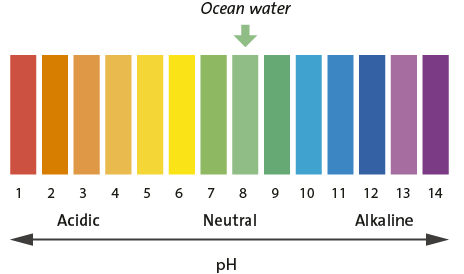
pH as mentioned above is frequently used to describe ocean acidification. The pH scale measures acidity and alkalinity. A pH of less than 7 is acidic, whereas a pH of higher than 7 is alkaline, or basic.
Currently, the average pH of ocean water is 8.1. Because the pH scale is logarithmic, a one-point change in concentration corresponds to a tenfold change in concentration. Carbon dioxide (CO2) levels in the atmosphere have been rising for more than 200 years, or since the industrial revolution, mainly to the combustion of fossil fuels and changes in land use. The ocean absorbs roughly 30% of the CO2 that is emitted into the atmosphere, and as atmospheric CO2 levels rise, so do ocean CO2 levels.
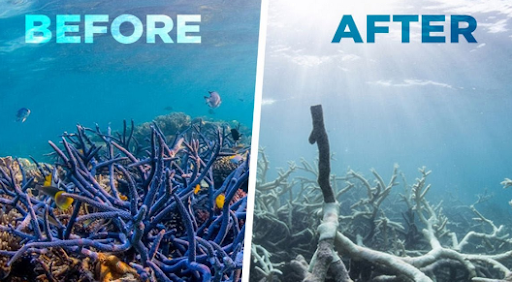
As a consequence, the median pH of ocean surface waters has dropped somewhat, from 8.2 to 8.1. This translates to a 26% increase in ocean acidity, which is about 10 times quicker than any other period in the previous 55 million years.
But now, the question arises why the seawater becomes acidic. So to answer this we must understand that When co2 is consumed by seawater, it triggers a chain of chemical processes that result in an increase in hydrogen ion concentration. As a result of this rise, saltwater becomes more acidic and carbonate ions become less prevalent. Carbonate ions are essential mainly for marine shells and carol skeletons because these ions are the building components of it. Reduced carbonate ions can make it difficult for calcifying animals including oysters, sea urchins, shallow water corals, deep sea corals, and calcareous plankton to develop and maintain shells and other calcium carbonate structures.
Due to such increased acidification, whole world’s seas especially coastal estuaries and rivers, are being affected by ocean acidification and it eventually affects the ocean chemistry because In more acidic environments, certain fish’s ability to detect predators is harmed. And when these creatures feel threatened, the entire food web feel threatened as well.
Taking the future world in view, due to the increase in atmospheric co2 , it will have a direct impact on the degree of future ocean acidification. So if, current greenhouse gas emissions continue, ocean acidity might rise by 0.4 units by the end of the century. However, Ocean acidification will not be consistent throughout the planet. Polar waters and upwelling zones, which are frequently located along continents’ west coastlines, are predicted to acidify more quickly than temperate or tropical regions. Depending on the environment, the pH will vary substantially.
Therefore, While the ultimate answer to lessen the ocean acidification is to reduce global greenhouse gas emissions. It can be done by adopting certain difficult decisions and activities which can help us prepare for the negative impacts of ocean acidification. On a smaller scale, Water quality improvements, Development of fisheries management methods that are sustainable, New technology implementation such as development of aquaculture industry and protecting Marine ecosystems that are very fragile and endangered may assist marine ecosystems adapt better with changing environmental circumstances by mitigating the negative impacts of other local factors.
Indian cabinet
Council of ministers
The Constitution of India provides for a parliamentary system of government or Cabinet form of government modelled on the British pattern, the council of ministers headed by the prime minister is the real executive authority.
Salient Features of Cabinet form of government
•Dual executive: There are two executives – the real executive and the Nominal executive.
•Nominal executive is the head of state (president)
•Real executive is the head of government (Prime minister)
•The party with the greatest representation forms the government
•Dual Membership – ministers are members of both legislature and executive
•Collective Responsibility- PM and his council of ministers are collectively responsible to the Loksabha
The word Cabinet has not been mentioned anywhere in the constitution except in Article 352. Instead, the constitution gave detailed provisions regarding Council of ministers
•Art 74
◆There shall be a Council of Ministers with the Prime Minister at the head to aid and advise the President who shall, in the exercise of his functions, act in accordance with such advice
◆The advice tendered by Ministers to the President shall not be inquired into in any court
●Art 75
Appointment: The Prime Minister shall be appointed by the President and the other Ministers shall be appointed by the President on the advice of the Prime Minister
A person who is not a member of either House of Parliament can also be appointed as a minister. But, within 6 months, he must become a member of either House of Parliament, otherwise, he ceases to be a minister
EXAMPLE : Recent example of Uttarakhand CM
Strength: The total number of ministers, including the Prime Minister, in the Council of Ministers shall not exceed 15% of the total strength of the LokSabha. This provision was added by the 91st Amendment Act of 2003
Tenure: The ministers shall hold office during the pleasure of the President
Collective responsibility: The council of ministers shall be collectively responsible to the LokSabha
Every minister shall have the right to speak and take part in the proceedings of either House, any joint sitting of the Houses and any Committee of Parliament of which he may be named a member. But he shall not be entitled to vote.
Composition of the Council of ministers:
●The council of ministers consists of three categories of ministers are
1. Cabinet ministers
2.Ministers of state
3. Deputy ministers
The difference between them lies in their respective ranks, emoluments, and political importance
Cabinet ministers head the important ministries of the Central government like home, defence, finance, external affairs, and they play an important role in deciding policies.
Ministers of state are attached to cabinet ministers and they work under the guidance of cabinet ministers. However, MoS can also be given independent charge of the Ministry. They are not members of the cabinet and do not attend the cabinet meetings unless specially invited.
Deputy Ministers-Next in rank are the deputy ministers. They are not given independent charge of ministries but are attached to the cabinet ministers or ministers of state and assist them in their administrative, political, and parliamentary duties. They are not members of the cabinet and do not attend cabinet meetings.
parliamentary secretaries- They are the members of the last category of the council of ministers. They have no department under their control. They are attached to the senior ministers and assist them in the discharge of their parliamentary duties.
According to the Transaction of Business rules (1961), Prime Minister can constitute cabinet committees for smooth functioning of business of the government.
At present there are 8 Cabinet committees
•Cabinet Committee on Political Affairs
•Cabinet Committee on Economic Affairs
•Cabinet committee on Appointments
•Cabinet Committee on Security
•Cabinet Committee on Parliamentary Affairs
•Cabinet Committee on Accommodation
•Cabinet committee on Investment
•Cabinet committee on Employment and skill development
Cabinet secretariat:
The Cabinet Secretariat facilitates smooth transaction of business in Ministries/ Departments through enforcement of Transaction of Business Rules, 1961. The Secretariat assists in decision-making in Government by ensuring Inter-Ministerial coordination. Cabinet Secretariat also provide secretarial assistance to Cabinet committees
 Eduindex
You must be logged in to post a comment.