Raymond Willams 

Raymond Willams 

Raymond Williams, the overlooked Marxist but an impactful figure to the study of Literature and Linguistics. When we are introduced to Karl Marx, we often times overlook how Friedrich Engles, plays a jarringly critical roles and how he has enabled Marx with the support and opportunity he needed to move with what Marx believed and simultaneously wrote about. Similarly, Williams became this figure– unless you’ve touched subjects directly under his expertise– he’s the one we’ve turned a blind eye towards. 

Keywords, by Raymond Williams, a treatise and not a dictionary where he presented us the historical transformation 109 words which have underwent as a part of socio-political, ethno-cultural and economical transcendence and haven being privileged enough to read one of his impactful works, it’s just baffling to see how less of a influence he has outside of his field. It’s not extrapolating information that is thrown at you just for the heck of it, but rather an insistence to know who and what Raymond Williams’ stands for. He has redefined/ restructured what Antonio Gramsci has called Hegemony, and even went on further with his works in tearing down era’s through his works and critiquing the existence and work of aristocrats and ownerships in his works The English Novel from Dickens to Lawrence and in Culture and Society: Coleridge to Orwell with his highlights on class struggle; from his comments overarching and inclusive of architecture, fashion, food, and even leisure, he has lured literary critics. 

Williams was one of the pioneers to question about the greatness of culture, the association of High Culture to the Bourgeoise and propagated skeptically the notion of something with no inherent value to be associated and put into pedestal, a notion he worked to deconstruct by questioning the elites and it’s control over the means of production as well as its hegemonic power over what is to be named as culture, and more.

This British man, also was very actively engaging in discussion of what Language is, and how it is a reflection of society, that has been nothing short of a lopsided tale serving a particular class; he question the use of language in reality, and how it has shaped the area of Literature, and constricted it, almost white-washed it. He persists upon altering generic views towards literature, to understand categories like arts, humanity, creativity, science and more. He also spoke about the politics of Speech Writing and how narrowed or culture centric it has to be in order to act as a tool of aid to the speaker to give him impetus, this all significantly spotlights William’s need to bring Language to the forefront of the existence and continuation of human society, not as a crutch, but more like a base for the super-structure to stand tall on; not a closed, rigid system, but something that could be reimagined and conceptualised to constantly regenerates, this is Raymond Williams’ basic as a Marxist Cultural Critic. 

The Inherited Right- Human Rights

What are Human Rights?

The society operates on some moral principles and norms, which regulate human behavior. Human rights validate these principles and norms and protect the rights of humans internationally. 

Human rights follow the concept of ‘natural right’. These rights are inherited by birth just because he or she is a human being. Every human being is entitled to these rights irrespective of their place of birth, religion, age, or any other regard.

Human rights are universal i.e., it is applicable everywhere in the world, irrespective of which nation you are in. The rights are also said to be egalitarian, which means these rights are equal for every human being without any discrimination.

Origin of Human Rights

The roots of human rights can be dated back to 1215, when the first king of Persia, Cyrus the Great, conquered Babylon. Unlike other conquerors, he freed all the captive slaves and provided them with the freedom of right to choose, and the abolition of slavery by signing the ‘Magna Carta’, also known as the ‘Great Charter’. The Magna Carta significantly proved to be the start of the evolution of human rights. The Universal Declaration of Human Rights (UDHR) has taken the two rights mentioned in the Magna Carta.

The most important right human right is based on is ‘right to life. The right to life believes that every human being has the right to live, and should not be killed by anyone including the government. It does not merely mean to have a right to live, but have a life of dignity, which helps in laying down the rest of the human rights such as the right to equality and freedom from discrimination, right to equality before the law, freedom of belief and religion, and more such rights that affect the life of a human being.

What is the Universal Declaration of Human Rights (UDHR)?

Every law or right is drafted in a document. One such international document, comprising of 30 articles is the Universal Declaration of Human Rights (UDHR). The UDHR is the drafted document that has all the rights of human beings mentioned in it. The United Nations General Assembly ratified the document on 10th December 1948, in Palais de Chaillot, Paris.

The UDHR along with the International Covenant on Civil and Political Rights (ICCPR), AND International Covenant on Economic, Social, and Cultural Rights is called the International Bill of Human Rights.

Human Rights Governing Bodies

The Human Rights Council works for the protection and promotion of human rights around the world. It is an intergovernmental body made up of 47 United Nation member states. The former governing body, United Nations Commission on Human Rights was replaced by The Human Rights Council in 2006. 

Nationally, in India, the National Human Rights Commission (NHRC) operates as a statutory public body. It works for the protection and promotion of human rights in the state (nation).

Every state in India has a Human Rights Commission that works for the protection of human rights in that particular state. If any person finds his or her human rights are violated can file a complaint with the respective state commission.

Why Discuss Human Rights?

Human rights are not something that should be only known to a lawyer, judge, or any other individual working in the field of law, but by every human being. It is important to know one’s rights and duties. 

Inheriting the rights is not the end of it. It is important to know what is rightful and what is not. Unless we know our rights and duties there is no way to analyze what is right and what is wrong. 

If any violation of these rights takes place, it is important to be brought to the notice of the governing body for seeking justice. We often see in our surroundings discrimination taking place based on caste and colour most commonly, but often ignore it. Victims of such discrimination also don’t raise their voices against it due to a lack of knowledge about their rights. Awareness must be created among people regarding their rights, and they can seek justice not just for themselves but also help others facing such issues. Raising your voice against such issues is important to create and maintain a balance in society and making the world a better place to live

Administrative Law


Definitions:-

According to the definition of Sir Ivon Jennings” Administrative Law can be defined as a law relating to administration. It determines the organization, powers and duties of administrative authorities.” According to Britanica,

Administrative law, the legal framework within which public administration is carried out. It derives from the need to create and develop a system of public administration under law, a concept that may be compared with the much older notion of justice under law. Since administration involves the exercise of power by the executive arm of government , administrative law is of constitutional and political, as well as juridical in nature.

Austin has defined administrative law as one which determines the ends and modes to which the sovereign power shall be exercised. According to him sovereign power should be either exercised directly by the monarch or entrusted to subordinate political agents holding a position of trust.

Holland regards Administrative law as “one of the six divisions of public law”.

Bernard Schawartz has defined it to be the law applicable to those administrative agencies which possess adjudicatory authority of a delegated legislation.

The three main stages led to the expansion of the meaning of the term Administrative law-
1. Laissez Faire

2. Dogma of Collectivism

3. Social-Welfare State


Indian context:

The moving of a state from the laissez faire to welfare state.

Administration has been in the forefront in indian history.Akbar and Ashoka’s court provide classic examples of the same.Later on the British administration was adapted and embibed in India.After independence, After independence, India adopted to become a welfare state, which henceforth increased the state activities. As the activities and powers of the Government and administrative authorities increased so did the need for ‘Rule of Law’ and ‘Judicial Review of State actions’.

Henceforth, if rules, regulations and orders passed by the administrative authorities were found to be beyond the authorities legislative powers then such orders, rules and regulations.

Stop Spending So Much Time In Your Head

YOU CAN’T GIVE UP!

I know something about you without knowing you. I bet you spend A LOT of time in your head.

You know, thinking, worrying, stressing, freaking out — call it whatever you want. I call it a preoccupied mind. And with what?

99% of your thoughts are useless. William James put it best:

“A great many people think they are thinking when they are merely rearranging their prejudices.”

All my life I’ve been obsessed with practical things. Practical philosophy, practical knowledge, practical books, practical work, and practical advice.

That idea comes from Pragmatism, a philosophical tradition that started in the 19th century in America. Charles Sanders Peirce, who was a Harvard professor, is considered as the “father of Pragmatism.”

But it was William James, a trained physician turned philosopher, who really defined the philosophy.

About thoughts, worry, and stress, William James says:

“The greatest weapon against stress is our ability to choose one thought over another.”

Pragmatism believes that a mind is a tool. Your mind should work for you, not against you. People who don’t master their mind, don’t believe it’s possible.

They say: “I can’t help but thinking these things.”

Well, you can with enough practice. It’s a skill.

In other words: You have the ability to decide what you think. Or, you can choose NOT to think.

And that is one of the most important and most practical things you can learn in life. Before I learned that skill, I would spend hours and hours inside my head.

Just think about how much you think.

  • “I wonder what my boss thinks?”
  • “What happens if I screw up and lose my job?”
  • “Does she love me?”
  • “I think he doesn’t care about me.”
  • “I just keep failing.”
  • “Why does my life suck?”
  • “Why is my life awesome, and other people’s lives are not?”
  • “What if I get cancer?”
  • “I don’t care about my job. Is there something wrong with me?”
  • “I can’t finish anything. What’s wrong with me?”

And the list goes on. That is all REAL shit. That’s stuff people tell me when I ask them what they worry about.

Do you know what those thoughts do to you? Guilt, anger, suffering.

I just have one question for you: What’s the practical use of your thoughts?

Yes? I’m waiting. Still no answer? Exactly.

Thoughts have no use. 99% of them that is.

Which thoughts are useful?

  1. Thinking about how you can solve problems. A problem is just an unanswered question. Put your brain to use and think about how you can solve problems. There are a lot of those on this earth.
  2. Understanding knowledge. That means this: Try to internalize knowledge and think about how you can use that knowledge to improve your life, career, work, relationships, etc.

That’s it. You can ignore every other thought.

If you’re constantly thinking, it’s because you haven’t’ trained your mind yet. You HAVE to get out of your head.

If not, you go mental. Everyone will. No exception.

Also, you’re probably thinking so much that you’re missing out on life. Did you notice the sunshine this morning when you woke up? Or the raindrops? Did you notice the smell of your coffee? Did you feel the texture of your cereals?

If your answer is no, you definitely need to get out of your head. Stop thinking and start feeling.

Now, you might think: “How do I train myself to stop thinking useless thoughts?”

Awareness.

That’s where it starts. Every time you start drifting off, become aware of it. Just observe your brain. Step outside yourself and just observe the crazy shit you’re thinking about.

Don’t judge. Don’t think you’re stupid. If you do that, you’re thinking again.

No, what you want to do is say this to yourself: “Ah that’s a cute thought. Now, let’s get back to reality.”

“If you can change your mind, you can change your life.”
― William James

Are you back to reality? Do you feel your eyes reading the letters on your screen? Do you feel your phone in your hand? Are you thinking about how you’re going to apply this information to your life?

Great. You’re USING your mind, and it’s not the other way around. Now, keep using that brain of yours.

Because I’ll tell you this: It’s the most powerful tool on earth.

Thanks for reading!

These Six Questions Will Improve Your Decisions

BUT WE CAN KNOW!

To improve your decisions, you want to look at your process for making a decision. Most people assume that good decision making is a matter of picking a course of action that leads to the desired outcome.

That’s a misconception. Decision making refers to your cognitive process. It’s about how you end up with your decision, not what the decision leads to. 

Good decision making can lead to bad outcomes. The opposite is also true. Bad decision making doesn’t mean you always get bad results. For every decision, there are external factors that influence your outcomes.

So how can we improve our decisions? By focusing on the process, not the outcome. The best method for improving your decision making process is to ask yourself critical questions. It’s not enough to ask obvious questions like, “What are my alternatives? What has worked for others? What are the consequences?”

While it’s good to ask yourself those questions, it will not change your decision making process. Those questions only look at what you already know. 

I found a list of six thought-provoking questions in Annie Duke’s book, Thinking In Bets. Notice what the theme is.

  • Why might my belief not be true? 
  • What other evidence might be out there bearing on my belief? 
  • Are there similar areas I can look toward to gauge whether similar beliefs to mine are true? 
  • What sources of information could I have missed or minimized on the way to reaching my belief? 
  • What are the reasons someone else could have a different belief, what’s their support, and why might they be right instead of me? 
  • What other perspectives are there as to why things turned out the way they did?

Think About What You Can’t Know

The reason I like these questions from Annie Duke is because they force you to think about what you can’t know. In my experience, that’s what drastically improves your decisions. 

We all know the feeling of talking to an experienced person who shares some insights with us, and we go, “Aha! I didn’t realize that.” That’s what you want. Duke writes the following in Thinking In Bets:

”Just by asking ourselves these questions, we are taking a big step toward calibration. But there is only so much we can do to answer these questions on our own. We only get exposed to the information we have been exposed to, only live the experiences we have experienced, only think of the hypotheses that we can conceive of.”

This is the reason I often turn to my friends, mentors, communities, books, courses, and podcasts for insights that come outside of myself. I want to learn about things I can’t know.

It’s impossible to know and see everything. We haven’t had the experiences of other people. Most of us keep making the same decisions because we never get an outside point of view. We don’t make an effort to improve our decisions.

Open To Beliefs—Not Gullible 

To improve your decisions, ask yourself questions that challenge your existing beliefs. I highly recommend saving those six questions in your note-taking app. I’ve done it and when I face a decision, I often go through these questions and my other notes on decision making.

As you become open to other beliefs and perspectives, keep in mind that other people also don’t have all the answers. Adopt the mindset of a skeptic. Be open to other beliefs, but don’t believe everything instantly. 

Keep looking for evidence and other perspectives. When you have collected enough information, make your decisions. Sometimes people assume you have to listen to everything “experts” have to say. This will only make us gullible. If there’s one thing that harms our decisions, it’s that.

We should always make our own decisions after going through a process. We should avoid making rash decisions based on the opinions of others.

Common Decision Making Pitfalls

Here’s what you should watch for when you’re making decisions (no matter how big or small):

  • Analysis paralysis—This is very common. At some point you get stuck in the process and you can’t make a decision. You go over the process over and over again. This is a big risk. You can NEVER have 100% of the information you need. It also helps that your decisions are not about the outcomes. Don’t let your fear of making the “right” decision paralyze you. There’s no right or wrong outcome. Just outcomes. Deal with it later.
  • Extinction by instinct—The opposite of the above. It’s the belief that instincts are a useful tool in decision making. This leads to rash decisions.
  • Information overload—This is when you ask too many people for their opinion or insights. Stick to trustworthy sources and keep them at a minimum. More information is not better. Reliable information is.

I’m not a fan of complicated theoretical decision-making frameworks to improve your decisions. Those types of formal frameworks might work for large institutions, but for you and me, it’s just not useful. Who makes time to read an 800-page textbook on statistical decision theory? And if you do study it, you probably can’t remember all of that theory. Instead, work with what you have.

When you face a problem, simply look at your options, collect some information, think about what you can’t know (the six questions at the top), evaluate everything, and pull the trigger. Done. Then, move on to the next one.

book review :IKIGAI- The Japanese secret to a long happy life.

” Life is not a problem to be solved. Just remember to have something that keeps you busy doing what you love while being surrounded by the people who love you”- Ikigai by Hector Garcia and Francesca Miralles

IKIGAI is a Japanese concept referring to have direction or purpose in life, providing a sense of happiness and fulfillment and towards which the person may take action, giving them satisfaction and a sense of meaning.

This book touches on various elements of life that certainly we all are aware of, but always fail to implement in our daily life by giving ourselves unnecessary excuses. This book talks about how every person in this world has the ikigai ( a reason for being ), and by asking a few simple questions to yourselves, you can discover yours and live a prosperous and happy life. The authors of the book have beautifully put down all the ideas and facts which will persuade you to live your life to the fullest. The authors in the book bring the Japanese secret for the readers from the wise people of OKINAWA Island in Japan on how to live a happy and long life.

The best part of this book is, unlike many other self-help books, this does not go on and on. There are very few chapters. The idea or the message which the authors try to convey is straightforward. Read the book carefully, and it will surely teach you how you can bring meaning and joy to every day by following your IKIGAI .

Overall, a wonderful book to read if you feel stuck in your life or just want to make some changes in your life.

HAPPY READING ; )

What is Python programming language?

Python is one of the most popular and fastest-growing programming language. Inherently, it is interpreted, high-level, general-purpose, and object-oriented scripting language, which means the following:

•Interpreted

An interpreter processes the source file at runtime, it reads the lines of code, one by one and performs what is said. Similarly to Perl and PHP, Python does not require that you compile your program before executing it. So, you do not have to invoke a compiler. Instead of running the compiler that helps turn source files into compiled class files, you simply run a .py file. Python byte code compilation is automatic and entirely implicit.

•High-level

Python relies on easy-to-read structures that are later translated into a low-level language, the original code that is run on a computer’s central processing unit (CPU). A high-level language is intended to be used by a programmer and the written code is further interpreted into a low-level language. Like C++ or Java, before running, Python has to be processed. This enables Python’s portability — it can run on different kinds of computers with nearly no modifications.

•General-purpose

Python can be used for nearly everything. It is applicable to almost every field for a variety of tasks. Be it the execution of such short-term tasks as software testing or long-term product development that involves roadmap planning, Python works well for them all, it is applicable all over the map. Its roles are unlimited. It is popular not only among software engineers, but also among specialists in other fields: mathematics, data analysis, science, accounting, and network engineering. Likewise, Python cliques with young people because it’s a very beginner-friendly scripting language.

•Object-oriented

This programming paradigm gives an overall orientation towards scripting and powerful code structuring. This object-oriented approach allows thinking of problems in terms of classes and objects. Then, objects are composed in such a way to make up complex computer programs. Beside the object-oriented programming, Python also supports a procedural paradigm. With OOP being only one of the options, you can make Python programming more advanced by going for an object-oriented programming approach. Developers can create reusable patterns of code thus curtailing redundancy in development projects.

Mutual Funds 1O1- Types (Part II)

In this article, we will take forward the conversation we started in “Mutual Funds 1O1- Types (Part I)”. If you haven’t given the previous article a read at- https://eduindexnews.com/2021/06/22/mutual-funds-1o1-types-part-i/ ,I would recommend doing that for better understanding.

Now, that we are all caught up let’s start from where we left:

3. Debt Funds Debt funds aim to provide safety and regular income to investors through investing in the fixed income instruments like Government bonds, corporate debentures etc. The periodic interest received on these bonds is used to provide regular income to unit holders in the form of dividend. These funds are considered less risky in comparison to equity funds. However the NAV of these funds is influenced by the market interest rate movements. If the interest rates in the market moves up, NAV of these funds declines and vice-versa. If an investor plans to exit at the maturity of the scheme then he is not affected by such movements. There are several types of debt funds like: 

3.1 Diversified Debt Funds: Diversified debt funds invest the corpus of the scheme in the debt securities of various sectors and in the government as well as corporate debt instruments. Because of inherent safety of debt and added diversification, these schemes are considered to offer moderate to low risk and return to its investors. 

3.2 High Yield Debt Funds: High yield debt funds are the mutual fund schemes which invest in the below investment grade bonds with a rating of BB or lower than that. Because these bonds are quite risky therefore in order to attract the investors they offer high yield. Thus in spite of debt investments these schemes offer high risk-high return to its investors. The NAV of these schemes is quite volatile and the scheme’s portfolio has high default risk and in turn high return. 

3.3 Fixed Maturity Plan (FMP): FMPs are Close ended schemes, issued by Mutual funds, and mature at fixed maturity date. It could be 15 days, 30, 90, 141, 180 or even 365 days. Some even have a three or five-year time frame. At the end of this period, the scheme matures, just like a fixed deposit. FMPs invest in fixed income instruments, like bonds, government securities, money market instruments (very short-term fixed return investments) etc. The objectives of FMPs are to generate steady returns over a fixed maturity period and protect the investors against market fluctuations. FMPs are typically passively managed fixed income schemes with the fund manager locking in to investments with maturities corresponding with the maturity of the plan. 

3.4 Floating Rate Debt Funds: These funds invest in floating rate debt securities. Example: rate of 10 year G-Sec +1%. Their NAV fluctuates less than debt funds investing in fixed rate instruments because their coupon rate moves in line with the market interest rate. 

3.5 Gilt Funds: Gilt funds as the name implies are the schemes which invest in the safest debt instruments. These schemes invest in the long term government bonds which do not have any risk of default. However these long-term bond prices are affected by the general interest rate movements and follow an inverse relationship. Thus NAV of the gilt fund goes down when interest rates in the market go up and vice-versa. A short term investor has to be careful about these movements 

3.6 Money Market or Liquid Fund: Money market mutual funds are often used by short term retail investors or corporates to park their short-term surplus funds. These funds offer the highest safety of principal and liquidity of funds to its investors. These funds invest the investor’s money in safe and liquid debt instruments like certificate of deposits, commercial papers, call and notice money market etc. These instruments are quite safe and have negligible default risk. At the same time they have very short maturities and therefore are not much influenced by interest rate movement because in such a short span of time there is very low probability of adverse interest rate movements. Thus money market mutual funds are considered as least risky among all the mutual funds 

4. Hybrid Funds: Hybrid funds are the funds which allocate the funds in the equity as well as debt securities. There are various types of such funds like: 

4.1 Balanced Fund: Balance funds also known as hybrid funds aim to provide the investor the capital appreciation of equity as well as regular income and safety of debt investment. They invest the pool of funds received from the investors under the scheme in the judicious mix of equity and debt instruments. The perfectly balanced fund will invest 50% of corpus in debt and 50% in equity. An equity oriented balanced fund will invest more than 65% of corpus in equity while a debt oriented balanced fund will allocate less than 65% of its corpus in equity. Thus they offer moderate risk and return to investors. 

4.2 Monthly Income Plan (MIP): The investment objective of the Monthly Income Plan is to distribute dividends among its unit holders, every month. It therefore invests largely in debt securities (75 to 80% of their corpus) so that periodic interest received from such debt investments can be used to declare regular dividends. However, a small percentage is invested in equity instruments to improve the scheme’s yield. 

4.3 Capital Protection Funds: Capital protection fund is a fund whereby the AMC (asset management company) safeguards the capital invested, irrespective of the fund’s performance. These schemes ensure the capital protection for the investors by investing in the government securities with no risk of default. A calculated portion of corpus is invested in fixed income instruments to ensure the capital protection and balance in equity for some capital appreciation in the portfolio. This calculated portion is decided by applying the time value of money concepts to the returns received in the fixed income instruments. For example, Let us assume in a capital guaranteed scheme, a person invests Rs.10000 and the scheme is a close ended scheme for 3 years. After 3 years, he has to be given back at least Rs.10000.Fund will invest Rs.7938 in Debt fund generating a return of 8% which will provide Rs.10000 after 3 years. Rs.2062 will be invested in the derivative market and will generate returns or at the most it may remain Rs.2062. If it remains Rs.2062, the investor will get back Rs.10000+2062= Rs.12062 a return of 6.45%. 

5. Fund of Funds: A mutual fund which invests the pool of funds collected from the investors under the schemes, in the other mutual fund schemes is called Fund of Funds. Just as a mutual fund invests the funds in different securities like equity, debt etc., a fund of funds holds units of many different mutual fund schemes and cash/ Money market securities / Short term deposits. A fund of funds permits investors to achieve the appropriate diversification and suitable asset allocation with investments in various fund categories that are all packaged in the form of one fund. However, if the fund of funds carries an operating expense, investors are essentially paying double for an expense that is already included in the expense figures of the underlying funds. 

While the liquid funds are perceived as least risky and therefore offering lowest returns, the sector funds give highest returns though at the cost of huge risk. Other schemes have varying risk-return profiles which may be categorized as high, moderate & low risk-return combinations etc. as shown in the figure. 

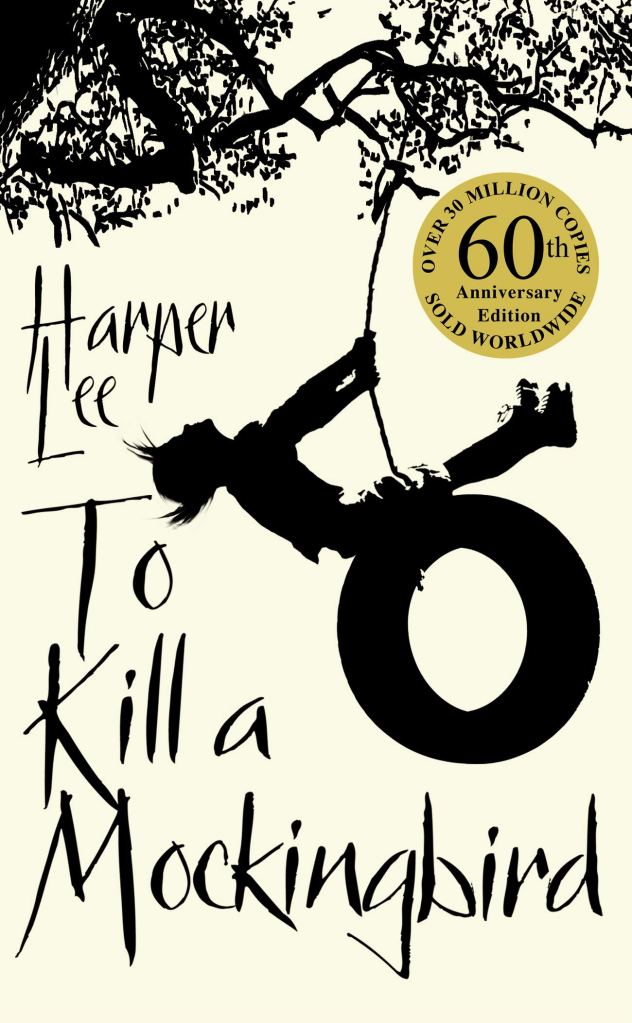
Race and class in Harper Lee’s ‘To Kill a Mockingbird’

‘To Kill a Mockingbird’ is a Southern gothic bestseller written by Harper Lee. The novel is narrated by Scout Finch, a six-year-old white girl who learns about life, people and the injustices prevalent in her society. Through her, Lee cleverly portrays issues such as gender, race and class discrimination in the fictional setting of Maycomb county, Alabama. Readers have speculated that the character of Scout was based on Lee’s own childhood experiences, wherein she combines the nostalgic elements with the political situation that she witnessed around her in America. Scout’s innocence and her defiance against the social hierarchies in Maycomb cuts a deeper meaning into the futility of these societal constructs.

Race is one of the issues that is evidently portrayed in the novel. Scout’s father Atticus Finch is a lawyer who defends the less privileged. He strives hard to stand by his moral compass and wishes to set an example for his children through his actions. One of the major events in the novel takes place when Atticus chooses to defend Tom Robinson, a black man accused of raping a white woman. The racist residents of Maycomb, as well as his family members are horrified and attempt hard to dissuade him. So much so, that even Scout and her brother Jem are subjected to verbal abuse by other children for his actions. During the trial, Atticus provides clear evidence to prove Tom’s innocence. Despite the impressive evidences, the extremely racist jury sentences him to jail where he later attempts to escape, but is shot and killed. We see that even the law is corrupted when it comes to rendering justice to innocent African Americans. Tom Robinson’s trial scene is monumental in proving the racial discrimination in America.

Calpurnia, the Finch family’s black maid plays a significant role in Scout’s life. Unlike most southern black characters, she is well- educated and is highly respected within the Finch family. Having lost her mother at a young age, Scout regards Calpurnia as a mother-like figure. One of the important moments in the novel is when Calpurnia takes Jem and Scout to the Black Church. Here, the children witness a different side of characteristics in Calpurnia as she interacts with the rest of her community. W. E. B. Du Bois refers to this as “double consciousness”; a phenomenon wherein a person exhibits two different personalities with the blacks and the whites. This can be seen as a defence mechanism to gain acceptance in a white supremist society due to their own internalised racism. Furthermore, despite being a novel that is concerned with issues like racism, it only portrays a subjective version of it. The black community are not given a voice of their own against this prejudice, which marginalises them within the text. If they are given a voice, it is usually to show gratitude to the good white people instead of raising their anger and frustration against the racial injustices in Maycomb.  

Social class prejudice is an important element highlighted in ‘To Kill a Mockingbird’. This can be understood clearly when Jem imagines ‘folks’ as being divided into four different kinds. “Our kind of folks don’t like the Cunninghams, the Cunninghams don’t like the Ewells, and the Ewells hate and despise the coloured folks.” (Lee, 249) Through Jem, Lee clearly explains the class hierarchical structure of Maycomb. It is a prejudice engrained in Maycomb which even dictates the relationship between children at school. But the novel also explains that the class system can eventually be dismantled. Initially, when Scout treats Walter Cunningham Jr differently, Calpurnia teaches her otherwise and makes her realise that a person’s financial background has nothing to do with their personality. When Cunningham Sr. arrives with a mob to lynch Tom Robinson, Scout’s innocence humbles him, saving Tom’s life briefly. Scout thus is able to achieve a small proportion of justice by disregarding the class system. Her reply “I think there’s just one kind of folks. Folks.” (Lee, 250) is an innocent yet powerful statement against the prevailing class structure in the society.

“You never really understand a person until you consider things from their point of view…”

Harper Lee

Aside from race and class, the novel also deals with other important issues like gender, disability, and sexuality. As Scout belongs to a middle-class white family, the primary concern that she personally deals with is sexism. She is portrayed as a tomboy, who is forced to confirm to the conventional idea of a girl. Over the years, readers have come up with multiple theories from the book pertaining to current social issues which proves that even after sixty years, it is still contemporary. Atticus’s advice that “You never really understand a person until you consider things from his point of view . . .” is a principle that could serve as a solution for all types of prejudices. And as mentioned by John Green, the “combination of nostalgia and criticism makes Mockingbird both endearing and enduring.” To Kill a Mockingbird is revolutionary in the fact that it brilliantly portrays multiple serious themes through the eyes of an innocent child.

Reference Links:

Our first prime minister

Pandit Jawaharlal Nehru was the first Prime Minister of India. He was quite popular among children and they called him Chacha Nehru. He was born on 14th November 1889 in Allahabad. He was the son of Swarup Ran (mother), and Motilal Nehru (father). Both his parents were attached and involved with freedom movements. He studied theosophy in his childhood and got into the Theosophical Society at age thirteen. Nehru’s theosophical interests led him to the study of the Buddhist and Hindu scriptures which later culminated in his book “ The Discovery of India”. 1912, Nehru enrolled himself as an advocate of the Allahabad High Court and tried to settle down as a barrister but he was not interested in law.
In 1912, Nehru attended an annual session of the Indian National Congress in Patna and joined Indian politics. He took an active part in movements like Home Rule Movement, Non-Cooperation Movement, and many more. In 1919, while he was traveling, he heard General Dyer talking about the Jallianwala Bagh Massacre. Dyer mentioned how satisfied he was after that incident. That’s when Nehru decided to get freedom from the Britishers.
He was sent to jail almost 9 times and there he wrote many books like his autobiography, “Towards Freedom”, “Letters from a father to his daughter”, “ Discovery of India”, “Glimpses of World History” and more. He was the right hand of Mahatma Gandhi in Indian Independence. They were an active part of the Civil Disobedience Movement, Salt Satyagraha, Quit India Movement. Nehru became the first Prime Minister of Independent India. Later he worked with Sardar Patel to unify India. In 1950 India became Republic. In 1955, he received the Bharat Ratna for his efforts on Indian industrialization. His attire- the jacket with a rose in the pocket and a Nehru cap is his style statement.

All about Rabindranath Tagore

Rabindranath Tagore is India’s first noble laureate who has bestowed all the fellow Indians and the people in the world, the art of literature. “Jana Gana Mana” the song written by Tagore is the national song of our country. He was a poet, writer, composer, philosopher, and painter. He was born on 7th May 1861 in Calcutta. His father was Debendranath Tagore and his mother Sharada Debi. Tagore was quite keen on music and literature from an early age. He never attended any physical school as his father believed in the theory of “Free flow of education”.

At the age of 11, Tagore started living in Shantiniketan with his father where he started his journey of writing. In 1873, he wrote six poems on Sikhism and completed several written works by 1877. In 1878 he was sent to England to study law but he preferred reading Shakespearean plays and dramas. He was quite intrigued by art and literature. From 1880, he started writing dramas, short stories, novels, poetry, and songs. Gurudev was also an acclaimed musician since his childhood. He composed so many beautiful songs that he has his separate genre, “Rabindrasangeet”. In 1910, he wrote “Gitanjali” for which he received the Noble Prize in literature in 1913. Tagore was the first Indian to receive a noble prize.

Despite the fact that Tagore was a patriot, he actually enjoyed and was inspired by the style of education that the Britishers provided. Therefore with the noble prize money, he built up the famous “Visva Bharati University” in Shantiniketan where he focused more on practical and artistic education. In 1915, Mahatma Gandhi met him in Shantiniketan. Gandhiji gave Tagore the title of “Gurudev”. During the Independence movement, Tagore used his tool, his pen, and wrote several patriotic poems for his fellow Indians. Not only did he write the national anthem of India but also of Bangladesh and Sri Lanka. Gurudev Rabindranath Tagore devoted all his life to the upliftment of education.

Lady warrior

Rani Laxmi Bai was named Manikarnika Tambe and was nicknamed as Manu.She is also known as Jhansi Ki Rani, the queen who was fought against the British without any fear. She was born on 19th November 1828, in the town of Varanasi. Her father was Moropant Tambe and her mother Bhagirathi Sapre. Her father was the commander to the King of Peshwa, Bajirao of Bitoor district. The Peshwa called her “Chhabili” for her playful nature. She was educated at home and learned sports with her friends Nana Sahib and Tatya Tope like martial arts, horse riding, sword fighting, and more. She always preferred traveling on the horseback to using a palanquin. Her horses included Sarangi, Pavan, and Baadal.

She was married to the King of Jhansi and that’s when she became Rani Laxmi Bai from Manikarnika. Later she adopted a boy and named him Damodar Rao. After the death of the King, the British Raj officers applied the Doctrine of Lapse, a policy according to which if any Indian ruler dies without leaving a natural male heir, his kingdom would automatically pass over to the British. As a result, the Britishers wanted to claim Jhansi to which Rani Laxmi Bai cried out “Main apni Jhansi Nahi doongi”. That is when the fight against the Britishers started. She would tie her kid around her chest and fight on horseback.

There are novels, articles, and movies made in honor of her bravery. Even Netaji named the women regiment of the Indian army as Rani Jhansi regiment. The famous statue of Rani Laxmi Bai. She is an inspiration for all her countrymen.

Swami Vivekananda

Swami Vivekananda was born on 12th January 1863 in Calcutta. His father, Vishwanath Datta was a barrister and a novelist and his mother were Bhubaneswari Devi. Swami Ji’s birth name was Narendranath Datta. He was a very sharp student since his childhood. He was the only student to receive a first-division in the entrance examination of Presidency College. Apart from his subjects, he loved reading a wide range of subjects like philosophy, religion, history, social science, ancient scriptures like the Vedas, the Upanishads, the Bhagavad Gita, the Ramayana, the Mahabharata, and the Puranas. Narendra also studied Western philosophies which he then translated into the Bengali language. Swami Vivekananda was known for his sharp memory and ability at speed reading.
In 1880, he came in contact with the Brahmo Samaj and that was the start and breakthrough of his spiritual journey. He met Ramkrishna, his Guru, in 1881 in Dakhineswar. Swamiji was highly influenced by the thoughts of his Guru. In 1886 Swamiji took monistic vows and that is when he became Swami Vivekananda from Narendranath Dutta. In 1888, he left to travel the whole country with only two books in his hand: the Bhagavad Gita and The Imitation of Christ. He decided to preach and uplift his country and the fellow countrymen. In 1893, after visiting Japan & China, he went to America where he participated in the Parliament of religions. In the Parliament of religion, he opened his speech with,” Sisters and Brothers of America” after which he received heavy applause and a standing ovation. The western media named him, “The Cyclonic monk from India”. His teachings focused on human development and he believed in compassion, morality, and spirituality.

A warrior story

Bhagat Singh was born in September 1907 in Banga (earlier was in Punjab, now in Pakistan). His father was Kisan Singh and his mother Vidyavati Kaur. He belonged to a family of radical freedom fighters, all the men in his family believed that they have to follow extreme measures to snatch the freedom of the country, thus making him a hugely patriotic person. Bhagat Singh was highly influenced by his family since childhood and thus grew into a patriotic individual.
In 1919 Jallianwala Bagh Massacre left an everlasting impression on Bhagat Singh who witnessed the destruction and loss of lives after General Dayar opened fire on the people who had gathered there. Bhagat Singh then decided to dedicate his entire life to fight for the freedom of India. With every attack by the British, Bhagat Singh’s dedication grew stronger. In 1923 he joined the National College of Lahore. When Bhagat Singh was in college he came to know about Young Italy Movement in Italy and created a group named, “Naujawan Bharat Sabha” in 1926. Later he also joined Hindustan Republican Association and fought side by side with several other famous freedom fighters to spread the fire of freedom throughout India. In a very small time, he became a household name.
In 1928, Lala Rajput Rai was leading a protest but sadly, he passed away in the massacre of lathi charge ordered by the Britishers. To avenge Lala Lajpat Rai’s passing away in a lathi charge, he, along with Sukhdev, Rajguru, and Chandrasekhar, carried out an attack leading to the killing of a British officer. After new runs and misses, they were arrested and execution was ordered for them. He went in disguise and changed his complete look to hide from the British officials. In 1929 he along with his partner, organized a bomb blast in the Assembly chamber after Ram Prasad Bismil died while fighting for the nation. Bhagat Singh screamed “Inquilab Zindabad” after the blast. He along with Sukhdev and Rajguru very proudly embraced the end of their life for the sake of the motherland and left a legacy to every Indian to take the cause of freedom forward and attain it at all cost.

Nightingale of India

Sarojini Naidu is the daughter of a scientist, Aghorenath Chattopadhyay, and Barada Sundari Devi, a poetess. Sarojini Naidu is the most prominent woman face of Indian independence. She was a poet, social reformer, and political leader. She was born on 13th February 1897, in Hyderabad. She wrote a Persian play in her childhood, “Maher Muneer” and received a scholarship to study abroad. She wrote several poems and books like “The Golden Threshold” in 1905, “The Bird of Time” in 1912, “The Broken Wing” in 1917, and many more. She was named “ Bhaarat Kokela” or “ The Nightingale of India”.
In 1905 she met Mahatma Gandhi, Gopal Krishna Gokhle, and Rabindranath Tagore and became a part of the Indian National Movement. She preached about women empowerment and social reformation. In 1917 she established the Women’s India Association and became the 1st Indian women President of the Indian National Congress in 1925. She took part in Satyagraha, Quit India Movement, Non-Cooperation Movement, and others. In 1947 she became the first women Governor of the United Province. Sarojini Naidu is a well known and respected role model throughout the world. In 1990 an asteroid was dedicated after her name, asteroid 5647 Sarojini Naidu.