How ‘ The Great Himalayas ’ were formed?

The Himalayan mountain range stretches from Brahmaputra to the Indus River. It ranges over 2500 km and about 250 km thick. So how were these Great Himalayas built?

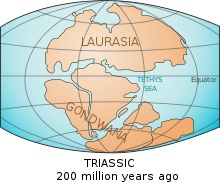
During the late Neoprotozoic era (1000mya-541mya) and early Palaeozoic (541-252mya) , the Indian tectonic plate was a part of the southern Gondwana land .This was separated by the Eurasian plate by the large Tethys ocean . In the early Carboniferous period , an early stage of rifting developed between the Indian subcontinent and the Gondwana land.

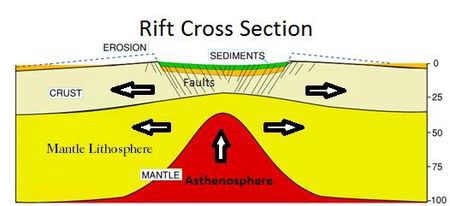
What is a Rift?

A rift is a zone where the lithosphere layer is stretched or pulled apart. In the early stage ,the upper part of the lithosphere starts to extend . As it evolves,some of the fault zones start to connect with each other and become even larger bounding faults .The crust becomes thin causing the rise of Asthenosphere. This way two new tectonic plates are formed from the older single one.

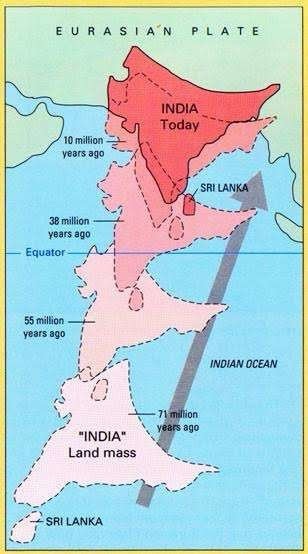
In the Norian period(210 mya), after a major drifting episode the Gondwana land split into two parts. The Indian subcontinent became a part of East Gondwana along with Australia and Antarctica. Later in the early Cretaceous(130 -125 mya), the Indian plate broke off from Australia and Antarctica with the ‘formation’ of Southern Indian Ocean.

At the end of Cretaceous period ,the Indian plate started drifting northward at speeds of about 18 to 20 cm per year which is the highest among all the continental drifts. It covered a distance of more than 6000 km in that time and rotated about 45° counterclockwise relative to the Eurasian plate. Interaction of the Eurasian plate with the coming Indian plate started at about 65 million years ago with the oceanic crust of the latter subducting under the Eurasian plate.

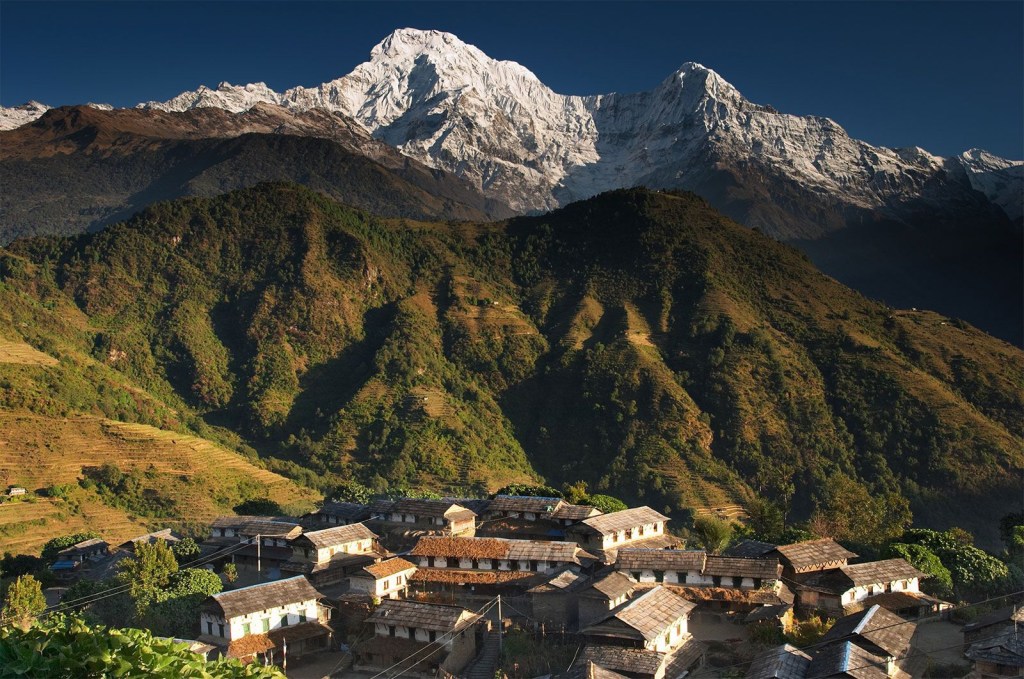
This started the formation of the youngest mountain ranges of the world , The Great Himalayas . This collision was so strong that till present also the Indian plate is colliding northward and the Himalayas continue to rise more than 5 mm a year but due to the stretching of Eurasian plate horizontally and effect of gravity this rising is affected.

Effect on Climate

According to a report of ‘Nature’ magazine, the Himalayan range ormation may have also started Asia’s monsoon about 8 million years ago and contributed to several ice ages that began 2.5 million years ago. The mountain’s and Tibetan Plateau’s uplift gave rise to a dry Central Asia that resulted in the formation of Gobi and Mongolian deserts.

This may have caused a dustier phase in the earth’s atmosphere . The Himalayan range obstructs the passage of cold continental air from north into India in winter and also forces the south westerly monsoon winds to give up most of their moisture before crossing the range northward.

The Himalayas are gigantic and lively and on the other hand they are calm and tranquil, perfect for the soul to grow spiritually.

Biomedical Waste Crisis

The present situation

At present, there is poor segregation of biomedical waste and other general solid waste. As a result, biomedical waste such as masks, gloves, and personal protective equipment (PPE) kits is mixed in with regular waste and ends up in landfills and open dump yards. This has an impact on the health of waste collectors as well as the environment.

In India, there are currently around 40 lakh garbage pickers. Due to the increasing biomedical waste in the time of the Covid pandemic, almost all are susceptible to health risks. According to the World Health Organization (WHO), depositing biomedical waste in open dump yards might lead to the spread of drug-resistant bacteria.

As per the Central pollution control board (CPCB), 616 tons of biomedical waste was being generated per day in 2019. On an average, India generated about 183 tonnes of COVID-19 related bio-medical waste per day in September 2021. 

How to deal with biomedical waste

  • Rules on the segregation of biomedical waste from normal solid waste should be implemented strictly with hefty fines.
  • The general public should be educated on how to properly dispose of biomedical waste such as gloves and masks. According to the CPCB, Masks and gloves should be cut into pieces to prevent misuse, and garbage should be kept separate for 72 hours before being given to municipal workers in a separate bag.
  • Currently, India’s biomedical waste treatment facilities can manage 840 tons of medical waste per day. This capacity should be enhanced, and also they should be monitored well.
  • More investment and human resources should be brought into handling biomedical waste.
  • Greener options for destroying biomedical waste, such as bio-methanisation (converting biomedical waste into electricity), should be explored and implemented on a broad scale. The majority of biomedical waste is currently incinerated (destruction by burning).
  • Sanitation workers should be provided with protective equipment.
  • Regular checks on the disposal of biomedical waste at diagnostic centers and hospitals can help in the effective implementation of guidelines.

Reducing biomedical waste waste generation as much as possible by effective practices such as wearing cloth masks, reusable gloves, and so on can help in reducing the burden of the destruction of the biomedical waste.

Conclusion

More investment and human resources are needed to deal with the growing amount of biological waste. Effective management of biomedical waste is very essential to ensure a cleaner environment and healthy humans.

Metaverse

What is Metaverse?

In metaverse, people can interact with each other using virtual and augmented reality technologies. It will result in forming the shared virtual world.

Metaverse is considered web 3.0. The earlier version of the internet which consisted of web pages that provided information is termed web 1.0. The next version consisted of interactive web pages. Now, web 3.0 will be a result of assimilating virtual reality and augmented reality in web 2.0.

We can shop, play games, buy things and own places in the metaverse. Several companies are creating gaming metaverses. The game ‘Second Life,’ which was released in 2003, can be considered an early version of the metaverse.

Benefits of Metaverse

  • It will be quite beneficial to host meetings. Video conferencing has some drawbacks, such as the lack of a personal connection. Metaverse will make us feel like we are sitting at the same place by interacting through digital avatars.
  • It will also help people with special needs.
  • It can also be used to help people overcome phobias.
  • It is expected that virtual currencies in the metaverse will significantly influence the world economy. Decentralization will reduce the dependence on governments.

Challenges with Metaverse

  • Few companies may control the metaverse and hence power and influence may stay in the hands of a few people.
  • Government surveillance and control could be increased by collaborating with businesses.
  • Addictions to the internet and smartphones are becoming common. As a result, it’s possible that virtual world addiction will become the next huge concern. Furthermore, metaverse consists of entertainment, shopping, games and many other things that are addictive in nature.
  • Even in this modern era, not everyone has access to the internet. Many people are digital illiterates. Due to the digital divide, the benefits of metaverse will not be accessible to many.

Conclusion

Some people believe that the metaverse will be the internet’s future. Many businesses are investing in the development of the metaverse. It is important to ensure that no monopoly exists in the shared virtual environment.

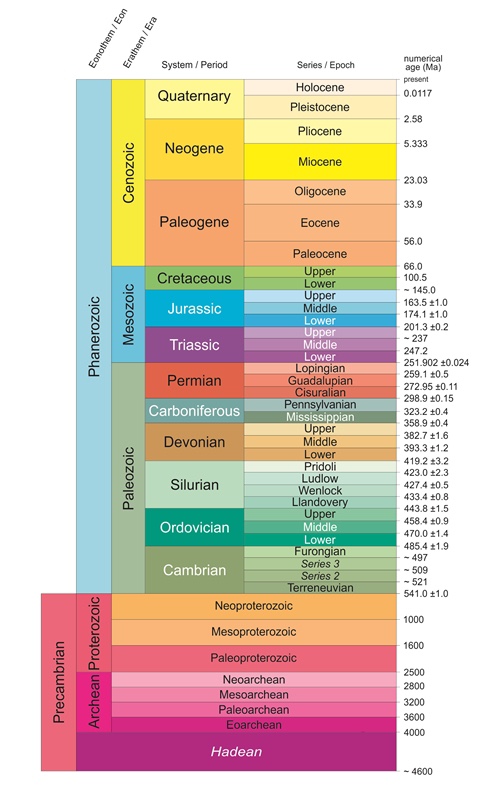
The Geological time scale

Geologists subdivide timescale by events that happened in geological history . These time intervals are unequal in length, geological timescale describes the timings and relationship of those events that changed Earth’s geology. This time scale is developed by carefully studying and analysing the rock layers ,evolution of species, rock dating, fossil samples and atmosphere.

Eons

Eons are the largest divisions in geological Time and span to millions of years . There are four eons catalogued till present day, these are — Hadean, Archean, Protozoic and Phenerozoic eon . The first three eons are collectively referred to as the Precambrian super eon.

Hadean Eon

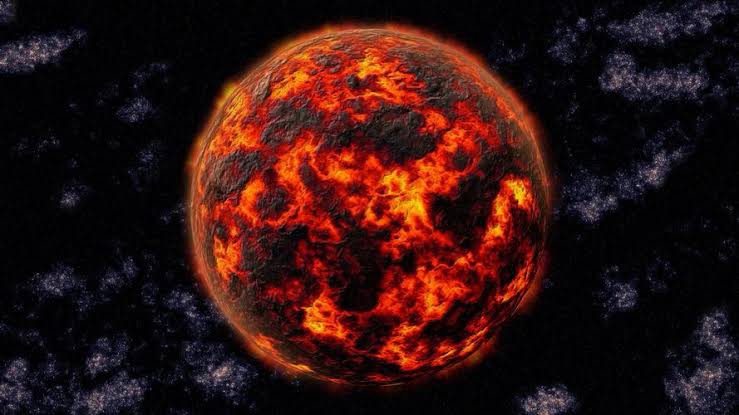
The Hadean eon began when the earth formed about 4.6 billion years ago and ended 4 billion years ago . The planet’s condition was very dynamic , earth was still very hot and frequently collided with other planetary bodies.

Archean Eon

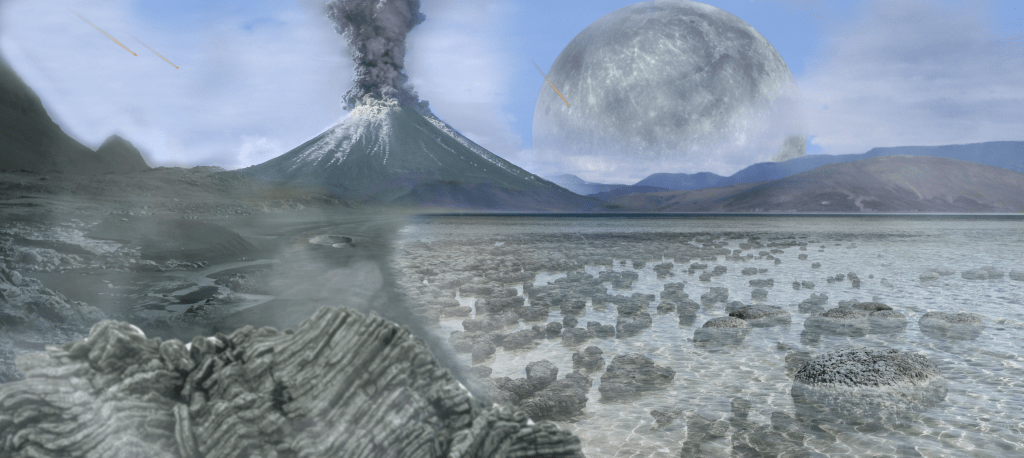
It began about 4 billion years ago till 2.5 billion years . The earth’s crust slowly started cooling and stabilising to form landmass .The earliest lifeform probably anaerobic microbes called stromatolites survived. example – Cyanobacteria, Proteo bacteria , microbial mats. Volcanic activity was very high and Archean rocks were often metamorphosised water segments like volcanic segments and mud rocks.

It is further divided into eras:

Eoarchean

( 4000 mya-3600 mya)

(mya- million years ago)

  • The first Supercontinent Vaalbara appeared.
  • Earth possessed a firm crust for the first time.
  • Prokaryotic microbes called Archaea appeared.

Paleoarchean

( 3600-3200mya)
  • Earliest confirmed evidence of life.
  • Stromatolites may have been created.
  • Microbial mats work present.

Mesoarchean

( 3200-2800mya)
  • Tectonic plates subduction.
  • Expansion of microbial life.
  • Ocean temperatures around 55-85°C
  • High levels of methane and carbon dioxide in the atmosphere.

Neoarchean

(2800-2500 mya)
  • Major development in complex life and continued formation.
  • Rise of oxygen in the atmosphere.

Proterozoic Eon

It spanned the interval from 2500-541 mya . For the first time oxygen appeared in the earth’s atmosphere . Mountain formation activity began because of the continuation of continental accretion .Glaciers began to form . Processes like subduction were active due to high tectonic plate movement. It is further divided into 3 eras-

Paleoproterozoic era

(2500-1600 mya)
  • Longest era
  • Continents stabilised
  • One day duration was 20 hours.
  • Enormous increase in oxygen.
  • Anaerobic life form largely died because oxygen was highly toxic for them.
  • First mass extinction happened.
  • Eukaryotes emerged.
  • Periods in which this era is divided- Siderian, Phyacean and Orosirian.

Mesoproterozoic era

( 1600-1000 mya)
  • Evolution of sexual reproduction.
  • Development of multi cellular organisms.
  • Break up of Columbia supercontinent.
  • Periods – Ectasian and Stenian .

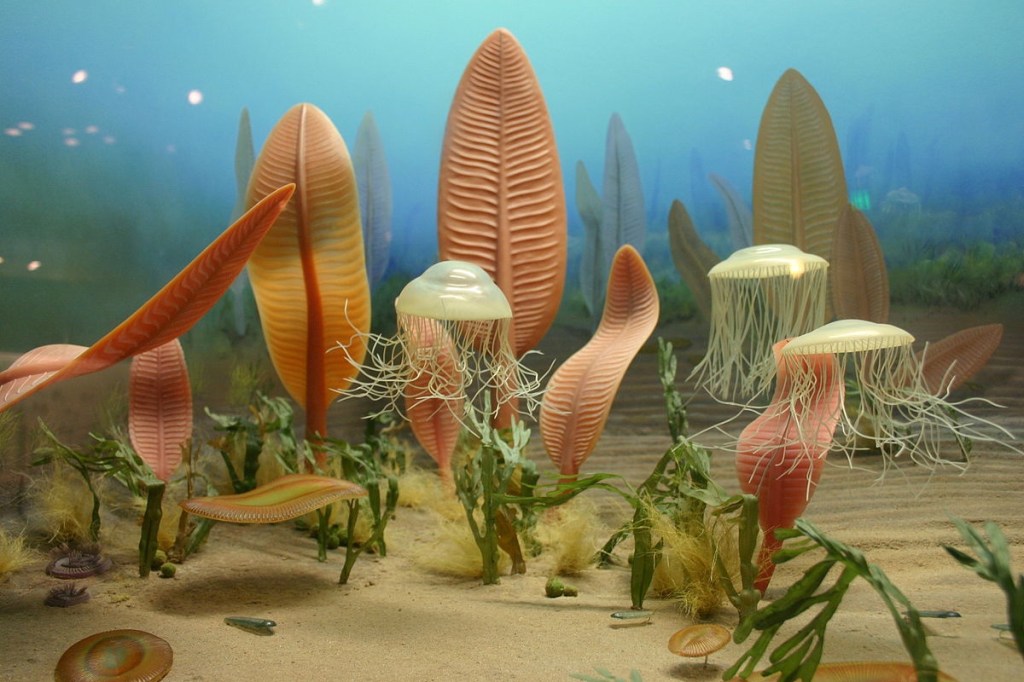
Neoproterozoic era

( 1000-541 mya)
  • Most glaciation.
  • Ice sheets reached equator.
  • Snowball Earth formed.
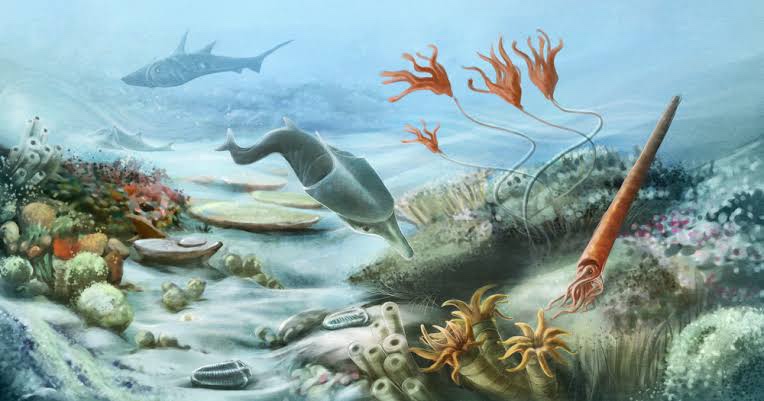
  • First appearance of Trilobites ans Sponges.
  • Periods- Tonian, Cryogenian and Ediacaran.

Phanerozoic Eon

It covers timeline from 541 million years ago to the present. At the start of this eon , complex plants and multi cellular organisms with hardshells appeared . There was a single landmass known as Pangaea. It is divided into 4 eras:

Paleozoic era

(541-252 mya)
  • Most rapid diversification of life called Cambrian explosion.
  • Evolution of arthropods ,fish and amphibians.
  • Life transition to the land.
  • Forests of primitive plants appeared.
  • Largest extinction event called Permian- Triassic extinction event happened.
  • Appearance of invertebrate animals phyla.
  • Reptiles prospered.
  • Periods- Cambrian, Ordovian, Silurian, Devonian, Carboniferrous and Permian.

Mesozoic era

(252-66 mya)
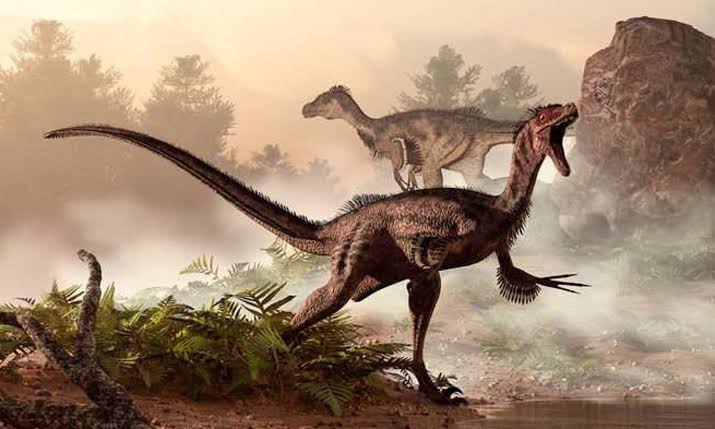
  • Dominance of reptiles like dinosaurs.
  • Abundance of Conifers and Ferns.
  • Breakup of Pangaea.
  • Dinosaurs appeared in mid Triassic period and remained till early Jurassic period (about 150-135 mya).
  • Archaic birds appeared in Jurassic period.
  • Flowering plants appeared in early Cretaceous period.
  • Periods- Triassic, Jurassic and Cretaceous.

Cenozoic era

( 66 mya – present)
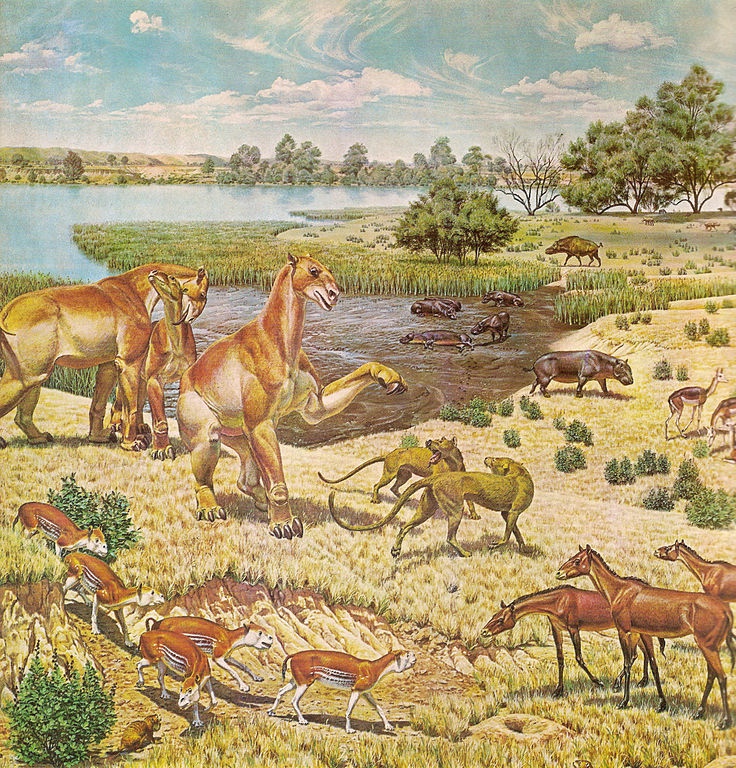
  • Dominance of mammals , birds and flowering plants.
  • Cool and dry climate.
  • Complex life evolved.
  • This error started with mass extinction event called Cretaceous spell Eugene extension event in which many species including non-even dinosaurs became extinct possibly due to a large asteroid impact
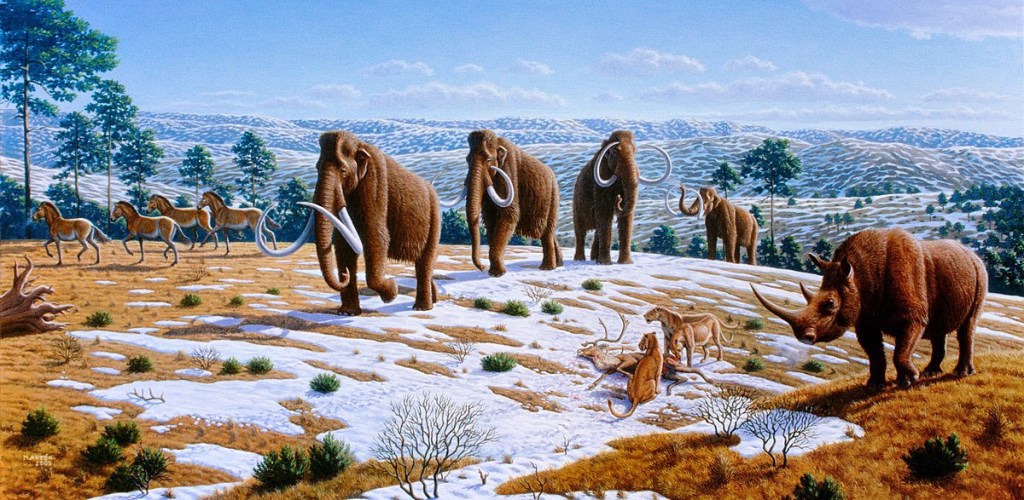
  • The Quarternary period saw Mammoths and wooly animals. It was marked by ice ages due to the cooling trend of earth.
  • Around 50 million years ago , Earth entered a cooling period mainly due to the collision of Indian tectonic plate with Eurasia. This caused the rise in the Himalayas.
  • Periods- Paleogene, Neogene and Quaternary.
The  Earth went through many violent and beautiful events before Homosapians arrived . We must make sure to protect and cherish our dear planet . 

Ender’s Game by Orson Scott Card

Ender’s Game is a 1985 military science fiction novel by American author Orson Scott Card. The book originated as a short story of the same name, published in the August 1977 issue of Analog Science Fiction and Fact. The novel was published on January 15, 1985.

Reception of the book has been mostly positive. Ender’s Game was recognized as “best novel” by the 1985 Nebula Award and the 1986 Hugo Award in the genres of science fiction and fantasy.

Book Summary

This is a story about a boy named Ender who lives with his mother, father, and two older siblings, Peter and Valentine.  All of the children are intelligent, but Ender, unlike his siblings, seems to have the potential to be a brilliant military leader. As a result, he is taken away to be trained by Colonel Graff for the war against the buggers, an alien race looking to invade Earth.

When Ender arrives at battle school, he is put through a series of tests and introduced to various battle simulators, video game-like simulations of space battles.  He performs excellently and is assigned to one of the several armies. He is initially advised to remain out of the war games, but he discovers a superior winning strategy. Despite his success as a tactician, Ender is despised even more, but he does teach those who want to learn from him on the side.

Meanwhile, Peter and Valentine create fake personas and begin political discussions on the net.

After graduating early from battle school, Ender is trained on a dedicated battle simulator.  And when that becomes too easy, he trains with Mazer Rackham, an old war hero.

Under this new training, Ender is pushed to the limit and nearly breaks down as his battle simulations become increasingly more difficult.  

Ender finally has one last battle simulation that involves a planet and several thousand ships.  He wins the game, but then is told that all of it was real.  That he was commanding real ships in what he thought was a simulation.

Ender is proclaimed a hero, but still fears Peter, who has great political influence on Earth.  In the end, Ender finds a bugger cocoon and takes it with him as he travels in space with Valentine.

Analysis

There’s a lot to say about this story, but what draws my interest and attention is the idea of using children in intergalactic war.

Throughout the story, it is sometimes difficult to remember that most of the main characters are children.  In Ender’s society, children are often forced into maturing quickly for military endeavours.  

But why children?  Isn’t it more practical to train more physically mature people to fight? The explanation given is that the military wants individuals who are willing to react to situations without thinking about the consequences.  Children are able to act this way because they haven’t lived long enough to understand the scope and bigger consequences of their actions.  

While cruel, this type of thinking is valuable and necessary in the battle against the buggers because of how the buggers learn and adapt.

Also, a lot of the battles are battle simulations, or at least perceived as battle simulations to the children.  It’s this perception of a game that allows the children to learn, strategize, and take risks that would not be possible had they known it was happening in real time, which says a lot about how children learn and how humans learn in general. 

Aggression in Sports

Aggression is inherent in animals and in human beings because biologically it serves an important purpose of facilitating organisms struggle for existence.

Aggression is a part of human behaviour and is accepted as social phenomenon to some extent but beyond that aggression becomes an anti social behaviour intended to harm others. 

Types of Aggression

  1. Hostile aggression: intent to harm, goal to harm, anger
  2. Instrumental aggression: intent to harm, goal to win, no anger
  3. Assertive aggression: no intent to harm, legitimate force, unusual effort and energy expenditure

Reflections of Aggression in Various Sports

In sports, the following five levels of aggression are recorded:

1) Direct and strong aggression in boxing, wrestling, American football.

2) Limited aggression in football, hockey, water polo etc.

3) Indirect aggression in handball, volleyball, tennis, table tennis etc.

4) Aggression directed only against objects in golf, throwing events in track & field.

5) Little observable aggression in gymnastics, figure skating, aesthetic events etc.

Effect of Aggression on Performance

  1. Aggression results in a decrement in performance of individual as well as team as whole. 
  2. The level of frustration produced by the particular situation usually determines the amount of aggression.
  3. There are some factors that influence aggression in sports are:
    • Win-at-all-cost
    • Perceived intention of the opponents
    • The reinforcement of violent behaviour by the coach
    • Spectators effects
    • Maturity and standard of players
    • High incentives
    • Rise of professionalism

How to Reduce Aggression in Sports

1) Most influential people actually promote rather than discourage violence because they believe it sells tickets. If this attitude is curtailed then it is possible to minimize aggression.

2) Anger behaviour and feelings can be modified through anger awareness training and role playing.

3) Athletes can learn to control their feelings of hostility and anger.

4) Athletes who engage in aggressive act must be severely penalised. 

5) Coaches who encourage should be fined or suspended from their coaches duty.

6) External stimuli capable of evoking hostile aggression on the field of play should be removed.

7) Coaches and referees should be encouraged to attend in-service training workshops on dealing with aggression on the part of players.

8) Social interaction between members of opposing teams should be encouraged by coaches and managers.

Development

Development has been a topic of discussion and debate since several decades. It has a very deep meaning. When we talk about development of a particular thing, we should know it’s roots first. We need to understand 3 aspects of that object:-

  1. First existence:- where or how it came into existence?
  2. How it evolved with the passage of time? 
  3. It’s current stage.

These are the three aspects that determines rate of development. 

Development at personal level:-

Self development and analysis plays a cruicial role in personality development. It means evolution of our understanding and knowledge. When we were kids, we were dumber and easily manipulated. But as of now, we know what’s for our well being and what’s not. This growth is defined as development. There’s an ethical side of development too. For instance, if someone act rudely unnecessarily, we should confront them straight in the most decent way possible rather than abusing them, no matter what, we should not be unnecessarily cruel to anyone. This understanding can be a part of development as well. 

Development as a whole:-

The term national development is very comprehensive. It includes all aspects of the life of an individual and the nation.It is holistic in approach. It is a process of reconstruction and development in various dimensions of a nation and development of individuals. It includes full-growth and expansion of our industries, agriculture, education, social, religious and cultural institutions. Moreover, national development implies development of a nation as a whole. It can be best defined as the all-round and balanced development of different aspects and facets of the nation viz. political, economic, social, cultural, scientific and material. 

John Vaizey, noted economist defines:

“National development is the total effect of all citizen forces and addition to the stock of physical, human resources, knowledge and skill.”

Broadly, development of the nation encapsulates such parameters as:

(i) Development through a planned national economy

(ii) Increase in agricultural production through application of modern technical 

(iii) Harnessing industrial production

(iv) Development of human resource

(v) Application of science and technology in production sector

(vi) Provision of mass education and

(vi) Provision of various facilities to meet the needs and aspirations of disadvantaged, deprived and poorest of the poor segments of population.

What’s a Caldera?

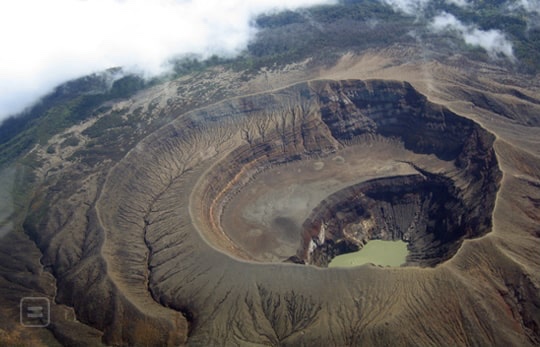
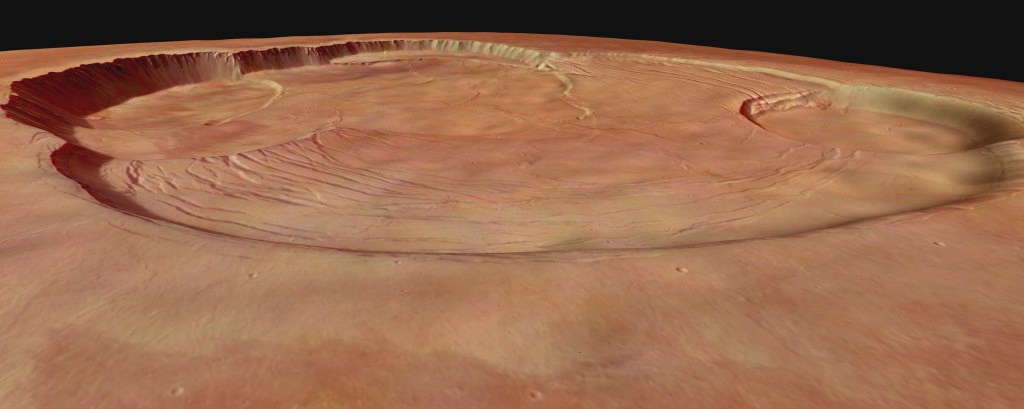
A Caldera is a large depression or a hollow area that forms when a volcano erupts and the magma chamber below it empties. This results in the collapse of side and top of the volcano.Without any structural support below the area, the erupting volcano vent collapses inwardly due to gravity creating a bowl shaped Caldera. There is a difference between a Caldera and crater. Craters form by the outward explosion of materials from a volcano. Craters are more circular than a caldera because in the latter the land collapses unevenly.

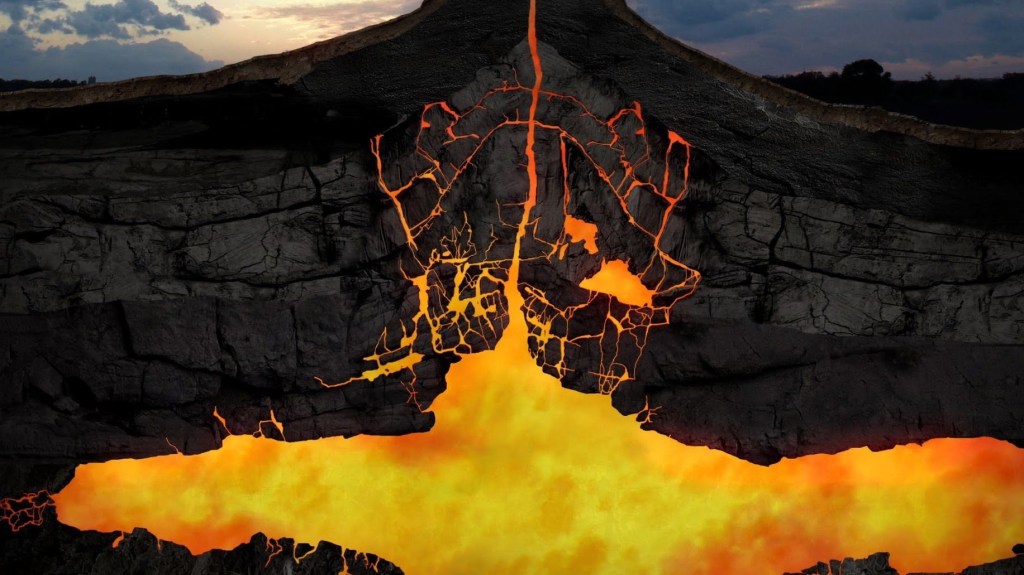
Magma chamber

It is a large pool of molten rock or magma below the surface of earth or under the existing volcano . The density of magma is less than that of the surrounding hard rocks so it starts to rise through cracks beneath the crust. When the magma is not able to find its way to the surface of the earth ,it is collected and pools into a magma chamber . Over the passage of time , this magma chamber grows in size due to the successive injections from horizontal and vertical magma and thus the pressure inside the chamber increases.

The magma chamber bears the weight of the volcano above it due to the buoyant forces which are acted upon the chamber by the surrounding rocks . The buoyant force gives a resultant upward push to the pool of magma chamber .

Sometimes when a volcano erupts, the whole pool of magma beneath it empties and this results in a void . Now there is nothing to support the weight of volcano. This causes volcano to collapse and form a caldera . Calderas are rare ; only 7-8 of them have known to occur in the last century. They are more than 25 kms in diameter and several kms deep.

Magma chamber ( pool of magma at the bottom)

Types of calderas

Explosive calderas

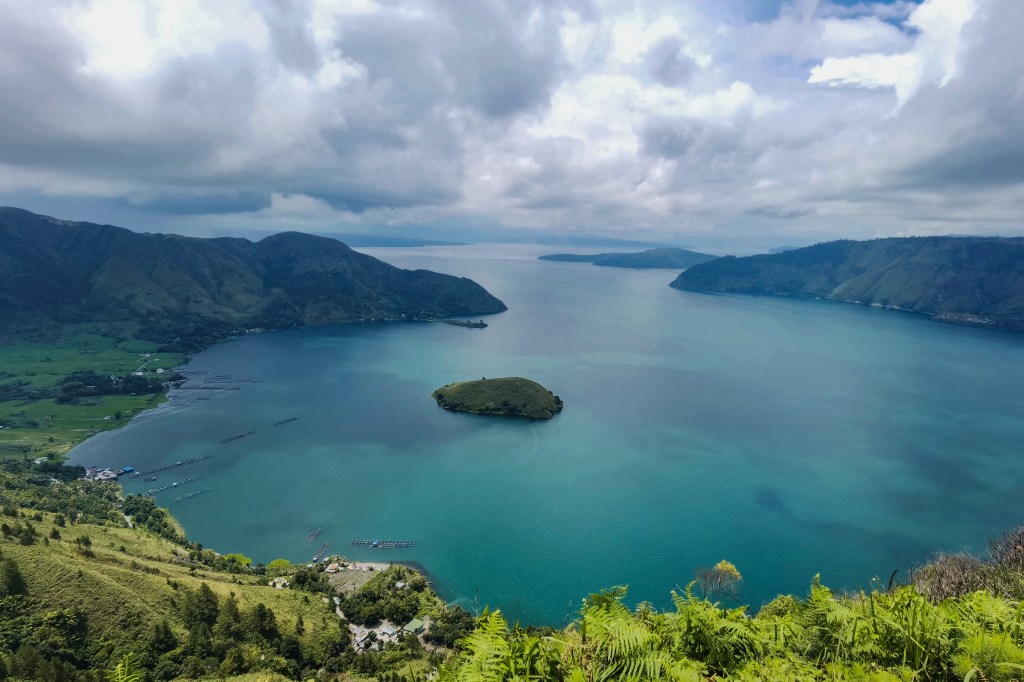
Explosive caldera forms when large magma chambers filled with silica (highly viscous)and gas move upwards. The high viscosity silica holds the gas bubbles under high pressures but as the material rises to the surface, due to decrease in the pressure the gas expands . This causes an enormous explosion which throws away rocks and magma to form a caldera . eg. Yellowstone caldera ,Toba caldera.

Toba caldera lake

Non-explosive calderas

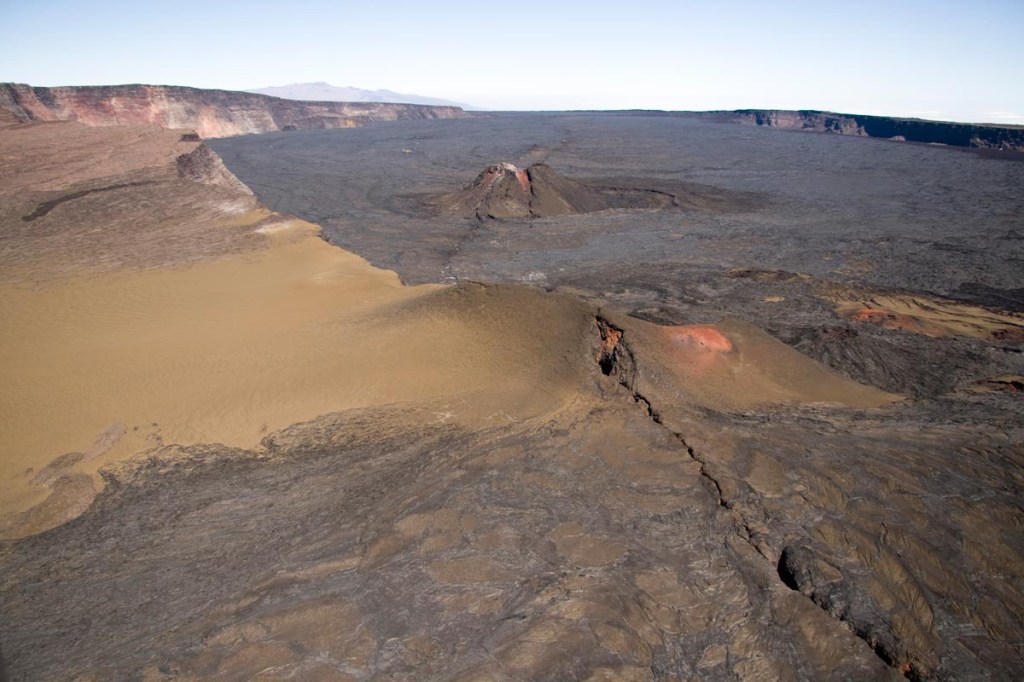
When the matter is composed of basalt , which is much less viscous, the magma chamber is gradually drained by large lava flows rather than a single explosive eruption. eg. caldera atop Fernandina Island and Mauna Loa caldera.

Mauna Loa caldera

Calderas are not limited to Earth . Other planets like Venus and mars or our moon also has caldera formations.

Caldera of Olympus Mons( Volcano on Mars- largest volcano known in the Solar System)

Development

Development has been a topic of discussion and debate since several decades. It has a very deep meaning. When we talk about development of a particular thing, we should know it’s roots first. We need to understand 3 aspects of that object:-

  1. First existence:- where or how it came into existence?
  2. How it evolved with the passage of time? 
  3. It’s current stage.

These are the three aspects that determines rate of development. 

Development at personal level:-

Self development and analysis plays a cruicial role in personality development. It means evolution of our understanding and knowledge. When we were kids, we were dumber and easily manipulated. But as of now, we know what’s for our well being and what’s not. This growth is defined as development. There’s an ethical side of development too. For instance, if someone act rudely unnecessarily, we should confront them straight in the most decent way possible rather than abusing them, no matter what, we should not be unnecessarily cruel to anyone. This understanding can be a part of development as well. 

Development as a whole:-

The term national development is very comprehensive. It includes all aspects of the life of an individual and the nation.It is holistic in approach. It is a process of reconstruction and development in various dimensions of a nation and development of individuals. It includes full-growth and expansion of our industries, agriculture, education, social, religious and cultural institutions. Moreover, national development implies development of a nation as a whole. It can be best defined as the all-round and balanced development of different aspects and facets of the nation viz. political, economic, social, cultural, scientific and material. 

John Vaizey, noted economist defines:

“National development is the total effect of all citizen forces and addition to the stock of physical, human resources, knowledge and skill.”

Broadly, development of the nation encapsulates such parameters as:

(i) Development through a planned national economy

(ii) Increase in agricultural production through application of modern technical 

(iii) Harnessing industrial production

(iv) Development of human resource

(v) Application of science and technology in production sector

(vi) Provision of mass education and

(vi) Provision of various facilities to meet the needs and aspirations of disadvantaged, deprived and poorest of the poor segments of population.

Bridge to Terabithia by Katherine Paterson

Bridge to Terabithia is one of the most classic books you may ever read about friendship, imagination, and loss. And, with all of these elements, the book won Katherine Paterson her first Newbery Medal in 1978 (she won another for Jacob Have I Loved in 1981). The novel won a lot of other honors, too, including being named an ALA Notable Children’s Book in 1977 and a School Library Journal Best Book of 1977.

Summary

This is a story about a boy named Jessie who lives with his family in a small town called Lark Creek and has a hard family life. He likes to draw and to run, and is kind of lonely; he’s out-of-place in his family and the only person he really gets along with is his little sister May Belle. He’s about to enter the fifth grade and has been training all summer to be the fastest runner in school.  

The Burke family moves in next door.  Their daughter, Leslie, is creative and smart and becomes Jessie’s classmate.

When the big day of the race arrives at school, however, Jessie gets beaten by Leslie. And, at first Jess is crushed, but later he and Leslie end up becoming good friends.

Since they’re both outcasts, Jess and Leslie spend a lot of time together. They take over a part of a nearby forest that’s only accessible by swinging on a rope over the creek, and name it Terabithia. In this imaginary land, they are king and queen. They can escape from the bullies and the boredom of fifth grade, and dream all they like. When Janice Avery, the resident bully, takes May Belle’s Twinkies, Jess and Leslie get revenge by writing her a fake love note and humiliating her.

The most of the school year has passed. Jess gives Leslie a puppy for Christmas, and she becomes a member of their Terabithia kingdom. They also assist Leslie’s father with the construction of their new home. When they discover Janice the bully is truly upset, they work together to comfort her.

By Easter, it’s been raining continuously for a month and crossing the creek to Terabithia has gotten more difficult. Leslie attends Easter service with Jess’s family. After the service, Leslie and Jess, along with May Belle, debate whether people who do not believe in the Bible go to hell.

One day after Easter, Jess thinks it’s too dangerous to go to Terabithia, with all of the rain that’s been coming down. But he forgets about it when Miss Edmunds, the school music teacher, calls and invites him to a museum with her. He goes and has one of the best days of his life. However, when he returns home, he discovers that Leslie had gone to Terabithia without him and died while attempting to cross the creek.

At first, Jess refuses to believe it. In meeting with Leslie’s parents and spending time with her dog, he slowly begins to understand what he’s lost…but also what he gained by having Leslie in his life at all.

He goes to Terabithia to try to figure out what’s going on, but his younger sister follows him and nearly drowns in the water. In rescuing her he realizes that  he has gained some of Leslie’s bravery.

Later, Jess returns to Terabithia and constructs a bridge across the creek. When May Belle follows him again, he welcomes her to Terabithia and guides her across the bridge.

Review

Despite portraying the power of imagination and the innocence of childhood, this is not really a children’s book in my opinion as it touches upon various adult-related themes and challenges many of the social conventions established in society.  It displays unusual relationships that children may not understand.  Of course, by that fact alone, it does not make the book false or bad, just, shall we say, unique.  

And of course, there is death.  One of the main characters in the story dies.  How is a child supposed to react to this?  How do children react to the death of someone they know?  There doesn’t seem to be a real answer presented to us from the author, but maybe the lack of an answer through Jessie’s struggles to come to understand his situation is relatable enough for children. 

All of these may fly over the heads of children. I do not know how children would take the book or what they would think but other than that it is a great read!

Branches of Philosophy

Aesthetics

This branch of philosophy deals with beauty , art and taste of things. It examines what happens in our minds when we are involved in aesthetic objects like art, music, poetry or while exploring Nature. Aesthetics consider why we like some specific thing over other. Aesthetic judgements may be linked to emotions and mood. When we say an object or art piece is beautiful , it triggers an aesthetic pleasure in ourselves . Beauty is a positive aesthetic value in contrast to ugliness, which is negative.

Epistemology

It deals with questions on nature and scope of knowledge. It focuses on sources of people’s consciousness, cognition ( structure and forms) and the relationship between mind and reality. It examines questions such as ‘ what we mean when we say we know something?’ ; the ability to differentiate between what one knows and what one believes.

Ethics

Ethics is the study of morals and the concept of right and wrong conduct. It deals with questions such as – What is morality ; does morality exists? It has 3 types :

Meta ethics ~ deals with foundations and nature of moral values.

Normative ethics ~ deals with systems of morality and questions on how one ought to act morally.

Applied ethics~ deals with what a person is obliged to do in specific situations.

Logic

It is the act of being rational by application of reason. The reasoning process can be done well or badly. Logic allows human beings to distinguish good reasoning from bad. In logic , we study rules and techniques that enables us to do correct ( whether good /bad ) reasoning. A logic must formulate precise standards for evaluating reasoning by developing proper set of arguments.

Metaphysics

Metaphysics deals with existence. It concerns with the fundamental nature of reality.

Theme 1~ The study of first causes — It studies that which does not change and from which the world has come into play. Some identify it with God.

Theme 2~ The study of being— Study of the fundamental categories of being or which exists. This field is also called Ontology.

It is further divided into disciplines such as cosmology, rational psychology and theology. Specific issues like immortality , free will are discussed.

Philosophy of mind

The branch of philosophy that deals with nature of mind and its relation with body . The aspects of mind such as thought, mental properties , consciousness are studied. It addresses issues like the hard problem of consciousness. It tries to explain how a supposedly non materialistic mind can influence material body and vica-versa. Rene Descartes was the first person to clearly identify mind with consciousness and self-awareness and to distinguish it from the brain , where intelligence lies.

Axiology

It is the study of origin of values or study of worth. Through axiology, one can determine what is valuable and why something can be said to be valuable.

Philosophy of language

It investigates nature of language , meaning, language use and language cognition. It explains how the meaning of complex sentences is derived from the meaning of their parts.

Political philosophy

Political philosophers seek to establish basic principles that will justify the formation of state, show individuals their rights and tell the fair distribution of society’s resources among its members . This usually involves analysing ideas like freedom , justice , authority and democracy and then applying them to institutions in a methodological way.

Philosophy of Science

It studies assumptions , foundation and implications of science. Questions addressed are: What is science; does science lead to certainty and truth; nature of statements and conclusions or how does science explain , predict and harness technology. It deals with the reliability of scientific theories and the ultimate purpose of science .

Global Warming

Global warming refers to the gradual rise in the overall temperature of the atmosphere of the Earth. There are various activities taking place which have been increasing the temperature gradually. Global warming is melting our ice glaciers rapidly. This is extremely harmful to the earth as well as humans. It is quite challenging to control global warming; however, it is not unmanageable. The first step in solving any problem is identifying the cause of the problem. Therefore, we need to first understand the causes of global warming that will help us proceed further in solving it.  

Causes of Global Warming

1. Oil and Gas

Oil and Gas is used all the time in almost every industry. It is mostly used in automobiles, buildings, manufacturing, and the electricity production. When we burn coal, oil and gases it largely adds to the climate problem.  Fossil fuel consumption is also harmful to wildlife and the environment because of its toxicity, which kills plant life and makes areas uninhabitable.

2. Deforestation

Deforestation is the clearing of woodland and forest for the purpose of harvesting wood or making space for farms or ranches. Because trees and forests convert carbon dioxide into oxygen, when they are cut down, the stored carbon is released into the atmosphere. Deforestation can also occur naturally which has a greater effect because of the fumes released from the fire.

3. Waste  

Humans create more waste now than ever before, because of the amount of packaging used and the short life cycle of products. Many products, garbage, and packaging are not recyclable, resulting in their disposal in landfills. When landfill waste decomposes/breaks down, hazardous gases are released into the atmosphere, contributing to global warming.

4. Power Plants 

Power plants work by burning fossil fuels, and as a result, they emit a variety of pollutants. The p ollution they produce  that not only ends up in the atmosphere but also in waterways, contributing significantly to global warming. Coal combustion in power plants is responsible for around 46% of total carbon emissions.

5. Oil Drilling 

Oil drilling is responsible for 30 % of methane emissions and about 8% of carbon dioxide emissions. Oil drilling is a method of extracting petroleum oil hydrocarbons from the ground. As a result of this process, additional gases are released into the atmosphere, contributing to climate change. It is also harmful to wildlife and the environment.

6. Transport and Vehicles 

The large amount of transportation is done through cars, planes, boats and trains, almost all of which rely on fossil fuels to run. Carbon and other pollutants are released into the atmosphere when fossil fuels are burned. As a result, transportation is partly responsible for the greenhouse gas emissions. This effect could be reduced with the introduction of electric vehicles.

7. Consumerism 

Customers may buy any goods at any time because of technological and industrial advancements. This means that we are producing  more and more goods each year, and now we are overproducing them. The majority of the products we buy aren’t very sustainable, hence we’re producing more waste than ever before due to the shorter lifespan of electronics and textiles.

8. Farming

Because farming consumes a lot of green land, local habitats may be devastated to make room for farming. These animals emit a large number of greenhouse gases, such as methane, and they also produce a large amount of trash. Factory farming is responsible for even more climate issues because of the extra pollution it produces and the more animals it can hold.

9. Industrialization 

Industrialization has a number of negative consequences. All of the waste generated by this industry ends up in landfills or in our environment. Chemicals and materials used in industrialization have the potential to damage both the atmosphere and the soil underneath it.

10. Overfishing

Fish is one of humans main sources of protein and a lot of the world now rely on this industry. The amount of people buying and consuming fish has resulted in a decrease in marine life. Overfishing has also resulted in a loss of ocean variety. 

Ways to Prevent Global Warming

There are many changes we can bring about in our life both big and small to prevent global warming and save our planet. Firstly, we must stop deforestation in all forms. Do not cut down more trees as it will only worsen the level of carbon dioxide in the air. Instead, encourage people to plant even more trees to create a fine balance in nature.

Moreover, it reduces the usage of energy everywhere. It does not matter if you are at your home or at your office, the higher the energy used the more the carbon dioxide produced. Thus, do not waste electricity as it requires the burning of fossil fuels. As a result of the burning of fossil fuels, greenhouse gases in the atmosphere increase rapidly and contribute to global warming. Moreover, reduce the carbon footprint and do not travel through planes that often.

Most importantly, replace all your ordinary bulbs with LED lights. It will help in reducing the use of energy by a massive amount. Similarly, do not waste that energy. Instead of becoming more dependent, we need to reduce our dependence on fossil fuels and electricity right away.

If I Ran The World

Now go to Daisy at Home to get the If Kids Ran the World themed menu. We invite you to share your dinner photos with us any time of the month on our Family Dinner Book Club Facebook page. If Kids Ruled the World Leo and Diane Dillon is a story about kids helping make our world a better place. .If it’s so inspiring that kids rule the world, read it aloud and it will impact your student community.

This book is a true celebration of childhood, play and imagination. This is the pinnacle of Dr. Seuss, celebrating the young imagination and creating a fantasy world that will delight and captivate readers of all ages. Description Leo and Diane Dillon, two-time Caldecott Medalists, show children how to create a more generous and peaceful world through play where everyone can share with each other. Two-time Caldecott Medalists Leo and Diane Dillon show how children can use play to create a more generous and peaceful world for all.

Diane Dillon lives in Brooklyn, New York. Leo and Diane Dillon are two of the most famous illustrators of our time. Leo and Diane created award-winning picture books, book covers, magazines and other works of art until Leo’s death in 2012. This is their last collaboration. Their long list of awards includes two Caldecott Medals, a NAACP Image Award, five Coretta Scott King Awards and Honors, four Boston Globe-Horn Book Awards, and induction into the Society of Illustrators Hall of Fame. They also won Coretta Scott King awards in 2003 for Rap a Tap Tap Heres Bojangles – Think of That and in 2005 for Virginia Hamilton’s People Could Fly – Picture Book.

The Dillons’ contributions to art and illustration, and their lifelong dedication to the diversity of children’s books, makes it uncomfortable to criticize If Kids Ruled the World. Criticism is further tempered by the fact that the book was the last edition the couple created together: Leo died before the book was finished.

Particularly helpful is the emphasis on sharing all the good things that come alive in the world the child has created. The story presents idealistic opportunities for global camaraderie and justice for all people – if only children ruled the world. In the colorful tree house, the children’s rainbow identifies the most important needs in our complex world, while the following branches feature boys and girls who happily help others.

If kids rule the world, even adults are better off. I like that the author points out that if children rule the world, then there will be more kindness and harmony. They say that if children rule the world, young people will make sure everyone has enough to eat and everyone can wear whatever they want without being ridiculed.

The book enlightens the reader about what would happen if children were in charge of the world. This book has so little to do with the world in which real children live, and it seems that this is a gesture, not a call to action. Leo Dillon’s latest book with Diane Dillon imagines what the world would be like if kids were in charge.

The Dillons, in their latest collaboration (Leo died in 2012), are turning the creation of this ideal world into a game; no holiness, no sense of tiresome duty. Perhaps Dillon’s intent was to show diversity, but a scene like this suggests that the past is irrelevant to the present.

They do not think about the poor and do not think about the proper development of the nation and the world as a whole, which shows how self-centered and selfish the rulers of the world are. In the current world scenario, every person who wants to be the president or prime minister of a country has only one goal – to rule the country or the world for the sake of money and power. The world cannot depend only on the rich; the poor also play a very important role in the whole environment.

I would just like to be a guiding light for the world and not impose thoughts on people that are not suitable for me as a ruler or even the people of the world as citizens. Seriously, if I really ruled this world, I would make sure that every person is happy in everything they do, and also respect each other or even the life of the other. That when you leave, you will be a better person than when you started.

It makes us doubt everything and in some cases robs us of the will to live. Our idea of ​​what looks good in the context of work no longer matches.

This means that in a world where we work more independently of others, there will be less feedback. Many agencies will move to campus or shared workspaces instead of a store front. Sarah and I take turns showing the children table decoration crafts.

On the 15th of each month, we share the title of the featured book. Satisfy your voracious literary appetite with a lifetime supply of free books in all formats and genres, as well as books, videos, and audiobooks that don’t wait. Pair it with ever-expanding shelf space so you never have room for your collection.

All people, regardless of gender or socioeconomic status, have the opportunity to learn to read and write. At birth, new mothers will be encouraged to attend parenting courses to learn how to care for their baby, including feeding and accompanying the baby through the various stages of his or her young life. If the child is out of wedlock, the mother will receive additional advice on how to cope emotionally and financially if she does not have family support.

Organize a conversation for the company’s senior management (both men and women) so that you can also share it with your boss, team, or HR. Women leaders can create ROI in their organizations, industries and the world right now. And putting the world in the hands of women would be too simplistic.

If you have a solid idea of ​​how to make a difference and are brave enough to lead the way, then I believe the world needs you right now. Because I’m willing to bet that your ideas, talents and drive can make the world a better place, and I love being a woman who supports you.

But I can’t do all this work alone, so I’m going to select a few key senators, representatives, and governors to serve as my advisory committee. But I suspect that after experiencing all the upgrades and upgrades to our core services, I will garner the most votes.

Finally, to say that I would do all this if I had to manage this world is easier than to actually implement them. I also understand that you may be the type of woman who wants to better understand what they’re getting into before jumping into a conversation. do not worry.


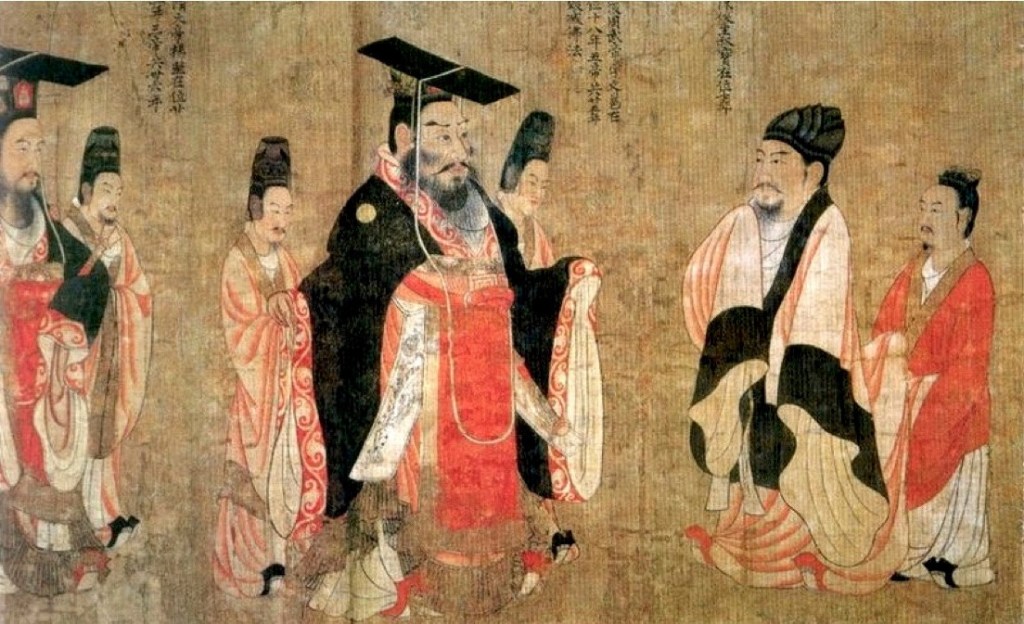
Philosophy in different parts of the world

The word philosophy means ‘ love of wisdom ’ in Greek. It is the pursuit of wisdom , truth and knowledge. It is the study of life’s fundamental questions involving truth, morality, ethics, reasons, logic and existence. A human being , at some point in his life , has wondered upon questions such as ‘ why am I here’ , ‘what is truth’, ‘what is reality’ , ‘is there a free will’ , ‘ what is right and wrong’ etc. These questions come in the realm of philosophy. It is closely related to natural sciences.

History of philosophy

Western philosophy

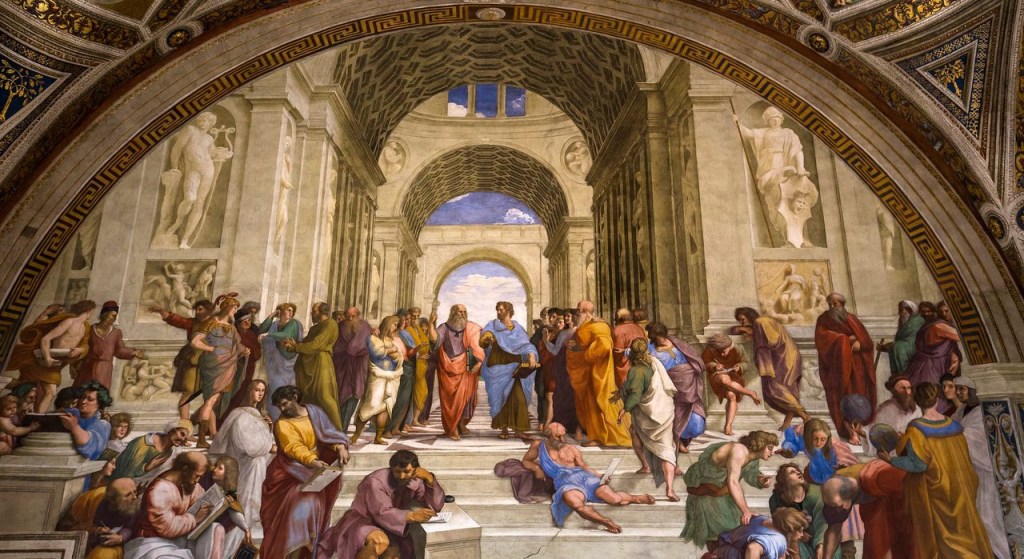
The ancient western era was dominated by Greek philosophical school of thoughts. This era was largely influenced by Socrates and Aristotle. The common topics discussed included metaphysics, cosmology, atomism and monism . In the medieval period , with the rise of the Roman Empire and Christianity , questions such as mature of God , evil & good were pondered upon. Modern philosophy concerned with developing a secular foundation and discarded the authority of religion.

Islamic Philosophy

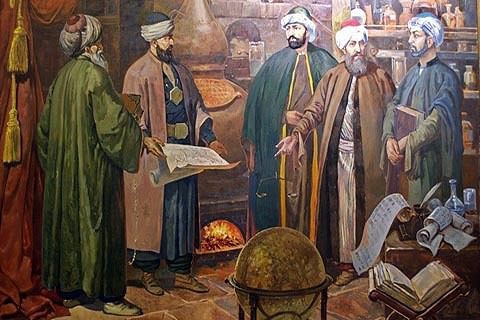
Islamic philosophy is mostly done in Arabic . Two main schools of thought were Kalam ( which focused on Islamic theology) and Falsafa. Philosophers such as Al Kindi , Avicenna and Averroes were greatly influenced by the work of Aristotle whereas Al Ghazali was highly critical of him. The 19th and 20th century Arab world witnessed Nahda movement ( The Awakening or The Arab Renaissance). This shaped the modern Islamic philosophy.

Indian Philosophy

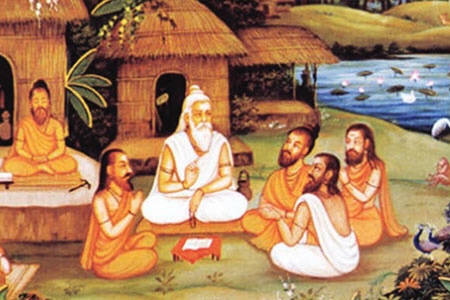
Indian philosophy included concepts like dharma , karma, pramana , dukha-sukha and moksh. It is grouped based on teachings of Vedas and Upanishads . The Himdu philosophers of various orthodox ( astika) schools investigated topics such as metaphysics, ethics , psychology. These schools presented different interpretation within the framework of Vedic knowledge. On the other side , the unorthodox (nastika) traditions rejected the ideas of Atman , Brahman and Ishwara . Jainism accepted atman bit discarded ishwara, vedas and brahman. Buddhism only accepted concept of rebirth and karma.

East Asian Philosophy

The Chinese philosophy saw the rise of schools such as Confucianism , Legalism and Taoism. These traditions developed metaphysical , political and ethical theories such as Tao, Yin & Yang , Ren & Li. Buddhism arrived in China through Silk route and transformed into Chinese form Zen. Many different philosophies such as that of Korea, Japan and Vietnam were influenced by the Chinese philosophy. In modern era, China and Japan philosophers have incorporated ideas of western philosophy. Kokugaku thinker from Japan returned to pure traditions called Shinto that is untainted by foreign influence.

Indigenous American Philosophy

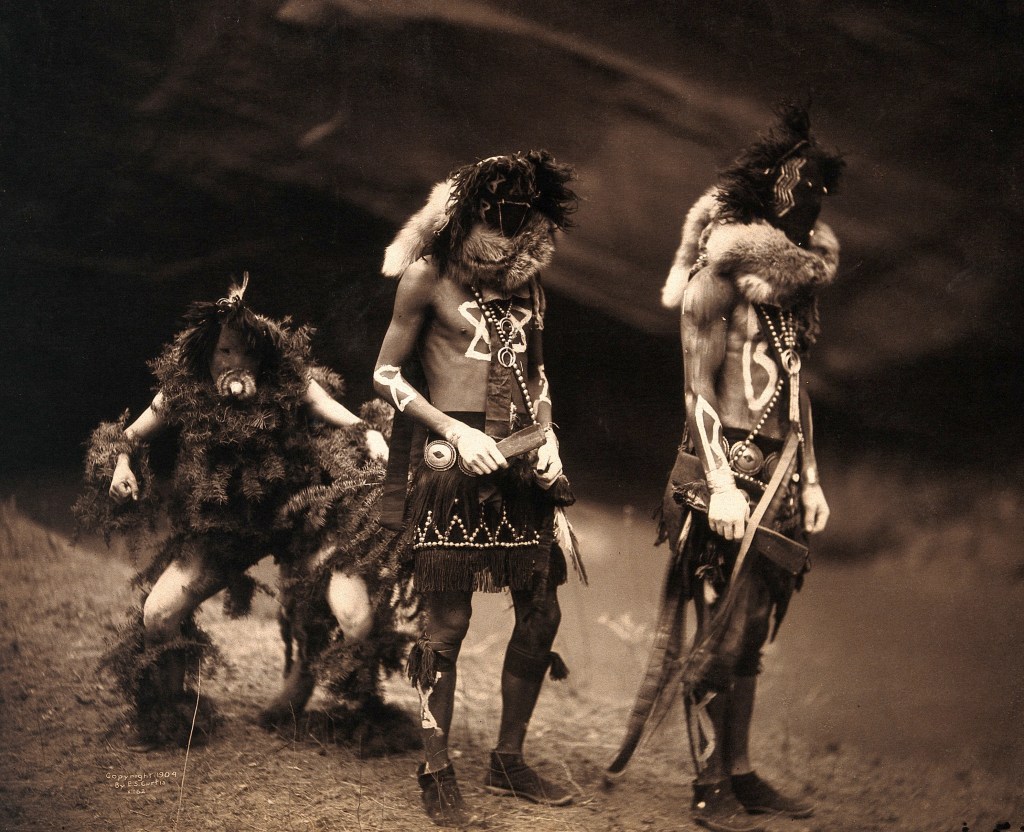
This consists of variety of beliefs including principle of presence of ‘ The Great Spirit’ and concept of Orenda or spiritual power. The practices to access the transcendental experiences of mind came to known as Shamanism. The Nahua metaphysics proposed the concept of an ultimate universal energy which it says is single, vital , self generating sacred force.

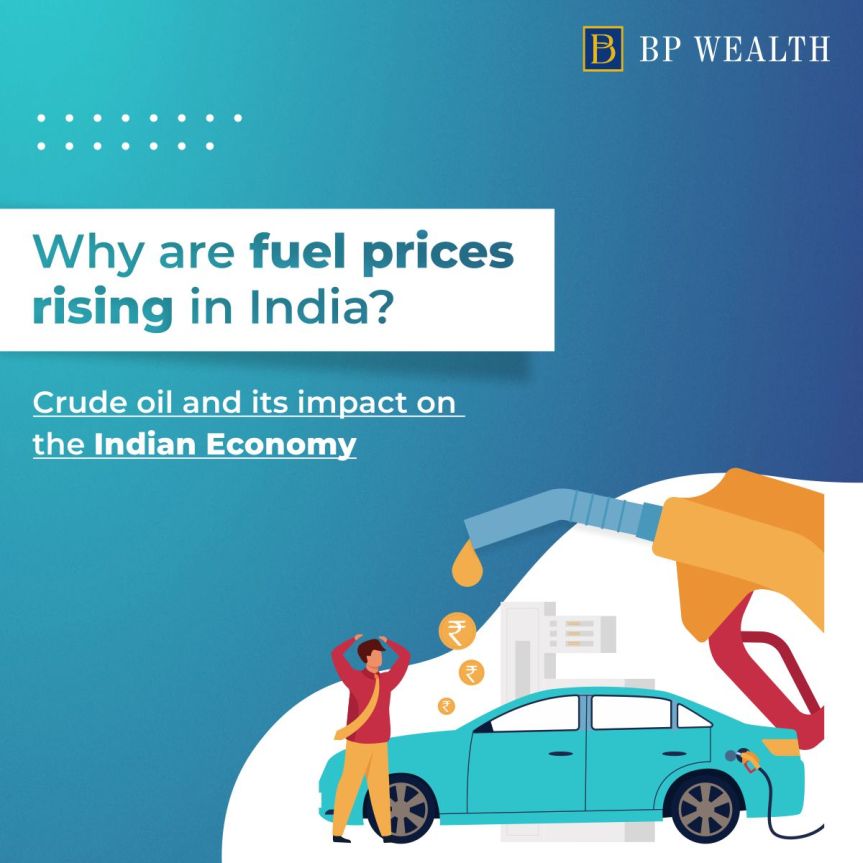
Impact Of Increasing Oil Prices On Indian Economy

The latter will come true as more than half of India’s remittances will go through the Gulf countries, which are likely to see better economic conditions with higher oil prices. In terms of numbers, a $10-a-barrel rise in crude oil prices would increase spending on commodity imports by about $20 billion, offset in part by a $6-billion increase in oil exports and dollars in workers’ remittances. The cost of imports will be halved if the price of crude oil continues to hover around $30 a barrel. In addition, every $10 increase in crude oil prices has a direct impact on a country’s current account (CAD) deficit.

Thus, when crude oil reaches $85 per barrel, the oil deficit will rise to $106.4 billion, or 3.61% of India’s GDP. According to a report by the Reserve Bank of India (RBI), every $10/barrel rise in crude oil prices would lead to an additional deficit of $12.5 billion, equivalent to 43 basis points of India’s GDP. According to an analysis by the Reserve Bank of India, every $10-a-barrel rise in crude oil prices would result in an additional $12.5 billion deficit. Higher prices affect the current account deficit, which means that the value of imported goods and services exceeds the value of exports.

Changes in commodity prices can affect the economic ecosystem at all levels, from family budgets to corporate income and national GDP. Rising oil prices have a negative impact on several factors such as the stock market, currency, inflation, transportation and manufacturing sectors, and government spending. Rising oil prices will drive up the cost of energy, which, combined with the oncoming winter and increased commercial activity as the pandemic eases, will have a major impact on the economies of most countries of the world. India, which relies on imports for more than 80% of its fuel consumption and already has fuel prices above Rs 100 for both petrol and diesel in most cities, will be no exception.

Rising crude oil prices have helped lift the price of gasoline and diesel in India to record highs. High crude oil prices are the result of less drilling by shale gas producers in the United States, disruptions to crude oil supplies due to hurricanes in the Gulf of Mexico, and runaway fuel demand as the global economy stabilizes. -19 pandemic, which significantly reduced economic activity. With the global economic recovery following COVID-19, global demand for crude oil increased in 2021, driving prices up sharply. Crude oil prices have risen steadily since early 2021, when Brent crude traded at around $52 a barrel, fueled both by hopes of improved demand thanks to regional economic recovery and reduced supply from major oil producing countries.

Crude oil prices hit a two-year high, with Brent oil rising above $71 a barrel on Wednesday, reaching its highest level since May 2019, when major oil-producing countries announced they were joining plans to gradually increase crude oil production. World crude oil prices rose to their highest level in 13 months, driven by strong demand prospects amid a global economic recovery and supply disruptions in the Middle East. In February and March 2020, crude oil prices accelerated their decline in response to the coronavirus pandemic and the expected sharp decline in oil demand. The fall in prices is associated with an increase in supply due to hydraulic fracturing.

This was followed by price increases again since 2004, and this upward trend in the cost of oil continues to this day. In addition, since 1996 there have been high fluctuations in oil prices. If we look at the evolution of crude oil prices since the 1950s (see attached chart), price spikes have mostly been accompanied by geopolitical tensions or other factors. leading to a supply shortage.

Due to the pandemic, these oil-producing countries continue to slowly increase production, which leads to higher oil and gas prices. According to the IEA, oil production in non-OPEC Plus countries will increase by 710,000 bpd in 2021. 5.4 million bpd in 2021 and another 3.1 million bpd in 2022.

Since none of the largest oil-producing countries in the world is likely to increase oil supplies, experts predict that by 2019 the price could even reach $100 per barrel. Despite a 430% jump in Brent oil prices since March 2020, oil seems cheap. long term vision. Goldman Sachs expects Brent oil prices to exceed $80 on average in the third quarter of this calendar year, with peaks above that price; JP Morgan expects crude oil to top $80 in the last quarter of 2021, and Bank of America expects Brent oil prices to hit $100 by next summer.

Any rise in global crude oil prices directly affects India as the country imports over 80% of its oil. India paid over $110 billion for oil imports in 2017. Thus, if oil prices double within a year, a country’s import spending will also double over the same period.

Since India imports most of its fuel, it needs more dollars to buy crude oil, which results in liquidity being squeezed. This is bad news for India, which depends on imports for 85% of its crude oil needs and is the third largest importer of fossil fuels in the world.

Given India’s dependence on oil imports and the current pressure on the country, New Delhi is pushing OPEC to increase oil production to contain prices. Analysts say a rise in production by major oil producers is probably India’s biggest hope for a short-term solution, as some economists warn of the risk that crude oil prices could approach $100 a barrel by the end of this year. At the same time, oil-producing countries will be careful enough to maintain a balance in production so that prices do not collapse.

There will also be a significant impact on the Consumer Price Index (CPI) and the CPI inflation rate could be 5% in FY23 due to higher oil prices. The report predicts that rising oil prices could also lead to WPI-based inflation rates of 12% and 6% in FY22 and FY23 respectively. % of crude oil will lead to an increase in India’s Wholesale Price Index (WPI). by almost 0.9%.

An increase in oil prices by 15-25% within one year will affect the Indian economy in different ways. As a general rule, a $10 per barrel increase in crude oil prices would have a negative impact on the current account deficit of $10-11 billion (or 0.4% of GDP). Therefore, rising crude oil prices could increase India’s spending, thereby negatively impacting India’s budget deficit, the difference between total government revenue and total spending.