Managing Different Ailments

Heart disease and cancer account for more than half of all deaths in New York State. About half of all American adults have at least one chronic disease, a long-term health problem that requires ongoing medical attention, such as diabetes, arthritis, depression, heart disease, or cancer. A diagnosis of cancer, heart disease, or another serious illness can be devastating. When someone you care about has experienced a serious illness or is facing a life-threatening illness, it can be hard to know what to say or do.

You must also take steps to manage your attitudes, emotions, and relationships. If you’ve been diagnosed with cancer, stress management can help you reduce anxiety, relieve fatigue and sleep disturbances, and improve your mood. By learning to manage stress, you can maintain a positive physical, emotional, and spiritual outlook on life. Following the recommended treatment plan can help control symptoms and stress.

Because the effective management of chronic conditions depends on the patient’s actions, all interactions with healthcare professionals should focus on the patient’s strengths and difficulties in managing the condition. Disease management plans should emphasize preventing exacerbations and complications, using evidence-based practice recommendations and patient empowerment strategies, while evaluating clinical, economic, and human outcomes to improve patients’ overall health and quality of life. Disease management programs are designed to slow the progression of chronic diseases by identifying and treating them more quickly and effectively, thereby improving the health of people with chronic diseases and reducing the costs associated with preventable complications.

Disease management is a system of coordinated medical interventions and communications for specific groups of patients with conditions in which self-care efforts can be implemented. Disease management is defined as “a system of coordinated medical interventions and communications for populations with conditions in which the patient’s self-management efforts are significant. For people who can access healthcare professionals or peer support, it (and often family/friends/guardians) share knowledge, responsibilities and care plans with healthcare professionals and/or colleagues.

It provides them with the medical care, information, skills and resources they need to effectively manage their disease on a daily basis. A long-term illness or chronic health condition is any condition that lasts six months or more, such as asthma, arthritis, cancer, obesity, diabetes, chronic pain, or heart disease. Chronic diseases have specific symptoms, but they can also cause invisible symptoms such as pain, fatigue, and mood disturbances. Stress can contribute to or exacerbate many different health problems, including cardiovascular disease, high blood pressure, gastrointestinal disorders, chronic pain, postoperative and wound healing, and some of the side effects of cancer and its treatments.

However, applying stress management techniques can help you deal with these health issues. Even after a heart attack or heart surgery, for example, stress management can help by enhancing the benefits of cardiac rehabilitation or by reducing the amount of medication needed to control blood pressure. Treatment for pain associated with a chronic disease may include pain medication, physical therapy (such as physical therapy), and other treatments such as cognitive behavioral therapy. Interventions to improve patient management can bring positive outcomes, including better monitoring, fewer symptoms, improved physical and psychosocial functioning, and reduced use of care.

Data describing the outcomes of complex and structured disease management interventions in hospitalized patients in clinical and community settings suggest that they may be usefully associated with several chronic diseases. A 2015 systematic review of randomized controlled trials examining the effects of chronic disease management programs on adults with asthma found that a coordinated planning approach involving more health care providers than usual can have positive health effects. Functional and perceived quality of life. In a 2008 study, of 15 care coordination (disease management) programs over a two-year period, “several programs improved patient behavior, health, or quality of care” and “no programs reduced overall costs. or net cost”. Despite the small number of studies, CIS interventions have shown benefits for both professionals and patients, especially in type 2 diabetes and hypertension.

This is inconsistent with the results of our 2006 review and may indicate the increasing complexity of CIS interventions with computerized feedback and reminder systems, physician feedback, and access to computerized DS tools [23]. The next most common element of ICC as a primary intervention associated with statistically significant improvement in outcomes was DSD, which benefited from physiological measures of disease control and health care worker behavior in patients with type 2 diabetes and hypertension, but had no effect on other conditions.

Objective A addresses the need to translate and replicate an important evidence base for chronic disease self-management programs. Health status of MCC patients. Examples include basic research aspects of the medical treatment of MCC patients; epidemiological studies of the impact of various types of comorbidities on disease trajectories; the effectiveness, efficiency, and comparative effectiveness of promising health promotion and self-management intervention trials; and Assess the impact of health management strategies. These issues include managing emotions (eg, depression, fear, and depression); medication use and side effects; adherence to diet and physical activity; and communication with healthcare professionals. 15 Several conceptual models have been developed in an attempt to move from case management to a broader approach to chronic disease management. In recent decades, the types of healthcare systems (66), the specific roles of clinicians, and the specific clinical skills needed to help patients cope with chronic conditions have been recognized (21).

In contrast, disease management programs focus on multiple aspects of patient care and maximize the health of certain patient groups. The concept of disease management is the prevention or minimization of the consequences of disease through comprehensive treatment, thereby reducing health care costs and improving the quality of life of people with chronic diseases. The continuum of care is an opportunity to strengthen the doctor-patient relationship, empower patients, and provide support during the most challenging stages of chronic disease. By identifying the subjective perceptions and symptoms of the disease, the attending physician formally acknowledges the validity of the patient’s experience.

Self-care — now commonly defined as a person’s actions to acquire or maintain a desired level of health regardless of interaction with a physician — is generally considered an inappropriate term for chronic disease management, given that most conditions require full participation. doctor and the use of accepted treatment regimens as part of the patient’s treatment regimen.

In most if not all major chronic diseases, the core of important concepts related to changes in patient behavior includes a knowledge base for management (38, 49).

Taking action early will help you understand and manage the many consequences of chronic disease. The most important step you can take is to seek help as soon as you feel you cannot handle the situation.


Shashi Tharoor and his ideology on British rule in India

An author, politician and former International civil servant, Shashi Tharoor, once said – ” India matters to me and i would like to matter to India.”
He is currently a third-term Lok Sabha MP representing the Thiruvananthapuram constituency. People mostly regard him as “Oxford dictionary”, because of his impeccable knowledge of English Literature. Shashi Tharoor, in his book named An Era of Darkness: The British empire in India that was published in the year 2016 talked about colonization and the
disastrous effects it had on Indians. In his book, he explained about the evils of British rule and how it affected us Indians, deeply explaining how we were being trampled upon by the Britishers and treated as animals without any freedom. Tharoor wrote in details how the Britishers looted India off of it’s rich resources, culture and wealth. In one of the most famous lines from the book, he writes:

“They (the British) basked in the Indian sun and yearned for their cold and fog-ridden homeland; they sent the money they had taken off the perspiring brow of the Indian worker to England; and whatever little they did for India, they ensured India paid for it in excess. And at the end of it all, they went home to enjoy their retirements in damp little cottages with Indian names, their alien rest cushioned by generous pensions supplied by Indian taxpayers.” Tharoor has remarked that every single thing or development that occured in British India such as establisment of Railways, parliamentary democracy, rule of law and others were simply done for their own benefits and luxury and not for Indians or for India’s progress and betterment. Tharoor explains that though some British legacies proves to be useful today, however they were just mere side effects that came along with colonial authoritarianism.
Tharoor genuinely believes that after 200 years of immense brutality and injustice to Indians, Britain owes an apology to India and Indians. Some of the most outrageous events in history of India took place under British reign. For instance, according to recent studies, the Bengal Famine of 1943 that costed millions of lives was caused not only by drought but also by the complete failure of the policy of British India under the Ministry of Winston Churchill, who is remembered as the man who caused the Bengal famine. Furthermore, the horrendous Jallianwala Bagh massacre was a heinous crime committed under British Raj. Today, Indian society is divided along lines of caste, creed, religion and culture but it is little known fact that the Colonial Government ignited such divides and pitted one community against the other. Shashi Tharoor did a marvellous job with the book and made us realise what we had forgotten with passage of time.

The Flow Of Words

500+ Writer Pictures | Download Free Images on Unsplash

Today, I am not going to write a quote, nor am I going to speak about issues, problems, and the need for change. This article is going to be something entirely different and the one I hope that connects with all people reading my article out there like it has been doing constantly. My article is going to be about the joy, beauty, and satisfaction of writing an article. As I said, something that is out of the box. This is an experience that everyone needs to have at least once in their lifetime.

 Something that I have learned over the process is that if you are writing an article you do not necessarily have to publish it for the world to read. It can be a very personal thing and that will still be an article. The reason I am calling it an article and not diary writing is because a diary is very you put your feeling, emotions, and happenings of your life into paper. However, article writing is channelizing your thoughts, feelings, and emotions to things happening around you and using words to put out your opinions and perspective into it.

If you think, your article is not going to make a difference you are wrong. Every small thing that we do has an impact not just on ourselves but also on the people living around us. I would want all my readers to remember that if you are writing an article and putting it out in the public, which makes you think that it will not make a difference or an impact then it is high time you think otherwise. When you do the job of writing an article with all your might and hard work then the article will do its job and does not necessarily be out for the public.

Writing an article is not the only thing that one can do. There is so much more than that everyone can explore and bring themselves out with their amazing talent and art. We cannot please everyone on this planet nevertheless what we surely can do is please ourselves with our work and talents. The other thing that I would like to tell my readers is that when we are writing and we write for ourselves rather than thinking about other things, it often brings the best out of us, sometimes beyond our expectation and that is the magic and power of words.

113,425 Creative Writing Illustrations & Clip Art - iStock

Factors that make writing an article a joy

So many factors make writing an article a joy. The factors that I am going to mention are the ones that are always the ones that make me want to keep up with my writing abilities as much as I can.

Learning something new: One of the most important things that keep me going and writing as much as I can is because I always learn something new. Even though I am aware of that topic, there are so many nuances that I learn every time I about topics I am already aware of. Apart from that, new topics give me so much information about things that are happening which makes me more aware and knowledgeable that it brings about a sense of satisfaction about myself.

Makes me more aware of my society, surrounding, environment: I used to think every day about what is my article going to be about today. To find an answer to that I made sure to see things happening around me small or big. Things that are often brushed off. Social media usage helped me read so many things that exist in a society, which was good and bad. Writing an article every day about something relevant to society made me more alert and brought about so many different opinions and perspectives about things for me.

A sense of responsibility: When we know that the things we write and the things we feel play an impact, at least to some extent we become more responsible while writing our articles. This sense of responsibility made me write about topics that cover different issues that exist in society and the urge to be responsible in some way to bring about change that is much required. I believe when people read my article it should create an impact on them. Therefore, I should write with complete responsibility so that a positive impact and effect can be seen in the readers.

A major self-impact: Writing articles also comes from a place of it being able to create a positive impact on me. By writing articles, I feel much more confident, valued, respected, and have a sense of power about myself, which is the most fruitful thing for me. The best part is that it makes me feel good about myself, which matters so much in creating a positive and pleasing environment for me.

 The rush of my thoughts, opinions, and imagination: This happens to me every time I think of a topic and it is the best part of writing an article for me. My thoughts, opinions, perspectives, and imagination all work together simultaneously and brings about an abundant amount of information to my head, and putting all of these down into words is what makes it so special for me. The amount of happiness I get by the flow of my words into the document is what makes my life interesting every day.

I can go on and on about several other factors that play an important role in making the process of writing an article a joy. However, bringing out each factor that brings out the beauty of writing an article for me spoils the essence. It is something I believe that people should experience on their own. Of course, some things might not be factor for me but will surely be a factor for someone else and that is completely okay. What is important is that factors should be important for you and should not be because of any external factor that is playing a role in it.

My article is not going to be very long today. It is not going to tell what one should do or how one should do things. It is because I believe everybody can write and every writing is beautiful as long as the writer loves their work

To conclude, writing an article is a beautiful journey. A journey that does not have good things in it but also bad things in it. These things might sometimes make you feel tired, however, it is only when you learn and overcome these bad things and emerge as a winner that truly makes this journey a beautiful one.

References

  1. Google searches for images

OTT Platforms: Why Are They So Popular?

What is An OTT Platform?

An over-the-top (OTT) media service is a streaming media service offered directly to viewers via the internet without the traditional use of cable/satellite.

Over–the–top media services (OTT) platforms have become quite popular since the last few years. Due to COVID-19 outbreak in the country, many filmmakers are now releasing their movies on major OTT platforms, instead of waiting for the theatres to re-open.

Your Complete Guide to Over-The-Top (OTT) Advertising

REASON FOR RAPID GROWTH OF OTT PLATFORMS

1) Affordable Subscription-Based Service:

Most OTT platforms offer very pocket-friendly subscriptions. For example, the leading OTT player in the market, Netflix offers an Rs.149 subscription for mobile users in India. The variety of content offered for prices as low as that beats PayTV/Cable subscriptions by miles and we are not complaining.

2) Ease of Viewing Across Devices:

Another major point in favor of OTT platforms is that you are not stuck in front of TV or praying for good weather before the match starts because even the tiniest of raindrops render the UFO-like dish antennas useless. OTT platforms work across smartphones, smart TVs or laptops as long as you have a valid subscription. 

3) Ad-Free Streaming Experience:

This one is one big reason why OTT Platforms are getting more popularity than televisions and stuff. Wasting 15 minutes on seeing add is as irritating as it sounds. Plus it interrupts the interest while watching something. That is why the ad-free streaming experience is what viewers are investing their money and time for.

4) Flexible Subscription Models:

Unlike satellite TV/Cable subscriptions where they keep confusing you with choices that are barely any different from one another, OTT platforms offer straight-forward subscriptions. You get an all-access pass with only one subscription for Amazon Prime, whether monthly or yearly. Netflix offers multiple choices depending on how many screens are being used.

5) Ease Of Payment:

All your payments can be made online using debit/credit cards, online wallets or UPI payment options, or your Amazon pay wallet if it’s your Prime subscription. You get reminders over texts/emails before your subscription expires unlike Cable TV alerts on your TV screens that leave you more pissed off than mindful. You also don’t have to run to your local operator or spend hours on the phone any time the service is disrupted, which is a rare possibility in itself.

6) Better Choice Of Content:

The major reason most of us have taken to OTT platforms is definitely how different and fresh the content is as compared to satellite TV channels. On OTT platforms like Prime and Netflix, you can watch  pretty much anything from movies to web series to original content. Set your filters and let the algorithm recommend possibilities for compiling a list of your favourite shows to binge-watch on the weekends or late at night whenever you want, rather than waiting for it to air on the television. The originality of content is a major factor, just as much as the fact that we finally have the option to watch shows from all over the world and not just from your own country.

7) Convenience:

The best thing about the OTT platform is that it is differentiated from a normal TV set, it is based on the following slogan: “Anytime, Anywhere, Everyone”

  • Anytime – The user can watch their favourite shows at any time, because the shows are already on the web, except for just a few clicks;
  • Anywhere– User can watch shows anywhere, the only requirement is a gadget and internet facility (in case of online streaming otherwise shows can be downloaded also);
  • Everyone– Any person with any gadget can access the platform. You just need to create an account on that platform and can use it.

8) Quality and Fresh Content:

The OTT platform gives you the option to watch anything. People are also attracted to these platforms because they are tired of traditional TV serial especially Indian serial which is endless. The growing demand for fresh and original content has been addressed by these OTT platforms.

9) The World Is On Your Screen:

OTT service providers have done away with any remaining geographical barriers when it comes to the distribution of content. Now we can watch global shows at the exact same time as the rest of the world, or even premier football league matches! Similarly, even audio content distributors now finally have a global audience, leading to a tremendous rise in both revenues as well as growth opportunities.

10) Functional User-Friendly Interface:

Last but not the least, the use of AI technology in OTT platforms have created a far superior user interface experience than what traditional TV could even get close to. You see suggestions based on your browsing history and your preferred genres as soon as you launch the respective apps, as well as get alerted to upcoming launches, thereby engaging the users better without forcing them to constantly reach out for the remote control to change the channels.

With an increasing demand for content on OTT platforms, we can expect quite a few more media giants to jump on the OTT wagon. Given the potential for growth and promises of better content, it is safe to assume that OTT platforms are not going out of trend any time soon.

These are some of the epic reasons of why the OTT platforms are gaining such popularity than any other infotainment platforms.

All about James Webb Space Telescope

History

The success of Hubble Space Telescope after its repair mission in 1993 motivated the organizations to make a larger infrared light telescope that could see the past better. Hubble telescope system’s temperature interfered with the infrared radiation it received from the outer space. A new innovative next generation telescope was needed which was faster , better and cheaper. In 2003, NASA’s initial contract for James Webb Space Telescope(JWST) was $824.8 million collaborating with European Space Agency (ESA) , Canadian Space Agency(CSA). in 2005 after major redesign and re-planning , the mission cost reached a hefty amount of $4.5 billion. The telescope has a history of major cost overruns and delays due to backlashes from people and lack of funds.

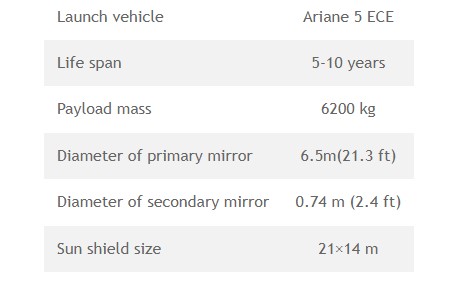
Nevertheless, JWST launched on December 25, 2021 in Ariane 5 rocket from NASA Goddard Space Flight Centre, French Guiana. this orbiting infrared observatory will complement and extend the discoveries of the Hubble space telescope.

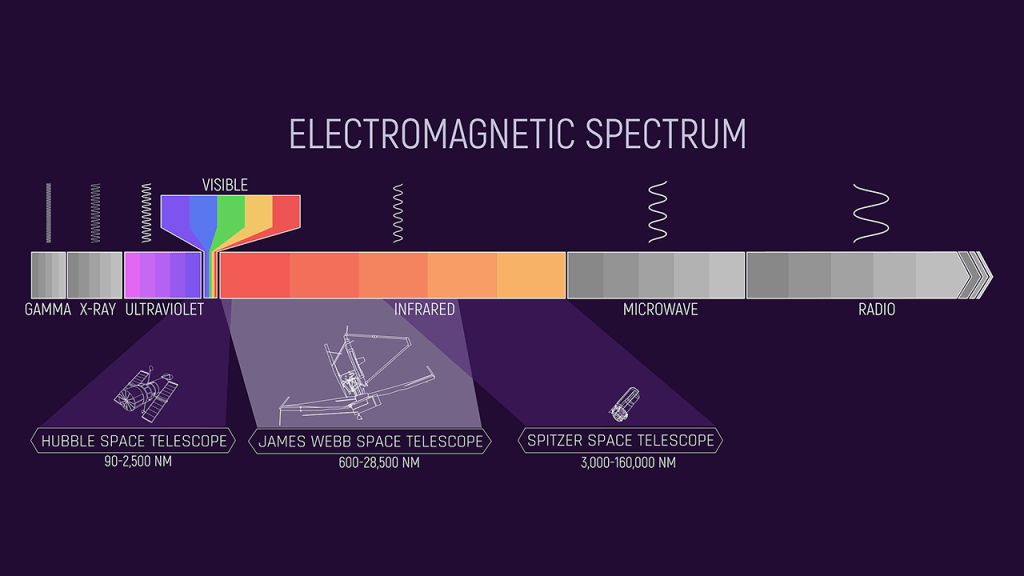
The telescope will cover a wavelength of 0.6 – 28.5 microns for the light falling from red till mid infrared wave spectrum .

Location

JWST will not orbit earth but will be move in a orbit of second Lagrange point(L2 point) which is about 1.5 million km away from the earth. The L2 point is sufficiently near to the earth allowing proper signal communication and the sun shield will prevent any infrared radiation coming from the Sun.

Sun-shield protection

For it to make observation in the infrared spectrum , it must be kept under 50K (−223.2 °C) otherwise the infrared radiation from its system , the earth , moon and sun will interfere with the data. It uses a large 5 layered tennis court sized sun-shield to block that radiation and maintains its surface temperature. the single layer is as thin as a human hair and made with polyamide films . the membranes are coated with aluminium from both sides and a silicon doped layer facing the sun. the shield can be folded 12 times to fit in the Ariane rocket .

The Honeycomb mirrors

The primary optical mirror is beryllium reflector with area 25.4 m2 . gold is used to coat all the 18 mirror segments because it is a highly reflective material for infrared wavelength. The honeycomb pattern utilizes the best use of space available and are also deployable .

Mission goals

  1. Search for galaxies formed after the big bang . It can look 13.5 billion years into the past , about 400 million years after the big bang.
  2. How galaxies evolve.
  3. Observe the formation of stars.
  4. Measure physical and chemical properties of the planetary systems including the Solar System.

This mission will take the Space Science to the next level, thanks to our Scientists……

The Era Of Digitalisation

Even those who remain in their current positions will need to be trained in the emerging new technologies of the digital age. This transformation could be a key proposition as organizations seek specialized skills in their workforce to achieve their business goals and add value to the business. Of course, improving the quality of solutions through digital transformation is not only about technology companies.

Companies that understand the technologies of the digital age know that customers have a choice. This is why digital marketing and strategy is mainstream and the focus for starting digitalization. To succeed in this new digital age, businesses must use digital technologies in everything. Start digitizing, the truth is that innovation will never stop.

The era of digital transformation has arrived for companies of all sizes and types, from Fortune 500 companies to startups. The influence of digital technologies prevails in all areas of our lives, and therefore the current era is also called the “digital age”. The process of digitization began about fifty years ago with the advent of information technology and digital electronics.

Today, we are probably alone in the midst of a transformation between the pre-digital era and the post-digital era. To truly understand this progression, it is important to see where we come from and where we are going. When trying to understand what the digital age is, it is important to understand that it is driven by technology.

India’s industry has shifted to digitalization, with some industries able to recognize and capitalize on the benefits earlier than others. With access to “big data” and artificial intelligence algorithms, companies in the digital age can make data validate almost any conclusion they want. In 2020, we have been consuming more information through digital data and video at home, in our hands, and on demand. Digital technologies open up enormous opportunities in accessing, storing and transmitting information, and digital reading environments offer ways to present information that is difficult or impossible to obtain in the form of text on paper.

Digitization improves many processes in several ways, email and automation being one of them. Just like electricity and its impact on corporate and individual life, digital technologies will also become ubiquitous. Along with these advances, the changes in network speeds with the deployment of 5G and the devices capable of accessing those speeds will further advance the technology of the digital age. Social networks are taking over the digital world and their population is increasing year by year.

With multiple social media platforms available around the world, many companies are considering social media as an integral part of their marketing strategy. It is a wise decision for a company to include social media in their marketing campaign as they are online 24/7 waiting for a customer to check out a product to purchase or a potential customer who is looking for a service to use in their business.

From time to time, no matter which social media platform a company uses, the algorithms change. Well, digitization is any process in which information is converted into a virtual or digital format and organized into bits. To explore this new form of work, characterized by rapid change and transformation, mainly digital publications of literature and statistics were used.

Based on this data, several papers are being prepared, some of which have already been presented at the Digilog talks, the EPSA conference and the DVPW congress. The practical part presents the advantages and disadvantages of digital nomadism, opportunities and challenges, and based on this, possible recommendations for action and possible future strategies for employees, self-employed workers and traditional companies are obtained. The theoretical part explains and delimits the terms underlying the work, and presents the concept and development of digital nomadism.

Digitalization targets a wide range of cutting-edge issues seen by the Company, which include ensuring adequate broadband bandwidth to provide legitimate and versatile association administrations (correspondence administrations) with data for all segments of the population at large, which varies by age, gender and occupation. . Government agencies have sent out various plans to people working in different fields to promote digitization and also to reassure people that this is a reliable, fast and beneficial change. In all scenarios, it seems to be beneficial to enhance the digital skills of stakeholders.

We show that digital agricultural policies do more than replace analog technologies used in traditional agricultural policies. In particular, it provides opportunities for better spatial targeting and tool customization, including results-based grants.

Digital transformation can also improve the quality of solutions through managed and incremental product launches. Every company’s path to digital transformation will be different because each company has unique needs and goals.

As digitalization disrupts society and business models, it presents both a challenge and an opportunity for compliance managers. This transformation is more than ever a compelling argument to emphasize the importance of business ethics in the conduct of any business. Walk the Talk management sets the tone for values ​​throughout the organization, not just by maximizing efficiency, monitoring business processes, and automating compliance reviews. He will explain what will be required of traditional employees and digital nomads in the future, what opportunities and risks will present and what adjustments traditional companies will have to make.

In the near future, companies as a relevant target group will be interested in digital nomads on two fronts. Using digital technology and understanding them are two completely different beasts. Nearly 80 percent of companies are reportedly pursuing digital initiatives, and nearly 70 percent believe they need to invest in digital strategies to remain competitive.

This era of modernization is being supported in Belgium by the rebuilding plan of Wallonia, a community organization created to provide direct support to local authorities in the field of information technology and digitization in order to achieve the following dual goal. Hence, in order to promote and work with this developing new idea of ​​digitization, the government sent a program called “Computerized India”. However, it remains unclear what the digitalization of the sector will mean for future agricultural policy.

These include 1) digitalization of the sector in line with current directions at current rates as a base case, 2) strong digitalization of the regulatory government, 3) use of autonomous agricultural technologies, and 4) digitalization of the food business. Technology-based pricing strategies, such as dynamic pricing, have become widespread across industries around the world. If you want to find your products and/or services on search engines like Google, Bing, and others, you can include search engine optimization (SEO) in your list of digital marketing strategies and strategies. The search engine is definitely and will be on the list, especially in digital marketing.

They do this to make it easier to manage, control and monitor water consumption in real time. An amplification of this is digital or modern nomadism, in which people work multi-locally from home, in the office, in specially equipped co-working spaces or on the street in so-called transit zones, such as at the airport. However, if a company invests resources in alleviating its operational and implementation weaknesses by leveraging digital transformation (in this case, by automating manual processes), it can bring the continuous added value of mobile capabilities to market faster.

Covid-19: Biodiversity Conservation– Our Solutions Are In Nature

The social energy generated by the COVID-19 pandemic provides an opportunity to develop and implement many new ways to build sustainable and adaptable relationships between people and the rest of nature. The public can be prepared for a recovery that includes effective and sustainable biosecurity with elements of human health, biodiversity conservation, and climate change adaptation as a package based on sustainable development principles. A biosecurity approach that simultaneously tackles the COVID-19 pandemic, biodiversity loss, and climate change crises can leverage economic incentives for greener national economies.

Increase investment in the conservation, sustainable use, and restoration of biodiversity. Set biodiversity spending targets for COVID-19 stimulus measures and recovery plans. . For example, the German International Climate Initiative (IKI) is implementing a €68 million Crown response package that will, among other things, provide financial support for the conservation of nature reserves in IKI partner countries to address the immediate impacts of COVID-19 (Platform Redesign 2020, 2020 [101 ]). For example, the EU has introduced a new biodiversity strategy as part of its Green Deal, which proposes introducing new conservation and land-use planning targets, including a commitment to ensure that at least 30% of Europe’s land and seas are protected areas by 2030.

In other countries, the integrated protection of biodiversity has been recognized as a key component of a successful green recovery from COVID-19. While the overall environmental impact of the blockade and other pandemic policies has been mixed, COVID-19 has helped highlight the importance of protecting biodiversity. Because the COVID-19 pandemic is similar to the COVID-19 pandemic but is of greater global concern than recent past zoonotic pandemics such as SARS, the current pandemic provides additional opportunities to reframe conservation monitoring in favor of public health (Jones et al.., 2008; Morse et al. al., 2012; Zinsstag et al., 2011), as well as to understand the biodiversity changes associated with the global extent of human isolation and the long-term effects of sustaining the social and behavioral changes associated with the pandemic (Bates et al., 2020; Cheval et al. ., 2020; Soga et al., 2021; CS1, CS2, CS3, CS5, and CS6).

Understanding how the current epidemic will affect biodiversity conservation in the short and long term, and to what extent this impact will differ from past disturbances, is critical to achieving biodiversity conservation outcomes in an uncertain future. The global COVID-19 pandemic shows how changes in the scale, type, and extent of human activity can affect biological conservation. Conservation of natural habitats, in turn, requires profound changes in human food production and human encroachment on remaining natural habitats.

Decisions to prevent pandemics and protect nature must be permanently elevated to the highest levels of government. In the absence of this awareness, protecting the environment and biodiversity in a post-COVID-19 world may be pushed further down the national and international agenda. Conservation research is unlikely to be a government priority during the post-pandemic economic recovery, and conservation biologists need to communicate the many benefits that this research and biodiversity itself brings to society.

The diversion of funds for more urgent purposes, as well as travel restrictions, are likely to have a direct impact on research activities such as long-term monitoring programs, prioritizing conservation of species and ecosystems, social-ecological research involving humans, and poorly studied expeditions. places. Immediate impact Conservation and development projects that require human presence, such as monitoring protected areas, treating plant and wildlife diseases, and eradicating invasive alien species, may fall by the wayside. Concerns persist that the COVID-19 pandemic will trigger hasty government action that will harm conservation efforts or spark a social backlash against species considered to be vectors of zoonoses, with negative consequences for the local conservation of these species and their habitats (MacFarlane & Rocha, 2020). ). There are huge risks that when COVID-19 vaccines are available and memories of the crisis fade, so will the resolve to prevent pandemics while conserving biodiversity.

There is no doubt that our immediate priority in dealing with the pandemic must be to protect people and prevent its spread, but our long-term strategy must be to combat deforestation, biodiversity loss and the illegal wildlife trade. There are countless benefits to strategizing and investing in natural solutions for the planet’s holistic well-being. We need to understand the simple fact that nature does not need people, but people need nature.

Covid-19 has provided us with a great opportunity to re-examine our lost relationship with nature and to put nature at the center of our decision-making. COVID-19 is our opportunity to redefine our relationship with nature and rebuild a more environmentally responsible world. Combatting the current coronavirus (COVID-19) pandemic and protecting against future global threats requires proper management of hazardous medical and chemical waste; robust integrated management of nature and biodiversity; A good recovery”, a clear commitment to creating “green” jobs and facilitating the transition to a carbon-neutral economy.

The current pandemic is a wake-up call for all of us to build a resilient economy together, conserve nature and biodiversity, to regain lost glories. Because the theme of the International Day for Biodiversity 2021 suggests that we are part of the solution for nature, and solutions are indeed nature’s. Other zoonoses and devastating global pandemics are inevitable unless we fundamentally rethink our relationship with nature.

The emergence of COVID-19 has highlighted the fact that by destroying biodiversity, we are destroying the system that sustains human life. The positive and negative impacts of Covid-19 on biodiversity resources are predictable as the current pandemic intensifies as population grows around the world. The Covid-19 pandemic has affected virtually every sector and sector of biodiversity conservation at the local, regional and global levels (Corlett et al., 2020).

Its impact on biodiversity conservation is numerous and can be both negative and positive, but the negative impact outweighs the positive (Muhumuza and Balkwill, 2013; Roe et al., 2015; Corlett et al., 2020). Like previous outbreaks, Covid-19 has resulted in the inability to manage protected areas and implement conservation programs due to a complete lockdown (Corlett et al., 2020). The consequences of Covid-19 are inevitable as anthropogenic pressure on the natural ecosystem is reduced due to the blockage of social and economic activities. Protecting biodiversity contributes to social and economic resilience4 Integrating biodiversity into the recovery from COVID-19 is important not only to prevent future pandemics; it is also vital to economic sustainability and human well-being.

Investing in nature has immediate and long-term benefits for economic development and social stability, health and well-being, and climate resilience and biodiversity conservation. Based on this experience, we must be part of the solution to create nature through reforestation, preserving existing forests and other landscapes that are home to biodiversity.

These civil society engagement efforts can become more effective tools for biodiversity conservation and awareness raising. Since the beginning of the pandemic, there have been numerous changes in national and international conservation policy and practice. Growing political interest in biodiversity conservation is fueled by the recognition that our economy is heavily dependent on nature and that proper protection and management of biodiversity ecosystems can help address other social challenges, including climate change.

Intuition And Business

It gives us helpful advice and helps us make decisions quickly and easily, giving us crystal clear mental clarity that takes the stress out of knowing which path to take for our business. By relying on your intuition to make difficult decisions, you can combine your logic and intuition in powerful and bold ways. Get quick and easy results in your business by improving your intuition. This book is a business intuition assistant and not only does it explain the power of using intuition in your business, it also helps you develop your intuitive senses by providing you with practical actions you can take to use and trust your intuition.

If you ignore your business intuition, you may find it difficult to make decisions. While business owners, CEOs, and other business leaders tend to trust their instincts, this may not be the best way to make truly important decisions. The main reason is that strategic business decisions tend to be made in a competitive and unpredictable environment where the same decisions will not lead to the same results.

This is the opposite of rational decision making, where people use analysis, facts, and a step-by-step process to make a decision. Since we cannot know the right choice until a decision has been made and all the results have been revealed, the responsibility for making a decision seems even more serious. Without “records,” many business decisions must be made quickly and without historical support.

“With all the advances in analytics tools and big data, many people feel that there is no place for intuition and flair in business today. Decades ago, I may have thought otherwise, but over the years. that intuition can be just another tool in the business tool belt Over the years I have changed my mind and believe that intuition can be just another tool in the business tool belt.

A good definition of intuition is “the direct perception of truth or facts, independent of any process of reasoning; it is a direct grasp or a sharp and rapid penetration into something. The definition of intuition is “the direct perception of truth or facts, independent of any process of reasoning; it is a direct understanding or a sharp and quick understanding of something.

Intuition is the feeling of knowing what is right to do instinctively, without the need for conscious reasoning. Intuition is unique in that it links the emotional response of instinct to the intellectual response of analysis.

It is possible to use intuition to succeed in business, and many leaders attribute at least part of their success to intuition. So it turns out that using your business intuition will give you better results. Following your gut may seem like a gentle way to get things done, but it’s far from it.

To actually use your intuition productively, you need to do some serious work up front. Here are three ways to prepare to use the most powerful decision-making tool in business. To use your intuition, you first need to know who you are and what you want from life.

The more you can build a foundation of trusting your intuition, the better it will be able to make the right decisions time and time again. In business, it may be partly innate, partly acquired through years of experience, and can be quickly exploited. Developing this decision-making ability is one of the most important activities of business leaders.

“Intuition must accompany every decision to minimize possible short-term negative consequences if the best long-term outcomes are expected. Now, to be clear, we don’t recommend throwing numbers out the window and doing whatever you want with your heart. Eager…but we say that using a combination of logic and intuition can help you make the most powerful business decisions. Here are three steps you can take to implement an intuitive decision. Now let’s look at some business intelligence examples and see how you can use this Three sources of information make decisions.

By asking yourself these 7 questions, you will be able to hone your intuition so that you can better hear your inner feelings and make faster decisions in the future. It is not hard to find supporters or quotes from business men and women about following your intuition or trusting your intuition. However, there is one element of business that seems to take a backseat… intuition.

Remember that in the battle of logic and intuition, numbers only tell part of the story. In a world so dependent on numbers, companies seem to be forgetting the most important fact. In fact, 40% of executives say they still make intuitive decisions despite having access to deep business data.

The truth is that the conditions for intuitive experience are rarely found in an interview situation, in which case intuition should be taken for granted. Cecilia Young, a Canadian coach with 25 years of experience in business functions, reiterates the view that many C-suite directors use intuition when making decisions and either don’t know it or don’t talk about it too much for fear of being overruled. laugh. . The premise of the Yengs process is that people already have the answers, and by using the methods of reason and intuition, they will be able to see far beyond the abundance of information available in the external environment.

His research has shown that intuition is best used when entrepreneurs are faced with difficult or risky decisions where more information won’t make the choice easier. Researcher and associate professor Laura Huang found that entrepreneurs who make better decisions based on their intuition recognize that their instincts are based on objective and subjective information they already have. They also understand that intuition is not fast, impulsive and emotional. While they feel comfortable talking about it, it turns out that’s not usually the case in the corporate world.

You most likely won’t focus on your client’s problems, so when you help others, you can trust your instincts instead of solving your own problems. If you use your intuition to make decisions at a higher level, you will get rid of many decisions that need to be made at a lower level.

I think intuition is tangent, not waiting for what others say or making decisions based on results from other companies. In business, every time I go against my instincts and get into situations that don’t seem right to me, everything goes wrong.

Sociology & Psychology of Ashtanga Yoga

The modern age is known as age of competition. It includes not only academic field, sports field but also every sphere of life. In the field of sports we see that every player is trying to reach his maximum capacity. In international competition, take the example of running in which competitors are having the difference of fraction of seconds. Everyone wants to get medal. So competitors are acquired fraction of second with the help of psychology biomechanics nutrition, sports medicine and all other. All these science help us to develop maximum performance through the minimum expenditure of energy. Maximum sports performance are developedof the players through the yoga and pranayam.

The most of the people eat and drink(too much tea or coffee, which creates toxicity in his blood and brain) this chaotic life style makes him prone to disease both somatic and psychic such as acidity, asthma, headache, hypertension, common cold, diabetes, thyroid, postural defects and give stress etc. Which are not directly amenable to conventional (allopathic medicine). Now a days yoga and pranayam therapy have been mostly used for the treatment of both somatic and psychic diseases. Yoga and pranayam are one of the ancient Indian principles which are used in the mind-body connection.

Yoga refers to the types of exercises based on controlled the respiratory system, blood circulatory system, endocrine system, digestive system, nervous system, urinary system and muscular system etc.

The great saint Patanjali considered “Ashtanga yoga” i.e. eight fold of yoga. These are given below:

  1. Yama (forbearance)
  2. Niyama (religious observance)
  3. Asana (posture)
  4. Pranayama (suppression of the breath or breathing in a peculiar way)
  5. Pratyahara (restraint of the senses) 6. Dharana (steading of the mind)
  6. Dhyana (contemplation)
  7. Samadhi (trance

The first five make external yoga while other three are internal yoga. All of these elements have further sub divisions. According to Patanjali there are five yamas such as:

  • Ahinsa
  • Satya
  • Asteya
  • Aparigraha.
  • Brahamcharya

Niyam are also five in number such as

  • Shauch
  • Santosh
  • Tapas
  • Swadhyay
  • Ishavar paridhan
  1. Asanas are incalculable in number. For physical vigour mental poise are spiritual upliftment all these asanas, advisably done with pranayama and significantly important.
  2. Pranayam is in fact, a part of upasana or devotion. It has three phrases i.c. Purak. Rechak, Kumbhak. After the adoptation of the correct posture, one aims at synchronizing. inhalation, exhalation process to such an extent that there is natural and automatic suppression of the health. This state is called Pranayama.
  3. Pratyahar is restraining the senses which are gateways of knowledge. In fact, pratyahar simply means back from the sensual pleasures. When senses have been controlled through it is an attempt to steady one’s mind. To this yogis call ‘Dharana’ which means steadying and concentrating ones mind in particularly ‘nothing’. After the mind has been steadied, the real contemplation (Dhayan) starts. At this stage, there is smooth flow of deep thinking neither hampered nor distorted. The state of body and mind can be compared to the smooth flow of water in a stream which never disturbed. The state of mind which originates in dhayan, now culminated in “Samadhi” or profound meditation; the highest state of yoga where there is neither aught nor naught, neither dark nor light, neither pleasure nor pain etc. Dhayan, Dharana and Samadhi, all the three together make sanyam(restraint or control). We have see that yoga is not something an ordinary physical exercise or a way of worship. It is a means through which we enjoy the blessing of this life processing good health but also mitigates the pains and suffering of death.

BENEFITS OF YOGA ARE GIVEN BELLOW:

1) Yoga and pranayam are use for cure and a prevention of many diseases, such as acidity, asthma, arthritis, indigestion, diabetes, thyroid, hypertension etc.

2) Yoga is the simplest form of relaxation. It reduces obesity.

3) Yoga has a hygienic effect. Exercises like, Bhujangasana, Shalabhasana, Dhanurasana, sarvangasana, paschimotanasana and chakrasana etc. are meant for cleaning various internal and external vital organs of the body.

4) Yoga is most necessary for mental disorder of a people.

5) Yoga helps us to a great extent, which stimulates our brain.

6) Yoga helps in regularizing he breathing process(inhalation and exhalation).

7) It is the most economical activity.

Yoga is becoming popular everyday. Centers are being opened everywhere to attract people to the practice yoga. Yoga as a therapy is useful in every sphere of modern life whether it is social, professional or spiritual.

The Incompleteness In Completeness

Book Review: 'Hayavadana' by Girish Karnad

 Before I start my article, I would like to quote one of the greatest Indian writers I have ever come across in my life. The writer is none other than Girish Karnad who says, “The world has never before had as much drama as today. Radio, films, television, and video inundate us with drama. However, while these forms can engage or even engage the audiences, in none of them can the viewer’s response alter the artistic event of itself. That is why theatre is signing its death warrant when it tries to play too safe. On the other hand, that is also the reason why although its future often seems bleak, the theatre will continue to live and to provoke.” By this, I am assuming all my readers know what my article is going to be about today. Today, my article is going to be a book review written by one of the greatest playwriters in Indian literature. The book’s name is “Hayavadana” and was available in the year 1971.

Understanding the area and other aspects of Hayavadana

The original language of the writing of the book Hayavadana is in Kannada. Kannada is the state language of Karnataka. Girish Karnad hailing from this state has many publications in Kannada. With a lot of persuasion from people around Mr. Karnad, he decided to translate the Kannada play of Hayavadana into English. He has brought out the translation of the play and was available in the year 1975. Before we get into the detailed aspects of the play, let us first understand the area of literature.

As I mentioned before Hayavadana comes from the area of Indian Translation in English in Literature. You must all be wondering what exactly is Indian Translation in English. Indian translation in English is where Indian language text such as Kannada, Tamil, Assamese, Bengali, Hindi, etc is translated into English. Of course, there are many questions in people’s minds. One of the most common ones out of them all is whether justice is done to the real text when the translation happens. The answer to this question is simple. During the process of translation, the people who are responsible for it do intense research about the language that the text is written and the language that the text is going to be translated into. Let me make this very clear that it is not any translation app that translates the word into another language rather people who are working hard constantly and who through different things while translating the text. Therefore, the translation is very precise but it is not flawless and might have some human errors in it.

The next thing that also comes to mind would be how can Indian languages be translated into a foreign language? We have heard people say why cannot text written in different Indian languages be translated to a common Indian language and why is it done to English. The reason we translate Indian texts into English is that English is the most common language spoken in and around the world. English is no more just a language rather it has become a means of connecting people of different countries languages ethnicities and religions together. Therefore, when Indian texts are translated to English the availability of the text becomes much higher and the rich cultures, traditions, of India spread around the world.

The introduction given by Kirtinath Kurtkoti in the book itself has given readers the history and an understanding of the plot. The plot of Hayavadana comes from Kathasaritasagara, An ancient collection of stories in Sanskrit. However, Girish Karnad has borrowed it through Thomas Mann’s retelling of the story in ‘Transposed Heads’. The original poses a moral problem while Mann uses it to ridicule the mechanical conception of life, which differentiates between body and soul; he ridicules the philosophy, which holds the head superior to the body.

Girish Karnad in his play poses a different problem than that of human identity in a world of tangled relationships. The story tries to reveal the ambiguous nature of human personality.

Karnad uses conventions and motifs of folk tales and folk theater elements such as masks, curtains, dolls, and the story within a story to bring about a bizarre world. It is a world of incomplete individuals, indifferent gods that speak and children who cannot, a world indifferent to the desires and frustrations, joys and sorrows of human beings.

Play Review: Hayavadana - KITAAB

Review of the Hayavadana

The word Hayavadana comes from the words “Haya” which means horse and “Adana” which means man. The reference is taken from Hayagriva, which is a Hindu mythological horse god.

 The main theme of this play is completeness and incompleteness. This has been brought out beautifully in the first scene itself. When the Bhagavata introduces the audience to the play by singing the songs of the Hindu mythological God Ganesha, he brings out the fact, that Ganesha is incomplete because he is half human and half elephant. Lord Ganesha has the body of a man and the head of an elephant. Through the singing of the Bhagavata in praise of Lord Ganesha, it brings out the fact of how people worship and accept incompleteness when it is seen in gods who are considered above human beings but at the same time constantly do so much to attain completeness.

Girish Karnad very smartly named the characters in his play. The names of the characters are not just given blindly rather it has an inner meaning in them, which can be seen while we read the play. Girish Karnad has used traditional methods of storytelling to bring out the reality of the world. The idea of completeness and incompleteness is also shown through the character of Hayavadana who is half man and half horse. The hypocrisy of a man is brought out when the Bhagavata praises Lord Ganesha for his incompleteness but a blessing to Hayavadana to become complete.

The story within the story speaks mainly about how our actions and behaviors have an impact on our bodies and mind. The female character Padmini in this book is not shown as a female who is shy, silent, always listening and worshipping her husband, etc rather she is shown as a woman who knows her value, looks after herself, can stand for what she wants, never hides her feelings or desires. She is a character that stands out until the very end.

The beauty of this play is that it has smaller themes in it, which are subtly brought out during the play. The traditional elements of folk tales and tradition are not lost even when the story is about the present situation of the world. The audience or the readers feel various emotions during the play, which makes the book of Hayavadana stand out and mesmerizing.

The other thing that caught my attention in this play is the representation of gods done as supreme and beyond human beings and at the same time the story shows god as any other human being who has basic needs like us. The use of sarcasm, wit, reality, feminism, etc has been beautifully done in the play.  I do want to ruin it for the readers by explaining everything present in the book of Hayavadana. By reading this article, I hope this book has caught the attention of the readers and brought out the urge to read the book.

To conclude, we often hear people saying, “Do not judge a book by its cover” but I would also say that do not judge the book by its size of it. Hayavadana is a small book but it has so much in it that needs to be comprehended by us. It is truly a magnificent piece of writing that left me awestruck and thinking even after a year of reading it.

References

  1. Google search for images
  2. Hayavadana by Girish Karnad

The One Thing I Do Every Day

It can be the smallest thing, even if it’s just sending an email or taking a bathroom break. If you feel like your life is starting to take over, take a break and be alone for a minute. These extra 15 minutes will help you reduce morning stress and help you have a more organized, productive day.

Every morning, make a “I’ll do one thing today” to-do list and get it done before you get distracted by non-essential things. Think about your goals, break them down into small steps, and take one step a day. It would be nice to do at least one little thing every day to make your life better. Start with very simple actions, with things that are at hand.

These 10 things, if done regularly, will be the foundation and foundation that will make you feel “good” even when you’re struggling. Will he keep working or will he do the job I hate the most just because I know I have to. Sometimes it’ll just be about not texting the fucking guy, or watching an extra hour of TV, or spending money on things I don’t need.

As for my [career, finances, leisure, learning, relationships and health], what is the only thing I can do [today, this week, this quarter, this year, over the next 5 years] in such a way that, doing things differently would be easier or useless. Just because it’s called THE ONLY ONE doesn’t mean you have to do the same thing for the rest of your life. It’s all about being persistent with just one task that helps lighten the rest of the day or automatically cross items off your to-do list.

Feel free to make a short list of other goals, but you’ll find this big goal becomes the cornerstone of all actions you take along the way. Everyone will be different and will achieve their great things in different ways. When you settle for one thing, it usually comes at the cost of creating an endless list of things you think you need to do.

There may be times in your life when wasting time is exactly what you need to do. Sometimes we just need to remind ourselves that the ultimate goal of all the hard work and torture we go through every day is to sit down and relax. There are some things that I think you need to do every day (or at least start trying) to be happy.

There are a few small things you can do every day to keep your life happy, productive, and successful, and they are different for everyone. In this episode, I’ll share with you my list of 25 things I don’t do every day so you can watch how you spend your time and energy and make a different choice or build on the choices you’re already making. When you wake up this morning, the first thought that comes to mind is probably your to-do list for the day.

Let me tell you right now, there will be days when you won’t want to sit down and do it. But if you can get through those days and even take a few small steps within the time allotted to you, you will feel fulfilled and move closer to achieving your big goal. If there’s one thing in the world that I don’t lose sight of every single day, it will be that.

I do this several times during the day, but I need it and I’ve learned to really embrace it. One of the things I do every day that makes me feel happier is to incorporate more feelings into my routine. Incorporating more of our senses into our homes and daily activities can change how much joy we experience in our surroundings. Of course, decor can make a home beautiful, but the words around us can change, inspire, and inspire us.

This will help you appreciate all the bright people and things that you have in your life. Simple things like this allow us to appreciate our blessings and teach us what really matters in life. So, if you’re having a hard time seeing the bright side right now, just think about things you probably don’t know about and be grateful for.

I don’t have a long journaling process and I don’t meditate, but I do write three things I’m grateful for every night I keep in my gratitude journal. I spend a day and a half thinking about when I should start writing, and when I think a writing career isn’t for me, I draw inspiration from a seven-year-old magazine in the corner of the house. my wardrobe. It often shocks me how everyday things can lead to great things.

As for me, I intend to do one thing a day, and this has changed the situation. Complete a task from your to-do list. If you only complete one task during the day, the day was well spent.

Creating this daily ritual with your ONE Thing is critical to achieving your goal, not just for the finished product, but for believing in your ability to create. If you persist for a week, you will start to enjoy doing it regularly.

If you’ve always wanted to lose weight, eat one slice of bread or one less pizza each day. Planning time. Conduct a daily, weekly, quarterly, and yearly review to check what you have and make sure you are gearing up for success. If you identify, notice, and publicize one thing, it will help set the stage for achieving your goals by breaking them down into daily blocks of time.

By journaling every day, you start good habits that change every area of ​​your life. If you want to feel the kick, now is the perfect time to start your daily mental workout. This inspiring magazine offers a quote and advice or activity for every day of the year to help you expand your knowledge of yourself and stretch your brain with words, numbers and optical puzzles. This diary will help you appreciate the places, people, and experiences that bring peace of mind, comfort to your body, and meaning to your life.

From the radio on the way home to your favorite podcast, it stimulates your brain and makes you think about different things. After a day of work and chores, it’s important to feel like your day is important and meaningful — and one of the easiest ways to do that is to sit down with someone interesting and chew some fat.

Women Empowerment

The 2020 Gender Equality and Women’s Empowerment Policy affirms USAID’s vision of a prosperous and peaceful world where women, girls, men, and boys enjoy equal economic, social, cultural, civil, and political rights and have equal opportunities to secure a better life for themselves. , their families, their communities, and their countries.

The GEM is calculated by plotting “the proportion of parliamentary seats held by women, legislators, senior officials and managers, and technical occupations and workers, and gender inequality in earned income, reflecting economic independence.” Political emancipation supports the creation of policies that best support gender equality and action for women in both the public and private spheres. Some criticisms of the GEM are that it does not take into account social factors such as gender, religion, cultural context, legal context, and violations of women’s rights. In the social context of racial, gender, and class politics, the empowerment of African American women in the workplace “may be seen as resistance to attempts to fixate appropriate meanings of identity and behavior, where such meanings are interpreted as control, exploitation, etc., wisely oppressive for African American women.”

The principles, subtitled “Corporate Equity,” highlight the business case for companies to take action to advance gender equality and empower women. When women have the right to participate fully in society, work and create their own businesses through access to finance, education and employment opportunities, the quality of life for families improves. Empowering women and achieving gender equality helps societies ensure sustainable national development. Economic emancipation increases women’s freedom, access to formal government programs, mobility outside the home, economic independence, and purchasing power.

Developing Impact Strategies We work with global companies to provide a comprehensive overview of their women’s empowerment activities, prioritize, develop and implement a strategy that promotes business success and women’s progress, including through the implementation of the Women’s Emancipation Principles. Find out why the signing of the Women’s Empowerment Principles is central to the Adjara Group’s sustainability strategy to address gender equality and promote women as leaders in business. Women’s empowerment or women’s empowerment is the process by which women gain influence and equal opportunity to exercise personal, social and economic endeavors, participating in all areas of society on the same basis as men. Over the years, UNITAR has built a wealth of experience in supporting governments and civil society organizations in their work to empower women and girls, which gives it a unique opportunity to build and develop relevant skills and abilities at the individual, collective and institutional levels.

FINCA is working with its global staff to find leadership opportunities in countries such as Pakistan, Haiti, and the Democratic Republic of Congo, which traditionally does not have female licenses. While the disproportionate impact of gender inequality on women and girls is clear, it is also clear that CARE and its partners must learn from and support diverse women and girls to combat injustice and fight for equality. Empowering women is one of FINCA’s core commitments and part of our vision for the future.

Anything that forces society to change these laws and regulations can also empower women. It also helps our global workforce deliver our services to reach more women. It is vital that women’s voices are heard and their work locally recognized, valued, and supported.

Women are also more affected by the economic impact of COVID-19 as they work disproportionately in unstable labor markets. Unpaid care work for women has increased significantly due to school closures and the increased needs of the elderly. Worldwide, one in three women have experienced physical and/or sexual violence, most often by an intimate partner.

“Women of color should be more representative of our society than any other group. Nearly 60 percent of women work in the informal economy, putting them at greater risk of poverty.” Get up, take the lead, and take control of your own destiny In our own hands, inspiring us all.

Read on to be inspired by the words of the pioneer women who said it best. Follow this link to go to the WEP donation page at UN Women. Women, if you want to save the soul of a nation, I believe you must become its soul. “That man over there says the women need help getting into the carriage, getting them up to the ditch, and getting the best seat anywhere.

However, the path to true gender equality (together with all the important intermediate nuances that intersect with the power dynamics of race, class, sexuality, etc.) is long and ever-changing. This includes formal and informal laws, legal frameworks, and rules governing behavior.

Fairness means that being polite is not the same as being silent. I raise my voice, not to cry out, but to be heard by those who have no voice. Besides, you not only speak English, so it’s useless to talk about it; no one but a man can do it. This content is created and maintained by a third party and imported into this page to help users provide their email addresses.

Exercise

For example, a light jog or walk after a run, or light stretching after strength training can also help prevent pain and injury. Exercise can also help the body stay flexible, which means muscles and joints can easily stretch and bend. You may also feel better about your appearance and yourself when you exercise regularly, which increases your self-confidence and boosts your self-esteem. The right amount of exercise can boost your energy levels and even help improve your mood.

To reap the benefits of exercise, simply become more active during the day—take the stairs instead of the elevator, or spice up your housework. Regular exercise is the best thing you can do for your health. It has many benefits, including improved overall health and fitness, and reduced risk of many chronic diseases.

It is performed for a variety of reasons to promote growth and strength, prevent aging, develop muscles and cardiovascular health, hone athletic skills, lose or maintain weight, improve health [2], and even for fun. Exercise can improve health and well-being, as well as strengthen community bonds and appreciate the beauty of nature. Exercise is important for maintaining fitness and can help maintain a healthy weight, regulate the digestive system, build and maintain healthy bone density, muscle strength, and joint mobility, promote physiological well-being, reduce surgical risks, and boost the immune system.

Exercise helps people lose weight and reduce the risk of certain diseases. Doctors know that regular exercise benefits most people, even people with disabilities or health problems like asthma.

If you have health or other concerns (such as being overweight or in poor shape), talk to your doctor before starting an exercise program. Be sure to check with your doctor before starting a new exercise program, especially if you’re worried about your fitness, haven’t exercised in a while, or have chronic health problems like heart disease, diabetes, or arthritis. For more information on the types of exercises you should include and how hard you should train, read The Best Exercises for Health and Weight Loss.

Make sure the type and intensity of your activity is appropriate for your fitness level. Strength training for all major muscle groups at least twice a week. Drills may also include training focused on accuracy, agility, strength, and speed. These include cycling, running, swimming, dancing, roller skating, tennis, cross country skiing, hiking and brisk walking.

Exercise, such as jumping, running, or brisk walking, can help keep your bones strong. Exercise can help prevent excess weight or help maintain weight loss. Exercise and physical activity are great ways to feel better, improve your health, and have fun. Just 10 minutes of cardio can go a long way in improving your sleep quality, especially if you do it regularly.

Exercise can also help stabilize the mood and relax the mind, “an important cognitive process in the natural transition to sleep,” says Gamaldo. But for some people, exercising too late during the day can interfere with their nighttime rest. However, we do know that moderate aerobic exercise increases the duration of non-REM sleep.

Despite these biological responses to exercise, other people find that the time of day they exercise doesn’t matter. Also, while a lot of the research is focused on aerobic activity and sleep, Gamaldo says choosing the exercises you enjoy will help you maintain them. It seems that your mood can improve with exercise, regardless of the intensity of the physical activity. We found that exercise substantially improved health outcomes largely independent of weight loss.

The health benefits of regular exercise and physical activity cannot be ignored. You don’t have to spend hours at the gym or engage in monotonous or painful activities you hate to experience the physical and emotional benefits of exercise. For most people, moderate-intensity exercise is enough to improve overall health. It’s best to start with simple exercise goals that you know you can achieve.

If you’re not the type to stick to a structured exercise program, try to see physical activity as a lifestyle choice instead of crossing it off your to-do list. Think about your favorite activities and how to incorporate them into your exercise program. Read health and fitness magazines or visit exercise websites and get inspired by photos of active people.

Even small things can count as exercise when you’re starting out, like taking a short bike ride, walking the dog, or raking leaves. Seasonal activities such as skiing or skating in the winter and hiking, swimming, or biking in the summer can create pleasant family memories and provide healthy exercise. Exercise is any physical activity that improves or maintains physical fitness, overall health, and well-being.

It can also help them become more aware of their mental state and practice distraction from their fears (1). While exercise can help people lose weight and maintain weight loss, fitness experts say people may overestimate the number of calories they burn during exercise, or they may simply not be doing enough to shift the scales. Too often, “it’s all about focusing on my own weight and thinking that, you know, if I don’t lose weight, the exercises didn’t work for me, and a lot of them use that as a reason to stop,” she said. .

Research has shown that people like McCollum, who are overweight but exercise regularly, can still reap many health benefits, Geser said. According to data published in January 2018 in the Journal of the American Geriatrics Association, research shows that even in adults at high risk of Alzheimer’s disease, physical activity, especially aerobic exercise, can help improve cognition Features. Exercise helps fight this inflammation and reduces the risk of various diseases.

Eliminating lactate from the circulation makes it easy to lower body temperature, which can also benefit the immune system since a person can be prone to mild illness if their body temperature drops too quickly after exercise. Balance exercises make it easier to walk on uneven surfaces and help prevent falls. He or she can start a program that suits you and your fitness level.

As president of the American College of Sports Medicine from 2007 to 2008, he launched the “Exercise is Medicine” movement, which encouraged physicians to educate and even “prescribe” patients about physical activity. He co-authored a paper published in iScience in October that looked at multiple studies and compared weight loss to exercise to prolong life and improve people’s overall health. During a visit to Bakersfield Fitness, Newsom emphasized the importance of exercise for physical and mental health to escape the stress of the pandemic and return to socializing. McCollum has been exercising her whole life, and she didn’t find an exercise that would help shed excess pounds.

Feed your soul with some Astronomy….

Astronomy is a subject that produces a spark in everyone. Who doesn’t like gazing at the stars with awe or secretly trying to make a wish when looking at the falling stars or more precisely ‘meteors’ . As it is famously said-

You are not a human being looking at the Universe but the universe looking itself in human form .

Some say, time travel is impossible but often we don’t realise that when gazing at the night sky , you are literally looking millions of years into the past. This thought can make anyone’s heart dance and excite them to explore such a gigantic cosmos.

Astronomy takes your imagination to the next level. We are connected to this field since the arrival of human on this planet. From ancient times , farmers used sky to decide the sowing seasons of crops, astrologers for predicting fortune and astronomers for making calendars and navigation routes for ships. Our ancestors knew the significance of Sun and thus worshipped it. The ancient Mayan Civilisation and Egyptians constructed the pyramids in such a way that their location coincided with that of the positions of the Constellations above.

Certainly this suggests that Astronomy is in our blood . Renowned astronomer Carl Sagan quoted “ The Cosmos is within us. We are made up of star stuff. We are a way for the Universe to know itself.” By studying Astronomy , you understand there are no limitations to what we can achieve, you surrender yourself and your ego before this humongous Cosmos, you feel free and connected to the Nature. If one is interested in going to the depths of this field , one can follow these tips:

1) Be curious- Curiosity kills fear more than courage will ever do.

2) Be patient- Good things take time.

3) Seek knowledge and wisdom- Your soul is most happy when you are in a learning state.

4) Be truthful- A scientist must always be truthful to herself/himself and to the world. Truth is the ultimate thing that a being chases.

5) Be fearless- Know in your mind that you are as old as this Universe and there is nothing to be afraid of because we all are essentially same at the root level.

Always be hopeful because somewhere in this vast universe something incredible is waiting to be known.

Kabuliwala by Rabindranath Tagore

Kabuliwala is a Bengali short story written by Rabindranath Tagore in 1892, during Tagore’s “Sadhana” period (named for one of Tagore’s magazines) from 1891 to 1895. This story is one of the best stories written by Rabindranath Tagore.

This is very emotional and sensitive story which portrayed a father’s deep love for his daughter. This story is adapted many times as a Bengali and Hindi movie in 1957 and 1961 respectively and also as a part of television series named “Stories by Rabindranath Tagore”.

SUMMARY

The story opens with the narrator describing his five-year-old daughter Mini, who learned how to talk within a year of being born and practically hadn’t stopped talking since. Her mother often tells her to be quiet, but her father prefers to let her talk, so she talks to him often.

One morning, Mini chats with her father while he’s working on an adventure novel. She looks out the window and spots a man and starts calling him “Kabuliwala, Kabuliwala!” The man she’s shouting about is an Afghan named Rahamat in baggy clothes, walking along selling grapes and nuts. However, when he comes over, Mini runs into another room, convinced that his large bags are full of children, not goods.

A few days later, our narrator finds Kabuliwala sitting next to Mini with a pile of raisins and nuts in her lap, paying close attention as she talks and talks. He has given her some grapes and pistachios, so the narrator gives the Kabuliwala half a rupee and tells him not to give her any more treats.

Later, Mini’s mother finds her with the half-rupee and asks where she got it, and is displeased to hear she took money from the man.

Mini and the Kabuliwala develop a close relationship, spending time together every day joking around and talking. The narrator enjoys talking to Kabuliwala too, asking him about his home country of Afghanistan, and all about his travels. But Mini’s mother is alarmed by her daughter’s closeness with the man, worrying that he might try to abduct Mini. The narrator does not agree that there is any danger.

Every year in the middle of the month of Magh, the Kabuliwala returns home. Before making the trip, he goes around collecting money he is owed. But this year, the Kabuliwala gets into a fight with a man who owes him money and staggers him. As a result of this, he spends the next many years in prison, during which Mini grows up and starts enjoying the company of girls her age. The narrator more or less forgets about the Kabuliwala.

A few years later, the narrator and his wife are preparing for Mini’s wedding day. But on the day of Mini’s wedding, the Kabuliwala appears at the narrator’s house. Without a bag or his long hair, he is barely recognizable to the narrator, but he eventually welcomes him in. The narrator is uneasy, thinking about how the Kabuliwala is the only would-be murderer he’s ever known, and tells the visitor to leave. He complies.

But shortly after, the Kabuliwala returns, bringing a gift of grapes and pistachios for Mini. The narrator doesn’t tell him that it’s her wedding today, but simply repeats that there’s an engagement at their house and he must go. But Kabuliwala pulls “a crumpled piece of paper” out of the breast pocket of his shirt and shows the narrator the handprint of his daughter, Parvati, that he carries with him while he travels for work. He explains that he has a daughter back home in Afghanistan, and that Mini helps him deal with the heartache of being so far from her. The narrator is touched and gets Mini.

Mini and the Kabuliwala have an awkward exchange during which the Kabuliwala suddenly realizes that his daughter, like Mini, will have grown up and be different from the little girl he once knew. As Kabuliwala thinks about Afghanistan and his daughter, the narrator pulls out some money and asks Kabuliwala to use it so that he can return home  to Afghanistan to see his daughter. He tells Kabuliwala that, “by your blessed reunion, Mini will be blessed.” Giving Kabuliwala the money means that Mini’s wedding party is not as grand as it might have been, but the narrator is happy with it, believing that “the ceremony was lit by a kinder, more gracious light.”

Analysis

There are two central themes in this story, and Tagore masterfully plays them against each other to build tension in the narrative. The first key theme is otherness, with Kabuliwala standing as a clear outsider who speaks broken Bengali and dresses in a way that situates him outside of typical Bengali society. The narrator is fascinated by him in part because of the fact that he’s seen parts of the world that are so different from Calcutta, while the narrator’s wife distrusts him precisely because he is a foreigner, and perhaps one who will kidnap her child, which she thinks Afghanis are wont to do.

The other theme is doubling, as the narrator and the Kabuliwala are construed as mirror characters of one another. They are both shown as storytellers, and each is fascinated enough by Mini to listen to her talk for hours. But most importantly, Tagore reminds us that they’re both fathers, and the narrator seeing the Kabuliwala as a man who is heartsick over a daughter that he has not seen in years helps the narrator see the man as a human being, not as some would-be murderer.

The genius of the story is the fact that the climax seems to come when Kabuliwala stabs the debtor, which would confirm the narrator’s wife’s worst fears that this outsider is dangerous. During what seems like the denouement of the story, the Kabuliwala returns and the narrator, who has clearly spent the intervening years considering the man a would-be murderer, tries to brush this outsider off.

But then the real climax comes. The Kabuliwala pulls out the piece of paper with his daughter’s handprint inscribed on it. This image draws a link between the narrator and Kabuliwala as men with daughters they love dearly. With the move to bond the narrator and the Kabuliwala, Tagore crafts a tale about finding common humanity despite all of the differences that two men may have.

It’s worth noting here that one of the things that makes Tagore such an innovator given the context he was writing in was his unconventional narrative structure. Indeed, this story doesn’t play out over some sort of conflict and resolution like a typical narrative (or the adventure stories that the narrator writes) might. Instead, Tagore develops a set of relationships and shows us how those relationships play out when tempered by the sands of time.