APOCALYPSE – Are u afraid to die?

Humans have a macabre fascination with the end of the world — will humankind go out with a bang or disappear with a whimper? Are we the architects of our own demise or cosmic pawns in a game we can’t control?

Apocalypticism is the religious belief that there will be an apocalypse, a term which originally referred to a revelation, The original word in Greek — apokalypsis means an unveiling, a revelation i.e. to disclose , but now it is usually referred to the belief that the end of  the world is impending, This credence is usually accompanied by the idea that civilization will soon come to a tumultuous end due to some sort of catastrophic global event.

ORIGIN

The notion of apocalypse originated from The Book of Revelation (often called the Revelation to John, Apocalypse of John, the Revelation from Jesus Christ ,which is the final book of the New Testament which is the final book of the Christian bible. Revelation is an apocalyptic prediction and  is the only book of the New Testament classified as apocalyptic literature with extensive use of visions, symbols etc. especially in connection with future events. The Book of Revelation was written probably in around the year 96, right at the end of the first century.

The book spans three literary genres: the epistolary, the apocalyptic, and the prophetic. The Revelation of John, the Apocalypse, also must be looked at from the perspective that it’s not the only such piece of apocalyptic writing  that we have. In fact there are lots of writings from the ancient world that we know by name and we can actually read today also.  So when the author of the Book of Revelation sat down to write, there was a very strong paradigm of what revelation literature should look like and sound like.

But the story of apocalypse is an old one, one of the oldest humans tell. In ancient religious traditions beyond Christianity — including Judaism, Islam and Buddhism — it is a common narrative that arises in moments of social and political crisis, as people try to process unusual or shocking events.

HERE ARE SOME APOCALYPTIC BELIEFS OF VARIOUS FAITHS:

Christianity: Some Christians believe that the New Testament’s book of Revelation(the second part of the Christian Bible), isn’t just metaphorical, but a literal description of a final battle on Earth between God and the forces of Satan. Before that happens, there is a series of horrific events—including an earthquake, lightning, and a fiery hailstorm that burns up a third of the trees on Earth etc.it is also believed by the idea that Christ will return.

Islam: Prophet Muhammad—describes the events that lead to the end of the world. Natural disasters increase, and society undergoes a moral decline that leads to a surge in violence, bloodshed, anarchy, and sexual immorality. In the Islamic tradition, the Quran tells stories of plagues and of a final earthquake that will tear the earth apart. Amir Hussain, professor of theology at Loyola Marymount University, said, “Apocalypse also includes what happens when one’s eyes are opened”.

Hinduism: Hindus apocalyptic beliefs are different from other religions, because they believe that the universe goes through endless cycles of creation and destruction. In that cycle, three gods—Brahma, Vishnu and Shiva—all play a role. Brahma is the creator of the universe, while Vishnu preserves it during its existence. Shiva’s job is destroying the universe, so that it can be recreated.

 Buddhism: In Buddhism, time is cyclical, not linear, making apocalypse both an end and a beginning. “Apocalypse happens and then a new order starts, a new social order, new moral order,” said Vesna Wallace, professor of Buddhism at the University of California, Santa Barbara. “The story repeats itself.”

Modern, secular American life is filled with its own apocalyptic visions. Movies and television shows depict civilization on the brink of extinction. “The Walking Dead” explores life amid the zombie apocalypse. “The Hunger Games” presents a dystopian future after conflict and ecological disasters have destroyed much of the world.
WHY DO PEOPLE BELIEVE IT ?

I think history will tell you that end time predictions increase when people are being ill-treated  or feel oppressed and this increases when despair hits – in terms of how the world is experiencing economic and political turmoil.   The people who are most likely to believe in doomsday predictions are those who are religious, because there are many religious texts that  indicates end of days.  Even today, people continue to make predictions about dates in the future in which the world will inevitably end.  It is an extraordinary belief because there is little proof to back these claims, and they are often the result of someone trying to interpret ambiguous information that is in religious or other ancient texts. 

Very popular source of doomsday predictions is the Mayan Calendar.  One of the most famous end of world predictions was for December 21st, 2012.  People took this prediction seriously, and they stocked up on food and read up on survival skills.  The reason that the Mayan Calendar was proof of this end was because the most popular Mayan calendar abruptly ended on December 21st, 2012. Whether one believes in doomsday predictions or not, it is hard to deny that it is a very common belief that has scared all of us at one point or another.

 According to psychologists, possible explanations for why people believe in modern apocalyptic predictions include an innate human fascination with fear, personality traits of paranoia and powerlessness and a modern romanticism involved with end-times due to its portrayal in contemporary fiction.

HOW TRUE ARE THESE PREDICTIONS ?

Predictions of apocalyptic events that would result in the extinction of humanity or the destruction of the planet have been made since at least the beginning of the Common Era. The 2012 phenomenon predicted the world would end by Earth getting destroyed by an asteroid,or an alien invasion; or a supernova. Scientists from NASA, along with expert archaeologists, stated that none of those events were possible.

Every year, new apocalyptic predictions waft through the the internet and the tabloid media. In 2019, for example, the world was predicted to end in a nuclear war, an asteroid impact, and a new ice age, Modern doomsayers have been predicting climate and environmental disaster since the 1960s. They continue to do so today. None of the apocalyptic predictions with due dates as of today have come true.  More than merely spotlighting the failed predictions, this collection shows that the makers of failed apocalyptic predictions often are individuals holding respected positions in government ,science or hold strong religious beliefs . While such predictions have been and continue to be enthusiastically reported by a media eager for sensational headlines, the failures are typically not revisited.

APOCLYPSE 2020

Nostradamus, the world’s most famous 16th-century prophet and mystic, is believed to have prophesied the year 2020 and has called for both disasters and revelations. A year marked with both favorable and dangerous results. Pandemics are surrounded by a sense of impending apocalypse. Throughout history, they have been understood as final tribulations, a sign of the end time, It is also quite extraordinary to believe that you can pinpoint, to the exact day, when the entire world will end.

The end of the world is near—again! For centuries, doomsdayers have prophesied the apocalypse. But there’s a tiny catch: None of the end-of-world predictions ever come true.

Digital Marketing: Unfolding of a new arena

In today’s digital era, when almost every information out there is in your hands using a smartphone and an internet connection, even the markets of advertising and content creation have undergone a shift from conventional channels like the radio, print, television towards mire internet-based options like being a blogger, YouTuber, podcasts, etc.

Due to this shift, more eyeballs are now fixed on a smartphone screen than ever, hence even brands are now channelizing their branding and advertising towards digital mediums. That’s where a new hot area of self- employment, entrepreneurship, or even business gave birth to digital marketing.

From a student’s perspective, it is a great opportunity, provided that the millennials are so comfortable and easily adapt to the fast pace changes coming forth in the world of the internet. Data is believed to be the new oxygen of this century and more than 500 million internet users in the Indian subcontinent alone prove it. This number is set to increase across the globe that’s where this arena of being a digital marketer becomes the new hotspot of employment and business like the IT industry picked up the boom in the early 2000s after the burst of the dot-com bubble.

Digital marketing is like a combination of a variety of skills like Search Engine Optimization (organic marketing), Search Engine Marketing (inorganic marketing), social media marketing, blog writing as per keyword researches, managing social media handles, online reputation management and many more. From being an employee at a digital marketing company to being a self-employed blogger or starting your own business without almost no investment, whatever your work ethic suits you, this budding field has everything in the pack for you.

Now, the question arises from where to learn this skill of digital marketing?
It’s easy, start simple. Learn about some of the terms and key factors involved in it from well established digital marketers like Harsh Aggrawal, Ankur Aggarwal, Mark Manson, etc. Either learn from their blogs or some of them even have their YouTube channels. Also, as a beginner, I would recommend you to get certified in the fundamentals of digital marketing by the most used search engine and the tech-giant: Google itself. Yes, you read it right! There is a free course on Google Digital Garage, absolutely free of cost (with certification).

Just start it as a hobby along with your regular education, and have a learning attitude because within a few years you will possess a great skill that will be greatly relevant for your future. Moreover, then you can start your website through a domain and hosting provider or work as a digital marketing intern. Further, it is believed that skills like digital marketing, communication skills, presentation skills are going to have omnipresent demand in almost every career choice amongst the multi-talented coming generation. These skills are more practical application and experience-based unlike conventional theoretical based. So, in this social media age, the students should have a mindset not to be just a content consumer but also be a creator or marketer of a particular niche to have an edge over the competition.

Agroecology and Natural Farming Could Accelerate Inclusive Economic Growth in India

International experts in a convention organized on 29 May by NITI Aayog endorsed efforts to significantly boost agroecological and natural farming approaches in India.

Speaking to an audience of senior international and national experts and policymakers, Minister of Agriculture Shri Narendra Singh Tomar stated, “Natural farming is our indigenous system based on cow dung and urine, biomass, mulch and soil aeration [. . .]. In the next five years, we intend to reach 20 lakh hectares in any form of organic farming, including natural farming, of which 12 lakh hectares are under BPKP [Bharatiya Prakritik Krishi Paddhati Programme].’

He further noted that the Paramparagat Krishi Vikas Yojana launched in 2015 to promote organic farming among small and marginal farmers has in the last four years covered 7 lakh hectares and 8 lakh farmers. He pointed out that Andhra Pradesh, Karnataka, Himachal Pradesh, and Kerala have taken up natural farming on a large scale. Andhra Pradesh alone has brought 2 lakh hectares under natural farming under this scheme. He concluded by highlighting that the need of the hour, in light of the covid-19 pandemic, was to have ‘food free from chemical fertilisers and pesticides’, while not ignoring the need to feed and nourish the country.

Setting the scene for the online High-level Roundtable, the first of its kind in India, NITI Aayog Vice Chairman Dr Rajiv Kumar established a high bar for the transformation and renewal of agriculture in India when he asked whether agroecology and natural farming can ‘avoid excessive and wasteful use of water, prevent farmer indebtedness, contribute to mitigating greenhouse gases while supporting farmer incomes and their ability to adapt to climate change’.

International experts from the US, UK, Netherlands, CGIAR, Australia, Germany, and of UN acknowledged India’s pioneering leadership in the arena of agroecology—the science of applying ecology to agriculture for sustainable outcomes that are more resilient to climate shocks such as droughts or flooding and pest attacks, but are still productive and support farmer’s livelihoods—and especially natural farming, which is a form of agroecology. Natural farming avoids use of synthetic fertilisers and pesticides, while focusing on reviving the beneficial soil organisms that contribute to fertility and good nutrition of the plants. Experts explained that well-nourished plants lead to well-nourished human beings.

The gathered experts provided evidence from latest studies, cutting-edge research, and science as well as practical experience from economics, finance and markets. The overwhelming conclusion was to support the Minister’s conclusion that natural farming and other agroecological approaches, such as organic agriculture, have great promise for a renaissance of Indian agriculture, so that farming is not just productive but truly regenerative and sustainable.

Experts concluded that it would be a mistake to view natural farming as a step backwards to the farming techniques of our forefathers, but rather, as the high level panel of experts report on Agroecology to the Committee on Food Security of FAO so clearly demonstrated, it is based on cutting-edge science of the future that recognises the need for systemic approaches to dealing with complex adaptive systems that are the basis of a healthy natural world. Working with nature, understanding how to do so will help us ‘build back better’ as one expert noted.

Others noted the huge interest, to the scale of hundreds of billions of dollars, in investing in natural farming and agroecology as they were systems of the future. Prof. Ramesh Chand, Member (Agriculture) of NITI Aayog, called for more research to ensure that natural farming could truly live up to its expectations. The need for innovation, science and technology was endorsed by experts who noted the importance of regenerating soils and building on biodiversity as two key elements, along with use of natural inputs readily available to farmers in this knowledge intensive approach.

Commenting on the presentations made by assembled experts, Principal Scientific Adviser to the Government of India Prof. K. Vijayraghavan remarked, ‘We are running behind yields at the cost of diversity and nutrition. To protect our planet there is need for change in our attitude towards use of chemical fertilisers and pesticides. Technology can help in changing the way we farm and will enable the poorest of the poor to enhance their nutrition status and livelihoods.’

In his concluding remarks Dr Rajiv Kumar emphasized that agroecology is the only option to save the planet and is in line with Indian traditions said, ‘[. . .] it is not man vs nature, but man in nature or man with nature. Humans need to realize their responsibility in protecting other species and nature. We need knowledge-intensive agriculture and the metrics need to be redefined where production is not the only criterion for good performance. It has to include the entire landscape and the positive and negative externalities that are generated by alternative forms of agriculture practices.’

Participants & Programme: Notable participants, other than Union Agriculture Minister Narendra Singh Tomar, included the host, NITI Aayog Vice Chairman Dr Rajiv Kumar; Principal Scientific Adviser Prof. K. Vijayraghavan; Mr Satya S. Tripathi, UN Assistant Secretary General; Mr Pavan Sukhdev, President of WWF International; Mr Alexander Mueller, Managing Director of TMG: Think Tank for Sustainability; Dr Ramesh Chand, Member NITI Aayog; as well as a host of very senior officials from the GoI and state governments, leading experts, researchers, specialists and thought leaders.

List of speakers is available below along with the programme.

Programme & Speakers

Welcome remarks:

Dr Rajiv Kumar, Vice Chairman of NITI Aayog, Government of India

Opening remarks:

Mr Narendra Singh Tomar, Minister of Agriculture and Farmers Welfare; Minister of Rural Development, Government of India

Panel Discussion on Environment and Ecology:

Moderator: Mr Pavan Sukhdev. This session focused on the challenges and potential benefits for India by adopting a system-scale transition to natural farming.

Speakers: Prof. Philip Landrigan, founding director, Global Public Health Program, Boston College; Dr Pushpam Kumar, Chief Environmental Economist of UNEP; and Mr Walter Jehne, Climate Scientist and Microbiologist. 

Panel Discussion on Regenerative Agriculture:

Moderator: Mr Alexander Mueller, Managing Director of TMG Thinktank in Germany, is former German State Secretary and Assistant Director-General of FAO. This session focused on the tremendous opportunities in harnessing India’s ancient agricultural practices and wisdom in rolling out a sustainability revolution based on regenerative agriculture improving livelihoods and health of people and the planet.

Speakers: Prof. Ramesh Chand, Member (Agriculture), NITI Aayog; Dr Ravi Prabhu, Deputy Director General, World Agroforestry (ICRAF); Mr Sanjay Agarwal, Secretary, Agriculture, Government of India; and Mr Daniel Moss, Executive Director of AgroEcology Fund.  

Panel Discussion on Market Access and Sustainable Finance:

Moderator: Mr Satya S. Tripathi, UN Assistant Secretary-General. This session focused on expanding market access for naturally farmed agricultural commodities and sustainable financing options for a system-scale transition to natural farming.

Speakers: Mr Sean Kidney, CEO, Climate Bonds Initiative; Mr Craig Cogut, Chairman and CEO, Pegasus Capital Advisers, Mr Joost Oorthuizen, CEO of Sustainable Trade Inititiative (IDH); and Mr David Rosenberg, CEO of Aerofarms. 

INTERNATIONAL TRADE POLICY OF INDIA

International trading means export and import process between two different countries.
International trade policy is managed by ministry of commerce through DGFT (Directorate
General Foreign Trade) it is made for 5 years so government made some policies for the
betterment of their citizens and companies. Government take some decisions to promote free
trade policies to increase trade between countries. So the main objective of trading is to
improve our economy and make our country capable of doing healthy competition with other
countries and also provide employment. In previous time goods made in India were cotton
cloth, metals, utensils and so on their was only 2 routes which are available for trading that
was water and land route. India’s foreign trade at the time of independence: India faced a lot of
problem at that time due to British rule. Britisher’s used India’s raw material for their own use
due to which the growth of India’s economy become low . India’s foreign trade after
independence become much better the percentage of export and import got increased that
time India’s export of agricultural products got decreased because of high rise of Indian
population. In 1991 new changes takes place India started trading more goods and they expand
their industries before 1991 trade strategy were poor India look only on domestic industries.
The good impact of this new trading strategy was that growth of different industries takes place
more people got employment so 1991 was the time when India’ trading system brought good
image of India globally.

PARTNERS OF INDIA IN TRADING

1.CHINA

2.UNITED STATES
3.UNITED ARAB EMIRATES
4.SAUDI ARABIA
5.SWITZERLAND

China


India’s highest import source is china. the relationship of India and china is very much strong.
So most of the things which imported by china in India is machineries, equipments, plastics
,steel etc India export is cotton ,ores, sound recorders , animal fat oils and so on

India and U.S trading
India’s 2 nd largest trading partner is U.S whereas U.S 9 th largest trading partner is India. India
and U.S trade don’t flourish from 3 to 4 years the main reason is that both the countries U.S
and India faced trade deficit which means India import more than they export so that India
don’t take any trade deal since 2018 and improving their strategy whereas U.S using tariffs
they impose tariffs 25% on aluminium and 10% on steel so India is the 4 th largest producer of
aluminium so India don’t get any profit from exporting aluminium to U.S . U.S also claims that
India copy their ideas, medicines, software’s due to which U.S companies don’t get profit in
India so they want patent regulation in India . U.S also wants to sell their dairy products in
Indian markets like milk, cheese, vegetables and so on
India export to U.S: metals, stone, mineral fuels, vehicles etc
And India import from U.S that is mineral fuels, aircraft, machinery, organic chemicals etc.

The main purpose of government to extend export major scheme made by government are : 

 1. MEIS : merchandise export from India scheme  before  this scheme there was 5 different scheme for different goods so that government decided to merge it into a single scheme and given the name MEIS and exporter or importer gets his money not in the form of cash but as a duty scrip’s.

2. SEIS : service export from India scheme  so whatever services India export  and whatever foreign currency we get  we will get profit of 2 % to 5%   of that currency so  government provide different profits for different services.

3. The government added two more cities of Andhra Pradesh first one is  Vishakhapatnam I  and 2nd one is Bhimavaram in the list of town of export excellence both cities export seafood before adding Vishakhapatnam  and Bhimavaaram  the number of town of export excellence was 33 and now it is 35.

4.Two more ports are added for increasing export  so they can also export so these are the some policies made by government in 2015 to 2020 the purpose of government is to increase export so more money they get so they can use it for developing those sectors which is not useful and make it productive.they made policies which are beneficial for their citizens and industrial growth so people get employment opportunity and the GDP rate increases  so because of that the standard of living of the people are started improving .  And also foreign trade policies minimizes war that means if the country taking part in trading so the relationship between them become good . 

NTPC accelerates Learning & Development Opportunities for 19000 Employees

NTPC, India’s largest power producer and the Central PSU under Ministry of Power, has offered learning opportunities to its 19,000-plus employees and their family members. To meet the requirements of the lockdown imposed due to COVID 19 pandemic, NTPC Learning and Development (L&D) strategy has been customised for enriching employees through intensive digitisation and online training, enabling them to avail these services from anywhere.

Moreover, company has collaborated with the World Bank to offer its staff an opportunity to be part of a rigorous online technical course, attending virtual classes, giving assessments and, eventually, obtaining certifications.

Power Management Institute – NTPC’s apex L&D centre – has conducted 250-plus training sessions in diverse disciplines ranging from technical, functional, health and safety. Besides, NTPC’s Regional Learning and Development Centres located in power plant projects have created almost 100-plus online learning opportunities.

The Maharatnais determined to keep nurturing its staff via continuous learning sessions while simultaneously revamping and customising methodologies for specialised scenarios. The company realises the need for upskilling even during crises. Therefore, another unique collaboration – the ‘45-Day Learning Challenge’ – offers its staff thorough learning for 45 days in varied disciplines such as Technical, Finance and HR, earning them certifications once completed from home.

There are other collaborations too with external agencies providing state-of-the-art sessions. A holistic wellness programme is being continuously run in association with the ‘Art of Living’. Employees and family members of all ages can participate, helping them stay strong and focused during these turbulent times. Similarly, a special six-month initiative, ‘Snehal 2.0’, based on counselling services via EAP (Employee Assistance Programmes) has been extended to employees’ family members. Available round-the-clock, the EAP service is confidential and offered to select users only.

Likewise, classes are being held on power plant essentials such as Turbine, Boiler, Water Chemistry, Renewable Energy and other significant O&M (Operations & Maintenance) areas through in-house as well as guest faculties. The new learning methodologies include connecting via online forums, webinars, an internally-developed mobile application ‘Samvaad’ as well as leveraging the Internet and its internal learning portal.

Stories of Tragedy: Chernobyl

Sky documentary The Real Chernobyl tracks the true tragedy | Metro ...

Hello Reader.

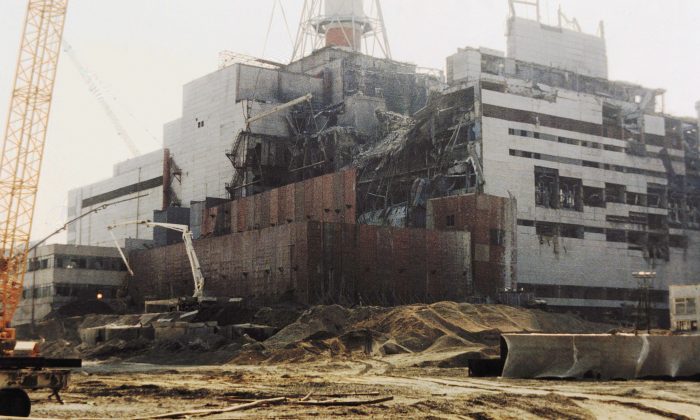
Today we look back at one of the worst man made disasters of our civilization. The Chernobyl Nuclear Accident. Late 20th century, times of nuclear expansion. Soviet Union, under the leadership of General Secretary Mikhail Gorbachev, was steaming forward with their nuclear policy. Several nuclear plants were setup to harness clean energy. But several policy decisions and human elements came back to haunt mankind after the reactor 4 of the Vladimir Ilyich Lenin Nuclear Power Plant, Chernobyl, Ukraine, exploded early in the night of April 26, 1986, giving out huge quantities of radiation in the surrounding areas.

Town of Pripyat

Chernobyl and Pripyat: where time came to a standstill in 1986 ...

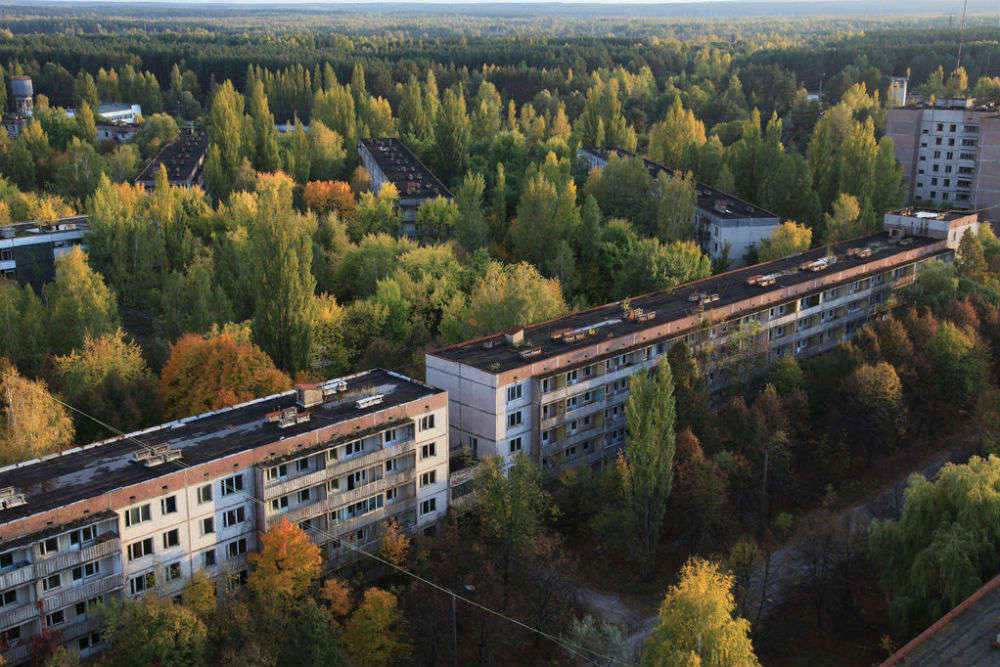
The plant was located 130 km North of Ukraine capital Kiev, near the Belarusian border. To accommodate the families of people working at the plant, a new town was built about 3 km away in 1970. They called it Pripyat. During the accident it was host to nearly 49,000 souls. The town was surrounded by woodland and was a pleasant place. There were several schools, parks, theaters, hospital. Everything a town can ask for. This was the worst affected human settlement in the accident. Everyone was forced to evacuate within three days of the accident. People were told it would be for a couple of weeks. But they never returned. Radiation level to this day remains too high for this place to be inhabited. Today this town stands covered by the woods, infested by wild animals and everything it’s inhabitants left behind, a true ghost town.

April 26, 1986

What went wrong on that fateful night? Some human error coupled with some huge design flaws of the reactor put a question mark in global nuclear safety for decades to come. Chernobyl, like most Soviet nuclear power plants back in the day, used Soviet made RBMK-1000 reactors with Uranium as it’s chief fuel. This fuel when starts reacting through fission generates huge amount of energy in form of heat. That heat is used to convert water into pressurized steam and then steam is channeled on to turbines to generate electricity. Simple. But there’s a catch. The energy rising from fission is too high if remained unchecked and this energy release is continuous as Uranium neutrons doesn’t stop reacting. So to control this high rate they had something called Control rods. These are columns made of Boron which enters the reactor and reduces this huge energy surge. So when there was too much output, you simply push the control rods in and reduce reactivity.

Scientists Develop New Theory on Chernobyl Blasts

But this system had a design flaw. For a fraction of second control rods increased reactivity, instead of reducing it. They were lined with graphite as a measure to cut costs. This was not known to the operators. And on the day of accident, a test was going on to reduce the output of the reactor to see if it can still support the water pumps through turbine. The output went too low, but the management still went ahead with the test and the result was a huge surge. Seeing this, the operator decided to push the control rods to kill the reactor function, unaware of the hidden consequence. Just as he pushed the button, the reactivity skyrocketed, converting every bit of water into steam and under high pressure there was an explosion. Hydrogen was produced from the fuels reaction with the steam and another explosion blew the roof off. Oxygen from outside rushed in and several fires started. Reactor with a capacity of 3200 MW output showed a last recorded output of 12000 MW before going off. Open roof carried the radioactive vapor into the atmosphere and wind distributed it all over Europe. It was felt in far away places like Sweden and England.

Consequences

Chernobyl New Safe Confinement - Wikipedia

2 operators died due to the explosion. 28 others died due to radiation related causes within few weeks. Thousands were exposed to radiation. There was an instant spike in cancer rates in the areas of Ukraine and Belarus after this accident. A 30 km Chernobyl exclusion zone was declared by Soviets. Thousands had to leave never to return. State did their best to hide the actual causes and consequences. Eventually had to give in and review the safety norms. The world scientific community blamed the Soviet isolation policy of the cold war era as a catalyst for this disaster. Maybe they were right. 34 years have passed since. Life has moved on. A steel structure, called New Safe Confinement, has recently been mounted over the old sarcophagus of Reactor 4 to keep the radiation in check. But Chernobyl still stays one of the most costly and haunting tragedies of the era.

Until next time…

E-learning boon or bane

Nowadays, there is an increase in trend of distance learning. Several people believe that this method has a total of positive impacts and it will alter conventional education while others say that argue that it is impossible to eliminate brick and mortal classroom.

To begin with, there are some advantages in attending virtual classroom. First and foremost, learning via internet is time-saving for both students and schools. For example, students can learn anything and anywhere provided that they have computer connecting the internet. In terms of teachers, they can deliver a lesson to all classes by video instead of teaching the same things again and again. Secondly, online education saves costs for country. For instance, schools can reduce overheat costs or decline budget for investing on facilities since expanding campus is not necessary. In addition, e-learning provides opportunity for people who live far from university. The fact shows that many residents in remote rural area still have chances to achieve degree thanks to this advanced technology.


On the other hands, face – to – face learning plays an integral part in education. Firstly, interactive learning is more effective than online learning. In detailed, when discussing about one topic, teachers can give some feedback for students to make sure that they understand all their mistakes and improve these errors. Moreover, studying under supervision motivates students to learn hard. Due to the fact that there are a huge number of students who are lazy and not self-awareness is learning, it is essential for them to have tutors who control students’ studies and help them have good academic results.


In conclusion, although there are a bunch of positive influences which online learning brings, I strongly believe that traditional education is a good teaching method which is irreplaceable. It not only helps students have more interaction with classmates but also provide them an environment to improve skills and learn new things together.

Foundation Day of Rajiv Gandhi University of Health Sciences

It gives me great joy to inaugurate the Twenty Fifth Foundation Day of this distinguished University.  I congratulate the entire medical and scientific community associated with this University

In these years,you are doing wonderful work in teaching as well as training on systems of medicine. 

25 years means this University is in the prime of its youth.  This is the age to think even bigger and do even better.  I am confident that the University will continue to scale new heights of excellence in the times to come.  I would also like to appreciate the efforts of the Karnataka Government in handling the Covid-19 situation.   Friends, in normal times, the celebrations would have surely been bigger.  Had it not been for the global pandemic, I would have loved to be with you all in Bengaluru to mark this special day. 

But, today the world is facing one of the biggest crisis since the two world wars.Like the world changed pre and post-World Wars, the same way the pre and post Covid world will be different. 

Friends, during such a time, the world is looking up to our doctors, nurses, medical staff and scientific community with hope and gratitude.  The world seeks both care and cure from you. 

Friends,at the root of India’s brave fight against Covid-19 is the hard-work of the medical community and our Corona warriors. In fact, doctors and medical workers are like soldiers, but without the soldiers’ uniform.  The virus may be an invisible enemy,but our Corona warriors, medical workers are invincible.  In the battle of Invisible versus Invincible,our medical workers are sure to win.  Friends, earlier, the debates on globalisation have focused on economic issues.  Now, the world must unite and focus on humanity centric aspects of development.

Advancements nations make in the health sector will matter more than ever before.Friends, during the last six years, we in India many initiativesin health-care and medical education. 

We are broadly working on four pillars:

The first is – Preventive Healthcare.  This includes the importance to Yoga, Ayurveda and general fitness.   More than forty thousand wellness centreshave been openedwhere a key focus is on controlling life-style related diseases.  The success of the Swacchh Bharat Mission is another key part of preventive healthcare. 

The second is- Affordable Healthcare.  Ayushman Bharat- the world’s largest healthcare scheme belongs to India.  In less than two years, One crore people have benefitted from this scheme.  Women and those staying in villages are among the major beneficiaries of this scheme.

 The third pillar is- Improvements on the supply side.  A nation like ours has to have proper medical infrastructure and medical education infrastructure.  Work is under-way to ensure a medical college or post-graduate medical institute in every district of the country. 

The country has seen rapid progress in setting up 22 more AIIMS.  Over the last five years, we have been able to add over Thirty thousand seats in MBBSand fifteen thousand seats in post-graduation.   This has been the largest increase in the five year term of any government since independence.  The Medical Council of India has been replaced by a new National Medical Commission through an Act of the Parliament.  This will go in a long way in improving the quality of medical education, bringing it at par  with the international standards. 

The fourth pillar is – Mission mode implementationA well-thought of idea on paper makes it only a good idea.  And, a good idea well implemented makes it a great one.  Hence, implementation is very crucial. 

Here, I would like to highlight the success of India’s National Nutrition Mission that is helping youngsters and their Mothers.  India is working twenty four by seven to eliminate TB by 2025.  This is five years ahead of the global target of 2030.  Mission Indradhanush has increased our rate of annual rise in vaccination coverage by four times.  Friends, The Central government recently approved the introduction of a new law for expanding education of more than 50 different allied and healthcare professionals.   This law, once passed, will address the shortage of  para-medical personnel in the country.   It will also help India in supplying skilled resources to other countries. 

Friends, There are three things on which I would urge maximum discussion and participation. 

One is – advances in tele-medicine.  Can we think of new models that make tele-medicine popular on a larger scale.

The other is related to ‘Make in India’ in the health sector.  The initial gains make me optimistic.  Our domestic manufacturers have started production of PPEs and have supplied about 1 crore PPEs to Covid warriors.   Similarly,   we have supplied 1.2 crore ‘Make in India’ N-95 masks to all States.

Third is- IT related tools for healthier societies.  I am sure you have the ArogyaSetu App on your Mobiles.12 crore health conscious people have downloaded it. This has been very helpful in the fight against Coronavirus. 

Friends, I am aware of an area that is of great concern to you all.  Due to a mob mentality, those working on the front-lines,those on duty be it doctors, nurses, Safai workers, others are subject to violence. I want to state it clearly – violence, abuse and rude behaviour is not acceptable.   Steps have been taken to protect you against any form of violence.   We have also provided an insurance cover of Rupees fifty lakhfor those on the front-line.

Friends,I am happy to see the fruitful journey of this University over last 25 years which has produced thousands of medical and para-medical personnel who are serving the poor and the needy in this challenging time.   I am sure that the University will continue to produce health personnel   of excellent quality and caliber that will make the State and the Country proud.  Thank you.  Thank you very much.  

What I know for sure

What I know for sure

No matter what challenge you may be facing, you must remember that while the canvas of your life is painted with daily experiences behavior reaction and emotions, you are the one controlling the brush.

Before reading this book I knew Oprah Winfrey as the Anchor of popular TV show.  A lady with her common looks and uncommon way of hosting a show made it matchless worldwide. I remember, I first heard about her in my class room where my English teacher asked us to say few lines on her. Being on the first bench I was the first to answer.   I don’t remember any of us would have spoken any words about her leaving, me even more curious about the lady.  I goggled to know her whereabouts; she is the anchor or Oprah Winfrey show and is visiting India for the very first time. My quest ended up there.  But little did I know that she is good author and has published many of her write ups.  One of her book ‘I KNOW FOR SURE’ was suggested by a friend stating it as mood up lifter.  Winfrey has written a book –this info was enough to get me excited and it is motivational as well, WOW.  Soon, I had the book in my hand. The title only appeared thought-provoking to me and I know for sure, I will like it.

It took me three days to finish this book written without acknowledgement letter and praise words.  I know for sure she must not need them as her moral purpose is to enlighten the society and people around the globe.  So she does well. Every line and story in this book is thought provoking, leaving you to understand your purpose of being alive.  WHY I AM HERE? WHAT IS MY PURPOSE OF BEING ALIVE? WHAT ALL I HAVE ACHIEVED? WHAT STONE IS LEFT UNTURNED IN MY LIFE? And many more! I feel, each book is written with a purpose, some to motivate, some to educate, some to make laugh, fall in love and some to make you think of you being alive.  Every page I turned has something vivid in it be it a story of a 13 year old boy who happily died or a person who survived defeating death. it has a kind of story telling that will lingers for a long time in my mind and  inspired me to keep moving no matter what.

You are here for a purpose and you just living if it’s not fulfilled.  Doesn’t stop keep learning, and if you think you know enough than you have lived your life. Your purpose of being on this planet is over.  These lines make sense to me.

I knew Opera Winfrey only as successful host of a show before I read this book.  But knowing her past life gave me adrenaline rush. Life has been a roller coaster ride to this lady and she has overcome all the problems, shining. I owe her my respect.

 All I learnt is ‘we shouldn’t make opinion about other unless we know their story of fight and struggle to win.  

How to promote interactive reading in classroom

Reading is an active process in which readers construct meanings of words. Good readers use contextual knowledge and experience to make connections with the text. They make predictions about what is going to happen next in the text, so when they read they have the motivation to find out whether they are right or wrong.

Every reader uses his/her experience or background knowledge to a text. If a teacher is able to bring out the students’ background knowledge first in the classroom, students will be able to understand the reading better. The teacher needs to provide it somehow. Teacher needs to provide activities that help students use his/her experience driven concept and information (data driven from the text) together.

Three Basic Steps to Teaching Reading

1. Pre-reading goals

i. To build or activate students’ knowledge about a topic.

ii. Assist in language preparation, give new vocabulary.

iii. To build interest – look at pictures, titles, captions etc.

2. Reading goals

i. To help students understand content

ii. To help them understand different patterns and structures, as well as main ideas and details in the text.

3. Post-reading goals

i. To discuss the content and make sure students understand what they have read and can summarise what they have read (both oral or written).

ii. In next class, work on vocabulary and grammar.

iii. Integrate the content of the reading with their knowledge of the topic, by increasing the experience through discussion or writing.

Choosing Texts

• Is the level suitable?

• Is the topic appropriate to your students – interest, culturally sensitive etc.

• How long is it ? Should be intriguing, a little challenging but something they can succeed at.

• where will they read it- class/outside or both ?

• How much grammar and technical terms is there?

• Are there pictures? Graphs ? Maps?

• Different formats should be there – poetry/prose, fiction/non-fiction.

INTERACTIVE READING ACTIVITIES

READ, TELL, LISTEN, TELL

Give a short story or paragraph to each student. They read the story individually to themselves. Now, in pairs, they tell each other their story in their own words and then listen carefully to the partner’s story. They do not read their partner’s story. Now two pairs sit together, so there are 4 students. Now students tell their PARTNER’S STORY. The partner can listen to make sure it’s correct, and correct if necessary. In whole class, ask which story they liked and if they want they can tell that story reading classes.

READING WITH HALF THE WORDS

Provide each student with a text. Ask them to fold the page in half and read one half of the page that is visible without looking at the other half. After as much speculation as possible, they can read the whole story and see if the story matched with what they thought.

STORY STRIPS

Make groups of 4 students. Give them a story cut up into strips and ask them to assemble it. Then read the story while they listen and check theirs. You may give them the text for checking further and comprehension.

These are few basic steps to teaching reading in a class with no or limited resources. The best resource is the teacher itself.

HAPPY READING!

UGC to bring norms for e-degree courses

The University Grants Commission is set to bring in regulations for online degree courses, officials familiar with the matter said.

The development has come after the ministry of human resource development asked the country’s top 100 universities to offer such courses amid the ongoing Covid-19 pandemic.

Members of the commission, in a meeting on Friday, discussed the contours of the regulations which will be similar to those for open learning courses.

“It is likely that an integrated set of regulations for distance and online learning can soon be brought out by the UGC. There is a general agreement that courses which are high on practical content like engineering or others will not be offered through online education. However, courses where there is less of practical training are ideal for such teaching. Moreover, subjects like coding can also be taught,” said a senior official, requesting anonymity.

Even with integrated regulations, there may be clauses specifically for online courses, the official cited above said. The reason for bringing in regulations is mainly to address quality concerns related to such courses, he said.

The higher education regulator has already decided that it will lower the bar for varsities to offer online and distance learning courses from the earlier benchmark 3.26 score by the National Assessment and Accreditation Council (NAAC) at least for one academic year.

It is also likely that varsities will be given a free hand in offering diploma and certificate courses online, said another official.

Following the outbreak of the coronavirus disease, the HRD ministry has been focusing on popularising the online mode of education as classroom teaching appears increasingly difficult.

In her budget speech earlier this year, Finance minister Nirmala Sitharaman had said that the country’s top 100 educational institutions will start offering full-fledged degree courses online. Sitharaman had again mentioned online courses while announcing the relief measures to alleviate the effect of the pandemic on the economy.

United Nations Award to Indian Army Officer Major Suman Gawani

Major Suman Gawani, an Indian Army officer who served as a women peacekeeper with the United Nations Mission in South Sudan (UNMISS) in 2019 is being awarded the prestigious “United Nations Military Gender Advocate of the year Award” on 29 May 2020. She will receive the award from the UN Secretary General Mr Antonio Guterres during an online ceremony being organised at the UN Headquarters, New York on the occasion of International Day of United Nations Peacekeepers.  Major Suman will be receiving this award alongwith a Brazilian Naval Officer Commander Carla Monteiro de Castro Araujo.

Major Suman served as a Military observer in UNMISS from November 2018 to December 2019. While at the mission, she was the principal focal point of contact for gender issues for Military Observers in the mission. The officer encouraged participation in joint military patrols to maintain gender balance, irrespective of the hardships under extreme field conditions. She visited various mission team sites across South Sudan to integrate gender perspective into the planning and military activity in the mission. The officer was selected to attend a specialised training on Conflict Related Sexual Violence (CRSV) at Nairobi and participated in various UN forums to demonstrate how a gender perspective can help in protecting civilians, especially from conflict related sexual violence. Apart from supporting the UNMISS Force initiatives, she also trained the South Sudan government forces on CRSV related aspects. The officer also commanded the UN Peacekeepers Day Parade organised at UNMISS, where she commanded twelve contingents of UNPOL, Military and Civilians.

Free online career skills training launched on National Career Service portal

The Ministry of Labour and Employment under its National Career Service (NCS) project has now started offering free online “Career Skills Training” in partnership with TCS ION for its registered job-seekers. This course on soft skills assists the learners in enhancing personality development with modules on corporate etiquette, improving inter personal skills, making impactful presentation including other necessary soft skills demanded by the industry today. The training module is available in Hindi and English on the NCS portal.

The Ministry is implementing the NCS Project for transformation of the National Employment Service to provide a variety of employment related services like job search, job matching, career counselling, vocational guidance, information on skill development courses, apprenticeship, internships etc through an on-line portal (www.ncs.gov.in). There are around 1 crore active job seekers and 54 thousand active employers registered on NCS and around 73 lakh vacancies have been mobilized through the portal so far. Around 1000 employment exchanges including 200 Model Career Centers across the country are integrated with NCS.

NCS has also taken a number of other initiatives to mitigate the challenges in the labour market due to COVID-19 and the consequent lockdown of the economy.

Online Job Fairs are being organized to bridge the gap between job aspirants and employers where the complete cycle from job posting to selection of candidate can be completed on the portal. Around 76 Online Job Fairs have been conducted by NCS during the lockdown Period.

A Special link for Work from Home Jobs and Online Trainings has been created on NCS portal Home Page to give direct access to job-seekers to such jobs.

NCS also offers the functionality of creation of video profiles for job-seekers in partnership with HIREMEE, a platform which provides online assessment and hiring services. Job-seekers can showcase their ability to recruiters using short video clips. All services on NCS are free.

Missile Park ‘Agneeprastha’ to be set up at INS Kalinga

Foundation Stone for a Missile Park “AGNEEPRASTHA” was laid at INS Kalinga by Cmde Rajesh Debnath,  Commanding Officer, in the presence of Vice Admiral Atul Kumar Jain, PVSM, AVSM, VSM, FOC-in-C (East) on 28 May 20.  

        The Missile Park ‘AGNEEPRASTHA’ once completed will be dedicated to all the Officers, Sailors and Support Staff of INS Kalinga, who have served in this premier op-support Base of the ENC since its establishment in 1981. The Park also commemorates the award of the prestigious Unit Citation to INS Kalinga for the year 2018-19. 

        ‘AGNEEPRASTHA’ aims to capture glimpses of Missile History of INS Kalinga since 1981 till date.  The Missile Park has been set up with a replica of missiles and Ground Support Equipment (GSE) that showcase the evolution of missiles handled by the unit.  The exhibits have been created from scrap / obsolete inventory which have been reconditioned in-house. The main attraction is P-70 ‘Ametist’, an underwater launched anti-ship missile from the arsenal of the old ‘Chakra’ (Charlie-1 submarine) which was in service with IN during 1988-91.

      ‘AGNEEPRASTHA’ will also provide a one-stop arena for motivation and stimulation of inquisitive minds regarding the missiles and related technologies, from school children to Naval personnel and their families.  It is also intended to encourage a feeling of ownership and pride in the role of the Unit, and highlight the necessity of contribution of all personnel irrespective of rank/trade towards the overarching objective of ordnance availability, reliability and delivery on target, each and every time.

CGR/VM/MS

Ek Bharat Shreshtha Bharat programme to be taken forward using innovative ways

It has been decided to take forward the Ek Bharat Shreshtha Bharat programme of the Government by  using innovative ways in view of the prevailing conditions of COVID 19.

This was decided at a recent meeting of  Secretaries via videoconferencing ,  of partner ministries under the Ek Bharat Shreshtha Bharat programme  of the Government . The meeting was chairedby  Secretary, Higher Education, M/o HRD, Shri Amit Khare. M/o HRD  is the nodal ministry for the EBSB programme. The meeting was attended by Secretary, Tourism Shri Yogendra Tripathi; Secretary Culture, Shri Anand Kumar; Secretary Department of Youth Affairs, Smt Usha Sharma; Secretary, SE & L Smt Anita Karwal; CEO, MyGov Shri Abhishek Singh and senior officers of  ministries of I & B, Railways, Home , Defence , Parliamentary Affairs and department of Sports.

Welcoming the participants, Shri Amit Khare  briefed about the implementation of the programme so far, stressing on the need to have innovative ways to carry it forward in view of the prevailing conditions of COVID 19. Secretary D/o SEL, Smt. Anita Karwal also emphasized upon the need to show tangible outputs.

During the meeting a presentation was made on the progress of EBSB so far.

Speaking at the meeting, Secretary, Ministry of Tourism, Shri Yogendra Tripathi informed that institutions under Tourism ministry are organising webinars on various aspects of tourism. The ministry is doing a series of webinars under the series “Dekho Apna Desh”, being hosted on MyGov portal. These webinars are being attended by thousands of people.  He also suggested that such webinars can be organised for tourism stake holders of different states such as Tour Operators etc. Secretary, Higher Education suggested that the recordings of “Dekho Apna Desh” and other webinars can be displayed on the educational channels and in breaks during online classes.

Secretary, Ministry of Culture, Shri Anand Kumar stated that they are also organising various webinars. He suggested all webinars of different Ministries should be brought under a common platform of Ek Bharat Shreshtha Bharat. He further suggested that e- programmes can be prepared on various topics such as writing dramas, paintings , virtual tours of monuments, etc He further informed that the Culture Ministry proposes to develop  E- Heritagepedia and E- Artist pedia and also suggested that renowned artists can do virtual programme modules to teach their art. Secretary D/o SEL  welcomed the idea and said that schools would be very interested in classes on indigenous art like Worli and Madhubani paintings.

Secretary, Department of Youth Affairs, Smt. Usha Sharma appreciated the use of digital medium for conducting the EBSB programmes. She said with this, the reach of these programmes can be enhanced greatly.  She also suggested for sharing of digital material prepared by different departments. Secretary, HE suggested that the inputs may be collected from all the Ministries at a single platform. Secretary, D/O SEL suggested they could be hosted on a digital platform.      

CEO, My Gov.in, Shri Abhishek Singh said that they are developing a mobile App for learning 100 sentences in different languages. He also said that MyGov can host webinars of various departments and also disseminate information about their programmes.  

Joint Secretary, Ministry of Information & Broadcasting, Shri Vikram Sahai suggested that apart from the information of various states being shared through TV, Radio and Print Media, good practices and success stories of each state may also be shared with the partner states. He also suggested all departments can pool in their digital resources and DD News can use their weekly EBSB programme to host destination based programmes. JS (ICC), Ms Neeta Prasad suggested that each Ministry should share their future monthly action plan in advance with Ministry of Information & Broadcasting for wider coverage.

 Executive Director, Ministry of Railways Smt. Vandana Bhatnagar,  briefed about the steps taken by them for providing concessions to the students participating in various EBSB programmes and on displaying the logo, Video display etc on railways property. She said that these activities will be up taken afresh once regular movement of  trains start.

The officers of  Ministry of Home Affairs, Ministry of Defence,  Ministry of Parliamentary Affairs and Department of Sports briefed about the activities taken up prior to the lockdown period and activities proposed to be started.  

At the end of the meeting, Secretary, HE summarised important actionable points as follows:

  1. To move towards digital mediums for the carrying on the activities under EBSB by each participating Ministry/ Department.
  2. To organise webinars on Ek Bharat Shreshtha Bharat themes for their wide dissemination.
  3. To have a common repository for the Ek Bharat Shreshtha Bharat digital resources that can be used by every Ministry. This repository may be hosted on a common portal.

iv        A revised communication plan needs to be made and Doordarshan’s 30 minute weekly programme on EBSB  should be destination based with inputs from all ministries