Daline Derival Reflects Upon Her Public Health Career

By Mariette Landry
Daline Derival, M.P.H., completed UVM’s Post-Baccalaureate Premedical program in 2014. She is Program Evaluator and Public Health Core Faculty member for the VT-LEND program, whichprovides graduate-level interdisciplinary training, services, and care to improve the health of infants, children, and adolescents with disabilities.
We asked her to talk to us about her background, experience, and investment in public health.

Can you tell us about your inspiration to pursue public health career?

I was born in Haiti during the Jean-Claude Duvalier (“Baby Doc”) regime, moved to the U.S. at age six, and grew up in Queens, New York. When I saw a PBS program on Doctors Without Borders (MSF), I decided that was the kind of work I wanted to do. After graduating from Queens College, City University of New York, I moved to Atlanta to attend Emory University’s Rollins School of Public Health, where I earned my Master’s degree in Public Health in 2005.
I then worked for a public health consulting firm as a Statistical Program and Research Analyst for a CDC contract, before being promoted to Associate Project Manager. A 10-day service trip to Rwanda in 2006 reignited my passion for global health, and when I got back, I applied to the Peace Corps, where I served in Madagascar as a Health Extension Worker for 18 months, until civil unrest led to evacuation. I loved the work and wasn’t ready to return to the states, so I requested a transfer for the remaining nine months of my service. I was transferred to Mali, West Africa, and served there for 18 months.
After returning from the Peace Corps, I worked on the Polio Eradication Initiative and Global Health System Strengthening as a CDC contractor.

You worked as an epidemiologist in the Atlanta area. What brought you to Vermont, and what are you currently studying?

I moved to Vermont in 2014 to complete my prerequisites for nursing through UVM’s Post-Baccalaureate Pre-Medical program before applying to the Direct Entry Program in Nursing (DEPN). I completed my prerequisites in December, and I’m now taking a graduate seminar, Interdisciplinary Seminar in Neurodevelopmental Disabilities, through the Vermont Leadership Education in Neurodevelopmental and Related Disabilities (LEND) program, where I am a hybrid fellow and faculty member.
I’d applied for a position with the VT-LEND program over the summer and was presented with the opportunity to work as Program Evaluator/Public Health faculty, while also taking the two seminars offered by the program. This has been an amazing experience for me!
My job involves conducting project evaluation to assure quality control and continued growth and development, in keeping with current best practices. I’m also responsible for public health consultation regarding training, service, technical assistance, and research issues with VT-LEND collaborating programs of the University, and MCH programs at the local, state, regional, and national levels.

What new knowledge or expertise has the VT-LEND program given you?

Prior to joining VT-LEND, I had no experience or knowledge of neurodevelopmental disabilities. Through LEND, I’m not only learning about the neurodevelopmental disabilities and how they affect people throughout their lifespan, but also about healthcare leadership principles, cultural and linguistic competence, and family-centered care. I’ve learned that disability is when the environment doesn’t support a person’s abilities, so our goals as health practitioners should focus on facilitating maximal function for people with disabilities. I’m also experiencing what being a culturally and linguistically competent health professional looks like.

What training does VT-LEND provide?

VT-LEND trains professionals working in medicine, education, speech-language pathology, social work, psychology, and public health (to name a few), on supporting people living with disabilities, as well as their families. This isn’t just based on didactic learning; rather, fellows and trainees have a chance to go out into the community through internships and family visits to practice what is learned in class. We also do interdisciplinary consultations, where any person or organization in the community can present a particularly perplexing problem to LEND faculty and get recommendations based on our diverse perspectives.

Can you tell us about your recent trip to Uganda and how you heard about this opportunity?

During my first months in UVM’s Post Baccalaureate Pre-Medical program, Continuing and Distance Education Assistant Dean Beth Taylor-Nolan mentioned to me that a faculty member at the College of Nursing and Health Sciences had a background and interests similar to mine. I contacted Dr. Sarah Abrams and scheduled an appointment. During our meeting, I learned that Dr. Abrams is a Returned Peace Corps Volunteer (RPCV) like me, and she’s interested in global health. Dr. Abrams asked me if I was interested in being a teaching assistant for the Community/Public Health Nursing course (PRNU 241), which takes place during the winter session in Uganda. Of course I was interested!
In January, I spent three weeks in the Kamuli District of Uganda, working with 10 senior-level undergraduate nursing students conducting community projects to promote public health and working in the district hospital. The community outreach—where nurses vaccinated children and women of childbearing age, while I assisted in handing out de-worming pills and vitamin A—reminded me of my days as a Peace Corps volunteer in Madagascar. But I also learned a great deal. It was a great experience all around.

Any last thoughts on your experience?

I came to Vermont for the school, but the experience I’ve had over the past few months has been more enriching than I could have imagined

An In-Depth Look at UVM’s Leadership and Management Program

Radu Bostan completed UVM’s Leadership and Management Certificate Program in 2013. An experienced technology consultant with more than a decade of experience in retail and sales, Bostan earned his undergraduate degree and Master of Business Administration in the Republic of Moldova before coming to the United States 10 years ago.
UVM Outreach talked to Bostan about the challenges and rewards of training for a leadership position.
Why did you enroll in the UVM Leadership and Management Program?
leadership-and-management
I reached a moment when I wanted to challenge myself and my comfort zone at work and pursue a managerial path in my career. The Leadership and Management program offered me the knowledge and tools to improve my skills and get on the right path. My goal during the next five years is to take more responsibility and prepare myself for an executive position.
You mentioned that the Leadership and Management program helped give you the push to take on more leadership roles. How do you personally work on improving and educating yourself to be the best leader you can be?
I’m constantly taking the available courses offered for professional development by the company I work for (this helps you get you to know the ins and outs of the corporate culture), and also I take online courses on management, negotiations, and interpersonal skills.
Tell us about the work you’re doing at the Vermont Employment Agency.
The Vermont Employment Agency is a local, growing business that helps employees match their talent to the right job, while helping businesses saving time and money finding the right solutions for their needs. I’ve been advising the Agency in setting up a new location in St. Albans that will cover the Northern Vermont and Plattsburgh, N.Y., area, in addition to the existing branch in South Burlington.
What are some of the challenges and rewards of project management?
With regard to leadership and management, I’d say that being a leader is itself a challenge. While one needs to address external challenges by solving problems and dealing with crises, a project manager needs to keep up team spirit, overcome his or her internal limitations, such as fear, insecurity, and impatience. In the end, I believe it’s a constant process of improving and educating yourself so that you can better serve your team and help the organization reach its goals, which to me is the biggest reward.
How has the UVM Leadership and Management Certificate Program helped you professionally?
While I’m still working my way toward the career goals I’ve set for myself, the program has provided me a good initial push. I have confidently undertaken more leadership roles at my previous job, and I feel more prepared in my current position, which requires leadership skills.
What do you think it takes to succeed at project management? What are some of the pitfalls of project management if you don’t have proper training?
Being a leader, confidence is the key, but one should always be self-critical and aware of the circumstances. As a leader, I have found that being proactive, creative, objective, and collaborative very helpful in my role. In the relationship with the team that I manage, I always listen actively and seek feedback so that I can make an informed decision and feel confident about it.
Some might think they have leadership skills in their blood, but training is key. It will structure your knowledge and direct your strategies when dealing with different and difficult situations. Learning from others’ experience is a shortcut to your own success

China to move away from Science Citation Index in academic evaluation

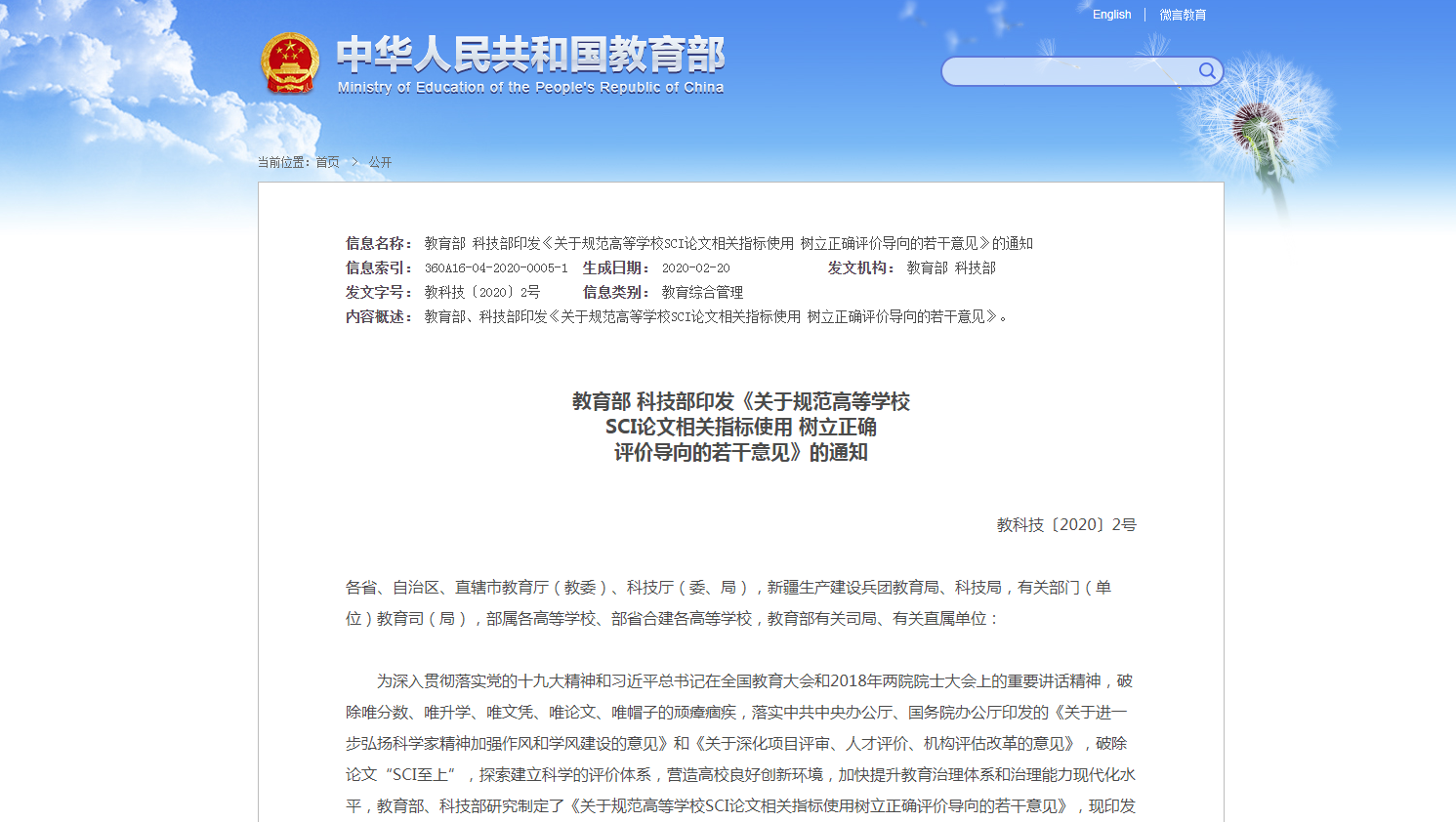
China’s Ministry of Education and Ministry of Science and Technology issued an official notice last week on regulating the use of Science Citation Index (SCI) papers in the evaluation system of universities and academic institutions across the country, calling for a break from the longstanding SCI-supremacy in assessing researchers and institutions.

The authorities issued clear guidelines on reversing the SCI-supremacy phenomenon in a move to change the current academic assessment and evaluation systems that are over-reliant on published papers, as well as to develop a more comprehensive evaluation system in academia.

According to the guidelines, the numbers of SCI papers, citations, and highly cited papers, as well as relevant factors like the Essential Science Indicators (ESI) rankings, have become core indicators for academic assessments, evaluations, rankings and corresponding policy making, such as educational resource allocation, in recent years.

China’s Ministry of Education and the Ministry of Science and Technology issue clear guidelines on reversing the SCI-supremacy phenomenon.

For citation, not for evaluation

Universities and academic institutes have been using SCI-paper and other relevant indexes as the dominant determinants to evaluate the research ability of students, teachers, and researchers, said Xie Gaodi, deputy director of the Center for Resource Science, Institute of Geographic Sciences and Natural Resources at Chinese Academy of Sciences, noting that an overemphasis on SCI papers when evaluating researchers neglect other capabilities.

The phenomenon of SCI supremacy is widely considered one-sided, excessive, and known for its distortion of information from SCI papers among scientific research evaluation systems at universities and other academic institutions in China.

There are a lot of limitations when SCI and its related indexes serve as a direct evaluation system, as it in essence is a citation databases for scientific literature used worldwide, said the official with the Ministry of Education in a statement released on February 23 briefing the guidelines.

It is also clarified that it is not a denial of SCI, nor a refusal to publishing papers.

The guidelines stresse that SCI papers should not be used as a prerequisite for personnel employment. /VCG Photo

The guidelines introduced several specific measures to abolish the phenomenon.

It pointed out that SCI papers should not be used as a direct basis for professional titles evaluation and occupational promotion, nor a prerequisite for personnel employment.

Higher education institutions are suggested not to set requirements on number of published papers for departments and individuals.

Academic institutions can no longer reward individuals and departments based on SCI papers alone, and the graduation and awarding degrees of students should not be restricted by the number of SCI papers and impact factors, the document said.

The guidelines call for a more comprehensive evaluation system in academia. /VCG Photo

‘To establish matters to eliminate’

The guidelines also pointed out that a sound assessment system should be developed, in which different weight of paper publication is put on the evaluation of different types of scientific research work.

For research in basic disciplines, evaluation should focus on the originality and scientific value of the research papers, instead of the number of SCI papers.

Application research and research in technological innovation should focus on the actual contribution of the research and the utilization of the results in real life, it said.

Universities should not list the number of SCI papers as a requirement for students to graduate or get degrees, according to the guidelines. /VCG

In addition, universities and education authorities should improve peer-review in talent evaluation.

Jin Li, vice president of Shanghai’s Fudan University, stressed that “to eliminate, it greatly matters to establish.” He noted that it is of great significance to establish a comprehensive evaluation system with more indicators that can effectively, fairly reflect the value of academic contributions.

Yuan Lanfeng, an associate professor at the University of Science and Technology of China, believe that it is a good opportunity for the academic institutes to improve their performance evaluation systems, and with the upgraded system, researchers serving in the institutes “will be encouraged to concentrate more on long-term studies instead of short-term papers.”

Alum Researches Effects of Climate Change on Public Health

UVM alumnus Ander Wilson is a postdoctoral research fellow in the Department of Biostatistics at the Harvard T. H. Chan School of Public Health. Ander received a bachelor’s degree in mathematics from the University of Vermont, and a master’s and doctoral degree in statistics from North Carolina State University.
We talked to Ander about his work with the Environmental Protection Agency, his research on climate change, and why he’s optimistic about the future of environmental public health.
While a student at North Carolina State University, one of your research projects with the EPA was “Modeling the Effect of Temperature on Ozone-Related Mortality” to explore the combined effects of temperature and ozone on public health. What were some of your findings?
Our hypothesis was that the ozone – ground ozone, not stratospheric ozone – has a greater effect on people’s health when temperatures are higher. Ground-level ozone has become an important global air quality issue. As opposed to stratospheric ozone, which is the “good” protective layer, the concern at ground level is high ozone levels.
High ozone levels and extreme temperatures, especially heat waves, have shown adverse associations with respiratory and cardiovascular health. As a photo-chemical air pollutant, ozone formulation requires solar radiation and, as a result, is highly correlated with temperature.
We decided to pursue this research because many studies have focused on the effect of short-term ozone exposures on mortality and illness, but less is known about the joint effects of ozone and temperature. Their joint effects are extremely important because the two exposures are so highly correlated and are often observed together. Our analysis found that ozone does have a greater effect on mortality when temperatures are high as well.
Excessive heat events, or abrupt and dramatic temperature increases, are particularly dangerous and can result in above-average rates of mortality. CDC’s National Center for Health Statistics, examining death certificates from coroners or medical examiners, computed approximately 2,000 people died from weather-related causes each year. Of those 2,000 deaths, 31 percent were heat-related. (The report says 63 percent were cold-related, and just 6 percent due to floods, storms, or lightning.)
What parts of the United States are seeing both high temperatures and high ozone levels that are affecting public health and how is this expected to change in the future?
Ozone levels vary a lot between different cities. The highest levels tend to be in Southern California, as well as in other major urban areas throughout the country. Temperature acts a little differently. People perceive temperature differently depending on what they are used to so it is more relative. Our research finds that the ozone mortality burden will increase on average in the United States over 20 years, but this depends on a lot of things. For one, it depends on where you are. Ground-level ozone is projected to increase in some parts of the U.S. and decrease or stay constant in others. This relates to both local conditions, such as emissions of ozone procurers, and global climate conditions that dictate large-scale climate trends. Because ozone occurs from reactions between primary pollutants in sunlight, much of what we will see depends on emissions of primary pollutants that form ozone.
Has the ozone study led to other areas of climate/environmental public health research?
This study exposed me to a new area of environmental public health, and I am pursuing several extensions of the work. I’m currently investigating the effects of ozone with other outcomes and projecting the future health burden of ozone exposures in the context of climate change. Another area of ongoing research is work with the Public Health Foundation of India to look at the effects of air pollutants on birth outcomes, such as low birth weight. I traveled to India last winter and will return this summer to work more on the project.
As a math major at UVM, when did you first become interested in public health?
During my senior year, I interned at UVM Medical Center in Education and Organizational Development. Back then, I had no idea what I wanted to do with my career. During my internship, I worked on health policy, analyzed employee survey data, and created a database to record required certifications for the Joint Commission on Accreditation of Health Care Organizations (JCAHCO). It helped me get my first job out of college where I did health policy and nutation research.
I’ve been interested in health and public policy for many years. I wasn’t really interested in environmental public health until graduate school, which is when I had an opportunity to work with the EPA as a volunteer researcher.
With all that we now know about climate change and its devastating effects, what do you find most rewarding about your work?
Environmental public health is a very important issue, and it’s not going away anytime soon. There’s a lot of energy around these topics that I’m researching. So many people are working on studying climate change and its effect on public health. We’re trying to improve the environment and people’s health, and it’s really encouraging.

Getting a Second Chance at College through UVM GAP

Getting into college was much harder than Deniz Sehovic ever anticipated.
The child of Bosnian refugees, Deniz always assumed she would get into college without much trouble. She liked her teachers and enjoyed high school, but struggled a bit with her grades early on and found it difficult to concentrate in class. Ultimately, she preferred hanging out with her friends over homework.
Later on in her high school career, she became more focused on improving her grades and getting more involved in extracurricular activities. But as far as college admissions were concerned, it was too little too late.
During her senior year at Burlington High School, Deniz – along with her twin sister, Zerrin — applied to UVM. While Zerrin was accepted, Deniz was waitlisted and later denied admission. She appealed the decision twice, but to no avail.
College, it seemed, was out of reach.
But Deniz was fiercely determined and refused to give up. Her perseverance and optimism – traits she learned from her parents – paid off.
“To get in to UVM was the biggest struggle of my life,” says Deniz, who graduated from UVM last month in the top 10 percent of her class.

Lessons Learned

Deniz, 22, was born in Turkey and lived in Germany before moving to Burlington when she was four years old. Before she was born, her parents fled war-torn Bosnia in the early 1990s. Eventually, the family settled in Burlington in a home built by Habitat for Humanity.
While in high school, Deniz says she didn’t think she had to work as hard as a freshman or sophomore, and figured colleges would only pay attention to her grades during her junior and senior years.
“I never worried that I wouldn’t be able to get into school, and I didn’t realize I had to prove myself so early on,” she says.

How to Get Into College with GAP

After being denied admission to UVM, Deniz learned about the UVM Guaranteed Admission Program from her high school counselor. Managed by UVM Continuing and Distance Education, the Guaranteed Admission Program provides students who were not admitted to UVM a second chance. Students can enroll in the full-time program and live on campus, receiving intensive academic advising and study skill support. Upon fulfilling their program requirements through GAP with UVM – maintaining a 3.0 grade-point average and abiding by student policies – students gain admittance to the university within a year.

“The GAP program was very inclusive, and other students had no idea I was part of the program,” she says. “I didn’t necessarily receive any extra academic help for being a GAP student, but I was given the same access as all other undergraduates to campus resources. It gave me an opportunity to go to UVM and experience my first year at college just like any other student.”
Deniz excelled during her time at UVM, where she earned a degree in Public Communications. She will move to New York in July to work in social media for Aloha, a health and wellness start up.
What made her time at UVM so successful? Volunteering and community building were a priority while earning her degree. She also worked as resident advisor, an orientation leader for new students, and career peer mentor. For the past year, she interned at Skillet Design, a marketing firm in Burlington.
Her hard work paid off. Last month, she was honored with the College of Agriculture and Life Sciences highest student accolade: the Lawrence K. Forcier Outstanding Senior Award.
“School is such a privilege. I have a deep sense of gratitude, and my family’s history (in Bosnia) makes me appreciate so much,” she says. “I’m grateful for everything I have and all the opportunities I’ve been given.”

Advice to Students

What would Deniz tell someone who did not get admitted to UVM and is considering the GAP program?
“First, I would tell them to have a little mercy on themselves. We’re our own worst critic. Instead, change your outlook and become your own biggest cheerleader. You deserve the best in every way, and you need to have the confidence to pursue your dreams. A path will always open up for you. You can’t always see it, but life has a way of working out.”
Deniz says the groundwork for her success was built by regularly communicating with her professors and advisors, and creating a network of support.
“As a GAP student, the first thing you need to do is ask for help because people are surprisingly willing to lend a hand,” she says. “Take advantage of all the resources here. Pull out all stops, and put yourself out there. “

Dual Enrollment Offers Free College Courses for High School Students

By Cynthia Belliveau, EdD
Dean, UVM Continuing and Distance Education
Governor Peter Shumlin has said that one of the top challenges Vermont faces is producing graduates that have the skills to participate in the 21st-century workforce. Vermont’s Dual Enrollment program, which the state Legislature agreed last month to fund for the next two years, can help bridge the gap.
It’s been well reported in the media that despite having one of the highest high school graduation rates in the country — 86 percent — only 41 percent of Vermont high school graduates go straight from high school to college. We clearly have some work to do.

What is the Dual Enrollment program?

Dual Enrollment – and precollege programs offered at many Vermont colleges, including the University of Vermont and Community College of Vermont – can help open the door for Vermont high school students who might not otherwise consider college as an option.
Under the $1.2 million Dual Enrollment program, high school students can enroll in classes at Vermont colleges. Students can take up to two, 4-credit courses free as a junior or senior, usually at night or over the summer, and they receive credit from their high school and the college.
Student participation in the Dual Enrollment program has been going up since the Legislature established the program as part of the Flexible Pathways Bill in 2013, and nearly 1,300 Vermont students participated in 2014.
Overseen by the Vermont Agency of Education, Vermont’s Dual Enrollment Program introduces college-level work to high school students and gives them a head start on college. The Dual Enrollment program is open to Vermont high school students who attend public schools.

Dual Enrollment at The University of Vermont

For the past 11 years, UVM Continuing and Distance Education has offered an outstanding precollege program to high school juniors and seniors who can explore career fields with professors who are leading experts, enroll in classes with other high school college students, experience the challenge of a college-level course, and earn transferable college credit.
Since 2004, 2,586 students have enrolled in UVM’s precollege program, of which 558 have matriculated to UVM. Of the 558 students, more than 85 have graduated. The number of students who have matriculated has been slowly but steadily climbing – from seven in 2005, to 38 in 2009, to 149 in 2014.
UVM’s precollege offerings include entry-level courses, a four-week Summer Academy residential program, and study abroad opportunities in Dublin and Costa Rica.
Without a post-secondary education, one’s future earning potential is lower, which we all know Vermont’s economy can’t afford. With the renewal of Vermont’s Dual Enrollment, I hope more high school students will be taking advantage of precollege courses at UVM and investing in their future. At no cost to the student, the payback is well worth the effort.

When Queer = Diversity = Complicated

By Dot Brauer
When I presented on issues facing LGBTQ college students at UVM’s Mental Health Matters conference this spring, I knew I had my work cut out for me. When the feedback was mixed, I wasn’t overly surprised.
My job as director of UVM’s LGBTQA Center requires me to know a lot about this topic, but bridging gaps between different levels of awareness that people bring to these topics is much more difficult than it used to be. I started providing education on how to be an ‘ally’ to LGB people before T and Q were in the vernacular. It was more than 25 years ago and terms like genderqueer, fluidity, and intersectionality hadn’t been invented yet.

The Complexities of Gender Identity

High school and college students today are reading, writing, talking, and living gender and sexuality in ways that go beyond concepts previously only hinted at by philosophers like Foucault and Butler, and scientists like Kinsey. Increasingly, these young people understand better than their elders that ‘identity’ is best understood through a lens of intersectionality. For example, if you are trying to understand someone’s gender, you need to also take into account their age, race, ethnicity, health status, religion, etc.
If this sounds impossibly hard, find a comfortable chair and plan to spend a good deal of time learning about what is becoming a new way to understand the complex diversity of human existence.
Gender is just one facet of this complexity, and gender itself is complex. Young people today are exploring their genders in ways that explode my generation’s understanding of gender as: binary (either man or woman), universal (people everywhere are the same) and fixed (stays the same throughout your lifetime). What is crucial to understand about this trend though is that large numbers of their peers fully support their explorations and that support makes this more than just a passing fashion.

A New Attitude on Gender Issues

Increasingly, the younger generation believes that many (if not all) previously established notions about humans and society should be open to question and critique. Ideas about science, government, war, economics, race, religion — that my generation took for granted — are being questioned not only by academics but by the public at large, especially the younger public. Young people are completely rejecting the premise that traditional notions of gender reflect human nature in some essential immutable way. Students I encounter are more than open to the idea of gender as a lived experience that can’t be bounded by the limitations of a universal, fixed, binary concept.
Some young people choose to educate themselves at length about how gender was reified by the scientific revolution and institutionalized by 19th century industrialization, but most simply find the idea of gender being more flexible and complex intuitively reasonable. But what they find intuitive, many older adults find confusing, and even frightening.
Some older adults actively resist change using whatever access they might have to personal or institutional resources, while increasing numbers of young people are moving on by tackling an array of projects: establishing nouns and pronouns to describe more genders; providing education about the differences between gender expression, gender identity, sex, and sexuality, and asserting the rights of themselves and others to choose whether and how to align their self-identified gender and their gender expression on any given day.

Breaking Tradition

People who assume all of this is a fad will ultimately find they were mistaken. These ideas are working their way into and through human societies all over the world. Readers for whom these ideas are new, might be confused when they realize that once the idea of fixed, binary gender is off the table, traditional notions of sexuality must be abandoned as well. If gender (mine and my life partner’s, e.g.) exist beyond a binary and are not fixed for our lifetimes, what language would we use to describe our relationship?
Like the lack of nouns and pronouns for gender, our language also lacks words for describing relationships beyond heterosexual (a relationship consisting of two different sexes) and homosexual (a relationship consisting of only one sex). And this last sentence highlights another point of confusion: sex and gender should not be confused to mean the same thing, but the two ideas are commonly assumed to always be aligned and therefore interchangeable.
What we are living today is nothing short of a social revolution that has come quietly into our towns, schools, and homes. The Internet has provided an unprecedented forum for people to communicate with each other across the miles and over time. Today, people exchange ideas that may have been confined throughout centuries to the isolated imagination of one person here or there. Blogs, discussion boards, and social media provide places where people share feelings of not fitting into accepted norms; feelings people in previous generations hid in shameful secrecy.
Before the Internet, people who are now being referred to as ‘gender non-conforming’ were worse off than the Whos of Whoville. At least the Whos had each other and when they combined their voices, they were heard and even the monkeys realized they existed. What if the Whos were isolated from each other, all on separate dust specks on separate flowers? Internet communication created a virtual Whoville where people who previously felt isolated by their differences to find each other, and then to join their voices, and ultimately to ‘prove’ their existence.

Gaining a Voice

Today, gender non-conforming people have a greater chance than ever to learn of the existence of other people like them and now that they have heard each other and we have heard them, their existence among us is unlocking gender constrictions that have bound humans in problematic assumptions, frictions, and fictions for centuries. I predict that similar social revolutions are coming soon, in the way humans see race, ethnicity, ability, and so many other categories of human experience.
It is true that it feels more challenging than ever to bridge the differences in understanding that exist between generations. Explaining even a portion of such complex ideas doesn’t fit neatly into the 50 minute power point presentation that have become the go-to tool of today’s professional development. But the Internet has given voice to a vast chorus of insight.
As we surf this wave of change together, we all need to stay open to new ideas and models for how we can best teach ourselves and each other about this revolution we are living.
DotBrauerDot Brauer has served as the Director of the LGBTQA Center at the University of Vermont since 2001. She holds a Master’s Degree in Psychology from Antioch New England and is currently a doctoral candidate in the Educational Leadership and Policy Studies Program at the University of Vermont.

Inspirations for Black Faces, White Spaces

A Bit of Background

Despite the fact I wrote a book about the relationship between African Americans and the environment—and have studied the subject in depth—I don’t refer to myself an “environmentalist.” Most of my years have been dedicated to the arts since I dropped out of school when I first attended college. I always loved school, but I wanted to do something else at the time. I embraced acting and the chance to perform. And so, I am an “actor.” Since the age of 9 or 10, I’ve loved maps. As a kid I even subscribed to one of those programs that sent monthly boxes filled with maps, stamps, crafts, etc. from one country of the world. When I left the performance world, I went on a series of backpacking trips, spending a significant amount of time in Africa and Nepal, and opened my eyes as to how other people were living in the world. At the same time I embraced the opportunity for identity expansion, changing the way I showed up in the world around me. And so, I am an “explorer.” Following the five-year period of my travels, I went back to school. My experiences ignited a great interest in women’s issues and their role in international development. I wanted whatever I studied to have a practical purpose that could be put to use immediately in the world around me. I earned my B.A., worked at a homeless shelter in Seattle, then went back for an M.A. where I had the opportunity to study women and forest management in Nepal. I chose geography as the subject of my Ph.D. because I loved the idea of looking at the relationship between people and the land upon which they stand. And so, I am a “cultural geographer.” In short, what I call myself depends on the what day it is. The point here is that you don’t need to be an “environmentalist” to study humans’ relationship with the world around us. And you don’t have to be an “academic” to absorb the facts. The experience of writing Black Faces, White Spaces was really the culmination of all the roles with which I have identified. So much of academia is about the presentation of numbers, but my artistic side really wanted to tell stories. I wanted many different types of people to have access to the academic material. And so, the book was born, and I am a “writer.”

Black Faces, White Spaces: Reimagining the Relationship of African Americans to the Great Outdoors

Considering the Past: Slavery and Segregation

As stated in the introduction, this book argues from the assumption that environmentalism and the meanings we attribute to the environment are grounded in history, race, gender and culture. While I’m careful not to characterize an entire group of people, there are some historical aspects of American culture that play a common role in this relationship. For example, the entire country was shaped by slavery—not just the slaves themselves. The idea that we can enslave a group of people to work the land is always lurking in the background in terms of who we are and how we think of the environment in this country, whether we want to own it or not. It mirrors the way we think about the environment as well, that land is property—something we can own. We separate ourselves as humans vs. nature, in the same way slaves were separated from those who could make their own decisions. And the notion of making free choices permeates through Jim Crow segregation in the middle of the 20th century as well. It limited the ability of African Americans to make the best choices for themselves. Their experience was defined by social and cultural mores, as there were places where they simply were not allowed to go. With the Great Migration to northern cities, the main focus was on civilized opportunities, and for many this meant working in the industrial field, away from rural areas. My parents were part of this movement as well, though they worked as caretakers of a 12-acre property outside New York City after my father came back from the Korean War. They didn’t own the land they worked on, but they understood it far better than the owners. In instances such as this, whose knowledge counts?

Considering the Present: Hurricane Katrina

In short, to think that these aspects of our culture don’t still shape the relationship between African Americans and the environment today is misguided. Look at the aftermath of Hurricane Katrina and what it revealed about us as a nation and our relationship to a place and the land. We have a history in this country with the idea of Manifest Destiny and conquest—that it’s our God-given right to engage with the the land. And so people came to New Orleans, which has strategic value as it’s located at the mouth of the Mississippi River. But at the same time, this land is a swamp. What Hurricane Katrina revealed was how flawed it was that we tried to control the swap, and beyond that our relationship to land and nature. It showed our entitlement in thinking we can control everything using technology and brute force. It revealed how questions of poverty and economic privilege are tied to issues of access and being able to get out when you need to, and how owning one’s own car is simply not everyone’s reality. And not only did it reveal how African Americans were portrayed negatively in the media (think white “survival” vs. black “looting”), but it also showed how quickly it became a black-and-white conversation, when there were many other groups of people who suffered as well—particularly within the Vietnamese and Native communities. What does the way we deal with a “natural” disaster mean in terms of where we place our cities and which places and people get overlooked?

Write Your Environmental Autobiography

For those considering reading the book or studying environmentalism and your relationship with the world around you, I urge you to start by writing your own environmental autobiography. Be clear about your own standpoint. Where do you come from? What is your perspective? How are you subjective? This will tell you something about yourself and bring clarity to what you can bring to the conversation. I believe all knowledge is subjective, and you view everything you study through your lens of experience. But this isn’t something to shy away from. Rather, it’s something to own. It changes the way knowledge is produced and understood. As a black woman, I’ve also considered who, historically, has not been able to participate in academic study or the privileged spaces of knowledge production. I consider my parents, who have high-school educations, and how any intimidation they feel about their intelligence comes from a world that says academic degrees make you smart. Knowledge comes from everywhere. Let’s throw out some of the rules and come up with new ways of learning, new ways of sharing knowledge, new ways of engaging different ideas and new ways of moving forward. What are we so afraid of?

Dr. James Coplan on the History of Autism and Advances in Treatment

By Erica Houskeeper
The 18th annual UVM Summer Autism Institute, June 24-26, will address aspects of inclusion and transition, research, and effective treatment of ASD. The event will take place at the DoubleTree by Hilton in South Burlington.
James Coplan, MD, a keynote speaker at the UVM Summer Autism Institute, will present, “Autism: What Have We Learned in the Past 125 Years?” Dr. Coplan is a neurodevelopmental pediatrician and author of Making Sense of Autistic Spectrum Disorders: Create the Brightest Future for Your Child With the Best Treatment Options. He is board certified in Pediatrics, a Fellow in the American Academy of Pediatrics and the Child Neurology Society, and Clinical Associate Professor of Nursing at the University of Pennsylvania.

We talked to Dr. Coplan about the history of autism and advances in treatment.

Public perception is that autism is a relatively new neurodevelopment disorder. What was happening in the 19th century?

history-of-autism

Dr. James Coplan
The first detailed description of autism dates from the 1880s, written by English physician Langdon Down, who described the classical features of autism, such as echolalia, excellent rote memory, social isolation, repetitive behavior, and stereotypies, but didn’t give the condition a name.
In the 1940s, Leo Kanner and Hans Asperger used “autism” to describe the same condition. There are fragmentary descriptions of what sounds like autism spectrum disorder at least as far back as Colonial times and descriptions in European literature that go back even farther. Basic science research has uncovered that mutations on chromosome 16 — a known cause of ASD — may have arisen as long as 250,000 years ago. If true, then ASD (or some genetically based “ancestor condition”) may have been with us as a species for a very long time.

What do you say to people who believe we are experiencing an epidemic of autism?

There has been an “explosion” in the proportion of persons getting a diagnosis of ASD (“prevalence”), most of which is due to broadening diagnostic criteria, increased awareness, and changes in education law. Prior to 1990, there was no checkbox on the Federal Department of Education forms for “autism.”
Once autism became a recognized diagnosis under Federal Law, it became reportable, and the apparent number of children with the diagnosis spiked. But there was a mirror-image decrease in children with other diagnoses (Mental Retardation, Emotional Disturbance, ADHD), suggesting that some children were being reclassified from their former diagnosis to autism. Around the same time, DSM-III-R and DSM-IV loosened the criteria for getting a diagnosis.
In 2007, the National Health Service in England conducted a door-to-door study based on a random sample of adults throughout the country. They found that the prevalence of ASD, using today’s criteria, was virtually the same among senior citizens as among today’s children. In other words, no change in actual prevalence (as opposed to the reported prevalence) of ASD going back 70 years. So there’s no proof behind the claims for an autism “explosion” or epidemic. It’s possible, but not necessarily the case. I’d like to see the English study replicated somewhere. Oldsters, like me, are a time capsule into the past, waiting to be studied.

How far have we come over the past century? What kind of progress still needs to be made?

The biggest advance of the 19th century was to recognize that human behavior is grounded in the laws of nature. Human behavior is far more complex, say, than studying the movement of the planets under the influence of gravity. But it is not capricious. And people with unusual behavior are not — as was once believed — “touched” by the devil.
Toward the latter half of the 19th century, scientific study of human behavior got off the ground with the work of Paul Broca and Karl Wernicke, and reports on Phineas Gage, the railroad worker who suffered a frontal lobotomy during an industrial accident. (Gage’s skull and the tamping iron that passed through it are on display at Harvard University.)
The 20th century witnessed the emergence of brain-imaging techniques, which enabled researchers to study the action of the brain in awake, non-injured subjects. The 21st century has seen immense progress in “functional brain imaging” — the view of the action of the brain at work on specific tasks.
We’re also witnessing an explosion of knowledge in behavioral genetics: the relationship between genetic code and behavior. But we’re only on the threshold of a new understanding. The interactions between genes, environment, and behavior are complicated, but for the first time we have tools that let us begin to get a handle on these interactions.
I think the biggest challenges we face are:
  • Communication across disciplines: neuroscientists, geneticists, behaviorists, psychologists, and educators tend to live in their own silos, talking to one another in private forms of professional jargon; and
  • Translation of research into an action plan for individuals and communities (mental health services, education, family support, job support, etc.).

Given the debate and debunked theories that vaccines cause autism, what is known about the etiologies of autism?

“Autism” is a collection of symptoms, not a specific medical entity. There’s not one cause of autism. Someday we may even abandon the word “autism” for terminology based on underlying medical causes or areas of brain involvement, rather than symptoms. In the 19th century, people died of “Bright’s Disease” – the catch-all term for chronic kidney disease. Nobody dies of “Bright’s Disease” today because the term itself has been abandoned in favor of specific descriptions of particular forms of kidney disease. You might even say that Bright’s Disease has gone out of existence (along with a lot of other 19th-century diseases).
A hundred years from now, people may look back at us and consider how ignorant we were to have lumped so many different disorders under a single label: autism spectrum disorder.” There’s an argument going on right now: The official term in DSM5 is “Autism Spectrum Disorder (“disorder” – singular). Some prominent researchers, including Fred Volkmar, MD, add an “s” to “Autism Spectrum Disorders” (“disorders” – plural) to emphasize that we’re talking about a diverse group of conditions, not a single disorder.

What are some of the biggest misunderstandings about autism?

The biggest stumbling block is the mistaken notion that Mother Nature puts people into diagnostic cubbies. The first problem this leads to is quibbling over the question, “How autistic is ‘autistic enough’ to get a diagnosis?” However, there’s no bright line separating “people with ASD” from “normal.” Rather, there’s a continuum. For example, many parents or siblings of kids with ASD have mild features of ASD themselves. Diagnostic references (such as DSM5) reject the idea of “sub-threshold autism.”
But Mother Nature is not bound by DSM5, and the fact is that for every child or adult who meets criteria for fully-expressed ASD, there are probably half a dozen more who don’t quite meet the official criteria, but lie on the spectrum nonetheless. They still struggle with theory of mind, central coherence, and cognitive rigidity — the core neuropsychological characteristics of ASD — even though they may have pretty good eye contact and speech.
The second problem with the wish for diagnostic cubbies is the overlap between ASD and “mental illness.” We hear the word “co-morbidity” all the time: ASD plus “co-morbid” anxiety disorder, ADHD, or mood disorder – as if ASD and these other conditions are separate entities that just happen to coexist. In fact, life is like a watercolor painting, where borders between objects flow into one another. At a younger age, the atypicality may predominate. As the child gets older, symptoms of “mental illness” may predominate. At a genetic level, ASD, anxiety disorder, depression, ADHD, bipolar disorder, and schizophrenia are all caused by the same pool of genes. So it’s not a case of “co-morbidity,” but rather “continuum and metamorphosis” – the same underlying genes give rise to a host of symptoms, and over time the symptoms can “morph” from ASD into “mental illness.” We give them separate names, and in the DSM they appear in separate chapters, but they’re all joined at the hip by genetics and shared biological pathways.

At your presentation at UVM’s Autism Institute, what would you like people to come away with?

Forty years ago, when I was a pediatric resident, one of my mentors offered me the following advice: “Be prepared to learn from others, while always keeping your own goals firmly in mind.”
Going back farther, I remember JFK’s inaugural address. He was referring to negotiating a nuclear weapons treaty with the Communists, but the principle is applicable to our field as well: “Let us remember that civility is not a sign of weakness, and that sincerity is always subject to proof.” Sadly, when I survey the autism “community,” I see a lot of incivility and a lot of people who’ve written off the possibility of learning from others. It upsets me to see children dying because they were not properly immunized, but I can sympathize with frightened parents. It upsets me even more when I encounter researchers whose minds are closed to ideas coming from outside their field of expertise.
Science deals in probabilities, not certainties, and the results of science must always remain “falsifiable” — open to disproof, if and when a better theory comes along. The moment certain “facts” become sanctified as Received Truth, never again to be questioned, is the moment intellectual integrity goes out the window, and superstition begins to replace science.
We need to get beyond thinking in terms of diagnostic cubbies – both with regard to “ASD” versus “not ASD” and in terms of the overlap between ASD and “mental illness.”
Finally, we need to recognize that the goals of adults with ASD may differ from the goals of parents of young children on the spectrum, and somehow we need to honor both sets of goals, even though they may be different. It all comes back to listening respectfully to the other person, with an open mind, but keeping JFK’s admonition in mind: Sincerity is always subject to proof.

What You Need to Know about Google’s Mobile Friendly Ranking Update

By Bill Rowland
Google’s Mobile Friendly Algorithm Update is upon us and digital marketers should take notice. Glibly dubbed “Mobilegeddon” by some, this change has raised questions and may leave inattentive marketers in the dust.
Given that the announcement was characteristically vague, what’s an online marketer to do? In this post, I’ll offer some background and Search Engine Optimization recommendations.

What Is Google’s Mobile Friendly Ranking Update?

Google’s Mobile Friendly Update is a revision to the search engine’s algorithm that will provide greater weight to mobile-friendly ranking factors. Announced on February 26this change is made up of two parts:
  • Greater emphasis of “Mobile Friendliness” in search engine ranking
  • Inclusion of more relevant App content in search results.
Simply put, websites that adhere to mobile friendly principles are more likely to rank highly while other websites may drop in rankings. In addition, content contained within mobile applications may now appear in the Google search engine results for signed in users.
While many details of this update have not been provided, what we do know is this:
  • Affects organic search only
  • Improved indexation of Apps
  • Applied to individual pages, not site wide
  • Implemented on April 21
Frankly there are many other possible effects, but these are all we know about now.

Why the Shift?

2015 is expected to be the year that mobile searches exceed that of desktop and Google is taking steps to improve its mobile experience. Over the last several years the search giant has urged webmasters to focus on mobile-friendliness and this update is the final push.
It should come as no surprise that this is happening now. Searcher behavior has recently seen a dramatic swing toward the use of mobile devices and apps to access data. Furthermore, mobile penetration has slowed in the western world, while tremendous global growth is expected in Asia, Africa and Latin America.

What Do We Do Now?

Although this update seems to represent a seismic shift, digital marketers can survive and even thrive by simply applying some common sense principles. My recommendations include:

Don’t Freak Out

Typically a change in Google’s algorithm of this expected magnitude sets off alarm bells, but there’s simply not enough information about how this update will actually affect results. Furthermore there won’t be for weeks or months to come.

Define the Potential Impact

Before taking any action it’s critical to understand the potential impact to website performance. Remember impact can include improvement, so don’t be a glass-is-half-full thinker. Before spending significant time and money perform a sanity check to determine the level of threat or opportunity to your business.
If your mobile revenue exceeds 10 percent of total site, the Mobile Friendly Update represents a significant threat and deserves your attention. Identifying opportunity is equally simple; if mobile searches for the keywords of your top five competitors return results without the Mobile Friendly designation, there may be enough opportunity to warrant additional investment in time.

Identify & Resolve Issues

Simply put, identify and resolve non-mobile friendly issues. Although this process can get complex, a simple approach is often the best way to start:

Test Important Pages

Use Google’s Mobile Friendly Testing Tool to review a broad sampling of page types to identify potential problems. Remember that the mobile-friendly designation is on a per-page basis so extensive testing may be necessary.

Check Robots.txt

Confirm that mobile-friendly resources are not being blocked in the robots.txt file. These include image, JS and css files. Learn more about Robots.txt here.

Google Webmaster Tools

Every website should have an associated Google Webmaster Tools account, which can be used to diagnose a wide range of problems including those for mobile. Specifically inspect the Mobile Usability Report and the Crawl Errors Report selected for Smartphones.
While these tests are not intended to be comprehensive, they will uncover the vast majority of any website’s mobile-related problems. Furthermore Google’s tools are excellent and offer additional guidance in how to resolve the issues identified.

Develop a Performance Baseline

Performance is relative so the creation of a comparative baseline is needed to adequately determine how much impact the Mobile Friendly Update is having on your site. I recommend creating a simple 12-month trend leading up to the April 21st launch of the Mobile Friendly Update. This should baseline organic revenue and visitors by traffic source (desktop and mobile) to identify potential changes in performance.

An Opportunity

Although it may present some short term challenges, Google’s Mobile-Friendly Algorithm Update should be viewed by current digital marketers as more of an opportunity than a threat. The shift toward mobile is clear, and strategic marketers should take this opportunity to both consolidate and improve their competitive position.
Bill Rowland is an SEO manager at eBay Enterprise, where he works with e-commerce retailers like Levi Strauss & Co., Toys R Us, Mattel, and Wilsons Leather to maximize online visibility, traffic, and revenue. In addition to helping smaller businesses through his consultancy Nexus Interactive Marketing, Bill is the lead organizer of the SEO Grail Philadelphia Meetup and is active in the Philadelphia tech

How Hiring Fits Into Your Business Growth Strategy

By Markey Read
Each company’s origin story is unique, but what they all have in common is the opportunity to create a company culture. Like the culture in a petri dish, each company’s environment supports certain types of life forms better than others. Additionally, as the company evolves through the natural stages of development, the culture changes; and like that petri dish, some life forms adapt, some thrive, and some wither.
The natural cycle of starting and growing a company can take an owner by surprise. When starting a company, consider these natural stages when hiring and developing employees. The basic stages of growth include:
  • The Launch (generating the inspiration and vision in order to initiate the concept)
  • The Muck in the Middle (developing and adapting the operations, products and services through the twists and turns of a new venture)
  • Staying the Course (stabilizing operations and strategizing for growth with a reliable team)
Each of these stages require different skills, personality styles, and energy levels. As a company grows, it must hire a different kind of employee, in the latter stages than in the first. This does not mean that loyal long-term employees need to be replaced periodically, but it does mean they need to evolve with the needs of the company or choose to join a different company. It is rare that the first 20 employees are the best people to successfully take the company to the mature level of development, unless they are able to evolve and contribute in key areas.

The Launch

Before launching a new venture, an entrepreneur gets inspired with a concept. This inspiration can come from adapting current professional skills that directly compete with similar businesses, noticing a product or service gap in the market and introducing this concept to serve a local or regional population, or true innovation that transforms an industry sector or creates a new one.
In this stage, the environment is very entrepreneurial, highly energized, and requires everyone to wear many hats. Hiring people who are flexible and who are willing to make mistakes, learn, and adapt quickly will move the company through this phase with success and relative humor.
While some level of technical skills are required for any industry, seek people who share the enthusiasm and vision that launched the business. This initial team needs to collaborate closely, share information quickly, and bounce off each other’s ideas and energy. This stage typically lasts for the first three to five years, depending on what kind of products and services are offered.
business-growth-strategy

The Muck in Middle

At this stage, a company is typically in the midst of reconciling what products and services customers are actually buying with the original vision or inspiration that launched the business. This is a time to adjust the message, align products and services, and introduce a few specialists who can bring some depth of skill and knowledge required to provide quality products and services to current customers. Some areas of specialization include: customer service, sales, marketing, finance, operations/administration, and technicians.
In the meantime, the company leadership needs to keep focused on the big picture. Depending on how committed the founder is to the original vision; there may be some focus on educating the public about the vision to gather enough interest. If the founder is willing to adapt the original vision; leadership will need to get ahead of the stampede and build a roadmap for how to guide the new vision of the company into the future.
The natural need for more specialization changes the culture from a free-flowing intimate team into a slightly more structured and larger organization. This phase demands more management processes and formal procedures. Some of the original team who were superheroes in the time of “wearing many hats” may find it difficult to function in this changed environment. Some will say the owner has “sold out” and leave; others will gracefully adapt into new roles; and a few will likely be promoted into management/supervisor roles for which they are poorly suited.
The mistake here is to search for people who are both specialist and generalist. It is a rare individual who can do both, and it is even more rare to find someone who does both well. Hire specialists where they are needed and let them specialize; develop some members of the current pool of generalists into managers who can supervise and potentially join the leadership team; and allow others to choose specialization or graceful departure.
The primary reason people leave or get inappropriately promoted in this stage is due to poor management by the owner or leadership team. Management in this stage requires being transparent, admitting ignorance, apologizing for mistakes, allowing people to vent their frustrations, and being honest about how each person fits into the new culture or not.
Hire people who enhance the operations and skills already present, welcome some structure, and are still able to adapt to the coming adjustments. Beware of hiring people who want to replicate too many systems or structures from previous employers. Success in one environment does not always translate to success in a new one. If the systems and structures were used at a similar stage of development, they can be useful but be careful about blindly applying them.
It is critical at this point to start establishing a strong leadership or executive team. If a company does not establish a leadership team, it tends to muck around a lot under the leadership of an owner/operator who has not realized his or her limitations. Many companies obtain profitability at this level and can sustain operations for decades, but they suffer from high turnover and dysfunctional departmental management.
business-growth-strategy

Staying the Course

At this stage, the company has a grasp on who its’ customers are, what it’s selling, and is actively initiating new ventures. It is critical at this point to have a strong leadership or executive team in place. If a company has not established this level of structure, it is not possible to stay the course. This stage brings with it higher levels of responsibility and accountability, more specialization, and more structure; without a strong leadership team accountability is difficult to sustain.
By this time, those who were promoted to their highest levels of incompetency have departed, some external professionals have joined the management ranks, and the company has a firm understanding of its mission/vision, strategy, and implementation plan.
Strong communications, personal/professional responsibility and accountability are crucial at this point. The culture will have overt structures and, at least, some light hierarchy so that employees are clear about their roles, who their resource people are, and how they can professionally progress within the organization. If no formal human resources manager or department has been created yet, this would be an important addition at this juncture.
The people who will support this next level seek formal planning and systems. They expect a more traditional structure with specialized jobs, clear expectations, and tangible rewards. People joining at this stage are usually implementers. They are the people who will take the ball and run hard with it, while relying on the strength of the team. They enjoy the diversity of a team and reliability of an established organization.
Whether the company focuses on promoting from within or hiring expertise from outside, hire people with enthusiasm for the company’s products and services, provide them with appropriate professional development and training, and give them the opportunity to develop personally and professionally.

Riding the Ebb & Flow

All companies have a natural ebb and flow of employees and some will revisit the “Muck in the Middle” several times as new divisions are added or businesses are acquired/merged. Naming each phase is useful because it allows leadership to identify potential trouble spots and address the real issues.

Structuring Your Business Growth Strategy

When hiring new people or promoting from within, talk about these stages and the inherent challenges and opportunities. Be clear with current and potential employees about the expectations of the current and future stages of growth. Hire people who match your level of development. Along the way, long-term employees will complain about how the company has changed. Provide them with the coaching and support to clearly choose if this company remains right for them as it develops into the next stage.
Although all of this takes time, resources, and forethought, the results are worth it. In the long run, it’s a lot cheaper than the alternative.
MarkeyReadMarkey Read, Chief Consultant of Career Networks can assist you in identifying key areas to address in this process. Additionally, she supports organizations in developing a leadership team that enables companies to shift from managing tasks and addressing personnel to leveraging their strengths

The Big Importance of “Little c” Everyday Creativity

By Carolyn Siccama
Never in my life have I been so inspired by creativity all in one place than when I attended the 2015 Destination Imagination Global Finals in Knoxville, Tenn., a few weeks ago. Picture a convention center with 10,000 of the most creative students (Grades 3-16) from around the world. Each Destination Imagination team, made up of no more than seven members, has eight minutes and can spend no more than $175 on their performance, props and materials.
Given those constraints, the beauty and significance of this event is that all of the costumes and props were made out of found objects and trash. Yes, trash. The complex simplicity of it is mind boggling.
This experience was so inspirational for me and made me feel so artistically creative, in fact, that since I’ve been home from Knoxville, I’ve made a few things out of trash and found objects around my home. It is fun to see what organic looking structures emerge, such as a ‘nest’ like item made out of folded and rolled up paper bags, yarn and hot glue, and a ‘tree’ made out of chair cushion foam, wool, puzzle pieces and, yes, hot glue. These are not master pieces of art, but they allow for an outlet of artistic creativity, an opportunity to open my mind to new ideas, a time to allow my mind to wander into a Zen like focus, work with new and different mediums, and to try new things with my hands.
It’s not without challenges. First, I needed to allow myself the time to go for it; there are no right or wrong answers and certainly no mistakes. Second, I needed to have the confidence to start and remind myself that it’s all about the creativity process, not the product.

World-changing ideas vs. everyday creativity

Creativity is complex. It has many facets and some researchers spend their lives studying and trying to define the elements of creativity. What is fascinating is that the focus on creativity is often on the ‘Big C’ creativity – those innovative ideas that change the world, or win the Nobel Peace prize. Those are rare.
Did you know there is also something called ‘little c’ Creativity? Basically, this is defined as everyday creativity, a process in which you may do every day and not realize it. It’s those small ideas and “ah-ha” moments that enrich and enhance our lives.
Little c creativity is the creativity that may be stimulated from your daily interactions in your personal and professional environment, the conversations you have, the sights you see, the people you meet, the big and small problems you solve on a daily basis.
There are many ways to help cultivate creativity and creative problem solving in your personal and professional life.

Let your surroundings inspire you

Use your home and work environment as a source of inspiration and stimulus for creative ideas. Take a different way to work, hang new and different art on the walls, walk through a beautiful flower garden.

Allow yourself to play

Studies have shown that kids who are allowed unstructured play time to invent, imagine, and create their play spaces are more creative. Similarly, for adults, reduced stress as a result of playing can lead to more ideas, enhanced creativity, and increased innovation.

Interact and collaborate with your colleagues

Do you have spaces in the workplace that allow for informal and impromptu conversations to happen? Unstructured and unfocused conversations with colleagues can lead to more creative ideas and solutions.

Do something else

Take a class, sign up for a free Massive Open Online Course (MOOC), attend a conference. Step out of your comfort zone. Keep your mind open to new ideas and new ways to look at the world.
And speaking of doing something else…
Reflecting on the Global Finals experience, even though it was not necessarily a professional development opportunity for me, it gave me a new and refreshed lens upon which I view the world. Was it the event that made me feel so creative (yes, probably) or the fact that I was able to shake up my regular routine and ‘get away’ from the office that helped spark a refreshed body and mind?
Similar sparks of creativity have also emerged after attending other conferences, too. Every time I attend a conference, I come back energized and refreshed with a long list of new ideas that help to spark my creativity both at work and at home. There is something to this, I believe.
Each of these six ideas from creative thinkers to help shake up your work routine involve some type of ‘getting away’ in various forms as a way to spark creativity, including keeping to a schedule, seeking inspiration, stopping while you’re ahead, and taking a mini-sabbatical.
If those aren’t possible in your busy life, then may we suggest you go for a walk. A recent study reports the positive effect of walking and how it helps creative thinking and opens up the free flow of ideas.

John Miller on Dating with Autism & Overcoming the Challenges of ASD

By Erica Houskeeper
The 18th annual UVM Summer Autism Institute, June 24-26, will address aspects of inclusion and transition, research, and effective treatment of ASD. The event will take place at the DoubleTree by Hilton in South Burlington.
John Miller was born in Montreal, Quebec in 1968. As a child, he worked to overcome academic and social challenges. He pursued a master’s degree in special education to help other young people succeed; and during this time he was diagnosed with autism. For more than a decade, he has taught students with autism in a variety of settings and created pragmatic and organizational programs as a consultant for individuals with autism. His book, Decoding Dating: A Guide for those with Autism, focuses on dating and relationships for males with high-functioning autism.
Miller, a keynote speaker at the UVM Summer Autism Institute, will present “From Inclusion to Transition: The Road to Independence” at the conference.

You recently published, Decoding Dating: A Guide for those with Autism. Was there a particular moment or experience in your life that made you decide to write the book?

The desire to have a relationship was always there, but I did not know how to go about it.  This created unforeseen situations, and I really did not know what to say or do. Anxieties kept me from dating for many years because I only thought about what could go wrong.  This created a self-fulfilling prophecy and I allowed my own fear to keep me from growing and experiencing life.  I want young people with high-functioning autism to have the tools and self-esteem to attempt dating.

The book discusses how to know if you are ready for a relationship, what qualities to look for in a partner, and other dating topics. What kind of research did you do to write the book?

I looked at what I did right and wrong.  Before writing, I created a list of topics that would be most relevant to individuals with autism.  I kept in mind what challenges and difficulties people with ASD would face in the dating world, which is hyper-social.  The books takes a very practical, methodical, and blunt approach toward dating and relationships.

When it comes to dating with autism or ASD, what are some of the biggest challenges – trust, boundaries, dialogue?

Dialogue is a major problem due to the issues in receptive language, pragmatics, and reading body language.  These are things we can’t take for granted, and they need to be learned by doing and being exposed to practical examples and skills.  Knowing when to start, change, and end a conversation are very important skills to know – those skills involve observing, listening, and reading cues.  Certain subjects are appropriate, while others aren’t.  People with autism need to know what to talk about with different people.  Depending who they talk to, a topic may be acceptable or not. These skills will help make or break a relationship.

Your book mostly provides advice to men. Are there differences between how men with ASD and women with ASD should approach dating?

Women do share some of the same issues, However, ASD in women manifests differently in a variety of ways and in a subtler manner. Women can hide many things men can’t, and women tend to be more socially agile. Still, females are more likely to face dangers of being taken advantage of and having their trust betrayed in ways that are less likely to happen to males. Originally, I wanted a woman with ASD to write part of the book from her perspective, but wasn’t able to do so.  I feel that a woman needs to speak about these issues more directly.

You have been married to your wife Terri for eight years, and have a child. What advice would you give to parents who have ASD?

Quite simply, by forcing yourself beyond your comfort zone and thinking about other people.  With children it is not about you, but them. With a spouse, communication and putting yourself in their shoes is of paramount importance.

How do you believe the perception of autism has changed over time?

It is much more empowering to me now.  It is a realization that living with autism is not solely about the challenges.  Through teaching and speaking I have found my voice, and my mission is to empower and help individuals with autism succeed in life.  For individuals who are teachers or specialists, I want to inform, provide strategies, and help them look at autism in novel ways, As for parents, I want them to see that growth, change, and hope are possible.  Beyond that, I want to change the dynamics of the dialog on autism in wider society.

Could you describe some challenges inclusion poses for students with autism?

Acceptance from the other students and teachers they will encounter is one. Also, being taught the strategies and being given the tools needed to succeed in a mainstream environment.  Executive functioning and organization need to be taught earlier. Ultimately, for it to be successful, there needs to be support through action and deed of inclusion.  Tolerance has to be more than a cliché.

You have talked about how the concept of normality is subjective, and that there is a “myth of normality.” What does that mean?

Basically, it’s a reexamination of what normality is on many levels.  This is a term that is used to separate and even malign others. Upon closer examination, normality is subjective at best and really does not exist, save a few concrete examples.  When people use the label of normality in reference to people with autism, they see them as abnormal.  The reality is that many behaviors that are seen as indicative as autistic they are viewed as negative. However, when a person that does not have autism exhibits them, they are perceived in a much more benign manner.  My goal is to change the reality of how we view others and to humanize how others look at people with autism.

Could you describe the rewards and challenges you find helping others with ASD?

To me, there really aren’t challenges, but the rewards are many. It’s so gratifying seeing someone do things that they would never have seen themselves doing before.  I love it when I see someone navigating social situations, wanting to be social, and having real friends.  It’s an incredible feeling.

You were diagnosed with autism while in graduate school. What was it like being diagnosed as an adult? Did it fuel your passion to help others?

Looking back, the signs were always there but people gave me different labels.  When I was very young, I was told I was intellectually disabled, and when I was six I was seen as severely learning disabled.  As a teenager, I was told I was gifted specific learning disabled.  There was always a common thread in social situations and interactions were very difficult for me, almost paralyzing.  I often managed to say the wrong thing at the wrong time and misread people.  A diagnosis put the pieces together and provided me with a reason why I was that way.
In a sense, the diagnosis gave me peace. Helping others naturally came from this, due to my need to help people avoid what I did, and bring them to the point that they would succeed.  It’s really about me not wanting to be the exception — but rather the rule — of success and independence

5 ways for building highly successful career

For students at University of Denver, the best career path is through Pioneer careers jobs and internship system. This system will allow you to choose the career path that best suits you and your affinities. Once you choose your career, you need to start building it up from the start. In order to make the best of your professional course, you should know that there’s more than one way to become the best at what you do. So let’s see some of the ways you could take on your journey to glory. 
 Trust yourself 
Always believe in your initial instinct when you need to make a personal career choice. You may hear a lot different suggestions and various experiences from a lot of people, but those were their choices. No one knows your position better than you. Having such a high level of self-confidence will help you make quick decisions, and will make you proactive at your job. As you progress, your self-assurance will grow, your experience will grow and you will grow in the eyes of your superiors. All these simple steps will lead you to the top and keep you there for a long time.  
Care about your work 
This is maybe one of the easiest ways towards a glorious career. If you pick a career that you really care about, then there’s almost nothing that stands in your way. People have created successful businesses out of things that no one thought would ever go anywhere. Personal affection towards your job will motivate you to give your best at all time, and you will enjoy in the process. You will never have lack of ideas or problems that you will decide to give up on. There are no problems when you’re doing something you love, only puzzles to be solved. Before you know it, you’ll be at the top of your game with everyone else far behind. 
Find your balance  
Zen as it sounds, this really is a bushido-like way to create a career path that’s going to take you places. The greatest enemy of success is fatigue. If you want to build a triumphant career, you need to stay focused on your work. You won’t be able to stay focused if you’re always tired, so find a way to balance your day. Find some sort of distraction, like a hobby or a sport activity, go to the gym or watch movies. It’s also important that you socialize, you don’t want to lose track of your friends and family. Always keep your day at the balance and you will stay sharp, agile and ready to achieve greatness. 
Build your team 
If you’re not one of those people who like to go single-handedly against the world, the best way to achieve professional prosperity is through support. Find a group of people who you could lead and that you could count on, make them your key element of success. Creating a pool of minds that work together in pursuit of greatness asks for a lot work and networking, but at the end it’s worth it. You will have a team of fighters that’s able to jump through any obstacle using a joint effort. The end result will be nothing but success. 
Always be prepared 
Don’t allow yourself to get caught off guard at any time. Your career depends on how prepared you are to things that come across your road. Stay informed, don’t let any new technology or regulation put you down. Work on your personal and professional improvement at all times, try out new things in life, it may lead you to a new path in your career, one that you could be even better at. After all, everyone respects a person that works on itself, no matter how much employees your company has, you will stay noticed. 
Conclusion 
Even though there is no secret recipe for success, these are some of the best ways to get the best of your professional life. Reaching the top takes a lot of hard work and education, and once you get there, the real work begins. It’s not just important to reach the top, more important is to stay there as long as you can. 

My Meaningful Summer Abroad

Unlike many students at DU, I did not study abroad in the Fall of my Junior Year. Instead, I looked for a reason to travel over the Summer, but I didn’t want to be a tourist and spend a lot of money, but I also wanted to have a purpose in the place I travelled. It doesn’t sound like an easy thing to find, does it?
After quite a bit of searching, I found an AIESEC opportunity to teach English in Croatia. It was such an easy application process, I thought it was a fake. I had a Skype interview and they offered me the position. Fast forward to June and I was on my plane ride to Osijek, Croatia, hardly knowing anything about where I was going and how I would teach English when I did not speak Croatian. My first night in Croatia, I stayed in an amazing hostel in Croatia’s capital and met people from all over the world. I was a little nervous about being alone, but I made friends very easily. When I arrived in the small city I would be living in for the next 6-weeks, a group of students stood there holding a paper American flag that they made to welcome me. All of them hugged me and asked me questions. I was pleasantly surprised that everyone spoke English.
It was so interesting to be in another country, but feel so at home with this large group of students who were all apart of AIESEC. They all wanted to get to know me and wanted to know what America is like. They were very comfortable with me and all of my anticipation and nerves had dissipated as we sat at a café bar outside patio in the small town getting to know one another. There were the group of students from Osijek (which I found out I had been pronouncing wrong) and there was also a group of students from all different countries on a different opportunity doing social media marketing for the city to attract tourism. This team included someone from Brazil, India, Turkey, Canada, and Portugal. Not only did I get to learn about the culture of this small city in Eastern Croatia, but I also had the opportunity of learning more about these cultures as well.
It is difficult to articulate and quantify the vast knowledge I gained about other cultures during my 6-weeks and what I learned teaching English to adults and living with a host family. I do know that I will never forget my weekend trips to the Croatian coast and other Balkan countries with my fellow teachers in the program (and now, very dear friends, from other countries teaching who taught their native languages.) I will never forget the bonds I made. I will never forget the high level of awareness I had while traveling and observing people and my environment. Most of all, I will never forget my deep level of ease and confidence about my ability to travel alone that most people fear so much. This trip had a profound impact on me and my identity and I am so glad that I extended my travels at the end of the 6-weeks to travel more on my own and meet even more people at hostels and continue to learn about different backgrounds. If you have the time this Summer or next, I strongly suggest looking into AIESEC opportunities abroad. You will not regret it!