New Education Policy, the way to Nalanda, Takshasila glory

Expressing
concern over India’s slide from the heights of Nalanda and Takshasila
to not being among the world’s top 100 educational institutions now, the
Vice President of India and Chairman of Rajya Sabha, Shri M. Venkaiah
Naidu has said that the New Educational Policy will make India a global
educational hub. He urged the public to give their views and suggestions
on the draft NEP by the stipulated time of 15th of this month.
Shri
Naidu further called for a holistic and value-based education that will
lay strong foundations for the vibrant economy that India is emerging
as. He spoke on the challenges to Indian education after releasing a
book ‘The Dynamics of Indian Education’ authored by Prof. J.S. Rajput at
the Vice President’s residence, here today.
The
Vice President said; “These are the critical times for the country and
there is a need for having a fresh look at the education system. I have
been consistently advocating the need for revamping the education system
to not only make our universities world-class, but to make India the
knowledge hub. I am glad that the draft of the New Education Policy
makes several out of the box suggestions that have the potential to turn
India into a global education hub.”
Shri
Naidu stressed that primary education shall be in the mother tongue
which enables learning other languages effectively at later stages.
Highlighting the knowledge traditions of India, he referred to several
German Universities promoting Sanskrit to decipher ancient palm leaves
and scriptures for clues for scientific innovation.
Former
Union Minister Shri Arif Mohammad Khan who spoke on the occasion said
that the land of India for ages is marked by the tradition of knowledge
and wisdom. He referred to Prophet Mohammad as having said; “Sitting in
Mecca, I am feeling the cool breeze of Knowledge from India. I am an
Arab without Arabness; I am not an Indian but feel the Indianness.”
Prof.
Rajput, former Secretary-General of Lok Sabha, Shri Subhash Kashyap and
Chairman of Prasar Bharti, Shri A. Surya Prakash spoke on various
aspects of Indian Education.
Following is the text of Vice President’s address:
I am immensely pleased to release the book “The Dynamics of Indian Education” written by well-known educationist, Prof Rajput. 
The
book covers a whole gamut of issues relating to Indian education system
and I must compliment the author for this timely work on a topic that
is very close to my heart.
As
we all are aware, India has a rich history, tradition and culture of
education system from Vedic times. The Gurukul system of imparting
knowledge and skills used to focus on holistic development of
individuals. Education of women was also accorded huge importance during
ancient times and there were well-known women scholars during the Vedic
period.
In
fact, India was once known as Vishwaguru because of its world class
centres of learning like Takshashila, Pushpagiri, Nalanda and others. It
was stated that around 10,000 students, including many from foreign
shores used to study diverse subjects at Takshashila.
India
contributed not only in philosophy and spirituality, but in sciences,
mathematics, astronomy and other areas. The objective was “welfare of
one and all – Sarva Bhut Hite Ratah”
Subsequently,
following foreign invasions and the colonial rule, India lost its
pre-eminent position. Today, one finds that not a single Indian
university figures in the top-ranking global educational institutions.
These
are the critical times for the country and there is a need for having a
fresh look at the education system. I have been consistently advocating
the need for revamping the education system to not only make our
universities world class, but to make India the knowledge and innovation
hub.
We
need to recapture the past glory. Our education system must remain
deeply rooted to culture, while simultaneously steadfastly pursuing new
frontiers of knowledge.
Undoubtedly,
our post-Independence achievements in education are praiseworthy. We
have near total enrolment in schools in spite of over-threefold increase
in population!
The
recent launch of Chandrayaan -2 and other remarkable achievements in
space sciences have unveiled before the world the Indian tradition for
the quest of knowledge. It inspires and motivates young Indians and our
scientists deserve all the praise for making us proud. Elsewhere,
Indians working at NASA and Silicon Valley have made the country proud
with their contributions.
I
feel that the need of the hour is to provide quality education at all
levels to all people. I am glad that the draft of the New Education
Policy makes several out-of-box suggestions that have the potential to
turn India into a Global education Hub. With the draft report placed for
another round of receiving inputs, I hope that many more suggestions
would come forth to make Indian universities achieve their rightful
place in the global rankings.
I
must however, mention that in our march towards a knowledge society, we
need to strengthen our school education on priority basis. In
particular, special attention has to be bestowed to improve government
schools.
We
must reform the education system to do away with rote learning. We need
to promote concept learning, critical thinking, creativity, problem
solving skills as also multilingualism and digital literacy to enable
the students to confidently face challenges and successfully pursue
their careers.
I
need not once again enumerate the importance of teaching in mother
tongue from a young age. In fact, I have consistently been advocating
the need to make it mandatory for mother tongue to be the medium of
instruction up to primary level.
I
am told that some of the top universities in Germany teach Sanskrit to
enable the scholars of the subject decipher ancient palm leafs and
scriptures and find clues for scientific innovation. We should not
neglect Sanskrit. I feel that no language should be imposed, nor any
language opposed.
Teachers
are the pivot of national educational endeavors. We need best of the
minds in teaching profession. Once in the profession they need to
internalize “yavadjeevait adhiyate viprah” – the wise continue to gain knowledge throughout life.
Teachers
should be torchbearers of the society. I am told that there are around 1
crore teachers and 30 crore students from KG to PG level in the
country. Filling up all the vacant positions of teachers is equally
important to make our education effective.
Teachers
play the most crucial role in shaping the character of a child after
his or her parents. Therefore, teachers should have societal concerns.
We must develop a model of education that reflects Indian culture and
ethos. We need to inculcate cultural, moral, ethical and spiritual
values among children.
I
hope the new educational policy will address various concerns on
reforming the system and fulfill the need for India-centric education
architecture. The draft policy should be studied with an open mind.
People should give constructive suggestions rather than criticize it for
the sake of criticism.
We
need education for progress and development. Probably more than that,
we need Education for Character Development. Value based education that
prepares the young for an India that abounds in ‘social cohesion and
religious amity’ is our goal.
The
book practically covers all the aspects mentioned by me. Prof. Rajput
strongly pleads for value education, character formation and celebration
of unity in diversity. I wish him well in his efforts.

Central Board of Secondary Education (CBSE) declares results of Central Teachers Eligibility Test (CTET) – July 2019

The
Central Board of Secondary Education (CBSE) declares results of Central
Teachers Eligibility Test (CTET) – July 2019 here today. The
12th edition of Central Teachers Eligibility Test (CTET) was conducted
on 7th July 2019 in 104 cities at 2942 centres all over country. Total
no of 114 City Coordinators, 2942 centre superintendents, 4335 observers
and 827 CBSE officials were deputed for smooth and fair conduct of
examination.

A
total no of 29.22 Lacs candidates were registered for this examination
out of which 23.77 Lacs candidates appeared in the examination.
The
result of this examination is declared in a record time of 23 days in
which 3.52 Lacs candidates declared qualified. Out of 3.52 Lacs, 2.15
Lacs from Paper -1(Primary school) & 1.37 Lacs from Paper-2 (Junior
high school) have qualified. The result is available at CTET website
i.e. www.ctet.nic.in and CBSE website i.e. www.cbse.nic.in.
The
mark sheet of candidates, who appeared in CTET examination July, 2019
will be available in the DigiLocker.  The qualifying certificate will be
uploaded in the DigiLocker & the qualified candidate will be
provided their login details on their registered mobile number.
The details of CTET July, 2019 Examination is as under:
Registered Candidates
Appeared Candidates
Qualified Candidates
Paper-I
1656091
1359478
214658
Paper-II
1266136
1017553
137172
TOTAL
29,22,227
23,77,031
3,51,830
The candidates are advised to check their result by login on website of CTET and CBSE.

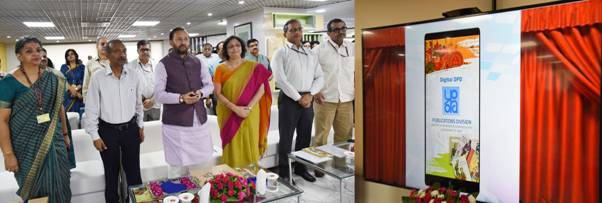
Shri Prakash Javadekar launches several e-projects of Publications Division

Union
Minister Shri Prakash Javadekar launched several e-projects of
Publications Division including its redesigned dynamic website, mobile
app “Digital DPD”, e-version of Rozgaar Samachar and  e-book “Satyagrah
Geeta” during his visit to Book Gallery at Soochna Bhawan in Delhi
today.
Speaking
on the occasion, Shri Javadekar said that in line with PM Modi’s call
to citizens in ‘Mann Ki Baat’ 2.0 programme, to make reading a habit, we
should revitalise the reading culture. He also urged for the creation
of Reading Clubs in the neighbourhood to improve the reading culture. He
added that the role of Rozgar Samachar can be improved when all the job
listing including the private jobs are listed in the newspaper. He
suggested that Rozgar Samachar when distributed in the Colleges will
help the students to improve their skill sets and make them better
suited for the job market. He said that the revamped website of
Publications Division looks attractive and dynamic, updating it daily
would make the people visit the site frequently. He was happy for the
launch of a mobile app for Publications Division which would help in
improving the reading habits of people in the era of e books and Kindle.
The details of the e-projects launched is as under:
1. Redesigned Dynamic Website: The newly revamped dynamic website (www.publicationsdivision.nic.in)
with integrated payment gateway is capable of providing real time
purchase facilities as well as updated information about Publications
Division’s books and  journals. The website will facilitate ease of
purchase. All books are available on the website for sale via payment gateway of Bharatkosh.
The website has an attractive look and feel and a well planned architecture. Catalogue of books and updates
and new books’ releases are displayed prominently for effective
engagement with aesthetic layout, soothing colour, well-designed icons
with good contrast between background and text for easy viewing. The
information is organised into different sections and categories,
catering to all stakeholders, viz. readers, authors, other publishers,
printers, agents etc.,in neatly stacked lists, with proper visual
material which is easy to understand.
The website is user-friendly with easily accessible Social Media tools. It is clutter-free with effective search feature and informative menus and sub-menu. The smooth
interface provides easy interactivity in English and Hindi. It is
accessible to everyone including specially-abled persons (with a screen
reader). Easy interface for feedback and suggestions with
Facebook and Twitter links for connecting with the organisation on Social Media have also been provided.
It has a special section on Gandhi@150. This
section details with the work undertaken with special features
including special Gandhi Catalogue, link to Gandhi Heritage Portal for
reading volumes of Collected works of Mahatma Gandhi and other Gandhian
publications.
2. Mobile App “Digital DPD”:  It
is available for free download on Google Play Store and will facilitate
tapping into the growing mobile commerce potential. The Mobile App is
synced with the Digital Rights Management System to keep a check on a
piracy and integrated with the Bharatkosh payment gateway for the ease
of payments.
3. e-version of Rozgar Samachar:
Rozgar Samachar,  a corresponding version of Employment News (English),
is a prominent job journal in Hindi  providing  information about job
opportunities in Central Government including  Public Sector
Enterprises.  It also provides information and guidance about admission
and career opportunities in various streams through career-oriented
articles by experts. 
The
e-Rozgar Samachar will provide the journal in digital form and is
available @ Rs.400 for yearly subscription The e- Rozgar Samachar is
expected to fulfil the growing needs of young readers, turning to
electronic modes of communication.
4. e-book “Satyagraha Geeta”:
The heritage value book written by eminent poet Dr Kshama Rao in 1930s
in Sanskrit verses presents the life and activities of Gandhiji. As part
of Gandhi@150 commemoration, DPD procured a PDF version of the book and
prepared the e-version of the book. English translation has also been
added to ensure wider reach.  Divided in eighteen chapters (like Adhyays of Bhagwat Geeta),
Satyagraha Geeta presents Gandhi’s ideas, philosophy of life and his
methods of action in Sanskrit verse form, capturing Gandhian ethos and
tenets.

How to Write a Press Release?

So, how to write a press release? That’s a million dollar question.
If done right, it can indeed bring you a million dollars in revenue.
Let’s get started by answering what a press release is.
“A press release is simply a statement prepared for distribution to the news media
announcing something claimed as having news value with the intent of gaining media coverage.”
A press release consists of following elements:
  • Headline

    The headline is the first single line of text in the press release and
    tells what the press release is about. It can be a very effective tool
    to grab the attention of the journalists, so writing it from a
    journalists perspective is very important. Think what headlines catch
    your eyes in the newspaper.

    The headline should be descriptive but not too long. For the
    later reason, Eduindex News limits it to 100 characters.

    The headline should be formatted in title case, that is, each word in
    the sentence should have first letter capitalized, and rest of the
    letters in lowercase. Acronyms can be in uppercase.

  • Summary

    The summary lets you build up your chance to sell your press release to
    the journalist.
    It is generally a requirement of online press release services. Identify
    a unique feature about your product or service and then write how it is
    going to revolutionize the world.

    The summary should be a single paragraph with about three to
    five lines. Beyond 250 characters is too long, so this is the limit for
    PRLog.

    All sentences in the summary should be in sentence case, that is, only
    first letter of a sentence should be capital, and all others should be
    lowercase. Again, acronyms can be all capital letters.

  • Body

    1. Dateline

      The dateline contains the release date of the press release and usually
      also the originating city of the press release. For online press release
      services like PRLog, the date stamp is automatic and should not be
      entered.

    2. Introduction

      The introduction is where the press release body starts.
      It is the first paragraph in a press release,
      that generally gives basic answers to the questions of who, what, when, where and why.

    3. Details

      The details come after the introduction.
      It gives further explanation, statistics, background, or other details relevant to the news
      and also serves to back up whatever claims were made in the introductory paragraph.

    The body should be around 3000 characters or 450 words. The body should
    have a minimum of two paragraphs. All paragraphs should be ideally
    between 5 to 8 lines each. There should be a blank line after each
    paragraph for good visibility.

  • About

    The about section is also called the “boilerplate” as it used over and
    over again. It is generally a short section providing background
    information on the press release issuing company or organization.

  • Media Contact Information

    This section contains the contact information like name, phone number,
    email address, mailing address, etc for the media relations contact
    person. For good credibility, the email address should be the same as
    the organization the press release is about. For example, if the press
    release is about an organization with a website called abcd.com, then
    the email address should be email_address@abcd.com.

General Tips

  • A press release should be written in third person. Instead of using we, us and ours, your should be using they, them and theirs.
  • It is very useful to look at other people’s press releases. Feel
    free to take a look at the most viewed press releases, as it usually
    gives a lot of insight into how to write a press release.
  • Submit press release to Eduindex News at news@eduindex.org

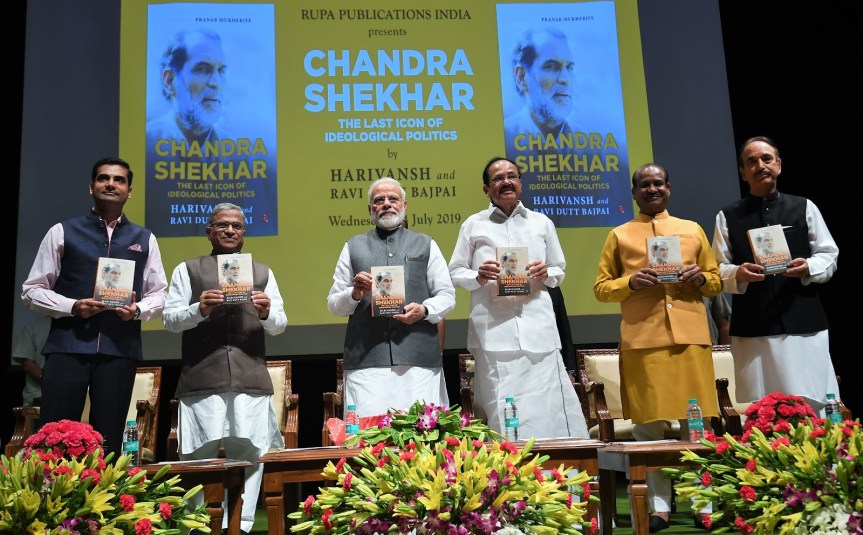
PM releases the book “Chandra Shekhar – The Last Icon of Ideological Politics”

The
Prime Minister, Shri Narendra Modi, today released the book “Chandra
Shekhar – The Last Icon of Ideological Politics.” The book has been
written by Shri Harivansh, Deputy Chairman, Rajya Sabha; and Shri Ravi
Dutt Bajpai. The book release event was held at the Balayogi Auditorium,
Parliament Library Building.
PM releases the book "Chandra Shekhar - The Last Icon of Ideological Politics"
PM releases the book “Chandra Shekhar – The Last Icon of Ideological Politics”
The Prime Minister presented the first copy of the book to the Vice President of India, Shri Venkaiah Naidu.
Speaking
on the occasion, the Prime Minister said that in today’s political
context, it is remarkable that even after about 12 years of his passing
away, the thoughts of former Prime Minister Chandra Shekhar ji, continue
to guide us, and are as vibrant as ever.
Congratulating
Shri Harivansh for writing the book, the Prime Minister shared some
memories and anecdotes of his interactions with Shri Chandra Shekhar.
He
recalled that he had first met Shri Chandra Shekhar ji in 1977. He
saidthat he was travelling with former Vice President Bhairon Singh
Shekhawat ji, and had met Shri Chandra Shekhar at Delhi Airport. He said
that the two leaders shared a close bond, despite their different
political ideologies.
The
Prime Minister also recalled that Shri Chandra Shekhar ji addressed
Shri Atal Bihari Vajpayee ji as “Guru ji.” He described Chandra Shekhar
ji as a man of remarkable culture and principles, who did not hesitate
to oppose the dominant political party of his time, because he disagreed
with certain aspects of it.
The
Prime Minister mentioned political leaders such as Mohan Dharia ji and
George Fernandes ji, both of whom, he said, spoke highly about Chandra
Shekhar ji.
Shri
Narendra Modi recalled his last meeting with Shri Chandra Shekhar ji.
He said the ailing former Prime Minister had telephoned him and invited
Shri Modi to visit him whenever he was in Delhi. During that
interaction, Shri Chandra Shekhar ji had inquired about Gujarat’s
development, and shared his perspective on many national issues.
The Prime Minister appreciated his clarity of thought, commitment to the people, and dedication to democratic principles.
The
Prime Minister also recalled the historic Padyatra that Shri Chandra
Shekhar ji had undertaken, for the farmers, the poor, and the
marginalized. The Prime Minister said that it is unfortunate that we
failed give him the respect he deserved, at that time.
The
Prime Minister said that there is a coterie of people who have sought
to create adverse impressions of some great Indian leaders, including
Dr. Ambedkar and Sardar Patel. He asserted that a museum for all former
Prime Ministers will be established in Delhi. He urged the family
members of former Prime Ministers to share aspects of the life and work
of these Prime Ministers. He said the country needs a new political
culture, beyond political untouchability.
Speaker,
Lok Sabha, Shri Om Birla; Deputy Chairman, Rajya Sabha, Shri Harivansh;
and Leader of Opposition in the Rajya Sabha, Shri Ghulam Nabi Azad,
were present on the occasion, and also addressed the gathering.

22nd National Conference on e-Governance 2019 to be held at Shillong on 8-9, 2019

The
Department of Administrative Reforms & Public Grievances (DARPG),
in association with Ministry of Electronics & Information Technology
(MeitY), Government of India and the State Government of Meghalaya will
organize the 22nd National Conference on e-Governance 2019 on 8-9th
August, 2019 at Shillong, Meghalaya on the

“Theme of the Conference is “Digital India: Success to Excellence”

. This is the first time the event
is being organized in North-Eastern region of the country. This
Conference provides a platform to disseminate knowledge on effective
methods of designing and implementing sustainable e-Governance
initiatives to provide end-to-end Digital Services, exchange experiences
in solving problems, mitigating risks, resolving issues and planning
for success. This was announced in a press conference addressed by Shri
P. S. Thangkhiew, Chief Secretary, Government of Meghalaya, Shri V.
Srinivas, Additional Secretary, Department of Administrative Reforms and
Public Grievances, at Shillong today.  The 22nd National e-Governance Conference at Shillong is part of the DARPG’s 100 days initiatives in the new Government.
The theme of this Conference is “Digital India: Success to Excellence”.
Discussions will be held on 5 sub-themes in Plenary session during the
Conference: India Enterprise Architecture (INDEA), Digital
Infrastructure, One Nation – One Platform, Emerging Technology for
Practitioners, Secretariat Reforms, National e-Governance Service
Delivery Assessment (NeSDA). 4 Breakout Sessions will be held on
sub-themes-Inclusion and Capacity Building, Engaging with Innovators and
Industry, End- to- End Digital Services: IT initiatives of State
Governments.
28 States and 8 Union Territories have confirmed their participation in the 22nd
National e-Governance Conference. Over 450 delegates are expected to
attend the Conference. An Exhibition will also be organized during the
event to showcase India’s achievements in the field of e-Governance,
along with a Hall of Fame/ photo exhibition on the award winners.
Shri P. S. Thangkhiew, Chief Secretary, Meghalaya said that the 22nd
National e-Governance Conference would be inaugurated by the Shri
Conrad Kongkal Sangma, Chief Minister of Meghalaya, and Dr. Jitendra
Singh Minister of State (Independent Charge) of the Ministry of
Development of North Eastern Region and the Minister of State in the
Prime Minister’s Office, Personnel, Public Grievances & Pensions,
Department of Atomic Energy, Department of Space. The Minister of
Information Technology and Communication and Urban Affairs Department,
Government of Meghalaya, Shri Hamletson Dohling would also address the
inaugural session. Senior Secretaries from the Government of India
including Shri K. V. Eapen, Secretary Department of Administrative
Reforms and Public Grievances and Pensions, and Shri Ajay Prakash
Sawhney Secretary Ministry of Electronics and Information Technology
would attend the conference. 15 States would be presenting their IT
initiatives and success stories in the breakout sessions.
Shri V. Srinivas, Additional Secretary DARPG said that the 22nd
National e-Governance Conference at Shillong would provide considerable
momentum to the e-Governance initiatives in the region, providing
opportunities for civil servants and industry captains of North Eastern
region to showcase their successful interventions in e-Governance in
improving end to end service delivery.

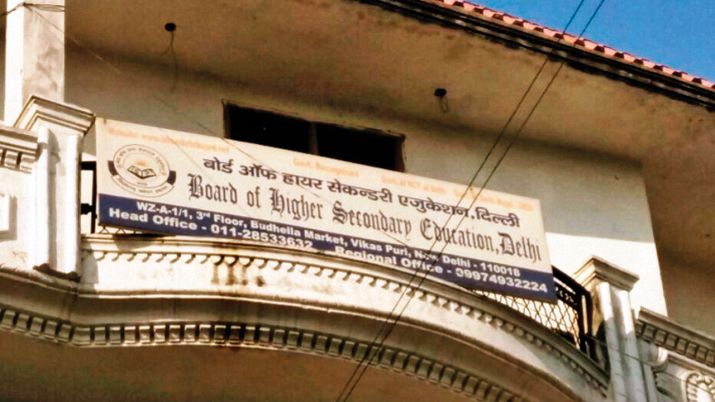
Board of Higher Secondary Education, Delhi

The
Ministry of Human Resource and Development wishes to inform the general
public that it has come to the notice of Ministry of HRD that one
entity operating in the name of “Board of Higher Secondary Education,
Delhi” is claiming to be a recognised Board of Education by this
Ministry vide letter No. 1812/2009/SKT-1 dated 29/06/2009 and D.O.
letter No. 3-5/2013/Sch.3 dated the 26th April, 2013. On scrutiny of the
relevant records of this Ministry, it has been found that no such
letters have ever been issued by this Ministry in favour of so called
Board of Higher Secondary Education, Delhi. Both these letters are,
therefore, completely forged and fabricated. Further, it is abundantly
clarified that No letters, whatsoever, have ever been issued by this
Ministry recognising the said entity i.e. Board of Higher Secondary
Education, Delhi.
The
said entity i.e. Board of Higher Secondary Education, Delhi stands
dissolved w.e.f. 01.07.1962 vide Directorate of Education Delhi
Administration Resolution’s No. F.32(10)/62-Edn. dated 30.06.1962.
Therefore, if any other document(s) is/are produced by the Board of
Higher Secondary Education, Delhi in relation to its recognition, then
the same may be deemed to be fake and the veracity of the documents may
first be got confirmed from the concerned organisation/Ministry.
The
General Public, all students, their parents and all other stakeholders
are, therefore, advised to take note of the above facts and act
accordingly.

Lok Sabha passes Central Universities (Amendment) Bill, 2019

New Delhi: The Lok Sabha passed the Central Universities
(Amendment) Bill, 2019 with a voice vote to establish a central
university and a tribal university in Andhra Pradesh.
The bill,
which also seeks an amendment to the Central Universities Act, 2009, was
introduced by Minister for Human Resource Development Ramesh Pokhriyal
on Monday.


Participating
in the debate on the Bill, Congress MP K. Suresh claimed that
percentage of expenditure on education had been reduced under the NDA
government while YSR Congress Party’s L.S. Krishna Devarayalu urged that
more funds be allocated towards building of Central universities and
research programmes in these universities.
Biju Janata Dal’s Bhartruhari Mahatab enquired about the problem of shortage of faculty in new higher educational institutions.
A Bill seeking to establish two new universities — the Central
University and the Central Tribal University in Andhra Pradesh — was on
Friday passed by voice vote in the Lok Sabha.

The Central Universities (Amendment) Bill, 2019 was moved as the
establishment of a Central University and a Central Tribal University in
Andhra Pradesh was obligatory under the Andhra Pradesh Reorganisation
Act, 2014.
“The universities will be set up with a cost of Rs 1,700 crore in
four years in Andhra Pradesh. In the first phase, Rs 450 crore will be
provided for the Central University and Rs 420 crore for the Central
Tribal University,” Human Resource Development Minister Ramesh Pokhriyal
Nishank said replying to the debate on the Bill.
He said the government has accorded high priority to strengthen the
education system in the country, for which the government has increased
the budget of education from Rs 67,000 crore in 2013-14 to Rs 95,000
crore this year.
The Minister said the establishment of the two universities in Andhra
Pradesh will increase access and quality of higher education and also
facilitate and promote avenues of higher education and research
facilities for the people of the State.
Tribal University will promote advance knowledge by providing
instructional and research facilities in tribal art, culture and customs
and advancement in technology to the tribal population of India, he
said.
“Apart from being focused on tribal education, the Central Tribal
University shall carry out all educational and other activities like any
other Central University,” he added.
TDP’s K Ram Mohan Naidu said that the existing institutions in Andhra
Pradesh have not been run well and lack the necessities, which make
them function properly.
YSRCP’s Lavu Devarayalu urged the government to allocate more funds
towards the building of the Central universities and sought the
introduction of more courses and research programmes in these
universities.
“More funds need to be allocated to the Eklavya schools in tribal
areas so that the students who eventually go to the tribal university
have a strong foundation,” he said.
Participating in the debate, BJP’s Rajiv Pratap Rudy said that the
sprouting of coaching institutions have hampered higher education.
He also urged the government to grant the central university status to Jai Prakash Narayan university and Patna University.

UGC launch PARAMARSH to promote quality education

PARAMARSH
University Grants Commission (UGC) launched a new
scheme as an attempt to promote good learning amongst students of higher
education. Paramarsh, a University Grants Commission scheme for mentoring
NAAC accreditation aspirant institutions to promote quality assurance in higher education is launched by Union HRD Minister Ramesh Pokhriyal ‘Nishank.

Under the Paramarsh scheme, imminent institutions
will be mentoring colleges to achieve them high quality standards. It
would also be providing financial support to supervisory institutions with an option
to appoint an expert.  The scheme main
aim is to subjugate a national challenge of improving the quality of Higher
Education in India. Services like sharing of knowledge, information and
opportunities for research collaboration and faculty development are the major concern areas of Paramarsh scheme for Mentee Institutions.

Hub
& Spoke” model
The scheme will run under a Hub & Spoke” model called
where mentoring institute would act as a Hub will have the responsibility of
guiding the Mentee institution and the mentee institution through the secondary
branches the “Spoke” through the facilities delivered to the mentee for self-development.
It will have a centralized control over functioning, efficiency, resource
utilization to accomplish complete progress of the mentee institution. Each mentor
institute will guide five NAAC (National Assessment Accreditation Council) aspirant
colleges. The mentor institution will only be the top Indian colleges and
universities that have achieved a NAAC Score of 3.26 or an “A”
accreditation. They will share their resources and expertise with  learning institutes, which have failed to meet quality standards of NAAC score. They will also be providing proper guidance to these colleges to improve their grade or
rank. Initially 71 universities and 391 colleges have NAAC accreditation that
will mentor undermine colleges, as per guidelines issued by government in PIB (Press
information Bureau).

Importance
of NAAC Accreditation
NAAC (National Assessment Accreditation Council) was
established in 27 January 2018. It has a mission to evaluate the higher
education institute and organization to assure the quality in
terms of education, infrastructure, research, teaching & learning etc. Accreditation
of NAAC is mandatory for all the institute and organization that aims to
provide higher education to students, particularly state universities. Organizations
with top NAAC grades such as ‘A++’, ‘A+’ and ‘A’ are most sought-after
institutes for higher studies. It help student to choose the best college they
want to get admission to shape their career. Also, UGC don’t grant RUSA and financial assistance if the college or institute fails to have accredited from NAAC.
Benefits
of NAAC Accreditation for Institutions
·        
NAAC
accreditation helps learning Institution to have a SWOT analysis and provides an opportunity to improve through an informed review process.
·        
It also provides financial assistance to the institute for better development of infrastructure
building.
·        
NAAC
assessment aids educational organizations to initiate pioneering
methods of teaching.

·       Being
one of the major accreditation agencies of the country, NAAC recommendation is
mandatory  for all the higher learning institutes.

UGC Names 23 ‘Fake Universities’, 8 from UP and 7 From Delhi In The List

New Delhi: The University Grants Commission (UGC) has released a list of 23 “self-styled, unrecognised” universities, eight of which are in Uttar Pradesh. The higher education regulator has warned students against taking admission in these institutions.
West Bengal and Odisha have two fake universities each — Indian Institute of Alternative Medicine, Institute of Alternative Medicine and Research, Nababharat Shiksha Parishad (Rourkela) and North Orissa University of Agriculture & Technology (Baripada).
“Students and public at large are hereby informed that at present 23 self-styled, unrecognised institutions are functioning in various parts of the country in contravention of the UGC Act,” UGC Secretary Rajnish Jain said.
Eight of these universities are in Uttar Pradesh, followed by Delhi (seven). Kerala, Karnataka, Maharashtra and Puducherry have a fake university each.
Unrecognised universities in UP are Varanaseya Sanskrit Vishwavidyalaya (Varanasi), Mahila Gram Vidyapith/Vishwavidyalaya (Prayagraj), Gandhi Hindi Vidyapeeth (Varanasi), National University of Electro Complex Homeopathy (Kanpur), Netaji Subhash Chandra Bose Open University (Aligarh), Uttar Pradesh Vishwavidyalaya (Mathura), Maharana Partap Shiksha Niketan Vishwavidyalaya (Pratapgarh), and Indraprastha Shiksha Parishad (Noida).
In Delhi, Commercial University Ltd, United Nations University, Vocational University, ADR Centric Juridical University, Indian Institution of Science and Engineering, Adhyatmik Vishwavidyalaya (Spiritual University) and Viswakarma Open University for Self-Employment have been declared as fake.
Badaganvi Sarkar World Open University Education Society (Karnataka), St John’s University (Kerala), Raja Arabic University (Maharashtra) and Sree Bodhi Academy of Higher Education (Puducherry) have also been included in the list.

UGC guide to student induction programme released: HRD

In a bid to develop an everlasting bond between teacher
and students, the University Grants Commission (UGC) has come up with a
new guide.
Union Minister of Human Resource Development Ramesh
Pokhriyal ‘Nishank’ today released UGC Guide to Student Induction
Programme – “Deeksharambh” in New Delhi.

To promote Deeksharambh – Student Induction Programme (SIP) in Higher
Education Institutions and its stakeholders, UGC will shortly conduct
awareness and training programmes for teachers in different regions in
the country.
“ Deeksharambh , a guide to Student Induction
Programme is to help new students adjust and feel comfortable in the new
environment, inculcate in them the ethos and culture of the
institution, help them build bonds with other students and faculty
members, and expose them to a sense of larger purpose and
self-exploration,” the minister said.
As per official sources, the
programme aims at engaging new students as soon as they take admissions
in an institution. During the induction programme, the incumbents will
be taught and made aware about the institutional policies, processes,
practices, culture and values, and their mentor groups formed.

Govt brings e-revolution to campuses, to connect with students across India

New Delhi: Even before a new session begins, all leading universities
and other higher education institutions in the country are busy setting
up social media cells to connect all students and staff with the Union
Ministry of Human Resource Development (MHRD).

A senior MHRD
official said: “Through this mammoth social media networking, the
Ministry expects to establish a much better and positive understanding
between the students and the government.”
Sources said all
vice-chancellors have been told that their respective universities
should nominate one senior faculty as Social Media Champion (SMC), who
would connect three prominent social platforms with each student. The
SMC of each university would upload “at least one positive story/event
every week of their institution (by teachers or students) on social
media platforms”.

Breaking News! New UGC scheme for Higher Education launched

In a bid to promote quality assurance in Higher Education, Union HRD
Minister Ramesh Pokhriyal ‘Nishank’ today launched  University Grants
Commission (UGC) Scheme of ‘Paramarsh.’

The scheme is aimed at mentoring National Accreditation and Assessment
Council (NAAC) Accreditation Aspirant Institutions to promote Quality
Assurance in Higher Education.

Initially 71 universities and 391 colleges with NAAC score of 3.26 and above will mentor five colleges each.
Under
the Paramarsh scheme, the leading institutions will provide regular
mentoring to help colleges achieve high quality standards. The scheme
also proposes to provide financial assistance to the mentoring
institutions and the option of appointing an expert, who can be paid a
fellowship amount of Rs 31,000 per month.
“The scheme will be a
paradigm shift in the concept of mentoring of institution by another
well performing institution to upgrade their academic performance and
enable them to get accredited by focusing in the area of curricular
aspects, teaching-learning & evaluation, research, innovation,
institutional values & practices etc,” Speaking on the occasion,”
the Minister said.
The
scheme is expected to have a major impact in addressing a national
challenge of improving the quality of Higher Education in India.
Sharing
information about the scheme, the Minister said the Scheme will be
operationalized through a “Hub & Spoke” model wherein the Mentor
Institution, called the “Hub” is centralized and will have the
responsibility of guiding the Mentee institution through the secondary
branches the “Spoke” through the services provided to the mentee for
self improvement. This allows a centralized control over operational
efficiency, resource utilization to attain overall development of the
mentee institution.
The scheme aims at enhancement of overall
quality of the Mentee Institutions and its profile as a result of
improved quality of research, teaching and learning methodologies.
Mentee Institution will also have increased exposure and speedier
adaptation to best practices. “Paramarsh” scheme will also facilitate
sharing of knowledge, information and opportunities for research
collaboration and faculty development in Mentee Institutions.
The
eligibility guidelines laid down by UGC say the mentor and the mentee
can be government, aided, private or self-financing institution. “The
mentor institution should be NAAC accredited with an A grade, having an
overall score of 3.26 and above. Any such institution recognised under
2(f) & 12B of the UGC Act 1956 will be eligible to receive UGC
grants for the purpose.
Since these grants will be used for
mentoring the institution and not for creation of any infrastructure,
the private institution can also receive funding as they do for student
teacher centric schemes,” the guidelines stated.
The “Paramarsh”
scheme will target 1000 Higher Education Institutions for mentoring with
a specific focus on quality as enumerated in the UGC “Quality Mandate”.
Mentor-Mentee relationship will not only benefit both the institutions
but also provide quality education to the 3.6 crore students who are
enrolling to Indian Higher Education system at present.

Lok Sabha passes Central Universities Bill

New Delhi:
The Lok Sabha on Friday passed the Central Universities (Amendment)
Bill, 2019 with a voice vote to establish a central university and a
tribal university in Andhra Pradesh.
The bill, which also seeks an
amendment to the Central Universities Act, 2009, was introduced by
Minister for Human Resource Development Ramesh Pokhriyal on Monday.

Participating
in the debate on the Bill, Congress MP K. Suresh claimed that
percentage of expenditure on education had been reduced under the NDA
government while YSR Congress Party’s L.S. Krishna Devarayalu urged that
more funds be allocated towards building of Central universities and
research programmes in these universities.
Biju Janata Dal’s
Bhartruhari Mahatab enquired about the problem of shortage of faculty in
new higher educational institutions. “What is the reason for this?” he
asked.

UGC, AICTE initiate steps to curb caste based discrimination

Nearly 72 cases of caste based discrimination against Scheduled
Castes and Scheduled Tribes students were reported by University Grants
Commission (UGC) in various universities and colleges across the country
during 2017-18. Most of the cases are handled and disposed off by the
authorities of concerned Universities and Colleges, as empowered under
their respective Acts and Statutes under the Higher Education.

Apart
from UGC, All India Council for Technical Education (AICTE) reported
that no such complaints were received by them from AICTE approved
Institutions during the same period.
Union Minister for Human
Resource Development, Dr. Ramesh Pokhriyal ‘Nishank’ in a written reply
in the Lok Sabha on July 8, informed that the Central Government as well
as UGC have issued several instructions from time to time to all State
Governments and Centrally Funded Education Institutions to curb
discrimination of any kind in higher educational institutions.
UGC
on June 26, 2019 advised all the Vice-Chancellor of all Universities to
constitute a committee to look into the discrimination complaints
received from the SC/ST/OBC Students/Teachers and non-teaching staff.
Besides, the other major initiatives undertaken in this regard are:-
(i)
In order to check discrimination and harassment of any section of
students and to strengthen the grievance redressal mechanism, the
University Grants Commission (Promotion of Equity in Higher Education
Institutions) Regulations, 2012 was implemented.
(ii) University
Grants Commission (Grievance Redressal) Regulations, 2012 has been
formulated. These Regulations intend to give effect in letter and spirit
to the provisions of the Constitution and other statutory provisions
and policies for prevention of discrimination on the grounds of caste
and to safeguards the interests of the students belonging to the
Scheduled Castes and Scheduled Tribes. The Regulations also seek to
provide for advancement of Scheduled Caste and Scheduled Tribe students
through setting up of Equal Opportunity Cells in each Higher Educational
Institution.
(iii) In order to make the universities/colleges
more responsive to the needs and constraints of the disadvantaged social
groups, UGC is giving financial assistance to all eligible
Colleges/Universities to establish Equal Opportunity Centres. The aim
and objective of this Scheme is to oversee the effective implementation
of policies and programmes for disadvantaged groups, to provide guidance
and counselling with respect to academic, financial, social and other
matters and to enhance the diversity within the campus.