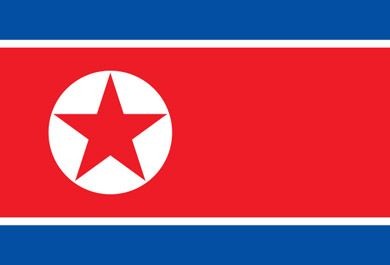
Weird laws in North Korea

Making International calls is a crime. North Korean citizens can not make international calls as it’s considered a crime there. According to reports, in 2007 a North Korean factory boss was executed by a firing squad in front of 150,000 people after being accused of making international calls on 13 phones he installed in a factory basement.

•Foreign movies, songs not allowed Watching foreign movies or listening to foreign music can send North Korean citizens to jail. In 2015, North Korea’s dictator Kim Jong-un ordered the destruction of all cassette tapes and CDs that had state-banned songs in order to contain dissent. Watching American movies or distributing pornography can lead to the death penalty. There are only three channels on TV in North Korea, and all content is controlled by the government.

Disloyalty to the leader can mean the death penalty Falling asleep during a meeting with Kim Jong-un is considered disloyalty to the leader and may also lead to the death penalty. According to reports, in 2015, North Korea’s Defence Minister Hyon Yong-chol was gunned down by an anti-aircraft fire in front of 100 people for behaviuor such as falling asleep in Kim Jong-un’s presence.

•Three-generation punishment. If anyone commits a crime in North Korea, not only he or she will be punished, but also their grandparents, parents and children. This terrible law was created to prevent people from escaping from prison.

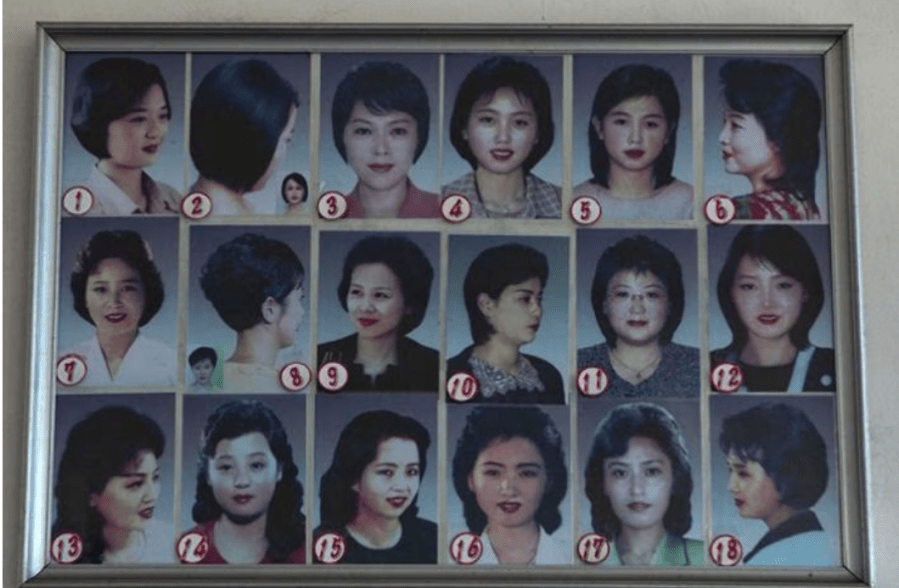
Only government-approved haircuts. All men and women can only do one of 28 government-approved haircuts, 18 for women, 10 for men; other hairstyles are prohibited. North Korean leader Kim Jong Un introduced this law in 2013 and did not include his hairstyle on this list because he wanted to keep it unique and absolutely no one can dare to copy his hairstyle. It is assumed that married women should wear shorter haircuts than unmarried women.
Permission needed to live in the national capital. North Korean leader Kim Jong-un wants only the most successful, wealthy and influential people to live in North Korea’s Pyongyang. People must have an express permission to live in the capital

Bible is banned in North Korea. In North Korea, the Bible is considered a symbol of Western culture and is therefore prohibited because it can transform people. One Christian woman who was distributing the Bible was arrested and executed. In 2014, Jeffrey Fowle, an American citizen on tour of North Korea, was arrested and imprisoned for five months because he forgot the Bible in the bathroom of a restaurant at the Chongjin Sailor’s Club.

No iPhones or laptops. No iPhones, TVs or laptops from the aforementioned brands for North Koreans! The people of this country know very little about electronics and technology, as the government’s isolation policy hides a lot.

•Only one leader to vote in the election. North Korea holds elections and all the citizens above 17 mandatorily have to vote in the elections but they are not entirely free elections. In each election, you only have 1 option. As a result, 100% of Koreans vote for their dear leader.

Military service is compulsory. Military service is compulsory for all North Koreans. 10 years for men and 7 years for women.

Power cut every night. North Koreans face power cuts every night due to the energy crisis in the country and for using electricity need permission and owning a microwave is illegal.


Leaving North Korea is not like leaving any other country. It is more like leaving another universe.

-North Korean refugee

Artificial Intelligence

Artificial Intelligence is the intelligence possessed by the machines under which they can perform various functions with human help. With the help of A.I, machines will be able to learn, solve problems, plan things, think, etc. Artificial Intelligence, for example, is the simulation of human intelligence by machines. In the field of technology, Artificial Intelligence is evolving rapidly day by day and it is believed that in the near future, artificial intelligence is going to change human life very drastically and will most probably end all the crises of the world by sorting out the major problems. Our life in this modern age depends largely on computers. It is almost impossible to think about life without computers. We need computers in everything that we use in our daily lives. So it becomes very important to make computers intelligent so that our lives become easy. Artificial Intelligence is the theory and development of computers, which imitates the human intelligence and senses, such as visual perception, speech recognition, decision-making, and translation between languages. Artificial Intelligence has brought a revolution in the world of technology

Photo by ThisIsEngineering on Pexels.com

AI is widely used in the field of healthcare. Companies are attempting to develop technologies that will allow for rapid diagnosis. Artificial Intelligence would be able to operate on patients without the need for human oversight. Surgical procedures based on technology are already being performed.Artificial Intelligence would save a lot of our time. The use of robots would decrease human labour. For example, in industries robots are used which have saved a lot of human effort and time. In the field of education, AI has the potential to be very effective. It can bring innovative ways of teaching students with the help of which students will be able to learn the concepts better. Artificial intelligence is the future of innovative technology as we can use it in many fields. For example, it can be used in the Military sector, Industrial sector, Automobiles, etc.Artificial Intelligence will bring a huge revolution in the history of mankind. Human civilization will flourish by amplifying human intelligence with artificial intelligence, as long as we manage to keep the technology beneficial.


The greatest enemy of knowledge is not ignorance, it is the illusion of knowledge.

-Stephen Hawking

Bipolar Disorder

Bipolar disorder, also known as manic depression, is a mental illness that brings severe high and low moods and changes in sleep, energy, thinking, and behavior.
People who have bipolar disorder can have periods in which they feel overly happy and energized and other periods of feeling very sad, hopeless, and sluggish. In between those periods, they usually feel normal. You can think of the highs and the lows as two “poles” of mood, which is why it’s called “bipolar” disorder.In bipolar disorder, the dramatic episodes of high and low moods do not follow a set pattern. Someone may feel the same mood state (depressed or manic) several times before switching to the opposite mood. These episodes can happen over a period of weeks, months, and sometimes even years.There is no single cause of bipolar disorder. Researchers are studying how a few factors may lead to it in some people.
For example, sometimes it can simply be a matter of genetics, meaning you have it because it runs in your family. When someone develops bipolar disorder, it usually starts when they’re in late adolescence or young adulthood. Rarely, it can happen earlier in childhood. Bipolar disorder can run in families.Men and women are equally likely to get it. Women are somewhat more likely than men to go through “rapid cycling,” which is having four or more distinct mood episodes within a year.

Women also tend to spend more time depressed than men with bipolar disorder.Bipolar disorder usually develops later in life for women, and they’re more likely to have bipolar disorder II and be affected by seasonal mood changes. A combination of medical and mental issues is also more common in women. Those medical issues can include thyroid disease, migraine, and anxiety disorders.Bipolar disorder can be treated. It’s a long-term condition that needs ongoing care. People who have four or more mood episodes in a year, or who also have drug or alcohol problems, can have forms of the illness that are much harder to treat.Treatment can make a huge difference. With a combination of things — good medical care, medication, talk therapy, lifestyle changes, and the support of friends and family — you can feel better. Bipolar disorder — or manic depression, as it is also still sometimes called — has no known cure. It is a chronic health condition that requires lifetime management. Plenty of people with this condition do well; they have families and jobs and live normal lives. Finding the right medication need weeks to months to take full effect. Generally only one medication is changed at a time so that your doctor can identify which medications work to relieve your symptoms with the least bothersome side effects. Medications also may need to be adjusted as the symptoms change.Treatments for children and teenagers are generally decided on a case-by-case basis, depending on symptoms, medication side effects and other factors.


You are either too happy, too sad or you just don’t care. Finding the feelings in the middle do not come naturally. You have to fight every day to find them.

Hydroponics

Hydroponics is the method of growing plants without soil. It generally uses less water as compared to traditional soil system. It allows faster growth and higher yield.

William Frederick Gericke is known as father of hydroponics. He grew tomato vines in his backyard in nutrient solution.

The nutrients used in hydroponics include fish and poultry excreta , duck manure, chemical fertilizers, artificial nutrient solution etc.

Plants are commonly grown hydroponically in a greenhouse, on inert media, include tomatoes, peppers, cucumbers, strawberries, lettuces, and cannabis, usually for commercial use, and Arabidopsis thaliana, which serves as a model organism in plant science and genetics.

Advantages:

  • Does not require soil for cultivation.
  • Promotes faster and efficient plant growth.
  • It uses less water as compared to conventionally grown plants. Hence, helps to save water.
  • It does not depend on climate for favourable growing conditions.
  • Saves labour due to automatic watering and fertilizing capability.
  • Have fewer pest can can be grown closely.
Photo by Pragyan Bezbaruah on Pexels.com
  • The plant has less root and nutrient competition than grown in soil.

There are six main types of hydroponic system for garden: wicking, deep water culture (DWC), nutrient film technique (NFT), ebb and flow, aeroponics, and drip systems.

Disadvantages:

  • Involves high installation cost.
  • Need to test the solution frequently to avoid infection and damage.
  • System are prone to equipment failure and power outage.
  • Prone to water borne infection.
  • Requires constant monitoring and assistance.

Some systems, known as aquaponics involves use of nutrient-rich wastewater from aquaculture to fertilize hydroponic plants. Freshwater fish, such as tilapia, and crayfish are common aquatic animals utilized for these hybrid systems.

Nowadays, hydroponics is being implemented in large scale as a start up to meet the demand of fresh leafy vegetables as is a part of urban farming.

Fracking

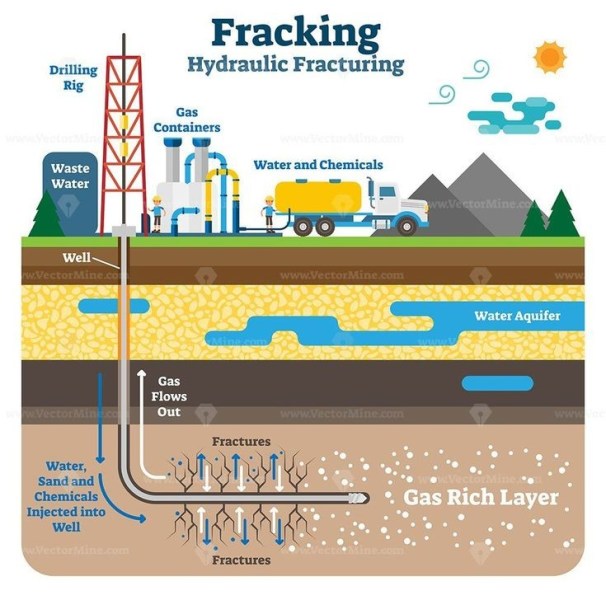
Fracking is short for “hydraulic fracturing”, which is the process of creating fractures in rocks and rock formations by injecting specialized fluid into cracks to force them to open further. The larger fissures allow more oil and gas to flow out of the formations and into the wellbore. It is easier to extract oil and gas there.Fracking has resulted in many oil and gas wells attaining a state of economic viability due to the level of extraction that can be reached. It has also allowed drilling firms access to previously difficult-to-reach sources of oil and gas.Fracking is an extraction technique for oil and gas wells in which rocks are fractured artificially using pressurized liquid. The process involves drilling down into the earth and injecting a highly pressurized mixture of water, sand, and thickening agent, also called “fracking fluid,” into a wellbore to create cracks in rock formations. Once the hydraulic pressure is removed from the well, the remnants of the fracking fluid hold the fractures open, making it easy to extract the oil and gas inside. Fractures can also exist naturally in formations, and both natural and human-made fractures can be widened by fracking. As a result, it is possible to extract more oil and gas from a given area of land.

Fracking increases the rate at which water, petroleum, or natural gas can be recovered from subterranean wells. It has also allowed the extraction of unconventional oil and gas resources from low permeability sites where traditional extraction technologies fail. Fracking as a method for oil and gas extraction is also more economically viable than conventional or horizontal drilling. In the United States, domestic oil production has grown significantly with the introduction of fracking. The process has driven down gas prices and offered gas security to both the United States and Canada for about 100 years.

Most of the opposition to fracking revolves around its potential negative impact on the environment. Fracking typically produces methane emissions, which reduce air quality. Furthermore, methane gas contributes significantly to global warming.Fracking requires forcing large volumes of water and chemicals into the ground, which can seep and contaminate local soil and water resources. Moreover, due to the high pressures involved, fracking is also associated with increased seismic activity. It also releases large quantities of methane gad and other air pollutants that can cause health problems and contribute to climate change.Fracking has allowed for the cost-effective extraction of harder-to-reach deposits of oil and gas, which has increased the supply of available fossil fuels. In general, greater supply leads to lower prices; however, several other factors also impact the price of oil and gas.


Central Bureau of Investigation

The CBI is the main investigating agency of the GOI. It is not a statutory body; it derives its powers from the Delhi Special Police Establishment Act, 1946.
Its important role is to prevent corruption and maintain integrity in administration. It works under the supervision of the CVC (Central Vigilance Commission) in matters pertaining to the Prevention of Corruption Act, 1988. Investigate cases connected to infringement of economic and fiscal laws, i.e., breach of laws concerning customs and central excise, export and import control, income tax, foreign exchange regulations, etc. But cases of this nature are taken up by the CBI either at the request of the department concerned or in consultation with the concerned department.Investigate crimes of a serious nature, that have national and international ramifications, and committed by professional criminals or organised gangs.To coordinate the activities of the various state police forces and anti-corruption agencies.
At the behest of a state govt., the CBI can also take up any case of public importance and investigate it.Maintaining crime statistics and disseminating criminal information.The agency is dependent on the home ministry for staffing since many of its investigators come from the Indian Police Service. The CBI also relies on the ministry of law for lawyers and also doesn’t have functional autonomy to some extent. The CBI, run by IPS officers on deputation, is also vulnerable to the government’s ability to manipulate the senior officers because they are dependent on the Central government for future postings. Since police is a State subject under the Constitution, and the CBI acts as per the procedure prescribed  by the Code of Criminal Procedure (CrPC), which makes it a police agency, the CBI needs the consent of the State government in question before it can make its presence in that State. This can lead to certain cases not being investigated and seeing a silent deadlock. Recently, states like Andhra Pradesh (consent is again given after change of government in-state) and West Bengal withdrew consent.

The CBI was not one of the organizations included in the exempted category. It was much later in 2012 that the CBI was brought in. There was a purpose as to why the CBI was not brought into the ambit of the RTI- this was because the CBI was not considered to be one of those organizations which really looks into the strategic interests of India. Section 8 of the RTI Act, which guarantees various forms of exemption, begins by saying that all the information which has a strategic significance should not be disclosed. Further, since the Intelligence Bureau (IB), the Research & Analysis Wing or RAW and such organizations which gather intelligence, are dealing with strategic matters and so they were from the very beginning kept in the exempt category. The CBI was never considered to be one which collects or maintains such information which are of strategic importance for the country.However, the CBI made out a case that they are also investigating into all kinds of cases- and that these cases include those which are of strategic importance for India and therefore, if they would be subjected to the RTI, much of that information would go out into the public domain.

CYBERSECURITY IS A SHARED RESPONSIBILITY, AND IT BOILS DOWN TO THIS: IN CYBERSECURITY, THE MORE SYSTEMS WE SECURE, THE MORE SECURE WE ALL ARE.

Inclusive growth and issues arising from it

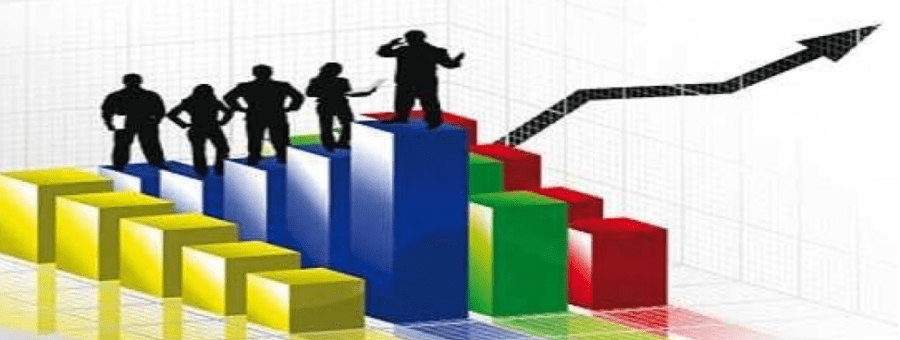
Inclusive growth is defined as economic growth that generates job opportunities and aids in poverty reduction.
It entails poor people having access to basic health and education services. It entails ensuring equal opportunity for all, as well as empowering people through education and skill development.
To reduce poverty quickly and sustainably, people must be able to both contribute to and benefit from economic progress.
Rapid growth is required to eliminate poverty, but it must be broad-based across sectors and inclusive of a large portion of the country’s labor force to be long-term sustainable.According to the UNDP, inclusive growth is “the process and result of all groups of people participating in growth and benefiting equally from it.”
According to the OECD (Organisation for Economic Co-operation and Development), inclusive growth is defined as economic growth that is evenly dispersed across society and generates opportunity for everyone.

Unemployment

Because of illiteracy and over-dependence on agriculture, India’s employment quality and quantity are low.The lack of quality employment is a concern because more than 80% of individuals work in the informal sector and are not covered by social security.According to the NSSO’s Periodic Labour Force Survey (PLFS), the unemployment rate for the urban workforce was 7.8%, while the rural workforce had a rate of 5.3 percent, bringing the total unemployment rate to 6.1 percent.The following factors contribute to sluggish job growth:
°The industry has a low capital utilization °Low initial budget
°Agriculture’s expansion has been slow.
°According to economists, what is being referred to as a “demographic dividend” could turn out to be a moment of crisis defined by high unemployment and social unrest.

Backwardness in Agriculture

Agriculture employs 60% of the Indian population, either directly or indirectly. Agriculture, on the other hand, has a dismal growth rate of only 2%.
Agriculture production must be improved by policymakers and government officials in order to be more inclusive.Lack of access to capital for agriculture and small and medium enterprises, as well as a lack of social protection, have all contributed to underprivileged communities being left out of the growth picture.The following are some of the issues in agriculture:
°A gradual decrease in the employment share
°Land availability per capita is dwindling.
°Labor productivity is low.
°Agriculture yields are declining as a result of climate change, soil degradation, and water scarcity.
°Growth differences between regions and crops.

Social Development Problems:

One of the most important concerns for inclusive growth is social development. However, it has some issues, such as:
Regional, societal, and gender differences are all significant.Public spending, notably in health and education, is at a low level and growing slowly.Children’s malnutrition – India is ranked 102nd in the Global Hunger Index.

Disparities by Region

India’s regional differences are a key source of concern. Factors such as the caste system, the wealth gap, and others contribute to regional inequities, resulting in a society in which certain groups enjoy greater privileges than others.Kerala is the most literate state in the country, with a literacy rate of 93.1 percent; nevertheless, Bihar’s literacy rate is only 63.82 percent.


India is a vibrant nation whose strength lies in its commitment to equal rights and to speech, religious and economic freedoms that enrich the lives of all citizens. India is not only the world’s largest democracy; it is also a secular, pluralistic society committed to inclusive growth.

The rising burden of E- waste

E- waste or electronic waste refers to the waste created by discarding the electronic devices which is rather caused due to its end of useful life, high repair cost , outdated technologies etc. which makes it underrated for further use. These waste includes TV, mobile phones, computer/ desktop, electronic items, wires, machineries etc. This is one of the fastest waste generated.

Everyday lakhs and lakhs of e-waste is generated. The country’s e-waste output is growing at over 30 per cent year on year, and stood at over 10 lakh tonnes in 2019-20, according to government data, comparable to about one lakh six-wheeled truckloads of waste.

It is the third largest in volume globally and growing at a rate ten times faster than its plastic waste output.

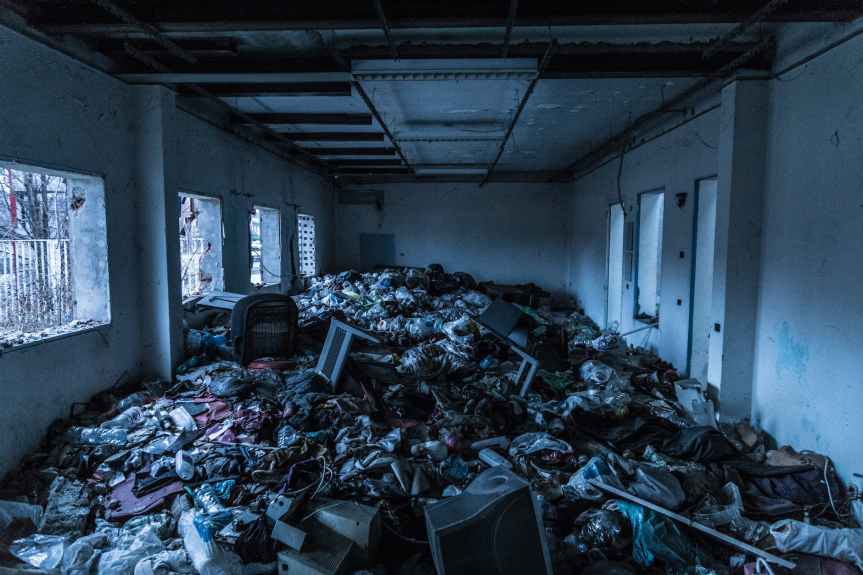
Mountains of e-waste pile up, which are as much a threat to the environment as they are to the health of their handlers .It proves vulnerable as people are sifting and processing the waste of the privileged without knowing that it could cause them cancer, reproductive disorders, endocrine disruption and other health complications.

Problems:

The most alarming aspect of e-waste is that less than a quarter of it is being processed.It possess hazardous metals and can contaminate soil, air, water, posing significant risk to human health by entering the food chain.

Unsafe disposal of e waste: About 95% of e waste is recycled by informal sectors and scrap developers without knowing the hazardous effect and use of safe handling practice.

Concern : Majority of e waste are imported to developing countries like India, China, Ghana etc from developed countries for recycling purpose.

With advancement in technologies, standard of living people are more inclined towards use of more gadgets, phones and tend to change them more frequently.

Way forward

E waste clinics for proper segregation, processing and disposal of e waste. Effective ways to implement proper and safe handling of waste.

Initiative taken by government includes: Prime Minister Narendra Modi launched the LiFE or Lifestyle for Environment movement in June—a concept that he said is borrowed from the past and focuses on the future.

The right to repair is introduced to reduce the e waste and it’s proper management as it is environmental friendly too. But this also concerns the major industries involved in sector as it could lead to their loss and some technologies can’t be added to existing devices .

New Education Policy : Key Highlights.

The Union Cabinet chaired by the Prime Minister have approved the new National Education Policy 2020, making way for large scale, transformational reforms in both school and higher education sectors. This is the first education policy of the 21st century and replaces the 34-year-old National Policy on Education (NPE), 1986.

The New Education Policy 2020 has come up as a in the education sector as it aims at creating an equitable and vibrant knowledge for the society by providing high-quality education to all. Also it encourages to develop a deep sense of respect towards the fundamental rights, duties and Constitutional values, bonding with one’s country, and a conscious awareness of one’s role and responsibilities in a changing world. The New Education Policy believes in instilling skills, values, and dispositions that support responsible commitment to human rights, sustainable development and living, and global well-being, thereby reflecting a truly global citizen.

The key highlights of NEP are.

Early Childhood Care Education

The policy focuses on the importance of providing education to children between the age group of 3-6 years at an early age. The kids in the age group 3-5 years will be provided education through the current set-up of pre-schools and anganwadis, and those between the ages of 5-6 years will be included in the schooling system by 2025.

School Education for All

Aiming to make education from pre-primary level till the 12th grade universally accessible, NEP 2020 is looking to achieve 100% Gross Enrollment Ratio in providing the school education by 2030.
New Curriculum & Pedagogical Structure.

The new policy has eliminated the 10+2 education system and replaced it with a more organized 5+3+3+4 structure, that is, 5 years of primary education (for the age group 3-8 years), 3 years of preparatory stage (for the age group 8-11 years), 3 years of middle stage (for the age group 11-14 years), and 4 years of secondary stage (for the age group 14-18 years).

The Flexibility of Choosing Courses

There will be no rigid demarcations between vocational and non-vocational, science and arts, curricular and extra-curricular activities, thus providing equal emphasis on all the subjects and courses. Also, the students will have more choices and flexibility while picking up the subjects they want to study so that their educational path is more focused on their skills and interests.

Emphasis on Mother Tongue & Multilingualism

The policy emphasizes on the inclusion of local language in the curriculum with the medium of instructions in all the schools till at least class 5 (but preferably till 8th standard and beyond) to be either in mother tongue or regional language. Subsequently, foreign languages will be offered as options for students in secondary schools. It also states that Indian Sign Language (ISL) will be standardized across the country.

Assessment System

As per the new policy, though the board examination for 10th and 12th grades will continue to be in place, the structure of the exams will be reformed to make them easier by focusing on core competencies of the students, thus eliminating the need of coaching classes at these stages. Also, the school examinations will be conducted by proper authorities only in grades 3, 5, and 8.

Multidisciplinary Education

The students will be provided with multi-disciplinary holistic education at the undergraduate level to ensure an integrated exposure with multiple entry and exit options. The 3 or 4-year duration undergraduate degree will have exit options (with certifications) during the entire course – a certificate after 1 year, diploma after 2 years and/or a bachelor’s degree after 3 years.

Cyber Security

Cyber Security is the practice of identifying the vulnerabilities and threats associated with digital systems and mitigating these risks. The term “cyber” refers to a nickname for an internet-connected computer or any other device that uses a processor, input/output and networking connections. The common threats include: viruses, worms, trojans and malware. A related term is cyber warfare which is the use of cyber tools in warfare to achieve objectives that would not be possible by using physical means such as bombs or missiles. The role of cyber security professionals is to protect critical systems and information. The main goal of cyber security is to prevent hackers from gaining access to information or using nefarious actions that would put the users’ information at risk.cyber security important because the government, military, law enforcement, and private industry use many critical resources that could be negatively affected by cyber attacks. Many of these systems are financial, such as banks, credit cards, ATMs, stock markets and networks. Government agencies use software to manage the US budget system and the military uses software to track troop movement. Because of these vital uses, cyber attacks could cripple important services or even destroy the country’s financial security.In order for companies to operate securely in today’s technological world they need to implement cyber security protections. These protections include firewall protection, anti-virus programs, encryption codes that keep hackers from easily accessing sensitive data and data backup systems in case any security breach occurs that causes damage to systems or information.

A major concern to cyber security is providing more efficient support to better protect against cyber related activities. This means an organization must have the information available to help identify possible threats including understanding what possible methods hackers may use to gain access, and how the organization can prepare for any potential attacks.
Cyber security is a constantly growing area of study and research. Some of the most recent research being done is focused on cyber security in cyber space. The purpose of this paper will be to analyze if a previous study found in 2012 correctly identified computers within an organization as well as their movement throughout the network. There are two main findings that are sought out which were: 1) how computers move across networks (e.g. LAN, WAN, etc.), and 2) how computers might behave in a network. The assumption is that computers within an organization move between locations (e.g., building or branch offices) and they may change their location(s). Also, the behavior of a computer can be tracked as observed (e.g., its IP address changes from one to another, or its Whois information changes from one domain name service provider to another).

Cyber security offers a variety of career paths depending on the level of experience you have and your area of expertise. You can be an analyst/engineer, network administrator, programmer, or data analyst and many more other positions available depending on your area of interest and experience. Some jobs a required while others are possible as long as it relates to your field in the security field such as computer science or finance. If you’re looking for a career that will pay well, then cyber security is the right choice for you because it’s relatively new and will only continue to grow.


“Security used to be an inconvenience sometimes, but now it’s a necessity all the time.”

National Educational Policy

Education is a fundamental requirement for the development of a just and just society and for achieving the full human potential for promoting national development. The whole world is passing through a rapid change in the knowledge landscape.In this context, the New National Policy 2020 was approved by the government of India on July 29, 2020 and approval was also given to change the name of Ministry of Human Resource Development to Ministry of Education. This New Education Policy 2020 will replace the 34 year old National Education Policy 1986.The vision of this New Education Policy 2020 should be to make students proud of being Indian not only in thought but also in behaviour, intellect and action as well as in knowledge, skills, values and thinking, which are important for human rights, sustainable development and be committed to the cause of survival and global well-being, so that they become truly global citizens.Built on the fundamental principles of easy access, equity, quality, affordability, and accountability for all, this New National Policy 2020 is in line with the 3030 Agenda for Sustainable Development.

Principles of the National Education Policy
•Flexibility: It seeks to provide flexibility to the learners to choose their pace of learning and choose their own path as per their talent.
•Multi-disciplinary: To provide holistic education in all fields like science, social science, coding, arts, humanities, sports, etc.
•Ethical and Constitutional Values: It aims to inculcate the values of empathy, respect for others, cleanliness, courtesy, scientific temper, liberty, responsibility, equality and justice. •Sustainable Policy: Formulation of policies based on regular assessment of ground reality. Keeping in mind the rich, diverse, ancient and modern culture and knowledge system and tradition of India.
•Equality and Inclusion: This will be the objective of all educational decisions, ensuring that all students can thrive in the education system.
•Life Skills: Focusing on building life skills such as collaboration, teamwork, communication, resilience, etc.
•Professional Value: All teachers and educators will be recruited through rigorous preparation. Emphasis will be placed on preparedness, continuous professional development, positive work environment & service development.
•Education as a Fundamental Right: Education is a public service and not a commercial activity. It should be available with sufficient quality to all. There must be strong and sustainable investment in a vibrant public education system as well as an ethical human and philanthropic private system.


Education is fundamental for achieving full human. potential, developing an equitable and just society, and promoting national development.

DREAM ON…..

N kavya

Dream is a succession of images, ideas, emotions, and sensations that usually occur involuntarily in the mind during certain stages of sleep.

The content and function of dreams have been topics of scientific, philosophical, and religious interest throughout recorded history. Dream interpretation was practiced by the Babylonians in the third millennium BCE and even earlier by the ancient Sumerians. .Dreams figure prominently in major world religions. The dream experience for early humans, according to one interpretation, gave rise to the notion of a human ‘soul’ as a central element in much religious thought.

Psychologist Calvin S. Hall considered dreams part of the cognition process or a type of thinking that happens as you sleep. Hall believed dreams could offer important insight into how you view yourself and others, your problems and conflicts, and the world in general. Many psychologists believed dreams played an important role in cognitive processes including memory and emotion regulation. Domhoff also noted that, although dreams may shed some light on heavy concerns, they might not have any real purpose, because he stated normally human beings forget most of their dreams. William Dement, who helped found the field of sleep medicine, suggested that, while dreams may lack a clear purpose, they can still convey meaningful messages.

Many experts do not believe dreams have much meaning but believe they still serve a purpose. The existing theories outline a few of these purposes.

1. Threat simulation theory
2. Activation-Synthesis theory
3. Dreams as emotional regulation
4. Continual-activation theory

Psychotherapist, Eliza Boquin, states “For vivid dreamers, our body can often experience what is happening in the dream.”
Certified dream analyst and speaker Lauri Loewenberg says while you are sleeping your brain is conjuring up around five dreams per night. That is a lot of subconscious thoughts to unpack. And although every dream is unique, they do tend to follow certain symbolic patterns.

How to examine your own dreams -:


1. Make sure you are getting proper sleep –: Research says that if we get enough sleep (7 to 9 hours) each night. This may, in turn, boost dream recall.


2. Review the dream –: when you wake up from the dream, lie calmly and analyze the visions, emotions, people, and places and mainly pay attention to small details because it would play a significant role in examining the dream.


3. Write it down –: Have a journal and start writing what all you saw the colors and visions, also your moods and feelings.


4. Make connections to your own life -: connecting these facts to your everyday life, would connect to your past life experiences and in some cases might even show some glimpses of your future. There are also many dreams interpretation books that you can interpret and gain more insights into.

Dreaming and sleep are intertwined. Dreams occur mainly in the rapid-eye movement (REM) stage of sleep when brain activity is high and resembles that of being awake. No one knows for certain what purposes dream serve. But at the end of the day, their true function might not really matter. It depends on each individual If you find them meaningful, then they add value to you or do not concern you.

Image credits- Google

Online Platforms for Learning.

An online learning platform is a webspace or portal for educational content and resources that offers a student everything they need in one place: lectures, resources, opportunities to meet and chat with other students, and more. It is also an excellent way for the student and the teacher to monitor student progress. Whether you want to learn a new language or obtain career-advancing certifications, signing up for an online course could be just the perfect solution. The online class is typically provided through online learning platforms. 

Online learning has numerous advantages over traditional learning methods. Some of these include the possibility for students to make use of self-paced learning and to choose their own learning environments. Additionally, e-learning is both cost-effective and cost-efficient, as it removes the geographical obstacles often associated with traditional classrooms and education. The benefits of an online course platform are that both students and teachers can track the students’ progress through the course material, and everything is neatly organized in one place. Additionally, students may also have an option of interacting with each other on the platform.

Some of the popular Online learning (e-learning) platforms.

Coursera.

Coursera isn’t just a place to take classes that are like college courses—it actually offers real academic courses from real professors and universities at a fraction of the cost of getting an online degree. The platform partners with over 200 universities and companies to provide real learning experiences that can connect to real-world benefits. In some cases, you can even earn certifications or degrees entirely through Coursera, which can then potentially lead to professional benefits like raises, promotions, and more. 

Course Hero.

Course Hero is home to study resources, 24/7 homework help and textbook guides to provide students across top institutions with tailored reinforcement of the courses in which they are enrolled. The library of materials uploaded to Course Hero’s platform can be searched by either school or textbook to find the exact resource a student needs, with tutors available to provide total support.

Edx.

Generally, this online learning platform has a high-end pedigree. edX was established by graduates from both MIT and Harvard University. Real college courses that are generated and taught by real college tutors are available in a vast array of topics and fields. They have a slight leaning toward the Science, Technology, Mathematics, and Engineering fields. Nonetheless, there are plenty of topics in the humanities, arts, and languages as well. By partnering with the universities, this course provides professional degree certificates as well as the “micro” degree programs at both the bachelor’s and the master’s levels. In this sense, they largely serve as tools for professional development. 

Skill Share.

Whereas many online class platforms do confer college-style classes, Skillshare is not formal and is mainly targeted at boosting creative skills. Some business and marketing classes exist on this online education platform. Most of the courses though tend to have a focus on the creative fields and are administered by practicing experts in various fields. Common examples of these fields are interior design, visual arts, animations, films, and photography. 

LinkedIn Learning.

Formerly called Lynda.com, LinkedIn Learning is an educational platform that confers professional course training in the fields of technology, business, creative fields, and technology-related areas mainly in the form of videos. The online learning marketplace is largely available as a premium service for the users of LinkedIn and has so far provided well over 16,000 courses in a whopping 7 languages. Its focus is mainly to aid individuals in investing in their professional development. 

Udemy.

If you want to learn something, it’s probably on Udemy. The site is less of a unified platform and more of a portal or repository where students can access well over 100,000 courses on every topic imaginable. There’s not one standard format for a Udemy course—the platform allows instructors to design multimedia lectures with audio, video, and text elements, plus readings, quizzes, and other activities. Udemy allows students to preview classes they’re interested in and does offer a 30-day refund if you’re dissatisfied.

FutureLearn.

FutureLearn lets you learn online from universities and companies all over the world, including Anglia Ruskin University, King’s College London, Monash University, and the University of Wollongong. On top of their university partnerships, they also partner with specialist organizations such as Accenture, Amnesty International, the British Library, and UNESCO. From personal development video lessons to employment-related course content, FutureLearn definitely deserves its place near the top of our best online learning platforms list.

Government budget

The government budget is an annual fiscal statement depicting the revenues and expenditures for a financial year that is often moved by the legislature, sanctioned by the Chief Executive or President, and given by the Finance Minister to the country. The budget is also known as the Annual Financial Statement of the nation.In terms of Article 112 (1) of the Constitution of India, a statement of estimated receipts and expenditure of the Government of India is presented to the Parliament every year. Article 112(2) provides that the estimate of expenditure embodied in this annual financial Budget, shall show separately. This Annual Financial Statement comprises the main budget document of the government.
Whilst the budget document relates to the receipts and expenditures of the government for a particular fiscal year, the effect of it will be there in the following years.

•There is an obligation to have two accounts that are associated with the current financial year and are incorporated in the revenue account which is also known as revenue budget.
• Those that concern the assets and liabilities of the government into the capital account are known as the capital budget.
• In order to comprehend the accounts, it is significant to understand the aims of the government budget.

The two basic elements of any budget are the revenues and expenses. In the case of the government, revenues are derived primarily from taxes. Government expenses include spending on current goods and services, which economists call government consumption; government investment expenditures such as infrastructure investment or research expenditure; and transfer payments like unemployment or retirement benefits.The government may need to correct fluctuations in income and employment.
The overall level of employment and prices in the economy depends upon the
level of aggregate demand which depends on the spending decisions of millions
of private economic agents apart from the government. These decisions, in turn,
depend on many factors such as income and credit availability. In any period,
the level of demand may not be sufficient for full utilisation of labour and other
resources of the economy. Since wages and prices do not fall below a level,
employment cannot be brought back to the earlier level automatically. The
government needs to intervene to raise the aggregate demand. On the other hand, there may be times when demand exceeds available output under conditions of high employment and thus may give rise to inflation. In such situations, restrictive conditions may be needed to reduce demand.

Key skills one should learn.

Learning new skills is a habit that helps in career, profession, business, and daily life. It can be a technological skill, business management, resume writing, designing, marketing, advertising skills or basic computer skills. Consistent learning and skills development is important for everyone. It’s not only important for students, job seekers, professionals but also important for housewives, seniors citizens and leaders of various field.

Learning means, one self is practicing existing skills, experimenting with new imaginations, reading from books, learning from the internet, doing online and offline courses, learning by observing others, learning from failures and success of others and learning from the problems that you’re facing. Learning new skills is like watering a plant. Its connect to growth. And to grow in business, career and a student it’s important to learn new skills. So that you will become fruitful for companies, people and nation.

Some of the key soft skills are.

Communication skills

Communication skills are the most common and frequently used professional skills in our life. You use communication skills to give and receive different kinds of information, and it helps you to understand and be understood by others while communicating. These skills may include sharing ideas with others, actively listening to conversations, responding, and public speaking.

Teamwork skills

Teamwork skills are the qualities and abilities that allow you to work with a group of people during conversations, projects, meetings or other collaborations to achieve a common goal. Your teamwork skills are dependent on your ability to communicate well, actively listen and be responsible and honest. 

Time management

Time management is the process of organising, planning, and dividing your time between specific activities. Good time management skills enable you to work smarter, not harder. If you work smartly, you will get more done in less time, even when time is tight and pressures are high. Failing to manage your time while performing a task will damage your effectiveness and cause stress. 

Creative Thinking

Creative thinking means your ability to use the imagination to generate new ideas or ability to think about a task or a problem in a new or different way. Creative thinkers look at things from a unique perspective which is invisible to others. They can find patterns and make connections to find opportunities in complex systems. If you are a creative thinker, it will assist you to solve complex problems or find interesting ways to approach tasks.

Interpersonal skills

Interpersonal skills are the traits you rely on when you are interacting and communicating with others. These skills often indicate your ability to communicate and build relationships with others. Interpersonal skills are often called people skills. Because they combine both your innate personality characteristics and how you’ve learned to handle certain social situations. If you use interpersonal skills effectively, these skills can help you during the job interview process and can also have a positive impact on your career advancement.

Leadership skills

Leadership skills are those skills you often use when organizing other people to reach a shared goal or complete a task. It doesn’t matter if you are in a management position or leading a project, leadership skills require you to motivate others to complete a series of tasks before the deadline.

Some of the professional skills, one should learn are.

Graphics Designing

Graphic design is the art of making visual content to communicate messages. Designers apply different page layout methods and visual hierarchy by using letters and pictures to meet the need of end-users. Most companies use graphic design to sell their product or services and to convey complicated information by using infographics.

Web Development

It refers to developing and maintaining web pages, including bits and pieces of concepts like web design, web programming, web publishing, and database management. Further, it includes various types of web development tools and techniques such as text editors for manually coding the websites, Dreamweaver for developing a web page, using a blogging website to update blogs, and more. Having web development language skills will help candidates stand out from the rest. Prominent web developer skills include understanding HTML, design skills, and analytical knowledge.

Animation Designer

Animation design requires a balance of computer software and creativity skills to create animating graphics for an array of industries, including film, television, and marketing. Animation design is the act of creating visual effects and animations for a variety of multimedia, including video games, videos, and digital assets like websites and apps. These effects and animations can be 2D or 3D (CGI) and range from a simple loading icon that indicates something is happening behind the scenes to a full-scale animated video. 

Audio and Video editing

Knowing how to alter video and audio files can be a useful skill, especially for jobs in marketing and entertainment. This capability often requires expertise in editing software, which allows you to manipulate individual clips or add special effects. 

Search Engine Optimization

Search engine optimization (SEO) is a digital marketing strategy that allows companies to improve their website content so it might appear higher on the first page of a search engine’s results. This may involve using best technical practices to compose text, select image formats and include links that connect between two separate pages on a website.