Kargil Vijay Diwas

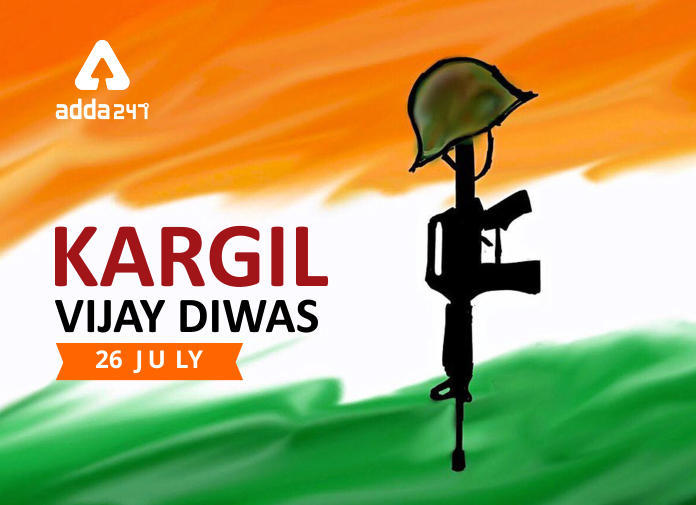
July 26 is celebrated as the Kargil Vijay Diwas to cerebrate the victory of Operation Vijay, the moment which was launched by Indian army to recapture Indian Territories from Pakistani Army and Pakistani militants .Since 1999,This day is celebrated to show respect and gratitude to our brave soldiers who laid down their life to recapture the seized position from Pakistani Army.

The Kargil war was fought in 1999 between India and Pakistan. Kargil war was fought for more than 60 days and ended on 26 July 1999. however Indian prime minister at that time declared operation successful on 14 July. This war started when Pakistani troops silently occupied some Indian posts. However, Pakistani army denied their involvement . But later their Prime minister and other big officials revealed about the involvement of Pakistani forces, that was led by general Ashraf rashid.to give a response Indian army launched operation Vijay to clear the Pakistani Forces and militants.

Atal Bihari Vajpayee was the prime minister of India at that time. This war was not an easy war to be a part of. because this war was in high attitude in mountaineous terrain. Initially Pakistan captured various important Indian posts and India very well responded with recapturing the posts and pushing Pakistani troops back to their country.

To respond back ,India sent 5 infantory divisions, 44 battalions of Paramilitary forces in Kashmir and 73000 Indian troops. and after that deployment of 60 frontline aircrafts was also done. But all these things were not so easy.it was a high altitude region and very few tracks were connected with main roads. and snow was also a factor. Pakistan had occupied those posts keeping these factors in mind. The Pakistani army was trying to take a strong position in Kashmir by doing this. They were divided into many groups of intruders in Kargil. There total strength was considered to be 1000. with heavily armed with guns like AK-47, mortars, artillery and many other weapons.(Source:https://m.jagranjosh.com/general-knowledge/kargil-war-history-1595672853-1)

But soon Indian army detected the intruders occupying , and without wasting much time Indian army operations were planned in may 1999,’ operation Vijay’ was launched by Indian army. Indian army was successful in clearing of Drass sector. and many of those were pushed back to Batalik sector. Indian army with the help of Indian Air force attacked those intruders. Thousands of guns, bombs artillery guns were used which created havoc in kargil. Indian troops destroyed their positions and forced them to leave .till July 1999, Tiger hill was recaptured.In July 7,mashkoh valley was also re-captured. Gradually many were recaptured by our army. Air force also made a huge rule in the kargil war , over 300 aircrafts were used.It was believed that 700 intruders were killed by aircrafts.

The war was concluded on July 26,1999. with Indian army regaining all occupied posts by Pakistani Forces, but India also had to sacrifice a lot in Kargil war. More than 500 soldiers laid down their life in Kargil war, and more than 1300 were injured. Today is 22 nd Anniversary of Kargil Vijay Diwas and today whole nation is remembering soldiers’ Sacrifice for the country.

.
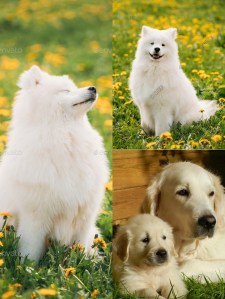
FACTS ABOUT DEAREST DOGS

  1. Their sense of smell is at least 40x better than ours.
  2. Some have such good noses they can sniff out medical problems.
  3. All puppies are born deaf – they are not fully developed at birth.
  4. Dogs have twice as many ear muscles as people and their sense of hearing is more than 10 times more accurate than that of a person.
  5. Dogs mostly sweat only from their footpads and nose.
  6. The world’s oldest dog died at age 29.
  7. Petting dogs can actually reduce your blood pressure.
  8. It is a myth that dogs are color blind. They can actually see in color, just not as vividly as humans. It is similar to our vision at dusk.
  9. A one year old dog is as mature, physically, as a 15-year old human.
  10. Dogs have no sense of “time”.
  11. Every dog on earth likely descended from a species known as the Tomarctus – a creature that roamed the earth over 15 million years ago.
  12. The oldest known dog breed is most likely the Saluki – originally trained by Egyptians to help them track game.
  13. Dogs are pack animals — they don’t enjoy being alone.
  14. Dogs are direct descendants of wolves.
  15. Dogs can see best at dawn and dusk.

WHAT IS A NOVEL

The novel owes its existence to man’s interest in other men and the great panorama of human passion and action. Both the drama and the novel are compounded of the same material but in drama and the literary element is bound up with the elements of stage settings and interpretations through acting. So, Marion Crawford terms the novel as “Pocket theatre”. The novel may be defined as long narrative prose detailing the actions of fictitious people. Meredith calls it a ‘summing of actual life’. The novel combines narration and description, history and philosophy, poetry and fantasy, social criticism, and a particular view of life.

Elements of the Novel:

The novel has various elements.

  1. In the first place, it should have a plot. The novel deals with elements and actions and how these are presented is the plot.
  2. Secondly, the men and women who are involved in these elements and actions appear as characters in the novel.
  3. The third element is the dialogue the mean of interaction among the characters.
  4. The fourth element is the scene and the time of action because the characters must interact, do or suffer at some place or time.
  5. The fifth element is the style in which the narration is done.
  6. The Sixth Element is the view of life presented by the novelist.

The Plot:

The plot in a novel is the organization of incidents. The theme should have substantial value and human interest. It is primarily concerned with the things which make life strenuous, intense, and morally significant.

There are two types of plots – organic and episodic. In the first, the characters and events are well interwoven that no character or incident can be removed from the novel without causing damages to the whole. The plot and Jane Austen novels are examples. The second type of plot is loosely formed and characters and incidents have no essential bearing on each other. The picaresque novels of Fielding and even some of the novels of Dickens have episodic plots. How the various elements in the plot or organized to achieve a definite artistic purpose is called the structure. Unity in structure and plot is to be observed.

The Characterization:

Characterization is the act of presenting the characters alive and real to our imagination. The men and women in the novel must move through it like living beings they should remain in the readers’ memory after the novel is laid aside. There are two types of characterization – the direct or the analytic and the indirect or dramatic. In the analytical method, the novelist portrays his Characters from outside, dissects their passion, thoughts, and feelings, and even passes judgment upon them.

The Dialogue:

Dialogue is well managed, gives vividness, and actually to the plot and the characters. Dialogue reveals the passion and the emotion of the character and advises the movement of the plot. Dialogue should Constitute an organic element in the story. It should be natural, appropriate, and dramatic. It should be in keeping with the personality of the speaker.

The Time and Place of Action:

Time and place of action in a novel refer to the whole setting of the story, both social and material. They are novels of sea life, military life, industrial life of district life, and life of different classes of people. There are novels with a regional background; there are novels written in the historical background. whatever may be the setting, the novelist should master its details and then present a lively picture of it.

The novel is concerned with life and so the novelist’s view of life may be revealed in the novel. A novelist may make creative observations on human life. By the selection and organization of the material, and by the presentation of character and development of the plot, the novelist can show us what he thinks of life. However, the novelist should not indulge in propaganda or preaching. His philosophy is a part of the structure of the novel and should reveal itself through the interpretation of life, thought, character, and temper of the work as a whole.

The chief characteristics of Shakespearean novels

Must read two books by Paulo Coelho-2

Comparing Writing forms of two Indian Writers- Twinkle Khanna and Dr. Shashi Tharoor

Twinkle Khanna has disarmed the audience with her thought- provoking writing and her charming wit. She is a popular newspaper columnist, Indian author, interior designer, film producer and a former Bollywood actress. She writes columns in The Times of India and Daily News Analysis (DNA), her discernible writing skills and her liberal opinions have captured the attention of her readers. Her craft of penning down funny fables and satirical writing has set her apart. She firmly believes that in life nothing is more sacred than laughter.

  • She writes anecdotes about everyday situations that a woman has to go through. The situations are mundane yet significant incidents in life. Her columns are random, though interesting, slice of life entries, adds life to her words through her self-deprecatory humour and unmatched wit with bits and pieces of life- learnings.
  • Her Popular works include – Mrs.Funnybones, Pyjamas are forgiving, The Legend of Laxmi Prasad
  • Her style of writing can be described as discernible, easy to read and has a smooth way of expressing herself through her writings. If a person is not an adamant reader, they will still be able to understand the picture that she is framing through her writings. Her flow of words is effortless.

 She deals with a wide range of topics from focusing on women empowerment, mental health and normalizing finding love at the age of sixty to WhatsApp forwards and her staff members being a menace to her. She masterfully manages to never belittle a problem or the issue and never diminishes their relevance in any way. Through her columns she can give words to your thoughts. Her columns are an amalgamation of intelligence, sarcasm, practicality and adulation.

  • Her choice of words is interesting, mostly uses expressive adjectives which intensifies her anecdotes. Includes – details that are distinctive, uses similes in her work which adds humor in situations and uses satire and irony which conveys absurdity and silliness of people, situations and things.
  • Her tone is joyful, sarcastic and cheerful.
  • Mood – she is comical, humorous and maddening.
Twinkle Khanna is ready with her third book and it is all about 'pyjama  girls' | Lifestyle News,The Indian Express

Dr. Shashi Tharoor is a best-selling author, columnist and a politician. He is currently member of parliament of Thiruvananthapuram. He has also served as a peacemaker and an administrator in the United Nations for over three decades. He certainly did not let his political career stop his pen. He is known to be the man of having many skills. Over the years he has made a reputation of an impactful orator and a prolific writer.

  • His popular work includes- The paradoxical prime minister, An era of darkness: The British Empire in India, Why I am a Hindu
  • He writes about politics and topical issues of caste system, society, democracy, foreign policy, patriotism, citizenship, nationalism and modern India. He chooses an immersive narrative for all his books and columns. His way of writing exhibits the qualities of good research and personal knowledge which gives a different and a new perspective to readers.

Readers who are looking for a refined viewpoint on the current events that unfold in our country’s political system must read his work. His ability to include the application of critical analysis creates better understanding of important matters that the country is facing or has faced.

  • He is known for having an inimitable style of writing. He has an extensive vocabulary and many people cannot perceive his work easily and often call it obscure in a way. His books are not an easy read and takes a time and efforts to understand vast concepts, debates, history and terminologies that he includes in his columns.
  • His choice of words is complex and informative. His work is recognized for brilliancy in the usage of satire to deliver serious messages. In his columns he has shown that a strong and thoughtful argument can be presented in a humorous way to prevent monotonousness, yet he manages to deliver the required message. By inculcating satire in his work, he candidly expresses himself.
  • His tone is firm, serious and formal.
  • Mood – critical and humorous  

The similarities in their work are that both have chosen topics that are relevant in our country. They both have strong stands and a sense of individuality which sets them apart in their felid of work. They are not hesitant to candidly express themselves and explain their point of views to the readers. Both have an interesting way to put across their messages. There writings include a few scathing statements but are thought-provoking and will entice the readers.

Sixth Schedule of the Indian Constitution: Articles 244(2)

• Tribal Areas:- The tribal Areas in the States of Assam, Meghalaya, Tripura, Manipur are separately dealt with in Article 244(2), and provisions for their administration are to be found in the Sixth Schedule of the Indian Constitution.

• Sixth Schedule:- The 6th Schedule is related to the administration of the Tribal Areas in Assam, Meghalaya, Tripura, Manipur are specified in the table appended to the 6th Schedule( paragraph 20) of the Constitution, which has undergone several amendments originally. It consisted of two parts A and B. But since the creation of the State Nagaland, the table (as amended in 1972, 1984, 1988, 2003) includes 10 areas in four parts. These special provisions are provided under Article 244(2) and Article 275(1) of the Constitution.

Part I – (1) The North Cachar Hills District. (2) Karbi Anglong District. (3) Bodoland Territory Areas District.

Part II (I) – (1) Khasi Hills District. (2) Jaintia Hills District. (3) Garo Hills Districts (in Meghalaya)

Part II (A)- Tripura Tribal Areas District.

Part III – (1) The Chakma District. (2) The Mara District. (3) The Lai District

• Administration under Sixth Schedule:-

(1) Executive and Legislative powers- Under the provisions of the 6th Schedule of the Constitution of India, Autonomous District Councils can make laws, rules, and regulations in the areas like land management, water resources, forest management, agricultural, cultivation, formation of village councils, public health, sanitation, village, and town level planning, the appointment of traditional chiefs and headman, inheritance of property, marriage, and divorce, social customs, money-lending, mining and minerals.

• Judicial powers:- Autonomous District Councils have the powers to form courts to hear cases where both the parties are members of Scheduled Tribes and the maximum sentence, is less than 5years in prison. It has the power to settle certain types of civil and criminal cases also. Thus the councils under the 6th Schedule have been given more power than the local government under the 73rd and 74th Amendments of the Constitution 1992.

• Role of the Governor:- The Governor is empowered to determine areas under the administration of the councils. He has the authority to form a new Autonomous District. He can also increase or decrease the areas of any autonomous district, or district council. The act of Parliament or the State Legislature so not apply to Autonomous Districts and Autonomous Regions or apply by specified modifications and exceptions. He is also empowered to unite two or more districts or its part to carve out one autonomous district from it. The Governor can also define the boundaries or alter the name of any autonomous district.

• District Councils and Regional Councils:- Each District Council and Regional Council consists of not more than 30 members of which 4 are nominated by the Governor and the rest via elections. All of them remain in the power for a term of 5years. District Council and Regional Council under the 6th Schedule have the real power for making laws on various legislative subjects.

• Taxation Revenue:-

(1) The Regional Council and Autonomous District Councils have the powers to assess and collect revenue concerning such lands by the principles for the time being followed by the government of the State.

(2) They also have the power to levy/collect all taxes on lands, buildings, and tolls on a person resident within the area.

(3) It also has the power to levy/ collect all or any of the following taxes:

(i) Profession, trades, callings, employments.

(ii) Animals, vehicles, boats

(iii) Entry of goods into a market, and tolls on passengers, goods carried in ferries.

(iv) Maintenance of schools, dispensaries, or roads.

Fifth Schedule of the Indian Constitution: Scheduled Areas Articles-244(1)

Scheduled Areas:- The Fifth Schedule Article-244(1), being a very important provision of the Constitution deals with the control and administration of the Scheduled Areas. The Constitution makes special provisions for the administration of certain areas called Scheduled Areas in the states other than Assam, Meghalaya, Tripura, Manipur despite such areas are situated within a State or Union Territory A- 244(1), probably because of the backwardness of the people of these areas.

Criterion:-

The criteria for declaring any areas as Scheduled Areas under the Fifth Schedule are as follows :

(1) Preponderance of Tribal population in such area.

(2) Compactness and reasonable size of the area.

(3) Viable administration entity such as a district, block, or Taluk, etc.

(4) Economic backwardness of the area as compared to the neighboring areas.

Features of the 5th Schedule-

(1) Declaration of Scheduled Areas- The Constitution empowers the President to declare any areas as Scheduled Areas. He can increase or decrease or even alter the boundaries of a Scheduled Area. He can also cancel such designation after consultation with the Governor of the concerned State or can make fresh orders to redefine any Scheduled Area.

(2) Executive powers of State and Union- Subject to the provisions of this schedule the executive powers of State extend to the Scheduled Areas therein. The executive powers of the Union are limited to giving directions to the State for the administration of such areas.

(3) Tribal Advisory Council- Any state having a Scheduled Area needs to establish a Tribal Advisory Council consisting of not more than 20 members of whom about 3/4 members should be the representative of the Scheduled Tribes in the Legislative Assembly of the State.

(4) Law Applicable to Scheduled Areas– The Governor is empowered to direct that any particular Act of Parliament or the Legislature of the State, does not apply directly to a Scheduled Area and is subject to such exceptions and modifications as he may specify in the notification:

(a) Prohibit the transfer of land by or among members of the Scheduled Tribe in such areas;

(b) Regulate the allotments of land to the members of the Scheduled Tribes in such areas;

(c) Regulate the carrying out of businesses as money lenders by persons who lend money to members of the Scheduled Tribes in such areas.

• States Under Fifth Schedule:-

The Fifth Schedule designates Tribal majority areas in the ten Tribal minority States within peninsular India including:

(1) Andhra Pradesh

(2) Himachal Pradesh

(3) Madhya Pradesh

(4) Odisha

(5) Rajasthan

(6) Jharkhand

(7) Gujarat

(8) Chhattisgarh

(9) Telangana

(10) Maharashtra

Some Important points:-

(1) Tribal Advisory Council(TAC) in Scheduled Areas do not perform administrative actions directly and do not have much autonomy.

(2) Panchayat Extension to Scheduled Areas is applicable here.

(3) PRIs in non-6th Scheduled Areas are liberally funded so direct funding of the Council is done under Article 280 of the Constitution.

(4) The Council in the 5th Schedule is the creation of the State Legislature.

(5) 5th Schedule Areas have an implementation of various schemes like MGNAREGA ( Mahatma Gandhi National Rural Employment Guarantee Act) 2005.

#Thepurestbond : “A father-daughter bond”

Everyone has different relationship with their parents , but the most purest bond that one will find is of a father- daughter . Each one of have witnessed it , dads taking care of their little girls , making their hairs , paint their nails , trying new makeup hacks on their daddy , doing their dad’s makeup , etc. Their is something so sweet & beautiful to watch both of them interact . A father protects her daughter from every things which is bad for her , he tends to make her girl the prettiest & the most perfectionist in the world . It is important for girls to have good relationship with their father , as it impacts their personality , their success , their behavior.

FATHER DAUGHTER BOND IS THE PURREST !

Women who have a good relationship with their fathers are lucky enough to look back at their fond memories when they grow up. Having a good relationship with her father not only shapes a girl’s childhood experience but also influences her behavior towards other men later in life. If a girl’s father is erratic or completely absent by nature, then it creates a feeling of low self-esteem in her, and she might have trouble trusting men in general.

A girl’s father act as a hero for her , this is because he is the first man she is introduced to , he is the first man who holds her , her perception about a man is developed the way her father treats her . This perception is important for a girls’ growth . A girl calls her dad her hero because , he gives a sense of security , he tends to protect her from every thing , dads tends as he would take here girl’s each & every problem .

The father’s connection and communication will help the daughter make the right decisions. A father should provide stability and moral guidance to his daughter because that is the time( teenage ) when she is surrounded and tempted by bad influences. Daughters learn more about relationships by observing their father’s actions and behavior. They judge men based on the standard their father sets. Happy marriages are connected to a warm parent-child relationship. If the parents have marital problems, the girl tends to be insecure, anxious, and aggressive.

Father’s presence not only directs girls in the early stage of life but also assure her that what ever the problem is her father is standing as an iceberg in front of her & will protect her from every problem .

Consumer Rights and Responsibilities

Consumer Rights:

  1. Right to safety:- Means the right to be protected from the marketing of goods and services that endanger life and property. The items and services acquired should not only suit their current requirements, but also their long-term interests. Consumers should insist on the quality of the items as well as the guarantee of the products and services before making a purchase. They should rather choose quality-marked items such as ISI, AGMARK, and so on.
  2. Right to choose:- Means the right to be guaranteed, whenever feasible, of access to a diverse range of products and services at a reasonable price. In the case of monopolies, it entails the right to expect good quality and service at a reasonable price. It also covers the right to fundamental goods and services. This is because the minority’s unfettered ability to choose might imply a rejection of the majority’s fair share. This right is better exercised in a competitive market when a wide range of items are accessible at reasonable costs.
  3. Right to be informed:- Means the customer has the right to be informed about the quality, amount, potency, purity, standard, and price of goods in order to defend themselves from unfair commercial practises. Before making a choice or decision, consumers should insist on receiving all available information about the product or service. This will allow him to behave intelligently and responsibly, as well as avoid falling victim to high-pressure marketing methods.
  4. Right to consumer education:- The right to gain the information and skills necessary to be an educated consumer throughout one’s life. Consumer ignorance, particularly among rural customers, is largely to blame for their exploitation. They should be aware of their rights and should exercise them. Only then can successful consumer protection be achieved.
  5. Right to be heard:- This means that the interests of consumers will be taken into account in relevant forums. It also involves the right to be represented in different forums established to examine the welfare of consumers. Consumers should create non-political and non-commercial consumer groups that may be represented in various consumer committees formed by the government and other entities.
  6. Right to Seek redressal:- Means the right to seek remedy for unjust trade practises or unethical consumer exploitation. It also includes the consumer’s right to a fair resolution of legitimate issues. Consumers must file a complaint if they have legitimate issues. Many times, their complaint may be of minor importance, but its influence on society as a whole may be significant. They can also seek resolution of their concerns via consumer organisations.
  7. Consumer Protection Act:- An Act to provide for the protection of consumers’ interests and, for that purpose, to create agencies for the prompt and effective administration and resolution of consumer disputes, as well as for matters associated therewith.” (From the Consumer Protection Act of 2019.) “An Act to provide for greater consumer protection and to make provision for the formation of consumer councils and other agencies for the resolution of consumer disputes and for issues connected therewith.”(From the Consumer Protection Act of 1986.) The Consumer Protection Act of 1986 aims to promote and defend customers’ interests against inadequacies and faults in goods or services. It also aims to protect consumers’ rights against unfair or restrictive trade practises. This act was passed in the Lok Sabha on December 9, 1986, and the Rajya Sabha on December 10, 1986, and it was signed by the President of India on December 24, 1986, and it was published in the Gazette of India on December 26, 1986.

Consumer Responsibilities:

  1. Ask Yourself!:-
  • Have you had any issues as a consumer?
  • Have you ever complained about an issue like this?
  • Do you aware that you may seek the help of a consumer organization to safeguard your interests?

2. Be Critically Aware:- The responsibility to be more alert and to question more – about prices, about quantity and quality of goods bought and services used.

3. Be Involved:- The obligation to be forceful – to guarantee that you, as a customer, get a fair bargain. Remember that if you remain passive, you will most likely be exploited.

4. Be Organized:- The duty to join hands and raise one’s voice as a customer; to fight as a group and to build the power and influence necessary to promote and safeguard consumer interests.

5. Practice Sustainable Consumption:- The responsibility to be aware of the impact of your consumption on other citizens, especially the disadvantaged or powerless groups; and to consume based on needs – not wants.

6. Be Responsible to the Environment:- The obligation to be aware of and comprehend the environmental repercussions of our consumption. We must acknowledge our personal and social duty to conserve natural resources and maintain the environment for future generations.

“SHOULD OTT BE REGULATED ?”

Regulation of OTTS is a matter of great concern for government.

OTT platforms have grown rapidly in India, especially during the coronavirus-induced lockdown period, when the closure of film theatres led several production houses to release their films directly on OTT platforms. And this allows them to conveniently bypass even the basic scrutiny of a film regulatory authority. Many also believe that OTT platforms often perpetuate sexual crimes and soft porn, amplify bloodshed and gore which can potentially inflame passions, especially in young minds. Unregulated content can be damaging especially for a country like ours where communal tensions are not uncommon. Content on OTTs are age restricted , since their is no censor board for such & everyone can watch it , the content is influencing young minds in wrong way , which is why they need to be regulated.

Regulated OTT content could also imply missed opportunities for filmmakers and actors who are lured to the medium for the creative freedom it offers. This is the only drawback of regulation of OTTs . Filmmakers comes to this platform because this platform offers freedom of creativity , they can make whatever they want to , yes it is true that they make what is real , but this reality often brings problems among young minds because these minds are not able to take the message behind the content but grasp the things which are not meant for them .

In my view, self-regulation is highly preferred to strict censorship as the latter will curtail the creative freedom of OTT video platforms. If OTT platforms self-regulate and take adequate measures to ensure prohibited content is not watched by children and carry content descriptors, among other safeguards, they would emerge as the best platforms for content watchers

Broadcasters Association (NBA) regulates news channels, and the Central Board of Film Certification (CBFC) regulates film content. There is no such regulatory authority operating to scrutinize digital media content. So unregulated content that is now widely accessible owing to cheap data connections and the proliferation of smartphones has become a cause of concern. So there must be a regulatory body for OTTs , so that without violating the rules & guidelines & without showing content which is not good , they can give content which is meant for all & loved by all

A Reliable Learning Via Robotics and machines….

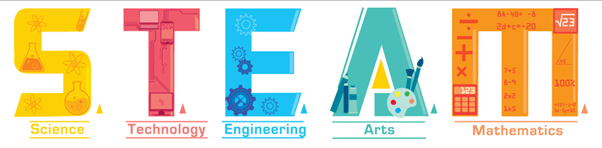
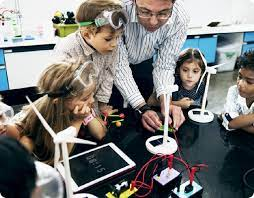
                                    IMPORTANCE OF STEM EDUCATION FOR AN ENHANCED LEARNING

  • Definition Of Stem

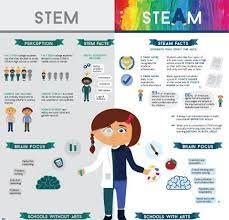
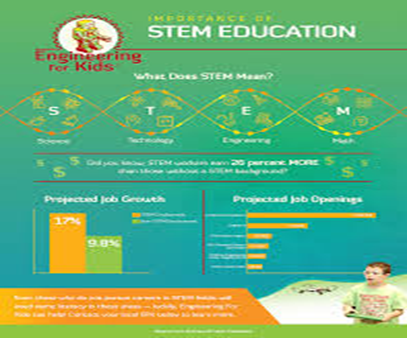
STEM is an artificial intelligence related to Science, Technology, Engineering and mathematics but it is a vast concept of more than these. It integrates and builds an advanced system of education taking into account every individual’s attention. STEM kind of learning needs to be paid attention as it has an improved technology with enclosing subjects that teaches moral values and discipline in inter-relating one another.

The main motive is to build advanced geniuses in the teenage able to tackle subject and real-time oriented issues. This tech unites with pupils making them to be well-versed and multi-talented in all occasions.

  • Benefits of STEM related education

This kind of learning is focused on building higher order of thinking among students by connecting them a classroom experience to the modern world. A future model is built under campuses for upgrading their problem-solving ability, thinking skill, communication skills and creativity to sort out various critical circumstances in reality.

Generally, focuses on practical experience with real-time applications that gradually builds the skills ability level and shaping them to utilize a sense od outstanding creativity in a competitive world of 21st century.

The students brought up from this kind of teaching can tackle the reality as well as social media/virtual world simultaneously with their brilliance and social skills that comprises of curiosity, social skills, leadership, management and acceptance of up and downs in life.

In a specific period of life people will undergo circumstances where they become puzzled to take decision as choices will cause effects on their career which has to be made wisely. At that stage without realizing they randomly choose a false decision making them fall in a pit, which will be realized on later times by the same individual after which nothing can be undone.

This system basically concentrates on those kinds of cases so the growing kids can be exclusively intelligence while handling such experiences. This AI creates a similar kind illusion to make them think and decide their choices accordingly so they can adopt to changes or select a decision more preciously.

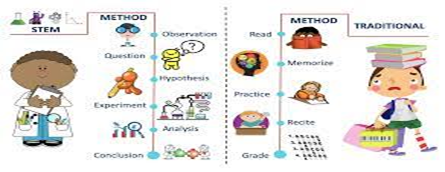
  • Differences from normal learning and AI integrated learning

In a standard learning taught by faculties they can give you their knowledge ask them to explore it on your way but mostly pupils memorize concepts that will be totally vanished in this type of system where a machine will broaden every word and concept of subject and explaining the facts deeper by triggering your anxiety to grasp the entire knowledge.

They also become as Book-worms instead of knowing the working behind every concept thus it becomes like mugging/memorizing and vomiting/producing in exam papers just for marks rather than knowledge or skill developed education.

STEM education is the path of future learning making upcoming generation as innovative ones.

These AI models create crucial real-time happenings thus testing their initial level of thinking and providing solutions to the same. By doing this they actually promote their working of brain at a younger age which we call as maturity and experience at small ages.

It is also a known to contribute steps towards economic growth by this deep level thinking knowledge (innovation) which is unique in every kid. That is why each one is special but as they discover their innovative skill it becomes too late for individuals so by enhancing them to bring up their key skills so they are ready to face out life and unavoidable circumstances.

  • Ways to spread an idea to enlarge the importance about it to the Society

There are various ways through which you can advertise and spread the initiative taken by you. The only thing you require is an account in media platforms that will enroll your ads in various random posts that people may be searching for.

 The only purpose of using social media is because the reach is tremendous while compared manually or just by recommendations. You need to focus on how you can market them by discussing their features and how it helps in the improvement of a teenager.

By adding relevant pictures or short clips of the same, people can get to know about the functionalities and capabilities of the system and the working.

Awareness can also be made and posters shall be published to keep a track of viewers and connect with them mutually to improve a knowledge of better learning among several institutions in exploring the skills of a teenager in their adolescent ages that support them vitally.

The base of any product to be recognized is how you explain and elaborate the advantages and benefits that grasps attention to every single student in a whole crowd or in a classroom.

If you are self-motivated to prove and provide minute specifications for the useful machine integrated model (AI/STEM education) it can be an added information for users so they support and promote in various different ways.

  • Social Media Channels

The enlarged platform of these trending applications has several unique features under each portal those are different from one another. From audience till owners of some companies have adopted to this virtual world that helps growing merchants to develop and stand tall of their product.

The only difficulty is not all the things are encouraged in these sites, if you want a product to be wide-spread then its uniqueness and features must grab the reader/visitor’s attention in such a way so they start marketing your brand as an affiliate or recommend your goods in some required places.

 You as a producer can share things that will be helpful for any individual before trying it out. Social platforms like helps you to enrich with the fruitfulness of customers especially YouTube. There are millions of people from various continents utilizing this open platform for various entertainment.

From this article you can get to know some ideas and the importance of the STEM education as an effective way of building up the mental thinking ability by teaching them in a provoking way that enhances of building an IQ that is an advanced level for teenagers to think in a multi-tasking way.

Constitutional provisions in education system

Constitutional provision in education

Introduction

India got independence on 15 august 1947 at midnight. There was an urgent need for a constitution to lead the nation. Dr. Rajendra parsad was elected as the president of the constitutional committee. Dr. B. R . Ambedkar was the head of the drafting committee. Our constitution was enacted on 26 november 1949 and enforced on 26 January 1950. It took 2 years 11 month and 18 day to make our constitution. Our constitution has 6 fundamental rights and 20 directive principles in itself.  There were 365 articles and 6 seven fundamental rights initially. 

Our constitution has a preamble. It contains the summary of our whole constitution. 

Constitutional provision: The constitution provision is important for the recognition of access to information as a fundamental right. 

There are many constitutional provisions in the constitution which promote education in India. These constitutional provisions act as security for the people about the access of the rights related to education. There are mainly 11 constitutional provisions.  These articles are 45, 21A, 15(1) (3), 46, 25, 28 (1) (2) (3), 29, 30, 350-A, 351, 239 and  51(A). 

The constitution of India provides free and compulsory education till the age of 14. The 86th amendment of the constitution created the right to education. There would be no discrimintation on the basis of gender (article 15 (1). The constitution also promotes the education for women of weaker sections (46).  Article  21, 28 , 29 and 30 promotes religious education too. Article 51 states that minorities have the right to education. Noone will be discriminated against on the basis of religion, caste , gender or birth place. Article 350-A states that instruction would be in the mother tongue at primary stage. Article 351 promoted Hindi for its development and propagation. 

The government of India provided many provisions to frame a strong structure for the school environment. The aim of these provisions are holistic development of the people of India. The government of India wants to provide inclusive education to all. Many administrations were made for the development and watch out on the education system.  Education is also included in the concurrent list. 

There is a separate ministry for education at centre as well as state level.. The ministry works over the education structure, setting goals and achieving the aims by planning organisation and direction. The ministry of education at centre level directs, controls, and plans for the ministry at state level. The state level ministry works with the guidelines provided by the central government.

The central government also controls the action of private institutions.  The central government shares their funds on education with the state government. There are many pilot projects such as rural education, regional institutions for education and sarva shiksha abhiyan. 

There are three lists in the constitution which are divided as the concurrent, union and states list. The list consists of subjects. Every list has some entity about education. 

The whole constitution promotes education at every level. The preambles, articles and lists promote education at states and union territories level. 

” HOW I LEARNT KINDNESS ” based on true incident .

It was a rainy day . The monsoon was on its peak , I was getting ready for my school as it was my economics exam . I need to reach at my school campus at 10:00 O’clock & my school was 3 km away. At 9:45 , I asked my father to drive me to my school as fast as he could . My father took his bike & asked me to come fast . I took my umbrella , we were just crossing our flooded streets , my father stopped hi bike , & asked me to see a girl . I saw that girl , she was from my school only . Dad said she was waiting for rikshaw & every one listening to me right now can imagine how difficult is to get rickshaws in rainy season. I was getting angry because I was getting late for my exam as i can’t afford to leave my exam . I asked him to leave that place. He said , if you are so much concerned about your exam she would also be . He stopped his bike in front of her , asked her to come with us . She got scared . I could feel what what she was feeling . Everybody’s parents aske them the same thing ” DON’T TALK TO STRANGERS”. I looked at her face , I was angry , but could feel that she want some assurance , I asked her to come with us , she hesitated , I said politely ” come ! we are from same school & your security is in my hand “. she smiled . she sat with me, I put my umbrella on her head .

i reached at my school gate at 10:10 , i came off from the bike , so did she . She ran towards the school gate as it was about to close. While she was running , she turned towards us & said ” Thankyou uncle , thankyou Didi ” . On that day I learnt kindness from my dad . Smile on her face can clearly tells us how grateful she was to us or she would have left her exam . If I would be at my dad’s place. I would never stop my bike as it was raining heavily & her daughter is continuously shouting on him to drive fast . But he did , I learnt a lesson that in this world which is full of people who care for themselves , we should be the one who care for others , we should be the one who care for others , we should be the one who have to look & sense others problem . I learnt that people are always concerned about their own problems like me , I was concerned about my exam only , but their are people who are looking at others & their are people who are concerned about others . We should devote few hours of our day to look for others problem , this is what I learnt on that day .

WHAT MAY BE THE REASONS BEHIND INCREASING NUMBER OF DIVORCES ?

The society went through number of shifts in attitude and behavior over the past 80 years and with all these shifts and transitions, the definitions, meanings, lifestyle etc. of people and the life events have also changes. There is change in the beliefs of the people and the meaning of marriage is also redefined and beliefs relating to marriage have also changed significantly. Marriage requires lifelong commitment and is dependent on an individuals fulfillment and satisfaction. With all these shifting’s, the stigma related with divorce has also been eliminated.

With the help of qualitative and quantitative studies it had been seen that there are number of reasons for divorce and some of the major reasons for divorce are lack of commitment, infidelity, and conflict/ arguing. And the most common final straw is domestic violence, infidelity and substance use. In recent decades, there is an increase in number of divorces. The increasing number of divorce is related to various social aspects.

  1. LACK OF PROPER COMMUNICATIONS : Communication is very important when we’re interacting with someone and bad communication can have many impacts on a marriage. It is important to clarify each other’s meanings and concerns, otherwise, it will lead into suspicion, mistrust and arguments and many times it can affect the marriage severely. Arguments in any relationship is not a bad thing and can have healthy results but they can have bad impacts due to lack of communication.
  2. LACK OF COMMITMENT : According to various studies, the major reason behind divorces is the lack of commitment. The commitment gradually erodes until there was not enough commitment for sustaining the relationship and also due to negative events such as infidelity.
  3. ABUSE : When there is abuse in a marriage or in a family then divorce is the best ending and result possible. In some cases it is the husband. While there are some spouses who are able to end and overcome abuse and sometimes with the help of involvement of in laws and elders, the issues can be solved. But everything depends on the attitude and mindset of the person in relationship.
  4. INFIDELITY : Infidelity is considered as a critical turning point in a destroying a relationship and majority of couples end their relationship if they are cheated and due to infidelity. In some cases it is also seen that couples overcome this challenge and find strength to stay together.
  5. ADDICTIONS : Addictions can be in many forms. It can be in the form of alcohol, gambling etc. In many cases it was found that the addicted partner can recover from it and the marriage can be continued but if there is no change and recovery from addictions then it is best for the spouse and children to separate and see if progress is possible. Depending on the circumstance, it can be decided what to do and when to do.
  6. WOMEN’S INDEPENDENCE : Women have become more independent over these years and they are no more dependent on anyone and are no more mere housewives. Women have now become financially, socially, physically and mentally independent and this affects the old aged mentality of many people who believed that women have only one function to play that is nurturing the family. Besides so much advancements, there are many people who have still been hesitant to see women’s progress. And there men who cannot see the progress of women. There are ego clashes which cause dissatisfaction in marriage and lead to divorce.

Evolution of ‘Tragedy’ in English Drama

Tragedy as known in Dramas is one of the earliest forms of Drama that you can trace back in the history of Drama. With the passage of time ‘Tragedy’ continued to be redefined in history by many famous philosophers as well as playwrights. Both leading us to the present day contemporary Drama which portrays Tragedy in a whole different aspect as compared to the past.

The beginning of Tragic Drama first took place in Greek culture. The well-known stories and myths were the main sources of inspiration for the Tragic plays. The features of the Greek Tragic Drama were as followed. The play involved few actors who themselves played several characters on-stage. There was a norm that tragedy and comedy were never supposed to be mixed. The play strictly followed the three unities in drama known as the unity of place, unity of action and unity of time.

I will now talk about the description of Tragedy in Drama as approached by the early philosophers as well as modern day playwrights. Thus, proving the variations and evolution that took place in the Tragic category of Drama.

As first defined by the great Greek Philosopher Aristotle, a Tragic Drama was a good Tragic Drama if it followed the certain rules as laid out by the Philosopher. The first rule describing the characters of the Drama. According to Aristotle the character had to be good but not too good. This was because the main purpose of the ‘Tragedy’ play was to evoke feelings of pity and sympathy and not any other. This purging of emotions was what he called Catharsis. He also talked about presence of Hamartia in the lead character, which refers to the presence of flaws that later paved way to the tragic aspect of Drama known as the downfall of the protagonist. Aristotle also believed that apart from all this, the action of the play itself had to be proper and of high magnitude.

Geoffrey Chaucer, one of the great poets and writers of the middle English times, gave us why the subjects of tragedy were of ‘High Society’. He explained that the idea of tragedy was to show falseness of human power and wealth. Unlike Aristotle he believed that humble and meekness were the feelings that had to be purged out through tragic plays.

G.W. Hegel a modern philosopher stressed that ‘Tragedy’ in English Dramas had to have a moral conflict. A conflict between two rights.

The present day modern dramas are highly influenced with the ideas of William Shakespeare about Tragedy in Dramas. William Shakespeare was one of the first playwrights to break away from the restrictions about Tragedy as described by the Greeks, the early philosophers and the playwrights. Though he still followed Aristotle’s concepts of tragedy to some extent but he did not completely follow all of his ideas with regard to Tragedy.

The modern-day Dramas today revolve not just around people of high society but also around the stories of ordinary people, leading to a more realistic feeling in Tragedy. It also breaks away the norm of Tragedy not being mixed up with others genres of Drama. Thus, providing the audience with a combination of genres and a great source of entertainment and learning through Dramas.

How Much Does India Invest In Olympic Athletes?

Postponed by a year due to the pandemic, the Tokyo Olympics is now less than a month away. Last week, the Union Sports Minister Kiren Rijiju urged the people to extend their support to India’s Olympic-bound athletes, the same way they back India’s cricketers. However, India’s abysmal performances at the Olympics is in striking contrast to India’s immense success at cricket. The model of sports governance and financial irregularities are often blamed for the lack of competitive edge in sports other than cricket. So, the most obvious question that comes to our mind is, how much does India invest in the Olympics?

Money allocated for Sports

In the 2020-21 annual budget, the Government of India allocated Rs 2826.92 crore for sports, which meant an increase of mere ₹ 50 crore from the revised estimates of the financial year 2019-20. The Modi government’s flagship sports programme ‘Khelo India’ received a substantial hike of ₹ 312.42 crore and was allocated ₹ 890.42 crore compared to ₹578 crore in 2019-20. On the other hand, the National Sports Development Fund saw a reduction of ₹ 27.15 crore from ₹77.15 crore in 2019-20 to ₹ 50 crore in 2020-21. National Sports Federations saw the highest decrease after Finance Minister allocated ₹ 245 crore, ₹ 55 crore less than the previous financial year, according to The Wire. Even the budget for meritorious sportspersons saw a 40% reduction from the last financial year. It is important to note that the 2020-21 annual budget was presented in January 2020, when the government had no idea of the coming pandemic. It was also supposed to be the year of the Tokyo Olympics.

Target Olympic Podium Scheme

While these are the broad schemes under which Indian sportspersons are funded, the Target Olympic Podium Scheme (TOPS) provides financial assistance to potential Olympic medal winners. Launched in 2014, TOPS is the flagship programme of the Sports Ministry of India. The top-up funding scheme considers the performance of Indian athletes in the past three years. They are provided with personal coaches and other staff fees, cost of travel during competitions, purchase of equipment, and pocket allowance.

Looking Back At The Last Olympics

In the 2016 Rio Olympic, India spent ₹ 36.85 crore under TOPS, as per Financial Express. Nearly half of that amount was spent on shooting, which was India’s most successful Olympic sport in the previous three games. Shooting is also very expensive, which requires importing equipment from other countries. But shooting failed to bring any medal. Athletics received the second-highest funding of ₹ 7.80 crore in 2016, but India failed to make a mark in the sport. Unfortunately, out of the ₹ 36.85 crore, ₹30.49 crore had gone to disciplines that fell short of goals. Only 1.66 per cent of the total TOPS fund went to the fields that brought India two medals – PV Sindhu in Badminton and Sakshi Malik in wrestling.

Comparison With Other Countries

The United Kingdom allocated close to Rs 9000 crore on sports infrastructure and training in the annual sports budget, whereas India spent only one-third of the UK, Rs 3,200 crore, on youth affairs and sports, before 2016. The UK won 67 medals against India’s two at the Rio Games 2016. Abhinav Bindra had also tweeted back in 2016 that a medal cost UK 5.5 million pounds, and that is the kind of investment India needs to make. Otherwise, we cannot expect much. In the USA, a large number of athletes are privately funded. Individual athletes had started their own funding portal for donations from the general public. Therefore, only 10% of the US Olympic Committee’s finance was spent on athletes in Rio 2016, and the USA finished first. China, on the other hand, is known for its aggressive state-sponsored promotion of sports.

Private Investment In India

Before the 2016 Olympics, Indian Olympic Association (IOA) received donations from Reliance Jio, Amul, Tata Salt, Edelweiss Financial Services, Herbalife, Li Ning, and SBJ. Sakshi Malik had also thanked JSW Sport, a foundation funded by the OP Jindal group, after becoming India’s first medal winner in Rio Games, as reported by Hindustan Times.

However, unlike NSDF, where the contributions and sponsorships are open and documented, private funding to individual athletes is not. And most recently, the JSW Group has come on board to be the official sponsor of Team India in the Tokyo Olympics and has agreed to pledge sponsorship support of ₹ 1 crore to IOA. In 2018, the Sports Ministry earmarked ₹ 100 crore for funding of the athletes for the preparation of Tokyo Olympics 2020, which will take place this year. While the number of medals won cannot be equated to the investments made, since medals are not the only measure of success, India nonetheless needs to invest more and put in a new model of sports governance in action. A