The Land Of Wonders

Goa Photos | Goa Images | Goa Pictures | Times of India Travel

Imagine you are sitting in college attending your classes or sitting at work doing constant work, and you are so tired that you realize you need a critical, much-required break. During this chilly and cold December, people need hot and humid weather, with beautiful sea waves and relaxed sitting down on the sand with fresh tender coconut. A good journey around different spots of a place relaxes a person and gives them new information and insights into areas. 

One of the best places to learn about new cultures, cuisines, lifestyles, traditions, and history is one of the most famous states, Goa. Goa state is very famous for its beaches and fantastic nightlife. However, what people do not know is that the beauty of Goa does not just limit to the sand and the sea but goes way beyond that. This article tries to cover those famous and uncommon parts of Goa that people need to visit not just with family or friends but deserves a chance of solo trip as well. 

Have to visit places in Goa for everyone: 

Mollem National Park and Bhagwan Mahavir Wildlife Sanctuary: Situated near the town of Mollem 57 kilometers East of Panji, in South Goa, is a must-visit place for all nature lovers and animals’ lovers. An alluring scenic area has everything for all age groups. This place captures everyone’s attention with the unique wildlife with a combination of beautiful temples and breathtaking waterfalls. 

Galgibaga Beach: Goa is known for all its beaches, so it is evident that everyone wants to visit the beaches. The place is crowded and filled with so many things. If you are looking for a calm, quiet beach and want to feel the beauty of silence, you should visit Galgibaga Beach. It is known to be the cleanest beach in Goa. This beach is also very famous for the Olive Ridley Turtle, and this beach is their nesting and hatching place. It is a rare and must-visit place for all. 

Savoi Plantation: Goa manages to give you the best place for an elegant experience in North Goa for all those who love nature and gardening. This plantation is situated in North Goa and usually is outside the tourist circle. It is famous for growing beautiful plants and growing them without any pesticides or fertilizers. 

Arvalem Waterfall: If you are a history lover and nature lover, then this is a must-visit place for you. Known for its beautiful waterfalls and astonishing beauty, the Arvalem Waterfall is also said to be the place for a hideout for the Pandavs during their exile. It is situated nine kilometers away from Bicholem and is well known for the prehistoric life of modern and urban Goa.

Butterfly Beach: This dream-come actual beach is situated in South Goa, and if you are planning an out-of-the-world experience, then this is the place. It is a tiny semicircular bay and slowly gaining the attention of everyone with its ethereal specialty. This beach not only has thousands of beautiful butterflies dancing and hovering in the sky but rare and outstanding aquatic life whose beauty and magnificence can be experienced with all your heart. Known as a go-to place for all couples, this beach can also be visited by families, friends, colleagues, etc. 

Goa beach Images, Stock Photos & Vectors | Shutterstock

Cumbarjua Backwater Canal: This is a must-go place for all the adventure seekers out there who want to know Goa beyond beaches. It is filled with mangroves and marsh, and therefore it is a treat for all nature lovers; if you are a fan of crocodiles, then this is the place because you will spot magnificent crocodiles sunbathing and relaxing in calm waters. It is not just limited to just that the small village of Cumbarjua has so much heritage and tradition to offer for all the enthusiastic tourists out there. 

The Bubbling Lake of Netravali: If you want a calm, serene place of a free fish spa for your legs, then this is a must-visit place for everyone. This lake is still unknown to all the bustling tourists, and this lake is a scientific wonder to visit. The phenomena of this muddy pond have the presence of methane, which makes the bubble come to the surface. It is an exciting place for small children and kids. 

Sinquerim Fort: Situated in the suburb district of North Goa, this place combines history and modernity with something for everyone. The fort provides an excellent experience for history lovers and all the photographers out there with beautiful sunsets to capture and be mesmerized by it. This historic place also offers outdoor activities such as volleyball; sea diving etc. is a treat to everyone. 

Betul Beach: This has to be on the itinerary of plans for all the seafood lovers out there. This quaint typical fishing village in South Goa has a 17th Century fort that is a must-visit and a small lagoon with small shacks with mouth-watering seafood. Those who love ferry riders can visit this place and enjoy its beauty. 

Cola Beach: The definition of India’s united cultural diversity can be seen in this place. Nobody can resist what this beach offers. It has coconut groves, Rajasthani-styled tents, and away from the crowded home with fancy beach huts and a small lagoon. This is a relaxing place for all the introverts and extroverts out there. 

There are many more places that I have not been able to mention here that are not so popular however, one can check them online and make sure that they do visit these places and experience the real essence of the state.

To conclude, Goa is not just a place for foreign tourists out there exploring the beauty of India but also for all the Indians out there who want to have a lifetime of cherished memories and experiences. The pandemic has caused a lot of distress and has kept us confined to the four walls of our house for a long time now. It is time to gear up, plan, and explore the fantastic world, but importantly, our own beautiful country with so much to offer to people in the country and outside. 

References

  1. Google searches images
Exercise

For example, a light jog or walk after a run, or light stretching after strength training can also help prevent pain and injury. Exercise can also help the body stay flexible, which means muscles and joints can easily stretch and bend. You may also feel better about your appearance and yourself when you exercise regularly, which increases your self-confidence and boosts your self-esteem. The right amount of exercise can boost your energy levels and even help improve your mood.

To reap the benefits of exercise, simply become more active during the day—take the stairs instead of the elevator, or spice up your housework. Regular exercise is the best thing you can do for your health. It has many benefits, including improved overall health and fitness, and reduced risk of many chronic diseases.

It is performed for a variety of reasons to promote growth and strength, prevent aging, develop muscles and cardiovascular health, hone athletic skills, lose or maintain weight, improve health [2], and even for fun. Exercise can improve health and well-being, as well as strengthen community bonds and appreciate the beauty of nature. Exercise is important for maintaining fitness and can help maintain a healthy weight, regulate the digestive system, build and maintain healthy bone density, muscle strength, and joint mobility, promote physiological well-being, reduce surgical risks, and boost the immune system.

Exercise helps people lose weight and reduce the risk of certain diseases. Doctors know that regular exercise benefits most people, even people with disabilities or health problems like asthma.

If you have health or other concerns (such as being overweight or in poor shape), talk to your doctor before starting an exercise program. Be sure to check with your doctor before starting a new exercise program, especially if you’re worried about your fitness, haven’t exercised in a while, or have chronic health problems like heart disease, diabetes, or arthritis. For more information on the types of exercises you should include and how hard you should train, read The Best Exercises for Health and Weight Loss.

Make sure the type and intensity of your activity is appropriate for your fitness level. Strength training for all major muscle groups at least twice a week. Drills may also include training focused on accuracy, agility, strength, and speed. These include cycling, running, swimming, dancing, roller skating, tennis, cross country skiing, hiking and brisk walking.

Exercise, such as jumping, running, or brisk walking, can help keep your bones strong. Exercise can help prevent excess weight or help maintain weight loss. Exercise and physical activity are great ways to feel better, improve your health, and have fun. Just 10 minutes of cardio can go a long way in improving your sleep quality, especially if you do it regularly.

Exercise can also help stabilize the mood and relax the mind, “an important cognitive process in the natural transition to sleep,” says Gamaldo. But for some people, exercising too late during the day can interfere with their nighttime rest. However, we do know that moderate aerobic exercise increases the duration of non-REM sleep.

Despite these biological responses to exercise, other people find that the time of day they exercise doesn’t matter. Also, while a lot of the research is focused on aerobic activity and sleep, Gamaldo says choosing the exercises you enjoy will help you maintain them. It seems that your mood can improve with exercise, regardless of the intensity of the physical activity. We found that exercise substantially improved health outcomes largely independent of weight loss.

The health benefits of regular exercise and physical activity cannot be ignored. You don’t have to spend hours at the gym or engage in monotonous or painful activities you hate to experience the physical and emotional benefits of exercise. For most people, moderate-intensity exercise is enough to improve overall health. It’s best to start with simple exercise goals that you know you can achieve.

If you’re not the type to stick to a structured exercise program, try to see physical activity as a lifestyle choice instead of crossing it off your to-do list. Think about your favorite activities and how to incorporate them into your exercise program. Read health and fitness magazines or visit exercise websites and get inspired by photos of active people.

Even small things can count as exercise when you’re starting out, like taking a short bike ride, walking the dog, or raking leaves. Seasonal activities such as skiing or skating in the winter and hiking, swimming, or biking in the summer can create pleasant family memories and provide healthy exercise. Exercise is any physical activity that improves or maintains physical fitness, overall health, and well-being.

It can also help them become more aware of their mental state and practice distraction from their fears (1). While exercise can help people lose weight and maintain weight loss, fitness experts say people may overestimate the number of calories they burn during exercise, or they may simply not be doing enough to shift the scales. Too often, “it’s all about focusing on my own weight and thinking that, you know, if I don’t lose weight, the exercises didn’t work for me, and a lot of them use that as a reason to stop,” she said. .

Research has shown that people like McCollum, who are overweight but exercise regularly, can still reap many health benefits, Geser said. According to data published in January 2018 in the Journal of the American Geriatrics Association, research shows that even in adults at high risk of Alzheimer’s disease, physical activity, especially aerobic exercise, can help improve cognition Features. Exercise helps fight this inflammation and reduces the risk of various diseases.

Eliminating lactate from the circulation makes it easy to lower body temperature, which can also benefit the immune system since a person can be prone to mild illness if their body temperature drops too quickly after exercise. Balance exercises make it easier to walk on uneven surfaces and help prevent falls. He or she can start a program that suits you and your fitness level.

As president of the American College of Sports Medicine from 2007 to 2008, he launched the “Exercise is Medicine” movement, which encouraged physicians to educate and even “prescribe” patients about physical activity. He co-authored a paper published in iScience in October that looked at multiple studies and compared weight loss to exercise to prolong life and improve people’s overall health. During a visit to Bakersfield Fitness, Newsom emphasized the importance of exercise for physical and mental health to escape the stress of the pandemic and return to socializing. McCollum has been exercising her whole life, and she didn’t find an exercise that would help shed excess pounds.

9 Reasons To Learn Content Writing.

Knowing SEO as a writer is a key component of making sure your content is easy to find. As with any business, it’s important to make content writing an ongoing part of your marketing strategy. Do your best to create high-quality unique content – keep your articles engaging and grammatically correct. Providing readers with relevant and authentic content is the best way to maintain author credibility.

At the same time, creating high-quality content is critical to any marketing strategy. You need to make sure your content reaches the right audience, and outsourcing content writing can help you improve your overall content strategy. Of course, you need to know what to write and how to make it resonate with your readers. In today’s marketing environment, you also need to make it attractive to search engines.

Sharpen your writing skills as well as take advantage of SEO tools to help you maximize your content creation efforts. Writing great content is never easy, but it gets a lot easier when you write something you’re passionate about. Content that is very easy to read and easy to share is the key to great content. For more information on writing great content, visit the Copyblogger blog.

If you don’t spend enough time writing thoughtful content when you share your posts, it’s time to get started. Regardless of how you come up with ideas for your blog posts, it’s important to have a blog and use it.

Maintaining an active presence on some social platforms will not only improve your chances of getting certain writing assignments, but it will also generate valuable leads. Customers are always looking to increase reach, so if you can offer to share content with your network; they will have an additional incentive to hire you.

Also, content writing can help you save a lot of money that you would otherwise have to pay someone else to get articles for your blog or website. If you know how to write great content, you can work full-time, part-time, or even as a freelance writer. You can grab attention and become a recognized industry leader by providing useful content without wasting time and money appearing in local publications or advertisements.

Creating great content that really resonates with your target audience requires you to understand what’s going on in your industry. In fact, you can gain an edge over other bloggers and sites by finding trend research and writing content that is relevant to your readers or your niche. Take the time to continually develop these skills, and you’ll find that you can create content that readers can easily find, read, and want. Also, freelancers don’t just study the art of writing.

However, by learning how to write content and having a blog or website, you will become richer. But if you know how to write content, you can make a lot of money understanding just a few basic details or knowing nothing at all about digital marketing. In this article, we list nine skills that content writers should have, suggest steps to improve your content writing skills, and learn how to incorporate content writing skills into your job search.

Learn how to combine your employers’ content recommendations with your creativity and you’ll be a much more valuable content creator in the long run. Promoting useful content on your website and social media will improve your online presence, which means more visibility for the company. If you write original content, search engines will help your site get more attention. The right content will attract visitors to your site and increase conversions.

Remember, writing content for your website must satisfy customers at different stages of the buying journey, so you must have content that appeals to customers at all levels. One thing that makes customer newsletters and emails different from other types of content writing is that often your audience for this content is people who are already customers and family members or who are loyal to your brand. Content writing helps small businesses as it enables them to connect with their target audience on social media platforms like LinkedIn, Twitter, and Facebook. Content creation benefits small businesses by giving them the opportunity to learn more about their industry and improve their services.

Small business owners who don’t create new content neglect to improve their business the way it should be. Content creation is an invaluable way for small business owners to establish credibility and showcase their know-how in what they do. In addition, high-quality content written by professionals has a high probability of engaging the audience and making new contacts.

Depending on your location, you may be able to work from home or your favorite coffee shop, decide what topics to write about, and see your work get published and bring real value. It’s definitely not all glorious, and you have to be willing to dedicate hours, develop your writing skills, and work with a wide range of clients to earn a full-time living in the gig economy.

But there are many benefits to freelance writing too, and we asked some of our top content creators to talk about them. Everyone had something interesting to say about the benefits of freelance work, saying many times that it’s hard to pick just one benefit to share. Here’s how some of our top content producers are taking advantage of freelance writing to live the rest of their lives to the fullest. A career as a writer seems exciting to those outside of the inner circle of content, but experienced freelance writers know what work to do for a living.

But once you start writing like a professional writer and keep improving your skills, the pay scale is limitless. Editing. As a writer, you can take up editing. So if you want to become a writer, sign up for a content writing certification to brush up on your language skills and start your writing career today. Expanding Your Career Opportunities: A content writing certification not only helps you become a content writer, but also opens up many other opportunities.

For example, it teaches you how to write content for websites, marketing repositories like advertisements, booklets, brochures, emails, newsletters, flyers, etc. Develop your skills in blogging, academic writing, writing SEO, writing content for social media, print publications, research papers, general and business content, copywriting, etc. This may include writing blog posts and articles, scripting for videos and podcasts, and content for specific platforms such as Twitter tweetstorm or text post on Reddit. The content it produces can take many forms, including blog posts, videos, e-books, photos, and infographics.

Content writers use strategic planning to write and edit high-quality stories designed to enhance the company’s brand. Writing means expressing your ideas naturally while respecting your content marketing strategy.

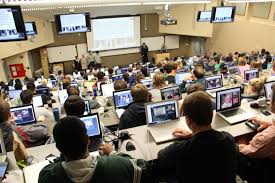
Should student’s textbooks be replaced by notebook computers?


We don’t have to stop using textbooks, each has its pros and cons, and they are better suited to a given situation. We just have to use them in a healthy way, mostly electronic devices that are more likely to get someone added.

We must understand that this can and cannot be replaced, it mainly depends on the person who uses the electronic device and what applications are used. Students should be aware of the potential dangers of using these devices and how to avoid them. Computers should not replace textbooks because the use of computers reduces concentration, increases learning costs, and creates physical health problems.

With so many distractions, using a computer to study has a negative impact on students’ ability to focus on their work. Computers give students a lot of freedom, allowing them to deviate from a lesson planned by teachers, or even access sources with incorrect information. Students with below-average reading skills may find it difficult to keep up when they have to read everything from a textbook.

However, in order to learn effectively, textbooks must always be at the center of a student’s academic journey. Textbooks play an important role in a student’s learning process over the course of many years. Textbooks provide students with a way to learn about physics and help them process information in a way that is easier than on a screen. Each chapter of the textbook builds on what students have learned before so they have all the information they need to understand what is being taught.

Textbooks are limited in what they can offer students beyond the text and images on the page, and tablets offer users the ability to take notes and highlight without ruining the next student’s textbook. Students can easily avoid reading and analyzing text on their own because they can quickly look up passages in e-textbooks and search for answers online. Students are used to finding information electronically rather than manually reading textbooks. But Notepad makes it easier and easier for them to find the information they need, and they can get help with Google Search to find the answer.

You mean, students are willing to carry any outdated textbooks with them if they want to bring a computer or laptop and keep the details they need. The increasing use of tablets in place of printed textbooks will also help students have “light backpacks.” The tablet also offers a built-in dictionary, so students can easily look up words they don’t know without leaving the textbook. There are thousands of educational and instructional apps on the tablet, so teachers can tailor student learning to individual style/personality rather than a one-size-fits-all approach.

As the popularity of tablets grows, many schools are debating whether to move from textbooks to tablets or introduce a personalized program on one computer that all students in the district can use. As tablets become more popular, many schools are debating whether to switch from textbooks to tablets and are also introducing one-on-one (one device per student) programs in their districts. Since everyone is always holding some sort of tech gadget in their hands, the idea that tablets are replacing textbooks in schools makes sense to a lot of people. Our society revolves around technology, so if we replaced textbooks and notebooks with laptops, students would be more motivated to complete their schoolwork because they are using something more modern instead of old and boring books.

While I was reading this, I realized that if students actually use computers instead of textbooks, this could lead to students visiting social networking websites or just other websites that are not recommended in school, such like gaming websites or even inappropriate websites. places. As you can see, the concentration of students would be significantly reduced due to the use of a computer instead of a textbook. On the contrary, it can be assumed that these students who did not use computers as textbooks were probably much more focused and could concentrate and understand the concept contained in the school textbook. Many high school students would agree that using laptops would be easier, more functional, and more efficient than using textbooks and laptops.

Second, if students use laptops instead of notebooks, workbooks, and textbooks, they will be more focused and organized in class because our generation prefers modern technology over old, boring and used ones that aren’t even updated Information textbook. .If students have access to textbooks instead of textbooks, workbooks, and textbooks, they will be more focused and organized in the classroom because our generation prefers modern technology to old, boring textbooks that aren’t updated with new information. Most high school students agree that writing from textbooks is easier, more effective, and more effective than writing from textbooks and notebooks.

With tablets for teaching in schools, students won’t have to learn from old and outdated textbooks, especially in ever-changing areas of study like computer science. With tablets for teaching in schools, students no longer need to learn from old and outdated textbooks, which is especially important for frequently changing fields of study, such as computer science.

Firstly, the amount of paper each school uses each year is killing many trees, and if we continue to use textbooks and paper instead of laptops, we will lose many trees, which will lead to even more air pollution and may deprive many habitats. animals. Therefore, based on these facts, it is recommended to replace textbooks with laptop computers, as this will make work more relaxed and, at the same time, increase the efficiency and effectiveness of the functioning of researchers and home students around the world.

In a school environment, if computers or tablets are used and controlled appropriately, they can greatly improve student achievement. The tablet is more convenient in studying for students. Increased use of tablets instead of printed textbooks could help lighten school backpacks.

In addition to notebooks and binders, students should also bring pencils, pens, and spare paper. What I mean is that students are less willing to carry around any outdated textbooks and instead want to take a lighter notebook where they can store all the information they need. Textbooks usually cost about a hundred dollars or more, but information quickly becomes outdated and schools have to raise more money to buy up-to-date textbooks.

With portable computers, textbook publishers and teachers will be able to more easily edit and update information in electronic copies of texts. Now laptops are designed not only to easily download the latest updates on certain topics, but also to allow students to learn new information without having to buy new books every time.

Using a laptop, students can use computer-based tools such as Microsoft Office documents, Google Docs, PDFs, slide presentations, and infographic tools. They may have up-to-date information, and using laptops is much cheaper than buying expensive books.

Styling And Beauty Tips

With expert advice and care tips from a couple of plant experts, we’ve identified 15 beautiful plants that will thrive in even the least plant-friendly places. Getty Images Shine up your look with these in-depth beauty tips drawn from over 75 years of Women’s Day magazines. If you’re out of eyeliner or don’t know how to wash your bathing suits, the following fashion and beauty tricks will make your life easier.

Rip your new shoes by putting on a pair of thick socks, then put on your shoes and blow dry your feet over medium heat for a few minutes. Also, apply a heat protectant setting spray to damp hair to protect the hair. Let your hair dry by sitting in the sun or use a hair dryer – the heat will lighten the strands.

If you often use straighteners and curling irons, spray a heat protectant spray on your hair before styling. Always start with a primer as it helps smooth the skin and creates the perfect base for the rest of your makeup. It will help to apply an even, smooth pencil to the mark the first time. Use a moisturizing body lotion every day and try applying it to damp skin (as this ensures maximum absorption).

The oil can prevent the penetration of surfactants (found in shampoos and other hair care products) that can damage the hair. Constant shampooing will make your hair dry and your scalp will produce more oil to compensate for the loss of moisture. Instead, use dry shampoo and tie your hair into a braid or ponytail when it gets a little thicker. Also, be sure to protect your hair from moisture (rain will definitely ruin your mane) and touch up your hair in the morning with a hairdryer and a round brush.

To keep your hair looking lively, use a sea salt spray or thickener before drying. For quick root coverage, use a dry shampoo spray to color your hair. If you don’t have this product on hand, use eyeshadow (the shade closest to your hair color) for a quick fix. Dip the angled makeup brush into the mascara brush and apply to the lids like a liquid eyeliner.

Blend with your finger or a cotton swab, then apply to the skin as a regular moisturizer. Do not apply moisturizer to your face, as it will take 10 minutes or more for it to absorb into the skin before your face is ready for makeup. Using too much of this product occasionally throughout the day will make your skin look chapped because you’re just layering your makeup on top of other makeup. Take good care of your hair after coloring and use color-protecting shampoos and conditioners to prevent further damage to your color-treated hair.

When your hair is 60%-70% dry, you can blow dry your hair from the roots with a blow dryer. For long-lasting curls, make sure your hair is completely dry before you start using the curling iron. Use a root makeup remover for quick styling, followed by hairspray.

So your jeans will last longer, and the color will not fade as quickly. Constant application of nail polish will make them brittle and brittle. For a perfect nail polish application, apply petroleum jelly to the nail cuticle with a Q-tip and your fingers won’t look dirty.

Getty Images Getty Images 7 of 75 Add shine to your hair Always rinse out conditioner (which should be applied to the ends) with cold water to seal cuticles and enhance shine. Jupiterimages Getty Images 3 of 75 Comb your hair from root to tip Comb your hair from root to tip every night.

It will also help prevent dandruff and other irritating conditions of the hair and scalp. The conditioner will soften the hair on your legs, making it easier to shave (and make your skin silkier). Rinsing your hair with beer helps restore moisture to the strands, while using vinegar will increase light levels.

When using shampoo, dilute it in half a cup of water and use it to wash your hair. Choose a sulfate-free shampoo, as sulfates can irritate and dry out the hair cuticle. Beauty Photo Studio Getty Images 13 of 75 Choose Your Shampoo Carefully If you dye your hair, look for shampoos and conditioners that are sulfate-free and free of harsh detergents.

Thinkstock 15 of 75 Beautiful Brows Soften skin before pinching by dabbing with a cotton swab dipped in warm water or cream. Westend61 Getty Images 16 of 75 Pluck in the direction of hair growth with tweezers. Lena Clara Getty Images 19 of 75 Straight Brow Hair To keep your brows unruly, apply hairspray to an old toothbrush, then comb your brows up and down.

Use tape under your eyes to catch any deposits and keep the color away from your cheeks. Also make sure to wear them correctly, with the waves facing down so your hair stays in place. “Be light on your bronzer and make sure your neck is the same color as your face.

You may like the warm, bronzed skin you get from sunburn, but this will lead to sun spots, wrinkles, and discoloration later on. Make sure the toner is alcohol-free so it doesn’t dry out your skin. To keep your hair color vibrant longer, use shampoos and conditioners designed for color-treated hair.

Coloring your hair in a salon has a number of advantages over having it done in the bath, as professional stylists usually do trials to make sure you get the exact color. Those suffering from sensitivity and hair damage should try a “scalp detox” to cleanse the skin without stripping it of its natural oils, according to Lin. Eugene Davis, celebrity hairdresser, suggests using an avocado oil hair mask. To make the perfume last longer, apply a small amount of Vaseline to the skin where you will be spraying the perfume.

For makeup that lasts all day and night, use a make-up fixer, such as a setting spray. According to makeup artist Kelly Bartlett, this will help the product fully absorb each wipe, starting with the one you use next. Just outline the lips as usual and then fill them in with color. Because exfoliating lips is the key to flawless lipstick application, you won’t want to skip this step of your beauty routine.

If you don’t give your body time to recover, your skin won’t look fresh and radiant. If left uncleaned, dead skin cells can make skin look dull, dark, bumpy, and dry.

You can get makeup brush cleaner from a pharmacy or beauty store, or just use shampoo and conditioner to clean your brushes like you would your own hair. To tame frizzy hair, spray a small amount of hairspray on your toothbrush and then use it to comb through frizzy strands.

Time To Go Wild For Wildlife

Buy 5 Ace World Wildlife Day M Sticker Poster|Save Earth|Save Nature|globar  Warming|Size:12x18 inch|Multicolor Online at Low Prices in India - Amazon.in

Ever wondered what will happen if all the dense forests and wildlife vanished from this world? The answer is simple. Everything will be destroyed which will be impossible to control. The heading of this article makes it very clear what this article is going to be. A meaningful quote by Anthony Douglas Williams where says, “Animals should not require our permission to live on Earth. Animals were given the right to be here long before we arrived.” This has so much value and importance because this is a very fact.

Over the years, humans have grown and are moving forward towards development, progression, industrialization, mechanization and so much more. However, during this process what we have also brought is climate change, an increase in natural disasters, deforestation, scarcity of daily requirements, and so many more problems. The things that we as living beings get from nature, people take it for undeniable grant and constantly misuse it and pollute it with toxicants whether it is air, water, or land. Imagine the time when you are taking a stroll on the beach and you let the cool seawater flow on your feet. Now, imagine the same thing with plastic, waste thrown everywhere would you be able to feel the same beauty and aura of the beautiful sea and land? Well, the answer is no. The way pollution and overconsumption by humans are in a high increase so much so that things are getting very bad not just for us but also for those living creatures who have no role to play in this devastation.

World Animal Day 2021: History, Significance, Quotes and Wishes | The  Indian Nation

The threat of wildlife in the water

The seas, ponds, rivers, ocean everything is into pollution day by day. It has become a means of monetary value, and great economy when people are getting to see clear water and fish in it. This is the sad condition of our present times, which needs to change. Not just the water animals that we can see even animals that are deep down in the ocean are also in threatening condition by human activities. Human consumption and production are taking over nature drastically. Let us take some instances, crocodiles, and alligators, which were once common animals, are now in a threatening position because of human activities. Wondering how? Well, many companies make exotic leather out of crocodile and alligator skin. These leathers are in use for the most common accessory such as shoes. It is also commonly used for making handbags, belts, watchbands, wallets, briefcases, jackets, and furniture. Dolphins are supposedly smarter than humans are and are the most beautiful, loving, caring, amazing water mammal we can think of. We do not think twice when we are hurting this harmless mammal while making products such as coats, bags, jackets, waterproof boots and so many more products for human consumption and development. These are just some of the animals that I have put awareness out for their misuse and harm. Many more animals like fishes, sea lions, sharks, whales, corals, octopuses, crabs, squids, and pearls are constantly in use by humans for the production of not just exotic and expensive accessories and items but also for human food consumption. They are put into cultivation in various farms under extremely terrible conditions just for human consumption. I am not saying consumption of seafood is bad. However, I am only asking you to think about the need for expensive and exotic food that is manufactured every day just for the sake of high human consumption.

The threat of wildlife in the land

Words are less to speak about the extinction and pathetic condition of wildlife in the land. All animals in the land are slowly becoming extinct and endangered because of human activities. It is sad to know the kind of things people do for money. I do not even know where to start. Elephants that are considered the creators of the jungle and that hold respect and value among the animal kingdom itself are constantly killed for tusks that are in use for ornaments, and many other things. Lions the kings of the jungle are poached or are even killed just to show power among people. They are killed for their magnificent mane. Tigers, which were once on the brink of being extinct due to excessive killing and poaching, are now slowly regaining their population in the wild due to constant work of protection, awareness, funding, programs and so much more has brought about some change. It is time we start acting for the rest of the animals so that they do not go through the process again. Rhinoceros are strong well-built creatures that are in constant threat every day for their powerful horns and even their hooves.  It is disheartening to see how the actions of some human beings have a grave negative consequence on other people and the ecology overall. There are many more animals I can name such as the cheetahs, leopards, jaguars, panthers, deer, snakes, and other animals that are constantly in danger for their natural gift of beauty. This is not fair for these animals because there is no fault of their yet they suffer the most

The threat of wildlife in the air

Everyone must be wondering how animal species that do not stay very close to us be in the danger. Let me give you an instance. When was the last time you saw sparrows in the city or even fireflies in the evening or colorful butterflies fluttering around early in the morning? All of this sounds like a dream or fantasy. The reason it does is that not all of the things that used to happen before happen anymore and there are several factors for it. Sparrows and common green parrots were captured and then sold as pet animals. Due to the horrible conditions, they were kept in many of these birds died. Crows that were once seen in huge numbers are in small numbers because of the increase of heat in the atmosphere and due to their black feather, they die of exhaustion and stroke. Ostriches, emus, and kiwis are birds that cannot fly are also endangered by humans and their activities. Peacocks, which are the national bird of India, are also not spared. They are killed for their beautiful feathers for human activity. These are just some of the commonly known birds that I have named. Many more birds are exotic and are rare species that have also come under the human radar that is very displeasing.

The reason I have named common wild animals that we might have seen and heard is so that people understand the importance of the problem and take some immediate action. This is necessary so that the animals that we see now do not end up just in pictures for our future generation. I am not saying that development, progress, or industrialization is wrong. However, it does become bad and questionable when other species and animals are endangered, threatened, abused, or at the close end of extinction. Many more animals that are exotic and birds need our attention. I will conclude with a thought-provoking quote that says, “This Earth is made for all beings, not just human beings.”

References

  1. Google searches for quotes and images.   

A True Prediction

When global warming gets you down, come back stronger – Climate Change:  Vital Signs of the Planet

Have you been feeling the change in the weather recently? Like it is summer but it is getting chilly cold and in winter, you see the hot bright sun shining. By this, you probably have understood what I am trying to talk about today. This article is about something that we have taken for granted for so many years. Yes, I am talking about global warming. Before I start with this article, it is important to quote Eliot Spitzer and it goes as “Global warming threatens our Earth, our economy, our natural resources, and our children’s future. It is clear we must act now.” The present condition of our Earth and its state is proof that the time has come to act and bring about changes before it is too late and it goes out of our hands.

The most basic understanding of global warming is the gradual increase of the heat of the surface of the Earth due to greenhouse gases such as carbon monoxide, carbon dioxide, etc. We have already reached the point where we can no longer say that we are not feeling the effect of global warming in our daily lives because we clearly do and it and we can see it right in front of our eyes. Some change and improvement are desperately needed if do not want this Earth completely falling apart.

Things that cause global warming

None of this means that progress, development, and industrialization are bad. We cannot function without moving forward but it is also necessary to see the way we are moving ahead. If we are moving ahead by damaging and destructing mother nature then it is high time that we think about the ways that we are using to move ahead. It is necessary to keep in mind nature, environment, and other species while we are moving forward towards a better future.

So many things cause global warming. Even the simplest things such as leaving the tap water running while you are brushing, washing clothes also play a major role in causing global warming. Not many people realize but when they leave their fans on, running their AC even when it is not hot outside plays a very important role in increasing global warming. Suppose we are driving our petrol or diesel car or scooter and you are waiting in the signal. If you switch off your vehicle while waiting then it is great but if you do not then it is a high time you think about your actions. The reason I am saying this is that when you leave your vehicle engine running then the fossil fuel that is burning is causing a lot of damage not just through the factor of pollution but also in the factor of global warming. Consumption done by us as an individual, society, state, country, and the entire world plays a major role in global warming. If you are wondering how this is possible then the answer to this question is very simple. When the consumption increases, the waste, production, etc also increases thereby creating more hazards and pressure on the resources, which has a direct impact on our planet. Not just the small things, even bigger things like mining, deforestation, clearing of rich and dense land all have a major role in increasing global warming. So many more things that can come into this category here that destroys mother Earth in the name of progress and development.

How Global Warming Works | HowStuffWorks

The effects of global warming

The effects of the damage that we have been making are evident. Keeping a blind eye towards it as we have been doing for so many years and generations now are not going to help or benefit us in any way. The slow and the gradual melting of the large chunks of the iceberg in the glaciers are the hard-standing proof of the truth and reality. So many species like the polar bear, seals, penguins lost their home and we as the developed species did very little to bring about a positive impact for these creatures. The next destruction we saw was wildfires so many of them that now we hold a large list of them. Due to this the ecosystem went out of line, so many distinct and crucial species of birds, animals, and even plants became extinct and were on the list of endangered. The measures and plans did very little to cover the damage. Over the years, we have seen a major rise in earthquakes, tsunamis, floods, all around the world. This created major havoc not just during the normal time but also during the pandemic. These situations and crises cannot be put aside and dealt with them only when they occur. The most recent occurrence of dormant volcanoes erupting stands as proof that things are not getting any better but rather much worse than before and it is time we act on it.

Bringing about a reduction in the impact and effects of global warming.

Now that we have understood, how global warming is creating such a negative impact and effect on our planet it is time we bring about some changes in the way we humans work. Even the simplest thing of bringing about awareness on global warming and its effects can play a major role in bringing about some change. We are seeing that happening in the present time. People around the world are spreading awareness, and because of that, political leaders and governments around the world are making serious plans and measures to reduce global warming and reconnect with nature. Small changes in our lifestyles such as using rainwater harvesting, public transport, electric vehicles, carpooling, keeping a check on our consumption, protecting our environment, using recyclable, things and so many more things can play a huge role in reducing global warming and make this planet beautiful and nature-loving as it has always been. Time has come that we human beings stop our atrocities, exploitation of nature and our planet Earth before things are not in our hands anymore, and then comes the destruction of no escape.

There is an urgent need for action not just by people of higher power but every single person living on this planet. It is only then we can see a brighter, happier, and beautiful future. To conclude with an important quote by Al Gore as he says and I quote “The story of humankind and our relationship to Earth may be seen as a continuing adventure or a tragedy shrouded in mystery. The choice is ours.”

References

  1. Google searches for images and quotes.

The Gift Of Sharing and Giving

The year is coming to an end and we can all say it is nothing less than a roller coaster ride of so many different things. If we look back, we all have had our share of happiness, grief, excitement, anger, joy, blues, and so many more things. Each one has had it just in different quantities. Before we start our New Year and new adventures, we all have one small thing to do so that there is the hope of change and betterment when we move forward. The small thing I am referring to is sharing and giving. As Leonard Nimoy says and I quote “The more we share, the more we have”  

During this festival celebration of the year let it be it Christmas, Diwali, or Eid it is time that we all spread our hands forward to help by sharing and giving to those people in need. By doing this we not only make our lives better but also the people whom we are helping and also the society and the world. When we share and give, we make the world a happier, peaceful, and joyous place to live. When a festival is celebrated, it should not be limited to those just of a better class but also to the people who are trying to make their lives better by working hard every single day and trying to meet with the fast-growing world. Let us understand this on a more detailed note.

Why is it important to share and give?

The first and foremost thing that one should understand is that when a person shares or gives one should do it selflessly. There should not be any ulterior motive or expectation of any kind of praise, reward, or anything else in expectation of return. The other thing that people should keep in mind while sharing and giving is to do it with all their heart. It should be done out of kindness and happiness not because there is a requirement or just for the sake of it. This might sound very typical but when children see their parents share and give then they learn a lot and even make it their habit. Sharing and giving is not something that kids should learn and leave it aside rather it is a thing that a child should learn, imbibe, and make use of it in their lives at the very end. The contentment and the joy and happiness that one feels from within are very powerful and can even influence the way a person sees and behaves positively. The importance of sharing and giving cannot come at a better time when the world is slowly becoming mechanic, selfish, and greedy. It is the process of sharing and giving that makes us human beings more humane and evolved than other species. The idea of sharing and giving should remain intact until the very end of everything if we want to have a better future not just for the future generation but also for ourselves

Tech pitches in to fight COVID-19 pandemic | Computerworld

Sharing and giving during the pandemic.

The pandemic is not over yet and it managed to put a big pause on our robotic life. The pandemic made us realize the amount of destruction and pain we have caused to nature and other living creatures in the name of development and progress. It is not that development and progress are bad but it will be harmful if we lose the very essence of living and being ourselves. The pandemic created havoc, something that nobody expected or was ready for the destruction that it is causing. It was this very pandemic that made us realize the importance of humanity and the importance of sharing and giving during tough times. By sharing and giving, we were uniting as one and made us realize that only through togetherness and hard work will we be able to fight the virus. We realized during this time that sharing and giving was not just related to materializing things but rather more important things such as sharing our thoughts, feelings, and emotions so that more people could open up and acknowledge their feeling and emotions as well and give so much more important to mental health than we ever did.  We realized that when many people come forward to give the pressure of it reduces and the quantity and quality of things get better and thereby we can help more and more people are safe and secure. When scientists, doctors, and other front line workers shared their ideas and perspectives and also made sure to give their hundred percent by constantly working hard day and night that it was possible to reduce the death toll, bring down the positive cases and get back some sense of normalcy back. I can go on and on about how sharing and giving have had a major positive impact during the pandemic. Let us all go back to the memory of the very first year of the pandemic and the present. So That we can see and understand how we have had so many small and big instances of our lives where you have shared or given to someone or someone has shared and given something to you. This is when we understand that these actions have not only made each other’s lives better but also strengthened the relationships with people around us.

All of these things being said we also need to remember and make sure to follow that we do not need a major event or anything big to happen to share and give. Rather I think it should come from the space of responsibility and duty towards the society and the world that is constantly playing a role in our growth and development. When a person truly with a good heart and mind without any motive shares and gives then it speaks a lot about their personality and their character. One does not have to do many things to share and give. They can just spend their weekend in an orphanage enjoying and playing with the children there or one can go to the orphanage and spend some peaceful and fun time with all the people there. Even giving your toys and clothes that you do not use to someone who requires them can make such a big difference and impact.

In the end when someone does something big or small towards a positive change then it always makes an impact and difference in the whole world. It will always be there. To conclude with a thought-provoking quote by Robert Brault where he says and I quote “The willingness to share does not make one charitable rather it makes one free”

References

  1. Google searches for images and quotes.

RECYCLING

Recycling is the process of converting waste materials into new materials and objects. The recovery of energy from waste materials is often included in this concept. The recyclability of a material depends on its ability to reacquire the properties it had in its original state. It is an alternative to “conventional” waste disposal that can save material and help lower greenhouse gas emissions. Recycling can prevent the waste of potentially useful materials and reduce the consumption of fresh raw materials, thereby reducing: energy usage, air pollution (from incineration), and water pollution (from landfilling).

Recycling is a key component of modern waste reduction and is the third component of the “Reduce, Reuse, and Recycle” waste hierarchy. Thus, recycling aims toward environmental sustainability by substituting raw material inputs into and redirecting waste outputs out of the economic system. There are some ISO standards related to recycling such as ISO 15270:2008 for plastics waste and ISO 14001:2015 for environmental management control of recycling practice.

Recyclable materials include many kinds of glass, paper, cardboard, metal, plastic, tires, textiles, batteries, and electronics. The composting or other reuse of biodegradable waste—such as food or garden waste—is also a form of recycling. Materials to be recycled are either delivered to a household recycling center or picked up from curbside bins, then sorted, cleaned, and reprocessed into new materials destined for manufacturing new products.

In the strictest sense, recycling of a material would produce a fresh supply of the same material—for example, used office paper would be converted into new office paper or used polystyrene foam into new polystyrene. This is accomplished when recycling certain types of materials, such as metal cans, becoming a can again and again, indefinitely, without losing purity in the product. However, this is often difficult or too expensive (compared with producing the same product from raw materials or other sources), so “recycling” of many products or materials involves their reuse in producing different materials (for example, paperboard) instead. Another form of recycling is the salvage of certain materials from complex products, either due to their intrinsic value (such as lead from car batteries, or gold from printed circuit boards), or due to their hazardous nature (e.g., removal and reuse of mercury from thermometers and thermostats).

Why is it important to recycle?

With the involvement and enthusiasm of people like you, recycling is back and so are thousands upon thousands of recycled products made from materials that would otherwise be piling up in our nation’s landfills. It makes a huge difference to our environment, our quality of life, and our country’s future.

Waste Generation Increases

In 2014, Americans generated about 258 million tons of trash and recycled 66.4 million tons and composted 23 million tons of this material, equivalent to a 34.6 percent recycling rate. On average, we recycled and composted 1.51 pounds of our individual waste generation of 4.44 pounds per person per day.

The state of the economy has a strong impact on consumption and waste generation. Waste generation increases during times of strong economic growth and decreases during times of economic decline. To learn more about waste generation in the US see the US EPA report Advancing Sustainable Materials Management: Facts and Figures.

This data is taken from Stanford University’s Recycling and Solid Waste Report 2016 and fed into the US EPA WAste Reduction Model (WARM).

Can recycling save energy?

Yes it can! Here’s some fun facts from CalRecycle to show you how!

If you look at the big picture of what it takes to create a product from scratch — to get the raw materials, transport them, process them and manufacture them — making goods with recycled material like paper, plastic, glass, and metal is a major energy saver.

Seattle economist Jeffrey Morris estimated that manufacturing one ton of office and computer paper with recycled paper stock can save nearly 3,000 kilowatt hours over the same ton of paper made with virgin wood products.

A ton of soda cans made with recycled aluminum saves an amazing 21,000 kilowatt hours by reducing the virgin bauxite (bozite) ore that would have to be mined, shipped, and refined. That’s a 95% energy savings.

A ton of PET plastic containers made with recycled plastic conserves about 7,200 kilowatt hours.

The San Diego County Office of Education has figured out that recycling one glass bottle saves enough energy to light a 100 watt light bulb for four hours.

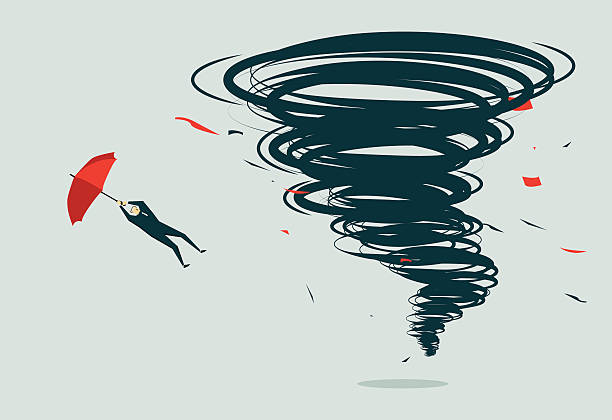
Cyclone Risk Assessment – cas eof Andhra Pradesh

A disaster is a sudden, calamitous event that seriously disrupts the functioning of a community or society and causes human, material, and economic or environmental losses that exceed the community’s or society’s ability to cope using its own resources. Though often caused by nature, disasters can have human origins. The combination of hazards, vulnerability and inability to reduce the potential negative consequences of risk results in disaster.

The Disaster Management Act of India defines disaster as: “A catastrophe, mishap, calamity or grave occurrence in any area arising from natural or man-made causes or by accident or negligence, which results in substantial loss of life or human suffering or damage to and destruction of property or damage to, or degradation of environment and is of such a nature or magnitude as to be beyond the coping capacity of the community of the affected area.

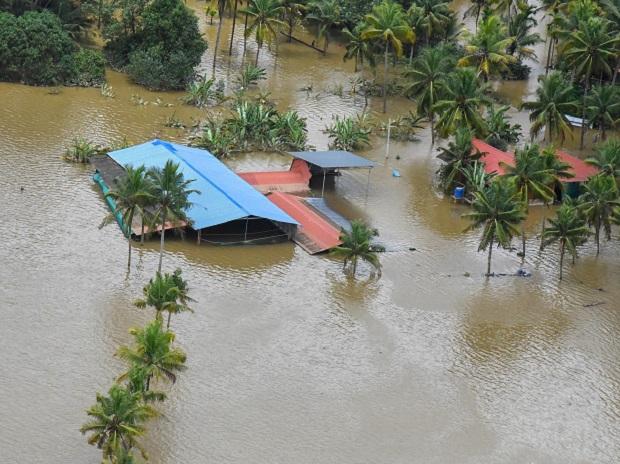
Andhra Pradesh is the second most vulnerable state to cyclone after Odisha. The state risks being battered by cyclones of moderate to severe intensity every two to three years. In the past 40 years, there may not be a single year in which the state did not experience either a storm, a cyclone or heavy rains and floods. The deadliest cyclone in the past 40 years was the one that struck Andhra’s coast in November 1977, killing about 10,000 people. About 250,000 cattle heads perished, one million houses were damaged and crops on 1.35 million hectares (ha) were destroyed that year. According to the State Disaster Management Department, about 44 per cent of the state is vulnerable to tropical storms and related disasters. Vulnerability to storm surges is not uniform along the coast of Andhra. The stretch between Nizampatnam in Guntur district and Machilipatnam in Krishna district is the most prone to storm surges. East and West Godavari districts, with vast stretches of paddy fields and irrigation, drainage canals always bear the brunt of cyclones accompanied by strong winds and pounding rains. In the aftermath of cyclones, these areas get flooded, leading to huge crop losses besides other damage. More than one cyclone in the same season is not unusual for Andhra Pradesh. The vulnerability also increases manifold given its location and the demographic structure of the state. The decrease of alertness in disaster management that often occurs after a few years’ lull in occurrence of cyclones, known as the “fading memory syndrome,” also contributes to increases in loss of lives and property damage.

Proneness or to be prone means ‘likely to do’ or in this case, the districts most likely to be affected by cyclone. Out of 9 districts prone to cyclones, 4 districts i.e., Nellore, Guntur, East Godavari and Srikakulam fall in the category of very highly prone to cyclones. The remaining 5 districts i.e., Prakasam, Krishna, West Godavari, Vishakhapatnam and Vizianagaram fall in the category of highly prone to cyclones. It can be noticed that the coastal districts range from very highly to highly prone to cyclone without any in-between.  Apart from these, the non-coastal districts such as Chittoor and Cuddapah also at times experience the wrath of cyclones in the form of heavy and torrential rainfall or the landfall of cyclones.

All the coastal districts of Andhra Pradesh except one fall in the very highly vulnerable category, which is not a surprise given the density of population in the districts. The density map of Andhra Pradesh shows that out of 9 coastal districts, 4 districts i.e., Srikakulam, East Godavari, West Godavari and Krishna fall in the category of high density of population; 3 coastal districts i.e., Vizianagaram, Vishakhapatnam and Guntur fall in the category of moderate density of population. The reasons for low density districts such as Nellore and Prakasam still being highly vulnerable can be due to high rate of poverty, transport and infrastructure vulnerability.

The density map of Andhra Pradesh shows that out of 9 coastal districts, 4 districts i.e., Srikakulam, East Godavari, West Godavari and Krishna fall in the category of high density of population; 3 coastal districts i.e., Vizianagaram, Vishakhapatnam and Guntur fall in the category of moderate density of population. The reasons for low density districts such as Nellore and Prakasam still being highly vulnerable can be due to high rate of poverty, transport and infrastructure vulnerability.

Over last few decades, NGOs have become important players in the development process across the globe, engaged in wide ranging activities starting with community development to training, policy research, and advocacy. Their organisational flexibility, informal work style, and close engagement with grassroots communities enable them to deliver services to people at lower costs.  Their ability to mobilise people and understand people’s concerns enables them to better articulate problems encountered by people. Thus, they play a very important role in preparedness and mitigation process. For instance, Indian Red Cross Society – New Delhi and other charitable organisations were involved in helping people in Titli cyclone-affected areas. As per the article in The Hindu, IRCS has distributed relief materials, including 1594 kitchen sets, 800 saris, 700 dhotis, 440 buckets, 400 towels, 700 mosquito nets and 405 tarpaulins in selected villages, according to IRCS Srikakulam wing chairperson P. Jaganmohana Rao, Further, after studying the severe damage in 1,145 villages, IRCS-New Delhi, IRCS-A.P. and Telangana units sent relief material worth more than Rs. 62 lakhs. Given such an important role played by voluntary organisations, APSDMA is developing a database of interested volunteers from various governmental and non-governmental agencies and offer them training programs on interesting aspects under Disaster management, preparedness, mitigation and awareness building. This will provide the volunteers with an on-ground experience of the situation and also provide them with an opportunity to learn and teach others what they have observed.

It is equally important for risk assessment to take from time to time so that it comes to light where the improvement is needed the most, where are the loopholes as regular risk assessment will enable to support the development of effective cyclone mitigation policies and implementation of specific measures. Studies have suggested that new developments in the terms of embankments, cyclone shelters, and roadways should be in the places with high and very-high-risk zone. Though successful early warning system reduced the loss of life, false information and lack of awareness claimed many human lives. It has been recommended that Incorporating the spatial distribution of vulnerable people in warning messages may increase trust of people to the warning signals. One of the studies brought in the “fading memory syndrome” in which not being the target of cyclone and cyclonic storms for more than a couple of years makes people forget about the disastrous affect and a reduction has been observed. Thus, the government needs to focus on this aspect too and conduct mock drills among the coastal population at regular intervals, keep them aware about the impact and train the evacuation process. It is equally important to impart education to the population regarding the same. With the proper involvement of the civil bodies and local people, a vastly informed citizens can be placed.

References:

Ahameed, B. K. (2019). Coastal Social Vulnerability and Risk Analysis for Cyclone Hazard Along the Andhra Pradesh, East Coast of India. KN-Journal of Cartography and Geographic Information. doi:DOI: 10.1007/s42489-019-00029-9

GOI-UNDP. (n.d.). Severe Cyclone Storm Titli’s Impact on State of Andhra Pradesh .

Government of Andhra Pradesh. (Accessed 2021). Andhra Pradesh State Disaster Management Authority. Retrieved from Google: https://apsdma.ap.gov.in/

Raghavan, S. &. (2003). Trends in Tropical Cyclone Impact: A Study in Andhra Pradeh, India. American Meterological Society, 635-644. doi:10.1175/BAMS-84-5-635

Rao, A. D. (2005). Vulnerability from Storm Surges and Cyclone Wind Fields on the Coast of Andhra Pradesh, India. Nat Hazards, 515-529. doi:10.1007/s11069-006-9047-4

Image Credit: Google

E-Waste

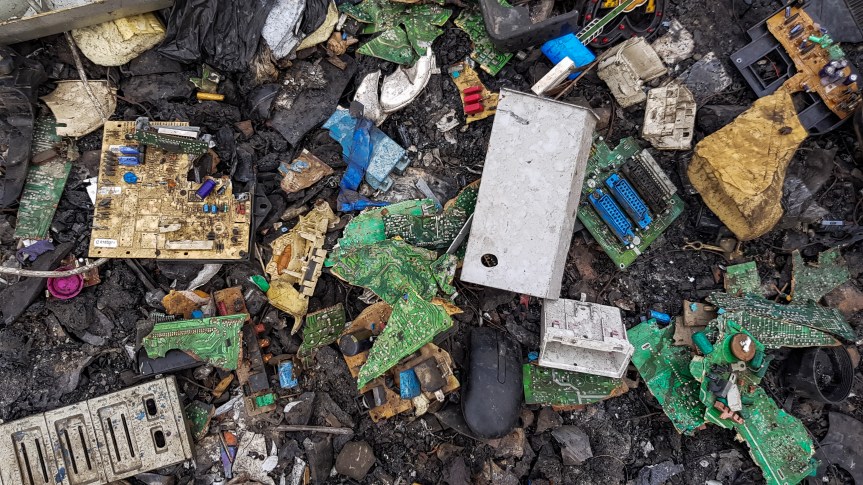
E-waste is an informal name used for electronic waste implying all those electronic products which have reached the end of their useful life, for example, mobile phones, dryer, fax machine and other electronic equipments.

A techno hungry world is emerging facilitated by digital empowerment policies by various governments and is all ready to get upgraded to a generation of 5G and thus due to the emergence of newer electronic products in the market and the improved standard of living, the usage of these electronic products have shot up and so the amount of electronic waste produced every day is growing enormously. According to UN report on environment,2019, the amount of e-waste generated at the world level is about 50 million tonnes but only 20 percent of it is properly recycled.

A joint report has been in 2019 published by World Economic Forum and the World Business Council for Sustainable Development which attracts attention for the need of crucial vision in this field. As per the data released in the new Global E-Waste Report, the market value of our spent devices amounts to $62.5 billion, three times more than the annual output of the world’s silver mines. It also informed that more than 120 countries have an annual GDP lower than the value of our growing pile of global e-waste.

India has become one of the largest dumping sites of e-waste by many countries and the domestic production itself accounts for about 2 million tonnes per annum but merely 5 percent of the wastes is recycled.

According to a report published in Times of India, 2019, over 95 percent of e-waste generated is managed by unorganized sector and the scrap dealers in the market, dismantle the disposed products instead of recycling it. The current rate of e-waste generated in India is 4.56 times greater than the annual e-waste processing capacity offered by the nation, which leads to illegal and improper dumping of hazardous waste.

The proper collection, disposal and recycling(management) of e-waste is necessary, for it possess a serious threat to our health. A long exposure to the chemicals, pollutants emitted after dumping the e-waste without following the proper procedures leads to damage of nervous system, skin diseases, heart and liver damage and many other health problems. It also contaminates our natural surroundings, damages the soil quality and also pollutes the water quality.

If plastic pollution in the life below water and life above water is one of the major environmental challenges, the ebb and flow of public opinion should also turn towards to the huge generation of electronic waste in the present era. The numbers are fearsome: 50 million tonnes of e-waste are produced each year, and left unchecked this could more than double to 120 million tonnes by 2050.

In our country, the amount of E-waste generated is increasingly rapidly and with increasing fascination as well as dependence on new technology, the amount of e-waste is expected to grow in the coming years. The main area where our country lacks is in the proper management of electronic wastes. There is no large-scale organised E-waste recycling sector in our country and the largest recycling hotspot are in the unorganised sector and some are illegal too as the largest recycling hotspot of the capital city is in Seemapuri. It is not a hidden truth anymore that working conditions in the unorganised sector is not bed of roses. The poor conditions of the worker as well as the hazardous nature of the wastes that they deal with will always pose a fatal threat to their life. Moreover, the large scale dumping of electronic wastes from developed countries to India owing to availability of abundance of cheap labour and flexible environmental laws further enhances the problem.

The lack of public awareness about the proper disposal of e-waste and lack of proper implementation of laws adds to the problem. There are very few IT companies that actually seriously implement the provision of Extended Producer Responsibility. In most cases electronic wastes remain unattended in the households. As already seen above that due to lack of awareness, people throw waste electronics and electrical equipment with their household wastes. There is a tendency among the people not to care about the things that they have discarded, ignoring the fact that its implication in the long run is going to affect them too.

The laws should be properly implemented; government should try to reach the nook and corner of the country and spread awareness through the provision of Digital world and many more: Let’s bring into use 5Rs: Refuse, Reduce, Reuse, Repurpose, Recycle. People in their locality as a community need to take steps for keeping their locality clean. As a community they should establish a committee that would oversee the management of all the wastes. There should be educational programme in different localities with the government aid about waste segregation, their harmful impact and how it can be mitigated. But all this would be possible when we as an individual come forward and work together. We need to start the reform from our home, then our locality, then our region, then our country and the world as a whole. The role of youth in this regard is very important. Being one of the most enthusiastic section of society, they carry within themselves a huge reservoir of untapped energy. With proper direction, they can be play major role in spreading awareness as well as in taking initiatives for proper management of electronic or any kind of wastes.

We need to understand that our earth as a whole is on the verge of collapsing, so we can’t let different kinds of waste piling up. Our attention should turn towards such grave issues instead of fighting over petty issues and work together towards adopting a sustainable lifestyle so as to save a future for ourselves and others too. Let’s not make the word ‘sustainable’ a cliché term and should try and have a sustainable approach towards everything.

REFERENCES:

  • Bishnoi, V. N., & Shah, T. (2014), E-Waste: A New Environmental Challenge. International Journal of Advanced Research in Computer Science and Software Engineering, 4(2), pp. 442-447.
  • Down to Earth (2019), Recycling of e-waste in India and its potential.
  • Jadhav, S. (2013), Electronic Waste: A Growing Concern in Today’s Environment Sustainability. International Journal of Social Science & Interdisciplinary Research, 2(2), pp. 139-147.
  • Sikdar, M., Dr., & Vaniya, S. (2014), The New Millennium and Emerging Concerns. International Journal of Scientific and research Publications, 4(2), pp. 1-12.
  • Sivaramanam, S. (2013), E-Waste Management, Disposal and its impacts on the environment. Universal Journal of Environmental Research and Technology, 3(5), pp. 531-537.
  • Uddin, M. J. (2012), Journal and Conference Paper On (Environment) E-Waste Management. IOSR Journal of Mechanical and Civil Engineering, 2(1), pp. 25-45.
  • UNEP (2010), A Report – recycling- from E-waste to resources. February 22, 2010.
  • World Economic Forum (2019), The world’s e-waste is a huge problem. It’s also a golden opportunity.

Image Credit: Google

A DISCOURSE ON ECO-FEMINISM

Ecofeminism is a concept, a movement bringing out the relationship between women and nature. It claims that both the women and nature have been overexploited by patriarchy and the culture. However, it in no way flows in one single course, with the basic concept, it has many dimensions to it and many proponents and variations to it as well. The relationship between women and nature, as constructed by various scholars, is based on three claims – ‘Empirical’, ‘Conceptual’ and ‘Epistemological’ in nature (Sharnappa, 2016). The first claim which is empirical in nature relates socio-economic and political poverty of women with the destruction of nature. It has been observed that the women are the firsthand victim of consequence of destruction of environment – given the dependency of women on nature. The conceptual claim brings out the “hierarchy and dualism” on which society is structured. It throws light on ‘patriarchy’ as the root cause of domination of women and exploitation of nature. The third claim, epistemological in character, focuses on the knowledge of nature which women possess more when compared to any other. Being the humans residing in the rural areas more while men migrating for other works, they have been agrarian cultivators, thus, possessing more knowledge regarding the sustenance of nature.

The Eco-feminism has been documented well in the western world; however, it doesn’t mean that it didn’t exist in the other part. The theory of eco-feminism has evolved over the years and the socio-economic as well as the political concerns of the region has influenced its course. For instance, the differences in the ‘Western Eco-Feminist Discourse’ and ‘Indian Ecofeminist Discourse’ have been brought out by many. The basic departure in the conceptualization of ecofeminism is related to the emphasis on the kind of environmental crisis (Sharnappa, 2016). It has been pointed out that while ecofeminism in the West has emphasised on the direct impact of science and technology on the nature and the consequent impact on women, ecofeminist discourse in India has more or less revolved around the threat to traditional methods of production and subsistence since majority of population still depends on it. The threat that has been taken into account pertains to the building of dams, industrialization, impact of logging. So, the scholars have pointed out that the environment crisis in India revolves around the attempt to reduce the impact of such threats on the victims, generally the peasants.

The exploitation of women, especially the peasants has been stressed by many scholars. Vandana Shiva, one of the pioneers of eco-feminism movement in India focuses on this aspect – the way in which technological development has robbed many peasants, especially women of the ‘third world’ of their traditional practices. She believes that “only path to survival and liberation for women is an ecological one of harmony, sustainability, diversity, as opposed to domination, exploitation and surplus”. Bina Agarwal, an Indian Economist and also one of the critiques of ecofeminist’ arguments, too, provides three-fold explanation to why women are most affected – highlighting the class-gender dimensions to the effect of environmental degradation. She asserts that given the pre-existing gendered division of labour, women in the poor households are worse hit. The disparities in the distribution of ‘sustainable resources’ (for e.g., healthcare) which actually deprive women to access the basics, adds to the burden. Furthermore, the women also have limited rights to private properties, access to employment opportunities and others which only aggravates the plight. She asserts that due to the exploitation and destruction of the nature, women have to work longer in order to gather woods; have to walk longer distance to access to water and the caste factor only adds to the woes; becoming more prone to water-borne disease or the un-healthy environment are some of the effect. Given these conditions and their condition in the labour markets well as their position in accessing the resources and basics, women, especially those of lower caste bear and face the most severe outcome of the exploitation of nature.

The assumptions and principles of ecofeminism has its own share of constructive criticism and variations to it. Bina Agarwal, while critiquing ecofeminists’ argument puts forward a different argument, or say perspective than those of Shiva’s. She contests that ecofeminism does not cover the structure in its entirety. She argues that ecofeminism sees women as a single entity – ‘in unitary’, it does not see her in the context of differences in caste, class, race, etc. Furthermore, it also does not take into account the material reality of women and just interrelates the nature and women ideologically; neither it talks about how ideological shifts are caused by the dominant groups and ‘how such shifts get embedded’. Thus, at this juncture she brings in the concept of ‘feminist environmentalism’ wherein she presents the relationship between men and women rooted in material reality as well. She brings in the elements of how gender and class change the course of any discourse especially which involves women. Thus, women’s interaction with nature must be located within the material reality of caste, class and gender along with all other concerns and not just seeing her(s) as ‘unitary’.

Another point that has been raised is that ecofeminism assigns the responsibility of fighting against the environmental threat solely on women without even taking into account if the women are equipped enough for it. It thus, needs to call for sharing the responsibility between both the gender and not just on the women. The discourse, the impact of the movement should not just be confined to the saving of nature or as Bhasin said’ “clearing up the mess all the time”. It should extend to granting of rights, skill-upgradation and involvement of women in the decision-making process. Thus, in order to strengthen the force or the movement, the diversity as well the different concerns need to be taken into account.

Image Credit: Google

Preparation through education is less costly than learning through tragedy

In this era, where humanisation of nature is taking place at a tremendous rate, where the nature is altered at an alarming rate for the so – called benefits of “we” humans, disturbances are created in the normal functioning of nature and so nature rises in its fury and the fury of nature is not magnanimous but rather too destructive to ignore.

                 According to Max Mayfield, “Preparation through education is less costly than learning through tragedy”. The point that he is trying to bring into the notice of so- called enlightened society is that if our learning through education is put into action, we would avoid any tragedy, we would invite less destruction. If the foundation is strong, the building won’t be shaken easily.

                If we look at the recent cases of natural calamities, we would get a better picture of what he is trying to bring into notice. In India itself, we could trace the tragedy that took away the life of many.  In the Kerala floods, death toll rose to around 417 people, which was the worst natural calamity to strike the southern states in decades. Kerala faced the flash flooding which occurred due to heavy downpour, but this four months of torrential rain in Kerala became destructive because the situation was aggravated due to the ignorance of local officials.

                “This could have been avoided if the dam operators had start releasing water in advance rather than waiting for the dam to be filled up, when they have no alternative but to release water”, water expert Himanshu Thakkar told the BBC.

                  The ignorance of the local officials along with the failure of India’s Central Water Commission to introduce a flood forecasting system to issue warning gave a major setback not only to the southern states but also to the entire nation.

                   More than one million people were displaced and kept in relief camp. The money that the Central Government directed towards the recovery of Kerala, could have been avoided if the system, if the infrastructure were in place. Millions of people would have not lost their home if there was some preparedness, if there was some warning, if at all the learning were in place. There are many other places in different parts of the world where such calamities are taking the life of many because we tend to over push the limits of nature.

                  This is what Max Mayfield tried to explain through his words. The cost not only in terms of money but also in terms of lives could have been less if there was proper crisis preparedness.

                Another case or why not say another calamity which is not respecting any so – called political boundaries and the effect of which is slowly taking a drastic grip on us is ‘Global Warming’. It’s high time to realise that, “Global Warming is Global Warning”. Global warming is the increase in the general level of earth’s temperature. Our earth has its own mechanism to combat the disturbances in its functioning but “we” humans tend to aggravate the situation to the extent that the mechanism is at the verge of breaking down.

          Burning of fossil fuels like coal, gas to create electricity or to power the cars or for the industrial purpose, results in the emission of profound amount of carbon dioxide in the atmosphere which results in carbon pollution and contribute in making the quality of air severe. It is quite clear the way urban expansion is encroaching upon the wilderness. We clear large patch of forest for the purpose of settlement and other things. When vegetation is cleared or burnt, the stored carbon is released into the atmosphere as CO2, contributing in global warming. The list would be never ending if we look for the causes that involve humans.

           The effect of global warming can already be seen clearly – the melting of glaciers, consecutively rise in the sea level and simultaneously flooding of coastal areas, the quality of air from being worse to severe, droughts, expansion of deserts.

             The call of the time is “Sustainable Development” which is in par with nature. It was in 1980s that the bad health of environment and consecutively bad health of ours and the concept of sustainable way of living was realised. But why is it that in the last 50 years more species became extinct than ever!

              Education is not something which is limited to books, specific to getting qualifications. It would really be a bliss if we would start bringing the knowledge into action, if we would move towards sustainability that we have been learning, if we would start preventing the tragedies through preparedness rather than learning through its cure.

             When disaster takes place, timings is essential. Many lives can be saved; destruction can be minimized if actions are taken quickly. But the action can be taken quickly only if there is some preparedness, if there is some alertness. There should be efficient communication system in place for destruction to be minimized.

            The government is not always to be blamed for the crisis. We as educated citizens can do a lot, we can channel our learning, our talent through joining various humanitarian organisations that works towards better development, toward preventing and reducing the crisis.

            The Kerala case was a big setback to the nation. Though it was a lesson for everyone but it could have been better if we could have prevented it, the southern state could have focussed on other major social issues grouping the society. And the global warming, before it scales to a height, where we would be left helpless, with no idea of what to do next, it would be better if we try to work together to reduce the harmful industrialisation, if we would walk in the path of sustainable development.

          So, it’s high time to realise that in this era, we got to be more conscious of what we learn and how do we channel it. As the saying goes, “Learning is a treasure that will follow it’s owner everywhere”. So let it follow your action and put it into right use. It is the collective work in which each and every individual needs to come together to make this world a better place.

Image Credit: Business Standard News

Retrieved from: Google

Landslides in the Himachal Himalayas

The subject of the article pertains to the landslides with reference to the Himachal Himalayas. Himachal Pradesh due to its location, foots of the Himalayas is extremely vulnerable to landslides – the reason for the same being both natural and anthropogenic. The article explores the frequency of landslides in the state, bringing out the vulnerable districts based on secondary sources, discusses about few life-threatening landslides and the prevention plans along with some recommendations.

Landslides is a type of mass movement which involves, in simple words, downslope movement of rock wastes including soil and ice under the influence of gravity. Some of the reasons for the same among many includes – slope saturation by water is a primary cause of landslides. Flooding can also cause landslides by undercutting banks of streams and rivers and by saturation of slopes by surface water. Human activities tend to disturb the slope by removing of vegetation or by excessive loading of the slope and as such.

Himachal Pradesh is situated in Western Himalayas between 30-degree 22 N to 33-degree 12 N latitude and 75-degree 45 East to 79-degree 4 East. Given its location in the Western Himalayas, it is one of the most multi – hazard prone states – spanning over the area 55673 sq. Km and population of 68,64,602 (Himachal Pradesh State Disaster Management plan, 2017). Vulnerable roadways, human settlements and hydroelectric power plants are most at risk of landslides. About 22% of built-up areas are in high-risk zone; 32% in medium risk zone and 3% in low-risk zone. Almost all the urban areas of the state are prone to the risks of landslides. The reason for the same might be the unscientific land use and unplanned expansion of urban areas leading to overloading and destabilising the slopes.

A large chunk of areas in all the districts fall in High-risk zone followed either by Moderate or Severe risk zone. There are areas which do fall in No Risk Zone but it does not cover large extent. The state has a large network of State Highways and village roads with total length of 2178.988 Kms, of which 1111.552 kms fall in Highly vulnerable zone. Most of the tourist spots in the state are well connected by roads – but many of these roads have recurring problems of landslides which often disrupt flow of tourist traffic.

If we analyse the trend of landslides between 1971-2010, it will be observed that since 1970s, the frequency has only been increasing. Nearly 525 people were killed during 1971-2010. In terms of human casualties, Kullu district is the most affected where 142 people were killed by landslides followed by Shimla (119 people). Bilaspur, Mandi, Chamba, Kinnaur and Kangra were other major landslides affected districts in terms of human casualty.

Post 2010, if we take up the landslide in Kullu district in 2015, it will come to view that the effects are still severe. The landslide in Kullu district was majorly due to excessive rainfall. After a building adjoining the historic Manikaran Sahib Gurdwara caved in due to a massive landslide – it led to the death of 8 persons and 10 injured, the source states (NDTV news). In 2020, in the landslides in Manali, five family members were buried, as per the news article released by Times of India. Yet another landslide case in 2021 in Kinnaur left many people stranded, damaging transport and communication lines severely.

various newspaper clippings point out that the locals are very detestable when it comes to development project. In one of the clippings (The Statesman, 2018), the locals are questioning why is there a need for highway which destabilize hills in the state – after all hills are meant to be climbed. The people are not very in favour of such projects because according to them these tend amplify the adverse effects if natural calamity. So, the government need to go for more inclusive planning with regard to development.

One of the ways through which involvement of local community can be ensured is by bringing them into decision making process – which in turn can be ensured by adopting suitable policies.  Transparency in the process of taking suitable steps is extremely necessary; co-operation between local communities, local government and NGOs and other such agencies can be very helpful in proper implementation of government’s plan. It will allow to bridge the gap in communication between various stakeholders. One of the most important suggestions forwarded by many is the implementation of education programme regarding hazard management, specially landsides among the residents.

Various article highlights the need to rethink the model of development being followed – particularly with regard to the exploitation of its hydroelectric potential. For instance, an article published by Down to Earth, 2021 highlights that Erratic rainfall due to climate change or de-glaciation are exacerbated by several anthropogenic factors. According to State Disaster Management Authority – most of Himachal Pradesh hydroelectric power projects in operation or under constitution fall in areas highly-vulnerable to various hazards like landslides. Another article by The Citizen, 2021 too highlights that if reserved forests or Eco sensitive zones are used for hydropower dams and multi-lane roads then this area of the state could be devastated like Uttarakhand. It has been suggested that government need to consider and seek the pinion and advice of geologists, meteorologists, environmentalist and people who live in the affected area before embarking on the projects.

Note: The article is based on secondary sources and has taken the perspectives and viewpoints of various articles and due credit has been ensured.

Image Credit: Google

ECO FEMINISM IN INDIAN CONTEXT

According to Merriam-Webster, ecofeminism is a movement or a theory that applies feminist principles and ideas to ecological issues. This term was first coined by a French feminist, Francoise d’Eaubonne in her book “Le Feminisme ou la Mort” (Feminism or Death). She raised the point that patriarchy is the root cause of all ecological crisis – men’s control over women and nature have led to overpopulation and overexploitation of nature respectively. When we talk about the environmental disaster that’s taking place, the role of gender about how we can move forward comes into play.

As United Nations Environment Programme puts it, “Around the world, environmental conditions impact the lives of women and men in different ways as a result of existing inequalities. Gender roles often create differences in the ways men and women act in relation to the environment and in the ways men and women are enabled and prevented from acting as agents of environmental change”; and here comes the concept of ecofeminism.

In India, ecofeminist Vandana Shiva is the pioneer who prepared the ground for ecofeminism with a strong belief that women have always been the key to solve various societal problems and environmental problems are one of them. By highlighting their presence in the Indian literature, the nature and form of ecofeminism in India can be assessed. Literature in which the concept of ecofeminism has been taken into account ranges from early ecofeminism to the recent or the urbanized one such as ‘Nectar in a Sieve’ (1954) by Kamala Markandya, ‘Fire on the Mountain’ (1977) by Anita Desai, ‘A Riversutra’ (1993) by Gita Mehta, ‘The God of Small Things’ (1997) and ‘An Atlas of Impossible Longing’ (2008) by Arundhati Roy and ‘Monkey-Man’ (2010) by Usha K.R.

Many female Indian novelists not only explore the subjectivity that is embedded in the relationship of women and the patriarchal society but also make several social issues as the key subjects. Many of the works from twentieth century of such novelists have been regarded as effective mediums of ‘modernism and feminism’. With Arundhati Roy and Kiran Desai getting hold of Booker Prizes, works of Indian women novelists have been highlighted. Indian women’s fiction on the relationship between women and the environment has added to the theory and development of ecofeminism in India.

In the West, there are large bodies of literary accounts that have analyzed ecofeminism in different ideological terms but in India, the struggle to save environment went on for long even before it was accounted in the West. It was Vandana Shiva who brought ecofeminism movements to the forefront in India with her active involvement in the Chipko Movement- wherein women wrapped themselves around trees to prevent contractors from felling them off- as a young woman. The struggle to protect the environment is believed to be the same across all communities in India but we would be at a loss in our thinking if we ignore the fact that protests against environmental damage and questions of survival and subsistence are interlinked deeply with the axiom of caste, class and gender issues.  Vandana Shiva, the pioneer in this field, critiques that modern technology which has actually reinforced the patriarchal system and violence perpetuates it towards women and nature.  According to her, switching to such a lifestyle is deviating us from the traditional lifestyle which promotes human-environment balance ‘prakriti’. Under the influence and grab of these new developments, nature has been mercilessly exploited and feminine principles in terms of the environment are no longer considered for creativity and sanctity but merely to be passive resources. Thus, though women’s knowledge of dependence on nature for subsistence has been dissipated and marginalized under the grab of modern science, she strongly believes that third world women have the power within them for causing a change. In this regard, we can cite the example of ‘Narmada Bachao Andolan’ in which the active participation of Medha Patkar and Arundhati Roy helped the movement gain momentum.

The issue of sustainable development to protect the environment from degrading was raised in Conference on Environment and development at Stockholm in 1974 for the first time. If we turn the pages of history, we will find instances which prove that women are better connected with nature. Since time immemorial, they have been responsible to look after households and prepare basic needs for survival and thus, are better connected to nature.

Women’s interaction and relationship with nature must be located within the material reality of caste, class and gender. Women are the victims of environmental disaster but they can also be very effective agents of environmental regeneration – as is clearly evident by the success of the Chipko Movement. The need of the hour is to mobilise them into a proper channel and to give ecofeminism a proper voice and a way so that it does not turn into a superficial shout. There is also a need to abolish the class and caste basis for an effective collective movement in India. The adverse class-caste effects on women’s relationship with nature are reflected in the erosion of indigeneous knowledge and livelihood strategies on which poor, rural women are dependent. Thus, there is a need for ecofeminism in India to strengthen itself in the face of different barriers and be more than a superficial shout.

Image Credit: Google