Preparedness and containment measures taken for COVID-19

Dr. Harsh Vardhan, Union Minister of Health and Family Welfare held a high level meeting today with Arunachal Pradesh, Assam, Manipur, Meghalaya, Mizoram, Nagaland, Tripura and Sikkim to review the status of COVID-19 in the north-eastern States along with the measures being taken for its containment and management, in the presence of Sh. Ashwini Kumar Choubey, MoS (HFW), here today. The review meeting (over video conferencing) was attended by Dr. R Lalthangliana, Health Minister of Mizoram, Sh. Alo Libang, Health Minister of Arunachal Pradesh, and Shri Piyush Hazarika, MoS, Health and Family Welfare, Assam along with senior officers from the eight States.

At the outset, Dr. Harsh Vardhan appreciated the dedication of all the States in combating COVID-19 in the country. “It is a huge relief and very encouraging to see green zones in most North Eastern States. As of date, only Assam and Tripura have active COVID-19 cases; the other States are all in the green zone. Let us focus and work together by converting the orange zones to green zones and maintain the protective status across the States”, he stated. Dr Harsh Vardhan stated that as on 9th May 2020, a total of 59,662 cases have been reported from the country in which 17,847 persons have been cured and 1,981 deaths had occurred. In the last 24 hours, 3,320 new confirmed cases have been added and 1307 patients were found cured. He added that the fatality rate is 3.3% and recovery rate is 29.9%. He also added that (as of yesterday) there are 2.41% present active COVID-19 patients in ICU, 0.38% on ventilators and 1.88% on oxygen support. Dr. Harsh Vardhan also said, “The testing capacity has increased in the country and it is 95,000 tests per day with 332 Government laboratories and 121 private laboratories. Cumulatively, 15,25,631 tests have been done so far for COVID-19.”

During the detailed interaction with the NE States, they highlighted various issues related to testing facilities, health infrastructure, surveillance, contact tracing etc., and also shared their best practices. Dr Harsh Vardhan mentioned about the various measures taken by the Centre to combat COVID-19 so far. “Political commitment at the highest levels of the Government, led by the Hon’ble Prime Minister Shri Narendra Modi is leading the government’s response against Novel Coronavirus Disease (COVID-19). India is prepared and fighting with the pandemic through its various timely measures and sturdy systems of surveillance for Novel Coronavirus”. Dr. Harsh Vardhan said.

The Union Health Minister informed that appropriate measures are being taken to combat COVID-19 and with the cohesive efforts of both Centre and States, adequately growing numbers of dedicated COVID hospitals, Isolation & ICU beds and Quarantine centres being identified and developed. These provide us the assurance that the country is well-prepared to face any eventuality due to COVID-19. Centre is also supporting by providing sufficient number of masks & Personal Protective Equipments, Ventilators etc. to the States/ UTs / Central Institutions, he further added.

To maintain the positive status of COVID-19 management in the North East, Dr. Harsh Vardhan advised the States to ensure that the returning migrant labourers, students and those returning from abroad should be screened and quarantined as per the guidelines and protocol laid down by the by Ministry of Health and Family Welfare and Ministry of External Affairs. He also stated that the guidelines for discharging patients is also revised and needs to be followed by all the States.

Dr. Harsh Vardhan stated, “While some states have worked in this direction, others need to focus on more effective surveillance, contact tracing, house to house survey and early diagnosis”. He said, “Surveillance for Severe Acute Respiratory Infections (SARI)/ Influenza Like Illness (ILI) should be intensified in unaffected districts and districts which have not reported cases from last 14 days and more through the IDSP network in collaboration with Medical College Hospitals”, he added. He urged States to aggressively pursue the download of Aarogya Setu app to aid contact tracing and surveillance, and for self assessment by people. He advised the States to put the information of the earmarked facilities for COVID-19 like the dedicated COVID hospitals, COVID Health Centres and Care Centers in public domain to help people access the services. The States were informed that funds have been allocated by Minister of DONER (Ministry of DoNER) for strengthening of the health infrastructure, and states need to submit their proposals for availing of funds under this fund.

For the States that have international borders, Dr Harsh Vardhan stated that these States need to take adequate measures at the border areas to prevent exposure by conducting screening of all individual entering the State at entry points and following quarantine protocol as per the guidelines.

The States were reminded that in addition to the COVID-19 care, non-COVID-19 health services were equally important and should not be neglected. Due attention was required to be paid to health care services such as ANCs for pregnant women, immunization drives, OPD/IPD services, screening of NCDs and TB diagnosis and treatment. Adequate measures for prevention of vector borne diseases also need to be taken, they were advised. Also, facilities of telemedicine and tele-counselling could be used for reaching to a larger population for their healthcare needs.  States were also advised to ensure that payments, salaries and incentives were paid to the healthcare staff, paramedics and other healthcare workers, for which States were also advised to ensure that the NHM funds were transferred to the Health Department. States were also informed that helpline number 104 in addition to 1075 can be used for grievance redressal for non-COVID essential services, and for providing the needed information to the people on their location etc. States were also advised to keep adequate stock of essential medicines and explore home delivery by engaging volunteers for the purpose.

In view of the larger prevalence of non-smoking tobacco usage in some of the states, Dr Harsh Vardhan advised the States to ensure that concrete actions were taken for prohibiting their wide usage and for prohibiting spitting in public places which shall help in preventing spread of COVID-19. Strong reforms are needed in this direction, he stated. He appreciated the effort of States that have banned the use of chewing tobacco and imposition of fine for  spitting in public places.

Ms. Preeti Sudan, Secretary (HFW), Shri Rajesh Bhushan, OSD (HFW), Ms. Vandana Gurnani, AS & MD (NHM), Dr. Manohar Agnani, Joint Secretary (MoHFW), Dr. S.K. Singh, Director, NCDC along with Principal Secretary (Health) and other senior state health officials participated in the meeting.


Government of India & AIIB sign agreement


The Government of India and the Asian Infrastructure Investment Bank (AIIB) signed a US$ 500 million “COVID-19 Emergency Response and Health Systems Preparedness Project” here today to help India to respond to the COVID-19 pandemic and strengthen its public health preparedness. This is the first ever health sector support from the Bank to India.

This new support will cover all States and Union Territories across India and address the needs of infected people, at-risk populations, medical and emergency personnel and service providers, medical and testing facilities, and national and animal health agencies.

The agreement was signed by Shri Sameer Kumar Khare, Additional Secretary, Department of Economic Affairs, Ministry of Finance, on behalf of the Government of India and Mr Rajat Misra, Director General (Acting) on behalf of the AIIB.

Shri Khare said that AIIB’s timely assistance will help Government in its efforts to respond to the threat posed by COVID-19 and strengthen the national health systems for preparedness in India. Responding to the urgency of the pandemic, this project was prepared in record time, underlying the efforts of the officials from the Finance and Health Ministries and the AIIB.

The project will enable the Government of India to slow and limit as much as possible the spread of COVID-19 in India by providing immediate support to enhance disease detection capacities by scaling up procurement of PPE, oxygen delivery systems, and medicines, build resilient health systems to provide core public health, prevention, and patient management functions to manage COVID-19 and future disease outbreaks, support research on COVID-19 by Indian and other global institutions working in collaboration with the Indian Council of Medical Research, address significant negative externalities expected in the event of a widespread COVID-19 outbreak and strengthen public structures for the coordination and management of the project.

The primary project beneficiaries will be infected people, at-risk populations, medical and emergency personnel, service providers at medical and testing facilities (both public and private), and public and animal health agencies engaged in India’s COVID-19 response.

Mr D.J. Pandian, AIIB vice-president (Investment Operations), said that building a resilient health system that can effectively treat COVID-19 patients and prevent its spread is the immediate priority. This funding will address this need and strengthen India’s capacity to effectively manage future disease outbreaks.

He further said that facing this unprecedented global challenge, AIIB will play its part and work closely with international financial institutions to help the Government of India with urgent financing they need to shore up their healthcare systems and help their economies recover as quickly as possible.

The project will also enhance the resilience of India’s health system to provide core public health prevention and patient care to better manage COVID-19 and future disease outbreaks. It will help strengthen India’s Integrated Disease Surveillance Program, revamp infectious disease hospitals, district, civil, general and medical college hospitals, and build a network of high containment Biosafety Level 3 laboratories.

Today, about 75 per cent of new infectious diseases begin with human-to-animal contact, including HIV/AIDS, Ebola, and SARS. The project will develop capacity and systems to detect existing and emerging zoonoses, support biomedical research on COVID-19 by Indian institutions, and upgrade viral research and diagnostic laboratories for testing and research.

It will also help address potential significant negative externalities in the event of a widespread COVID-19 outbreak, including comprehensive health awareness and behaviour change campaigns on hygiene practices, wearing masks, social distancing, and mental health and psychological services for vulnerable communities.

The project is being financed by the World Bank and AIIB in the amount of $1.5 billion, of which $1.0 billion will be provided by World Bank and $500 million will be provided by AIIB.

The project will be implemented by the National Health Mission (NHM), the National Center for Disease Control (NCDC) and the Indian Council of Medical Research (ICMR) under the Ministry of Health and Family Welfare.

Food and Public Distribution ensures to supply free food grains

The Government is making efforts to ensure that foodgrains are readily available for distribution in all the States for meeting their requirements under the “Pradhan Mantri Garib Kalyan Anna Yojana (PM-GKAY)”. The Union Minister for Consumer Affairs, Food and Public Distribution, Shri Ram Vilas Paswan said here today the FCI has already loaded a total number of 2641 rakes (including Wheat and Rice) towards this end and the approx quantity loaded is 73.95 LMT (55.38 LMT Rice and 18.57 LMT Wheat). This is an all time record as this heavy / huge movement of foodgrains was accomplished during the period from 24.03.2020 (the date on which lockdown was clamped across the country) to 08.05.2020.


He said 21 States/UT have completed more than 90% distribution for the month of April under PM-GKAY covering nearly 41.35 Crore beneficiaries in these States/UTs. Some States/UTs namely, Andaman Nicobar Island, D&NH and Daman & Diu, Madhya Pradesh, Odisha, Puducherry, Himachal Pradesh etc. are distributing foodgrains for two months in one go under PMGKAY.

The Minister said 6 Crore Special SMSs have also been sent by about 20 States/UTs to NFSA ration card holders for awareness generation about of additional benefit of free foodgrains under PM-GKAY.

PM-GKAY is aimed at ameliorating the hardships faced by the poor due to various economic disruptions caused by the COVID19 pandemic. Under the package the Government aims to ensure no poor vulnerable family/person suffers on account of non-availability of foodgrains due to disruptions in the next three months.

Accordingly, the Department of Food & Public Distribution has also announced the policy decision taken in this regard to distribute additional foodgrains to about  80 Crore NFSA beneficiaries under the PM-GKAY in all States/UTs for a period of three months April to June 2020, including the UTs which are on DBT Cash Transfer mode.


Pulses distribution under PM-GKAY

Besides the food grains, Shri Paswan said the Government is also distributing free one kg of pulses to about 19.50 crore households for three months in the country. He said, this is the first time that the Department of Consumer Affairs is carrying such a massive operation of pulses. Government has allowed use of its stocks lying in about 165 NAFED godowns across the country for this scheme. Over 100 dal mills across the country have been pressed into service by NAFED so far.

The Minister said, as on date, about 51,105 LMT of pluses have been distributed across 21 States and 5 UTs. He said the delay in supply and distribution of pulses is due to late intimation by States/UTs on their choice of particular pulses variety such as Tur Dal, Urad Whole, Moong Whole, Chana hole, Chana Dal and Masur Dal besides the logistics involved in transportation from different States during the lockdown. In many inaccessible locations, such as Vijayanagar in Arunachal Pradesh on the Myanmar border and Ladakh, pulses have been lifted by air route under extremely challenging conditions. Besides, some States like UP have decided to distribute pulses with food grains in order to minimize social contact leading to delayed distribution, he said.


17 States/UTs covered under ‘One Nation One Ration Card’


Shri Paswan said, under the “One Nation One Ration Card” plan,  5 more States/UT of Uttar Pradesh, Bihar, Punjab, Himachal Pradesh and Darda & Nagar Haveli and Daman & Diu, have been asked to integrate with the National Cluster. The cluster already has 12 States namely – Andhra Pradesh, Goa, Gujarat, Haryana, Jharkhand, Kerala, Karnataka Madhya Pradesh, Maharashtra, Rajasthan, Telangana and Tripura w.e.f. 1st January 2020. Now, with a total of 17 States/UTs integrated with the National Cluster, the facility of national/inter-State portability would be enabled for 60 Crore NFSA beneficiaries of 17 States/UTs to lift their entitled quota of foodgrains from any Fair Price Shop of their choice by using their same/existing ration card.


Food grains procurement by FCI on track


Shri Paswan assured sufficient food grains supply is available to meet the increased demands and the procurement process is also on track. As on 08.05.2020, cumulative Procurement of Wheat in Rabi Marketing Season (RMS) 2020-21 is 226.85 LMT whereas corresponding procurement during RMS 2019-20 was 277.83 LMT.  Therefore, procurement of Wheat in current season is less by 18.35% than the previous season in corresponding period, he said. Cumulative Procurement of Paddy, as on 06.05.2020, in terms of Rice in Kharif Marketing Season (KMS) 2019-20 is 439.02 LMT whereas corresponding procurement during KMS 2018-19 was 398.13 LMT. Therefore, procurement of rice in current season is more by 10.27%, he said.

The procurement of Wheat and Paddy / Rice during RMS 2020-21 normally commences on the 1st of April.  But due to COVID-19 situation, most of States could commence their procurement operations around 15th of April.

In view of the prevailing unprecedented situation, it has been decided that procurement of Wheat during the ensuing Rabi Marketing Season (RMS) 2020-21 and Procurement of Paddy / Rice of Rabi Crop in Kharif Marketing Season (KMS) 2019-20 may be carried out on provisional basis, while keeping the target / estimate of procurement the same as during previous RMS -2019-20 and KMS 2018-19 (Rabi crop) in case of wheat and Paddy / Rice, respectively.

States were advised to ensure that the procurement operations take place in a staggered manner so as to avoid congregation of large number of farmers at a time and some kind of token system should be put in place for this.  The number of procurement centres could also be increased to the extent possible so as to disperse the procurement operations for ensuring social distancing and maintaining hygiene at these centres.

Shri Paswan said the Department of Food & Public Distribution has constituted a Task Force to assess the situation arising out of shortage of jute bags / bales for packaging of foodgrains due to the COVID19 lockdown and also relaxed guidelines for packaging of foodgrains in used gunny bags and HDPE /PPE bags (commonly known as plastic bags for packaging of foodgrains, especially Wheat).

Indian Red Cross Society get centenary celebrations

The Union Minister for Health & Family Welfare Dr. Harsh Vardhan took part in centenary celebrations of Indian Red Cross Society(IRCS) in New Delhi today on the occasion of ‘World Red Cross Day’. Dr. Harsh Vardhan garlanded the bust of Mr. Henry Durant the founder of the International Red Crossand flagged off the vehicle carrying relief material to Haryana, consisting of PPEs, masks, wet wipes, body bags etc. to mark the occasion.

Photo by Sangeet Rao on Pexels.com

Addressing the limited gathering at the function as well as IRCS leadership and staff at various state branches across the country through Video Conferencing, he said “It’s an important day for Indian Red Cross Society, as it has not only completed 100 years of existence but has kept its motto of providing medical and humanitarian help while maintaining its prestige and commitment.” He thanked IRCS for providing relief and doing good work in India. He said “Its commendable that IRCS does not wait for orders from anyone but sue-moto acts and provides the relief work in any disaster or humanitarian crisis which requiresimmediate action.”

Dr. Harsh Vardhan lauded the Indian Red Cross Society for sending mobile blood collection vans to the premises of regular blood donors to facilitate them to come forward for blood donation at this point of time. He said, “IRCS is doing yeoman service to the mankind by providing the facility of mobile blood collection, pick & drop facility through mobile van etc. and setting a benchmark for other voluntary organisations by providing blood to terminally ill patients, thalassaemics as well as patients suffering from other blood disorders during these difficult times.”

He also appealed to voluntary organisations, NGOs and common people at large to come forward to promote voluntary blood donation to maintain ample blood stocks to meet any eventuality in the country. He further asked people to donate blood at least once in a year on their birthday or marriage anniversary to make the occasion special for not only themselves but for the people who need blood also.

He further asked IRCS to come forward to spread awareness amongst the masses to not to stigmatise patients and Corona Warriors including doctors, health workers, etc. and promote positive environment for them to work with great zeal.

“I really value Indian Red Cross fraternity having given a great contribution in our fight against COVID-19 too where they have provided equipment, sanitizers, food, PPE kits and N95 masks etc. to several hospitals in India”, he said.

The IRCS was founded in 1920, as a voluntary humanitarian organization. Today with a network of over 1,100 branches across the country, it provides relief in times of disasters/emergencies as well as promotes health and care of the vulnerable people and communities. It is a leading member of the largest independent humanitarian organization in the world, the International Red Cross & Red Crescent Movement.The Mission of the Indian Red Cross is to inspire, encourage and initiate, at all times, all forms of humanitarian activities so that human suffering can be minimized and even prevented and thus contribute to creating more congenial climate for peace.

Dr. Harsh Vardhan said, “Just like Red Cross, it should be our motto to inspire, encourage and initiate all forms of humanitarian activities so that human suffering can be minimized at all times to come.”

Outlining the silver lining in the crisis due to COVID-19, he said, “This situation has also given us good things. It’s an advent of a new era and world order. We are promoting personal hygiene like never before, attending meetings through Video Conferencing as well as using other digital technology to save on costs while taking full care of our families. It has highlighted the value of a clean and clear environment, earth, water and air; nature has taken over the planet world over, like never before.”

At the end, he thanked all those who attended the event. Mr. Udaya Regmi, Acting Head of Country Cluster Office, International Federation of Red Cross (IFRC), Mr. Yahia Alibi, Head of Regional Delegation, ICRC, Mr. R. K. Jain, Secretary General,and other senior officials from IRCS were also present on the occasion.IRCS,Chairmen and Secretaries of various IRCS state branches, IRCS staff and Volunteers across the country connected through Video Conferencing.

A Swachhata Warrior in Each of Us: Sadhguru

Shri Sadhguru, has said that that there is a Swachhata Warrior in each of us. “The broom is not the tool that will clean India. It is the active participation of citizens that will play a crucial role in keeping our towns and cities clean”, he added. Shri Sadhguru was addressing a live webinar titled ‘Swachhata Warriors with Sadhguru in Challenging Times’ organized by the Ministry of Housing & Urban Affairs (MoHUA), in collaboration with Isha Foundation.  The hour long webinar had Sadhguru interact with District Collectors/ Municipal Commissioners from Ujjain, Surat, East Delhi Municipal Corporation, Agra and Madurai and provide powerful insights on facing the present crisis. The session dedicated to the frontline COVID champions – the Safai Karmacharis, was moderated by Shri Durga Shanker Mishra, Secretary, MoHUA and saw the spiritual Guru also respond to a set of questions posed by sanitation workers. The session was webcast live through YouTube (isha.co/MoHUAwithSadhguru) with simultaneous translation of the same available in Hindi (isha.co/MoHUAwithSadhguruinHindi).

Shri Sadhguru started by acknowledging the critical role that the Swachh Bharat Mission (SBM) has played in significantly improving the levels of cleanliness of the country, and particularly saluted the efforts of the sanitation workers who are at the forefront of the Mission in the past five years.

Along with answering the questions posed by ULB representatives and sanitation workers, Shri Sadhguru highlighted the importance of motivating the Swachhata Warriors along with ensuring the availability of adequate personal protective equipment and uniforms for sanitation workers to allay their fears and provide them with a sense of while on the job. He further added, “Sanitation, needless to say, is a big challenge. Along with the segregation and processing of wet and dry waste, the treatment of waste from industries and discharge of sewage from domestic industries also need to be paid attention to. Besides, dry waste segregation needs to be incentivized in some ways in order to encourage citizens to take it up with more enthusiasm”.

The session was attended by a wide range of stakeholders across 4300+Urban Local Bodies (ULBs) across India which included Municipal Commissioners, Chief Executive Officers, political representatives such as Mayors along with health workers, sanitation workers, self-help group members, and all frontline COVID champions.

Preparedness and containment measures taken for COVID-19

Dr. Harsh Vardhan, Union Minister of Health and Family Welfare in continuation of series of focussed meetings with the States like Uttar Pradesh, Bihar, Delhi, Maharashtra, Gujarat, Madhya Pradesh, West Bengal, Odisha, held a high level meeting today with Dr. C. Vijayabaskar, Health Minister of Tamil Nadu, Shri Etela Rajendra, Health Minister of Telangana and Dr. K. Sudhakar, Medical Education Minister of Karnataka in presence of Sh. Ashwini Kumar Choubey, MoS (HFW) and senior officials from both Centre and the States to review the situation, actions being taken and preparedness for management of COVID-19 in the three States.

At the outset, Dr. Harsh Vardhan appreciated the dedication of all the States in combating COVID-19 in the country. He informed the States about the present situation in the country and the steps taken by the Centre to combat COVID-19 so far. He further added that Hon’ble Prime Minister Shri Narendra Modi is continuously monitoring and guiding all the concerned Ministries/Departments to implement more effective containment plans, surveillance, contact tracing and screening for COVID-19.

Dr. Harsh Vardhan stated, “Appropriate measures are being taken to combat COVID-19 and with the cohesive efforts of both Centre and States, adequately growing numbers of dedicated COVID hospitals, Isolation & ICU beds and Quarantine being identified and developed so far, we are well-prepared to face any eventuality due to COVID-19”. Centre is also supporting by providing sufficient number of masks & Personal Protective Equipments, Ventilators etc. to the States/ UTs / Central Institutions, he further added.

After a brief presentation on the status of COVID-19 cases in the States and its management in the States, Dr. Harsh Vardhan stated, “States need to focus on more effective surveillance, contact tracing and early diagnosis to keep low fatality rate”. He said, “Surveillance for Severe Acute Respiratory Infections (SARI) / Influenza Like Illness (ILI) should be intensified in unaffected districts and districts which have not reported cases from last 14 days and more through the IDSP network in collaboration with Medical Colleges and Hospitals. Such measures will help to indicate the presence of any possible hidden infection at an early stage thus helping in its timely containment”, he added.

Dr Harsh Vardhan stressed, “States need to ensure adoption of Infection, Prevention & Control (IPC) practices in all healthcare settings to avoid/reduce chances of infections to health care workers. States were advised to ensure that all Central Guidelines/Advisories are implemented till the field level in earnest. The States informed about some of the best practices adopted at the District level such as deployment of mobile testing laboratories and distribution of medicines for non-communicable diseases for a period of 2 months in advance in containment zones, home delivery of bleaching powder in slum areas and use of Tele-medicine as an alternative to OPD. Union Health Minister appreciated the best practices shared by the District Magistrates/Commissioners and other officials of various districts like identification of community volunteers for distribution of necessary services, daily items as well as for creating awareness about Behaviour Change Communication (BCC) activities, deployment of mobile units in rural areas for ANC of pregnant women, screening and treatment of elderly patients suffering from non-communicable diseases etc.

Dr Harsh Vardhan appreciated the work done by the State Governments and the erdication shown by frontline health workers, Anganwadi workers, police and paramilitary personnel who are working beyond the call of duty in the interest of nation. He reminded States to provide them preventive medicines and immunity boosters along with testing as and when required.

It was reiterated to the States that attention needs to be accorded to provisioning of non-COVID essential health services such as immunisation drives, TB case tracing and treatment, providing blood transfusion for dialysis patients, treatment of cancer patients, ANC of pregnant women, etc. It was also stated that the Ayushman Bharat-Health & Wellness Centres could be used for screening for hypertension, diabetes and three types of cancers. Telemedicine and tele-counselling could be used for a larger population in view of the lockdown. States have been advised to keep adequate stock of essential medicines. States were also informed that helpline number 104 in addition to 1075 can be used for Grievance Redressal for non-COVID essential services, and for informing regarding availability of these services etc. Adequate measures for prevention of vector borne diseases also need to be taken, they were advised.

Dr Harsh Vardhan also spoke to the DMs of various districts of Tamil Nadu, Telangana and Karnataka and discussed in detail the status and management of COVID-19 in the districts.  He also added that such meetings will help in working more cohesively and also help in filling gaps, if any, and to understand and address the issues more closely and clearly.

Ms. Preeti Sudan, Secretary (HFW), Shri Rajesh Bhushan, OSD (HFW), Ms. Vandana Gurnani, AS & MD (NHM), Dr. Manohar Agnani, Joint Secretary (MoHFW), Dr. S.K. Singh, Director, NCDC along with Principal Secretary (Health)and other senior state health officials participated in the meeting.

Fitness is the key to Stress-free Life

By – Karina Sharma

Being healthy and fit in simple terms means taking good care of the body. We should remember that a healthy mind resides only in a healthy body. Good health of both mind and body helps to maintain the required energy level to achieve success in life. All of us must strive to achieve wholesome health.

healthy food
healthy food

Protecting your body from the intake of harmful substances, doing regular exercises, having proper food and sleep are some of the important instances that define a healthy lifestyle. Being fit allows us to perform our activities without being lethargic, restless, or tired.

A healthy and fit person is capable of living life to the fullest, without any major medical or physical issues. Being healthy is not only related to the physical well-being of a person, but it also involves the mental stability or the internal peace of a person.

Generally, a healthy diet consists of taking proper and healthy food which includes eating green and fresh vegetables, fruits, having milk, eggs, minerals, proteins and vitamins essential for a human’s lifestyle. Practicing Yoga including regular exercises in your daily routine also helps you maintain your desired fitness, blood sugar and immunity level.

Healthy habits improve your physical appearance, mental stability, ability to perform activities in a better way, which helps you lead a stress-free lifestyle, maintaining happy moods, high energy levels, etc. Each individual should take off one’s health on a priority; no single day should be skipped for making efforts on maintaining physical and mental fitness. Being happy is directly related to boosting your mental strength and health, so happiness can be considered as the result as well as the part of a healthy and fit lifestyle.

In a nutshell, Health is the most important thing that a person should take care of. Leading a healthy lifestyle leads to happiness, success and achievements.


INSIDERS OF CORONAVIRUS

By- Garima Yadav 

The establishment of lockdown in India is a big step to fight against the coronavirus. Every day the no. of deaths and patients are increasing even after the imposition of lockdown but is this what a general public demanding?  The ratio is vast between the poor and the rich and each one is facing problems in their own life. But the real problem is being faced by the minorities and the those poor people who earn daily wages to live their life but the lockdown has emerged the surviving issues for them other than just the virus. These people have the shortage of money, lifestyle, facilities and every basic need which is most important in the current situation. According to doctor it is very necessary to wash our hands regularly with soap and clean water but these minorities lack every necessity. They don’t have clean water running through their taps 24/7 nor a proper house to live in so how will these people be saved from this situation?

CORONAVIRUS
CORONAVIRUS

Government has made it so strict that every corner, every border, every highway is locked down with police in charge. There are no proper facilities available for these people to survive through this situation which will lead them to being one of the victims from this corona virus. Recently the lockdown has been extended till May 3rd and this had led the labourers of take a step out of their house. Recently a large group of migrant workers in Mumbai gathered in the streets of Bandra demanding for the permission to move to their native places because living this long is becoming harder for them each day and all they want is to back to their family and at least live the rest of the days with them, they are being helpless right now with no earnings and every day is a challenge for them. Not just in Bandra but also the workers from Ahmedabad and Surat have took the same step.

Currently they are just demanding for some transportation support from the prime minister, that’s all they need. Luckily the exportation of goods and transportation are being considered by the home minister to control the situation of living.

Working from Home

By- Rohit Kumar Pandey


Working from home — some people love it, other people hate it. Regardless of which camp you fall into, you’re likely spending an increased amount of time in the confines of your own home these days.

Even before the coronavirus was impacting our physical work environment, the number of telecommuters had been steadily ticking up. According to Global Workplace Analytics, telecommuting has grown 173% since 2005, with 4.7 million people now working at least part time from home.

Below are 10 tips for establishing an efficient, productive, and sustainable home office setup. Whether you’re in this situation temporarily or for the long haul, we hope this working from home advice will help you adjust and stay productive.

coronavirus-and-worklife-tips-to-make-working-from-home-easy

  1. Set a schedule.

When you go into an office every day, you typically adhere to a routine with fairly consistent start and end times. Those lines are blurred when you work from home. No one is paying attention to your arrival or departure times, so there’s less accountability. For some, this may make it hard to stay on track. For others who already maintain long hours to accommodate heavy workloads, the lack of a schedule can make it even harder to maintain work-life balance.

  1. Get dressed.

Even if you won’t see anyone else for the entire day besides your cat, it’s hard to feel productive psychologically in your pajamas. In the early days of telecommuting, staying in sweats might feel like a perk. But for many remote workers, this habit can cause a sense of sluggishness by the end of the workday. Even if you’ve accomplished a lot, it can feel like your work day never really started if you skip getting dressed.

  1. Stay connected.

Depending on your line of work, you may still feel connected through conference calls and virtual team meetings. But even if you’re independent and don’t join as many of those, try to find excuses to have regular, virtual check-ins with key colleagues. Consider starting your calls chatting with them about what’s going on in their lives or big projects they’re working on. This helps to make up for some of the water cooler conversations you miss out on when working remotely.

  1. Take a walk.

Chances are, working from home means a much more sedentary lifestyle than you’d otherwise lead. Especially if you’ve suddenly made the switch to working from home, the shift can be jarring. Taking a walk — whether it’s around your neighborhood, up and down your apartment building’s stairs, or even just around your backyard — can provide a much-needed break to clear your head, get your blood flowing, and to look at something other than a screen.

  1. Designate an official home office.

Just as you don’t want to roll out of bed and start working in your pajamas, it’s also not a great idea to roll over in bed and grab your laptop from your bedside table. Having an established workspace will help you maintain boundaries between home and work life.

  1. Limit distractions.

By far, one of the biggest challenges when it comes to telecommuting is finding ways to limit all of the distractions around you. That book you’ve almost finished is calling you name. That TV show you recorded is waiting for you to watch. The kids’ laundry might be piling up in the laundry room.

  1. Listen to music.

For some people, it’s too quiet at home. There’s no office buzz going on around them, and they miss it. For others, playing music — especially with headphones in — can help cut out the noise from family members or roommates who might also be working or schooling from home. Figure out what works for you, whether it’s quiet background noise from a playlist, your favorite band’s music channel, or even the sound of a noise machine or a TV in the next room.

  1. Create house rules.

It’s easy to put this pressure on yourself, too. Maybe one of the benefits of working from home is that you can take small breaks to tackle things like laundry, but that shouldn’t be an expectation. You need to give yourself permission to focus solely on work when you’re working, otherwise you’ll never get anything done. Don’t feel guilty about putting off other things on your to-do list. This is where that schedule comes in handy.

  1. Set team norms.

When teams are working remotely, check-in meetings are more important than ever. So is setting clear expectations with team norms. But before you send out a meeting invite, consider your colleagues’ schedules and preferences. Are they also working remotely, and if so, from what time zone? What is their ideal teleconference platform? Will you use video or not? Nobody likes logging on and find everyone on camera when you’re still in your pajamas (again, get dressed each day!) or haven’t run a comb through your hair.

  1. Be patient.

In this time of uncertainty, it’s particularly easy to feel stressed out or overwhelmed. As much as possible, try to practice patience — with yourself, with your colleagues, and with anyone you live with. Cultivating and expressing gratitude can make you a better leader, and it can also help you thrive in the face of change. Even if your organization, routine, or other aspects of your life are upended or changing dramatically, taking the time to de-stress and build your resilience and react patiently is worth the time and effort. It will also help you deal with uncertainty and anxiety.

have is days together meat fill for give you’re

Aenean feugiat purus vitae sollicitudin laoreet. Duis fringilla ligula vel velit lacinia, in mattis felis consectetur. Sed at pretium orci. Ut tempus libero odio, sit amet consequat neque pretium ut. Integer hendrerit mauris nec odio auctor suscipit. Proin porttitor turpis vitae ligula dictum, a sollicitudin purus congue. Nulla viverra nisi ex, ut ornare tellus cursus quis. Nulla posuere tincidunt leo at condimentum. Sed egestas tortor a nisi fringilla, id cursus odio rhoncus.

we are able to create beautifull and amazing things

Aenean feugiat purus vitae sollicitudin laoreet. Duis fringilla ligula vel velit lacinia, in mattis felis consectetur. Sed at pretium orci. Ut tempus libero odio, sit amet consequat neque pretium ut. Integer hendrerit mauris nec odio auctor suscipit. Proin porttitor turpis vitae ligula dictum, a sollicitudin purus congue. Nulla viverra nisi ex, ut ornare tellus cursus quis. Nulla posuere tincidunt leo at condimentum. Sed egestas tortor a nisi fringilla, id cursus odio rhoncus.

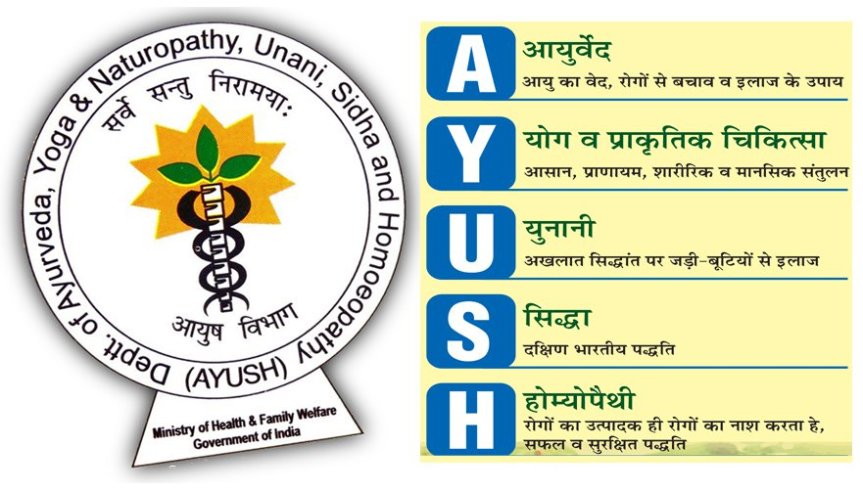
Steps Taken to Popularize AYUSH System of Medicine in the Country

eople across the country are following traditional Indian medical systems of AYUSH. According to the data available, 17,73,75,226 Patients visited Government Health Care Facilities under AYUSH in OPD and 19,57,921 were admitted as inpatients in   2017-18.

The measures taken by the Ministry of AYUSH for further propagating the natural medical systems are: –


  1. The Ministry of AYUSH regularly observes days dedicated to AYUSH Systems of Medicine Viz. International Day of Yoga, Ayurveda Day, Unani Day, Siddha Day, Naturopathy Day, Homoeopathy Day etc. to create awareness about the benefits of the respective AYUSH system of medicine including natural medical systems.
  2. A Central Sector Scheme for Promotion of Information Education and Communication (IEC) in AYUSH has been devised by the Ministry of AYUSH for this purpose. Under this Scheme, the Ministry of AYUSH takes up initiatives to create awareness about and to promote AYUSH systems of medicine including natural medical systems. These initiatives include organizing Arogya Fairs, Melas, Conferences, Exhibitions, Seminars, Workshops, Symposium, Yoga Fests and Ayurveda Parvs. The IEC Scheme also supports undertaking publicity campaigns through electronic media, print media and social media amongst the citizens in the country.
  3. Ministry of AYUSH has established five Research Councils namely CCRAS, CCRUM, CCRS, CCRH & CCRYN for Research in Ayurveda, Unani, Siddha, Homoeopathy, Yoga & Naturopathy respectively. These research councils apart from engaging in clinical/ field research also undertake the following activities: –
  1. Running Mobile health programme catering to backward regions and SC/ST communities
  2. Undertaking health awareness campaigns.
  3. Piloting Innovations like telemedicine with the help of common service centres.


Ministry of AYUSH has already established advanced research institutes in  Indian medical systems through Research Councils.

  1. Central Council for Research in Homoeopathy (CCRH) has 21 Research Centres in different States/UTs for advance research in Homoeopathy.
  2. Central Council for Research in Ayurvedic Sciences (CCRAS) is carrying out its research activities through its 30 Institutes/Centres/Units located all over India and also through collaborative studies with various Universities, Hospitals and Institutes. The research activities of the Council include Medicinal Plant Research (Medico-Ethno Botanical Survey, Pharmacognosy and Tissue Culture), Drug Standardization, Pharmacological Research, Clinical Research, Literary Research & Documentation and Tribal Health Care Research Programme.
  3. Central Council in Research in Siddha (CCRS) had initiated steps to establish advanced research in Siddha medical systems through IMR and EMR projects. Clinical research, Epidemiological research, Drug research, Literary and fundamental research, and Medicinal plants research are being carried out in these units.  Totally there are 25 ongoing IMR projects and 8 completed IMR projects of CCRS.
  4. CCRS is equipped with state of the art infrastructure with sophisticated instruments in the following departments: Department of Clinical Research, Department of Bio-chemistry, Department of Pathology, Radiology, Department of Chemistry, Department of Pharmacognosy etc.,
  5. CCRS had published 32 books publications and 456 scientific research articles in various indexed international / national peer reviewed journals.
  6. CCRS had signed MoU with reputed institutions / organizations for initiating collaborative research works.
  7. Central Council for Research in Unani Medicines (CCRUM) has also carried out Advance Research on various diseases in collaboration with other renowned academic/scientific institutes.
  8. CCRUM is also authenticating raw drugs as well as compound formulations by implementing Pharmacognostical methods viz., Macroscopy, Microscopy and Powder Microscopy; Physico-chemical methods and instrumental such as TLC fingerprint.


At present there is no such proposal for consideration to establish a University for Siddha and Unani Medical systems in Tamil Nadu on the lines of   Dr. Sarvapalli Radhakrishnan  Ayurveda Medical University in Rajasthan. However, the matter comes

under the purview of State Government.


This information was given by the Minister of State (Independent Charge) for AYUSH, Shri Shripad Yesso Naik in written reply to a question in Lok Sabha today.

***

Dr. Harsh Vardhan inaugurates 6th National Summit on Good, Replicable Practices and Innovations in Public Health Care Systems.

This NHM National Summit is a celebration of ideas, innovations and knowledge sharing and we all must take back these and ensure that we implement at-least a few of them” said Dr. Harsh Vardhan, Union Minister for Health & Family Welfare as he inaugurated the Sixth National Summit on Good, Replicable Practices and Innovations along with Union Minister of State for Health & Family Welfare Shri. Ashwini Kumar Choubey, Shri. Vijay Rupani, Chief Minister, Gujarat, Shri. Nitinbhai Ratilal Patel, Dy. CM & Minister of Health & Family Welfare, Gujarat and Dr. Vinod K Paul, Member (Health), NITI AAYOG at Gandhinagar (Gujarat), today.
Calling the Summit as the aggregating ground of new ideas, t

houghts and expression, the Union Health Minister stated “MoHFW endeavors to foster cross learning amongst the State Governments, NGOs, Healthcare organizations and other academic institutions so that these work in concordance to achieve the overarching public health goals.” Dr. Harsh Vardhan suggested that similar to the National NHM Summit, the States also can have State/Regional conferences for sharing of knowledge within the districts. “Let the national knowledge and ideas be transmitted to the districts level health workers, functionaries through the state/regional conferences”. He added that in addition to presenting best practices, states must also emulate and roll out the best practices from other states. He stressed the importance of self-auditing for performance assessment.

Dr. Harsh Vardhan also highlighted the noteworthy achievements in the health sector during the past few years such as Ayushman Bharat, Telemedicine, NHP 2017, Medical Education, and Health Systems Strengthening.
Shri. Ashwini Kumar Choubey, Minister of State for Health & Family Welfare appreciated the efforts made by the Centre and States to reach out to the beneficiaries and provide access to quality healthcare services. He said that “The Summit provides a valuable platform for sharing of knowledge and experiences. This will immensely contribute to meeting our health outcomes”. He also highlighted the initiatives taken for providing preventive, promotive, affordable and quality healthcare services including AYUSH services.
Dr. Vinod K Paul, Member (Health), NITI AAYOG addressing the summit emphasized the importance of system level change for greater strides in healthcare and termed NHM as great program for healthcare delivery to the populace. He said ”There are seven building blocks for the future advances in the health sector- focused stewardship, adequate finance, capable HR, health commodities, service delivery which is equity & quality driven, information systems, and community participation for social and behavior change.”
The Summit saw the launch of SAANS campaign i.e. “Social Awareness and Action to Neutralise Pneumonia Successfully” to control Pneumonia. This campaign will mobilize people’s for protecting and preventing children from pneumonia; and health personnel, governments & other stakeholders to prioritize treatment towards the control of Pneumonia — one of the most fatal childhood illnesses. Under the SAANS campaign, new interventions have been included like a child suffering from Pneumonia will be treated with pre-referral dose of Amoxicillin by ASHA; Pulse Oximeter will be used at the Health and Wellness Centre for identification of low oxygen levels in the blood and if required treated by use of Oxygen. The initiative also aims to create mass awareness about the most effective solutions for pneumonia prevention like breast feeding, age appropriate complementary feeding, immunization, good quality air etc.
The web portal for home based care of children including newborn visited by ASHA, was also launched at the Summit. This portal has all the resource materials (training materials, IEC videos, audios, banners, posters etc.) for the home visits of ASHAs. The portal will also be used to monitor the progress of programs regarding home visits by ASHAs and referral of sick newborns, an intervention considered globally as game changer to improve child survival and also improve nutritional status and overall development of children.
The dignitaries also unveiled the Coffee Table Book documenting the Good and Replicable Practices presented during the Summit. Dr. Harsh Vardhan along with other dignitaries acknowledged the exemplary progress of States and Union Territories in key health indicators and programme areas by presenting them with awards for excellent performance.
The Ministry of Health & Family Welfare, GoI holds National Summit on Good, Replicable Practices and Innovations in Public Healthcare Systems in India annually to recognize, showcase and document various best practices and innovations adopted by States and UTs for addressing their public health challenges and to improving their health outcomes though better implementation of programmes under National Health Mission (NHM). More than 300 participants attended the summit. At the summit 37 good practices were presented and 73 emerging good practices were showcased in the form of poster presentations.
Also present at the event were senior officers from MoHFW; State Health Secretaries and NHM MDs; Health Care Officers from almost all States and Union Territories along with Programme Officers, heads of Programme Divisions, MoHFW; Development Partners; Civil Society representatives and other healthcare organizations.
***