The Stream of Judgment

Streams After 10th - Arts (Humanities), Commerce & Science

Before I start with the topic of this article, I would like to quote a great man’s wise words where he says, “Education is the most powerful weapon which you use to change the world.” The great man is none other than Nelson Mandela. I would like to ask all the Indian readers specifically out there. How many times have you come across criticism and comments about choosing the arts and humanities stream? I do know a lot of people would have because I too have seen and come across criticism, comments, statements, judgments for choosing the arts and humanities stream and not science, medical, engineering, or commerce stream like people around me.

Importance of the Stream of Arts and Humanities

Though we all know that all streams of education are important for society, community, and the world we still seem to be shunning and showing negativity to the stream of arts and humanities. Not many people realize this but, the stream of arts and humanities is so very important in human society and its well-being but people still seem to show negativity towards it due to prejudice and assumptions. I also have to put it here that people who graduated from the stream of arts and humanities and took the role of psychologist, journalist, dancer, painter, comedian, or any other job with this stream played an equally important role like doctors, biologists, engineers, and investors during the tough and gruesome time of the pandemic. That is something we should not forget. This stands as proof of how equally important the stream of arts and humanities is in the world.

The stream of arts and humanities has equal importance like any other stream or sometimes even more in other countries. However, in India that is not the case at least, this is what I feel. I will also agree when people say that things are slowly changing and people have become more accepting with the stream of arts and humanities. This has been possible because the younger generations are standing for their choices, breaking the stereotype, creating more awareness, breaking the chain of choosing to engineer, medical or science stream like everyone else in the family and so much more. This has been possible not just because of a certain age group but also because of the collective work of the community, society, government, and people of the country. Nevertheless, this is not enough. There is still a lot that needs to be done so that all streams are considered equal in the eyes of the people.

Let me tell all the readers out there something very important that we need to remember before we make critical statements and judgments about the stream of art and humanities. Our daily lives would be incomplete even till today had there not been people taking the stream of arts and humanities. Let me explain. We would not have content in the newspaper if people had not chosen to become news reporters, journalists, editors, or even for those matter writers. Yes, with the use of science and technology, people invented the machines that print newspapers but then what is the point of that invention if there are no people who have taken arts and humanities stream and decided to become a part of writing and bringing the news to people. We all enjoy and entertain ourselves with movies, TV shows, OTT series, and so much more these days. However what we fail to understand is that without people choosing the stream of arts and humanities there would not be actors, cinematographers, content writers, makeup artists, costume designers, production houses, etc. psychologists, therapists, etc play such a massive role during the pandemic and in our daily lives. If these people would not have chosen the stream of arts and humanities and pursued psychology then our mental health would have a negative impact on our physical and emotional health.

I can go on and on for a long time by giving basic and daily life examples about the importance of the stream of arts and humanities. It is high time now that we stop giving our judgment and criticism about the people who have chosen this stream and this stream in general.

Petition · Put a stop to all negative views , bias and criticisms against  the Humanities/Arts Stream. · Change.org

Is the Stream of Arts and Humanities easier than other streams?

Let me ask all the readers out there, how many times have people around you, ask the question “Did you choose arts because science was tough?” or questions like ‘Did you choose arts because you don’t like it or you are weak in math?” or something like “Did you score less in your board exams and that is why you took arts?” I for sure came across all this. I still do under so many different circumstances. The prejudiced idea that arts are something very easy and people who study this do not have to work hard is one of the biggest reasons for these kinds of questions.

However, what people fail to understand is that there is nothing easy about arts. If you ask me, it is tougher than the other streams. Let me tell you why. The reason is that in other streams there are definite notes, definitions, diagrams, tables, etc. Yes, some streams of arts and humanities have these too, for example, psychology. However, there are still many more subjects under this stream that do not have these definite things. Students who study the course of arts and humanities have to do their research, go through different sites and read about different things for their answers, should know the information of the past, present and sometimes even the future to be able to write their answers. These are just some of the things I mention that arts and humanities students do most of the time. There is so much more.

I have even met people who say “Arts is so easy and you still do not score well why?” This statement comes not just from outside people but sometimes even from our parents. This is because of the belief that arts and humanities are easy. Nevertheless, the stream of arts and humanities is over the years has become more complex with the rapid growth and changes in society and the world. The other thing, which many people are not aware of, is that students cannot get the complete marks for their answers even if their answers have everything that needs to be there. This is something that is often omitted and not taken into consideration by people who are not part of the arts and humanities stream. Just because answers do not get full marks, does not mean some people score above 95% and just because some people do does not mean everyone can.

The stream of arts and humanities is so important in society. Students who study through this course are aware not just of the information that is there in their syllabus but also so much more than that. This includes everything that is happening in society and the world. I can go on and on about the benefits of the stream of arts and humanities stream. The reason I chose this topic for my article is that it is high time that this stream is not judged and rather accepted with an open mind and heart.

 To conclude, with a quote by Michelle Obama where says, “The arts and humanities define who we are as people. That is their power to remind us of what we each have to offer, and what we all have in common. To help us understand our history and imagine our future. To give us hope in the moments of struggle and to bring us together when nothing else will.”

References

  1. Google searches for images and quotes.
The Art Of Storytelling

Yakshagana Traditional Dance & Theatre, History, Style, Origin

India has always been the land of diverse beauty, culture, tradition, and ethnicity. Each state in this country is brimming with unique and exquisite art, dance, music, food, and the best part even different districts in each state of India are different from each other and have so much to offer for all those people who want to experience the very essence of this country. Today my article is going to be about a famous traditional dance that is in performance in the southern state of Karnataka known as the Yakshagana. There is a quote by Sadhguru, which suits perfectly this topic, and he says and quotes “Indian classical music and dance are not just for entertainment rather they are designed to elevate your consciousness.”

Each state in India has its traditional dances based on their originating places. The state of Uttar Pradesh has its traditional dance of Kathak, while Tamil Nadu has Bharatanatyam, and so on. Each state has its specialty and these traditional dances bring out the essence and beauty of the state. The traditional dance that is in focus in this article is Yakshagana. To all the people reading this article if you ever get the chance of going to the splendid state of Karnataka do make a trip to a show Yakshagana. Karnataka is a state that has something for everybody. It is not only famous for its big buildings and metropolitan cities but its beautiful beaches, forests, temples, food, architecture, and so much more.

Understanding the Yakshagana

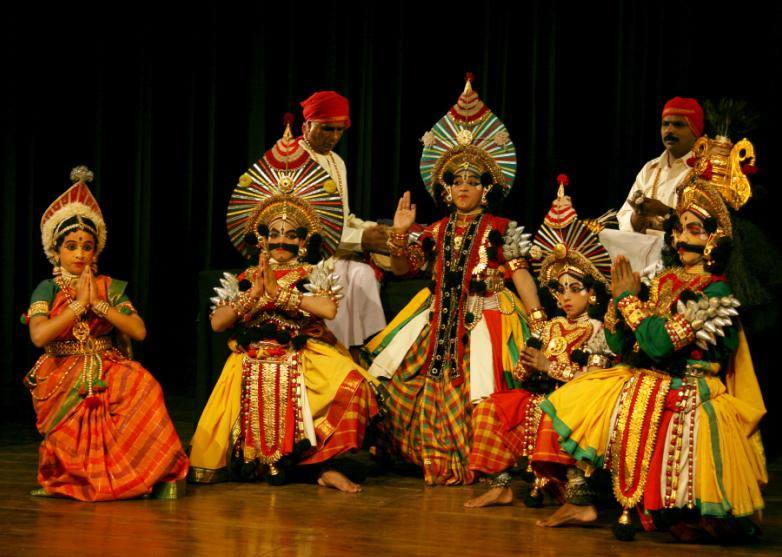
The traditional dance of Yakshagana unbelievably dates back to the time of 1556 CE. Yakshagana is a traditional theatre dance that came into development in southern districts of Karnataka mainly in Uttara Kannada, Dakshina Kannada, Shimoga, Udupi, and the southern part of Chikmanagaluru. Yakshagana is a dance form that combines dance, music, costume, makeup, dialogues, and a unique style and form of stage techniques. This dance form is also very famous in the Kasargod district of Kerala. Not many people know that a traditional dance form has different names when referred to in different districts. The Tulu Nadu region starts from Dakshina Kannada and ends in Kasargod, the people in these regions refer to Yakshagana as “Thenku thittu” while from Udupi to Uttara Kannada, people in these regions refer to Yakshagana as “Badaga thittu”. The story and concept of which Yakshagana is in performance are the stories of Ramayana, Mahabharata, Bhagavata, and all the other epics. The epics come from both the Hindu and the Jain ancient traditions with the inclusion of other ancient traditions as well. Yakshagana is to surface during the Bhakti movement. Another important thing about this traditional dance is that it is not just a dance form but is also a theatre performance. Yakshagana is a combination of dance and plays that makes it unique and distinct from the rest of the dance forms.

Everyone must be wondering what the word Yakshagana itself means. The answer to this query is the word Yaksha, which means the natural spirits, and Gaana, which means music. The word Yakshagana itself has so much history. If I write just about history then it will take forever. So do go on various sites and do make it a point to read about the history of Yakshagana that is available online.

Yakshagana has a rich amount of culture and tradition. Therefore, every element of this traditional dance has its beauty and importance. One of the most fundamental elements that stand out from the rest is music. Yakshagana has separate traditional music that is devoted especially only for this dance. However, Yakshagana music has the same ancestors as Classical Karnatik music and Hindustani music yet it is still very different from the two of them. The music consists of Himmela, which is the background music group of instrumental music of the maddale (hand drum), pungi (pipe), harmonium, and chande (loud drums). The dance and the dialogue group of the Yakshagana consist of actors and dancers as the mummela.

8 Yakshagana ideas | face art, traditional dance, dance of india

Fascinating things about Yakshagana

Yakshagana is a very old folk tradition combination of dance and play. One of the most fascinating things about folk tradition, which one can see in Yakshagana as well, is the breaking of the fourth wall. Let us understand this.

 Anything that is shown has three major visible walls which are on the left, right, and behind. There is also the existence of a fourth invisible wall between the audience and the people on the stage; this is commonly the fourth wall. This fourth wall is visible in old English plays where there is no interaction or obvious acknowledgment of the presence of the audience. This fourth wall is usually broken in Indian Folk Tradition. There is constant interaction, communication, and dialogues that acknowledge and make the audience feel their presence during the show. If you visit any show then you can see observe this in their performance.

 The next folk tradition of Yakshagana is the introduction of Bhagavata. The Bhagavata in the performance of Yakshagana sings with the group of Himmela about the happenings of the scene, which shows through dance, by the Mummela group. The Bhagavata in the performance of Yakshagana is the god of the play. They are responsible for the panning of the story in the performance. We can see the Bhagavata in and out of the very fascinating play and is an out-of-the-box structure.

Another fascinating thing about Yakshagana is that no performance is the same. There are no particular dialogues that are in the setting for the actors. It is impromptu yet very methodical and structural. That is the beauty of Yakshagana. Even if one sits the same play twice, one can instantly notice that the dialogues are different both the times but the story structure is still the same.

Yakshagana is typically in performance in temples. It starts very early in the morning and ends usually at night. The fascinating reason here is the reason for the place of performance. Temples are usually in selection because people need food and shelter during the performance as it takes place the entire day. The temple and stage look beautiful with leaves and flowers emphasizing and showing that something is happening in the temple. Today, Yakshagana performances also happen in the cities as well and these usually happen in the auditoriums.

One of the most eye-catching and breathtaking parts of Yakshagana is the makeup and the costume. The costume of the actors is very colorful and plays an important role in holding the gaze of the audience. The costume is slightly heavy and the headgears that are worn are very heavy. There is thick and dense makeup that is worn by the actors who are dancing and enacting. This is done to make the facial expressions more distinct and visible to the audience. The fascinating part is how these experienced Yakshagana actors dance, jump, and speak so loudly without any devices that everyone will know what is happening and the audience without any problem will be able to hear the actors clearly and properly.

There is so much more in Yakshagana’s components that can be studied in detail through various sites available online. I have just provided some basic information about this beautiful, historical, and traditional dance form that tells us stories in ways out of our imagination. One should read about Yakshagana more and learn about this dance. I would like to conclude with a meaningful quote by Adithya. R. Upadhya where says, “Yakshagana is the art at its finest form”.

References

  1. Google searches for images and quotes
  2. Information on Yakshagana – Wikipedia

Growth Profile of an Indian Startup- CRED

CRED is an Indian Fintech Company which offers rewards to customers who use its platform to pay their bills of credit card.

CRED is a Bengaluru Based startup found by Kunal Shah who also happens to be the CEO of the Company. Kunal is an Indian Entrepreneur who has been recognized for launching new ventures for the second time. Kunal graduated in Philosophy from Wilson College and later pursued MBA from Narsee Monjee Institute of Management Studies, but he had to drop in the middle to pursue his dreams as an Entrepreneur. Kunal started his entrepreneurial journey with PaisaBack, a website for cashback, coupons, and other offers for the users along with Sandeep Tandon. However, They had to shut down its operations in order to find FreeCharge in 2010. FreeCharge was acquired by Snapdeal in April 2015 but the company still continued as an independent entity led by Shah. He left the firm the next year and eventually founded Cred in 2018, which has successfully turned into an unicorn on April 6, 2021.

BUSINESS MODEL – CRED

The plan of action of the organization comprises of four sections :

•   The Cred application

The Cred application is a flawless looking, wonderfully planned application, which the clients can visit assuming they need to go through the offers that are accessible after they cover their charge card bills. They can without much of a stretch sign up on the application and view every one of the offers that they can profit.

Businesses that give offers on the application

The clients of Cred can likewise track down a wide scope of offers from various organizations. For this, CRED carries organizations locally available and works together with them. Alongside helping CRED and its clients, who can benefit of the restrictive offers given by the organizations, it is likewise a mutually beneficial arrangement for the organizations. This is on the grounds that they are likewise immensely profited from the perceivability they get.

• Users who take care of their Mastercard bills –

CRED additionally fills in as a smooth and remunerating stage for the clients who use it to take care of their Visa bills. In contrast with banking or other applications, the end-clients can pick CRED as an application to take care of their charge card bills and get various offers and advantages. Then again, the clients who like the application likewise share CRED with their loved ones.

Cred Mint

Cred uncovered its new element, Cred Mint on August 20, 2021, which is planned as a distributed loaning stage assist that with willing assistance Cred clients loan their inactive cash to trustworthy individuals. It is a somewhat straightforward interaction that just permits the dependable Cred individuals bragging an insignificant FICO rating of 750 or higher to be the borrowers. Besides, the banks can likewise pull out their cash at whatever point they need with the premium that they have aggregated for the period.

GROWTH OF CRED-

Cred has shown a consistent development consistently. Being a startup that was established in 2018, it effectively joined the unicorn club on April 6, 2021, shutting its Series D round where the organization had wiped up $215 million. CRED controls “22% of all charge card installments in India consistently,” said Kunal Shah in his assertion delivered in April 2021.

Kunal Shah further took to his Linkedin profile on July 10, 2021, and shared features of the achievements came to by CRED in the long stretch of June:

Cred presented Cred Mint on August 20, 2021, which will fill in as a distributed loaning highlight that can be utilized by the clients of CRED. Cred Mint has been dispatched by Cred in a joint effort with RBI-supported P2P Non-Banking Financial Company.

With this component, the Cred individuals would now be able to loan cash to the reliable individuals from Cred dependent on the predefined financing costs. Cred Mint can be utilized to loan one more reliable client to assist them with acquiring around 9% per credit. In any case, it is likewise announced that Cred Mint may be accessible for clients with nice FICO assessments.

CONCLUSION-

Cred is one of the best examples of this how a brand born in India of an idea to provide users to make credit card payments through its app for which they get rewarded. Others have also been able to provide value to other countries, This is the power of globalization and this was achieved because of an entrepreneur who had a vision in his mind.

Loose Tongues

Words Coming Out of Mouth Images, Stock Photos & Vectors | Shutterstock

An important quote before the start of the article that reads as and l quote “Be sure to taste your own words before you speak them out”. This article speaks about the topic that often is in the limelight but is later forgotten with time. 

Today an article of mine aims to bring light on one of the most saddening and disturbing yet many common incidents. We must acknowledge and bring some change even though it angers and disgusts us. 

You might all be wondering about what topic I am trying to speak about and bring into the limelight. The topic I am talking about is the comments that politicians, actors, and every other person makes about rape. I am sure every one of you just had a memory flash of at least one such incident.

The purpose of this article is not to pinpoint anyone or name anybody but to question the very idea and purpose of making such comments or statements. It is mind-boggling and shocking to even believe that these people are not aware of the kind of anger, pain, disgust, and even the horror the people of this country experience when these so-called rich, influential, and successful people make such horrible and lewd comments. 

Jharkhand engineering student burnt to death after being allegedly gang- raped | Indiablooms - First Portal on Digital News Management

Understanding these events:

Let us take the most recent incident that took place in our country where a Congress MLA and an ex-speaker from Karnataka in the Karnataka Assembly made a derogatory statement and quote “There is a saying that when rape is inevitable, lie down and enjoy it. That is exactly the position which you are in,” This statement is not even a month old. It happened on December 16th, 2021. The worst and the shocking part have not even arrived yet. The speaker of the assembly during that time also had a laugh about it and so did other party members in the assembly and continued with the assembly. This assembly was to discuss the farm laws that have no connection regarding rape. The idea, motive, and purpose to make such a comment has to be a negative one. 

This is not even the first derogatory comment this year. Imagine if we had to sit and go back just 2-3 years. We would realize making sexist and horrible comments about rape has become very common. 

The thing that these politicians, actors, or anybody else who make such comments does not understand is that they have a lot of power and influence over other people around them and society. Therefore, the saying that these people need to remember is not the ones like the MLA say but the ones such as “With great Power comes Great Responsibility ”. There are various other sources that such things are shown and taught to people like movies, shows, etc which are doing the job of passing such messages so the last thing anybody wants is even real people like politicians who have been voted, actors and actresses who are loved to make such comments and spread the wrong message to the society. The pain, anger, and disgust should not just be limited to the people who made such comments but also the people who were okay with it and let it go away. These people also play a very important role in keeping intact such ideas and perspectives about any topic and not just rape. 

An apology is not sufficient: 

We are all aware of what happens after anyone makes such comments and rightfully so there is an outcry about it. There is an apology made by the person through various networks and media platforms. This apology is taken into consideration and then the matter is let go away. Yes, the people are glad that there is some apology and acceptance for their actions but that is not enough if the same thing keeps happening again and again in some way or the other. An apology is not enough because after accepting your mistake you should also make it a point to responsibly believe in it and make sure to educate and bring about awareness to people around you so that nobody else makes such a mistake. Another thing that needs to be taken into consideration and understood is that once the person has given an apology, the outcry, and the anger should not stop there. According to my thinking, it should continue until there is some change in the societal thought process, and the people who make such comments are responsible for bringing about the change. 

Stricter rules, regulations, and laws

The first and the most important thing that needs to be done are to bring about stricter and sterner laws towards the committing of a crime like rape. Second is filing complaints against actors, politicians or anyone else for that matter is not enough. We still live in a country where rich and influential people have control over the process of things that happen through money. Bribery, corruption, and exploitation also play an important role in matters as such and simple complaints will not do the job. There have to be stricter and better rules to deal with and take actions against people who make derogatory and hate-filled comments and statements about rape. The necessity to fasten this process is not just increasing amounts of rape cases but also the amount of such sexist and disgusting statements that are made are increasing in society. It is also important to bring about stricter rules so that people understand that actions of behaving and saying things that are hurtful and questionable are not acceptable in society by the people. The people who make such comments need to be held responsible and made to pay a price that brings about some kind of change in them.  

People need to understand that jokes are meant to be harmless and funny. Making jokes about rape is nowhere close to funny. Making jokes, statements need to be thought through, and only then should people speak after considering everything. There is a saying that says that “Think twice before you speak” this needs to be kept in mind of people and should especially be kept in mind by people who hold a lot of power, strength, and influence over people and the society that they are part of directly or indirectly.  

To conclude it is time for people to speak up, bring about awareness, and create a change in society by not hiding and speaking about things such as rape so that the taboo, superstitions, negative and bad ideas, perspectives, and thought processes about rape is erased from the society and the world becomes a better place to live for everybody.   

References

  1.  Google search for images


Real Equality

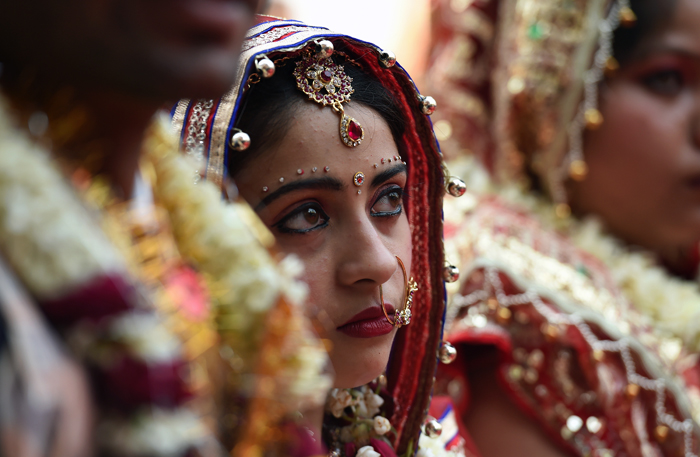
India Is Home To A Third Of World's Child Brides. Half Of India's Girls Get  Married Before 18

I read a quote somewhere a while back which I would like to put here before I start with my topic. The quote was by Diane Mariechild and it read, “A woman is a full circle. Within her is the power to create, nurture, and transform”. Things are slowly getting for women. While many might disagree about this because there are, still so many atrocities and sufferings women go through to date but the rise of women in various aspects and platforms stands as evidence of the progress and growth of women.  

This article is about the most recent incident that occurred in the Lok Sabha. The passing of the historic bill increased the eligibility criteria of marriage for women from 18 to 21. Well according to what I feel is this was a necessary change that needed to be made as we are living in 2021 moving forward to 2022 and having so much progress and development then our thoughts about women getting the same kind of treatment as men cannot be stuck in the old generation. What did surprise me and got me thinking was how a bill, which was meant for the betterment of women, had presented contentment and at the same time managed to bring a sense of resentment in people. Shockingly more women seemed to be questioning the bill than men are. Before we get into this, first let us understand what exactly the bill exactly means.

INTRODUCTION OF THE BILL

Photo Gallery : Lok Sabha

A bill seeking to fix 21 years as the legal age for marriage for women came to be introduced by the Union Minister of India Mrs. Smriti Irani. This bill knows as the Prohibition of Child Marriage (Amendment Bill) 2021. The bill aims to show and bring about a sense of equality among men and women by keeping the same age for marriage for both genders. This bill also seeks to amend the other seven laws that are quite personal as well. Those bills are the Indian Christian Marriage Act; the Parsi Marriage and Divorce Act; the Muslim Personal Law (Shariat) Application Act; the Special Marriage Act; the Hindu Marriage Act; and the Foreign Marriage Act. The bill also aims to overpower all present working laws. This also included any kind of customs, usage, or practices that holds the parties responsible.  This brought about a lot of backlash from various opposition parties of the country and therefore this bill is present in the standing committee. The union minister also made an important point when she says and I quote “As a democracy, we are 75 years late in providing equal rights to men and women to enter into matrimony”. The union minister also made very important points when she brought out the fact that even in 2021 7% of the girls as young as 15 years are becoming pregnant and nearly 23% of girls have been married away even before the age of 18. This bill not only aims to bring this down but also brings about responsibility in both the parents and brings about an increase in nutrition and care for women. This bill is going to become effective 2 years from the dates it receives Presidential confirmation

Why it is being considered a decisive step?

Women all over the world have been fighting for their rights and equality for almost many decades now. Women have learned to struggle and sacrifice many things for their rights, equality, and importance in society from the very beginning and still have a long way to go. Therefore, when this bill was brought out in the Lok Sabha by a woman minister, I am sure this created a feeling of relief, joy, and happiness in the minds of all women.  This also created a sense of hope to keep moving forward and had a huge impact on women and their strength in a positive and supportive manner. The bill not only aims at making the physical life better for women but also the emotional mental part of their lives. Impactful things like this bill is a much necessary change that needs to be brought into society so that women are not expected to do things because they have reached a “certain age” which again is not decided by the women but all the other people that the small girl child is growing up with.

Why is there a sense of resentment?

Two things need to be understood by the readers. The sense of resentment has no connection with the opposition parties or their sentences of backlash. Here one is trying to understand the resentment or questions that lie in the common person’s mind. The second and the most important thing is that there is no resentment or sadness towards the bill or the aim behind the proposal of the bill. The resentment comes from a place of the bill not being enough to bring about change. There is so much more that needs to be done so that this bill has some value and establishment in society. This change and betterment should not just come from the urban sector but also the rural sector.

Child marriage is still predominant and present in societies, especially in small towns and villages. Girls are still considered a curse, a burden that needs to be cleared off before it is too late. Girls are married off even before they turn 18 and expect to look after household activities and chores from a very young age. Yes, things have gotten better at least to a small percentage concerning their education but they still have not been able to complete their education. The idea of being kept at home after they mature and at the same time making sure they leave their home is very perplexing and intriguing.

Both these sides make us question the very idea of equality, which is not just between men and women but also between women themselves. Yes, this bill does bring a sense of equality but true equality can only be achieved when more things are done to make women’s lives better. This change does not necessarily have to be as big as passing the bill; it could be as small bringing about awareness and taking small measures to make sure that every girl or woman whether she belongs to the urban society or the rural society has equal rights and opportunities like anybody else on the planet.

To conclude with a quote by Michelle Obama as she says and I quote “As women, we should stand up for ourselves. We must stand for each other. We must stand up for justice for all.”

References

  1. https://theprint.in/india/modi-govt-introduces-bill-to-increase-womens-marriage-age-to-21-years-in-lok-sabha/785232/

India announces it’s first two cases of newly emerged Omicron Virus

Possibly, the worst covid variant named Omicron has been discovered in South Africa and has already spread to many other countries namely United Kingdom, Netherlands, Italy, Australia, Hong Kong and many others including India.The highly contagious virus Omicron was reported to WHO by South Africa on november 24 and has been designated as “Variant of Concern”. India reported it’s very first two cases of the virus on thursday itself in Karnataka. The Health ministry said that the patients are 66 and 46 years and no severe symptoms have been identified so far. Karnataka Chief Minister Basavraj Bommai said on thursday that the state will issue new covid guidelines and have been testing international travellers coming from at-risk countries after two people were detected with being affected with the virus. As part of new guidelines, the centre has made it mandatory to have a negative RT-PCR report for travellers coming from other countries. After India confirmed two omicron cases of the coronavirus in Karnataka on Thursday, there is some good news waiting in the wings. Government data shows that the Narendra Modi-led central government’s door-to-door vaccination drive, ‘Har Ghar Dastak’, has been able to boost Covid-19 vaccinations. With more and more people getting jabbed in the country, it might help in boosting people’s morale as the whole nation gears up to fight against the newly founded strain “Omicron”.

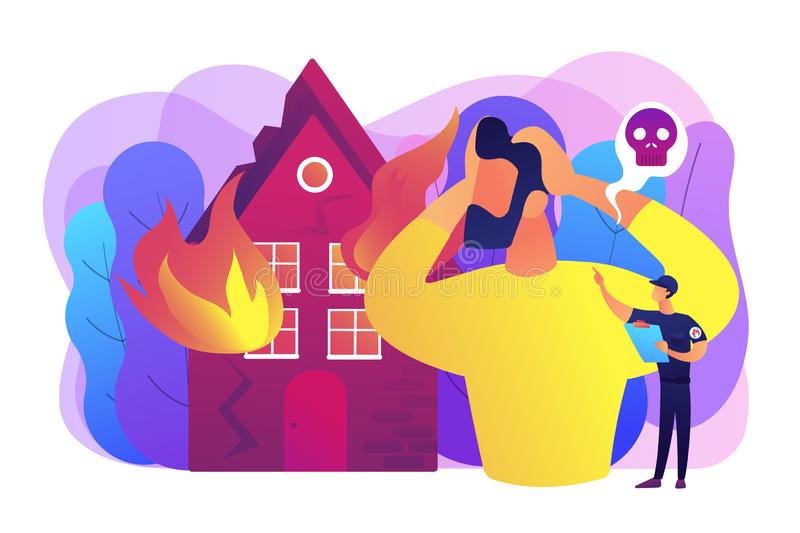
Residential Fire Risk

Fire is the visible effect of the process of combustion – a special type of chemical reaction. It occurs between oxygen in the air and some sort of fuel. When a fire occurs, there is a very little time to escape for it engulfs everything in its ambit in less than 2 minutes. Contrary to popular belief, over 90% of fire related deaths are caused by smoke suffocation. According to the World Health Organization (WHO) statistics, more than 300,000 deaths are caused annually by fire induced burns and more than 90% of these deaths occur in low- and middle-income countries. These figures clearly shows that fire poses serious threat to both life and property. Fire hazards can be understood as any actions, materials or conditions that might increase the size or severity of a fire or that might cause a fire to start. Of all the natural disasters, fit is fire only that is both beneficial to man and his environment as well as destructive and deadly.

Sun and Lao (2014) assert that fire risk analysis of high-rise building is of crucial importance due to the reason that there still lacks efficient systematic fire extinguish method to ensure a safety evacuation process. They further elaborated that fire risk assessment is an organized and methodical review of a specific building, the activities carried that increase the likelihood of a fire to start and cause harm to the occupants and properties. The fire risk assessment involves five steps – hazard identification, scenario design fire, quantitative risk analysis, risk assessment comparing to acceptable criteria and risk management. They highlighted the point that fire scenario is a key parameter of the whole fire risk assessment process – which involves a combination of potential fire size, fire location, combustible characteristics, availability of fire system etc. They further emphasized through their study based on China that risk analysis is important to evaluate fire protection strategies for a particular application or for a class of facility or operation in fire safety engineering. Beside this, the risk assessment will assist the stakeholders and operator to manage the facilities in a right way.

A comparative study regarding the level of fire safety between Residential and Commercial Construction sites were carried out by Sivakumar, Malathy and Sivaprakash (2018). The study brought the point that residential building satisfies overall fire safety conditions better than commercial buildings. However, combustible materials are stored and maintained in a better manner in commercial buildings than residential buildings and tend to satisfy overall structural feature parameters when compared to residential buildings. Moreover, the study highlighted that fire emergency, signage and emergency planning in commercial buildings are better than in residential buildings. They asserted that, however, both the commercial and residential buildings need to focus more on reducing risk and on improving fire safety and fire risk assessment standards and compliances regarding the protection of people working in the construction sites.

Huang and Xin (2013) in their paper based on China presents fire risk analysis model-based scenario clusters and its application in fire risk management of buildings. The paper has described the quantitative analysis model for fire risk analysis. They bring out the point that fire risk analysis method allows a quick check of any safety deficiencies in residential buildings and any need to provide additional fire protection measures to minimize fire risk. However, they argue that the method does not include consideration of the logical development of fire events. Moreover, the quantification parameters of fire risk are based on statistical data (if available). Thus, they assert that more research is required to verify the methods of some parameters in international contexts. The paper also conformed to the idea that building fire risk analysis serves as a basis for fire risk management.

Masoumi, Genderen and Maleki (2019) attempted to carry a comprehensive fire risk assessment in the dense urban areas of Zanjan city using Information Fusion based on GIS modeling. The study has highlighted the increasing importance of information fusion technologies for the analysis of geospatial information. The use of different types of spatial and attribute data from different sources deploying GIS and geospatial analyses can act as powerful tools to aggregate information in order to assess disaster risk in urban and regional scales. The result of sensitivity analyses also indicated that the social training factor is the most effective causative factor in the fire risk.

Kodur, Kumar and Rafi (2019) in their paper, ‘Fire hazard in buildings: review, assessment and strategies for improving fire safety,’ presents a critical review of current fire protection measures and their applicability to address current challenges relating to fire hazards in buildings. Based on the review, an integrated framework for mitigation of fire hazards is proposed. The proposed framework involves enhancement of fire safety in four key areas: fire protection features in buildings, regulation and enforcement, consumer awareness and technology and resources advancement. Detailed strategies on improving fire safety in buildings in these four key areas are presented, and future research and training needs are identified. The study has brought forth the point that Current fire protection measures lead to an unquantified level of fire safety in buildings, provide minimal strategies to mitigate fire hazard and do not account for contemporary fire hazard issues. They highlighted that Implementing key measures that include reliable fire protection systems, proper regulation and enforcement of building code provisions, enhancement of public awareness and proper use of technology and resources is key to mitigating fire hazard in buildings. Major research and training required to improve fire safety in buildings include developing cost-effective fire suppression systems and rational fire design approaches, characterizing new materials and developing performance-based codes.

Groner (2015) in his paper describes a decision model for managing the movement of building occupants during fir emergencies. The study assert that sophisticated education and training would improve the responses of occupant movement managers. Accepting that it is unlikely for a great increase in resources being dedicated to it, the study forwards a ‘simple mental model’ – which should help occupant movement managers avoid mistakes in both planning for and responding to fire emergencies. The research assert that the model relies on the abilities of people to analyse and synthesize inputs and people are notably effective at this task given a mental model that is simple enough to easily recall.

Among different types of disasters, fire constitutes a significant threat to life and property in any type of settlement whether urban or rural possession. In India, the data on fire related deaths are provided by National Crime Records Bureau (NCRB) under Accidental Deaths & Suicides in India (ADSI). According to study conducted by India Risk Survey in 2018, Fire outbreak is the third largest risk to be faced by the people in continuity of operations on the other hand the Accidental Deaths and Suicides in India report, 2019 states that residential buildings are most prone to fire outbreaks due to faulty behaviour of residents. According to ADSI reported 11,037 cases of fire accidents in the country during 2019 which rendered 10915 deaths and injuries to 441 persons. The cause-wise analysis of fire accidents revealed that 58.0% of total deaths were reported in residential/dwelling buildings during the mentioned year. The residential fire risks arise from both inappropriate structural attributes and faulty behavioural practices like using nonstandard electrical goods, no capacity building in case of disaster, congestion in residential localities and no maintenance of electrical equipment’s.

Cities across India are growing at exuberant rates. However, as we build new cities and expand old ones, we must not forget the necessary features that make up these urban spaces. Fire safety is crucial in urban and rural habitats, and there must be continued investments in equipment and infrastructure to guarantee the safety of the residents. It’s time our civic authorities, town planners and fire service officials pay more attention to fire safety in residential colonies and ensure that they have at least some rudimentary fire engines. It is also important to educate residents on dealing with a fire. Along with these, fire risk assessment should be duly done to ensure proper evacuation plan as well as the adoption of all possible best measure to prevent fires. This will go a long way in saving life.

In India, though there are several rules and laws, codes and standards associated with fire safety, these are rarely followed. Neglective behaviour in following fire safety measures caused several major fires in numerous occupancies and a few of them even resulted in catastrophes, however, there aren’t any provisions for fire safety legislation in India regarding the objectives, scope, methodology, and periodicity of the Fire Safety Audit.

Home is a place where you build memories and seeing it burning down to ashes can be the most terrifying event in one’s life. Though a scary thought, a lot can be done to prevent fire from happening. Fire Hazard in the residential buildings are the most common hazard especially because of the ignorance on the part of the residents. Even if we cannot control anything and everything, however, we can take some steps to help reduce the chances of fire from occurring as well to reduce the smoke damage.

REFERENCES

Groner, N. (2016). A Decision Model for Recommending which Building Occupants should Move where During Fire Emergencies. Fire Safety Journal, 20-29.

Kodur, V. K. (2019). Fire Hazards in Building: Review, Assessments and Strategies for Improving Fire Safety. PSU Research Review, 4(1), 1-23.

Mausoumi, Z. G. (2019). Fire Risk Assessment in Dense Urban Areas Using Information Fusion Techniques. International Journal of Geo-Information(8), 2-20.

Ministry of Home Affairs. (2020). Accidental Deaths and Suicide in India, 2019. New Delhi: National Crime Records Bureau.

Sivakumar, C. M. (2018). A Study on Fire Safety on Residential and Commercial        Construction Sites. Archives of Civil Engineering, LXIV(2), 161-174.

Sun, X. L. (2014). Fire Risk Assessment for Super High- Rise Buildings. Procedia Engineering, 492-501.

Xin, J. H. (2013). Fire Risk Analysis of Residential Buildings based on Scenario Clusters and its Application in Fire Risk Management. Fire Safety Journal, 72-78.

Image Credit: Google

Cyclone Risk Assessment – cas eof Andhra Pradesh

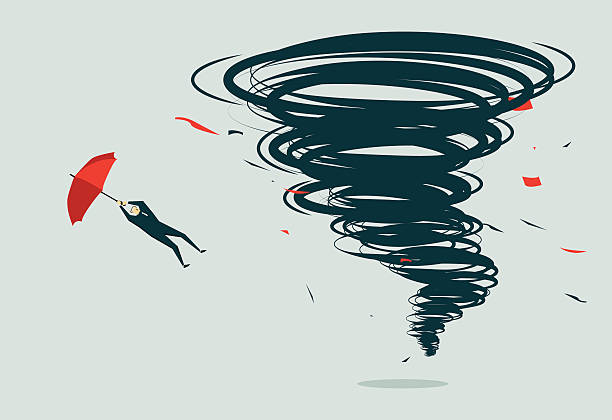
A disaster is a sudden, calamitous event that seriously disrupts the functioning of a community or society and causes human, material, and economic or environmental losses that exceed the community’s or society’s ability to cope using its own resources. Though often caused by nature, disasters can have human origins. The combination of hazards, vulnerability and inability to reduce the potential negative consequences of risk results in disaster.

The Disaster Management Act of India defines disaster as: “A catastrophe, mishap, calamity or grave occurrence in any area arising from natural or man-made causes or by accident or negligence, which results in substantial loss of life or human suffering or damage to and destruction of property or damage to, or degradation of environment and is of such a nature or magnitude as to be beyond the coping capacity of the community of the affected area.

Andhra Pradesh is the second most vulnerable state to cyclone after Odisha. The state risks being battered by cyclones of moderate to severe intensity every two to three years. In the past 40 years, there may not be a single year in which the state did not experience either a storm, a cyclone or heavy rains and floods. The deadliest cyclone in the past 40 years was the one that struck Andhra’s coast in November 1977, killing about 10,000 people. About 250,000 cattle heads perished, one million houses were damaged and crops on 1.35 million hectares (ha) were destroyed that year. According to the State Disaster Management Department, about 44 per cent of the state is vulnerable to tropical storms and related disasters. Vulnerability to storm surges is not uniform along the coast of Andhra. The stretch between Nizampatnam in Guntur district and Machilipatnam in Krishna district is the most prone to storm surges. East and West Godavari districts, with vast stretches of paddy fields and irrigation, drainage canals always bear the brunt of cyclones accompanied by strong winds and pounding rains. In the aftermath of cyclones, these areas get flooded, leading to huge crop losses besides other damage. More than one cyclone in the same season is not unusual for Andhra Pradesh. The vulnerability also increases manifold given its location and the demographic structure of the state. The decrease of alertness in disaster management that often occurs after a few years’ lull in occurrence of cyclones, known as the “fading memory syndrome,” also contributes to increases in loss of lives and property damage.

Proneness or to be prone means ‘likely to do’ or in this case, the districts most likely to be affected by cyclone. Out of 9 districts prone to cyclones, 4 districts i.e., Nellore, Guntur, East Godavari and Srikakulam fall in the category of very highly prone to cyclones. The remaining 5 districts i.e., Prakasam, Krishna, West Godavari, Vishakhapatnam and Vizianagaram fall in the category of highly prone to cyclones. It can be noticed that the coastal districts range from very highly to highly prone to cyclone without any in-between.  Apart from these, the non-coastal districts such as Chittoor and Cuddapah also at times experience the wrath of cyclones in the form of heavy and torrential rainfall or the landfall of cyclones.

All the coastal districts of Andhra Pradesh except one fall in the very highly vulnerable category, which is not a surprise given the density of population in the districts. The density map of Andhra Pradesh shows that out of 9 coastal districts, 4 districts i.e., Srikakulam, East Godavari, West Godavari and Krishna fall in the category of high density of population; 3 coastal districts i.e., Vizianagaram, Vishakhapatnam and Guntur fall in the category of moderate density of population. The reasons for low density districts such as Nellore and Prakasam still being highly vulnerable can be due to high rate of poverty, transport and infrastructure vulnerability.

The density map of Andhra Pradesh shows that out of 9 coastal districts, 4 districts i.e., Srikakulam, East Godavari, West Godavari and Krishna fall in the category of high density of population; 3 coastal districts i.e., Vizianagaram, Vishakhapatnam and Guntur fall in the category of moderate density of population. The reasons for low density districts such as Nellore and Prakasam still being highly vulnerable can be due to high rate of poverty, transport and infrastructure vulnerability.

Over last few decades, NGOs have become important players in the development process across the globe, engaged in wide ranging activities starting with community development to training, policy research, and advocacy. Their organisational flexibility, informal work style, and close engagement with grassroots communities enable them to deliver services to people at lower costs.  Their ability to mobilise people and understand people’s concerns enables them to better articulate problems encountered by people. Thus, they play a very important role in preparedness and mitigation process. For instance, Indian Red Cross Society – New Delhi and other charitable organisations were involved in helping people in Titli cyclone-affected areas. As per the article in The Hindu, IRCS has distributed relief materials, including 1594 kitchen sets, 800 saris, 700 dhotis, 440 buckets, 400 towels, 700 mosquito nets and 405 tarpaulins in selected villages, according to IRCS Srikakulam wing chairperson P. Jaganmohana Rao, Further, after studying the severe damage in 1,145 villages, IRCS-New Delhi, IRCS-A.P. and Telangana units sent relief material worth more than Rs. 62 lakhs. Given such an important role played by voluntary organisations, APSDMA is developing a database of interested volunteers from various governmental and non-governmental agencies and offer them training programs on interesting aspects under Disaster management, preparedness, mitigation and awareness building. This will provide the volunteers with an on-ground experience of the situation and also provide them with an opportunity to learn and teach others what they have observed.

It is equally important for risk assessment to take from time to time so that it comes to light where the improvement is needed the most, where are the loopholes as regular risk assessment will enable to support the development of effective cyclone mitigation policies and implementation of specific measures. Studies have suggested that new developments in the terms of embankments, cyclone shelters, and roadways should be in the places with high and very-high-risk zone. Though successful early warning system reduced the loss of life, false information and lack of awareness claimed many human lives. It has been recommended that Incorporating the spatial distribution of vulnerable people in warning messages may increase trust of people to the warning signals. One of the studies brought in the “fading memory syndrome” in which not being the target of cyclone and cyclonic storms for more than a couple of years makes people forget about the disastrous affect and a reduction has been observed. Thus, the government needs to focus on this aspect too and conduct mock drills among the coastal population at regular intervals, keep them aware about the impact and train the evacuation process. It is equally important to impart education to the population regarding the same. With the proper involvement of the civil bodies and local people, a vastly informed citizens can be placed.

References:

Ahameed, B. K. (2019). Coastal Social Vulnerability and Risk Analysis for Cyclone Hazard Along the Andhra Pradesh, East Coast of India. KN-Journal of Cartography and Geographic Information. doi:DOI: 10.1007/s42489-019-00029-9

GOI-UNDP. (n.d.). Severe Cyclone Storm Titli’s Impact on State of Andhra Pradesh .

Government of Andhra Pradesh. (Accessed 2021). Andhra Pradesh State Disaster Management Authority. Retrieved from Google: https://apsdma.ap.gov.in/

Raghavan, S. &. (2003). Trends in Tropical Cyclone Impact: A Study in Andhra Pradeh, India. American Meterological Society, 635-644. doi:10.1175/BAMS-84-5-635

Rao, A. D. (2005). Vulnerability from Storm Surges and Cyclone Wind Fields on the Coast of Andhra Pradesh, India. Nat Hazards, 515-529. doi:10.1007/s11069-006-9047-4

Image Credit: Google

E-Waste

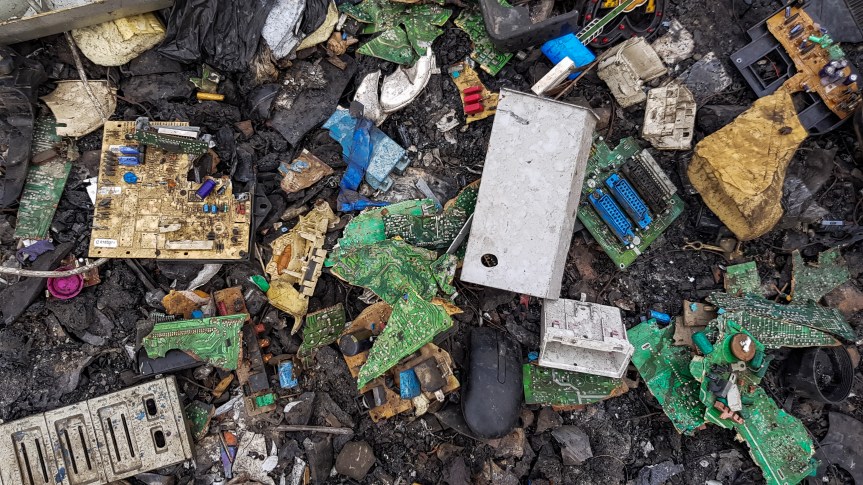
E-waste is an informal name used for electronic waste implying all those electronic products which have reached the end of their useful life, for example, mobile phones, dryer, fax machine and other electronic equipments.

A techno hungry world is emerging facilitated by digital empowerment policies by various governments and is all ready to get upgraded to a generation of 5G and thus due to the emergence of newer electronic products in the market and the improved standard of living, the usage of these electronic products have shot up and so the amount of electronic waste produced every day is growing enormously. According to UN report on environment,2019, the amount of e-waste generated at the world level is about 50 million tonnes but only 20 percent of it is properly recycled.

A joint report has been in 2019 published by World Economic Forum and the World Business Council for Sustainable Development which attracts attention for the need of crucial vision in this field. As per the data released in the new Global E-Waste Report, the market value of our spent devices amounts to $62.5 billion, three times more than the annual output of the world’s silver mines. It also informed that more than 120 countries have an annual GDP lower than the value of our growing pile of global e-waste.

India has become one of the largest dumping sites of e-waste by many countries and the domestic production itself accounts for about 2 million tonnes per annum but merely 5 percent of the wastes is recycled.

According to a report published in Times of India, 2019, over 95 percent of e-waste generated is managed by unorganized sector and the scrap dealers in the market, dismantle the disposed products instead of recycling it. The current rate of e-waste generated in India is 4.56 times greater than the annual e-waste processing capacity offered by the nation, which leads to illegal and improper dumping of hazardous waste.

The proper collection, disposal and recycling(management) of e-waste is necessary, for it possess a serious threat to our health. A long exposure to the chemicals, pollutants emitted after dumping the e-waste without following the proper procedures leads to damage of nervous system, skin diseases, heart and liver damage and many other health problems. It also contaminates our natural surroundings, damages the soil quality and also pollutes the water quality.

If plastic pollution in the life below water and life above water is one of the major environmental challenges, the ebb and flow of public opinion should also turn towards to the huge generation of electronic waste in the present era. The numbers are fearsome: 50 million tonnes of e-waste are produced each year, and left unchecked this could more than double to 120 million tonnes by 2050.

In our country, the amount of E-waste generated is increasingly rapidly and with increasing fascination as well as dependence on new technology, the amount of e-waste is expected to grow in the coming years. The main area where our country lacks is in the proper management of electronic wastes. There is no large-scale organised E-waste recycling sector in our country and the largest recycling hotspot are in the unorganised sector and some are illegal too as the largest recycling hotspot of the capital city is in Seemapuri. It is not a hidden truth anymore that working conditions in the unorganised sector is not bed of roses. The poor conditions of the worker as well as the hazardous nature of the wastes that they deal with will always pose a fatal threat to their life. Moreover, the large scale dumping of electronic wastes from developed countries to India owing to availability of abundance of cheap labour and flexible environmental laws further enhances the problem.

The lack of public awareness about the proper disposal of e-waste and lack of proper implementation of laws adds to the problem. There are very few IT companies that actually seriously implement the provision of Extended Producer Responsibility. In most cases electronic wastes remain unattended in the households. As already seen above that due to lack of awareness, people throw waste electronics and electrical equipment with their household wastes. There is a tendency among the people not to care about the things that they have discarded, ignoring the fact that its implication in the long run is going to affect them too.

The laws should be properly implemented; government should try to reach the nook and corner of the country and spread awareness through the provision of Digital world and many more: Let’s bring into use 5Rs: Refuse, Reduce, Reuse, Repurpose, Recycle. People in their locality as a community need to take steps for keeping their locality clean. As a community they should establish a committee that would oversee the management of all the wastes. There should be educational programme in different localities with the government aid about waste segregation, their harmful impact and how it can be mitigated. But all this would be possible when we as an individual come forward and work together. We need to start the reform from our home, then our locality, then our region, then our country and the world as a whole. The role of youth in this regard is very important. Being one of the most enthusiastic section of society, they carry within themselves a huge reservoir of untapped energy. With proper direction, they can be play major role in spreading awareness as well as in taking initiatives for proper management of electronic or any kind of wastes.

We need to understand that our earth as a whole is on the verge of collapsing, so we can’t let different kinds of waste piling up. Our attention should turn towards such grave issues instead of fighting over petty issues and work together towards adopting a sustainable lifestyle so as to save a future for ourselves and others too. Let’s not make the word ‘sustainable’ a cliché term and should try and have a sustainable approach towards everything.

REFERENCES:

  • Bishnoi, V. N., & Shah, T. (2014), E-Waste: A New Environmental Challenge. International Journal of Advanced Research in Computer Science and Software Engineering, 4(2), pp. 442-447.
  • Down to Earth (2019), Recycling of e-waste in India and its potential.
  • Jadhav, S. (2013), Electronic Waste: A Growing Concern in Today’s Environment Sustainability. International Journal of Social Science & Interdisciplinary Research, 2(2), pp. 139-147.
  • Sikdar, M., Dr., & Vaniya, S. (2014), The New Millennium and Emerging Concerns. International Journal of Scientific and research Publications, 4(2), pp. 1-12.
  • Sivaramanam, S. (2013), E-Waste Management, Disposal and its impacts on the environment. Universal Journal of Environmental Research and Technology, 3(5), pp. 531-537.
  • Uddin, M. J. (2012), Journal and Conference Paper On (Environment) E-Waste Management. IOSR Journal of Mechanical and Civil Engineering, 2(1), pp. 25-45.
  • UNEP (2010), A Report – recycling- from E-waste to resources. February 22, 2010.
  • World Economic Forum (2019), The world’s e-waste is a huge problem. It’s also a golden opportunity.

Image Credit: Google

Odisha and Agriculture – A Literature Review

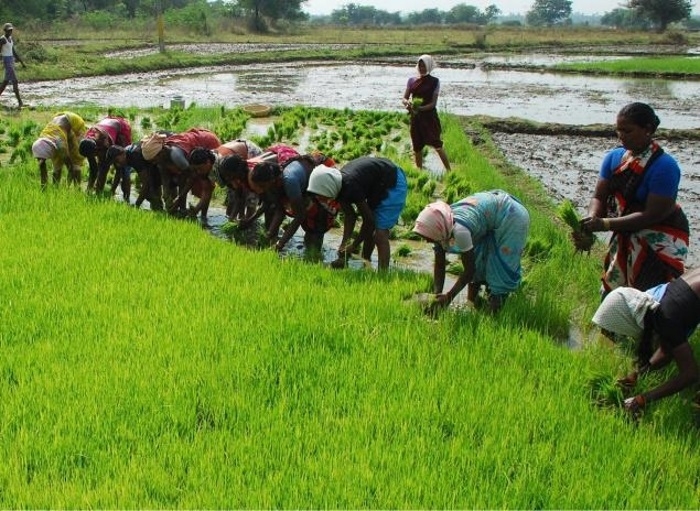
Odisha is primarily an Agrarian State. Agriculture is the mainstay of the majority of the population. Though agriculture sector contributes only about 26 per cent to the Gross State Domestic Product (GSDP), almost more than 70% of the population is dependent on it. In spite of such low contribution, the labour force has not yet move out of this sector which ultimately results in low per capita income in this sector.

Agriculture in Odisha is characterized by low productivity due to sporadic rainfall, disrupted irrigation facilities as well as due to the fact that the state is prone to various natural calamities (Pattanayak & Nayak, 2003). Various literatures have studied cropping pattern of the state and have indicated that the cropping pattern of the state is changing over the years. Various studies have also confirmed that Odisha have not only experienced low productivity but also declining productivity. Agriculture plays a major role in providing a source of livelihood to a large proportion of population. Its development becomes important as it still remains the sector where majority of the workers are concentrated. It provides raw materials to various agro-based industries and also ensures food security-the basic necessity of life.

A number of studies have examined and analysed the agrarian structure and conditions of the country in terms of cropping pattern, determinants of cropping pattern, conditions of the agricultural labourers among many others. Given below is the review of few studies that have discussed various aspect of agrarian conditions in their work. The relevance of these works increase keeping in mind the point that they have brought out successfully many key issues in agriculture and how cropping pattern of a region or the country reflects the infrastructure of a place. The study of these literature have been undertaken to get a clear picture of the subject concerned and an insight of different lenses through which agrarian conditions of the country have been looked upon, before embarking on the study.

Despite the changes made in the macroeconomic policy framework and trade liberalisation, Bhalla and Singh (2009: 34, 43, 44), argued that the agricultural sector in India neither experienced any significant growth subsequent to the initiation of economic reforms in 1991 nor did it derive the expected benefits from trade liberalisation. They further asserted that, when compared with the immediate pre-liberalisation period (1980-83 to 1990-93), agricultural in India recorded a visible deceleration in its growth rates of aggregate yield and output and the process of agricultural diversification during the post-liberalisation period (1990-93 to 2003-06). There are different reasons for its slowdown but decline in public investment in irrigation and water management and thus limited irrigation facilities can be said to affect it the most.

Mruthynajay and Praduman (2003: 159) argued that the cropping pattern strategy followed in post green revolution period has led to narrowing down the base of agricultural production. In terms of allocation of acreage, the cropping pattern in the agricultural scenario of India has been skewed towards food grain. Though area under non- food grain has increased, food grains are still dominant (Ghosh, 2011: 115). The cropping pattern changes revealed that area under different crops was strongly linked with decline in cost of production due to-government subsidies, improved irrigation facilities-hence increase in cropping intensity of certain crops such as that of rice and wheat (Mruthynajay and Praduman, 2003: 163). High yield of crops and subsequent expansion and substitution are also the major reasons for such a change post green revolution with rice, wheat, mustard and cotton emerging as main crops for the farmers with area under coarse cereals declining (Ghosh, 2011: 119). The expansion of area under such crops as well as substitution of coarse cereals resulted in narrowing of the base of production, and crops such as pulses and oilseeds were not given due attention. Thus, the success attained in food crop production post green revolution has also caused serious crop imbalances in the cropping pattern, widened regional disparities, increased instability in production and unplanned import of commodities. So, there is a need to re-examine green revolution strategy keeping in mind the crops and areas that were bypassed so far (Mruthynajay and Praduman, 2003: 165).

The cropping pattern in Orissa is such that most of the districts of Orissa are experiencing a lateral movement towards crop specialisation and crop diversification, but over the years, crop specialisation can be noticed, where about 50% of Gross Cropped area is under paddy due to high yield, improved irrigation facilities and changes in the food habits of people (Pattanayak and Nayak 2004: 6, 13). The adoption of modern varieties of rice (HYV) in Orissa, its degree of adoption is inversely related to the farm size while its intensity of adoption is proportional to its farm size and varies with access to modern inputs. These are positively associated with borrowing since lack of investible cash retard the process of diffusion of modern technologies while tenancy is negatively associated, for the moneylenders feel that the adoption of HYVP would reduce the dependency of tenants on them (Sarap and Vashisht,1994: 90, 92).

However, holding other factors constant, Pattanayak and Nayak (2004: 5, 10, 19) argued that the contribution of agriculture in primary sector and in Gross State Domestic Product has declined but the labour force has not move out of the primary sector in post- reform period in Orissa. The districts are diverging as far as agricultural productivity is concerned and asserted that this variation is due to variation in the use of inputs amongst the districts. The skewed distribution of land, small size of operational holding, high incidence of share tenancy and rural poverty are few of many factors which negatively affect the agricultural productivity. The long-term solution lies in improved agricultural productivity and conscious policy decisions to reduce inter district disparity.

Regarding change in labour demand, Lahiri (1970: A-111, A-114) confirms the general belief that demand for agricultural labour has increased due to High Yielding Varieties Programme (HYVP). There was a high variability amongst different states with respect to total labour required and hired labour as well as contribution to labour days was quite low in pre HYVP days; but on the basis of the data gathered, figures revealed that the introduction of HYVP led to the increase in demand for labours. He further makes a point that changes in the demand for agricultural labour are unable to completely explain the changes in the wage levels of agricultural workers. Since demand for agricultural labours are seasonal, season-wise analysis of wage level would to an extent give a picture of wage-demand relation. Post HYVP, demand for labour has increased; and regarding the changes in cropping pattern- it has been noticed that the tendency has been to shift towards only few crops such as that of paddy and wheat and ignoring other crops. Thus, the study of these literature brings forth the point that post green revolution, many new technologies came forth, but the strategy followed was concentrated to few crops and few developing regions causing regional imbalances. Another major debate that came forth is that the post reform period instead of witnessing growth in agricultural output as it was meant to, have faced declining productivity and growth. These phenomena were observed both at all India level as well as in Odisha.

Image credit: News Bharti

Retrieved from: Google

ECO FEMINISM IN INDIAN CONTEXT

According to Merriam-Webster, ecofeminism is a movement or a theory that applies feminist principles and ideas to ecological issues. This term was first coined by a French feminist, Francoise d’Eaubonne in her book “Le Feminisme ou la Mort” (Feminism or Death). She raised the point that patriarchy is the root cause of all ecological crisis – men’s control over women and nature have led to overpopulation and overexploitation of nature respectively. When we talk about the environmental disaster that’s taking place, the role of gender about how we can move forward comes into play.

As United Nations Environment Programme puts it, “Around the world, environmental conditions impact the lives of women and men in different ways as a result of existing inequalities. Gender roles often create differences in the ways men and women act in relation to the environment and in the ways men and women are enabled and prevented from acting as agents of environmental change”; and here comes the concept of ecofeminism.

In India, ecofeminist Vandana Shiva is the pioneer who prepared the ground for ecofeminism with a strong belief that women have always been the key to solve various societal problems and environmental problems are one of them. By highlighting their presence in the Indian literature, the nature and form of ecofeminism in India can be assessed. Literature in which the concept of ecofeminism has been taken into account ranges from early ecofeminism to the recent or the urbanized one such as ‘Nectar in a Sieve’ (1954) by Kamala Markandya, ‘Fire on the Mountain’ (1977) by Anita Desai, ‘A Riversutra’ (1993) by Gita Mehta, ‘The God of Small Things’ (1997) and ‘An Atlas of Impossible Longing’ (2008) by Arundhati Roy and ‘Monkey-Man’ (2010) by Usha K.R.

Many female Indian novelists not only explore the subjectivity that is embedded in the relationship of women and the patriarchal society but also make several social issues as the key subjects. Many of the works from twentieth century of such novelists have been regarded as effective mediums of ‘modernism and feminism’. With Arundhati Roy and Kiran Desai getting hold of Booker Prizes, works of Indian women novelists have been highlighted. Indian women’s fiction on the relationship between women and the environment has added to the theory and development of ecofeminism in India.

In the West, there are large bodies of literary accounts that have analyzed ecofeminism in different ideological terms but in India, the struggle to save environment went on for long even before it was accounted in the West. It was Vandana Shiva who brought ecofeminism movements to the forefront in India with her active involvement in the Chipko Movement- wherein women wrapped themselves around trees to prevent contractors from felling them off- as a young woman. The struggle to protect the environment is believed to be the same across all communities in India but we would be at a loss in our thinking if we ignore the fact that protests against environmental damage and questions of survival and subsistence are interlinked deeply with the axiom of caste, class and gender issues.  Vandana Shiva, the pioneer in this field, critiques that modern technology which has actually reinforced the patriarchal system and violence perpetuates it towards women and nature.  According to her, switching to such a lifestyle is deviating us from the traditional lifestyle which promotes human-environment balance ‘prakriti’. Under the influence and grab of these new developments, nature has been mercilessly exploited and feminine principles in terms of the environment are no longer considered for creativity and sanctity but merely to be passive resources. Thus, though women’s knowledge of dependence on nature for subsistence has been dissipated and marginalized under the grab of modern science, she strongly believes that third world women have the power within them for causing a change. In this regard, we can cite the example of ‘Narmada Bachao Andolan’ in which the active participation of Medha Patkar and Arundhati Roy helped the movement gain momentum.

The issue of sustainable development to protect the environment from degrading was raised in Conference on Environment and development at Stockholm in 1974 for the first time. If we turn the pages of history, we will find instances which prove that women are better connected with nature. Since time immemorial, they have been responsible to look after households and prepare basic needs for survival and thus, are better connected to nature.

Women’s interaction and relationship with nature must be located within the material reality of caste, class and gender. Women are the victims of environmental disaster but they can also be very effective agents of environmental regeneration – as is clearly evident by the success of the Chipko Movement. The need of the hour is to mobilise them into a proper channel and to give ecofeminism a proper voice and a way so that it does not turn into a superficial shout. There is also a need to abolish the class and caste basis for an effective collective movement in India. The adverse class-caste effects on women’s relationship with nature are reflected in the erosion of indigeneous knowledge and livelihood strategies on which poor, rural women are dependent. Thus, there is a need for ecofeminism in India to strengthen itself in the face of different barriers and be more than a superficial shout.

Image Credit: Google

Child Marriages in India – Two Steps Backward!

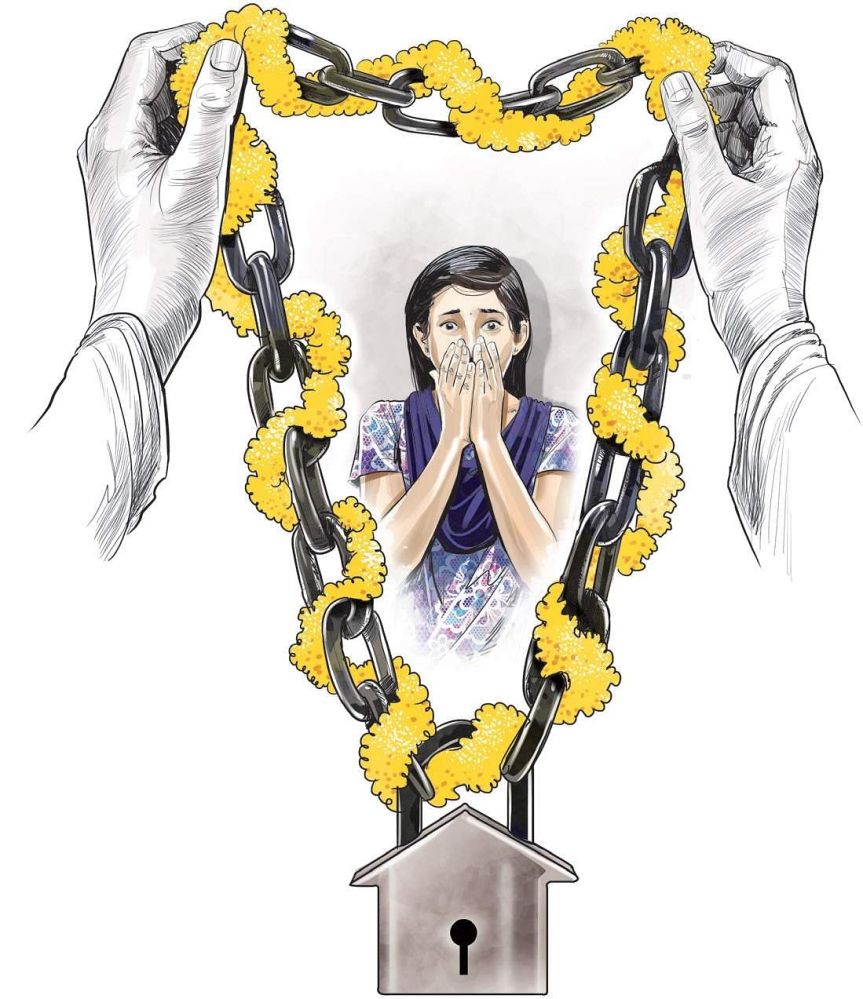
It is in common knowledge that the legal age of marriage for girls is 18 years and 21 years for boys. However, social factors and circumstances, age-old prejudices cloud the judgement – leading to child marriage as a solution to one thing or other. Child marriages are not confined to a single country but happens across the world – barring the girls from being empowered and at times, the boys too. Keeping this in mind, the Sustainable Development Goal 5, which focuses on ‘Gender Equality’ has set a target to stop child marriages entirely by 2030.

According to UNICEF report, about one in three of the world’s child brides live in India and about 102 million were married before turning 15 and were pregnant even before reaching adolescents. Among the states in India, 36 billion child brides have been reported to be in Uttar Pradesh. Other states with large population of child brides are Bihar, West Bengal, Maharashtra and Madhya Pradesh. Among the Southern states, Andhra Pradesh with 13 million tops the list followed by Tamil Nadu with 11 million. It has also been reported that about 60 % of the child brides who were married before turning 15 went through pregnancy before completing the adolescent period. Whereas those married after the age of 15 but before age 18, about 20% of them went through pregnancy before completing adolescent period. Those married before turning 15 tend to contribute to larger families. During the trying COVID-19 times when the entire focus of the world was on healthcare system, the child marriages saw a spike. United Nations Population Fund has estimated that COVID-19 will result in 13 million additional child marriages globally. Women Development and Child Welfare, India has reported that child marriages saw a rise of 27%. While rural areas are the hub of reports against child marriages, interestingly, “more than 25 percentage of child marriages in 2011 happened in urban districts. In other words, one out of five girls aged between 10-17 was married in urban districts in the ear 2011”, IANS reports (yourstory, 2017).

Even with the coming of Child Marriage Prevention Act, 2006, one of the reasons for its so not grand success can be the poor implementation and also the fact that people always find ways to try and tamper with the acts and laws. What actually force them to do so? What actually compels them to do – send off their buds away, forcing them to marriage? One of the reasons is being orphaned. COVID-19 has taken lives of many people, parents of many rendering the children orphan (Jejeebhoy, 2021). The lack of parents or unwilling relatives to take care of the orphaned, thus marriage. Financial constraints are another compelling factor. Families tend to marry all the girls together (if there is more than one girl and the family is drowning in poverty) in a single place to save money. It is sort of passing off the so-called burden.

It is important to bring back the focus of the world to the atrocities happening. While there are cases where girls have escaped, seeking help and prevention of child marriage, there are still alarming cases of ‘being stuck’ in the unlawful marriage. At this point of time, youth volunteers can be a powerful force. Bringing in more volunteers to spread awareness as well as for on ground action to prevent marriages from happening can be a helpful approach. The schemes of the government seem to fail to trickle down, more maybe because of the lack of effort in the lower vertical ladder. Bringing in the community in action can help to keep in check the local government and vice-versa.

Image Credit: Google

Women in Indian Politics

Women In Indian Politics

India is the largest democracy in the world and to sustain its democracy, it has undergone various struggles. As soon as it was freed from the clutches of colonialism, it was faced with the challenges of social and economic development of the country. The Constitution of India has bestowed various rights to its citizens to ensure equal rights and equality, liberty, gender justice etc. Though the constitutional provisions allowed the women to leave the relative calm of the domestic sphere to enter the male-dominated political sphere, the involvement of women in politics has been low key (Khanna, 2009). Khanna has classified the factors which affects the political participation of women in politics into three categories-psychological variables, socio-economic variable and political variable. The questions of reservation for women in representative institutions has long been debated in India. The issue of reservations for women had come up in the Constituent Assembly had been rejected by women representative as it was felt to be unnecessary, since the working of democracy in the normal course would ensure the representation of all sections of Indian society. The suggestions were also seen to underestimate the strength of women to compete as equals (Menon, 2000).

Reservation as a strategy for enhancing women’s status within the new polity had been rejected very early on by women leaders as a retrograde step (Rai & Sharma, 2000). But by 1996, women had emerged as a significant force in politics and almost the same representative of women’s movement who rejected any such demand, demanded reservations. Women had been at the forefront of the movements against corruption and price-rise that preceded the imposition of Emergency. The 1980s saw the emergence of the vocal and visible autonomous women’s groups (Menon, 2000). The question that looms before these is-if increase in the number of women in parliament will bring any socio-economic benefits to them. However, while the political ground in India is shifting with regard to women participation in politics, this is a slow and difficult process, which needs constant vigilance by movements and groups within and outside of state institutions (Rai and Sharma, 2000).

The debate regarding women’s reservations in parliament has taken various shapes. There have been number of arguments for and against it. But a fact that cannot be ignored is that women in India have climbed the ladder too. Although they are not huge in number but they are there. But being a woman, they have faced many brickbats and mud slung. The criticisms that they faced carried an ingrained sexism reflecting the very nature of a male dominated politics.

Access to politics for women has never been a bed of roses. Participation of women anywhere has never been easy but politics being a male bastion traditionally, makes it difficult for the presence of women in it. To penetrate this highly male dominated arena, women have to go through various struggles to consolidate one’s position in it. While it becomes relatively easier for some as compared to others, but it’s never without any struggle or completely easy for any woman.

If we analyse the journey of three women i.e., Indira Gandhi, Jayalalitha and Sushma Swaraj to politics, it will come to view that – initially, these women were not into politics either because they wanted to pursue some other career or they had no one to guide them to it but eventually as in the case of Indira Gandhi, the atmosphere (her house being the centre of freedom movement) during her time as well the pursuance of her father got her into politics. In case of Jayalalithaa, her mentor and guide MGR introduced her to politics while Sushma Swaraj after the pursuance of law developed an interest in politics with moral support from her family. Though Indira Gandhi had a background – involvement of her family in freedom struggle as well as in Parliamentary politics and Jayalalithaa was introduced into politics by the most loved figure of his time MGR and Sushma Swaraj dug her own well, none of these women had an easier path. Being a woman, they had to fight to consolidate their positions in the party. The path through which they got into politics and the intensity of struggle faced by them though differ, but nevertheless, they had to work twice as men to stay, to establish themselves. Jayalalithaa’s modesty had been violated in the Assembly Hall; Indira Gandhi had been dubbed as ‘only man in the politics’ and Sushma Swaraj had been the target of derogatory online trolls. Evaluating the leaders on the basis of their decisions in a democracy is one thing while criticism based on sexism is an entirely different thing.

Being from different family background, lives of every woman is bound to differ, the only common thing is that they are ‘woman’. Being a woman is all that takes for people to throw harsh comments. Indira Gandhi’s tenure was termed as authoritarian while Jayalalithaa was termed as irresponsible and inconsistent. It was so because they were able to keep in check their male counterparts. Any action by a women minister is judged by a gendered perspective and the online trolls faced by Sushma Swaraj while she was the Minister of External Affairs points to this. Jayalalithaa claimed that baseless questions were asked to her because she is a self- made woman.

Why is it that the corruption case of Jayalalithaa has been in the talk for a long time and not that of Mr. Karunanidhi (Jayalalithaa was condemned for arresting him on corruption case just because he was an old ‘man’)? Why is it that the decisions of Indira Gandhi have been equated with an authoritarian rule and not that any other male counterparts? Why the evaluation against every women politician involves threats of rape and beating? Is it because in this highly male dominated politics, participation of women is not accepted for it seems to threaten the authority of men?

The point is that it is not at all unfair evaluating any leader-women or men on the basis of their decisions but criticising them with ingrained sexism in it doesn’t seem to be compatible with the values that we cherish in our democracy. Women continue to be target of sexist remarks but it doesn’t mean that they have stopped asserting themselves with force. Women have taken very active part in various political activism. It doesn’t apply only to urban areas but also to rural women. They have been engaged in political acumen from protesting against the British rule to demands for equal wages. Feminist issues usually appear something else in public discourse (Menon, 2000) be it Uniform Civil Code or Women’s Reservation Bill. While women participation in politics is improving overtime but they constantly have to fight for their presence to be felt. They have to constantly engage in negotiations to consolidate their positions. India, though largest democracy in the world has long way to go to sustain its democratic principles and rights. It still lacks in many ways in terms of gender parity, not only in politics but in many other spheres. But participation of women in politics become important because until and unless women are in decision making position, safe and sustainable cities or lifestyle will be out of reach. Though, legally women have been granted rights but only with social development as well as change in the mind-set will bring life to these rights!

P.S. This is an opinionated piece – believing that everyone is entitled to opinions!

Image Credit: Google

G20 Summit ‘fruitful’: PM Modi

G20 Summit 'fruitful': PM Modi - The Hindu

prime Minister Narendra Modi on Sunday portrayed the just-finished up G20 Highest point in Rome as “productive” and said world pioneers had elaborate considerations on issues of worldwide significance like battling the pandemic, further developing wellbeing framework, helping financial collaboration and encouraging advancement.

The G20 pioneers during their two-day highest point, taken on the ‘Rome Assertion’ and the nations concurred that the Coronavirus inoculation is a worldwide public great.

“Leaving for Glasgow after a productive @g20org Culmination in Rome. During the Culmination, we had the option to have elaborate thoughts on issues of worldwide significance like battling the pandemic, further developing wellbeing foundation, supporting monetary collaboration and encouraging advancement,” Mr. Modi tweeted.

The G20 pioneers have concurred that the World Wellbeing Association would be fortified to quick track the interaction for crisis use authorisation for Coronavirus antibodies, India’s G20 Sherpa Piyush Goyal said on Sunday.

“We have truly got into the text the language that affirms that the created world has recognized that they have not done what’s necessary as far as meeting their responsibilities and that they should be more impending in giving money in giving innovation and (be) the empowering influences to make the progress to a spotless energy world later on,” he said.

Mr. Goyal said it was additionally concluded that the acknowledgment of Coronavirus immunizations which are considered to be protected and solid by the WHO will be commonly acknowledged subject to public and security laws that the nations might have.

In Rome, Mr. Modi cooperated with a few world pioneers, including U.S. President Joe Biden, French President Emmanuel Macron, Canadian PM Justin Trudeau, Singapore Head administrator Lee Hsien Loong and South Korean President Moon Jae-in among others.

In Glasgow, Mr. Modi will join in excess of 120 Heads of Government and Heads of State at the World Chiefs’ Highest point (WLS) of the 26th Gathering of Gatherings (COP26) to the Assembled Countries System Show on Environmental Change (UNFCCC) at the Scottish Occasion Grounds (SEC) – an assigned UN zone for the worldwide culmination.

During his three-day U.K. visit until Tuesday, Mr. Modi is leaned to address the COP26 culmination with a public assertion about India’s environment activity plan in the early evening meeting on Monday.

You Must Try These Bihari Cuisines Before You Die

Dal Poori:

It doesn’t only sounds delicious but it taste even better. We, Indians are crazy for poori’ and dal poori is another level of happiness to the list.The mixture of gram flour with a lil of chatpata masala stuffing of the puri makes it yummier and though it’s a Dussehra special recipe, one need not have to wait for any such special occasions.
The Dal poori is served even in normal days in a Bihari family with a spicy ‘sabji’ or curd.

Dal Poori

Parwal ki Mithai:

The amazingly delicious sweet made of Vegetable! Parwal ki mithai is quite a famous sweet in Bihar. Though it is made out of Parwal which is a vegetable, it is fantabulous to taste, and is made by stuffing the pointed gourd with khoya, giving it the right balance of sweet, salty and healthy. If you havent tasted this unusual mithai, dont give it a miss.

Parwal Ki Mithai

Pedakiya :

Pedakiya is the Bihari version of Gujiya. It is Bihar’s most famous fried sweet, it is made by stuffing flour stuffed with suji (semolina), khoya or grated coconut and is made on almost every festival. Whether its Holi, Teej, Diwali or Chatt you can expect Pedakiya.

Pedakiya

Khaja :

 Another name in the long list of amazing desert from Bihar. This wafery sweet snack is made from flour and sugar, is deep fried and then dipped in hot sugar syrup.Khaja is has a strong sweet taste, so all those who has sweet tooth can taste Khaja for sure. Silao ka Khaja is very famous.

khaja

 Litti Chokha :

The signature dish of Bihar and Biharis. If you have a Bihari friend, you must have tried Litti Chokha at least once in your life time.It is baked from wheat flour dough that is stuffed with a mixture of roasted gram flour, spices, lemon juice and pickle. And is served with chokha.Chokha is baked and pulped vegetables mixed with spices and onion.Litti these days are being served with chicken and mutton gravy as well for non Veg lovers.

littiii

Malpua :

Malpua is that sweetmeat to which all Biharis swear by for every special event and festival. Whether it’s Holi or Eid, Durga Puja or Ramzan the festival is incomplete if you haven’t eaten Malpua. Its batter is made by mixing flour, milk, sugar and mashed bananas and is deep fried in such a way that the edges go all crispy while the center is all soft. Mouth watering isn’t it? Tust me, if you are a sweet tooth, you cannot resist Malpua.

Malpua

Thekua/Khajuria:

Thekua is one of the most important ingredient  of ‘Chatt’ puja in Bihar. Ask any Bihari friend the occasions when this sweet is made at home and they all will say the same.Thekua or Khajuria is a snack made from wheat flour; jaggery or sugar mixed together, molded and deep fried in ghee.

Thekua

Nimki:

Stick Crackers: This snack made of flour and salt is deep fried. It is one of the perfect snack for evening chai.

nimki

The Bihari Kadi budi:

kadhis, from different parts of the country. The Bihari kadhi is a one that uses badi(pakoda) dumplings. It is considered inauspicious in Bihar to prepare plainkadhi without any dumplings.

Kadi badi

Tilkut :

Tilkut or bars of sesame seeds – a sweet cracker made by mixing the seeds either with jaggery or sugar – that is indelibly linked to Gaya, the birthplace of Buddhism, has been growing patrons not only in Bihar, but also in neighbouring countries like Pakistan and Bangladesh, and also the US. Come Makar Sakranti and every possible sweet shop in Bihar will sell one of these.

Bihari Cuisine

Peda:

Bihari peda-

Khurma/ShakarPala:

This snack made of flour, is deep fried and dipped in sugar syrup. As the sugar syrup cools off, it crystallizes.

khurma shakarpala