NATIONAL mean a person owing allegiance to and entitled to the protection of a sovereign state. CITIZEN is preferred for one owing allegiance to a state in which sovereign power is retained by the people and sharing in the political rights of those people. the rights of a free citizen SUBJECT implies allegiance to a personal sovereign such as a monarch. the king’s subjects NATIONAL designates one who may claim the protection of a state and applies especially to one living or traveling outside that state.
It’s been two years since the Pulwama terror attack which took the lives of 40 Indian soldiers happened. The 14th of February leaves a deep sigh in the hearts of every patriotic Indian. It is one of the worst hit attacks and is remembered as a ‘ black day’ in the history of India. While paying his tributes to the Pulwama martyrs on the occasion of the second anniversary of the attack, Prime minister Narendra Modi said: “No Indian can forget this day. Two years ago, the PulwamaAttack happened. We pay homage to all the martyrs we lost in that attack. We are proud of our security forces. Their bravery will continue to inspire generations”.
The gruesome incident which shook the whole nation took place on 14th February 2019 after the security convoy of 78 buses carrying around 2500 military personnels of the Indian Army was rammed by an IED-laden vehicle while traveling from Jammu to Srinagar. Investigations have revealed that the car which rammed the convoy was driven by a 22 year old suicide bomber Adil Ahmad Dar and carried nearly 300 Kgs of explosives including 80 Kgs of RDX and ammonium nitrate. The attack which took the lives of 40 CRPF jawans was later claimed by the Pakistan based terrorist group named Jaish-e-Mohammed (JeM). Even though the investigation agency was able to confirm the identity of the suicide bomber through DNA samples, they are yet to trace the source of the explosives used.
Along with the Prime Minister, many Senior officers of the various armed forces of the country also participated in the remembrance and paid tribute to the valiant heroes of the nation. “Did not Forgive, will not Forget: Salute to our brothers who made the supreme sacrifice for the nation in #PulwamaAttack. Indebted, we stand with the families of our valiant Bravehearts,” the force said in a Twitter post.
Do you know approximately 16 lakhs people apply for the NEET every year and more than 9 lakhs apply for the JEE ?
Well , this huge amount shows the craziness of Indian teens for the two prestigious exams of the country .
But do you know that India has a huge amount of unemployed engineers ? Or do you know that India has lack of specialized doctors ?
Why the things are like that ?
Ohk, let’s not talk about these things now. Let me ask you a simple question,”What subject did you opt in 11th & Why ?” Just try to find out the reason behind this “Why”. Was it because you wanted to be ‘something’ or because you liked ‘the subject’ or was it because others gave you the suggestion to opt ‘ that subject ‘ ? Or was it because you wanted to prove someone your intelligence or brilliance ? Or because of the reason that you scored the percentage of marks that fall in the category of the subject ?
Well , as much I observed ; I think most of you must have opted ‘the subject ‘ because of the reasons other than the first two.
Normally , high secondary students aren’t mature enough to decide what they actually want from the life. So they may ended up opting a subject , they don’t like.
In most of the cases , students opt for the science , not because they love it , but because they fall in the so called ” category of 90+”. Many students opt for science because of the respect the science students get. Ohk ohk , before you think more about this ‘ respect portion ‘, I think I should explain it to you.
Just observe the facial expressions of people , when you tell them that you belong to the arts stream.
Well , exceptions are always there. But it’s a typical Indian society’s thinking that arts students aren’t intelligent or science students are among the most intelligent creatures of the Earth. Well , commerce students act as the bridge between the two streams.
Ohk , let’s not talk about other categories. Let me pay my all attention to that typical “90+ or 10 cgpa” student. Students from this category get a lot of respect after their so called achievement in class 10th. So they can’t compromise with that ‘respect portion’. And the parents or relatives of these achievement holders have lot of expectations from them. And as everyone knows these ’90+’ students are made up for the science stream. They may or may not interested in science. They may or may not want to become a doctor or an engineer. But off course they don’t have any other option. Believe me , respect matters a lot. So these students ended up opting the pcm/pcb.
And then these students pack their luggage for the Kota or they enroll themselves in a local coaching. These ’90+’ are confident enough and see the dreams from the eyes of society. They prepare for the NEET or for the JEE. Many out of these get selected in first attempt , many require more than one attempt. Many of these don’t get selected , so they ended up choosing a private college or many decide to go with the BSc. Degree. Many out of these just realise at this moment about their dreams & change their graduation stream to Arts or Commerce.
But sadly , a lot of students commit suicide after not getting selected in these exams.
And a lot more who get selected in a government college or those who decide to graduate in technical field from private colleges ended up regretting. Well , such things are also valid for the ‘MBBS’ students. But let me talk about engineering students.
Just ask this question to an engineering student , that how much she/he is interested in her/his branch or field. You”ll get the answer, “why so many of them are unemployed.” And that’s the reason why you”ll find most of them engaged in non-technical activites. Off course there’re other reasons behind the ‘unemployment in engineering’. But , yes this is one out of those reasons.
Off course you”ll find this ’90+’ category students among the toppers in many prestigious exams , like CAT , or CSE. And most of them are from engineering background.
And off course many people blame them, ” why they did engineering if they don’t want to pursue it as a career.” If you’re also one of these people , then blame the society , not the students.
The society needs to restructure its thinking about science>commerce>>>arts
There should be stream counselling & career counselling sessions for the high school students.
Never opt for the subject or degree you don’t like. Choose your subjects wisely.
Do you know that more than 40% of food produced in India is wasted ?
Inspite of adequate food production , India’s ranking is 103 in global hunger index. According to UN approximately 190 million Indians remain undernourished. Estimated value of food wastage in India is ₹ 92,000 crore per annum.
Why the data seems so much scarious ? Do you know how much you contribute to this wastage of food ?
Well , next time if you go to a wedding , or a party , or function , just observe everyone around you , you yourself”ll get the answers of these questions. Just observe people in restaurants or observe everyone in your house.
And if you want to see the dark side of India , then just move out of your house , & observe people around the bins. There’re a lot who just eat food from the dustbins. Can you just imagine about them ?
For some it’s waste , for some a day’s Meal
There’s a lot of leftover but edible food which can be provided to those who need this. Many NGOs work in this direction. They collect the leftover edible food from restaurants , households , weddings & from other sources & provide them to the needy.
It’s not always like that , one can also leave some food in their plates when it’s simply not edible or when she/he isn’t feeling good.
And this leftover food from your plates then go to dustbins & then it decompose in landfills. This leads to the emission of green house gases like CO2 & CH4 .
The impacts of food waste on the global scale are huge. According to the World ResourcesInstitute, if food waste was a country, it would be the world’s third largest carbon emitter after the USA and China.
Food waste rotting in landfills produce millions of tonnes of methane in CO2 equivalents , a measure that directly compares the global warming potential of pollutants.
But do you know that wasted food can be used effectively ?
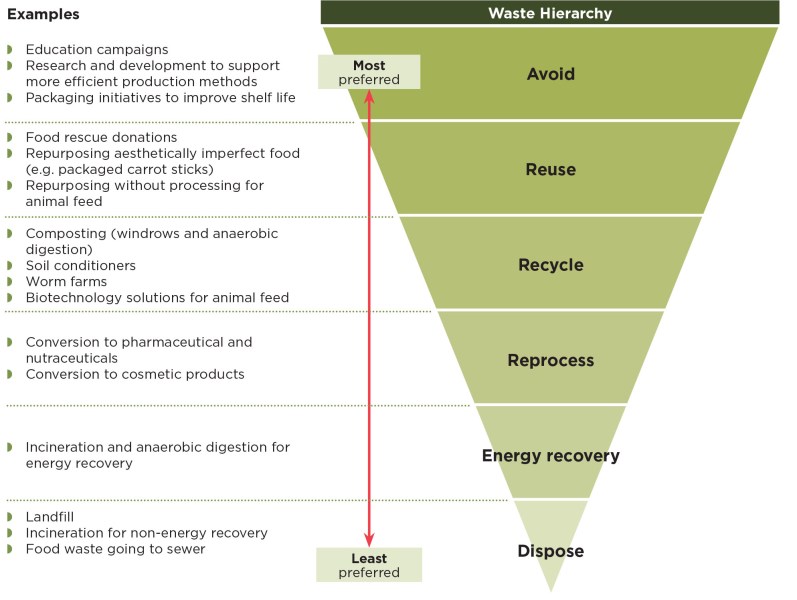
Yes , food waste can be transformed into valuable resources. It can be used as fertilizer , can be transformed into energy , & can be transformed into a bunch of innovative products , from pharmaceuticals to building materials.
Food waste can be recycled to produce nutrient rich fertilisers. Household composting recycles food waste in an environment where lot of oxygen is available. Fungi and bacteria break down the proteins, fats and carbohydrates in the waste into compost and CO2. The CO2 released from the breakdown of organic materials returns to the atmosphere , which is then captured by the plants. So it’s a carbon-neutral process.
Food waste can generate sustainable energy through waste-to-energy processes , where organic waste is used to generate electricity or heat. It is categorised as renewable energy. Various technologies are available to generate such energy ,although they do produce greenhouse gases like CO2, methane and nitrous oxide, so measures should be taken to reduce these emissions.
Extractions from the food waste can be used in production of biofuels like biodiesel & bioethanol.
Fruits and vegetables have the highest wastage rates of any food products. The Food and Agriculture Organization of the United Nations estimates that globally, 45 per cent of fruits and vegetables are wasted along the supply chain. But these scrapped by-products can be reprocessed into functional and valuable products.
There are researches investigating how mango seeds could be used to make surfboard wax & fibres in root vegetables could be used in super strong concrete. Rice husks have variety of applications , such as cement, insulators, adsorbents and various construction material.They can also be ground with glass to create lightweight bricks that are resistant to fire and termites.
Discarded parts of fruits & vegetables are often rich in bioactive phytochemicals. These extracts can be used in pharmaceuticals , dietary supplements & food preservatives. Extracts & oils derived from food waste also be used in cosmetics.
The essential chemicals needed to create bioplastics include various carbs, fats and cellulose fibre that can be extracted from food waste using methods like freeze drying and hydrodynamic shockwave technology. Bioplastics ,are plastics produced from renewable sources and can be used for packaging, coatings and adhesives.Turning food waste into bioplastics can reduce food and plastic waste. It could also minimize the emissions associated with plastic production.
There’s need to reliase that this waste is not only causing social & economical problem but is also a cause of green house gases emissions, & thus is a harm for the environment.
Obviously , we should think of alternate ways to transform the waste into resource but our first priority should be to minimize the waste.
Avoid wastage of food. Provide the leftover edible food to those who need this instead of throwing this out. Use the leftover food as fertilizer
Love & Food are meant for sharing not for wasting 🙂 Don’t waste Food 🙂
Koo , an Indian alternative of twitter is gaining a lot of attention from the netizens as the government ministers & ministries are switching to the app.
Koo’s rise comes as Twitter is currently engaged in a standoff with the Indian government over the blocking and unblocking of accounts linked to the farmer protests. The Koo a made-in-India app is now seen as a prospective competitor to Twitter in the backdrop of the government’s disagreement with Twitter.
Union minister Piyush Goyal, who is quite active on Twitter,announced on Tuesday that he has also opened an account on Koo. Electronics and IT minister Ravi Shankar Prasad has already joined the platform and has a verified handle. Several government departments, including the ministry of Electronics and IT , India Post have verified handles on this platform. Former cricketer Anil Kumble & Sadhguru are among the personalities who have joined the Koo.
Koo is a microblogging app just like Twitter where you can post opinions publicly & follow others. The character limit for a ‘Koo post’ is 400 while it’s 280 on twitter.Users can share audio, video & can create the post polls just like twitter.Users also have option of linking their Facebook , LinkedIn , Youtube & Twitter feed to their Koo profile. It is available as a website and on ios and Google Play Store.
Koo , a Swadeshi app was launched in March 2020. It had also won the Aatmanirbhar App Innovation Challenge along with other Indian apps like Zoho and Chingari. The Koo app was created by Bombinate Technologies Private Limited which is a Bangalore-based private company incorporated in 2015. Aparameya Radhakrishna and Mayank Bidawatka are the co-founders.
Prime Minister Narendra Modi had, in one of his Mann Ki Baat encouraged Indians to use the app.
The app is available in several languages, including Hindi, Telugu, Kannada, Bengali, Tamil, Malayalam, Gujarati, Marathi, Punjabi, Odiya and Assamese.
The Koo website notes that only 10 per cent of India speaks English and “almost 1 billion people in India don’t know English.Instead they speak one of India’s 100s of languages.” The website adds that the “majority of the internet has been in English. Koo is an attempt to make the voice of these Indians heard. They can now participate on the internet in their mother tongue by listening to the views of some of the sharpest Indian minds and also speak their mind by sharing their thoughts.”
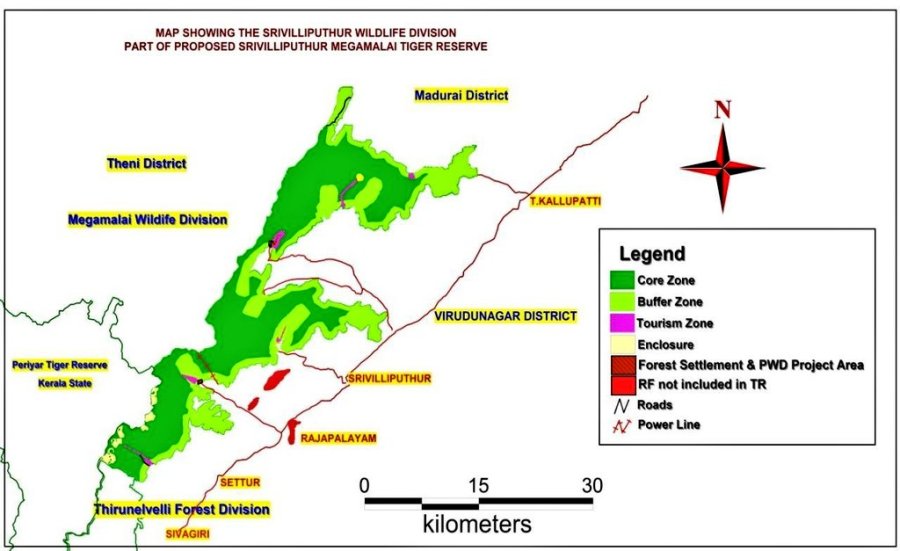
Indian government recently approved a new tiger reserve .Srivilliputhur Megamalai Tiger Reserve in Tamil Nadu is the latest addition. It’s 51st tiger reserve in the country & 5th in the state of Tamil Nadu. The 50th tiger reserve was Kamlang , which was the first & only tiger reserve of Arunachal Pradesh, & was approved 6 years ago.
The land encompassing the Meghamalai Wildlife Sanctuary (spread across the districts of Theni and Madurai) and Srivilliputhur Grizzled Squirrel Wildlife Sanctuary, which adjoins Kerala’s Periyar Tiger Reserve and Tirunelveli’s Kalakkad Mundanthurai Tiger Reserve is declared as the 51st tiger reserve of the country.
This land is habitat of 63 mammal species & 323 bird species.
Meghamalai Wildlife Sanctuary hosts ungulates (hoofed mammals), spotted deers, Indian gaurs, wild boars and other carnivores.Srivilliputhur on the other hand, is habitat of grizzled giant squirrels, flying squirrels, leopards, Nilgiri tahrs, jungle cats, Sambars, elephants and many species of birds, including the lion-tailed macaque.
This new tiger reserve is spread over 1,016,57 sq km (core area – 641.86 sq km, buffer area – 374.70 sq km) with the potential to provide much needed habitat for tigers dispersing from neighbouring Periyar Tiger Reserve & Anamalai Tiger Reserve.
This new tiger reserve will act as a boost in direction of restoration of the health of forests & wildlife.
As a tiger reserve, illegal entry into the area becomes a punishable offence, with five years of imprisonment & it also gets a better team of dedicated officers , researchers & guards.
Conservationists believe that by declaring the Meghamalai Srivilliputhur Tiger reserve, there are great chances for the Vaigai River rejuvenation.
As per latest estimation , the number of tigers in India is 2,967 (range 2,603 to 3,346). And the largest tiger reserve of the country is Nagarjunsagar Srisailam Tiger Reserve which covers 5 districts of the states of Andhra Pradesh & Telangana.
You must have read & recited the poem ‘Twinkle Twinkle Little Star’ in your childhood days. Kids still read & recite the poem. But there’s a difference in their recitation.While we used to recite it in starry nights, they just watch twinkling stars in a youtube video.What else can they do ?
Those starry nights are no longer visible. Even in a small town , there are only a few stars you can see by naked eyes. Future generations will see the starry nights only in pictures.
Now you can’t just point out your finger in the north to show someone the pole star.
Now the question is why ? Why the night sky is vanishing ? Why the Milky Way is fading ? Why the stars are no longer visible ?
Well , the reason is light pollution. With the advancement of more & more LEDs , the milky way is now no longer visible to more than a third population of the world. Those thousands of stars have just turned into hundreds.
Buildings’ lights , residents’ lights , street lights, vehicles’ lights , neon signs. Well , this much amount of light is creating a permanent ‘skyglow’ at night,which is obscuring that beautiful sight.
Is it only about the stars ? No , excessive lighting at night has other adverse consequences too –
1. It can disrupt our sleep , or in long run can cause stress.
2. It is waste of energy , not all the lights you see in cities at night , are needed. A lot of buildings or streets just glow for the sake of beauty.Thus , a lot of energy get wasted.
3. It’s not good for animals , birds & ecosystem. Migratory birds often get bewildered by lighting buildings , sea turtles lose their ability to navigate in ocean due to the confusion lighting from coastal create. There’re evidences that artificial lighting make it harder for the zooplankton to eat harmful algae in lakes , thus degrades the water quality.
And of course this one consequence is also there , from which I started the blog. Future generation will not be able to see the milky way without a telescope , thus it”ll lessen their interest in astronomy. It”ll lessen their sense about vastness of Universe.
Of course , the street lighting is necessary , but not for the show off. Unnecessary lighting can be avoided. Street lights can be replaced by more focused LEDs which only send light downward rather than those lights which scatter the lights in all directions. There can be other ways to reduce the light pollution. As it is said “Where there’s a will , there’s a way”.
Have you ever wondered why some advertisement makers show that we’ve used this or that plant in our product ?
Do you know there are about 47,000 plant species in India ?Out of these , many have healing capacities , they have abilities to cure some diseases. You may have even used one out of these plants’ leaves or bark to heal your wounds or to beautify yourself or to cure some disease .
India has about 8000 species of plants which have some medicinal qualities. About 2000 species have been described in Ayurveda & more than 500 are in regular use. You may be familiar with some medicinal plants , herbs & trees like Tulsi , Neem , Babool , Palash , Ashok & Arjun.
Let’s talk about their qualities .
Tulsi is used to cure not only cough, cold & headache but is also useful in indigestion, heart diseases & respiratory diseases. Neem has antibiotic & antibacterial properties. People often use its twig to clean their teeth , its bark can be used to heal wounds , it is also used to cure bloody nose & leprosy & to kill intestinal worms. Babool has its use in healing of bleeding gums , its leaves are used to cure eye sore , it is also used as tonic. Palasha is used as a cure in complexion of skin, worm infestations, roundworm. Ashok is used to cure menstrual irregularities & used as uterine stimulant . Arjun’s leaves are used as a cure for earache , it is also used to regulate blood pressure.
Sarpgandha is one such medicinal plant which is found in India only. It is used to treat blood pressure.
Some other popular medicinal plants are Amaltas , Amla , Kachnar , Jamun , Varun , Brahmi , Kateki & Akarkara.
There are many medicinal plants which are like all-rounders , they are not only for medicinal purposes but also used as beauty products. Some are edible ( & off course tasty too ). People use some of these plants for decorative purposes , some of these are used to make colors , & some are used as jewellery too. Some plants like Tulsi are worshipped by many Indians.
India’s ancient culture valued its flaura & fauna. But now we’re losing on it.The World Conservation Union’s Red List has named 352 plants out of which 52 are critically threatened & 49 are endangered.It’s not only about saving the culture , it’s about preservation of the biodiversity , or you can say it’s about saving our own lives.
There are a lot of local medicinal plants & herbs in India. They are not so popular but are very useful. Only the locals have knowledge about them & only they can save such plants , trees & herbs.
There’s a need to create & implement policies which include locals. Locals , administration , & government together can change the whole scenario . One such example is of India’s only orchid sanctuary, where the administration together with the locals rejuvenated the Sessa Orchid Sanctuary in just 21 days.
Let’s come together to preserve the beautiful Indian culture , & the biodiversity.
We’re going to enter in the 75th year of our Independence on 15 August, 21.
As I’m not a political leader so I”ll not talk about what we’ve gained in last 5 years , or in last decade or in last 25 years. As it is said it’s good to appreciate yourself but it’s also necessary to criticize yourself . A simple google search can tell you what we’ve gained since independence. So , now let’s see what we’ve lost since independence.
At the time of independence , we’ve not only lost many lives & a part of our land & but we’ve lost our peace , our fraternity , & the love , for ever. And then after the independence , the list continued. We’ve lost the morality , the sympathy , the kindness & the care. In short , we’ve lost The Humanity.
We still repeat the pleadge “All Indians Are My Brothers And Sisters” , but we’ve lost this fraternity , years before.
Years before , we talked about sex ratio , we talked about death rate , we talked about infant mortality rate , we talked about literacy rate but amidst of all these we’ve lost a lot.
Sex ratio haven’t yet improved since independence but the situation is now worser than what it was in 1947. At the time of independence , at least the little girls & the old women were safe. They were safe in their neighborhood, with their relatives, they were safe in religious places . But amidst their education , we’ve lost the respect for women( ok ok , I’m not talking about every age group , but the little girls & old women had some respect at that time ) . Ohk , I agree we’re in better condition now , but relax I’m just talking about the need of time.
Well , we’ve talked about death rates & infant mortality rates & off course we’ve improved a lot in this field. But we’ve lost the humanity , believe me we’ve completely lost it. At least that was the time when unknowns too used to care about your little ones , they used to give some respect to the dead person. But now , accidents are games of wait & watch.
And some devils are just too eager to have some so called pleasure , that they didn’t even look at a infant like a infant , they treat them as a object. Of course their desires has nothing to do with the gender & age ( some people say it’s all about beauty , body & clothes ). We’re losing humans day by day.
Better not to talk about the literacy, as the education without morality can’t do anything good.
On the 75th anniversary of independent India ,we”ll have all that which is needed to be a developed country but what about all that which is needed to be a Human ? Will we celebrate India @ 75 as a zombie ?
Iron nails, rods, barbed wire, boulders, makeshift walls….. These are not the visuals from a war front. This is how the largest democratic government in the world is preparing the country capital to face its farmers. The Farmers’ Produce Trade and Commerce (Promotion and Facilitation) Bill, 2020 was passed by the parliament followed by the approval of the President in September 2020. Since then, the farmers mainly from regions of Haryana and Punjab are protesting in the outskirts of New Delhi against the bill. Several rounds of discussions between the farmers and the government representatives have taken place but none of them was fruitful. The government had earlier offered to suspend the farmers’ bill as part of negotiations to end the protest but the farmers were loath as they demanded a complete abrogation.
The protestors took hold of the major highways at Singhu, Ghazipur and Tikri, thereby isolating the national capital. It is in the third month that the protest took a violent turn when protesters and police clashed after thousands of farmers entered Delhi as part of a massive tractor rally, on January 26th. Several injuries were reported and a protester lost his life during the commotion. The police used tear gas and water cannons along with brutal lathi-charge to oppress the rally. Media personals who reported the incidents in favour of the farmers were also arrested with sedition charges. The government has disconnected the fuel, power and water supplies to the protestors as part of oppressing the movement. The shutting down of the internet and the mobile networks by the government in and around the protest sites in order to “ensure public safety” have further fueled up the rage among the farmers.
To prevent the protestors from entering the city again, the government has deployed force at the capital borders with Haryana and Uttar Pradesh and have begun blocking the area around the protests by placing large concrete slabs , spools of razor wire, heavy metal barricades , layers of stone boulders and embedding huge iron nails across the breadth of the roads leading to the protest sites. Only few selected vehicles are permitted to go beyond the barricading with media vehicles being strictly prohibited. With the movement gaining international attention and support as many notable faces from across the world vouched support for the farmers, it won’t be easy for the government to oppress the farmers agitation anymore.
The past year was indeed a difficult time for the world owing to the COVID 19 pandemic and the lockdown imposed following it. Though the entire population got affected by this adverse conditions, there were certain minor communities and groups like the transgender community which had the bitter taste of it. There were active discussions and discourses on the impact of the lockdown on women facing domestic abuse, but the atrocities and adversities faced by the LGBTQ communities were the least spoken about. Being the have-nots of normal society, the life of the queer community in a pandemic affected locked down scenario was found to be the worst.
The basic social liberties were always denied to the queer accounting to their physical and psychological divergence and aberant sexual orientation. They were neither included in the mainstream by the government nor had any access to public health care, education, steady job opportunities etc which along with the lack of support from their families resulted in the financial subsiding of the community. In many cases, staying home also became a potential danger to many, where they fell prey to violence from their family members or partner.
For a section whose normal daily life in itself is a hurdle, life in lockdown was nothing but catastrophic. While the majority of us worried about being confined into the comforts of our home during lock down, these destitutes were perturbed over losing the shade over their head. The Indian Hijra community who depended on the streets for their livelihood got literally ‘locked’ inside their residences with no basic supplies or access to money. As they were disdained from the ordinary jobs, street dancing, prostitution and begging were their only source of income and these ‘jobs’ required immense social interaction which was impossible during lockdown. The void between the society and queer community got widened with the imposition of lockdown and the already outlying community was pushed off to further disdain. The society along with the government should consider them at least as humans if not as citizens and take necessary measures for eradicating the stigma regarding the marginalized communities by making them a part of relief programs.
The fashion-cosmetic industry is a multibillion-dollar consumer-focused ever-growing global enterprise that has become an indispensable part of our lives. Everyone has a fashion or cosmetic brand which is close to their heart, but are heedless of its dark side. Animals and animal materials are vastly used in the industry, but the barbaric processes behind this are often left unaddressed. Certain kinds of animals are overbred for the production of fashion products with animal materials resulting in the extreme use of resources and the production of organic and toxic waste. These animals are denied basic comforts of living where they are confined in abhorrent conditions with restricted space for movement, mere food and brutally slaughtered at the end. Certain exotic endangered species also fall into this wretched fate for fashion. When affected with diseases, these animals are often rejected medical care and are placed alive in plastic bags to die.
Animals are skinned alive for fur, feather, leather, wool, etc and are also subjected to various chemical experiments for the cosmetic industry. Millions of animals including unborn calves are skinned for the production of leather, a timeless trend of the fashion industry. These animals are treated ruthlessly where they reach the factories deprived of food, water and rest; are castrated and skinned alive by hanging upside down and eventually bled to death. Many believe that sheep are not harmed for the production of wool but on the contrary, they also have to undergo inhumane treatments like mulesing during the process. It is estimated that about 1 million sheep die from exposure to cold as the wool which is meant to protect them from the weather is sheared off in winter itself to meet the market demands. In Australia, a global leader in merino wool production, sheep are specifically bred to have wrinkled skin to increase wool production. But this makes their skin more prone to flystrike, a condition where the flies lay eggs in the skin folds and maggots eat the sheep alive. In order to prevent flystrike, mulesing, a practice in which huge pieces of skin are carved off the buttocks area is done. This process which causes great pain to the animal is carried out without anaesthesia. The sheep are sent to slaughterhouses once their wool production descends. Birds like parakeets, egrets, ostriches, and animals like mink, chinchillas, foxes, dogs, rabbits, cats etc caught for their feathers and fur also undergo the same fate.
In order to ensure the safety of the customers, the companies of cosmetic and personal care products use animals to test their products. As the New England Anti-Vivisection Society (NEAVS) describes, animals are subject to “testing new drugs to infecting with diseases, poisoning for toxicity testing, burning skin, causing brain damage, implanting electrodes into the brain, maiming, blinding, and other painful and invasive procedures.” Mice, birds, rabbits, monkeys, dogs, and cats are the common victims of vivisection (live testing) and spend the majority of their lifetime inside cages of laboratories. The exposure to these chemicals have severe impacts on these animals. Pain relievers are never provided and they always die or get killed at the end of each test.
We should strive to help these animals to have a life instead of “trapping animals in bone-breaking steel traps, clubbing them to death, electrocuting them through the mouth or anus, breaking their necks and backs, skinning them alive”. A fashion industry without harming animals is always possible and we all share this responsibility as this world is theirs too.
We are living in the 21st century where the term ‘sex’ is considered as a taboo by our society. Since sex, a very basic human necessity, has been dealt so covertly, people ended up being hesitant to talk or discuss it openly in public. Sex education was included in the school curriculum as a result of relentless demands by the liberal and freethinking blocks of the society but has ended up more like a human biology and anatomy education rather than actual sex education. This has led to the scenario of people being poorly aware of the topic even after being taught about it.
Unlike a few years ago, with the advent of modern technologies like the internet, smartphone etc, porn has become a readily accessible material to everyone, especially teenagers. The lack of proper sex education and overexposure to pornographic contents set forth a complex scenario of our young generation mistaking the fantasies portrayed in porn for real. Porn often manipulates one’s idea of an ideal partner with unrealistic expectations which eventually leaves a considerable impact on our relationships with one another. As time passes, the enticing fantasies of porn drag one into the psychological traps of darker themes such as incest, rape, racial stereotypes, child porn etc.
Though many studies and researches are yet to be conducted on the effects of porn and porn addiction, the report from the American Psychology Association provides us with a short insight into the topic. The annual traffic statistics of popular porn websites reported that an average Indian spent around eight minutes watching porn at a stretch. Another entrancing insight is that one-third of porn viewers are women and 48% are of the age group 18-24. Many consider porn as a private and harmless way through which people can enhance their sex life and relieve tension by releasing latent sexual energy. But watching porn regularly develops addictive behaviour resulting in an unhealthy lifestyle and broken relationships. The male-centric porn culture deceives its viewers into the devious mentality of objectifying women as mere sex tools to satisfy their urges. Porn drains love, respect and intimacy off a human being when he gets addicted to it and seeks for aggressive sex they’ve been exposed all their lives through porn. Lack of interest, sexual dissatisfaction, body image issues etc are a few among the list of relationship issues caused by porn addiction.
A revamping of the sex education imparted in schools by experts along with medical professionals, school managements and parents is essential to reduce the negative impacts of porn on teenagers to an extend. In addition to biology, sex education should consider the socio-psychological factors to ensure the eradication of taboo and reticence that persists regarding the topic. Setting a clear cut distinction between fact and fiction is necessary to prevent our children from having damaging unrealistic sexual fantasies. It is a natural instinct of teenagers to explore their sexuality and have sexual curiosity. Instead of blaming them for their sexual inclination and muffling the discussions regarding sex, timely guidance is what our society should provide our teenagers with.
Porn is a multi-billion dollar industry spread across the web which makes it nearly impossible to reduce or cut off the exposure to it. It’s just like any other commercial movie industry, a definite work of fiction with actors and directors producing contents for a targeted audience. One should realize that what porn showcases are an exaggerated product which is far from reality and attempts to imitate it in real life will result in issues with confidence and self-esteem. While you might learn a thing or two from watching porn or reading a sexy book, it shouldn’t be considered an alternative to sex education. A doctor or sex therapist should be the ones to be approached to clarify your queries rather than porn sites.
The Bombay High Court is under negative spotlight recently following a verdict passed on a POCSO case. In the detailed copy of the judgement which has been made available lately, Justice Pushpa Ganediwala of the Nagpur bench of the Bombay High Court has said that ‘skin to skin contact with sexual intent without penetration is necessary for the act to be considered as a sexual assault’. The ruling also said that ‘mere groping’ will not fall under sexual assault.
A complaint regarding the pursuant events was filed by the victim’s mother on 14th December 2016 at Gittikhadan Police Station in Nagpur. The complaint registered at the station is that “on the pretext of giving her [the minor] a guava in his house, Satish Ragde pressed her breast and attempted to remove her salwar.” The girl was found crying while the mother rescued her. She complained that the man attempted to silence her when she started to cry while disrobing.
The accused was charged with Sections 354 (assault or criminal force to woman with intent to outrage her modesty); 363 (punishment for kidnapping); 342 (punishment for wrongful confinement) of the IPC; and Section 8 (punishment for sexual assault) of the Protection of Children from Sexual Offences Act (POCSO) by the police in the FIR. During the hearing, the special court added Section 361 (kidnapping from lawful guardianship) to the aforementioned charges. The accused was found guilty by the special court and was sentenced for 3 years of imprisonment with a fine of Rs.1500 in total.
In pursuit of the appeal filed by Ragde at the High Court of Bombay, challenging the verdict passed by the special court, Justice Pushpa Ganediwala has acquitted him of Section 8 of the POCSO charges. The Court convicted him for minor charges of IPC, thereby cutting down his three years of imprisonment to one year.
According to Section 8 of POSCO, ‘Whoever, with sexual intent touches the vagina, penis, anus or breast of the child or makes the child touch the vagina, penis, anus or breast of such person or any other person, or does any other act with sexual intent which involves physical contact without penetration is said to commit sexual assault.’ The High Court ruled out the POSCO charges by saying, “Considering the stringent nature of punishment provided for the offence, in the opinion of the court, stricter proof and serious allegations are required. The act of pressing of the breast of the child aged 12 years, in the absence of any specific detail as to whether the top was removed or whether he inserted his hand inside the top and pressed her breast, would not fall in the definition of sexual assault.”
This shocking verdict on sexual assault towards women and children has led to outrage across the country. The judicial system is turning a blind eye against its paramount concern of protecting its citizens through this judgement.
Marital rape is the act of indulging in sexual intercourse without proper consent of the partner. People often mistake marital rape as an act of domestic violence or sexual abuse, although a lack of consent is enough in itself. The right for sexual intercourse within the marriage was considered as a naturally consigned right of the spouse, historically. Many countries around the world have rightly classified non-consensual sexual intercourse as “rape”, yet countries including India regard this intimate assault a perfectly legal crime.
Section 375 of the Indian Penal Code propounds rape as all forms of sexual assault involving non-consensual intercourse with a woman. Yet the Exception 2 to Section 375 absolves the unwilling sexual intercourse between a husband and a wife over fifteen years of age from Section 375’s definition of “rape”. Thus the atrocities and abuses within the sacredness and sacrosanctity of marriage are legalized by the government under this section. This is a clear case of discrimination against female victims by the Indian criminal laws, just because they have been raped by their own husbands.
According to the National Family Health Survey (NFHS) reports, an average Indian woman is 17 times more likely to be subjected to sexual violence from her own husband than others. Such heinous acts go unreported due to the ineffectiveness of the existing laws. Though India is striving hard to empower its female population, it fails to ensure their safety even in the very basic social structure like family. The patriarchal social structure of India is the fundamental reason for the mortifying status of women in Indian society and the persisting ineffectiveness of laws protecting them.
NGOs for the empowerment of women and Constitutional experts are of the opinion that the Exception 2 to Section 375 is a clear violation of Article 14 and Article 21 and insists that its high time India criminalize marital rape and frame new laws for protecting women from intramarital violence. The equality and liberty rights assured for all citizens in Article 14 and Article 21 of the constitution are denied in exception 2 to section 375. Even the UN General Committee has recommended the Indian government to criminalize marital rape back in 2013. A large part of the British influenced Indian laws which need timely amendments remains untouched for the past 73 years since independence. No Indian government has, however, so far shown an active interest in remedying this problem. As a result, many of such primitive practices still exist in our society.
We live in a century where technology and gadgets are closely knitted to our everyday life and it is hard for us to imagine that the generations before our’s existed with near to zero exposure to the kind of technologies we have today. With the introduction of modern technologies, a significant change in the basic routine of people’s lives is clearly visible. Though these technologies are meant to make life easier and better, they do come with several drawbacks as well. Many aspects of the modern lifestyle have severe impacts upon our health both mentally as well as physically.
While new technologies are introduced every day, simultaneous attempts are made by the researchers to understand its various health impacts. Of all the identified threats caused by the excessive use of technology, especially electronic gadgets, infertility stays high in the order followed by cancer, poor mental being etc. People often overlook the health consequences and carry these gadgets most of the time because of the convenience it provides. Many have a habit of scrolling through their phones right before they go to sleep. Apart from sleep deprivation, studies have revealed that this habit can cause far more shocking repercussions like reproductive disorders in both males and females.
According to studies, the electromagnetic radiations are transferred directly to the reproductive organs when cell phones are kept in trouser pockets for a longer period. Evening or late-night exposure to short-wavelength light(SWL) emitted from electronic gadgets and digital media devices can result in poor sperm quality, reducing sperm motility, sperm progressive motility and sperm concentration. The long-term exposure and its proximity affect the ovarian activity in women leading to infertility. The radiation from mobile phones affects one’s DNA destroying our cell’s natural ability to recover and might result in abortions.
Abstinence from electronic gadgets is not practical but their excessive use must be reduced. The people suffering from fertility issues must consider reducing the use of electronic gadgets. Cutting down the screen time helps one to avoid health consequences like sleep deprivation, fatigue, headache caused by the overexposure to digital gadgets. Pregnant women should limit their exposure to cell phones as it is known to affect the growth of the fetus. Exposure to EMF radiation / RF from laptops, cell phones, Wi-Fi and other personal devices are known to be key detriments to the mental health of a child in its pre-term and neonatal days.
Modern technologies and gadgets are invented to reduce physical efforts and make life easier and better for. The introduction of new technologies every day is revolutionising our world and lifestyle. But the comforts provided by these technologies should never be the ground for us to move away from our basic instincts. Exploiting these technologies without its proper and limited usage will be similar to digging our own grave.





 Eduindex
You must be logged in to post a comment.