NATIONAL mean a person owing allegiance to and entitled to the protection of a sovereign state. CITIZEN is preferred for one owing allegiance to a state in which sovereign power is retained by the people and sharing in the political rights of those people. the rights of a free citizen SUBJECT implies allegiance to a personal sovereign such as a monarch. the king’s subjects NATIONAL designates one who may claim the protection of a state and applies especially to one living or traveling outside that state.
On the month of May 14th in the current year 2020, Mr. Tushar Jindal, 40, a kidney patient, tested positive for novel coronavirus and his family shocked with the results made some calls to Sir Ganga Ram Hospital, India’s one of the elite private hospital situated in Delhi. The private hospital allegedly asked for an advance deposit of INR 5 lakhs for admission.
Since the amount was hefty for a middle class Indian family, following advice from Mr. Jindal’s nephrologist, they admitted him at Max Hospital in Saket, Delhi where an advance of INR 2.5 lakhs had to be paid.
“While I was admitted there, I barely received any treatment as my condition was stable. I was discharged within four days, but I was handed an exorbitant bill of ₹1.98 lakh,” claimed Mr. Jindal. He has sent a legal notice to the hospital contesting many of the items charged for and claiming that the bill issued to him was “faulty and fake and carries a lot of unnecessary and unreasonable charges”.
Mr. Jindal’s notice states that medicines and drugs which were not administered to him have been charged for in the bill and a charge of ₹71,000 questioned for “investigation” offered no other detail. Specifically, the notice states that being a kidney transplant patient, Mr. Jindal takes a particular brand of medicine prescribed by his nephrologist and he has been charged for a medicine he could never take, as it belongs to another company. He claims that he consumed his nephrologist-prescribed brand but has been charged for an alternative with four units and six times a day. Mr. Jindal was also charged ₹8,900 per day for PPE kits amounting to ₹35,600, hospital bills show. He was also charged ₹52,000 for “other charges”, which the notice terms “irrelevant and fake”.
Responding to queries, a Max Healthcare spokesperson said: “A patient’s attendants are counselled about the estimated cost of treatment at the time of admission itself, and they are required to sign an informed consent form for all treatment and procedures. Bill updates are also shared on a day-to-day basis on registered mobile numbers of attendants for any immediate concerns. The attendants of the patient were explained the overall consumption of PPEs during a 24-hour cycle, which is approximately nine PPEs per day per person in the COVID ICU, and the costs charged to the patient are in line with the costs incurred by the hospital in sourcing the PPEs.”
D.S. Rana, chairman of Sir Ganga Ram Hospital, said “the upfront payment is to tide over certain issues such as the family of a COVID-19 patient not being allowed to come to the hospital due to risk of infection. How will they make payments? We ask for INR 5 lakhs as advance from COVID-19 patients and refund the money if the bill is less than that,” he said.
Dr. Rana said, “The hospital follows a similar process for non-COVID-19 treatment too”.
“There is nothing to hide. Our expenses have gone up since the virus outbreak. Our hospital is just meeting expenses, not making any profit. The government can audit our accounts if they want,” he said.
Another case of a Journalist from nationalheraldindia shows another face of the overall situation and the huge differences in charging between government and private hospitals. The said journalist initially went seeking aid from an elite private hospital who gave a pricing quotation of INR 9 lakhs, the journalist was shocked with this pricing and with the mere fact that particular hospital called it as “a package for covid-19 treatment”, yes a package!
Shocked with the pricing, he decided to admit himself to the district civil hospital in the city where they charged him INR 50 (fifty) per day for three medicines and less than INR 1,000 per day for equipment that included oxygen cylinders and ventilators. With his multiple ailments, including chronic kidney disease, he should have had no hope of survival. But it is almost a miracle that the doctors at the district civil hospital pulled him out of danger and did not allow the comorbidity factors to undermine his chances of recovery. Out of hospital for a week now, he is fighting fit and back to the normal activities of a journalist.
Now what we can do to tackle these situations is to question the administrations, the system and governments ruling these systems, we need to ask our governments as to “why they are unable to curb the exorbitant charges by the prominent private hospitals of India”.
the spread of Corona Virus and strict lockdown in the entire nation, everybody is looking for – Work from Home options. However due to the shutting down of businesses, Companies are not in hiring instead they are laying off employees due to recession. Many home-based businesses can be started with very little money and very little experience. How do I know? Because I’ve been there and I’ve done it.
You can begin small, even part-time. And then you can grow them at your own pace. You can make excellent profits even with a very small home-based business. And if you want you can grow it into a much larger enterprise. So even if you don’t have much experience or savings, you too can start your own home-based business and become highly successful.
The key behind a successful business is finding out the DEMAND in the market depending on the situation and customer needs. With Corona Virus being the topic of this year, the demand for related products like hand sanitisers and disinfectants have surged more than these manufacturing industries could ever imagine.
But what can I do sitting at home? It all starts with an idea, hence here are the Top 7 business ideas that can be executed from home during covid-19 pandemic:
Tiffin / Lunchbox Service:
After the entire Nation shut down, many students who lived in hostels and bachelors who were dependent on outside food were left hungry and starving. At such times starting a Dabba Service will not only earn profits but also blessings from these people struggling to find home-cooked food.
In order to run Tiffin service successfully, you will require more than a passion for cooking. Furthermore, you will need good planning and management skills as well as flexibility to successfully handle any last-minute changes required by customers.
How successful your Tiffin service will be will depend mainly on having good reputation. For this business setup to succeed therefore, you must be able to meet the needs of your customers and have the ability to work well under pressure.
Things you require for a Successful Take-off:
Table cloths
Kitchen facilities
Tables
Tiffin boxes
Serving equipment
Utensils – silverware, glassware
Simple but healthy home-cooked meals preparation
Online Tuitions & Tutoring:
Schools and Colleges have shut down leaving a big stress among everybody. Students are concerned with completing their portion without their teachers. At such times the need for online assistance for education is at a rise.
Online tutoring is a profitable business. This industry is developing rapidly with advent of innovations, technologies and wide spread usage of the internet. Parents and students are comfortable with online tutoring websites for their personalized learning requirements.
Things you require for a Successful Take-off:
Start a face-to-face video conferencing.
Speak to each other with high-quality and excellent voice.
Write, type, erase and draw in distinctive colours on digital advanced whiteboard.
Text chat via instant messaging.
Upload and share files.
Alter message progressively with other person seeing what you are doing. Access the session from all devices.
Mask Stitching and Selling:
The world has changed. Not only has the world economy shut down, but people are also on edge. This is likely because we can’t leave our homes, and this can lead to isolation. Nowadays you cannot spot a single person on the streets without a mask covering their face.
If one is good at stitching at home, then this is a golden opportunity to not only earn money but also get creative. People are bored of the old plain mask and hence are looking for designer and customised masks. One can use their own imagination and entice people with your unique masks.
Things you require for a Successful Take-off:
Face Mask Cloth
Mask Inner Ear Loop threads
Paints, beads, needle works
Stitching machine or sewing machine
Needle and thread
Online Fitness and Yoga Coach:
The threat of coronavirus has left the fitness industry ailing and barely able to stand with smaller gyms on the verge of shutting down, larger chains contemplating huge losses and unemployment becoming a very real prospect for many thousands of trainers and support staff.
However, if you have a laptop and good functioning internet connection you can become a fitness coach for everybody missing the gym and looking for services from home. With people wanting to keep themselves fit and improving their immune system, Yoga trainers are high in demand.
Things you require for a Successful Take-off:
Create a virtual workshop using online studio software
clean background
remove clutter and distracting objects
place select “yoga” objects in frame if desired
Use a tripod if you can
Test to make sure that the camera can capture you in all your poses
Use impeccable, clear language (don’t rely on video)
Embrace imperfections! Be human and carry on.
Cake Baking for Special Occasions:
Are you the one that makes killer cakes for every birthday? Do you churn out to-die-for donuts? If you’re ready to turn your talents into a profitable bakery, you’ve come to the right place.
No matter what the situation, the show must go on. Cakes have been the symbol of any kind of situation since centuries. But with all CAKE SHOPS and bakeries shut, one cannot access them for special occasions. If you are a good baker, then this is your time to shine. Homemade cakes will be a hit and people will be assured about its safety.
Things you require for a Successful Take-off:
Mixers
Oven
Dough proofer
Bakeware
Tools for measurement
Ingredients as per flavour
Refrigerator
Bread slicer
Dough mix
Cardboard boxes
Piping bags
Dairy products
Display case
Gardening and selling Organic Fruits & Vegetables:
If you are interested in gardening at home and have enough space to grow more for everyone then organic farming is a great business idea. With today’s vegetables being produced with pesticides and chemicals
Growing a garden for profit is something that definitely needs to be kept simple. The reason is that if you try and do a whole bunch at once, then you won’t be great at any of it. If you pick a few simple and small things to start out with, then you can work to perfect those things and be much more successful.
I learned that the hard way because I wanted to sell EVERYTHING out of my garden. Well let me tell you, that is impossible without a team of employees. You just can’t do it well, so don’t try it.
Things you require for a Successful Take-off:
Put them in baskets
Order personalized boxes with your logo/brand name on them
Make signs that tell about your unique produce
Include a recipe card for how to cook with it
Organize the different colours in patterns
Put the containers on their sides so they appear to be “overflowing” with fruits or vegetables
Incorporate wheelbarrows, gardening tools, flowers, etc. into your display
Build your own shelves to sell from that stand out
Design a logo or picture to use for your new “business”
Take attractive pictures of your produce for your display
Use tablecloths or nice napkins that make it feel more high end and less dirty.
Customised T-shirts and Dresses Painting :
Whenever people think about starting a business, a t-shirt company is probably one of the first five ideas that come to their mind. Why? Well, t-shirt printing business looks like fun and cool. To some extent, they are right. Being your own boss, having own t-shirt designs, selling them with your brand label, having people supporting your work – that’s happiness. Isn’t it?
If you enjoy T-Shirt painting, then there is a whole lot of millennial generation ready to throw all their money at your unique art and designs.
Things you require for a Successful Take-off:
Plain t-shirts
Fabric paints
Tracing paper
Sunlight
Innovative and creative designs
Trendy drawings
All size t-shirts
So there you have it in a nutshell- First you need to decide where you are going to sell your produce. Then you can decide what you are going to sell.
Remember your business will grow if people are happy with what they buy from you. Make it look nice, and only sell the best you have.
The Code was enacted in 2016 following decades of recommendations suggesting improvements to the previous insolvency regime, which was fragmented, fraught with delays and resulted in poor recoveries for creditors. [1]
The insolvency resolution process in India has in the past involved the simultaneous operation of several statutory instruments.
These include the Sick Industrial Companies Act, 1985, the Securitisation and Reconstruction of Financial Assets and Enforcement of Security Interest Act, 2002, the Recovery of Debt Due to Banks and Financial Institutions Act, 1993, and the Companies Act, 2013.[2]
Broadly, these statutes provided for a disparate process of debt restructuring, and asset seizure and realization in order to facilitate the satisfaction of outstanding debts. [3]
As is evident, a plethora of legislation dealing with insolvency and liquidation led to immense confusion in the legal system, and there was a grave necessity to overhaul the insolvency regime.
All of these multiple legal avenues, and a hamstrung court system led to India witnessing a huge piling up of non-performing assets, and creditors waiting for years at end to recover their money. [5]
The Bankruptcy Code is an effort at a comprehensive reform of the fragmented regime of corporate insolvency framework, in order to allow credit to flow more freely in India and instill faith in investors for speedy disposal of their claims. [4]
The Code consolidates existing laws relating to insolvency of corporate entities and individuals into a single legislation.
The Code has unified the law relating to enforcement of statutory rights of creditors and streamlined the manner in which a debtor company can be revived to sustain its debt without extinguishing the rights of creditors[5]:-
1) The scheme of the Code marked a sea change from the previous regime. In respect of corporate entities, the Code introduced a creditor-in-control regime (with a focus on empowering financial creditors), a time-bound resolution process and reduced scope for judicial intervention, and established institutions such as the Insolvency and Bankruptcy Board of India, insolvency professionals and information utilities.[6]
Since the implementation of this new regime, the constitutional validity of various provisions of the Code has been challenged before various High Courts, and the Supreme Court.
Applicability
The Code provides creditors with a mechanism to initiate an insolvency resolution process in the event a debtor is unable to pay its debts. The Code makes a distinction between Operational Creditors and Financial Creditors. [7]
A Financial Creditor is one whose relationship with the debtor is a pure financial contract, where an amount has been provided to the debtor against the consideration of time value of money (“Financial Creditor”).
Recent reforms have sought to address the concerns of homebuyers by treating them as ‘financial creditors’ for the purposes of the Code. [7]
By a recently promulgated ordinance, the Insolvency and Bankruptcy Code (Amendment) Ordinance, 2018 (“the Ordinance”), the amount raised from allottees under a real estate project (a buyer of an under-construction residential or commercial property) is to be treated as a ‘financial debt’ as such amount has the commercial effect of a borrowing.[7]
The Ordinance does not clarify whether allottees are secured or unsecured financial creditors. Such classification will be subject to the agreement entered into between the homebuyers and the corporate debtor.
In the absence of allottees having a clear status, there may be uncertainty about their priority when receiving dues from the insolvency proceedings. [7]
An Operational Creditor is a creditor who has provided goods or services to the debtor, including employees, central or state governments (“Operational Creditor”). A debtor company may also, by itself, take recourse to the Code if it wants to avail of the mechanism of revival or liquidation. [7]
In the event of inability to pay creditors, a company may choose to go for voluntary insolvency resolution process – a measure by which the company can itself approach the NCLT for the purpose of revival or liquidation. [7]
What was the judicial approach to the Insolvency and Bankruptcy Code?
SERIES OF JUDICIAL PRONOUNCEMENT
With almost more than two years since the introduction of the Code, there have been various challenges in the effective implementation of the Code. However, constructive interpretation by the judiciary coupled with effective amendments to the Code has helped in eradicating most of these teething issues. [8]
Some of the key judicial pronouncements are discussed below:
The Insolvency and Bankruptcy Board of India which is the regulatory and supervisory body in charge of the IBC, has done a commendable job in proactively spreading awareness and regulating the space. [9]
Many important judgments were pronounced throughout the year, including certain landmark cases, where in the Supreme Court has tried to ensure that the spirit of the Code is given primacy over procedural requirements. [9]
Suspended Board of Directors of Corporate Debtor Entity are entitled to access the resolution plan and other related documents:-
In a significant judgments delivered on January 31, 2019, the Hon’ble Supreme Court of India decided on an important aspect with respect to the rights of the suspended board of directors of the Corporate Debtor Entity to receive and access the resolution plan and other related documents, whose case has been admitted by the Adjudicating Authority under the relevant provisions of the Code. [10]
Facts of the Case:
In respect of Mr. Vijay Kumar Jain, Director of Corporate Debtor (‘Appellant’) vs. Standard Chartered Bank and Ors. (As ‘Financial Creditors’), the NCLT had approved the appointment of Resolution Professional (‘RP’) to conduct Corporate Insolvency Resolution Process of Corporate Debtor Company i.e. Ruchi Soya Industries Limited (‘RSIL’). [10]
The appellant, being a member of the suspended board of RSIL, was given notice and agenda for the first meeting of Committee of Creditors (‘CoC’) and was permitted to attend the meeting of CoC. The appellant alleged that he was not granted permission to participate in subsequent meetings of CoC. [10]
As a result, the appellant filed a miscellaneous application before the NCLT to allow his participation in the subsequent meetings of CoC. The appellant also executed a Non-Disclosure Agreement (‘NDA’) to keep information received through participation in the CoC meeting strictly confidential and even undertook to indemnify RP. [10]
However, NCLT vide its order dated August 1, 2018 dismissed the said application of appellant with liberty to the appellant to attend the COC meetings, but not to insist upon the CoC or RP to provide information which is considered as confidential by the CoC or RP. [11]
Against the said order of NCLT, the appellant filed an appeal before the Appellate Tribunal, which recognized the right of appellant to attend and participate on the CoC meetings but Appellate Tribunal vide its order dated August 9, 2018 [12] denied the prayer of the appellant to have access to certain documents including sensitive resolution plan.
The appellant aggrieved by the order of the NCLAT, filed an appeal before the Hon’ble Supreme Court of India. [13]
Apex Court Observations and Findings:
On advertising relevant provisions of the Code and arguments of parties to the dispute, the Supreme Court opined that notice of each meeting of the CoC will have to be given to the suspended board of directors of the corporate debtor entity. [14]
The Supreme Court further noted that the statutory scheme of IBC makes it clear that though the suspended board are not members of the CoC, yet, they have a right to participate in each and every meeting held by the CoC and also have a right to discuss along with members of the CoC, resolution plan that are presented at such meeting. [14]
The Supreme Court further observed that Section 31(1) of the Code make it clear once the resolution plan is passed by the Adjudicating Authority, it shall be binding on the corporate debtor together with guarantors and other stakeholders. [14]
This being the case, it is clear that the erstwhile board of directors, which consists of persons who may have given personal guarantees for the debts owed by the corporate debtor, will be bound by the resolution plan, and therefore, have a vital stake in what ultimately gets passed by the CoC’s.[14]
The Supreme Court also made it clear that so far as confidential information is concerned, RP can take an undertaking in the form of NDA from suspended board of directors of the corporate debtor entity with an objective to maintain strict confidentiality in regard to resolution plan and other related documents. [14]
Further, according to Regulation 39(5) of IBBI (Insolvency Resolution Process for Corporate Persons) Regulations, 2016, the RP shall forthwith send a copy of the order of the Adjudicating Authority approving or rejecting a resolution plan to the participants and resolution applicant. The term ‘Participants’ includes members of the erstwhile Board of Directors of Corporate Debtor. [14]
Thus in view of the above, the Supreme Court allowed the appeal and set aside the impugned order of the Appellate Tribunal. [14]
What was the result of Insolvency and Bankruptcy Code in the present scenario? Also cite relevant case laws.
IBC came into being repealing SICA (Sick Industrial Companies Act), SICA was repealed with effect from 1 December 2016. [15]
To know the background of IBC, it is important to know more about SICA and why it failed to prevail as a law. [15]
This is the exact rationale for the existence of The Insolvency and Bankruptcy Code in India which has been into effect since 2016. [15]
To know the background of IBC, it is important to know more about SICA and why it failed to prevail as a law. [15]
The journey from SICA to IBC
The SICA, 1985:-
The name SICA, itself connotes the reason for its actuality. India witnessed an atmosphere of rampant industrial sickness in the 1980s in furtherance of which the Government of India came up with key legislation i.e. the Sick Industrial Companies Act to combat the issue. [15]
Widespread industrial sickness affects the economy in a number of ways, thus The Act came into being to spot the sick or potentially sick companies owning industrial undertakings and take speedy remedial measures for their revival or in a scenario where there is no such measure, close such units. [15]
This was an action to get the locked up investment in such industrial units released and use them in a more productive manner. SICA was repealed and replaced by the Sick Industrial Companies (Special Provisions) Act of 2003, which diluted certain provisions of SICA and filled certain gaps. [15]
One of the main changes to the new law was that, in addition to combating occupational diseases, it also aimed to reduce the growing incidence by ensuring that companies do not use a medical certificate simply to evade legal obligations and access concessions granted to financial institutions to receive. [15]
The comprehensive performance of the Act did not live up to the expected results and thus, IBC was notified as on 28th May 2016 and the repeal of SICA came into full effect from December 1, 2016. [15]
IBC Kicks In
Mistakes of the past were taken in view and The Insolvency and Bankruptcy code came into being with a wider scope and aiming to resolve the issues via more effective provisions and implementation. It is an act to consolidate and amend the laws having reorganization and insolvency resolution issues as the subject-matter. [15]
The provisions of the Act shall apply to the following in case of insolvency, liquidation, voluntary liquidation or bankruptcy; [15]
“An Act to consolidate and amend the laws relating to reorganisation and insolvency resolution of corporate persons, partnership firms and individuals in a time bound manner for maximisation of value of assets of such persons, to promote entrepreneurship, availability of credit and balance the interests of all the stakeholders including alteration in the order of priority of payment of Government dues and to establish an Insolvency and Bankruptcy Board of India, and for matters connected therewith or incidental thereto.
Whether the expression “and” occurring in section 8(2)(a) may be read as “or”?
The Court held that the expression “and” occurring in section 8(2)(a) may be read as “or” in order to further the object of the statute and/ or to avoid an anomalous situation – once the operational creditor has filed an application, which is otherwise complete, the adjudicating authority must reject the application under Section 9(5)(2)(d) if notice of dispute has been received by the operational creditor or there is a record of dispute in the information utility – So long as a dispute truly exists in fact and is not spurious, hypothetical or illusory, the adjudicating authority has to reject the application – A “dispute” is said to exist, so long as there is a real dispute as to payment between the parties that would fall within the inclusive definition contained in Section 5(6). [16]
2) Surendra Trading Company Vs. Juggilal Kamlapat Jute Mills Company Ltd. & Others- Supreme Court:
The time limit prescribed in IBC, 2016 for admitting or rejecting a petition or initiation of CIRP under proviso to sub-sec. (5) of Sec. 9, is directory. [17]
The question before the NCLAT was to whether time of fourteen days under section 9(5) given to the adjudicating authority for ascertaining the existence of default and admitting or rejecting the application is mandatory or directory. [17]
NCLAT hold that the mandate of sub-section (5) of section 7 or sub-section (5) of section 9 or sub-section (4) of section 10 is procedural in nature, a tool of aid in expeditious dispensation of justice and is directory. [17]
Further question (with which supreme Court is concerned) was as to whether the period of seven days for rectifying the defects under proviso to sub-section (5) of Section 9 is mandatory or directory. The aforesaid provision of removing the defects within seven days is directory and not mandatory in nature. [17]
3) Essar Steel India Ltd. Vs. Reserve Bank of India-
RBI is authorized to direct any banking company to initiate insolvency resolution process- Gujarat High Court. [18]
A long-drawn legal battle for Essar Steel ends with this Supreme Court judgment. In one of the most discussed cases under IBC i.e. the case of Essar Steel Limited, the Supreme Court delivered its judgment which would probably be the final judgment of the case. Key highlights of the Essar Steel Supreme Court judgment are as follows: [19]
The requirement of completing the corporate insolvency resolution process within 330 days from the insolvency commencement date as introduced by the 2019 Amendment Act was held as non-mandatory. [19]
CoC can delegate its administrative powers or power of negotiation with the resolution applicants to a smaller committee (sub-committee) since such acts would be ultimately required to be approved and ratified by the CoC. [19]
Prospective resolution applicant has a right to receive complete information as to the CD, debts owed by it, and its activities as a going concern and as such it cannot suddenly be faced with “undecided” claims after the resolution plan submitted by it has been accepted. [19]
To put an end to uncertainty, parameters were laid down for limiting the scope of interference of Adjudicating Authority and Appellate Authority with the commercial decision taken by the requisite majority of CoC. [19]
The Supreme Court has re-emphasized the primacy of the commercial wisdom of the CoC in relation to resolution of the corporate debtor as well as difference in treatment of unequally placed creditors based on its earlier decisions in Swiss Ribbons and K. Sashidhar cases. [19]
Why are the judgments of the Insolvency and Bankruptcy cases pending with court?
The judgments of the cases are pending with the Court due to the Causes for the delays which range from frivolous challenges by operational creditors and promoters to basic issues like shortage of judges. [20]
There is no stipulated time-line for operational creditors to challenge the rejection of their claim, shortage of members at the bench, allowing intervention by promoters at the admission stage and long gaps between conclusion of hearing and passing of written orders are all causing delays,” said Sapan Gupta, national head banking and finance practice at Shardul Amarchand and Mangaldas. [20]
To be fair, delays are not a peculiarly Indian phenomenon. Many advanced countries struggle to provide quick, high-quality justice to citizens. But in India the scale of the problem is unprecedented. Focusing on capacity alone won’t reduce delays. [21]
A pervasive reason for the delays is adjournments. Many advanced countries struggle to provide quick, high-quality justice to citizens. But in India the scale of the problem is unprecedented.[21]
Conclusion
In conclusion, the Insolvency and Bankruptcy Code, 2016, is a progressive legislation that is intended to improve the efficiency of insolvency and bankruptcy proceedings in India. The new legislation provides for the early detection of financial distress and a time bound process for resolution. [22]
However, many details on the IBC’s implementation need to be worked out in the regulations, and its success will depend to a large extent on how quickly a high quality cadre of insolvency resolution professionals will emerge and on whether the time bound process for insolvency resolution will be adhered to in practice. [22]
The IBC has taken its first steps to regularize the insolvency process in India. It has amended over 11 legislations in India, bringing about one of the most significant changes to commercial laws in India in recent times. However, the 22 months of this nascent legislation have been ridden with controversies and speedy resolutions. [23]
It has also become a very important tool for banks to regularize multitudes of non-performing assets plaguing the country’s economy. Within 7 months of the enactment of the IBC, the Reserve Bank of India released a list of 12 companies which held about 25% of the gross non-performing assets of the country.[23]
With more than 11% of all loans in India being terms as bad loans, the IBC has become the need of the hour. The IBC has brought a plethora of changes to insolvency laws in India and aims to reduce the amount of bad loans that has saddled the economy over the last few years. [23]
We are beginning to see this through various companies successfully concluding their insolvency process. The first successful case of a CIRP was that of Bhushan Steel wherein TATA Steel agreed to purchase Bhushan Steel for Rupees Thirty-Two Thousand Five Hundred Crores. [23]
With many more insolvency resolution processes in the pipeline, only time will tell if the IBC will prove to be a successful tool with its objective of streamlining the insolvency process in India. [23]
1) Bankruptcy Law Reforms Committee, The Interim Report of the Bankruptcy Law Reforms Committee (2015).
2) Rule 2.1.1. of RBI Master Circular – Prudential Norms on Income Recognition, Asset Classification and Provisioning – Pertaining to Advances defines an NPA as ‘An asset, including a leased asset, becomes non-performing when it ceases to generate income for the bank. A ‘non-performing asset’ (NPA) was defined as a credit facility in respect of which the interest and/ or installment of principal has remained ‘past due’ for a specified period of time.
3) It must be noted that creditors having outstanding debts continue to have the right to approach an appropriate forum like civil courts or arbitral tribunals for recovery of debts which would be a contractual right of recovery.
4) As cited in the “Abstract” of “Emerging Jurisprudence on Corporate Insolvency” by Shipra Sayal Institute of Law, Nirma University, Ahmedabad, Gujarat, India.
5) As cited in the “Introduction” Para of “A Primer on the Insolvency and Bankruptcy Code, 2016” by Nishith Desai Associates:- The Legal and Tax Counseling Worldwide.
6) As cited in the “Introduction” para of “Understanding the Insolvency and Bankruptcy Code, 2016:- Analysing the developments in jurisprudence” by “Vidhi Bankruptcy Research Programme” at the Vidhi Centre for Legal Policy and the Legal Division of the Insolvency and Bankruptcy Board of India.
7) As cited in the “Applicability” Para of “A Primer on the Insolvency and Bankruptcy Code, 2016” by Nishith Desai Associates:- The Legal and Tax Counseling Worldwide.
8) As cited in the “4th Para ,viz, Series of Judicial Pronouncement” of “Series of Judicial Pronouncement – Insolvency and Bankruptcy Code, 2016” written by Rushabh Ajmera on TaxGuru.
9) As cited in the “Introduction” Para of “Insolvency and Bankruptcy Hotline:- ANALYSING 2018 THROUGH THE LENS OF THE INSOLVENCY CODE” written on January 17, 2019 by Nishith Desai Associates.
10) As cited in the “4th Para” viz, Series of Judicial Pronouncement” of “Series of Judicial Pronouncement – Insolvency and Bankruptcy Code, 2016” written by Rushabh Ajmera on TaxGuru Website India 11 months ago.
11) As cited in “NCLT pronounced order on August1, 2018”.
13) As cited in “Facts of the Case Para” of “Series of Judicial Pronouncement – Insolvency and Bankruptcy Code, 2016” by Rushabh Ajmera 11 Months ago on TaxGuru India Website.
14) As cited in ” Apex Court Observations and Findings Para” in “Series of Judicial Pronouncement – Insolvency and Bankruptcy Code, 2016” by Rushabh Ajmera 11 Months ago on TaxGuru India Website.
15) As cited in “IBC (Insolvency and Bankruptcy Code, 2016) – The Bankruptcy Law of India” written by Vidushi Trehan, LL.M from Symbiosis Law School, Pune , Intern at Khurana & Khurana, Advocates and IP Attorneys.
16) As cited in “Brief about decision para” in ” “and” occurring in section 8(2)(a) may be read as “or”- Mobilox Innovations (P) Ltd. Vs. Kirusa Software (P) Ltd.- Supreme Court” written by IBC LAWSon September 21, 2017.
17) As cited in “Case Name: M/S. Surendra Trading Company Vs. M/S. Juggilal Kamlapat Jute Mills Company Limited and Others” written by IBC LAWS on September 18, 2017
18) As cited in “RBI is authorised to direct any banking company to initiate insolvency resolution process- Essar Steel India Ltd. Vs. RBI- Gujarat High Court” written on July 17, 2017 by IBC LAWS.
19) As cited in “The Insolvency And Bankruptcy Code In 2019 : Recent Amendments And Key Judgments” written by Mayur Shetty and Chintan Gandhi of Rajani Associates on 12th March 2020.
20) As cited in “Delay becomes the norm in insolvency & bankruptcy cases” by Joel Rebello & Saikat Das, ET Bureau on Aug 15, 2019 at 11:25pm.
21) As cited in “Hidden factors that slow our courts and delay justice” written by Arghya Sengupta.
22) As cited in “Insolvency And Bankruptcy Code” written on 12 September 2017 by Samvad Partners.
23) As cited in “2016: Overview Of The Insolvency And Bankruptcy Code, 2016” written by Namrata Bhagwatula , Senior Associate on 20 September, 2018.
Reservation is a fiend that is present in the Indian system for ages now. Right from the education sector till jobs and recruitment, reservation is everywhere. In simple terms, reservation in India is all about reserving access to seats in the government jobs, educational institutions, and even legislatures to certain sections of the population.
Also known as affirmative action, the reservation can also be seen as positive discrimination. Reservation in India is a government policy, backed by the Indian Constitution (through various amendments).
What is the principle of reservation in India?
The two main motives to provide reservation as per the Constitution of India are:
1. Advancement of Scheduled Castes (SC) and the Scheduled Tribes (ST) OR any socially and educationally backward classes of citizens (E.g.: OBC) OR economically weaker sections (EWS) – Article 15 (4), Article 15 (5), and Article 15 (6),
2. Adequate representation of any backward class of citizens OR economically weaker sections (EWS) in the services under the State. – Article 16 (4) and Article 16 (6)
The extent of Reservation in India
In India, reservation is provided in:
1. Government Educational Institutions (like IITs, IIMs etc.) – as per Article 15 – (4), (5), and (6)
2. Government Jobs (like IAS, IPS etc.) – as per Article 16 – (4) and (6)
Before 2019, the reservation was provided mainly based on social and educational backwardness (caste). However, after the 103rd constitutional amendment in 2019, economic backwardness is also considered.
Apart from the reservation quota, additional relaxations like upper-age relaxations, additional attempts, and lower cut-off marks are also provided for various reservation categories.
A vacancy reserved for SCs or STs or OBCs cannot be filled by a candidate other than an SC or ST or OBC candidate, as the case may be.
As seen from the above table, about 60% of seats are reserved in India – for various sections like ST, SC, OBC, and EWS – for Government jobs and Higher Education Institutions. 3% of seats are also reserved for differently-abled persons across all categories.
This also means that only 40% of seats are available under merit. In the merit seats, not only the general category candidates but all other categories like SC, ST, OBC, and EWS can also compete.
History of Reservation System in India – Rectifying the Historical Injustice
To an extent, reservation as a policy is pursued by the State to correct the historical injustice done to certain castes by the so-called “upper castes”. The caste system prevailed in India had alienated many “lower castes” from the mainstream – hindering their development. To a great extent, the repercussions are still felt.
Original Constitution of India has provided reservation only for quota in legislatures – that too only for 10 years until 1960 (article 334). Subsequent amendments to the constitution extended the period of reservation for quota in legislatures.
Provisions of reservations in Educational Institutions and Government Jobs – article 15(4) and Article 16 (4) – were too created employing Constitutional Amendments later. No period is given for the validity of the reservations mentioned in article 15(4) and Article 16(4).
The initial reservations were only for SC and ST [article 15(4) and Article 16(4)]. OBCs were included in the ambit of reservation in 1991 [Article 15(5)]. In 2019, Economically Weaker Sections are also included [article 15(6) and Article 16(6)].
SC/ST Reservation
The objective of providing reservations to the Scheduled Castes (SCs), Scheduled Tribes (STs) in services is not only to give jobs to some persons belonging to these communities. It aims at empowering them and ensuring their participation in the decision-making process of the State.
Besides, the state is also keen to end practices such as untouchability.
Scheduled Castes (SC) are given 15% quota in jobs/higher educational institutions while Schedule Tribes (ST) is given 7.5% quota in jobs/higher educational institutions.
Reservation is provided not only concerning direct recruitment but also for promotions for SC/ST category (Article 16(4A)).
There is no concept of ‘creamy layer’ for SC/ST reservation. This means that irrespective of the income status or the government posts held by the parents, children of SC/ST parents will get SC/ST Reservation.
OBC Reservation
Reservation for Other Backwards Classes (OBC) was introduced based on the Mandal Commission Report (1991). The quota for OBCs is 27% in government jobs and higher educational institutions.
However, there is a concept of ‘creamy layer’ to the OBC reservation. Only those from OBC who comes under Non-Creamy Layer would get OBC reservation.
The creamy layer concept brings income and social status as parameters to exclude some of the privileged members of OBC from the extent of reservation. This concept also keeps a check to ensure that the benefits of reservation do not get extended to subsequent generations.
EWS Reservation
The Central Government of India recently introduced the EWS Reservation. 10% quota is provided for the Economically Weaker Sections (EWS) among General Category candidates in government jobs and educational institutions. This is done by adding clauses for the same in the Indian Constitution (103rd Constitution Amendment Act, 2019).
Reservation is one of the tools against social oppression and injustice against certain classes. Otherwise known as affirmative action, reservation helps in uplifting backward classes.
However, reservation is just one of the methods for social upliftment. There are many other methods like providing scholarships, funds, coaching, and other welfare schemes.
The way the reservation is implemented and executed in India is largely governed by vote-bank politics.
Indian Constitution allowed reservation only for socially and educationally backward classes. However, in India, it became a caste-based reservation instead of class-based reservation.
Initially, the reservation was intended only for SC/ST communities – that too for 10 years (1951-1961). However, it got extended ever since. After the implementation of the Mandal Commission report in 1990, the scope of the reservation was widened to include Other Backward Communities (OBCs).
The benefits of the reservation were successively enjoyed only by a few communities (or families), excluding the truly deserving ones. Even 70 years after independence, the demand for reservation has only increased.
Now, with the introduction of economic criteria for reservation, in addition to the caste-criteria which already existed, things have become more complicated.
Unequal’s should not be treated equally, but is reservation the only solution?
There is no doubt that unequal’s should not be treated equally. However, is the current system of unequal treatment perfect? Is it creating more injustice? Is it the only way out in a welfare-nation? It’s time to introspect.
Reservation based entirely on economic criteria is not an all-in-one solution, though family income can be one of the parameters. Also, it’s time to fix a period for the reservation system – rather than extending it to eternity.
Denying India, the service of the meritorious candidates, who see them being overtaken by others with lesser academic performance or brilliance, is also a crime and injustice.
Aren’t there any alternative mechanisms to uplift the marginalised so that everyone gets equal opportunities? How is affirmative action done in other countries?
A reform in the reservation system of India is the need of the hour. However, as the subject of reservation revolves around a lot of votes, parties are reluctant to disrupt the existing system.
Implications of the Judgement of the Supreme Court:
After this judgement, the members of the SC and ST communities, as mentioned in the Presidential List under Article 341 and 342 of the Constitution of India, will be presumed to be backward on account of their castes.
Such communities will be given reservation in job promotions without the need of any data to act as a proof of their backwardness.
• M Nagaraj vs Union of India, 2006: In this judgement, the Supreme Court ruled that if the state wishes to make a provision for reservation in promotions for SCs/STs, it must:
Collect quantifiable data showing backwardness of a particular class.
Prove inadequacy of representation of that class in public employment.
Prove that such a reservation in promotion would not affect the overall efficiency of public administration.
There is no second question that all castes/classes should be adequately represented in government services. However, which percentage can be called adequate – without compromising the merit or efficiency of the administration?
Is the current level of reservation adequate? Or is it less? Or has it already compromised the merit? What do you think?
Without a sound and effective banking system, no country can ever have a healthy economy.
In the modern’s economic system, banks play a very important role in economic development of country. They collect the surplus savings of the people and make them available for investment. They also create new demand deposits in the process of granting loans and purchasing investment securities. They facilitate trade both inside and outside the country. Commercial banks, which is an important part of the financial system of the country.
Bank is a financial institution that performs several functions like accepting deposits, lending loans thus helps in agriculture and rural development etc. Bank plays an important role in the economic development of the country. Without a sound and effective banking system, no country can have a healthy economy. For the past three decades, India’s banking system has several outstanding achievements. This is one of the reasons of India’s growth process. Banks role in the economic development of country can be explained under following headings.
Removing the deficiency of capital formation:
The serious capital deficiency in developing Countries is removed by banks. A sound banking system mobilizes small savings of the community and makes them available for investment in productive enterprises. Banks mobilise deposits by offering attractive rates of interest and thus convert savings into active capital. Banks distribute these savings through loans among productive enterprises which are helpful in nation building. It facilitates the optimum utilization of the financial resources of the community. Helps in generating employment opportunity: Banks helps in providing financial resources to industries and that helps in automatically generate employment opportunity. Equally revenue generation through tax and dividend collection by the government invested every year. While revenue and employment generation are two very important contributions, successfully maintaining healthy credit line to industrial sector as well as to overall economy is another important contribution of financial sector.
Financial assistance to Industries:
The commercial banks finance the industrial sector in a number of ways. They provide short-term, medium-term and long-term loans to industry. The Industrial Development Bank of India is the main institution in India providing financial assistance to the industrial sector. It provides direct financial assistance to the industrial enterprises in the form of granting loans and advances, and purchasing or underwriting the issues of stocks, bonds or debentures. Promote saving Habits of the people: Bank attracts depositors by introducing attractive deposit schemes and providing higher rates of interest. Banks providing different kinds of deposit schemes to its customers. It enables to create saving habits among people. Bank open different accounts to attract customer. These accounts are opened as per the requirements of customers such as current account, fixed deposit account, saving account and recurring account etc.
Financial assistance to Consumer Activities:
People in underdeveloped countries being poor and having low incomes do not have sufficient financial resources to buy durable consumer goods. The commercial banks advance loans to consumers for the purchase of such items as houses, furniture, refrigerators, etc. In this way, they also help in raising the standard of living of the people in developing countries by providing loans for consumption activities.
Helps in implementing Monetary Policy:
The commercial banks help the economic development of a country by implementing the monetary policy of the RBI. RBI depends upon the commercial banks for the success of its policy of monetary management in keeping with requirements of a developing economy. Thus, the commercial banks contribute much to the growth of a developing economy by granting loans to agriculture, trade and industry, by helping in capital formation and by following the monetary policy of the country
Financial facilities for Trade:
The commercial banks help in financing both internal and external trade. The banks provide loans to retailers and wholesalers to purchase goods in which they deal. They also help in the movement of goods from one place to another. Banks provide all types of facilities such as discounting and accepting bills of exchange, providing overdraft facilities, issuing drafts, etc. for promoting the trade. Moreover, they finance both exports and imports of developing countries by providing foreign exchange facilities to importers and exporters of goods.
Promotion of New Entrepreneurs:
Development banks in India have also achieved a success in creating a new class of entrepreneurs and spreading the industrial culture. Special capital and seed Capital schemes have been introduced to provide equity type of assistance to new and technically skilled entrepreneurs who lack financial resources of their own.
Balanced Development:
Modern banks spreading its operations throughout the world. We can see number of big banks like citi bank, SBI, PNB, Baroda bank etc. It helps a country to spread banking activities in rural and semi urban areas. With the spreading of banking operations all over the country, helps to attain balanced regional development by promoting rural areas. Financial assistance to agriculture sector: Agriculture is the backbone of economy of any country like India. The commercial banks help the large agricultural sector in developing countries. They provide loans to traders in agricultural commodities. They open a number of branches in rural areas to provide agricultural credit. They provide finance directly to agriculturists for the marketing of their produce, for the modernisation and mechanisation of their farms, for providing irrigation facilities, for developing land, etc. Thus, the banks have come to play a useful role in promoting economic development by- mobilising the financial resources of the community and by making them flow into the productive channels. The Indian banks are now playing a very active role in fostering economic development of the country.
The current scenario of world order is disturbed and tightly stressed in the midst of on-going epidemic, Corona Virus. A virus that originated in China has spread across the globe reaching almost every country. Many countries are pointing fingers at Communist Party of China (CPC) for delaying information regarding deadly virus outbreak. Some accusations even suggest that this particular virus had been intentionally developed by the Chinese in the wuhan laboratory of virology to rupture the global economy. All this has led to tensioned strings between China and the rest of the world, with only few countries in support of china. Nations among these few allies of china are North Korea, Pakistan, Turkey, Iran etc. The most important aspect drawing attention is that all of China’s allies are either dictatorship or partially democratic.
This leads to our conclusion for the title, world war 3 would definitely be a war between dictatorship and the democracy.
India’s Military Up-gradation
India has decided to order 12 more Su30MKI fighter jets that will be made at Nasik by HAL under Russian licence. This new order will add to the 272 fighters of the type already ordered by the Indian Air Force. The Su30MKI fleet is now the backbone of IAF and will continue to be so for the coming years. The Chinese air force, too, operates the Su30 fighters.
With more than 260 fighters in service, Su30MKI forms the bulk of IAF. Additional jets are still being manufactured by HAL at Nasik and production will continue for next 2-3 years. The Indian versions are different from other Su30s as they are tailored to the needs of IAF. The designated MKI for India, the India’s modified Su30MKI have advanced Israeli avionics and an electronic warfare system, making them different from the standard Su30. The Indian fighter Aircrafts also demonstrates Brahmos firing capabilities.While they all have standard Russian origin R73/77 missiles, the Indian version will now be equipped with the longer-range Astra, the beyond visual range air-to-air missile developed by India’s DRDO (Defence Research & Development Organisation). This adds an advanced new capability to the aircraft that has till now been hampered by limited range to take down air targets, compared to the western platforms. Though it’s beyond visual range combat ability is limited, at close quarters it has unbeatable capabilities. China operates two variants of Su30 but these aren’t as capable as the Indian versions. The restrictions on the use of Israeli and western subsystems is one of the major reasons. China had ordered 73 of the older MKK version and later added 24 of the MK2 version for its Navy. However, unlike the MKI, the Chinese version does not have thrust vectoring engines, making them less manoeuvrable and nimble than the Indian fighters. China did not manufacture Su30s domestically, but it copied the design to make two indigenous versions called J11 and J16. The J11, which is based on Su27 platform, is the backbone of PLAAF, with 346 of the type ordered. The more advanced version J16 is based on the Su30 platform and are at least 128 in the service. China has fitted the aircraft with indigenous weapons, including PL12 and PL15 air-to-air missiles.
Both India and China are engaged in setting up their armies at the Indo-China borders, more aggressively after the galwan, Ladakh incident of clash between PLA (people liberation of China) and Indian army. It is also observed that most of the world leaders are upset with China’s response and careless behaviour towards the spread of covid-19. If at any point war breaks between India & China, the world would divide into allies and enemies. Diplomatically the India’s relationship with the rest of the world, would leave China helpless during war.
A co-operative society is a voluntary association of individuals having common needs who join hands for the achievement of common economic interest. Its aim is to serve the interest of the poorer sections of society through the principle of self-help and mutual help. The main objective is to provide support to the members. Nobody joins a cooperative society to earn profit. People come forward as a group, pool their individual resources, utilise them in the best possible manner, and derive some common benefit out of it. A Co-operative Society can be formed as per the provisions of the Co-operative Societies Act, 1912. At least ten persons above of 18 years, having the capacity to enter into a contract with common economic objectives, like farming, weaving, consuming, etc can form a Co-operative Society. Cooperative Societies Act is a Central Act. However, ‘Cooperative Societies’ is a State Subject (Entry 32 of List II of Seventh Schedule to Constitution, i.e. State List). Though the Act is still in force, it has been specifically repealed in almost all the States and those States have their own Cooperative Societies Act. Thus, practically, the Central Act is mainly of academic interest and as per preamble to the Act, the Act is to facilitate formation of cooperative societies for the promotion of thrift and self-help among agriculturists, artisans and persons of limited means.
If object of the society is creation of funds to be lent to its members, all the members must be residing in the same town, village or group of villages or all members should be of same tribe, class, caste or occupation, unless Registrar otherwise directs. The provision of minimum 10 members or residing in same town/village etc. is not applicable if a registered society is member of another society.
The Statement of Objects and reasons states as follows:
(a) Cooperative Society can be established for purpose of credit, production or distribution. (b) Agricultural credit societies must be with unlimited liability. (c) Unlimited society is not best form of cooperation for agricultural commodities. (d) Unlimited society can distribute profits with permission of State Government.
Introduction
The need for shelter is one of the elementary human necessities in a civilized society. Over the past few decades, housing finance has become an increasingly attractive business proposition for various players in the financial market of the country. Among the various institutional arrangements made by the Central and State Governments for housing development, Co-operative Housing Society plays a dominant role in improving the housing stock. In India, Co-operative housing has emerged as a strong, well-organized and significant movement. Over the years, co-operative housing has grown from strength to strength and presently there are about 92,000 co-operative housing societies spread across the length and breadth of the country. This has enabled it to make a noticeable impact on the housing situation in the country.
Origin of Housing Co-operative society
The origin of the co-operative housing movement in the country dates back to the beginning of the present century. The first co-operative housing society was set up in the year 1909 in the former Mysore state (now Karnataka) and was known as the Bangalore Building Co-operative Society.
Maharastra also took the initiative in this field by forming a non-official body in the year 1913. This was known as the Bombay Co-operative Housing Association. This association framed a set of model bye-laws which later became the guiding factor for the organizational set up of many housing co-operatives in other parts of the country.
There has been continuous growth in the number of housing co-operatives, their membership and house construction activities. Since 1959-60 and up to March, 2001 the number of registered co-operative housing societies in the country has increased from 5564 to 92000. Their local membership has considerably increased from 0.32 million to 6.60 million and their working capital has also gone up by more than 94 times from Rs.550 million to Rs 52000 millions.
Need For housing Co-operative society
The co-operative sector has an important role to play in housing development in India. The housing co-operatives support the Government in implementing their social housing schemes especially for the rural area. Poor members are able to get houses at a relatively lower cost. They have the facilities to become owners by paying the cost in easy instalments. Co-operative housing estates and townships endeavour to provide modern amenities such as roads, street lights, parks, post office, library, school and recreation centres. Thus, housing co-operatives also facilitate community living.
Some of the important activities of housing co-operatives are discussed a) Housing Cooperatives and National Development Housing cooperatives have contributed to national development through national housing development in not only quantitative but also in qualitative terms. The housing stock created by housing co-operatives is qualitatively superior to that created by other supply sub-systems catering for lower and middle-income groups. b) Co-operative Housing for the Weaker Section- Members from the more affluent sections of the society are able to construct houses of their own without recourse to co-operative housing. But through co-operative action considerable economy is effected in land development, purchase of building material, technical consultancy, efficient architectucture, planning and providing other infrastructure facilities like sewerage, water supply, electricity and approach roads to bring down the overall cost of housing so as to be within the reach of poor families.
Conclusion
A Co-operative society is a form of voluntary organization. It enables people to attain effective realization of higher and more prosperous standard of living, better living, better business and better Farming. In essence, Co-operation is self-help made effective by the organization. It naturally relies on honesty and integrity of members for the economic amelioration of the weaker sections of the population. It follows democratic management and solves common problems for all, particularly the housing problem in the country.
Amazon Inc is in talks to buy a 9.9% stake in the retail arm of Indian conglomerate Reliance Industries Ltd.
Amazon wants a preferred, strategic stake in Reliance Retail for JioMart, according to various sources.
Jio Mart, the E-commerce venture of Reliance’s retail arm, was launched in May and poses a formidable challenge to Amazon.com’s local unit and Walmart Inc’s Flipkart.
Earlier this year, Amazon India launched a program to add small local shops on its platform after India went into a lockdown to curb the spread of the corona virus outbreak.
Reliance, controlled by Asia’s richest man, Mukesh Ambani, has raised around $20 billion since late April for its digital arm, including from Alphabet Inc’s Google and Facebook Inc.
Earlier Google has become the latest high-profile firm to back India’s Reliance Jio Platforms. The search giant is investing $4.5 billion for a 7.73% stake in the top Indian telecom network.
Facebook invested $5.7 billion in Reliance Jio Platforms, which has amassed more than 400 million subscribers in less than four years of its existence, in April this year for a 9.99% stake in it. Facebook is the largest minority stakeholder in Jio Platforms.
Recently one very disturbing news came to the public knowledge and caught the attention of social media users. Even though the highlight news of every day is only around the latest updates around the coronavirus, many other important issues are happening all over the world. One such issue is the case of JEYARAJ and PHEONIX, a father-son duo who was allegedly treated very ill by police and indeed caused their death. This happened in the southern state of Tamil Nadu, a town named SANTAKULAM near Thootukodi district. P Jeyaraj, 62, who worked at his mobile shop at Sathankulam town, was taken in custody on June 19 evening.
Jeyaraj allegedly made some critical remarks about a police patrol team on June 18 for insisting shop owners to shut shops early for lockdown rules. An auto driver had informed police about remarks and the police team had come the next day to take him in custody. After an agitated police team had taken Jeyaraj in custody, his son, J Pheonix, 32, followed the police team to the station.
At the Sathankulam police station, a senior police officer said, Pheonix saw his father being physically harassed by an officer. An agitated Pheonix questioned the officer, tried to stop the officer or pushed him to protect his father in his 60s. “It had provoked the police team; they thrashed both father and son for hours. There were two sub-inspectors and two constables in the torture team. A total of 13 officers were there at the station during the incident, including volunteers’ part of Friends of Police,” the officer said.
The alleged lockdown violation charge on Jeyaraj was something that would have got him a maximum of three months’ imprisonment if he was found guilty.
June 20. Jeyaraj’s family who waited outside the station till midnight got to see the father and son in the morning in “bad shape.” They were taken to the Sathankulam government hospital. Jeyaraj’s veshti and Phoenix’s pants were fully soaked in blood. They had to keep changing lungis at the hospital due to severe bleeding. Policemen asked the family to bring “dark colour lungis”.
After three hours at the hospital, they were then taken to Sathankulam magistrate court.
Joseph, Jeyaraj’s brother in law who witnessed the scene, said the magistrate waved his hand from the first floor of the building as the police team stood outside. Both were sent on remand to Kovilpatti Sub Jail in a few moments.
The family had no news about the father and son till June 22 evening, when they were shifted to the nearby government hospital. Due to continuous bleeding and severe external and internal injuries from alleged lock up torture, Phonix died late evening on June 22, and Jeyaraj died in the wee hours on June 23.
What action has been taken?
Even as two FIRs have been filed, no officer has been booked for murder charges. Following the outrage and protests, four police officers including two sub-inspectors have been placed under suspension. The station inspector has been transferred. A judicial inquiry is in progress, the post mortem report has been submitted to the Madras High Court in a sealed cover, and the court is waiting for a report from police.
The state government has announced a compensation of Rupees 20 lakh for the victim family. DMK’s Thoothukudi MP Kanimozhi declared a compensation of Rupees 25 lakh for the family.
Is there a communal angle in the picture?
Jeyaraj’s family belonged to the Nadar community. Multiple accounts from witnesses, relatives of victims and police show that the case had no direct communal angle but it was a brutal revenge by police officers, first for Jeyaraj’s alleged remarks against the police patrol team and for Pheonix’s alleged attempt to physically stop, push away, an officer who was beating his father.
This issue has brought light into something that was sweeped under the carpet for a long time. At least from now on there shouldn’t be any injustice and brutal behaviour from the police department.
An ordinance was recently approved to amend the IBC in order to provide relief for the businesses and corporates after the pandemic and subsequent lockdown significantly impacted most of their economic activities.
Section 10A was introduced in the Code which suspended the following sections 7, 9 and 10 of the provision. Section 7 provided for initiation of insolvency proceedings by financial creditors, Section 9 provided the same creditors and Section 10 for a corporate applicant. The introducing provision suspended filing for initiation of corporate insolvency resolution process of a corporate debtor for any default for a period of six months extendable up to a year.
The Economic stress because of the ongoing pandemic COVID-19 led to the various losses in the different sectors. The Industries are grappling with continuous supply chain breakdown, trouble handling the slowdown in demand, face unavailability of labour and ultimately, finding themselves in positions with inabilities to complete the contracts. Moreover, the service sectors such as aviation or hospitality are also facing reluctance of the customers because of the precautionary lockdown. The entire by-product increased stress and number of debt-laden Indian corporates.
There is also a concern over the value money as currently under IBC there are around 220 unresolved cases which means that only 44 per cent amount of the total debt has been recovered yet since the commencement of this mentioned law in 2016. Moreover, for every one case which is left resolved there are four cases which would end up in liquidation, hence a situation where the recovery falls down to 15-25% sharply. Specifically guiding that the creditors would have to undergo large cuts on their loans.
The litigation pressure on judiciary has also then increased since the judicial system, already as burdened as such, would have to handle a huge influx of cases after the suspension of IBC.
In addition to that there is also a ballooning of liabilities without resolution. When a corporate applicant or creditors themselves cannot initiate the insolvency proceedings, it consequently restrict the exiting of a business and also lock-up its following assets. Therefore, only further deteriorating their position in terms of value and only leading to losses.
The suspension of this specific law will also negate the two states objectives. The objective of faster resolutions and the objective of value maximization under IBC. The creditors will thus be forced to turn to older mechanisms to help them address defaults. This diversion from the Code to other methods may alternatively result in innumerable recovery cases. Along with it there can also be a flow of various security enforcement cases being filed, thereby only further burdening the courts.
The decision also the potential to hamper the economy in the long run if there is any absence of definite and timely resolution. In a case where the NPAs of banking sector may rise and increment their lending rates. Hence, hampering the investment and of course credit cycle, most probably lowering investor the confidence.
As the introducing provision required the proceedings under IBC to never be able file for default occurring in the suspension period, so:
The Promoters of the companies that may have the capacity to repay dues could intentionally force a default during this period and get safe from never to be held accountable under the IBC.
While only the pandemic-related cases should get the benefit of this absolution, it will particularly be very much tough to pinpoint why only a pandemic serves as the reason for the non-servicing of loans.
Furthermore, it can adversely affect operational creditors, such as the suppliers and the vendors. They would not be able to file insolvency proceedings which may go on to lead to artificial delays in payments done by corporate debtors on them.
Also there has been no suspension against personal guarantors of a company. That is, the directors or promoters of any company who have provided personal guarantees to its lenders, might still find a position in the insolvency court under IBC. The ordinance in addition to that, does not grant any relief to applicants whose resolution plans got approved of late.
The ability to implement the said plans will be undoubtedly be directly impacted by such interruptions going forward.
Juvenile or Children are a conflict with law referred to children under the age of 18 years and suspected or accused of committing a crime or be part of illegal activity. Children in conflict with law cannot be arrested by a police officer and can only be apprehended. Only minors between the age of 16-18 years committed heinous crimes can be treated and tried as adults.
The child in conflict with law cannot be tried in criminal courts and should be produced before the Juvenile Justice Board Chaired by a Magistrate and two social worker members. The idea of having social workers on the Juvenile Justice Board is to handle the child with concern to his/her future and to treat them with proper care.
The child in conflict with the law has the following rights based on the Child Rights Convention, humane treatment, no corporal punishment if detained separation from adult criminals at the correctional facility, access to legal assistance, bail and release on recognizance, privacy, diversion, (Education, skill development, sports etc.), proportionate judgment (age considerate Judgement), minimum possible restrictions on liberty, automatic suspension of sentence, probation on merit, confidentiality of proceedings, right against discrimination, constitutional rights.
The major concern on the detention of a child in conflict with law is to make him/her understand and repent for the crime committed. After the Juvenile Justice Board stipulated detention the child may be released on probation. Great care is required to reintegrate the Juvenile back into society. The rehabilitation of the child in conflict with the law has to be done with the considerations to his/her age, mental and physical makeup.
Childcare institutions and social welfare organisations work hand in hand with government nodal agencies to find constructive solutions to the rehabilitation of the Juvenile. To ensure this Standard Operating Procedures (SOP) are laid down by the Ministry of women and child development. Follow up by social workers and probation or parole officer is done periodically to make sure the child reintegrate well into the society he/she was once barred from.
What is Rehabilitation?
The primary motto of punishment is to make the convict understand the grievous nature of the crime committed and regret his/her actions. Hence after the completion (full or partial) of the sentence, the convict has to be prepared to get back into society. The ex-convicts always viewed with a suspicious mind by the general public. Hence the ex-convicts should be prepared mentally and may be taught skill sets to improve their job ability.
Special programs to prevent substance abuse, improve mental health, continuing education was framed for sexual offenders, women parolees and children in conflict with the law. The importance slowly downgraded as the twentieth century progressed towards its end. It regained momentum as human rights concerns are high on the activists’ list.
How does rehabilitation for juveniles work?
While the juveniles held accountable for their violation of the law and kept in juvenile homes or other relevant correctional facilities for public safety, the primary aim is to rehabilitate them. The rehabilitative process includes psychological assessment of the crime committed by the juvenile and the environment, causing it to happen, therapeutic guidance, skill development, involving them in yoga and other mind developing activities.
Financial constraints of the government wade rehabilitation away and involvement of social workers and non-profit organisations resulted in cost-effective multi-modal rehab programs for the juveniles.
Section 40 – Process of rehabilitation and social reintegration
The rehabilitation and social reintegration of a child shall begin during the stay of the child in a children’s home or special home and the rehabilitation and social reintegration of children shall be carried out alternatively by (i) adoption, (ii) foster care, (iii) sponsorship, and (iv) sending the child to an after-care organisation.
Section 41 – Adoption
The primary responsibility for providing care and protection to children shall be that of his family.
Adoption shall be resorted to for the rehabilitation of such children as are orphaned, abandoned, neglected and abused through institutional and noninstitutional methods.
In keeping with the provisions of the various guidelines for adoption issued from time to time by the State Government, the Board shall be empowered to give children in adoption and carry out such investigations as are required for giving children in adoption in accordance with the guidelines issued by the State Government from time to time in this regard.
The children’s homes or the State Government run institutions for orphans shall be recognised as an adoption agencies both for scrutiny and placement of such children for adoption in accordance with the guidelines issued under sub-section (3).
No child shall be offered for adoption-
Section 42 – Foster care
1. The foster care may be used for temporary placement of those infants who are ultimately to be given for adoption.
In foster care, the child may be placed in another family for a short or extended period of time, depending upon the circumstances where the child’s own parent usually visit regularly and eventually after the rehabilitation, where the children may re urn to their own homes.
The State Government may make rules for the purposes of carrying out the scheme of foster care programme of children.
Section 43 – Sponsorship
The sponsorship programme may provide supplementary support to families, to children’s homes and to special homes to meet medical, nutritional, educational and other needs of the children with a view to improving their quality of life .
The State Government may make rules for the purposes of carrying out various schemes of sponsorship of children, such as individual to individual sponsorship, group sponsorship or community sponsorship. Section 44 – After-care organization The State Government may, by rules made under this Act, provide-
for the establishment or recognition of after-care organisations and the functions that may be performed by them under this Act;
for a scheme of after-care programme to be followed by such after-care organisations for the purpose of taking care of juveniles or the children after they leave special homes, children homes and for the purpose of enabling them to lead an honest, industrious and useful life;
for the preparation or submission of a report by the probation officer or any other officer appointed by that Government in respect of each juvenile or the child prior to his discharge from a special home, children’s home, regarding the necessity and nature of after-care of such juvenile or of a child, the period of such after-care, supervision thereof and for the submission of report by the probation officer or any other officer appointed for the purpose, on the progress of each juvenile or the child;
for the standards and the nature of services to be maintained by such aftercare organisations;
for such other matters as may be necessary for the purpose of carrying out the scheme of after-care programme for the juvenile or the child;
Provided that any rule made under this section shall not provide for such juvenile or child to stay in the after-care organisation for more than three years;
Provided further that a juvenile or child over seventeen years of age but less than eighteen years of age would stay in the after-care organisation till he attains the age of twenty years.
Section 45 - Linkages and co-ordination
The State Government may make rules to ensure effective linkages between various governmental, non-governmental, corporate and other community agencies for facilitating the rehabilitation and social reintegration of the child.
Indian democracy though not the oldest but still the largest of all democracies around the globe. It has its own sets of merits and demerits to which we would like to shed some lights on. The Indian political diaspora is unlike any other political system being quite complex with its 100s of national and state wise political parties. A system so diverse, that would always have some room for new political parties making it extreme difficult to choose from, for the citizens with voting rights. Political groups mostly based on caste or creed, religions or regions, are spread across the nation with dedicated voters who would never turn them down.
Now this can’t be concluded that Indian democracy is a bucket of flaws, it’s just that it has too much flexibility and has scope for all measures. A ferocious criminal would have equal citizen rights just as an innocent law abiding citizen would have. The Indian judiciary never sees any accused with public or news media’s perspective; everyone would go through same court trial. The Indian judiciary says “Doesn’t matter how many culprits are left unpunished but under no circumstances an innocent be punished”.
The many political party system on one hand obstructs the formation of decisive actions for the betterment of nation, it basically slows the overall process of national development but on the other hand it also ensures that no such bill/law to be passed that is unacceptable even to the super minorities of the country. Multiple party systems also ensure that representative of all castes or creeds, religions or races are present in the law forming parliament house. A good opposition is equally responsible for national growth as like a good running government.
A good democracy also ensures that no military gets above the political power and this situation remains likewise forever. We have many examples of failed/ collapsed nations who had military power above the political will, these countries being Syria, Lebanon, Iraq, Yemen and Pakistan. These countries had been victims of military hijack, where its citizens lost all their fundamental rights and political system could not do anything. In ministry of defence, Governors, President poses all political and decision making rights above all security forces, be it Army, Air Force, Navy or Police.
An army’s general would seek indirect permissions from the Prime Minister of India and not the President alone. Political leaders elected directly by the common crowd of India possess much more power than any government official or a representative further elected by the elected members.
This basically protects the idea of free India, a place for all and a place where every opinion matters. We do understand that Indian democracy is designed such that it would take greater time to incorporate changes, because when you have to bring together a crowd of 1.4 Billion with their agreeable opinions, it will take time.
Indian democracy isn’t just the largest, it has room for all. As mentioned earlier in this article, it takes time to initiate changes for the good but the good stays forever and for a law abiding citizen would be able to protect his dream for the better and safe tomorrow.
Osian village in Jodhpur district in Rajasthan is a delight for those who love historical architecture and the fact that you get to see all of it in an oasis in the Thar Desert makes it a double whammy. The 8th to 11th century temples there make this village a must-visit destination.
Tarkarli, Maharashtra
Frankly, almost any beach on the Konkan coast could have qualified for this spot. Tarkarli, in Sindhudurg district in Maharashtra, with its pristine waters, long and narrow beaches with Shuru trees in the background, managed to earn some extra points. It’s one of the most peaceful and non-commercialized beaches in India.
Gavi, Kerala
We usually associate trekking with mountains and hills. But this is one wildlife trek you wouldn’t want to miss. Located in Pathanamthitta district in Kerala, on the highway connecting Kollam and Madurai, Gavi is part of the Periyar Tiger Reserve. It is said that the only two gopher trees in India can be found in Gavi.
Kasar Devi/Crank’s Ridge, Uttarakhand
If you’re interested in the hippie-way of life but are tired of the huge number of tourists in Himachal Pradesh, you need to make it a point to visit Kasar Devi village near Almora in Uttarakhand. Crank’s Ridge, or Hippie Hill as the locals call it, on the way to Kasar Devi temple is also a historical place for hippies. Legends like Allen Ginsberg, Bob Dylan and Cat Stevens are some of the few people who visited this place during the peak of the Hippie movement in the sixties.
Lonar Crater, Maharashtra
Located in Buldana district in Maharashtra, the Lonar Crater Lake was formed around 570,000 years ago due to a meteor impact. Owing to its high concentration of carbonate salts it’s categorized as a saline soda lake. So, it’s a soda lake formed by a crater.
Krem Mawmluh & Krem Ri Blai, Meghalaya
Cave exploration hasn’t taken off in a big way in India, which is really surprising considering there are so many options to do so in this country. Krem Mawmluh and Krem Ri Blai, in Mehgalaya, are natural horizontal and vertical caves respectively. Make it a point to visit them at least once in your life.
Ziro, Arunachal Pradesh
Ziro is a town in the Lower Subansiri district in Arunachal Pradesh and it has been hosting the Ziro Festival of Music for the past three years. But here’s the thing – the quaint little town is so attractive, that even without a crowd pulling event, it would find a spot on this list.
Wayanad, Kerala
This piece of trivia goes out especially to those trying to escape the city life for a while – Wayanad district is only 3.79% urbanized. Yep, lots of greenery here. Ancient history geeks can also trip out on the Edakkal caves where they can see actual pictorial writings from the Neolithic period.
Unakoti, Tripura
The stone carvings in Unakoti in Tripura are one of the most detailed ones in India and yet, this place is rarely visited. As per Hindu mythology, when Lord Shiva was going to Kashi along with one crore gods and goddesses, he made a night halt at this location. He asked all of them to wake up before sun rise. It is said that in the morning, except Shiva himself, no one else woke up on time. So Shiva set out for Kashi on his own cursing the others to become stone images. Perfect for both spirituality and history enthusiasts, this is truly one of the most underrated places in the country.
Finding the highest paid jobs in India for freshers might seem a little difficult. But once you’ve found them, your task will get a lot easier. You’ll then know what you should focus on. And to help you in that regard, we have prepared the following list of the top jobs in India.
Well you need skills and alot of hard work too, to earn the highest pay that any field is offering. These options can however be one of the motivating factor for you. If you dont find the field of your interest then remember that –
“Earning money is possible in any job if one is passionate about the kind of work and hence hustles hard enough to reach the top of their game.”
The List to top highest paid jobs in India are as follows:
Blockchain developer
Much like how a normal web developer uses the protocols and design structure set up by a core web architect to build web apps, blockchain software developers build decentralized applications or Dapps using blockchain technology. Their roles include: Development of Smart Contracts
There’s a wide base of knowledge to help you become a blockchain developer. If you’re interested in joining the field, it’s an opportunity for you to make a difference by pioneering the next wave of tech innovations. It pays very well and is in high demand.
The banking sector, the insurance industry, governments, and retail industries are some of the sectors where blockchain developers can work. If you’re willing to work for it, being a blockchain developer is an excellent career choice.
Cybersecurity specialist
Cyber Security Specialist is responsible for providing security during the development stages of software systems, networks and data centers. The professionals have to search for vulnerabilities and risks in hardware and software. They manage and monitor any attacks and intrusions
Security analysts spend their days studying the devices in use, analyzing network structure, and testing security measures like firewalls and software permissions. They look for weak points and aim to shore up defenses. They also report regularly to upper administration and may have to present findings and recommendations before management. Security analysts sometimes work with other departments to ensure their colleagues understand the organization’s best practices for information security.
Digital marketing specialist
A digital marketing analyst is responsible for analyzing statistics and looking for ways that the company can improve its online marketing efforts. These efforts include things like social media ads, website banner ads, and online branding. Many businesses know that digital marketing is essential to their success.
Customer success specialist
Customer Success is an integration of functions and activities of Marketing, Sales, Professional Services, Training and Support into a new profession. There are three necessary building blocks for this emerging profession: an in-depth knowledge of the customers, effective expertise in the product being sold, and extensive domain expertise.
Growth manager
he Growth Manager function typically lives at the intersection of marketing and product development, and is focused on customer and user acquisition, activation, retention, and upsell. The Growth Manager usually reports either to the CEO, the vice president of Product Management, or the vice president of Marketing.
Artificial intelligence specialist
Artificial intelligence (AI) specialists program computers to “think.” Some AI specialists work in cognitive simulation, in which computers are used to test hypotheses about how the human mind works. For example, the AI specialist might develop a computer program to simulate the way the human brain might recognize a face. The computer’s ability to recognize a face would then be compared to a human’s ability.
Data Analysts
A good number of companies are leveraging Big Data in order to pull out the most vital and beneficial data. This practice has paved the way for augmented productivity not only for the companies but also for their employees.
So, what do Data analysts do? Well, they translate trajectories, trends, and numbers into digestible chunks of information. Businesses gather data such as inventories, profit margins, transportation costs, logistics, and sales figures, etc.
Data analysts collect that data and help the companies to go with workable business decisions. The primary job of a data analyst is to resolve the issues that increase the company’s costs and to make better decisions for the expansion of the business.
Robotics engineer
India might be a little slow when it comes to technology advancements, nut we have some of the most brilliant minds in this country. Machines have started to replace people in dangerous jobs such as defense, space, nuclear power plants, etc.
A career in robotics is a career of the future and is a high paying career to adapt for.
Robotics Engineer deals with the design, building structure, and the applications of robots and computer and their manipulation and processing. Robotic science has a tremendous scope as a career option as robots play an important role in the industrial sector.
Keep all future jobs in your mind now and start developing your skills in the one that excites you. Start finding your passion also starts working on it today. It really does not matter what career option you choose, but the key factor of getting the desired position lies in your resume writing skills. ensure that you have a professionally written resume along with sharpening your career, that 10x your chances to land your DREAM JOB.
Today 22nd july, the death anniversary of Dr Muthulakshmi reddy. A surgeon, an educator, a social reformer and much more, Dr Muthulakshmi Reddy was a multitalented human and a campaigner of women’s rights. Google Doodle honoured Dr Muthulakshmi, India’s first woman legislator and one of the first women doctors in India on her 133rd birth anniversary.
EARLY LIFE
Dr Muthulakshmi was born on July 30, 1886. She was the daughter of a Devadasi Chandrammal who was married to Narayanaswamy, the principal of Maharaja’s College in Pudukkottai. She was born in an age where the phrase ‘women must be seen and not heard’, was often bandied about and used as an excuse to subvert the true potential of women. Muthulakshmi was intimate with Devadasi culture and norms. Right from a young age, her keen mind and quick ability to grasp things made her a roaring success at school. Upon reaching maturity, she continued her education through home-schooling.
STRUGGLE TOWARDS HER DETERMINATION
Later, she defied her parent’s decision to get her married, choosing education instead. But being a woman, her dream to pursue education invited the silent outrage of the conservative society. Because of the strong social pressures, the Maharaja college refused to admit her despite the excellent academic record. It was only whenMartanda Bhairava Thondaman, the forward-thinking Raja of Pudukkottai stepped in and ordered them to take-in Muthulakshmi, that the college grudgingly accepted her application. Thus, breaking all the stereotypes of that time, Muthulakshmi became the first woman ever to get admission to Maharajah College which was a men’s college in Pudukottai. But it was just a beginning. After completing her under-graduation, she sought admission to the Madras Medical College. She was also the first and only woman candidate in the Medical College in 1907. It was during her college years that Muthulakshmi formed a deep friendship with Sarojini Naidu and Annie Besant, two individuals whose personal philosophies would go on to influence many of her future endeavours. She became the first woman House Surgeon in the Government Maternity and Ophthalmic Hospital, Madras.
Later, she went to London to pursue Higher Education. Muthulakshmi came back to India upon a request from the Women’s Indian Association – an organisation she helped establish in 1918, to enter the Madras Legislative Council in 1927. She was elected to the post of Vice-President, making her the first Indian woman member of a Legislative Council. This event also marked her entry into politics and legislation after which, she made efforts to improve the lives of all women everywhere. In her capacity as a legislator, Muthulakshmi helped raise the minimum age for marriage for girls. Concerned about human trafficking, she pushed the Council to pass the crucial Immoral Traffic Control Act.
She was aware that even after the devadasi system was abolished, the deeply-ingrained prejudices against women still existed. In 1930, three devadasi girls knocked at her door seeking shelter and that’s when she realized that she needed to create a haven for countless young girls like them so she built Avvai Home. Today, Avvai Home has grown to include an educational complex that houses a primary school, a secondary school, a higher secondary school as well as a teacher’s training Institution. The home was primarily started for devadasis but now, its doors are open to all women who need assistance. Having witnessed her sister’s untimely death due to cancer, she decided to open up a specialized cancer hospital. She dreamed of a place where anyone suffering from cancer would receive treatment, irrespective of social and economic status. In 1954, after overcoming several hurdles, Muthulakshmi’s dream came to life with the Cancer Institute. It was the second specialised cancer centre in India and the first in South India at the time. Today, Adyar Cancer Institute has 450 hospital beds, a full-fledged research division, a preventive Oncology department, and the Dr Muthulakshmi College of Oncologic Sciences. A countless number of cancer patients have been treated here and the numbers continue to grow.
For her countless contributions to society, she was awarded the Padma Bhushan in 1956. Muthulakshmi passed away in 1968 at the age of 81.
“Constantly breaking barriers throughout her life, Reddy was a trailblazer, who devoted herself to public health and the battle against gender inequality, transforming the lives of countless people, especially young girls”, Google said in its description on the occasion of her birth anniversary.
The Tamil Nadu government announced ‘Hospital Day’ celebrations to be held every year on July 30, the birth anniversary of one of the country’s prominent successful woman doctors in the early 20th century and the State’s first woman.
Though she is no longer with us, her legacy still lives on in every strong woman who fights for education and equality. Let us salute the woman whose vision and values have inspired and changed many lives for good!










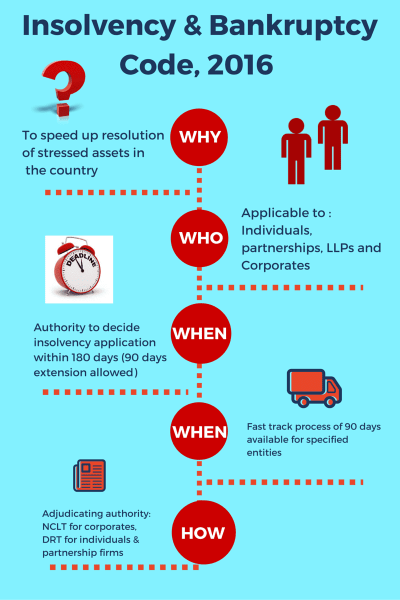



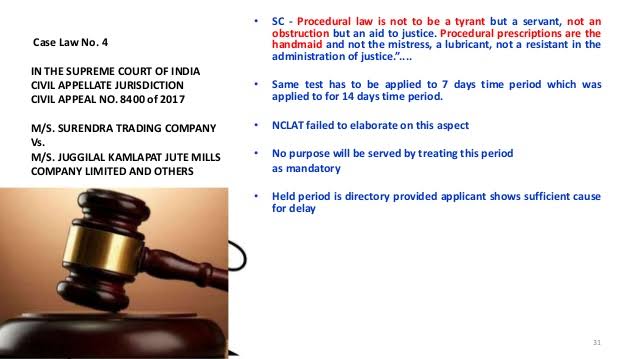
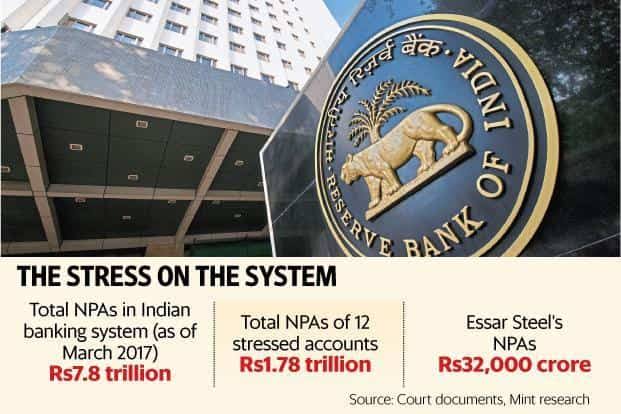


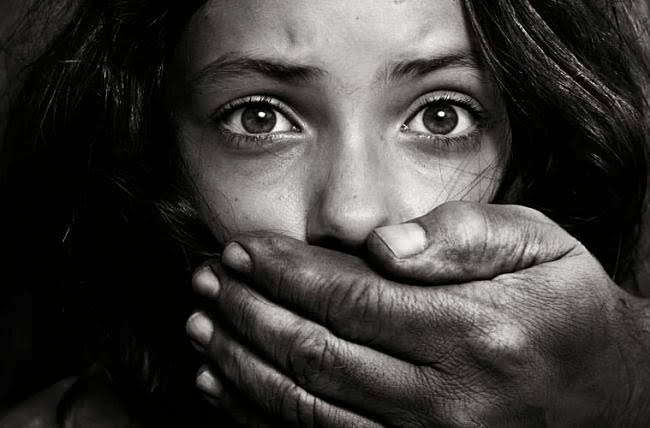
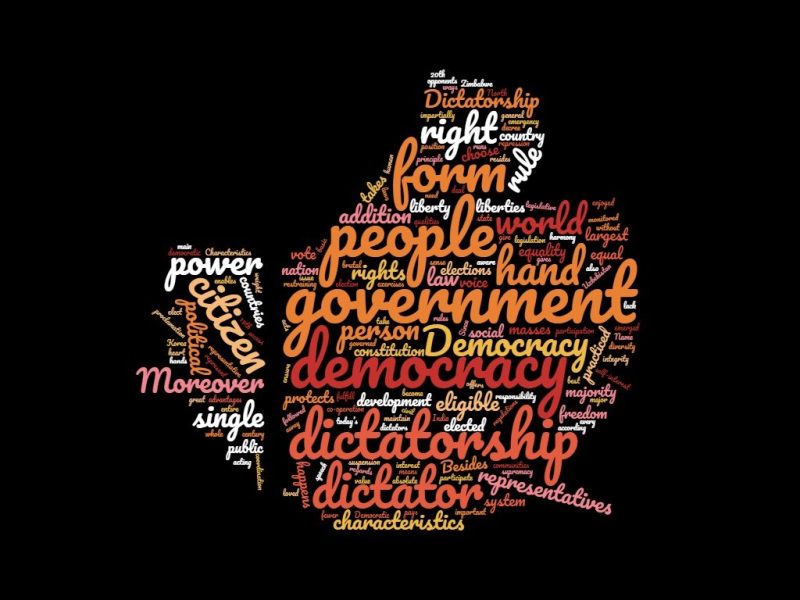











 Eduindex
You must be logged in to post a comment.