NATIONAL mean a person owing allegiance to and entitled to the protection of a sovereign state. CITIZEN is preferred for one owing allegiance to a state in which sovereign power is retained by the people and sharing in the political rights of those people. the rights of a free citizen SUBJECT implies allegiance to a personal sovereign such as a monarch. the king’s subjects NATIONAL designates one who may claim the protection of a state and applies especially to one living or traveling outside that state.
“Silence does not mean yes. No can be thought and felt but never said. It can be screamed silently on the inside. It can be in the wordless stone of a clenched fist, fingernails digging into palm. Her lips sealed. Her eyes closed. His body just taking, never asking, never taught to question silence”
Amy Reed
I came across a post on Feminist’s Instagram.
This post struck a nerve that no other post ever did. Mainly because whoever this person (thedarkchocolatedandy) is, didn’t insult anyone, nor did they try to persuade anyone to believe them. All they did was point out how humans are different than animals and also that women aren’t a piece of meat.
I decided to make a post on what crosses the line from being intimate to being considered rape. I am not sure how comfortable I am with men and most women not knowing or understanding what rape is and who the assailant is, and also that no reason is justifiable for rape, however, I wanted to make it clear and give no one who reads this an opportunity to claim they were unaware.
Take this post as a guide to know what is rape.
What is Consent?
The general definition of consent is to allow or permit for something to happen.
Consent in terms of sex or intimacy refers to agreeing to have sexual intercourse with someone and letting them know about it. It also includes finding out where the other person stands.
Consent is restricted and comes with thick boundaries. A person may consent to sexting, but not actually having sex, or vice versa.
Consent could also be restricted to just being physical and not actually having sex.
Take for instance the Netflix Original, “GUILTY”. A beautiful movie loudly stating that consent doesn’t give permission for anything and everything. Tanu (Akansha Ranjan), accuses VJ (Gurfateh Singh Pirzada) of raping her. Throughout the movie everyone had numerous reasons to tag her a fibster, they refused to believe her, they ridiculed her, said she was asking for it. The biggest reason was that she was very into VJ and that she threw herself on him quite a lot. In the end it was revealed that she wanted to have sex with VJ. She was consenting to the sex. What she wasn’t consenting to is being watched by VJ’s friends and being recorded. She didn’t consent to being sexually assaulted while the two bystanders ridiculed her and lead VJ on.
This movie is an eye-opener and covers many reasons rape culture still persists in our society.
When do you NOT have Consent?
When a person is sleeping or unconscious
When a person is drugged or intoxicated
When you are threatening them
You use a position of authority or trust
Consent is withdrawn
When you ignore their NO, cries and physically being pushed away
When you have consent for only one form of sexual act and not the other
When they are pressured
Verbal Consents:
Yes
I am sure
I want to
Don’t stop
Go on
I still want to
I want you to
I’m ready
Yes please
I am comfortable
I want to continue
Verbal Disagreements:
No
Stop
I don’t want to
I am not sure
I don’t think so
Please don’t
Please stop
This makes me uncomfortable
I want to stop
I don’t want to continue
This feels wrong
Maybe we should wait
Diverting the topic
I want to, BUT
Saying Yes fearfully
Non-Verbal Disagreement:
Pushing Away
Pulling Away
Crying
Avoiding Eye Contact
Silence
Shaking their head no
Standing/Lying motionlessly
Looking Scared
Not removing their own clothes
What is Rape?
Sexual Assault refers to any form of sexual contact or behaviours without explicit consent by the victim. Attempted Rape, Unwanted touching, forcing a victim to perform sexual favours, oral or penetrating penis or any other object.
The Medical definition of Rape is, “Forced sexual intercourse, and/or forced sexual assault between two or more people is considered rape. Rape may be heterosexual or homosexual. Rape involves insertion of penis or any inanimate object into a person’s vagina, anus, mouth. Rape also includes any other sexual acts.” Force here doesn’t just refer to physical force; blackmail, psychological manipulation to coerce someone into being sexually active is also considered rape.
Sexual intercourse between an adult and a minor is legally considered statutory rape. The adult is found guilty even if the minor was consenting.
Intimacy with a minor wife is considered rape in India.
Marriage is not a licence for either partner to force an unwilling partner to have sex. Marital/Spousal Rape is now recognized and is a criminal offence.
Date Rape, sexual assault followed by the victim being drugged or psychologically manipulated.
Intoxicated Rape is when the victim is drunk and unconscious, not in the state to make a sober choice.
Consent taken by threatening the victim or victims loved ones is also considered rape.
Gang Rape occurs when a group of people rape a person.
Rapes in prisons and jails by other inmates or prison officials is also an offence, often overlooked and unreported.
Serial Rape is the rape committed continuously over a relatively long time period.
Payback/Punishment Rape is when a person rapes another out of spite.
War Rapes are rapes committed by soldiers during war as a way to force prostitution and slavery to insult an entire country.
Deceptive Rape is the rape that occurs when the rapist rapes a victim by gaining consent by misleading them.
Corrective Rape is a hate crime where homosexuals, trans and queer individuals are raped hoping to “correct” them. To force them to “turn” heterosexual.
Custodial Rape is the rape occurred in custody of police, hospitals, old age homes, orphanages or any other employee of the state.
Prostitution Rapes are rapes where rapists force prostitutes to have sex without paying them for their services, to inflicting pain and torture (cigarette burns, slapping, choking).
Exchange Rape is the rape where sexual favours are exchanged for money, rent, food, drugs or any other resource.
Punitive Rape is when rape is used to punish or discipline someone. Usually by an abusive teacher, parent, Religious leader, or a peer.
Incest Rape is when a victim is raped by family member.
Consenting Rape is when a consenting partner withdraws consent, but the rapist doesn’t stop and continues to get sexually intimate. Consenting rape is also when the victim consents, but isn’t completely “into it.”
Rape Culture
Rape Culture refers to the sociological concept of normalizing rape, and blaming victims for dressing or acting provocatively. A few illustrations of Rape Culture include:
Blaming the victim
She dressed provocatively
She shouldn’t have been out so late
She is already sexually active, who says she didn’t want it?
Boys will be boys
Tolerating sexual harassment
Assuming only immoral women get raped
Making degrading jokes about women
Associating “manhood” as dominant and sexually aggressive
Associating “womanhood” as submissive and sexually passive
Offensive memes
Not believing people who speak out
“You haven’t been raped yet, so chill”
Slut-shaming and congratulating men on “scoring”
Calling young women gold diggers when they marry old and older woman, cougars
Objectifying Women
Associating Rape to Victims character and not the rapists
Rape Culture is the direct consequence of toxic masculinity. The heavily patriarchal world teaches and forces boys and men to be strong and exert “masculinity” in the form of dominance, arrogance and sexual and physical aggression.
The only solution is to fight patriarchy.
Support for Those in Distress
The National Commission for Women, provides a set of helpline numbers, legal aid, and counselling contacts.
As of late India has gone into a phase of segment profit which will keeps going up to 2055 we have the 35 years to support our monetary improvement to make further move to the development era with the 66% of the number of inhabitants in India is between 16 to 65 age bunch this is the compose time to talk about business issues.
Right off the bat unemployment is the focused issue in India on the grounds that as indicated by NSSO study 2017-18 in work rate in India is 6.1%which is 45 years high in the country. PLFS review likewise shows that Rural urban disparities,gender imbalances in unemployment.Comparing to the informed uneducated are increasingly utilized in the country.The two principle central purposes of joblessness issues in the nation are initially business aberrations dependent on training and second is the joblessness dependent on sexual orientation disparity.
To handle with the principal issue as we as a whole of us realize we need to change the current instruction framework from tutoring to higher studies.Although govt is making various strides like Atal advancement mission,Atal fiddling labs and for university training NSDC aptitude advancement plan’s these measures are on the whole going in constructive way.By expanding the eagerness towards development we need to begin brooding focuses at region shrewd in the nation to energize thoughts of the students.These hatching focuses running presentelh in first rate institutes.We must improve mindfulness about govt plan’s especially in country zones like PMKVY.for school dropouts and school drop outs we ought to give some expertise preparing and confirm them.We likewise need to improve financial plan on credits for independent work of the people. MUDRA conspire doing great in this way. MSME sector additionally critical to make business enormously in Rural urban regions.
Second is the Gender imbalance the likely populace of about half are not in the standard of monetary advancement of the country.To remember that part of individuals for the standard business Govt is taking numerous estimates which will do the trick somewhat however we need to improve the more in the coming years.First we need to expand the labor proportion by taking rigid measures on infanticide. second young ladies dropouts from school instruction must be reduced. In this govt started plan resembles better bachao better padhao sukanya samruddhi yojana are doing well.For the utilized ladies Maternity advantage leave act 1971.In the provincial territories ladies are for the most part in masked business. To handle this issue we need to guarantee bookings for females for all most in all areas from parliament to private associations.
Another serious issue In this nation about employment. This is entire diverse issue from joblessness .Most of the affected here are the informed people.I f we don’t focus on this issue care completely it will make social,economical,political suggestions on the nation.
By and by in India university instruction in India is likewise unsatisfactory aside from some institutions.The aptitudes which the vast majority of the understudies learned in the school’s aren’t adequate to work in the ventures and companies.This will deny youngsters of taught sector fathom this issue we team up the businesses and organizations with colleges.They to be prepared by these enterprises in the schools itself.By gilding consents to schools to change their prospectus as per the need of the industry.From the most year of graduation it self understudies must be locked in with industry and friends activities.Apart from building and medication we need to expand the understudies into arts,management,science sector. There by businesses additionally enhance.
As of now India’s migraine is be the under employment.If the informed individuals land the correct position this will build up the organisation in this manner nation and accordingly work for the jobless individuals of this nation
“Justice delayed is justice denied” is a legal maxim. It implies that if legitimate review or fair help to a harmed party is accessible, however isn’t approaching in an opportune manner, it is successfully equivalent to having no cure by any stretch of the imagination.
This rule is the reason for the privilege to a fast preliminary and comparative rights which are intended to facilitate the lawful framework, on account of the injustice for the harmed party who continued the injury having little trust in opportune and compelling cure and goal. The expression has become a revitalizing weep for lawful reformers who view courts, councils, judges, mediators, authoritative law judges, commissions or governments as acting too gradually in settling lawful issues — either in light of the fact that the case is excessively unpredictable, the current framework is excessively mind boggling or overburdened, or on the grounds that the issue or gathering being referred to needs political kindness. Singular cases might be affected by legal aversion to settle on a choice. Resolutions and court rules have attempted to control the propensity; and judges might be dependent upon oversight and even order for tireless disappointments to convenient choose matters, or precisely report their excess.
Justice is one of civilisation’s primary objectives. It is subsequently basic for the legal executive to play out its obligation appropriately for any general public to proceed with its quest for harmony, amicability and progress. Shockingly, the Indian legal executive, notwithstanding its numerous victories, experiences extreme auxiliary issues that keep it from working appropriately. The legal executive’s travails, explicitly those identifying with deferrals and overabundance are very much reported and needn’t bother with reiteration. In any case, it is just over the most recent couple of years that these basic issues have been exceptional seen observationally because of the accessibility of better information. It is presently conceivable to survey, in a genuinely point by point way, the legal executive on boundaries, for example, spending plans, HR, remaining burden, assorted variety, foundation, and patterns throughout the years. We can likewise precisely analyse the pendency and excess issue at region and taluka level as well as at court complex levels.
From a bigger viewpoint, legal deferrals likewise lead to vulnerability with respect to laws and their application — the continuous case in the Supreme Court in regards to the use of the Right to Fair Compensation and Transparency in Land Acquisition, Rehabilitation, and Resettlement Act, 2013 and the assurance of remuneration thereunder has basically ended land securing case in the nation. Cases identified with land securing in the subordinate courts stay pending for a long time by and large and are a class of cases that set aside the most effort to be settled in court. A basic change required is the need to choose a full-time legal organization framework. Globally, legal organization is viewed as being subordinate to crafted by judges and is done by committed and concentrated faculty to help judges effectively play out their legal obligations. The foundation of a committed and prepared unit to offer help to the legal executive through case the board, help with planning, dealing with managerial errands, and guaranteeing support of court framework will go far in empowering the legal executive to concentrate on the organization of justice.
Biomedical Waste Management & Handling Rules, 1998 (“1998 Rules”) in India govern the handling, disposal and management of bio-medical waste (“BM Waste”)in India have been notified by the Central Government in the exercise of the powers conferred by Section 6,8 & 25 of the Environmental Protection Act, 1986. These rules provide for the framework of the management and Handling of disposal and scientific management of BM Waste
In wake of the COVID-19 pandemic, the Centre Pollution Control Board (“CPCB”) recently issued guidelines dated March 27, 2020 for handling, treatment and safe disposal of BM Waste generated during treatment, diagnosis and quarantine of patients confirmed or suspected to have COVID-19 (“Guidelines”).
The Guidelines have been necessitated due to the super infectious nature of the Novel corona virus and provide for a mechanism for the segregation, packaging, transportation, storage and disposal of BM Waste in order to avoid further spread of the virus through BM Waste.
So what do you mean by the BM Waste and what are the categories of BM Waste that the hospitals generate?
The Bio-Medical Waste Management Rules 2016[1] (“2016 Rules”) define the BM Waste as any waste, which is generated during the diagnosis, treatment or immunisation of human beings or animals or research activities pertaining thereto or in the production or testing of biological or in health camps, including the categories mentioned in Schedule I the 2016 Rules.
The 2016 Rules apply to all persons who generate, collect, receive, store, transport, treat, dispose, or handle bio medical waste in any form. The next imminent question that comes to our minds is what are the categories of BM Waste that the hospitals generate?
BM Waste generated from a hospital could be human anatomical waste, animal waste- microbiology & biotechnology, waste sharps, discarded medicines and cytotoxic drugs, solid & liquid waste.
Now that we know what’s the meaning and various categories of BM Waste, the most pertinent question arises that how is it supposed to be treated and disposed of by the hospitals in India during the ongoing COVID-19 pandemic?
While the hospitals in their usual course deal with the segregation, management and storage of BM Waste, the situation in times of COVID-19 is extraordinary the reason being the highly contagious nature of the virus and also it’s transmission cycle and multiplicity rate.
As the hospitals are being flooded with the suspected and confirmed cases, the Ministry of Health and family welfare (“MoHFW”) and the CPCB have issued various guidelines for the handling and management of waste generated from the COVID-19 facilities.
Under the 2016 Rules, while the hospitals are required to ensure that there is a secured location within its premises for a spill/pilferage free storage of segregated BM Waste in labelled/coloured bags or containers, the duty to transport the stored BM Waste from the hospital premises onwards to the common BM Waste treatment and disposal facility is of an ‘operator’ as defined in the Rules.
Specifically, in wake of COVID-19, the CPCB has issued Revision 1 to the Guidelines dated March 25, 2020 for Handling, Treatment and Disposal of Waste Generated during Treatment/Diagnosis/ Quarantine of COVID-19 Patients (“CPCB Guidelines”).
[2] The said CPCB Guidelines inter-alia, state that hospitals are required to depute separate BM Waste sanitation workers to COVID-19 isolation wards and maintain records of all waste generated in such isolation wards and ensure that the BWM generated is collected and separately stored in separate leakproof color-coded double layered bags or bins /containers labelled as “COVID-19 waste” as per the 1998 Rules and the Guidelines.
In fact the Bombay High Court in a recent pending public interest litigation has, while issuing notices to local municipal corporations and the State Pollution Control Board, also directed the Maharashtra government to clarify whether it was ensuring that all COVID-19 related biomedical waste generated in the state was being disposed of in a safe manner[3].
Now that we have a thorough understanding of how the BM Waste is supposed to be treated and disposed of the most important and the widely discussed about topic is that what are the measures that a hospital is required to take for the safety of its employees doctors, nurses and other support staff who are known as the (“healthcare personnel”) from the dangerous diseases like COVID-19?
In order to answer this pertinent question which is often there in the limelight, one must keep in mind that the Healthcare personnel who are the Frontline workers have a high risk of contracting the COVID-19.
While the hospitals are taking precautions and measures to control any spread of infection within the premises, it is particularly difficult given the highly super-infectious nature and hyper-speed feature of the virus. Due to this feature it spreads widely and it becomes a bit difficult to contain it in an over-crowded environment but it’s not impossible to achieve that as we all have been deterrent enough to contain it’s spread but still there is always scope for improvement.
The first steps towards controlling the spread of a virus is personal protective equipment also known as PPE which should preferably be a two-layered fluid-resistant apron and basic items like N-95 masks, face shield, full cover gowns and sanitisers but the same are rendered ineffective against the COVID-19 if the quality of these equipments is not up to the standard as required.
Greater emphasis is also to be laid upon the proper training and awareness of healthcare personnel towards proper use and disposal of the equipment. The spread of the COVID-19 virus is also particularly fast due to the heavy load of asymptomatic patients coming into the hospital and hence a greater need for the formulation of national COVID-19 protocol.
The MoHFW has vide its revised guidelines for clinical management of COVID-19 dated March 31, 2020[4] (“Clinical Management Guidelines”) impressed upon strict compliance of Infection prevention control (IPC) protocol for Hospitals and a consequent effect of the same is prevention and management of COVID-19 in the hospital staff.
This protocol inter-alia, standard precautions such as hand hygiene, use of PPE to avoid direct contact with patients’ blood, body fluids, secretions (including respiratory secretions) and non-intact skin, prevention of needle-stick or sharps injury, safe waste management, cleaning and disinfection of equipment and cleaning of the environment around a COVID-19 patient.
The 2016 Rules also provide as follows that in order to and for ensuring the safety of the healthcare workers and others involved in the segregation and pre-treatment of BM Waste, the hospital is required to train to all its healthcare workers, immunise them for protection against diseases which likely to be transmitted by handling of BM Waste, in the manner as prescribed in the National Immunisation Policy[5].
Also, hospitals are required to ensure occupational safety of all its health care workers and others involved in handling of BM Waste by providing appropriate and adequate PPE and also they must conduct health check ups at the time of induction and at least once in a year maintain the records for the same.
Now due to the pandemic if one is an employee ie the Healthcare personnel of the hospital one must understand the Legal aspect and angle also and the most important aspect of all is that what is the Legal obligations of the hospital, if and when an employee of the hospital tests positive for COVID-19.
Let’s answer this as it’s the most crucial and critical aspect. The present COVID-19 pandemic is an unprecedented event and is unlike any other infectious disease known to mankind and the medical world which is yet to fully decipher its modus operandi of infecting humans.
In a hypothetical situation wherein a hospital employee contracts COVID-19, it will be imperative for the employee in such a situation to establish that his possible exposure to COVID-19 was in the Hospital itself not in the community after considering that the employee is spending time outside as well apart from the hospital premises.
While in an ideal case, if it is proved that a hospital staff has contracted it ,i.e., it shall amount to ‘a hospital acquired infection’, then the hospital would be ordinarily liable. However, in the case of COVID-19 since it is seemingly impossible to trace down the exact source of the infection, in absence of such evidence and in light of utmost safety measures and precautions taken by the hospitals as per the guidelines, fastening of any liability on the hospital would be peculiarly difficult.
The defence available to the hospital may be culpability and negligence of the employee and proving that the hospital itself took all possible measures to avoid any mass spread of the infection.
The next relevant point to be analysed and answered is that when a Non COVID-19 patient contracts the virus during his term of being admitted in the hospital what are the Legal obligations of the hospital when this happens?
The National Consumer Dispute Redressal Commission in the matter of Apollo Emergency Hospital vs Dr. Bommakanti Sai Krishna & Anr.[6] observed that “As already observed, the infection occurred during the stay of the Complainant at the hospital. On the other hand, there is nothing to show that the source of infection lay outside the hospital. Thus, there is preponderance of possibilities of the infection having been acquired in the hospital itself. We therefore, do not accept the contention that it was necessary for the Complainant to produce expert evidence to prove negligence on the part of the concerned doctors in the hospital.”
The afore-stated judgement implies a presumption of liability on the hospital that in cases where the probability of acquiring the infection is much higher inside the hospital than from other sources. However, the same may not apply in COVID cases in light of the peculiar difficulty of tracing the source of acquiring the COVID-19 infection. Therefore, the presumption rendered by the aforesaid judgement will not be ipso facto applicable to cases of COVID patients.
As we have discussed the various pertinent relevant questions another one is that what are the legal obligations of the hospital, if and when a patient is misdiagnosed positive or negative for COVID-19 by the hospital due to a fault in the COVID-19 rapid testing kit (“testing kits”)?
The liability of a hospital in cases of misdiagnosis depends on the methodology of procuring of testing kits. A hospital may procure testing kit either from third party manufacturer or may manufacture them internally i.e. by itself or its subsidiary.
In cases where the misdiagnosis is on account of faulty testing kit procured externally, the hospital cannot be held directly liable as the liability may be shifted upon the manufacturer.
In cases where the misdiagnosis is on account of faulty testing kit is due to testing kits produced internally the hospital may be liable subject to it being proved that the misdiagnosed patient was indeed positive. However, factors such as the success rate of any testing kit not being 100% may have an interplay in determining the liability.
We have to be aware of what are the Legal liability of a hospital in a situation where the hospital discharges a mild/very mild/pre-symptomatic COVID patient to ramp up the capacity for serious COVID-19 patients.
A hospital will not be held liable for a systematic discharge of a mild/very mild/pre-symptomatic/moderate COVID-19 patient as the same is directed by the Central Government. On May 8, 2020, the MoHFW released its revised policy for the discharge of COVID-19 patients.[7] This revised policy provides that hospitals can discharge mild/very mild/pre-symptomatic in accordance with the protocols given therein.
In the earlier advisory[8], COVID-19 patients could be discharged only after chest radiograph clearance, viral clearance in respiratory samples, and if two of the patient’s specimens were negative within a period of 24 hours. The discharged patient would then have to home quarantine themselves in accordance with the revised policy.
So what is the protocol to be followed by a Hospital while disposing of the dead bodies of the COVID-19 patients?
The corpses are a source of infection for healthcare personnel/ other patients and cannot be disposed of by usual methods of disposal and therefore, the MHFW issued guidelines dated March 15, 2020 on dead body management in COVID-19.[9] The guidelines provide inter-alia, the protocol to be followed at the time of removal from the isolation room or area, put in bio-hazard bag and disinfection. Further, all surfaces of the isolation area (floors, bed, railings, side tables, IV stand etc.) should be wiped with 1% Sodium Hypochlorite solution and then it should allow a contact time of 30 minutes, and allow it to air dry as well.
While treating patients infected with the COVID-19 virus, what is the protocol for the treatment?
The All India Institute of Medical Sciences (AIIMS) has issued clinical protocol dated April 21, 2020 for treatment of Covid-19 patients and states such as Madhya Pradesh and Delhi have directed Hospitals and health centres dedicated to treating COVID-19 patients to follow the said clinical protocol.[10]
Treatment must be affordable for all. One must know whether or not there is a standardisation of costs of treatment of a COVID-19 for private hospitals?
Government hospitals are reaching their intake capacities and for that reason COVID-19 patients have been resorting to treatment in private hospitals. While some private hospitals are charging exorbitant amounts as costs of treatment, the same is worrying not just for the patients but also to the insurers.[11]
In a first, the State government of Maharashtra has capped treatment costs in private hospitals for people without medical insurance and for other patients, the capped prices will come into effect once they exhaust their medical insurance cover.[12]
The Hon’ble Gujarat High Court has vide its order dated May 22, 2020 directed the state government to issue a notification making it mandatory for all multi-speciality hospitals private/ corporate hospitals in Ahmedabad and on its outskirts to reserve 50% of their beds (or such other capacity as maybe specified by the state government) for COVID-19 patients.
In view of the same, the Government of Gujarat may come up with similar caps on costs as Maharashtra.[13] The Hon’ble Gujarat High Court also observed that the certain private hospitals authorised by the government to treat COVID-19 patients in Ahmedabad are charging exorbitant fees which is unaffordable for a massive section of the society and directed the state government to ensure that private hospitals do not charge exorbitant fees. [14]
Also in light of the same The Hon’ble Bombay High Court recently directed a charitable hospital to make court deposit of monies in a case pertaining to levy of exorbitant charges for treatment of COVID-19 patients belonging to poor strata of the society despite reserving 20% of its beds for poor and the needy.[15]
India has been under lockdown phase 4 until May 31st with some relaxations. Prime Minister Mr. Modi announced a relief package of 20 lakh Crores INR for various sectors to propel economic growth on May 17. Some relaxations which were provided to Red, Orange and Green zone areas during the Lockdown 3.0 like opening of some of the individual shops of non-essential items were extended to Medium and small scale industrial sector, farm and trading sector. Malls, Cinemas, restaurants and places with probable high foot fall remained closed. India now is ranked third in the world in terms of coronavirus cases, after the US and Brazil.
The COVID-19 pandemic pushed economies into a Great pushback, which helped contain the virus and save lives, but also triggered the worst recession since the Great Depression. Over 75 per cent of countries are now reopening at the same time as the pandemic is intensifying in many emerging market and developing economies. Few countries have started to recover. However, in the absence of a medical assistance, the strength of the recovery is highly uncertain and the impact on sectors and countries are uneven.
The entire country remained under lockdown till May 31, 2020 followed by Unlock phase-1 from June 1 and June 14. Up to May 31, was the Lockdown 4. Earlier the Lockdown 3 was up to May 17, Lockdown 2 was upto May 3 and before that the Lockdown 1 was from March 22 to April 16, 2020. Prime Minister Mr. Modi announced measures with some relaxations. According to experts, this is being done to ensure that the Food Safety of India is protected as Rabi harvesting season is on anvil. PM Modi said detailed guidelines have kept in mind the needs of the informal sector and farmers. India now joins countries such as France, USA which are moving with the idea of unlock phases after extended lockdowns.
The Harsh Effects on World Economies
A high degree of uncertainty surrounds this forecast, with both upside and downside risks to the outlook. On the upside, better news on vaccines and treatments, and additional policy support can lead to a quicker resumption of economic activity. On the downside, further waves of infections can reverse increased mobility and spending, and rapidly tighten financial conditions, triggering debt distress. Geopolitical and trade tensions could damage fragile global relationships at a time when trade is projected to collapse by around 12 per cent.
This pandemic like no other will have a recovery like no other. First, the unprecedented global sweep of this crisis hampers recovery prospects for export-dependent economies and jeopardises the prospects for income convergence between developing and advanced economies. We are projecting a synchronised deep downturn in 2020 for both advanced economies (-8 per cent) and emerging market and developing economies (-3 per cent; -5 per cent if excluding China), and over 95 percent of countries are projected to have negative per ca-pita income growth in 2020. The cumulative hit to GDP growth over 2020–21 for emerging market and developing economies, excluding China, is expected to exceed that in advanced economies. Sooner or later this crisis will vanish and it has to because change is the undisputed law of nature. The only thing waiting for us after this epidemic is a shattering or rather say, a collapsing economy for many nations. We are fighting this pandemic together hence same should be our spirit in handling the ruptured economy. With confirmed case count for India crossing a million and more than 26000 deaths, all we can do is to get more strongly committed to all guidelines and suggested precautions by governments and health agencies worldwide.
Astrology is the study of the movements of the planets, sun, moon, and stars in the belief that these movements can have an influence on people’s lives. Astrology originated in Babylon far back in antiquity, with the Babylonians developing their own form of horoscopes around 2,400 years ago. Then around 2,100 years ago, astrology spread to the eastern Mediterranean, becoming popular in Egypt, which at the time was under the control of a dynasty of Greek kings.
Astrology is a very vast science. It is practiced in almost all the religions of world and each religion have different principles and methods for predicting future and revealing destiny. Many cultures have attached importance to astronomical events, and the Indians, Chinese, and Maya developed elaborate systems for predicting terrestrial events from celestial observations. In the West, astrology most often consists of a system of horoscopes purporting to explain aspects of a person’s personality and predict future events in their life based on the positions of the sun, moon, and other celestial objects at the time of their birth. The majority of professional astrologers rely on such systems.
They made the calendar, predicted the tides, estimated the harvest season, followed the stars in the sea, and so forth. It helped, so it became the science of the day.
Things moved in the sky, but they always came back. Always. And they came in patterns. Just like how humans are born and dead. The cycle – the cycle of life. Maybe, just maybe, the celestial alignment breathes the very same cycle of life? A few thought so anyways.
With a gripping delusion, they projected everything up high, to the sky; the joy, the suffering, the pain, the flood, the death, the birth, the entire human existence. And right there in the night, under the gazing stars and the moon, astrology was born. An ancient pattern matching scheme – a manual one. And, astrology thrived.
They started manually collecting the celestial alignment at birth data of all the kings, queens, royals, servants, saints, widows and witches. And, then they manually labelled it, and looked for patterns. They checked if all royals had some celestial alignment in common, and the same went for the poor and the misfortunate. Criss-cross. Cross-criss. Thus began the humongous scheme of pattern matching.Through years and years of data collection, pattern matching and model learning, they tuned their model and churned out the model that best fits their data.A chart was stuck to you upon birth. A lifeline that tells your destiny, your personality, your likes and your dislikes. The one that indicates everything; your everything, even your sex life.To be honest, it’s an ingenious idea, and great efforts too. Mind the time, this is thousands of years ago, when they didn’t even have a WiFi.
As years roll on, the scientific community rejects astrology as it has no explanatory power for describing the universe, and considers it a pseudoscience. Scientific testing of astrology has been conducted, and no evidence has been found to support any of the premises or purported effects outlined in astrological traditions. There is no proposed mechanism of action by which the positions and motions of stars and planets could affect people and events on Earth that does not contradict well understood, basic aspects of biology and physics. Those who continue to have faith in astrology have been characterised as doing so. In spite of the fact that there is no verified scientific basis for their beliefs, and indeed that there is strong evidence to the contrary.
Confirmation bias is a form of cognitive bias, a psychological factor that contributes to belief in astrology. Astrology believers tend to selectively remember predictions that turn out to be true, and do not remember those that turn out false. Another, separate, form of confirmation bias also plays a role, where believers often fail to distinguish between messages that demonstrate special ability and those that do not. Thus there are two distinct forms of confirmation bias that are under study with respect to astrological believe.
Across several centuries of testing, the predictions of astrology have never been more accurate than that expected by chance alone. One approach used in testing astrology quantitatively is through blind experiment.
The recent death of a father-son duo in Tamil Nadu has sparked anger amongst the people of the country. The country also saw people raising hands to how this set of news being particularly from the Southern part has been neglected without losing even a breath. The legal issue covered in the case is on Custodial Violence. Such a violence is what takes place in the judicial and police custody. It is where a person who is alleged to commit the crime is tortured mentally as well as physically. In certain cases, the torture crosses the limits of rape and death as well.
The father-son case has raised several legal concerns such as the poor regard of fundamental rights as the SC identified in the case of Rama Murthy v. State of Karnataka in 1996, as how while upholding fundamental rights of prisoners, the ‘Torture and ill treatment’ in prisons is an area that requires reform. However, no such follow up has been seen. The question on the methods of investigation involving torture are particularly also against the fundamental right to life and dignity as enshrined under Article 21 of the Constitution.
The case puts lights to how the misuse of power of arrest happens in the country. The 3rd report of the National Police Commission observed how 60 per cent of all arrests were completely “unnecessary”. Furthermore, how the unnecessary applications under various sections of the Indian Penal Code, 1860 orders to get non-bailable remand for the accused and is against Article 19 of the Constitution which enables freedom as a fundamental right under the blanket of some reasonable restrictions.
The arresting involves ignorance of rules and use of torture by Police which mostly happens not in respect to the procedure as laid under the Criminal Procedure Code where the police custody is up to 15 days or judicial custody up to 60-90 days, etc. Such acts fall under extra-legal behaviours.
A major concern lines from this incident. It is how the laws still cannot protect its citizens due to the lack of implementation in the process. But when the laid laws are seen, it also reflects how there is a lack of strong legislation against such tortures in India. It shows how the mere release of draconian rules for non-compliance has turned the sector unprogressively ineffective to be bound by law.
India, despite the variety of laws protecting residents, tourists, animals is still yet to criminalise custodial violence. The country had signed the UN Convention against Torture in 1997 but like the trail, the ratification is still on hold.
The country has seen days after days when the police officials have been criticised for such a behaviour. But one needs to understand that there is lack of independent functioning in the particular sector. The Police Act of 1861 is specifically silent on ‘superintendence’ and ‘general control directions’. Such silence is deceptive as it only enables the executives to reduce the police to mere tools but more often not, they are used fulfil mere political interests.
The same could also been minimised through tightening the officials as right now, there stands no second thought before attaining the position of power. The process will certainly fall under regulations if the law permits common citizens to sue a police officer directly without the approval of the Government.
The law as such as has various loop holes. Including the weak functioning of National Human Rights Commission which righteously empowers to summon any witness, order certain production of evidence and also to recommend that the government which can initiate prosecution of officials. Needless to mention, the implementation loses hands they have mostly been limited. Merely to provide compensations or any other immediate interim relief by calling on the Government.
The way forward, however, looks progressive as India has ratified the International Covenant on Civil and Political Rights. Though it has only signed the Convention against Torture and Other Cruel, Inhuman or Degrading Treatment but positively, both of it prohibits torture.
Along with it, there is a reformation under Section 197 of CrPC as distinct so that there need not be requirement of any government approval before pursuing charges against police where the alleged crime is torture, arbitrary detention and also other criminal acts.
There have also been strict implementations of the DK Basu judgment given in 1997 by the SC. In the case, the apex court had issued 11 directions with the objective to increase the transparency and also to fix responsibility while any police official is making an arrest.
The effective role of magistrate is encouraged throughout the process as they have a duty to prevent the overreaching of police powers and have a right to ensure the wellbeing of suspects in custody by directly questioning them. They also have to ensure that the right to counsel is available to suspects so that Article 22 of the Constitution is not violated at any stage.
Various other steps as such as to ensure the police accountability, getting technically uplifted by providing training in scientific methods of investigation, introducing different gadgets to help the process as Body cameras used in the U.S. and the U.K and importantly, CCTV cameras inside the police stations.
Death due to torture is purely a criminal act and no authority should have power positioned to do it. The steps have certainly been put but it all that matters is that the entire way forward is duly maintained.
We go to schools, colleges, universities to complete our educated and start earning our livelihood. We take up jobs, practise professions or start our own businesses so that we can earn money to make our living. But which of these institutions make us capable of managing our own hard-earned money? Probably a very few of them. Our ability to effectively manage our money by drawing systematic budgets, paying off our debts, making buying and selling decisions and ultimately becoming financially self-sustainable is known as financial literacy.
Financial literacy is knowing the basic financial management principles and applying them in our day-to-day life.
Financial Literacy – What does it Involve?
From simple practices like keeping a track of our expenses and understanding the need to spend money if we like a product to striking a balance between the value of time saved and money lost, paying our taxes and filing of tax returns, finalizing the property deals, etc – everything becomes a part of financial literacy.
As human beings, we are not expected to know the nitty-gritty of financial management. But managing our own money in a way that it does not affect us and our family in a negative way is important. We certainly do not want to end up having a day with no money at hand and hunger in our stomach.
Why is Financial Literacy so Important?
Financial literacy can enable an individual to build up a budgetary guide to distinguish what he buys, what he spends, and what he owes. This subject additionally influences entrepreneurs, who incredibly add to financial development and strength of our economy.
Financial literacy helps people in becoming independent and self-sufficient. It empowers you with basic knowledge of investment options, financial markets, capital budgeting, etc.
Understanding your money mitigates the danger of facing a fraud-like situation. A few strategies are anything but difficult to accept, particularly when they’re originating from somebody who is by all accounts learned and planned. Basic knowledge of financial literacy will help people with foreseeing the risks and argue/justify with anyone learned and well-informed.
What should you read on / get informed about in Financial Literacy?
Budgeting and techniques of budgeting
Direct and indirect taxation system
Direct tax slabs
Income and expense tracking
Loans and debt – EMI management
Interest rate systems: fixed versus floating
Business and organisational transaction studies
Elementary Book-keeping and Accountancy
Cash in-flow and out-flow Statements
Investment & personal finance management
Asset management:
Business negotiation skills and techniques
Make or buy decision-making
Financial markets
Capital structure – owner’s funds and borrowed funds
Fundamentals of Risk Management
Microeconomics and Macroeconomics fundamentals
While there are various media to learn about financial literacy, we recommend that you join a short-term, weekend programme which helps you get financially literate.
“The rights of every man are diminished when the rights of one man are threatened.”
John F. Kennedy
One week after World War II began, Herbert George Wells, wrote to the Times of London, with “What are we fighting for?” The science fiction writer answered his own questions with, “The Rights of Man.” On the February 5th publication of the Daily Herald in 1940, Wells published his own “Declaration of Rights.” This article was well received and was later turned into a book.
The United Nations (UN) was founded in 1945. The two main resolutions were; to prevent another world war and to attempt to make the world a better place for all the citizens of the world. The idea of the United Nations was suggested by the League of Nations, established in 1919 (post World War I). In 1878, Congress of Berlin was formed the same way the League of Nations was formed. Yet it wasn’t successful in avoiding World War I. UN was formed in hopes to rectify the shortcomings of the Congress of Berlin and the League of Nations.
On 10th December 1948, unanimously the General Assembly of the United Nations passed the Universal Declaration of Human Rights (UDHR). The 30 articles and sub-clauses of the UDHR promotes and the UN and Human Rights Commission (HRC), oversee that “everyone is entitled to all of the rights and freedoms set forth in this Declarations, without distinction of any kind such as race, colour, sex, language, religion, political or other opinion, national or social origin, property, birth or other status.”
The UDHR comprises the basic human rights every person deserves, like the civil and political right to life, free speech, privacy, seeking asylum, freedom from torture, right to education and so much more.
Below I list every Article of the UDHR and an explanation.
“Article 1:
All human beings are born free and equal in dignity and rights. They are endowed with reason and conscience and should act towards one another in a spirit of brotherhood.”
Every person born into this world has equal worth and rights. Everyone should be kind and respectful of others.
“Article 2:
Everyone is entitled to all the rights and freedoms set forth in this Declaration, without distinction of any kind, such as race, colour, sex, language, religion, political or other opinion, national or social origin, property, birth or other status. Furthermore, no distinction shall be made on the basis of the political, jurisdictional or international status of the country or territory to which a person belongs, whether it be independent, trust, non-self-governing or under any other limitation of sovereignty.”
No matter a person’s, race, colour, sex, or any other difference, everyone is entitled to all the rights listed in this Declaration.
“Article 3:
Everyone has the right to life, liberty and security of person.”
Everyone has a right to live, freely and securely.
“Article 4:
No one shall be held in slavery or servitude; slavery and the slave trade shall be prohibited in all their forms.”
No one can be enslaved or punished for being alive.
“Article 5:
No one shall be subjected to torture or to cruel, inhuman or degrading treatment or punishment.”
No one deserves or should be tortured or subjected to cruelty, inhumanity, or degrading behavior.
“Article 6:
Everyone has the right to recognition everywhere as a person before the law.”
Everyone in this world has the right to be recognized everywhere as a person.
“Article 7:
All are equal before the law and are entitled without any discrimination to equal protection of the law. All are entitled to equal protection….”
Everyone is equal before the law and is entitled to impartiality. And if anyone faces discrimination, they deserve equal protection.
“Article 8:
Everyone has the right to an effective remedy by the competent national tribunals for acts violating the fundamental rights granted him by the constitution or by law.”
Everyone has the right to legal support if and when needed/
“Article 9:
No one shall be subjected to arbitrary arrest, detention or exile.”
No one, unless proven guilty, can be arrested or exiled.
“Article 10:
Everyone is entitled in full equality to a fair and public hearing by an independent and impartial tribunal, in the determination of his rights and obligations and of any criminal charge against him.”
Everyone accused of a crime has a right to a fair and equal public trial. Subjective judgment is a violation of Human Rights.
“Article 11:
(1) Everyone charged with a penal offence has the right to be presumed innocent until proved guilty according to law in a….”
Everyone accused of a crime has the right to be considered innocent until proven guilty.
“Article 12:
No one shall be subjected to arbitrary interference with his privacy, family, home or correspondence, nor to attacks upon his honour and reputation. Everyone has the right to the protection of the law against such interference or attacks.”
No one has the right to enter another persons’ house, mail, or intrude without a good reason. We have a right to be protected if that happens.
“Article 13:
(1) Everyone has the right to freedom of movement and residence within the borders of each state.
(2) Everyone has the right to leave any country, including his own, and to return to his country.”
Everyone has the right to move around one’s home country and travel abroad with proper documents.
“Article 14:
(1) Everyone has the right to seek and to enjoy in other countries asylum from persecution.
(2) This right may not be invoked in the case of…..”
If a person is at risk of harm in one’s own country, one has the right to seek asylum in other nations.
“Article 15:
(1) Everyone has the right to a nationality.
(2) No one shall be arbitrarily deprived of his nationality nor denied the right to change his nationality.”
Everyone has a right to be a citizen of a country, and no one or government can deny that without a justifiable reason.
“Article 16:
(1) Men and women of full age, without any limitation due to race, nationality or religion, have the right to marry and to found a family. They are entitled to equal rights as to marriage, during….”
Every one of the legal age has the right to marry and start a family without any limitation of any race, nationality, religion, or any other reason.
“Article 17:
(1) Everyone has the right to own property alone as well as in association with others.
(2) No one shall be arbitrarily deprived of his property.”
Everyone has the right to own a property, and anyone deprived of this right is a violation of Human Rights.
“Article 18:
Everyone has the right to freedom of thought, conscience and religion; this right includes freedom to change his religion or belief, and freedom, either alone or in community with others and in public or private, to manifest his religion or belief in teaching, practice, worship and observance.”
Everyone has a right to their thoughts, beliefs, and religion. Anyone wishing to change their religion is entitled to do so.
“Article 19:
Everyone has the right to freedom of opinion and expression; this right includes freedom to hold opinions without interference and to seek, receive and impart information and ideas through any media and regardless of frontiers.”
Everyone has the right to express their thoughts and opinions freely with anyone.
“Article 20:
(1) Everyone has the right to freedom of peaceful assembly and association.
(2) No one may be compelled to belong to an association.”
Everyone has the right to form groups and organize peaceful protests. Anyone denying a person or group of protesting peacefully is violating Human Rights.
“Article 21:
(1) Everyone has the right to take part in the government of his country, directly or through freely chosen representatives……”
Everyone has the right to freely choose their political representative. Either by democracy or any other method. Any government or leader denying that right is violating Human Rights.
“Article 22:
Everyone, as a member of society, has the right to social security and is entitled to realization, through national effort and international…..”
“The society we live in should help every person develop to their best ability through access to work, involvement in cultural activity, and the right to social welfare. Every person in society should have the freedom to develop their personality with the support of the resources available in that country.”
“Article 23:
(1) Everyone has the right to work, to free choice of employment, to just and favourable conditions……”
Everyone has the right to work and freely choose any occupation. Unless the person is underqualified, no one can be denied the position.
“Article 24:
Everyone has the right to rest and leisure, including reasonable limitation of working hours and periodic holidays with pay.”
Everyone has the right to work reasonable hours. Everyone holds the right to enjoy leisure time each week. Any overtime spent working needs to be compensated with additional holiday/vacation pay.
“Article 25:
(1) Everyone has the right to a standard of living adequate for the health and well-being of himself and of his family, including food…..”
Everyone has the right to adequate food, clothing, housing, and healthcare. Everyone who is unable to work, or work adequately is entitled to benefits. Every disabled person is entitled to services and benefits to make life easier.
“Article 26:
(1) Everyone has the right to education. Education shall be free, at least in the elementary and fundamental stages. Elementary education shall be compulsory. Technical and professional education shall be made…….”
Everyone has the right to educations and elementary and primary education should be free for all. Education every child receives should include these rights and fundamental freedoms. Every parent has the right to choose the right kind of education for their children.
“Article 27:
(1) Everyone has the right freely to participate in the cultural life of the community, to enjoy the arts and to share in…..”
Everyone has the right to freely participate in the cultural activities of the community and also hold the right to reserve the copyright of one’s work.
“Article 28:
Everyone is entitled to a social and international order in which the rights and freedoms set forth in this Declaration can be fully realized.”
Everyone has the right to live peacefully at the local, national, and international order that this Declaration provides.
“Article 29:
(1) Everyone has duties to the community in which alone the free and full development of his personality is possible……”
“We have duties to the community we live in that should allow us to develop as fully as possible. The law should guarantee human rights and should allow everyone to enjoy the same mutual respect.”
“Article 30:
Nothing in this Declaration may be interpreted as implying for any State, group or person any right to engage in any activity or to perform any act aimed at the destruction of any of the rights and freedoms set forth herein.”
No person, group, or government holds the right to deny or destroy the rights and freedoms allocated by this Declaration.
Many countries, governments, and influenced groups are violating these basic Human Rights. A few examples of this are listed below:
Landlords forcibly evicting tenants who are unable to pay rent amidst the COVID-19 pandemic.
The Indian government detaining peaceful protestors during the anti-NRC and anti-CAA protests in 2019-20.
Police Brutality in the form of custodial rapes, custodial torture, no-knock searches, wrongful imprisonment, denial of medical attention, excessive force, and more.
Strap yourself in, we are going on a trip in our favorite rocket ship, steering through the clouds like little Einsteins. Climb aboard and get ready to explore, the Red Planet- Mars. From hostile deserts, to lonely islands and the highest mountains, wherever there is space to expand into, humans do so.
Hence it is hardly surprising that we are all ready to set foot into Mars and create the first permanent colony outside of Earth maybe even terraform another planet and turn it into a second blue home.
If you don’t know who is Elon Musk, then you better start googling his name and get to know him. Not only is he the billionaire founder of Tesla Motors, this a.k.a. Iron man superhero Tony Stark has ambitious plans to send humans to Mars by 2025.
If this is a trip then like any other, there is a need for a checklist with list of items to be taken to Mars and items we can conveniently leave back on Earth. Let’s get started fellow Martians.
A MARS COLONY CHECKLIST :
PORTABLE OXYGEN GENERATOR- You need to breathe. In case of emergency, a standby kit to generate oxygen is required. But considering humans, we might need a mask too because air is our favourite natural element to pollute.
PORTABLE SOLAR POWER KIT- Low battery and no charger sounds as scary as the trip itself. Whatever electronics you are bringing, as long as there is no electricity, forget about your entertainment. You don’t want to die of boredom.
PORTABLE WATER FILTER- We know there is frozen water on the planet. But we dont know if ita drinkable. All the ice deserves a drink, so bring a filter and soda-making machine if excess luggage permits (check with your airline)
PLANT SEEDS- Once you run out of your snacks you should look into farming. Be prepared, bring some seeds and check some tutorials on gardening (preferably in space).
LONELINESS- Self isolation might be needed to avoid radioactive exposure, well looks like the year 2020 is indeed a good practice for it. Also aren’t we all lonely from inside (No? just me? Okay…. *crawls back into my hole*)
NUCLEAR REACTORS- For creating a safe atmosphere and not the nuclear weapons that Nations own for “defense purposes” Let those weapons stay on Earth along with the people who threaten to use them because there isn’t much spice in their lives.
MULTIMILLION DOLLAR SPACESHIP – So large that it could fit the 150 Million homeless around the world, people who have been disappointed by the Politicians and their promises.
A HIGH TOLERENCE – A tolerance level higher than what we have to everything on social media and to the lifestyle of new generations.
MAA KE HAAT KA KHANA – A nice Tupperware tiffin box with food made by your Moms because, The M.O.M on Mars doesn’t cook or do ALL your work. (M.O.M –Mars Orbiter Mission also called Mangalyaan)
Lastly a desire to get away from it all. Elon Musk is not crazy, but a visionary, a modern adventurer who dares to dream. NASA is behind him by committing to send the first batch of astronauts on his mission. More than 200,000 people have signed up for the one-way ticket to Mars including Leonardo DiCaprio. Musk hopes to send 1 million people to the Red Planet and a ticket is estimated to cost around USD200,000 for each passenger (Hefty I know, but you get to travel with Leo as your travel buddy, hopefully this space- SHIP doesn’t sink).
Well as scary and uncertain as everything sounds it all comes down to one very important factor, Does Mars have Wi-Fi?
Aren’t we all guilty of this? Online shopping is an addiction for most of us across the age groups. Many people indulge in this to cope with their emotions. Especially during times like these, when everyone is forced to stay in and the shops and malls being closed, online shopping has come to our rescue. It first started a couple of years back, when amazon first came into picture. During its initial years, online shopping was not that welcomed especially by the Indian origins. We liked to go around, and touch and feel the product, make sure to check for damages if any and definitely ask for a discount, let me say bargain for a better price. But soon things changed and online shopping prospered across the country. Right from clothing to electronics online shopping started gaining popularity. With seasonal sales, online shopping sites manged to garner attention from many. Also providing options like buy back and returns policy many started favouring online shopping. If you can shop from the comfort of your home and avoid traffic and parking problems and most importantly save time, energy and fuel why you will not favour it. You also have the luxury of a huge variety of choices and different ranges for each type and kind of product.
Here we have some advantages and disadvantages of online shopping.
Advantages of online shopping
Due to rapid growth of technology, business organizations have switched over from the traditional method of selling goods to electronic method of selling goods. Business organizations use internet as a main vehicle to conduct commercial transactions.
Online stores do not have space constraints and a wide variety of products can be displayed on websites. It helps the analytical buyers to purchase a product after a good search.
1. Convenience of online shopping
Customers can purchase items from the comfort of their own homes or work place. Shopping is made easier and convenient for the customer through internet. It is also easy to cancel the transactions.
The following table depicts the factors which motivate the online shoppers to buy products online.
Top 6 reasons given by shoppers in buying through internet
Saves time and efforts.
Convenience of shopping at home.
Wide variety / range of products are available.
Good discounts / lower prices.
Get detailed information of the product.
We can compare various models / brands.
2. No pressure shopping
Generally, in physical stores, the sales representatives try to influence the buyers to buy the product. There can be some kind of pressure, whereas the customers are not pressurized in any way in online stores.
3. Online shopping saves time
Customers do not have to stand in queues in cash counters to pay for the products that have been purchased by them. They can shop from their home or work place and do not have to spend time traveling. The customers can also look for the products that are required by them by entering the key words or using search engines.
4. Comparisons
Companies display the whole range of products offered by them to attract customers with different tastes and needs. This enables the buyers to choose from a variety of models after comparing the finish, features and price of the products on display, Sometimes, price comparisons are also available online.
5. Availability of online shop
The mall is open on 365 x 24 x 7. So, time does not act as a barrier, wherever the vendor and buyers are.
6. Online tracking
Online consumers can track the order status and delivery status tracking of shipping is also available.
7. Online shopping saves money
To attract customers to shop online, e-trailers and marketers offer discounts to the customers. Due to elimination of maintenance, real-estate cost, the retailers are able to sell the products with attractive discounts through online. Sometimes, large online shopping sites offer store comparison.
Disadvantages of online shopping
Disadvantages of Online Shopping. Ease of use is the prime reason that drives the success of e-commerce. Though internet provides a quick and easy way to purchase a product, some people prefer to use this technology only in a limited way. They regard internet as a means for gathering more information about a product before buying it in a shop. Some people also fear that they might get addicted to online shopping.
The major disadvantages of online shopping are as follows.
1. Delay in delivery
Long duration and lack of proper inventory management result in delays in shipment. Though the duration of selecting, buying and paying for an online product may not take more than 15 minutes; the delivery of the product to customer’ s doorstep takes about 1-3 weeks. This frustrates the customer and prevents them from shopping online.
2. Lack of significant discounts in online shops
Physical stores offer discounts to customers and attract them so this makes it difficult for e-trailers to compete with the offline platforms.
3. Lack of touch and feel of merchandise in online shopping
Lack of touch-feel-try creates concerns over the quality of the product on offer. Online shopping is not quite suitable for clothes as the customers cannot try them on.
4. Lack of interactivity in online shopping
Physical stores allow price negotiations between buyers and the seller. The show room sales attendant representatives provide personal attention to customers and help them in purchasing goods. Certain online shopping mart offers service to talk to a sales representative,
5. Lack of shopping experience
The traditional shopping exercise provides lot of fun in the form of show-room atmosphere, smart sales attendants, scent and sounds that cannot be experienced through a website. Indians generally enjoy shopping. Consumers look forward to it as an opportunity to go out and shop.
6. Lack of close examination in online shopping
A customer has to buy a product without seeing actually how it looks like. Customers may click and buy some product that is not really required by them. The electronic images of a product are sometimes misleading. The colour, appearance in real may not match with the electronic images.
People like to visit physical stores and prefer to have close examination of good, though it consumes time. The electronic images vary from physical appearance when people buy goods based on electronic images.
7. Frauds in online shopping
Sometimes, there is disappearance of shopping site itself. In addition to above, the online payments are not much secured. So, it is essential for e-marketers and retailers to pay attention to this issue to boost the growth of e-commerce. The rate of cyber-crimes has been increasing and customers’ credit card details and bank details have been misused which raise privacy issues.
Customers have to be careful in revealing their personal information. Some of the e-trailers are unreliable.
The disadvantages of online shopping will not hinder its growth, Online shopping helped businesses to recover from the recession.
Merchants should pay attention to the stumbling blocks and ensure secure payment system to make online shopping effective; the following advice may be followed by the E-merchants and by the online shoppers.
I know this can be exciting, but make sure you don’t get scammed. Happy shopping!
Though there is no dearth of things that makes us proud to be Indians, listed in the article are some of such reasons.We all know that India is a great nation. It is not one particular thing that makes it great, it is an exhibition of some awesome things. From being the world’s largest democracy to being one of the oldest civilisations in the world, there are many things that make it unique.
Listed below are some of the reasons that make us proud of being Indians:
Despite budgetary constraints, India’s space program is one of the top 5 space programs in the world.
India has the world’s largest school in terms of students, the City Montessori School in Lucknow. It has more than 45 thousand students.
World’s biggest family lives together in India: A man with 39 wives and 94 children.
India is the largest producer of movies in the world.
English actor Sir Ben Kingsley’s birth name is Krishna Pandit Bhanji and he is of Indian descent.
India is the largest milk producer in the world.
The world’s largest road network is in India – over 1.9 million miles of roads cover the country.
Martial arts was first created in India.
May 26 is celebrated as Science Day in Switzerland in honour of former President Dr. APJ Abdul Kalam; because on that day, Kalam visited the country.
The first rocket in India was transported on a cycle.
Water on moon was discovered by India.
Shampoo was invented in India. The word ‘shampoo’ is derived from a sanskrit word ‘champu’.
India’s kumbh mela is the largest in the world. It is also visible from the space.
Chess was invented in India
Algebra, Trigonometry, calculus are studies originated in India
India is the second largest English speaking population in the world
Besides US and Japan, India is the only country which indigenously developed its own super computer
India never invaded any country in her last 100,000 years of History
Indian National kabaddi team has won all world cups
The largest employer in India is Indian Railways, with over 1 million employees
Until 1896, India was the only source of diamonds to the world
The second largest number of scientists and engineers is in India
India exports softwares to 90 countries
Rabindranath Tagore was the first Indian and the first Asian to win a Nobel Prize in Literature.
India is home to the world’s largest under-25 population, putting young people at the helm of decision making.
India gave its best ever Paralympics performance in 2016, with 4 medals. Devendra Jhajharia broke the World Record in Javelin throw.
Sanskrit is considered as the mother of all higher languages. It is the most precise and therefore suitable language for computer software. (A report in Forbes magazine, July 1987).
India is the largest producer of cashew nuts, coconuts, tea, ginger, turmeric and black pepper, in the world. It also has the world’s largest cattle population (281 million). It is the second largest producer of wheat, rice, sugar, groundnut and inland fish.
Indians abroad —
* 38% of Doctors in America are Indians.
* 12% of Scientists in America are Indians.
* 36% of NASA employees are Indians.
* 34% of Microsoft employees are Indians.
* 28% of IBM employees are Indians.
* 17% of Intel employees are Indians.
* 13% of Xerox employees are Indians.
Varanasi, also known as Benares, was called “the ancient city” when Lord Buddha visited it in 500 B.C.E, and is the oldest, continuously inhabited city in the world today.
Nearly 49% of the high-tech start-ups in silicon Valley and Washington, D.C. are owned by Indians or Indian-Americans.
Bharata’s empire covered all of the Indian subcontinent, Uzbekistan, Afghanistan, Tajikistan, Kyrgyzstan, Turkmenistan, and Persia.
Martin Luther King Jr. once said, “To other countries, I may go as a Tourist, but to India, I come as a Pilgrim.” The kind of status we once got as a country seems to be lost amidst the fight to become a superpower.
We have the most number of vegetarians. Our citizens generally lead a healthy lifestyle because the average meat consumption per person is far less as compared to other countries. 500 million out of 1.2 billion Indians are pure vegetarians.
After going through these amazing facts about India, it is natural to feel proud on her and this required to be known to every citizen of India. Nationalism should be spread across the nation to unite modified India.
Srinivasa ramanujan (1887-1920) was born on 22nd Dec 1887, ThursdayKumbakonam city, Erode District atTamilnadu. Mother’s name was Komlattamal and father’s name was Srinivas Iyengar. He learnt bhajan, Ramayana and mahabharata stories from his parents. Srinivasa Ramanujan was an Indian mathematician who lived during the British Rule in India. He made great contributions in such areas as number theory, continued fractions, and infinite series, despite not having any formal education in math.
Ramanujan’s primary education was started on 1st Oct 1892 and day was Vijayadhashami. One day in maths class, teacher taught if you distribute 8 bananas into 8 children, each will get 1 banana. It means if you divide any number by same number then result comes out be 1.
Ramanujan :- What if we divide 0 from 0.
Teacher :- Obviously 1.
Ramanujan :- It’s not 1 sir, it’s undefined actually. If there is no banana and nobody then how it is possible to distribution of banana.
Teacher was baffled.
During school time, he had solved college level Mathematics. His estimated IQ was 185. Srinivasa was in such poverty that he often sustained on minimal foods and did not even have enough money to obtain paper for his studies. As a result, he used slates for his mathematics and cleaned them with his elbow, leading to bruises and marks. A child prodigy by age 11, he had exhausted the mathematical knowledge of two college students who were lodgers at his home. He was later lent a book written by S. L. Loney on advanced trigonometry. He mastered this by the age of 13 while discovering sophisticated theorems on his own. By 14, he received merit certificates and academic awards that continued throughout his school career, and he assisted the school in the logistics of assigning its 1,200 students (each with differing needs) to its approximately 35 teachers.
At the age of 15, Srinivasa Ramanujan obtained a copy of Synopsis on Elementary Results in Pure and Applied Mathematics, which contained 5,000 theorems, but had either brief proofs or did not have any. C Ramanujan then took to solving each of the theorems, eventually succeeding. Ramanujan had obtained a scholarship for the University of Madras, but he ended up losing it because he neglected his studies in other subjects in favor of mathematics.
On 14 July 1909, Ramanujan married Janaki ammal (1899 – 1994). After the marriage, Ramanujan developed a hydrocele testis. The condition could be treated with a routine surgical operation that would release the blocked fluid in the scrotal sac, but his family could not afford the operation. In January 1910, a doctor volunteered to do the surgery at no cost. After his successful surgery, Ramanujan searched for a job. He stayed at a friend’s house while he went from door to door around Madras looking for a clerical position. To make money, he tutored students at Presidency College who were preparing for their F.A. exam. In 1913, he sent a letter of 11 pages with 120 theorems to Cambridge University Professor G.H.Hardy. He invited him to England. Overcoming his religious objections, Ramanujan traveled to England in 1914, where Hardy tutored him and collaborated with him in some research.
some of his integration work
With the help of Hardy within 1 year he published 9 research papers. Just because of his research papers he got degree of B.A. and he was elected as Fellow of Royal Society. He was the youngest Indian to receive this honor.
Ramanujan’s knowledge of mathematics (most of which he had worked out for himself) was startling. Although he was almost completely unaware of modern developments in mathematics, his mastery of continued fractions was unequaled by any living mathematician. He worked out the Riemann series, the elliptic integrals, hyper geometric series, the functional equations of the zeta function, and his own theory of divergent series. On the other hand, he knew nothing of doubly periodic functions, the classical theory of quadratic forms, or Cauchy’s theorem, and he had only the most nebulous idea of what constitutes a mathematical proof. Though brilliant, many of his theorems on the theory of prime numbers were wrong.
In England Ramanujan made further advances, especially in the partition of numbers (the number of ways that a positive integer can be expressed as the sum of positive integers,for instance, (4 can be expressed as 4, 3 + 1, 2 + 2, 2 + 1 + 1, and 1 + 1 + 1 + 1). His papers were published in English and European journals, and in 1918 he was elected to the Royal Society of London. In 1917 Ramanujan had contracted tuberculosis, but his condition improved sufficiently for him to return to India in 1919.
Once a interesting incident took place. Ramanujan was ill and admitted at hospital. Prof. Hardy came to visited him. Then midst conversation Hardy said, i came from the cab and number of that cab was 1729.
“It is a very interesting number, it is the smallest number expressible as the sum of two cubes in two different ways.” He found a special property, and even tested that it was the smallest number with such a property, all in a few seconds.
1729 = (10)3 + (9)3 = (12)3 + (1)3.
After that this kind of numbers were known as Ramanujan Numbers.1729 is smallest Ramanujan number.
After contracting tuberculosis, eventhough the mathematician recovered enough in 1919 to return to India, but died the following year, without much recognition. However, the mathematics community recognized him as a genius without peer.The genius mathematician left as his legacy three notebooks and a huge bundle of pages, which contained unpublished result which were being verified by mathematicians many years after his death.
India was ruled by Muslims from 1206 to 1857. Their rule, however, was almost on the verge of end since Aurangzeb died in 1707. The British Empire in India was laid down by a company, the East India Company. The ultimate purpose of the company was to grow the British interests in the overseas countries. The representatives of the Company arrived first in the country in 1604.
By 1661, the Company had developed factories in Surat, Madras and Bombay in India. The Company started delivering justice arbitrarily which could be called as “traders’ justice” under the Charters. The Company’s officials, however, were all traders and had no legal background. Before 1726, judiciary developed in the three presidencies without any uniformity of laws. Then came in the Charter of 1726 which focused on this specific issue in all the three places. Importantly, this Charter derived authority of adjudication from just the Kings and not the Company officials.
Municipal institutions were established in the presidency towns which strictly followed the laws of England. Especially since the charter allowed disputes between natives to be heard by these institutions only on request by the Indians. This act of the Company gained the trust as it showed respect the sovereignty of local rulers. The main role of the company until 1757 was the facilitation of trade and commerce.
By 1717, the Company had secured the right to control and collect revenue of villages near Calcutta. After the battle of Plassey, the Company had installed Mir Jafar as the Nawab of Calcutta. He surrendered the Zamindari of the twenty-four Parganas to the Company which is around eight hundred square miles. It was called the “moffussil”. The Company then provided the adalat system for the administration in the moffussil.
In 1765, Shah Alam granted the Diwani also called revenue administration the three cities Bengal, Bihar and Orissa to the Company for an amount of twenty-six lacs of rupees per annum. Then came in the 1772 plan which provided for a Moffussil Diwani Adalat in each district. It comprised of a Collector as judge to decide civil cases. The court was to apply the Quran for the Muslims and for Hindus it applied the Shastras. The Regulations of 1793 later modified the same and referred them as “Hindu Law” and “Mohammedan Laws” instead of the Quran and the Shastra respectively. Similarly, the Collector took the advice of a Qazi for Muslim cases and in the case of Hindus, the advice of a Pundit.
The criminal justice system in 1790 was taken from the Muslim Qazis, Muftis and Maulvis and handed over to the Company’s English officials. The Muslim Law officers advise the courts. Subsequently, the Regulation of 1773 authorized the Calcutta Supreme Court to enroll English, Irish and Scottish advocates in law.
In 1793 Cornwallis created a regular profession by authorizing the Sadar Diwani Adalat to enroll pleaders or lawyers for all Company’s courts. It could be both Muslims and Hinds. The War of Mutiny also called the war of independence, 1857 changed the fate of India as the Bill of 1858 handed the entire possession of government of the Company of all the territories to the Crown. In 1833, the Privy Council was established. High Courts were established in 1861 in the presidency towns Calcutta, Madras and Bombay. Early Law reporting as a private enterprise was introduced for the evolution of the doctrine of precedent. Authentic law reporting began alongside the Indian Law Reports Act, 1875. Thus, Early Law reporting and Authentic Law reporting served as the two indispensable necessities for implementation of the doctrine of precedent. It also proved successful in drawing the hierarchy of courts and the emergence of authentic law reporting was positively executed in 1875.
In 1937, a Federal Court for India was established.
The Supreme Court of India was established on the same set of principles. An appeal from the federal court laid to the privy council which served as the ultimate court of request. But the system could not prevail for much time with the independence of India. The independence of India also made inescapable changes to the structure of the judiciary. The replacement of the Privy Council with the Supreme Court to serve as the ultimate court in India being the hugest of all changes. The Indian Legal System now, consists of various level of courts and one Supreme Court. The Supreme Court serving as the ultimate court of request.
“Apathy. What’s hard to understand? They don’t care. Not until it affects them.”
Donna Lynn Hope
For the first few months as an amateur liberal feminist, I responded to offensive comments and sly remarks with, “Would you still feel the same way if it was someone you knew?”
I would gleam with pride as I see them contemplate for a second.
Now, months later I realize the problem in that. Why should something affect us or someone we know and love, to realize the adverse effects on any social, political, economic, ecological, psychological at stake? Why can’t we feel the same pain and understand a stranger? Why do we need it to get personal?
It sounds spiteful to say that we lack compassion, but it’s true.
Here are a few instances where I was put on the spot with pointless questions and remarks that the world will be a better place without. I live in a country, where my religion is the principal religion, where my voice matter, while my peers’ don’t. I choose to use my voice to scream louder than ever to bring about a change in every individual. As a result, I am questioned for choosing to use my privileged voice to advocate for equality, mental health, LGBTQ rights, and against systematic racism, corruption and just anything wrong.
None of my family members and close friends are Muslims. Every time I advocate for equality for Muslims, and their basic human rights. I am countered with “Do you have a Muslim boyfriend or something?” Why should I have a Muslim boyfriend, or a friend or even a relative? Why can’t I just fight for someone without having any personal agenda?
Another common question I always am asked is, “If you’re so openly advocating for Muslim rights, then why don’t you befriend any Muslims?” It’s simple, I am not an institution, nor do I follow a religion quota. I don’t make friends based on their religion or culture. I will not go and make a Muslim friend just to justify my fight.
When I advocate for LGBTQ rights, people question my sexuality. They think I’d be offended. I am offended, not by their question but by their audacity to still think being anything but heterosexual is a joke.
When I stand for Black Lives Matter, I am asked if I am not concerned about Dalits, Muslims and every other marginalized community in India. I ask, didn’t you ridicule me for that already?
Many more occurrences come to mind, but my point is made.
We lack empathy. We refuse to understand another without getting something in return. We can’t be so cruel to build a business on emotions and humanity, right?
In actuality, we have a huge fucking empire built on humanity, where they sell corruption and apathy. Where people are exploited and made political prisoners. Where people are killed ruthlessly with word and actions, and further with batons and nails.
We are more interested in who said and did what, and less about the sufferings of the person next door.
Why can’t we each work on ourselves to bring about a revolutionary change. Where we support one another and make this world a better, safer and happier place.






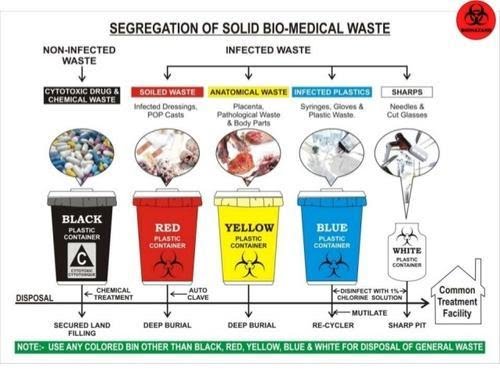
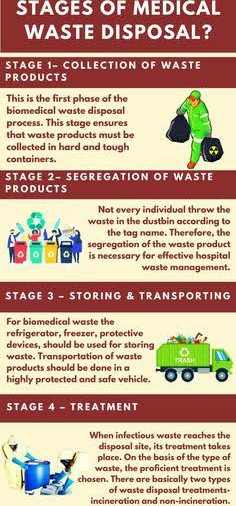

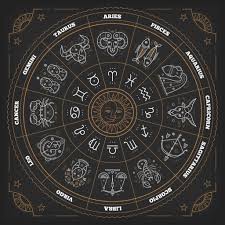
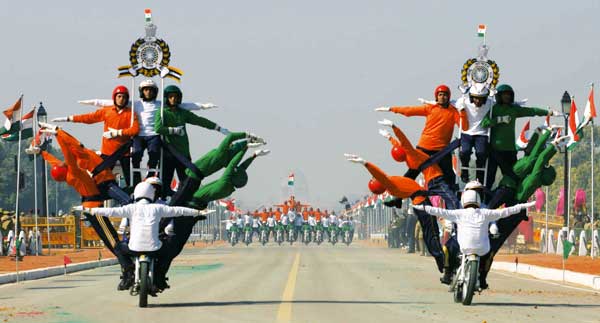
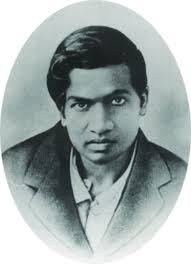

 Eduindex
You must be logged in to post a comment.