‘Macbeth’ and ‘Throne of Blood’. Does adaptation distorts original text?

Adapting material from some origin is not something new that the film industry invented. Classical Greek playwrights adapted myths that had been passed in through oral tradition. And as soon as the
cinematographers recognized that presenting a story in moving picture required “good story”, so they started adapting story from novels, plays, short stories. Robert Stam discusses different sources of hostility towards the practice of adaptation. According to him, many have long viewed literature as being superior to film. He goes on to analyze the process of adaptation and the ways in which tie and
space are used differently in the two mediums. As per his view, “fidelity in adaptation is literally impossible. A filmic adaptation is automatically different and original due to the change of medium.”
(Downloaded from Google.com)

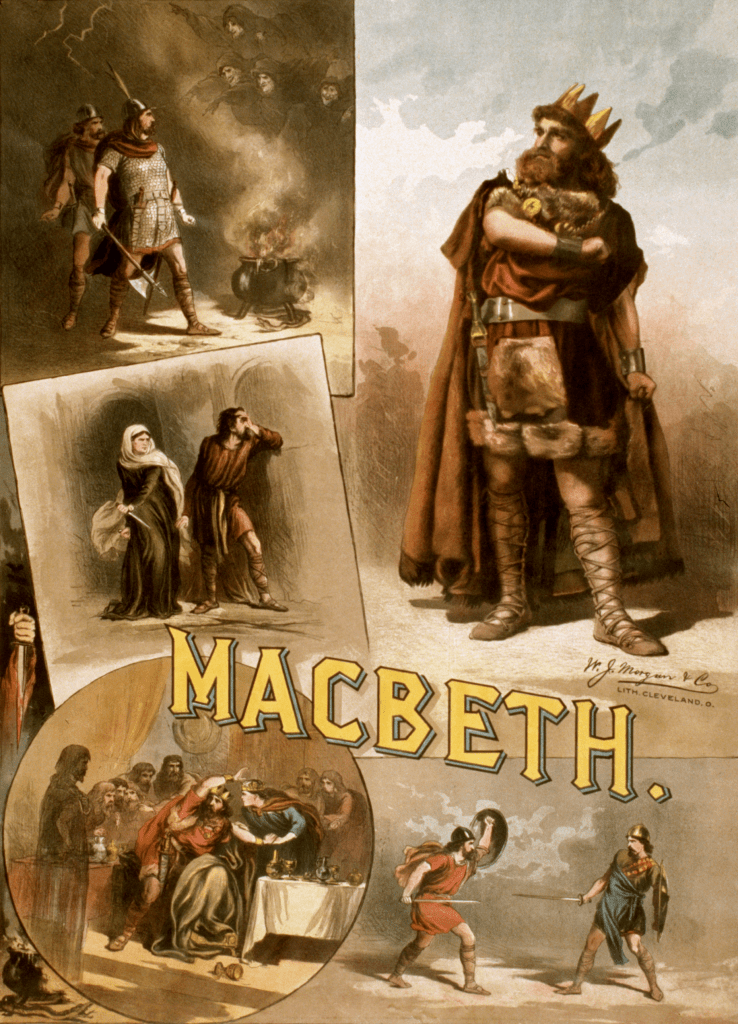
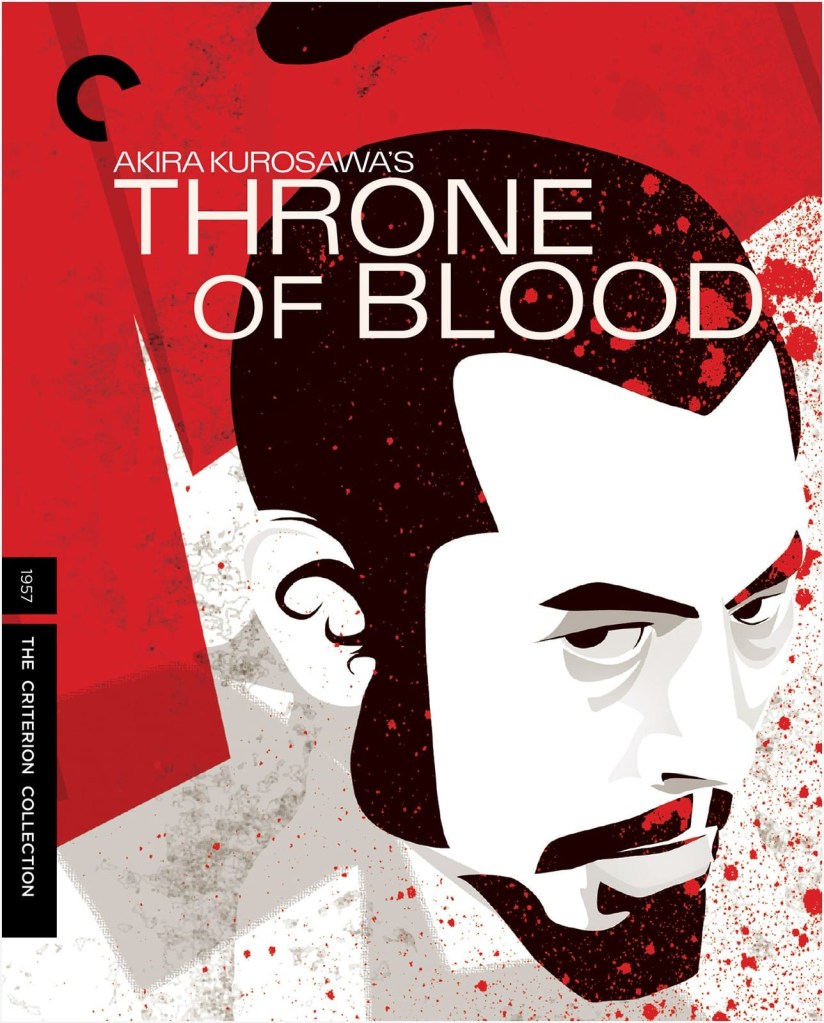
Macbeth’ is one of the finest and acclaimed works by Shakespeare. The play also has an easy to understand plot line which has lent itself to numerous adaptations.
(Downloaded from Google.com)

And one of those notable adaptations is the ‘Throne of Blood’ by Akira Kurosawa set in feudal Japan. Needless to mention that the central themes of the movie consist of tragedy, treachery, credulity and fallacy. However, to commence with the dissimilarities between the play Macbeth and Kurosawa’s movie, one among the other possible differences is their depictions of the battle at the opening stages of the plot.
(Downloaded from Google.com)

The play Macbeth opens with grotesque imagery of the revolt, and the weather all muddles up, as informed by the witches seen in medias res (amidst) of their conversation. The captain reporting about the battle even describes Macbeth as unseeming one of his opponents. This type of gory imagery, however, is nowhere to be found at the start of Kurosawa’s film ‘Throne of Blood’,
(Downloaded from Google.com)

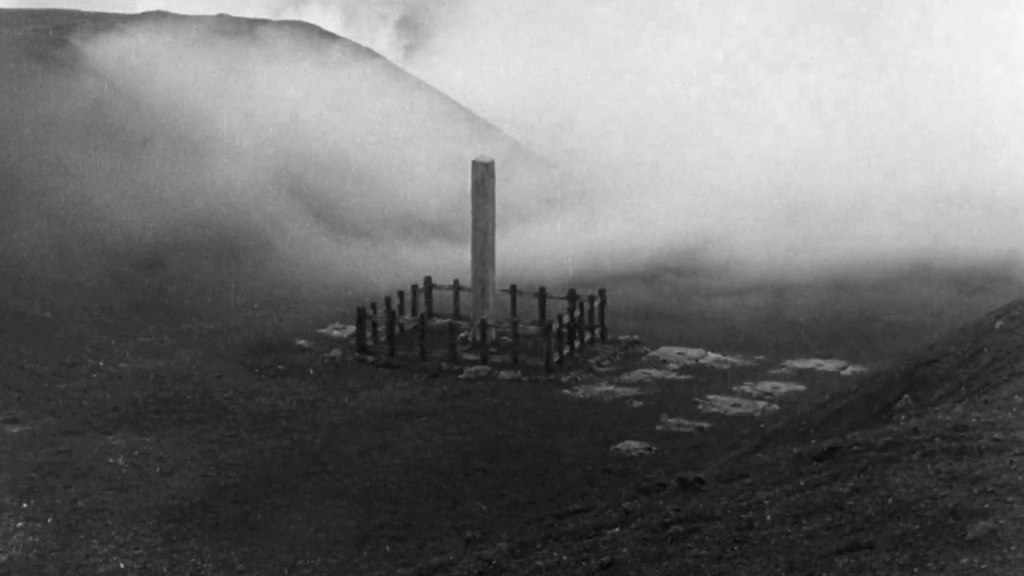
instead it opens with the vast fog with a seemingly deserted and peaceful castle depicted behind the fog with a lamenting song, “Look upon the ruins of the castle of delusion haunted…”. It also features various captains reporting about the battle, but there are no depictions about the battle. The use of fog and the lack of violence, in the opening scene, set an uncertain tone for the rest of the film, and Washizu is not seen killing anyone that makes his future actions even more shocking. In fact, we witness Washizu’s innocence when he strongly resists the prophecy. As wherein Macbeth, the brutal portrayal of the battle in the beginning set a violent and dark tone right away, and thus, it makes Macbeth’s future killings somewhat less surprising. The shock factor of Washizu’s actions is also due o the fact that there are no witches at the start of the movie.
(Downloaded from Google.com)

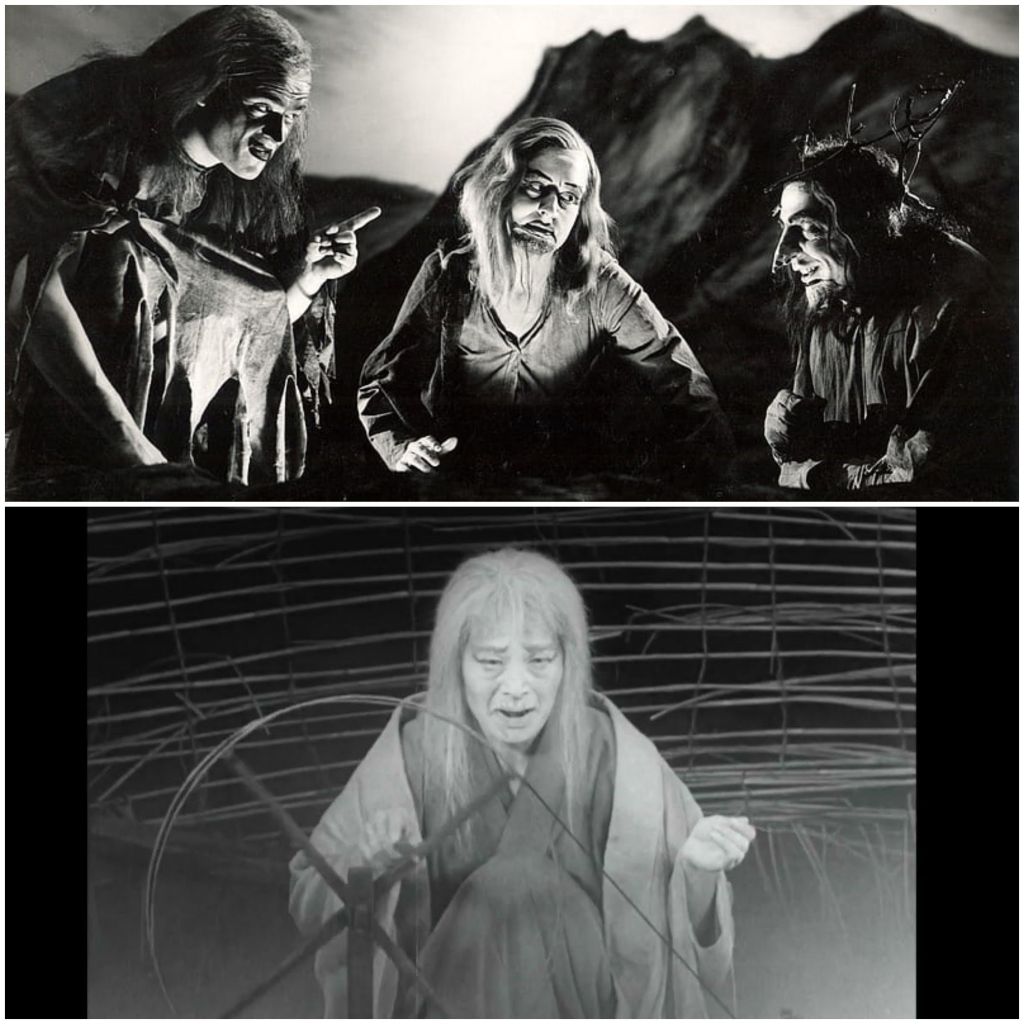
On the other hand, we encounter that the witches start the play by invoking the name of Macbeth, leaving a sense of suspicion in the mind of the reader that Macbeth may not be who he appears. In the movie, three witches are replaced with a single-spirit who is seen chanting a song that introduces Japanese traditions, Buddhism and feelings of humanity. The song mentioning karma and reincarnation comes straight from the Buddhist beliefs.

Kurosawa’s Throne of Blood and Shakespeare’s Macbeth also differ greatly in their portrayals of Lady Macbeth and Lady Asaji respectively.
(Downloaded from Google.com)

In the play, Lady Macbeth makes her presence and intentions felt in her very first moments. She states, “Fill me from the crown to the toe topful of direst cruelty. Me thick my blood. Stop up the access and passage to remorse.” This quotation by her immediately warns the reader of her growing plans of evil.
(Downloaded from Google.com)

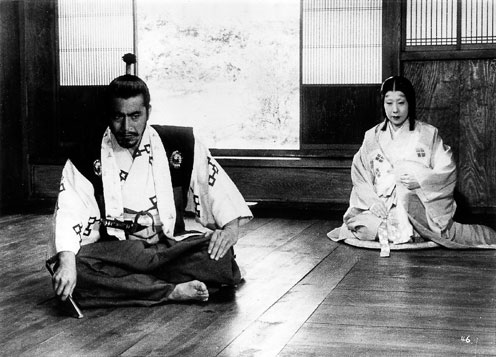
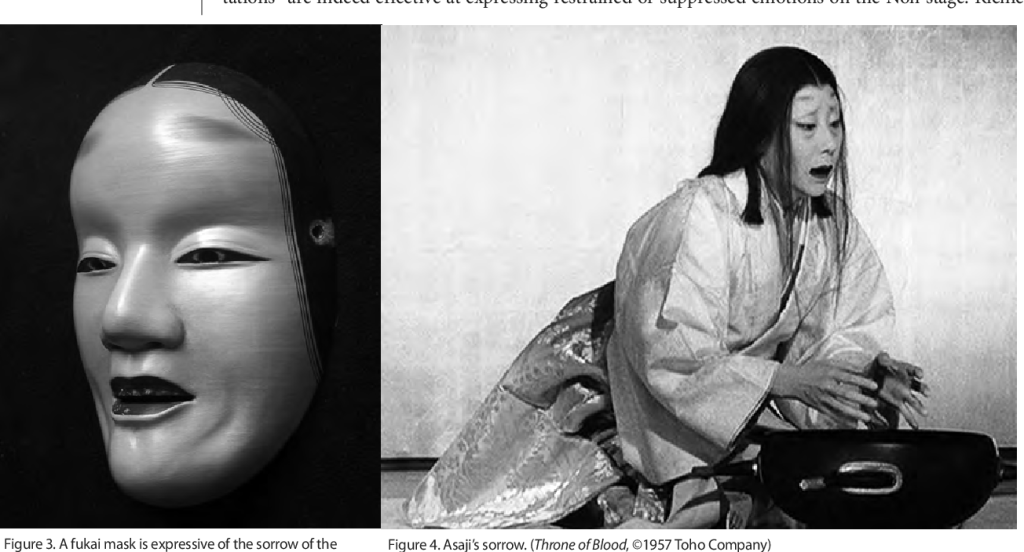
Contrarily, in the movie, Lady Asaji (the equivalent to Lady Macbeth) makes it much more subtle entrance. She is first seen sitting peacefully in Washizu’s castle appearing as submerged in deep contemplation. Throughout her attempts to convince Washizu to kill Tshuzuki, she remains completely sedentary and shows no sign of any emotion, unlike Lady Macbeth who passionately uses strong imagery and vehement speech to ty to persuade Macbeth. And Asaji’s fixed expressions portray the use of Noh mask. As far as the movie is concerned, predominantly the character of Asaji, Kurosawa has adopted the aesthetic of the Noh elements.
(Downloaded from Google.com)

It’s a cultural asset of Japanese theatre. It’s a classical form of dance-drama originated in Japan, and is popular since 14th century. There are several types of these masks used in Japanese theatre. And surprisingly, they are used by Kurosawa commendably through dramatis personae of Asaji. Director Kurosawa was overwhelmingly magnetized by Noh, “I like [Noh] because it is the real heart, the core of all Japanese drama. Its degree of compression is extreme, and it is full of symbols, full of subtlety. It is as though the actors and the audience are engaged in a kind of contest and as though this contest involves the entire Japanese cultural heritage . . . I wanted to use the way that Noh actors have of moving their bodies, the way they have of walking, and the general composition which the Noh stage provides.” (Extracted from an article by Minae Yamamoto Savas)

Lady Macbeth does not give Macbeth much of a reason to kill Duncan other than to solely attain power. Lady Asaji, on the other side, presents Washizu with the idea that Miki will inform about the prophecy to Tsuzuki that Washizu will ascend to the throne which in turn will lead to Washizu’s death at the hands of Tsuzuki. Despite her reserved nature, she is very deceptive and possesses contriving persona as she uses the prophecy of the witch to implant fear in the mind of Washizu. She also tries to justify the killing of Tsuzuki because Tsuzuki himself attained his throne by murdering someone, and also attempts to convince him that deep down Washizu himself carrying and watering the ambition to attain power, which is also the first time that she looks directly at him in the film. Lady Asaji like Lady Macbeth is a strong evil presence although she is portrayed in a much different manner.

Another difference between the movie and the play is existence of the lack of recognition of eternal ramification for Washizu’s actions in the movie, whereass, in the play, apprehension regarding the afterlife plays a prominent role in Macbeth’s psychological struggles with respect to his decision to kill Duncan.
(Downloaded from Google.com)

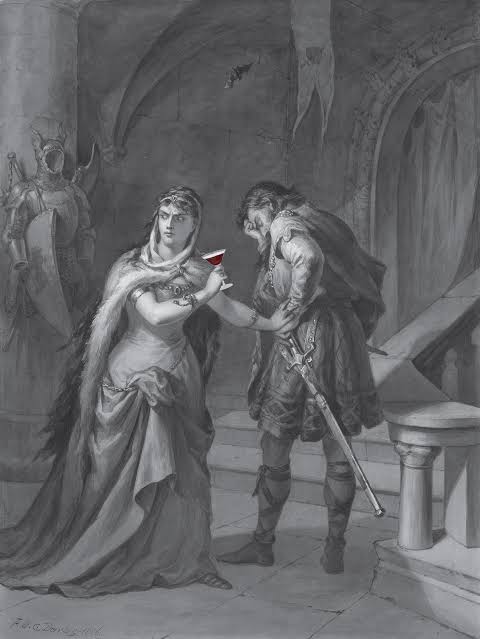
In Act 2, scene 1, Macbeth states, “I go, and it is done. The bell invites me. Hear it not Duncan, for it is a knell that summons thee to heaven or to hell.” He knowingly chooses temporal power on earth rather than eternal glory in heaven, a decision that he later realizes that he cannot undo which leads to his supposedly eternal damnation in hell. And in Kurosawa’s Throne of Blood, however, heaven and hell are never referred to. This is ofcourse largely because of the film’s Japanese origin. Instead, it’s Washizu’s contemplation of the goodness of his friend Miki that drives his inner conflict perpetrated by his wife.

The adaptation of literary works into films do distorts the original text. But we should not forget that these adaptations, like what Kurosawa did, are filmed establishing the text on different period of time, background, and geo-political settings. Although film was initially regarded by some as sucking the life out of a literary text, a view forcefully articulated by Theodore Dreiser in 1932, “Film adaptation of novels is not so much a belittling as a debauching process, which works harm to the mind of the entire world. For the debauching of any good piece of literature is – well, what? Criminal? Ignorant? Or both? I leave it to the reader.”


Citations

To_The Second-Person-You

To

 The Second-Person

  You

For you; Always be you!

                And if I say,

                I’m there for you;

                Indefinitely,

               it is an add-on to be more you.

               You check,you rely,you observe 

               and you test me too; 

              That is all I allow only for you!..

For you;I’m being for real as always I amuse to be!

              I trust, i tease,

              I tweet on your treat;

              Infinitely it gonna be, 

             Hence,

           you mean a lot to me since you met!…

       From   

                                                                                        Yours you

Note: Written and expressed by Ghufrana but neither only by her and nor only for specific one.

A film review

 The Sleepover (2020)

       Director- TRISH SIE

       Genre– Exciting,Action, Adventure,Family features.

   A very simple family of Modern era living with their life old fashioned limitations like not allowing the phone to their children even if they jumped in higher class, they do not have permitted to attend any party with their friends,Not allowed to go out in late night.Their mother a housewife made these rules But we all know that there is always reasons of restrictions, the same are here with those two siblings of this exciting family.Both are studying in a same school and everyday their father use to receive and drop them,eating foodings made by dad bakery, play video games and sometimes spend times in sleepover.Cavin the little boy has sharp mind and he enjoy the imaginary world more than real. 

   One day a neighbour’s parents come with his child to leave him for the night. That boy also has some list by his mother about what to do or what to don’t.But as he is in another house with another rule and restrictions nothing from the list could be done right from his list.In loan area Cavin’s dad fixed a tent for their sleepover and left them to sleep. And in the same night her daughter tries to escape from home with her friend for one night to attend the party invited by her senior.

At late night tiem to sleep ,Ninjas enter in the house and attack on her housewife mother to take her with themselves for a mission.They took up both husband and wife with them for a robbery. After knowing their mother’s real identification that her mother was the head robber many years before her marriage in the bachelors age;their children decided to find their parents and went out for an overnight adventure. 

Their mother was a witness protection lady who was caught by the police but allowed to be free with a new identification by letting no one know her real identity.

Following the signs Including their dog’s neck belt left by her mother at every steps they followed and in not finally but at end of getting signs they met her mother’s younger sister who is also a robber; she gave them the direction to reach their mother and they followed.Finally they reached the destination and saw their simple housewife mother extraordinary actions and looks that were never been seen before.And also they saw her mother’s fiance who was a robber man,charm and dashing.

But there and then her mother become with a new identification and living her life as a normal person with family this mission was not her choice.They escape brilliantly from this leaving behind all this stuff if past and came back to home safely creating this adventurous night.And the boy who has very quite talent to make stories of imagination,he does the same in front of police too,reached all back to home safely.

Next morning, the neighbour came to take their child who was left for a sleepover and found the child safe and that child went home too.

Everything happened, the restrictions,the limitations came across with a very valid reason why kids of this family faced too many rules and regulations other than others.Now they understand and respect the situations and their family especially her mother.

So,The conclusion comes here with a brief mentality of parents and children.

Parents never want to grab or tie their own children with restrictions. If they do there must be the reason for their safety that’s important more than anything for any parents.

Children like that boy who live in his imagination are brilliant so to make success and happiness in their life it’s necessary to promote and support your child according to their way of interests.

And the last but not least ,the priority matter a lot for a family person no matter who you are,mother or father or sister or you are a brother,if you are in a family you must put your priorities first for them other than anyone no matter how complications has  started ,how it is difficult to deal or to resolve it but things will become smoother as soon as one put family on prior.Stay tied to the family is one of the best weapon to fight against any circumstances, situations,or any difficulty.

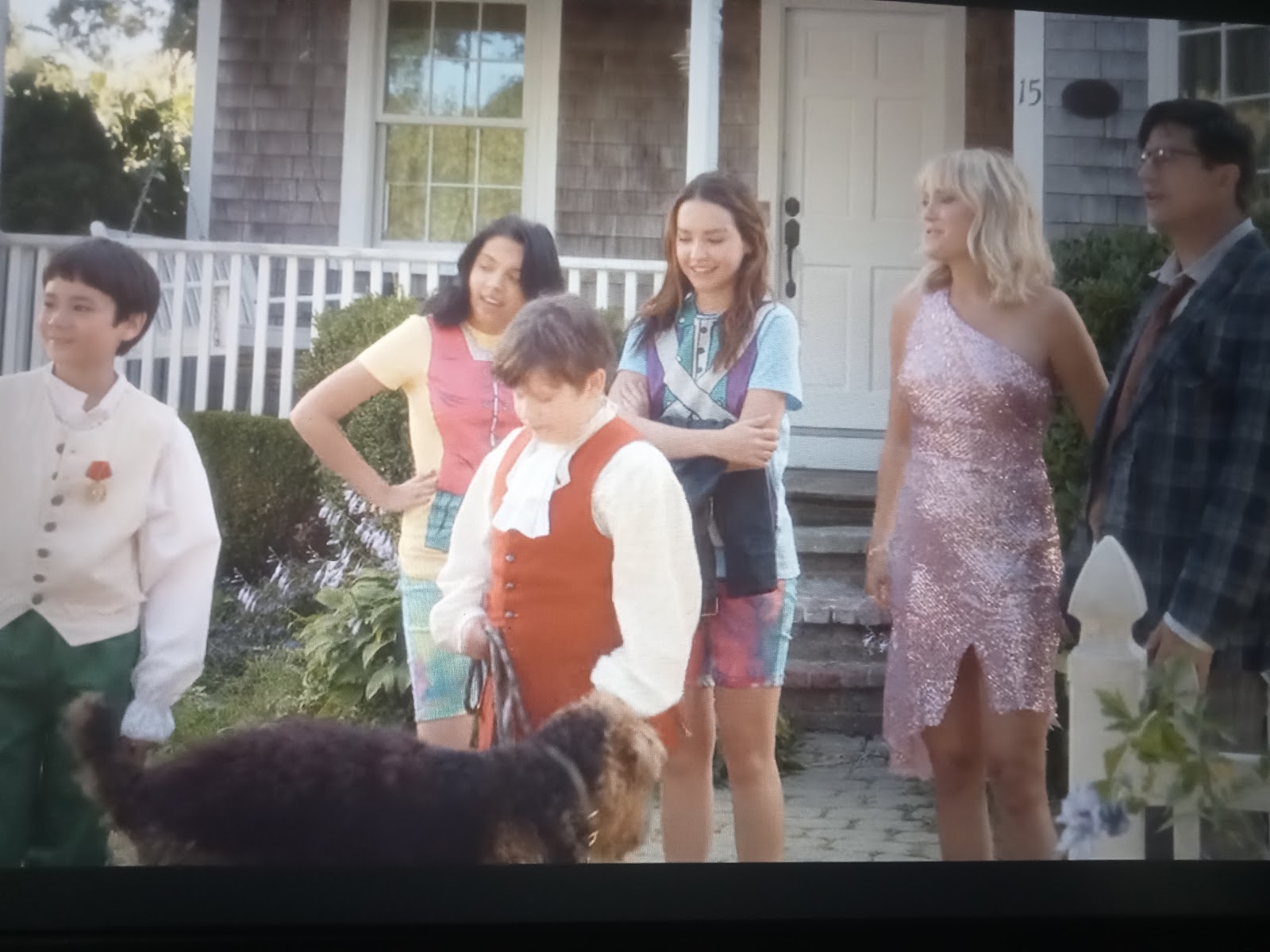
Snapshot taken from the movie “THE SLEEPOVER”.

My Heart and Other Black Holes- Book Review

DISCLAIMER: This review contains spoilers.

One emerging trend in media is the glorification and romanticization of mental health disorders. As a result of the same, a lot of Young Adult (YA) novels have integrated various mental health issues into their plots while still bearing inaccurate representations as young adults look at these serious issues through rose-tinted glasses. Ofter, it ends on a high note thus masking the dark reality of these problems and wrongly depicting the healing process.

My Heart and Other Black Holes by Jasmine Warga is a transitional piece of literature to me. I find that it balances the scale- it depicts certain aspects of mental health issues that are appealing to young adults through the form of romance while also portraying very dark aspects of depression in a fairly blunt manner.

This book follows the bittersweet tale of two teenagers with traumatic childhoods. Aysel is a sixteen-year-old girl who was raised by her father- however, her father murdered a local boy and she carries that stigma everywhere. She pushes her friends and family away to the point where they barely interact with her anymore. Roman, a sixteen-year-old boy blames himself for his sister’s death and bears the weight of that guilt on his shoulders. Both of them want to end their lives and they become Suicide Buddies through a website. Roman wishes to die by drowning on the anniversary of his sister’s death. They both decide to die together.

Naturally, they begin to fall for each other. Warga artfully depicts the contrast between the thought processes of the two teenagers. For Aysel, all she really needed was to be close to someone again, so meeting Roman helped her heal. Roman, on the other hand, was plagued by guilt and was in his own head which meant that the chances of love changing his thoughts and feelings were far less likely. She showcases this beautifully as we can see Aysel’s determination to take her own life reduce and Roman’s determination to do the same be unwavering. Roman’s final suicide attempt without Aysel shows that he loved her enough to want a good life for her but not enough to live his life. The book ends on an ambiguous note and the readers are left wondering about the uncertain future of Aysel and Roman.

Jasmine Warga displays a clean and slightly poetic writing style throughout the book. The language and narration remain consistent throughout the book. There is clear character development for the main characters and adequate character development for others.

All in all, My Heart and Other Black Holes is a very well written piece of YA fiction. I would highly recommend this book to those looking for a quick yet meaningful read.

Rating:

Rating: 4 out of 5.

Inner Voice Episode 1

I never wanted that to be happening. Never wanted me to want someone more than myself. It just happened that I started believing in someone more than myself. And every time, no one turned out to be worthy of me. Repeatedly getting cheated, caught dumbed & ditched, people changed one after the other. I thought that this person would not betray me, so I went ahead.

Whereas the one who cheated earlier realized his flaws and wanted to come back I didn’t allow it only because of my belief that the one who had betrayed me once then it not tough to do that again. But Even when I got attached to another person in this world I was also getting that hurt, tears, and even afraid of getting betrayed….Why???

People of this world made me ask “Why” Then why God would answer? I’m pretty sure people would be answerable and have to pay for their Karma.

It’s not possible for a human being to leave and forget someone but every time another human forced me to act like and accept this tough lesson. To be honest I’m not learning too much from these all but yes it’s broken me into tiny pieces inside.

There & then it’s God’s will for my goodwill, right??? I forgot God then what are you and who to enlighten??

It’s my bad as everyone is the same instead of me.

Shadow Puppetry in India;Gender role & Divisions

Shadow Puppetry

In India Puppetry has been one of the most ancient folk skill forms of traditional entertainment and has the richest variety of types and styles of shadow puppets.

Shadow puppets are made up of leather that has been carved into flat figures.

The audience is seated in front of the screen, and shadow puppets are pressed up against the screen with a powerful source of light behind it. The interaction between the light and the screen creates vibrant shadows for the audience. Popular regions for these puppets include Orissa, Kerala, Andhra Pradesh, Karnataka, Maharashtra, and Tamil Nadu.

Indian shadow puppetry examples include: 

Togalu Gombeyatta (Karnataka),

Tholu Bommalata (Andhra Pradesh), 

and 

Ravanachhaya (Odisha)

Togalu Gombeyatta: 

Togalu Gombeyatta is the name of Karnataka’s shadow theatre. 

Most of these puppets are small in size. 

However, the puppets’ sizes vary according to their social standing; for example, kings and religious figures are larger than ordinary people or servants, who are smaller.

Tholu Bommalata:

The majority of it comes from the state of AP. The puppets have jointed shoulders, elbows, and knees and are quite huge. On both sides, they are colored. As a result, these puppets cast colorful shadows on the screen. The Ramayana, the Mahabharata, and the Puranas are used as the inspiration for the puppet plays’ themes, and the music is mostly influenced by local classical music.

Ravanachhaya, Orissa:

This is a type of puppet from that state. There are no joints and the puppets are in one piece. Since they lack color, they cast opaque shadows on the screen. Along with the usage of human and animal characters, several props are also employed, including trees, mountains, chariots, etc. Despite being smaller in size—the tallest Ravanachhaya puppets are less than two feet tall and lack jointed limbs—they cast incredibly tender and lyrical shadows.

Gender role and division on Shadow puppetry in India:

For a long time, this art has hampered the involvement of women in taking part in the playing role of puppets. Women are mostly hidden or invisible in play and men’s roles are exclusively visible. A study conducted on the role of women in the traditional puppeteer family in India on
two major forms of puppetry-‘String puppetry and Leather- Shadow puppetry which shows women are not involved in making puppets even in South India that are made of wood called string marionettes.

Women are mostly involved in the fabrication of natural dyes and colors, such as those made from dirt, mud, leaves, tree bark, seeds, and charcoal, on cloth, the preparation of appam (Wall putty) utilizing soft lay, tamarind seeds, and traditional glue, and the designing and dressing of costumes are all more commonly done by women. puppets that are stitched using a needle and thread.

What studies say?

Traditional puppeteers did not allow women to take part actively as in Kerala, Shadow puppetry and the place and performance going on are like a temple and puppets are made of Gods and goddesses to be played on stage where they are not allowing women for the reason by the Custom or their menstruation. Only Male members are allowed to connect the profession and play roles.

What’s now?

Nevertheless, Today Women from Traditional families and women who are interested in puppetry come under an umbrella called Contemporary puppeteers. As a result, women in puppetry are using puppetry to revive the art form,  to address some of India’s most pressing social problems, to impart education, awareness campaign, in theatre, and also as therapeutic value. 

Women artists today not only contribute to this rich art form, but they also hold their own as equal puppeteers and performers. The evident cultural rebirth can be seen in the appropriation of traditional art, modifications, exploration of interconnection, artistic and creative modules connecting the international models, for teaching, education, social cause, campaign, and lastly to entertain with a message.

Reference:

Many Voices, One World (1982). New Delhi: Oxford, IBH.
Melkote, S.R. (1991). Communication for Development in the Third World: Theory and Practice. New Delhi: Sage.
Mukhopadhyay, D. (1994). Folk Arts and Social Communication, New Delhi: Publications Division.

Superstition

A landscape appearance, not too far but a meeting of impossible possibility

Not contradictory, it’s all about God’s plan for Creativity

A thin line like a sword’s edge

Only differentiating two orbital cage

One might be Immortal while another is mortal

From Mortal I belong and you are also giving hats off to mortals having the guts to challenge immortal

Instantly, a blank dark sheet floated over my head

There and then full of lightning vibing around I’m sitting upon my bed

Twinkling like stars which is in reality all signs of having scar

A star, only the sparkle of that headed film

There could be more but it’s today’s night theme.

Why can’t you, if they are Alive

…Just in front of me sitting up with my Cozy Posture

A door that opens in the balcony has a building closer,

Besides my vision looks a bit left for no reason

That building of more than five stories holding up too much weight of floors has a plant of sesame

I found it there, stems cracking the wall and they are strong enough, grown long grasping many leaves

Leaves …are floating with the blow of the wind

They are Alive, They seem to be happy and have a smile

Cuddling together, kissing each other looking at no complaints they have about what isn’t right or it’s not fair

I observed their roots… scrambling out on the wall appears as their foots

It’s too easy to grow in soil but their fate took them up on walls where it’s nearly impossible to uproot

They are Alive, their Green flicks shouting their victory of life

Why can’t you if they are alive…

Robber Barons

N kavya

The super rich industrialists and financiers such as John D. Rockefeller, Andrew W. Mellon, Andrew Carnegie, Henry H. Rogers, J.P. Morgan, Cornelius Vanderbilt of the Vanderbilt family, and the prominent Astor family were labeled as “robber barons” by the common people.

A robber baron is a term used frequently in the 19th century during America’s Gilded Age to describe successful industrialists whose business practices were often considered ruthless or unethical. Robber baron is a term that is also sometimes attributed to any successful businessperson whose practices are considered unethical or unscrupulous. This behavior can include employee or environmental abuse, stock market manipulation, or deliberately restricting output to charge higher prices.

These practices included exerting control over natural resources, influencing high levels of government, paying subsistence wages, squashing competition by acquiring their competitors to create monopolies and raise prices, and schemes to sell stock at inflated prices to unsuspecting investors. The term combines the sense of criminal (“robber”) and illegitimate aristocracy (a baron is an illegitimate role in a republic). This monopoly was achieved in part by crushing rivals and systematically cheating Native Americans of fur pelts.

During 19th century the chief complaint that was capitalists were becoming monopolists. Fear over the robber barons and their monopoly practices increased public support for the Sherman Antitrust Act of 1890 (The Sherman Anti-Trust Act authorized the federal government to institute proceedings against trusts in order to dissolve them). Many so-called robber barons. became wealthy entrepreneurs through product innovation and business efficiency. Of the goods and services they provided, supply grew, and prices fell rapidly, greatly boosting Americans’ standards of living. This is the opposite of monopolistic behavior.

Some Of The Major Robber Barons -:

1. James Fisk, one Wall Street’s first great financiers, accumulated much of his fortune by fraudulent stock market practices. The venture brought them vast sums but led to a securities market panic that began on September 24, 1869, a day that was long remembered as Black Friday.

2. Leland Stanford became involved in Republican politics in California and was elected governor in 1861. With three colleagues, he formed the Pacific Association and used their combined assets to bribe congressmen and others with political influence in the country’s capital. In return, the association was provided 9 million acres (3.6 million hectares) and a $24 million loan financed by federal bonds.

3. John D. Rockefeller made his immense riches from monopolizing America’s oil industry. Conspiring with refinery owners, he helped found what became known as the Standard Oil monopoly. Those who stubbornly resisted were confronted with price wars. By 1890, the Rockefeller trust controlled approximately 90 percent of the petroleum production in the United States, a situation that led to the passage of the Sherman Antitrust Act that same year.

4. J.P. Morgan who organized a number of major railroads and consolidated the United States Steel, International Harvester, and General Electric corporations

5. Andrew Carnegie who led the enormous expansion of the American steel industry in the late 19th century; shipping and railroad magnate

6. Cornelius Vanderbilt, Industralist

7. George Pullman the inventor of the Pullman sleeping car

8. Henry Clay Frick who helped build the world’s largest coke and steel operations.

Common criticisms of the early robber barons -:

Poor working conditions for employees, selfishness, and greed. Some robber barons including Robert Fulton, Edward K. Collins, and Leland Stanford earned their wealth through political entrepreneurship. Many wealthy railroad tycoons during the 1800s received privileged access and financing from the government via extensive use of lobbyists.

The major considerations of robber barons are – :

•While robber barons took advantage of their workers, they sometimes offered better working conditions than the norm of the day


•Some tycoons rank among the most noted philanthropists of all time. Rockefeller donated around 10% of every paycheck he ever earned.


•Railroad tycoon James J. Hill publicized and provided free education about crop diversification, and would transport immigrants at reduced rates if they promised to farm near his railroads.

Evolution Of Camera

N kavya

The history of the camera began even before the introduction of photography. Cameras evolved from the camera obscura through many generations of photographic technology – daguerreotypes, calotypes, dry plates, film – to the modern day with digital cameras and camera phones.

Camera obscura (Before the 17th century) -:

The forerunner to the photographic camera was the camera obscura. Camera obscura (Latin for “dark room”) is the natural optical phenomenon that occurs when an image of a scene on the other side of a screen (or for instance a wall) is projected through a small hole in that screen and forms an inverted image (left to right and upside down) on a surface opposite to the opening. The oldest known record of this principle is a description by the Han Chinese philosopher Mozi (c. 470 to c. 391 BC). Mozi correctly asserted that the camera obscura image is inverted because light travels in straight lines from its source. In the 11th century, Arab physicist Ibn al-Haytham (Alhazen) wrote very influential books about optics, including experiments with light through a small opening in a darkened room. It was wildly successful after debuting to the public in 1839 when both it and the calotype began introducing photography to the masses. Normally, having portraits taken was an activity exclusive to the upper classes. The cost and amount of time needed to produce such works were unreasonable for most working-class people. The speed of the camera, which only increased as time went on, made it possible for anybody to have quality portraits.

Early photographic camera (18th–19th centuries) -:

The development of the photographic camera, it had been known for hundreds of years that some substances, such as silver salts, darkened when exposed to sunlight.[9]: 4  In a series of experiments, published in 1727, the German scientist Johann Heinrich Schulze demonstrated that the darkening of the salts was due to light alone, and not influenced by heat or exposure to air.[10]: 7 The Swedish chemist Carl Wilhelm Scheele showed in 1777 that silver chloride was especially susceptible to darkening from light exposure and that once darkened, it becomes insoluble in an ammonia solution.[10] The first person to use this chemistry to create images was Thomas Wedgwood.

The first permanent photograph of a camera image was made in 1825 by Joseph Nicéphore Niépce using a sliding wooden box camera made by Charles and Vincent Chevalier in Paris.[10]: 9–11  Niépce had been experimenting with ways to fix the images of a camera obscura since 1816. The first photographic camera developed for commercial manufacture was a daguerreotype camera, built by Alphonse Giroux in 1839. Giroux signed a contract with Daguerre and Isidore Niépce to produce the cameras in France,[9]: 8–9  with each device and accessories costing 400 francs.[13]: 38  The camera was a double-box design, with a landscape lens fitted to the outer box, and a holder for the ground glass focusing screen and image plate on the inner box. By sliding the inner box, objects at various distances could be brought to as sharp a focus as desired. After a satisfactory image had been focused on the screen, the screen was replaced with a sensitized plate. A knurled wheel controlled a copper flap in front of the lens, which functioned as a shutter. The early daguerreotype cameras required long exposure times, which in 1839 could be from 5 to 30 minutes.

Within a decade of being introduced in America, 3 general forms of the camera were in popular use: the American- or chamfered-box camera, the Robert’s-type camera or “Boston box”, and the Lewis-type camera. The American-box camera had beveled edges at the front and rear, and an opening in the rear where the formed image could be viewed on the ground glass. The top of the camera had hinged doors for placing photographic plates. Inside there was one available slot for distant objects, and another slot in the back for close-ups. The lens was focused either by sliding or with a rack and pinion mechanism. The Robert’s-type cameras were similar to the American box, except for having a knob-fronted worm gear on the front of the camera, which moved the back box for focusing.

Early fixed images -:

The first partially successful photograph of a camera image was made in approximately 1816 by Nicéphore Niépce,[18][19] using a very small camera of his own making and a piece of paper coated with silver chloride, which darkened where it was exposed to light. His unhardened bitumen was then dissolved away. One of those photographs has survived.

Daguerreotypes and calotypes -:

After Niépce died in 1833, his partner Louis Daguerre continued to experiment and by 1837 had created the first practical photographic process, which he named the daguerreotype and publicly unveiled in 1839.[21] Daguerre treated a silver-plated sheet of copper with iodine vapor to give it a coating of light-sensitive silver iodide. After exposure to the camera, the image was developed by mercury vapor and fixed with a strong solution of ordinary salt (sodium chloride). Henry Fox Talbot perfected a different process, the calotype, in 1840. As commercialized, both processes used very simple cameras consisting of two nested boxes. The rear box had a removable ground glass screen and could slide in and out to adjust the focus. After focusing, the ground glass was replaced with a light-tight holder containing the sensitized plate or paper and the lens was capped.

Dry plates -:

Collodion dry plates had been available since 1857, thanks to the work of Désiré van Monckhoven, but it was not until the invention of the gelatin dry plate in 1871 by Richard Leach Maddox that the wet plate process could be rivaled in quality and speed. The 1878 discovery that heat-ripening a gelatin emulsion greatly increased its sensitivity finally made so-called “instantaneous” snapshot exposures practical.

The invention of photographic film -:

The use of photographic film was pioneered by George Eastman, who started manufacturing paper film in 1885 before switching to celluloid in 1888–1889. His first camera, which he called the “Kodak”, was first offered for sale in 1888. It was a very simple box camera with a fixed-focus lens and single shutter speed, which along with its relatively low price appealed to the average consumer.

35 mm -:

Some manufacturers started to use 35 mm film for still photography between 1905 and 1913. The first 35 mm cameras available to the public, and reaching significant numbers in sales were the Tourist Multiple, in 1913, and the Simplex, in 1914.

TLRs and SLRs -:

The first practical reflex camera was the Franke & Heidecke Rolleiflex medium format TLR of 1928. Though both single- and twin-lens reflex cameras had been available for decades, they were too bulky to achieve much popularity. The Rolleiflex, however, was sufficiently compact to achieve widespread popularity and the medium-format TLR design became popular for both high- and low-end cameras.

Instant cameras -:

Polaroid Model 430, 1971
While conventional cameras were becoming more refined and sophisticated, an entirely new type of camera appeared on the market in 1948. This was the Polaroid Model 95, the world’s first viable instant-picture camera. Known as a Land Camera after its inventor, Edwin Land, the Model 95 used a patented chemical process to produce finished positive prints from the exposed negatives in under a minute.

Automation -:

The first camera to feature automatic exposure was the selenium light meter-equipped, fully automatic Super Kodak Six-20 pack of 1938, but its extremely high price (for the time) of $225 (equivalent to $4,331 in 2021)[23] kept it from achieving any degree of success.

Digital cameras -:

Digital cameras differ from their analog predecessors primarily in that they do not use film but capture and save photographs on digital memory cards or internal storage instead. Their low operating costs have relegated chemical cameras to niche markets.

Digital imaging technology -:

The first semiconductor image sensor was the CCD, invented by Willard S. Boyle and George E. Smith at Bell Labs in 1969.[24] While researching MOS technology, they realized that an electric charge was the analogy of the magnetic bubble and that it could be stored on a tiny MOS capacitor.

Early digital camera prototypes -:

The concept of digitizing images on scanners, and the concept of digitizing video signals, predate the concept of making still pictures by digitizing signals from an array of discrete sensor elements. Early spy satellites used the extremely complex and expensive method of de-orbit and airborne retrieval of film canisters. Technology was pushed to skip these steps through the use of in-satellite development and electronic scanning of the film for direct transmission to the ground. The amount of film was still a major limitation, and this was overcome and greatly simplified by the push to develop an electronic image-capturing array that could be used instead of film.

Analog electronic cameras -:

Handheld electronic cameras, in the sense of a device meant to be carried and used as a handheld film camera, appeared in 1981 with the demonstration of the Sony Mavica (Magnetic Video Camera). This is not to be confused with the later cameras by Sony that also bore the Mavica name.

Early true digital cameras -:

In the late 1980s, the technology required to produce truly commercial digital cameras existed. The first true portable digital camera that recorded images as a computerized file was likely the Fuji DS-1P of 1988, which recorded to a 2 MB SRAM (static RAM) memory card that used a battery to keep the data in memory. This camera was never marketed to the public.

Digital SLRs (DSLRs) -:

Nikon was interested in digital photography since the mid-1980s. In 1986, while presenting to Photokina, Nikon introduced an operational prototype of the first SLR-type digital camera (Still Video Camera), manufactured by Panasonic.[48] The Nikon SVC was built around a sensor 2/3 ” charge-coupled device of 300,000 pixels. Storage media, a magnetic floppy inside the camera allows recording of 25 or 50 B&W images, depending on the definition.

Camera phones -:

The first commercial camera phone was the Kyocera Visual Phone VP-210, released in Japan in May 1999.[54] It was called a “mobile videophone” at the time,[55] and had a 110,000-pixel front-facing camera.[54] It stored up to 20 JPEG digital images, which could be sent over e-mail, or the phone could send up to two images per second over Japan’s Personal Handy-phone System (PHS) cellular network.

10 travel destinations in india

India is home to some of the most stunning natural attractions and historical sites in the world. With so many places to visit and things to do, it’s hard to know where to start. But if you want something off-the-beaten path, these 10 destinations are sure to satisfy your wanderlust.

1. Goa

Vagator Beach, Goa

Goa is a popular tourist destination in India and has been attracting visitors for years. It’s known for its beaches, which are clean and have plenty of space to relax on them.

Goa also has great food, music and culture. The best way to experience all this is by staying at an airbnb or other bed & breakfast type place that hosts travelers from around the world!

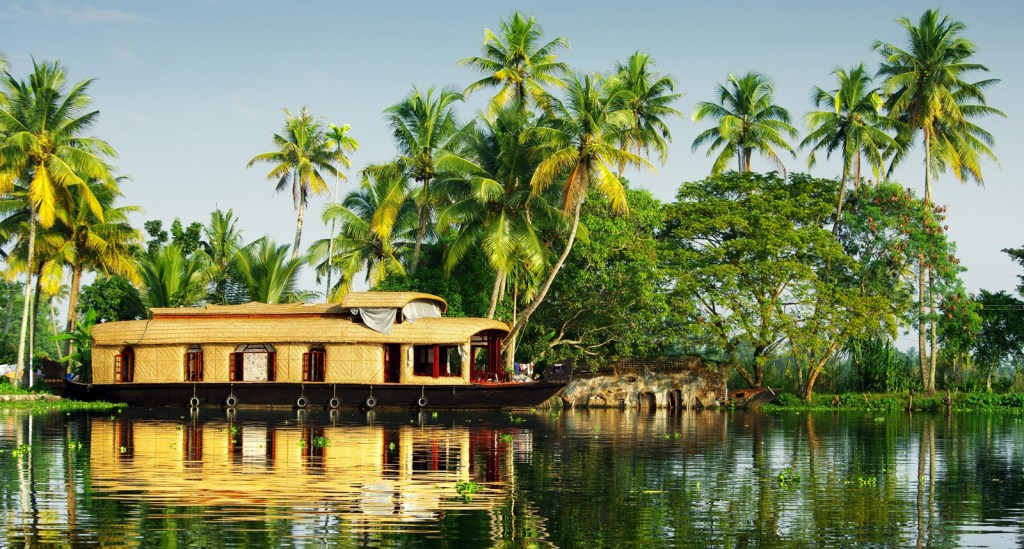
2. Kerala

Kumarakom, Kerala

Kerala is a beautiful place to visit in India. It has many beaches, backwaters and historical sites. One of its most famous attractions is the backwaters of Alleppey that are home to some interesting wildlife sanctuaries. The state also has many temples which are a must-see during your trip here.

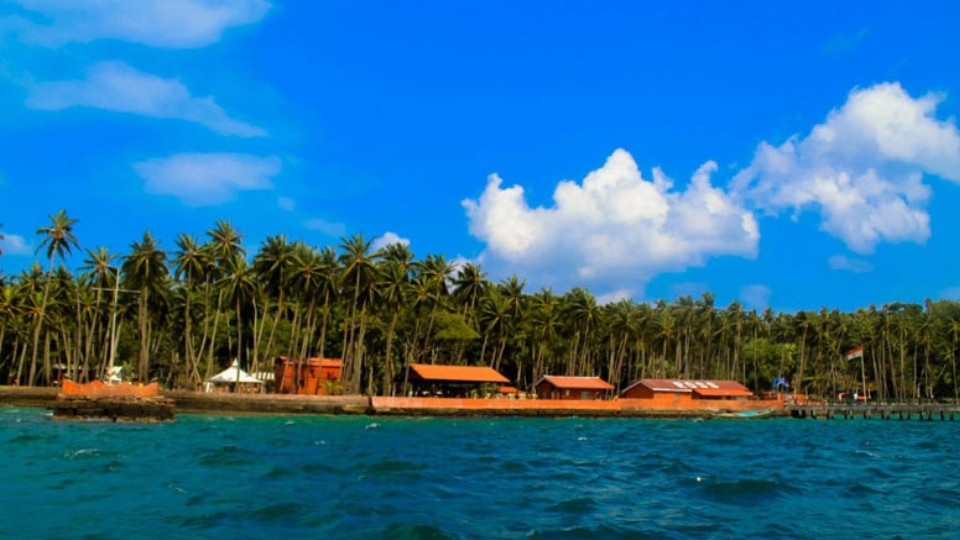
3. Andaman and Nicobar Islands

Andaman

The Andaman and Nicobar Islands are located in the Bay of Bengal, just off India’s coast. These islands are a part of India and home to many different tribes. The islands have a great climate for relaxation, as well as beaches with white sand.

4. Pondicherry

Serenity beach, Pondicherry

Pondicherry is a city in the union territory of Puducherry. It was formerly known as Pondicherry and it is located on the Coromandel Coast, India’s east coast, which is known for its beaches and resorts. The city has an old-world feel to it with buildings that date back to French rule over India during the 19th century.

Pondicherry has many beaches where you can go swimming or just relax on your day off from work.

5. Leh Ladakh

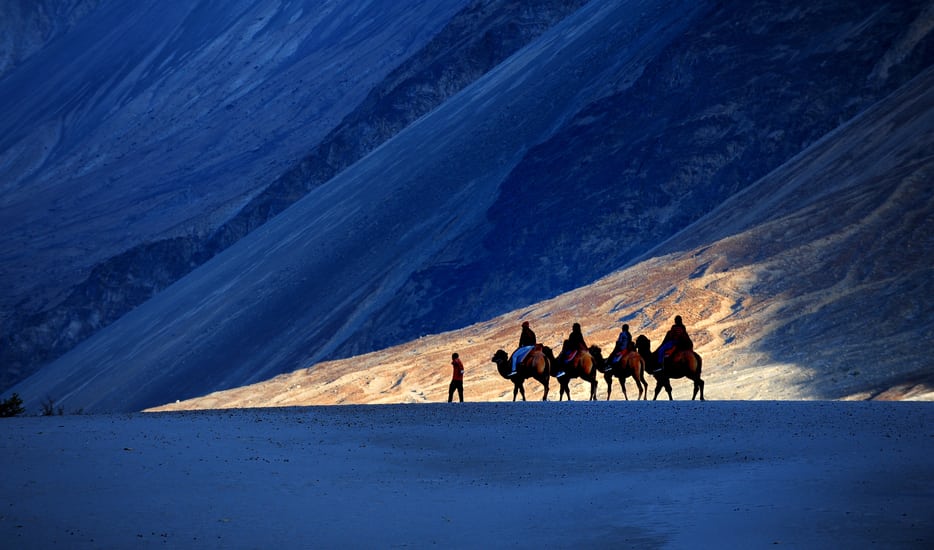
Nubra Valley, Ladakh

Leh Ladakh is a cold desert in the Himalayas, close to the Chinese border. It’s a great place to visit if you want to see the mountains and enjoy some hiking or trekking. There are many places where you can go for this activity, but one of them is called “Nubra Valley”. In this valley there are many different things that you can do: horseback riding (on horses), skiing down from a mountain peak or just walking around looking at all those beautiful views.

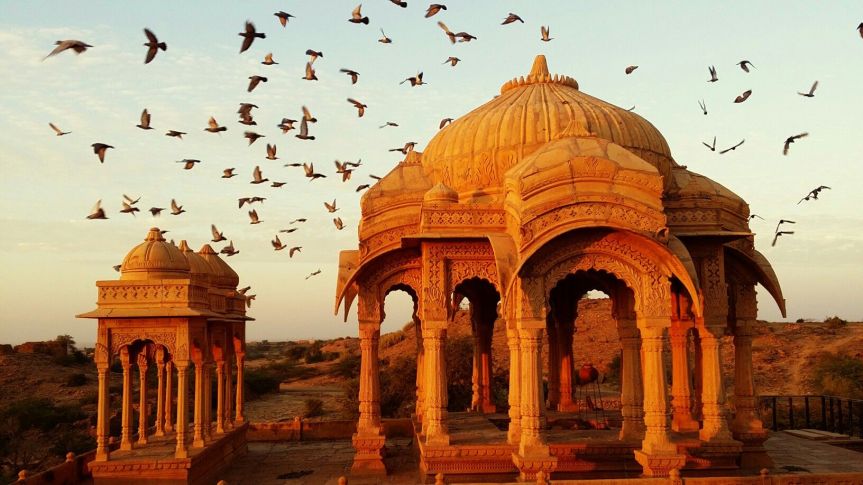
6. Rajasthan

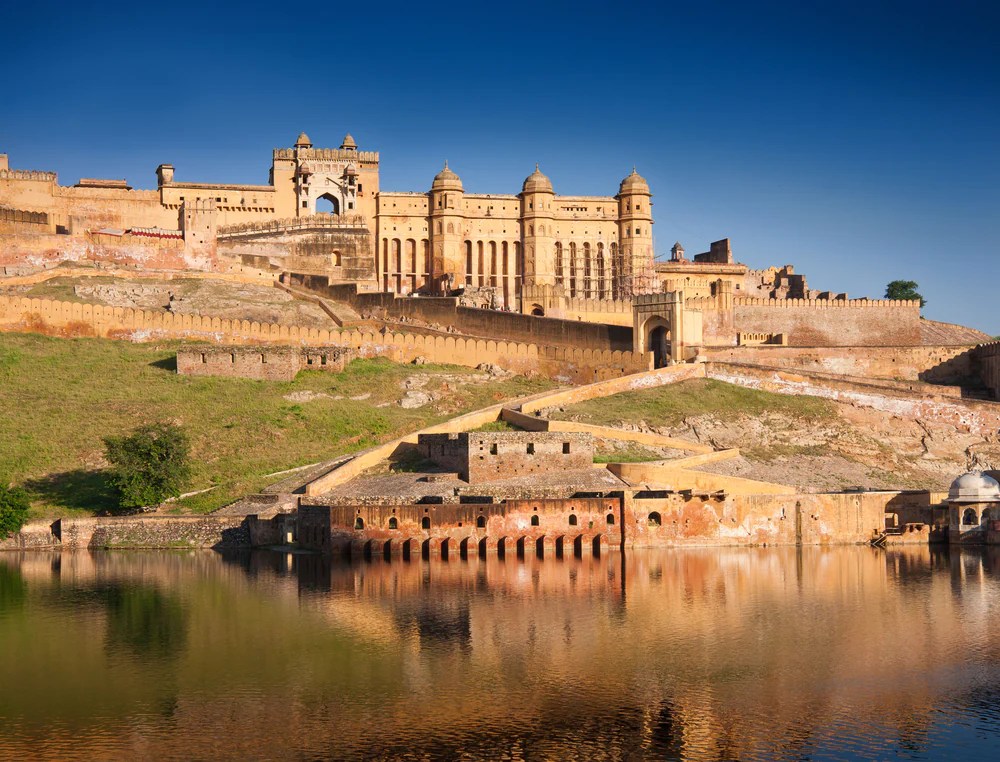
Amer fort, jaipur

Rajasthan is a state in northern India. It has a desert climate, but it’s also known for its palaces and forts. The city of Jaipur is home to several of these attractions, including the Amber Fort and Jantar Mantar Observatory. It also has many lakes, some famous (Lake Pichola) and some not so much (Kumbhalgarh). Some people visit these lakes during wintertime because they’re warm then; others go there in summer because it looks like an ice skating rink. There are plenty of temples as well: we’re talking about hundreds of them.

7. Darjeeling

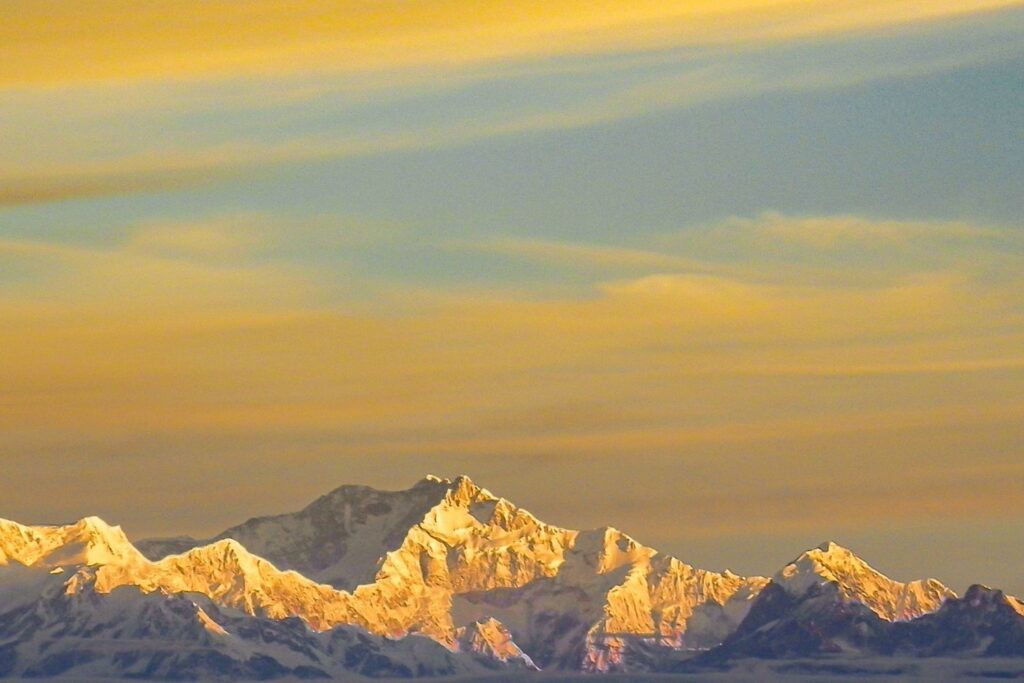
The Kanchenjunga

Darjeeling is a hill station in West Bengal. The city is located on the foothills of the Himalayas and offers panoramic views of the plains below.

The town has been known for its tea plantations since 1834 when it was first discovered by British colonists. It’s also a popular destination for trekkers, who can choose from several trails to explore this beautiful area along with its rich history and natural beauty.

8. Varanasi

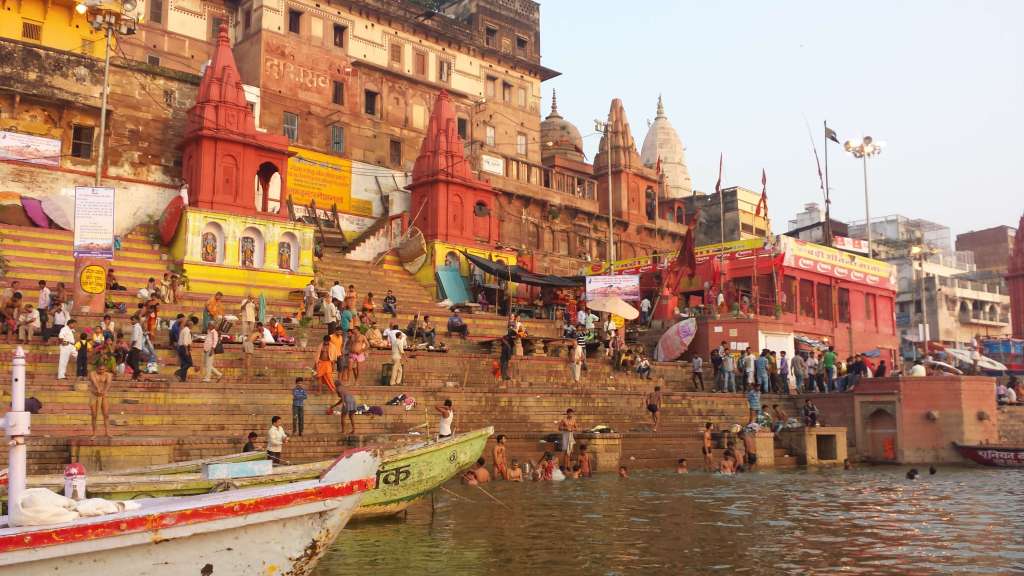
A ghat in varanasi

Varanasi is a religious, cultural and historical city located on the banks of River Ganges. It has been called one of the most sacred places in India as it’s believed that Lord Shiva resided here for some time before passing away.

The city is known for its ghats (steps leading down to the river), temples and food which are all part of its rich history. Varanasi offers tourists everything they need during their stay – from budget accommodation options to luxury hotels & resorts offering everything from pampering spa treatments to yoga classes at sunrise. Not only this but there are plenty of things to do when you visit Varanasi including visiting one or more ghat sites where pilgrims perform rituals during monsoon season when temperatures rise up high enough so visitors can bathe in freezing waters without getting cold feet.

9. Rishikesh

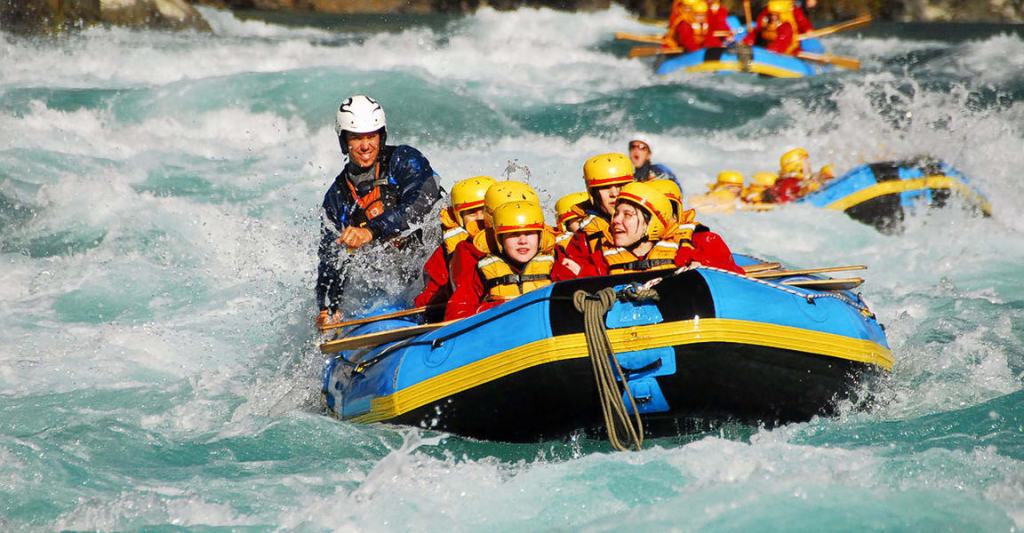
Rafting in Rishikesh

Rishikesh is full of amazing sights—from its spectacular natural surroundings to its historic temples and churches. Other sights include Lakshman Jhula Bridge built between 1822–1823 across River Ganges near Yamuna Sagar Lake during British rule; Vishwanath Temple dedicated specifically because he was considered Hindu god Vishnu’s favorite son; Kedarnath Temple built by King Bhagwan Nand Lal in memory of his father who died while building this temple during his lifetime. River rafting and other fun activities are organised here.

10. Gulmarg, Jammu and Kashmir

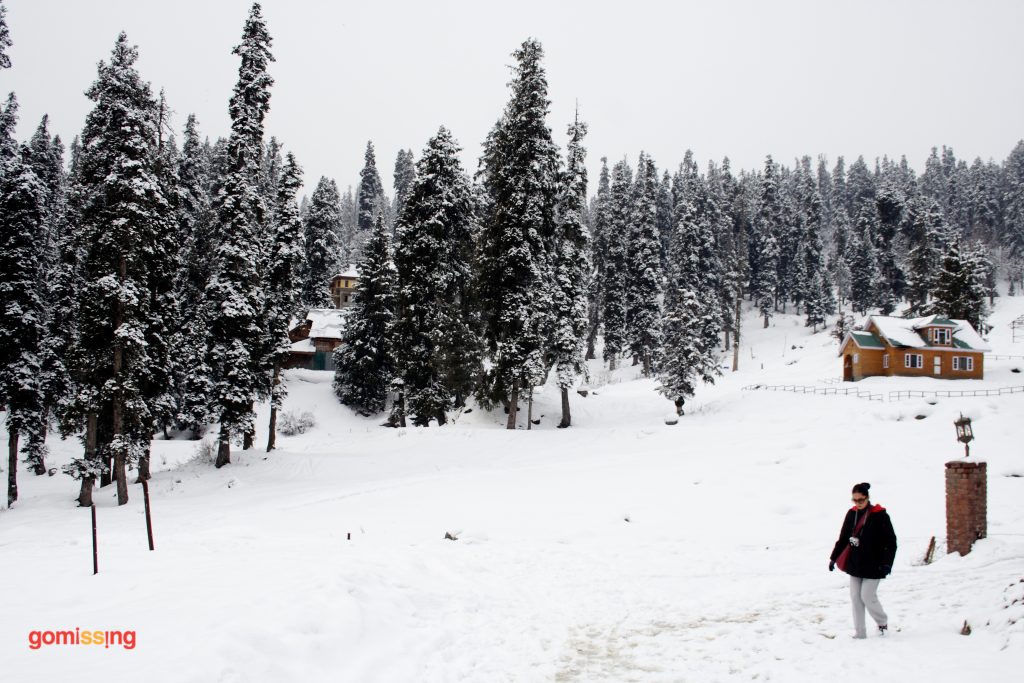
Gulmarg Golf Club area

Gulmarg is a ski resort in Kashmir, located at an altitude of 11,500 feet. It is one of the oldest and most popular tourist destinations in Jammu and Kashmir. The area has 300 km of pistes that can be reached by cable cars or snowshoes. Gulmarg also hosts many other activities like skiing, heli-skiing, snowboarding and more.

These are just a few of the travel destinations in India that you can experience and enjoy.

Agriculture

The word “Agriculture” has no rigid definition. It has been explained by many people very comprehensively. Agriculture has been defined as the science and art of cultivating the soil, and this definition emphasizes the primary nature of plant production in agriculture.Moreover, it is so frequent that the same person performs both the primary functions of growing plants and the secondary one of feeding the plants to livestock that these two industries are grouped together as agriculture. Therefore, it may be said that agriculture includes not only the production of crops by the cultivation of the soil, but also the rearing of livestock.
Thus, milk, meat and wool are as much agricultural products as are wheat, rice and cotton. In the words of George O’Brien, therefore, the word agriculture includes, “every industry which aims at producing vegetables or animals by the cultivation of the soil.”So, agriculture is the business of raising products from the land. The products raised may either be plants and their products or animals and their products. The former are the direct products while the latter are the indirect products of the land. Agricultural products are complex and diverse, in nature, and as such, agriculture may be regarded as complex industry.Modern agriculture is such broader in scope than merely the art and science of cultivating the land. It is the whole business of supplying food and fiber for a growing population at home and abroad. Again in agriculture we include all forms of soil production, from forestry to glass-house culture, from fishery to artificial insemination, and from breeding to horticulture.

Primi­tive men must have begun as food gatherers, eating whatever fruits, leaves and roots they could obtain. Nature must have been bountiful in those days when human numbers were so small and wild plants grew everywhere. As time passed and human numbers grew, fishing and hunting became increasingly im­portant in supplementing what was lacking in the field, and an endless search for food ensued.It was soon realized that some form of food pro­duction was necessary if men were to live long and secure. Animals were tamed, first to provide meat, milk and skin; later for use as draught animals. Seeds were sown in ploughed fields, carefully tended and harvested when the time came.Men were then able to live in settled communities. Because they were no longer continually moving they had time to develop the various arts, crafts and skills that formed the basis of modern industries and also evolved religious and political ideas. Without a settled agriculture, a meas­urable degree of civilization is not possible.


Agriculture
is not farming
it’s feeding

God and Faith

The spiritual teachings in today’s life were not getting much attention in people’s minds. Everything man wished for was manifested by God, but without faith in God we feel better in our well-being but the result was violence. Peace is a gift of God when we want peace in our life, we should get into spiritual worship to god.

There are so many scientific proofs there about trust in spiritual powers. we will feel better when we are on that frequency of spiritual power. All the things around us came from that power.

The real thing that matters is when we are going ahead in life, all our sins will become come back to us without any doubt. What a man gives out will gradually come back to his own life. There are so many incidents to prove that our faith will keep up with our existence. Faith Faith Faith, everything belongs to faith.

Linkages between development and spread of extremism

In Indian scenario, extremism activities are increasing rapidly. The scale of the extremists operations is massive and consequently these activities have perilous impact on nation’s social, economic and political development.Many scholars explained the notion of extremism as any ideology considered to be far outside the normal attitudes of society or to interrupt common moral standards. It is usually constructed with moderation or extremists with moderates. Various political writers signified that extremism also has numerous strands starting from just holding to one’s ideas and values on one end of the continuum and use of violent means for nuisance on the other end. Thus, extremism is considered as a complex phenomenon.

Natural Calamities: During the last decade of the 19th century, affliction of people was filled to the brim. Famine, plague, earthquake, war and repressions were let loose in the country. From 1896 to 1900 prolonged and catastrophic famines occurred throughout the length and breadth of the land in a bewildering succession. In 1896 bubonic plague broke out in Bombay and took a toll of millions of lives. These natural calamities were accompanied by the intensified exploitation and suppression by the Government. Such devastating conditions led to development of extremist.

Labour, Unemployment and wages:
Another intense issue that spreads extremism is joblessness which creates insecurity of living. People may develop dissatisfaction and anger both in urban and rural areas. In allocation of government jobs, there has been shown some favouritism and this activity leads to dissatisfaction among youth as they are being ignored.

Policing:Improper policies and their ineffective implementation may result in extremist activities among weaker sections of society. It is very necessary that government must consider poor people when devising policies for economic growth of country. These policies must be well-organized and unprejudiced which reveal good administration .Weaker section of people does not have much confidence in police. People have no faith that justice will be done to them against the powerful person in the society. Such impression about government officials develops extremist thoughts among poorer section of society.

Process of getting Justice:
When lower section of society is struggling with various issues related to survival or employment and their conflicts and disputes are not settled in time, frustration among people in society develops. Presently, judicial system of India is very time consuming and disputes are not settled in short time. The parties to the dispute lose control over even the terms and details of the dispute once it goes to the court. These factors create extremist feelings among sufferers.


Extremism in the defense of liberty is no vice. And moderation in the pursuit of justice is no virtue.

-Barry Goldwater

Genral issues on Environmental ecology

The environment plays a significant role to support life on earth. But there are some issues that are causing damages to life and the ecosystem of the earth. It is related to the not only environment but with everyone that lives on the planet. Besides, its main source is pollution, global warming, greenhouse gas, and many others. The everyday activities of human are constantly degrading the quality of the environment which ultimately results in the loss of survival condition from the earth.There are hundreds of issue that causing damage to the environment. But in this, we are going to discuss the main causes of environmental issues because they are very dangerous to life and the ecosystem.

Pollution – It is one of the main causes of an environmental issue because it poisons the air, water, soil, and noise. As we know that in the past few decades the numbers of industries have rapidly increased. Moreover, these industries discharge their untreated waste into the water bodies, on soil, and in air. Most of these wastes contain harmful and poisonous materials that spread very easily because of the movement of water bodies and wind. Greenhouse Gases – These are the gases which are responsible for the increase in the temperature of the earth surface. This gases directly relates to air pollution because of the pollution produced by the vehicle and factories which contains a toxic chemical that harms the life and environment of earth. Climate Changes – Due to environmental issue the climate is changing rapidly and things like smog, acid rains are getting common. Also, the number of natural calamities is also increasing and almost every year there is flood, famine, drought, landslides, earthquakes, and many more calamities are increasing.

Development recognises that social, economic and environmental issues are interconnected, and that decisions must incorporate each of these aspects if there are to be good decisions in the longer term.For sustainable development, accurate environment forecasts and warnings with effective information on pollution which are essential for planning and for ensuring safe and environmentally sound socio-economic activities should be made known.


THE EARTH IS WHAT WE
        ALL HAVE IN COMMAN