Literature broadly is any collection of written work, but it is also used more narrowly for writings specifically considered to be an art form, especially prose fiction, drama, and poetry. In recent centuries, the definition has expanded to include oral literature, much of which has been transcribed.
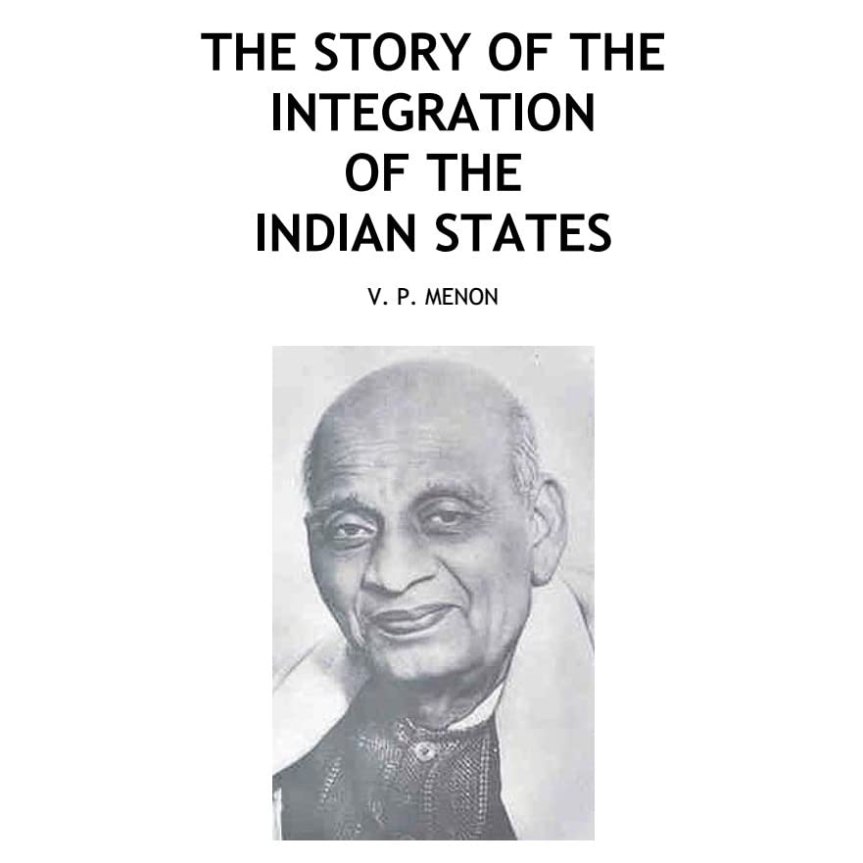
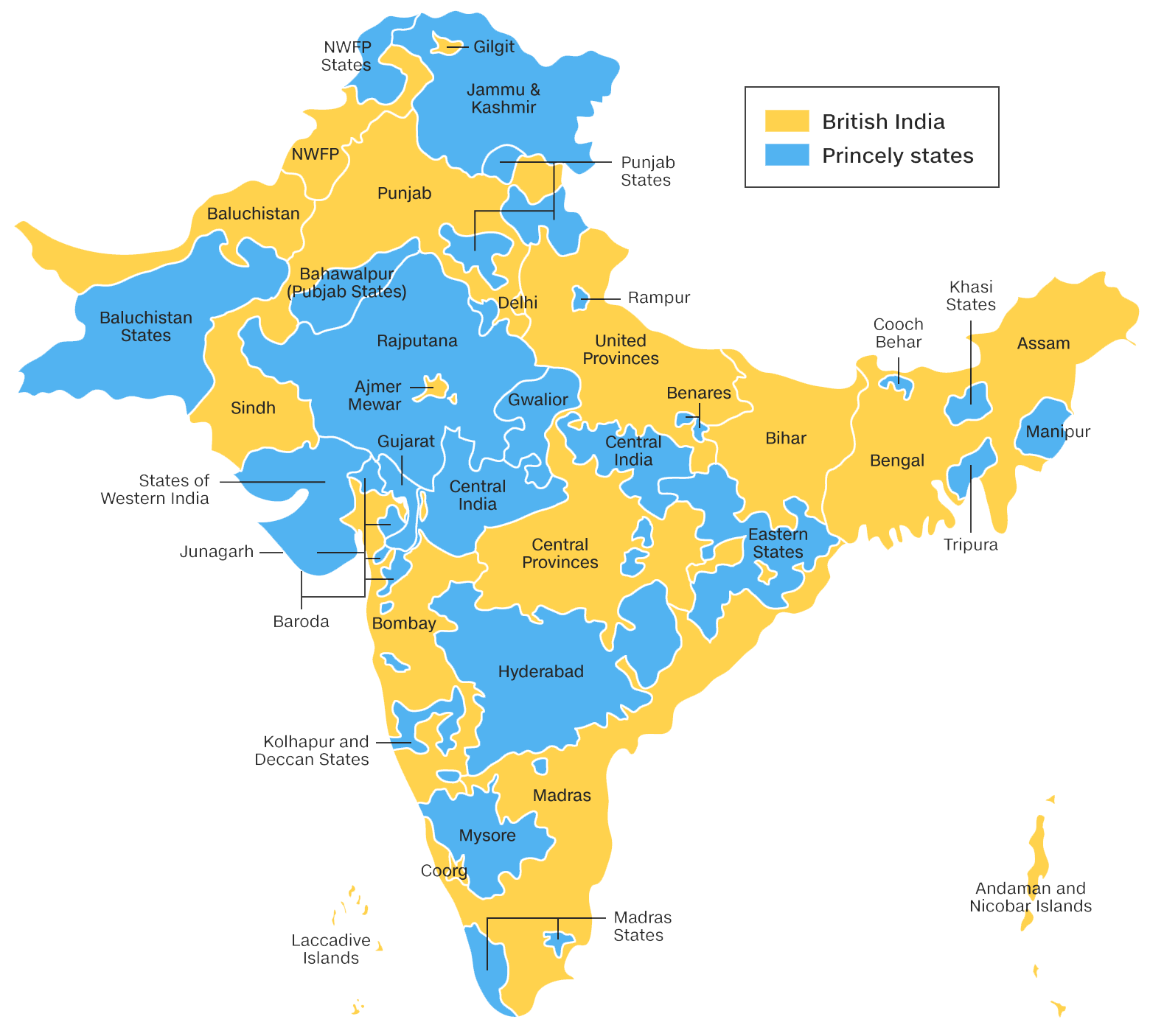
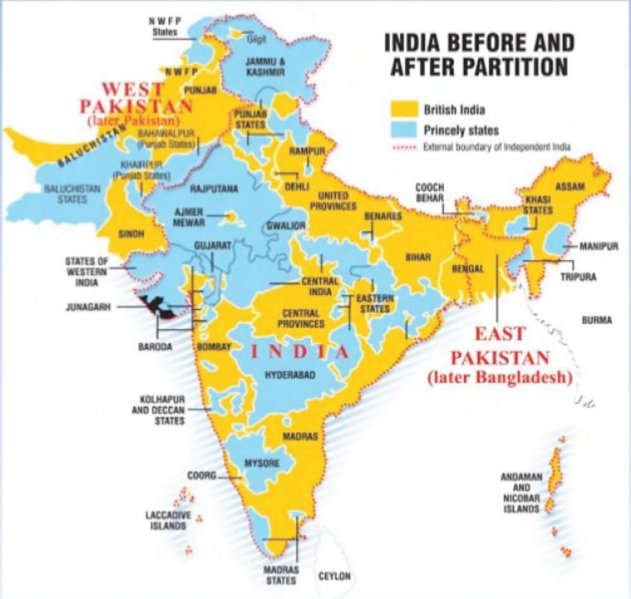
Sardar Vallabhbhai Patel played an important role in the integration of the princely state into the Dominion of India. This achievement laid the foundation for Patel’s popularity in the post-independence era. He is still remembered as the man who united India today. In this respect he is compared to Otto von Bismarck, who united many German states in 1871. The June 3 plan gave more than 565 princely states the option of joining India or Pakistan or choosing independence. Most Indian nationalists and the masses were afraid that most people and territories would be fragmented without the participation of these states. Parliament and British officials considered Patel to be the best man on a mission to secure the conquest of the princely state from Indian rule. According to Gandhi only Patel could solve this problem. Patel had practical insight and determination to accomplish monumental work. Patel asked V.P. Menon, a senior official involved in the division of India, to become his right-hand man as Principal Secretary of State. Patel used a social gathering and informal setting to involve most monarchs and invite them to their home in Delhi for lunch and tea. At these meetings, Patel stated that there was no essential conflict between Congress and the prince’s order. Patel aroused the patriotism of the Indian monarchs and urged them to embrace the independence of their country and act as responsible rulers who care for their people’s future. He persuaded the rulers of 565 states about the impossibility of independence from the Republic of India, especially in the face of rising opposition from their subject. He proposed favorable conditions for the merger, including the creation of a secret purse for the descendants of the ruler. Patel encouraged the rulers to act patrioticly, and to thought about his states people and their futur, but he did not rule out violence. He emphasized the need for the princes to join India in good faith and gave them to sign the membership certificate until August 15, 1947. All but three states were willing to join the Indian Union. Only Jammu and Kashmir, Junagad and Hyderabad were States which were tough to brought under Indian Dominion.
Credit-Youtube
Junagadh being situated in Gujrat it was very important for Patel to bring it under Indian’s dominion. This was also important because there was the super-rich Somnath Temple (a temple where different stones were their including emeralds, diamonds, and gold which were looted by Mohd. Ghazni) in the Kathiawar district. Bieng under the pressure from Sir Shah Nawas Bhutto, a Nawab who joined Pakistan. However, it was far from Pakistan, with 80% of its state population being Hindus.Patel combining diplomacy and power, Pakistan invalidated Pakistan’s accession and demanded that Nawab join India. Patel sent troops to occupy the three principalities of Junagadh to show his determination. After widespread protests and the formation of the civilian government, or Aarzi Hukumat, both Bhutto and Nawab fled to Karachi, and under Patel’s orders, Indian troops and police forces invaded the state. A later organized referendum resulted in 99.5% of the votes in favor of the merger with India. After taking over, Patel, who spoke at the University of Bahauddin in Junagad, emphasized his sense of urgency regarding Hyderabad. He believes this is more important to India than Kashmir.
Credit-Youtube
Hyderabad was the largest of the princely states and which included States parts of which are now Telangana, Arndra Pradesh, Karnataka and Maharashtra. Its ruler, Nizam Osman Ali Khan, was Muslim, but more than 80% of the population of state was Hindu. Nizam called for independence or accession to Pakistan. Under Kasim Razvi, an army of Nizam-faithful Islamic troops called Razakar urged Nizam to confront India and at the same time organize an attack on the people of India’s soil. The standstill agreement was signed by Lord Mountbatten’s in desperate efforts to avoid the war, but Nizam refused to trade and changed his position. At a cabinet meeting in September 1948, Patel emphasized that India should stop speaking and reconciled Nehru and Governor Chakravarti Rajgoparachari with military action. After preparation, Patel ordered the Indian troops to invade Hyderabad (in his position on behalf of the Prime Minister) when Nehru traveled to Europe. This action, called Operation Polo, in which thousands of Razakar troops were killed , but Hyderabad was secured and integrated into the Republic of India. Mountbatten and Nehru’s main goal was to avoid forced annexation to prevent the outbreak of Hindu and Muslim violence. Patel argued that if Hyderabad was allowed to survive as an independent state surrounded by India, the government’s fame would decline and neither Hindus nor Muslims would feel reassured in their empire. After defeating the Nizam, Patel held him as the head of state of the ritual and met with him. India had 562 princely states after addition of Junagarh, Heydrabad and Jammu& Kashmir.
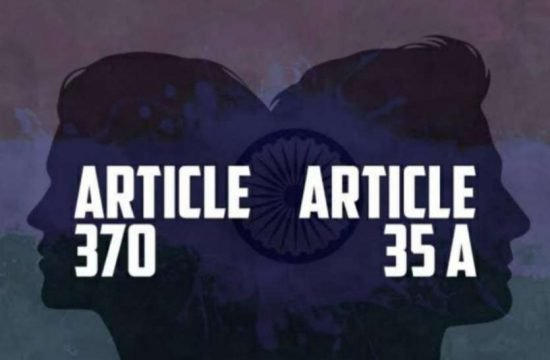
Article 370 The first accession of Jammu and Kashmir, like all other princely states, involved three issues: defense, diplomacy, and communications. All princely states were invited to send representatives to the Constitutional Parliament, which drafted the Constitution across India. They were also encouraged to establish a constituent parliament for their own state. Most states were unable to establish a parliament in time, but some states, especially Saurashtra Union, Travancore-Cochin, and Mysore. The State Department had drafted a model state constitution, but on May 19, 1949, the governors and Chief ministers of each state met in the presence of the State Department and agreed that no separate state constitution was needed. They accepted the Indian Constitution as their own constitution. The state in which the elected constituent council proposed some changes that were accepted. Therefore, the status of all states has been placed on par with the status of ordinary Indian states. In particular, this meant that the subjects available for legislation by central and state governments were consistent and same throughout India.
In the case of Jammu and Kashmir, state politicians have decided to establish a separate constitutional council for the state. Representatives of the Indian Constitutional Assembly applied only the provisions of the Indian Constitution corresponding to the original accession documents to the state, and demanded that the state Constitutional Assembly decide on other matters. The Government of India agreed to the request shortly before its meeting with the other states on 19 May. Therefore, Article 370 was included in the Constitution of India, which provided that other provisions of the Constitution empowering the central government would apply to Jammu and Kashmir only with the approval of the State Constitutional Assembly.This was a “provisional provision” because it was applicable until the State Constitution was enacted and adopted. However, the State Constitutional Assembly was dissolved on January 25, 1957, and did not recommend the abolition or amendment of Article 370. This article was considered an integral part of the Indian Constitution, as confirmed by various recent April 2018 rulings by the Supreme Court of India and the Supreme Court of Jammu & Kashmir.
Credit- Legal Service India
Article 35A Article 35A of the Constitution of India was a provision authorized by state to define the “permanent residents” of Jammu and Kashmir State and to give them special rights and privileges. It was added to the Constitution by an Executive Order, the 1954 Constitutional Order (application to Jammu and Kashmir). It was issued by the President of India under Article 370. Jammu & Kashmir has these privileges, the ability to acquire land and real estate, vote and participate in elections, pursue government employment, and receive the benefits of other governments such as higher education and medical expenses. Defined to include. Non-permanent residents of the state were not eligible for these “privileges”, even if they were Indian citizens.
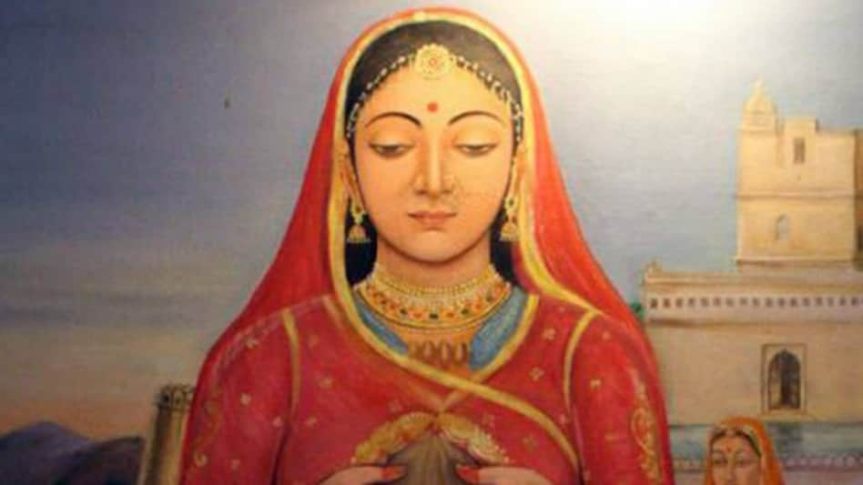
Rani Karnavati was a princess and temporary ruler from Bundi, India. She married Rana Sanga of Mewar in Chittorgarh, the capital of the Kingdom of Mewar. She was the mother of Rana Vikramaditya and Rana Uday Singh, and the grandmother of the legendary Maharana Pratap. During 1527 to 1533 the minority years of her sons she served as a regent for Mewar. She died on 8th March 1535.
After Babur seized the throne of Delhi in 1526, Rana Sanga of Mewar led a coalition of Rajput Kings against Babur to seize the throne of Delhi. In the starting Rana Sanga was able to defeat Babul in the Battle of Bayana, but in the Battle of Kanua, he was defeated because of Babur’s excellent tactics, guns, and artillery.Rani Karnavati took over as regent on behalf of his eldest son Vikramaditya who was a minor at that time. Meanwhile, Mewar was attacked a second time by Gujarat’s ruler Bahadur Shah against whom Vikramaditya had previously been defeated. It was very important issue for Rani Karnavati.
The nobles of Mewar Kingdom did not want to fight for Vikramaditya, and as the upcoming battle will certainly be another stain in the history of Sisodias. Rani Karnavati was able to persuade nobles to fight for Mewar and honor of Sisodias . Their only condition was that Vikramaditya and Uday Singh should go to Boondi for their personal security during the war. In some legends some also said, that Rani Karnavati also sent Rakhi to Emperor Humayun of Mugals calling him his brother and asking for help. Therefore, her name was irreparably linked to the Raksha Bandhan Festival. However, this is not supported by modern writers, and modern historians such as Satish Kumar consider it a fable rather than a historical fact.
Rani Karnavati agreed to send her sons to Bundi ,while knowing the situation being very critical and which can be dangerous for her two sons and send her trusted maid Panna Dai to accompany them and take care of them. Panna hesitated, but she left for Bundi with Vikramaditya and Uday Singh and accept the Queen’s wishes.
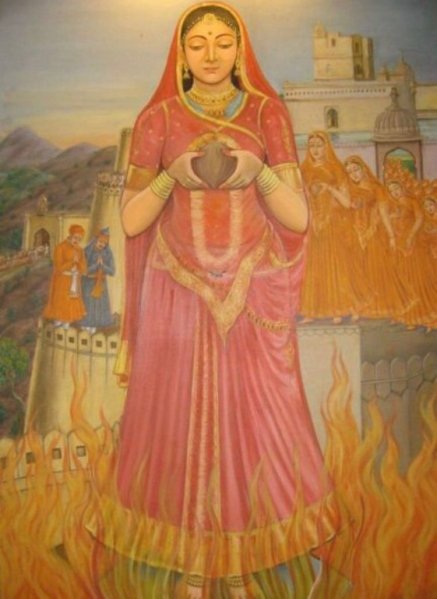
The Sisodias dynasty fought bravely, but the army of Mewar was outnumbered by Bahadur Shah army and they were defeated. Bahadur Shah entered Chittorgarh and it was his second attack on Chittor. The male nobles donned with saffron cloths fought with the enemy till thier death and commited Saka.Karnavati and other noble court women realized that defeat was imminent and to save their honour they committed suicide on March 8, 1534, in a fire called Jauhar. This was the second of the three Jauhar to take place in Chittor.
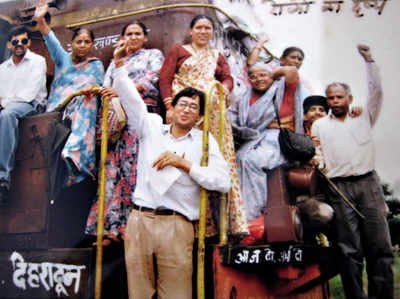
Uttarakhand became a state on November 9, 2000. The establishment of Uttarakhand was achieved after a lot of hard work and sacrifice. The voice for Uttarakhand to become a state was first raised in a special session of the Indian National Congress in Srinagar, May 5-6, 1938. In 1994, after a series of events, demand gradually increased for another state eventually which took the form of a mass movement, leading to the formation of India’s 27th state by 2000.
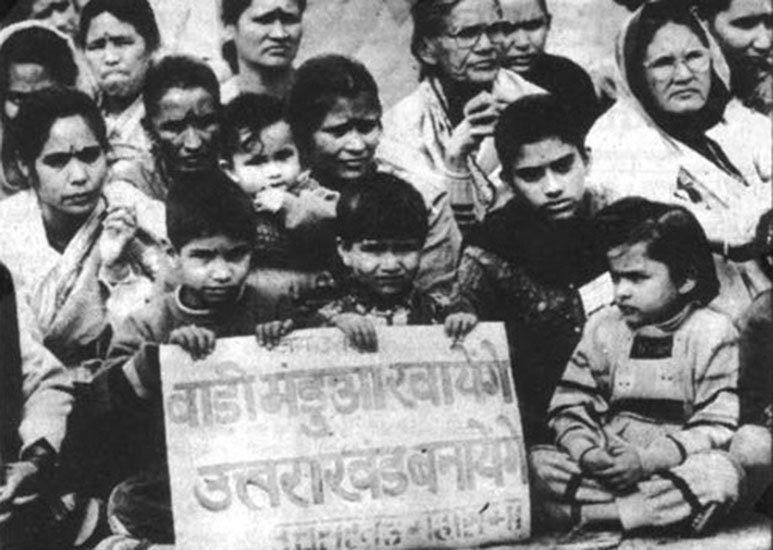
In March 1994, Uttar Pradesh Chief Minister Mulayam Singh Yadav recommended the Mandal Commission to secure 27% of government positions and places in schools and universities for socially and economically weaker classes,which was later on carried on. The Hill region OBC population was very small at 2.5% and reserving OBC seats meant that all government seats would go to the plains of Uttar Pradesh. This led to intensified protests against the nation.
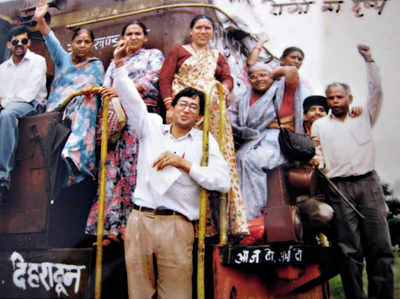
In 1994, the students throughout the region participated in separate state and group movements for reservations. The Uttarakhand movement was further intensified locally by the anti-Uttarakhand statement by then-Chief Minister of Uttar Pradesh, Mulayam Singh Yadav. Uttarakhand leaders continued to support their call for another state until their death. State officials went on strike for three months, and the Uttarakhand movement was exacerbated by the blockade and confrontation with police. Uttarakhand activists in Mussoorie and Khatima were shot dead by police. On October 2, 1994, in Delhi, the capital of the country, a large-scale demonstration and protest was held in support of the state under the support of Samyukta Morcha. Uttarakhand activists marched to Delhi to participate in the struggle. Activists who participated in peaceful demonstrations near Ranpur Tiraha Junction in Muzaffarnagar were tortured and shot dead openly without warning. Police officers were also charged with obscene behavior and rape with female activists. Satya Pokhriyal was a leader who led all people out of misery and other Andolankari helped others and showed courage. Several people were killed and many were injured. These incidents has fueled the Uttarakhand movement. The next day, October 3, the destruction of gunfights across the region and protests over multiple deaths broke up.
Credit- Himalaya Buzz
On October 7, 1994, a female activists died after police brutally attacked her in Dehradun while she protested against the shooting at Rampur Tiraha and many activists attacked the police station in return. A curfew was imposed in Dehradun on October 15, and one activists was also killed on the same day. On October 27, 1994, then Indian Minister of Home Affairs Rajesh Pilot met with state activists. Meanwhile, a brutal police attack in Srinagar’s Sriyantra Tapu killed several activists while they were protesting.
On August 15, 1996, then Prime Minister H.D. Deve Gowda announced at the Red Fort of Delhi the forming of a new state Uttarakhand.
In 1998, the BJP-led coalition government at the centre sent the “Uttarakhand Bill” through the President of India to the Uttar Pradesh state government . The Uttar Pradesh State Assembly passed , the Uttarakhand bill with 26 amendments and sent back to the central government. On July 27, 2000, the central government submitted the 2000 Uttar Pradesh Reorganization Bill to the Parliament of India. Lok Sabha passed the bill on August 1, 2000, and Rajya Sabha passed the bill on August 10, 2000. The Uttar Pradesh Reorganization Act was approved by then President of India, K.R. Narayana on August 28, 2000 and on November 9, 2000, the new state of Uttaranchal was established as the 27th state of India, now known as Uttarakhand.
Television was founded by John Baird. The first television service was started in 1936 by British Broadcasting Corporation (BBC) of Britain . In 1939, television broadcasts began in the United States. In 1953 the first successful programme in colour was transmitted by Columbia Broadcasting System (CBS) in USA. In today՚s world, television has become one of the most powerful means of mass communication . It can impart education, information and entertainment . Television has end up becoming an necessary a part of our lives.
Credit-Youtube
HISTORY India’s first television station was established on October 24, 1951, in the Department of Electronics and telecommunications at Government Engineering College in Jabalpur. Television began in India as an experiment on September 15, 1959. It was first started as two hours programmes a week under the authority of AIR. Early programs of these experimental broadcasts were generally educational programs for children and farmers. By 1975, only seven Indian cities were using television services. The Satellite Instructional Television Experiment (SITE) was an important step by India for the use of television for the development of people and the country. Initially, the show was mainly produced by Doordarshan (DD), who was part of AIR at the time. Transmissions were made twice a day, morning and evening. In addition to information on agriculture, health and family planning, other important topics covered in these programs were audience education and awareness raising. Entertainment was also included in the form of dance, music and cinema. In 1976 Television services were separated from radio . Color television was introduced to the Indian market in 1982.
In the late 1980s, more and more people began to own televisions. There was only one channel, but the TV show was saturated. Therefore, the government opened another channel, partly broadcasting nationally and locally. This channel was called DD2 and was later renamed to DD Metro. Both channels were broadcast on the ground. In 1997, Prasar Bharati, was established.Doordarshan, along with AIR, was incorporated into a state-owned enterprise under Prasar Bharati. Transponders of the American satellites PAS-1 and PAS-4 assisted in the transmission and broadcasting of shows on DD. An international channel called DD International was launched in 1995 and broadcasts programs abroad 19 hours a day to Europe, Asia and Africa via PAS-4 and to North America via PAS-1.The 1980s were the prime time for DD, with shows like comedies such as Hum Log (1984-1985), Wagle Ki Duniya (1988), Buniyaad (1986-1987). Epics like Ramayan (1987–1988) and Mahabharat (1989–1990) brought millions to Doordarshan and later on Chandrakanta (1994–1996). Song-based programs for Hindi movies such as Chitrahaar and Rangoli, and crime thrillers such as Karamchand and Byomkesh Bakshi. Children’s shows such as Tenali Rama ,Vikram Betal and Malgudi Days .
Private Channels influence: The introduction of communication channels was a revolutionary move to reach so many people. It became an opening for Private and Commercial broadcasters in our country. The emergence of private channels began in India in the 1990s after CNN aired the Gulf War. Hong Kong-based STAR (Satellite Telivision Asia Region ) enterned in a contract between an Indian company and Zee TV. It became the first Private Indian Hindi satellite channel. During this time, several local stations have emerged. Apart from local ones various international channels such as Channel, CNN, BBC, Discovery, etc were also available for Indian TV viewers. Their were various categories of channels available for viewers,such as the 24-hour news channel, Religious channels, cartoon channels, movie channels, something for everyone .
Credit-Filmaker Fans
Changes and Evolution: A significant change that has occurred is the use of different methods of delivering television programming. Just a while ago their were satellite-based antennas, but now the mode has converted to dishes. Other shipping methods are are delivery via cable network and direct satellite transmission. Now you can watch TV shows on your mobile phone , the technology behind it is called Internet Protocol Television. The emergence and spread of televisions and computers and the access to content anytime, anywhere, everyone has brought revolutionary change and access to the world of entertainment.
“I always say film is art, theater is life and television is furniture .”
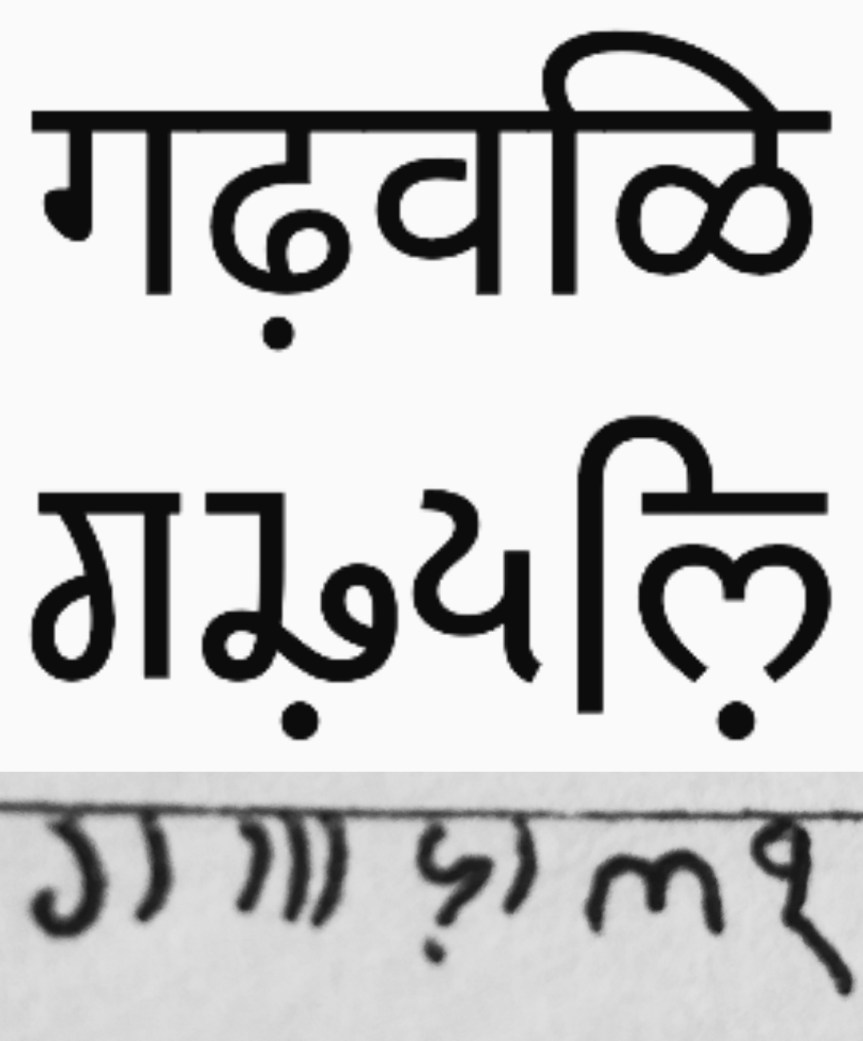
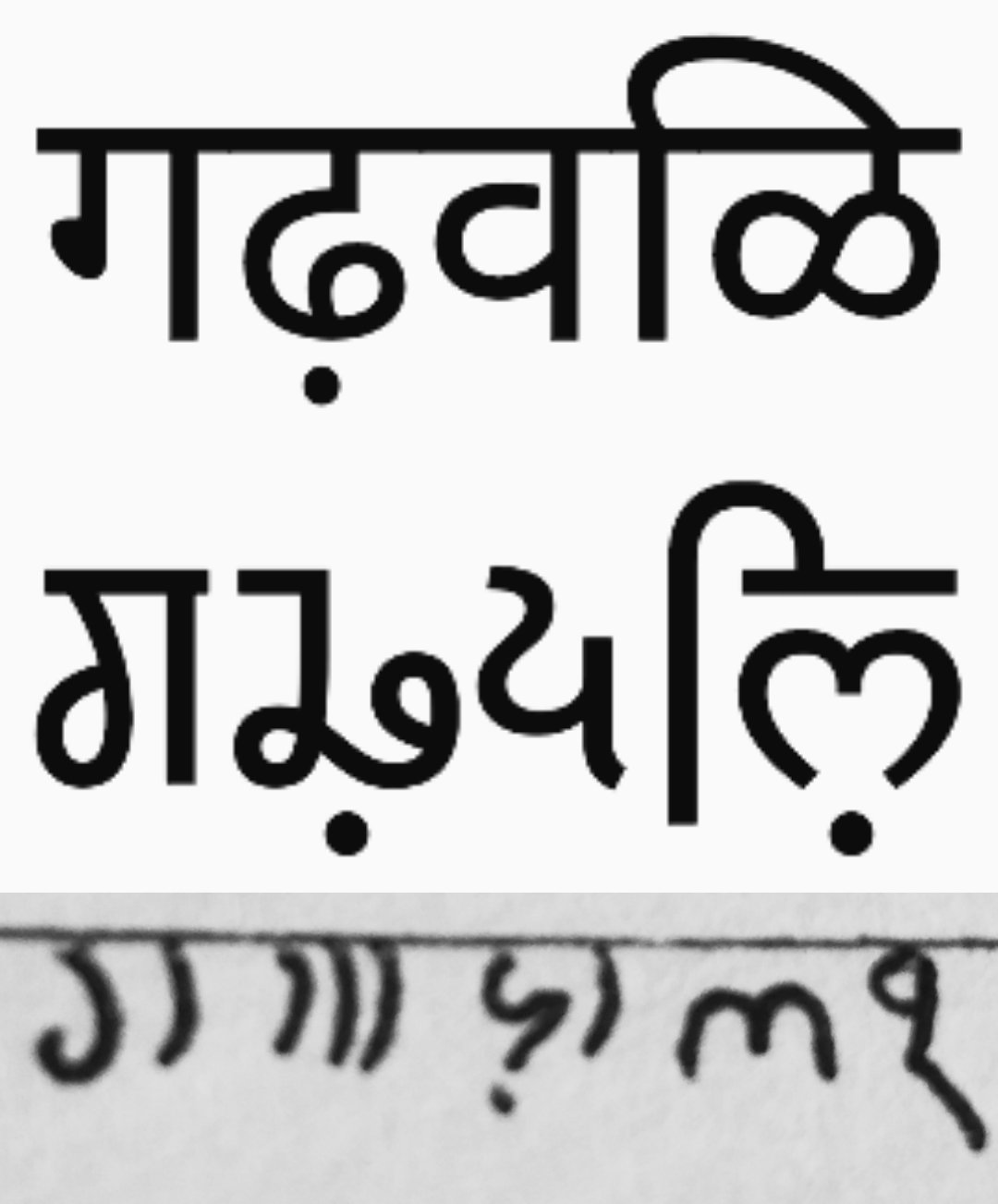
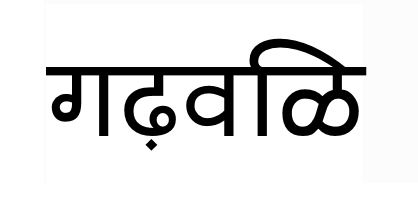
Garhwali is the Indo-Aryan language of the Central Pahari Region which is mainly spoken by more than 2.5 million people in the Garhwal region of Uttarakhand, northern India, in the Himalayas of India, Uttarakhand. Garhwali is also spoken by Garhwali people living in other parts of India, such as Himachal Pradesh, Delhi, Hariyana, Punjab and Uttar Pradesh. According to various estimates, at least 3.5 million Garhwali migrants live in Delhi and other cities.
HISTORY During the Middle Indo-Aryan era, there were various languages called Prakrit. Of which, Khas Prakrit language is believed to be the source of Garhwali language.The earliest forms of Garhwali can be traced back to the 10th century and can be found in temple stones, including numismatics, royal seals, copper plate inscriptions, royal orders and grants. An example is the inscription of King Jagatpal’s Temple Grant in Dev Prayag in 1335 AD. Most Garhwali literature survives in vernacular form and is transmitted verbally. But since the 18th century, Garhwali has developed a literary tradition.
LITERETURE & WRITERS Among the famous Garhwali writers in hiastory of literature are Sudarsan Shah, Kumdanand Bahguna, Hari Dutt Sharma (Nautiyal), Hari Krishna Daurga Dutti Rudra, Urvi Dutt Shastri ,Mahidhar Dangwal, etc. , Satyasaran Raturi, Atma Ram Gairola, Devendra Dutt Raturi, Suradutt Saklani and more. Among historians are Mola Ram, Miya Prem Singh, Hari Dutt Shastri, Hari Krishna Raturi and Vijaya Ram Raturi. Garhwali literature is thriving despite the ignorance of the government. Today, newspapers like Uttarakhand Khabarsar and Rant Raibaar are published entirely in Garhwali. Magazines such as Baduli, Hilaans, Chitti-patri and Dhaad have contributed to the development of GarhwaliGarhwali language.
Some Notable works of Gharwali writers: •)Abodh Bandhu Bahuguna – (1927–2004) Garhwali writer. Some nitable writings include Gaad, Myateki Ganga, and Bhumyal. •)Bachan Singh Negi – “Garhwali translation of Mahabharata and Ramayana”. •)Lalit Mohan Thapalyal – “Achhryun ku taal” •)Leeladhar Jagudi – (1944) Writer and novelist. PadmaShri •)Lokesh Nawani – “Phanchi” •)Madan Mohan Duklaan – “Aandi-jaandi saans” •)Chandramohan Raturi – “Phyunli” •)Chinmay Sayar – “Aunar” •)Dr. Narendra Gauniyal – “Dheet” •)Durga Prasad Ghildiyal – “Bwari”, “Mwari” and “Gaari” •)Gireesh Juyal ‘Kutaj’ – “Khigtaat”.
Struggle of Official RecogItion: Since the establishment of Uttarakhand in 2000, the state governments have made slow progress in promoting and developing the regional language of Uttarakhand. Like other languages in Uttarakhand, Garhwali, the most widely spoken language, is not officially recognized. In 2010, Hindi became the official language and Sanskrit became the second official language of Uttarakhand. In 2014, after making Garhwali the official language of Uttarakhand and demanding that it be taught at schools and universities for many years, the Uttarakhand State Government established Kumaoni and Garhwali departments at Kumaoni and Garhwali universities, respectively, to study the regional languages. At the national level, Garhwali is always required to be included in the 8th schedule of the Indian Constitution in order to be one of India’s schedule languages. In July 2010, Parliamentary member Satpal Maharaj of Pauli Garhwal submitted a legislative bill to Lok Sabha to include the languages of Garhwali and Kumaoni in the eighth schedule of the Constitution. Like most private citizen bills, the bill has not been discussed in Parliament and has since expired.
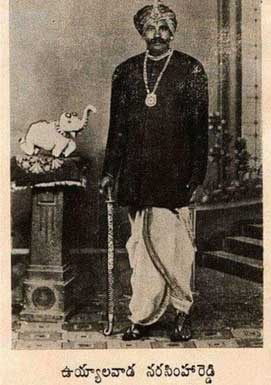
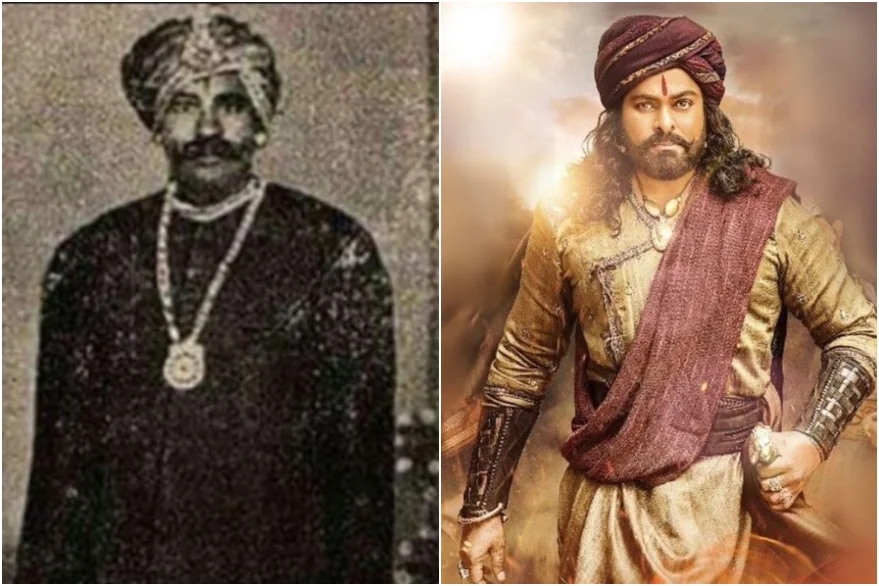
Uyyalawada Narasimha Reddy was an Indian freedom fighter and he was born in Rupanagudi village, on 24 November 1806.
The father of Narasimha Reddy was related to the Palegar family of Uyyalawada in Koilakuntla taluk who had married two daughters of the Palegar of Nossam. He had three sons, of whom Narasimha was the youngest son of the Palegar of Nossam, Seethamma. He married a woman named Siddhamma at the age of 6 . The British East India Company’s preface to the Chennai Presidency of the 1803 endless agreement, which had first been legislated in Bengal Presidency ten times preliminarily, replaced the agricultural socio- profitable status quo with a further egalitarian arrangement where anyone could cultivate handed that they paid a fixed sum to the East India Company for the honor of doing so. The Palegars and other advanced- status people who preferred the old agricultural system” represented the decadent social order”, were in numerous cases” arrivistes” and” were also the heirs at law of a social system in which colorful orders of Hindu society were integrated through periods”. These people were ousted of their lands, which were also redistributed, but the primary purpose of the changes was to increase product rather than to restructure the social order. In some cases, it coincided with a discipline because among the dispossessed were those who had lately been involved in fighting the East India Company in the Palegar Wars. Some entered pensions in lieu of the lost lands but at inconsistent rates.
The changes, which included the preface of the ryotwari system and other attempts to maximize profit, deprived vill helmsmen and other advanced- status people of their part as profit collectors and position as lodgers, while also impacting on lower- status tillers by depleting their crops and leaving them impoverished. The East India Company were economically exploiting the people and that those who were dependent on the traditional work were no longer had a means of making a living. As the old order collapsed into disarray, the formerly-authoritative Palegars, including Narasimha Reddy, came the focus of attention from victims, whose pleas fell on deaf cognizance. The Palegars saw a chance to rally peasant opposition both for genuine social reasons. Narasimha Reddy’s own expostulations too was grounded on their issues. Compared to the Palegar of Nossam, the pension awarded to his family upon their acquisition was paltry and the authorities refused to increase it by redistributing some of the Nossam moneybags when that ultimate family came defunct in 1821. At the same time, some of his cousins were facing proffers for farther reductions in their land rights, including by a reform of the vill policing system.
WAR AGAINT BRITISH EMPIRE Effects came to a head in 1846 when the Company authorities assumed land rights preliminarily held by colorful people who had failed in the townlets of Goodladurty, Koilakuntla and Nossum. Encouraged by the disgruntlement of others, Reddy came the statuette for an insurrection. An fortified group, originally comprising those ousted of inam lands around Koilakuntla, was led by Reddy’s Right- hand man Vadde Obanna in July 1846. The Amusement Collector for the area Lord Cochrane, believed that Reddy had material support from fellow pensioners in Bhagyanagar and Kurnool, whose land rights had also been appropriated. The group soon attracted support from the peasantry and was reported by Company authorities to have rampaged in Koilkuntla, taking back the pillaged storeroom there and escaping the police before killing several officers at Mittapally. They also despoiled Rudravaram before moving to an area near to Almore, pursued by the East India Company forces who also girdled them. A battle between Obanna’s 5000-strong band of revolutionists and a much lower British contingent also took place, with around 200 of the revolutionary being killed and others captured before they were suitable to break out in the direction of Kothakota, Giddalur where Reddy’s family were positioned. He with his family moved to Nallamala Hills . The British offered impulses for information regarding the whereabouts of the revolutionists, who were again girdled amidst reports that uneasiness was now growing in other townlets of the area. In a farther skirmish between the revolutionists and the British, who had transferred for mounts, 40 – 50 revolutionists were killed and 90 were captured, including Reddy. Although there was no substantiation of Obanna’s prisoner, he most conceivably was also a interned along with his leader. clearances were issued for the arrest of nearly,000 of the revolutionists, of which 412 were released without charge. A farther 273 were bailed and 112 were condemned. Reddy, too, was condemned and in his case entered the death penalty. On 22 February 1847, he was executed in Koilkuntla in front of a crowd of over 2000 people. Reddy’s head on the stronghold wall in public view until 1877.
LEGACY On 2 October 2019 , a film based on the life of Narsimha Reddy’s life named Sye Raa Narasimha Reddy was released . On 25 March 2021 Kurnool Airport at Orvakal was named as Uyyalawada Reddy Airport .
For decades, filmmakers have tackled the sensitive and emotionally-driven theme of World War II in an array of noteworthy and poignant pictures. These moving and oftentimes brutal depictions of the horrors, shocking realities, and devastating impacts of the violent war seem to deeply touch audiences across the world. Production studios continuously harness tales of this frightening and monumental period of history with gripping and heartbreaking stories, and moviegoers can’t help but be drawn to them. The most shocking stories are showed in light, reminding us that world wars were truly the most horrifying times, a person could live through. Some of Hollywood’s most talented and esteemed visionaries have ventured into the touching and difficult subject, crafting memorable and thought-provoking results, and frequently winning Best Picture Oscars as a result. Here is a list of brilliantly made war movies you mustn’t miss out on
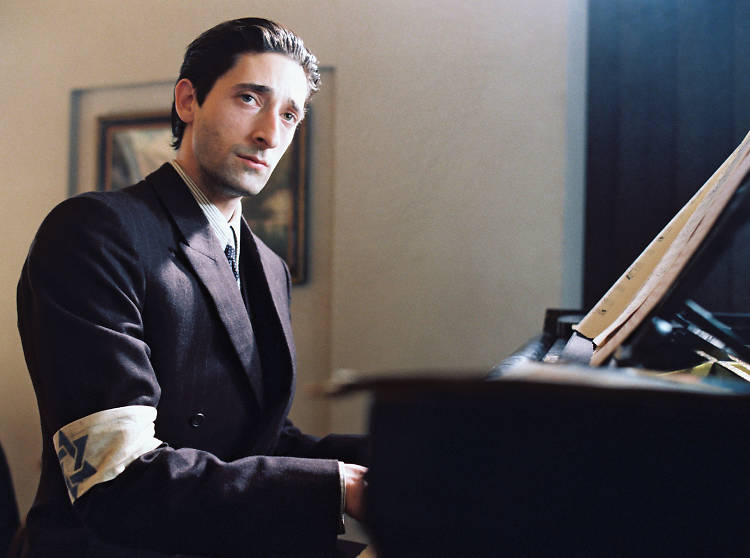
The Pianist
The Pianist is based on the Holocaust memoir of Polish-Jewish pianist and composer Władysław Szpilman, depicting his struggles to survive the destruction of the Warsaw ghetto of World War II. The emotionally-moving picture has a deep connection with Polanski, as he escaped from the Kraków Ghetto after the death of his mother and ended up living in a Polish farmer’s barn until the war’s end.
Hacksaw Ridge
Hacksaw Ridge focuses on the World War II experiences of pacifist combat medic Desmond Doss who, as a Seventh-day Adventist Christian refused to use or carry a weapon or firearm of any kind. The film was based on the 2004 documentary The Conscientious Objector, and after initially turning down the project twice, Gibson finally agreed and was tasked with creating a concoction of violence and faith. Andrew Garfield powerfully portrays Doss, and the biopic features the additional talents of stars like Sam Worthington, Teresa Palmer and Vince Vaughn. Upon reading the screenplay for the first time, Garfield revealed he was moved to tears. The Oscar-nominated drama garnered universal acclaim upon its release, earning praise for both Gibson’s directing and Garfield’s moving performance.
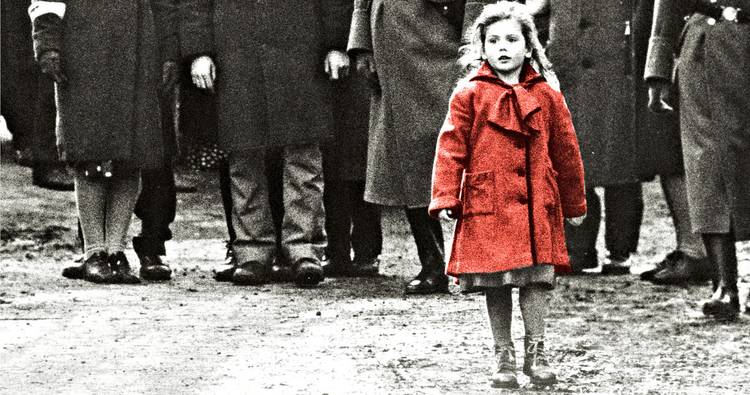
Schindler’s List
Spielberg’s deeply personal masterpiece is perhaps the most moving war film ever made. All the more so with the knowledge that it was based on the true story of Oskar Schindler, who originally set out to make his fortune by exploiting cheap Jewish labour in Krakow.However, as Schindler witnesses the unfolding horror of the Holocaust, his motivation changes and he bribes Nazi leaders to keep his employees out of the extermination camps, saving more than 1,100 lives. The winner of seven Oscars, Schindler’s List does full justice to Thomas Keneally’s source novel and remains just as powerful and relevant today.. Liam Neeson delivers the performance of a lifetime as Schindler, and appears alongside the gifted Ralph Fiennes and Ben Kingsley.
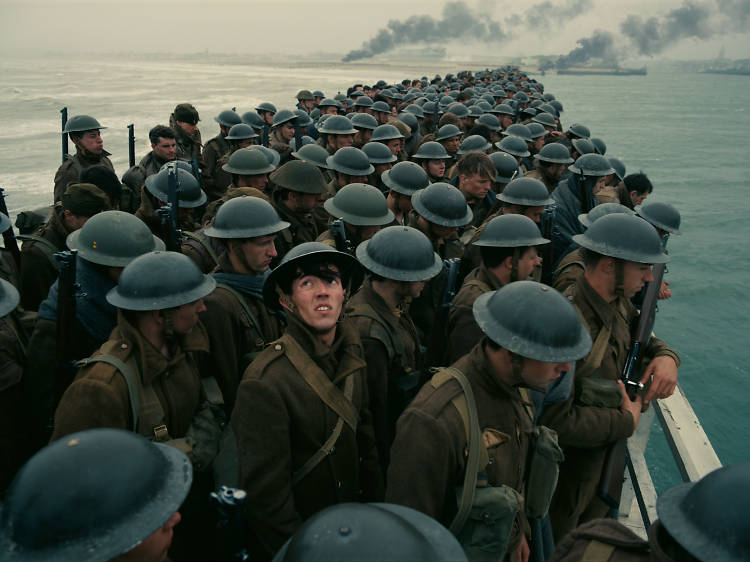
Dunkirk
Dunkirk, which depicts the Dunkirk evacuation of World War II through the perspectives of the land, sea, and air. The outstanding ensemble cast features some of cinema’s finest performers like Kenneth Branagh, Cillian Murphy, and Tom Hardy, and the drama was portrayed with very little dialogue, as Nolan wanted to create suspense with the stunning cinematography and music. The filmmaker conceived the premise of the war flick in the mid-1990s, when he and his wife sailed across the English Channel, following the path of many small boats in the Dunkirk evacuation.
Saving Private Ryan,
Saving Private Ryan, which is set during the Invasion of Normandy and follows a group of U.S. soldiers who go behind enemy lines to retrieve a paratrooper whose brothers have been killed in action. The gripping film stars a myriad of distinguished leads including Tom Hanks, Edward Burns and Matt Damon and was partially inspired by the Niland brothers, four American brothers from New York who served in WWII, with only two surviving. On why he repeatedly returns to the subject, Spielberg revealed, “I think that World War II is the most significant event of the last 100 years; the fate of the Baby Boomers and even Generation X was linked to the outcome. Beyond that, I’ve just always been interested in World War II.” The Oscar-winning Saving Private Ryan is frequently cited as influential in the war and action film genre, and is credited with renewing World War II interest in the media.
Casablanca
Classic Hollywood movie is considered one of the finest films ever created. The 1942 romantic drama Casablanca famously features Hollywood icons Humphrey Bogart and Ingrid Bergman, centring on a cynical American expatriate who must decide whether he wants to help his former lover and her fugitive boyfriend escape the Nazis in French Morocco. The iconic picture was based on an original play by writer Murray Burnett, who drew inspiration after traveling to Vienna in 1938.Since Casablanca’s premiere, its popularity has only continued to grow, with Burnett once calling it, “true yesterday, true today, true tomorrow.”
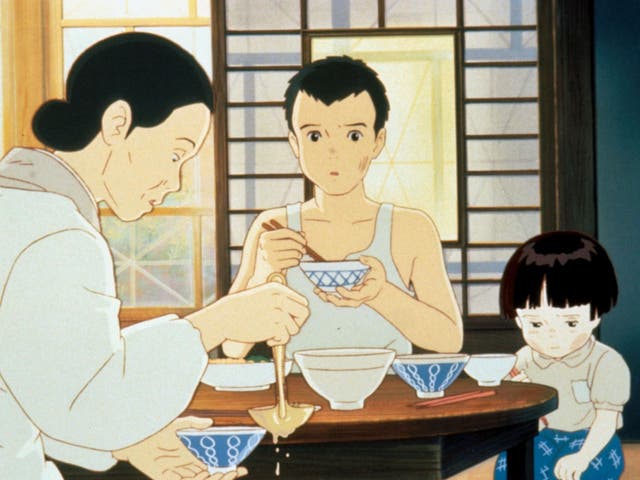
Grave of the Fireflies
Heartbreaking and thought-provoking anime from Studio Ghibli about brother and sister Japanese orphans desperately trying to survive in the dying days of the war. A haunting anti-war statement almost without peer, adapted from the story by Akiyuki Nosaka and based on his own experiences in the firebombed city of Kobe.
Inglourious Basterds,
Inglourious Basterds, telling an alternate history story of two plots to assassinate Nazi Germany’s leadership: one planned by a group of Jewish U.S. soldiers and the other by a French Jewish theater owner. Tarantino spent over a decade creating the script, and viewed the project as his masterpiece-in-the making and his best work thus far. He described the men of the picture as “not your normal hero types that are thrown into a big deal in the Second World War.” The famed director wanted the character of Hans Landa portrayed by a native German-speaking actor and cast Austrian Christoph. Tarantino was worried the part was unplayable, but Waltz delivered an Oscar-winning knockout performance as the ruthless SS officer
Letters From Iwo Jima
A companion piece to Eastwood’s Flags of Our Fathers, which told the story of the battle for Iwo Jima from the American perspective, this is the better of the two films, told from the viewpoint of the Japanese. The film marks the culmination of Eastwood’s growth as an artist, as he eloquently and movingly humanises the Japanese soldiers fighting against near impossible odds.Letters from Iwo Jima is stunning, depicting a group of soldiers even more bound by tradition and honour than their American counterparts, trapped in an unwinnable war and dreaming only of home.
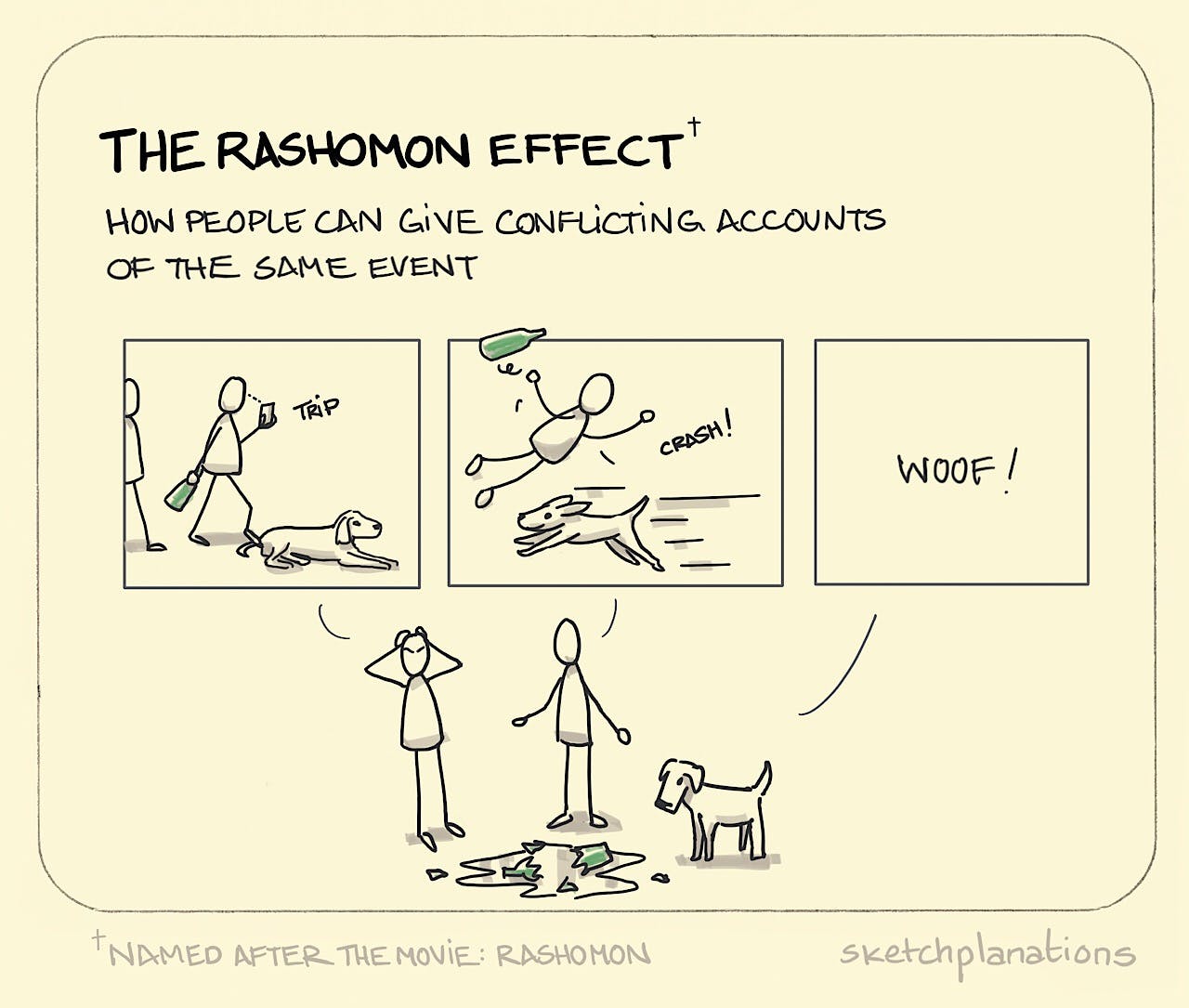
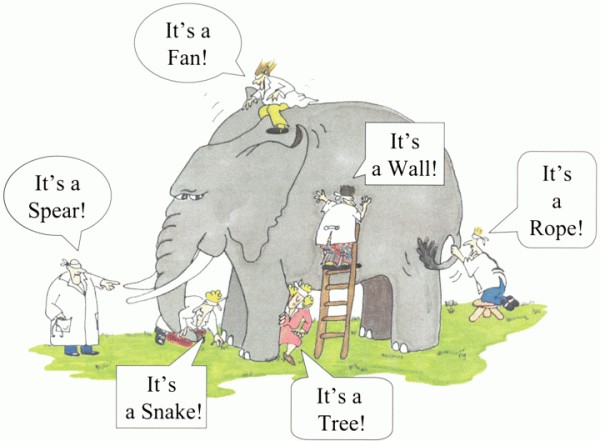
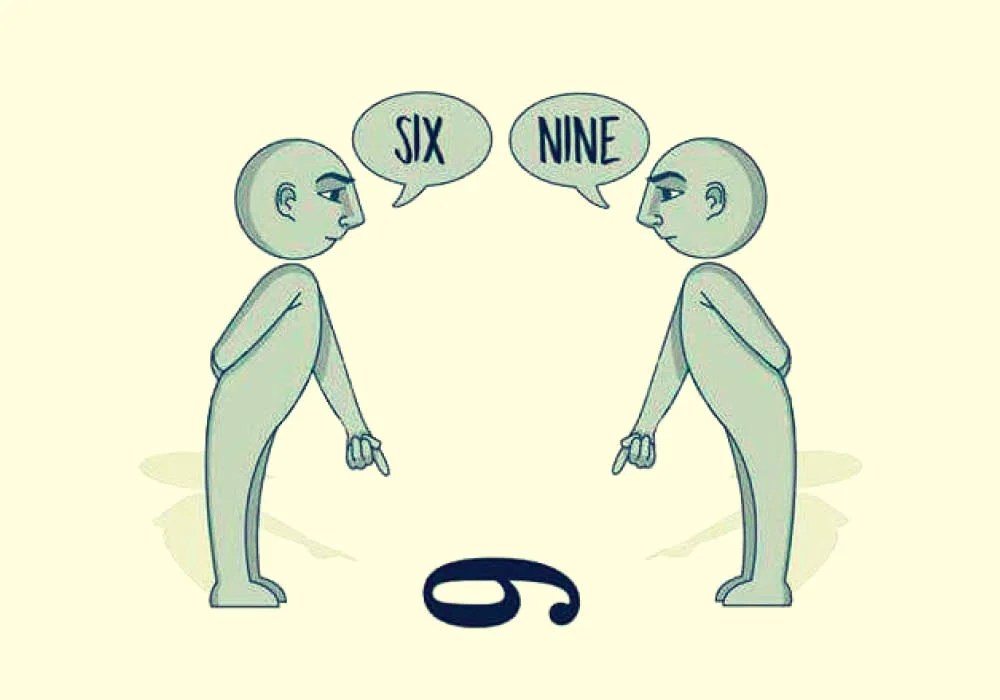
Ever heard multiple sides to a story from eye witnesses and had a tough time deciding which one is true or which to believe? Such a conundrum is brought about by subjective views, observer bias, perspective and memory of the observer. All these parameters can be summed into a single word known as The Rashomon. The Rashomon effect refers to an instance when the same event is described in significantly different (often contradictory) ways by different people who were involved.
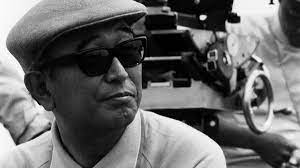
This phenomenon first came to be observed in a book called “in a grove “by Japanese author, Reyonosuke Akutagawa written in the early 1920’s. This was later adapted and made into a movie, by Japanese filmmaker Akira Kurosawa, who directed the 1950 film Rashomon, giving the effect its name. The plot revolves around which four different people provide contradictory accounts of a samurai’s murder, despite all having witnessed the crime. Each witness tale is varied from another, yet so very plausible, that a definite conclusion cannot be drawn, embroiling all of them.
The film explored the issues of the unreliability when depending on witness testimony explores a situation using a similar literary device, wherein the story is told through the viewpoints of different characters who supply conflicting stories. Whether the people’s competing explanations are different because of the fallacy of memory or because of self-serving interests varies. This film became revolutionary with how one understands the human mind, justice and the truth. It since then has become a cultural metaphor and is synonymous with happenings of everyday events as it’s not a sci-fi or an abnormal event, but a very natural course of nature that seems very striking .
Akira Kurosawa
Conditions and characteristics.
Not every story will have The Rashomon effect. It mostly occurs when there is no gripping and final evidence but a lot of eyewitnesses and when there is a pressure to achieve closure and coercion to find the truth. In both the movie and the book, no side of a person’s view is given more emphasis and all are shown in an equal scale, each testimony bearing its own truth and plausibility. The script and story writing does tell the audience how to feel or what to believe. The audience had to decide that for themselves making it engaging and deceiving at the same time. Such a premise has conflict as a driving. Conflict in a story drives a plot forward, reveals character, and engages an audience. The Rashomon Effect is based on contradicting reports of the same event and search for the truth through these reports can be a driving force of conflict for a story. The use of an unreliable narrator is another feature, opposed to the presentation from a more objective point of view. This allowed audiences to see the characters as they were and value neutral. To top it off, an ambiguous ending after such a mind boggling series of events, looks like the right justice to this type of storytelling. Our realization that none of the witnesses are reliable leaves us with more questions than answers. While most films at the time had a clear ending, the ending of Rashomon has no clear resolution. This unconventional decision left audiences baffled. It can be frustrating to some as it subverts from its unorthodox counterparts but , it is not ambiguous for the sake of mystery or confusion, but rather to reiterate themes and larger concepts like the intricacy of the human brain.
Conclusion
Research studies have found that when people form a memory, a visual experience is often influenced by external cues, internal prejudice and past experiences. While a few are completely individualistic, most are universal. An example of this is egocentrism, i.e., having a positive view on their actions but disregard to the other person . it is a subconscious act , most of the times, and these psychological phenomenon means that the rashomon effect can pop up anywhere.
The Rashomon effect finally boils down to the minutiae and can range from studies of anthropology and biology to the general public analyzing a historic world event. In conclusion this broke a psychobiological barrier of having the right answer to every crisis and rather shifted the focus to versions of the same event that can tell us about the time, place and people involved, how to go about different mind-sets, backgrounds and biases. It emphasized on the fact that sometimes, the objective truth cannot always be obtained and that it is normal to have an obscure, vague ending, which should be embraced and valued in certain circumstances.
Ismat Chughtai was most profilic Urdu writer, novelist and filmmaker. She Published Short stories, novels, sketches, plays, radio plays. She wrote extensively on female sexuality, femininity, middle class morality and class conflict. She was born on August 21, 1911 in Badaun, Uttar Pradesh. Ismat Chughtai was born on August 21, 1915, in Badaun, Uttar Pradesh. Her father, Mirza Qasim Beg Chughtai, was a high-ranking government official. She was the youngest of nine siblings, all her sisters had been married until she gained awareness, thus, in her childhood, she only had the company of her brothers, and she continuously challenged their supremacy. Whether it was playing street football and climbing trees, she did everything that girls were forbidden to do at that time.
She studied up to the fourth standard in Agra, and till the eighth standard in Aligarh, but her parents were not in favor of her higher education, instead, they wanted to train her to become a decent housewife. But Ismat wanted to get further educated at any cost, she threatened to run away from home and become a Christian and enter into a missionary school if her education was not continued. Eventually, her father had to kneel in front of her stubbornness and she went to Aligarh and got admission in the tenth standard. Chughtai completed her Bachelor of Arts from Lucknow’s Isabella Thoburn college 1939 where she studied English, Polity and Economics and a teacher training course from Aligarh Muslim University in 1939, In 1941 Chughtai secured a job as a superintendent of Municipal Girls School, Mumbai.
Author’s Writing Guise
Her bold protagonists stood out from the ordinary, her outspoken approach jolted regressive minds & her rebellion themes raised many eyebrows. She is a Icon of women’s empowerment at the same time she was a women who understood the complexities of women’s mind, their surrounding and also their desires all of her writing reflected these complexities in lengths powerful voice of 20th century in Urdu literature, fearlessly talked by feminine sexuality through her powerful writing.
In her writing, we found the great regard to human psychology. She has raised issue of equality between men and women which did not suitable for patriarchal society. Ismat emphasizes on the point that women must treat as human not merely an object of copulation, she has her own physical & emotional needs that needs to be fulfilled and understood. Her writing was realistic with pierce understanding of human life that relentlessly was main component of her artistic consciousness. Through the characters, she depicted the demons of society and tranformed them into joy and gratitude.
Ismat’s Exalted Fabrication of Work
Chughtai most prominent work was Lihaaf that explored the perspective of young girl under the theme of homosexuality. On the contrary, she did not want known by Lihaaf as she mentioned in her memoir, A life in words, Chughtai wrote: I am still labelled as the writer of Lihaaf. The story brought me so much notoriety that I got sick of life and whatever I wrote afterwards got crushed under it’s weights.
Kalyan, Ek Baat, Choten, Do haath, Badan ki khushboo, Amarbel and Aadhi Aurat Aadha khwaab among others. She constantly wrote about women related issues and their oppression they encounter. Her novel Tedhi Lakeer is one of the famous work in Urdu literature; it is Magnus Opus position for her that ensured commentary on the state of the country pre – Independence. Ziddi, saudai, Ajeeb Aadmi were others novels of her. For Garm Hawa the film based on impact of partition she earned filmfare award for best story(that shared with kaifi azmi).
For her remarkable literary services, Ismat received many significant awards and prizes from government and non-government organizations. In 1975, she was awarded the Padma Shri by the Government of India. The Madhya Pradesh government awarded her the Iqbal Samman in 1999, the Ghalib Award and the Filmfare Award. On October 24, 1991, she died in physical form but very much alive forever through her work.
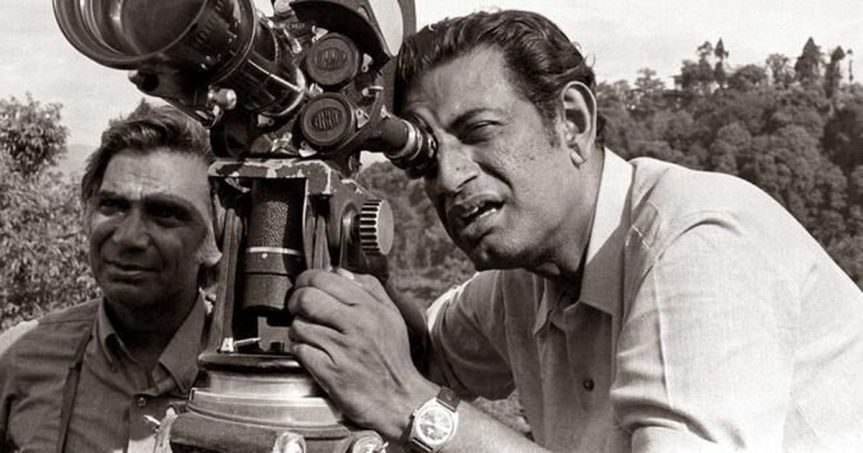
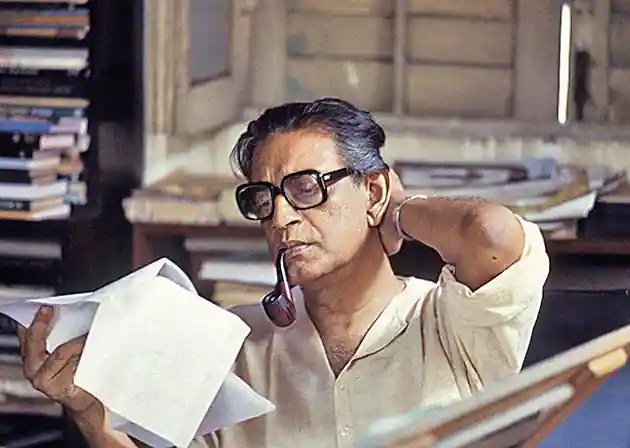
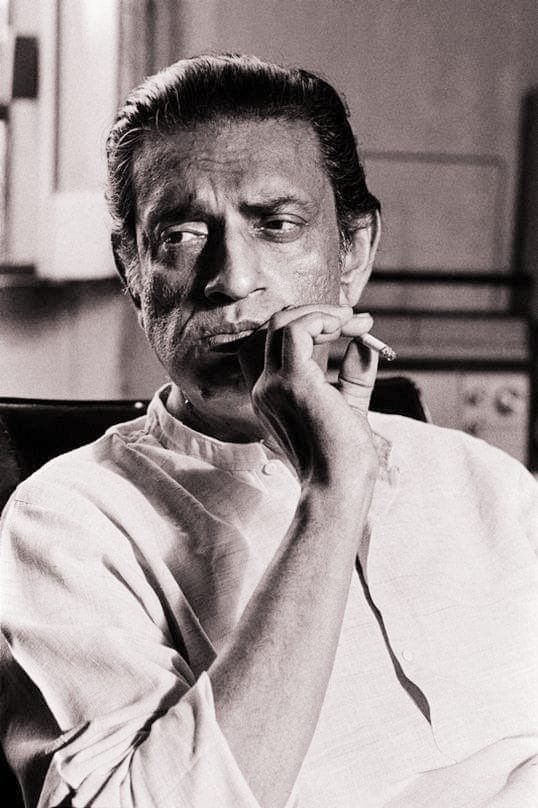
Satyajit Ray was India’s first internationally recognized film-maker and, several years after his death, still remains the most well-known Indian director on the world stage. Ray has written that he became captivated by the cinema as a young college student, and he was self-taught, his film education consisting largely of repeated viewings of film classics by de Sica, Fellini, John Ford, Orson Welles, and other eminent directors.
Satyajit Ray
Early Life and Family Background
Satyajit Ray was born into an illustrious family in Kolkata (then Calcutta) on 2nd May,1921. His grandfather, Upendra Kishore Ray-Chaudhary, was a publisher, illustrator, musician, the creator of children’s literature in Bengali and a leader of the Brahmo Samaj, a religious and social movement in nineteenth century Bengal. His father, Sukumar Ray, was a noted satirist and India’s first writer of nonsensical rhymes, akin to the nonsense verse of Edward Lear. Having studied at Ballygunge Government High School, Calcutta and completed his BA in economics at Presidency College, Satyajit Ray went on to develop an interest in fine arts. Later in life, Satyajit Ray made a documentary of his father’s life. His film, Goopy Gyne Bagha Byne, was based on a story published by his grandfather in 1914, but even other films, such as Hirok Rajah Deshe, “The Kingdom of Diamonds”, clearly drew upon his interest in children’s poetry and nonsensical rhymes.
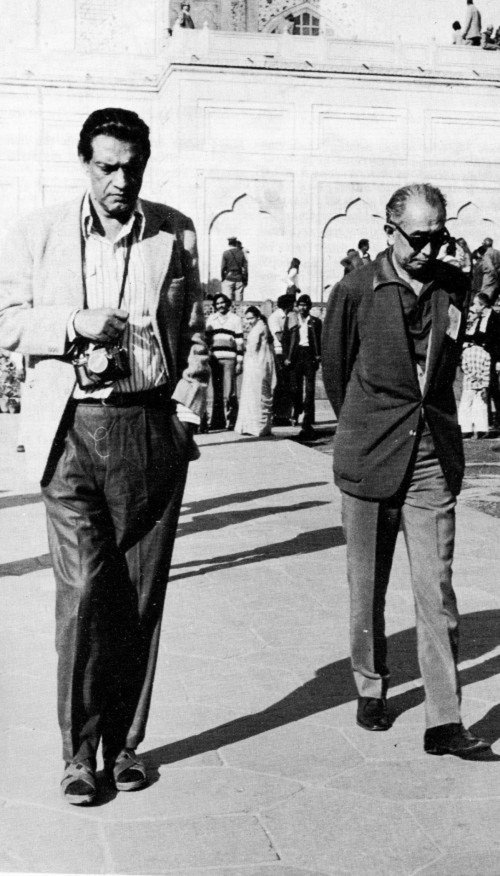
Satyajit Ray with Akira Kurosawa
The Crisis of Indian Cinema Before Ray
From the 1920s to the early 1950s, several directors working within Hollywood—as well as filmmakers in former Soviet Union, France, Italy, Germany, and Japan—considered cinema not as a mere tool of entertainment but as a medium for creative expression. Filmmakers such as Charlie Chaplin, Sergei Eisenstein, Jean Renoir, Roberto Rossellini, Vittorio De Sica, Akira Kurosawa, and others deployed artistically innovative filmic devices to convey profound statements about the complexities of life. Some of the aesthetically satisfying films produced during this period were hailed as cinematic masterpieces. Films in India, however, prioritised cliched elements such as sentimental slush, ersatz emotion, theatricality, romantic tales, spectacle-like songs, and happy endings in these decades. Instead of making serious attempts at formal experimentation, Indian directors continued catering to the lowest common denominator audience.
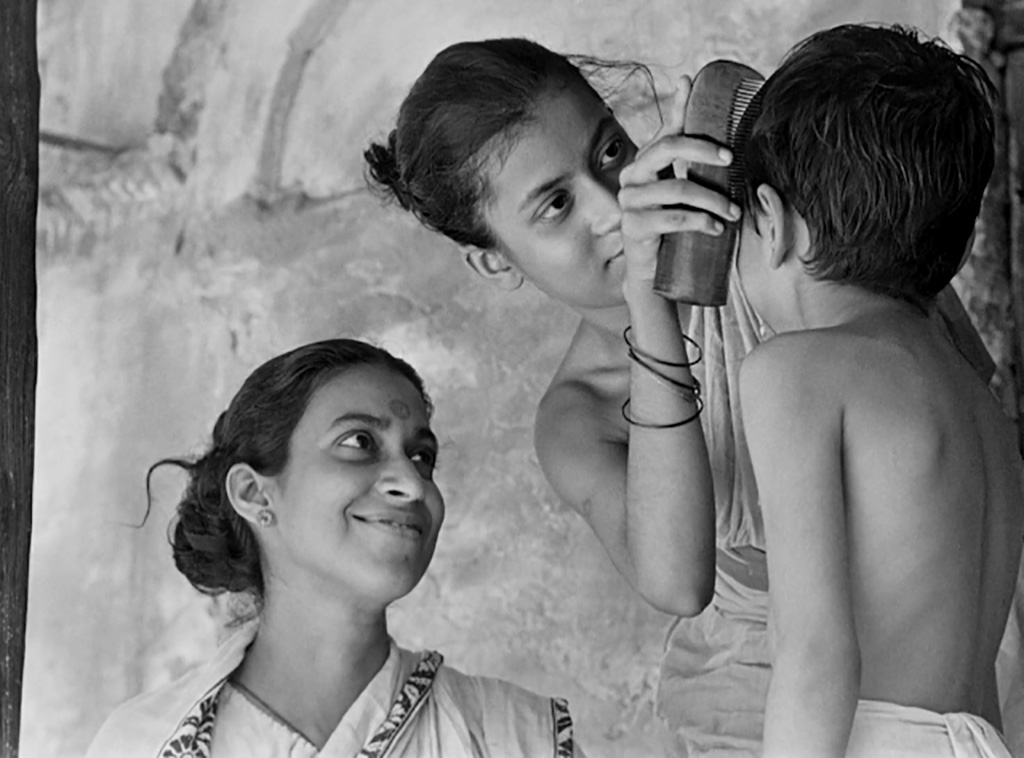
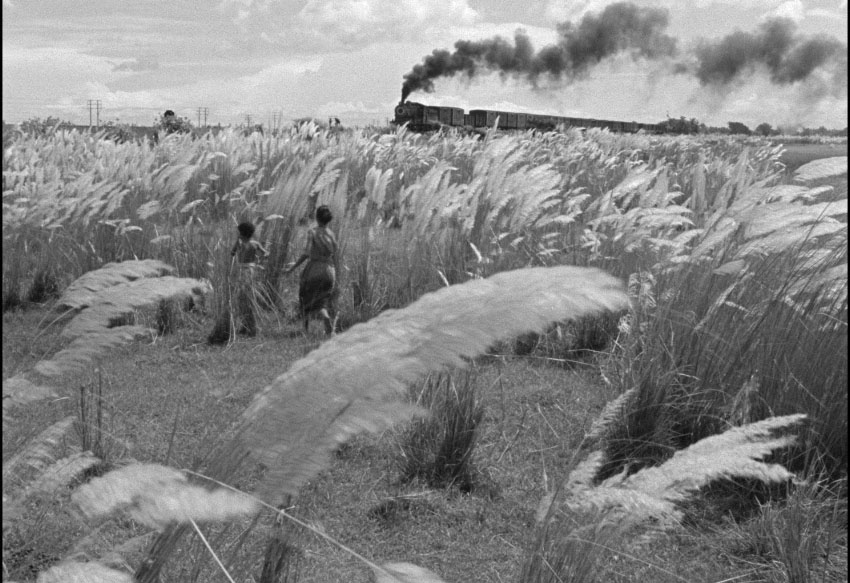
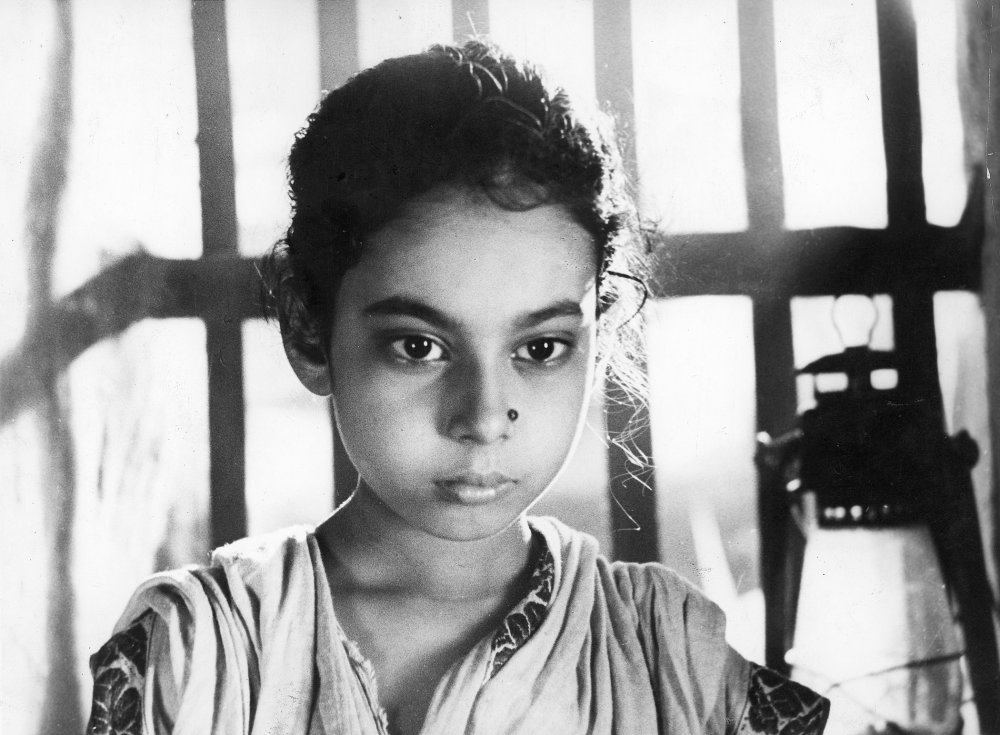
Iconic scene from Pather Panchali (1955)Pather Panchali (1955)
Breakthrough of Satyajit Ray
A young Ray had grown up on Hollywood movies, so when his ad agency sent him to London for higher training, he spent more and more of his time in the company of films and started “losing interest in advertising in the process,” he once said in an interview. During this trip, he saw Vittorio De Sica’s “Ladri di biciclette” (Bicycle Thieves),in 1948, a neo-realist Italian masterpiece of post-War despair and was entranced by its beguiling simplicity and humanism. Back in Calcutta, he heard that Jean Renoir was in town and walked straight into the hotel where the great French filmmaker was staying to confide in his own dreams of making a movie someday. Renoir, who was location-scouting for The River in Calcutta at the time, encouraged the aspirant. And so began the journey of the song of the little road.
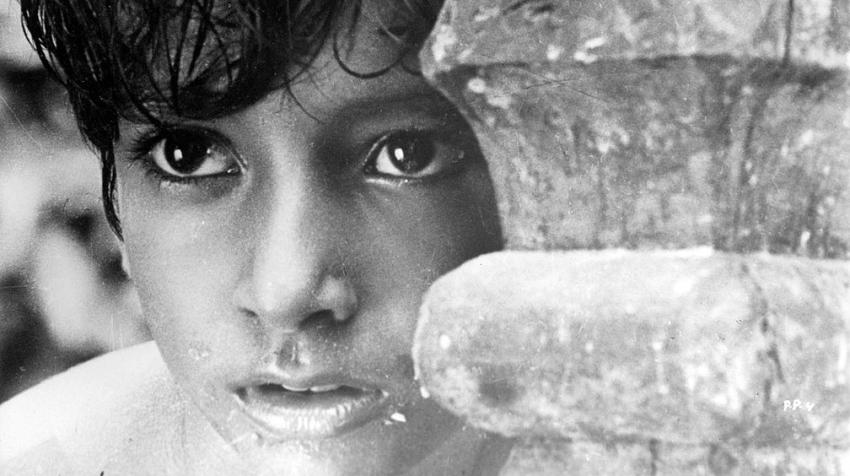
Subir Banerjee as Apu in Pather Panchali (1955)
Ray’s landmark debut, Pather Panchali ( which was adapted from eponymous 1928Bengali novel “Pather Panchali” by eminentBengali novelist Bibhutibhusan Bandopadhay) was on a shoe-string budget in 1955 with a mostly non-professional cast. All the while, he clung on to his job for a safety net even as he shot what would become the first of the classic Apu Trilogy on weekends. The film was apparently being made by a group of neophytes, who had to stop filming more than once, owing to the depletion of their shoestring budget.
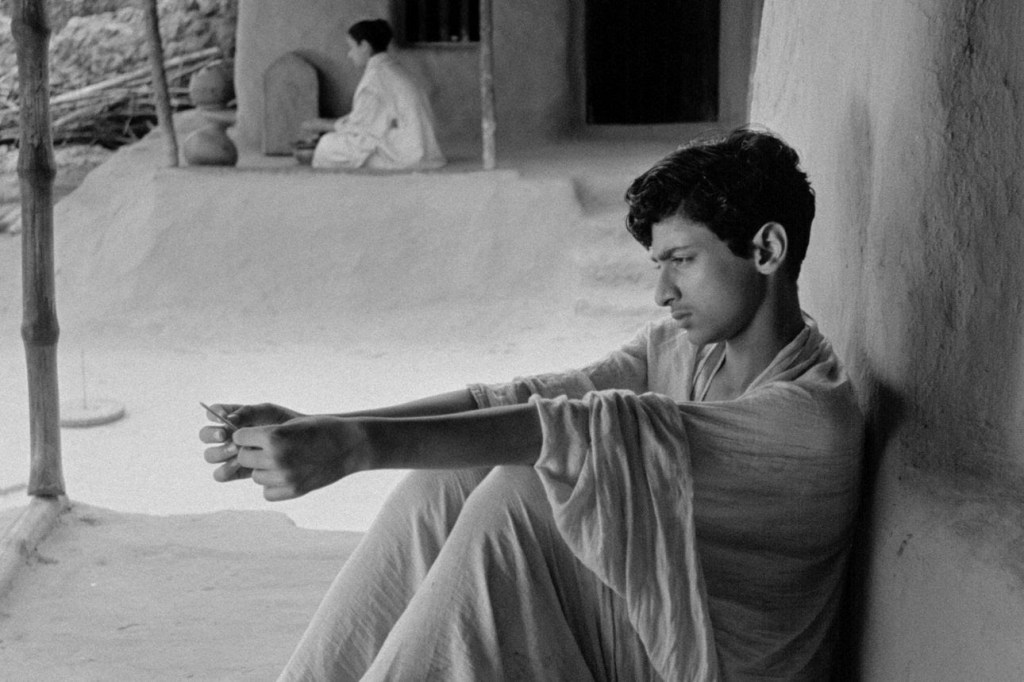
Smaran Ghoshal as Apu in Aporajito (1956)
Notable Films of Satyajit Ray
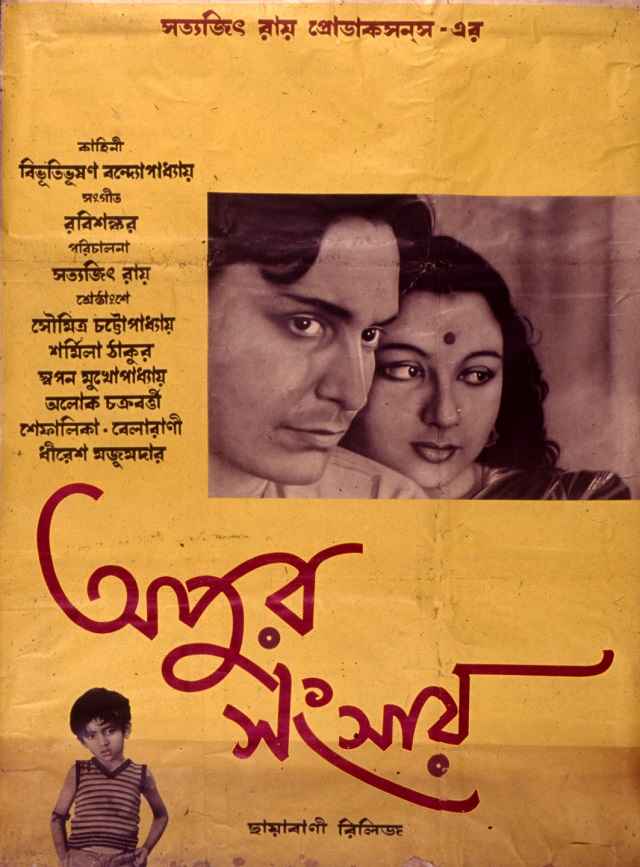
Ray directed 36 films, comprising 29 feature films, five documentaries, and two short films.Pather Panchaliwas completed in 1955 and turned out to be both a commercial and a tremendous critical success, first in Bengal and then in the West following a major award at the 1956 Cannes InternationalFilm Festival. sured Ray the financial backing he needed to make the other two films of the trilogy: Aparajito (1956; The Unvanquished) and Apur Sansar (1959; The World of Apu).Pather Panchaliand its sequels tell the story of Apu, the poor son of a Brahman priest, as he grows from childhood to manhood in a setting that shifts from a small village to the city of Calcutta.
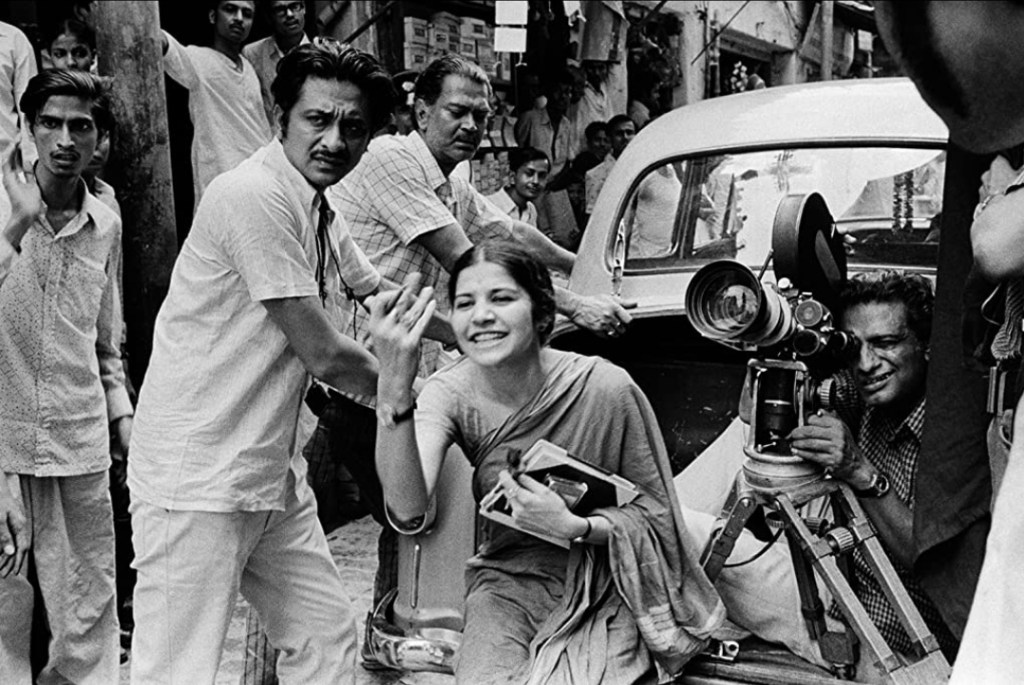
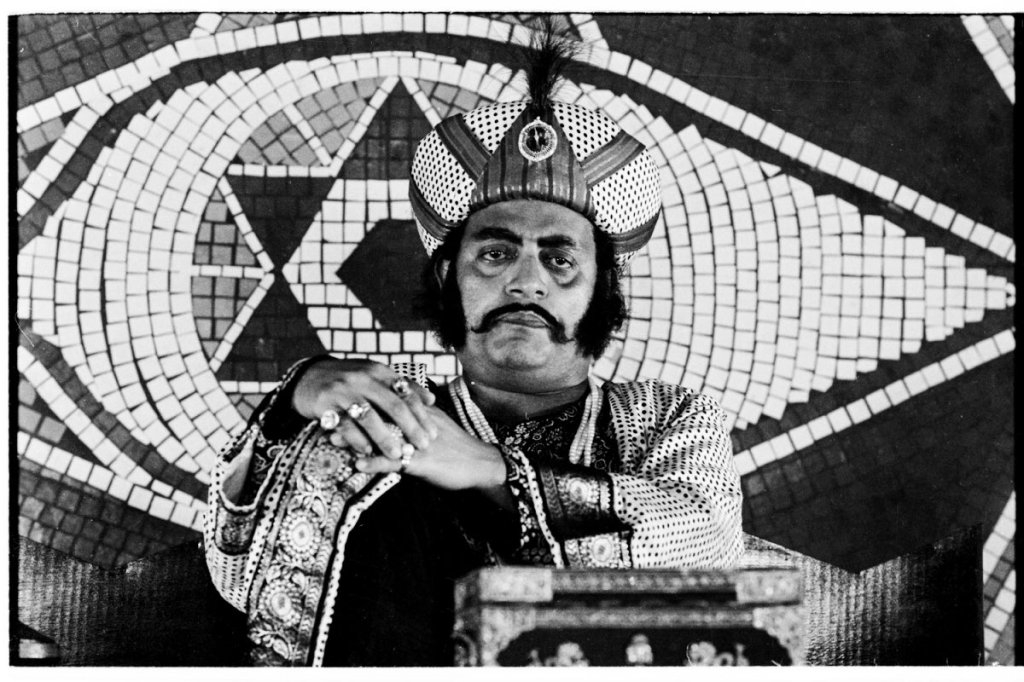
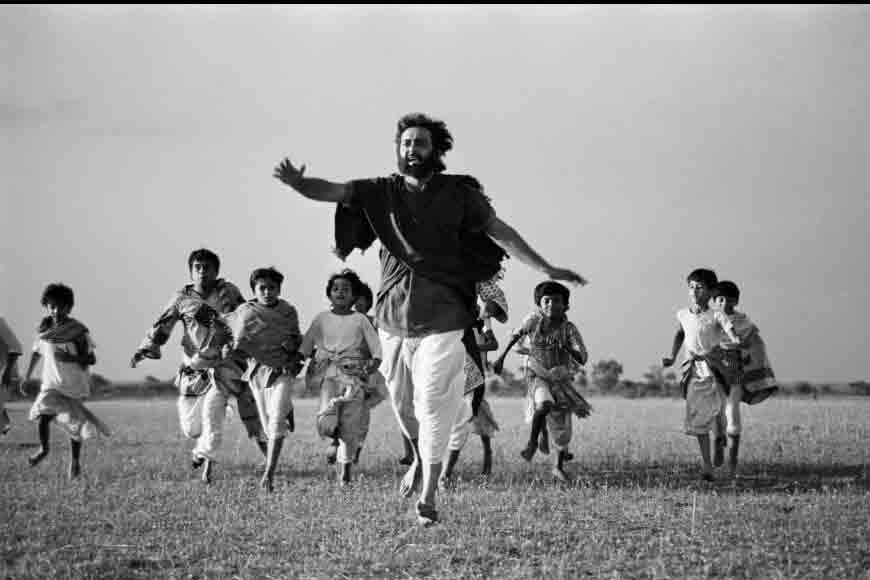
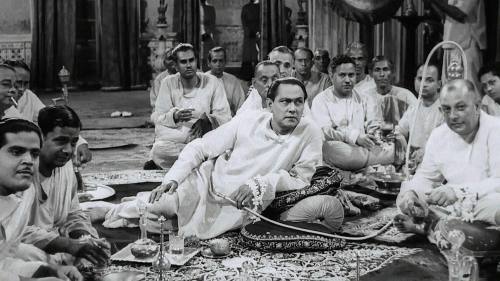
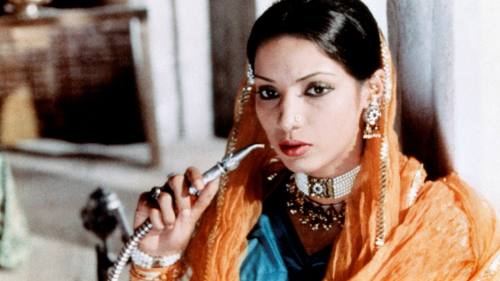
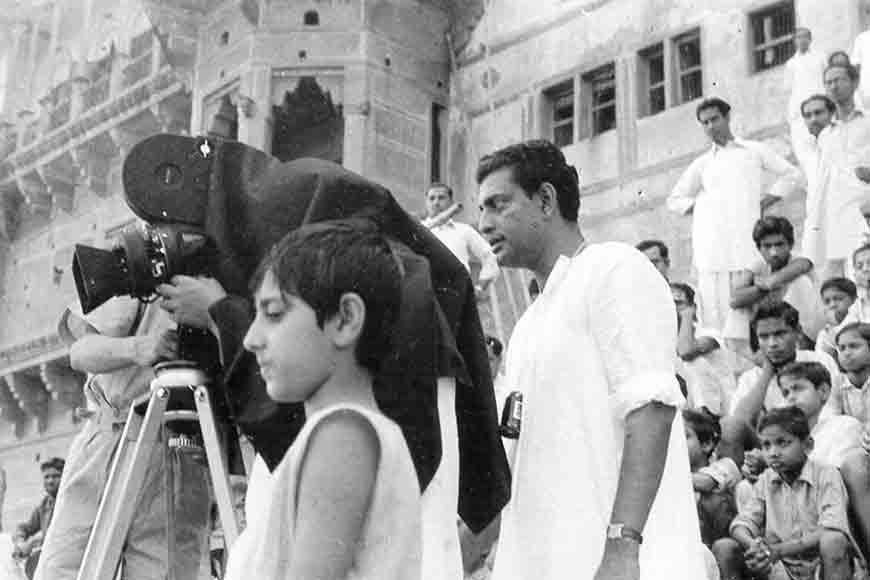
Chandana Banerjee in Teen Kanya (1961)During the Shooting of Jana Aranya (1975)Utpal Dutta in HirokRajar Deshe(1980)Soumitra Chatterjee in Hirok Rajar Deshe (1980)Chhabi Biswas (in middle) in Jalsaghar (1958)Shabana Azmi in Shatranj ke Khilari (1977)Satyajit Ray during the shooting of Sonar Kella(1974)
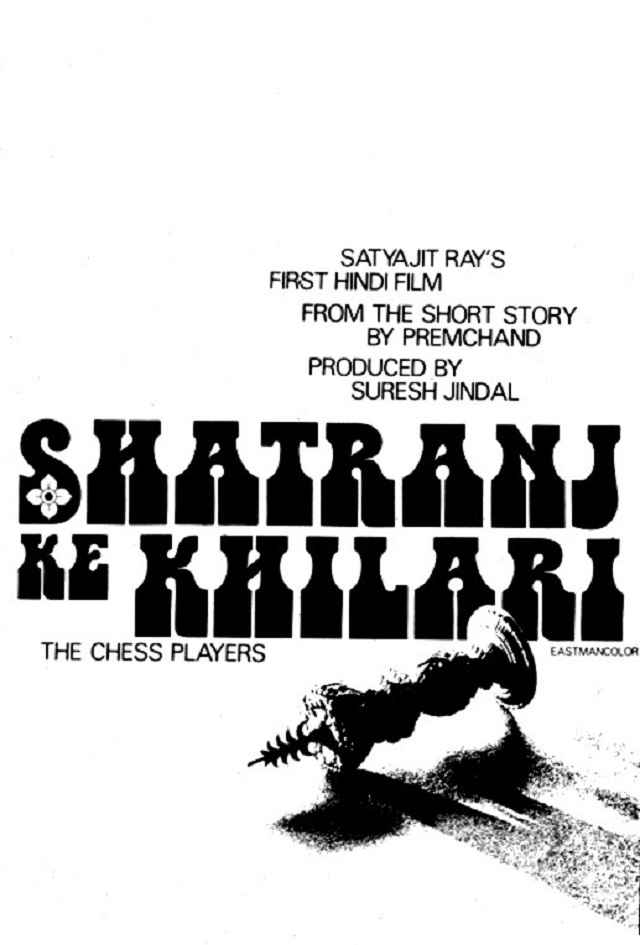
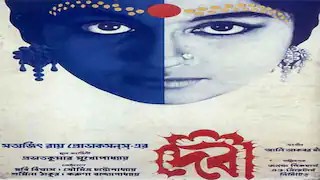
Ray’s major films about Hindu orthodoxy and feudal values (and their potential clash with modern Western-inspired reforms) include Jalsaghar (1958; The Music Room), an impassioned evocation of a man’s obsession with music; Devi (1960; The Goddess), in which the obsession is with a girl’s divine incarnation; Sadgati (1981; Deliverance), a powerful indictment of caste; and Kanchenjungha (1962), Ray’s first original screenplay and first colour film, a subtle exploration of arranged marriage among wealthy, westernized Bengalis.Shatranj ke Khilari (1977; The Chess Players), Ray’s first film made in the Hindi Language , with a comparatively large budget, is an even subtler probing of the impact of the West on India. Although humour is evident in almost all of Ray’s films, it is particularly marked in the comedy Parash Pathar (1957; The Philosopher’s Stone) and in the musical Goopy Gyne Bagha Byne (1969; The Adventures of Goopy and Bagha), based on a story by his grandfather.
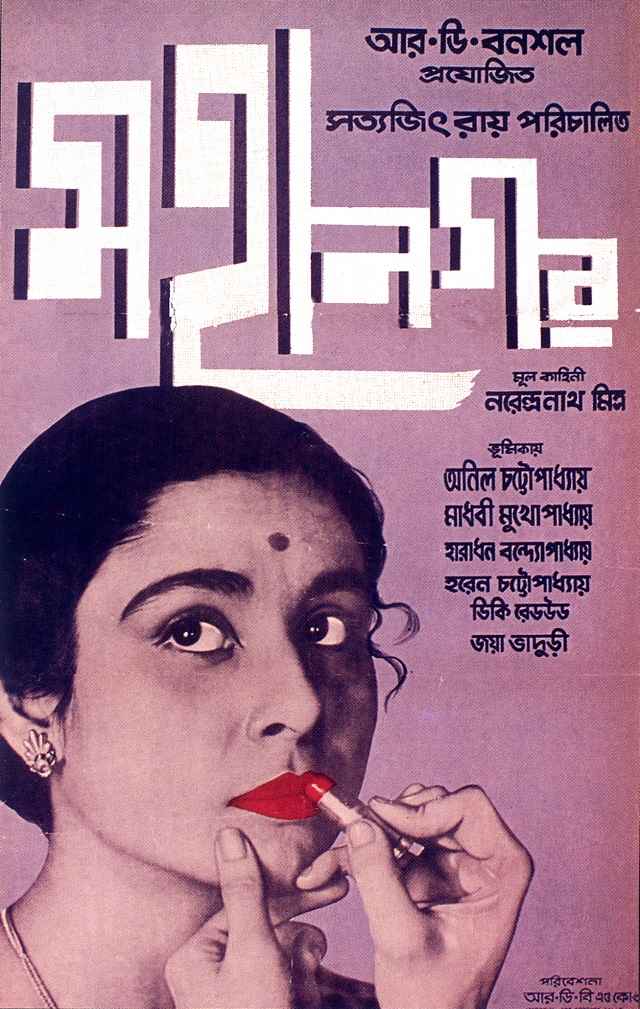
His other notable films were Ahsani Sanket (1973; Distant Thunder), Aranyer Din Ratri (1970; Days and Nights in the Forest) , Mahanagar (1963; The Big City) and a trilogy of films made in the 1970s—Pratidwandi (1970; The Adversary), Seemabaddha (1971; Company Limited), and Jana Aranya (1975; The Middleman), Ganashatru (1989; An Enemy of the People), Shakha Prashakha (1990; Branches of the Tree), and the Agantuk (1991; The Stranger).
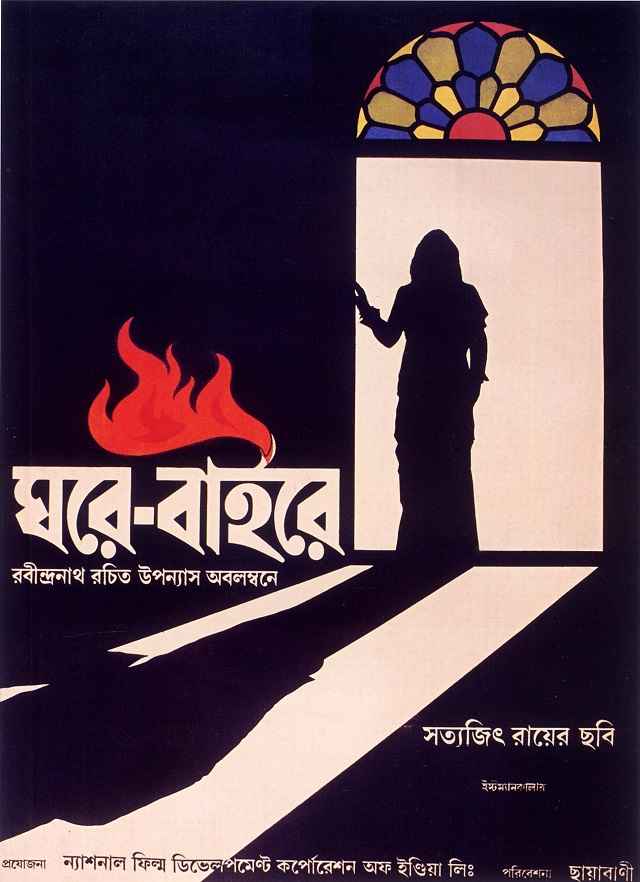
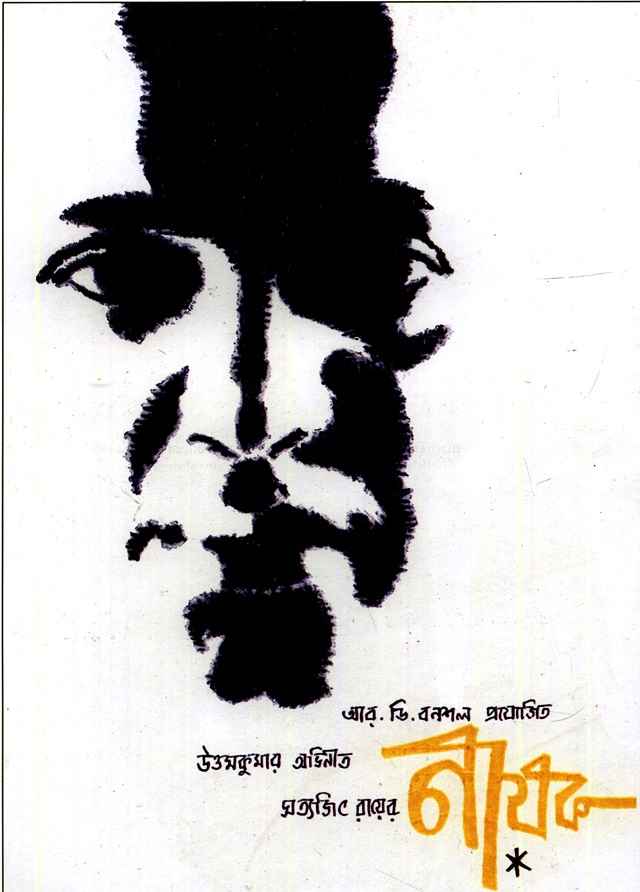
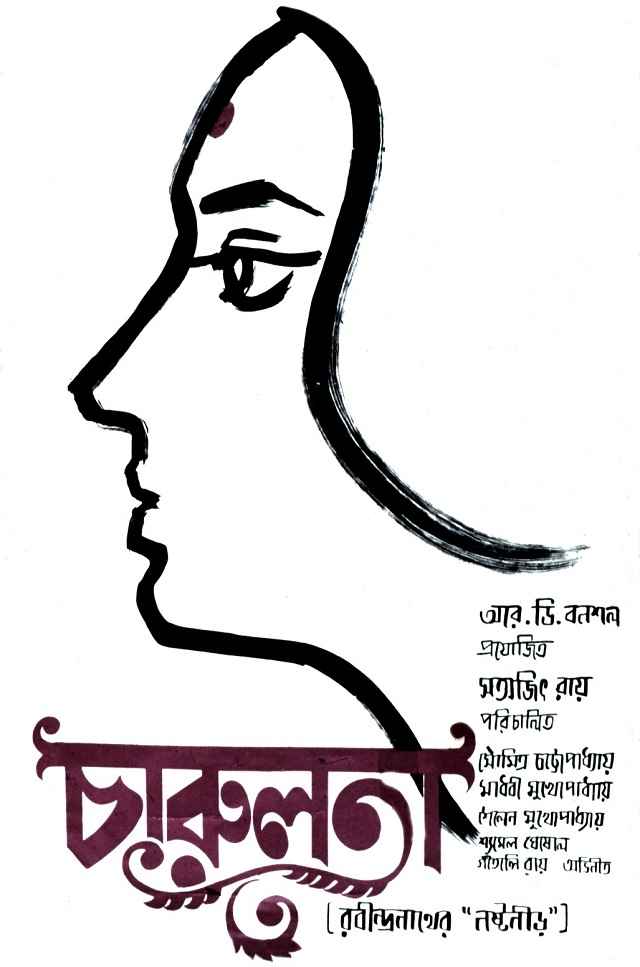
Poster of Shatranj ke Khilari (1977)Poster of Devi(1960)Poster of Ghore-BairePoster of Mahanagar(1963)Poster of Apur Sansar (1959)Poster of Nayak Poster of Charulata
Work As A Novelist
Ray created two popular fictional characters in Bengali children’s literature—Feluda, a sleuth, and Professor Shanku, a scientist. The Feluda stories are narrated by Topesh Ranjan Mitra aka Topse, his teenage cousin, something of a Watson to Feluda’s Holmes. The science fictions of Shonku are presented as a diary discovered after the scientist had mysteriously disappeared. Ray also wrote a collection of nonsensical verses named Today Bandha Ghorar Dim, which includes a translation of Lewis Carroll’s “Jabberwocky”. He wrote a collection of humorous stories of Mulla Nasiruddin in Bengali. Ray wrote an autobiography about his childhood years, Jakhan Chhoto Chhilam (1982), translated to English as Childhood Days: A Memoir by his wife Bijoya Ray. In 1994, Ray published his memoir, My Year’s with Apu, about his experiences of making The Apu Trilogy.
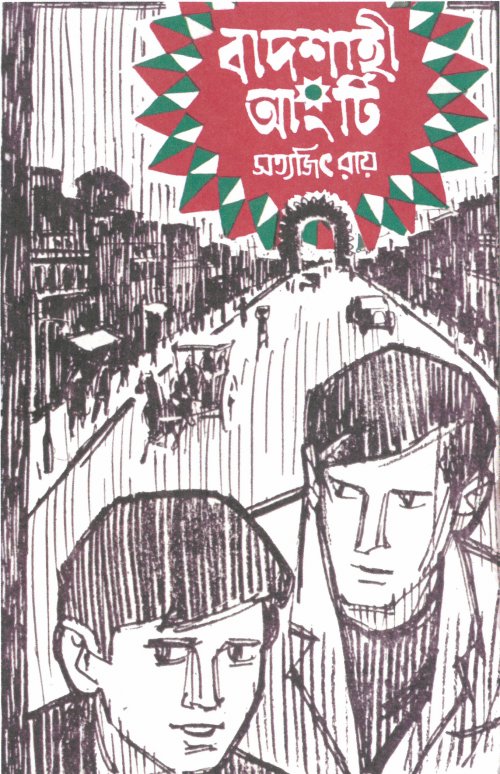
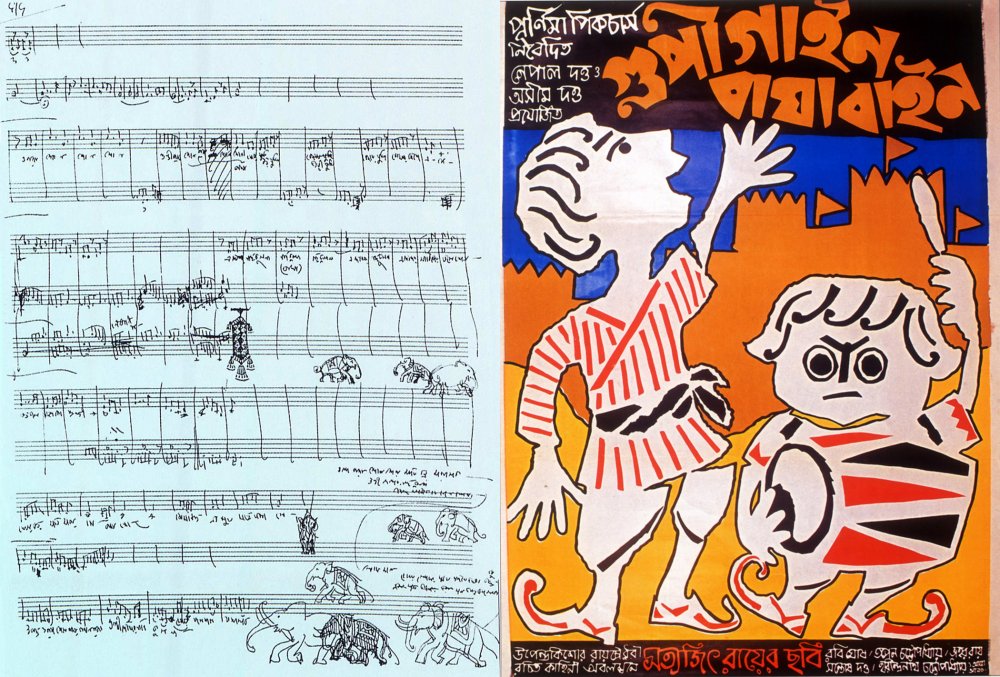
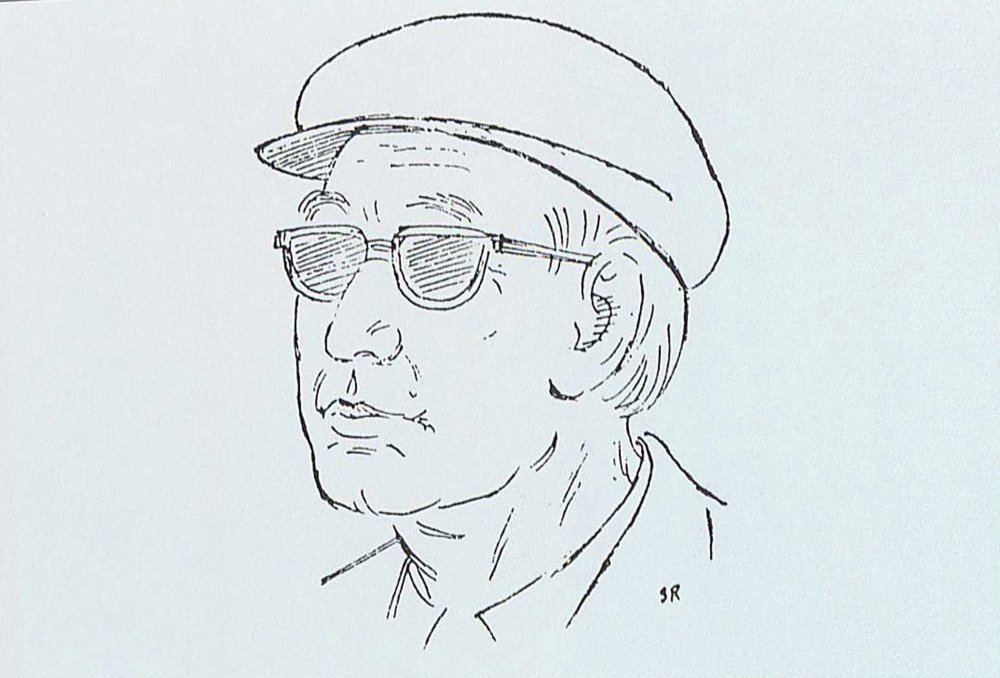
Book Cover illustrated by Satyajit Ray, himself for his first detective novel “Badshahi Angti”.The musical score and Poster for Goopy Gyne Bagha Byne(1969), done by Satyajit Ray, himself Portrait of Akira Kurosawa, illustrated by Satyajit Ray
Critical Analysis of Satyajit Ray
Instead of acting like a propagandist, Ray wanted to make people aware of the persistence of certain social problems. Devi and Ganasatru show people’s blind religious beliefs, Sakha Prasakhadiscloses the involvement of the top officials with bribery and corruption, Shatranj ke Khilari indicates the indolence and lack of political consciousness of the wealthy people, Aranyer Din Ratrireveals the insensitivity and boasting of the urban young men, and Mahapurushmockingly exposes the failure of the urban elite to embrace rational thoughts. Given the necessity of making people conscious of the same problems in present-day society, these films are still relevant today. Ray’s films also made a departure from tradition by frequently including strong women characters. Sarbajaya in Pather Panchali and Aparajito, Manisha in Kanchenjungha, Arati in Mahanagar, Charu in Charulata, Karuna in Kapurush, Aditi in Nayak, Aparna and Jaya in Aranyer Din Ratri, Sudarshana in Seemabadhdha, and Ananga in Asani Sanketappear as bolder, more confident, and more resilient than the male characters. In an interview, Ray states that the inclusion of unwavering women characters reflects his own attitudes towards and personal experience with women.
Awards Received by Satyajit Ray
Ray received many awards, including 36National Film Award by the Government of India, and awards at international film festival. In 11th Moscow InternationalFilm Festival 1979, he was awarded with the Honorable Prize for the contribution to cinema. At the Berlin International Film Festival, he was one of only four filmmakers to win the Silver Bear for Best Director more than once and holds the record for the most Golden Bear nominations, with seven. At the Venice Film Festival, where he had previously won a Golden Lion for Aparajito (1956), he was awarded the Golden Lion Honorary Award in 1982. That same year, he received an honorary “Hommage à Satyajit Ray” award at the 1982 Cannes International Film Festival. Ray is the second film personality after Charlie Chaplin to have been awarded an honorarydoctorate by Oxford University.
He was awarded the Dadasaheb Phalke Award in 1985, and the Legion of Honour by the President of France in 1987. The Government of India awarded him the Padma Bhusan in 1965 and the highest civilian honour, Bharat Ratna, shortly before his death. The Academy of Motion Picture Arts and Sciences awarded Ray an Honorary Award in 1992 for Lifetime Achievement. In 1992, he was posthumously awarded the Akira Kurosawa Award for Lifetime Achievement in Directing at the San Francisco International Film Festival.
Conclusion
Whenever we talk about radical filmmaking in the realm of Bengali cinema, Satyajit Ray’s maiden feature (made in the face of tremendous odds) is mentioned. From Pather Panchali to his last film Agantuk, Ray never compromised on high standards, thereby making a huge impression. Having a greater familiarity with the oeuvre of Ray would enable people to understand the impressive qualities and importance of socially-meaningful cinema. We are surely in need of films that would make us perceive the beauty of a dewdrop on a blade of grass, strengthen our sense of humanism, and raise our social consciousness—hence, the everlasting relevance of the cinema of Satyajit Ray.
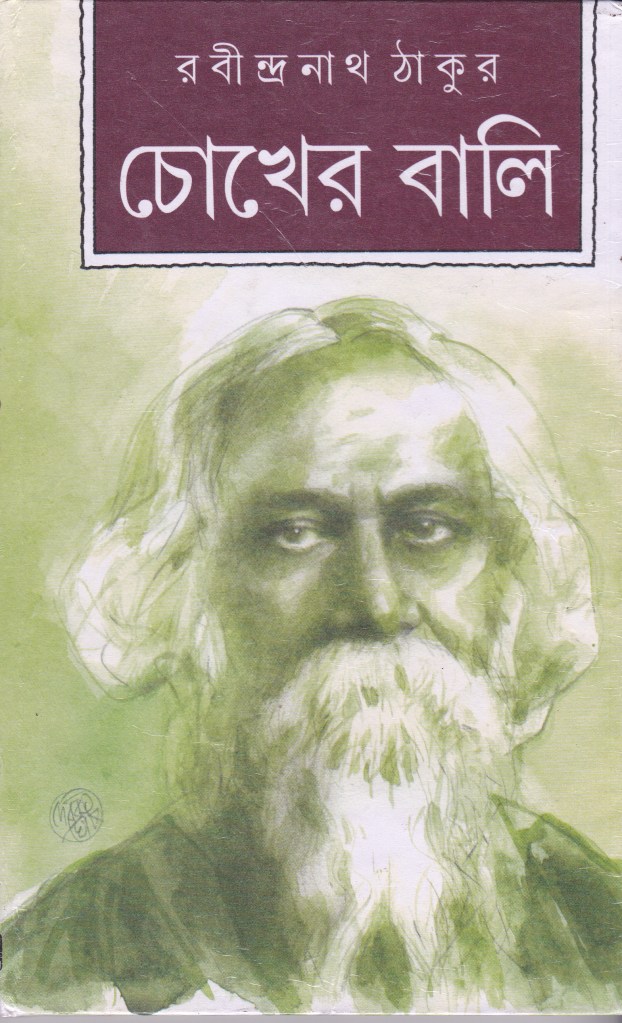
Rabindranath Tagore’s 1903 Bengali novel Chokher Bali is often referred to as India’s first modern novel, where he highlighted the issues of women’s education, child marriage and the treatment of widows in 19th and 20th century Bengal. It was first serialised in the Bengali literary magazine, Bangadarshan first founded in 1872 by Bankim Chanra Chattopodhay and later resuscitated under the editorship of Tagore in 1901.
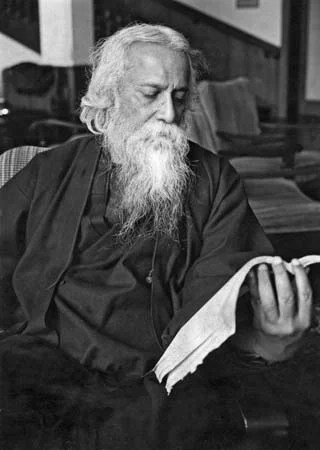
Rabindranath Tagore
About The Author
Rabindranath Tagore (7 May 1861 – 7 August 1941) was a Bengali Polymath —poet, writer, playwright, composer, philosopher, social reformer and painter. He reshaped Bengali Literature and music as well as Indian Art with Contextual Modernism in the late 19th and early 20th centuries. Author of the “profoundly sensitive, fresh and beautiful” poetry of Gitanjali, he became in 1913 the first non-European and the first lyricist to win the Nobel Prize in Literature. Tagore’s poetic songs were viewed as spiritual and mercurial; however, his “elegant prose and magical poetry” remain largely unknown outside Bengal. He was a fellow of the Royal Asiatic Society. Referred to as “the Bard of Bengal”, Tagore was known by sobriquet:Gurudev, Kobiguru, Biswakobi.
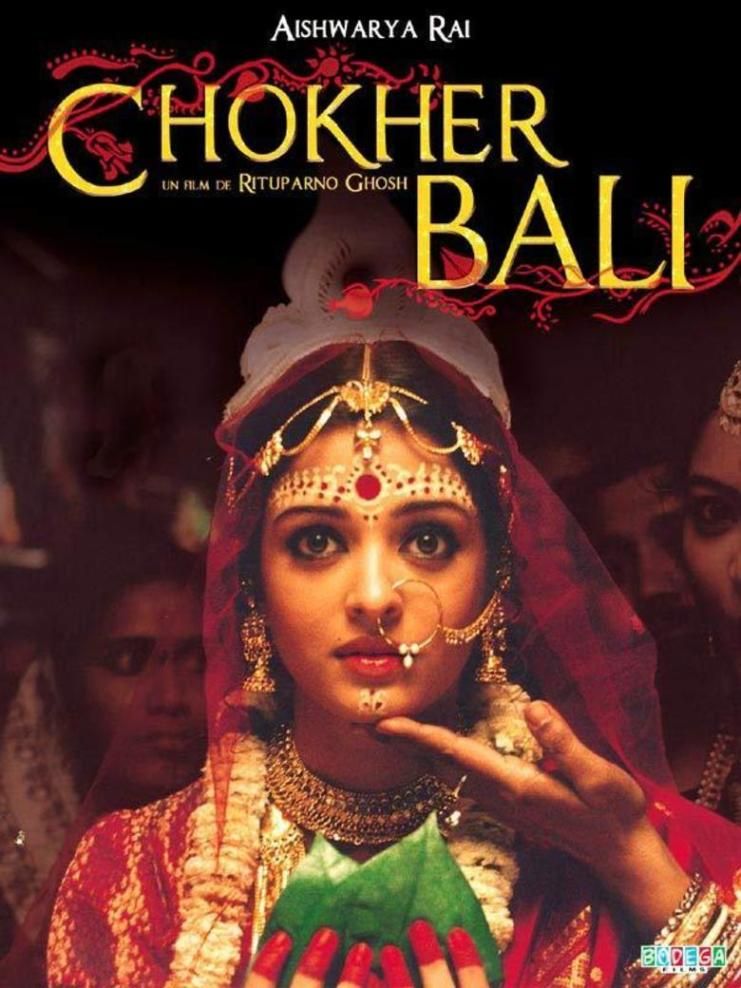
Aishwarya Rai Bachhan as Binodini in Chokher Bali (2003)
Storyline of The Novel
The plot revolves around four protagonists- Mahendra, Ashalata, Binodini and Bihari. Mahendra is the only scion of a rich family based in Calcutta. Bihari is his childhood friend, who frequents his house. Mahendra’s mother wanted him to marry Binodini, her friend’s daughter. But Mahendra refused. Then his mother requested Bihari to marry Binodini and save the poor girl which Bihari refused. Eventually, Binodini got married to a man who died soon after marriage. Meanwhile, Mahendra married Ashalata, a poor orphan girl. Mahendra was besotted with his wife when Binodini came to live in their house. With time, an extra-marital relationship develops between Mahendra and Binodini, which threatens to destroy his marriage with Ashalata. But soon Binodini discovers that Mahendra is a self-obsessed person, unable to provide a safe shelter to her. So she inclines towards Bihari, who lives life by principles. Throughout the novel, there is an implicit implication of Bihari’s affection towards Ashalata, though he never crosses the boundaries of the relationship. In the end, Bihari falls in love with Binodini when realizes her feelings for him. He proposed to marry her, which Binodini refused saying that she doesn’t want to ‘dishonour’ him further. During that period (the novel was written in 1902), widow remarriage was not well accepted in society. That may partially explain the reason behind Binodini’s refusal. In the end, Binodini leaves for Varanasi– a fate that awaited most of the widows in those days.
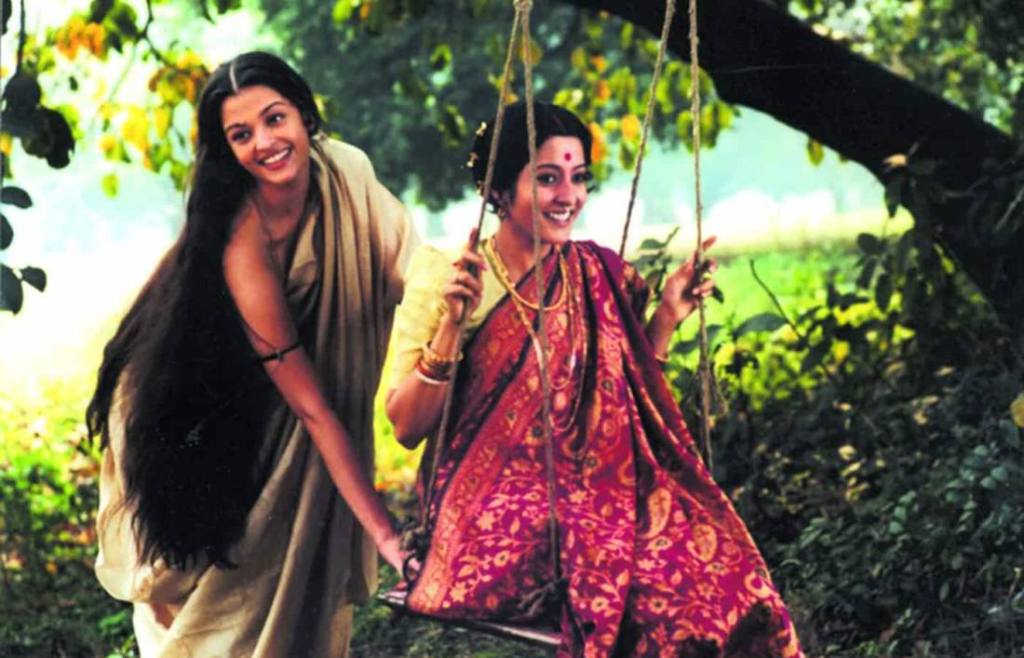
Aishwarya Rai Bachhan as Binodini and Raima Sen as Asha in Chokher Bali (2003)
Analysis of The Storyline
The term ‘Chokher Bali’literally means a sand grain in eye in Bengali and metaphorically means to bea source of irritation or disturbancein someone’s eyes, which is what Asha and Binodini become for each other. Binodini is presented in many avatars a hopelesswidow, a friend, a temptress, and a remorseful woman. Tagore gives readers an insight into her desires and longings, the feeling that many widows at the time had silently undergone. On the other hand, Asha is presented as naive and innocent, which combined with her illiteracy initially results in her subjugation. The narrative almost becomes an implicit debate on love and morality, urging readers to understand Asha and Binodini outside of the social norms of Bengali society. The central character Binodini is not an idealised Indian woman but a woman with shades of grey and very human flaws. Binodini cannot come to terms with her life as a widow, as she is still young and has wants and desires. She feels wronged as she believes she is superior to Asha in all respect and deserves the life she is living. Tagore’s depiction of Binodini is impressive as she subverts the expectation of society for widows to forgo all worldly desires.
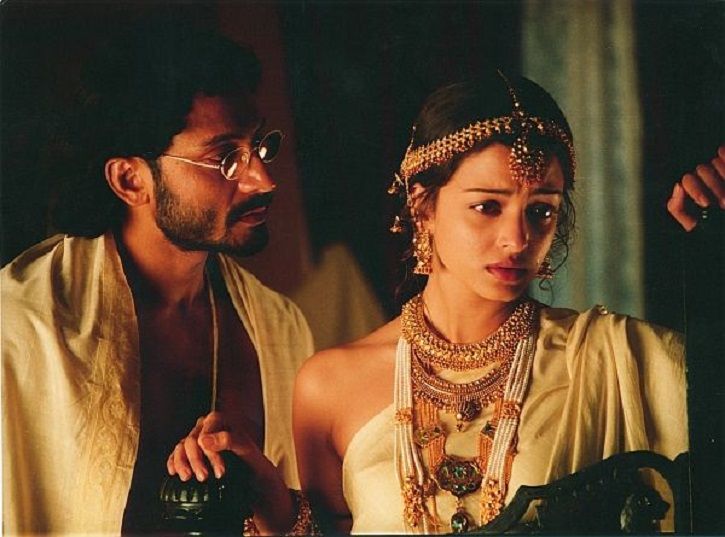
Tota Roy Choudhury as Bihariand Aishwarya Rai Bachhan as Binodini in Chokher Bali (2003)
Criticism of The Storyline
The story of this novel delves deep into many facets of human relationships and how a single wrong decision can make the life disharmonious. Jealousy and deprivation of happiness can result into an emotion strong enough to forget all other ties and relationships.Tagore shows the intellectual interchange between the characters, possible due to education and the interception of letters. The innocent and illiterate child bride Asha fails to understand the exploitation she faces at the hands of her husband and dear Bali (Binodini) whom she trusted blindly. Tagore does not justify Binodini’s actions and actually is sympathetic to Asha, perhaps stressing that Asha would have been able to avoid Binodini’s interference in her marital life, if she were educated enough to understand the intentions behind her friendly nature.However, one of Tagore’s greatest regrets in the novel is the ending. Despite his progressive portrayal of Binodini and Bihar, he does not allow them to marry at the end. Although, today we may see the girl marrying the guy as regressive today in Tagore’s time a widowed woman was not permitted to re-marry. Thus, ending the novel with Binodini and Bihari marrying would have been the most revolutionary.
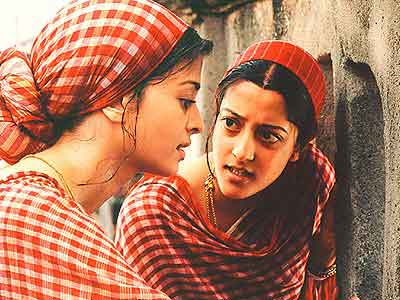
Scene from Chokher Bali (2003)
Movie Adaptation of The Novel
Adapted from Tagore’sChokher Bali, the movie with the same name was released in 2003, directed by eminent Bengali Moviemaker Rituparno Ghosh, starring Aishwarya Rai Bachhan, Raima Sen, Prosenjit Chatterjee and Tota Roy Choudhury in the lead roles. The movie won the National Film Award for Best Feature Film in Bengali and was nominated for the Golden Leopard Best Film award at the Locarno International Film Festival in 2003. Aishwarya Rai won the Best Actress award at the Anandalok Awards 2003.
Conclusion
A century after Chokher Bali, education is still a struggle for many women to access easily globally. Tagore’s novel is radical and unconventional presenting a viewpoint that is ahead of the conservative times of 19th and 20th century India. Through the story of Binodini, Tagore questions the societal norms. He condemns all kinds of taboos and unjust customs which deprive women and especially widows of their rightful freedom and autonomy; confined to live a mournful colourless life. As a man from a privileged background, his understanding of the emotions of Indian women and his empathetic attitude towards them is remarkable.
1.You owe it to yourself to experience a total solar eclipse | David Baron
Ever heard of the word ‘umbraphile’ ? Meet David Baron : not-mystical, not-spiritual eclipse evangelist. In 12 minutes and 20 seconds David tells the story of his first tryst with eclipses and subsequent adventures. A gifted story-telling episode that makes you want to sit in the front row and experience it live. He then passes on the advice that changed his life –’before you die, you owe it to yourself to experience a total solar eclipse’
I’ve lived as a man & a woman — here’s what I learned | Paula Stone Williams | TEDxMileHigh
“Now, I get my hair cut about half as often as I used to, but it costs ten times as much.So, I can go on vacation or I can get my hair cut ”
Paula stone was fired from her job as the president of the christian church planting organization Orchard Group when she came out as a transgender woman. Unfortunately that wasn’t it, she went on to face many obstacles because of her transition. But she was now gifted with knowledge only few on earth would possess: to have lived as a man AND as a woman. In her hilarious and eye-opening talk she tells us anecdotes on her experiences of mansplaining, gender politics and of course womens’ jeans pocket sizes!
3.Your elusive creative genius | Elizabeth Gilbert
Elizabeth Gilbert, no doubt, is one of the most gifted speakers of all time. As an aftermath of the success of her memoir Eat,Pray,Love, Elizabeth has a realization that leads her to uncover the truth of creative mindset.I can only describe this talk as her splitting and disintegrating our society’s stereotypes of artists and creative geniuses. She makes us question if we should stick to our renaissance-cy thought process that has only brought our artists pain and anguish or if we should re-invent.
4. I got 99 problems… palsy is just one | Maysoon Zayid
Listen to the hilarious comedian maysoon as she tells us about her life with cerebral palsy. Her anecdotes are charming and inspirationa.At the end you will be in awe of her positive attitude and determination to achieve her dreams.You will appreciate life a little more.
5. Inside the massive (and unregulated) world of surveillance tech | Sharon Weinberger
Thanks to dystopian novels, we all know surveillance is a weapon in the information age. But it might shock you to know that selling surveillance technology does not require you to have an export license in most countries including the United States(the way most arms sales would). It’s this unregulated weapon technology that journalist Sharon Weinberger warns us about. From devices that can collect DNA just by swiping across the skin to devices that can identify a person and their exact geographical location just based on their unique voice print technology in the spy bazaar is alarming. This talk will open your eyes to the dangers of an unregulated market.
Over the years, there have been many books that have been converted into on-screen adaptations. Film-makers run the risk of causing disappointments among book-lovers if the story being made into a film is not represented properly. In many cases, it can be pretty challenging to bring the entire plot and all the character stories completely into a 2-hour movie. There have been several good attempts made though, and here are some of the best book-to-film adaptations everyone should see, in no particular order.
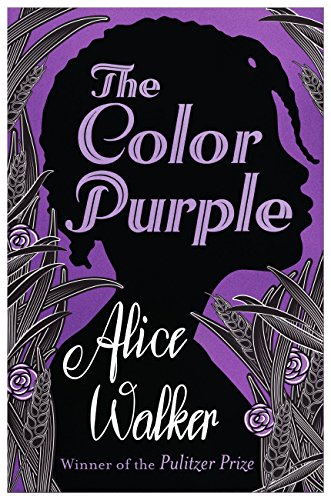
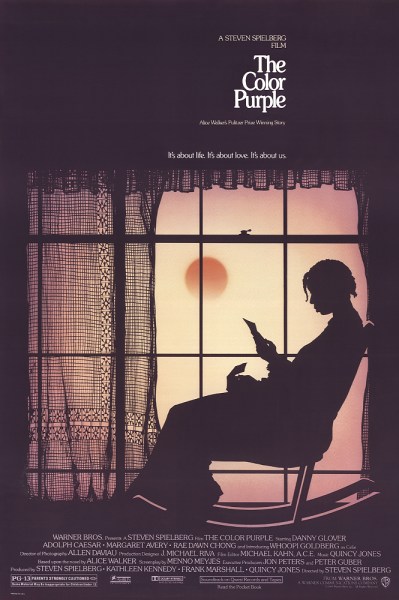
The Color Purple (1985)
A deep and stirring movie, The Color Purple was based on an equally touching novel of the same name by author Alice Walker in 1982. Directed by Steven Spielberg with an amazing performance by Whoopi Goldberg, this film tells the story of Celie, a black woman in the early 20th century as she goes through life and learns to grow strong and rise above all the abuse, violence, and racism she has faced.
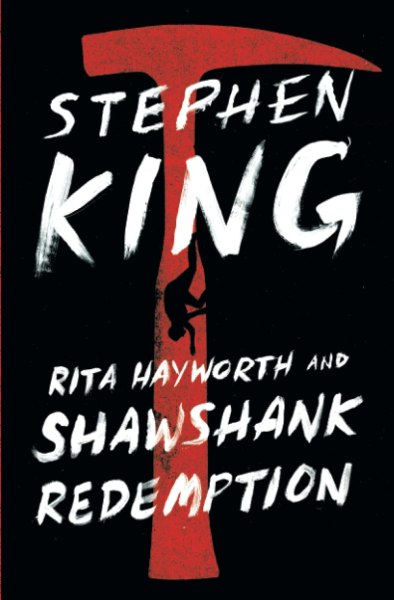
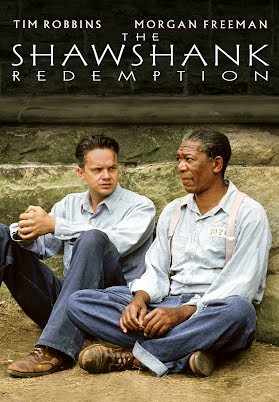
The Shawshank Redemption (1994)
This cult-classic was written and directed by Frank Darabont and it was based on the novella Rita Hayworth and Shawshank Redemption by Stephen King in 1982. Starring Tim Robbins and Morgan Freeman in lead roles, the film follows Andy Dufresne, a banker who is sentenced to life imprisonment in Shawshank State Penitentiary for the murder of his wife and her lover, even as he claims innocence. It remains the highest-rated movie on IMDb to date.
Gone Girl (2014)
This widely acclaimed psychological thriller was based on a novel of the same name written by Gillian Flynn in 2012. Directed by David Fincher, this film grips the viewer’s attention while going into topics like manipulation, misogyny, and complications in marriage. It follows events surrounding the mysterious disappearance of Amy Dunne while her husband Nick Dunne becomes the prime suspect in the case. The film stars Ben Affleck and Rosamund Pike whose performance received numerous accolades and award nominations.
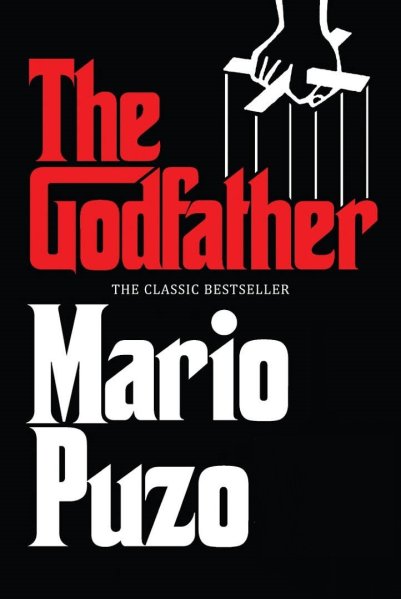
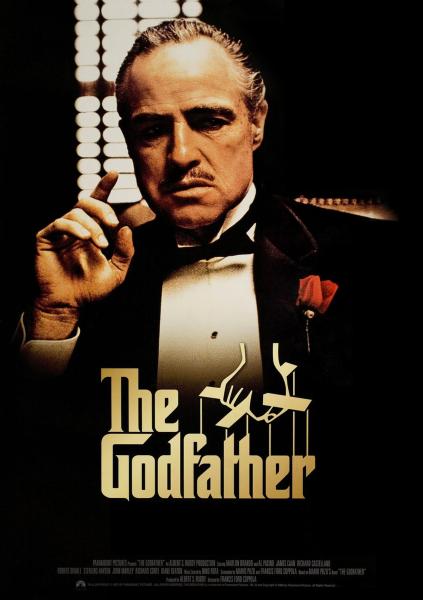
The Godfather Trilogy (1972-1990)
Considered by many as some of the greatest films of all time, The Godfather trilogy, directed by Francis Ford Coppola, was based on the 1969 novel of the same name written by the Italian American author Mario Puzo. The trilogy of crime films released in 1972, 1974, and 1990, follow the life of the Corleone family, a fictional Italian American mafia family. This highly acclaimed film series has won 9 out of the 28 total Academy Award Nominations.
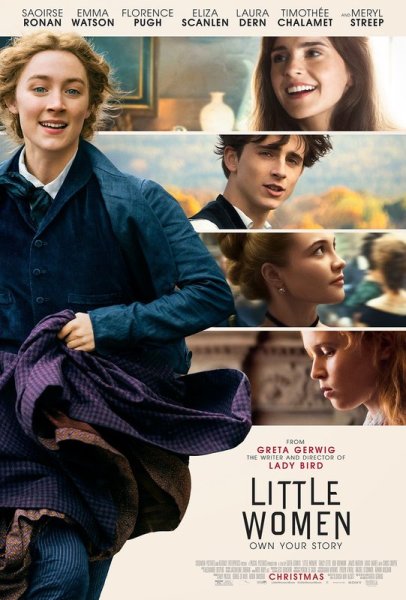
Little Women (2019)
This classic coming-of-age novel written by Louisa May Alcott in two volumes is a semi-autobiographical story about four sisters- Meg, Jo, Beth, and Amy, and their life. The novel published in 1868 has been adapted into the screen several times but the most recent remake starring Meryl Streep, Saoirse Ronan, Emma Watson, and Florence Pugh might be the best one yet. The film has also added new scenes and played with the storyline to make it more engaging to a modern audience.
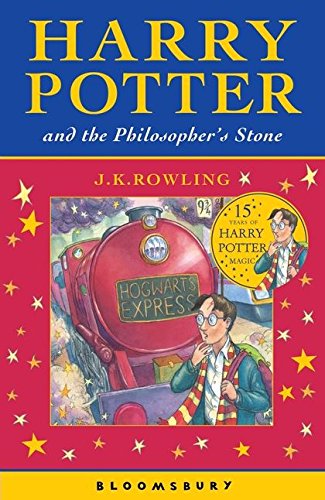
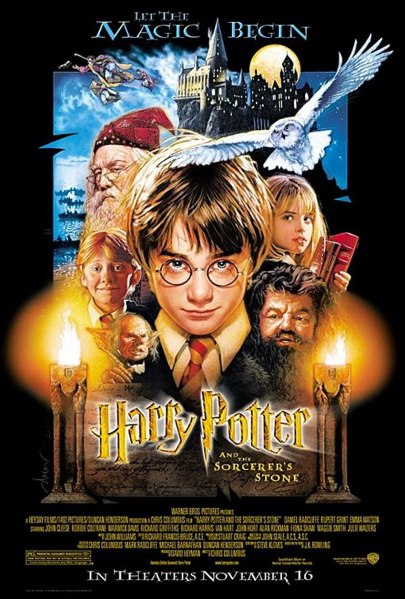
The Harry Potter Series (2001-2011)
The fantastic story of Harry Potter and his wizarding friends at Hogwarts School of Witchcraft and Wizardry spanning seven books has been a fan-favorite for decades now. Their eight movie adaptations have also been some of the most popular films of all time. Some of the minor characters and storylines may be missing in the films, understandably so with such a grand plot-line and limited screen time. Even then, it makes for a very enchanting watch, particularly if you have grown up reading the books.









-5.jpg?q=50&fit=crop&w=750&dpr=1.5)









 Eduindex
You must be logged in to post a comment.